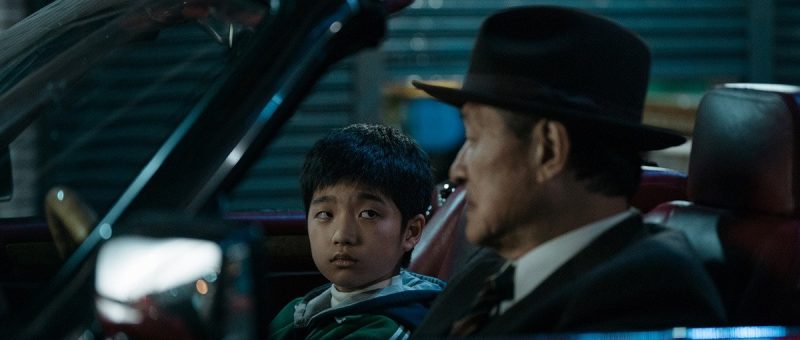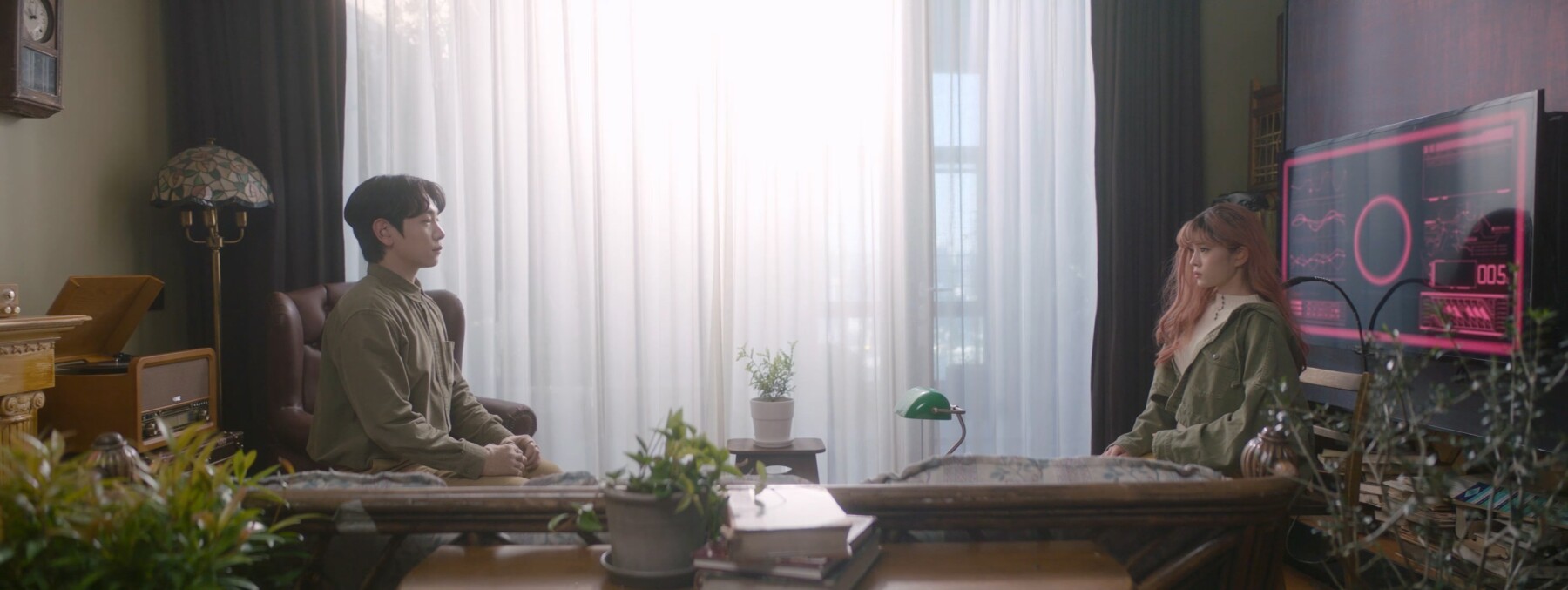
Falling in Love Like in Movies (Jatuh Cinta Seperti Di Film-Film, Yandy Laurens, 2023)

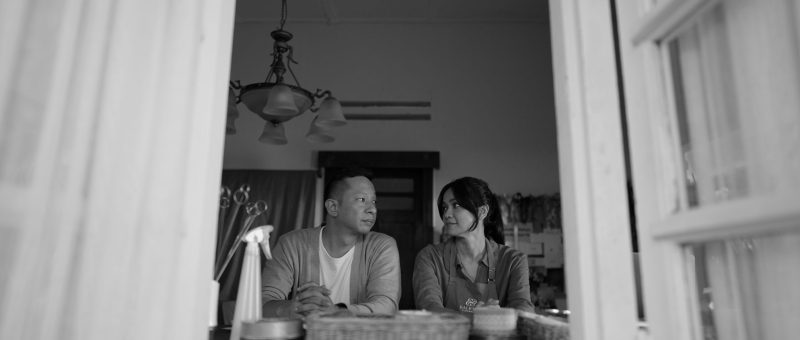
The screenwriter hero of meta rom-com Falling in Love Like in Movies (Jatuh Cinta Seperti Di Film-Film) seems intent to prove that romance can be just as fiery for the middle aged as it can for the average teenager even as his own love interest cautions him that grown-up love is much more considered. It’s mostly about long conversations and frank discussions about what you both do and don’t want rather the clumsiness and artificial barriers that disrupt the relationship between young lovers. She, and the film’s producer, wonder if an audience would find that very interesting, but there is of course something incredibly captivating about witty dialogue and a slow burn romance although that might not actually be quite how it turns out for the lovelorn screenwriter.

Or at least, Bagus (Ringgo Agus Rahman) wants to fall in love like the movies rather than like in real life. His chief idea is that he’s going to write a screenplay for a romance and then his old high school friend Hana (Nirina Zubir) will go to see it and understand it’s all about her so they’ll end up together the end. What it makes it all even more awkward, is that Hana is very recently widowed and Bagus’ clumsy pursuit of her is incredibly insensitive especially as he frames it as a kind of salvation, that he’s helping her to “move on” and escape the inertia of her grief.

Through his experiences, he may come to learn that he’s become stuck in his own head applying movie logic to real life and expecting people to behave the way they would in one of his screenplays in which he of course controls everything. Yet in another way the film is also a departure for him as it’s his first based on his own original idea as opposed to being an adaptation of a existing material. He later says that he’s writing it to try and understand something, yet it’s not until others read it that he begins to see himself reflected and dislike what he sees. His lead actor asks if he made himself this annoying on purpose, while the actress complains the movie Bagus is “cruel” and insensitive in his dismissal of Hana’s feelings little knowing that movie Bargus and writer Bargus are basically the same. 

What he’s left with is the gap between the fantasy of cinema and a more rational reality, the illusion of a romance like in the movies and the less glamorous process of getting to know someone gradually and putting love together piece by piece. On a baseline level, he’s emotionally immature and a little self-interested, unable to see that writing a screenplay as a roundabout confession of love is not romantic but cowardly and what’s really romantic is being present and honest about his feelings even if it’s all quite awkward and maybe a little bit inappropriate considering his love interest only lost her husband a few months previously and in any case has every right to reject future romance if that’s her choice.

Hana is in many way’s the film’s moral arbiter, though often framed within Bargus’ gaze as a tragic victim of her grief only to adopt the moral high ground in the final “reality” of the film. Laurens often wrongfoots us in his meta commentary, shifting from 2.35 black and white to letterboxed colour and structuring the film around title cards liked to screenwriting theory which ultimately pay off in Bargus’ ironic epiphany that actually he was the protagonist all along only he’d forgotten to give himself a character arc in his ongoing fixation on Hana’s supposed need to change. His screenplay is literally all about him, but he’s too close to it to see that his behaviour is not really acceptable off the page and if it’s romantic successes he’s after, he’ll have to recalibrate his idea of what romance is while pitching it to his producer boss and convincing him that it’s worth taking the risk on the smart sophistication of a witty rom-com about the gap between the magic of the movies and the difficult realities of love and loss in which going to the supermarket might be the most romantic thing you’ll ever do.


Falling in Love Like in Movies screens April 24th as part of this year’s San Diego Asian Film Festival Spring Showcase.

Original trailer (no subtitles)

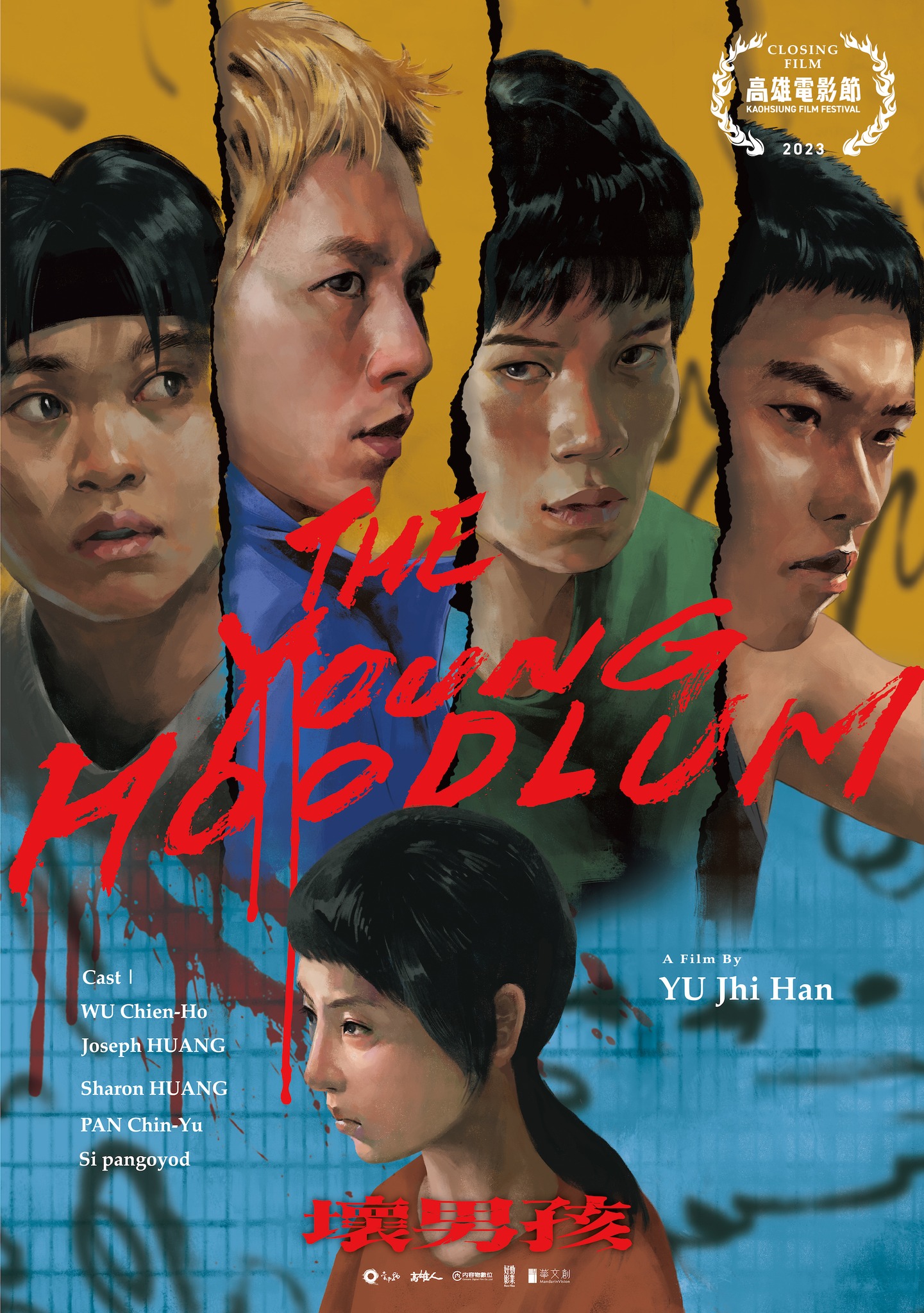
The Young Hoodlum (壞男孩, Yu Jhi-Han, 2023)

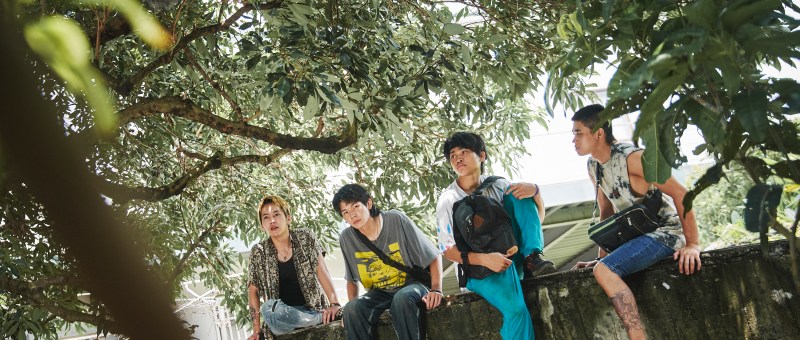
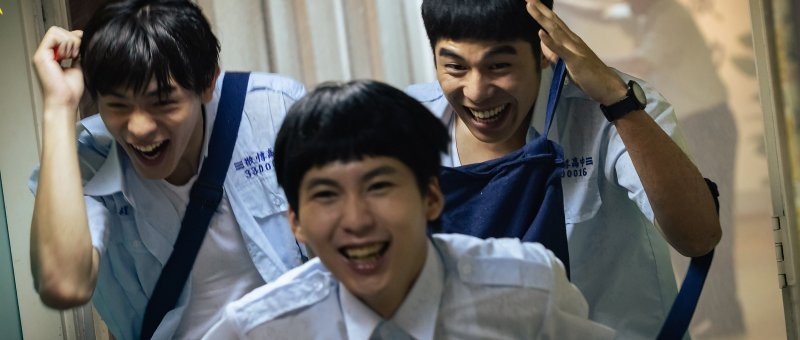
Seemingly abandoned by their society, the four young men at the centre of Yu Jhi-han’s The Young Hoodlum (壞男孩, huài nánhái) survive on petty crime and brotherhood yet their bond is soon disrupted by the presence of a privileged young woman. Contrasting the circumstances of these boys who find themselves without parental support and the girl who resents her parents for micromanaging her life the film makes a point of criticising the inequalities of the contemporary society if succumbing to a potentially unintended misogyny.

With no family to rely on, the boys are largely dependent on a local gangster, Xiao-hei, for whom they’ve become runners withdrawing cash with stolen cards then putting it in a locker for another of his men to pick up. Having left home after his father, who has issues with alcohol, almost set the house on fire, Cheng-han is also caring for his younger sister who comes to view each of the other boys as additional brothers with the five of them forming a close, quasi-familial unit. 

But that unit is disrupted by the arrival of Pin-Ran, an aspiring influencer from a background of extreme wealth who appears to be living in a luxury hotel while hiding out from her parents who, she says, arranged everything in her life so far including a place at a foreign college. Cheng-han is captivated by her and struck the kindness she showed his sister but also uncomfortable in her upperclass world while she, by contrast, is just really a tourist in his having fun experiencing poverty and the transgressive acts the boys must perform just to survive. She gets a thrill out of conning a young woman out a small amount of money at a bus station and convinces the guys to help her exploit one of her fans in a badger scam but she could of course walk away at any point and return to her privileged life which is not an option open to any of the boys. 

Even so, when her parents finally cut her off she decides on drastic action to get back at them and help the boys out of a jam after a questionable decision that puts them on Xiao-hei’s hit list. From the first, she creates discord within the group with it’s old leader, Shi, resentful both of the way she seems to have taken charge and of the way Pin-ran chose to distribute the loot taking the bulk herself and then splitting their cut between the four of them. Shi feels he’s not getting his proper due either from Xiao-hei or Pin-ran and is quickly getting fed up with the futility of his situation. He feels he needs the money to support the other guys and Cheng-han’s sister, while another of the boys has an additional motive in needing to pay for medical treatment for his grandmother all of which makes them desperate and reckless. 

The opening voiceover reveals that one of Cheng-han’s friends was killed in the summer with Yu drip feeding information trying to explain how the brotherhood of the boys imploded to the extent that one of them died, but ultimately returns to the themes of rich and poor as we can see Pin-ran getting advice from a fancy lawyer while each of the boys some of whom are still below the age of majority are questioned alone with no legal representative present. Shi had asked Cheng-han if he was more afraid of being dead or being poor, explaining his desperation in his intense fear of poverty insisting that he would rather not live at all than continue to suffer. The irony is that the boys find themselves in this position because of parental neglect or abandonment while Pin-ran has rejected her parents for being overly attentive and railroading her into a life she may not want. Her position within the gang necessarily disrupts its dynamic with Cheng-han trying to keep the peace while Shi in particular is pushed to extremes by increasing desperation. Yu’s bleak friendship drama in the end suggests that the innocent will end up paying for the poor decisions of those around them and that ultimately the borders of class and gender cannot be overcome for rich girls like Pin-ran can always count on parental support while boys like Cheng-han will have to fend for themselves.


 The Young Hoodlum screened as part of the 18th Season of Asian Pop-Up Cinema.

Original trailer (English subtitles)

Old Fox (老狐狸 , Hsiao Ya-chuan, 2023)

It’s all about “inequality”, according to the titular Old Fox (老狐狸, lǎohúli). Or at least knowing how to leverage it. Inequality is something that’s coming to bother the young hero of Hsiao Ya-chuan’s coming-of-age drama in which a small boy finds himself torn between two father figures, one a wily old slumlandlord with a heart of stone and the other his melancholy and disappointed but kindhearted father who simply endures the many blows that life has dealt him. 

Set in Taipei in 1989 shortly before an apocalyptic stock market crash in the post-martial law economy crushes the hopes of millions of ordinary people convinced to invest their savings, the film wastes no time in showing us the various inequalities in play in small alleyway of traditional stores all owned by Boss Xie (Akio Chen) whom many seem to regard as a kind of saviour even if he cares not at all about them. Jie’s (Bai Run-yin) father Tai-lai (Liu Kuan-ting) works in a local restaurant and rents a room above a beef noodle cafe for which he pays in cash every week to Miss Lin (Eugenie Liu), a pretty young woman working for Boss Xie and enjoying an unusual amount of power for someone of her age and gender for a society still somewhat conservative. 

Tai-lai has been patiently saving money so that he can afford to buy a house and open a hair salon which was the dream of his late wife, but obvlious to the world around him he hasn’t noticed that prices are continuing to rise placing his dream of homeownership further out of his reach. Meanwhile, Jie is bullied at school and called a “snitch” without understanding why or even what the word means. This sense powerlessness and inferiority maybe be why he’s drawn to Boss Xie, a man who does after all exude power if also a sense of menace and melancholy. Xie in turn sees in Jie a potential protégé, both a mirror of his younger self and an echo of the son he lost who rebelled against everything he represents.

Nicknamed Old Fox, Xie stands for everything that’s wrong with the contemporary society which is about to implode in the financial crash. Wounded by his childhood poverty in which he, like Jie, also pleaded with a local landlord to sell his mother a property, Xie has adopted a ruthlessly selfish disregard for the lives of others teaching Jie his mantra of “none of my damn business” while the boy develops a worrying admiration for the aura a man like Xie projects and actively enjoys the sensation that others fear him. While hanging out with Xie he comes to look down on men like his father whom Xie calls “losers” who care only for others and disregard themselves. Xie teaches him to leverage the inequalities of power and turn his enemies’ weakness back against them to increase his own strength placing him further at odds with Tai-lai’s innate goodness and down-to-earth humanity. 

Yet we can also see that Tai-lai has had a life of disappointment. A woman who comes into the restaurant (Mugi Kadowaki) now married to a thuggish local big wig is a former childhood sweetheart from whom he was separated by time and circumstance while it also seems that Miss Lin has taken a liking to him though he appears not to have noticed. At home he plays the saxophone and takes in tailoring while resigned to saving a little longer before he’ll finally be able to buy a house and achieve his dreams. Tai-lai is one of the few who does not play the stock market and is therefore free of the danger it represents while Jie soon becomes sick of his his father’s frugality in their regular practice of turning the boiler off after having a bath and keeping their taps on a slow drip so they don’t trip the water metre and longs to become a man like Boss Xie unafraid to exploit any advantage in complete disregard for the lives of others. 

A brief coda set in the present in the day suggests that the older Jie may have found a happy medium, at least disguising a genuine concern for the safety and happiness of others as being solely about profit, while Xie’s sadness and doubts about the path his life has taken are never far from the surface as the society teeters on the brink of financial disaster. Capturing a palpable sense of late ’80s Taipei the film has a nostalgic atmosphere but also an equally prescient quality in the things that are only half-visible to the younger Jie in the melancholy disappointments of the adults who surround him still struggling to reroot themselves in a new society while overburdened by the failures of the old.


Old Fox screens April 22nd as part of this year’s San Diego Asian Film Festival Spring Showcase.

Original trailer (English subtitles)

OUT (Hiroshi Shinagawa, 2023)

Delinquent dramas have been having a bit of a moment over the last few years and like many Hiroshi Shinagawa’s manga adaptation OUT is a comic retro throwback to the genre’s ‘80s heyday. Some of the action may seem a little a outdated, but macho posturing will never really go out of style and there is genuine heart in the newfound brotherhood between local punk Kaname (Koshi Mizukami) and the recently released Tatsuya (Yuki Kura) who is torn between trying to go straight and rejoining the ultra manly society of the biker gangs.

Then again it quickly becomes clear that part of the problem is too many people have already given up on Tatsuya and are eagerly relishing the prospect of his failure. Having spent a few months in juvenile detention for fighting, he’s no desire to go back but is also resentful about the lack of control he now has over his life if grateful to have been taken in by an uncle and aunt who run a Korean barbecue restaurant in Chiba. Their faith in him makes him want to live up to it, but equally he can’t bring himself not to respond to challenges of masculinity rather comically insisting that he square off with new rival Kaname through a game of sumo so he won’t break the terms of his parole by hitting someone. As might be expected, the two men become friends through fighting but Kaname turns out to be the deputy leader of a local biker gang bringing Tatsuya once more into contact with random and pointless violence. 

This is the double meaning of “out”, not only that Tatsuya is “out” of juvie and and outsider to the gangs in Chiba but also and outlaw by nature who can’t be tamed by the demands of the civil society. Yet what he’s confronted by is a new sense of masculinity that’s not founded solely on dominance through violence, status or macho posturing but love and brotherhood. A young woman he takes a liking to, Chihiro (Yuki Yoda), wastes no time telling him she thinks he’s pathetic in his ongoing obsession with his male pride while trying to make him realise that there are people who care for him and would be upset if he went and got himself killed which makes his whole way of life completely irresponsible.

But at the same time, the rival gang that’s after his new friends has shifted into violence and murder, making money through trafficking drugs and blackmailing women into sex work after incapacitating them and threatening them with sex tapes. Obviously, even his newfound code of manliness means he must stand up to this new kind of injustice even if it sends him back to prison. What he learns from Chihiro is that kindness is more attractive than coolness while his uncle gives him a similar lesson, econouraing him to channel his rebellious energy in a more positive direction just as he now dedicates his whole life to protecting his wife and the restaurant. 

Shinagawa approaches the material with a sense of humour undercutting the ridiculousness of the male posturing with gently mocking affection. He maintains some of the key elements of the genre such as the surreal manga-style hairdos while embracing its essential outlandishness. The fight scenes themselves are also surprisingly violent if also a little ironic as he cuts between gang leader Atchan (Kotaro Daigo) jumping on a guy’s face to Tatsuya’s aunt remarking that he seems like a nice kid. Some degree of CGI has evidently been employed to aid the visceral of the violence as we think we see faces coming in for a pummelling along with impressive drop kicks, though the mass brawls are in themselves well choreographed and dynamic while remaining within the realms of what a petty street punk could do reasonably do. Shinagawa also leans into the manga origins with frequent use of line drawings in scene transitions and character introductions. In essence Tatsuya is attempting to reclaim his self-esteem, finally embracing the of repeated phrase “Im stupid, but I’m not trash” to claim the right to live a less chaotic life while recommitting himself to knuckling down in the barbecue restaurant in defiance of those who thought him to be worthless, finally out of his self-imposed prison and into a happier future.


 OUT screened as part of the 18th Season of Asian Pop-Up Cinema.

Original trailer (English subtitles)

My Favorite Love Story (어쩌면 해피엔딩, Lee Won-hoi, 2023)

Robots aren’t programmed to love autonomously according to Oliver (Shin Joo-hyup), a helperbot seemingly abandoned by his long lost owner, or as he terms it, friend, James in Lee Won-hoi’s quirky musical romance, My Favourite Love Story (어쩌면 해피엔딩, eojjeomyeon happy ending). It’s an odd thing to say in a way, what does it mean to love “autonomously”? Or perhaps he is simply alluding to the fact that there must obviously be some robots who are programmed for love even if “love” is as good a word as any to describe the way he’s bonded to James that causes him to wait by the window like a wife willing her husband back from the war. 

Oliver rarely leaves the apartment and enjoys conversation only with a handful of potted plants and the postman who delivers vintage copies of Life magazine, jazz records, and repair kits daily. We can see that Oliver’s word is small and frozen in time, though he looks out on a Seoul that seems to him a paradise while we’re told that it’s so polluted people have started evacuating to Jeju Island. It’s because of the pollution that production of helper robots has been stopped along with that of repair kids. There is something quite poignant about the forced ageing Oliver undergoes having been abandoned by a society that valued him only for his usefulness and now prevents him from being able to repair himself as if he were suddenly denied basic medical treatment and regarded always as a lesser being. On the road trip he eventually takes with the more cynical Claire (Kang Hye-in), he encounters signs that reads “no robots” while doing his best to act human despite his obvious awkwardness. 

While Oliver is upbeat and content to wait for James certain that he’ll one day return, Claire is carrying heavier baggage stemming from her treatment by her former owners that convinces her humans are all bad and ready to discard them at any moment. Needing to borrow his charger, she bamboozles her way into Oliver’s life and convinces him to go on a trip to Jeju to look for James and unexpectedly finds herself falling in love along the way. But as Oliver says, love isn’t something that’s in their programming. After all, love causes lots of problems so why would we code it into machines we’ve built solely to serve us?

In any case, the discovery they make is that love is sad and also impossible in the knowledge that will someday inevitably end. Claire’s needs for repairs are more urgent than Oliver’s, while the world around them also seems to be crumbling and not least because of human negligence. They consider simply editing their memories to remove the new discoveries they’ve made about themselves and the world not to mention love in order to return to the state of inertia in which they existed before each just waiting for something while quietly falling apart.

Adapted from a one act fringe musical, the score has a contemporary Broadway feel which perhaps isn’t surprising given that it was written by an American musical theatre composer and sparked for the book writer by a chance encounter with the Damon Albarn song Everybody Robots in Brooklyn. Thematically, it asks whether it’s worth paying the price of love given that every romance has an expiry date even if theoretically a robot to could live forever were it not for humanity destroying the planet and then callously abandoning them. The original title translates as the more apt “maybe happy ending” hinting at the sense of inevitability in the pair’s constant reunions and desire for reconnection though they still seem reluctant to place their faith in love alone even as the world around them continues to improve and the skies above Seoul are clear once again. With its retro aesthetics and cineliteracy, the film ads a degree of timelessness to its quirky tale of robots finding love while attempting to deal with their abandonment issues in a world of human indifference and in fact settles for a different kind of inertia in the cycle of a tentative romance that might one day result in a happy ending.


My Favorite Love Story screened as part of the 18th Season of Asian Pop-Up Cinema.

International trailer (English subtitles)

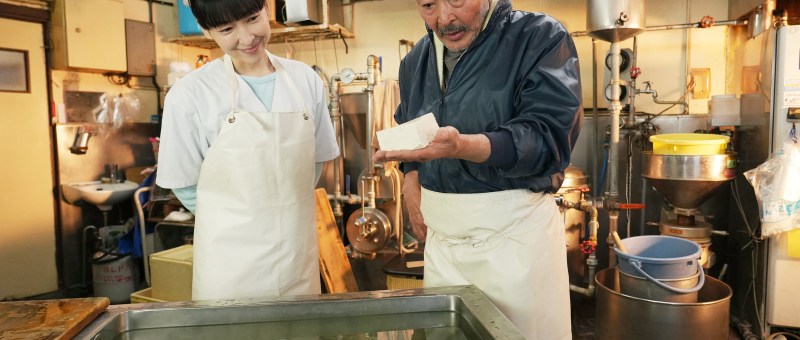
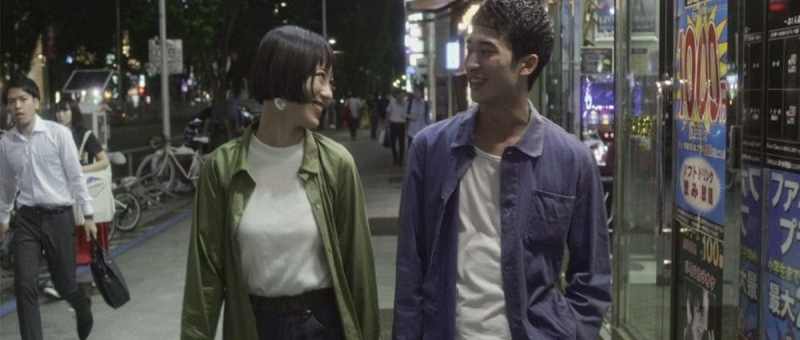
Takano Tofu (高野豆腐店の春, Mitsuhiro Mihara, 2023)

There’s an untranslated title card at the beginning of Mitushiro Mihara’s poignant dramedy Takano Tofu (高野豆腐店の春, Takano Tofu-ten no Haru) that describes the film as a story about the end of Heisei and it is in many ways about the end of an era, or perhaps of eras, but equally new beginnings and the eternal wellspring of life. With subtle hints of Ozu playing out as a kind of mashup of Late Autumn and Late Spring, it suggests that it’s never really too late to find happiness or to start something new even while preserving the best of the old. 

Harbingers of change are, however, lingering on the horizon as a customer to Takano Tofu remarks agreeing with daughter Haru (Kumiko Aso) that they need to innovate to stay in the game when the big new supermarket opens a few streets away. But change is not something father Tatsuo (Tatsuya Fuji) is keen on and especially when it comes to his tofu which is why he’s cancelled Haru’s popular new product of fried tofu and cheese despite its popularity and is also dead against her idea of expanding their network to sell in Tokyo.

There is something inherently comforting about the peacefulness of this quiet corner of Onomichi as Mihara captures it even if it also seems like a place out of time more Showa even than Heisei with its family businesses and old-fashioned shopping arcade. But equally there’s an underlying loneliness and answered longing along with a sense of lives disrupted by historical circumstance. Ironically enough, Tatsuo receives news from the hospital that one of the arteries to his heart is blocked requiring an operation to get everything working again and then immediately bumps into an old woman about his own age with whom he eventually bonds over the shared traumas of living in post-war Japan along with the lingering social stigma towards those affected by the dropping of the atomic bomb. We later learn that the failure of Haru’s marriage was in part caused by her father-in-law’s prejudice fearing her irradiated genes would contaminate his bloodline.

Then again, perhaps the pity expressed towards Fumie (Kumi Nakamura) as a woman who never married plays into outdated and sexist social attitudes that also lead Tatsuo and his friends to decide to find a mate for Haru given his sudden mortality crisis and fear that like Fumie she will be left alone when he eventually passes away. Of course, what it amounts to is a bunch of old men trying to decide who a middle-aged woman should marry while deliberately avoiding asking her if that’s even something she’s interested in. Having experienced marriage already perhaps she’s no desire to do so again and is perfectly happy the way things are. In any case she’s infinitely capable of finding a husband for herself if she wanted one. The prospective match they come up with for her is perfect on paper, youngish, handsome, wealthy and cultured, yet as it turns out what Haru might prefer is someone more ordinary, down to earth, and straightforward ironically enough just like tofu. 

As she later says, Tatsuo’s tofu has the flavour he gives it. Nicely textured, surprisingly soft on the inside, with a slight hint of astringency. There may be a minor pun involved in the Japanese title in that it can be read either as “Haru of Takano Tofu”, or as the meaning of her name implies “Spring at Takano Tofu” hinting both at a sense of transience and resurgence as Tatsuo takes in the cherry blossoms with Fumie and reflects on all they’ve experienced throughout the long years, the hardship and heartbreak of the post-war era. Yet as he says life is for living and it’s as much as you can hope for to look back and laugh at a life well lived. Maybe some things don’t need to change all that much, like carefully produced artisanal tofu as rich in soul as those who make it, but there’s always room for a little innovation and tiny chances for new happiness that could easily pass you by if you aren’t willing to take a risk or two and place a bet on change.


Takano Tofu screened as part of the 18th Season of Asian Pop-Up Cinema.

Original trailer (no subtitles)

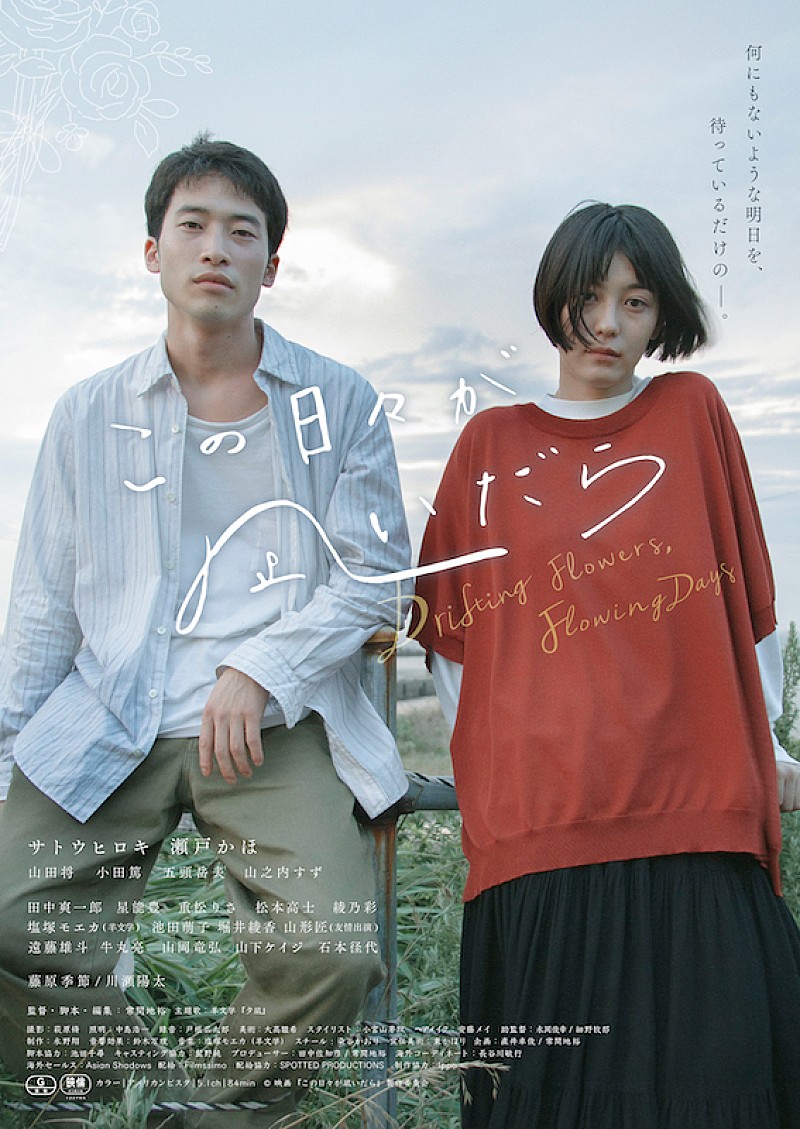
Drifting Flowers, Flowing Days (この日々が凪いだら, Yutaka Tsunemachi, 2023)

Life goes on as usual, until it doesn’t. The couple at the centre of Yutaka Tsunemachi’s debut feature Drifting Flowers, Flowing Days (この日々が凪いだら, Kono Hibi Ga Naidara), are about to hit the crisis of youth in which they begin to think seriously about their futures and fear that their lives can no longer continue simply as they were but also struggle to find direction while torn between what society views as a successful life and their own desires.

The crunch point comes when Hiroto (Hiroki Sato), a construction worker, and Futaba (Kaho Seto), who works in a florist’s, learn that their rundown apartment block is going to be demolished and they have six months to find somewhere else to live. While Futaba idly looks at wedding rings, she isn’t really sure how Hiroto views their relationship or if he’s even assuming they’ll finding somewhere new together. The financial strain of an unexpected move also has her wondering if she should give up her job in the florist’s, which she enjoys due to her love of flowers, and start looking for a regular company job but an attempt to talk about it with Hiroto only results in petulance born of male pride as he takes it as her complaining he doesn’t earn enough with his job as a casual labourer. 

Another source of friction is that Hiroto seems reluctant to meet Futaba’s family while refusing to introduce her to his hinting at longstanding childhood trauma stemming from a legacy of domestic abuse and a father who lost himself in drink. Even so, he’s drawn to an older man at work, Haruo, who soldiers on despite his decreasing physical capability. When he is unceremoniously fired, the Haruo takes his own life having lost his both his means of supporting himself and his sense of purpose. Haruo might remind him of father though Hiroto feels somewhat guilty that he didn’t do very much to help while he was alive and resentful towards his heartless boss and colleagues who did nothing more than make fun of him. 

This idea of people being disposable tools of corporate entities is further born out by the experiences of his hometown friend, Daigo (Masashi Yamada), who is feeling burned out by his dream job in the city largely thanks to a bullying boss and overbearing work culture. A friend who experienced something similar tells him she just quit her job and feels much better so if he doesn’t feel appreciated he should leave, but it’s not really that simple. Not only does he need a steady income to survive but there’s a degree of shame and trepidation in not following the conventional path, the same shame and trepidation that has Futaba worrying she’s being irresponsible in following her dream of opening a florist’s of her own rather than using her degree to get a better paid job and start saving for the next phase of adulthood while still uncertain if Hiroto is going to want to get married and settle down. 

Experiencing another crisis that forces him to confront his childhood trauma, Hiroto sighs that his future is shrouded in darkness and he wishes that it was all set out for him an ironic inversion of the crisis experienced by others his age that they resent being railroaded into a life of conventional success that in fact does not make them happy. In any case, he emerges with a little more clarity about the kind of future he might want no longer so frightened of commitment or suspicious of familial bonds. What the youngsters experience is a perhaps premature end to their youth symbolised by the literal tearing down of their world in the soon to be demolished apartment block that forces them out of their inertia and onto a path towards a more settled adulthood. But equally that doesn’t necessarily mean that they have to abandon their dreams or live up to an ideal of conventional success if it’s not what they want but can begin to find other futures for themselves outside of the mainstream that are valid and satisfying. Tsunemachi follows them with a hazy detachment but captures something of the anxieties of contemporary youth still struggling to find accommodation with demands of living in a judgmental and uncertain society. 


Drifting Flowers, Flowing Days screened as part of the 18th Season of Asian Pop-Up Cinema.

Original trailer (English subtitles)

Faraway Family (彼方の家族, Taro Kawasaki & Eisuke Sakauchi, 2023)

It may be a truism to say that you never really know what’s going on in other people’s lives, but even if a family looks superficially happy and gives the impression everything is going just perfectly for them that might not actually be the case. The title of Taro Kawasaki & Eisuke Sakauchi’s Faraway Family (彼方の家族, Kanata no Kazoku) has a double meaning in that in the Japanese title can be also read as “Kanata’s Family” which is the name of the hero and also a word meaning “somewhere in the distance” which is in fact how both of the boys feel their fathers to exist. 

Kanata may feel it more closely in that he lost his father in the 2011 tsunami and has never really dealt with the grief having moved to Yamagata with his mother. Kanata’s father also had quite a difficult relationship with his fisherman grandfather who was intent on railroading him to take over the boat and seemingly never had a good word for anyone yet his father lost his life after heading to the harbour to look for him explaining only that he was family. Now the only breadwinner in the family, his mother has to work to support them and is therefore often absent, leaving him money to buy dinner from a convenience store which he usually eats alone. 

Having become withdrawn and fearful of making new relationships that may end suddenly, Kanata also has the added stigma of being someone from Fukushima in the wake of the nuclear disaster. His new teacher, Yoshikazu, makes a well-meaning faux pas in telling Kanata to consider him a father figure yet as it turns out Yoshikazu is a fairly compromised one. On being introduced to his classmate Riku who is also Yoshikazu’s son he thinks he’s had his face rubbed in it with this picture of the perfect family.

But what he discovers is that Riku has many of the same problems as himself seeing as he also fears he does not really fit in his family and wonders if they’d be happier and better off if he weren’t in it. Unlike Riku, Kanata doesn’t seem to be overly burdened by parental expectation and despite the problems between his father and grandfather his early childhood seems to have been happy and filled with love and cheerfulness. His problem is more to do with what he’s lost and the resulting sense of absence it’s left behind as he finds himself eternally missing his father. 

For Riku meanwhile, it’s the connection itself which is painfully absent. The more he tries to connect with Yoshikazu the more it seems to backfire while Yoshikazu seems obsessed with the idea of his getting into Japan’s most prestigious university mostly for his own gratification as double proof of what a great teacher and father he is. Or else, to mask his own sense of inadequacy in that he would feel embarrassed professionally if his own son turned out not to be academically inclined. Riku’s family don’t celebrate birthdays and he can’t ever remember getting a present but when he decides to try and buy one for Yoshikazu it’s a reminder of a happier memory when he simply played with him as a loving father rather than a hard taskmaster driving him on to a vicarious goal as evidence of his controlling nature. 

Kanata seems to have had more than his share of tragedy in life and is painfully aware of the things just our of reach but also increasingly that not all of them are and if you’re not careful you can in fact be the one to push them away. Shooting in the icy snow of a Yamagata winter, Kawasaki and Sakauchi capture the frostiness of the boys’ emotional isolation but also the quickening warmth of their friendship as they bond over their shared loneliness in pining for an absent father. What Kanata learns is to embrace the things that seem somewhere far away for they do at least exist there, even if no longer present in a physical sense, and that the memory of them can be warm and comforting rather than painful or lonely. 


Faraway Family screened as part of this year’s Osaka Asian Film Festival.

Original trailer (no subtitles)

WE 12 (12怪盜, Berry Ho Kwok-man, 2023)

Phenomenally popular Cantopop boyband Mirror have been dominating the Hong Kong box office lately with several of the guys playing regular roles in movies not particularly designed as vehicles for their star persona such as Anson Lo’s turn in arty horror It Remains, or Lokman Yeung in Mad Fate. We 12 (12怪盜) is however the first time the band have made a movie altogether as an ensemble star vehicle and is clearly intended for their many devoted fans filled as it is with what seem to be in jokes and references to the guys’ “real” personas or at least those of the “character” they play in terms of their membership of Mirror.

The guys’ solo projects and movie work are perhaps hinted at in the film’s central thesis, if you can call it that, in that the boys have been doing too many solo missions and have lost their team spirit. In the universe of the film, they’re a kind of crime fighting zodiac who do things like save princesses and conduct jewel heists. Each of the band members, who use similar character names, is introduced with a special power which ranges from the ability to converse telepathically with animals to the nebulous “strategic planning” and the downright plain “abseiling” which seems particularly unfair given that any of the other guys could obviously learn to abseil too and then he wouldn’t have a power anymore.

In any case, their group mission is to stop a mad scientist from activating a device which can send mosquitos to other universes because it would destroy our ecosystem. Meanwhile other scientists are working on creating a “right-wing chicken” which turns out to be less political than it sounds and in fact much more absurd, along with a series of other cancer causing foods just in case you weren’t sure if they were really “evil” or not. Even so, the plot isn’t really important more a means of tying the silliness together given that focus is split between the 12 guys who each have their particular moment to shine and personalised gags. When the big job goes wrong because they decided to all do their own thing rather than work as a team, they have to come back together again and rediscover the equilibrium of Kaito (i.e. Mirror). 

Which is all to say, it’s a little impenetrable to the uninitiated but fans of the band will doubtless be in heaven. It’s all in the grand tradition of boyband popstar movies in which the silliness is sort of the point in generating a sense of conspiracy with fans that they’re the ones who get the jokes because of their intimate relationships with the stars. The film also features extended cameos from fellow Cantopop group Error who play their back up team and have a few gags of their own, while Malaysian actress and star of Table for Six Lin Min Chen also has a small cameo as the kidnapped princess. 

The best performance comes however from The Sparring Partner’s Yeung Wai-lun as the slimy security manager Johnny who is obsessed with order and dresses in fascist uniform so obviously out of keeping with the silliness and absurdity the boys represent in a mild kind of rebellion towards anything serious or grown up society in general. There is something quite childish about the way the gags suddenly pop up out of nowhere along with the otherwise nonsensical nature of the film which isn’t so much a nonsense comedy like those of the 80s and 90s as much something totally random perhaps intended to express the essence of Mirror or at least that which its fans believe it to be. For all of these reasons, the film makes very little literal sense and does not hang together very well for anyone not already well versed in the world of the band but presumably plays out just fine for anyone with a 21st-century equivalent of a decoder ring and a silly sense of humour willing to join the boys for whatever crazy adventure they may be embarking on next.


WE 12 is on UK cinemas now courtesy of CineAsia.

Evil Does Not Exist (悪は存在しない, Ryusuke Hamaguchi, 2023)

Whatever happens upstream affects those further down according to the headman of a small village faced with incursion from city dwellers hoping to turn their peaceful idyll into a tourist hotspot in Ryusuke Hamaguchi’s eco drama Evil Does Not Exist (悪は存在しない, Aku wa Sonzai Shinai). He reminds them that those at the top have a responsibility to those below, and it’s only because of this sense of mutual consideration that life is possible here. It’s an obvious metaphor for the contemporary society in which those with money and power have largely forgotten about those without, but then the film’s title also asks us a question. What is “evil”, does it exist or not, or is it merely in inextricable part of nature human and otherwise that balances out the good?

After a long tracking shot along the trees shot from below, Hamaguchi focuses on the figure of Takumi, a man at home in nature patiently sawing and cutting logs. He teams up with another man, Kazuo, to harvest water from a local stream we later realise is being used by an udon restaurant for a superior taste. Takumi shows him wild wasabi and explains how the locals use it, suggesting that Kazuo consider adding some to his dishes. Like him, Takumi’s daughter also seems to be at home in the forest, wandering off to walk home alone when Takumi inevitably forgets to pick her up from school.

Takumi describes himself as a “jack of all trades” or more to the point a local odd job man, but seems in many ways he’s one who keeps the balance. The problem they have now, is that a company from Tokyo has bought some land and is intent on stetting up a “glamping” resort in the village. A pair of agents turn up from the city to give a kind of question and answer session, but as one of the attendees later suggests it’s mainly to make themselves look good. Unable to answer most of the villagers’ quite reasonable questions all they can do is state they’ll take their opinions into account while offering flawed promises of financial gain and insistence that people from Tokyo will visit as if that were some kind of honour. It doesn’t seem to occur to them that the villagers maybe happy as they are and aren’t interested in further material gain while understandably wary of the effects of the resort on the local area from increased traffic and pollution. The agents encounter unexpected resistance centring on the septic tank which has been penciled in for an area which would lead to the contamination of wells and groundwater while it’s also clear that the company are determined to cost cut with the agents blithely telling them that a little bit of sewage in your drinking water never harmed anyone and in any case it’s within the permitted amount. 

Others ask questions about fire risk and understaffing with the agents later asking Takumi to become the resort’s caretaker, insulting him with the implication that he’s some kind of layabout easily bought with a fat paycheque. He corrects them that he has a job and doesn’t need the money, though they persist with asking him to be a kind of advisor. Takahashi, a jaded manager, is soon captivated by the area and in particular Takumi’s manliness in his log splitting and mysterious demeanour but there’s something inevitably harsh and unforgiving about nature even if it’s man that has corrupted it. Gunshots are heard over the horizon, men hunting deer. Takumi and Hana walk past the carcass of one who bled out from a bullet wound and was presumably just left there dying for no real reason. Takumi tells the agents that their site is on a deer path, so they’d need high fences which might put the customers off but reflecting that wild deer aren’t usually “dangerous” unless they’re sick or have been shot. Takumi asks where the deer are supposed to go but gets only a shrug of the shoulders and “somewhere else” from Takahashi, but there are only so many other places, what if this is the last one? If you continue to displace things, there won’t be anywhere left for anyone.

Still, as Takumi says it’s not that villagers have already decided to resist the glamping project, only that they want their fair complaints to be addressed and are willing to engage with the process if only the agents would treat them with a little more respect. But that’s something thin on the ground from the execs in Tokyo who think they’re all a load of bumpkins easily bought off with promises of a better economic future. To Takumi it is really a matter of balance, something that should be maintained for one’s protection as much as anything else. The ominous score which frequently cuts out abruptly adds to an edge of unease and supernatural dread in the ancientness of the natural world even if as Takumi points out this isn’t their ancestral land. It’s a new village that originated in the immediate post-war era when returning soldiers were given land to farm. They are all to some degree outsiders, as perhaps are humans in this inhuman place, but also ones who’ve found a way to live in it that’s as much about respect for the land and others as it is about survival.


Evil Does Not Exist opens in UK cinemas of 5th April courtesy of Modern Films.

UK trailer (English subtitles)