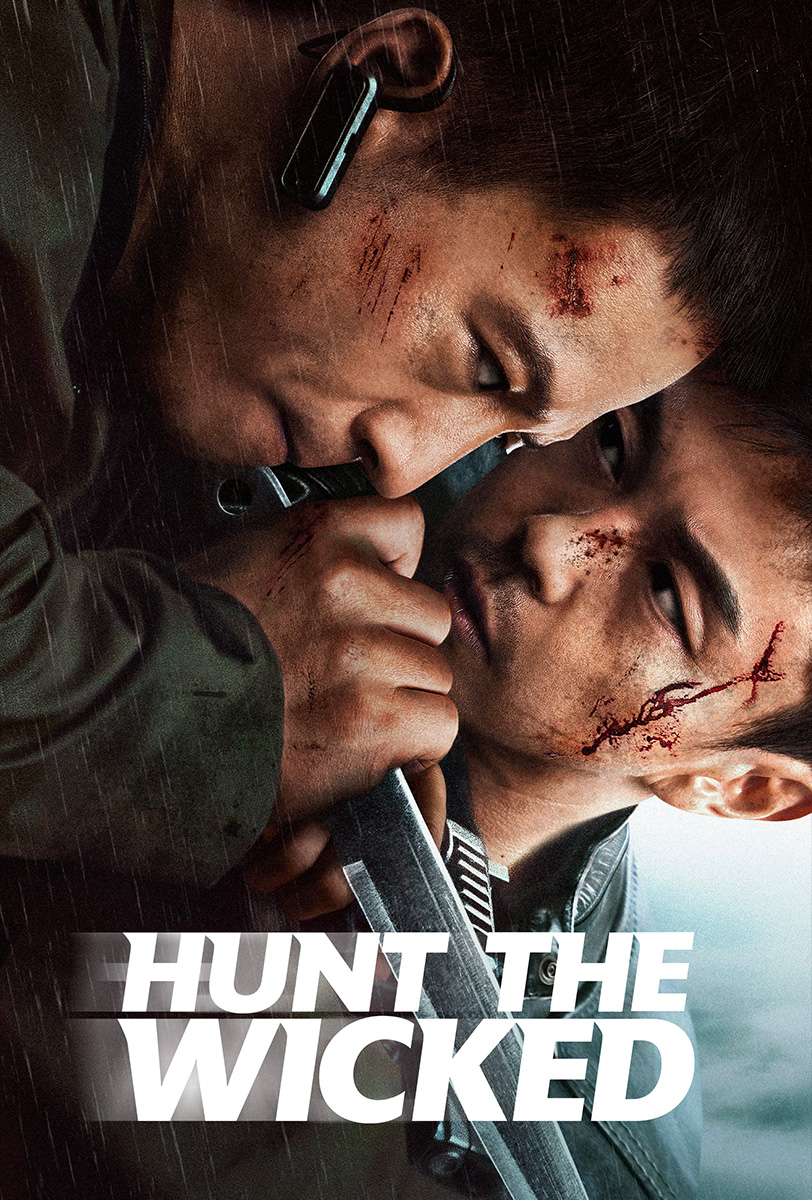
Bel Ami (漂亮朋友, Geng Jun, 2024)

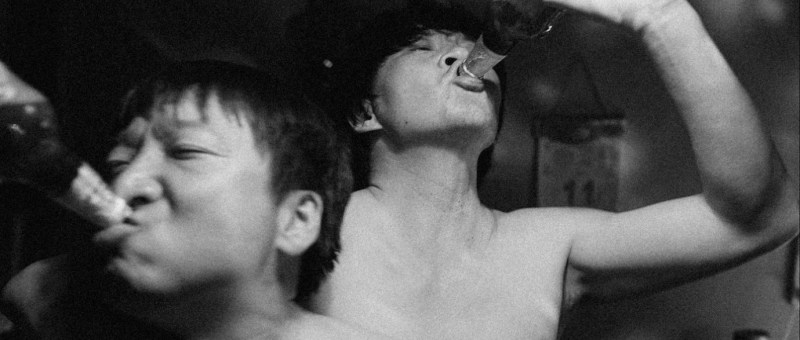
In the opening scenes of Geng Jun’s Bel Ami, a middle-aged man poses for a series of nude photos. The pictures and the poses echo a long history of queer iconography, but at first the man stands with his back to us. We can’t see his face, and he is hiding from us who he really is even as his nakedness suggests a desire for authenticity and a demand that we recognise his identity. “It’s repressive,” another man sighs, complaining that like everyone else he is forced to keep a part of himself hidden and is painfully lonely because of it. 

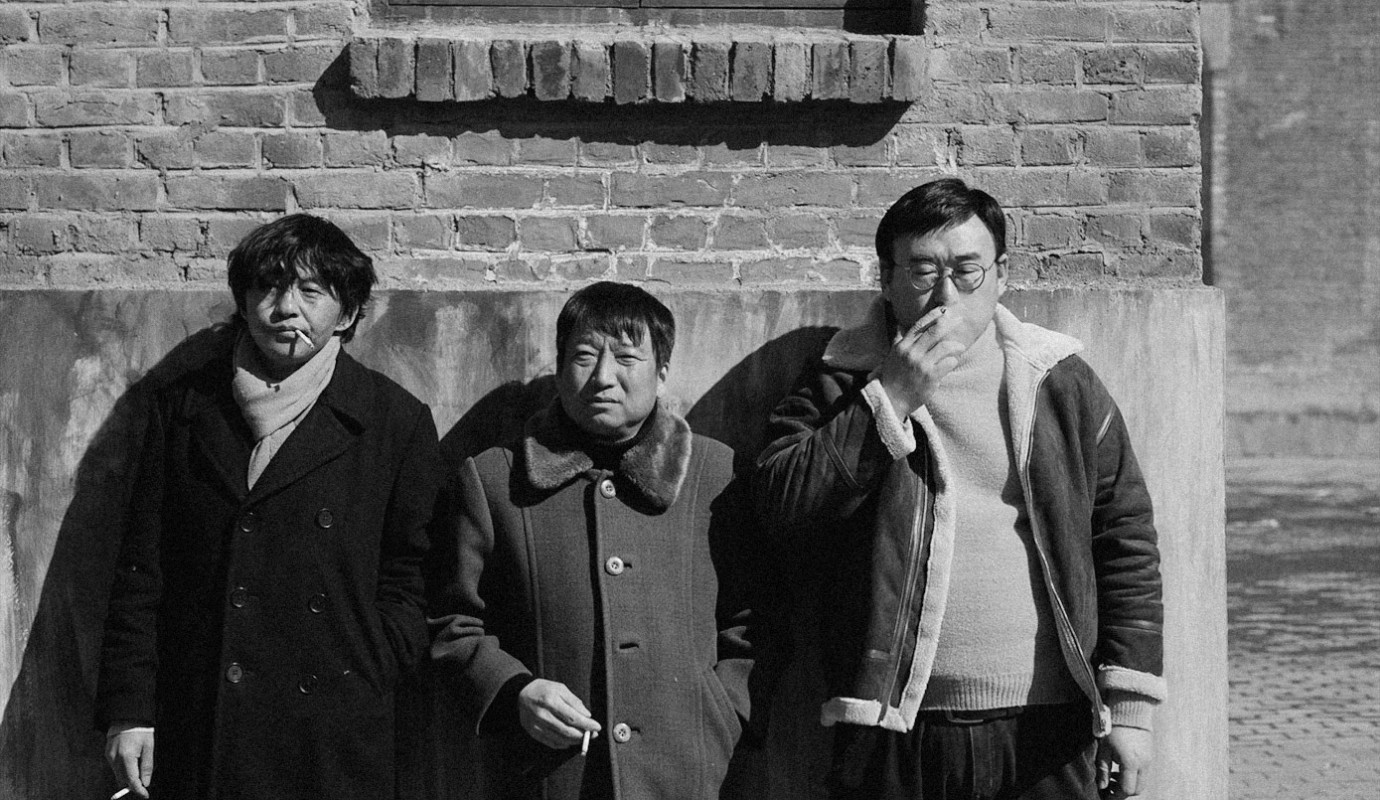
Like Geng’s other films set in Heilongjiang, Mainland China, the film’s queer themes would not play well with the censor’s board who are notoriously squeamish of any reference to the LGBTQ+ community and has found success only by screening in Taiwan where it won several categories at the Golden Horse Awards. There is a minor irony in play as a certain character makes clear in his rendition of the Internationale that the queer community in China has long referred to each other as “tongzhi” or “comrade” but do so to express solidarity against the oppressive authoritarian government which isolates and others them, preventing them from living authentically as full and free members of society. 

When Zhiyong spots a man he assumes to be gay in a cafe, he addresses him as “tongzhi”, but the man first denies his identity and responds to Zhiyong’s question about why he’s dressed in what he sees as a stereotypically gay manner if he’s not actually gay by saying that his son is really into rock music so he’s trying to look “cool”. He later confirms that he is actually gay and is annoyed his outfit is giving him away while similarly worried that Zhiyong will expose him. By contrast, a pair of lesbians sit in the next booth over and are overt and open in their relationship. They remark that the men behind them appear to be hiding something, while one insists that men have no morals or integrity. 

Xuanyu is, however, the most authoritarian of all as she keeps gay barber Quan, the prospective father of their child, under total surveillance. She insists on micromanaging his life, stalking him and installing a camera hidden in a clock in his barber shop. Her partner tells her love is freedom and asks if that’s what they give each other when they receive little of it from elsewhere, though it’s a question with no answer. Xuanyu is happy with the way that things are. She’d rather adopt than involve a man in their desire for a child and suggests just eloping while her partner says her parents would never accept it. Shooting in a crisp black and white that adds to the film’s breezy, deadpan humour, Geng switches to colour only once as Jing poses in a wedding dress only to be joined by a reluctant Quan suggesting a possible marriage of convenience that will satisfy both of their families and their filial obligations in the birth of their child. Quan leaves the frame as soon as possible, taking his flowers with him, for Xuanyu to enter now dressed in a black suit and occupying the space the groom.

Quan had been the lover of the man in the nude photos, Gang, but abruptly broke up with him. A baker who likes to strike back against an unforgiving society by hiding stands of his hair in his bread, Gang is also isolated and lonely, fearing he won’t be able to find another partner. He ends up meeting Zhiyong at an exclusive and very weird gay membership club run by “K” for King who gives Zhiyong the “codename” “Apollo” and immediately embarks on a sadomasochistic game pressuring Zhiyong for sexual favours as a means of joining the community expressing the way in which the oppressed oppress each other. While semi-stalked by an incredibly lonely and socially awkward restaurant owner, Zhiyong first runs from his queer identity but eventually finds a kind of hope and freedom in his relationship with Gang. They are each searching for connection and the freedom to love and be loved which is also in its way a means of resistance against entrenched authoritarianism. Don’t lose hope, they encourage each other while basking in the isolated patch of sunshine of the freedom they have found. 


Bel Ami screened as part of this year’s Queer East.

The Beast Hand (獣手, Taichiro Natsume, 2024)

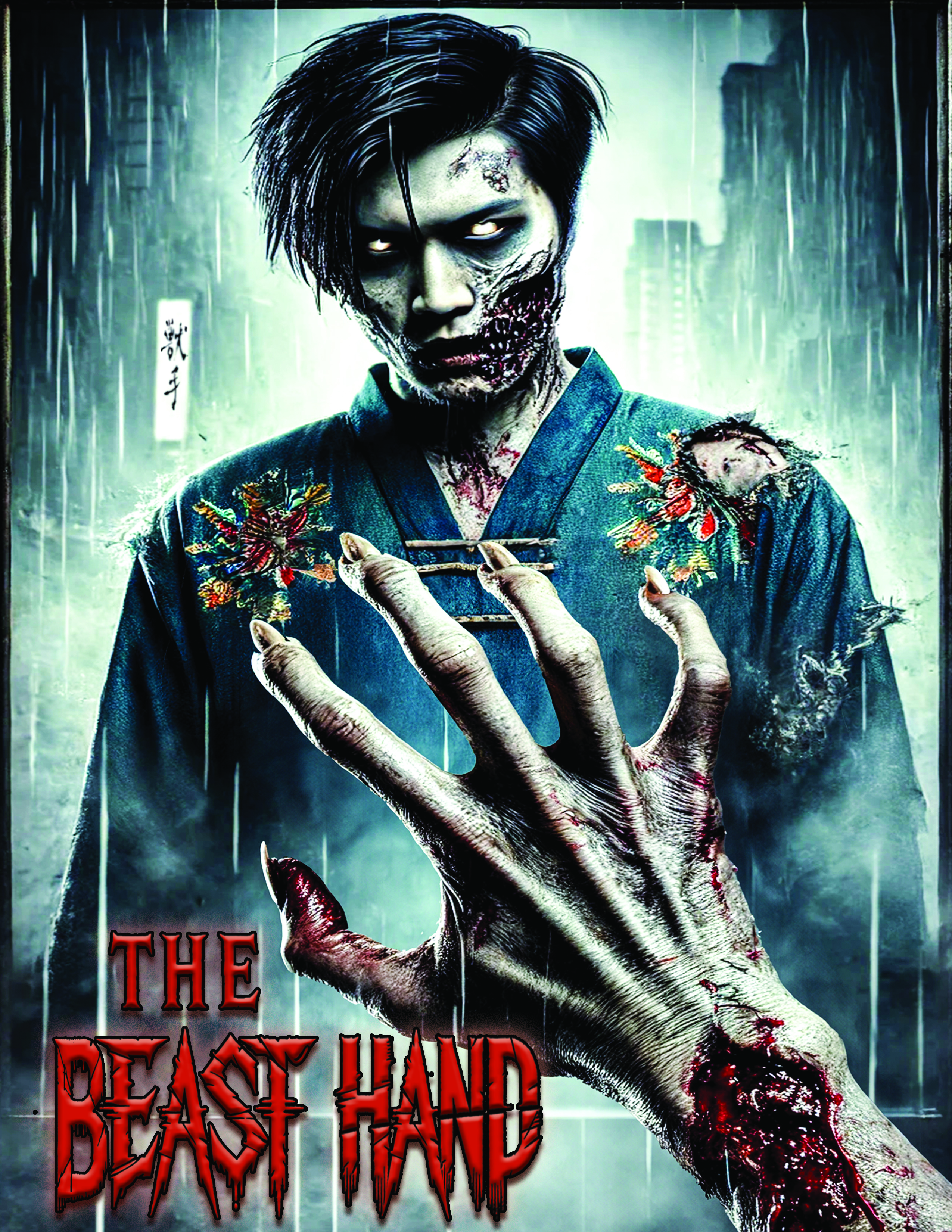
This world makes monsters of us all in Taichiro Natsume’s low-budget indie body horror Beast Hand (獣手, Kemonote). In many ways, Osamu (Takahiro Fukuya) is pursued by his own left arm in his continual powerlessness and tendency towards self-destructive acts of crime and violence. But it’s also true that it isn’t just his hand that makes him monstrous to the world around him and that his “deformity” is also symbolic of the ways in which he is excluded from mainstream society.

Indeed, Osamu already lives a marginal existence in a cramped, reclaimed space on the edges of a town. Having served time in prison, he gets by doing casual labour and quite literally kicking the can down the road, while we also seem him shoplift a can beer after paying for his dinner. His life appears to be defined by futility even before Inui (Yota Kawase), a man with whom he seems to have shared a criminal past, arrives on his doorstep and barges his way back into his life. Technically on parole but having absconded from his probation office, Inui forces Osamu to give up the contact details for his old girlfriend, Koyuki (Misa Wada), who stopped visiting him in prison and was apparently so desperate to get away from him that she had “full body surgery” to essentially become someone else and start a new life.

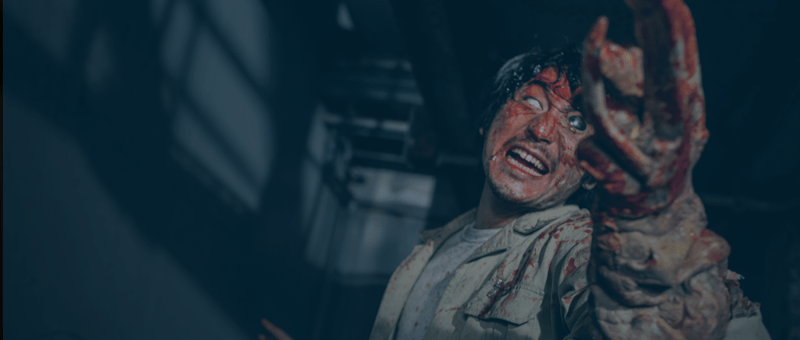
Starting a new life is it seems something that they both want to do but are each unable to shake off the hold that Inui has over them. He, however, is in the same position and though he bullies and assaults them both, bows down before a man he met in prison who gave him extra food from the canteen. The old prison friend wants help on a job robbing the woman who still hands out physical pay-packets to workers at a local factory, but Inui turns him down stating that he’s still on parole and it’s too risky though secretly plotting to have Osamu do the job on his own. Predictably, it all goes wrong and Osamu ends up losing an arm only for Koyuki to drag him to a backstreet doctor who first refuses to help but then apparently experiments on him with a drug he’s researching into regenerative health with the consequence that Osamu’s arm grows back but as a monstrous lump of throbbing grey muscle that he is no longer able to fully control. At moments of high emotion, the arm takes him over and he’s transformed into a mindless, thrashing beast to the extent that Koyuki has to chain him to the wall to ensure her own safety.

Having bonded in their shared sense of subjugation, they once again attempt to change by living a more normal life in a small town by the sea. But even here, Osamu is rejected in part because of the arm itself, which he keeps disguised in bandages and a sling as if it were broken, and otherwise because of his secrecy about it which sees him fired by the kindly older gentleman running a factory where Osamu found temporary employment. Koyuki becomes pregnant, but financial pressures and the lingering anxiety about what kind of child this world might produce eats away at them. Osamu isn’t sure if the baby’s his or Inui’s nor which of those two options is better given that the child might inherit whatever’s infected his arm, while Koyuki is no longer certain about the viability of raising a child in their present circumstances. Both from single-parent families, they lamented that neither of them had the experience of being taken to the beach by their parents which seems to be the idyllic picture of a carefree childhood they’re trying to recapture.

But still they find themselves hounded and pursued, this time by a shady businessman who doesn’t want cure Osamu but to exploit him by ripping off his arm and using the technology for his own nefarious ends. The remorseful doctor also wants a tissue sample, but promises a salve in return that would at least subdue his violent impulses and allow him to live a more normal life. The implication is, however, that the only way Osamu can have the semblance of a happy family is by wilfully sacrificing himself and accepting that he has no place within in it. Condemned by his monstrousness to the edges of the frame, he accepts his liminality rather than railing against it and resigns himself to self-isolation as a permanent exile from a continually unforgiving society.


The Beast Hand is released in the US on DVD and blu-ray May 13 courtesy of Cleopatra Entertainment and available from MVD.

Trailer (English subtitles)

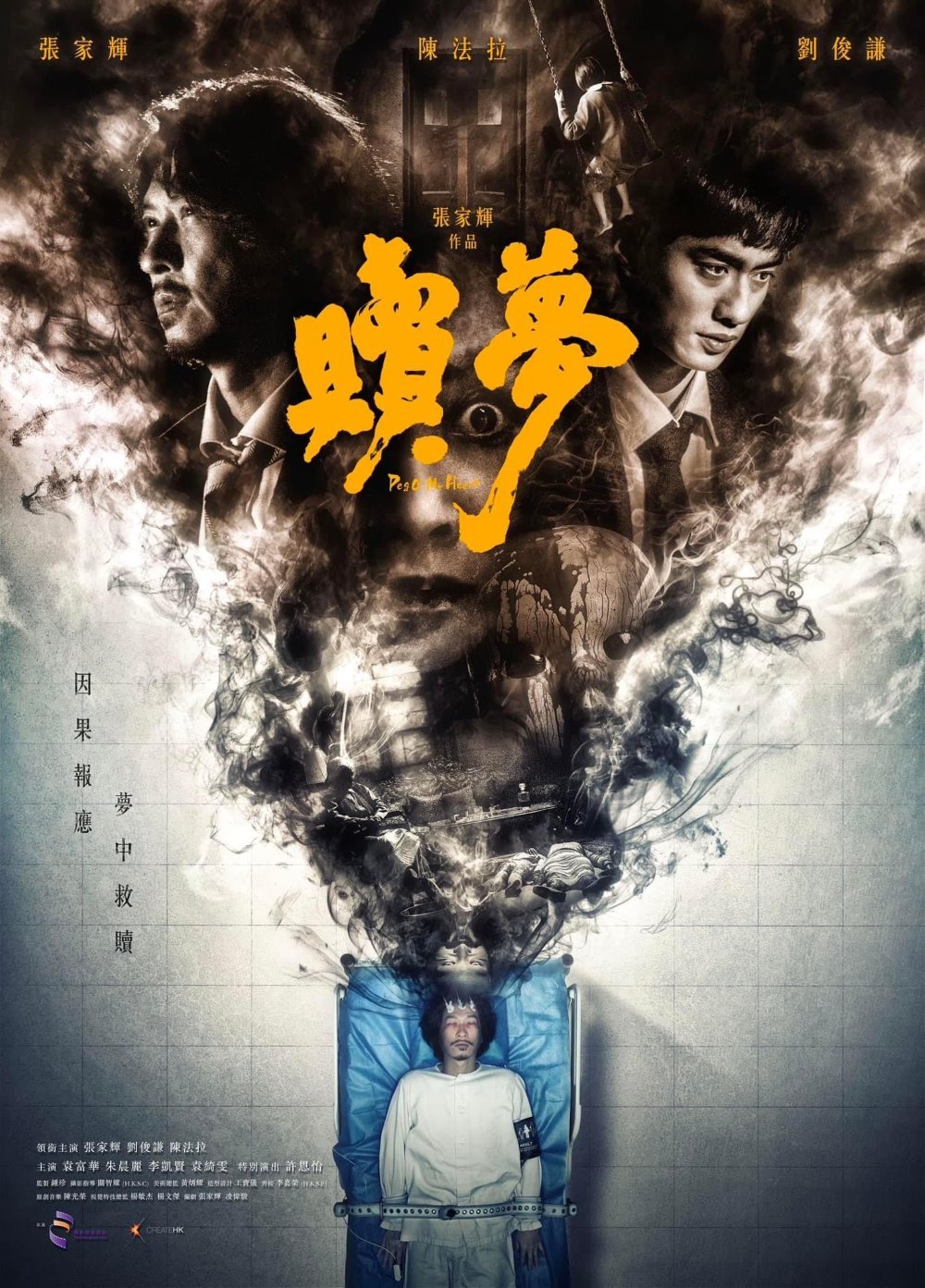
Peg O’ My Heart (贖夢, Nick Cheung Ka-Fai, 2024)

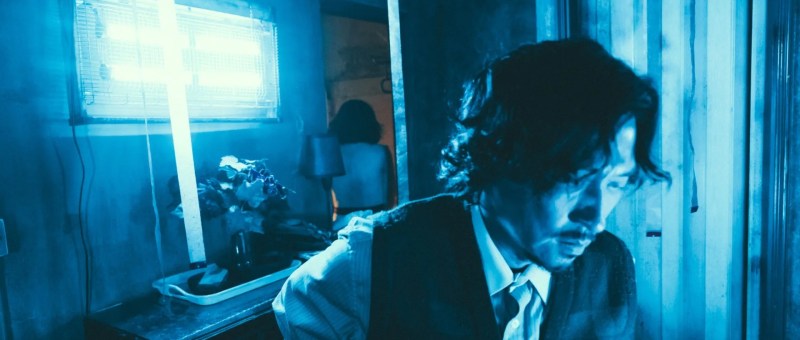
An insomniac taxi driver says he can’t sleep but he can’t wake up either. He finds himself plagued by bad dreams in an increasingly surreal Hong Kong that seems to exist more within the mind than the physical reality and populated by the orphaned ghosts of another era. Clearly inspired by the films of David Lynch with overt visual references to Lost Highway and Twin Peaks, Nick Cheung’s Peg O My Heart (贖夢) follows a maverick psychiatrist intent on actually treating his patients as he chases the taxi driver while in flight from his own trauma.

Dr. Man (Nicholas Cheung Ka-fai) is already in trouble for prying into the lives of his patients when his superiors, men in slick suits bickering in English, would rather he just get on with his job of prescribing pills. The first patient we see him treat is a teenage girl whose surreal dream sequence finds her on a swing in a room of blood while a giant baby doll looks on. Man notices an upturned doll’s head being used as a cup by one of her friends and begins to get a picture of what’s been going on. The apartment the girl lives in with her grandmother is cramped and grimy in the extreme despite the happiness banner on the door. The girl and her friends have taken to drugs to escape their own dissatisfying reality, but it led them to a dark place in which the boy abused the girl and left her with lasting trauma that blossomed into psychosis in much the same way’s Man’s own has. Nevertheless, in contrast to his bosses, he’s careful to remind her that she still has choices and it might not be the right time for her to have a child though he’ll help her whatever she decides.

In a strange way, it might be the taxi driver who’s responsible for her plight. In another life, Choi (Nicholas Cheung Ka-fai) was a high-flying financial analyst who could afford to give his wife a Mayfair flat on a whim, though you’d never guess it now. In those days, his hair was slicked back rather than long and wavy and his suit was finely buttoned rather than hanging loose. He wore glasses too, which he alarmingly no longer seems to do while driving. His eyes are red and puffy, his face pale like a ghost. On his return home, he and his wife have a number of strange rituals which make no kind of sense but hint at the extent that they have descended into a dream world, locked in by their guilt and the feeling that they are being tormented by a vengeful ghost. 

Then again, Choi’s heartless former colleagues describe him as being too sensitive for this line of work. They joke, a little misogynistically, that his wife was always the go-getter. Fiona (Fala Chen) was into stocks too, the pair of them playing a game of untold riches without any awareness of what it meant to gamble with other people’s money. His colleagues may have told him that’s exactly why it didn’t matter and it was silly to worry about it, but it seems Choi did worry, though the money distracted him from his moral quandary until the lack of it convinced him to betray an old friend with tragic and unforeseen consequences. 

Choi and Fiona are plagued by echoes of a single afternoon, one of sunlight and happiness that they unwittingly ruined with their insatiable greed. Dr. Man, meanwhile, says he has the same dream every night but can’t remember anything about it in the morning. That’s a contradictory statement in itself, though his loyal nurse Donna (Rebecca Zhu) doesn’t seem to have picked up on the holes in his story. In any case she introduces him to his previous boss, Vincent (Andy Lau Tak-wah), a former psychiatrist with an unexplained prosthetic arm, who has the power to enter other people’s dreams and seems to exist in more than one place at once, like the Mystery Man in Lost Highway. Exploring his dreamscape allows Man to reckon with his own trauma and subsequently learn to forgive and accept his father, though he may not, in fact, have faced himself fully or released his guilt even as he and Choi eventually share a similar fate. Are either of them awake, or still asleep? Did Man go through the mirror, or merely deeper inside it? The melancholy streets of contemporary Hong Kong take on a deathly hue trapping its traumatised denizens in an inescapable hell of guilt and regret from which they can never awake.


Trailer (English subtitles)

My Sunshine (ぼくのお日さま, Hiroshi Okuyama, 2024)

A golden light seems to pour into the life of Takuya (Keitatsu Koshiyama), a nervous young man with a stammer, as he stands transfixed by the elegant movements of a figure skater. As the world around him literally brightens, he begins to discover another side of himself, though it’s never quite clear if it’s Sakura (Kiara Takanashi), a moody teenage girl whose attitude to figure skating seems ambivalent at best, with whom he’s fallen in love or the simple act of figure skating itself. 

Drawing on autobiographical experience, Okuyama studied figure skating himself while his older sister trained to be a champion, My Sunshine (ぼくのお日さま, Boku no Ohisama) otherwise roots itself in the small-town Japan of the late ‘90s and 2000s in which being different was not exactly welcomed. But in fact, most people seem accepting of Takuya, if in a sometimes patronising way, viewing him as a boy with his head in the clouds and cutting him off when he attempts to speak rather than give him the time to finish. When the teacher is going around the class asking the children to read out a stanza of a poem each, he picks on Takuya and tells him to take his time, though the boy’s anxiety is palpable. The teacher may be caught between two options and struggling to decide which is better, not asking him to read at all to spare him from his classmates’ mocking which would also be to exclude him and reinforce a sense of inferiority in his otherness, or to ask him deliberately and try to encourage patience to teach him and the other children that there’s nothing wrong with the way he speaks. 

But in any case, Takuya is already something of an outsider in that he has no aptitude for sports and it’s never clear if he actually enjoys them or just participates because it’s what you do in this town to be man. When a recent arrival to the town and former international pro-figure skater Hiroshi (Sosuke Ikematsu) catches sight of him clumsily trying to teach himself how to dance like Sakura, it enlivens something in him that reminds him of the passion he once felt for skating. He finds himself wanting to help the boy, gifting him his old figure skating skates and teaching him for free before hitting on the idea of training him alongside Sakura as a pair.

Sakura isn’t all that keen to begin with, though at times, it seems as though she may not even like figure skating and is only doing it because her mother makes her. She tells Hiroshi that she isn’t aiming to become the best ice dancer and is a little resentful of being forced to go back to basics to meet Takuya’s skill level but goes along with it because the coach says so. What she thinks of Takuya isn’t exactly clear, though she seems to look down on him a little like the other kids who also mock him giving up ice hockey to do a “girl’s” sport. For her part she seems to have a crush on the handsome and mysterious Hiroshi that, like Takuya, she is unable to articulate. For this reason, along with an insecurity in her talent, she resents the special attention Takuya seems to be getting when it’s her mother who’s paying for the lessons and comes to the conclusion that he’s just more interested in him than her.

She may not altogether be incorrect. In his early coaching sessions with Sakura, Hiroshi doesn’t seem all that invested and is distracted by Takuya in the same way Takuya is distracted by the sunlight or the snow. In trying to help Takuya, he’s trying to help himself and for a time succeeds as the three of them generate a joyful familial relationship, culminating in a day skating on a frozen lake. But he too is unable to be honest about the fact that he came to this rural town to be with his partner who decided to take over the family business when his father passed away. Kai (Ryuya Wakaba) laughs off questions about whether he’s married yet, and the two men seem to live together quietly otherwise isolated from the community around them. When Sakura catches sight of them together, she realises something she may not really be equipped to fully understand, only further deepening her sense of resentment in an unreasonable feeling of betrayal. It isn’t really homophobia that motivates her as much jealousy when she suddenly brands Hiroshi as “‘disgusting” and accuses him of getting a kick out of making a boy do a girl’s sport, excusing her conviction that he prefers Takuya over her and potentially giving herself an out to quit skating (though it seems her mother’s not taking the hint).

But like Sakura, Hiroshi is also uncertain if this is the right place for him or if he and his partner can really live together in this small town permanently. Though he answers “of course” when Kai asks if he’s glad he came, Hiroshi pointedly gives no answer when he’s asked if he really wants to be here. Kai says that he hasn’t talked about skating like this for ages nor seemed so happy, suggesting that there may have been something missing in his life that the relationship didn’t compensate for and may not survive without. How his professional career ended is never explained, though his telling Sakura that he only got to compete internationally because of the lack of male dancers speaks to a degree of insecurity that contributes to a lack of ambition in his personal and professional lives. All three of them are, for varying reasons, unable to say what they really want or how they really feel. Though they find temporary solace in their fragile bond, it is only, as Takuya’s brother cruelly puts it, meant to last until the snow melts. Nevertheless, now dressed in a new school uniform clearly far too big for him that suggests he has some more growing to do, Takuya may have found a means of self-expression in dance that might give him the courage to speak his mind.


My Sunshine screened as part of this year’s Queer East.

Trailer (English subtitles)
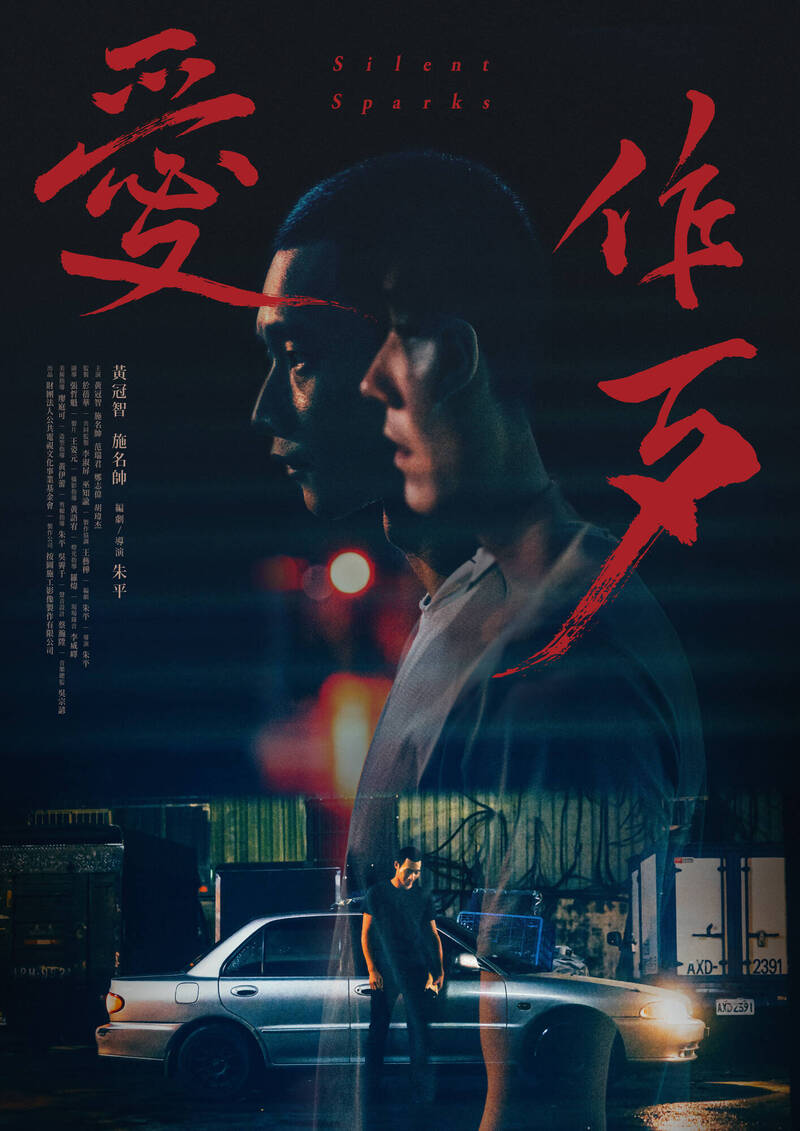
Silent Sparks (愛作歹, Chu Ping, 2024)

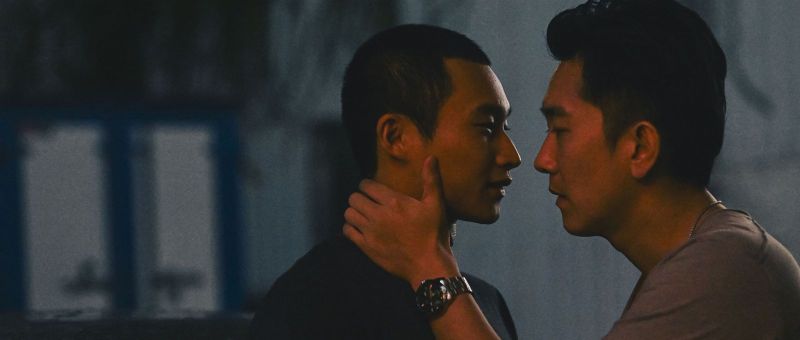
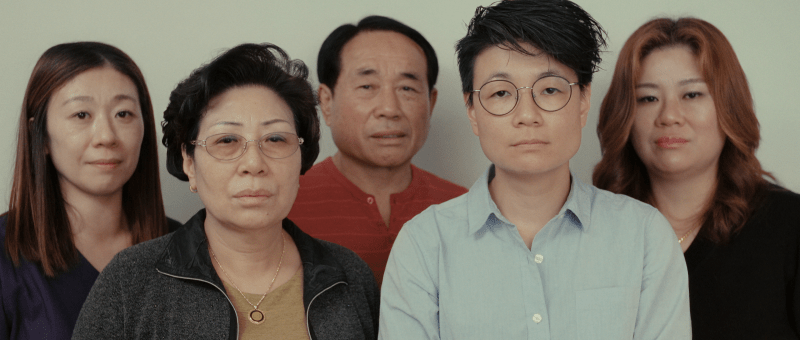
Recently released from prison, a young man discovers that it might be easier to be free behind bars than amid the incredibly homosocial world of urban gangsterdom in Chu Ping’s poignant LGBTQ+ drama, Silent Sparks (愛作歹, ài zuò dǎi). Pua (Akira Huang Guang-Zhi) is a kind of silent spark himself. As the gang boss describes him, he’s too rowdy and can’t keep his cool, which makes him a liability, but he’s also reticent and lonely, not to mention hurt by the seeming rejection when the man he fell in love with in prison ignores him on his release.

There is indeed a latent violence in Pua that hints at his frustration and inability to express himself. When we see him enter prison, he appears as a small boy lost in his own thoughts and silently crying, though he was sent there for breaking a man’s leg in a fight. Though he’s served his time, Pua is still paying off the monetary compensation he owes to the man whose leg he broke and otherwise struggles to get by, which leaves him almost dependent on the gang boss who agrees to take him under his wing as a favour to his mother. It seems that he once knew Pua’s long-absent father, presumably also a gangster, and plays a quasi-paternal role but only half-heartedly in seeing Pua more as a resource to be employed or otherwise an irritating burden he can’t quite seem to shake.

It was the gang boss who asked Mi-ji (Shih Ming-Shuai), his right-hand man, to “look after” Pua in prison. The boss sneers a little, and claims responsibility for saving him, adding that things could have ended up “real nasty” for him inside, by which he means “getting it up your ass”. The irony is that Mi-ji was Pua’s prison lover and Pua is excited about the idea of his release fully expecting to pick up where they left off. But the reunion between them is awkward. Mi-ji is not happy to see him. He speaks tersely and makes it clear he’s not exactly keen for a catch up while keeping one eye on the room in case anyone is getting the right idea. Though Pua continues to pursue him, Mi-ji is avoidant. Perhaps for him, it really was a prison thing that he’s embarrassed about on the outside, whereas Pua is more secure in his sexuality and less afraid of its exposure, only longing to resume the intimacy they once shared.

Mi-ji’s ambivalence hints at the toxic masculinity and entrenched homophobia of the world around them in which homosexuality is not really accepted and “getting it up your ass” is synonymous with defeat and humiliation. The irony is that Pua and Mi-ji were freer in prison where they could embrace their love without shame. Pua is imprisoned within the outside side world by virtue of being unable to be his authentic self, but is also trapped by his socio-economic prospects, which leave him dependent on the underworld and the dubious paternity of the gang boss. Expressing his frustration through violence damns him further in leaving him with mounting debts he can only hope to satisfy through acts of criminality. It is really on this side of the bars that the “real” prison lies, and it’s from this world that Pua longs to be released to return to the prison utopia of his love with Mi-ji.

Still, he cannot really escape his destiny, as his mother keeps reminding having read his tragic gangster fortune and trying to get him to eat rice noodles for 100 days to change his fate only to get her heart broken realising salvation for her son might mean something quite different than she had imagined and also take him away from her. Gritty in its gangland setting and hinting at the connections between political corruption and organised crime Chu’s slow-burn drama makes a hell of the contemporary society in which men like Pua find themselves trapped by toxic masculinities and hierarchal violence under an intensely patriarchal social order that permits them little sense of possibility or the ability to be their authentic selves and true freedom is to be found only within the homosocial world of a more literal “prison”.


Silent Sparks screens at Rio Cinema 5th May as part of this year’s Queer East.

Trailer (Traditional Chinese / English subtitles)

Strangers (Kenta Ikeda, 2024)

Naoko, the heroine of Kenta Ikeda’s Strangers, says she’s been pretending all her life. She’s been pretending to be what everyone wanted her to without really knowing or thinking about what it was she wanted to be or who she really is. On a baseline level, Ikeda suggests that we are and remain strangers to ourselves while equally confused about those around us, seeing what we want or expect to see rather than who they really are.

In part that may explain why Naoko has stayed with her unfaithful fiancé Takeo who got a colleague pregnant and then seemingly abandoned her. Shimizu then began harassing Naoko, stalking her and making silent calls. To make matters worse, Takeo is often away on “business trips”. He’s not currently responding to her phone calls or messages and has just embarrassed her by not turning up to a family event. Naoko’s sister thinks she should leave him and doesn’t understand why she hasn’t already. But Naoko just sighs that she’s decided not to expect too much from life and seems prepared to put up with this degradation because she doesn’t think she deserves anything better. 

That might be why she’s so drawn to her enigmatic colleague Yamaguchi who waltzes in past noon wearing a distinctive blue dress that floats in the air behind her. The other ladies at work gossip that their bullying boss Satome, who is married with two children, got her the job after picking her up on a dating app and the reason why she can get away with such unprofessional behaviour is because she’s sleeping with him. But Naoko later discovers that Yamaguchi’s dating app activities are a kind of side hustle in which she participates in idealised dating scenarios pretending to be the lover of lonely men who pay her handsomely for a few hours of fantasy romance.

Or as Yamaguchi describes it, the opportunity to experience only the good parts of love before you get sick of each other and run out of things to say. It sounds more than a little like the logic of someone who’s decided not to expect too much from life, and while it seems Yamaguchi may be trying to avoid her own grief and loneliness, it’s true that she otherwise remains a cypher. After losing contact with Yamaguchi and being left with her smartphone, Naoko receives a call from her handler who tells her that it doesn’t matter who she is or why she has “Yamaguchi’s” phone, all that matters is turning up at the appointment and never letting it slip that it’s all just role-play.

On her dating app profile, Yamaguchi’s face is blurred so that you only really see the image of her in her distinctive blue dress which Naoko too later starts wearing. The people around Naoko are often shot in soft focus so that we can’t really be sure of their identity beyond using their clothing to infer who they are. Men in particular are often shot from behind or with their faces out of frame as if they were all just a much of a muchness. We never even meet Takeo, who apparently does not return from his “business trip”. In any case, in agreeing to the fantasy date, Naoko is gradually taken over by the Yamaguchi persona. The spread of the graze she sustained at the beginning of the film seems to indicate the gradual erasure of her identity, yet in another sense becoming Yamaguchi also gives Naoko an excuse to stop pretending and accept herself or at least to start expecting more from life. She becomes more assertive, flirtatious, and confident in confronting Shimizu only to realise that she may not have been the mysterious force she felt watching her after all. 

In her Yamaguchi persona, Shimizu describes Naoko as a like a colourless and doorless detergent, but she replies she’s been hiding all her life. She ran ran away from her problems, refused confronting Takeo or Shimizu, avoided being honest with her family and simply played up to the image they had of her of a shy and obedient woman. There might be something in the fact that Yamaguchi kisses her suggesting that Naoko may have been running away from her sexuality, but equally it could just be that this is how the Yamaguchi curse is passed from woman to woman. Having once assumed it, Naoko now must try to shake it off but that too might not be as easy as she might assume. Meanwhile, those around her also have their own secret lives and faces they keep hidden from others. Ikeda creates a atmosphere of eeriness and hovering violence amid the faceless city where it doesn’t matter who you are so long as you show up and everyone is to some extent participating in a temporary fantasy in order to overcome the disappointment of life in which as Naoko had told herself it seems better not to expect too much.


Between Goodbyes (Jota Mun, 2024)

There’s a small irony at the centre of Jota Mun’s documentary Between Goodbyes in that she often cuts back to  contemporary stock footage of television items covering the subject of adoptions in Korea. Pundits are full of panic about the rapidly expanding baby boom of the post-war era and concerned about a growing lack of resources to care for them. Fast-forward 50 years and the problem has reversed as the news items are full of panic about the ageing population and record low birth rate. Still, it’s clear that the nation has not yet fully reckoned with its history of international adoptions which employed dubious practices to separate parents from children and essentially sold babies abroad in a business model more akin to human trafficking. 

Mieke’s mother Okgyun is wracked with guilt about the decision she made to give her up, which was motivated mostly by her poverty, but also a series of social stigmas including that towards large families. With three children already, they simply couldn’t afford another and Okgyun had planned on an abortion though was talked out of it and advised to put the baby up for adoption on the promise that it would have a much better quality of life in America. Of course, the reality was not always so rosy and Okgyun and her husband have spent every moment of their lives since thinking about their missing daughter. Twenty years later, Mieke’s father became determined to find her and eventually discovered she had been sent to the Netherlands. 

For Mieke, the knowledge that her parents had wanted to find her was a source of comfort but also awkward and as she puts it “overwhelming”. Though to them she was their long-lost daughter, to her they were strangers and as she had been raised abroad, she could not even speak their language. Mieke had also experienced a series of other losses including that of her adoptive parents. An uncle and aunt had taken her in, but it didn’t work out leading to a further sense of rejection and abandonment. She describes finding a surrogate family in community but also hints at a constant sense of displacement, never quite feeling at home anywhere.

For these reasons, she found it difficult to relate to her birth parents when they first approached her and struggled to accept the intensity of their emotion. Later, her partner along with the film’s director, ask Mieke if she isn’t afraid of losing them too, as if she’s trying to stave off another abandonment by keeping them at arms’ length while also struggling to balance her own sense of identity caught between an interest in her Korean heritage and sense of belonging, and her Dutch upbringing and life in the Netherlands. There’s an also an additional sense of poignancy in that had Mieke been raised by her birth parents in Korea, she may not have been as free to live as her authentic self in a much more conservative social culture. A secondary reason that she’d avoided keeping in touch with her parents when they first contacted her was that she knew she would have to come out to them and was unsure as to how they’d react. 

Her birth family have, however, fully accepted her wife Marit, and though some of them may say they don’t quite understand, are fully supportive and just happy that she’s happy. On the other hand, it’s true enough that every reunion entails another goodbye with a concurrent sense of abandonment on each side. Another woman from a society supporting parents who gave their children up for adoption remarks that it’s only really with the reunion that the grieving process begins with the intense sense of loss for all missing years, the time and memories that have been stolen for each of them. Incomplete family portraits coloured by a sense of absence symbolise the longing for something that cannot be restored, while Mieke and her mother seem to be divided by an invisible wall. Still in overcoming the language barrier and learning to communicate in a much more direct way, the relationship begins to reforge itself. Perhaps as Okgyun says, there’s no such thing as complete happiness, but there is perhaps warmth and forgiveness and new beginnings that might not quite make up for lost time but do perhaps have the potential to become something else.


Between Goodbyes screens May 1 as part of this year’s San Diego Asian Film Festival Spring Showcase.

Trailer

Hijack 1971 (하이재킹, Kim Sung-han, 2024)

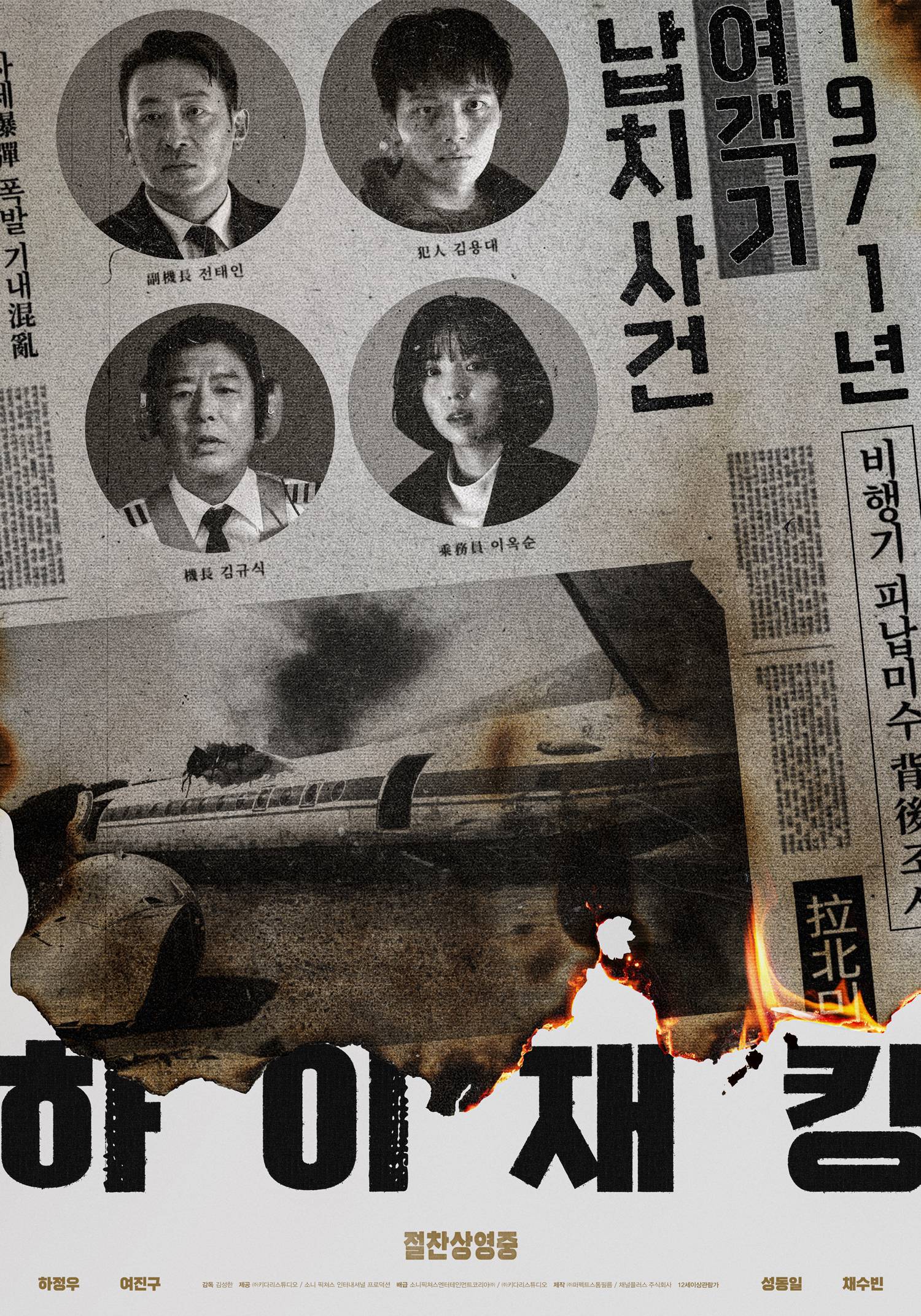
Newspaper-style Korean-language poster featuring a stock photo of a burning place and circular photos of the cast members in black and white.

When a passenger plane is hijacked and forced to fly to North Korea in 1969, the Korean Air Force pilot ordered to fire on it refuses. He recognises the pilot and realises there is something wrong. If there is a hijacker on board, he fears that that he may kill the pilot and crash the plane, killing everyone on board, and while his commanders remind him that the plane should be able to land on just one engine, he knows that if he hits the fuselage instead, the plane could blow up. Even if they land in North Korea, isn’t it better everyone survives?

Not according to some in Kim Sung-han’s Hijack, 1971 (하이재킹, Hijacking), inspired by a real life incident. Tae-in (Ha Jung-woo) is summarily dismissed from the air force for his insubordination while otherwise ostracised as the man who allowed the plane to reach North Korea. As he predicted, most of the passengers are returned home shortly afterwards, but 11 never see the South again including his friend the pilot, Min-su (Choi Kwang-il). Meanwhile, Min-su’s wife (Kim Sun-young) continues to face harassment for supposedly being a communist sympathiser. Now working for a commercial airliner, Tae-in also faces discrimination from his new colleagues who, ironically, don’t trust him to properly protect passengers. All their assumptions are tested, however, when a young man sneaks a bomb on board and threatens them to fly to the North apparently inspired by the previous case in which the hijacker was given a hero’s welcome for successfully kidnapping so many useful people.

What’s immediately obvious is how easy it still was to get a bomb on a plane. Yong-dae (Yeo Jin-goo) simply packs them into some tin cans and wraps them up like a picnic. When boarding opens, the passengers literally sprint past each other to get the best seats because they weren’t yet reserved, and when we see a passenger start smoking, we assume the stewardess will tell him not to yet she simply points out the ash tray in the arm of the seat and asks him not to drop ash on the floor or woman sitting next to him. One woman also delays the flight because she’s brought a live chicken with her to make a soup for her daughter whom she’s travelling to see because she’s ill. Tae-in scores an early win and the goodwill of (most of) the passengers by defusing the chicken situation and allowing the woman to keep it on the condition she has it on her lap for the duration of the flight. 

Letting the old lady keep the chicken signals Tae-in’s consideration for his passengers’ welfare and happiness, while the air marshal becomes so preoccupied with this minor breach of the rules that he fails to notice the suspicious behaviour of the hijacker. The presence of the air marshal, a precaution taken after the previous incident, also proves counterproductive when he’s injured when the first bomb goes off, allowing Yong-dae to steal his gun. Granted, this is a fairly minor flight from a provincial airport to Seoul so maybe no one really thought there was much need for advanced security, but they really are woefully underprepared for this kind of incident, especially after the pilot is seriously injured and can’t see well enough to fly alone, meaning Tae-in also cannot do very much to respond to the hijacker’s threats. 

But what we come to realise is that it’s really society that’s been hijacked by the extreme prejudice directed towards “communists” and the North. The passengers from the first plane were returned, but spent time in interrogation to make sure they hadn’t been turned. A newlywed passenger also remarks that a fisherman friend of his was abducted and the police haven’t stopped hassling him about being a spy ever since he got back. Yeong-do’s motive is that he faced constant and unwarranted harassment, including being scalded with boiling water as a child, because his older brother defected to North Korea. His mother later died when he was carted off to prison for being a supposed sympathiser, while other passengers on the plane are similarly worried that their families will starve if they end up in North Korea or are detained when they return. 

A minor subplot, meanwhile, explores the prejudice faced by an older woman travelling to Seoul with her son, who has become a prosecutor. She is deaf and unable to speak, but her son tells her to stop signing because it’s embarrassing him after noticing disapproving looks from another woman in hanbok across the aisle. The old lady had also taken her shoes off after getting on the plane as if she were entering someone else’s home signalling both her politeness and lack of familiarity with modern customs. Her son had repeated the stewardess’ instructions to put them back on, but addresses her like stranger when telling her not to sign. In a way, this casual prejudice is the same and directed at someone simply for being different. Even so, there’s something quite tragic about her son being ordered to tear up the prosecutor ID card she was so proud of. Eventually she swallows it herself to make sure no trace of it remains, telling her son not to worry she will always protect him even in North Korea though he has not done very much to protect her here.

Tae-in later does something similar when he encourages Yong-dae that they should all go on living to ensure no one else endures the mistreatment he has and we don’t end up with any more incidents like this. Though his behaviour is increasingly deranged, it becomes easy to sympathise with Yong-dae for enduring so much suffering for something that was really nothing to do with him while we’re constantly reminded that if the plane lands in North Korea everyone on the plane and all their relatives will also suffer the same fate. At least facing this disaster together eventually forces the passengers to set aside their petty prejudices and pitch in to save the plane so they can get home to their families even if it’ll take them a bit longer to get to Seoul. Though the outcome is already known to the home audience, Kim Sung-han keeps the tension high and defines heroism largely as compassion and selflessness in Tae-in’s continued efforts to ensure the safety of his passengers rather than playing politics or allowing himself to be swayed by those who think landing in North Korea is a fate worse than death.


International trailer (English subtitles)
Blue Sun Palace (藍色太陽宮, Constance Tsang, 2024)

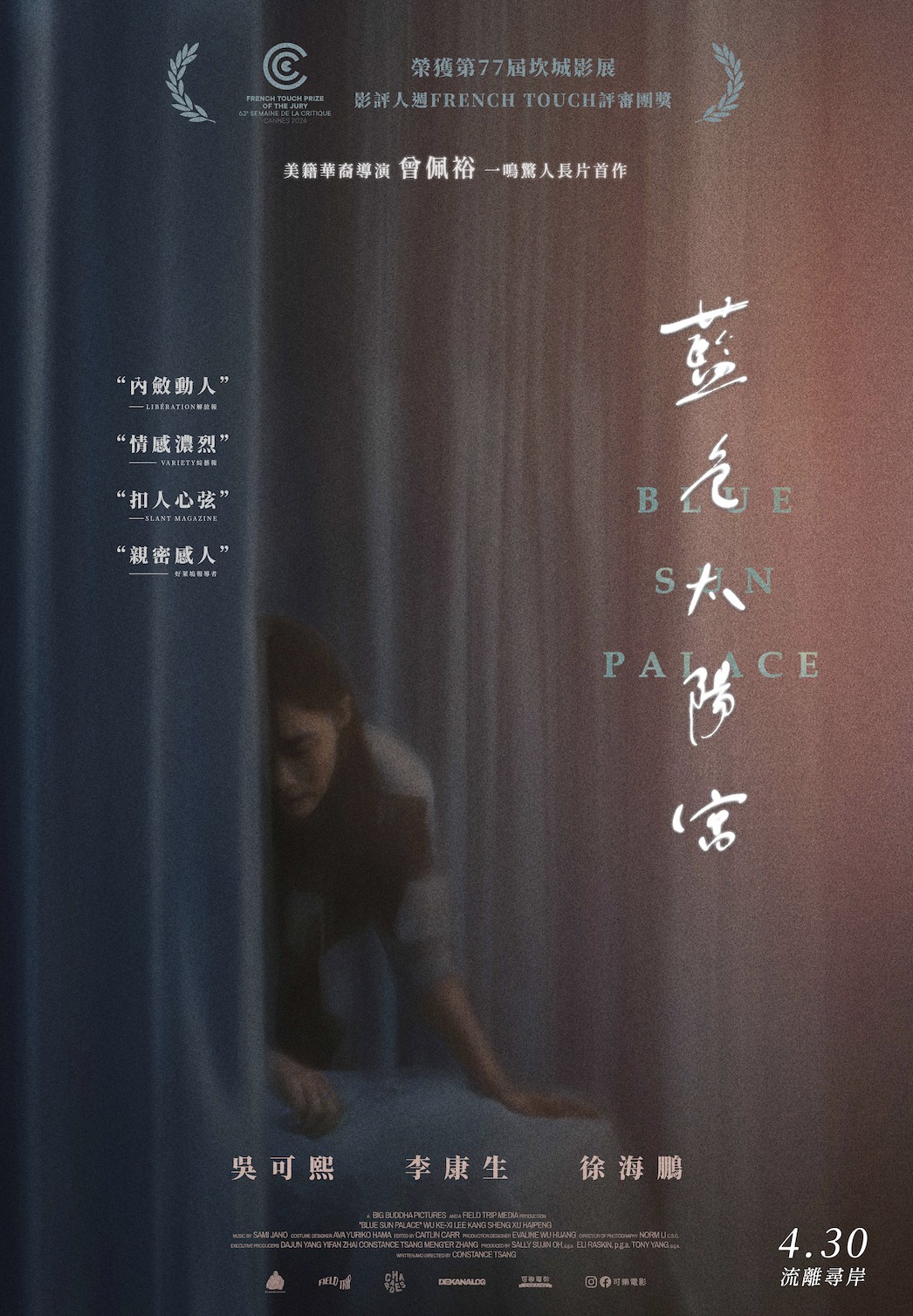
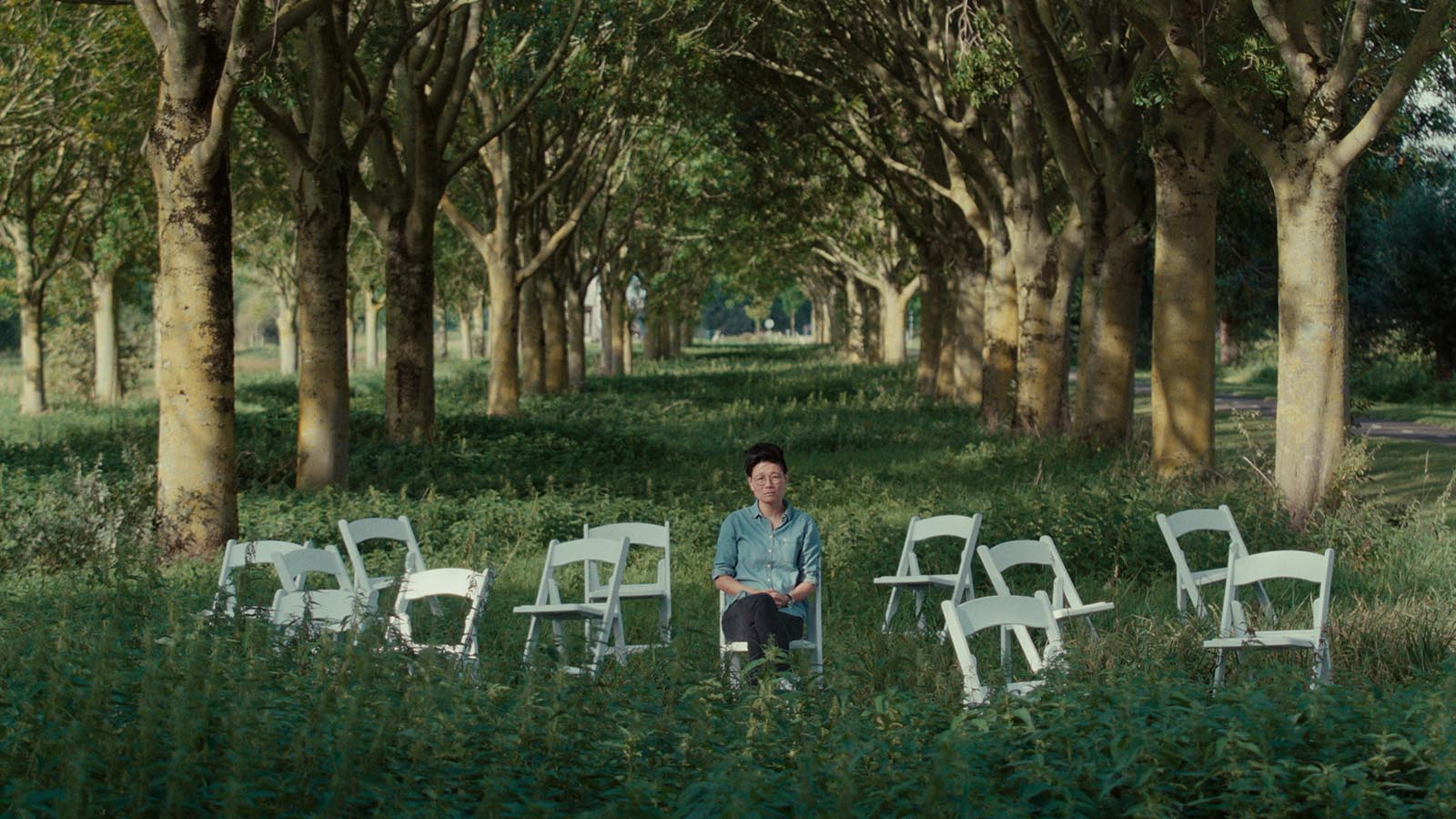
“It’s funny how  quickly people you love become strangers,” a middle-aged man muses while talking about more than one thing at the same time. Those at the centre of Constance Tsang’s New York-set drama Blue Sun Palace (藍色太陽宮, lánsè tàiyang gōng) are all in a sense displaced and some of them by several levels while they try to accommodate themselves with the lives they’re living now along with their hopes and expectations for the future.

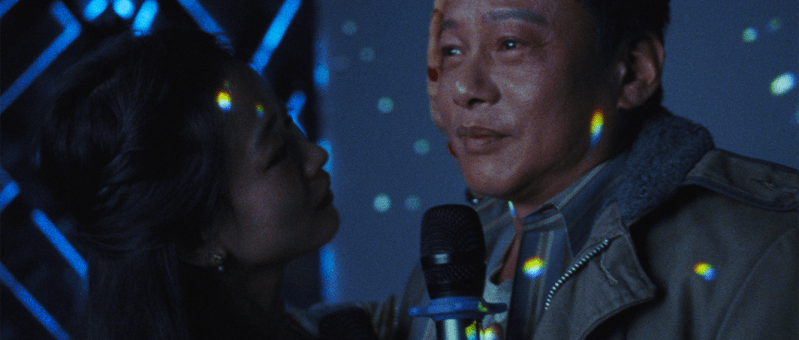
Didi (Xu Haipeng) and Amy (Wu Ke-xi) are old friends working in a massage parlour which has a large sign on the door stating that they do not provide sexual services. The two women huddle on a stairway, finding a private space of isolation that reduces the world to them alone. Didi and her sort of boyfriend Cheung (Lee Kang-sheng) do something similar as they dine in a restaurant and then retreat to a karaoke booth before Didi takes him back to the massage parlour where Amy absents herself to give them some room until awkwardly spotting Cheung leaving in the morning. It’s clear that the massage parlour is itself an isolated world where Mandarin is the only spoken language inhabited only by the female staff members who are all migrants from China. Didi appears to be the lynchpin of this community, keeping the parlour running and looking after the other women while they all seem to look to her for dependability and solidarity. 

Yet there’s a hovering tension between Didi and Amy who seems wary of Cheung, or perhaps merely jealous in an unspoken attachment to her friend, and also reminds her that they’re not supposed to have guests in their room. The exclusively male clients who are mainly though not exclusively non-Chinese men are also intruders in this space and as Didi tries to warn Amy pose a latent threat to them. A very tall man shortchanges them, but Didi stops Amy when she tries to chase after him. She tells her that it’s not worth it and she’ll just make the money up herself. It’s better to be safe, though it’s advice she doesn’t quite take to heart or perhaps lets her guard down at the wrong moment. The men treat them with thinly veiled contempt, perhaps believing they don’t really deserve to be paid in full or to be treated as fully human beings. A customer of Amy’s bullies her into giving him a happy ending and then refuses to pay, becoming violent when challenged but then apologising before running from the room. 

As an escape from the grimness of the Blue Sun massage parlour, Didi has a dream of moving to Baltimore to open a restaurant with Amy and be closer to her daughter who is currently being raised by her aunt. Cheung hadn’t known about the daughter when he idly fantasised about living in a little house by the sea with Didi and a big dog, though she knew about the wife and daughter who have now become strangers to Cheung. In any case, their fantasy was just that and so perhaps it didn’t really matter if neither of them was telling the whole truth. Baltimore seems to have taken on a mythical quality for each of them as a kind of longed for but unreachable paradise in which they might find happiness if only they could get there. 

But in the end, even these bonds are fragile and the community fractured by tragedy and economic realities. In Didi’s absence, Amy and Cheung develop a surrogate bond in their shared grief and loneliness but also remain at odds with each other, ultimately heading in opposing directions in which it seems as if Amy may be able to find new directions while Cheung is bound only for the blue sun of a shoreline in winter and a solitary cigarette. He says he doesn’t want to go back to Taiwan because he wouldn’t know who to be, though as Amy points out none of them know who they are here either. She at least may have found an answer, or if not, reaccommodated herself to a new reality but for others there’s only sadness and inertia along with the cold comfort of lost love and impossible dreams in a world of constant displacement.


Blue Sun Palace screens April 28 as part of this year’s San Diego Asian Film Festival Spring Showcase.

Trailer (English subtitles)
Sunshine (Antoinette Jadaone, 2024)

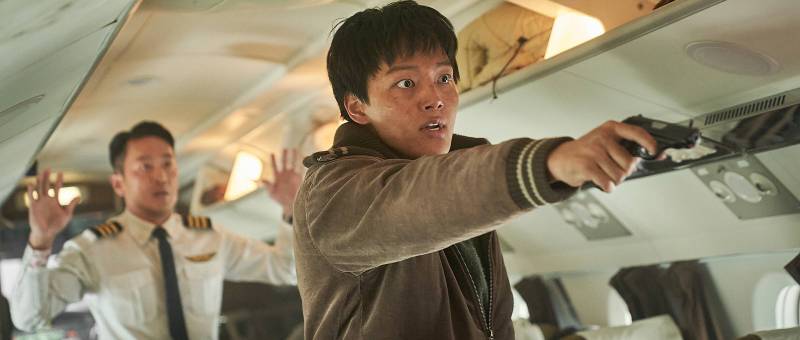
“Don’t drag me into this,” a boy says after hearing that his girlfriend is pregnant, having already questioned if the baby’s really his. Miggy signals his lack of responsibility by directly asking Sunshine what “her” plan is, making it plain that she’s on her own and he does not see himself playing an active role in a predicament he essentially sees as nothing to do with him. Aside from Miggy’s father Jaime, who happens to be a protestant pastor, men are largely absent from Antoinette Jadaone’s Sunshine and even when they appear rigid figures of patriarchal control. 

Sunshine implies that she’s only in this mess because Miggy pressured her into unprotected sex, but she’s left to deal with the fallout on her own. Still in school, she’s about to take her last shot at getting onto the Olympic rhythmic gymnastic team but risks losing everything she’s worked so hard for if her pregnancy is discovered. Even when she goes to buy a pregnancy test, she’s asked for ID and judged by the woman behind the counter while it’s otherwise true that abortion is illegal in all circumstances in the Philippines, meaning Sunshine’s only options are finding and paying a wise woman for medicine to provoke a miscarriage. 

It’s the reactions of other women that Sunshine most fears from her otherwise supportive coach, whose ambitions also rest on her performance, to her best friend who does in fact shun her on her mother’s insistence, and her older sister who is caring for the whole family and seems to be a single mother herself having had a baby at a young age. Like a grim siren, Sunshine’s niece won’t stop crying as if echoing the alarm of her impending maternity and her own discomfort with it. It’s a network of women that she turns to for solutions if not for advice. There’s no one Sunshine can ask for that, because what she’s looking for is illegal. All she can do is stand outside the church and pray that God take mercy on her by allowing her to wake up from this nightmare. There’s something quite ironic when she’s told to ask forgiveness from God “the father” by a religious and judgemental female doctor as if laying bare the patriarchal and oppressive underpinnings of the entire society. 

Yet cast onto a surreal odyssey through Manila in search of solutions, Sunshine finds herself becoming the supportive presence she herself doesn’t have. While pursued by a very judgmental little girl who echoes her inner confusion by branding her a “murderer” and questions her decision making, Sunshine is approached by another little girl who appears to be heavily pregnant and is begging for money to see a faith healer whom she hopes will help her end her pregnancy. Despite her own experience, Sunshine asks her why she doesn’t ask her boyfriend for help but the girl explains that he’s not her boyfriend, he’s her uncle, so she’s even more powerless and alone than Sunshine is. No one’s going to do anything about the Uncle Bobots of the world, but they’re only too happy to criminalise and abandon a little with no one else to turn to. 

Realising that the girl was trying to abort her child, the male doctor at the hospital refuses to treat her knowing full well there is a possibility she may die. Only a sympathetic female doctor is later willing to help. Sunshine too almost dies after her first attempt at taking an abortion pill which she does all alone at a love hotel where the woman on the counter didn’t want to give her a room because people who go to hotels on their own are a high risk for suicide. When she does eventually find out, Sunshine’s sister is actually sympathetic and stands up to Jaime on her behalf when he makes a bid to take over her life and force her into maternity by getting Miggy to apologise and unconvincingly insist that he actually loves her and their baby while leveraging his wealth and privilege against her by recommending that she be cared for by his family doctor and the best hospitals at his expense. It does however provoke a degree of clarity in Sunshine’s insistence that she doesn’t want to be a mother and has no intention of becoming one while rediscovering herself in rhythmic gymnastics and making peace with her younger self. A sometimes bleak picture of young womanhood in the contemporary Philippines, the film nevertheless finds relief in pockets of female solidarity and the conviction that it doesn’t have to be this way for the younger generation who should be free to pursue their dreams and make their own choices about what they do with their bodies.


Sunshine screens April 26 & 30 as part of this year’s San Diego Asian Film Festival Spring Showcase.