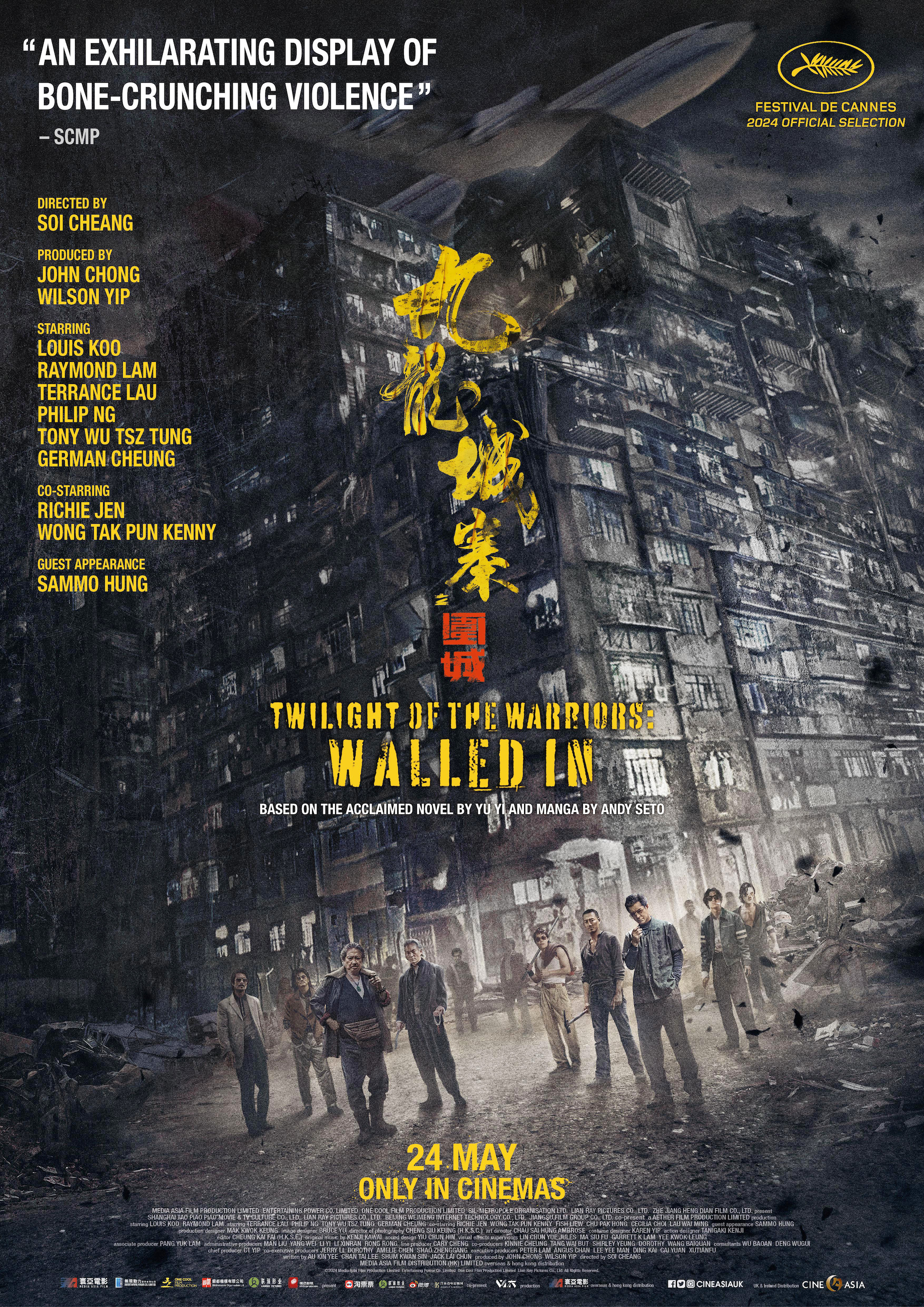
Twilight of the Warriors: Walled In (九龍城寨.圍城, Soi Cheang, 2024)

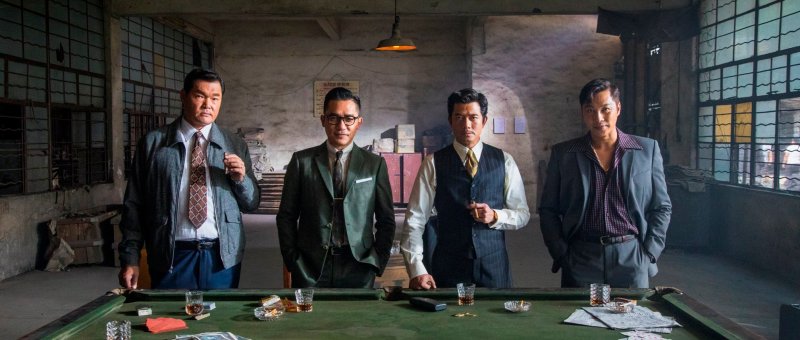
In Kowloon Walled City, you give help, you get help. Sometimes described as a colony within a colony, by the late 1980s the settlement was largely ungovernable and literal law unto itself save for the triads who maintained what little order there was. Yet in Soi Cheang’s Twilight of the Warriors: Walled In (九龍城寨.圍城) it’s a place of comfort and security, a well functioning community that as its leader Cyclone (Louis Koo Tin-lok) points out may be unpalatable for “normal” people but provides a point of refuge for the exiled and hopeless.

It’s difficult not to read it and Cyclone himself as embodiments of Hong Kong that is slowly disappearing. Dying of lung cancer, Cyclone is aligned with the fate of the walled city as someone whose time is running out, tired and world weary but still hanging on. In the opening sequence set 20 or so years before, we see Cyclone stand up to an apparent dictatorship and institute what seems to be a more egalitarian form of government though one obviously defined by violence. Nevertheless, when refugee Lok (Raymond Lam Wui Man) lands up there originally suspicious of Cyclone having been duped by local gangster Mr Big (Sammo Hung Kam-bo), he discovers him to be a stand up guy looking after those in his community and generally keeping the peace. Nevertheless, Lok’s arrival is the fatalistic catalyst for the opening of old wounds amid the free for all of the mid-80s society in which the Walled City, sure to be bulldozed, has just become a lucrative property investment.

Mr Big and his crazed henchman King represent this new order, amoral capitalistic consumerists who care little for the conventional rules of gangsterdom. Their bid to seize the Walled City has its obvious overtones as they seek to replace the (generally) peaceful egalitarian rule of Cyclone with something that appears much more authoritarian and ruthless. Believing himself to be a stateless orphan, Lok tries to keep his head down saving everything he can to buy a fake Hong Kong ID card which is also in its way a quest for identity not to mention a homeland and a sense of belonging. He finds all of these things, along with a surrogate father figure, in the Walled City only to have the new home he’s discovered for himself ripped out from under him because of a twist of fate. When he teams up with a trio of other young men who all owe their lives to Cyclone and the Walled City to attempt to take it back, it’s also an attempt to reclaim an older, more autonomous Hong Kong that exists outside of any kind of colonial control as evidenced by his final statement that no matter what happens some things don’t change.

This sensibility extends to the casting of the film which includes a series of Hong Kong legends including a notable appearance from the legendary Sammo Hung not to mention Louis Koo alongside a generation of younger stars such as Tony Wu and Terrance Lau Chun-him. Adapted from the manhua City of Darkness by Andy Seto, the film opens with a flashback to the original war for control of the Walled City that hints at deeper, extended backstories otherwise unexplored though equally mythologised by those who impart them to them Lok, a prodigal son and eventual inheritor of the City’s legacy. Even so, the comic book elements sometime distract from Soi Cheang’s otherwise evocative if hyperreal recreation of the Walled City slum or the political subtext that can be inferred in the presence of supernatural abilities such as those which seem to grant King near invincibility.

In any case, Soi Cheang looks back equally towards the history of heroic bloodshed in particular in his tale of brotherhood and loyalty in which the secondary antagonist is literally imprisoned by his own futile desire for a pointless vengeance on the descendent of a man who had wronged him but was already long dead himself. As he’d said, the future of the Walled City is in the hands of the younger generation who choose to end the cycle by setting him free rather than imprison themselves along with him while defending their home as well as they can. With some incredibly well designed action sequences including one that make its way onto a double-decker bus, Soi Cheang’s beautifully staged action thriller as its name suggests has a rather elegiac quality but also the spirit of resistance in its gentle advocation for the importance of supportive communities.


Twilight of the Warriors: Walled In is in UK cinemas from 24th May courtesy of CineAsia.

UK trailer (Traditional Chinese & English subtitles)
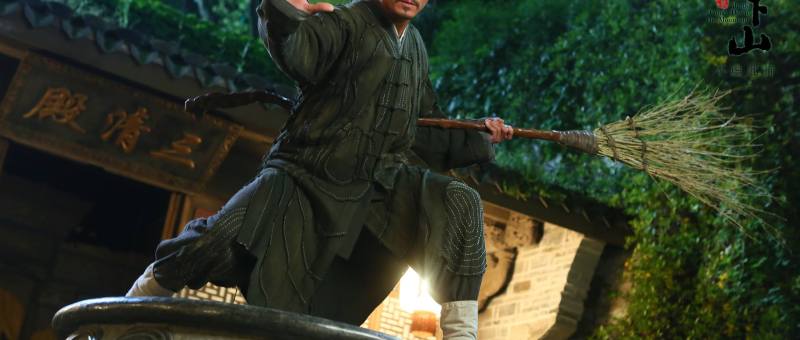
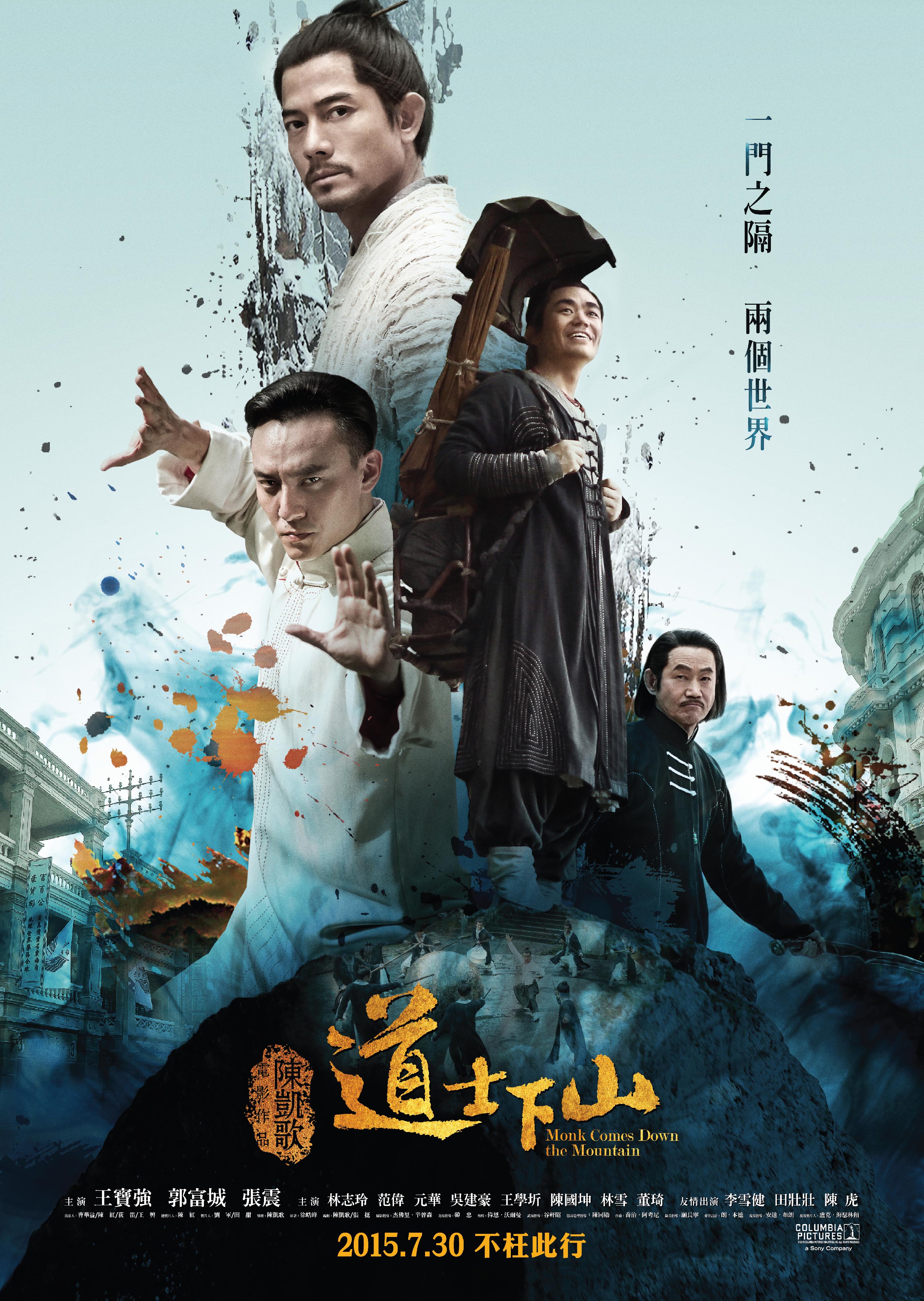
Monk Comes Down the Mountain (道士下山, Chen Kaige, 2015)

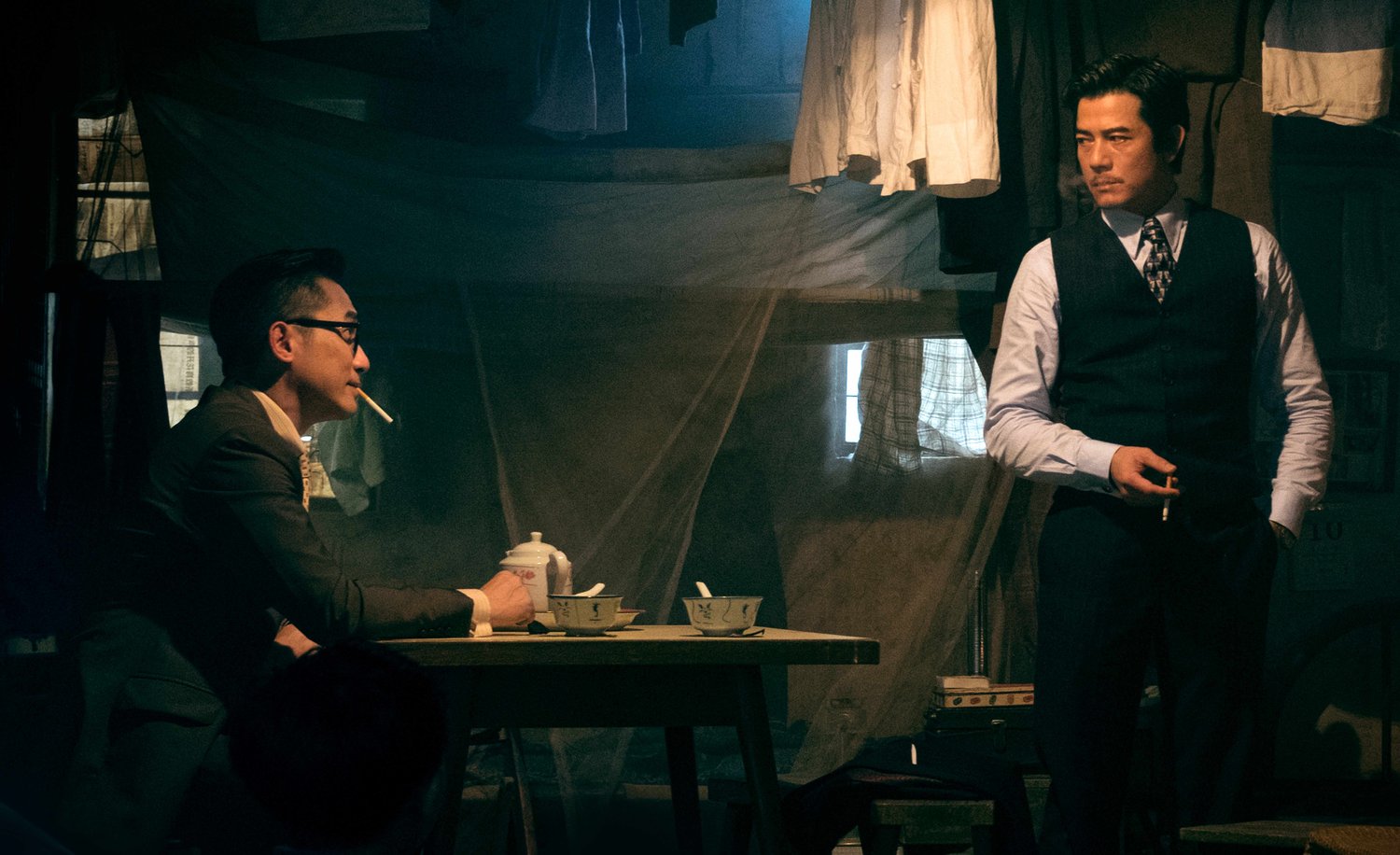
A wandering monk is forced to consider a series of dualities presented by his traditional upbringing and burgeoning modernity in Chen Kaige’s ‘30s wuxia Monk Comes Down the Mountain (道士下山, dàoshì xiàshān), inspired by the work of novelist Xu Haofeng. Essentially a picaresque, Chen sets orphan He Anxia (Wang Baoqiang) adrift in the secular world where he learns to see good and bad and perhaps the murky overlap between the two while simultaneously telling a rather subversive tale of frustrated same sex love and corrupt authorities. 

When the temple at which he was abandoned as a baby falls into financial difficulty, He Anxia enters a kung fu fighting competition he believes will put him first in line for food only in cryptic monk fashion the “prize” turns out to be exile as the winner is obviously the most capable of looking after themselves alone in the world. He Anxia is however something of an innocent and despite the monk’s warning to stay true to himself soon falls into difficultly yet ends up discovering a new father figure in monk turned pharmacist Tsui while trying to steal his fish. For all of Tsui’s goodness, however, there is discord in his house as his pretty young wife Yuzhen (Lin Chi-ling) prefers his dandyish brother, Daorong (Vanness Wu), who has abandoned the filial piety of the past to chase modern consumerist pleasures in selling the shop he inherited for a fancy ring. When the situation escalates, Anxia finds himself taking drastic action only to wonder if he did the right thing. 

Head of a local temple Rusong (Wang Xueqi) encourages him to think beyond dualities, wondering if he did the right thing for the wrong reasons or the wrong for right. This temple is famous for helping women have male children through praying to goddess of mercy Guan Yin, yet under Rusong’s predecessor they adopted a much less spiritual solution to the problem in simply providing a place where other men could father their sons. Rusong again asks him if the men who took part were sinners or saints while laying bare the paradoxes of the monastic life in the contemporary society. A petitioner goes so far as to ask Anxia if he might be her saviour, pointing out that if she cannot provide a male heir even though the problem may lie with her husband she may be cast out of her family, thereby disgraced not to mention financially ruined. Having lived all his life in the temple surrounded by men, gender inequality is not something Anxia had been very aware of. He tells her that though he had no family he was able to find one only to lose it, little understanding why she might not be able to do the same. 

On the other hand, he appears to show surprising perspicacity in the touching moments in which he must say goodbye to his second father figure, reclusive kung fu master Xiyu (Aaron Kwok), in realising the depth of his feelings for army buddy Boss Zha (Chang Chen) who then becomes his final master. Ironically, the obviously homoerotic relationship between Xiyu and Boss Zha was perhaps less controversial in 2015 than it might be in the present day but its inclusion is nevertheless surprising if also poignant as Xiyu tells Boss Zha that he should resume his stage career, marry and have children, while he will live a quiet and lonely life perfecting his kung fu though he will always keep him in his heart. Fiercely loyal to his mentors, Anxia accepts this relationship totally and appears to fully understand its import to Boss Zha to whom he subsequently transfers his allegiance as they band together to face off against big bad Peng. 

Playing into the good fathers and bad motif, Peng’s problem is his sense of paternal rejection in being passed over by his biological father in favour of Xiyu whose skills are stronger. After having ousted his rival, Peng fears the same thing will happen to his own son who is not only lacking in aptitude for martial arts but also appears to have a drug problem. To win they resort to cheating in picking up a pistol signalling both their own lack of jianghu honour and the nature of the changing times in which the very nature of kung fu has perhaps become obsolete. Meanwhile, Anxin and Zha are targeted by the police commissioner, Chao, who happens to be a former triad and also points his gun at them if less successfully while in cahoots with the amoral Peng and son.

Only through each of these subsequent encounters does Anxia begin to realise why he was cast down from mountain, understanding that he had to witness the good and bad of the secular world in order to understand his Buddhist teachings and finally find his place. With sumptuous production values perfectly recreating the 1930s setting, Chen’s quietly subversive 20th century wuxia takes aim at the ills of the contemporary society in its tales of corrupt authorities and amoral greed, but eventually finds solace in simple human goodness and genuine relationships as Anxin continues on his long strange journey to find his way home. 


International trailer (English subtitles)

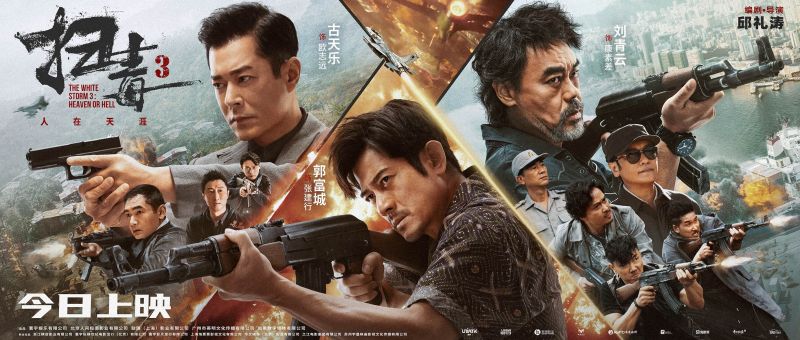
The White Storm 3: Heaven or Hell (掃毒3︰人在天涯, Herman Yau, 2023)

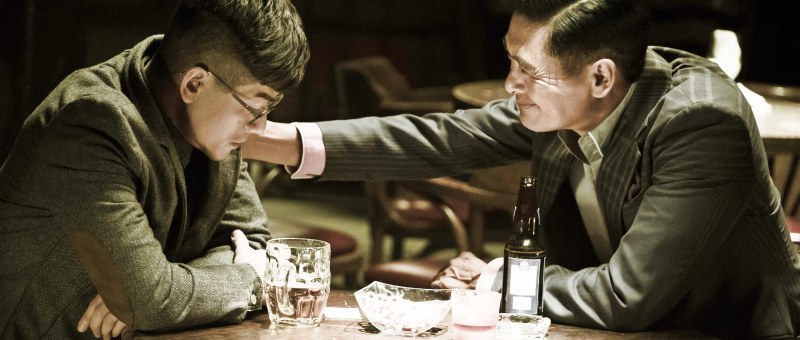
Who is the most foolish, the arch criminal who didn’t realise his two best buddies were undercover cops, or the cops that killed or took bullets for him? The latest in the White Storm series of standalone action thrillers with starry casts thematically dealing with drugs and organised crime, White Storm 3: Heaven or Hell (掃毒3︰人在天涯) like its immediate predecessor casts the net a little wider than just Hong Kong and is keen to stress the real victims of the international drug trade are the economically disadvantaged farmers who are left with no other option than to turn their fields to poppies. 

Back in Hong Kong, meanwhile, the film opens with local drug lord Suchat (Sean Lau Ching-Wan) retrieving a huge haul of drugs dropped in the ocean by helicopter only to be interrupted by the police who were watching all along. Suchat’s righthand man Yuen (Louis Koo Tin-Lok) blows his cover by pulling a gun to convince him to surrender, but Suchat chooses not to and in the firefight that ensues his other buddy, Hang (Aaron Kwok Fu-Sing), who is also an undercover cop and in fact very good friends with Yuen, is seriously wounded. In a show of loyalty, Suchat rescues Hang and manages to flee to Thailand where he sets up in his home village soon coming to the attention of the warlord who controls the local drug trade.

Describing the gang as the “rising stars of the Golden Triangle”, Suchat eventually cuts a deal with the general to provide security for his logistical operation in which drugs, mostly ice but also heroin, are transported inside fruit and other foodstuffs to be moved through the local market. Suchat had originally tried to set up his own operation only to fall foul of the general but also concedes that the margins in this game are fairly thin, no one in this area has any money to spend on drugs and there’s no point trying to produce them with the general in town so his only option is to provide a different service at another point in the chain. Hang becomes fond of the young woman who nurses him back to health, Noon, who explains that the only crop anyone is interested in is opium so aside from the food they grow for themselves it’s all they can produce to support themselves. There may a particular implication in her reply when Hang asks her if she’s ever considered moving that this even if this place is not a “home” because she has no remaining family members (her grandfather in fact seems to die of opium poisoning) it is still her hometown and why should she have to leave it. 

Before being taken to Thailand, Hang’s boss had worried that he might have spent too long undercover to successfully come back and it’s true enough that he seems to have become conflicted not only in his feelings for Noon but reflecting on the genuine brotherhood that exists between himself and Suchat whom he will eventually have to betray. Hang almost died for him, and Suchat repaid the favour by refusing to leave him behind. But on the other hand, there’s also a degree of homoerotic tension between himself and Yuen who rushes straight over to Thailand to rescue him once he’s able to make contact only to be frustrated when Hang tells him he has to go back to the village to save Noon who, as she’s already told him, does not actually want to leave despite the danger of constant violence from drug gangs and army raids. 

The film ends with the razing of the village of the Thai authorities who evidently decide the loss of life is justified in the necessity of stopping the general though it’s the ordinary farmers who lose their lives, families, homes and livelihoods because of their proximity to the trade in drugs. “I miss Hong Kong” Hang finally exclaims as if longing to shake off his undercover persona and recommitting himself to his role as a policeman but also perhaps hinting at a more subversive meaning as Yau ends on the clouds parting to reveal the famous city skyline amid picturesque terrain. Filled with a series of incredibly elaborate action sequences culminating in the all out warfare of the village raid, Yau’s heroic bloodshed subversion has its share of absurdity in the complicated relationships between its central trio and the ambivalent justice of its final resolution.


Original trailer (Traditional Chinese / English subtitles)

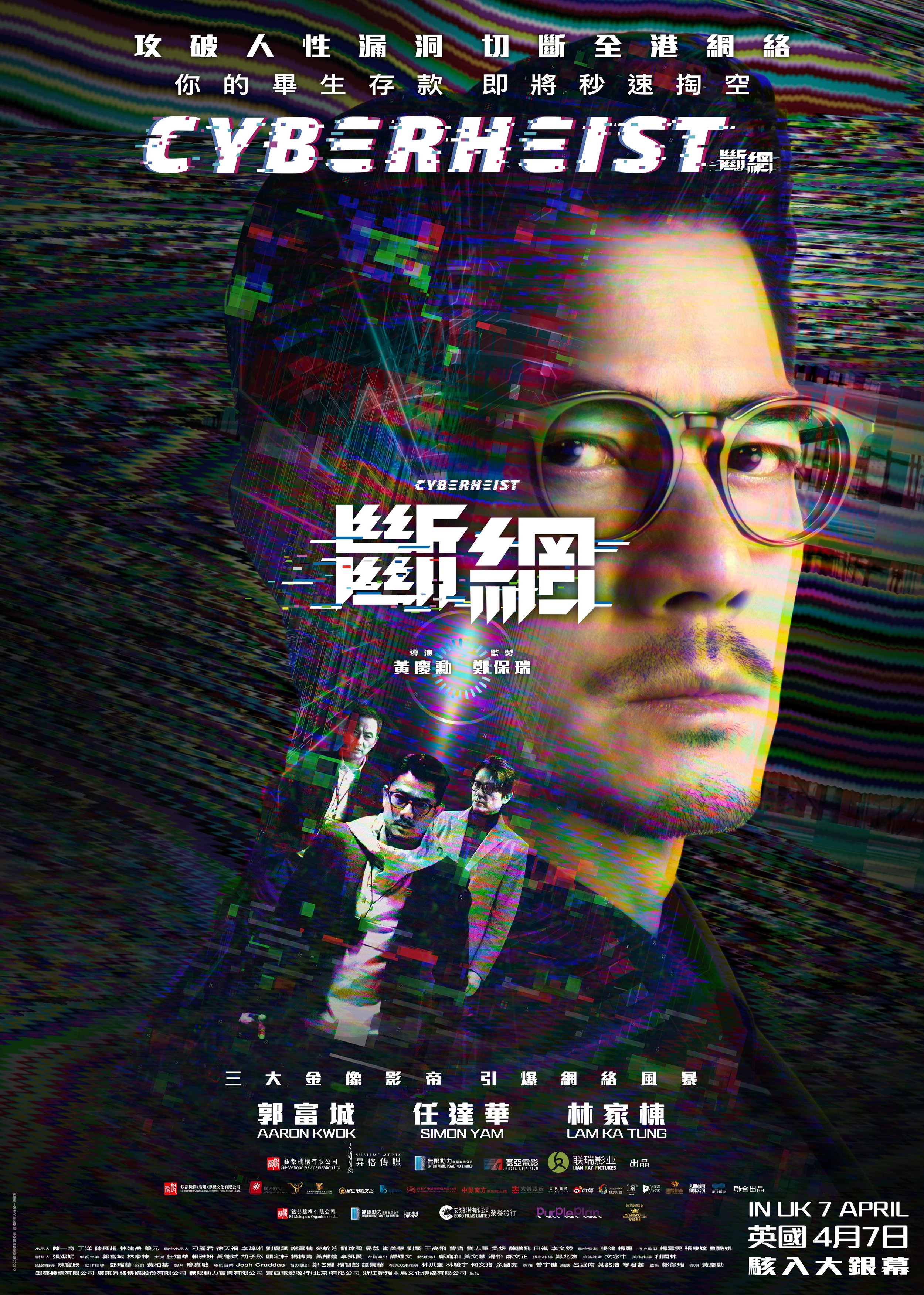
Cyber Heist (斷網, Wong Hing-fan, 2023)

A cyber security expert is forced on the run after being framed for money laundering while trying to engineer a brighter future for his seriously ill little girl in Wong Hing-fan’s high octane techno thriller, Cyber Heist (斷網). In true B-movie fashion, the film’s visualisation of the digital world has a distinctly retro aesthetic while the plot may sometimes lack internal consistency, but what the film does have is a series of tense action sequences many featuring the hero desperately running around carrying the super secret information in a tiny robot doll. 

Chun (Aaron Kwok Fu-shing) is cyber security expert working for a top Hong Kong firm which provides technical services for local banks. The problem is that they keep getting hacked as criminal gangs take down banking services to run a complex money laundering operation. As it turns out, Chun was once a cyber criminal who spent time in prison for selling viruses on the dark web but has since reformed after becoming a father. His little girl, Bowie, is suffering from a serious heart condition and is currently on the transplant list but dreams of one day becoming an astronaut. 

It’s Bowie who provides the moral centre of the film in her constant refrain of “What are you doing, Daddy?” which Chun seems to hear every time he’s thinking of doing something nefarious. Clearly possessed of immense power in his technical knowhow Chun battles with himself as to how to use it responsibily. When Bowie is turned down for a place at an elite school, he considers simply hacking into their database and changing her records but thinks better of it before getting her a place the old fashioned way, by agreeing to make a sizeable “donation”. It doesn’t really seem like that’s a lot better in the grand scheme of things but does perhaps hint at the low level of corruption that has already seeped into everyday life. In any case, it’s Chun’s desperation for the money after being turned down for a loan by his boss, Chan (Gordon Lam Ka-tung ), that makes him vulnerable to intrigue when previous patsy Frankie (Kenny Wong Tak-bun) is killed in a mysterious “accident” after laundering more money than he was supposed to and then depositing the excess in his regular bank account.

Chun agrees to help the authorities in the form of cyber crimes inspector Suen Ban (Simon Yam Tat-wah) but soon finds himself on the run when ultra corrupt boss Chan kidnaps his daughter. Chan is also trying to protect his younger brother who was left with brain damage after being beaten by thugs working for shady gangster Mr Pong (Andy Kwong Ting-Wo) and is clearly not above reprehensible behaviour. It has to be said that the film’s conception of the way online infrastructure works has a distinctly B-movie quality. At one point, Chun’s experimental AI virus ends up accidentally destroying the entirety of the internet yet nothing really happens except for people becoming very confused by their now useless phones, and then Chun is somehow able to make everything OK again by simply rebooting it. 

Likewise, the film’s visualisation of the cyber world is heavily influenced by mid-90s William Gibson as a kind of virtual reality metaverse where hackers walk around in cyberspace while wearing creepy clear plastic masks. The space occupied by the money launderers is verdant and green, a beautiful cyber forest, while that of the dark web is pure grunge, a space of urban decay filled with dank and half finished buildings and peopled by edgy guys in hoodies wearing hacker chic. Even so, there’s a kind of charm in the retro aesthetics of ‘90s futurism along with the concurrent suggestion that the offline world is inescapably duplicitous and true techno guys are the only ones to be trusted. 

In any case, the money laundering scam is a kind of MacGuffin as Chun becomes increasingly irate while squaring off against his opposite number, Chan, and trying to prove himself as a responsible husband and father by saving his little girl and catching the bad guy not to mention clearing his name by helping the police. An old-fashioned man on the run thriller, Wong’s breathless camerawork follows Chun all over Hong Kong as he fights for his life and family against those who value nothing more than money while desperately trying to live up to his daughter’s expectations of what a good man should be in a world that online or off is already far from fair. 


Cyber Heist was released in UK cinemas courtesy of Magnum Films.

Original trailer (Traditional Chinese / English subtitles)

Where the Wind Blows (風再起時, Philip Yung, 2022)

Philip Yung’s first film since the acclaimed Port of Call was scheduled for release all the way back in 2018 only to be repeatedly held up by troubles with the censors later compounded by the coronavirus pandemic. For many reasons, it isn’t surprising that Where the Wind Blows (風再起時) would run into trouble with the current censorship regime dealing as it does with the touchy subject of police corruption albeit it in the colonial era, but the most surprising thing may be that it was passed at all given the subversive undertones of a late speech delivered by the voice of reason, ICAC chief George Lee (Michael Hui Koon-man), whose attack on the corrupt practices of the British authorities has obvious parallels with the modern day. 

The film is however set firmly in the past ranging from the 1920s to the 1980s and inspired by the “Four Great Sergeants” of post-war Hong Kong who amassed great personal wealth while working as police officers. Once again, the police is just the biggest gang, or perhaps the second biggest given that the great racket in town is the colonial rule. It is indeed the British authorities who have enabled this society founded largely on systemised corruption, something which as Lee points out they are unwilling to deal with because it suits them just fine and they have no real interest in the good of Hong Kong. 

In any case, flashy cop Lok (Aaron Kwok Fu-shing) started out as an earnest bobby before the war who was shocked by the institutionalised corruption all around him and refused to participate in it. But his law abiding nature only made him a threat to other officers who needed him to be complicit in their crimes to keep them safe. After several beatings, he ended up accepting the culture of bribery just to fit in. In the present day, he and likeminded detective Nam (Tony Leung Chiu-wai) justify their dubious methods under the rationale that they’re helping to “manage” triad society by effectively licensing the gangs in taking protection money to leave the chosen few alone while enriching themselves in the process. 

Then again, the balance of triad society is disrupted by the arrival of a bigger Mainland outfit which later ends up backing Lok, with the assistance of his Shanghainese wife (Du Juan), to place him in a position which is the most beneficial to themselves. To quell riots by supporters of the KMT in 1956, Nam lies to the protestors that he secretly supports their cause and that if they do not disperse there is a chance the British Army will forcibly disperse them which he also describes as an inappropriate outcome because this is a matter that should be settled among the Chinese people not by foreigners. In the final confrontation with ICAC chief Lee, the British authorities rule out military or police action, though the rioters in that case are in fact policeman angry about increasing anti-corruption legislation. Ironically enough, Lee’s speech advocates for something similar to that which Nam had suggested, essentially saying that the Hong Kong people should decide their own future and that society in general should be more mindful as to the kind of Hong Kong their children and grandchildren will eventually inherit. 

In any case, the four sergeants are soon eclipsed by changing times while Lok and Nam are mired in romantic heartbreak in having fallen for the same woman who brands Nam an over thinker and implies she may have married Lok less out of love than in the knowledge he’d be easy to manipulate. For his part, Lok is damaged by wartime trauma which has left him cynical and nihilistic while filled with regret and longing for a woman he lost during the war in part because he did not have the money to pay for medical treatment which might have saved her. In this sense, it’s money that is the true corrupting force in a capitalist society in which, as Lee suggests, it might eventually become necessary that you’d have to bribe a fireman to save your house or an ambulance driver to get your ailing mother to a hospital. Then again, as Nam says power lies in knowing there are those weaker than yourself. Yung’s sprawling epic apparently rant to over five hours in its original cut before being reduced to three hours forty-five and then finally to the present 144 minutes leaving it a little hard to follow but nevertheless filled with a woozy sense of place and an aching longing for another Hong Kong along with a melancholy romanticism as a lonely Nam dances alone to a ringing telephone bearing unwelcome news. 


Where the Wind Blows screens in Chicago on March 14 as part of the 16th season of Asian Pop-Up Cinema.

Original trailer (Traditional Chinese / English subtitles)

Project Gutenberg (無雙, Felix Chong, 2018)

Project Gutenburg poster“Sometimes a fake can be better than the real thing” intones mild mannered counterfeiter Lee Man in Felix Chong’s cineliterate thriller Project Gutenberg (無雙) . At first glance, Project Gutenberg would seem to have nothing at all in common with the archival programme from which it takes its name but perhaps there is something in its continual questioning of whether a facsimile can replace an original. Chong plays with perception, narrative, and a human need for authenticity but most of all with the legacy of heroic bloodshed as a melancholy young man attempts to rewrite his own history with himself in the lead.

In the late ‘90s, Lee Man (Aaron Kwok) is languishing in a Thai jail from which he manages to get himself rescued by scraping blue powder off the walls and creating an expert forgery of a postage stamp to send a letter of help. Soon after he gets himself picked up by the Hong Kong police who want his help tracking down a notorious counterfeit currency trafficker known only as “Painter” (Chow Yun-fat). Lee is scared witless because Painter has a habit of ruthlessly hunting down associates who talk – something which is well known to HK police inspector Ho (Catherine Chau) who is after him because he killed her Canadian policeman boyfriend. Painter also murdered the fiancé of Lee’s old flame Yuen (Zhang Jingchu) who is the woman he sent the letter to and who has come to his rescue. Which is to say, the situation is much more emotionally complicated than one might expect.

Through flashback, Lee elaborates on how he came to get mixed up with crime. He and Yuen were living on love in 80s Vancouver trying to make it in the art world. While Yuen’s work began to gain traction, Lee’s was going nowhere. Technically proficient, his paintings were thought soulless and derivative but his talent for mimicry soon brings him to the attention of master forgers and thence to Painter who needs someone with expert skills for his next project – forging the US $100 bill.

Lee tells his tale with melancholy relish, dwelling on his days of youthful abandon with Yuen to the extent that Ho interrupts to declare herself disinterested, advising he skip the prologue and get to the bit where Painter shows up. Painter, a suave yet unpredictable criminal type, determines to help Lee become “the leading man” he knows he can be, but to be fair all anyone is ever interested in is the intensely charismatic Painter. As it turns out, there are more reasons for that than it might at first seem, but in the end Lee’s internalised feelings of inadequacy are still the fuel to his fire. Unable to find artistic success, forgery offers Lee the life of a skilful craftsman and he feels himself to have found his niche but in betraying his artistic integrity he also risks forever losing the woman he loves.

Painter has a weird obsession with Lee’s love life, assuring him that once the deal is done he will help him win back Yuen. “A man who gives up on love is destined to fail at everything” Painter tells him. Lee, however, repeatedly gives up on love. He refuses to fight, embraces his own sense of inferiority, and resolves to live on in misery falling ever deeper into Painter’s world of surrealist crime. Leaving aside Painter’s strangely homoerotic relationship with his protege, Lee’s life gets still more complicated when he becomes involved with a woman, Sau-ching (Joyce Feng), who falls in love with him in Thailand and, for complicated reasons, ends up with Yuen’s face thanks to plastic surgery and name thanks to a fake passport. Painter taunts him with a facsimile of his love but berates him for settling for a substitute while Sau-ching resents getting the Vertigo treatment from a man who refuses to let a failed love fade.

Almost offended by her betrayal of true love, Inspector Ho probes Yuen about her fiancé, asking if he was merely a “substitute” for Lee. Yuen asks if the next man Ho will fall in love with will merely be a “substitute” for her fallen colleague to which Ho fires back that there will never be anyone else because her love is “irreplaceable”. Yuen scoffs at her strangely naive romanticism and Ho does indeed appear to meet an echo of her former love in someone new carried once again on noirish cigarette smoke. If you can’t be with the one you love, love the one you’re with the old adage goes but it turns out that inauthentic romance is the hardest kind to bear.

Chong lets Lee’s retelling of his history play out like a heroic bloodshed movie in which Chow re-inhabits the classic characters of his youth. An unreliable narrator, the movie in Lee’s mind is one of honour and glory in which he still cannot allow himself to take the lead. Chong over eggs the pudding with a series of twists and reversals, undercutting all that’s gone before and muddying his message in the process but there’s no arguing with his high stakes style as he turns a simple crime story into an interrogation of authenticity and the power of personal myth making.


Screened as part of the 2018 London East Asia Film Festival.

Original trailer (English subtitles)

The Monkey King 3 (西遊記女兒國, Cheang Pou-soi, 2018)

the monkey king 3 posterSun Wu Kong and his band of merry scripture seekers will face many challenges on their journey to the West, but none so dangerous as the poison of love! Aaron Kwok reprises his role as the titular Monkey King in the third of the ongoing series directed by Cheang Pou-soi (here credited as Soi Cheang) but steps back a few paces into a supporting role while noble hearted monk Xuanzang (William Feng Shaofeng) takes centre stage to face the multifaceted dilemma of love and personal fulfilment vs the fulfilment of his quest to better the lives of all mankind. An age old problem, but one you can’t truly address until you have stake in the game.

Xuanzang, now returned and dressed in white, has a romantic destiny – something which makes him a little nervous as he happily sails along a picturesque river in the company of companions Wujing (Him Law) and Zhubajie (Xiaoshenyang) while Wu Kong (Aaron Kwok) flies along behind, apparently having mislaid his trousers somewhere along the way. All of a sudden the atmosphere darkens as the gang sail into a “demonic” area where they are attacked by a giant, whale-like river god and subsequently thrown into another dimension thanks to an intervention from the Goddess of Mercy (now played by Liu Tao in place of the series’ previous cameo from Kelly Chen).

The guys have inadvertently landed themselves in Womanland which is 100% man free. In fact men are illegal and to be executed on sight which is a bit of a problem seeing as it’s also impossible to leave. Not so much of a problem, however, as the strange moment which occurred between Xuanzang and the Queen of Womanland (Zhao Liying) as their eyes met during a near fatal fall from a cliff edge. Following the childish exuberance of the first film and the morbidly gothic horror of the second, it’s love which now threatens to derail our heroes’ quest and with it the possibility of salvation for all mankind.

Womanland was founded by a woman scorned who turned her back on faithless men forevermore, instructing her followers that men are selfish and duplicitous, that they lie to win the hearts of women which they later break in forsaking them for the next conquest. The holy scriptures of Womanland warn of the “poison of love” which is (usually, they say) spread from man to woman and leads to nothing but inescapable suffering. Foreswearing all romance (apparently there is no concept of romantic love in the all woman kingdom save the rumour that there was once a young woman who fell in love with a river she was never able to see) turns out not to be the best solution to the problem as we discover that all the ruckus in the world above is in someway caused by these repressed or denied emotions as well as by a failure to accept that sometimes feelings must be sacrificed in favour of greater responsibilities.

Whereas the second film pitted Wu Kong and Xuanzang against each other as advocates of compassion and rationality, this time Xuanzang must face a monk’s dilemma alone in deciding whether the love of one woman is equal to that of the whole of mankind. His choice is a forgone conclusion but serves to remind the monk that denying one’s true feelings is not the same as facing them and wilfully isolating oneself from possible suffering is not the same as overcoming it. The residents of Womanland discover something similar in the parallel journey of their embittered first minister (Gigi Leung) whose own unfulfilled romantic desires have made her cruel and vindictive only to be presented with another choice and find herself denying love for duty once again.

Duty, however, turns out to be warmer than it sounds – in Womanland, maternal love trumps the romantic, undercutting the otherwise progressive atmosphere of a society of women doing fine on their own with a return to maternity as central virtue of womanhood. Love is the force which threatens to undo carefully won civility (a “bourgeois affectation” as the more dogmatic definition would have it), but desire repressed rivals love scorned as a force to burn the world. Xuanzang has a choice to make, but the choice itself is not so important as the conscious act of choosing. Aside from a bizarre subplot featuring male pregnancy and forced abortion, Monkey King 3 makes a largely successful shift away from gung-ho adventuring into poignant romantic melodrama. With the gang en route to Fire Mountain, where will their journey take them next?


Currently on limited release in UK cinemas courtesy of China Lion Film.

International trailer (English subtitles)

The Monkey King 2 (西遊記之孫悟空三打白骨精, Cheang Pou-soi, 2016)

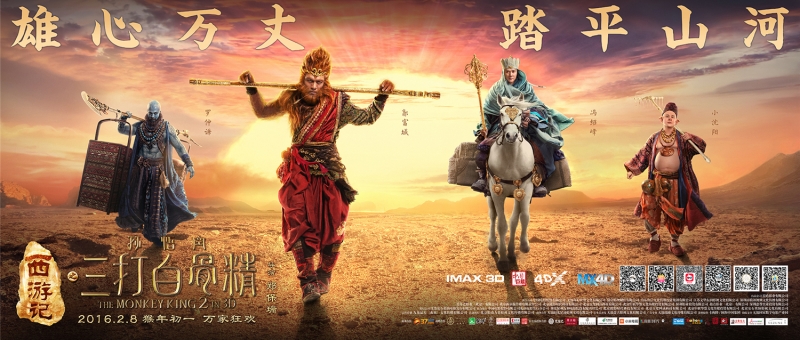
Monkey King 2 posterThe Monkey King returns! Again! This time it’s Aaron Kwok (who, confusingly enough, played the villain in the first film) picking up the staff of the titular hero for Cheang Pou-soi in place of martial arts star Donnie Yen but otherwise it’s business as usual for the mischievous Sun Wu Kong as he finally sets off on his journey to the west with the preliminaries already well sorted out. After 500 years trapped under a mountain, you’d think Wu Kong might have had some time to reflect on his behaviour but alas, there is still a very long journey ahead of him

So, 500 years after the end of the first film which saw Wu Kong imprisoned under Five Finger Mountain by the Goddess of Mercy, a young monk, Xuanzang (William Feng Shaofeng), gets himself into a sticky situation with a giant white tiger. Crawling into a crevice to hide, he finds himself face to face with Wu Kong who urges him to remove the magic tag which keeps him imprisoned. Xuanzang, little understanding what he’s letting himself in for, tugs on the tag. Wu Kong busts right out of his rocky cage and valiantly defeats the “evil demonic” tiger. Of course this is all in the grand plan envisioned by the Goddess (Kelly Chen) who has a mission for Wu Kong – escort Xuanzang to the West where he will find a set of scriptures which will unlock the truths of the world.

Monkey King 2 (西遊記之孫悟空三打白骨精) focusses on Wu Kong’s battle with the White Lady (AKA White Boned Demon, played by Gong Li) who has been nursing a deep and incurable grudge for even longer than Wu Kong was trapped under that mountain. Like Wu Kong, the White Lady was rejected by her own kind, blamed for something that wasn’t her fault and cast out as a demon to be pecked to death by vultures all alone on a rocky outcrop. You can understand why she’d be upset, but rather than an end to her suffering the White Lady wants only immortality to indulge her grudge still further. Unfortunately for Wu Kong, she has taken a fancy to Xuanzang who she thinks would make quite the tasty snack and help her live forever as a demon rather than die as a hated human – one of those who has so badly wronged her.

Wu Kong serves the Goddess of Mercy but his primary motivation in accompanying Xuanzang is to get the metal tiara he’s wearing taken off so he can misbehave again. Nevertheless, through their journey Wu Kong develops deep respect for the goodhearted monk even if they do not always see eye to eye. Wu Kong whose fiery eyes see one kind truth can recognise a “demon” when he sees one and his hardheartedness means he has no trouble killing them on sight. Xuanzang by contrast sees with his heart and is constantly troubled by Wu Kong’s desire for violence even if it’s in his name. Wu Kong sees Xuanzang’s philosophy of love and forgiveness as naive and prefers to be proactive in the face of danger (his fiery eyes do, after all, ensure he is “right” when comes to identifying demons), but Xuanzang worries that Wu Kong’s unforgiving heart creates only more suffering in a world already overflowing with negative emotions and their unfortunate effects.

It is, however, the Monkey King who is on a journey here – away from selfish mischief and towards a more responsible use of his vast powers. Wu Kong is tempted by the White Lady, seductively played by Gong Li with a strangely alluring quality of malevolence. Yet for all that (when all that sometimes means eating innocent monks and being suspected of drinking the blood children), the White Lady is not completely unsympathetic and Xuanzang’s desire to save her admirable in his commitment to lifting those in pain out of their dark places even if it comes at great personal cost to himself.

Kwok makes for a less cartoonish Monkey King than Yen, embracing the impulsivity of the unpredictable Wu Kong but also capturing something of his complicated emotional landscape as he finds himself drawing closer to Xuanzang’s way of thinking only to rebel against himself. Learning from the mistakes of the first film, Cheang ends the headache inducing sugar rush in favour of a more normal Chinese fantasy aesthetic while also ensuring the (still frequent use of) CGI is of a much better (if imperfect) quality. All in all, the second venture of the Monkey King can be counted a success which is fortunate indeed because his journey is far from over.


Original trailer (English subtitles)

https://www.youtube.com/watch?v=2uzTY7SiLSM

The Monkey King (西游記之大鬧天宮, Cheang Pou-soi, 2014)

Monkey King (donnie yen) posterEverybody knows the story of The Monkey King. His “journey to the west” has been reimagined by everyone from Tsai Ming-liang to Akira Toriyama but, all power to them, no one has yet had the courage to stuff Donnie Yen into a monkey suit to fully recreate the legend. Cheang Pou-Soi’s The Monkey King (西游記之大鬧天宮) rectifies this problem but makes up for it by adding a lot more to the already overcrowded arena. Based on a few early chapters of the story, this first of three Monkey King films could best be classified as an origin story as it retells the events which eventually see Sun Wu-kong imprisoned underneath Five Finger Mountain for 500 years.

Basically, a long, long time ago there was a war between gods and demons after which a fragile truce was formed. The demons were defeated and exiled from Heaven which is repaired thanks to the sacrifice of Princess Nuwa (Zhang Zilin) who transforms herself into crystal tears, one of which births a strange divine creature who has a long and arduous journey ahead of him. Emerging from his crystal egg, The Monkey King (Donnie Yen) returns to lead his people before being discovered by a monk who seeks to train him and make sure he remains on the path of the light. Now renamed Sun Wu-kong, The Monkey King finds himself summoned to the heavenly court where he causes a bunch of trouble and becomes swept up in the Demon King’s ongoing plot for revenge.

A super high budget production, The Monkey King is a live action/animation hybrid even beyond that of any recent Chinese fantasy blockbuster. Utilising green screen for the majority of backgrounds, Cheang also adds in a menagerie of strange creatures including supernatural dragons before the final fight develops into a complete CGI fest as a giant cow and super powered monkey duke it out for the rights to define their world. Rendered in 3D the battles are a whirl of brightly coloured mythic action but it’s often a confection too sweet to be to be truly satisfying, backed up only by a very variable quality of animation.

The film’s true standout element is in the surprisingly nuanced performance of Yen who completely becomes The Monkey King right down to his animalistic gestures. This being a family film he’s much more of a recalcitrant fun lover than someone who likes to cause trouble, but nevertheless trouble is usually what you get if The Monkey King pays you a visit. He is, however, hampered by the slightly incongruous obviousness of his monkey suit given the more abstract designs afforded to other characters. Despite the inherent strangeness of his appearance, Yen is afforded the opportunity to do some quality acting alongside killer fight sequences even if he’s often let down by the lacklustre script and production design.

The origin story of The Monkey King is a necessarily long and complicated one but even so, Cheang seems to have decided that coherence is unnecessary when his audience knows the story so well already. Consequently, the potential romance between Son Wu-kong and the fox spirit Ru-xue is inadequately backed up given its importance to the central narrative whereas other characters appear for such little screen time that they almost seem like excuses to add yet another famous name to the poster. Meandering from one episode to another, the film makes little attempt to maintain engagement between its large scale set pieces, becoming over reliant on its parade of well known personages.

Despite the gravitas offered by Chow Yun-fat and the intense villainy of Aaron Kwok’s poisonous antagonist, The Monkey King remains a fairly silly exercise, a visual sugar rush which seems primed to put viewers off their tea whilst leaving them with a slight headache to boot. Playing best to small children and family audiences, The Monkey King’s only selling point is in the surprising (and almost unrecognisable) performance of Yen as its titular hero whose good hearted japes are sure to be appreciated by the young of heart everywhere. The Monkey King will return, but hopefully with a little more maturity as his quest nears its iconic destination, or at least with a little more finesse.


Original trailer (English subtitles)

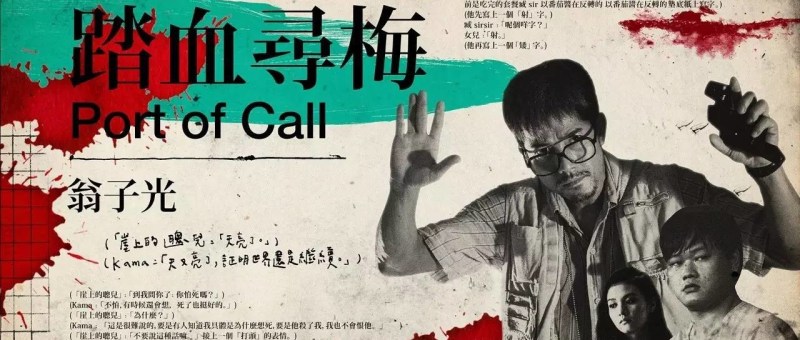
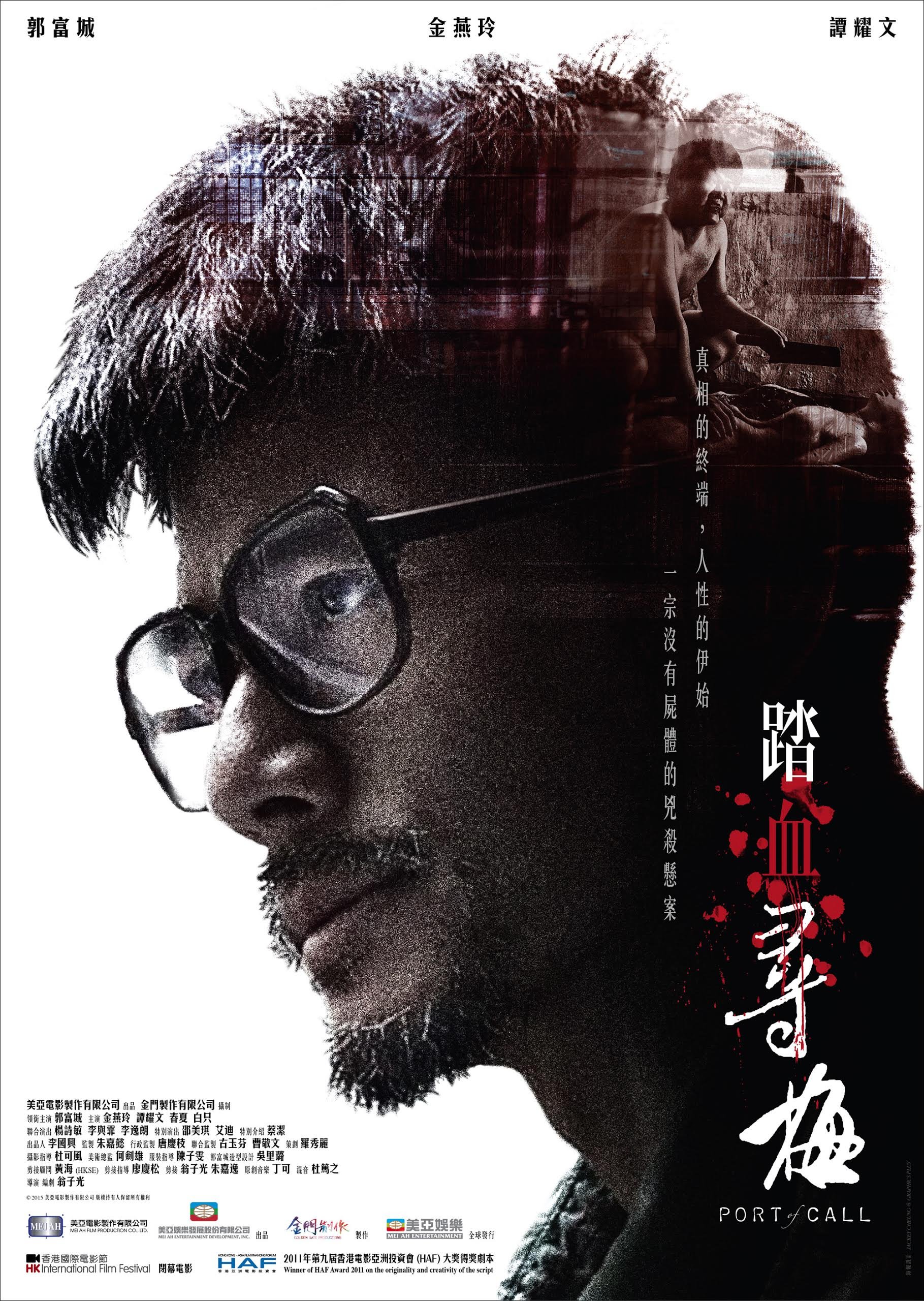
Port of Call (踏血尋梅, Philip Yung, 2015)

port of call posterBoy meets girl. Girl says she wants to die. Boy says OK. Philip Yung’s third feature, Port of Call (踏血尋梅), attempts to find out how such a thing could happen and does so by means of a state of the nation address. Shot by Christopher Doyle, Yung’s early 21st century Hong Kong is a place of broken dreams and empty promises in which past traumas become inescapable phantoms, hungry for blood and pain. More than the sum of its parts, Port of Call is a murder mystery and noirish crime thriller which rejects its procedural roots for a deeper investigation of how a young man and a young woman might have been brought to such a desperate and tragic end.

Eccentric detective Chong (Aaron Kwok) finds himself investigating the disappearance of a 16 year old prostitute believed murdered due to evidence of extensive bloodstains at the presumed scene of crime. The culprit soon turns himself in and confesses to both murder and dismemberment, avowing that he killed the girl because she asked him to. It seems like an open and shut case, at least to Chong’s superiors, but Chong cannot quite let it go. How could someone meet another person for the first time and take something as banal as “I wish I were dead” so literally as to decide to help them achieve their wish?

Chong, a divorced father to a young daughter, wants to know the why but what he discovers shakes his own already weary heart. The murdered girl, Jia-mei (Jessie Li), came to Hong Kong a little while after her mother (Elaine Jin) and sister, following the divorce of her parents. Her mother, a nightclub singer, has little money and is rarely present. Lonely, Jia-mei dreams only of becoming a model but this is a city which eats dreams and so she finds herself working admin jobs at a modelling studio as well as working at McDonalds in the hope of escaping her unsatisfying home environment. Eventually she is pulled into the world of escorts and compensated dating before winding up as a casual prostitute who forms an unwise romantic attachment to a client.

Neither Chong, Jia-mei, or the damaged killer Chi-sung (Michael Ning) is able to escape the weight of the pain and suffering they have seen or experienced. A long term employee of the Regional Crimes Bureau, Chong has seen the most gruesome, heinous, and incomprehensible crimes culminating in an unforgettable 1998 murder and kidnap case in which he discovered a small child tied up next to decomposing body covered in fattened maggots and swarming flies. Chong no longer sleeps because of the bloody nightmares which see him take the place of both victim and observer, laid low by an escaping Chi-sung whose crime is recreated in glorious technicolor.

Jia-mei’s world is bloodier still even at such a young age. A disturbing Facebook post recounts the loss of her virginity as a young teenager as a gory battlefield in which she and her boyfriend roll around in bloody sheets. Apparently not the only depressed young girl, Jia-mei’s classmate grabs her scissors and slashes her wrists all while Jia-mei does nothing. As she later tells an online friend, it’s sad when no one sees you. Separated from her home and father, Jia-mei’s model dreams are less a vacuous search for fame as they are a desperate attempt for connection. Looking for love in all the wrong places, Jia-mei’s world gradually shrinks away from her as the emptiness of her transactional relationships produces the opposite of what she wanted, eventually sending her straight into the arms of the equally lonely Chi-sung.

Chi-shung’s problems also stem back to childhood trauma and feelings of abandonment, but have taken on an additional layer of resentment following the failure of his first love affair. A melancholy, damaged man, Chi-sung almost sees his crime as a kind of salvation, rescuing Jia-mei from becoming what he hated and what she longed not to be. His icy practicality is chilling as he recounts how he dismembered and disposed of the body as if he were simply describing how to cook spaghetti but even as he seems to regard his crime as a kindness, there is something else lurking at the bottom of his coolness.

Yung’s Hong Kong is cold and unforgiving. The policeman, the victim, and the killer are all, in a sense, displaced – from their families, from the normal world, and from their homes. Jia-mei’s search for affection and an end to loneliness took her to the loneliest of places, while Chi-sung kills the things he loves to save them the pain of being alive, and Chong solves crimes but is powerless to stop them. Told in four acts and with a non-linear structure, Port of Call is a meandering voyage through life’s unpleasantness in which trauma stains, pain grows, and loneliness kills the spirit. Yung’s unflinching look at the dark underpinning of modern society is a sad and hopeless one yet there are brief flashes of hope, if only in stray cats finding unexpected safe harbours.   


Original trailer (Cantonese with English/Traditional Chinese subtitles)