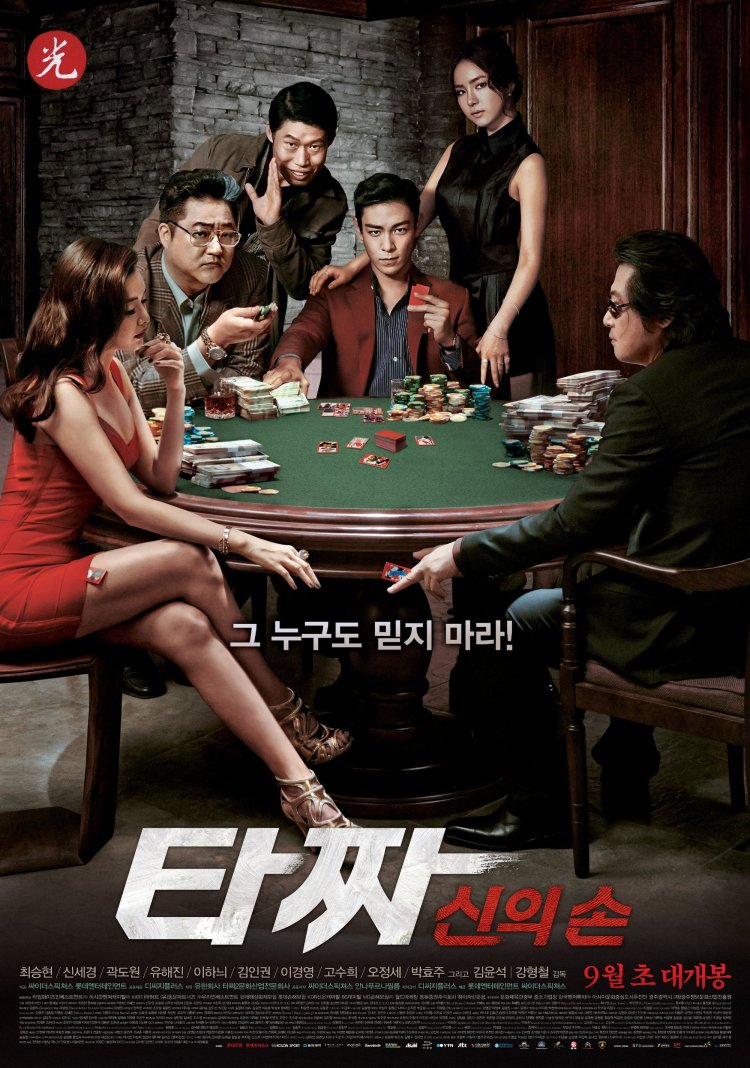
Tazza: The Hidden Card (타짜-신의 손, Kang Hyung-Chul, 2014)

tazza posterYou gotta know how to hold ‘em, know when to fold ‘em, know when to walk away and know when to run. Apparently these rules of the table are just as important in the cutthroat world of the Korean card game Hwatu as they are in the rootinest tootinest saloon bar. Like most card games, having the winning hand is less important than the ability to play your opponent and so it’s more a question of who can cheat the best (without actually breaking the rules, or at least being caught doing so) than it is of skill or luck. A second generation sequel to 2006’s Tazza: The High Rollers, The Hidden Card (타짜-신의 손, Tajja: Shinui Son) is a slick, if overlong, journey into the dark, underground world of gambling addicted card players which turns out to be much more shady than the shiny suits and cheesy grins would suggest.
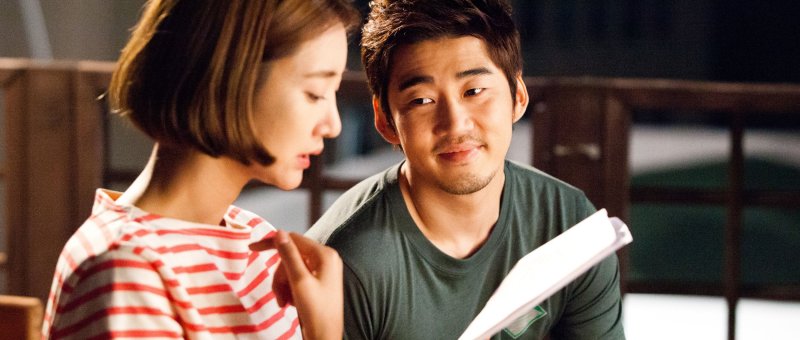
Wisecracking kid Dae-gil (T.O.P) comes into contact with the first film’s fast talking hustler Go (Yu Hae-Jin) and realises he has a talent for trickery. As a young man he gets himself into trouble trying to save a family member from a gangster whom he winds up stabbing meaning he has to go on the run and leave the girl he’s fallen head over heels for, Mina (Shin Se-Kyung), far behind him with only the promise to come back for her when he’s made something of himself. With nothing to fall back on Dae-gil ends up working for cardsharping gangsters in what is really a series of high level con operations. His first problem occurs when he temporarily forsakes the memory of Mina for the attentions of the alluring Mrs. Woo (Lee Honey) who becomes both his secret girlfriend and the gang’s latest mark.

Things do not go to plan and Dae-gil is left carrying the can for the gang’s heavy losses. Getting into trouble with another mark who turns out to be a high level gangster himself, Dae-gil finds out Mina has been sold into prostitution as payment for a family debt but also winds up losing a kidney as recompense for his mounting gambling debts. Now Dae-gil is out for revenge against pretty much everyone, hoping to rescue Mina and win her heart in the process but his adversaries are old hands at this sort of thing and it’s going to take more than a rigged deck to beat them at their own game.

Taking over from the first film’s Choi Dong-hoon, Kang Hyung-chul opts for a slick and charming Oceans 11 inspired aesthetic full of quirky humour and tricky slight of hand photography. With retro musical choices from a smooth cover of Spooky to the ‘80s synth pop kicking in for an exciting car chase, Kang piles on the nostalgia as Dae-gil rides high as a wisecracking conflicted member of this underhanded outfit. Taking inspiration from its manwha roots, The Hidden Card maintains its breezy tone even whilst the atmosphere darkens as Dae-gil taps out with this gangster credit, beaten up, drugged and waking up in a filthy room with a bandaged hand and a crude scar across his abdomen where his kidney used to be. Apparently making a quick recovery from serious surgery, Dae-gil’s discovery of Mina’s fate is likewise another addition to his quest narrative rather than more evidence of the savagery of this trick or be tricked world.

The Hidden Card’s biggest problem is an unavoidable one given its genre – the sheer structural repetitiveness of moving from one card game to another. Lack of familiarity with Hwatu itself is not exactly a problem even if mildly frustrating, but the nature of the way the game is played means that a great deal of screen time is occupied with watching people watching each other, moodily, only to be left unsure of what’s going on or who’s won at the end of it. This is all the more true of the film’s final showdown which brings back a major player from the first instalment in which the stakes have been raised supposedly to “prevent” cheating, but only really aim to make it more “challenging”. Still, away from the gaming table there are enough high octane fist fights and a lengthy car chase to break up the more cerebral thrills.

Undeniably slick and filled with a host of likeable characters offering snappy dialogue and silly humour, Tazza: The Hidden Card is far too long at two and a half hours. Uneven pacing does not help the feeling of scale and a similarly unbalanced plot structure produces a misleading sense of progression. Still, keeping one step ahead of the card sharks is fun in itself and even if the action drags here and there, there is enough character driven drama and ironic comedy to keep things moving right up until the consciously cool finale.


International trailer (English subtitles)

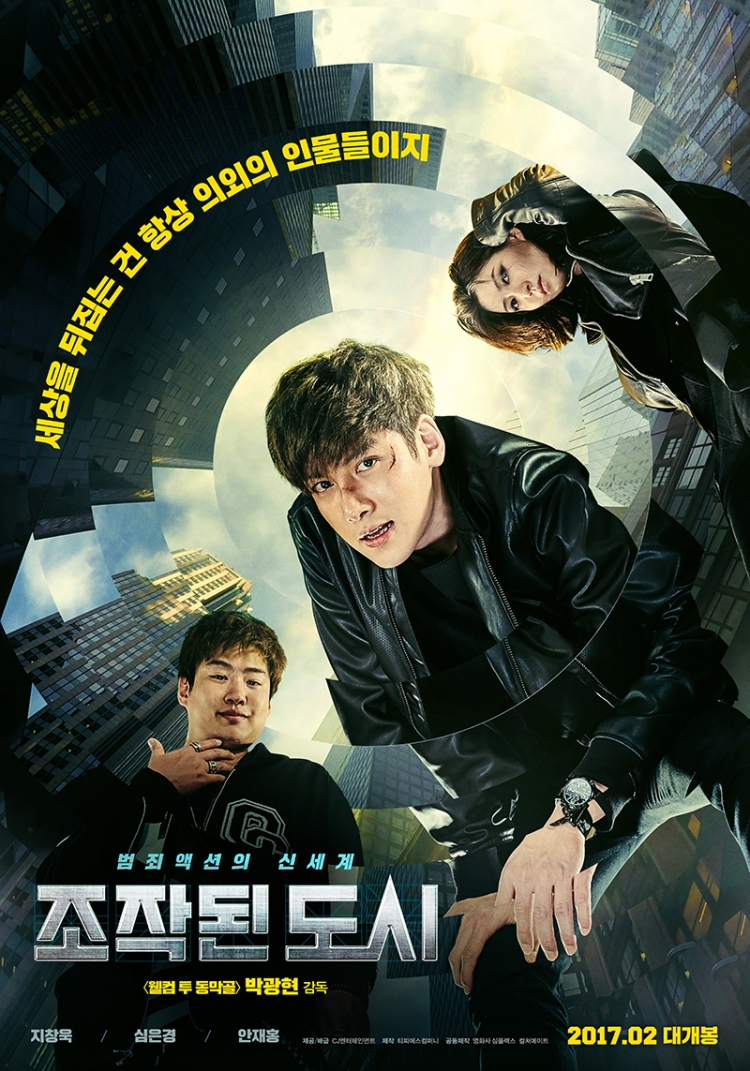
Fabricated City (조작된 도시, Park Kwang-hyun, 2017)

fabricated cityThe real and the unreal. In the era of fake news, it’s become ever harder to draw a clear line between the two but when you live online, the borders are even more permeable. Twelve years after the wartime comedy Welcome to Dongmakgol, director Park Kwang-hyun finally makes a return to the director’s chair with an action packed cyberpunk thriller which joins the ranks of recent Korean films bemoaning the country’s hardwired tendency to social inequality where the rich and powerful are free to run roughshod over the merely ordinary. Fabricated City (조작된 도시, Jojakdwen Doshi) refers to more than just the literally manufactured online world, but to the social reality in which unseen forces govern and define the lives of others, operating in secret behind a government backed curtain.

Kwon Yoo (Ji Chang-wook) was once a national athlete – a rising star of the Korean Taekwondo team. Starting fights when he wasn’t supposed to put paid to that dream and now Kwon Yoo is an aimless wastrel. Too sad and ashamed to have anything more to do with Taekwondo, Kwon Yoo spends all his time in gaming cafes, living a more successful life online. In his favourite game he’s known as the Captain, and the dashingly heroic leader of his party known as Resurrection.

One evening someone leaves their phone behind. It rings and Kwon Yoo answers it. Irritated, he’s about to hang up on the frantic sounding woman who wants him to bring the phone to her but her offer of money changes his mind. Kwon Yoo delivers the phone but the whole thing seems weird especially as the door was open and the woman in the shower when he arrived. Next thing he knows, Kwon Yoo is arrested for a brutal rape and murder. The police have a lot of evidence against him, and so Kwon Yoo winds up in jail where he’s branded a sex offender. Luckily a crazed serial killer realises this kid is no killer and helps him get out whereupon his loyal Resurrectionists valiantly come to the aid of their Captain in the real world, exposing the impressive fit up job that got him put away in the first place.

The deeper Kwon Yoo and his team dive the more corruption they discover. Kwon Yoo is not the only innocent sacrificed for someone else’s grand plan, there are others and the pattern is disturbing. Like Kwon Yoo, the other victims are usually people living on the margins – ones that no one would miss or the uncharitable might say were “unnecessary”, lives that can be exchanged for those of the rich and famous finding themselves in a fix. Kwon Yoo’s fate becomes an extreme version of that meted out to the young men and women of Korea unlucky enough to have been born without wealth, connections, or familial status – expendable and condemned to live without hope.

The fabricated city, in its more literal sense is the online world Kwon Yoo and his team have chosen and in part created for themselves in an attempt to escape the aspects of their lives and personalities which most disappoint them. Kwon Yoo, kicked off the Taekwondo team, has made a warrior hero of himself online, backed by a similarly escapist squad he doesn’t really know. His saviour turns out to be a shy computer genius who can only bear to talk via telephone even when in the same room yet has broken out of her self imposed isolation in order to save the life of her online friend. Other members of the team follow suit bearing similar backstories, attempting to live up to their fantasy selves for real with varying levels of success. Yet the fantasy world was all they had, locked out of all means of escape or advancement by the rigid social codes which make their present predicament possible, even if the fact remains that Kwon Yoo was doing a pretty good job of wasting his life all on his own.

Fabricated City’s biggest selling point is in its unusually well developed production design which takes its cues from the video game world with fantastical images from a prison carved into a mountain to the relatively more familiar cyberpunk influenced technological hybridity as floors become giant computer screens and everything really does exist online. Jumping genres from the classic wrong man to prison drama and eventually techno thriller, Fabricated City bites off more than it can chew but its well choreographed action and typically Korean sense of subtly ironic humour help to smooth over some of the film’s more outlandish moments.


Fabricated City was screened at the 19th Udine Far East Film Festival.

International trailer (English subtitles)

Familyhood (굿바이 싱글, Kim Tae-gon, 2016)

familyhoodThere are three kinds of actors – those who wait for roles, those who choose roles, and those who make roles for themselves. Ageing actress Go Ju-yeon (Kim Hye-soo) claims to be the third type, but at any rate she’s currently between gigs and facing professional scandals and personal crises from each and every direction. An unusual family drama, Familyhood (굿바이 싱글, Gotbai Singkeul, AKA Goodbye Single) is the coming of age story of a middle aged woman finally forced into adulthood through an unlikely friendship with a pregnant teenage girl.
A veteran TV star of over twenty years, Go Ju-yeon is perhaps better known for her scandalous relationships with younger men than her onscreen performance. Having worked hard to get where she is, perhaps Ju-yeon is entitled to play the diva, but her “difficult” personality alienates all but her most loyal staff. However, there’s one thing Ju-yeon has been missing – a traditional family life with a loving husband and children. She thinks her latest boyfriend, Ji-hoon (Kwak Si-yang),  a fellow TV star twelve years her junior, may the “the one”, but as it turns out he’s a no good two timing louse using her for her money and star status.

Heartbroken Ju-yeon swears off men forever and decides to buy herself a slice of unconditional love by becoming a mother. Turned down for an adoption because of her obvious unsuitability as evidenced by her appearances in the tabloids and by the fact that she just made this decision a few seconds ago, Ju-yeon figures it’s worth the nine month waiting period to do things the old fashioned way. Unfortunately she’s left it too late as a doctor’s appointment reveals she’s already heading into the menopause. Ju-yeon’s luck changes when she comes to the rescue of a teenage mother in the lift when a more conservative family decides it’s OK to lay into a vulnerable child they don’t even know.

Ju-yeon hits on an idea – buy the girl’s baby and raise it as her own. Dan-ji (Kim Hyun-soo) is an orphan living with her tough as nails older sister so it doesn’t take her long to agree to Ju-yeon’s suggestion even if she has her misgivings. Coming with her own contract prepared detailing her monetary compensation, Dan-ji has given this a lot more thought than the mother in waiting Ju-yeon but a sisterly bond eventually begins to develop between the two women despite the clear instruction to avoid getting attached. However, as Dan-ji’s presence begins to reinvigorate her fortunes, Ju-yeon begins to forget about her original career/romance replacer mission and has less and less time for the surrogate teenage daughter she irresponsibly promised to take care of.

Having lost her mother at a young age and spent all of her adult life in the pampered showbiz arena, Ju-yeon is a forty year old awkward woman child with a severe case of tunnel vision. As Dan-ji points out, Ju-yeon is a pure hearted sort but she’s also selfish and immature, jumping from one thing to the next and never stopping to consider the effect of her actions on those around her. Ju-yeon’s decision to become a mother is a similarly rash and selfish one as she only considers the upside of the boundless love she’s about to receive from this tiny bundle who is duty bound to love her, whilst failing to think about the practicalities of child rearing from the impact on her career and social life to the negative publicity she will receive as a single mother in a still relatively conservative society.

It’s these kinds of double standards which the film seems to want to lay bare as Ju-yeon attempts to come to the rescue of Dan-ji, albeit for selfish motives. Dan-ji, planning to get an abortion, has told no one other than her best friend about the pregnancy and is worried about the school finding out, not least because she is their representative at an inter school art contest. The boy who fathered her child had the temerity to ask if it was his before stealing a ring belonging to his mother to pay for an abortion. He is now off on an international golfing trip representing the country, but Dan-ji is imprisoned, kept out of sight so that Ju-yeon can claim the child is hers. Ju-yeon and Dan-ji first meet when Ju-yeon takes a smug family to task over their decision to loudly criticise Ju-yeon for her “immoral” ways in a hospital lift. After a long journey Ju-yeon will do the same again, only more loudly and even help to win over a few supporters from the collection of conservative mothers waiting for their kids after the art contest.

Kim creates a cosy world filled with calming pastel colours almost as if Ju-yeon really does live in a nursery. Ju-yeon wants to be a mother but still needs mothering herself and mostly gets it from her best friend and stylist Pyung-gu (Ma Dong-seok). Despite vowing to look after Dan-ji at least until her baby is born, it’s Dan-ji who mostly ends up looking after Ju-yeon, providing comfort and comparatively grown up advice whilst Ju-yeon mopes and eats ice-cream. Only when her schemes backfire and Ju-yeon faces losing everything does she finally begin to realise how she’s taken the people in her life for granted. What emerges is a new kind of family in which good friends enjoy food together because they want to eat rather than because someone insisted on cooking. Taking in everything from the ageist sexism of the entertainment industry to teenage pregnancy and neglected children, Kim Tae-gon’s Familyhood is a smart, socially conscious comedy making a heartfelt plea for a more understanding world.


Reviewed at the 2016 London East Asia Film Festival.

Original trailer (English subtitles)

https://www.youtube.com/watch?v=CGJodzYHZXw

Manji (卍, Yasuzo Masumura, 1964)

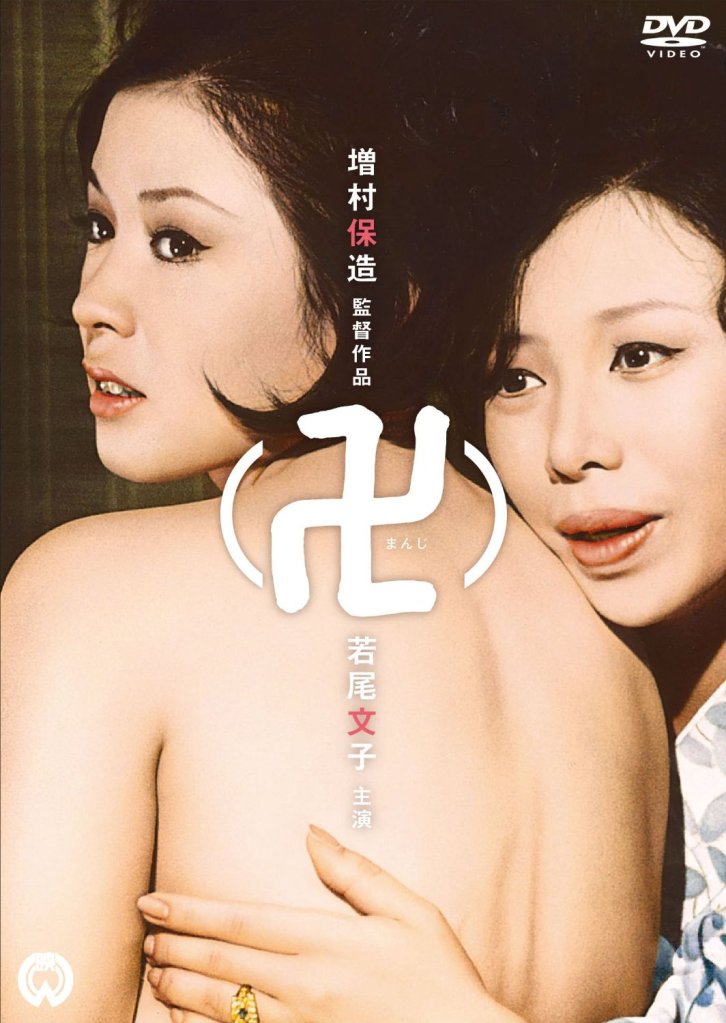
8127Ur2xnXL._SL1500_For arguably his most famous film, 1964’s Manji (卍), Masumura returns to the themes of destructive sexual obsession which recur throughout his career but this time from the slightly more unusual angle of a same sex “romance”. However, this is less a tale of lesbian true love frustrated by social mores than it is a critique of all romantic entanglements which are shown to be intensely selfish and easily manipulated. Based on Tanizaki’s 1930s novel Quicksand, Manji is the tale of four would be lovers who each vie to be sun in this complicated, desire filled galaxy.

The story begins with a framing sequence in which Sonoko sits down with a male mentor to recount her sorry tale from some later vantage point. As she would have it, she was an unfilled, unhappy housewife taking a series of art classes when the principal of the college noticed that the face in her sketch of the Goddess of Mercy doesn’t look much like the model. Her technique is good though so he asks her why she gave her drawing a different face and who it might belong to. She tells him it’s merely an ideal and isn’t based on any real person. However, it does look quite like another, very beautiful, pupil at the school – Mitsuko, and a rumour quickly starts that the two women are lovers. Though barely knowing each other before, the pair laugh it off and decide to become friends anyway. Gradually, something more than friendship begins to grow but not everyone is being honest with each other and the added complication of the men in their lives is set to make the road even harder for Sonoko and Mitsuko’s love affair than it might otherwise be.

Sonoko narrates things from her perspective, though you get the feeling she may not be a completely reliable narrator. She seems shy, innocent, wounded though she speaks of her great tragedy with ease and a surprising frankness considering its sensitivity. The object of her obsession, Mitsuko, by contrast plays the innocent but also seems to know perfectly well what she’s doing. Manipulative in the extreme she plays each of the other three lovers off against each other in an attempt to become the centrifugal force in each of their lives. All things to all people, Mitsuko doesn’t seem to know what she wants, other than to be adored by anyone that’s around to adore her.

At the beginning of the film Mitsuko reveals that she’d been involved in marriage negotiations with a young man from a high profile family and she believes the rumours at the art school were started deliberately to try and disrupt her matrimonial ambitions. Sure enough that liaison falls through but she neglected to mention that she also has another fiancee, the slimy Watanuki, that she longs to be rid of but can’t seem to shake off. After Sonoko finds out about Watanuki, Mitsuko feigns not only a pregnancy but a bloody miscarriage to get her female lover to return to her. However, Watanuki fights back by trying to form a bilateral alliance with Sonoko to ensure Mitsuko doesn’t suddenly take up with a third party – he even gets her to sign a contract saying that she’ll help get Mitsuko to marry him and in return he won’t interfere with the two women’s relationship even once they’re married.

Sonoko’s husband completes the quartet, becoming increasingly frustrated by his wife’s infatuation with another woman, her coldness towards him and her growing boldness. Sonoko labels Kotaro cold and passionless and claims never to have enjoyed any of their married life together. She’s also been taking illegal birth control medication to avoid having children with him. Trying to be an understanding husband, Kotaro ends up tangled in a web of desire after being seduced by Mitsuko. For a time, the three form an unlikely romantic trio (with Watanuki hanging around disdainfully on the edges) though even between the three of them petty jealousies sap their strength and keep them all guessing as to the exact motives of the other pair.

Just like the four pronged arms of the manji itself, our four lovers lie in a tangled and twisted crisscross of desire, each trying to eclipse the other in the eyes of the radiant Mitsuko. Anything but merciful herself, Mitsuko adeptly plays on the insecurities of the others to keep them all dancing along to her tune. This is not a story of true love, but of misused desires, almost of the inverse of love where lust becomes a weapon of control and self satisfaction. Even at the end, Sonoko can’t decide if she’s been saved or betrayed and if what happened to her was love or a kind of madness. Whatever it was, each has paid a high price for their selfish pursuit of romance or dominance or whatever Mitsuko really represents for them (clearly not the reincarnation of the Goddess of Mercy after all). Years ahead of its time and still just as dark and fascinating as it always was, Manji is a sadly universal tale of the destructive power of love that plays almost like a ghost like story and is likely to haunt the memory long after the screen falls dark.


Manji is available with English subtitles on R2 UK DVD from Yume Pictures.

Original trailer (no subtitles)

Twenty (스물, Lee Byeong-heon, 2015)

Twenty Movie PosterReview of Lee Byeong-heon’s Twenty (스물, Seumool) up at UK Anime Network. I really felt so old watching this film.


The age at which you become “an adult” varies according to your culture but in Korea, as in Japan, at 20 you become fully grown up with all the rights and responsibilities that carries. The three guys at the centre of the Korean film Twenty are just walking through this magic doorway which marks the end of their childhoods and the beginning of their adult lives. The road has forked for them and they have to decide which path to take. However, they’ll have to take their minds off the opposite sex long enough to make a decision.

To state the obvious, Twenty is aimed at a very specific audience and is likely to please a certain group of people very well whilst leaving others a little lost and bemused. It stars a collection of popular and very good looking younger Korean actors and actresses and is largely about what it’s like to be on the cusp of adulthood in contemporary Korea. What it’s not is a hard hitting drama. The target audience for this movie is people who are in their teens or early twenties, so they know what it is to be young, now. They just want to laugh along or sympathise with others in a similar position.

We meet the three guys, Chi-ho (popular rich kid), Dong-woo (put upon poor boy), and Gyung-Jae (doing OK middle class guy) towards the end of their high school years. The boys became friends after falling for the same girl who eventually picked Chi-ho but being boys they had a fist fight about it and are now bonded for their rest of their lives. In many ways they’re quite different, Chi-ho is rich, good looking and only interested in girls whereas Dong-woo comes from quite an impoverished background which means he’ll find it difficult to pursue his studies past high school because he needs to be supporting his mother and siblings. Gyung-Jae is almost the protagonist and is a typical middle class boy who’ll go to college and probably do alright for himself. He’s also a typical “nice guy” with a selection of fairly ordinary romantic issues (bar one interesting aspect which is raised but never followed up on) but being pretty level headed he’ll almost certainly get over it.

At twenty they have the whole of their lives ahead of them – or they kind of do given the fairly restrictive nature of Korean society. Chi-ho just thinks about sex. His parents are rich so he just lives in a perpetual adolescence where he hasn’t applied for university but hasn’t decided on a job either. He watches lots of movies and mopes but honestly he’s just a bit lost and afraid to admit it. Dong-woo wants to be a manga artist and decides to repeat the last year of high school whilst continuing to work all the other hours to support his family all the while feeling guilty about trying to pursue his dream rather than accepting the offer of a steady office job at his uncle’s company. Gyung-Jae actually has it pretty easy as his problems are just the normal sort of romantic growing pains everybody goes through and realising that makes them a little easier for him.

The film is not really a serious examination of the problems young people face. Even the eventual looming of military service is treated in quite a matter of fact way. Twenty is more of a celebration of being young and that it’s OK to be a bit lost and stupid when you’ve just left school. It gets surprisingly crude given that it’s aimed at a comparatively conservative Korean audience but generally gets away with it thanks to its cheeky tone. Undoubtedly hilarious in places (the “fist fight” finale in a Chinese restaurant being a late highlight) Twenty is a film that will play best to those around the same age as its protagonists in real terms and truthfully doesn’t offer so much for those who are already little older but it is nevertheless very funny and likely to entertain Korean idol fans of any age.


Reviewed at the London Korean Film Festival 2015.