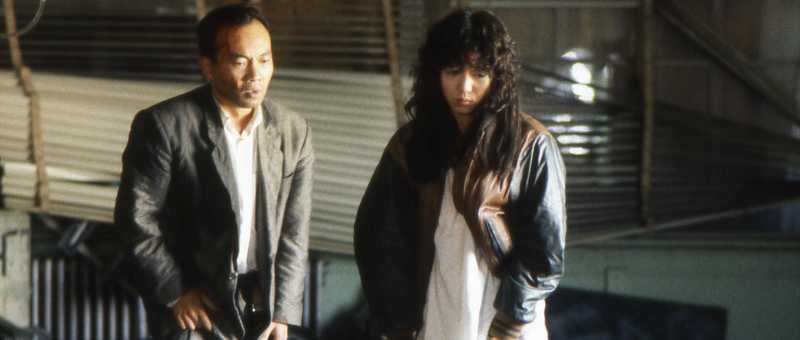
Maru (まる, Naoko Ogigami, 2024)

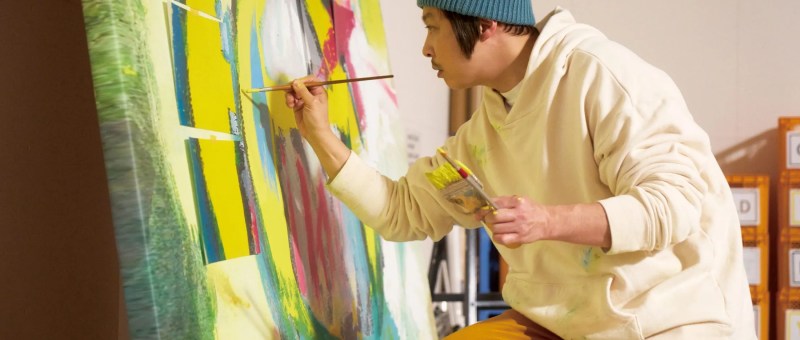
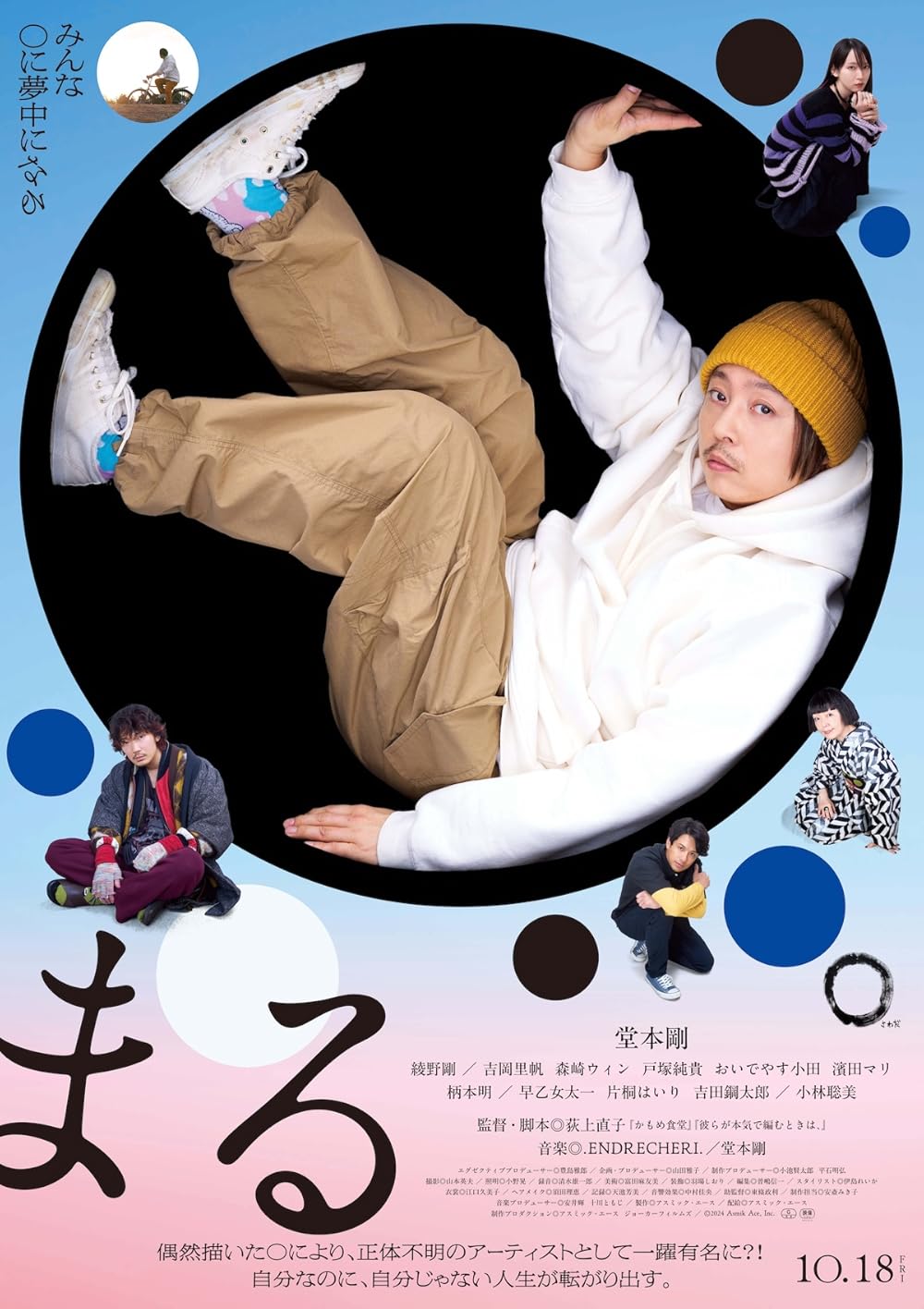
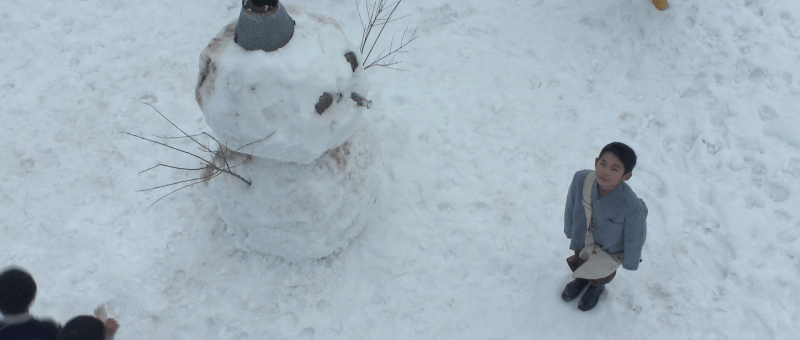
Taken to task by a coworker (Riho Yoshioka) for allowing himself to be exploited as an assistant to an internationally famous artist who views them as little more than tools and takes all the credit for their work, Sawada (Tsuyoshi Domoto) asks if she knows who built Horyu Temple. He has to supply the answer himself, Prince Shotoku. But of course, he didn’t. It wasn’t  as If he drew up the plans or cut the wood with his own hands. 1300 carpenters built it, but no one thinks about them. Only about Prince Shotoku, because he commissioned the work and paid for it. Sawada doesn’t think what he’s doing is all that different, and that times haven’t really changed all that much. Not many people get to make a living doing what they love, so perhaps that’s enough for him. 

But his colleague asks if he sees himself more as a worker than an artist, as if she were unintentionally making a value judgement on the nature of art. The line between artist and artisan maybe so thin as to not exist, but why is it that we think of art which is perceived to have a practical application differently from that which we assume is intended only as a means of self-expression? “What about your own art?” she asks Sawada, but he doesn’t really have a notion of it because he’s been so focussed on earning a living as part of a wider capitalist superstructure in which art too is a commodity. Akimoto (Kotaro Yoshida) is basically running an art sweatshop mass-producing pieces for an international market and operating it like a brand in which everything is released under his own name. When Sawada falls off his bike and breaks his dominant arm, Akimoto simply fires him.

But then, things begin to get strange. Sawada draws some circles with his left hand and includes them with a few things he plans to sell to a second-hand shop where they’re picked up by a strange man who describes himself as a “magician who can’t do magic” and offers him fantastic amounts of money for his work even though all he did was draw a circle. Sawada discovers what he drew is called an “enso” and represents “serene emptiness”, but at the same time others seem to project whatever they want to see in the hole inside while Sawada himself is uncertain what should be there. The magician tells him that his follow-up work is no good because his enso are full of desire in his newfound lust for fame and riches, but at the same time he and his art have also become a commodity and like Akimoto he’s locked into producing more of what people want rather than expressing himself or finding artistic fulfilment. 

His colleague returns to attack him again. Now she criticises him for exploiting art to make money. “Art that’s expensive and just for a few wealthy people isn’t real art,” she says. She sticks to her message that the labour of those like her is being exploited and the world is set up for a few wealthy elites. Their chant of “we want sushi too” might seem flippant, but it represents the world that they’re locked out of. Sawada’s incredibly intense, struggling mangaka neighbour is obsessed with getting sushi too, though there’s plenty of it on the buffet at Sawada’s show which Sawada eyes hungrily. Eventually he’s reduced to grabbing some to eat on his own in a stairwell, signalling his liminal presence within this space. He’s the artist and it’s his show, but he isn’t really part of this world and no one’s really interested in him except when he’s giving mystical quotes as part of his marketing brand. 

The conclusion that he comes to that his art at least should exist for art’s sake. That all he ever wanted to do was paint as a means of being true to himself, only that simple desire has got lost amid the complications of modern life. It’s very hard to draw circles of serenity when you’re living in a rundown apartment block with a worrying subsidence problem and your neighbour screams all night in despair before punching a hole in your wall which you’ll probably have to pay to have fixed. Nevertheless, through Ogigami’s elliptical tale, Sawada does perhaps begin to find a path back to his own art or at least what art means to him which is after all what’s in the middle circle even if all anyone looks at is the edges. 


Maru screened as part of this year’s Camera Japan.

Trailer (no subtitles)

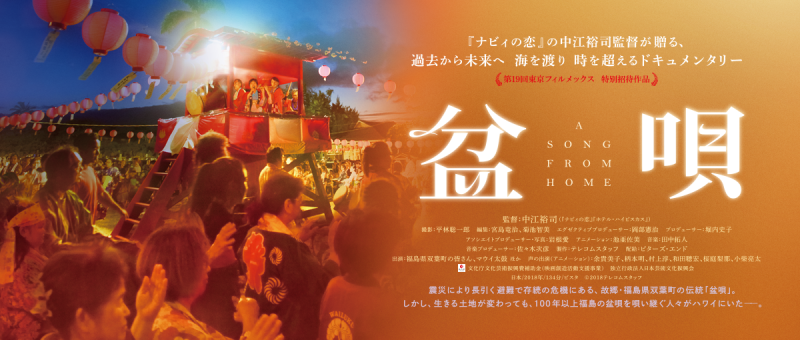
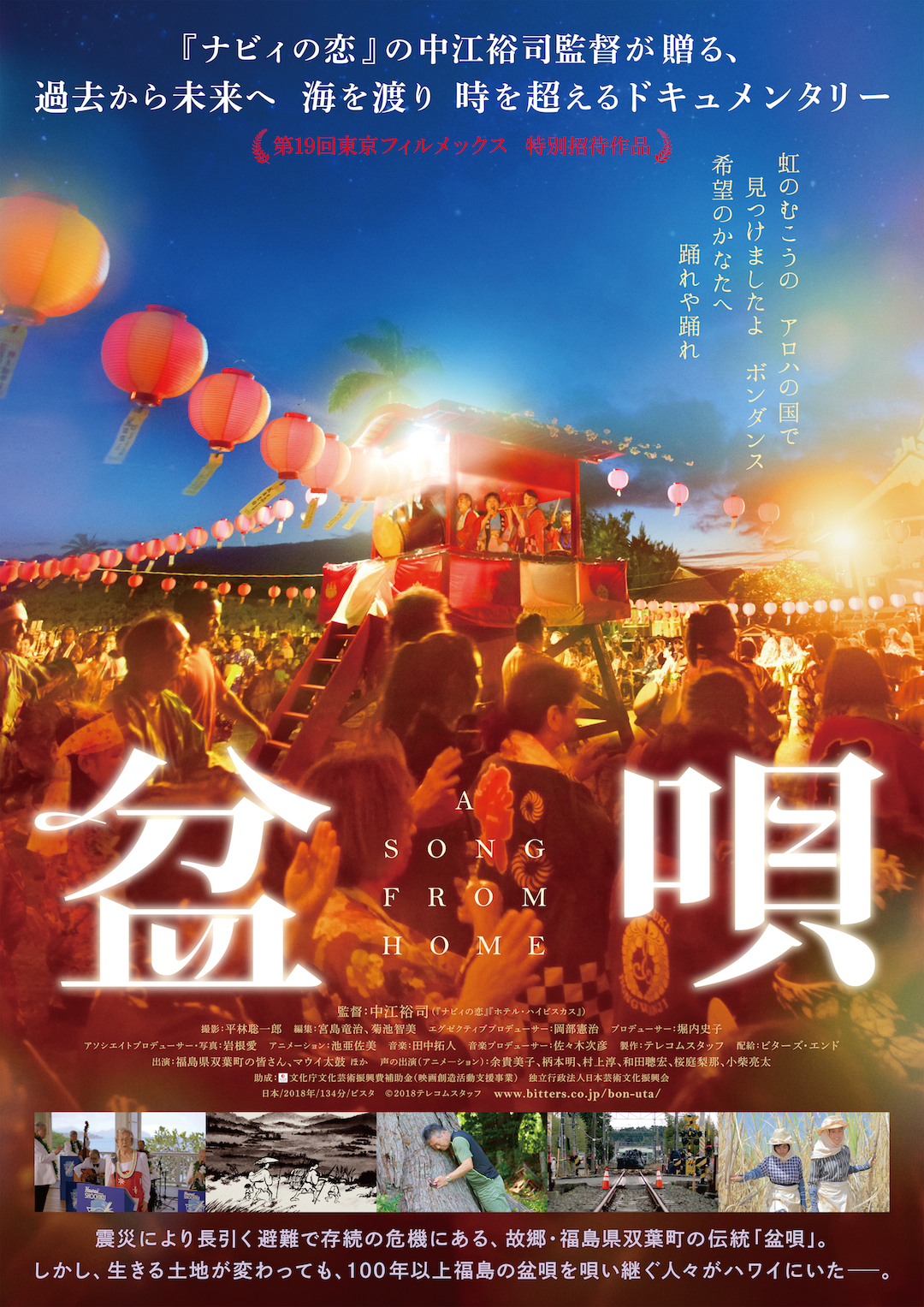
BON-UTA, A Song from Home (盆唄, Yuji Nakae, 2019)

Exiled from their homes, the residents of Futaba lost more than just their material possessions when the area was declared uninhabitable following the Fukushima nuclear disaster. With former residents scattered all over the country never knowing when or if they will be able to return, a community has been ruptured and its history is in danger of dying out. Yuji Nakae’s poignant documentary Bon-Uta (盆唄) explores this sense of loss through the prism of the Bon dance while meditating on the notion of exile in comparing the experiences of migrants and Hawaii and their descendants. 

A photographer, Ai, has been photographing Bon dances in Japan and Hawaii and was struck by the Hawaiian response to the 2011 earthquake, seeing as many of the Japanese-Americans living in Hawaii traced their ancestry back to the Fukushima area. Hisakatsu and Haruo, childhood friends from Futaba, travel to Hawaii and observe the Bon dance, reflecting that it is different from that in Japan but perhaps in some ways better. Seeing how they have incorporated many different styles of Bon dance gives them the idea that they could save the Futaba dance by teaching it to the Hawaiian dancers, placing it in a kind of depository so that in 50 or a 100 years if Futaba becomes habitable again, their descendants could relearn it. But what they quickly discover is that it’s difficult to teach something that each of them has spent their whole lives learning in a matter of days, while the fact is that the community itself is central to the dance which loses its meaning when performed by those who’ve never been there. 

Nakae begins to meditate on insiders and outsiders as an older woman returns to her family home in the exclusion zone and uncovers papers from the 19th century which recount the discrimination her own family faced on being encouraged to move to the village following a massive famine which had reduced its population by two thirds. Now outsiders in the areas in which they have resettled, the former Futaba residents lament that they can no longer practise their art because their homes are in much more urbanised locations where neighbours are in close proximity and they fear disturbing them with the noise. The film equates their yearning for their lost community to that felt by those who emigrated to Hawaii in the 19th century hoping to escape rural poverty but often found themselves trapped, unable to return because of the low pay and exploitative conditions of the island’s sugar plantations. 

The Hawaiian migrants sang songs of exile, of how they missed their homes and families and how hopeless felt in the false promises that had been made to them of better lives abroad. Even in this, their culture survived while another, now elderly, woman recounts singing for a Japanese orchestra during the war when such songs were technically forbidden as other young men keen to claim their identity as Japanese-Americans enlisted in the military. The former Futaba residents begin to see new hope that they too could find a way to preserve a sense of their hometown even if they can’t return to it, deciding to organise a Bon dance of their own in another town bringing together the unique dances of each district while honouring the spirits of those who have passed away. 

Hisakatsu writes a new Bon song of his own from the point of view of a cherry tree in Futaba to ward off the “ogres” which stand in for radiation as the tree looks forward to blossoming once again, hoping the people will eventually return. Featuring a lengthy animated sequence recalling the experiences of the 19th migrants to Futaba who found themselves rejected as outsiders while reflecting on the contemporary exile of the former residents, the film eventually discovers a note of positivity and hope that even now scattered and unable to return to their homes the community can survive through the practice of its culture in passing on the unique local Bon dance to successive generations just as the migrants in Hawaii passed theirs on to their children in the hope they too might one day be able to return home.


Trailer (English subtitles)

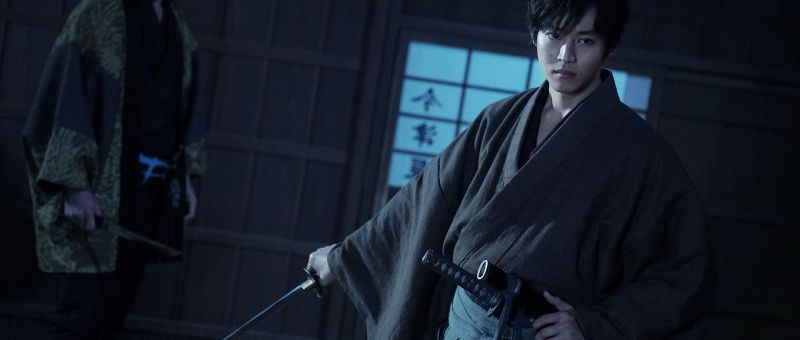
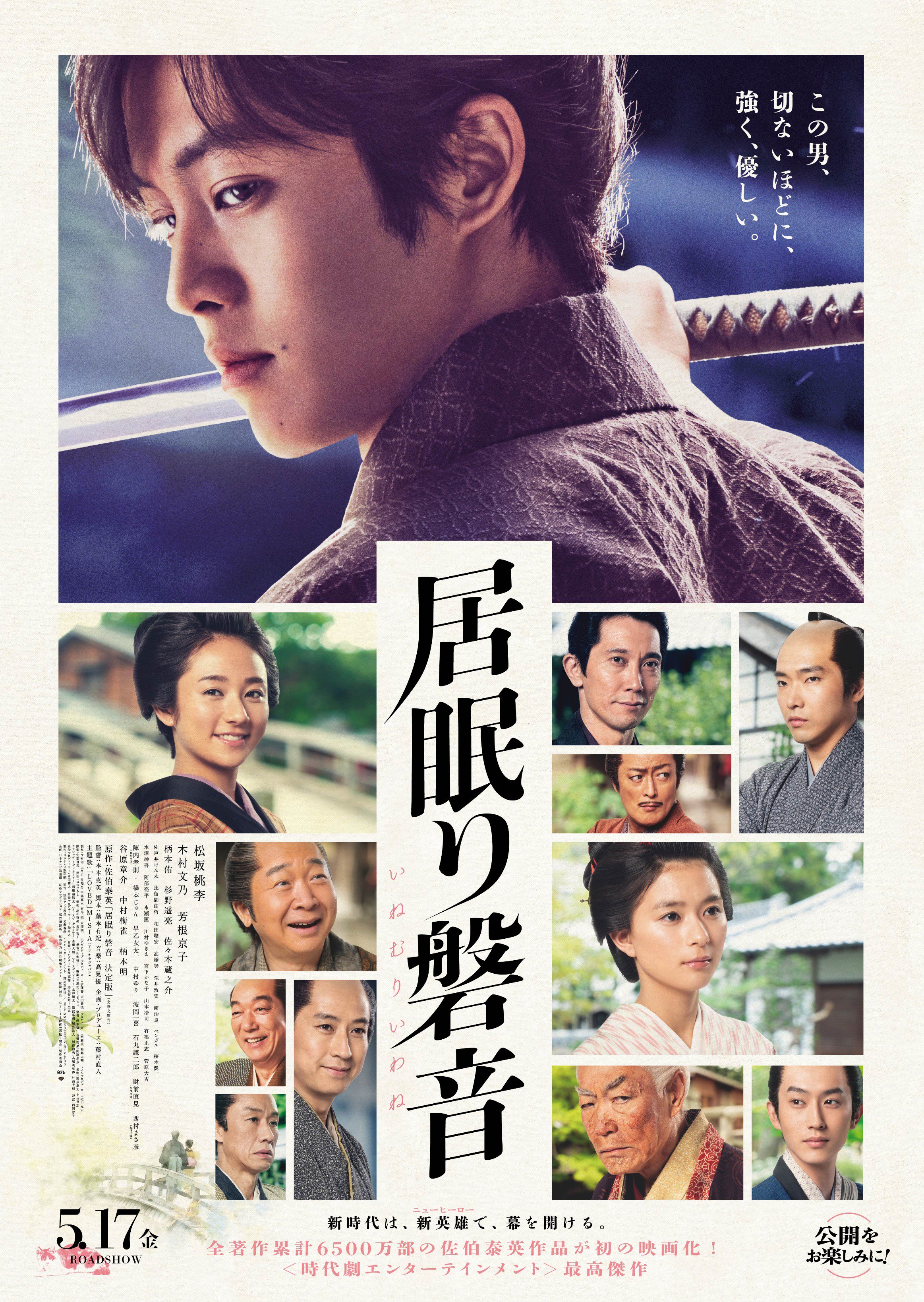
Iwane: Sword of Serenity (居眠り磐音, Katsuhide Motoki, 2019)

The contradictions of the samurai code conspire against one noble-hearted young man in Katsuhide Motoki’s adaptation of the long running series of historical novels by Saeki Yasuhide, Iwane: Sword of Serenity (居眠り磐音, Inemuri Iwane). Yet this truly serene samurai is a stoical sort, learning to bear his pain with fortitude while standing up for justice in an increasingly corrupt Edo where money rules all while an ascendent merchant class continues to challenge the fiercely hierarchical social order. 

Beginning in 1772 which turned out to be a disastrous year, the tale opens as hero Iwane (Tori Matsuzaka) prepares to return home after completing his three year rotation in Edo in the company of childhood friends Kinpei (Tasuku Emoto) and Shinnosuke (Yosuke Sugino). Shinnosuke is in fact married to Kinpei’s sister Mai, while Iwane will himself be married to Kinpei’s other sister Nao immediately on his return so close are they. As Iwane’s father tells him, there are great hopes for these young men that they can “turn our outdated clan around”, but events will conspire against them. Spoiling the happy homecoming, Shinnosuke is accosted by a drunken uncle who convinces him Mai has been unfaithful in his absence with the consequence that he kills her immediately on his return home. Unable to understand this turn of events, Kinpei confronts his friend but eventually kills him, while Iwane is then forced to kill Kinpei after he goes on murderous rampage in revenge for the wrong done to his sister. 

In trying to mediate the case, the argument is put forward that Shinnosuke acted rashly and should have brought his suspicion to the authorities rather than opting for summary execution. The lord however disagrees, condoning Shinnosuke’s actions under the rationale that to do so would have been considered “weak minded” while as Shinnosuke himself had claimed he acted in accordance with the samurai code in which female adultery is illegal and punishable by death. By contrast, he finds Kinpei’s rashness offensive, insisting that he also should have recognised the legitimacy of his sister’s murder and simply left quietly with her body. Having learned the truth in which his childhood friends became victims of clan intrigue, romantic jealousy, and tragic misunderstandings in this Othello-like plot, Shinnosuke and childhood sweetheart Nao are also consumed by the rashness of samurai law each exiled from their clan and cast adrift in Edo-era society. 

Edo-era society is however also itself corrupt. Some months later, Iwane has returned to Edo as a lowly ronin lodging with a kindly old man, Kinbei, who helps him find a job firstly gutting eel then as a bodyguard at a money exchange which has been receiving anonymous threats they assume are from rival broker Awaya who has hatched a nefarious plan to manipulate the currency market to stop the current Shogun introducing a new unit which can be used in both Edo and Kyoto which would understandably cut into his already corrupt business model. Luckily, Imazuya is an honourable man who backs the new currency plan and wants to do the right thing which makes him a perfect fit for Iwane’s innate sense of justice. “You don’t know the way of the merchant” Awaya snaps at him, suggesting both that the samurai are already on their way down as the merchants rise and that his unwillingness to play dirty will be his downfall. Nevertheless, Iwane is the type to adapt quickly, instantly coming up with a way to play Awaya at his own game and kick his destructive amoral capitalism to the curb. 

Meanwhile, he continues to pine for Nao while drawing closer to Kinbei’s earnest daughter Okon (Fumino Kimura). As we discover Nao is also a victim of an intensely patriarchal social order but through the tragedy that befalls them also finds strength and agency making a life changing decision that allows her to become independent while looking after her family if in the knowledge that the childhood romance she shared with Iwane is a thing of the past. Iwane too agrees that he is trapped in a living hell of guilt and grief, yet choosing to go on living anyway as calm and cheerful as he’d ever been while standing up to Edo-era corruption though uncomfortably enough this time against the destabilising influence of the rising merchant class and therefore in contrast to most jidaigeki reinforcing the legitimacy of the samurai order which has paradoxically also ruined his life with its rigid and implacable social codes. In any case, Motoki’s classic chanbara melodrama has a serenity of its own as the cheerfully laidback hero resolves to live his life by a code of his own free of samurai constraint. 


Trailer (no subtitles)

September 1923 (福田村事件, Tatsuya Mori, 2023)

After the devastating Great Kanto Earthquake struck in 1923, it led to a period of hysteria in which in the natural disaster somehow became equated with the Korean Independence Movement, foreigners, and socialists and who were after all thorns in the side of rising nationalism. Documentarian Tatsuya Mori makes his narrative film debut with September, 1923 (福田村事件, Fukudamura Jiken) released to mark the 100th anniversary of the incident and focussing on a little known episode in which villagers turned on a small group of itinerant medicine pedlars they were convinced were not Japanese. 

In this case, at least, they were Burakumin. An oppressed underclass of their own, they too are divided in their views about Koreans some finding solidarity with them as another minority who is bullied and discriminated against while others are quick assert themselves as at least being above them on the pecking order cheerfully using slur words as they go. Shinsuke (Eita Nagayama), the leader of the troupe, laments that they have to live this way, tricking those worse off than themselves into buying their snake oil cures while explaining that though people will often help each other out when times are good, if survival’s on the line they’ll turn against each other. 

Perhaps that’s difficult to imagine in a small village of genial farmers, but militarism has already corrupted its gentle rhythms. Men from the village are fond of telling war stories from their time as conscripts in China or Russia, though one has a particular bee in his bonnet about wives being left lonely with husbands away overseas and is convinced that his father has slept with his wife. Another local woman was indeed having an affair shortly before her husband was killed in action and is then ostracised by the village for her transgressive behaviour becoming yet another oppressed minority. The village chief is keen on democracy and progressive in his way yet soon finds himself powerless against the local militia mostly comprised of old men with a lust for blood and glory. It’s this militarist hysteria that eventually proves tragedy as they find themselves desperate to identify “spies” and protect the village only to murder children and a pregnant woman who were just passing through. 

The absurdity extends to asking those suspected of being Non-Japanese to repeat a particular phrase difficult for Koreans in particular to pronounce, only those from other areas of Japan also pronounce it in a way that might seem “foreign” in Tokyo. Cornered by the militia, Shinsuke asks if it would be alright to kill him even if he were Korean, taking issue with the militia’s absurdist and racist rationale that decides someone must die because of the way they pronounced a certain word or seemed uncomfortable shouting “banzai” at the point of a sword. But one of the villagers unwittingly uncovers a since of guilt felt even by a man in a village miles away from anything that the Koreans have been bullied for years, this the understandable result of their rage boiling over and a moment of retribution. 

The film seems to suggest that the buck doesn’t really stop, except perhaps with the bystander who merely watches this horrifying violence and does nothing. Tomokazu (Arata Iura) has recently returned to the village after many years living in Korea bringing back with him a Korean wife but his marriage is falling apart due to his own guilt and trauma having been complicit in a Japanese atrocity. Watching the massacre unfold, his wife, Shizuko (Rena Tanaka), asks him if he’s just going to watch this time again but his attempt to intervene makes no difference. An idealistic news reporter meanwhile takes her boss to task for publishing propaganda headlines associating Koreans with crime and terrorism rather than real truth of what’s happening on the ground, asking him what the point of the press is if it won’t speak truth to power. But militarists do not listen to reason, and as the headman points out they will have to keep living with those who’ve committed these heinous acts. Sometimes a little on the nose with its symbolism such as a literal murder of hope in the killing of an unborn child, Mori’s otherwise poignant drama lacks the impact it strives for but nevertheless addresses a shocking moment of mass hysteria that is not quite as historical as we’d like to think.


September 1923 screened as part of this year’s Nippon Connection

Original trailer (English subtitles)

Legend of the Cat Monster (麗猫伝説, Nobuhiko Obayashi, 1983)

Produced as a special marking the 100th episode of the Tuesday Night Suspense Theatre TV drama series, Nobuhiko Obayashi’s Legend of the Cat Monster (麗猫伝説, Reibyo densetsu) is preceded by a title card reading “Elegy for a Faraway Film”. Scripted by Chiho Katsura, the film is indeed in its way a lament for dying world albeit one which owes a heavy debt to Billy Wilder’s Sunset Boulevard with a little Fedora thrown in. Repurposing the classic ghost cat film it casts cinema itself as dangerous illusion, a vampiric compulsion that drowns all who encounter it in irresolvable longing. 

This sense of irrecoverable nostalgia is palpable from the opening sequence which, aside from the melancholy voiceover, introduces us to the world of Setouchi Cinema apparently a moribund studio complex once dubbed the Hollywood of Japan. The new arrival, Ryohei (Akira Emoto), is dressed in noticeably anachronistic fashion as if he were a 1930s newsboy rather than a young man living in the Japan of the early 1980s. His girlfriend, Ryoko (Jun Fubuki), who works as a stage hand dresses in a similarly old-fashioned style and in fact carries an oversize watch that was a heirloom from her late father, an unsuccessful film director. Ryoko remarks that she’s been hoping someone would come and rescue her from this half-dead island but she doubts Ryohei will be the one to do it because he has also come here in search of a dream. 

That dream is, however, already dead at least according to some. The film director working at the studio is berated by a woman of around the same age working as a manager for an idol star for still getting an allowance from his mother at 60 because he has failed to make it as a film director at least in financial terms. There is a poignant, largely unexplored subplot between that suggests the inability to reconcile the dream of cinema with the economic “reality” has kept them apart all these years and that their dream of love may now be over too. 

It seems that the reclusive actress at the film’s centre, Akiko (Wakaba Irie), is also living on a frustrated dream of love withdrawing from the world around her believing that her lover will someday return from “Hollywood” which seems to be another word for paradise or perhaps the world beyond on the other side of the silver screen. To her, film is but a dream with in a dream. A window or screen is a portal to the burdens of the heart, memories of days gone by, and the illusions we once saw that cannot be seen again.  She herself is trapped within her own dream of love, but it is not so much a dream of her that bewitches Ryohei but the impossibility of cinema.

When passing photographer, Tachihara (Toru Minegishi), who lost his own wife to the unobtainable magic of the movies, snaps a picture of Akiko at her window holding a cat and looking exactly as she did the day she abruptly walked out on an incomplete film, it spurs a cynical producer to get the idea of convincing her to make a comeback and in a ghost cat movie, no less. Obayashi’s casting coup is getting mother and daughter Takako and Wakaba Irie to play aged and youthful versions of the famous actress, Takako herself having been a huge star of the 1930s performing most notably for Kenji Mizoguchi in the The Water Magician. There is an undeniable poignancy in her reflection that is only her aging body which is dying, as if she were merely becoming an embodiment of her image migrating to silver screen which exists between this world and next. It’s this screen that is later ruptured by Ryoko as she makes her escape after failing to save Ryohei from the curse of cinema. 

As Akiko laments, he’s writing his script more for himself than for her and it’s the quest for art which has begun to drain and make him mad. When he, pale and zombie-like, attempts to proffer his scripts it appears to be nothing more than his own name written over and over again. Like the Max-esque butler Mizumori (Akira Oizumi) says, film is an eternal dream which by its definition can never realised and exists only a state of longing somewhere beyond the veil. Drawing inspiration from Nobuo Nakagawa in particular and harnessing the sense of gothic dread found in Sunset Boulevard, Obayashi captures the eternal nightmares of artistic creation with the maddening obsessions of unrequited love and the image of the ideal which exists eternally out of reach somewhere on the other side of the screen.


Heaven’s Story (ヘヴンズ ストーリー, Takahisa Zeze, 2010)

“When your family’s murdered, aren’t you entitled to happiness?” remarks a bereaved husband trying to move on from tragedy to a similarly bereaved little girl who is determined not to. “I don’t think so”, she coldly replies, dragging him back into a dark world of hate and vengeance. At that time perhaps best known for his career in pink film, Takahisa Zeze’s 4.5-hour epic Heaven’s Story (ヘヴンズ ストーリー) weaves a tale of interconnected hurts born of violence and its legacy, parental betrayals, and irreconcilable loss. The only victory is survival, but it’s a prize none of us will win. The best we can hope for is continuity, and perhaps leaving something more behind us than fear or rage. 

Our heroine, Sato (Moeki Tsuruoka), is orphaned when her parents and older sister are brutally murdered by a disgruntled employee exacting some kind of petty revenge on her father. The killer is later found dead in a hotel room, presumed to have taken his own life. The tragedy is however just one of many. Passing by a TV screen, Sato catches a report detailing the death of her family members and their murderer which is immediately followed by a press conference with a very angry young man whose wife and infant daughter were killed in random attack by a passing drifter who has been given an indeterminate sentence on account of the fact that he was underage and suffered greatly during his childhood. Tomoki (Tomoharu Hasegawa), the bereaved husband and father, vows revenge angrily insisting he won’t ask for the death penalty because he wants the killer, Mitsuo Aikawa (Shugo Oshinari), released as soon as possible so he can kill him with his own hands. Only eight years old, Sato identifies with his rage. The man she wants to kill is already dead and she’s been robbed of the chance of closure through vengeance so vicariously latches on to Tomoki’s quest for retribution, making him something of a personal hero. 

Tomoki’s words were offered in the raw pain of his loss. His reaction is understandable, but as he later says, people started to lose sympathy for him once he called for the killer’s death. As time moves on, he perhaps starts heal, marrying again and having another little girl, starting a new life in a new place which of course does not overwrite his past loss but is a new start. That’s something Sato can’t allow or understand. She feels irrationally betrayed by Tomoki’s decision to leave his loss in the past and move on to a new life. Rocking up at his tranquil island home, she accuses him of forgetting the dead, guilting him into thinking he’s betrayed the memories of his wife and child by not knowing that Mitsuo has been released from prison let alone not having taken his revenge. 

Mitsuo, however, has also attempted to move on. It can’t be denied that he committed a heinous, unforgivable crime, but he is also, in a sense, a victim himself. His mother took her own life when he was 13 because his father was abusive and he carries that abuse with him, which of course does not excuse his crime but might help to explain it. Kyoko (’70s folk singer Hako Yamasaki), a lonely doll maker, is taken by his enigmatic statement that he wants to be remembered by the unborn and begins writing to him in prison, eventually agreeing to adopt him as her son though she is already suffering with the early stages Alzheimer’s. Later in a tense conversation with Tomoki, Mitsuo describes Kyoko as a woman of great warmth and if it were not for her he might perhaps have killed again. Her positive maternal presence gives Mitsuo the sense of anchoring through parental love that he had never had, restoring him towards a more normal kind of existence as he diligently cares for her while her condition continues to deteriorate. 

Time swindles them all. Kyoko desperately tries to remember something she’s forgotten, while Sato is locked into a pleasant childhood memory of walking with her parents to see a newly completed housing estate which seems to be the very embodiment of a post-war utopia, a large green space surrounded by neatly arranged, identical blocks with well appointed family homes piled one on top of the other. The conclusion takes us somewhere similar, only inverted, in the empty shell of a disused danchi, once a home to a bustling mining community now abandoned by the modern era. In the monologue which opens the film, Sato recounts a folktale about a monster who lived in the hills and attacked people, but did so only accidentally in his loneliness and longing to be a part of the world around him, but the people were afraid and so they rejected him and his monstrousness intensified. Tomoki destroys his second family in an internecine need to avenge the first driven by Sato’s demonic need for vicarious retribution, while Mitsuo’s attempt to move into the light is frustrated by an inability to escape his past. All the fear, and hate, and suffering, breeds only more of the same. “Heaven’s Story” may be in many ways the story of violence, but violence is not its resolution. Sato makes a kind of peace with the past, but will also carry that legacy of pain back into the complicated urban world as far from the heavenly vistas of tranquility which exist now only in her memory as it’s possible to be. 


Original trailer (no subtitles)

Ripples (波紋, Naoko Ogigami, 2023)

Sometimes it’s useful to feel like a rock in the stream and let it all flow past us, but our actions affect others in ways we barely understand reverberating and rebounding until ripples become waves and in their time small tsunamis. In Naoko Ogigami’s Ripples (波紋, Hamon), the effects of the 2011 earthquake and the Fukushima Daiichi nuclear disaster continue to radiate while some find themselves reeling unable to reorient themselves in a world which has become somehow threatening. 

Middle-aged salaryman Osamu (Ken Mitsuishi) suddenly disappears on his wife and teenage son after becoming intensely afraid of radiation only to return years later claiming that he has cancer. In his absence his wife, Yoriko (Mariko Tsutsui), has become a devotee of a strange cult, Green New Life, which peddles special purifying water and preaches otherwise wholesome virtues of solidarity and sacrifice. But even if Yoriko superficially agrees that it’s better to affect tolerance and put others before herself she’s secretly seething with frustration and resentment. She clearly does not want to take Osamu back, remembering how he left her to care for his bedridden father who knowingly or not made inappropriate sexual advances towards her. 

The cult’s anthem preaches that there is no fear if you have faith which might explain Yoriko’s devotion along with that of many others who similarly find themselves attracted to new religions in the wake of unsettling events such as natural disaster or global pandemic. But then can we really say that what the cult promises is any different to that of other organisations which at least portray themselves as scientific authorities. It transpires that the real reason Osamu has returned is that his doctor has recommended an experimental new treatment that is not covered by medical insurance and costs a significant amount of money but all Osamu has to go on is desperation and his faith in the medical establishment that the supposed cure is any more effective than Yoriko’s holy water (it turns out not to be). There is after all a lot of money in fear and people’s desire to be free of it. 

But Yoriko is afraid of many things. Her petty prejudices are exposed when her now grownup son returns home on a business trip with a hitherto undisclosed fiancée in tow who happens to be deaf. Yoriko probably would not have liked it anyway whoever Takuya (Hayato Isomura) had brought but resolutely fails to hide her disgust that he chosen a woman with a disability. She remarks that people at the church find inspiration in seeing disabled people “suffer and endure”, which is a fairly offensive thing to say in any case even if she later confesses his prejudice outright to a colleague at the supermarket where she works claiming that it’s different because it’s her son and she doesn’t see why he had to choose a woman “like that”. While the cult leader pushes her towards what are superficially at least more wholesome values of love and acceptance, Mizuki (Hana Kino) pulls her back towards her darker impulses but also a kind of liberation in her desire not to be bound by the old-fashioned conservative values that encourage her to fulfil the stereotype of the perfect wife over and above her own happiness or fulfilment. 

The dryness of her life is echoed in the zen sand garden she meticulously rakes into the shape of waves each morning while the water many feared contaminated after the earthquake is really a symbol of the life and vitality she continues to deny herself. Yet in an odd way, it’s human connection that perhaps begins to awaken her in her devotion to Mizuki who reveals that she was so overwhelmed with despair that she became unable to fix the damage in her apartment after the quake struck and has been living amid the ruins ever since. Ogigami turns her quirky gaze to life’s absurdities, the ridiculous things we cling to in order not to be afraid, but eventually allows Yoriko to find the courage to dance in the rain rather than fear its arrival having blown straight through her various “faiths” to become something that is at least more resolutely herself. 


Ripples screened as part of this year’s Camera Japan.

Original trailer (no subtitles)

Egoist (エゴイスト, Daishi Matsunaga, 2022)

If love is unselfish, is it really love at all? Based on a semi-autobiographical novel by Makoto Takayama, Daishi Matsunaga’s deeply moving romantic drama Egoist (エゴイスト) asks if all love is in the end transactional and if to deny its “selfishness” is akin to denying love itself because it would mean denying a basic human need for connection and reciprocity. In the end, perhaps selfish is what we should be with love because we are always running out of time and if we aren’t careful it will slip away from us unnoticed.

An “extreme realist”, fashion editor Kosuke (Ryohei Suzuki) is already full of regrets and many of them linking back to the early death of his mother from illness when he was only 14. It’s clear that his financial wealth helps to fill an emotional void but also that he’s lonely and longs for a sense of family that’s long been absent from his life. He rarely visits the conservative hometown where he was bullied for being different, and seems to have a strained relationship with his widowed father (Akira Emoto) who doesn’t know that Kosuke is gay and continues to ask him about getting married and settling down. Early on in his courtship with Ryuta (Hio Miyazawa), a personal trainer he met through a friend, Kosuke remarks that he’s never met a lover’s mother before hinting at the landmarks of a relationship such as marriage that LGBTQ+ people often miss out on in a conservative culture in which such things cannot always be discussed openly.

Later, Ryuta’s mother Taeko (Sawako Agawa) tells Kosuke that knew from that first meeting that they were more than just friends and was happy that her son had someone he loved who loved him regardless if they were a man or a woman. But just when the relationship had seemed to be blossoming, Ryuta had abruptly tried to break up with Kosuke explaining that he had been involved in sex work since his early teens in order to support his mother who was unable to work due to illness. Now that he’s experienced real romantic love he finds sex work “painful” but has no other means of supporting himself and so gives up love for economic necessity. “I’ll buy you,” Kosuke unironically counters adding a note of literal transactionality to their relationship which is already fraught with disparity in the respective differences in their ages along with Kosuke’s wealth and Ryuta’s poverty. 

Kosuke later describes his gesture as “pure”, something he’d previously called Ryuta while also remarking that he found him too “polite” in bed and would rather he be a little more “selfish”. In a way it’s altruistic, he isn’t really trying to trap Ryuta into a compensated relationship only to help him while simultaneously ensuring that he stays in his life. His wealth fills a void, but it’s by giving pieces of it away that he feels that void decreasing. Kosuke first gives Ryuta gifts for his mother, knowing that it’s easier for him to accept them because doing so is unselfish when the gift is for someone else. Even so as he later acknowledges sometimes the gift is more for himself than the recipient, a means not of manipulation but of healing. Kosuke claims not to know what love is and largely mediates it through money along with additional acts of care, but as Taeko later tells him it doesn’t really matter if he doesn’t know because they felt his love anyway. 

Matsunaga frequently cuts backs to visual motifs such as door numbers, envelopes, and dropped coins to hint at the transactionality of love but eventually reflects that love is an act of exchange in which the desire to be loved is an essential component. Kosuke eventually asks his father how it was for him when his mother was dying and he recalls a conversation in which she said she wanted to leave him because she couldn’t bear to see him suffering for her, a request which could in itself be read as “selfish” even in its “selflessness” with his reply implying that it’s alright to be selfish in love because in way it might be its ultimate expression. Filming with handheld realism, Matsunaga captures the rhythms of contemporary gay life along with the easy giddiness of burgeoning romance and the poignancy of profound loss tempered only by a fleeting feeling of warmth and the jealous memory of a “selfish” love. 


Egoist screens in Frankfurt 9th June as part of this year’s Nippon Connection.

International trailer (English subtitles)

A Man (ある男, Kei Ishikawa, 2022)

©2022 "A MAN" FILM PARTNERS

“Why was living so hard for him?” a brother remarks of man he assumed to have died in an accident after severing ties with his family, though with little sympathy in his voice and in truth should the brother be dead it would be all the better for him. Adapted from  a novel by Keiichiro Hirano, Kei Ishikawa’s A Man (ある男, Aru Otoko) asks questions not so much about the limits of identity and the existence of an authentic self, but the kinds of labels we place on others and the prejudice that often accompanies them that makes some want to run from themselves. 

Accidental detective Kido (Satoshi Tsumabuki), a lawyer who previously represented the recently widowed Rie (Sakura Ando) in her divorce from her first husband, is a case in point. He tries not to react while his wealthy and extremely conservative father-in-law runs down a case he’s just won representing the parents of a man who took his own life after being expected to work extreme overtime by an exploitative company solely to fulfil the image of the salaryman. The father-in-law sneers and complaints about the family receiving compensation before moving on to a rant about the welfare state scoffing that “real” Japanese don’t rely on such things which are only for “Koreans and people of that ilk”. 

Aside from its unpleasant xenophobia, the remark is insensitive as Kido is himself third generation Zainichi Korean, though a naturalised citizen of Japan. Throughout the film, he’s bombarded with social prejudice and racist abuse to which he chooses to say nothing, because there’s nothing he can really say, though leaving us to wonder if his decision to marry his wife (Yoko Maki), the daughter of a wealthy and conservative family, is an attempt to secure his own identity as a member of Japanese society even while bristling at her further demands, that they should invest in a more impressive, larger detached house as recommended by her father and also have another child. 

Kido’s quest to uncover the “true” identity of Rie’s husband Daisuke (Masataka Kubota) who is discovered to have been living an assumed identity when the brother of the man whose name he borrowed arrives at his memorial service, is also a quest to affirm his own identity which is in many ways as self-constructed as Daisuke’s is assumed to be. The interesting thing is that Daisuke, who said little of his past, used the other man’s backstory leaving no doubt that is not quite a case of mistaken identity that brings Kyoichi (Hidekazu Mashima) to Daisuke’s memorial service, though he is quick enough to disparage the life the deceased man shared with Rie in a rural “backwater” while making vague references to insurance policies and inheritances and simultaneously offering to pay for the funeral expenses as if reclaiming ownership over Daisuke’s legacy. 

Like Kido’s father-in-law, Kyoichi appears to be a cynical and self-interested man and it’s not difficult to see why the other Daisuke may have wished to escape his life with him. As an older man points out, everyone has things in their past and though they might not seem like much to others it’s natural enough to want run from yourself, to leave everything behind and start again somewhere else. In Japan, this is much easier to do than in some other countries and it’s true enough that changing one’s name is not that uncommon either. Rie’s young son Yuto, now old enough to question his own identity, took his mother’s maiden name after the divorce, then Daisuke’s surname Taniguchi when he married his mother. Now he wonders what his name should be if it is not Taniguchi and who he really is underneath it. 

In essence, we give people names as a kind of label to describe our relationship to them as a means of mapping out the world. These labels also come with prejudices such as that directed towards Kido as a Zainichi Korean and to another of the “disappeared” men who struggled to emerge from the shadow of his father’s crime as a death row felon. The projection of an identity can be harder to live with than the identity itself. When Kido’s wife tells him that he doesn’t seem himself and she wants him to go back to the way he was before, it’s a rejection of the new identity that has begun to surface through his quest to identify Daisuke and an instruction that he conform to the image of him she has constructed for herself as a typical Japanese salaryman not so different from her father in their affluent, middle-class existence.

Having satisfied himself that he understands the man Daisuke came to be, Kido’s self-image and sense of identity seem to be reaffirmed. He is happier with his wife and son, and has fewer doubts about his place in the world, but then he’s suddenly confronted with an unexpected revelation that undermines his new sense of security in causing him to doubt the veracity of the image he has of others, and consequently of their relationship with him which again leaves him unanchored unable to affirm his image of himself without its reflection. Rie’s final acceptance that in the end she never needed the “truth” (now that she has it) points to the same answer, that in the end Daisuke’s name was irrelevant because he was the man he was to her at the time that she knew him and this is all we can ever really know of each other in a continual act of faith in interpersonal connection. A man can be many people at once, or in quick succession, and none of them any less “real” than another. “It’s nobody’s life but your own,” Kido is reminded even as he struggles to reorient himself in a merging of identities self-constructed or otherwise but perhaps destined to remain forever a stranger to himself.


A Man screens in Chicago March 18 as part of the 16th season of Asian Pop-Up Cinema.

International trailer (English subtitles)

Noise (ノイズ, Ryuichi Hiroki, 2022)

The dark heart of small-town Japan is fully exposed in Ryuichi Hiroki’s ironic tale of murder and mass deception, Noise (ノイズ). “It’s for the sake of the island” the heroes are fond of claiming, one morally dubious justification leading to another as they contemplate the greater good saving their town while eroding its soul assuming of course that it had one to begin with. Addressing everything from rural depopulation to a back to the land philosophy, Hiroki’s quietly escalating drama imbues its “idyllic” wholesome island with an unsettling sense of quasi-spiritual unease as its well-meaning hero begins to buy in to his own saviourhood deciding all things are permissible so long as they serve the town. 

Following a recent trend, Keita’s (Tatsuya Fujiwara) big plan for saving the island is through the cultivation of black figs which he hopes to turn into a local industry boosting the economy and encouraging young people from the mainland to repopulate the rapidly ageing village. Ironically enough, it’s this that brings him to the attention of recently released ex-offender Mutsuo (Daichi Watanabe) whose kindly probation officer has brought him to the island in the hope of finding him an honest job so he can restart his life in a wholesome and supportive environment. Unfortunately, however, Mutso suddenly kills the old man for no particular reason and then begins wandering the island generally acting suspiciously and alarming the islanders including Keita’s best friend Jun (Kenichi Matsuyama), a hunter. When Keita returns home and discovers the bottle he’d seen Mutso drinking from lying in his garden and his small daughter Erina missing, he assumes the worst. He, Jun, and their childhood friend Shin (Ryunosuke Kamiki) recently returned to the island to take over as its one and only policeman, finally track Mutsuo down to one of the greenhouses and challenge him only for Mutsuo to fall over and hit his head during the tussle. 

Obviously on a personal level it’s not an ideal situation for the three guys but their first thoughts are for the island. Keita was supposed to be its saviour and now he’s killed someone in right under the figs that were supposed to rescue the economy. If this gets out it’s game over for everyone. The first lesson new policeman Shin had been taught by his departing predecessor (Susumu Terajima) had been that a policeman’s job is about more than enforcing the law and sometimes what’s “right” might not be “best” for the town using the example of a middle-aged woman with a history of bad driving who’d hit a wild boar. If she lost her license the family’s life would become impossible, so seeing as it’s “only” an animal, perhaps it’s better not to bother logging it as a “crime”. Faced with this situation, Shin decides the greater good of the island is more important and that covering up the crime is best thing for everyone only to be caught out when mainland police arrive having been alerted by the probation officer’s daughter. 

The situation is complicated by the fact that the town had been in the running for a government development grant based on the potential of the figs which gives everyone a reason not to want the scandal of a murder taking place on the “idyllic” wholesome island where according to the mayor, Shoji (Kimiko Yo), there is “absolutely no crime”. That may largely be true especially given the attitude of local law enforcement but is also an ironic statement seeing as we later discover Shoji apparently cannot sleep without her trusty taser by her side, just in case. Having lied in trying to cover up the murder, Keita is later forced to get even more of the townspeople involved in the conspiracy while they are it seems surprisingly happy to help because they believe in him as the saviour of the town and are prepared to do pretty much anything to help save the island. 

Stoic yet omniscient police detective Hatakeyama (Masatoshi Nagase) sneers at the villagers’ tendency to see all outsiders as enemies. “Typical of a dying town” he adds, commenting on the way the combination of isolation and desperation has brought the townspeople together as they present a united front in the face of the things they think threaten their small-town wholesomeness, some objecting to the idea of new residents moving in a fear which is ironically borne out in the arrival of a man like Mutsuo. Yet their small town wasn’t all that wholesome to begin with. Shoji had told the three guys to eliminate the “noise” that disturbs the island though in the end it isn’t’ so much Mutsuo who created the disturbance as their own quasi-religious determination to save the island by whatever means necessary. Keita wants to save the island because the island once saved him, but in saving it like this he ironically destroys the very qualities he hoped to preserve in building their new future on blood and lies. 

Meanwhile the strain of trying to conceal a murder exposes the cracks in the foundations of the friendship between the men, earnest policeman Shin continually conflicted in betraying his own ideals, while hunter Jun’s personal insecurity in continually playing second fiddle to saviour Keita who is so obsessed with the idea of being the island’s chosen one that he never notices the pain in each of his friends, gives rise to a degree of instability in their otherwise carefully crafted plan. Maybe this island isn’t so idyllic after all, keeping a dark hold on the bewitched Keita as his increasingly worried wife Kana (Haru Kuroki) suggests concerned he’s “becoming someone else” in buying in to his own messianic hype. “What are you trying to protect?” Hatakeyama had asked him hinting at the dark side of the furusato spirit but also at his misplaced priorities as the forces of greed and anxiety threaten to consume the wholesome soul of moribund small-town Japan. 


Noise streams in Europe until 30th April as part of this year’s Udine Far East Film Festival.

international trailer (English subtitles)