Republic of Pipolipinas (Republika ng Pipolipinas, Renei Dimla, 2025)

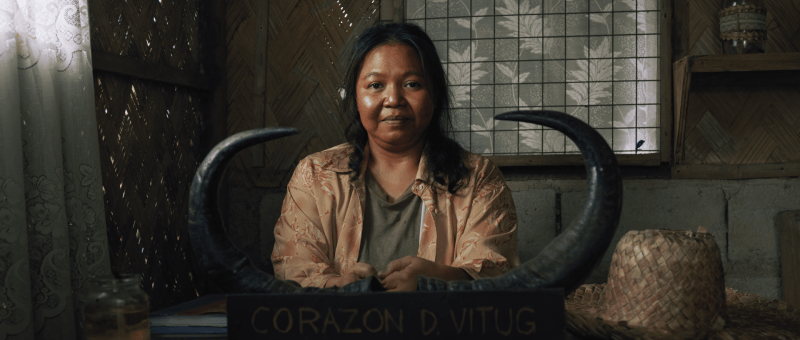
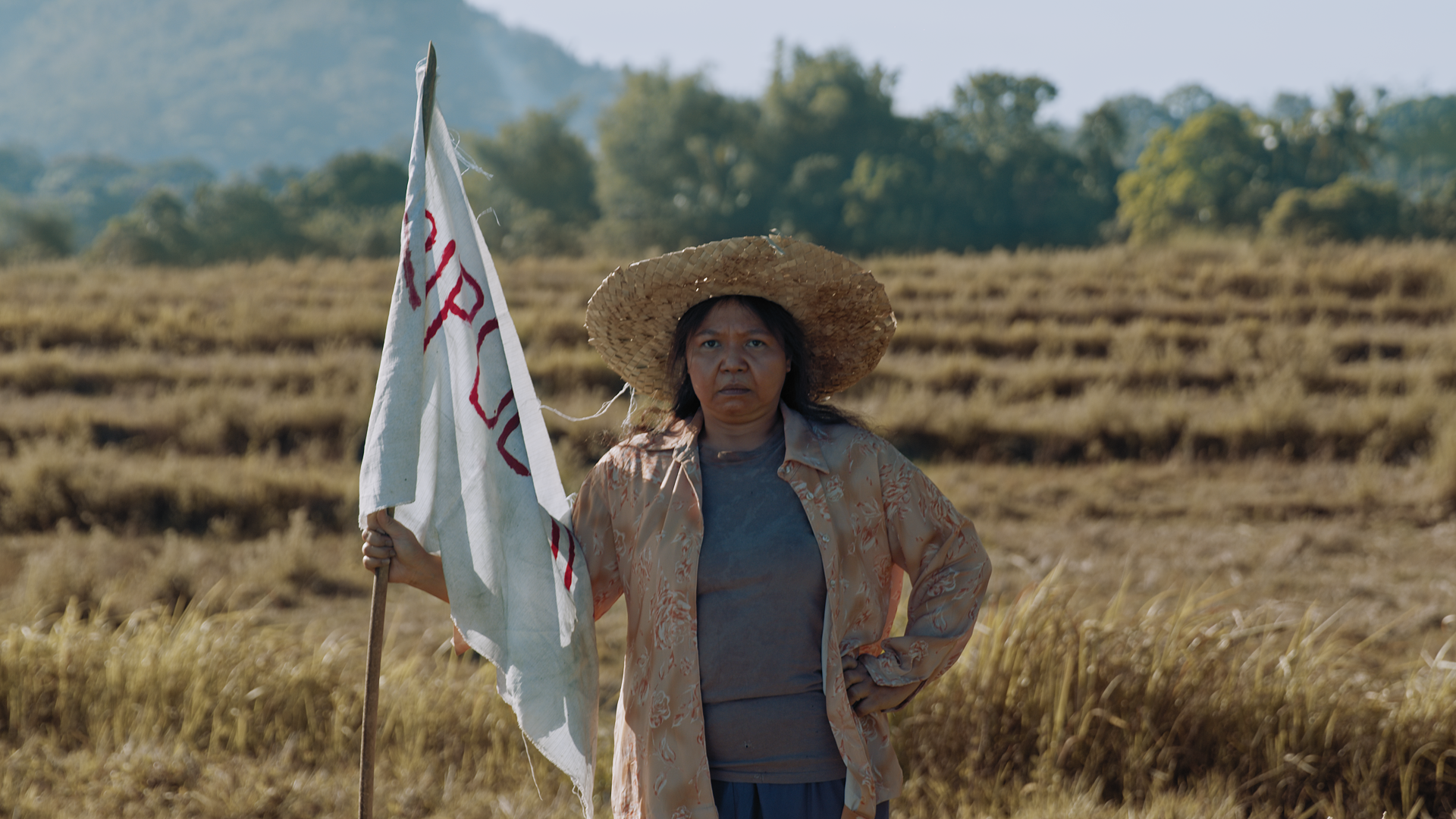
Declaring herself sick of being a Filipino, disillusioned farmer Cora decides to secede from the Philippines and start her own nation which she calls the “Republic of Pipolipinas”. She chose this name, she says, in memory of the People Power Revolution in 1986 which showed her that anything is possible when people work together for the nation. She may have spelled “people” in a non-standard way, but really what does that matter if it sounds right and you know what she means?

A mocumentary shot in the style of Parks and Rec, Renei Dimla’s deadpan satire uses its heroine’s zany idea to explore the contemporary reality of the Philippines in which many others are also sick of being Filipino and want to start again. What Cora most objects to is that the local authorities are trying to take her land which her family have been farming since the days of her great-great-grandfather. They say they have deeds going back to the Spanish colonial era saying the land is theirs, but Cora points out that’s really just neocolonialism. How can they tell a Filipino woman that this land doesn’t belong to her? Her children are buried there, and so she refuses to move, sending letters from the office of the President of the Republic of Pipolipinas to the mayor telling them that if they come on her land she’ll charge them with trespassing which incurs a fine to be paid in ducks, chickens, and cows.

In a way, that might demonstrate that Cora is living in the past, but she has a point when she says that she doesn’t want money in the Republic of Pipolipinas because that’s when you start getting corruption. Most of her neighbours think she’s a bit mad, but see her as a local eccentric, except for the few who think she might have killed her abusive husband with rat poison. Nevertheless, many of them are mired in poverty. The lady at the local shop lets Cora pay in eggs, but another woman comes and asks to add to her tab because there’s nothing to feed the children and her husband hasn’t been paid again. Local boy Ogie has dropped out of school because his mother’s ill. She’s refusing to see a doctor because they can’t afford it. Cora puts back some of her purchases and asks for the money instead which she gives to Ogie so his mother can get medicine. 

Many of the people who later join the Republic of Pipolipinas have similar problems. One woman has lost a son to extrajudicial killing. A man working as a tour guide hates himself for greeting people so warmly when he knows the country is in a bad way and the vision they sell to tourists is a lie. But once the Republic of Pipolipinas starts to grow, the same kind of issues appear. Led by actress Alessandra de Rossi playing a version of herself, the new citizens become frustrated with Cora’s lack of sophistication and begin talking about constitutions and what kind of nation they want the Republic of Pipolipinas to be while vying for power.

Cora asks herself why they’re expected to die for the nation when the government’s job is to keep people safe from harm. After discovering that her farm is to be bulldozed to build a waste treatment centre, or really a landfill site filled with rubbish imported from Korea and other wealthy nations, she discovers corruption in the local government and tries to expose it only to end up being accused of embezzlement herself, which is ironic because she consistently rejected the presence of money precisely because it leads to corruption. Even a local official who refuses to believe Cora would do something like that sheepishly admits that it’s difficult to avoid temptation once in power, as if corruption is an inevitability that can’t be resisted. But even collaborators aren’t exempt from the wrath of the regime. The mayor believes he’ll weather this storm just fine and continue to “serve the people” while throwing his underlings under the bus.

At heart, Cora isn’t really sick of being Filipino, she just wants the Philippines to be a better place for the children to grow up. She can’t stand the flag ceremonies and enforced patriotism, the expectation that they must serve a nation which no longer serves them. What she holds onto is a lesson that her father taught her during the People Power Revolution, that the nation is not abstract concept but collection of people who can still turn this thing around no matter how hopeless it might seem now.


Republic of Pipolipinas screens in Amsterdam 10th/11th April as part of this year’s CinemAsia Film Festival.

Trailer (English subtitles)

Watch List (Ben Rekhi, 2019)

“I just want peace” sighs a world-weary mother after becoming another secondary victim of President Duterte’s war on drugs, finding herself falling ever deeper into the amoral abyss a metaphor for the gradual dehumanisation of her society. Another in the recent series of films candidly addressing the extrajudicial killings, Ben Rekhi’s Watch List is among the more nihilistic as its conflicted heroine contemplates the costs of becoming an oppressor in order to avoid oppression while her children struggle to see a future for themselves in a society which seems actively hostile to their existence. 

Arturo (Jess Mendoza) and Maria (Alessandra de Rossi) were once drug users but have since moved on and are attempting to live ordinary lives raising their three children in a small home hidden in the back ways of a Manila slum. Their hopes are derailed one day when a bunch of policemen knock on their door and ask for Arturo who is apparently on their “Watch List” having been denounced as a suspected drug dealer. Attempting to defend him, Maria finds her own name appended by the gleefully officious police officer who reminds Arturo that he’s been inside before so he better do as they say. The pair eventually “surrender”, agreeing to participate in the “rehabilitation” programme even though they are no longer using and have no connection with drugs. In any case, surrender appears to be worthless. Arturo’s body is soon discovered in the street next to a cardboard sign reading “I’m a pusher, don’t be like me”. 

Widowed with three children, Maria finds herself in a difficult position unable to support the family financially and eventually forced out of her home more it seems because of the social stigma of being associated with drugs than her inability to pay the rent. While many of her friends rally round including those who’ve also lost husbands, sons, or brothers to the killings, others reject her outright as do potential employers on realising she’s that woman from the news whose husband was a drug dealer while her son Mark (Micko Laurente) is also ostracised by his friends. Certain that Arturo was not a drug dealer, Maria looks for justice but finds herself misused by a corrupt police chief who recruits her as an informant but ultimately has a darker purpose in mind. 

Drawn into the dark web of extra judicial killings, Maria uncovers the sinister conspiracies at their centre from police collusion with vigilante task forces to the enormous amount of money flowing through the infinitely corrupt system. On their enrolment onto the rehabilitation programme, Maria and her husband are forced to recite a mantra that they are surrendering “voluntarily” out of love for their families and country because they want to change their lives even though they had been more or less coerced to comply solely because someone had given their names and they were on a list. Learning that the Watch List is basically a kill list of potential targets, Maria wants off it but discovers there is no off and attempts to keep herself and children safe by making herself useful to the police. 

Forced into complicity she begins to lose her sense of humanity, left with no way out while terrified for the safety of her children. Mark finds himself drawing closer to his cousin Joel (Timothy Mabalot) who has already become involved with drugs following the murder of his father by vigilantes. “No point studying for jobs that don’t exist anyway” he explains justifying his decision to skip school and hang out with a pair of similarly disadvantaged children, firmly ruling out the notion of education as a possible route out of poverty. Like others in the slums who openly remark that the killings reflect the government’s lack of responsibility in that if they addressed the economic problems in the country no one would be forced into crime (not that the victims were even necessarily involved with crime in the first place), Joel has identified the war on drugs as a war on the poor and means to defend himself by any means possible. Shooting mainly handheld Rekhi attempts to capture the realities of life on the margins of Filipino society trapped in a constant sense of anxiety in which death hides round every corner and is often arbitrary. A chilling condemnation of Duterte’s Philippines, Watch List’s near nihilistic conclusion offers only a small ray of hope in an unexpected act of compassion but somehow seems all the crueller for its unending sense of impossibility. 


Watch List streams in the US until March 31 as part of the 12th season of Asian Pop-Up Cinema.

Original trailer (English subtitles)