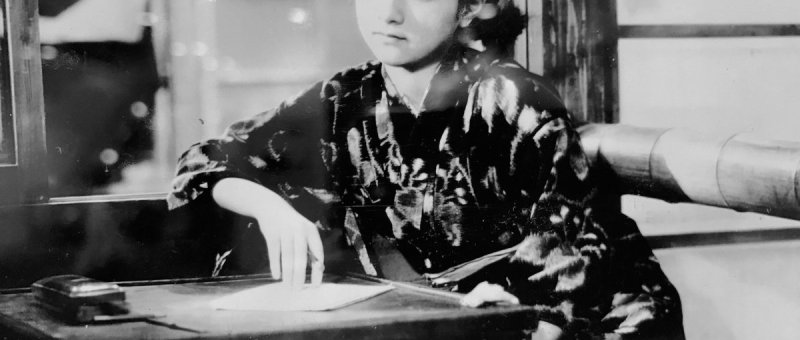
Wedding Ring (婚約指環 (エンゲージリング), Keisuke Kinoshita, 1950)

(c) Shochiku Co., Ltd

wedding ring still 2Many things have changed in the post-war world, but not everything and even with the new freedoms there are some lines which cannot be crossed. Keisuke Kinoshita made his career considering where these lines are and examining the lives of those who find themselves standing in front of them. Starring the veteran actress Kinuyo Tanaka who also produces the film, and the very young and fresh faced Toshiro Mifune, Wedding Ring (婚約指環 (エンゲージリング), Konyaku Yubiwa (Engagement Ring)) is a classic melodrama filled with forbidden love, repressed passion, and societal constraints but Kinoshita brings to it his characteristic humanity expressing sympathy and understanding for all.

Noriko (Kinuyo Tanaka) has been married seven years but her husband, Michio (Jukichi Uno), was drafted shortly after the wedding and was not repatriated until two years after the war ended. A year after he returned, Michio fell ill and has been on extreme bed rest ever since. After her father-in-law’s retirement and her husband’s illness, running of the family jewellery store fell to Noriko and so she spends the week in Tokyo taking care of business and comes back to the seaside fishing village of Ajiro where Michiro lives for the benefit of his health at the weekends. Consequently, though the couple care for each other, the marriage has never really been given the chance to take hold and they remain more companions or good friends than husband and wife.

Things change when Michio gets a new physician, Dr. Ema (Toshiro Mifune), who literally falls into Noriko’s lap during a packed bus ride from the station. Where Michio is sickly and weak, Ema is physically imposing and in robust health. Ema lives in the peaceful resort town of Atami which is on the train route from Ajiro to Tokyo meaning that Noriko and Ema sometimes wind up on the same train, developing an obvious attraction to each other which they both know to be impossible but cannot bring themselves to abandon.

In many ways Noriko is the archetypal post-war woman – strong and independent she runs the family business singlehandedly and lives alone in the city while her husband remains in the country busying himself with writing poetry. Despite the difficult circumstances, Noriko is not particularly unhappy save being unfulfilled and perhaps craving the physical intimacy her husband can no longer offer her. Her first meeting with Ema brings something in Noriko back to life as she swaps her dowdy, dark coloured suits for looser, more colourful clothing and walks with a new found spring in her step.

This change in his wife has not escaped the attention of Michio who astutely notices that she seems to be “glowing” – a development he silently attributes to the presence of Dr. Ema. Michio does his best not to resent the doctor but internalises a deep seated feeling of guilt and inadequacy as he realises that he can no longer provide what his wife needs and has become an obstacle to her happiness. A sensitive man apparently marked by his wartime experiences, Michio is angry and jealous but also resents himself for feeling that way, deepening his depression and conviction that he is nothing but a burden to his wife who deserves a full marriage with a man who can satisfy all of her needs and desires.

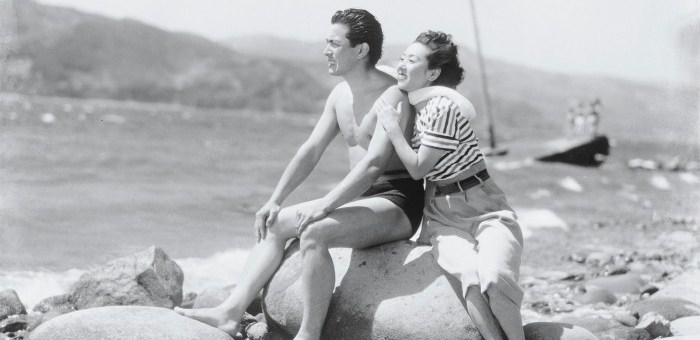
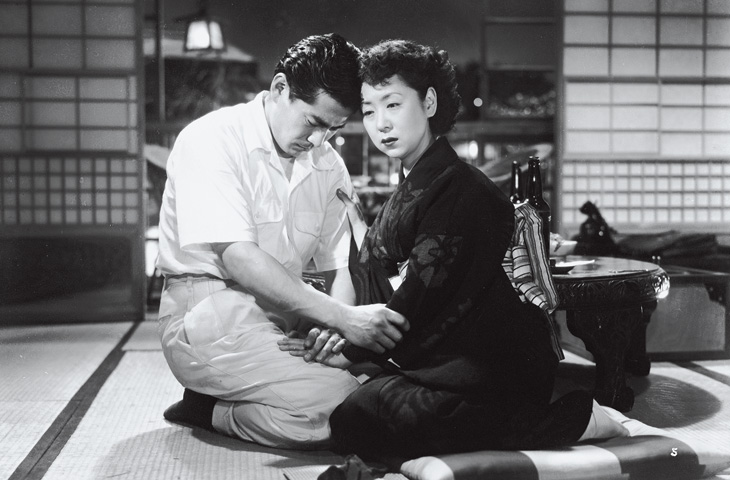
Desire is certainly something Noriko feels as she gazes at Ema’s powerful hands, broad shoulders, and athletic physique. Clasping his sweaty jacket to her breast in desperation eventually gives way to accidentally bold physical contact as hands catch hands and Noriko finds herself caressing Ema’s shoulder as he prepares to dive back into the sea dressed only in his woollen trunks. Ema feels the same attraction but also understands that it cannot be, not least because he is Michio’s physician and has begun to have idle fantasies of being unable to save him, freeing Noriko from her unfulfilling marriage so they can finally be together. Both sensible people, Noriko and Ema are eventually able to discuss their feelings and social responsibilities in a mature fashion, agreeing that they cannot act on their desires even if they find them hard to relinquish.

Rather than wedding ring, the Japanese title of the film more accurately refers to an engagement ring. Noriko’s wedding ring never comes off, but the engagement ring with its large stone comes to represent her shifting allegiances. Discovering the ring abandoned on the dresser, Michio begins to understand he is losing his wife to the strapping young doctor whose healthy, powerful body he cannot help but envy. The camera seeks out Noriko’s hand, with or without the shiny diamond of the engagement ring, quickly signalling the current direction of her desires.

Michio, who cannot give full voice to his emotions, expresses himself through tanka poetry, something which the equally sensitive doctor can also understand and later makes use of himself in communicating the inexpressible delicacy of his feelings to the married woman with whom he has fallen in love. Torn between love and duty, Noriko and Ema battle their mutual passion while Michio battles his sense of self and feelings of ongoing inadequacy but Kinoshita refuses to condemn any of them, rejecting an angry showdown for a nuanced consideration of personal desire versus social responsibility. The conclusion may be conservative, but the journey is not as the trio eventually part friends even if with lingering sadness in accepting the choice that has been made and resolving to move forward in friendship rather than rancour.


Screened at BFI as part of the Women in Japanese Melodrama season.

Opening scene (no subtitles)
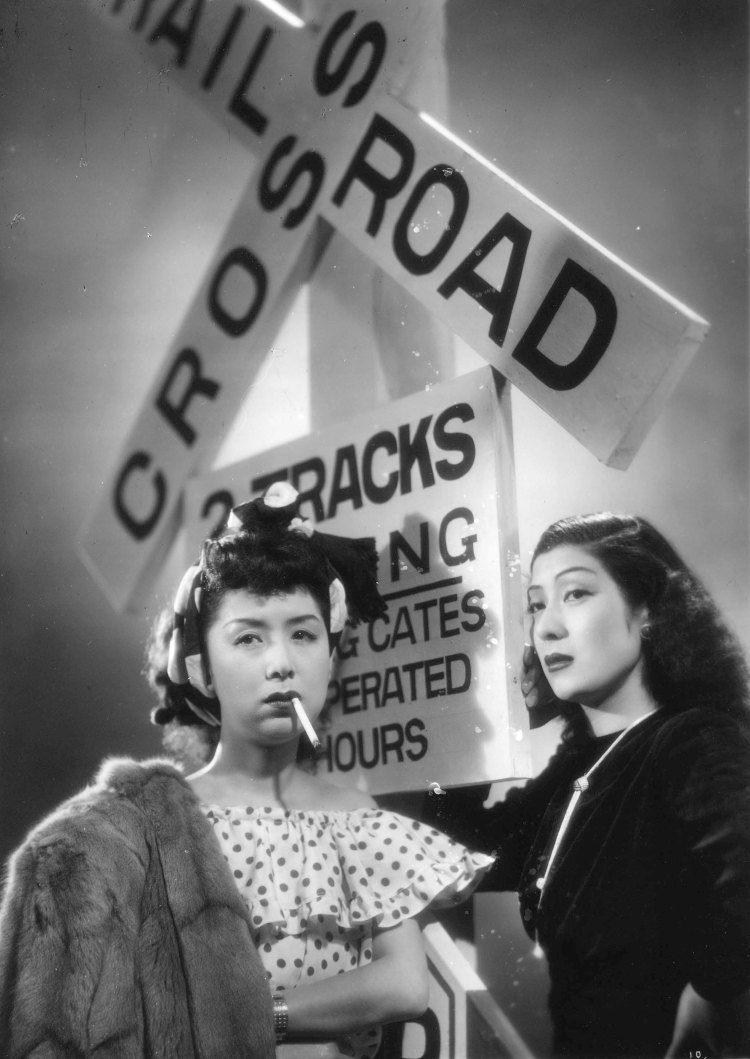
Women of the Night (夜の女たち, Kenji Mizoguchi, 1948)

Women of the Night still 1Cinema of the immediate post-war period generally leaned towards upbeat positivity, insisting that, yes, the situation is painful and difficult but it wouldn’t always be this way, at least as long as ordinary people kept their chins up and worked hard to build a better future. Mizoguchi’s Women of the Night (夜の女たち, Yoru no Onnatachi) is very much not interested in this rosy vision of future success being sold by a new morale boosting propaganda machine, but in laying bare the harsh and unforgiving nature of a society that was fast preparing to leave a significant part of its population far behind. Women suffer in war, but they suffer after war too – particularly in a society as stratified as Japan’s had been in which those left without familial support found themselves entirely excluded from the mainstream world.

Fusako (Kinuyo Tanaka), a noble, naive woman still hasn’t heard from her presumably demobbed husband and is living with her in-laws. Her young son has tuberculosis and she is desperately short of money. Selling one of her kimonos, Fusako is excited to to hear of an “interesting proposition” but is repulsed when she realises the saleswoman is inciting her to an act of prostitution. After all, she says, everybody is doing it.

After undergoing a series of tragedies, Fusako thinks things are beginning to go right for her when she manages to get a secretarial job through the kindness of a connection, but it turns out that Mr. Kuriyama (Mitsuo Nagata) is not all he seems and his business may not be as legitimate as Fusako believed it to be. Another small miracle occurs on a street corner as Fusako runs into her long lost sister, Natsuko (Sanae Takasugi), formerly living in Korea and now repatriated to Japan, but a return to normal family life seems impossible in the still smouldering ruins of Osaka filled with black marketeering, desperation, and hopelessness.

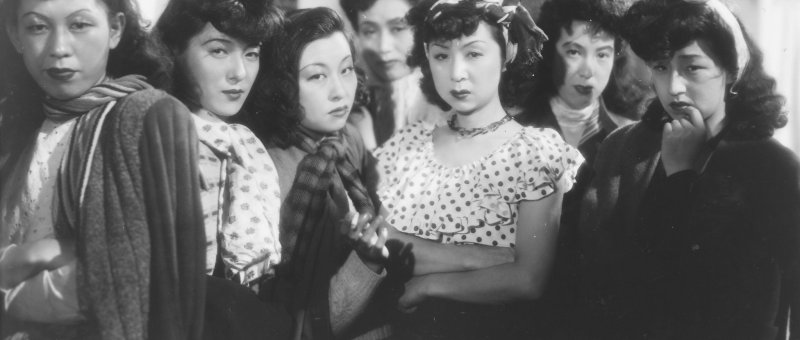
Inspired by the Italian Neo Realist movement, Mizoguchi makes brief use of location shooting to emphasise the current state of the city, still strewn with rubble and the aftermath of destruction. Osaka, like Natsuko and Fusako, finds itself at a cross roads of modernity, paralysed by indecision in looking for a way forward. Fusako, the kinder, more innocent sister dresses in kimono, does not smoke, and is committed to working hard to build a new life for herself. Natsuko, by contrast, dresses exclusively in Western clothing, smokes, drinks, and works as a hostess at a dancehall with the implication that she is already involved in casual forms of prostitution.

Natsuko’s way of life, and later that of Fusako’s much younger sister-in-law Kumiko (Tomie Tsunoda), is painted as a direct consequence of an act of sexual violence. Having been raped during the evacuation from Korea, Natsuko feels herself to have been somehow defiled and rendered unfit for a “normal” life, relegated to the underground world of the sex trade as an already damaged woman. Fusako disapproves of her sister’s choices and is alarmed by the unfamiliar world of bars and dance halls but eventually ends up in the world of prostitution herself as a result of emotional violence in the form of cruel yet incidental betrayal. Fusako’s “descent” into prostitution is less survival than an act both of revenge and of intense self-harm as she vows to avenge herself on the world of men through spreading venereal disease.

Mizoguchi’s attitudes towards sex work were always complex – despite displaying sympathy for women who found themselves trapped within red light district as his own sister had been, he was also a man who spent much of his life in the company of geishas. Nevertheless Women of the Night veers between empathy and disdain for the hosts of post-war “pan pans” existing in codependent female gangs in which violence and hierarchy were as much an essential part as mutual support. The film opens with a sign which instructs women that they should not be seen out after dark lest they will be taken for prostitutes, respectable women should make a point of being home at the proper hour. Later, when Fusako is picked up by a police raid, she comes across a woman from the “purity board” who wants to hand out some pamphlets to help women “reform” from their “impure” ways and temper their presumably insatiable sexual desire. Fusako quite rightly tells the woman where to go while the others echo her in confirming no one has volunteered to live this way because they like it. Starving to death with a pure heart is one thing, but what are any of these women supposed to do in a world that refuses them regular work when they have already lost friends and family and are entirely alone with no hope of survival?

A third option exists in the form of a home for women which has been set up for the express purpose of “reforming” former prostitutes so that they can lead “normal” lives. The home provides ample meals, medical treatment and work though its attitude can be slightly patronising even in its well meaning attempt to re-educate. Again the home is working towards an ideal which is not evident in reality – there are no jobs for these women to go to, and no husbands waiting to support them. Incurring yet another tragedy, Fusako receives a well meaning lecture from a male employee at the home to the effect that it’s time for women to work together to build a better world for all womankind but Fusako has seen enough of the sisterhood realise that won’t save her either and leaves the man to his platitudes trailing a dense cloud of contempt behind her.

Yet Fusako does change her mind, finally reunited with the missing Kumiko who has also fallen into prostitution after running away from home and being tricked by a boy who pretended to be nice but only ever planned to rob and rape her. In a furious scene of maternal rage, Fusako rails against her plight, enraged by Kumiko’s degradation which ultimately forces her to see her own. Brutally beaten by the other women for the mere suggestion of leaving the gang, Fusako is held, Christ-like, while she pleads for an end to this existence, that there should be no more women like these. The storm breaks and the other women gradually come over to Fusako’s side, depressed and demoralised, left with no clear direction to turn for salvation. Mizoguchi ends on a bleak note of eternal suffering and continuing impossibility but he pauses briefly to pan up to an unbroken stained glass window featuring the Madonna and child. Fusako emerges unbroken, taking Kumiko under her maternal wing, but the future they walk out into is anything but certain and their journey far from over.   


Screened at BFI as part of the Women in Japanese Melodrama season. Screening again on 21st October, 17.10.

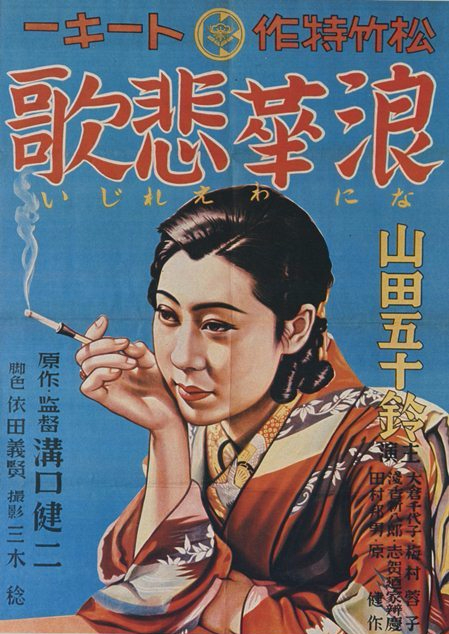
Osaka Elegy (浪華悲歌, Kenji Mizoguchi, 1936)

osaka elegy posterKenji Mizoguchi felt he was hitting his artistic stride with Osaka Elegy (浪華悲歌, Naniwa Elegy). Released in 1936 amid the tide of rising militarism, Mizoguchi’s tale of sacrifice and betrayal is strikingly modern in its depiction of female agency and the impossibility of escape from the confines of familial power and social oppression. Sexual harassment was not so much a problem as an accepted part of life in 1936, but as always it’s never the men who suffer. In depicting life as he saw it, Mizoguchi’s vision is bleak, leaving his forward striding heroine adrift in a changing, volatile world.

Beginning not with the protagonist, Mizoguchi first introduces the quasi-antagonist, lecherous boss Asai (Benkai Shiganoya), who feels trapped in an unhappy marriage to a bossy, shrewish woman. For Asai, the head of a family pharmaceuticals firm, work is an escape from family life and the same is also true for telephone switchboard operator Ayako (Isuzu Yamada) who lives with her feckless father whose gambling problem has left them all with serious debts. Asai, encouraged by Fujino (Eitaro Shindo), a colleague well known to be a womaniser, has developed a crush on the meek and innocent Ayako and continues to harass her at work, invading her personal space and pleading with her to have dinner with him. She declines and leaves distressed but when her father is discovered to have embezzled a large sum of money from his company which they will let go if he pays it back, Ayako is faced with a terrible dilemma.

In essence, Osaka Elegy is a hahamono which shifts focus to the self-sacrificing daughter of motherless family rather than a betrayed mother who gives all for her children and receives little in return. Ayako flits between resentment of her useless father’s poor parenting which has left her the sole figure of responsibility for a younger sister and older brother who already seem to hate her even before her present predicament. Yet however much she loathes her father for his weaknesses, she still feels a responsibility to help him and to avoid the social stigma should he fail to repay the money he stole and is arrested. Once she makes the difficult decision to become Asai’s mistress, her fate is sealed. She loses her future, her right to be happy, and the possibility of marriage to her equally meek boyfriend Nishimura (Kensaku Hara).

Being Asai’s mistress is perhaps not as bad as it sounds. Ayako is at least provided for – Asai pays her father’s debt and sets her up in an apartment they can use to conduct their affair but her status will always be uncertain. Asai’s wife (Yoko Umemura), ironically enough, is fond of Nishimura who may be something of a gigolo but their situation is unlikely to entail further consequences for either of them. In her relationship with Asai, Ayako begins meekly, playing the part-time wife which is exactly the figure Asai desires – someone to lovingly help with his coat and throw a scarf around his neck. When the affair is discovered by Mrs. Asai, Ayako’s character undergoes a shift. No longer meek and passive, she declares she will not see Asai again. Her physical presence and manner of speaking reverts to the repressed resentment previously seen only when dealing with her father.

If the failed affair allows a certain steel to rise within her, her neat kimono swapped for the latest flapper fashions, Ayako remains ill equipped to operate within the world she has just entered. About to renounce her “delinquent” life, Ayako fixes her hopes on reuniting with Nishimura and the normal, peaceful marriage to a kind and honest man that should have been hers if it were not for her father’s lack of care. Just when it looks as if she may triumph, a second familial crisis sends her right back into the world she was trying to escape but Ayako overplays her hand and suffers gravely for it.

Having sacrificed so much for her family, Ayako is rejected once again. Her feckless father and cruel siblings do not want to be associated with her “immoral” lifestyle which has made her a media sensation and continues to cause them embarrassment. She has lost everything – career, love, family, reputation and all possibility for a successful future. Yet rather than ending on the figure of a broken, desolate woman, Mizoguchi allows his heroine her pride. Ayako, far from collapsing, straightens her hat and walks towards the camera, facing an uncertain fate with resolute determination, defiantly walking away from the patriarchal forces which have done nothing other than conspired to ruin her.


Screened at BFI as part of the Women in Japanese Melodrama season. Screening again on 21st October, 17.10.

Also available on blu-ray as part of Artificial Eye’s Mizoguchi box set.

Opening scene (English subtitles)

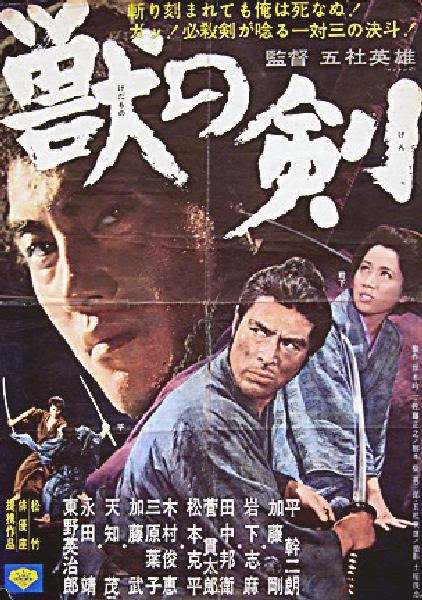
Sword of the Beast (獣の剣, Hideo Gosha, 1965)

sword of the beast posterHideo Gosha’s later career increasingly focussed on men at odds with their times – ageing gangsters who couldn’t see their eras were ending. His second feature, Sword of the Beast (獣の剣 Kedamono no Ken), is much the same in this regard but its youthful hero knows perfectly that change is on the horizon. Gennosuke (Mikijiro Hira) tries to ride that change into a better, more equal future but the forces of order will not allow him. The cinematic samurai world of the post-war era is no longer that of honourable men, manfully living out the samurai code even when it pains them to do so. It is one of men broken by oppressive feudal rule, denied their futures, and forced to betray themselves in service to systemic hypocrisy. Yet even if men think of reforming the system, they rarely think to escape it unless it actively spits them out.

When we first meet Gennosuke, he’s crawling around in a muddy grass field, dishevelled and hungry. A lone woman spots him and plies her trade leading Gennosuke to embrace his baser instincts and give vent to his lust, but the pair are interrupted by the sound of approaching horses. Gennosuke is on the run from his clan for his part in the murder of a lord. His pursuers scream at him, “have you no pride?”, lamenting his lack of stoical resignation to one’s fate so central to the samurai ideal. “To hell with name and pride” Gensosuke throws back, “I’ll run and never stop.”

Gennosuke’s odyssey leads him into the path of petty bandits who’ve been swiping gold out of the local river. Unbeknownst to them, a couple from another clan have been living an isolated life in a small cottage where they too have been skimming the Emperor’s gold, only they’ve been doing it for their lord. The man, Jurota (Go Kato), is excited about this work because he thinks when it is completed he’ll finally be accepted as a true samurai and the future for himself and his wife, Taka (Shima Iwashita), will be much brighter. He is quite wrong in this assumption.

Gennosuke, it is later revealed, committed his fateful act of murder upon the assumption that he was part of a revolutionary vanguard, removing cruel and corrupt lords from their positions so fairer minded, decent men could rule in their stead. Instead he realises he’s been rendered a disposable pawn in a political game and that the new master he believed would usher in a brighter future only envisaged one for himself. Jurota has been duped in much the same way, asked to do something illicit, immoral, and against the samurai code under the assumption that he will finally be accepted as “one of us”. He has not considered the corruption of those he wants to join, and does not see that his crime likely means he cannot be allowed to live.

Gennosuke and Jurota are cynical men who nevertheless possess true faith in the way of the samurai. Exiled from his clan, Gennosuke is a wandering beast who pretends not to care about the people he meets, but ends up saving them anyway. Yet if Gennosuke has been “freed” from his illusions, Jurota’s devotion to them makes him a less heroic figure. When Taka is captured by bandits who threaten her life, Jurota has a difficult decision to make – surrender the gold or his wife. Jurota chooses poorly and abandons his wife to a fate worse than death at the hands of uncivilised ruffians. Taka finds this hard to forgive. No longer wishing to stay with a man who values her so lightly she turns to Gennosuke – her accidental saviour, and reveals to him that she longs to become “a beast” like him. Now “freed” of her own illusions as regards her husband’s love, their shared mission, and the fallacy of their future together as noble samurai, Taka is prepared to exile herself from the samurai world as Gennosuke has, but, as he tells her, the wife of a retainer cannot choose the life of a beast.

This world of samurai is facing its own eclipse. The Black Ships have arrived, the spell has been broken, and the modern world awaits. Gennosuke can see this future, he tried to grasp it in the murder of his lord, but it is not here yet. Gennosuke’s friend, Daizaburo (Kantaro Suga), is duty bound to take his revenge as the fiancé of the murdered lord’s daughter though he’d rather not do it, and does so only to give Gennosuke an “honourable” death. The daughter, Misa (Toshie Kimura), is understandably angry and filled with hate but she pays dearly for her vengeance. Following their ordeal, neither Daizaburo or Misa can return to their clan. They are also “freed”, their illusions broken, their debts forgiven. Breaking with the burden of their past, they would now follow Gennosuke into his new world, even if none of them know exactly where they’re going.

These private revolutions amount to a kind of deprogramming, reawakening a sense of individual agency but one which is unselfish and carries with it the best of samurai honour. Gennosuke may be a “beast” on the run, reduced to a creature of needs rather than thoughts, but there’s honesty in this uncivilised quest for satisfaction which leaves no room for artifice or hypocrisy. It may be a rough world and lonely with it, but it is not unkind. To hell with name and pride, Gennosuke will have his honour, even as a nameless beast, a self-exile from a world of cruelty, greed, and inhumanity.


Original trailer (no subtitles)

https://www.youtube.com/watch?v=R_eddPRh5eY

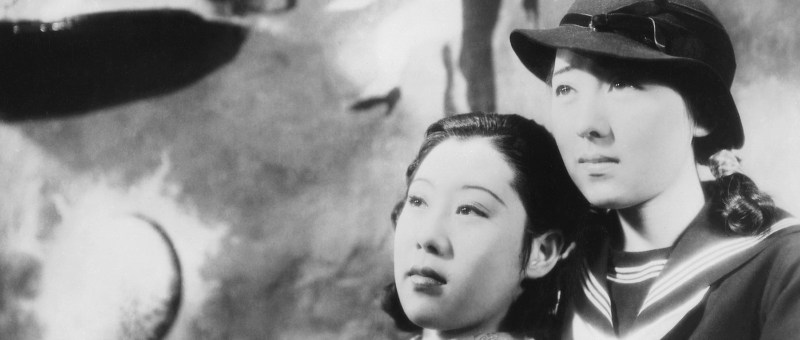
Composition Class (綴方教室, Kajiro Yamamoto, 1938)

composition class posterChildren’s essay classes can yield unexpected revelations but sometimes it’s the tragedy behind the humour which catches the attention rather than a unique way of describing a situation not fully understood. Composition Class (綴方教室, Tsuzurikata Kyoshitsu) has something in common with the later Korean classic Sorrow Even Up in Heaven or even the more temporally proximate Tuition in drawing inspiration from the diaries of school age children but predictably it’s far less bleak in outlook. Though young Masako (nicknamed Maako) has her share of problems, her troubles are met with characteristic cheerfulness and a determination to carry on no matter what.

In a small town in North East Tokyo, 1938, Masako Toyoda (Hideko Takamine) lives with her parents and her two brothers in a humble home her family can barely afford. Disaster strikes when dad gets a letter from the court which he can’t read – Masako usually reads for him but letters from the court are still too difficult for a preteen schoolgirl. The family are behind on their rent and have heard that someone is trying to buy up the area with other families also facing possible eviction. Bright though she is, Masako might have to give up school and find a job as a maid while the family moves to stay with relatives who own a shoe shop. Luckily, none of that happens because the note was only about a rent increase (on the rent that haven’t paid for months).

The second crisis occurs when Masako’s teacher is taken with the essays she’s writing in class which are so real and honest that they espouse all the values he wants to teach the children. Around this time, the lady from next door, Reiko’s mother Kimiko, is leaving town (and her husband) and so gives away some her breeding rabbits as pets believing that a nice girl like Masako will be sure to take care of them and that they could use the extra money from selling the babies. Kimiko, thinking Masako is out of earshot, remarks that she was going to give some of the rabbits to the local bigwigs, the Umemotos, but even if they’re wealthy, they aren’t very nice and she wouldn’t like to think of her rabbits not being looked after. Masako naively records this minor detail in one of her essays which the teacher then sells to a local magazine. The Umemotos find out and aren’t happy which is a problem because dad gets most of his work through Mr. Umemoto who has a stranglehold on the local economy.

Through Masako’s diary and child’s eye view of the world, Kaijiro Yamamoto paints an oddly relaxed picture of depression era privation as the Toyodas endure their penury with stoicism and a belief the bad times will sometime end. Masako and her family have it a little better than some, but when bad weather puts an end to dad’s tinsmithing business and he’s forced into the precarious life of a day labourer things go from bad to worse. Now out of work more than in, the family are reliant on rice coupons to get by and spend one miserable New Year’s with no money for the first week of January when the biting cold makes it impossible to go out and forage for food. Masako writes of her embarrassment the first time her mother sent her to the shop with coupons and that she eventually got used to it, save for one occasion she ran into friends and had to quickly cover by saying she’d bought rice bran rather than collecting the rice dole. Like Masako, dad is a good natured soul though he’s also fond of drinking and is often let down or tricked out of his money, even being cheated out of his bicycle which he needs to keep working.

Sadness is all around from the man next door who’s so poor he doesn’t even have money for sake to the dejected Kimiko who eventually returns pale, drawn, and barely recognisable only to find her husband remarried to a much younger woman. Though Masako is a bright girl with a talent for writing her future is already limited. At one low point, her mother seems excited about the idea of selling Masako off to a geisha house where she will at least be fed, have pretty clothes, and maybe make a good match with the sort of man who marries former geishas. Needless to say, Masako is not very enthusiastic, and neither is her teacher who pledges to save her from such an unpleasant fate but luckily it never comes to that. Other girls will be going on to high school and university, but Masako counts herself lucky to have got a job in the local factory which will provide a steady income for her family. Though it’s a shame Masako is denied the same opportunities as the other girls because of her family’s poverty, she does at least pledge to keep writing even as she marches happily towards work and a (possibly) brighter future.


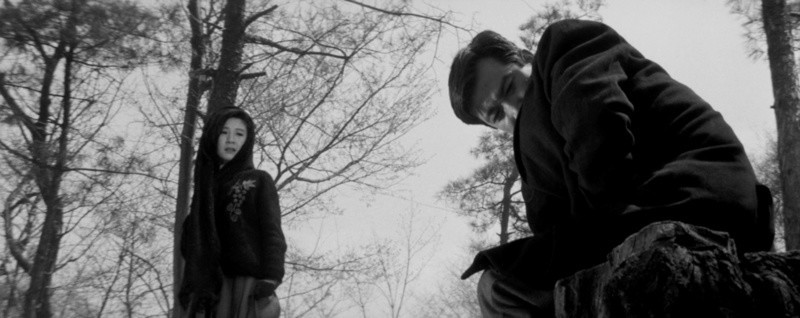
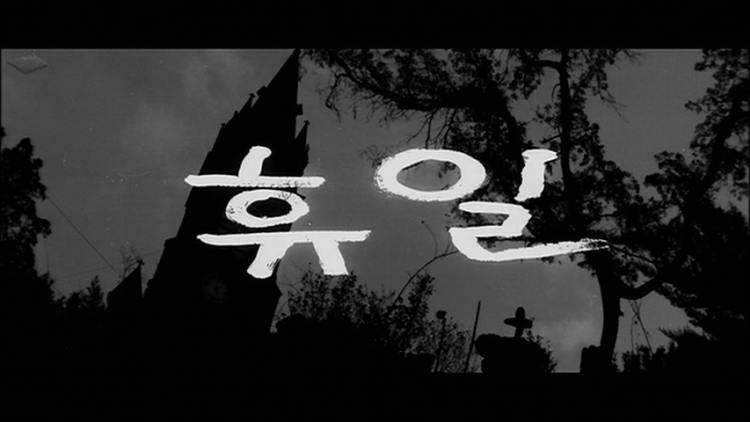
A Day Off (휴일, Lee Man-hee, 1968)

vlcsnap-2017-08-09-23h50m27s782Prolific as he was, Lee Man-hee had his fair share of troubles with the censors throughout Korea’s turbulent 1960s, most famously with his arrest for breaking anti-communism laws with The Seven Female POWs which was later heavily edited and released as Returned Female Soldiers (perhaps a neat nod back to Lee’s mega hit, The Marines who Never Returned). Before that, however, Lee’s poetic meditation of the difficulties of being young in the increasingly heartless capital, A Day Off (휴일, Hyuil), was banned altogether for painting an all too gloomy picture of modern life and love. Though modern Korean cinema has gained itself a reputation for gloominess, that of the gloomy years was still expected to be, in some way, “inspirational”. Refusing to end on a happier note, Lee shelved the film leaving it unseen until rediscovered for a retrospective in 2005.

The elliptical narrative begins with Huh Wook (Shin Seong-il), trapped by another listless Sunday and remembering a girl he used to spend them with, Ji-youn (Jeon Ji-youn). Huh Wook and Ji-youn can only meet on Sundays. They count down the hours until they can be together again but then when the day closes they almost wish they’d never met at all. Neither of them have any money – Huh Wook can’t even afford a cup of coffee, let alone a wife. The relationship reaches a crisis point when Ji-youn, whose constitution is weak, becomes pregnant.

Huh Wook and Ji-youn’s conversation is raw and painful, filled with half spoken thoughts and an unwillingness to confront the depth of their despair. The couple half discuss their predicament with the assumption that they are talking about a child they cannot afford to have and an abortion they cannot pay for but it turns out the operation that Ji-youn means may be for an unrelated illness. When they finally see a doctor he advises that Ji-youn have an abortion because her health is so poor that she would likely not survive a pregnancy.

This is a city which is rapidly expanding, living conditions and opportunities should be improving but for the left behind like Huh Wook and ji-youn Sunday is all they have to live for, and so they can hardly stand it. Their situation is so hopeless, so filled with despair that there is nothing at all waiting for them but a perpetual cycle of work and release. While Ji-youn is in hospital, Huh Wook wastes time at a bar where he gets chatting to another woman. They talk, they drink, they spend the night together in a derelict building before Huh Wook is woken by church bells and remembers poor Ji-youn lying in hospital, fighting for her life.

Huh Wook is the more romantic but also the least willing to confront the situation. He criticises Ji-youn for her silence but she fires back at him with a description of an idealised life she knows they can’t have – a nice house, flowers in the garden, and yes, children. An ordinary dream but one she knows will never be a reality. Huh Wook leaves her alone to try and borrow money, wasting one of their precious Sundays. His friends have all found different kinds of release – the first is a womaniser but flat refuses Huh Wook money he assumes is for an abortion, the second is a drunk who advises him to have the baby and spend the money on drink, and the third is a wealthy man with a live-in maid. Huh Wook never gets round to asking him for the money but steals it from his jacket while he’s in the bath. 

Completed in 1968, A Day Off has echoes of Antonioni in its beautifully empty cinematography and bleak view of human relationships in an increasingly modern world. Huh Wook and Ji-youn appear to have a deep and genuine connection but their existence is so fraught with financial and social difficulties that the future is always an impossibility and, in a sense, already the past. Huh Wook wanders alone. Beaten up by the friend he stole the money from, he’s tired, bloody, and worn out. Yet all he feels is relief. All his hope is gone and now he’s free of its burden, left with nothing other than the false promise of a new dawn on the unforgiving streets of Seoul.


A Day Off is the third in The Korean Film Archive’s Lee Man-hee box set which comes with English subtitles on all four films as well as a bilingual booklet. Also available to stream online via the Korean Film Archive’s YouTube Channel.

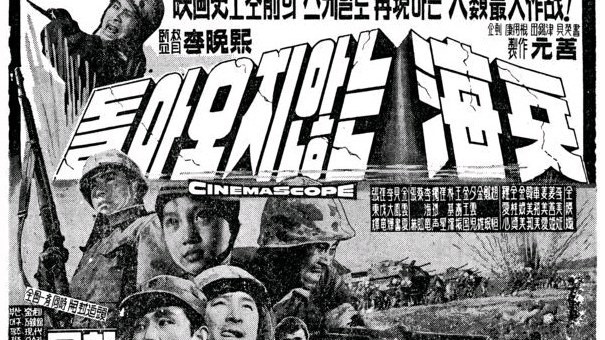
The Marines Who Never Returned (돌아오지 않는 해병, Lee Man-hee, 1963)

Marines Who Never ReturnedLee Man-hee was among the most prolific of Korean directors until his untimely death at the age of just 43 in 1975, but even among so many well regarded works The Marines Who Never Returned (돌아오지 않는 해병, 돌아오지 않는 해병, Doraoji Anneun Haebyong) has taken on an especial place in Korean film culture. Lee had himself served in the Korean War and brought his own ambivalent attitudes to the piece, expressing both an abject rejection of the senseless loss of life but also a warmth and nostalgia for the camaraderie born only out of such immediate danger. The film’s title, as melancholy as it is, points to this same ambivalence by signalling the eventually unhappy fates of these ordinary men but also according them a ghostly, unresolved future.

In the midst of the Korean War, a squad of South Korean soldiers is on patrol and taking fire from the Chinese in an urban environment. While they bide their time in a trench, a young girl and her pregnant mother run out of a nearby building. The girl runs clear but the mother is shot and killed in the crossfire. One of the soldiers is deeply struck by the scene and insists they at least make sure the little girl is safe. Pushing deeper into the building, the soldiers come upon a truly horrifying, hellish scene of men trussed up and hanging from the ceilings while bodies of the townspeople lie piled along the floor. The same soldier who wanted to save the little girl finds his own sister among the dead, just one face among so many.

From this point on the tale is narrated by the little girl, Young-hui (Jeon Young-sun), who is adopted by the troop of marines and smuggled around inside an old army kit bag so that the superiors do not find out about her presence. Young-hui proves a resilient little girl who obviously misses her parents but begins to care deeply for the soldiers who have taken her in. Giving each of her new uncles nicknames, Young-hui becomes the squad’s mascot and a symbol of everything it is they’re fighting for. Yet this makeshift family also has its share of difficulties. A problem arises when Young-hui recognises a new recruit, Choi (Choi Moo-ryong), as a man from her village. Choi is the brother of the man who joined the other side, took Young-hui’s father away and killed the sister of Private Goo, discovered so casually among the many dead in Young-hui’s village alone.

The conflict between Choi and Goo is emblematic of many ordinary families throughout Korea as fathers and sons, brothers and sisters, decided on different paths and found themselves on opposing sides of a war. Choi, as is pointed out, is not responsible for his brother’s actions – he clearly does not condone or agree with them, but still he feels responsible enough to understand Goo’s anger and resentment. Goo in turn realises his anger is pointless and misdirected but is powerless to change the way he feels. This situation is no one’s fault, but they’ll all pay the price anyway.

Lee spares no expense in recreating the hellish battles scenes more akin to the first war than the second with its outdated tanks, dugouts, and trenches. The easy, familial life of the camp soon gives way to action and danger as the squad meet their ends one by one. Away from the battlefield the men feel displaced within their own country – caught in the midst of a civil war yet also subjugated by foreign forces, barred from UN only bars and referred to as “tuppenny Koreans” by the “hostesses” in comparison to their big spending compatriots. Making his goodbye speech, the commanding officer instructs his comrade to return home and ask if anybody really needs to go to war, but rising from the trenches their thoughts are all for their fallen friends who will never see home again. These men remain “lost” on the battlefield, a lingering memory of loss and sacrifice which is impossible to resolve even so many years later.


The Marines Who Never Returned is the first in The Korean Film Archive’s Lee Man-hee box set which comes with English subtitles on all four films as well as a bilingual booklet but the film is also currently available to stream via the Korean Film Archive’s YouTube channel.


Victory Song (必勝歌, Masahiro Makino, Kenji Mizoguchi, Hiroshi Shimizu, Tomotaka Tasaka, Tatsuo Osone, Koichi Takagi, Tetsuo Ichikawa, 1945)

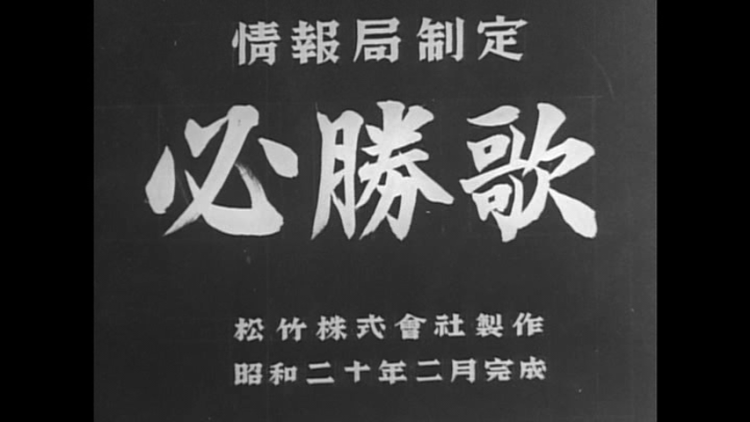
vlcsnap-2017-08-01-00h21m20s082Completed in 1945, Victory Song (必勝歌, Hisshoka) is a strangely optimistic title for this full on propaganda effort intended to show how ordinary people were still working hard for the Emperor and refusing to read the writing on the wall. Like all propaganda films it is supposed to reinforce the views of the ruling regime, encourage conformity, and raise morale yet there are also tiny background hints of ongoing suffering which must be endured. Composed of 13 parts, Victory Song pictures the lives of ordinary people from all walks of life though all, of course, in some way connected with the military or the war effort more generally. Seven directors worked on the film – Masahiro Makino, Kenji Mizoguchi, Hiroshi Shimizu, Tomotaka Tasaka, Tatsuo Osone, Koichi Takagi, and Tetsuo Ichikawa, and it appears to have been a speedy production, made for little money though starring some of the studio’s biggest stars in smallish roles.

The first scenes make plain the propagandistic intentions by starting in 660BC with a pledge of protection for the descendants of Amaterasu – ancestral mother goddess of Japan. Flash forward to 1941 and her sons are doing their best. Stock footage gives way to soldiers in the Asian jungle, taking a brief respite from the fighting to console each other with thoughts of home which is presumably where most of these small stories of resilience come from.

The soldiers appear to come from all backgrounds, the youngest of them seeming to be just a young boy whose strongest memory of home is his mother’s face. They chat cheerfully about their hometowns, never betraying any sense of fear, boredom or fatigue but the commander suddenly announces that they’re all “going home” until the next attack – taking a brief voyage of memory back to the motherland.

Within this framing sequence, the ordinary people of Japan go about their ordinary lives with cheerful forbearance. A young man cares for his parents after his older brother has given his life for the Emperor, serving on the home front by working himself so hard there’s a danger of going overboard and rendering himself out of action. His father argues that as long as everyone in Japan works as hard as they can, they can never be defeated. Community comes to the rescue again when a train gets stuck in the snow and the entire village gets out of bed to free it.

While the adults are giving it their all, the children are preparing to become fine subjects of the Emperor, training their minds and bodies to be of the most use whilst singing patriotic songs and performing military drills. Another segment finds the children praising their parents for their bravery, playing and roughhousing like any children would, but a hint of darkness emerges when a group of boys plays at war with their toy aeroplane. One little boy, Yuichi, has applied for the young pilots school without talking it over with his parents because he didn’t want them to be sad about him going away. His father, at least, is proud of him but upset at not being consulted. Practically measuring him up for the uniform, Yuichi’s father marvels at all the “young pilots” in the village – a chilling note seeing as none of these boys can be more than ten years old.

While the men go to war the women are at home waiting. Another persistent question relates to the fate of unmarried women – a positive motion for an arranged engagement is disrupted by the receipt of a draft card, prompting the male side to suggest they call the whole thing off. The woman, however, points out that every young man is in this position and she doesn’t see the point in expecting the worst. Life must go on, women must get married, and men must go to war. All of these things must be accepted without thinking too hard about it or there will be nothing for these gallant men to come home to.

The difficulties of wartime life extend to the fear and destruction of air raids, though a news report of the fire bombing of Tokyo reminds us that it could all have been much worse if it weren’t for the valiant efforts of the pilots and ground based defence forces keeping the threat from the skies at a minimum. Other reports detail dive bombing of hospital convoys while the wounded die happily knowing they’ve done their duty. Likewise the “special attack squad” prepare to meet their fates with stoicism and determination while their relatives are treated with especial esteem.

Interspersed with the vignettes and stock footage there are songs and dances bringing both entertainment and inspiration. The final message is one of resilience and unity, that Japan stands together to defend its ancient homeland in devotion to its Emperor, but then such a message would hardly be necessarily if the situation were brighter. Brief allusions are made to rationing, to the destruction and constant loss of life but these are all things which must be born for the glorious future. There is, however, much more stock put in remaining positive than there is in trying to deny the ongoing desperation. As propaganda films go, this one may backfire but does perhaps shine a light on the unspoken anxieties of ordinary people facing an extraordinary situation.


Final scenes including the “Victory Song” itself

https://www.youtube.com/watch?v=MmJAaU8sJuo

It’s Not Her Sin (그 여자의 죄가 아니다 , Shin Sang-ok, 1959)

it's not her sinIt’s Not Her Sin (그 여자의 죄가 아니다, Geu yeoja-ui joega anida) is, in contrast to its title, nowhere near as dark or salacious as the harsher end of female melodramas coming out of Hollywood in the 1950s. It’s not exactly clear to which of the central heroines the title refers, nor is it clear which “sin” it seeks to deny, but neither of the two women in question are “bad” even if they have each transgressed in some way. Drawing inspiration from the murkiness of a film noir world, Shin Sang-ok adapts the popular novel by Austrian author Gina Kaus by way of a previous French adaptation, Conflit. Shin sets his tale in contemporary Korea, caught in a moment of transition as the nation, still rebuilding after a prolonged period of war and instability, prepares to move onto the global stage while social attitudes are also in shift, but only up to a point.
Two women argue on the steps of the Office of Foreign Affairs. One dresses in traditional Hanbok and the other Western clothing. The traditionally dressed woman, Seong-hi (Ju Jeung-ryu), is desperate to stop the other woman, Yeong-suk (Choi Eun-hee) from going inside and doing something that will apparently “ruin” her. Yeong-suk does not listen. She turns her back on Seong-hi and climbs the stairs. They argue argue again and a gun falls out of Seong-hi’s bag. Losing her mind in panic, Seong-hi shoots Yeong-suk, thinking only of stopping her getting any further with her mysterious mission.

A conversation with the prosecutor reveals that Seong-hi is married to a respected diplomat and so the case is of national, rather than just personal, interest. The case will hit the papers, and it will run because it’s also very messy. Yeong-suk is Seong-hi’s adopted sister. So, what has happened between these three people – Yeong-suk, Seong-hi, and the respected diplomat Baek? The prosecutor thinks he’s got it all worked out though his theory really is the stuff of cheap melodrama. He thinks Seong-hi has probably been having an affair with Yeong-suk’s boyfriend, Yeong-suk found out and planned to tell her husband, Seong-hi panics and shoots. That does not, however, explain why the recovering Yeong-suk has forgiven Seong-hi unconditionally and does not want to pursue prosecution, or why the two women embrace each other warmly when the prosecutor engineers a meeting.

The relationship between the two women is close and filled with mutual respect and affection – there really is only one thing which could come between them and it isn’t a man. The secret, such as it is, is an obvious one and a frequent theme of maternal melodramas. The prosecutor, who seems to regard evidence as an optional extra, accidentally stumbles over a clue when he probes Baek about the status of his marriage. The couple have been married eight years and have only one son, which the prosecutor finds odd even given that Baek has spent much of the marriage living abroad. He imagines this as a possible indication that the marriage is unhappy, that Seong-hi is lonely, and that she might, then, have been engaging in illicit affairs which may result in blackmail and eventually murder.

All very fanciful, but the truth is more ordinary. Both Seong-hi and Yeong-suk are prisoners and victims of their social standing and responsibilities. Seong-hi is constrained in her marriage, her difficulty conceiving a child has affected her self esteem and faith in her husband. Yeong-suk, by contrast finds herself in a difficult position after being betrayed in love, misused and let down by an unscrupulous man. Her “muddy” past leads her to fear that she may not deserve a happy life with her new love, and that he too may leave if she reveals her own secret to him. The two women are left with no one else to rely on but each other and are then bound by the additional burden of a secret which they must protect at all costs, only to see their relationship placed under greater strain by its result.

Unlike many a Korean melodrama, It’s not Her Sin has a broadly happy, if bittersweet, conclusion in which the friendship between the two women is restored but also broken as one is forever exiled from her own family. In keeping with the title Shin refuses to condemn either woman, sympathising with their plight as they’re manipulated by circumstances beyond their control and oppressed by a very male world which forces them into making their illicit bargain in the first place. Beautifully played by leads Choi Eun-hee and Ju Jeung-ryu, It’s not Her Sin is, like all good melodramas, a chronicle of its times in its depiction of female friendship as the last bastion of defence against an unfair world.


Screened at the Korean Cultural Centre London. Also available to stream via the Korean Film Archive’s YouTube Channel.

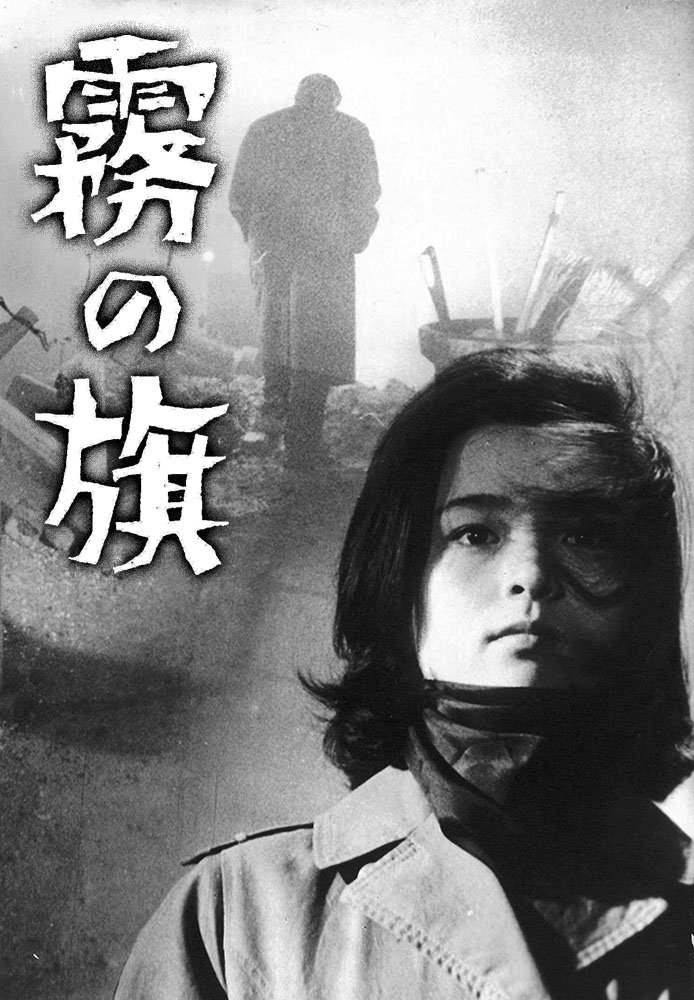
Flag in the Mist (霧の旗, Yoji Yamada, 1965)

flag in the mist poster 2In theory, we’re all equal under the law, but the business of justice is anything but egalitarian. Yoji Yamada is generally known for his tearjerking melodramas or genial comedies but Flag in the Mist (霧の旗, Kiri no Hata) is a rare step away from his most representative genres, drawing inspiration from America film noir and adding a touch of typically Japanese cynical humour. Based on a novel by Japanese mystery master Seicho Matsumoto, Flag in the Mist is a tale of hopeless, mutually destructive revenge which sees a murderer walk free while the honest but selfish pay dearly for daring to ignore the poor in need of help. A powerful message in the increasing economic prosperity of 1965, but one that leaves no clear path for the successful revenger.

Kiriko (Chieko Baisho), a twenty year old typist from Kyushu, has taken an arduous train journey into Tokyo to get a meeting with a top lawyer she hopes will defend her older brother and only living relative from a trumped up murder charge. The clerk attempts to dissuade her – Mr. Otsuka (Osamu Takizawa) charges a hefty sum for his services and, in any case, his docket is too full to be travelling back and forth to Kyushu never mind the additional travel and accommodation costs. Kiriko is disappointed but undeterred – she thinks she can manage the expenses, but asks for a discount on the fee. The clerk finds this amusing and does at least ask Otsuka who finally agrees to see Kiriko seeing as she’s come all this way. She makes an impression on him but ultimately he tells her he’s just too busy and she’s better off looking for a lawyer closer to home.

Kiriko leaves disappointed but refuses to give up, missing her original train to try again by telephone but Otsuka has already gone out “to see clients” and so she finally has to accept her mission to save her brother may have stalled. While Kiriko was using the public phone, she was overheard by a reporter, Abe (Yosuke Kondo), who wants to write something on the case but his Tokyo based bosses aren’t so keen on a local interest story from halfway across the country.

A year later, Kiriko’s brother Masao (Shigeru Tsuyuguchi) has been convicted and sentenced to death. After his second appeal fails, Masao dies of illness in prison before the sentence could be carried out. Kiriko writes a bitter letter to Otsuka blaming him for her brother’s death which forces Otsuka to reconsider his decision not to take the case. He comes to the conclusion that the case was unwinable and therefore his decision not to take it made no difference but then, he spots something that no one else seems to have noticed.

A tenacious and strong willed young woman – you’d have to be to jump on a long distance train from a tiny village all the way to the big city on your own in 1965, Kiriko is determined to save her brother but finds herself facing an uphill battle against a society deliberately structured to ignore her voice and those of everyone like her. Kiriko is an orphan and so her older bother is also a kind of father figure as well as the only living relative she has left. Masao had been a primary school teacher, which is to say a respected member of society, but found himself involved with a loanshark who was later murdered after he lost some cash collected from students to pay for a school trip and borrowed money he couldn’t pay back from a ruthless old woman. Masao has made a mistake he’s going to pay for dearly – disgraced and humiliated, it was easy work to frame him for a violent crime and force him into a confession through the usual police methods. Kiriko won’t stand for it, but she’s powerless to help him.

Otsuka is, in a sense, entitled to charge what he wants for his services. He’s clearly a talented lawyer, very much in demand, and so why “should” he trek all the way out to Kyushu for a case that doesn’t interest him when he has enough clients already. He does, at least, bother to listen to Kiriko’s pitch before letting her down gently, but just when it seems he might be about to change his mind he tells his clerk to cancel all his appointments and winds up on the golf course with his girlfriend. So much for being too busy to save an innocent man’s life.

Kiriko’s “whole life has been desecrated by one incident” as she cuttingly writes later in a letter which forms a crucial part of her plot of revenge against the man who refused to save her brother’s life (half talking about something else). Forced out of her hometown where she’s the murderer’s sister, she finds work as hostess going by the club name of Rie in a Tokyo bar which has a Kyushu theme. This brings her back into contact with the reporter, Abe, and that isn’t the last of the coincidences as Kiriko finds herself swept up by circumstances which allow her to turn an unfortunate series of events into a cunning plan to ruin Otsuka by neatly echoing the precise circumstances of her brother’s case. Now it’s Otsuka forced to plead with her night after night, begging on his knees that she agree to testify and turn over key evidence that proves his client is innocent all while Kiriko adamantly sticks to her story.

Yamada conjures a tense and gloomy film noir world, following Kiriko down foggy passageways as she tries to navigate the city from the shadows, chasing the spectre of the unjust but losing herself in the process. Masao dies because he was too poor to hire a good lawyer to save him from the police who were supposed to be protecting him, but decided it was easier to stitch up someone without influence than find the real killer. His sister destroys herself to get revenge not just on lawyers more interested in fame and success than in serving justice but on an entire society which believes her existence is insufficiently important to merit full consideration. Otsuka is not a bad man, he is not corrupt or incompetent, he is merely selfish in all the ways his society encourages him to be. Originally letting himself off the hook with the excuse that his decision made no difference, he’s genuinely horrified when he realises he’s noticed a crucial clue which could have exonerated Masao even if it’s an equally selfish guilt he feels more than a recognition that he’s failed his duty to justice by letting an innocent man die while a guilty one lives to kill again. No one wins in this case, everyone emerges ruined and broken by the increasing inequalities and selfish individualism of the post-war world. Justice is blind, so they say, but perhaps she needs to open her eyes.


Original trailer (no subtitles)