The Enigmatic Case (碧水寒山奪命金, Johnnie To & Andrew Kam, 1980)

Nothing is quite as it seems in Johnnie To’s 1980 debut feature co-directed with Andrew Kam, The Enigmatic Case (碧水寒山奪命金) which it has to be more than said lives up to its otherwise nebulous English-language title. What exactly is the case at hand and why is the hero constantly being tortured for a crime he did not commit and gold he does not and never has had? Scripted by Zhu Yan, To’s debut nevertheless reflects the persistent concerns of his later career in its depiction of a cruel and arbitrary world ruled by chance even if it lacks the sense of lyricism for which he has become known.

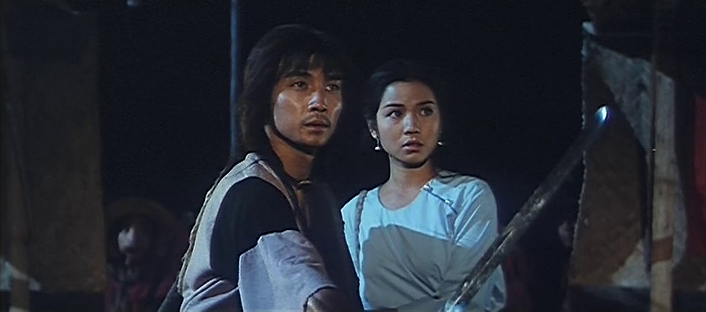
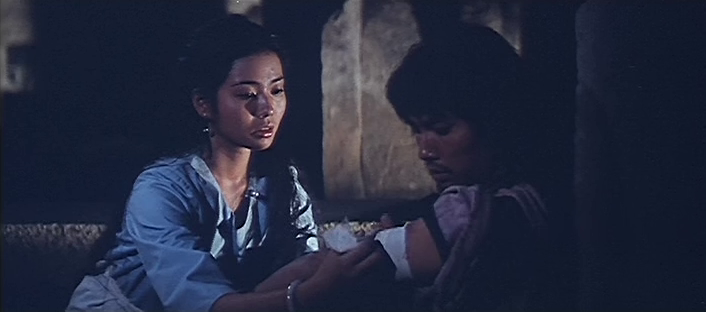
Somewhere in feudal China, prisoner Lu (Damian Lau Chung-Yan) is being tortured by the evil magistrate Hsiung Chien who believes he knows the location of a vast amount of stolen gold. Together with another prisoner, he finally manages to escape and heads straight back towards the scene of the crime which he did not commit followed by a large number of former prisoners also hoping he will lead them to the missing treasure but all Lu is interested in is proving his innocence. Pursued by Hsiung, he also picks up another follower in the form of a beautiful young woman, Pei Pei (Cherie Chung Cho-Hung), who has come to the conclusion he must be an OK guy and hopes he will help her get to Stone City where she is supposed to collect the ashes of her recently deceased father only to discover from a wanted poster in a tavern that Lu is the guy convicted of killing him. 

In a repeated motif, the situation is further complicated by people not being quite as dead as they were reputed to be. Lu finds himself at the centre of a paradoxical conspiracy in which a collection of Robin Hoods has attempted to stage a rebellion against corrupt government by reappropriating official gold to return to the people. The only problem with that is that the government is already so corrupt that they don’t think much of torturing prisoners in order to confiscate their ill-gotten gains, while even those staging the rebellion have done so in a fairly cavalier way which involves the murder of the ordinary people they claimed to want to protect. 

No part of any plot but simply a wandering vagabond, Lu stumbles into a conspiracy and becomes a victim of it. He is consistently depicted as a noble hero, firstly in voluntarily leaving a rain shelter when Pei Pei arrives knowing that his presence may make her uneasy, and then by giving his money away to a widow forced into sex work by lack of other options after her husband died in the plague following lengthy period of “floods and droughts”. Floods and droughts might be a good way of describing a confusing era of generalised chaos provoked by a corrupt and self-serving government yet there is no real indication that the sickness can be cured even through Lu’s personal quest to clear his name. Even once the truth his revealed all he can do is try to ensure the money gets back to the peasants rather falling into the wrong hands. 

On a similar note, his relationship with Pei Pei cycles between suspicion and attraction as she tries to decide whether to believe his side of the story or take revenge against him for her father’s death. The film’s abrupt and unexpectedly tragic conclusion might in a sense hint that doesn’t matter because there is no real justice in the world only arbitrary cruelty, Lu’s certainty that his enemy does not lack basic humanity immediately disproved. Thematically apt if slightly ironic, To & Kam shoot most of the action leading to the final confrontation in near darkness lit only by Pei Pei’s torch as Lu continues his noirish quest for truth while otherwise employing freeze frames and slow motion as if in search of experimentation or a personal take on a contemporary style even while the world that they’ve created seems deliberately disjointed, filled with random (re)appearances and the comic machinations of a pair of Hidden Fortress-style petty crooks. Even the score sometimes echoes Star Wars while the James Bond theme plays over the discovery of the stolen gold as if adding an additional note of uncanniness. Still in this elliptical tale To & Kam have to take us back to where we started with Lu a melancholy wanderer adrift in a confusing world scarred both literally and mentally by its myriad cruelties. 


Theme song video (Traditional Chinese subtitles only)

The Moon Thieves (盜月者, Steve Yuen Kim-Wai, 2024)

If something’s constructed entirely from orphaned parts of others like it, can you really say it’s a “fake”? Watchmaker Vincent (Edan Lui Cheuk-on) might say no, making his living through passing off “period correct” replicas of fancy watches as the “real” thing while trying to stay one step ahead of the authorities and the gangsters who seem to be his prime customers. Then again, The Moon Thieves (盜月者), Steve Yuen Kim-Wai’s return to the big screen in four years since Legally Declared Dead and a vehicle for phenomenally popular boyband Mirror, never really stops to ask just why vintage luxury watches are so desirable that the super wealthy are prepared to expend vast sums on a niche vanity status symbol but perhaps there really is no answer for that one. 

In any case, Vincent’s obsession is with the watch worn by Buzz Aldrin as he stepped onto the moon which seems to have become lost to time with NASA apparently refusing to confirm or deny its existence. His decision to make a period correct watch for a petty gangster in order to retrieve some info on the Moon Watch lands him in hot water when he’s blackmailed by local kingpin Uncle (Keung To), who is actually a youngish guy who’s taken over the name and criminal empire of his late father. Unless he wants the gangster to find out the watch is “fake”, Vincent will have to join his heist team and travel to Japan where he’ll sneakily replace three watches worn by Picasso with his homemade replicas. 

It has to be said that the film’s fatal flaw is the miscasting of Keung To as the mercurial gangster, Uncle. Though his boyish bravado might play into the idea that Uncle is out of his depth, too insecure to even use his own name rather than adopt his father’s, To’s total lack of menace or authority leaves him a rather hollow villain who alternates between super sharp intelligence and dull predictability laced with misplaced smugness. Meanwhile, Vincent is able to stay a few steps ahead of him if only in his canny knowledge of the vintage watch trade and easy power to manipulate the markets though even he probably didn’t plan on incurring the wrath of space-obsessed local yakuza who are very annoyed to have had their luxury watches stolen out from under them. 

This leaves the gang doubly vulnerable while veteran members Chief (Louis Cheung) and Mario (Michael Ning) begin to suspect that Uncle is getting rid of all his father’s previous associates and doesn’t really plan to let them live. Tensions within the group are only further strained by an unexpected hitch in the plan which brings them to the attention of the yakuza despite their incredibly careful preparations. Yuen keeps the tension high through the heist slipping into slick Ocean’s Eleven-style visuals which lend a sense of cool to the gang’s endeavours which are after all a kind of rebellion against Uncle as much as they are a capitulation to his stronghold on the local community. 

Twists and double-crosses abound as the gang try to stay ahead of him with not everything quite as it seems. Like the watches, they take everything apart to put it back together again in a way that better suits them, freeing themselves from Uncle’s thumb which might in itself stand in for another distant and corrupt authority. Ironically, the yakuza remarked that no one remembers who came second yet everyone is desperate to get their hands on the famed Moon Watch worn by the second man to walk on the moon as a kind of holy grail among horologists that they would maim or kill for though of course even if they had it they could never show it to anyone fearing they’d caught out by the authorities including NASA who apparently have a lot of say over this particular relic of the moon landing. The heist isn’t quite as daring as actually stealing the moon, though it is definitely a sticky situation for all involved which eventually requires them to hide their quarry in plain sight while doing their best to outsmart Uncle and avoid turning on each other. Smart and slick, the broadly comic overtones lend an endearing quality to Vincent’s quest for survival while targeted by a ruthlessly corrupt and infinitely implacable authority.                                                                                                                                                                  


The Moon Thieves opens in UK cinemas 23rd February courtesy of Central City Media.

UK trailer (English subtitles)

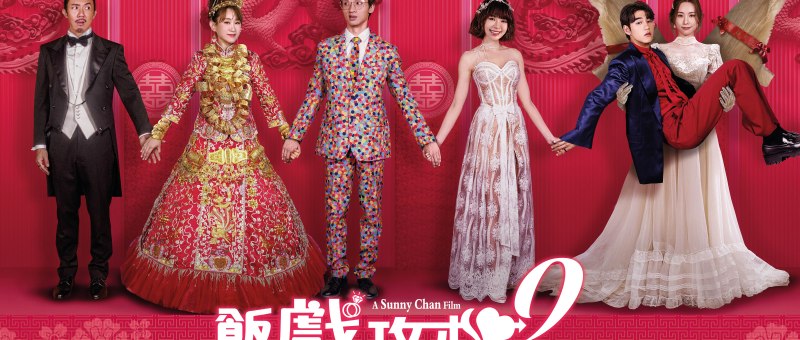
Table for Six 2 (飯戲攻心2, Sunny Chan Wing-Sun, 2024)

“It’s okay to be screwed, we’ll unscrew you later,” youngest brother Lung (Peter Chan Charm Man) comforts his dejected brother in an accidental advocation of what means to be a family in Sunny Chan’s followup to the phenomenally successful comedy  Table for Six. Like the previous film and in true Lunar New Year fashion, Table For Six 2 (飯戲攻心2) explores the concept of family in a wider sense along with contemporary attitudes to marriage and traditional gender roles.

Even so, it has to be said this table is now uneven as oldest brother Steve has literally run away from his romantic dilemmas taking off for Africa leaving new girlfriend Miaow (Lin Min-Chen) behind claiming she’s too far out of his league and it’s not fair of him to waste her youth. Ironically enough, Bernard (Louis Cheung) has now started a wedding business helping people pull off extravagant public proposals such as the sort of fake one he prepares for Monica (Stephy Tang Lai-yan) as a publicity stunt featuring him dancing in a 90s-style music video. As part of the campaign, they’ve set up Lung and Miaow as a fake couple hoping to build a following for their romance online much to unexpected chagrin of Josephine (Ivana Wong) who has begun to embrace her dreams by becoming a well-known quirky chef who makes food disguised as other food. Though they had agreed to separate so the could both follow three dreams at the end of the previous film, Josephine suddenly proposes leading Bernard to put on an extravagant wedding as promotion for his business. 

In a way, Bernard’s company symbolises the performative qualities of marriage as couples put themselves through a stressful and expensive ritual more out of obligation than real desire. When Lung is prevented from reaching the ceremony on time, Bernard ends up impersonating him in a full body costume making plain that the spectacle is more for show than sentiment and it could really be anyone up there simply fulfilling a role. In fact, no one even checks the certificates were properly signed. Then again, just as in Josephine’s cooking sometimes the “fake” and can actually contain the “real” just in a different way than expected. She may say that once a relationship has cooled the spark can’t be regained, but that doesn’t necessarily mean a new, different, spark couldn’t be found. 

Perhaps that’s what happened for Bernard and Monica who’ve now overcome the awkwardness of Monica having been in a longterm relationship with oldest brother Steve. Ironically enough, they’d more or less decided not to get married only to be blindsided by their reactions to the “fake” proposal but as it turns out more because of the emotional baggage from their parents’ failed relationships that have left them too afraid to get married. Monica is still traumatised by her father’s extra marital affair which resulted in a half-brother she’s never met but has since become a Cantopop star, while Bernard still has bad memories of being treated as a “red-headed” child and like Steve is preoccupied with a desire to keep the family together while worried that he isn’t really up to it. 

The lesson Bernard learns is that family is a burden that’s carried together so he didn’t need to save it on his own and that it’s alright to mess things up because his family will be there to take care of him. Miaow meanwhile is left in the same place as Steve had been in the first film, wondering how long she should wait for love or if Steve is ever coming back, trying to decide whether to accept a promising job offer in Japan or stay in Hong Kong. Part of her reluctance to move on is that she’s become wedded to the family and fears losing her place within it but as Monica says her status wasn’t dependent on blood or relationships and that she’s already been accepted into the family just for being herself. 

Then again, families can also be annoying as Bernard remembers after inviting his gangsterish uncles to one of the weddings only for them to muscle in as a major sponsor for another own insisting on designs the dress themselves complete with a par of shark fin wings to promote their business none of which meshes well with Monica’s passion for conservation. In any case, as Monica reflects family means you can embarrass yourselves together so maybe wearing a stupid dress for a few minutes isn’t such a big deal. Heartfelt and zany, Chan’s farcical drama shifts past the performative aspects of marriage and family to what lies beneath which, like Josephine’s cooking, may not always be what it first appears.


Table for Six 2 is in UK cinemas from 9th February courtesy of CineAsia.

UK trailer (English subtitles)

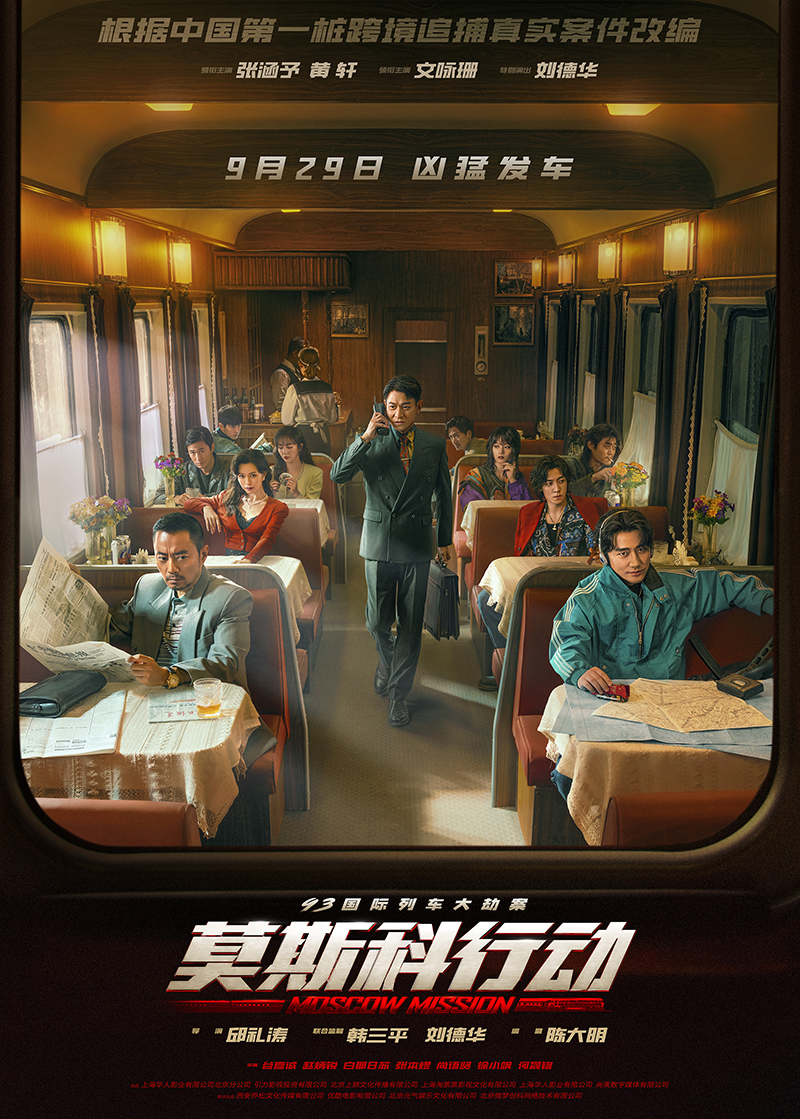
Moscow Mission (93国际列车大劫案:莫斯科行动, Herman Yau, 2023)

In the early 1990s, China and Russia were each struggling to accommodate new political and economic realities. This is at least one reason offered in explanation for the nexus of crime that overtook the long distance train connecting the two capitals in Herman Yau’s action drama Moscow Mission (93国际列车大劫案:莫斯科行动, guójì lièchē dà jié àn Mòsīkē xíngdòng). Inspired by a real life train heist in 1993, the film suggests that China was pulling ahead free of the labour protests which appear frequently in Moscow amid the collapsing Russian economy but equally insists that the bandits must be stopped because they not only endanger China’s international reputation but its trading relations with the former Soviet Union.

In truth there’s no real reason given for the mysterious D’s (Huang Xuan) heinous crime spree save a later allusion to a troubled childhood and the sudden death of his sensitive musician father when he was only 13 (which would put it shortly before the end of the Cultural Revolution). In any case, those around him have more complex motivations such as those of Zhenzhen (Janice Man Wing-San), a former sex worker employed by the gang to identify wealthy passengers and inform the rest of the crew by note, who needs the money for a sick relative. In any case, nearly everyone on this train is concealing vast amounts of hard cash, mostly in their underwear. Not content with the money, D also stops to rape a woman who had resisted but was found with a large amount of money stuffed in her bra. 

In short, there’s nothing noble about D’s gang or any implication they’re rebellious outlaws just thuggish crooks taking advantage of a geopolitical vulnerability. Local fixer Vasily (Andy Lau Tak-Wah), however, is otherwise depicted as a victim of circumstance cruelly separated from a then newborn daughter for whom he is continually searching. He made his money digging a tunnel from Shenzhen to Hong Kong and using it to smuggle luxury goods in much the same way many now use the train as is evident by the scenes at Russian station when passengers suddenly start leaning out windows flogging pairs of jeans. Vasily’s in on that trade too, as well attempting to broker a deal for a wealthy man to buy a former Soviet fighter jet, but seems unhappy with his life of petty crime selling fake passports to dodgy people and also has an ongoing non-romance with Zhenzhen who is trapped in an abusive relationship with D’s brother-in-arms Zhiwen (Jason Gu Jiacheng). 

Intense police captain Cui (Zhang Hanyu) is dispatched to catch the train robbers and avenge China’s international reputation by bringing order to the train but also stumbles on another crime in progress in the Russian capital. He has an opposite number in Sergey (Andrey Lazarev), a former KGB now FSB officer who hints at a new world order if also at a society very much in flux. In some ways the film suggests Cui’s inevitable victory is aided D’s hubristic overreach and the cooperation of the Russians rather than his own powers as a Chinese policeman, but also that China will clean up after itself taking down a Chinese gang while technically on foreign soil and making sure they return to China for justice. 

Yau opens strong with the high impact sequence of the original heist as the camera first pans along the inside of the train before finding Zhenzhen and then rest of the gang, while otherwise continuing to escalate the action with a climax at an abandoned rocket base and then a final shootout at the train depot where the carriages must quite literally change the gauge to shift from the old Soviet railways to the modern China. The gang members may implicitly be among those who’ve lost out in the face of new economic realities, though aside from D’s possibly duplicitous musing on the life he might have led if his father had not died leaves them little justification for the cruelty of their crimes. Meanwhile, Cui’s justice is not implacable, taking pity on both Zhenzhen and Vasily and promising to treat them fairly in acknowledgement of their cooperation as opposed to D who had problematic gang members bumped off by the possibly the worst hitman in Moscow and has been using Vasily’s daughter to manipulate him for last few years with no certainly that he actually knows where she is. Making a minor point about empty consumerism in the constant references to stolen watches, Yau goes big on spectacle but also homes in on the smaller stories of trauma and displacement that eventually provoke it.


International trailer (Simplified Chinese / English subtitles)

Love Never Ends (我爱你!, Han Yan, 2023)

The generational tensions in the contemporary society are gradually exposed when a retired mechanic begins to fall for a feisty widow in Han Yan’s quietly affecting romantic dramedy, Love Never Ends (我爱你!, wǒ ài nǐ). Based on a Korean webtoon by Kang Full the Chinese title “I Love You!” hints at its true intentions along with the potential for incongruity when exploring romantic courtship among the older population even as the film hints at the destructive cycles of repression and lost love in a still conservative culture. 

Something of a rebel, widower Wenjie (Ni Dahong) walks around with a chain whip clipped to his belt that should probably be illegal. He likes to get it out every now and then to whirl around while talking like the hero of a martial arts serial, claiming that his whip exists for truth and justice so he’s going to use it to punish unfilial children and heartless bullies. Quite frankly, it’s ridiculous and on this particular occasion he chooses the wrong side coming to the defence of a park manager who’s trying to move a pair of elderly scrap collectors on because inspectors will soon be arriving and he’s worried their presence will make him look bad. Wenjie mock slaps the woman, Ru (Kara Hui Ying-Hung), stopping his hand just before connecting with her face and then shatters her jade bracelet with the whip. It’s fair to say they don’t get off on the best foot, which is unfortunate as Wenjie soon discovers she is the carer for a former Cantonese opera star, Mrs Qiu (Lu Qiuping), his daughter desperately wants to take on her son, Sai, as a pupil. 

In one sense, the scene makes plain the battle for the use of space in urban environment, Wenjie insisting the park is for “everyone” to exercise, but simultaneously suggesting that Ru and her friend Dingshan (Tony Leung Ka-Fai) have no right to use it. Meanwhile, it becomes clear that Wenjie is also rebelling against a kind of infantilisation at the hands of his well-meaning children who have put up a surveillance camera in his home to make sure he isn’t drinking alcohol while his doctor also breaks medical ethics by immediately calling to tell them that the security system hasn’t worked because whatever he says Wenjie has obviously been continuing to drink. It may be for his own good, but a role reversal has taken place as his children exercise all the power not just over his life but their own chidren’s too. Wenjie’s teenage granddaughter wants to study abroad to reunite with her boyfriend, but her parents don’t approve echoing the sad story of Ru who once came from a moderately wealthy village family and eloped with a painter when her parents pressured her to accept an arranged marriage to the headman’s son only for the painter to die not long afterwards leaving her all alone in an unfamiliar city. 

Mrs Qiu too has her own sad romance in having been prevented from marrying her childhood sweetheart because of parental opposition. Despite her illustrious career, she eventually became a heartbroken recluse while her lover, Chen (Bao Yinglin), was driven out of his mind and has spent his whole life in a psychiatric hospital pushing a wooden mannequin around believing it to be Qiu save for the heartbreaking moments of lucidity in which he realises the truth. Dingshan, meanwhile, is lovingly caring for his wife who has advanced dementia and cannot bear the thought of being parted from her while she continues to dwell on a sense of guilt that her older children felt neglected that they had to spend what little they had trying to cure their youngest daughter’s illness though it eventually resulted in the loss of her hearing because they could not treat it fast enough. 

The children are, however, largely ungrateful. The sons barely visit them and are each a little repulsed by their parents’ humbleness, more or less ignoring them at their 45th anniversary celebration while one of the daughters-in-law sprays disinfectant everywhere as if she thinks this place is dirty and a danger to her children. Wenjie can barely contain himself on witnessing such unfiliality and perhaps comes to reflect that his children’s micromanaging is at least better than the total indifference of Dingshan’s sons and daughters though they suffered so much more to raise them. He blames himself for his wife’s death worried that she didn’t tell him she was in pain until it was too late or worse that she did and he didn’t listen, while uncertain how to pursue a new romance with Ru just as she wonders if Chen and Qiu are really the lucky ones living in an endless fantasy of romantic love. Conversely, she’s afraid of romance because it will inevitably lead to the pain of separation and she isn’t sure it’s worth it in the time she has left. 

Then again, Wenjie has a youthful quality, shifting from the wuxia speak of his mission for justice to embrace the new internet lingo of his grandchildren along with its meme culture before following his granddaughter’s lead in deciding to please himself rather than those around him by saying how he really feels even if it’s a bit awkward or embarrassing. A minor subplot about the inheritance of traditional culture echoes the intergenerational themes as little Sai resolves to learn from the previous generation in order to pass it on to the next, while Ru and Wenjie finally come to an acceptance of living in the moment that even if it eventually leads to heartbreak there’s no point being unhappy now too. 


Original trailer (Simplified Chinese & English subtitles)

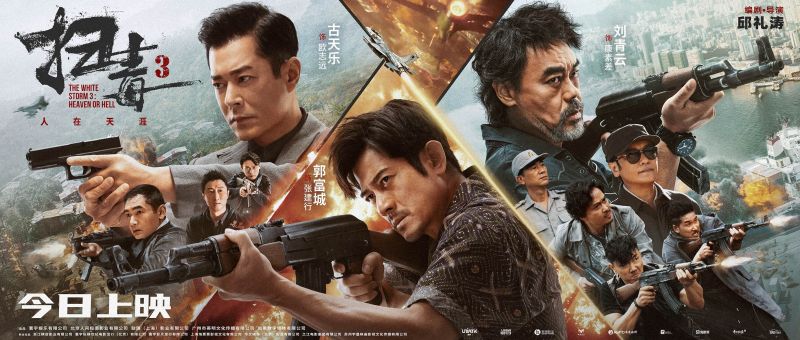
The White Storm 3: Heaven or Hell (掃毒3︰人在天涯, Herman Yau, 2023)

Who is the most foolish, the arch criminal who didn’t realise his two best buddies were undercover cops, or the cops that killed or took bullets for him? The latest in the White Storm series of standalone action thrillers with starry casts thematically dealing with drugs and organised crime, White Storm 3: Heaven or Hell (掃毒3︰人在天涯) like its immediate predecessor casts the net a little wider than just Hong Kong and is keen to stress the real victims of the international drug trade are the economically disadvantaged farmers who are left with no other option than to turn their fields to poppies. 

Back in Hong Kong, meanwhile, the film opens with local drug lord Suchat (Sean Lau Ching-Wan) retrieving a huge haul of drugs dropped in the ocean by helicopter only to be interrupted by the police who were watching all along. Suchat’s righthand man Yuen (Louis Koo Tin-Lok) blows his cover by pulling a gun to convince him to surrender, but Suchat chooses not to and in the firefight that ensues his other buddy, Hang (Aaron Kwok Fu-Sing), who is also an undercover cop and in fact very good friends with Yuen, is seriously wounded. In a show of loyalty, Suchat rescues Hang and manages to flee to Thailand where he sets up in his home village soon coming to the attention of the warlord who controls the local drug trade.

Describing the gang as the “rising stars of the Golden Triangle”, Suchat eventually cuts a deal with the general to provide security for his logistical operation in which drugs, mostly ice but also heroin, are transported inside fruit and other foodstuffs to be moved through the local market. Suchat had originally tried to set up his own operation only to fall foul of the general but also concedes that the margins in this game are fairly thin, no one in this area has any money to spend on drugs and there’s no point trying to produce them with the general in town so his only option is to provide a different service at another point in the chain. Hang becomes fond of the young woman who nurses him back to health, Noon, who explains that the only crop anyone is interested in is opium so aside from the food they grow for themselves it’s all they can produce to support themselves. There may a particular implication in her reply when Hang asks her if she’s ever considered moving that this even if this place is not a “home” because she has no remaining family members (her grandfather in fact seems to die of opium poisoning) it is still her hometown and why should she have to leave it. 

Before being taken to Thailand, Hang’s boss had worried that he might have spent too long undercover to successfully come back and it’s true enough that he seems to have become conflicted not only in his feelings for Noon but reflecting on the genuine brotherhood that exists between himself and Suchat whom he will eventually have to betray. Hang almost died for him, and Suchat repaid the favour by refusing to leave him behind. But on the other hand, there’s also a degree of homoerotic tension between himself and Yuen who rushes straight over to Thailand to rescue him once he’s able to make contact only to be frustrated when Hang tells him he has to go back to the village to save Noon who, as she’s already told him, does not actually want to leave despite the danger of constant violence from drug gangs and army raids. 

The film ends with the razing of the village of the Thai authorities who evidently decide the loss of life is justified in the necessity of stopping the general though it’s the ordinary farmers who lose their lives, families, homes and livelihoods because of their proximity to the trade in drugs. “I miss Hong Kong” Hang finally exclaims as if longing to shake off his undercover persona and recommitting himself to his role as a policeman but also perhaps hinting at a more subversive meaning as Yau ends on the clouds parting to reveal the famous city skyline amid picturesque terrain. Filled with a series of incredibly elaborate action sequences culminating in the all out warfare of the village raid, Yau’s heroic bloodshed subversion has its share of absurdity in the complicated relationships between its central trio and the ambivalent justice of its final resolution.


Original trailer (Traditional Chinese / English subtitles)

The Goldfinger (金手指, Felix Chong Man-keung, 2023)

Following Wong Jing’s Chasing the Dragon and Philip Yung’s Where the Wind Blows, Felix Chong’s financial thriller The Goldfinger (金手指) is the latest in a series of Hong Kong films revolving around colonial-era corruption in which the apparent lawlessness of the pre-Handover society allowed crime to flourish along with a nascent greed nurtured by the island’s rising prosperity as an increasingly important financial centre. In an ironic touch, the film even opens with mass protests against the introduction of ICAC with protestors calling for more respect for law enforcement officers while implying some dark authoritarian force is in play even as angry policemen demand the right to immunity from their own misconduct.

In any case, what arises is a cat and mouse game between wily conman/entrepreneur Henry Ching (Tony Leung Chiu-Wai) and ICAC investigator Lau (Andy Lau Tak-Wah) who chases him for 15 years trying to expose his web of financial fraud. A failed businessman on the run from debt having supposedly abandoned an idealistic desire to build homes for people, Ching arrives in Hong Kong seeking a land of opportunity and largely finds it though through dubious means. Teaming up with similarly embittered businessman KK (Simon Yam Tat-Wah), who is resentful towards his family who treat him with disdain for being a mistress’ son and force him to do their dirty work, to build a giant real-estate based empire that is in reality rooted in complex financial fraud.

Working on the rationale that stocks can be spent like money, Ching makes contacts and manipulates markets which is all very well as long as no one asks for the cash because it doesn’t exist. Chong hints at the realities of the housing market in Hong Kong today in which land is at a premium and apartments largely unattainable as Ching alternately allies with and subverts British rule to build a property empire, setting his sights on acquiring prestigious Golden Hill building as symbol of a new Hong Kong and his own hubristic desire for personal success. With shades of Wolf of Wall Street and The Great Beauty, Ching attends soirees organised by the British and puts on a show for his targets. In his attempts to woo a British bank, his office is suddenly invaded by salsa dancers and gold glitter falls from the ceiling much to the chagrin of a bemused and increasingly mistrustful KK.

Even so the title of the film is echoed in a comment Ching makes to Lau that though he may thinks he’s some genius with the Midas touch he’s really just a patsy, pushing him to investigate possible international conspiracy that is bigger than either of them. Ching has already become a legend with a series of stories about how he made his stake money which range from running into Imelda Marcos in a shoe shop and getting backing from the oppressive regime in the Philippines, to narrowly escaping a war zone and catching a CIA spy in Moscow. He even has the hutzpah to attempt to bribe Lau by offering him a vast fortune and a scholarship for his daughter to study abroad if only he’d find a way to nix the case.

The corruption is indeed embedded, as is obvious when a judge with a posh British accent actively welcomes Ching to the court in a friendly manner and suggests they conduct their business swiftly to avoid any unnecessary turmoil to the Hong Kong economy. Friends in high places largely assist him, whether through personal greed or blackmail though as another of his associates admits, in the end there is no real loyalty among thieves only increasing fear and desperation along with resentment that Ching seems to be taking more than his fair share of the loot. Loosely based on the Carrian Group scandal, the film never loses sight of the damage one man’s greed and duplicity can do as millions of Hong Kong citizens find themselves out of pocket and uncompensated when the shares they bought become worthless, but equally suggests that in the end justice will always be denied to ordinary people while men like Ching will never fully pay for their crimes. With gorgeous production design, Chong beautifully the woozy world of Hong Kong in the ’70s and ’80s amid an intense cat and mouse game of financial fraudsters and a compromised authority.


The Goldfinger previews from 30th December ahead of opening in UK cinemas 5th January courtesy of CineAsia.

UK trailer (Traditional Chinese / English subtitles)

Band Four (4拍4家族, Mo Lai Yan Chi, 2023)

“Music is the best therapy, keep on playing music” is the advice of a doctor in Mo Lai Yan Chi’s poignant drama Band Four (4拍4家族) in which a disparate family is brought back together through their musical passions. Functioning as a kind of political allegory for a culture in danger of forgetting itself, the film rediscovers a sense of intergenerational solidarity in which that which seems lost can be reclaimed and passed down surviving in the minds of those who will remember.

The past intrudes in a more literal sense when the estranged father of Cat (Cantopop singer Kay Tse On-Kei), who has just lost her mother, suddenly returns and moves into her apartment after many years living over the border in Shenzhen. Former rockstar King (Teddy Robin) is clearly befuddled by the changes in contemporary Hong Kong, attempting to pay for a local snack in renminbi and getting Hong Kong Dollars back before being fined for littering by a very officious policewoman while he struggles to find a place for himself in Cat’s life given her understandable resentment of him for abandoning her only to return with another daughter in tow who has an incredibly similar Chinese name. 

Cat too is partly living in the past, fixed on getting to perform at an international festival with her band, Band Four, the name of which is inspired by her father’s old band, Band Seven, in order to honour the memories of two members who passed away suddenly just before they were due to travel abroad. Now in her 30s, Cat struggles to keep the band together only for her best friend to quit after deciding to get married and move to France while she’s otherwise forced to perform in fairly humiliating circumstances which only encourage her other two band members to an accept an offer to move to the Mainland. 

Many are indeed leaving, including King’s former bandmate and the owner of the live music venue where Cat plays who explains his wife wants to move abroad for a better future for their son though he finds it difficult to leave. Cat’s songs ask why it is she’s the only one who’s remained behind and committed to her dream, as if she were a kind of guardian of the old Hong Kong even as her own memory fails and she fears the time when she will forget everyone who was close to her. She worries about how to safeguard her memories in the same way she worries about raising her son, Riley (Rondi Chan), who is not academically inclined and struggles at school but appears to have a talent for the drums along with a kind and generous heart. 

Riley had explained that Cat started the band to find a family, which is what she eventually gets in learning to forgive her father whose interest in becoming a part of her life again is genuine while she also bonds with her half-sister Lok Yin (Anna hisbbuR) who also has musical aspirations and romantic disappointments that might otherwise leave her feelings lost and alone. “If you’re unhappy talk to your family” Lok Yin had advised Riley only to have the same advice given back to her and unexpectedly finding value in it. Occupying a maternal space, Cat strives to safeguard the future looking for others who could care for Riley as her own health fails while discovering that her family will take care of both him and her resolving that it won’t matter if Cat no longer remembers because they will remember for her. 

A musical love letter to Hong Kong, the film is both an advocation for moving forward but also for taking the past with you as you go, treasuring the memories of something that might no longer exist anywhere else. As Cat later says, anywhere you play is your stage and if you stumble over your lines someone else will be there to remind you where you are. Cheerful and heartwarming despite the sometimes heavy themes and a sense of inevitable erasure, Lai captures a sense of community warmth and mutual solidarity among those who choose to stay and remember rather than abandon their memories and start anew somewhere else.


Band Four is in UK cinemas from 15th December courtesy of Central City Media.

UK trailer (English subtitles)

Time Still Turns the Pages (年少日記, Nick Cheuk, 2023)

A dejected teacher is forced to deal with his own unresolved traumatic past when the draft of a suicide note is discovered screwed up in a bin at the school in Nick Cheuk’s poignant drama, Time Still Turns the Pages (年少日記). Informed by a recent rise in the number of adolescents taking their own lives, the film takes aim at those who refuse to take depression among children and young people seriously while simultaneously adopting conservative social attitudes which insist that children who don’t conform to their ideas of conventional success are somehow lazy and selfish. 

That’s definitely not a view held by empathetic teacher, Cheng (Lo Chun-Yip), though he is frustrated by the school’s inability to take the note at face value while otherwise trying to keep it under wraps to avoid potential embarrassment or disruption with the exam season approaching. Consequently, the desire to find the student who wrote the note has the potential to develop into a witch hunt that might only make their situation worse, though Cheng tries to go about it as sensitively as possible. In any case, he discovers that many of his students feel lost and hopeless with no one around to turn to. One boy who is being relentlessly bullied eventually fights back but ends up getting the blame while well-meaning as he is even Cheng originally misreads the situation and fails to help him. 

Meanwhile, Cheng is also under a lot of stress following the breakdown of his marriage caused in part by his issues with emotional intimacy. Called back towards the past, he begins re-reading the diary of a young boy who details physical abuse at the hands of his authoritarian father (Ronald Cheng Chung-Kei) that left him feeling worthless as if the world had no place for him. Eli struggles academically and particularly in comparison with his younger brother Alan while his hardline father views him only as an extension of himself and is embarrassed on a personal level that his son doesn’t measure up. Consequently, he beats him senselessly while insisting that he is simply lazy and doesn’t apply himself rather than accepting that he isn’t academically inclined and is unlikely to ever master the piano. 

Only his piano teacher, Miss Chan, is kind and patient with him though his father soon ruins that relationship too leaving the boy with nothing. Learning from this example, Cheng vows to become a different kind of teacher who doesn’t become angry with children who aren’t reaching their potential but makes a point of talking to them to figure out what’s wrong and how he can help. Unfortunately, he feels as if he’s failing to become the person he wanted to be in part because there are too many problems in the contemporary society which places intense pressure on people to conform to outdated notions of conventional success largely though academic achievement. 

Yet what Cheng discovers to be more dangerous is a growing sense of loneliness and alienation among young people who feel lost and hopeless in the contemporary society. He reflects that Eli’s despair stemmed from feeling as if no one wanted him and he wasn’t really included as a member of his family who looked down on and rejected him because of his lack of academic success. Cheng doesn’t want anyone else to feel that way, but ironically isolates himself, alienating his wife who fears he’ll never really be ready to move on into a more settled adulthood as a father with children of his own. 

In many ways, Cheng’s desire to end the cycle turning away from his father’s authoritarian violence towards care and compassion in looking after his students even as he struggles to come to terms with his own traumatic past and fears of abandonment. Granted, he doesn’t and perhaps can’t do very much to tackle the causes of the teens’ depression and their roots in the status-obsessed, politically turbulent contemporary society, but he can at least learn to open himself up to be of help to others who like him are struggling and feel as if they have nowhere to turn. Poignant and empathetic, Cheuk’s drama makes a plea for a little more compassion and understanding not only for the young but for those carrying a heavy burden in the best way they can. 


Time Still Turns the Pages opens in UK cinemas 24th November courtesy of CineAsia.

UK trailer (Traditional Chinese / English subtitles)
Elegies (詩, Ann Hui, 2023)

Many of the poets featured in Ann Hui’s documentary Elegies (詩) are keen to emphasise that poetry is rarely about what it says it’s about and often as much about what doesn’t say. The documentary is much the same, making a point about the power of poetry in an age resistance, an elegy for the disappearing Hong Kong the poets lament two of them no longer living in the city but somehow still defined by it. 

The tables reversed by one of her subjects, Hui explains that the documentary is a labour of love. She admits that it’s not a mainstream movie and that no one would fund it, but she decided to do it anyway despite or perhaps because of the ongoing coronavirus pandemic which is itself makes frequent appearances in the film. In any case, Hui splits her time mainly between veteran poet Huang Canran who now lives in Mainland China and his younger disciple Liu Wai Tong who lives in Taiwan. 

As Canran says, the poems prove his love for Hong Kong but he also feels as if it was Hong Kong that forced him to leave. Joking that he’s an economic exile, he explains that he mainly moved after being forced out by the rapid cost of living in the city. He cheerfully explains that being a poet means embracing destitution and is embarrassed about the other kinds of writing such as penning a newspaper column that he did solely for the money. Canran’s main source of income comes from translation though his personal motto is to work hard to not earn money while practicing his art. His daughter doesn’t really get it and is confused about why Ann Hui wants to make a documentary about her father, though as Canran admits prophets are rarely appreciated in their hometowns. The Hong Kong he writes about is another place, perhaps somewhere that never really existed or any rate exists no longer. 

A photographer and lecturer in poetry, Liu Wai Tong heads in a more philosophical direction while also living as an exile in Taipei, never quite explaining the reasons he left Hong Kong though perhaps because it would awkward to do so directly. He quotes Brecht and asks what the point of poetry is in an age of protest, how their voices can resonate among a thousand other horrors crying out for speech. Yet as other poets had said, poems about nature are not always about nature just as political poems are not always about politics. By saying one thing and not another they can make a message felt but then there’s nothing really wrong with talking about beauty amid myriad horrors. 

Another poet writes about the everyday, causing others to ask if you can really call it a poem if it’s just about the unexpected appearance of a cockroach. The words should be simple, they insist, their meaning at least clear even if the message is ambiguous. Obscurity for obscurity’s sake is always doomed to failure. Many of the poets write from their direct experience detailing their ordinary lives in the city while others rejoice in wordplay or metaphor, but Hong Kong colours all of their work. Echoing the other poets, Hui too admits that it’s poetry that sustained her in her darkest hours. The poems that she learned as a child gave her strength when she needed it. A woman who has been writing to a friend in prison is moved to tears on recalling his reaction to a poem she had sent him, feeling that poem if can touch someone years after it was written than it must have intrinsic meaning.

Thus poetry in itself becomes an act of resistance if solely in defiance and the determination to endure even the most difficult circumstances from the anxiety of a global pandemic to the spectre of political unrest and lingering oppression. At once an elegy for the Hong Kong the poets speak of and its many rueful exiles, the film makes a passionate defence of poetry as a lifeline thrown by one lonely soul to another across often turbulent seas and carrying with it a message most powerful in its silence. 


Elegies screened as part of this year’s San Diego Asian Film Festival.

Original trailer (English subtitles)