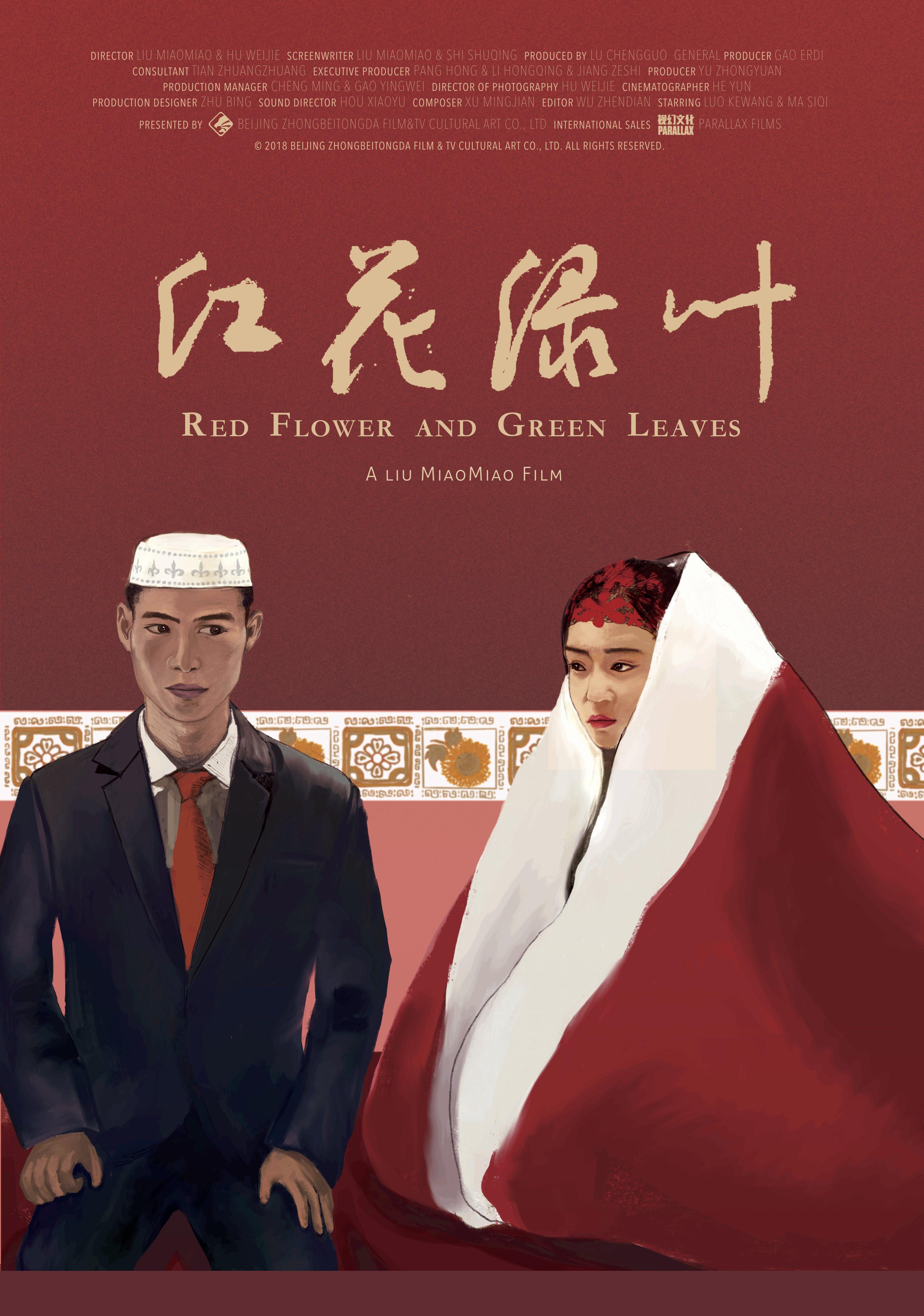
Red Flowers and Green Leaves (红花绿叶, Liu Miaomiao & Hu Weijie, 2018)

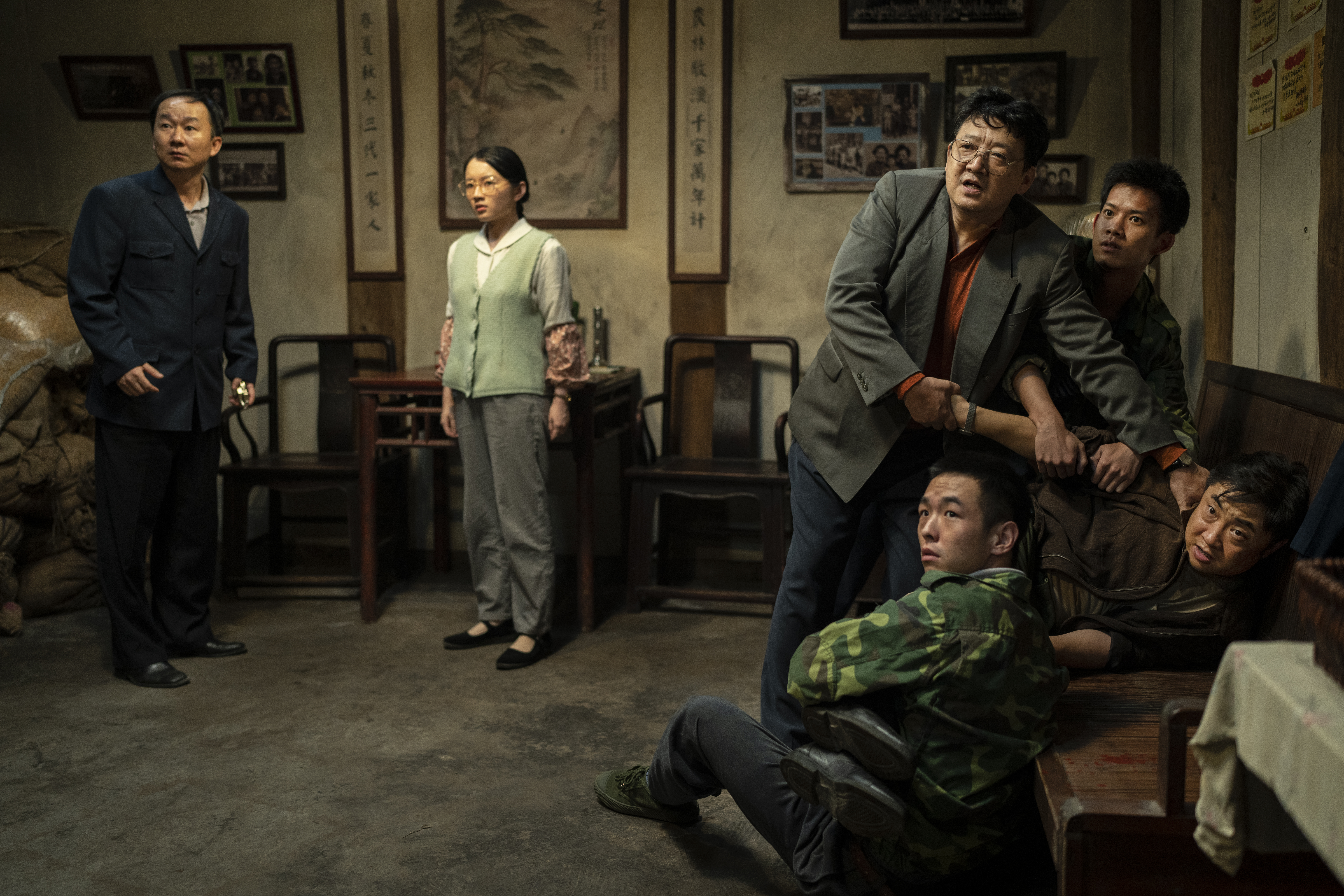
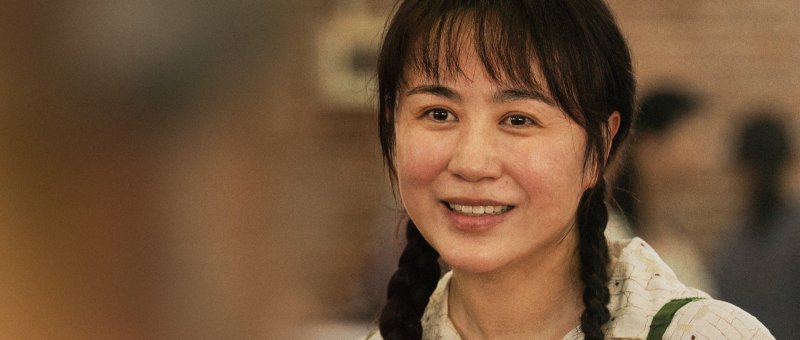
“They do things their way. We do ours our way” according to the rapidly maturing young husband at the centre of Liu Miaomiao & Hu Weijie’s touching marital romance, Red Flowers and Green Leaves (红花绿叶, hónghuā lǜyè). Shining a light on the under-explored culture of the Hui Muslim minority in China’s northwest, Liu and Hu’s heartfelt drama has some questions to ask about the potentially destructive effects of traditional culture, but ultimately allows its young couple to discover their own kind of happiness as they learn to understand each other while embracing their own senses of natural goodness.

The hero, Gubo, was diagnosed with a mysterious illness, apparently similar to epilepsy, some time in childhood, and has been written off by those around him ever since. Because of a deep sense of shame and inadequacy stemming from his condition which threatens but does not often interfere with the quality of his everyday life, he has long convinced himself that he will never marry or be very much of anything at all because he has “nothing to offer”. His well-meaning mother keeps trying to marry him off, but Gubo is convinced she does it to assuage her feelings of guilt in blaming herself for his illness (he does not blame her, but does harbour resentment towards the village’s irritating doctor, Li Feng). In a surprise development, Gubo’s aunt appears to have found the ideal match in an improbably beautiful young woman, Asheeyen, but his mother remains uncertain that Gubo can be talked into it. A conversation between the two older women makes plain that the reason the beautiful Asheeyen has not yet married has something to do with an incident in her past which has made her unsuitable in the eyes of some for marriage. Though the older generation are aware, they decide that it’s better the youngsters do not know of the other’s “issues” and that they rush the marriage through as soon as possible to prevent it potentially breaking down. 

Despite himself, Gubo is smitten and allows himself to be swept into marriage but their early relationship is indeed as awkward as one might expect. Gubo, a kind and sensitive person, is keen to stress that he means to put no pressure on the nervous Asheeyen who spends most of their wedding night crying, but the distance between the pair even as Asheeyen blends seamlessly into the household, arouses the suspicions of the nosy aunt whose gentle prodding (secretly removing the second duvet to force them to share) begins to have the desired effect. But the central problem remains that each remains ignorant of the other’s “secret” and worried what will happen when it is eventually revealed. For Gubo that occurs when he’s turned down for social support after being unfairly usurped by Doctor Li who swipes it for his own disabled wife by wielding his social status against the mild-mannered Gubo who’d rather not have to deal with him anyway. 

Doctor Li does indeed seem to do more harm than good, even if Gubo’s father later dismisses everything he says as “bullshit” not to be taken seriously. Li feels Gubo blames him for his condition because of some treatment he gave him as a child, while Gubo appears to resent him for constantly harping on about the limitations of his illness which seem to be far exaggerated. Doctor Li doesn’t quite think people like Gubo should marry at all, let alone have children. Even Gubo’s haughty brother Shuerbu, preparing to enter the military academy, writes him off a useless idiot while intensely jealous of his beautiful wife. When the couple eventually conceive a child, Doctor Li goes so far as to suggest that it shouldn’t be born because Gubo’s condition may be hereditary and he finds it distasteful for him to have a child, while Shuerbu thinks it’s unfair because Gubo will not be able to look after it and the burden will fall disproportionately on Asheeyen. 

Asheeyen, by contrast, is mildly ambivalent to her circumstances in view of the mysterious past but is also struck by Gubo’s goodness. Her sister-in-law, while openly criticising her brother as a husband, agrees that Gubo is a “decent” man, the criteria being a mix of the ability to provide material comfort with a genuine intention to care. Realising that they both have secrets the other was not aware of reawakens Gubo’s sense of inferiority, reminding him that they’ve been paired off together because they were each viewed as somehow “damaged”. Discovering Asheeyen’s past sends him into a petulant, depressive funk that threatens to ruin everything in a mistaken bout of destructive male pride, but eventually love wins out. Asheeyen and Gubo may have been railroaded into a traditionally arranged marriage not quite against their wills, but that doesn’t mean that they have to go on doing everything traditionally, taking their elders’ advice at face value and always falling victim to the unpleasant Doctor Li who reacts to Gubo’s grudging agreement to buy his scooter even though Doctor Li is always telling him he’s too disabled to ride one because Asheeyen could use it with a surprised “I suppose we even have women driving trains these days”. Coming together, the couple are resolved to do things in their own way and make their decisions together, no matter what the future might bring.


Trailer (English subtitles)

The Dumpling Queen (水饺皇后, Andrew Lau, 2025)

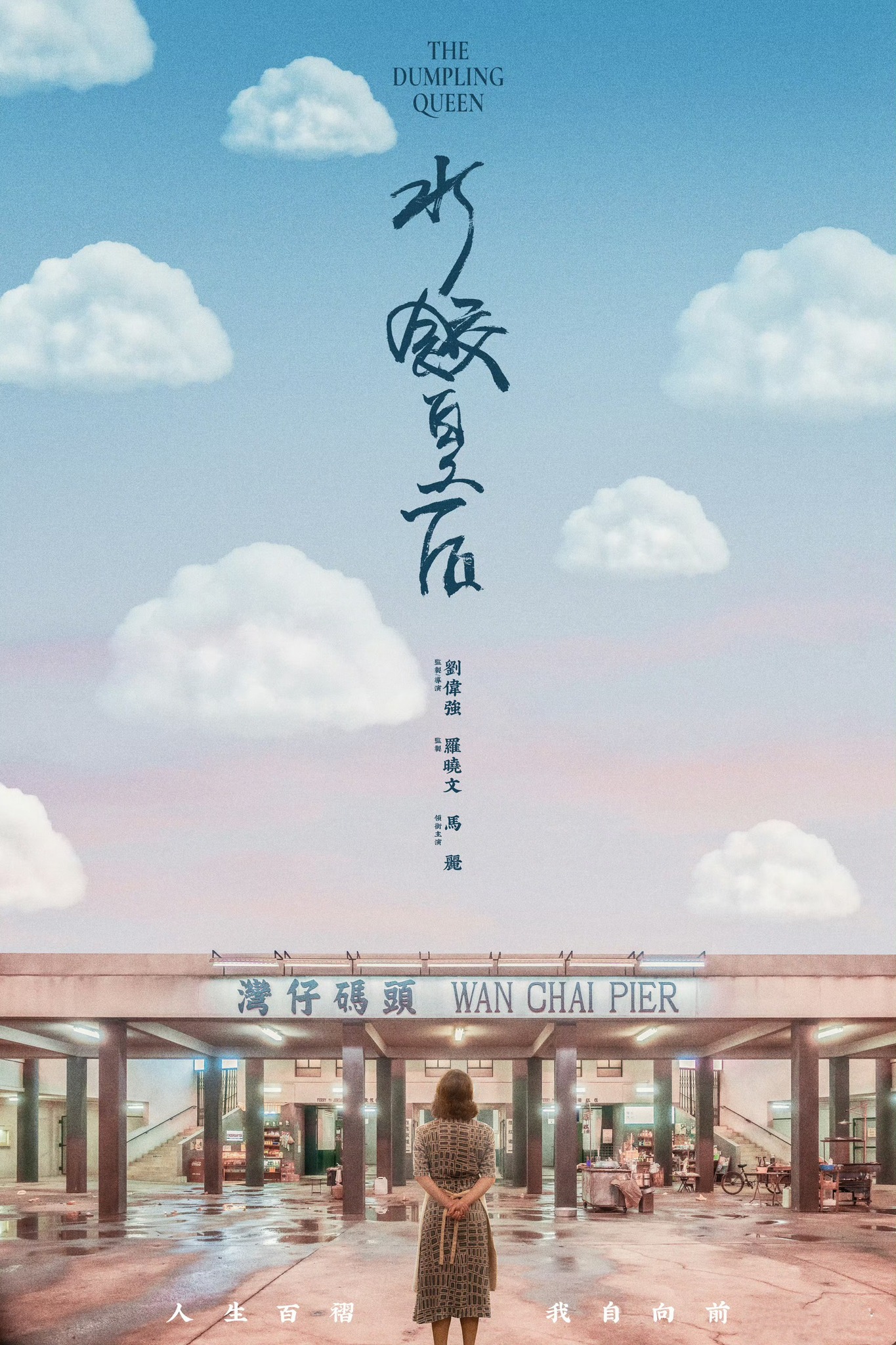
There are a lot of ironies and contradictions at the heart of Andrew Lau’s Dumpling Queen (水饺皇后, shuǐjiǎo huánghòu) inspired by the life of Zang Jianhe who founded the international dumpling empire Wanchai Ferry, but there’s no getting away from the celebratory joy it finds in the heroine’s hard-won transition from jilted spouse to successful entrepreneur. Then again, there might be something uncomfortable in the film’s framing and the repeated claim that Jianhe’s dumplings are about the warmth of familial bonds and reunion. Zong’s desire to kick back at American imperialism as manifested in the ubiquity of hamburgers and US-style delivery pizza by making Chinese dumplings accessible across the world is also an advocation for the One China philosophy in which the greater Chinese diaspora is connected as a family through “the taste of home.”

Beginning in 1977, the film is noticeably quiet about why anyone would be risking their lives to escape from Mainland China to Hong Kong, though this is what Jianhe is doing in her quest to be reunited with her husband, Hanzhou, who has been away for four years. Unfortunately, when she reaches the station at the border, Hanzhou’s mother (Nina Paw Hee-ching) rudely explains that she had him marry another woman in Thailand who has since borne him a son. Branding Jianhe a failure for giving birth to only daughters, she tells her that she can come with them but that she will be the second wife subservient to the mother of the family heir. She repeatedly claims this does not make Hanzhou a bigamist because Thai law supposedly gives him the right to marry more than one woman, though it seems the mother-in-law may not be aware that the pair were legally married in Mainland China as Jianhe’s traditional wedding photos would otherwise suggest. 

The fact that Jianhe is discarded for giving birth to daughters contributes to the film’s feminist undertones and sense of female solidarity as Jianhe strives to pass on the dumpling recipe she learnt from her own mother to the next generation of women and beyond. Jianhe must now find a way to fend for herself, which she eventually does through a combination of hard work, excellent business sense, and the supportive community around her. Though Jianhe and her children face some instances of prejudice against Mainlanders when they first arrive, they are helped by various people including enigmatic landlady Hong Jie (Kara Wai Ying-hung) who makes her a part of her boarding house community and tries not to pressure her about the rent out of consideration for the children,

But times are sometimes hard and Jianhe is directly contrasted with the woman across the way whose husband has a gambling problem and beats her. Having been injured in a workplace accident that leaves her unable to work as she had been before, Jianhe begins to feel hopeless and considers taking her own life only to be saved by her children and a neighbour who sells dessert soups, but the other woman is not as lucky and eventually makes a fateful decision, blaming herself for the man her husband has become. Jianhe is also given another shot at romance with a sympathetic policeman (Zhu Yawen) who comes from the same area of Mainland China and is taken by her dumplings, but he also wants to move abroad and Jianhe has already followed one husband to another country and it didn’t work out so well. It’s not so much that she sacrifices love for career success, the policeman could after all simply chose not to go, but that she no longer needs to compromise herself for marriage because she’s fulfilling herself through her business enterprise.

Just as the film doesn’t mention why Mainlanders came to Hong Kong, it doesn’t really go into why some Hong Kongers choose to leave save for a brief onscreen text mention about the beginning of the negotiations for the Handover though Jianhe is repeatedly keen to emphasise the universal Chineseness of her dumplings. She makes a deal with a Japanese department store, but threatens to walk when they try to make her change her packaging to bring it into line with their house style and thereby erase its cultural identity. She also refuses to allow them a monopoly after they demonstrate their lack of trust in her as a businesswoman, quickly realising she’s better off making deals with every supermarket on the island as well international flour companies. Jianhe is pretty quick to cotton to new technologies such as household refrigerators and the possibilities for frozen foods. But at the end of the day, she’s earnest and hardworking, sharing her success with her many friends who helped her along the way and always repaying kindness when she can. It’s an oddly utopian vision at times in which everyone seems to recognise Jianhe’s greatness and get out of her way, including a triad boss who helps her because she reminded him of his mother when she threatened one of his men with a meat cleaver,) but it also reinforces a sense of the One China family with the dumplings, now refined to suit local tastes, as the glue binding it together in the face of an onslaught of hamburgers and pizzas as harbingers of a cultural apocalypse.


International trailer (Simplified Chinese / English subtitles)
Come Dance With Me (来来, Liu Yunyi & Wei Bozhi, 2019)

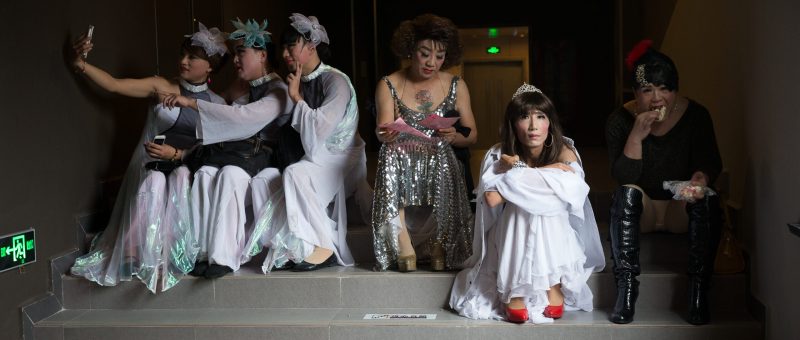
“You need to fight for your place in society,” according to Jiaojiao, one of several regulars at the Lai Lai Ballroom interviewed as part of Liu Yunyi & Wei Bozhi’s documentary, Come Dance With Me (来来, lái lái). As several of them mention, the ballroom had been a refuge for the LGBTQ+ community, though times have now changed. These days, younger people prefer clubs and bars, while many of those who used to come are now elderly and don’t get out as much meaning that the ballrooms are mainly meeting places for the now middle-aged men who first frequented them 20 years earlier.

That they exist at all and this documentary could be made might be surprising given prevalent anti-LGBTQ+ attitudes from the censors’ board and wider community. It’s true enough that Lai Lai became a community hub and its partial closure for the 2016 G20 conference leaves them with no place to go. The various people that Liu & Wei interview come from various walks of life as they demonstrate in the opening sequence in which an old man visits a temple, a younger one visits a park, and Lai Lai’s manager Min walks through the neighbourhood and gets something to eat at a small cafe. 

The old man from the temple best expresses the inherent contradictions both of his religion and the wider society in which he relates that Buddhist monks are supposed to overcome their desires. Young monks are forbidden from taking wives and also from touching women, but technically speaking, the same prohibitions do not exist between men and homosexual acts are not unusual in the temple. Conversely, the young man who went to the park reveals that he has been living with HIV for the last seven years and that he lost his job because of it. In despair, he tried to take his own life only for his godmother to explain to him that people with high blood pressure also need to take medication for the rest of their life so it’s no different from that.

Still, he’s convinced himself of the impossibility of having a relationship sure that no one would stay with him after finding out. He says that he once told a close friend that he had AIDS and the friend quickly distanced himself from him and effectively disappeared from his life. The film later follows him on another day out with a young man, Li Yapeng, but an ill-fated decision to take a five-hour bus trip to go see him backfires when Yapeng not only fails to come and meet him but seems less than enthusiastic about his impromptu visit before abruptly breaking up with him. Another older man relates that he once had a lover who was diagnosed with HIV but told that he could not receive treatment in Shanghai and should return to his hometown. A Shanghai native, the older man resolved that, as he was already old and it would take several years for symptoms to emerge at which point he may be dead anyway, he would deliberately contract HIV and get medicine to give to him. What he didn’t realise is that the treatment isn’t the same for anyone and the medication he was prescribed was no good for his boyfriend, who then went back to his hometown and got treated there. Unfortunately, the treatment didn’t agree with him and he elected to stop taking it, passing away not long after.

Jiaojiao, meanwhile, has been with their partner Fei Er for 26 years, though Fei Er is now having health issues. Fei Er describes their relationship as rock solid and the same as that of any heterosexual couple in that now they’ve been together so long, 26 years is effectively forever and neither of them is ever going to abandon the other no matter what may come. Nevertheless, Jiaojiao also describes an additional layer of stigmatisation in that they have breasts, a fact which it seems they still hide from extended relatives having made the original decision to get them without telling anyone first. Done in a private clinic, the procedure also left them with ongoing medical issues caused by the failure to drain the wound properly. In a later conversation, they suggest that the primary motivation for getting breast surgery was financial. They now work as a dominatrix, but do not like doing it describing some of the men as “disgusting”. Their marginalised status prevents them from gaining more mainstream employment in a still conservative society. They have all found a place for themselves at Lai Lai, but as the press notes reveal, it abruptly closed its doors in 2018 with no one sure when or if it will reopen. Nevertheless, its legacy lives on as a space of warmth and acceptance that gave each of them a place to belong and be joyful no matter the difficulties of the world outside.


Come Dance With Me screens at Centre 151 3rd May as part of this year’s Queer East.

1 Girl Infinite (Lilly Hu, 2025)

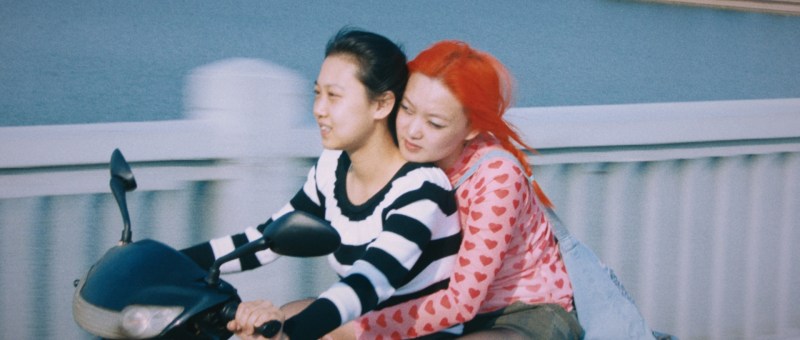
There’s a moment in Lilly Hu’s gritty Changsha-set drama 1 Girl Infinite in which the heroine, Yinjia (Chen Xuanyu), watches as a fishmonger bashes a fish to death. He repeatedly smacks its head into the ground and, in a moment of foreshadowing, hits it with his meat cleaver while the fish flails around helplessly, gasping for air and twitching its tail. Yinjia winces and half looks away, but also sees something of herself in the way this poor creature is tossed around and eventually gutted in much the same way that she feels herself to be battered by her society.

Indeed, the film opens with her reading her suicide note in which she states that however she may die it has nothing to do with Xia Yutong (Lilly Hu), though in actuality it has everything to do with her. Abandoned by both of her parents, 19-year-old Yinjia has adopted a quasi-maternal role over Tong Tong who lives in her apartment and shares her bed, though the relationship, from Tong Tong’s perspective at least, remains curiously ill-defined. In the early light of morning, Yinjia silently gazes at her sleeping figure, but Tong Tong often rejects her gestures of intimacy. She won’t let Yinjia hug her in the street because she’s “too heavy,” and there is a clinginess to Yinjia that spills over into possessiveness and control that might be off-putting, but equally it seems that Tong Tong pushes her away because she herself doesn’t know how to process this relationship or her feelings for Yinjia. 

Then again, perhaps it is really about not having anywhere else to go as she unconvincingly tells her friends when they complain she’s brought “that girl,” again. Tong Tong tells them that Yinjia is just some girl who won’t stop following her around and acts like she’s a drag, but is at other times clingy herself and in rare moments of freedom expressing a silent affection for Yinjia. Nevertheless, there is a marked contrast between the more straight-laced Yinja and Tong Tong’s punkish friends who seem to represent two opposing worlds. Yinja glares at them constantly, resenting their indiscriminate use of drugs and the dangerous situations it could get them into, but appears to want to rescue Tong Tong who might not actually want to be rescued.

When Tong Tong gets involved in another ill-defined and possibly transactional relationship with local drug dealer Chen Wen (Bo Yang), it further disrupts their dynamic and pushes Yinjia towards the edge as she falls into a self-destructive obsession while convinced that she will lose Tong Tong. Tong Tong is convinced that Chen Wen will take her to America, which it seems clear that he has no real intention to do, where people live in big houses and everyone has a job. In this way, he represents a more literal kind of escape from the problems of contemporary China in which she is trapped in a dissatisfying socio-economic position from which she sees no way out. After she loses her virginity to Chen Wan, the camera cuts to a Burberry bag containing a designer dress that echoes Tong Tong’s need for consumerist affirmation. 

Tong Tong clearly aspires to his life of wealth and comfort, but it’s equally true that Chen Wen’s financial stability is rooted in illegality and moral dubiousness in his indifference to the harm his line of business causes. When the girls visit his apartment, there’s another woman there that is being fed drugs and is eventually manhandled out when her reaction to them begins to annoy Chen Wen and his henchman. She may be a harbinger of what may become of Tong Tong if she gives in to this bargain and a further provocation for Yinjia who is determined to prevent her from doing so by any means necessary. It’s never quite clear whether either relationship is any more than transactional from Tong Tong’s point of view, or whether she’s really aware of the realities of her relationship with Chen Wen which he clearly doesn’t view with much seriousness, though she continues to refer to herself as his girlfriend and evidently really believed he meant it when he said he’d take her to America. 

Yinjia meanwhile glares at the world around her and strikes back self-destructively. She scores a partial victory in seeming to have impressed Chen Wen in the depths of her devotion and the lengths that she would go to to maintain control over Tong Tong, though it’s also somewhat hollow and ironic given that he almost certainly never meant to take her to America anyway nor keep her around very long. Left with no parental input or societal safety net, the two women are each adrift and left with only each other to rely on. Though locked in a somewhat toxic embrace, the relationship between them is the only hint of purity in their otherwise impure world of betrayal and exploitation.


1 Girl Infinite screens at Rio Cinema 3rd May as part of this year’s Queer East.

Striking Rescue (惊天大营救, Cheng Siyi, 2024)

Once again set in a fictional South Eastern Asian nation largely inhabited by Mandarin speakers, Cheng Siyi’s action drama Striking Rescue (惊天大营救, jīng tiāndà yíngjiù) is a comeback vehicle for action star Tony Jaa who has mostly been relegated to cameos and supporting roles for the last decade or so. It’s also one of a string of recent films with a bee in its bonnet about the drugs trade, and a less obvious one about the powers of large corporations though in this case the fat cat turns out to be a good guy.

To begin with, we can’t be so sure about Bai An. A flashback reveals that his wife and daughter were just murdered in an apparent gangland killing, and now he wants revenge. After targeting a petty drug dealer, Bai An is told the man he’s looking for is He Yinghao (Philip Keung), the CEO of a phenomenally successful logistics business which has nevertheless been implicated for the smuggling of drugs. Something like this happened once before, but Yinghao is well connected and was able to make it go away just as he apparently has this time. Later he also reveals that his company is the only one that is exempt from customs checks, presumably because he’s bribed someone to make that happen.

We can’t really be sure about Yinghao, either. He doesn’t seem to know about the drugs but could be bluffing or attempting to shift the blame. His spiky teenage daughter Ting seemingly resents him for his authoritarian parenting and blames him for her mother’s death. She fires back at him that he behaves as if all problems can be solved with money, and she may have a point. After their convoy is attacked by drug gangs, Ting has no idea who to trust but continues to believe in her father’s innocence while unexpectedly teaming up with Bai, who wants to kill him, and trying to figure out what’s going on. The one thing she’s sure of is that she and her father really hate drugs because they caused her mother’s death, so if it really is him behind the local drugs trade then it’s even worse that she thought it would be. 

As the truth is gradually revealed, it allows both men to reclaim their paternity as Jaa becomes a kind of surrogate father to Ting. He attempts to protect her from this very dangerous world of drug dealers and criminals, though it may not have been all that far from the otherwise life of luxury she was used to leading. Her driver, Wu, had already taught her some martial arts skills for protection while she’s bullied by the thuggish boys at school who pick on her for being Yinghao’s daughter and a foreigner. But it’s Bai An who seemingly shows her what real fatherhood is like, which ironically causes her to reevaluate her relationship with Yinghao. He in turn is somewhat redeemed by his righteousness in the face of the gangsters as opposed to a snivelling new reporter picked up by Clay and forced to choose which son to kill before being killed himself.

Making Yinghao the hero may be a slightly awkward fit given that his business interests do not appear to be all above board which is one reason why he relocated here rather than stay in China where, the implication is, he wouldn’t have gotten away with it for so long. Indeed, the film ends with a series of title cards explaining that all of the wrongdoers, including Bai, were caught and punished. Nevertheless, as Bai later reminds us, it’s every man’s dream to be a hero to his daughter and both men have now a claim on “heroism”, at least in the eyes of the idealistic Ting. Though he could not save his own daughter, Bai steps in to protect Ting on several occasions. Fighting off hordes of thugs and one very weird female assassin, Jaa gets the opportunity to show off his martial arts skills once again while relentlessly pursuing his revenge and quest for answers about the death of his wife and child. But it’s also this defence of her that allows him to reconnect with his humanity and reclaim his image of himself as a father even while mired in his grief and anger towards a world full of corruption and betrayal.


Striking Rescue is available digitally in the US from April and on blu-ray from May 15 courtesy of Well Go USA.

US release trailer (English subtitles)

Like A Rolling Stone (出走的决心, Yin Lichuan, 2024)

A middle-aged woman’s decision to walk out on her abusive marriage and pursue a life of ultimate freedom on the road went viral in 2022 making her an accidental feminist icon in an overwhelmingly traditionalist and patriarchal culture. Yin Lichuan’s dramatisation of Su Min’s life, Like a Rolling Stone (出走的决心, chūzǒu de juéxīn), makes plain the various ways in which her life has been shaped by patriarchal forces that also continue to shape that of her daughter who is sympathetic to her mother’s plight but also perhaps still feeling herself entitled to her mother’s sacrifice while wary of making such a sacrifice herself.

As she says, Hong (Yong Mei) has been waiting a long time. A flashback to 1982 finds her as a fresh-faced teenager with hopes and dreams who wanted to go to university and travel the world. But her father pulls her out of school and forces her to work in a factory to support the family while devoting all their resources to her brother. She marries Dayong (Jiang Wu) to get away from her father’s oppression, chasing another kind of freedom but soon finding herself disappointed. In the present day we can see that Dayong is cruel and abusive. He continually runs Hong down, calls her stupid and lazy, and becomes violent when challenged. 

Hong has long wanted to leave but is prevented firstly by a sense of shame in going against conventional wisdom. When she’d tried to leave him before, her family refused to help her and in fact encouraged her to return to Dayong and put up with her mistreatment. Dayong had also frustrated her attempts to work so that she would have nowhere to go and no way of supporting herself if she left him while simultaneously taking advantage of her financially. The couple had separate finances since early in their marriage, but while Dayong doesn’t like Hong spending on things that make her happy, he often helps himself to her possessions declaring that everything belongs to the family. 

But Hong bites her tongue and does as she’s told because that’s what she’s been taught she’s supposed to do. She’s sacrificed all of herself for her family and has even been working unpaid for her brother for over three years only to see him become surly when she eventually asks for her backpay. Her daughter, Xiaoxue (Wu Qian) resents her father for the way he’s treated Hong and is supportive of her liberation but at the same time she also over relies on her asking her to cancel a trip to see her old friends to be around during her pregnancy and then again when first loses and then gains a better job but is afraid to ask for time off in case it ruins her chances of being kept on.

Hong asks her own mother why she treats her the way she does and continues to prioritise her brother while telling her must allow herself to be exploited to serve the family but she doesn’t have an answer for her. There’s certainly a greater understanding between Hong and Xiaoxue about the patriarchal structures in which they are both trapped. When she loses her job, Xiaoxue’s husband encourages her to stay home with the children just as Dayong had discouraged Hong from looking for work. Xiaoxue wants a job to avoid her mother’s fate of becoming trapped within the domestic environment with no time for herself. While her husband seems nicer and treats her better than Dayong has treated Hong, he is not necessarily that much better and still operates on a patriarchal mindset. He praises women for being superhuman, but in doing so suggests that the domestic sphere is a woman’s concern alone. It does not seem to occur to him that he could do his fair share or that the division of their labour could be more equal. 

Things may be better for Xiaoxue which was all that Hong wanted, but they are far from perfect and when push comes to shove she too just expects that her mother will sacrifice her own desires to suit Xiaoxue’s needs. Everyone keeps telling her to wait, but Hong waited to escape her father, to meet a “decent” man, for Xiaoxue to grow up, get married, and have children of her own, then for the children to start kindergarten. If she doesn’t leave now, there’ll be another reason why shouldn’t. There is something quite empowering about Hong’s gentle progression towards achieving her freedom beginning with getting her driving license in her 50s despite the misogynistic banter of the instructors. When she gets her car, Dayong immediately gets into the driver’s seat and it takes a little longer for her to assume her space, but as she says no one can stop her now. She won’t be bullied or belittled anymore, nor will she allow herself to be taken for granted or guilted into sacrificing herself for others who rarely sacrifice anything for her. One of a recent series of films addressing ongoing patriarchal oppression, Lin’s film is itself a way of fighting back against the idea that unhappiness is something you just have to accept as a woman as Hong begins living her best life out on the road, finally free and very much in the driving seat of her own life.


Like A Rolling Stone screened as part of the 19th edition of Asian Pop-Up Cinema.

Trailer (English subtitles)

Eye for an Eye 2: Blind Vengeance (目中无人2, Yang Bingjia, 2024)

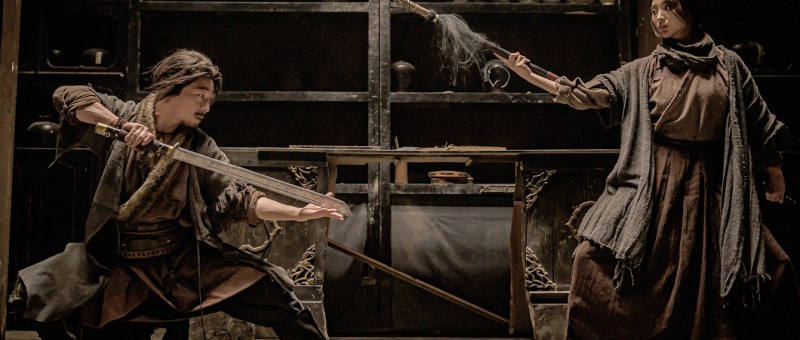
The wandering swordsman returns but this time to a world much more in disarray than when we last left it in the sequel to the surprise hit streaming movie An Eye for an Eye: The Blind Swordsman, An Eye for an Eye 2: Blind Vengeance (目中无人2, mùzhōngwúrén 2). Less origin story than endgame, the film finds bounty hunter Cheng Yi living in another dusty town and working for Youzhou Prefecture to bring in wanted criminals dead or alive but finally forced into the role of protector for a little girl dead set on vengeance against this world.

Richer in scope and ambition, this time around we’re given a little more backstory about the former lieutenant who is now using his martial skills to enact justice in an otherwise lawless society if only when he’s paid to do so. One of his targets turns out to be a man who served under him in the war and is disillusioned about its aftermath. “What did we gain in the end?” he asks, justifying himself that he may have killed a few people and taken some money but he was only claiming what he was owed. The argument doesn’t wash with Cheng Yi, but the war also took his sight from him and he too is a disillusioned exile from his home in Chang’an living a nihilistic life of drink of killing on the behalf of a distant and compromised authority. 

His wilful isolation may be why he is not originally motivated to help the orphan little girl Xiaoyu (Yang Enyou) who says her mother starved to death during their escape. Xiaoyu had tried to protect her little brother who seemed to be mute only to see him trampled beneath the hooves of a debauched nobleman who had just murdered an entire family because they had dared to tell on him to his father. The family had been planning to flee at dawn but Li Jiulang (Huang Tao) got there first. Xiaoyu witnessed his crime after sneaking in to steal the bread they were baking and was then freely given to her by a young woman Li later killed, further stirring her desire for revenge. Cheng Yi ends up saving her from Li on two separate occasions, though the second time it isn’t overly clear whether it was intentional or a drunken coincidence. Nevertheless, he continues to counsel her against pursuing her revenge, especially towards a man like Li who is wealthy and connected and has no compunctions about killing children. 

Li is also seen to abuse drugs and have a sadistic streak though no real explanation is given for his cruelty save that he is evil and has enough money and power to do as he pleases. No one except the little girl is going to put a bounty out on him, as she naively tries to do by selling her brother’s silver whistle to get a poster mocked up though Li simply offers a double bounty on her and it seems plenty are desperate enough to consider killing a defenceless girl to get their hands on it. Perhaps it’s this that eventually moves Cheng Yi’s heart as she continues to insist on an impossible justice even at the cost of her own life. Like him, she no longer has any family nor any place to call home and is displaced within the chaos of late Tang. Through bonding with her, he begins to rediscover his humanity and considers leaving the world of the bounty hunter behind to become an “ordinary person” in Chang’an to raise her away from this nihilistic way of life.

Building on the success of the first film, Yang Bingjia makes the most of an increased production budget to fully recreate the atmosphere of a bustling frontier town while continuing the Western influence as Cheng Yi hunts down wrongdoers in an otherwise lawless place. The connection between the cynical swordsman and his tiny charge has genuine poignancy as he continues to caution her against the path of revenge, reminding her that it is a continuous cycle and one act of vengeance merely sets another in motion, yet finally deciding that he must teach her what he knows anyway because like him she has no other way to live. Still, what he envisions for her is a peaceful life in Chang’an, far away from the chaos of the frontiers in a world that may not quite exist anymore but may yet come again if not, perhaps, for all.


Eye for an Eye 2: Blind Vengeance is released in the US on Digital, Blu-ray & DVD March 4 courtesy of Well Go USA.

Trailer (English subtitles)

Chang’an (长安三万里, Xie Junwei & Zou Jing, 2023)

It’s a strange thought, in a way, that poetry could save a nation. In reality, it didn’t quite. The An Lushan rebellion significantly weakened the Tang dynasty and contributed to its rapid decline. Nevertheless, Tang was an era in which art, culture, and freedom of thought all flourished. Animated feature Chang’an (长安三万里, Cháng’ān Sānwànlǐ), named for the imperial capital of that time, attempts dramatise the era through the lives of its poets and the eyes of Gao Shi (Yang Tianxiang) reflecting on his youthful and often distant friendship with the legendary Li Bai (Ling Zhenhe) whose poems are still recited by the school children of today.

As the film opens, Gao Shi is an old man and embattled general staring down inevitable defeat at the hands of the invading Tubos emboldened by the weakening of borders following the failed An Lushan rebellion. But that’s not the reason he’s being visited by an imperial inspector who is far more interested in his relationship with Li Bai and the political importance it may have gained. Through this framing sequence, Geo Shi narrates the previous 40 years of history as he and Li Bai each age and take different paths in life while maintaining a distant if deeply felt friendship.

To that extent, Guo Shi is the earnest and practical son of a once noble house attempting to resurrect his family legacy, while Li Bai is a free spirited libertine attempting to overcome his lowly birth as the son of a wealthy merchant to gain government office through his skill as a poet. Then again, as future great poet Du Fu (Liu Jiaoyu / Sun Lulu) remarks, in this age poetry is something anyone can do and distinguishing oneself through it is no mean feat. It is however the only option for a man like Li Bai and the film in part seems to be an advocation for meritocracy in which those of ability would be free to prosper without needing to rely on social standing or personal connections. Despite the supposedly classless society of the modern day, this world may not yet have emerged. Another hopeful laments that she alone of her brothers inherited military skill yet as a woman there’s no door that is open to her to serve her country. 

Serving one’s country is the virtue that Gao Shi praises most highly and in effect his life’s purpose while Li Bai’s is more personal advancement and the perfection of his art. His poems are often melancholy and reflect on a sense of loneliness and longing for home, or else raucous celebrations of the art of drinking. Gao Shi does not approve of Li Bai’s party lifestyle and his debauchery later places a strain on their friendship. The film tacitly implies that this decadent behaviour is behind the decline of Tang, but also the reason that art and culture flourished amid a sense of destruction and despair. Having learned a few lessons in underhandedness from Li Bai, Geo Shi in effect restores order, albeit temporarily, through strategy and courage, while Li Bai first chooses isolation and then in its opposite after being pardoned for an apparently accidental and entirely thoughtless act of treason.

But what the film is keen to emphasise is the deep-seated friendship, or perhaps more, between the two men that makes the victory possible suggesting that a society needs both practicality and art to survive, not that Gao Shi was not a great poet himself if one well aware that Li Bai surpassed him in skill and keen support his success. Even so, as Gao Shi points out, a poet is not always an easy thing to be and in his old age those who once drank with Li Bai are either dead, one beaten to death at the age of 70, exiled or imprisoned. In a sense, both men achieve their aims if perhaps not in the way they intended. Gao restores his family name, and Li Bai finds a kind of immortality in his work that he otherwise failed to find spiritually in devoting himself to Taoism. The often beautifully rendered backgrounds capture a sense of a society on the brink of eclipse, such as the striking beauty of Gao Shi’s first entry to Yongzhou with its blossoming cherry trees lit by the warm light of lanterns under a full moon, only to turn to darkness on his return amid the twilight of the Tang dynasty. 


Dazzler Media presents Chang’an in UK and Irish cinemas from 28th February.

UK trailer (Mandarin with English subtitles)

Panda Plan (熊猫计划, Zhang Luan, 2024)

Now 70 years old, Jackie Chan’s later career has mostly seen him trying to find ways to mitigate his age. Often he’s played the role of a mentor figure taking part in a limited number of action scenes while a younger actor does the heavy lifting and takes care of any romantic subplots. Rest assured, there’s no romance in Panda Plan (熊猫计划, xióngmāo jìhuà) but it does otherwise see Chan trying to recapture past glory in seemingly appearing in lengthier action scenes while playing a version of himself.

As the film’s Jackie, he tells young panda nanny Zhuzhu (Shi Ce) that the reason he can’t bring himself to retire is that as soon as someone shouts “action” he can be an all powerful hero rather than a flawed human being that gets sad or tired or beaten down. He even pokes fun at himself with an early scene of Jackie shooting a movie and challenging the director that it’s unrealistic for him to take out all these bad guys all on his own. Though he is apparently sick of doing action, all of the directors future ideas for him sound like they will once again involve quite a lot of fighting. 

It is then a bit ironic that Panda Plan’s action scenes are often choppily edited because it’s obvious that they’re cutting back and fore between Chan and a stunt double with quite a lot of CGI filling in the blanks. You can even clearly see the heavy duty knee pads Chan is wearing under his suit, not that he shouldn’t have them, only that more care wasn’t taken to make them less visible considering there’s no situational explanation for why he’d be wearing knee pads to attend this ceremony marking his decision to “adopt” a baby panda at a random zoo in a fictional country where almost everyone speaks Mandarin. 

The baby panda has become a viral star because of its “unique” look with one eye patch smaller than the other. A sheik apparently decides he must have this panda and hires a bunch of mercenaries to kidnap it when his attempts to buy it fail. Of course, Jackie can’t let this happen and is determined to protect the baby panda from the international kidnappers. A panda is after all a symbol of China itself which can’t simply be bought by outside powers or the super rich while many of the mercenaries, who it’s implied are probably Eastern European, speak with American accents though in a stroke of luck, the main two turn out to be huge Jackie Chan fans and decide to help him so they aren’t that bad really while the leader actually seems to be Chinese anyway. That said, the guards at the zoo are both American and are shown to be slacking off at their job, eating donuts while remarking that they have an easy day ahead of them. It turns out the sheik had a heartrending reason for wanting the panda which wasn’t about the excesses of the super rich and Jackie’s decision to help him out paints China as generous and compassionate rather than coldhearted and possessive over its pandas.

In any case, despite the mild violence of the action scenes the film appears to be aimed at a family audience and has plenty of farcical humour as Jackie and Zhuzhu try to outsmart the kidnappers and save the panda who is eventually deposited at a panda park in China proper which is to say brought home again, where it belongs. The panda is rendered in unconvincing CGI but as using an actual panda would not be appropriate perhaps that really is the best solution and at least it’s a pretty cute CGI panda even if it’s obvious that it was added afterwards. The panda rescue being so successful, Jackie also gets asked to rescue the late Queen’s kidnapped corgis though it’s quite clear that he already has a very busy social calendar and is really getting fed up with doing action. Even so it has to be said that there’s already a Panda Plan 2 scheduled for release later this year, so he’ll presumably have to do some rescuing again.


Panda Plan is released in the US on Digital, Blu-ray & DVD February 18 courtesy of Well Go USA.

Trailer (English subtitles)

100 Yards (门前宝地, Xu Junfeng, Xu Haofeng, 2023)

“When my father went to the market, I always thought he was a threat to you. I’ve only learned now that you were a threat to him.” Set in martial arts hotspot Tianjin in 1920, nothing is ever quite as it seems in Xu Haofeng & Xu Junfeng’s 100 Yards (门前宝地, ménqián bǎodì). As a young man replies, everyone has their part to play in keeping the peace, or at least some sort of balance that allows the city to function while otherwise caught between declining colonial interests, warlords, crooks and the old world represented by Shen’s house of kung fu.

The struggle is in essence one of which way to lean. Old master Shen is dying. He must choose a successor and is stuck between his only son, An (Jacky Heung Cho), thought to be of insufficient skill, and his best apprentice, Quan (Andy On). Shen orders the two men to fight while he watches from his deathbed and admonishes each of them for holding back. Finally he tells Quan to beat An decisively or he’ll never learn and will simply be beaten by better masters later on. Quan knocks An out with a neck blow and inherits the school, but his management style immediately rankles former right-hand woman Chairmen Meng (Li Yuan).

Part of old Shen’s job had been to patrol the marketplace discouraging hoodlums from extorting the traders, but what An comes to realise is that it’s more like he cut a deal with them in which they permitted the illusion he controlled the gangs while he in turn turned a blind eye and allowed them to practice their art while wasn’t around. Everyone has their part to play, and like the 100-yard boundary around the martial arts school, it has clearly defined yet unspoken borders. Quan threatens these by recruiting hoodlums and Westerners into the martial arts society blurring what should be a hard barrier between martial artist and thug. He paints this as modernisation and egalitarianism, that he’s deliberately recruiting people from all walks of life so that they might all walk towards the future together. But in reality, Quan is merely a dictator in waiting quietly building up a personal power base that would make him unassailable in the martial arts world or otherwise.

An, meanwhile, has the desire to reclaim this space as one of greater nobility that keeps violence off the streets and settles disputes in gentlemanly fashion behind closed doors. Those who are defeated in a fair fight accept the results and consequences of their trial by combat with grace and honour. An signals his desire to leave the mainstream world and return to that of the Martial Arts Circle by breaking up with his longterm girlfriend Xia (Kuo Bea-ting) to pursue martial artist Gui Ying (Tang Shiyi) who is then also pursued by Quan in the belief she may know of the rumoured Fourth Fist Style of Shen’s family taught to her as a kind of safeguard against his eventual betrayal of the martial society. 

Xia is also caught between two worlds in that she is the illegitimate daughter of the Frenchman who runs the bank where Shen got An a job hoping that he would leave the martial arts world to live a “normal” life. Beaten by Quan, he takes the job and begins dressing in Western-style suits but is outraged when Xia’s father forces him to fight his bodyguards for the amusement of his guests. Tearing off his tie, he quits the job and goes back to wearing traditional Chinese dress while Quan, now essentially behaving like a mob boss, starts wearing colourful suits and sunglasses while taking violence to the streets and leading An to fight henchmen one by one until finally reaching him for their final confrontation. He forces An to fight with two short sabres with which he is unfamiliar in revenge for their previous duel in which Quan elected to use them falsely believing that this was Shen’s rumoured Fourth Fist technique which may not actually have existed.

In any case, An’s is then a battle of adjustment and acclimatisation in which he must learn to use these new tools on the go just as each of the men must learn to find an accommodation with rapidly changing 1920s society. The Xus’ action choreography is precise and complex, thrilling in its unpredictability while certain in its intent. The aim of the Martial Arts Circle is to minimise violence and so blows are often bated, we don’t need to see the connection because the winner is obvious. But there’s also a rawness and poignancy to the battle between An and Quan over a paternal legacy, the abandoned son yearning for acceptance and the talented apprentice nevertheless insecure in his master’s approval. The martial arts world is over, the conclusion seems to say, or in another way, perhaps it has only just begun as An begins his new life as a defender of a 100-yard fiefdom in a reclaimed post office just shy of its borders.


100 Yards is released Feb. 18 in the US on blu-ray and DVD courtesy of Well Go USA.

Trailer (English subtitles)