Ne Zha 2 (哪吒之魔童闹海, Jiaozi, 2025)

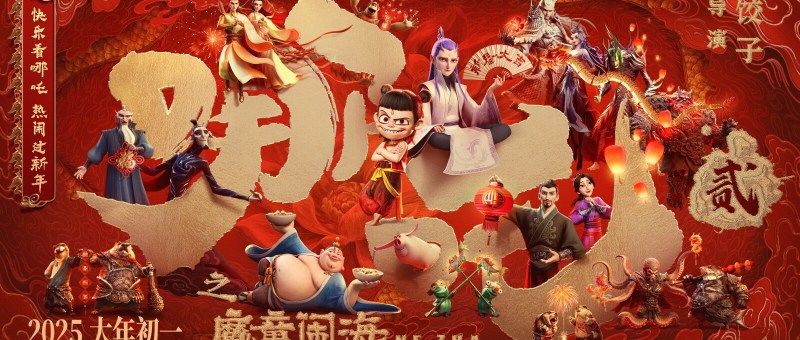
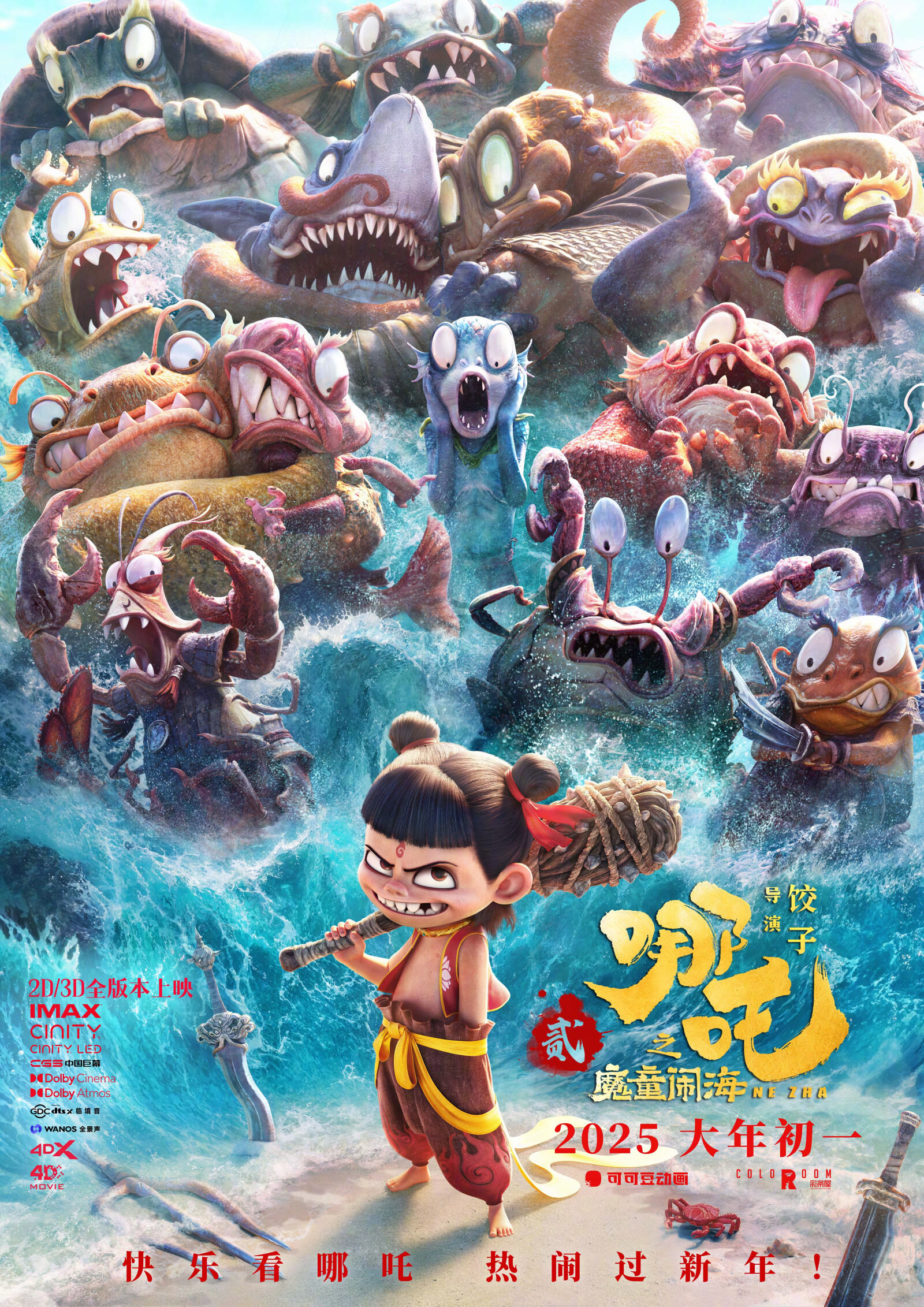
By the end of 2019’s smash hit animation Ne Zha, the titular hero (Lü Yanting) and his opposite number Ao Bing (Han Mo) had figured out that they were two halves of the same whole and were much better off fighting alongside instead of against each other, but even after getting their physical forms reconstituted with the help of a little lotus flour, they discover that the evil Shen Gongbao (Yang Wei) isn’t done yet. The first film may have been in its way subversive in the hero’s bold assertion that he will defy his fate and define his own identity, but Ne Zha 2 (哪吒之魔童闹海, Nézhā zhī Mó tóng nào hǎi) takes things a step further as Ne Zha comes to discover that not even the Heavens are free of corruption or prejudice.

Indeed, it’s this idea of prejudice which lies at the heart of the film for even if Ne Zha had won the hearts of the townspeople by saving Chentang Pass in the first film, he realises that there are some among the immortals who wish to erase all demon kind. The conclusion he eventually comes to is that demon and immortal are arbitrary terms used to control those who are different. He’s sick of hiding his demon nature and thinks it’s time he reveal himself to the world while fighting the injustice that’s taken over the Heavens in the Master’s absence. 

Meanwhile, his desire to break free of oppressive authoritarianism is symbolised in his breaking Wuliang’s (Wang Deshun) cauldron and freeing those inside who were otherwise to be turned into pills of immortality and fuel the heavenly economy. While he and Ao Bing resolve that the real enemies are those who bully the weak and bring evil to the world, the villains insist that siding with the strong is the only way. Ne Zha and Ao Bing’s response to this is to insist that if there is no place for them, they will create it for themselves and if they are not accepted they will change people’s minds. As they later say, they are young and have nothing to fear echoing a spirit of resistance among contemporary youth confronting an oppressive and authoritarian society.

Then again, a key feature of Ne Zha’s goodness is his love for his parents and desire to be a “good son” by traditional standards. It’s clear that even Ao Bing’s father the Dragon King of the East, Ao Guang (Li Nan / Yu Chen), acted only in the best interests of his son and has otherwise been framed by ambitious forces around him who decided they were better off entering a more active partnership with a corrupt authority rather than appease them by accepting their oppression. Even so, both sets of parents eventually tell their sons that they should now follow their own paths and do what they think is right. The world is no longer as was is when they were young, and they are not well equipped to understand these problems nor to solve them. If the Heavens are to be purified once again, it will be up to Ne Zha and Ao Bing to do it.

Aside from this more series and potentially subversive message about asserting one’s identity and challenging authoritarianism, the film has a lot of fun with its anachronistic worldview as drunken Taiyi Zhenren (Zhang Jiaming) struggles to remember the password to open the lotus before remembering he can use a fingerprint instead, while another villain later runs into a problem trying to open a door that works by face recognition because he’s sporting so many bruises and swellings after getting a beating from Ne Zha. He then realises he’ll have to wait another 10 years to try again because he cursed the technician for laughing at his ridiculously battered face. The film’s action sequences are also tremendously well animated and exciting as Ne Zha’s parents try to fight off the demon hordes which mainly consist of the “Monsters of the Abyss,” various sea creatures such as octopuses and sharks that were previously held in check by the Loongs but have now been set loose because of a dragon queen’s ambition. In any case, improving on the original the sequel maintains its quirky humour and charming worldview while doubling down on its surprising messages of acceptance and diversity as Ne Zha and Ao Bing prepare to forge their own paths and fight for justice to clear the Heavens of their corruption.


Ne Zha is in UK cinemas now courtesy of CineAsia.

UK trailer (English subtitles)

Chang’an (长安三万里, Xie Junwei & Zou Jing, 2023)

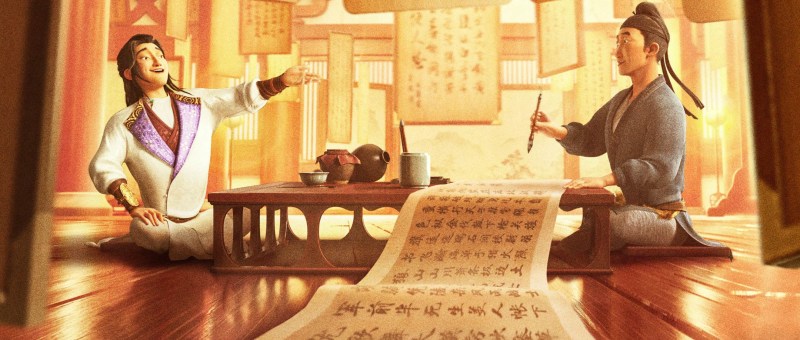
It’s a strange thought, in a way, that poetry could save a nation. In reality, it didn’t quite. The An Lushan rebellion significantly weakened the Tang dynasty and contributed to its rapid decline. Nevertheless, Tang was an era in which art, culture, and freedom of thought all flourished. Animated feature Chang’an (长安三万里, Cháng’ān Sānwànlǐ), named for the imperial capital of that time, attempts dramatise the era through the lives of its poets and the eyes of Gao Shi (Yang Tianxiang) reflecting on his youthful and often distant friendship with the legendary Li Bai (Ling Zhenhe) whose poems are still recited by the school children of today.

As the film opens, Gao Shi is an old man and embattled general staring down inevitable defeat at the hands of the invading Tubos emboldened by the weakening of borders following the failed An Lushan rebellion. But that’s not the reason he’s being visited by an imperial inspector who is far more interested in his relationship with Li Bai and the political importance it may have gained. Through this framing sequence, Geo Shi narrates the previous 40 years of history as he and Li Bai each age and take different paths in life while maintaining a distant if deeply felt friendship.

To that extent, Guo Shi is the earnest and practical son of a once noble house attempting to resurrect his family legacy, while Li Bai is a free spirited libertine attempting to overcome his lowly birth as the son of a wealthy merchant to gain government office through his skill as a poet. Then again, as future great poet Du Fu (Liu Jiaoyu / Sun Lulu) remarks, in this age poetry is something anyone can do and distinguishing oneself through it is no mean feat. It is however the only option for a man like Li Bai and the film in part seems to be an advocation for meritocracy in which those of ability would be free to prosper without needing to rely on social standing or personal connections. Despite the supposedly classless society of the modern day, this world may not yet have emerged. Another hopeful laments that she alone of her brothers inherited military skill yet as a woman there’s no door that is open to her to serve her country. 

Serving one’s country is the virtue that Gao Shi praises most highly and in effect his life’s purpose while Li Bai’s is more personal advancement and the perfection of his art. His poems are often melancholy and reflect on a sense of loneliness and longing for home, or else raucous celebrations of the art of drinking. Gao Shi does not approve of Li Bai’s party lifestyle and his debauchery later places a strain on their friendship. The film tacitly implies that this decadent behaviour is behind the decline of Tang, but also the reason that art and culture flourished amid a sense of destruction and despair. Having learned a few lessons in underhandedness from Li Bai, Geo Shi in effect restores order, albeit temporarily, through strategy and courage, while Li Bai first chooses isolation and then in its opposite after being pardoned for an apparently accidental and entirely thoughtless act of treason.

But what the film is keen to emphasise is the deep-seated friendship, or perhaps more, between the two men that makes the victory possible suggesting that a society needs both practicality and art to survive, not that Gao Shi was not a great poet himself if one well aware that Li Bai surpassed him in skill and keen support his success. Even so, as Gao Shi points out, a poet is not always an easy thing to be and in his old age those who once drank with Li Bai are either dead, one beaten to death at the age of 70, exiled or imprisoned. In a sense, both men achieve their aims if perhaps not in the way they intended. Gao restores his family name, and Li Bai finds a kind of immortality in his work that he otherwise failed to find spiritually in devoting himself to Taoism. The often beautifully rendered backgrounds capture a sense of a society on the brink of eclipse, such as the striking beauty of Gao Shi’s first entry to Yongzhou with its blossoming cherry trees lit by the warm light of lanterns under a full moon, only to turn to darkness on his return amid the twilight of the Tang dynasty. 


Dazzler Media presents Chang’an in UK and Irish cinemas from 28th February.

UK trailer (Mandarin with English subtitles)

The Umbrella Fairy (伞少女, Shen Jie, 2024) [Fantasia 2024]

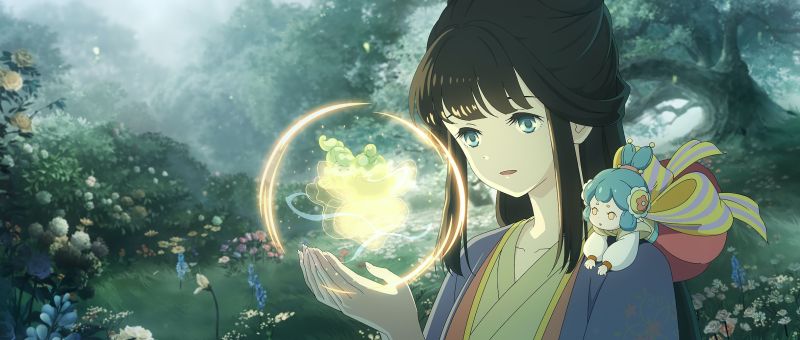
Should you be bound by the past or try to forge your own destiny? It might be an odd question seeing as the central thesis of Shen Jie’s gorgeously detailed animation The Umbrella Fairy (伞少女, sǎn shàonǚ) is that every object has a soul which has developed over its lifetime and often bound to whoever originally owned it. Though what these fairies, perhaps subversively, learn is that they have will of their and should not be bound by the desires of their former masters but are free to decide their destinies for themselves.

In typical folktale fashion, a block of black jade is split in two and used to create an umbrella, which implies protection, and sword which is itself somewhat cursed wreaking death and destruction where it is found. In our world, it seems that peace has prevailed but the princess has had to abdicate her kingdom meaning that she no longer feels fit to carry her most treasured possession, The Imperial Umbrella, and places it in a repository for relics along with the Sword. There a heartbroken Qingdai tries to get used to her new life among the similarly discarded fairies while fulfilling her former mistress’ orders that she should try to look after her sister Wanggui, spirit of the Black Sword. But Wanggui is hurt and vengeful. She resents the death of her former owner and vows revenge, threatening to plunge the nation back into chaos. 

Of course, the point of the sword and the umbrella is balance and the idea is they should work in work in harmony with neither in the ascendent. The vision of the outside world we get when Qingdai ventures off in search of the escaped Wanggui is of a wounded nation still trying to repair itself in much the same way as craftsmen Mo Yang attempts to repair the objects in the archive not so much restoring them to their former glory as adapting them for a new life. Yet we can see that objects are also a way for the living to mediate their sense of loss while embracing something that is permanent but not perhaps unchanging. Thus Qingdai and Mo Yang find themselves repairing a damaged flute the sound of which only brought pain to the Governor for it belonged to a musician who, again a little subversively, seems like he may have been more than a friend and gave his life in service of the Governor at the end of the war. Once repaired the flute has a different yet familiar sound and is passed on to a new owner to make with it what they will while accepting its legacy. 

In many ways it’s about taking the past with you, but also learning to let it go. The fairies think that they’re powerless. They can’t touch any solid objects and humans, even the ones they care so much about, cannot see them. But they do in fact have power and there are things they can do to shift the world, Qingdai’s unusual strength not withstanding. Under the guidance of Mo Yang, who becomes not quite a love interest but a kindred spirit, she begins to realise that she does have agency and is free to make her own decisions rathe than remain slavishly devoted to the desires of her former mistress. Wanggui perhaps learns something similar, rediscovering and redefining her purpose to determine to fight for something rather than flailing around in hurt and anger sowing the seeds of chaos wherever she goes. 

The again, the mystery villain is a cursed mirror who has centuries of pain in ironically being forever unseen for when people look into it they only wish to see themselves. Yet as Wanggui later says, there is something powerful in Qingdai’s surrounding herself with love while protecting all with her umbrella even if some in the outside world would be content to strip it for parts. Beautifully animated, the character design and aesthetic leans closer to Japanese anime than many recent Chinese animations which otherwise rooted themselves in cultural traditions such as ink painting and established mythology but otherwise spins a tale of learning to find oneself again in the wake of loss as a free spirit free from petty tyrannies and wider oppressions forever on your own journey fixing things as you go. 


The Umbrella Fairy screened as part of this year’s Fantasia International Film Festival.

Original trailer (no subtitles)

The Storm (大雨, Yang Zhigang, 2024)

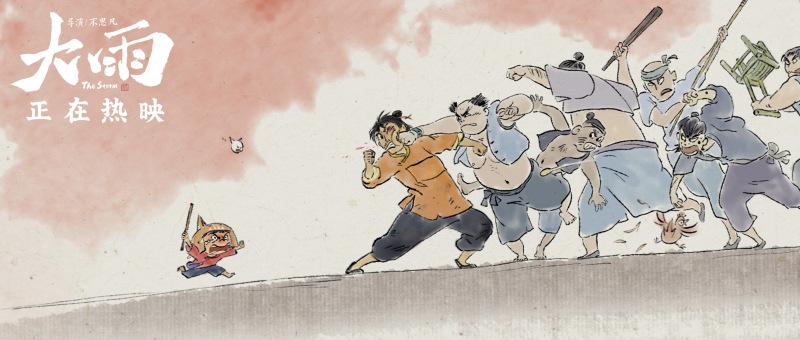
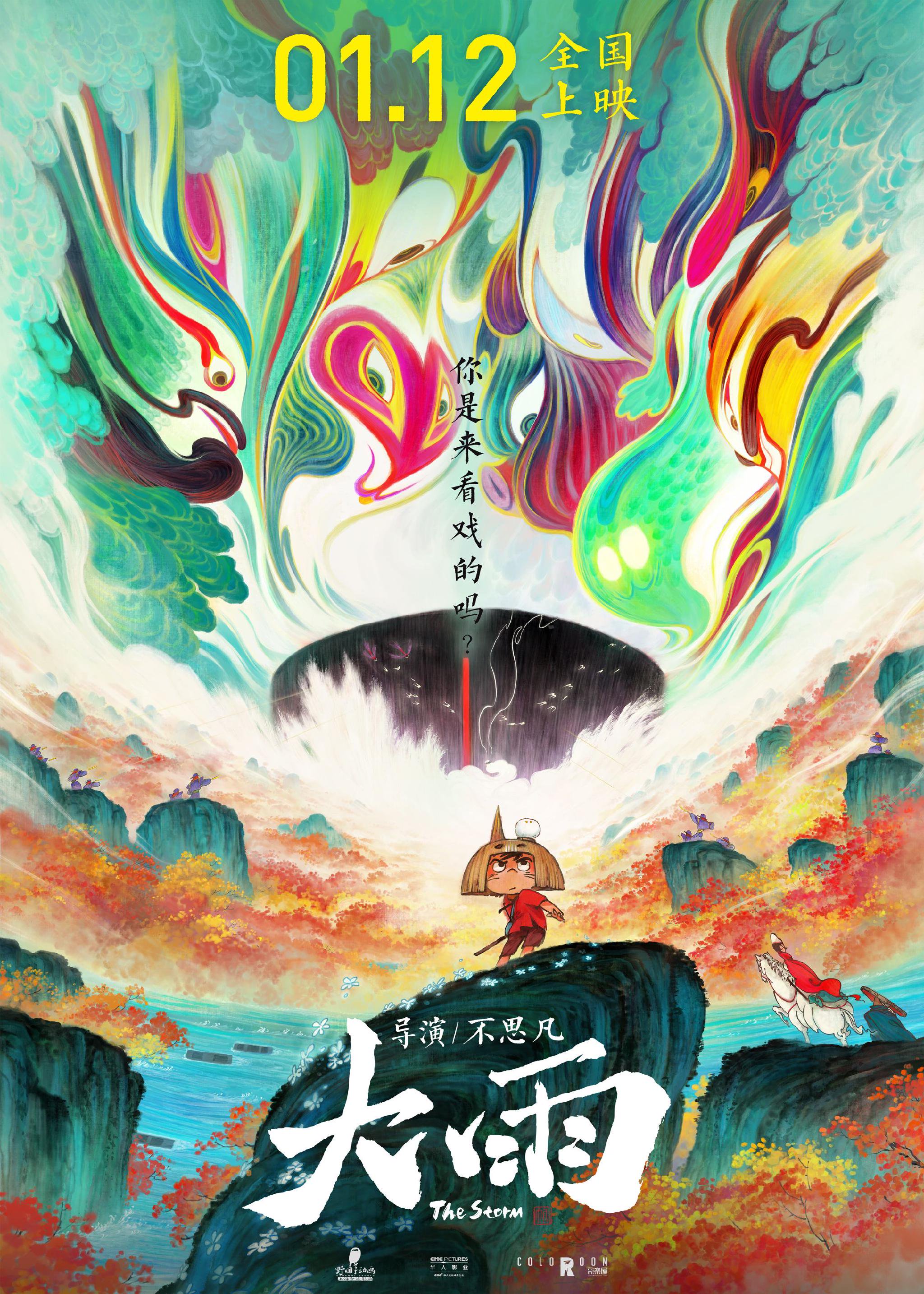
A cosmic storm is likened to the chaos of life in Busifan’s beautifully drawn but narratively obscure family animation, The Storm (大雨, dàyǔ). Set seemingly in a fantasy past which is also a kind of post-apocalyptic future in which mankind has ruined itself through greed, the film is at heart a kind of redemption story in which those left behind attempt to exorcise the negative emotions of the past and ease the destruction they have wrought by abandoning outdated ideas of wealth and status. 

The hero, Bun, is a young orphan adopted by the elusive Biggie who found him drifting down a river in a chest. Biggie decided to adopt the boy as his own but never allowed him to call him father while himself struggling the stigma of having been a criminal. Biggie sometimes leaves Bun on his own while he goes off to try and earn money to give him a better life and justifies his actions that everything he’s doing is only for Bun. Later in the film he expresses regret for “lying” to him, pretending the world was not so chaotic as is it is as the pair become embroiled in a supernatural curse while looking for the famed Nuralumin Satin said to be aboard a mysterious black ship filled with monsters. 

According to biggie, the Black Dragon Army hunting the Nuralumin birds into extinction led to an explosion in the jellyfish population while a prophesy states that the jellyfish will soon unite with another monstrous force during a cosmic storm becoming an awesome dragon that casts a shadow over the land. The ship itself seems to be a symbol of insatiable greed, a kind of floating marketplace in which people entered in search of riches but did not leave again. Inside, they became monsters devoid of all humanity and hungry only for material gain. 

The king’s own mother is said to have fallen victim to the curse, while his nephew also knew a troupe of opera singers who boarded the boat in search of an audience but have apparently lost their way. The spirits of the opera singers recount their plight, that as lowly entertainers they were only ever looked down on and abused no matter if they entertained the king himself and all his other royals. That they fell victim to the curse seems to be a condemnation of outdated ideas about social class and the stigmatisation of a profession, while Biggie’s fate seems to imply something similar. No matter how much he tried to turn himself around and be a good father to Bun, the world continued to reject him and he was left only with crime as a means to support himself. That’s one reason he wants the Satin, so that Bun will be looked after for the rest of his life and they won’t have to debase themselves anymore. 

We can see that the area they live in which is close to the famed Dragon Bay where the Black Ship eventually resurfaces is rundown and abandoned perhaps itself because of the lore that surrounds the area. Even so, the backgrounds are gorgeously animated with flowers in full bloom and Bun making his way through colourful and lively vistas of rural beauty. Yet it’s just this beauty that mankind’s greed has destroyed in the Dragon Army’s senseless killing of the Numalurin birds for which their guardian tribe has never forgiven them. Only the return of these birds and the giant deity that protects them can help end the curse, restoring the proper balance to the land in which the jellyfish are kept in check and the dragon cannot be formed. 

It has to be said that narratively the film is incredibly confusing and difficult to follow, at least for viewers who do not speak Mandarin. Nevertheless, what shines through is Bun’s redemptive power as he desperately tries to rescue Biggie from his own worst impulses, his greed and desperation in being drawn to the black ship like moth to a flame and in danger of being turned into one of the monsters. Constantly accompanied by round ball of fluff he encounters several other cute creatures while otherwise guided by a handsome young man who seems to be made of cloud while his wish that he really could stop Biggie from leaving by treading on his shadow might in an odd way come true. Boundlessly inventive, the film’s ideas sometimes get ahead of itself but are more than made up for in the unshowy beauty of its fantasy world. 


International trailer (Simplified Chinese / English subtitles)

Deep Sea (深海, Tian Xiaopeng, 2023) [Fantasia 2023]

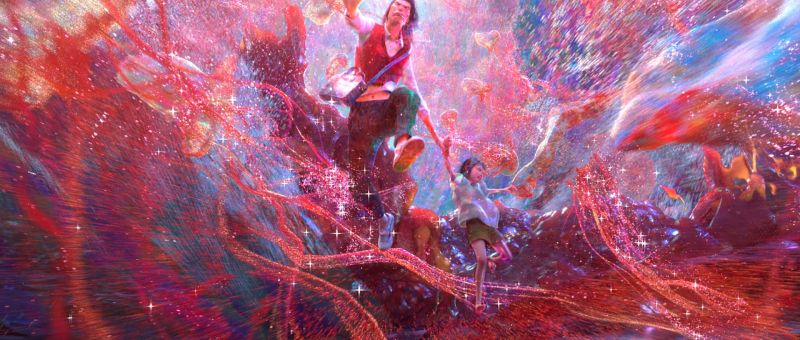
“For you who passed through the darkness” runs a dedicatory title card at the conclusion of Tian Xiaopeng’s stunning animated drama, Deep Sea (深海, Shēn Hǎi). Aimed squarely at younger audiences, the film is an exploration of depression and despair as the young heroine is plunged into a dark sea feeling that her life has no value but there encounters a fantastical world of colour and light while chasing the ghost of the mother who abandoned her.

As if to signify her loneliness, the film opens in a blizzard in which Shenxiu (Wang Tingwen) desperately searches for her mother only for her shadow to turn into a strange, many eyed monster. Back in the “real” world, she’s off on a family holiday with her father, his new wife, and their baby son, the family of three sitting in front while she remains behind on her own wearing the red hoodie that once belonged to her mother. About to get on a boat for a six-day cruise, she drafts a message to her mother about how excited she is to see the ocean but then scrolls back up and remembers all the times her mother didn’t reply and the times she did to tell her she’s busy and wishes Shenxiu wouldn’t contact her if it isn’t urgent. She deletes the message and rejoins her family but they’re so busy fussing over the baby that they don’t have time for her either and in fact seem to have forgotten that today is her birthday.

Venturing out on the deck in a storm, Shenxiu is sucked into a tornado in which she sees the outline of her mother and meets a strange sea creature, Hijinx, from a story her mother had told her believing that it has come to guide her to where her mother is living. Before too long she arrives at a bizarre floating restaurant where aquatic creatures go to eat run by “avant-garde” chef Nanhe (Su Xin). In some ways, Nanhe comes to represent her mother in that he first rejects her, insisting that she’s bad luck and kicking her out but later takes her back and tries to make her happy in an effort to stave off the “Red Phantom” that threatens to consume her, taking on the form of her mother’s red hoodie in which she attempts to bury herself as a symbol of her loneliness and despair. 

Beautifully animated, the world of the restaurant is a silkpunk paradise of chaotic action, part pirate ship and part fantastical submarine powered by walruses on stationery bicycles. Tian Xiaopeng makes fantastic use of the projector screen to illuminate Shenxiu’s fantasies, neatly including a cartoon within the cartoon in a more traditional 2D style while otherwise reflecting Nanhe’s broken dreams for a homeland he says he can never return to. Shenxiu too shifts between alternate “realities”, experiencing brief flashbacks to happy memories of her mother and others of less happy times as she’s sent for counselling by a school concerned she seems withdrawn only to be told the solution is to smile more so she’ll fit in better encouraging her to bury herself and her feelings under an affected facade of cheerfulness for the comfort of others.  

Nanhe’s final acceptance of her comes when he tells he that he hopes all her future smiles will be from the heart unlike the clown face he sometimes wears with its eerie, false grin intended to ward off other people’s discomfort but largely masking pain in himself. He also tells her that though the “real” world may seem grey and miserable in comparison to the dazzling colour of her dreams, there will bright moments waiting for her that no matter how small are worth living for. It might seem a heavy message to deliver to small children, but also one that some may sadly need to hear. Tian opts for a more realistic conclusion than many might expect in which Shenxiu but nevertheless allows her to punch through her loneliness and despair into a happier existence bonding with her stepmother and seemingly better integrated into her family no longer feeling excluded or alone. Absolutely breathtaking in its execution, Tian’s incredibly rich fantasy world is a riot of whimsy but also tempered by a deep empathy and compassion for anyone who’s battled their way through a dark sea. 


Deep Sea screened as part of this year’s Fantasia International Film Festival.

Original trailer (English subtitles)

Art College 1994 (艺术学院, Liu Jian, 2023)

In the opening title sequence of Liu Jian’s animated dramedy Art College 1994 (艺术学院, yìshùxuéyuàn), a beetle tries to climb a decaying wall but repeatedly fails until it falls on its back and flails wildly trying to right itself. It might in a way stand in for Liu’s protagonists, each of whom are floundering in various ways amid the contradictions of the rapid social changes of mid-90s China. A potent sense of place lends weight to what is obviously an autobiographically inspired tale of youth’s end coloured by rueful nostalgia. 

The rebellious Xiaojun clashes with his tutors who think he’s overly influenced by Western art movements and lacks the maturity to understand that there is also truth in traditionalism, while his best friend Rabbit begins to worry about more practical matters and their future in a changing society. The boys eventually develop a friendship with music students Lili and Hong who find themselves similarly at odds. Brash and brimming with false confidence, Hong dreams of becoming a famous opera singer and resents the patriarchal social mores of a still conservative China. “Sooner or later we all have to marry someone.” Lili sighs as if feeling the walls closing in on her, only for Hong to ask why no one ever realises they’re “someone” too. 

They have grand conversations about the nature of art, beauty, tradition and modernity, conservatism and social change, belying their naivety but still filled with a sense of freedom and curiosity that is only beginning to be coloured by a concurrent anxiety. “I thought I knew everything. The truth is I know nothing.” Hong finally concedes after a failed romance, arguing with Lili with whom she may always have been on a different page. Shy and bespectacled, Lili is a realist amid a group of dreamers. She nurses a nascent crush on Xiaojun but is courted by a condescending bore who comes with her mother’s approval. Perhaps she’s merely afraid of the risks involved when real feeling is in play, but for all her talk of “freedom” makes her choices intellectually and leans towards the pragmatic. Xiaojun is a penniless painter, but her suitor is a wealthy man who can take her to Paris to study. Amid the contradictions of mid-90s China, who could really blame her for making a “sensible” choice even it means the sacrifice of her emotional fulfilment? 

Xiaojun lets his chance slip away from him, failing to say anything meaningful before revealing he’s going away on a study trip for an extended period of time. But like Lili he meditates on art and the soul while romanticising a poverty he may never really have experienced. The boys hang out with eccentric drifter Youcai who repeatedly failed the entrance exams but hangs around on campus anyway soaking up the atmosphere while prone to sudden attacks of performance art. After a stint living in the artist community in Beijing he returns in the company of crooks and conmen, working as a sign painter to get by while lamenting his own lack of talent. He says he makes money in order to make art, while Xiaojun disapproves of his moral duplicity insisting that it’s right for an artist to be starving because suffering fosters art.

Youcai asks him how you can make art if you can’t eat while insisting that art is one big business, just like everything else it too is suspect because it is dependent on money. Xiaojun disagrees, claiming that that art is the only escape from reality that can bring people spiritual satisfaction. Ironically enough, he says this while sitting directly underneath a billboard advertising Michael Jackson’s Bad, while we’ve already seen him ride his bicycle past a conspicuous piece of graffiti featuring the characters for CocaCola in Chinese. When Lili’s suitor says he’ll buy them dinner, Liu ironically cuts to the two girls sitting outside a McDonald’s eating ice cream. This does seem to be a very dubious sense of “modernity”, mediated through Western consumerism that in contrast to the values Xiaojun places in “art” is spiritually empty. 

Even so his disapproving teacher reminds him that great art is born of sincerity, hinting at a degree of affectation in his insistence that art should change with the times when not all truths need to be revolutionary. In any case, each of the students learns a few hard lessons about life and disappointment as they too succumb to unavoidable realities and accustom themselves to an uncertain society. Liu ends the film with a series of title cards that feel very much like those often added to placate the censors, usually detailing that wrongdoers were caught and punished for their crimes but this time conjuring more wholesome futures for the students that undercut the sense of the frosty melancholy in the closing scenes which leave Xiaojun all alone as he takes up brush and ink. Yet in Liu’s achingly potent sense of place, there is both a poignant nostalgia and an inescapable sense of loss and regret for the missed opportunities of youth. 


Art College 1994 screened as part of this year’s Red Lotus Asian Film Festival.

Trailer (English subtitles)

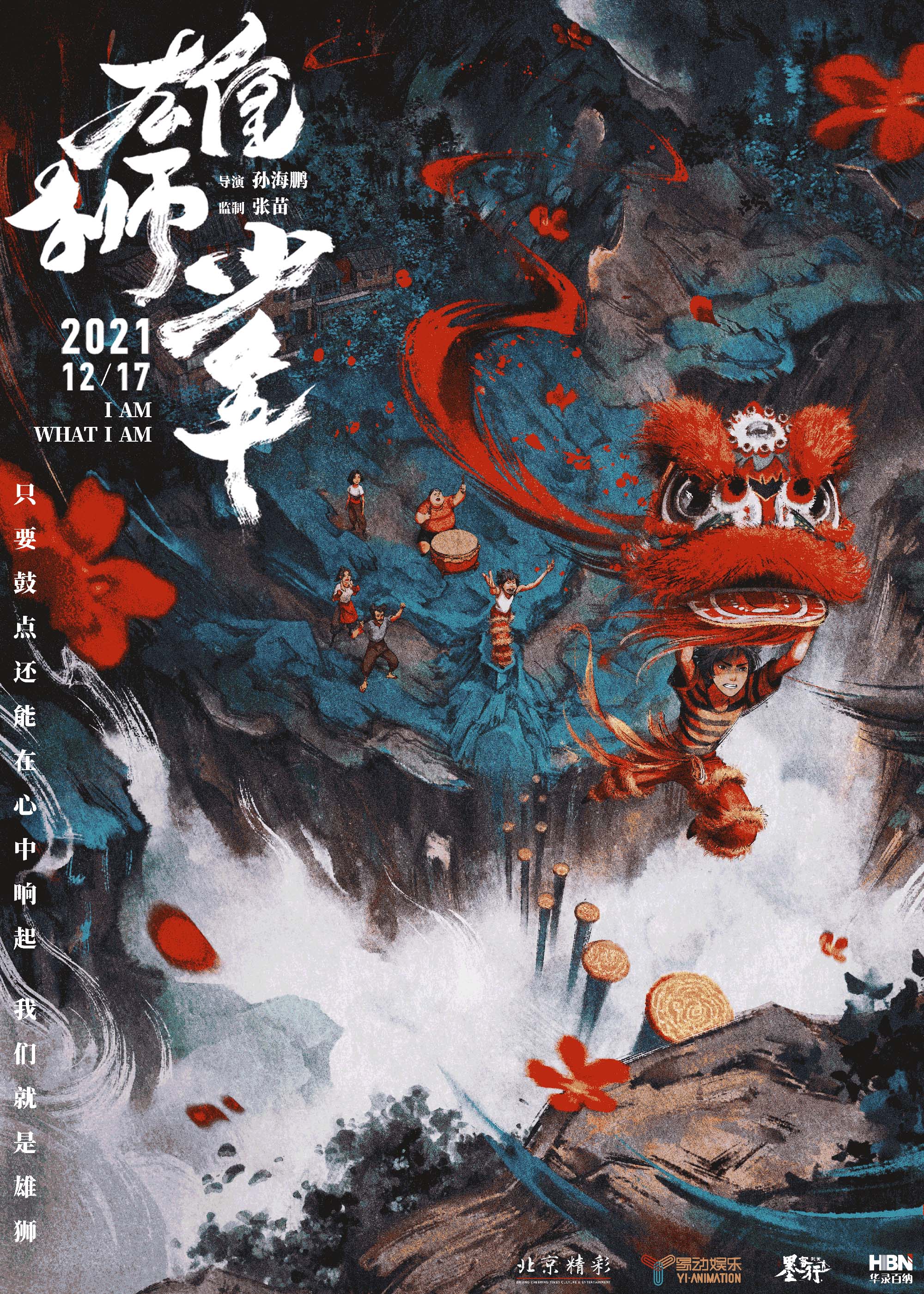
I Am What I Am (雄狮少年, Sun Haipeng, 2021)

A diffident young man learns to unleash the lion inside while battling the fierce inequality of the modern China in Sun Haipeng’s heartfelt family animation, I Am What I Am (雄狮少年, xióngshī shàonián). With its beautifully animated opening and closing sequences inspired by classic ink painting and the enormously detailed, painterly backgrounds, the film is at once a celebration of tradition and advocation for seizing the moment, continuing to believe that miracles really are possible even for ordinary people no matter how hopeless it may seem. 

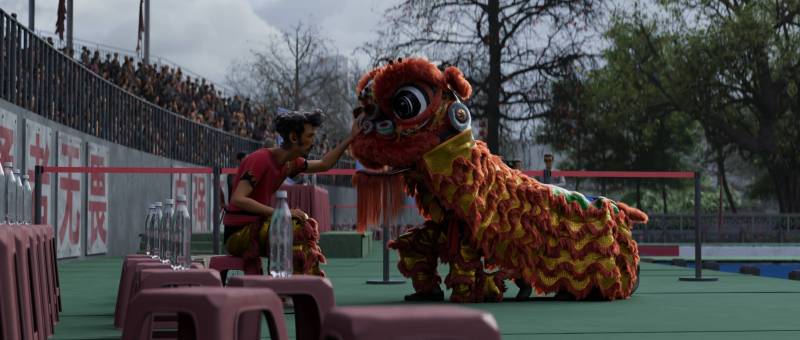
The hero, Gyun (Li Xin), is a left behind child cared for by his elderly grandfather and it seems regarded as a good for nothing by most of the local community. Relentlessly bullied by a well built neighbour who is also a talented lion dancer, Gyun finds it impossible to stand up for himself but is given fresh hope by a young woman who makes a dramatic entrance into the village’s lion dance competition and later gifts him her lion head telling him to listen to the roar in his heart. 

The young woman is presented as an almost spiritual figure embodying the lion dance itself, yet later reveals that her family were against her practicing the traditional art because she is female exposing the persistent sexism at the heart of the contemporary society. Gyun’s heart is indeed roaring, desperately missing his parents who were forced to travel to the city to find work while leaving him behind in the country hoping to earn enough for his college education. Part of the reason he wants to master the art of the lion dance is so that he can travel to the city where his parents can see him compete, while privately like his friends Kat and Doggie he may despair for his lack of options stuck in his small hometown. 

But even in small towns there are masters of art as the boys discover when directed to a small dried fish store in search of a once famous lion dancer. Perhaps the guy selling grain at the market is a master poet, or the local fisherman a talented calligrapher, genius often lies in unexpected places. Now 45, Qiang (Li Meng) is a henpecked husband who seems to have had the life-force knocked out of him after being forced to give up lion dancing in order to earn money to support his family, but as the film is keen to point out it’s never really too late to chase a dream. After agreeing to coach the boys, Qiang begins to reclaim his sense of confidence and possibility with even his wife reflecting that she’s sorry she made him give up a part of himself all those years ago. 

Then again, Gyun faces a series of setbacks not least when he’s forced to travel to the city himself in search of work to support his family taking his lion mask with him but only as an awkward burden reminding him of all he’s sacrificing. Taking every job that comes, he lives in a series of squalid dorms and gradually begins to lose the sense of hope the lion mask granted him under the crushing impossibility of a life of casual labour.  The final pole on the lion dance course is there, according to the judges, to remind contestants that there are miracles which cannot be achieved and that there will always be an unreachable peak that is simply beyond them. But as Gyun discovers sometimes miracles really do happen though only when it stops being a competition and becomes more of a collective liberation born of mutual support. 

In the end, Gyun can’t exactly overcome the vagaries of the contemporary society, still stuck in a crushing cycle of poverty marked by poor living conditions and exploitative employment, but he has at least learned to listen to himself roar while reconnecting with his family and forming new ones with friends and fellow lion dancers. While most Chinese animation has drawn inspiration from classic tales and legends, I Am What I Am roots itself firmly in the present day yet with its beautifully drawn backgrounds of verdant red forests lends itself a mythic quality while simultaneously insisting that even in the “real” world miracles can happen even for lowly village boys like Gyun when they take charge of their destiny not only standing up for themselves but for others too.


I Am What I Am screens in Chicago on Sept. 10 as the opening movie of Asian Pop-Up Cinema season 15.

Original trailer (English subtitles)
Boonie Bears: Back to Earth (熊出没·重返地球, Lin Huida, 2022)

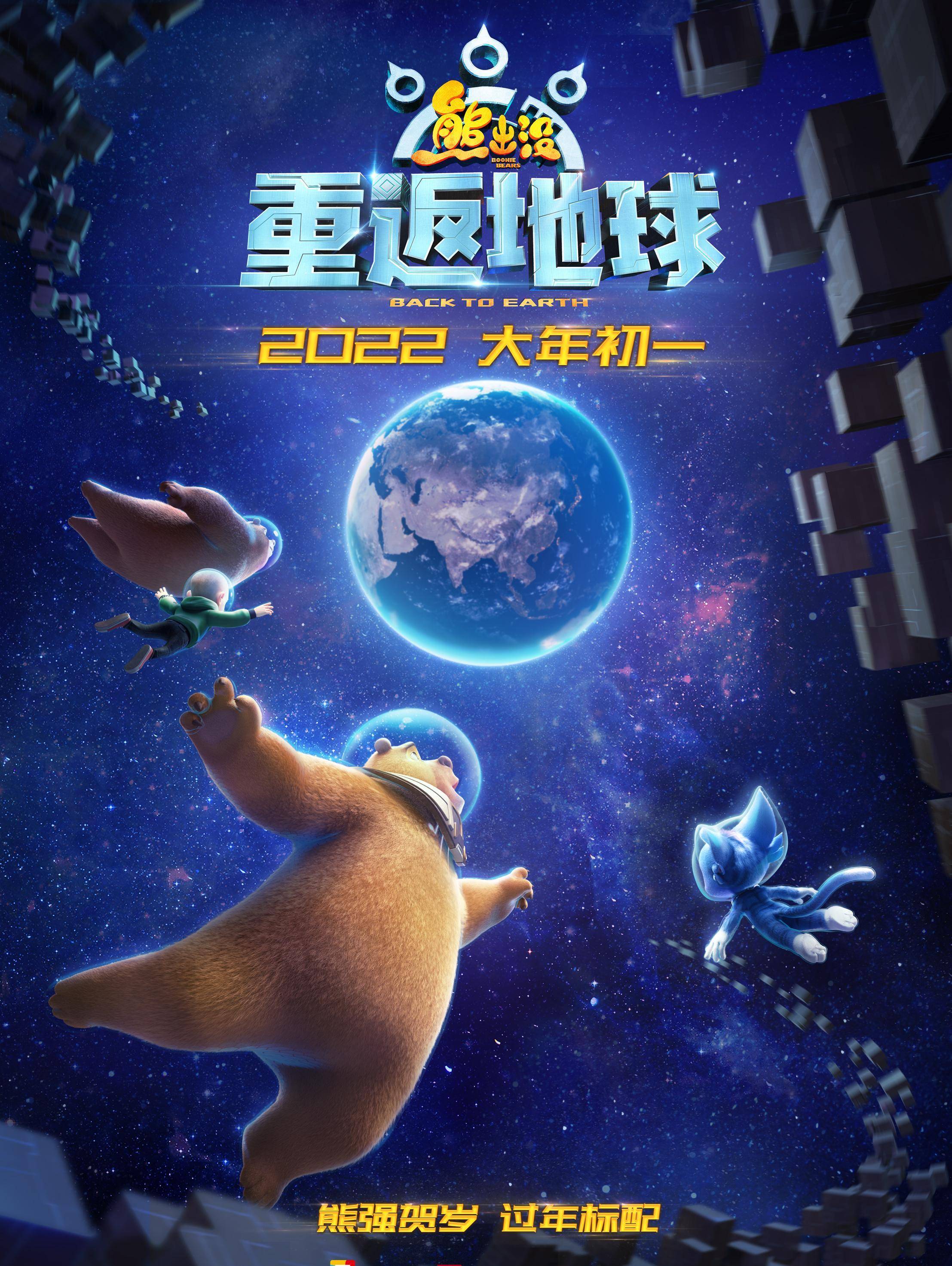
One of the biggest animation franchises in Mainland China, Boonie Bears began airing as a children’s cartoon show back in 2012 and has produced over 600 episodes across 10 seasons. The latest movie, Boonie Bears: Back to Earth (熊出没·重返地球, xióng chūmò: chóngfǎn dìqiú), is the franchise’s eighth theatrical movie and again proved popular at the box office on its Lunar New Year release. As might be expected for a series revolving around woodland creatures, the first antagonist was a logger who later came round and teamed up with the animals to protect the forest, the franchise has a strong if potentially subversive ecological theme which reverberates throughout Back to Earth. 

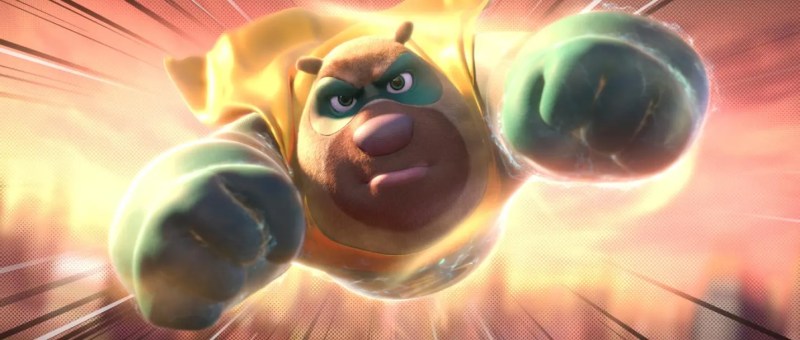
In fact, the chief job of unreliable younger brother bear Bramble (Zhang Bingjun) is sorting rubbish into the appropriate bins to keep the forest tidy. Daydreaming he casts himself as superhero battling a giant trash monster symbolising the destructive effects of the buy now pay later philosophy of the modern consumerist society. In any case Bramble’s cheerful days of chasing ice cream and just generally enjoying life in the forest are disrupted when he’s almost wiped out by bits of a falling spaceship and becomes the repository for all of its knowledge. This brings him to the attention of alien space cat Avi who needs his brain to locate his ship but is also being chased by a gang of nefarious criminals led by an amoral entrepreneur who wouldn’t let a little thing like the survival of the Earth interfere with her desires for untold wealth and power. 

As it turns out Avi also has a few lessons to offer as to the costs of irresponsible industrialisation having been born in an ultra-advanced cat society buried deep in the Earth’s core. The over mining of a valuable mineral soon destroyed the environment forcing the cats to flee into space looking for a new home. Avi hopes to return to his home city which lies abandoned as a kind of cat Atlantis accessible only with a valuable necklace which he needs Bramble’s help to retrieve. To begin with, the relationship between the pair is less than harmonious, though they soon bond in their shared quest to stop the evil corporate entities taking over the ancient technology and causing the death of the forest through their insatiable greed. 

Then again as one of the other creatures had put it, “you can’t rely on Bramble”, cross that he never pulls his weight and is always off in a daydream or chasing the next tasty treat. While Avi poses as an adorable kitten trying to convince Bramble to use his brain to help get the spaceship back, the others become even more disappointed in him believing that he’s taken against the cat out of jealously and resentment. Yet the lesson that everyone finally has to learn is that it doesn’t matter if Bramble isn’t the smartest or most hard working because he is strong and kind and has plenty to offer of his own. His gentle bear hug eventually saves the world in healing the villainess’ emotional pain so she no longer has any need to fill the void with cruel and ceaseless acquisition. 

Aside from the gentle messages of the importance of protecting the forest from the ravages of untapped capitalism, after all “this is our only homeland”, the film packs in a series of family-friendly gags including a surprising set piece in which Bramble dresses up as Marilyn Monroe to recreate the famous subway vent moment from The Seven Year Itch, while a pair of eccentric scrap merchants with a taste for rhyme provide additional comic relief. Even in the villains get a lengthy cabaret floorshow to mis-sell their evil mission to the guys from the forest belatedly coming to Bramble’s rescue. In any case, thanks to everyone’s support and encouragement Bramble finally gets to become the hero he always wanted to be proving that he’s not unreliable and even if he doesn’t always succeed is doing his best. Boasting high quality animation, genuinely funny gags, some incredibly catchy tunes and well choreographed musical sequences along with a warmhearted sense of sincerity, Boonie Bears: Back to Earth is another charming adventure for the much loved woodland gang.


Boonie Bears: Back to Earth is in UK cinemas from 27th May courtesy of The Media Pioneers (screening in a family-friendly English dub).

Original trailer (no subtitles)

The Monkey King: Reborn (西游记之再世妖王, Wang Yun Fei, 2021)

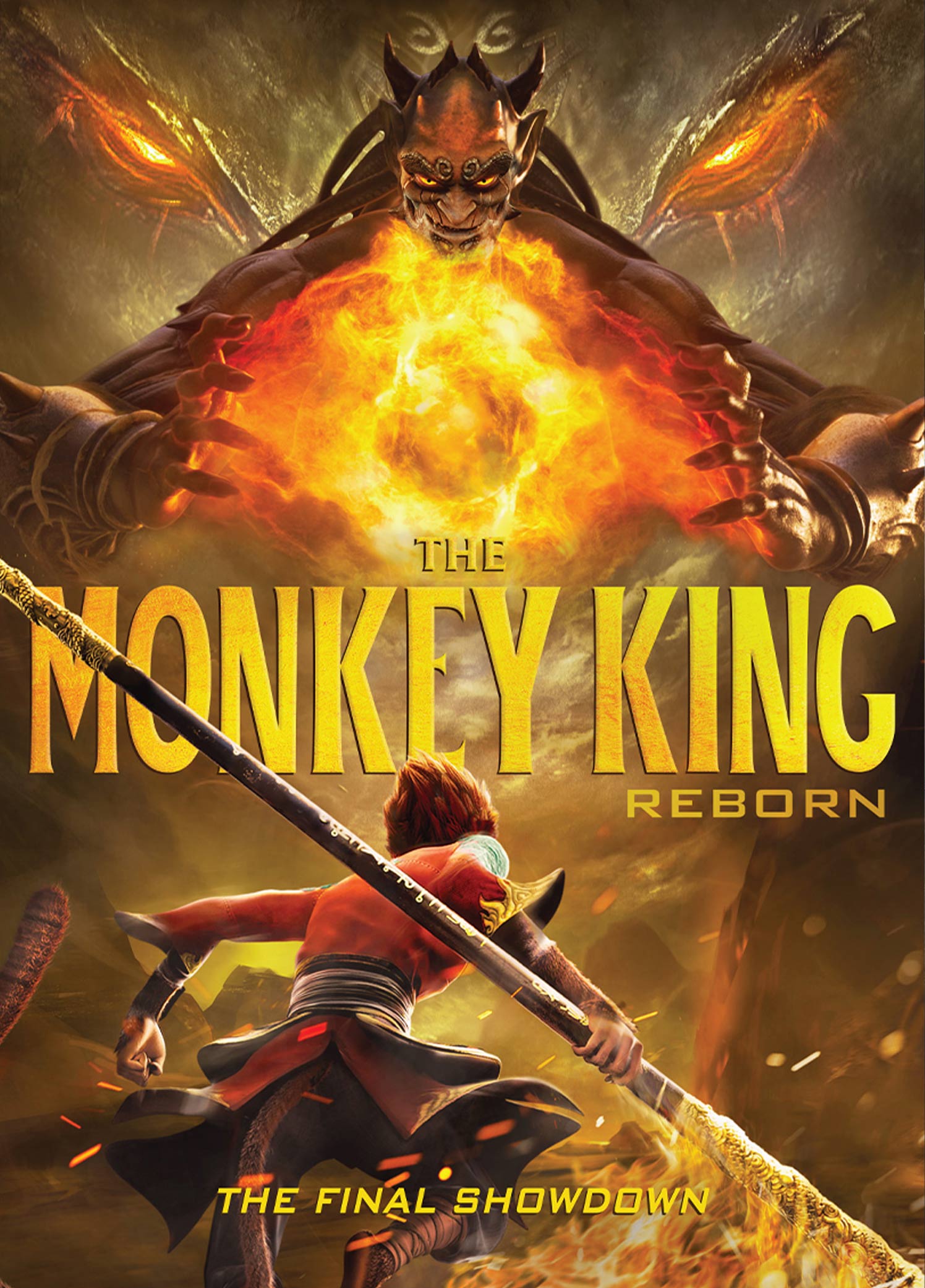
Sun Wukong comes to believe in his own soul while standing up to a cruel and oppressive reincarnated demon king intent on destroying the world in Wang Yun Fei’s anarchic family animation The Monkey King: Reborn (西游记之再世妖王, Xīyóujì zhī zài shì yāo Wáng). Reborn is in a sense also what Sun Wukong becomes in Wang’s defiantly egalitarian adventure which sees the regular crew from Journey to the West becoming temporary guardians to an adorable ball of anthropomorphised qi while The Great Sage Equal to Heaven contemplates what it is to be a “demon” and if he’s necessarily as “bad” or “evil” as some seem to believe him to be. 

As usual, Wukong (Bian Jiang) is travelling with the monk Tang Sanzang (Su Shangqing) and fellow demons Bajie (Zhang He) and Wujing (Lin Qiang) heading to India to retrieve Buddhist scriptures to bring back to China. On the way, they stop off at a temple where Wukong and his friends end up causing a ruckus by eating some of the temple’s treasured manfruit from a tree which only produces 30 every 1000 years. 1000 years doesn’t seem so long to Wukong so he thinks little of it but is later caught out by two snooty monks, grows indignant, and gets into a fight with an immortal eventually destroying the tree in temper only to realise that he’s accidentally released Yuandi (Zhang Lei), the ancestor of all the demons sealed within the tree thousands of years previously by a Buddhist monk who sacrificed all of his qi to do so. Threatened with being re-imprisoned himself and determined to rescue Tang who has been kidnapped, Wukong has no choice but to stop Yuandi before he reassumes his full strength in around three days time. 

Meanwhile, the trio is joined by a tiny manfruit-like ball of qi Wukong nicknames “Fruity” (Cai Haiting), originally reluctant to take him with them but advised that his qi is the best weapon against Yuandi. As the film opened, Wujing had been contemplating what it means to have a soul, Tang reassuring him that when he feels he has one it will be there. Following through on the egalitarian message, he later says something similar to Yuandi, certain that all sentient creatures are equal, but the moody Wukong remains sullen and resentful constantly insulted as an “evil” demon while internally convinced he can’t be anything else. Yet despite himself he takes on a paternal role while looking after Fruity who later explains to him that there are good demons and bad and that he has a kind soul. 

Yuandi by contrast merely rolls his eyes when most of his demon minions are cut down, lamenting that they had become weak and the weak do not deserve to live. In the process of searching for his own soul, it’s this cruel and oppressive worldview that Wukong and the others must finally resist, protecting Fruity while battling the darkness with the confidence of self knowledge as their best weapon. Meanwhile, it’s clear that the Buddhist world is not exactly free of corruption either, the two snooty monks instantly looking down on Tang ironically because of his unostentatious attire uncertain why they’re expected to share their treasure with someone so seemingly undeserving. Then again, when they’re sent off to petition the Jade Emperor quite the reverse is true as they’re kept waiting outside while heaven’s border guard painstakingly fills out paperwork in only the best calligraphy while insisting each petition should be treated impartially no matter who it comes from even though the monks had quite clearly expected to jump the queue. 

Selling a positive message of self-acceptance and universal equality The Monkey King: Reborn also boasts a series of thrilling and elegantly drawn action sequences as the trio face off against the forces of darkness, along with some zany humour and Wukong’s characteristically anarchic energy not to mention the unbelievably cute yet somehow profound Fruity who can’t bear all the senseless carnage and depletes himself to cure the innocent townspeople of their demonic corruption. In the end it’s not only Wukong who is reborn as he realises that nothing’s ever really gone forever, just altered in form, while it is possible to repair damage done with humility leveraging the power of self-acceptance against a dark and selfish desire for destruction. 


The Monkey King: Reborn is released in the US on DVD & blu-ray Dec. 7 courtesy of Well Go USA in an edition which includes both the original Mandarin-language voice track with English subtitles and an English dub.

Lotus Lantern (宝莲灯, Chang Guangxi, 1999)

“I only want to have a normal life” a wronged woman complains on discovering that it’s almost impossible to escape the tyranny of the celestial realm and most particularly if you are a goddess. Released in 1999, Lotus Lantern (宝莲灯, Băo Lián Dēng) apparently took over four years to produce requiring 150,000 animation cells and 2000 painted backgrounds, and like much of the Shanghai Animation Film Studio’s output is inspired by a well-known folktale celebrating filial love and in fact featuring the Monkey King himself in a small role. Unlike the studio’s earlier work however and despite its roots in Chinese folklore, Lotus Lantern perhaps owes much more to Disney’s ‘90s renaissance than it does to the nation’s animation history. 

Animated in a classic 4:3, the tale opens with a voiceover as a scarf elegantly falls to Earth and into the arms of a young man. Defying her brother Yang Jian’s (Jiang Wen) wishes, the goddess Sanshengmu (Xu Fan) has chosen to leave the realm of the immortals to be with the man she loves taking the famed Lotus Lantern with her in an attempt to evade his control. He however finds her and attacks the pair with his eye lasers. Sanshengmu’s lover is killed but she gives birth to a son, Chenxiang (at 7: Yu Pengfei / at 14: Yang Shuo), and lives happily with him in the mortal realm for seven years until the flame in the Lotus Lantern is extinguished allowing Yang Jian to track her down and kidnap Chenxiang to force her to return. She tries to bargain with her brother but as she later puts it Heaven Temple lacks compassion and so he imprisons her underneath a mountain and tells Chenxiang his mother is dead. Chenxiang does not believe him and is determined to get the Lotus Lantern back, especially after a cryptic visit from the God of Land hints the same fate as befell the Monkey King, who has since become a Buddha, may have befallen his mother. 

First and foremost a tale of filial love and devotion, Lotus Lantern is also another subversively anti-authoritarian rebuke against heartless celestial tyranny. We learn than Sanshengmu’s mother also loved a mortal, yet her brother refuses to forgive her for this apparent transgression against the law of heaven, burying her under a mountain while vowing to raise her son as his own in accordance with filial piety. Meanwhile, he’s also quietly terrorising a community of non-Han Chinese trying to force them to carve a colossal statue of him by kidnapping the chief’s daughter Ga Mei (Ning Jing) and keeping her in Heaven Temple as a maid. Yet Yang Jian isn’t the only problem. The God of Land tells Chenxiang to seek out the Monkey King (Chen Peisi) for advice on busting out of a mountain, but now that he’s become a Buddha Sun Wukong has no interest in helping. Indifferent to all things, he believes suffering is a path to enlightenment and sees no reason to help Chenxiang alleviate his by showing him how to rescue his mother. 

Then again, the mortal world’s not much better. The first person Chenxiang meets on his quest turns out to be a dodgy priest who claims he knows where to find the Monkey King and can even help Chenxiang with his training but predictably ends up kidnapping his pet monkey and exploiting it as part of a fairground act even members of the crowd complain is cruel and distasteful. Nevertheless, after reuniting with his monkey buddy Chenxiang trudges on looking for a way to release his mother from under the mountain, finally moving the Monkey King by needling him about his own sense of maternal abandonment in his apparently parentless genesis. In this unsteady world, it seems to say, the only true thing is a boy’s love for his mother though a conflict perhaps arises after another seven year jump reunites Chenxiang with Ga Mei who has been returned to her tribe and probably should be his love interest if he were not currently fixated on his filiality. 

Yet as the disembodied voice of his mother reminds him, only by embracing true love which is what Heaven Temple lacks can Chenxiang finally defeat it. Borrowing heavily from Western animation and particularly from classic Disney, Lotus Lantern may in some senses seem old fashioned even for 1999 in its still frame pans and unconvincing effects, but perhaps reflects a desire to take Hollywood on at its own game as the studio found itself needing to commercialise its output especially in its series of musical montages featuring a contemporary pop songs performed by top Mandopop stars while the faces of the A-list voice acting cast are also showcased during the end credits. The approach apparently paid off, Lotus Lantern proved a huge domestic hit and is credited with reinvigorating the Chinese animation industry which had gone into decline in the market-orientated ‘90s. Complete with adorable monkey sidekick there’s certainly no doubting its mass appeal in its warmhearted, family-friendly take on filial devotion.


Lotus Lantern is currently available to stream in the UK as part of the Chinese Cinema Season.