
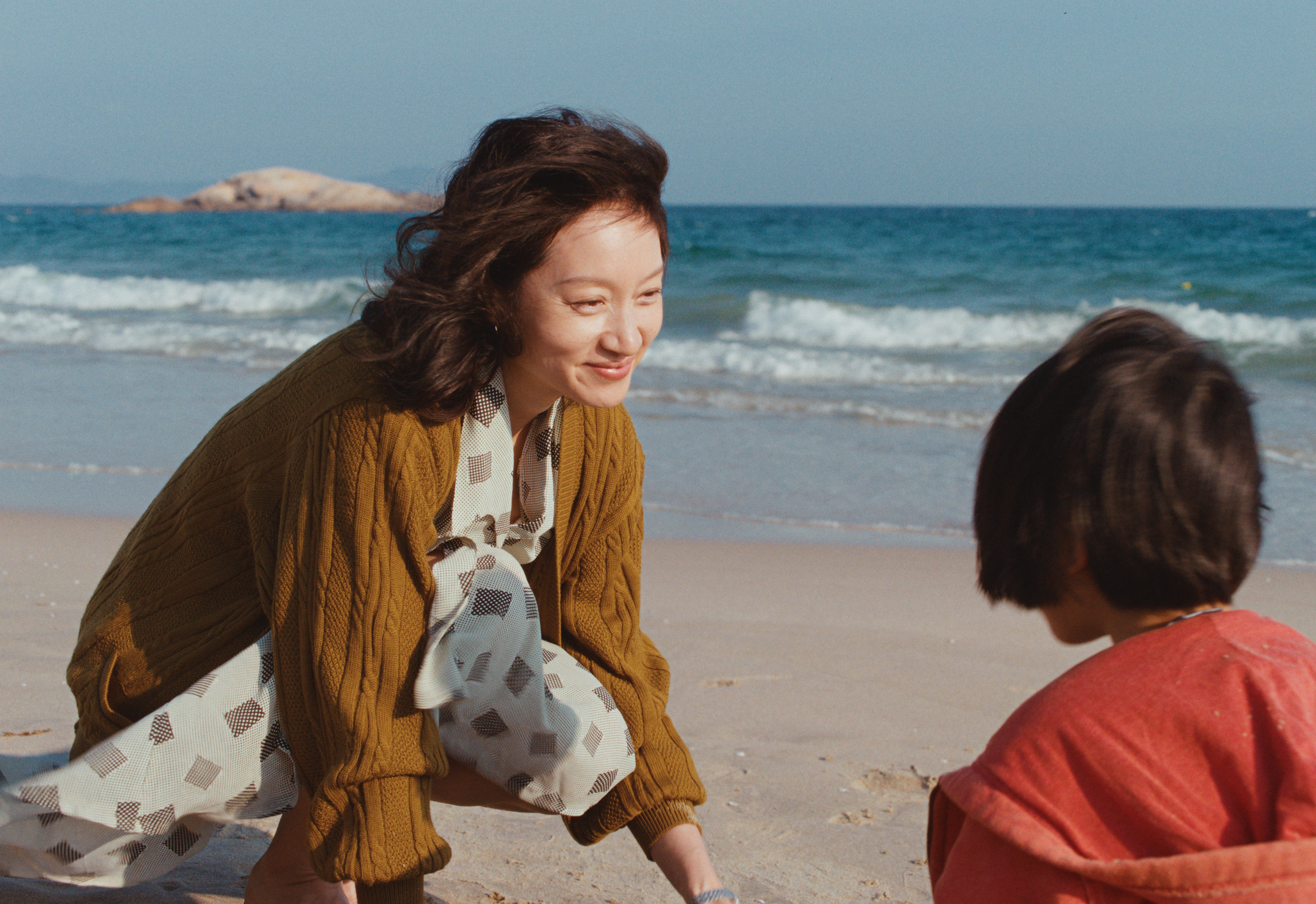
A young woman finds herself continually displaced in the wake of China’s One Child Policy in Zou Jing’s empathetic drama, A Girl Unknown (无名女孩, wúmíng nǚhái). Dedicated to the director’s grandmother, the film sees its heroine pass through three different identities while struggling to find a place for herself and carrying both the trauma of continual abandonment and a sense of hopeless worthlessness that she will never feel loved or wanted but always asked to be grateful for what little she has.
Lin Juan’s first displacement echoes the growing urbanisation and industrialisation of the nation as she’s taken away from her idyllic rural childhood and sent to live with strangers in the city following her father’s sudden death and her mother’s subsequent relationship with another man. It’s clear that Mr Li does not want to accept Juan, but also that her mother A-Hui has few options other than remarriage for economic support. She first considers leaving Juan at a temple, but reconsiders and tries to persuade Mr Li. When she becomes pregnant with his child, however, it becomes clear that she cannot keep Juan and decides to have her adopted by a seemingly childless middle-aged couple in the city.
No one really explains this to Juan who has no idea that she’s been abandoned. Her adoptive mother Meishuang (Shen Jiani) at first reassures her that her mother will return at the end of the summer holidays while somehow hoping that Juan will get used to living there and stop asking to be taken home. For reasons which later become clear, Meishuang is operating under a maternal fantasy without really considering how difficult it might be to adopt a child of Juan’s age nor how traumatic this displacement may be for her. Meishuang’s husband Wieqiang (Zu Feng) is also not happy about the arrangement and hostile toward to Juan, irritated by her “hillbilly name” and by her presence in their home. At school, meanwhile, she’s bullied by the other children who make fun of her for having come from the country, though it’s Juan who gets into trouble for fighting back.
Meishuang is, however, kind to Juan and tries to treat her with maternal affection only it isn’t the kind that Juan wants, nor is Juan really the daughter she wanted. Later we come to Juan’s adoption is also, in its way, a result of the One Child Policy, though it appears that she was abandoned once before simply by virtue of being a second daughter born to a family who wanted to hold out for a son. Her birth family tries to reclaim her, but their home is full of photos of the other two siblings who seem to have a close bond while there are obviously none of her. Their home is full of absence, and though they may be related by blood, they are still strangers to each other. Once again she is expected to live up to someone else’s idealised image of a longed for daughter while largely denied a sense of self or a chance to define her own identity.
While her birth family appear to have become wealthy, Meishuang and Weiqiang are struggling under the economic pressures of the changing ‘90s economy with Weiqiang eventually laid off and made dependent on an old colleague who, unbeknownst to them, sexually abuses Juan partly because he sees her as someone of little consequence owing to being an adopted child. The pain of being unable to speak about what’s happened to her further fuels her resentment and low sense of self-worth believing that she will never be anything more than a disappointing substitute to her adoptive parents.
After running away and getting a job in a textiles factory, Juan, now going by the name Lian (Li Gengxi), becomes friends with a slightly older woman who is saving money to open a shop in her hometown. Her new friend, however, becomes the subject gossip as the other girls believe she is sleeping with the foreman to get ahead, but in reality the foreman is sexuality exploiting her. Despite her own experience, Juan rejects her too leading to tragic consequences that bear out the ways in which women’s lives have little currency in this oppressively patriarchal social structure. Juan lives under three different names, but in other ways women are seen to be almost interchangeable while Juan herself has no concrete identity. She has, however, perhaps undergone a kind of rebirth and in having uncovered and bared all that was hidden found her way back to herself and a future that is of her own choosing.
A Girl Unknown screens 9th/11th October as part of this year’s BFI London Film Festival.
Clip (English subtitles)