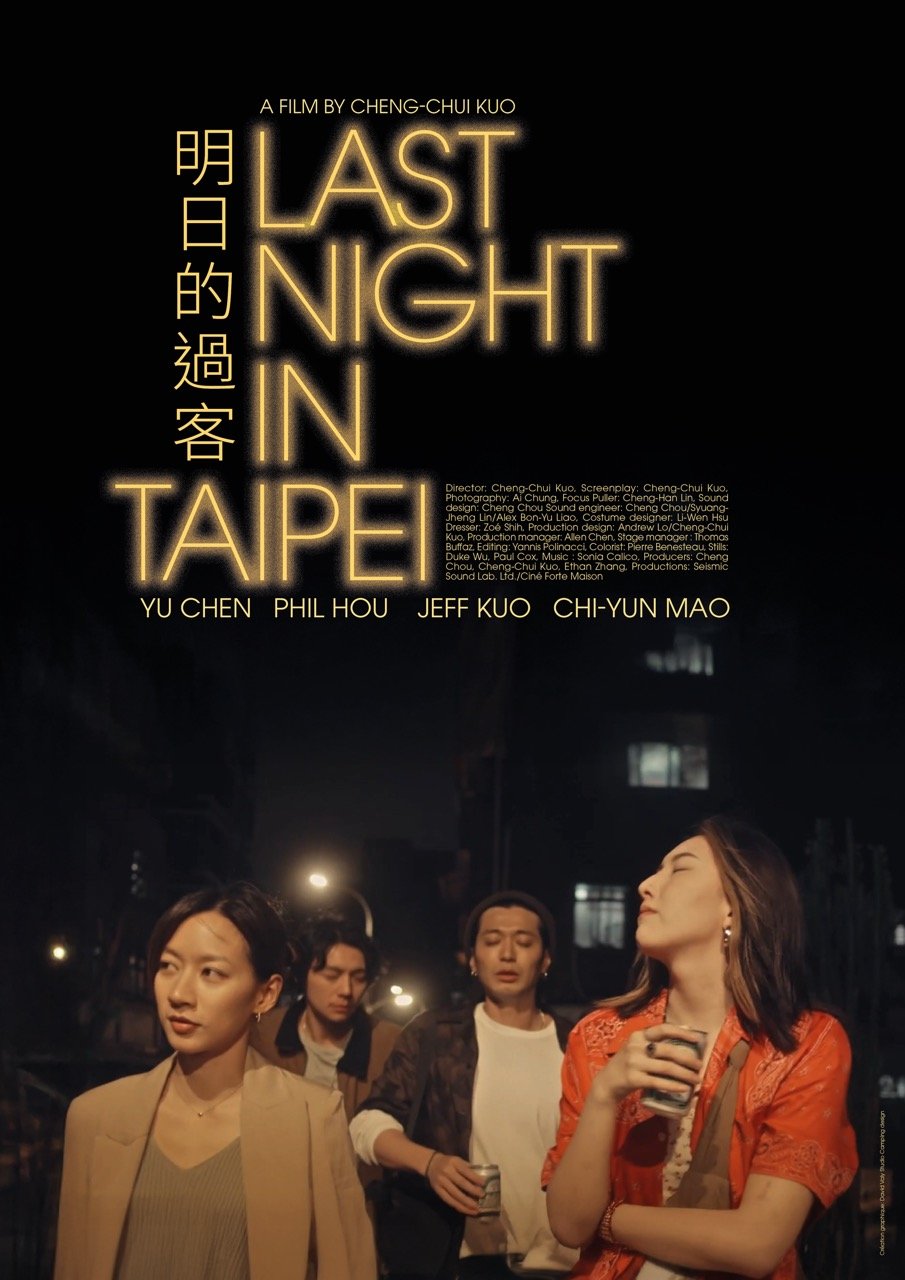
Last Night in Taipei (明日的過客, Kuo Cheng-chui, 2025)

Three old friends who haven’t seen each other in years are forced to confront the reality of their lives after a chance encounter in Kuo Cheng-chui’s Last Night in Taipei (明日的過客, míngrì dì guòkè). Less an odyssey through the midnight city, the film is really more about finding accommodation with a sense of middle-aged regret and letting go of what might have been, though it does not necessarily seem that any of them are really happier after dealing with their unresolved feelings.

Blanche’s marriage has begun to turn cold owing to her husband’s deference to his mother who is upset that they have yet to conceive a child and continually dropping off Chinese medicine to help them along. After arguing with her husband Ben when a date night is abruptly cancelled she decides to stay in the city alone where she immediately runs into an ex, Jake, who is on a trip home from Paris where he as lived for the last few years. To begin with, it isn’t quite clear whether Blanche has actually met him at all or is just fantasising about what her life would be like if she’d stayed with him rather than ending up Ben whose chief advantage seems to be his wealth.

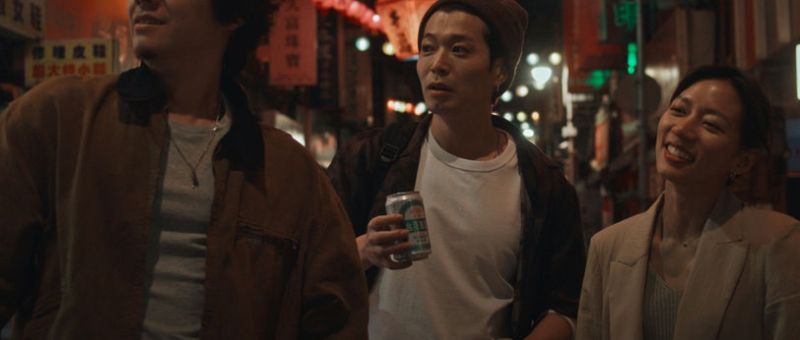
But Jake is similarly feeling lost in that he feels out of place in both Paris and Taipei and is perceived as a foreigner in both places. Meanwhile, he’s harbouring unresolved feelings about the end of his relationship with Blanche. While wandering though the city, the pair walk into a bar where their old friend Axin is currently working. His current girlfriend, Mao Mao, later joins them, but their relationship is not all it seems as Mao Mao essentially hired Axin to play the part of her boyfriend for 99 days to make an ex jealous and is now having difficulty dealing with the end of the arrangement.

The trio met when they were all aspiring actors, and they have to one extent or another each failed to fulfil their dreams. Only Axin is seriously persevering with performing, but he to is coming to the conclusion that he has failed as an actor and it’s time for him to leave Taipei. Blanche, too, regrets not having had the opportunity to play a proper role and is feeling unsatisfied with her married life. She wonders if this is all there really is and her entire life is already decided. Perhaps she only stays with Ben because it’s become convenient while the risks of leaving outweigh the benefits. Jake too always felt as if Taiwan was a liminal space, not somewhere he’d stay indefinitely, so he never put down roots. He reflects how much the city has changed, almost if it did so deliberately to give them memories as these spaces seem to retreat from them back into the past. 

The frequent references to missiles and intrusions into their airspace echo this sense of restless anxiety that this current existence might soon disappear or be taken from them. The sense of impending doom forces the three friends to reassess their bonds and missed connections providing an opportunity for at least partial emotional honesty even if these unresolved feelings are not fully addressed. Mao Mao too must reevaluate what she was looking for in her relationship with Axin in which he too was perhaps merely putting off the act of confronting himself and his life.

Though they may each discover a way of moving forward, no one seems all that happy about it. Blanche considers leaving her marriage, but ultimately stays perhaps because she lacks the courage to actually do it and resigns herself to an unfulfilling future. Jake still feels adrift and blames himself for the failure of his relationship with Blanche, realising that he let her down out of fear and immaturity. Axin too decides to move on, but is left with a sense of regret, while Mao Mao too can only resolve to start over again from day one. In some ways the friendship between them might have been repaired with the air cleared, but on the other hand as Axin says real friends don’t necessarily need to be in contact all the time and each seems to be left a little lonelier even than before in having closed a door to the past with seemingly none to open to the future.


Last Night in Taipei screened as part of this year’s New York Asian Film Festival.

Trailer (dialogue free)
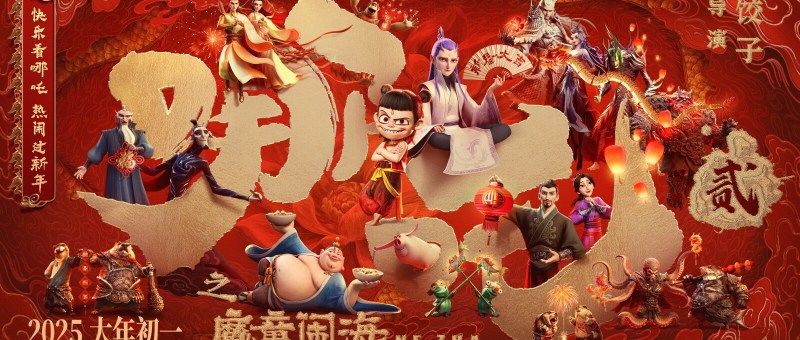
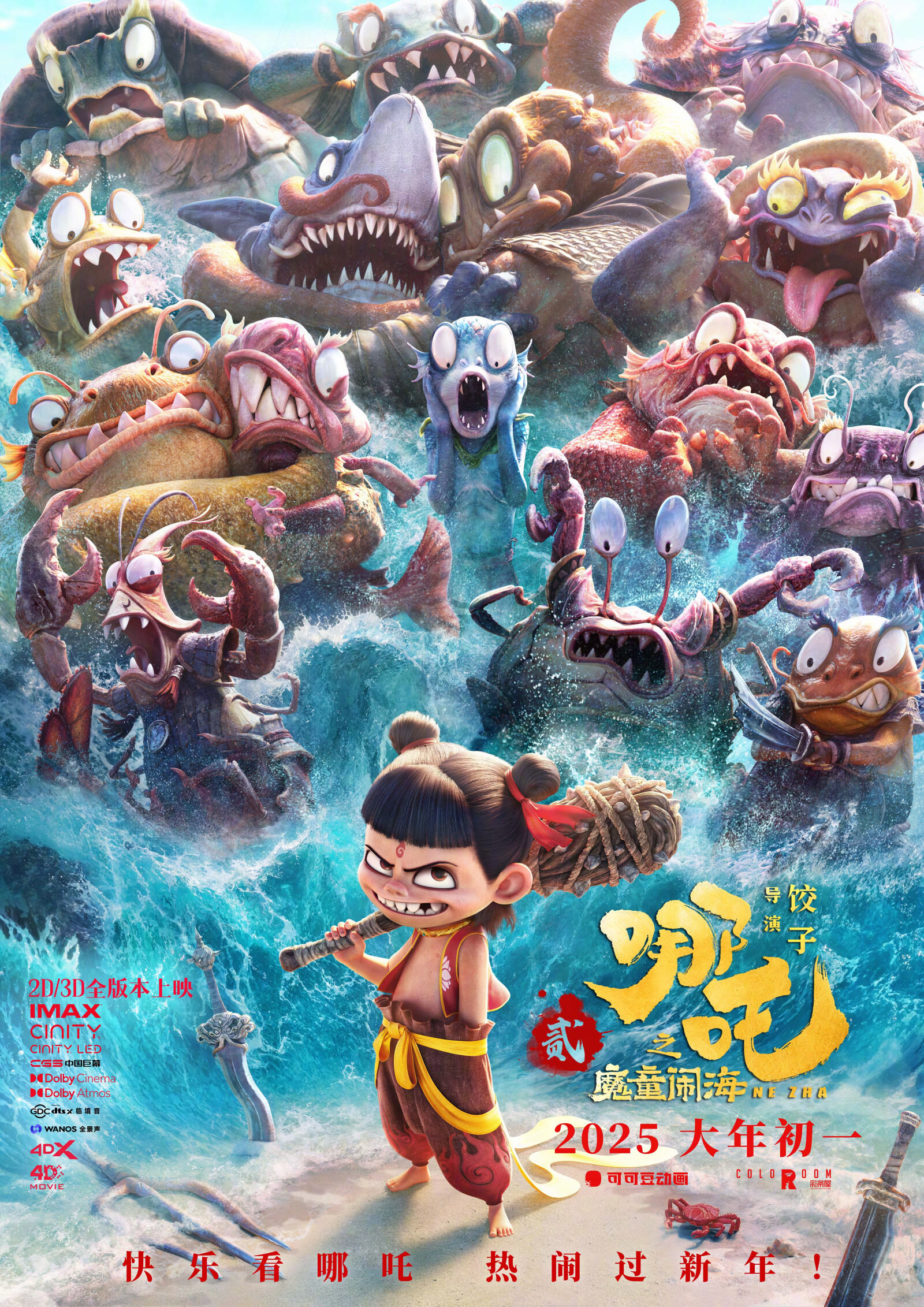
Ne Zha 2 (哪吒之魔童闹海, Jiaozi, 2025)

By the end of 2019’s smash hit animation Ne Zha, the titular hero (Lü Yanting) and his opposite number Ao Bing (Han Mo) had figured out that they were two halves of the same whole and were much better off fighting alongside instead of against each other, but even after getting their physical forms reconstituted with the help of a little lotus flour, they discover that the evil Shen Gongbao (Yang Wei) isn’t done yet. The first film may have been in its way subversive in the hero’s bold assertion that he will defy his fate and define his own identity, but Ne Zha 2 (哪吒之魔童闹海, Nézhā zhī Mó tóng nào hǎi) takes things a step further as Ne Zha comes to discover that not even the Heavens are free of corruption or prejudice.

Indeed, it’s this idea of prejudice which lies at the heart of the film for even if Ne Zha had won the hearts of the townspeople by saving Chentang Pass in the first film, he realises that there are some among the immortals who wish to erase all demon kind. The conclusion he eventually comes to is that demon and immortal are arbitrary terms used to control those who are different. He’s sick of hiding his demon nature and thinks it’s time he reveal himself to the world while fighting the injustice that’s taken over the Heavens in the Master’s absence. 

Meanwhile, his desire to break free of oppressive authoritarianism is symbolised in his breaking Wuliang’s (Wang Deshun) cauldron and freeing those inside who were otherwise to be turned into pills of immortality and fuel the heavenly economy. While he and Ao Bing resolve that the real enemies are those who bully the weak and bring evil to the world, the villains insist that siding with the strong is the only way. Ne Zha and Ao Bing’s response to this is to insist that if there is no place for them, they will create it for themselves and if they are not accepted they will change people’s minds. As they later say, they are young and have nothing to fear echoing a spirit of resistance among contemporary youth confronting an oppressive and authoritarian society.

Then again, a key feature of Ne Zha’s goodness is his love for his parents and desire to be a “good son” by traditional standards. It’s clear that even Ao Bing’s father the Dragon King of the East, Ao Guang (Li Nan / Yu Chen), acted only in the best interests of his son and has otherwise been framed by ambitious forces around him who decided they were better off entering a more active partnership with a corrupt authority rather than appease them by accepting their oppression. Even so, both sets of parents eventually tell their sons that they should now follow their own paths and do what they think is right. The world is no longer as was is when they were young, and they are not well equipped to understand these problems nor to solve them. If the Heavens are to be purified once again, it will be up to Ne Zha and Ao Bing to do it.

Aside from this more series and potentially subversive message about asserting one’s identity and challenging authoritarianism, the film has a lot of fun with its anachronistic worldview as drunken Taiyi Zhenren (Zhang Jiaming) struggles to remember the password to open the lotus before remembering he can use a fingerprint instead, while another villain later runs into a problem trying to open a door that works by face recognition because he’s sporting so many bruises and swellings after getting a beating from Ne Zha. He then realises he’ll have to wait another 10 years to try again because he cursed the technician for laughing at his ridiculously battered face. The film’s action sequences are also tremendously well animated and exciting as Ne Zha’s parents try to fight off the demon hordes which mainly consist of the “Monsters of the Abyss,” various sea creatures such as octopuses and sharks that were previously held in check by the Loongs but have now been set loose because of a dragon queen’s ambition. In any case, improving on the original the sequel maintains its quirky humour and charming worldview while doubling down on its surprising messages of acceptance and diversity as Ne Zha and Ao Bing prepare to forge their own paths and fight for justice to clear the Heavens of their corruption.


Ne Zha is in UK cinemas now courtesy of CineAsia.

UK trailer (English subtitles)