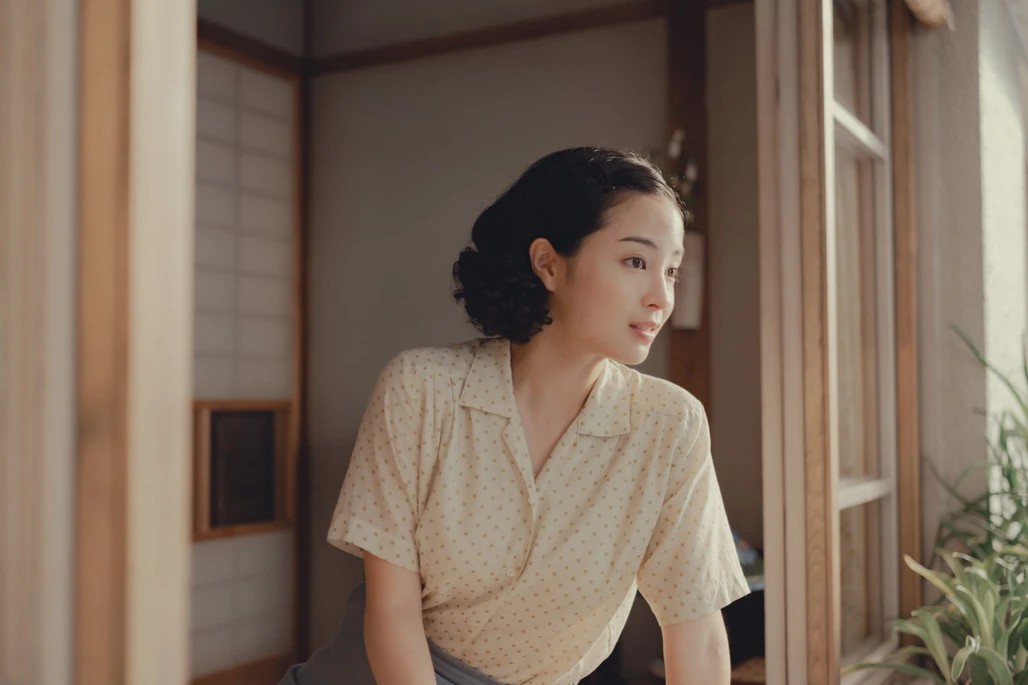
A Pale View of Hills (遠い山なみの光, Kei Ishikawa, 2025)

A young woman returns home at a moment of crisis, but finds herself with only more questions in an attempt to understand her mother and her decision to leave Nagasaki for the UK 30 years previously in Kei Ishikawa’s adaptation of Kazuo Ishiguro’s debut novel, A Pale View of Hills (遠い山なみの光, Toi yama-nami no Hikari). Set alternately in 1952 and 1982, the film positions the Greenham Common anti-nuclear protests as a point of connection between the two nations and the reason that Niki (Camilla Aiko) is currently so interested in her mother’s story seeing as there’s increased interest surrounding the atomic bomb, even if her editor keeps asking her about “Hiroshima”.

Another reason for Niki’s sudden return is that the editor is a married man Niki has been having an affair with. It seems she’s made a significant investment in the relationship by dropping out of university to work as a reporter, but despite saying he would, he has not left his wife and Niki suspects she may now be pregnant. All of which encourages her to investigate the relationship she has with her mother, Etsuko (Yo Yoshida / Suzu Hirose), and her late sister Keiko with whom she did not seem to get on, through tracing back her Japanese roots and trying to understand her familial history.

But what Etsuko, who is abruptly selling the family home, tells her is confusing and indistinct. Much of Etsuko’s story doesn’t line up, and we understand in part why later, but it seems almost as if the lacunas and contradictions are intentional and designed to hint at the ways we paper over cracks in our identities or create new mythologies for ourselves in an attempt to escape the traumatic past. Etsuko found a more literal escape in coming to the UK, but there’s something a little poignant about the way she says she thought there’d be more opportunities here and that Keiko would have had the chance to be anything she wanted which Japan would have denied her. Later she suggests that she always knew the UK wouldn’t be good for Keiko, but she came anyway. 

Now she’s selling the house, literally unpacking the past, Etsuko has begun dreaming about a woman she knew, Sachiko (Fumi Nikaido), and her daughter, Mariko, who lived near her in Nagasaki when she was pregnant with Keiko. Whereas Etsuko and her salaryman husband Jiro (Kohei Matsushita) live in a flat on a “danchi”, aspirational post-war housing estates for young families, Sachiko lives in a rundown shack across the way where the neighbours gossip about her for entertaining American soldiers who are still in the country post-Occupation because of the Korean War which is also what’s fuelling the economic recovery. Sachiko has met a man called Frank who says he’ll take her to America, but she doesn’t really believe him. 

On the one level, it seems that Etsuko and Sachiko are mirror images of each other yet they are in other ways alike, while their stories share several details in common. What unites them is that they both experienced the aftermath of the bomb, though Etsuko has been careful not to disclose the extent of her exposure and is now fearful of what effect it may have on the baby along with on her relationship with her husband who appears to share some of the prevailing social prejudice against those who were exposed to radiation. Jiro, meanwhile, is a distant workaholic who criticises Etsuko for not being more “motherly” and sees her as little more than a domestic servant. He has a damaged hand from his wartime service that seems to reflect his wounds, but still rolls in drunk occasionally singing war songs with his inconsiderate friends. 

When his father, Ogata (Tomokazu Miura), announces he’s coming to stay with them, Jiro is pleased to see him but rebuffs his request that he talk to an old school friend, Matsuda (Daichi Watanabe), about an article he published claiming that it’s a good thing that teachers like Ogata were let go after the war. Ogata evidently feels hard done by, but it’s also true that the cause of his son’s animosity towards him is that he was a card-carrying militarist who cheered when he left for the front and indoctrinated children with imperialist ideology in his job as a teacher. He is the past Japan must move on from, and a representative of the wartime generation by which the young of today feel betrayed. As Matsuda tells him, it’s a new dawn. Ogata has to change, and so does everyone else including Etsuko who may not be as happy in her marriage as others might assume and may well be seeking other paths towards self-fulfilment rather than allow herself to become another miserable, self-sacrificing housewife.

Even so, the contradictory message seems to be that perhaps you can’t actually move on from this past and Keiko, in particular, may have been changed by her exposure not to the bomb but it’s aftermath, the terrible things she heard and saw amid the wreckage and the stigma she faced afterwards. The artificiality of the Japanese sets might speak to the slipperiness of Etsuko’s memory, as if she were observing a film of herself rather than recalling real events or else reimagining them differently so they play out a little more cinematically, in comparison to the concrete reality of the Sussex bungalow which perfectly captures a lived-in Britishness of the early 1980s. In many ways, Niki might not have clarified very much at all, or perhaps begun to accept the idea that not knowing doesn’t matter in coming to understanding of her relationship with her mother and along with it of herself as she too decides it’s time for change.


A Pale View of Hills screens 16/18th October as part of this year’s BFI London Film Festival.

Trailer (English subtitles)
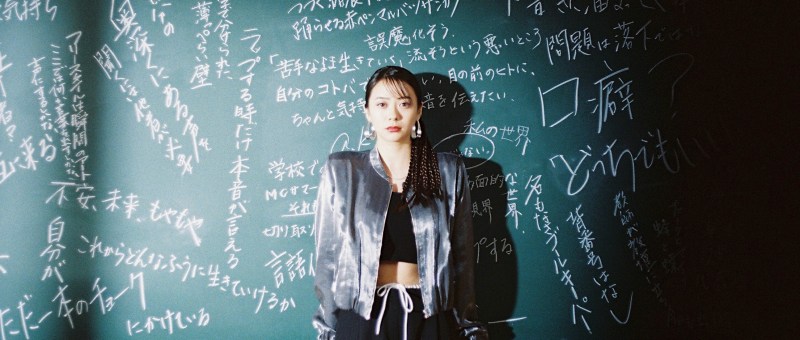
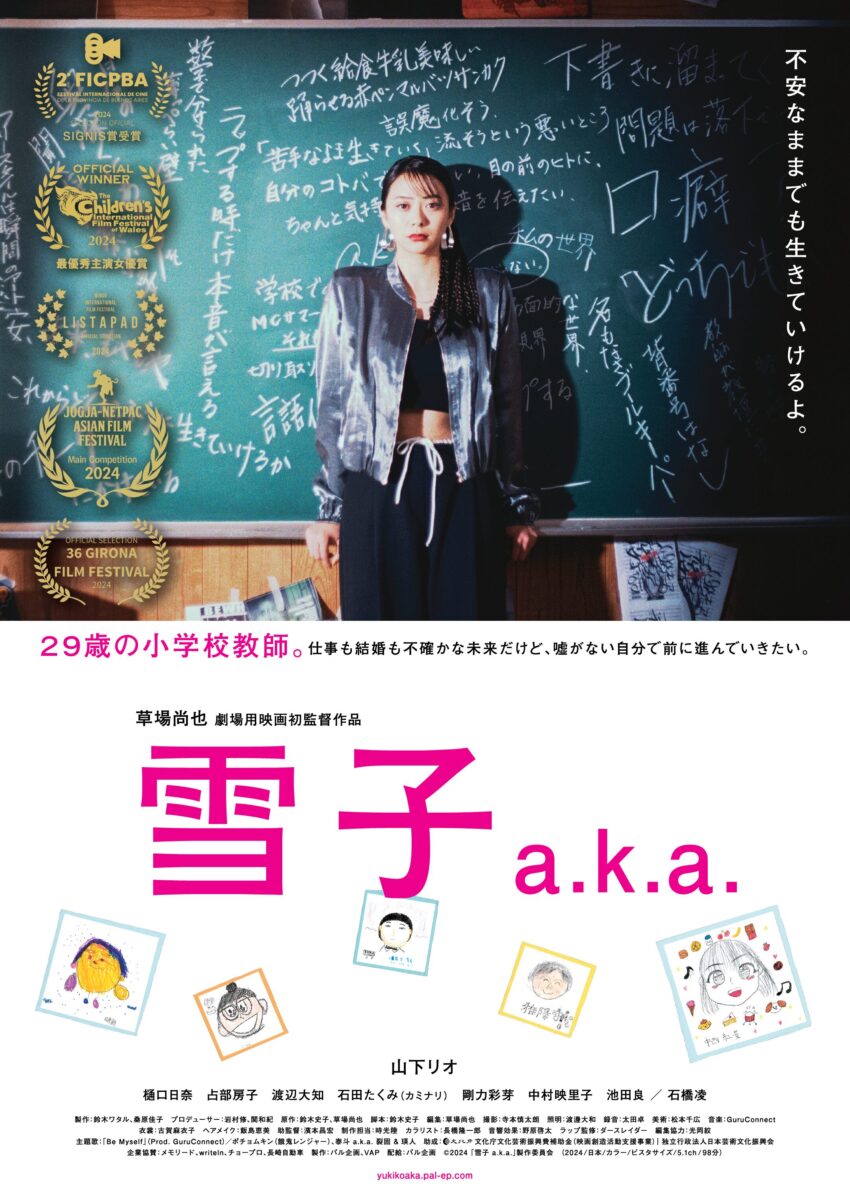
Yukiko a.k.a (雪子 a.k.a., Naoya Kusaba, 2024)

“Leave no one behind,” is the theory underpinning the SDGs that primary school teacher Yukiko (Rio Yamashita) is teaching to her students, but it’s also a practice that she unconsciously puts into practice only largely tends to forget to include herself. Timid and insecure, she makes little mark on the world around her and is afraid to express herself which she fears also interferes with her ability to interact with the children worrying that her reticence to speak up because she’s too worried they’ll say it’s all her fault prevents her from asking them if they’re alright or they need any help or guidance. 

It’s only through the possibly surprising hobby of rap music that she finds an outlet where she can be herself and say everything that’s on her mind, only most of her raps are all about her anxiousness and inability to communicate. She has however found a supportive community in a local park where there are a group of rappers who seem to have her back and encourage her to get more into the hobby by participating in rap battles so she can express herself more. It seems though that part of her anxiety stems from a sense that she’s approaching a crossroads in life and is in many ways dissatisfied. She’s been in a long-term relationship with another teacher, Kodai (Daichi Watanabe), she met when they were both students but as he’s been assigned to another school a long way away, they only meet up at weekends.

All around her, her friends are getting married and it seems Kodai may also be ready to pop what seems to most an inevitable question, but there’s something that seems to be holding her back. Kodai later tells her that he doesn’t like the her that does rap, which suggests in a way that he doesn’t really want the version of her that can express herself or is confident in saying what she does and doesn’t want. He’s much more interested in the timid Yukiko who meekly goes along with what he wants and is too afraid to rock the boat. A fellow teacher, Riho (Hina Higuchi), has an ambition to be married with a child before 30, which is surprising to Yukiko and often criticised for being old fashioned. Yet what the film seems to insist is that neither perspective is wrong, merely different, and largely a matter of what suits each individual. Riho is cool in her own way for living her life the way she chooses even if it conflicts with the prevailing attitude of the contemporary society and it’s this sense of empowerment that Yukiko is really seeking as an older teacher, Ohsako (Fusako Urabe), explains. With her short hair and serious demeanour it might be assumed that the kids wouldn’t like Ohsako, but she’s actually their favourite and perhaps precisely because of her self-assuredness. In contrast to the ultramodern Riho she likes to hand write and draw her teaching materials as a means of transmitting sincerity and integrity to the children while acting as a voice of authority between the teachers. 

Indeed, it’s Ohsako who largely teaches the film’s lessons and Yukiko how to embrace herself so that she can communicate better with the students explaining that her ability to pick up on the same anxieties in them is much more valuable than anything else. Locking eyes with a distressed young girl during a PE lesson, she quickly figures out that she’s experiencing menstrual cramps and is able to take her to the nurse’s office for some positive help and support. Meanwhile, she struggles with two boys in her class one of whom has become a school refuser and hikikomori. She visits Rui at his home every week with handouts but fails to make a breakthrough until she too is brave enough to expose her own fears and doubts. His deskmate Kotaro is now forced to join in with the girls either in front or behind when they’re asked to do pair work because of the painfully empty seat next to him.

But then unbeknownst to Yukiko, times have changed. Rui is not completely isolated but has been communicating with his friends, including Kotaro, through video games which as Kotaro’s father says is just as real to the children as talking in person. He’s also got really into educational apps and might have actually learned more by himself at home, which isn’t great for Yukiko’s self-esteem but at least he’s doing alright even if she might be becoming obsolete. Meanwhile the school still insists on making the kids read out loud to their parents who are then supposed to fill in a comment sheet but Kotaro writes those himself because his mum’s too busy. Nervously challenged by Yukiko, Kotaro’s mother asks what the educational point of the exercise is. She says she has her own way of communicating with her son and doesn’t have time for this meaningless bit of form filling. Yukiko’s insistence that it’s only 10 minutes belies a lack of understanding that Kotaro’s mother, who seems to be a working lone parent, simply doesn’t have another 10 minutes in her day. Still, the point is that Yukiko doesn’t really know the educational point of the exercise but has only been doing it because it’s what you do without giving it any real thought. 

But as Ohsako had said, maybe neither way is wrong, it’s just a matter of personal taste. Through her rap music hobby,  Yukiko begins to accept another side of herself while gaining the courage to be more confident and express herself more freely. She realises that it doesn’t really matter if she wins a rap battle or not because even putting herself out there was a minor victory that convinces her she has the power to do things with her life and live it in a way that best suits her while teaching similar lessons to the children and finally listening to her own advice.


Yukiko a.k.a screens in Chicago 22nd March as part of the 19th edition of Asian Pop-Up Cinema.

Trailer (English subtitles)

(Ab)normal Desire (正欲, Yoshiyuki Kishi, 2023)

There’s a pun embedded in the Japanese title of Yoshiyuki Kishi’s heartfelt drama (Ab)normal Desire in that first character in the word for “sexual desire” (seiyoku, 性欲) has been replaced by one that can be read the same but has the meaning of “correct”, or “proper”. But “normal” is also relative construct that implies conformance with the majority even if that may not actually be the case. As one of the protagonists later remarks “everyone is pervy” though they themselves feel such a degree of shame and otherness that it’s largely prevented them from living any kind of life at all.

In that sense it may be hard to understand why a fetish for water would invite such severe self-loathing in that it causes no harm to others if admittedly resulting in ridicule if exposed. Then again, society can be a fierce watchdog. Department store shop assistant Natsuki (Yui Aragaki) is taken to task by her pregnant colleague who refuses to take her seriously when she says she’s not really interested in getting a boyfriend before giving her a lecture about her biological clock. Though Natsuki appears uninterested in her vacant prattling, the woman later becomes upset and harshly tells her that she was only trying to be “nice” because she felt “sorry” for her and that making people be nice to you in this way is actually a form of harassment which, whichever way you look at it, is some particularly twisted logic.

Her alienation seems to stem from the fact that she feels “abnormal” and that her fetish for water is a part of herself she must be careful to hide. Her parents watch a news report on Tokyo Rainbow Pride and marvel at the idea that there are now choices other than marriage and children but even among the young there remains confusion and shame amid an inability to reconcile the seemingly opposing concepts of “normality” and “diversity” as they struggle to define themselves. A plan to have a male dancer who usually dances in a masculine style dance in a more feminine way backfires when he points out that asking someone to dance in a way they don’t want to doesn’t really do much to advance “diversity”.

But diversity isn’t considered an ideal by all and parents of young children find themselves confused and conflicted when their kids begin to reject conventionality at an early age by asking to withdraw themselves from school and instead focus on other kinds of education that align with their interests. Challenged by his wife about why he never listens to their son’s concerns, prosecutor Hiroki (Goro Inagaki) replies that he should “just be normal” and later describes people who are “unable to live normal lives” as bugs in the system which must eradicated. A symbol of lingering authoritarianism, Hiroki is an intensely conservative man obsessed with properness who thinks it’s his job to decide which crimes everyone is guilty of rather than make any attempt to understand the world around him outside of binary terms like right and wrong or normal and abnormal. When his assistant passes him information on fetishes as a potential explanation for the case of a man who repeatedly steals taps, he simply rolls his eyes and dismisses it.

Yet he perhaps has his own fears and internalised shame as evidenced by his outrage on discovering that another man has been coming to the house to help his wife with tech setup for their son’s new outlet in livestreaming and not only that, he was able to blow up the balloons that Hiroki himself failed to inflate. It’s his rigid authoritarianism that eventually alienates his wife and son who come to see him only as an oppressive bully unable to accept anything that differs from his own definition of “normal”. Finally, he’s the one who is isolated, imprisoned by his own repression and lack of understanding or unwillingness to accept those around him.

Even so, despite its positive messages that no one should feel themselves alone or that society has no place for them the film muddies the waters by introducing fetishes that are necessarily problematic in that they cause harm to others who do not or cannot consent and could not and should not be accepted by mainstream society though oddly those that have them seem to feel less shame only fearing being caught because acting on their desires is against both moral and judicial laws. In any case, in discovering togetherness, that they are not alone, those who feel their desires to be “abnormal” can begin to ease their loneliness and find a place for themselves in an often judgemental world.


(Ab)normal Desire screened as part of this year’s Toronto Japanese Film Festival.

Original trailer (English subtitles)

Ichiko (市子, Akihiro Toda, 2023)

If for some reason your name were taken from you and it became much easier to live by some other person’s name that you were compelled to use, would you be content to be them or be prepared to go to extreme lengths to reclaim your own identity? Based on his own play, Akihiro Toda’s Ichiko (市子) explores similar themes to his 2018 film The Name as the absent heroine fights to reassert herself just as we try to piece her together to a create semblance of the whole being we may never truly understand.

In many ways, it’s absence that defines Ichiko (Hana Sugisaki) who like the mysterious spirit of a fairy tale must be gone as soon as she is seen. Or at least, you could forgive Yoshinori (Ryuya Wakaba) for feeling this way when his girlfriend of three years suddenly disappears soon after he’d presented her with marriage papers. It’s not until he’s visited by a policeman, Goto (Shohei Uno), sometime later that he’s forced to admit he actually knew very little about her. He assumed she’d had a difficult past, and neither of them said too much about themselves so he doesn’t know if her parents are still alive, where she was from, or if she has any family or friends she might have gone to. What shocks him most, however, is that Goto informs him that on paper at least the woman named Ichiko Kawabe does not exist.

Flashing back across several years from Ichiko’s childhood to the present day, we see people call her by another name which she often tries to correct telling them that her name is Ichiko but it isn’t originally clear to us if this is because she’s being forced to live under false name or if she merely dislikes the name she was given and wishes to be “Ichiko” instead. In any case, she appears to have developed a healthy fear of letting anyone in thanks to her incredibly disordered home life. At times, would-be friends attempt to visit, but are either kicked out or merely horrified by what they see there and leave soon afterwards putting an end to the friendship. That might in itself explain why she may wish to be someone else, but in fact what she wants is the right to be herself.

Gradually it becomes clear that because of the way Japanese society works, Ichiko has been forced to live two lives as one and can live neither fully. It’s not quite right to call it a double life or to say that she multiple personalities but more that she cannot quite locate herself within herself and is increasingly distressed in being forced to answer to a name which is not her own and live someone else’s life for them. Later she explains that all she wanted was a “normal” existence though this is the very thing denied her in part because she is denied her rightful identity though there is something quite poignant in her remaining innocence. Her touching description of finding happiness in the scent of miso soup wafting from ordinary houses at dinner time expresses her desire for the comfort and safety of a conventional family she never really had or may perhaps have experienced for a brief moment in early childhood. 

Ironically enough, she exclaims that she likes walking in the rain because it washes everything clean though for her it will spell disaster in quite literally revealing the skeletons buried in her past and with them exposing the precarious web of lies on which her adult life was based in an attempt solely to recapture the authenticity of her essential identity. A further irony may be that the identity she ends up with may not even be her own but that of someone else who decided they no longer wanted theirs, perhaps because the world had also been unkind to them and so they did not understand its worth. As the policeman says, she did what she had to do survive whether that be lying about who she was or otherwise burying her other self literally or metaphorically. Dark and melancholy, Toda’s twisty psychological mystery has its poignant qualities but ultimately asks whether living as your true self is worth the price or it’s better just to accept the name that fate and society have dealt you.


Ichiko screened as part of this year’s Nippon Connection

Original trailer (English subtitles)
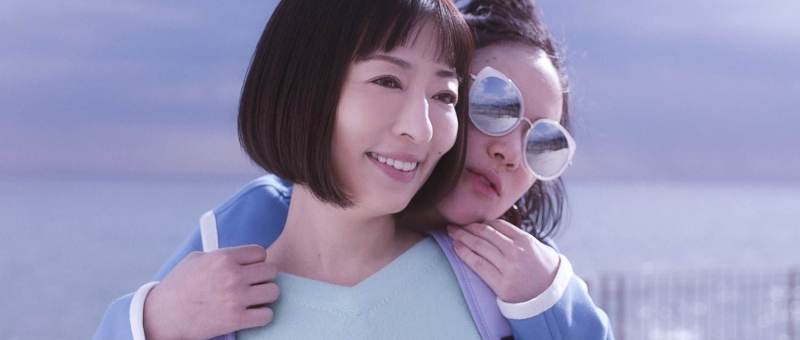
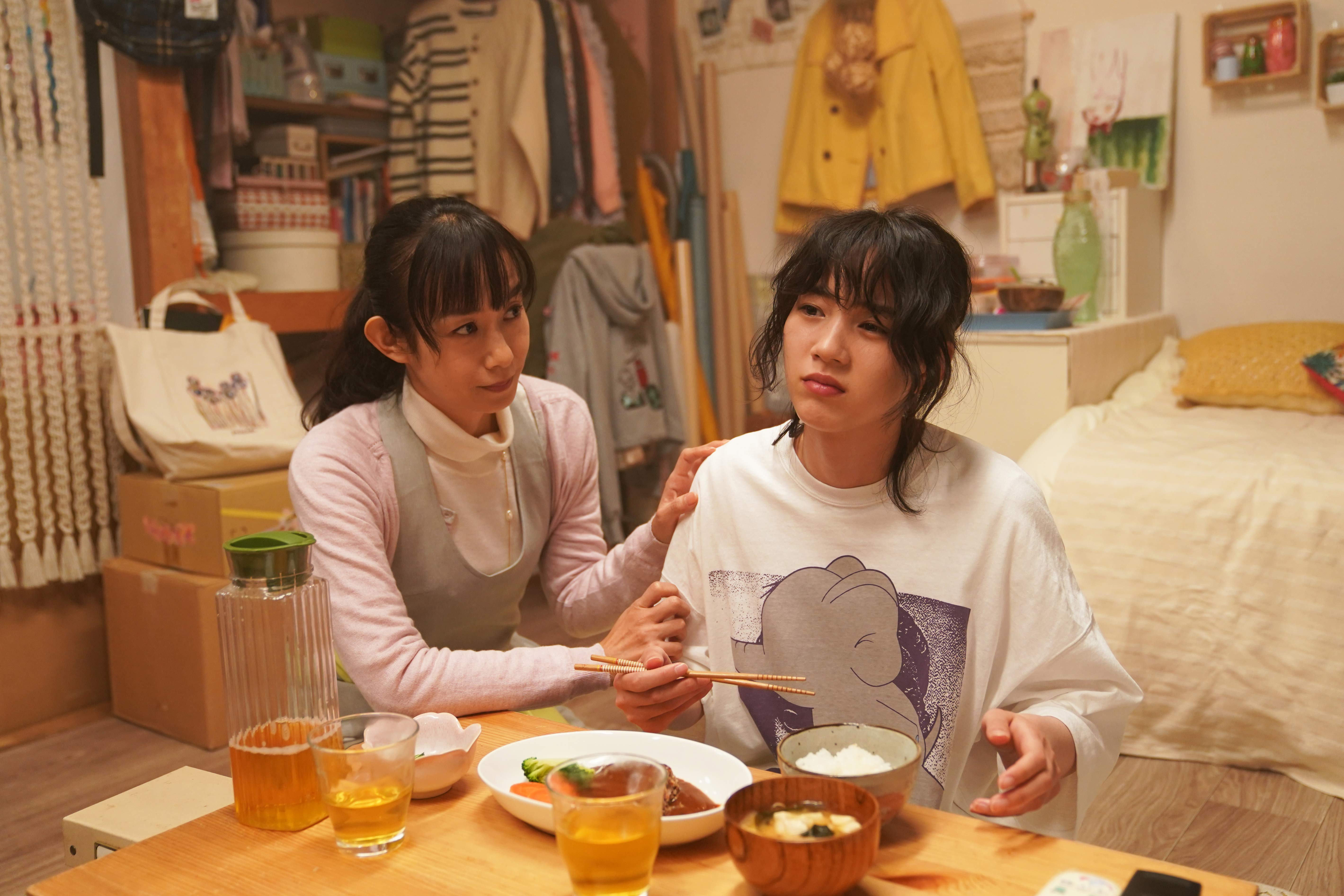
Ribbon (Non, 2022)

What is the place of art amid a global crisis? A young student finds herself wrestling with her sense of purpose uncertain if art is more necessary than ever before or a completely worthless waste of time that could be better used dealing with the situation on a more practical level. Written, directed, and edited by actress/singer Non, Ribbon is a response to pandemic anxiety but also a meta drama about an artist reclaiming a sense of confidence in their work along with their right to make it even if not widely understood. 

As the film opens, art student Itsuka (Non) is lugging a series of paintings and art equipment back to her university for the upcoming graduation exhibition, only the exhibition has just been cancelled because the university will be closing its doors the following day due to the COVID-19 pandemic. Itsuka has to cart all her stuff home again, but she’s luckier than some she witnesses who are left with no choice other than to destroy the precious works of art into which they’ve poured four years of their lives because they can’t store them and neither can the university. 

Watching her fellow students in tears as they crush, tear, and bludgeon their projects Itsuka can’t help but wonder what separates her painting from “trash”, seeing these precious pieces dismembered and left out for the binmen. The feeling is compounded when her mother (Misayo Haruki) pays her a visit, clad in a homemade hazmat suit, and throws the painting out justifying herself that as it had stuff stuck on it she thought it was just something she’d made messing around, more like a child’s collage than a serious piece of “art”. Unable to accept her mistake, Itsuka’s mother defensively doubles down leading to a climactic argument and the visits of other family members including her father (Daikichi Sugawara) who arrives with a social distancing pole and her sister (Karin Ono) who now dresses like an assassin each armed with passive aggressive peace offerings but ultimately seeking validations that her mother was right to dismiss her incomprehensible art. 

While her friend Hirai (Rio Yamashita) is later caught sneaking into uni to work on her much more conventional piece, a large canvas painting featuring a young girl in a forest with giraffes and leopards, Itsuka has been unable to find the desire to paint. The painting, a mixed media portrait of a young woman surrounded by ribbons, sits looking down on her taped to the wall but she can’t get away from the idea that perhaps her work really is “trash” and she’s just been wasting her time on something meaningless that other people don’t understand or care about. The feeling is compounded when she’s informed that the job offer she had from a design firm for after graduation has been rescinded due to COVID uncertainty. Only when she accidentally reconnects with a middle-school classmate (Daichi Watanabe) who had praised her work does she begin to rediscover its value not least in allowing her to vent her frustrations not only with the pandemic-era society and its isolating anxieties, but the conservative ideas embodied by her mother’s constant complaints about her “attitude” reminding her she’ll never get married if she carries on as she is.  

“This is what our frustration looks like” she explains incorporating her friend’s fractured painting to turn her formerly chaotic apartment into an installation covered in the ribbons which had previously swarmed around her. Opening with scenes of the deserted university peopled with broken statues, headless mannequins, and crude drawings on walls, Non captures a sense of the lonely despair of the early days of the pandemic allowing these now empty places to seem almost haunted by an eerie sense of absence. There is an unavoidable absurdity in the constant masking, obsession with social distance, and spraying anything and everything with sanitiser but also a care beneath the anxiety in the concern for others’ safety as well as one’s own. “Heavy” is how Itsuka frequently describes her situation not only the physical weight of her work but its spiritual burden along with her despair and anxiety for her uncertain future, but learning to bear it allows her to rediscover a purpose and value in art not despite but because of the times in which she lives. Quirky and heartwarming, Non’s accomplished directorial debut is not only a snapshot of ordinary life in a pandemic, but a meta tale of a young woman reclaiming her right to create and vent her frustrations towards a sometimes restrictive society. 


Ribbon screened as part of this year’s New York Asian Film Festival.

Original trailer (English subtitles)
Images: ©︎”Ribbon” Film Partners

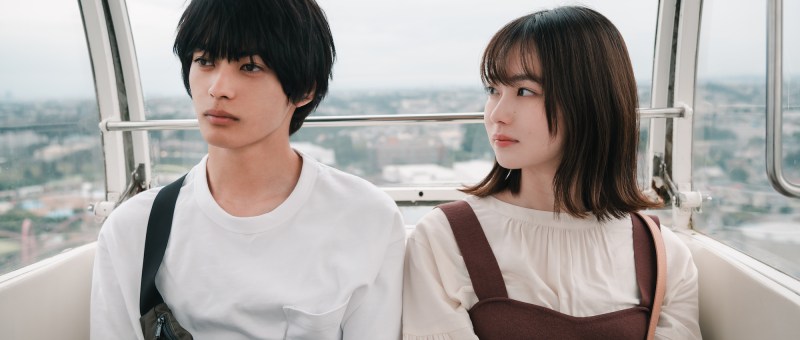
What She Likes (彼女が好きなものは, Shogo Kusano, 2021)

“Distance keeps us safe” according to the hero of Shogo Kusano’s LGBTQ+ teen drama What She Likes (彼女が好きなものは, Kanojo no Sukina Mono wa) ironically commenting on the nature of “social distancing” in the age of corona along with his own sense of alienation. Though in comparison to other recent similarly themed features Kusano’s film may in some senses seem behind the times in its BL filter, it has its heart firmly in the right place as the hero and several of his friends attempt to find a place for themselves within the contemporary society which for various reasons they fear will not accept them. 

In high schooler Jun’s (Fuju Kamio) case, his sense of alienation is born of his internalised homophobia in which all he wants is to have a conventional heteronormative life within the confines of the traditional family with a wife, children, and grandchildren. Part of this may stem from a secondary source of marginalisation in that he comes from a single parent family which is itself still frowned upon by some as evidenced by the mild discomfort experienced by his new friend Sae (Anna Yamada) when he explains to her why he always eats cafeteria food rather than bringing a homemade bento. Sae’s source of internalised shame, meanwhile, is that she is a fujoshi or obsessive fan of boys love manga which revolve around romances between men but are aimed at an audience of young straight women rather than the LGBTQ+ community. 

Based on the novel by Naoto Asahara, what the film attempts to do is examine the gap between the BL fantasy and the reality of being gay in contemporary Japan. Sae is ashamed of her love of BL and ironically paranoid that Jun will expose her secret after running into him at a bookshop, explaining that she was shunned in middle school when her friends found out she enjoyed reading gay love stories which they viewed as “creepy”. Meanwhile, she has a complicated view of homosexuality off the page which is not always completely supportive. Both she and Jun continue to use a world that many would consider to be a homophobic slur to describe men who love men, Jun at times using the word against himself while simultaneously denying the identity. The first conclusion that he comes to is that Sae does not really like him but only the romanticised gay ideals from the fantasy world of BL which as is later pointed out are often set among a largely gay milieu or even in a world where everyone is gay. 

Sae refers to this space as the BL Planet, but Jun’s desire to go there is also a reflection of his internalised homophobia in that on the BL Planet he’d obviously be just like everyone else. He’s fond of repeating a sentence they learned in science class about a simplified world with zero friction which he later claims to reject unwilling to erase complication for superficial harmony but this is exactly what he’s doing in attempting to erase a part of himself in order to better conform to a heteronormative society. He beats himself up for not being able to have “normal” sex after half-heartedly agreeing to date Sae while engaging in physical intimacy with a much older man who is married with a child. Jun’s lover Makoto (Tsubasa Imai) later explains that his marriage is one of convenience born of the same kind of internalised homophobia experienced by Jun though he obviously loves his wife and child if in a different way while the inappropriateness of his relationship with a teenage boy is never raised by anyone.

Jun is taken to task by a brash classmate, Ono (Ryota Miura), for his irresponsibility in dating Sae knowing that he has no romantic interest in her hinting that perhaps not that much has changed in the last 10 or 15 years both men convincing themselves that heteronormative relationships are the only valid markers of success. Then again when Jun is accidentally outed his classmates are given a crash course in LGBTQ+ relations most of them expressing support and the conviction that society needs to become more accepting of diversity though it has to be said they were less than understanding before, particularly the boys who found Jun’s presence a challenge to their masculinity. 

Teenage boys they all are, but even infinitely sympathetic straight best friend Ryohei (Oshiro Maeda) engages in crude, misogynistic banter with their classmates forcing Jun to play along pretending to be a connoisseur of heterosexual pornography. Probably some or even most of the other boys are also lying in an act of performative masculinity but the pretence only adds to Jun’s internalised sense of otherness and belief that he is in some way broken continually asking not only why he was born like this but why anyone is. After receiving an alarming message from an online mentor, he is pushed towards a dark place in becoming convinced that the world has no place for him only to belatedly come to an acceptance of his identity as mediated through Sae’s concurrent epiphanies realising that without friction there is no progress and discovering liberation in authenticity. Despite a few mixed messages and a bizarre subplot about a hairdresser who is not himself gay but nevertheless obsessed with gay people to the extent that he thinks he can spot them in public places through codified signs and the look in their eyes, Kusano’s teen coming-of-age drama has its heart in the right place in its gentle plea for a more inclusive, joyfully diverse society. 


What She Likes screens at Genesis Cinema on 28th May as part of this year’s Queer East.

Original trailer (English subtitles)
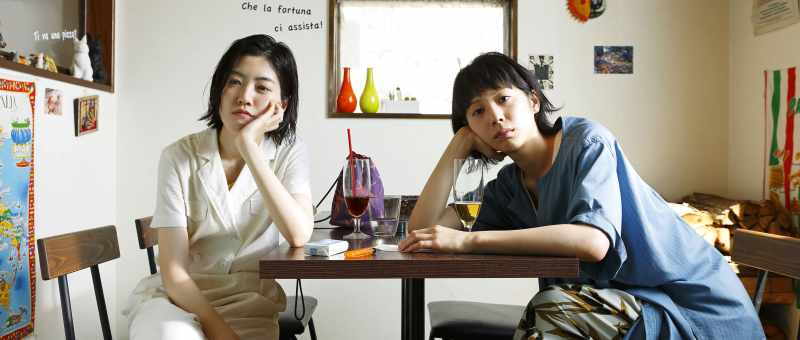
Noise (ノイズ, Ryuichi Hiroki, 2022)

The dark heart of small-town Japan is fully exposed in Ryuichi Hiroki’s ironic tale of murder and mass deception, Noise (ノイズ). “It’s for the sake of the island” the heroes are fond of claiming, one morally dubious justification leading to another as they contemplate the greater good saving their town while eroding its soul assuming of course that it had one to begin with. Addressing everything from rural depopulation to a back to the land philosophy, Hiroki’s quietly escalating drama imbues its “idyllic” wholesome island with an unsettling sense of quasi-spiritual unease as its well-meaning hero begins to buy in to his own saviourhood deciding all things are permissible so long as they serve the town. 

Following a recent trend, Keita’s (Tatsuya Fujiwara) big plan for saving the island is through the cultivation of black figs which he hopes to turn into a local industry boosting the economy and encouraging young people from the mainland to repopulate the rapidly ageing village. Ironically enough, it’s this that brings him to the attention of recently released ex-offender Mutsuo (Daichi Watanabe) whose kindly probation officer has brought him to the island in the hope of finding him an honest job so he can restart his life in a wholesome and supportive environment. Unfortunately, however, Mutso suddenly kills the old man for no particular reason and then begins wandering the island generally acting suspiciously and alarming the islanders including Keita’s best friend Jun (Kenichi Matsuyama), a hunter. When Keita returns home and discovers the bottle he’d seen Mutso drinking from lying in his garden and his small daughter Erina missing, he assumes the worst. He, Jun, and their childhood friend Shin (Ryunosuke Kamiki) recently returned to the island to take over as its one and only policeman, finally track Mutsuo down to one of the greenhouses and challenge him only for Mutsuo to fall over and hit his head during the tussle. 

Obviously on a personal level it’s not an ideal situation for the three guys but their first thoughts are for the island. Keita was supposed to be its saviour and now he’s killed someone in right under the figs that were supposed to rescue the economy. If this gets out it’s game over for everyone. The first lesson new policeman Shin had been taught by his departing predecessor (Susumu Terajima) had been that a policeman’s job is about more than enforcing the law and sometimes what’s “right” might not be “best” for the town using the example of a middle-aged woman with a history of bad driving who’d hit a wild boar. If she lost her license the family’s life would become impossible, so seeing as it’s “only” an animal, perhaps it’s better not to bother logging it as a “crime”. Faced with this situation, Shin decides the greater good of the island is more important and that covering up the crime is best thing for everyone only to be caught out when mainland police arrive having been alerted by the probation officer’s daughter. 

The situation is complicated by the fact that the town had been in the running for a government development grant based on the potential of the figs which gives everyone a reason not to want the scandal of a murder taking place on the “idyllic” wholesome island where according to the mayor, Shoji (Kimiko Yo), there is “absolutely no crime”. That may largely be true especially given the attitude of local law enforcement but is also an ironic statement seeing as we later discover Shoji apparently cannot sleep without her trusty taser by her side, just in case. Having lied in trying to cover up the murder, Keita is later forced to get even more of the townspeople involved in the conspiracy while they are it seems surprisingly happy to help because they believe in him as the saviour of the town and are prepared to do pretty much anything to help save the island. 

Stoic yet omniscient police detective Hatakeyama (Masatoshi Nagase) sneers at the villagers’ tendency to see all outsiders as enemies. “Typical of a dying town” he adds, commenting on the way the combination of isolation and desperation has brought the townspeople together as they present a united front in the face of the things they think threaten their small-town wholesomeness, some objecting to the idea of new residents moving in a fear which is ironically borne out in the arrival of a man like Mutsuo. Yet their small town wasn’t all that wholesome to begin with. Shoji had told the three guys to eliminate the “noise” that disturbs the island though in the end it isn’t’ so much Mutsuo who created the disturbance as their own quasi-religious determination to save the island by whatever means necessary. Keita wants to save the island because the island once saved him, but in saving it like this he ironically destroys the very qualities he hoped to preserve in building their new future on blood and lies. 

Meanwhile the strain of trying to conceal a murder exposes the cracks in the foundations of the friendship between the men, earnest policeman Shin continually conflicted in betraying his own ideals, while hunter Jun’s personal insecurity in continually playing second fiddle to saviour Keita who is so obsessed with the idea of being the island’s chosen one that he never notices the pain in each of his friends, gives rise to a degree of instability in their otherwise carefully crafted plan. Maybe this island isn’t so idyllic after all, keeping a dark hold on the bewitched Keita as his increasingly worried wife Kana (Haru Kuroki) suggests concerned he’s “becoming someone else” in buying in to his own messianic hype. “What are you trying to protect?” Hatakeyama had asked him hinting at the dark side of the furusato spirit but also at his misplaced priorities as the forces of greed and anxiety threaten to consume the wholesome soul of moribund small-town Japan. 


Noise streams in Europe until 30th April as part of this year’s Udine Far East Film Festival.

international trailer (English subtitles)
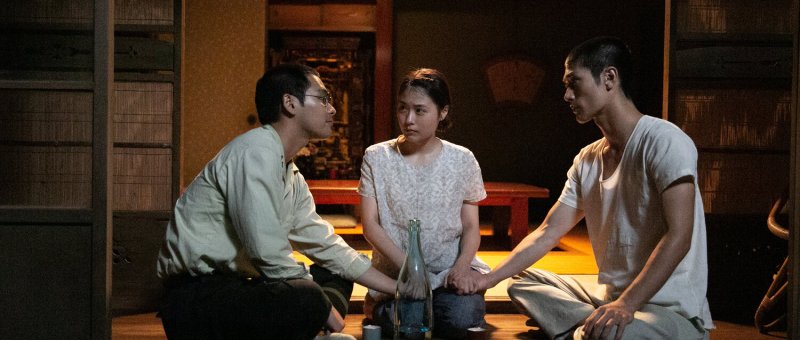
Gift of Fire (太陽の子, Hiroshi Kurosaki, 2020)

“What can we do? It’s for the victory of our country” one woman stoically laments as her family home is demolished in an attempt to mitigate the damage from potential aerial bombing in Hiroshi Kurosaki’s wartime drama, Gift of Fire (太陽の子, Taiyo no Ko). A co-production between Japanese broadcaster NHK and American distributor Eleven Arts, Kurosaki’s ambivalent interrogation of the price of progress asks some difficult questions about scientific ethics while simultaneously suggesting we may have been stoking a fire we cannot fully control in a bid for a technological evolution which has become unavoidably politicised. 

The hero, Shu (Yuya Yagira), is an idealistic young man who excels at running experiments. He has been spared the draft because his work has been deemed essential for the war effort as he is part of the research team at Kyoto University working on the development of an atomic bomb. A theoretical thinker, Shu has not fully considered the implications of the project and largely views it as a problem they are trying to solve in the name of science rather than a concerted attempt to create a super weapon with the potential to bring death and destruction to the entire world. 

Others meanwhile are beginning to question the ethical dimensions of their work. The team is equipped with a shortwave radio receiving the American broadcasts and is fully aware that Japan is losing the war. There are frequent power outages which interfere with their research, while food shortages are also becoming a problem. The potter Shu has been visiting in order to acquire Uranium usually used for a yellow glaze tells him that he rarely needs to use colour anymore because the vast majority of his output is plain white funerary urns for boys who come back as bones. Some of the scientists feel guilty that they are living in relative safety while other young men their age are fighting and dying on the front line, while others wonder if working on the bomb, which will almost certainly not be finished in time, is the best way to help them. They also wonder if scientists should be involved in the creation of weapons at all, but their mentor Arakatsu (Jun Kunimura) justifies the project under the rationale that they aren’t just trying to make a bomb but to unlock the power of the atom and harness its intrinsic energy to take humanity into a brave new world. 

As it turns out, Arakatsu may not have expected the project to succeed but was in a sense using it in order to protect his students by ensuring they would be exempt from the draft. Another senior researcher meanwhile points out the Americans are also working on a bomb, and if they don’t finish it first the Russians will. Arakatsu claims this war, like most, is about energy but nuclear energy may be infinite and therefore its discovery has the potential to end human conflict forevermore. Still, it’s difficult for Shu reconcile himself to the reality of what he was working on seeing the devastation inflicted on Hiroshima. The scientists are plunged into a deep sense of guilt and despair that they failed to prevent this tragedy, but also perhaps relief in knowing they were not responsible for inflicting it on the city of San Francisco as had been the plan. 

Arakatsu claims he wants to change the world through science, a sense of purpose that appeals to Shu even while he remains firmly in the present moment. His childhood friend, Setsu (Kasumi Arimura), however is looking far ahead already thinking about what to do when the war is over. Seeing through the wartime propaganda disturbed by the answers the high school girls co-opted to fill-in at her factory give when asked about their dreams that all they want is to marry as soon as possible and raise children to serve the nation, she aims to educate. Shu’s brother Hiroyuki (Haruma Miura), meanwhile, is a conflicted soldier filled with guilt for having survived so long crying out that he can’t be the only one not to die. The theory that nothing is ever created or destroyed becomes an odd kind of justification, yet Shu is also forced to admit that destruction can be “beautiful” while claiming that scientific progress is a body already in motion which cannot be stopped. “The nature of science transcends humanity” Shu is told by an accented voice speaking in English, insisting that the bomb is merely another stop on the inevitable march of progress in the great chain reaction of history. Kurosaki’s melancholy drama preserves both the beauty and wonder of scientific discovery as well as its terrible ferocity but offers few answers as to the extent of its responsibilities. 


Gift of Fire screens in Chicago on Sept. 16 as part of the 13th season of Asian Pop-Up Cinema before opening at cinemas across the US on Nov. 12 courtesy of Eleven Arts.

US trailer (English subtitles)

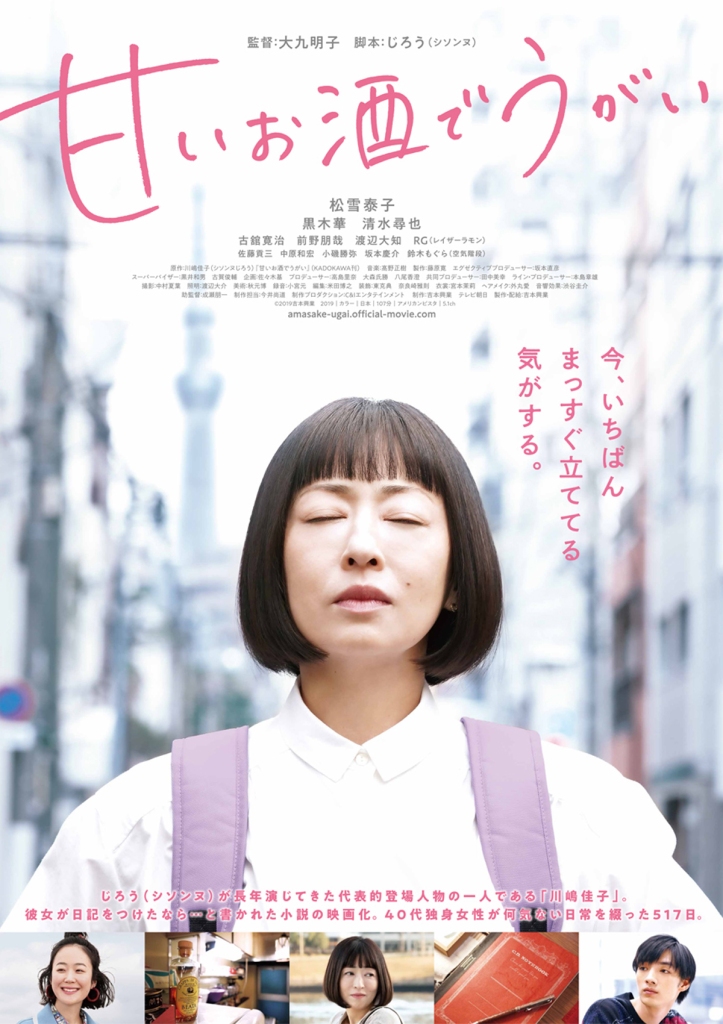
My Sweet Grappa Remedies (甘いお酒でうがい, Akiko Ohku, 2019)

In Tremble All You Want, Akiko Ohku showed us a painfully shy woman’s path towards seizing control of her romantic destiny while Marriage Hunting Beauty told us that there are no short cuts to love. My Sweet Grappa Remedies (甘いお酒でうがい, Amai Osake de Ugai) takes things one step further as a lonely middle-aged woman gradually finds the desire to make a change in her otherwise unchanging existence, coming to like herself as seen in the eyes of others and trusting in happiness however temporary it might turn out to be. 

40-something Yoshiko (Yasuko Matsuyuki) is an unmarried woman working at a publishing company. She tells us that she keeps a diary that she never expects any one to read, not even herself, and mostly spends her free time drinking alone at home or in elegant bars. From the sometimes lengthy gaps between entries, we can see that Yoshiko’s life is generally uneventful and essentially unchanging, that she has few friends, and though she gets by well enough on her own she often dwells on what might have been, disappointed that she was never able to become a mother. 

She is, however, a deeply caring person, sublimating her need for human attachment into anthropomorphising objects, gently patting her bicycle saddle as she parks it for the day and becoming alarmed that it has ended up “in prison” after being impounded. If she’d had children, she muses, she might never have let them leave the apartment. Yet when she discovers one of her favourite earrings is missing, she decides not to look for it because she accepts its decision, later welcoming it home when it makes an unexpected return. 

Overhearing the conversation of the women next to her at a bar, she wonders if their idle complaints that half the year is gone already are excessively negative but accepts that she too is living life in retrograde and needs to learn how to look forward with positivity, which might be why she starts making a series of small but active changes. She observes the world around her from a new angle in crossing a footbridge she has never crossed before, swaps her comfortable red loafers for grey high heels, and her futon for a bed. 

Some of these changes at least are down to an unexpected friendship with a young woman in her office, Wakabayashi (Haru Kuroki), who invites her out on paydays and brightens up the office atmosphere with her goofy antics. Yoshiko herself might be classically quirky, but she mainly keeps her quirks to herself, quietly getting on with her work, while Wakabayashi is the opposite, cheerfully outgoing yet perhaps just as lonely if in a less obvious way. It’s Wakabayashi who sets her on off another path by introducing her to a friend from university, Okamoto (Hiroya Shimizu), who has recently joined their company and to whom Yoshiko had already taken a liking in passing though he is more than 20 years her junior.  

Too shy to shout bingo, Yoshiko is a lifelong believer in love, observing a young couple at festival and hoping they enjoy a night of passion in the fullness of their youth. She still remembers old anniversaries with long gone exes and wonders if they still remember her, but resents the universe’s attempts to test her with texts from past lovers every time she becomes interested in another man. The fact that Okamoto is so much younger is never really an issue, though Yoshiko admits that she likes the fact he seems to favour older, lived in homes over sparkling new builds while she helps him look for a new apartment. 

Yoshiko celebrates the fact that colour seems to be returning to her black and white days, her desire to see the dark sea where she feels closest to death in order to reaffirm her connection to life seemingly receding. From her childhood, Yoshiko had wondered if the woman she sees in the mirror is the same one everyone else sees, but later realises that the vision of herself reflected is “somewhat nice”, catching sight of herself in Wakabayashi’s mirrored sunshades and noticing that she is in fact smiling. Reinvigorated by her younger friends, Yoshiko steps into an acceptance of herself, looking forward rather than back and willing to take on new challenges rather than merely dropping into a defensive position of protecting the irreplaceable. No longer dark and foreboding, the sea is now sunny and calm, a scene of peace and positivity with nary a cloud on the horizon.


My Sweet Grappa Remedies is available to stream online (worldwide excl. Japan, Mainland China, Taiwan, USA, & Italy) from 9th to 14th June as part of this year’s Nippon Connection Film Festival.

Original trailer (no subtitles)

Blue Hour (ブルーアワーにぶっ飛ばす, Yuko Hakota, 2019)

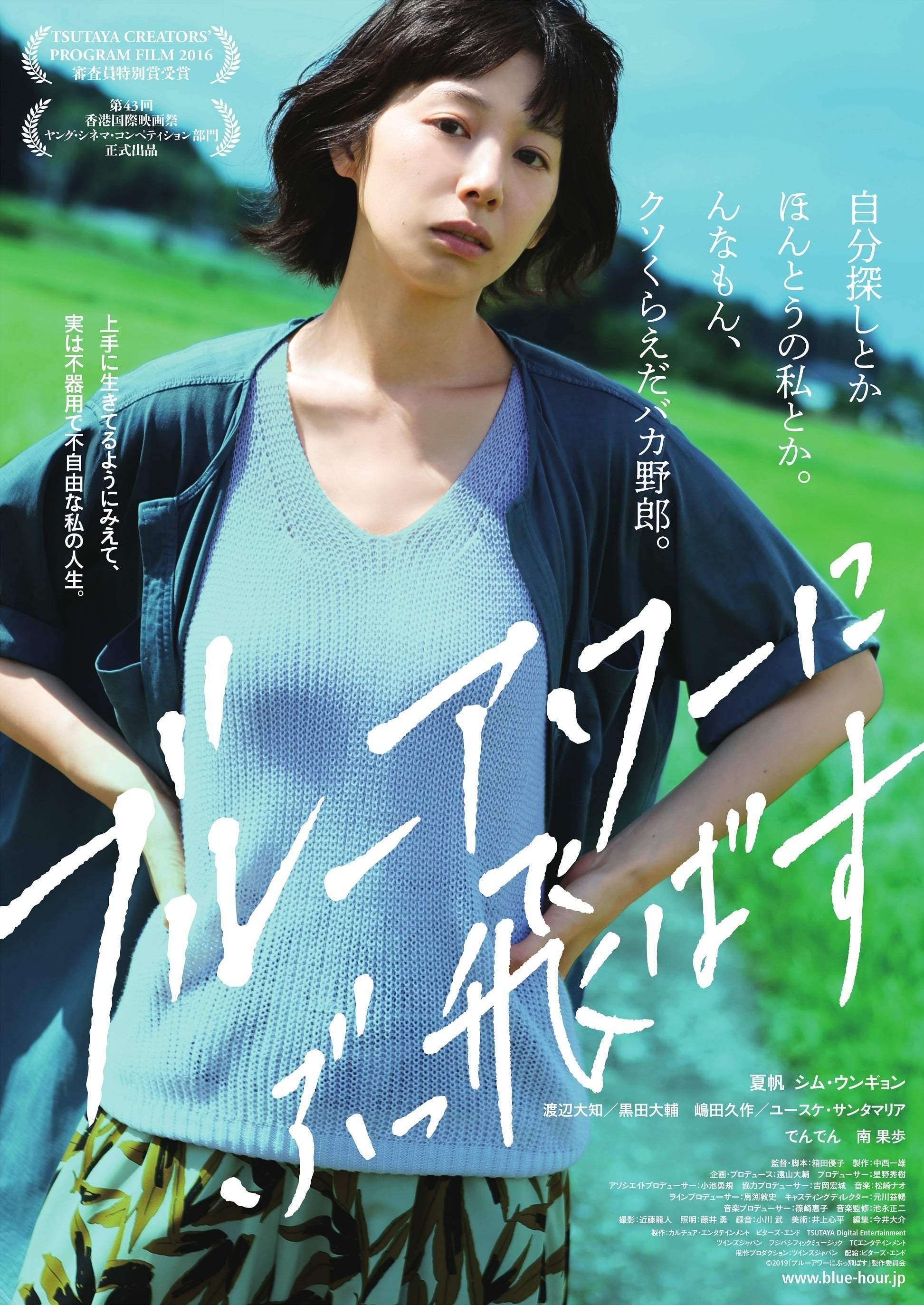
Blue Hour poster“I don’t like people who like me” confesses the heroine of Yuko Hakota’s first feature Blue Hour (ブルーアワーにぶっ飛ばす, Blue Hour ni Buttobasu) to her best friend, who presumably is excluded from the statement. Then again, perhaps not. Running from or running to, Sunada (Kaho) can’t seem to escape herself while chasing the ghost of small town ennui in frenetic Tokyo. An impromptu road trip with a lively partner in crime returns her to the problematic roots from which she struggles to break free, but maybe breaking free wasn’t exactly what she needed anyway.

At 30 or so, Sunada has worked her way up to directing commercials but much of her job involves negotiating workplace sexism and stroking the egos of stars. In any case, she doesn’t seem to find the work particularly fulfilling and on looking around has noticed that there don’t seem to be a lot of women over 40 working in her industry which has her wondering what’s next in her possibly dead end career. Meanwhile, she’s married to a perfectly nice, mild-mannered sort of guy (Daichi Watanabe) but is secretly having an affair with a married colleague (Yusuke Santamaria) whose wife is currently pregnant with their second child. More stressed out and confused than she’d perhaps like to admit, Sunada has been putting off visiting her sickly grandmother because she isn’t the sort of person who deals with crisis well and so she was waiting in the hope her grandmother’s health would improve. Now that it has, she’s talked into an impromptu road trip with her freewheeling mangaka friend Kiyoura (Shim Eun-kyung).

True to form, Sunada doesn’t even really bother telling her husband where she’s gone because she doesn’t want “that sort of closeness”. Returning home, however, necessarily means reengaging with her distinctly odd family which is perhaps both easier and more difficult with her crazy friend in tow. While Sunada’s dad (Denden) seems to have picked up a habit of frittering money away on antique swords and suits of armour, her weird high school teacher brother (Daisuke Kuroda) cracks distinctly unfunny jokes about molesting pupils (a theme later echoed by her mother (Kaho Minami) who warns her men can’t be trusted, not even her brother). Out in the country there’s not much to do but drink, but this is not Tokyo and the bars are full of sleazy old men feeling up the hostesses and hogging the karaoke mic in an attempt to escape the stultifying boredom of their small-town lives. This is what Sunada has been running from. Ashamed of her bumpkinish childhood, she threw herself headlong into Tokyo sophistication only to find it equally unfulfilling.

Kiyoura is in many ways a projection of her other self. Childishly giddy, willing to jump into any situation with fearless enthusiasm, Kiyoura is a middle-class girl from the city and knows no shame. Only to her does Sunada seem to express her true self. Fearing intimacy, she keeps herself aloof but resents her lover’s family while pushing back against her husband’s meek indifference. “All ghosts are lies” her grandmother told her, which may be truer in some senses than others, but Sunada continues to haunt herself as she recalls the spirit of her free and easy childhood in which she snuck out to enjoy the “blue hour”, waiting for the sun to rise in peace and tranquility.

Only by confronting her grandmother’s ill heath can she begin to move forward towards a greater emotional clarity. Gently clipping the older woman’s nails, Sunada gets to hear her life philosophy or at least her parting words, “I try to make the best of every day, but what does that even mean anyway?”. Suddenly freed of her fear of attachment, her anxieties for the imperfect future, and even perhaps of her intense self loathing, Sunada prepares to take the wheel and confidently head in a more positive direction. “Being tacky means being alive”, her other self tells her, finally accepting her small-town roots and all that goes with it only to discover they were already accepted by someone who was paying more attention than she gave them credit for. A melancholy but ultimately hopeful and warmhearted exploration of midlife ennui and urban disconnection, Blue Hour is a delayed coming of age tale in which the heroine comes to an acceptance of adulthood only by reconnecting with her childhood self and all the fantastical promise of her sleepy rural youth.


Blue Hour was screened as part of the 2019 Nippon Connection Film Festival.

Original trailer (English subtitles)