The Rose: Come Back to Me (Eugene Yi, 2025)

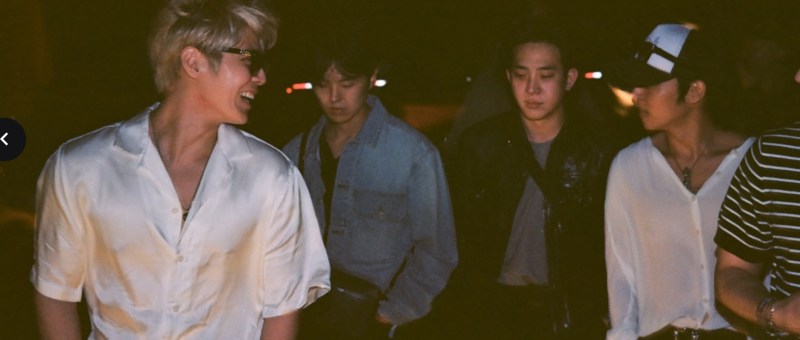
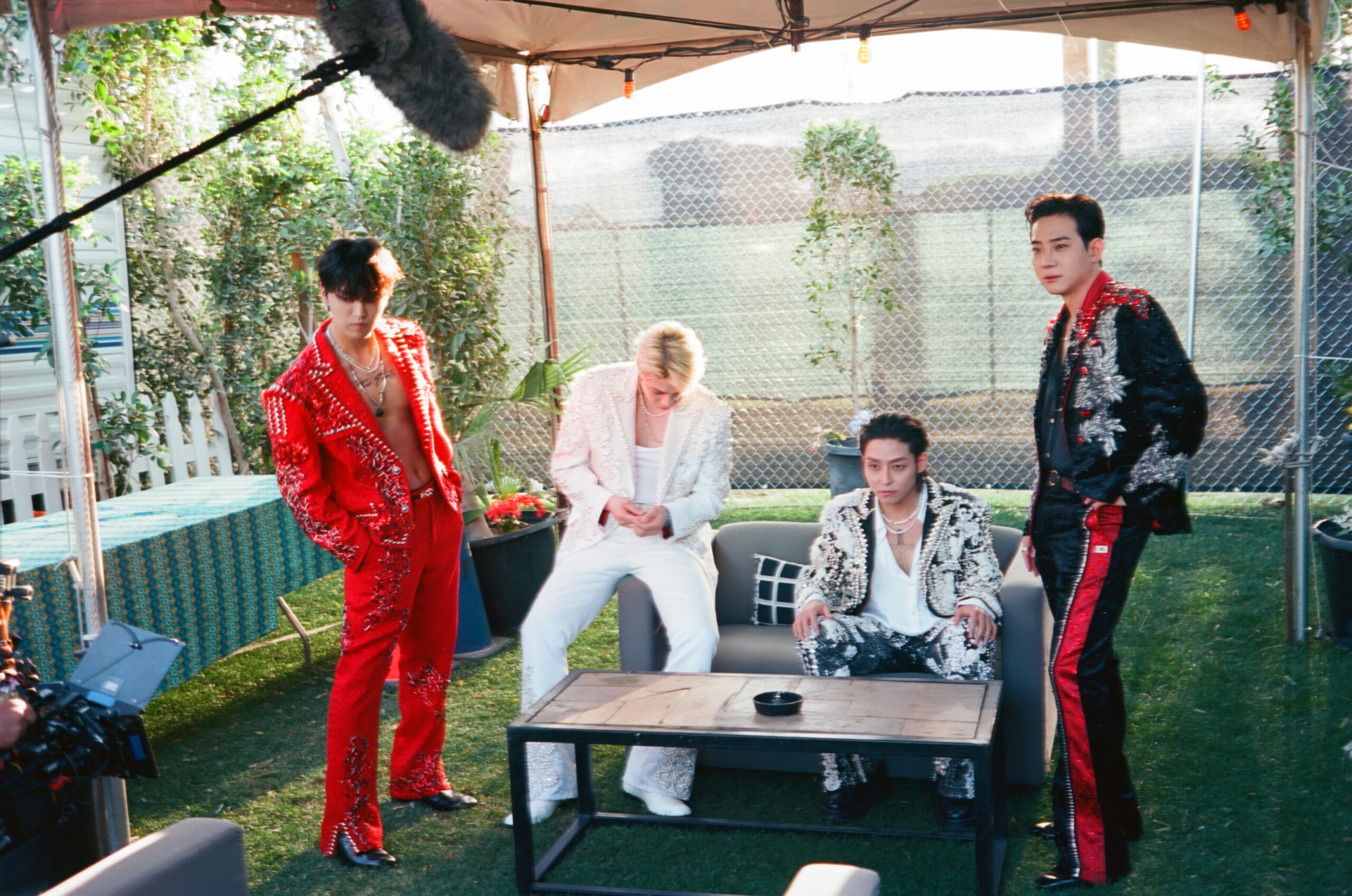
Korean indie group The Rose have been making waves for close to a decade, starting out in Seoul and now having signed with a US label and playing the Coachella festival. They cite their musical message as healing, in part because music has healed them at various points in their lives, both individually and as a group, though they have faced a series of hardships, from the rigours of the K-pop industry to an exploitative label and a potentially explosive scandal.

Eugene Yi’s documentary is however more of a puff piece interested in how the band heroically overcame their struggles rather than the nature of the struggles themselves, despite a few talking heads outlining the oppressive and exploitative nature of the Korean music industry. According to them, what makes The Rose interesting is they all started out in K-pop training schools, but each found it wasn’t for them. As one of them points out, only 0.01% of applicants get to debut, and only 0.01% of the ones that do are successful. Sammy, a Korean-American musician who took part in a Korean TV talent competition, says that he developed body image problems because of the way the agency tried to control his appearance and eventually dropped out because he lost the joy of music in having to literally dance to their tune. 

Others of the band members had similar experiences before coming together as a street band and eventually forming The Rose as four young guys with a dream. They got an apartment together and eked out a living while spending all their time practising and writing songs. But as so often in these stories, they were picked up by a label who only wanted Sammy. He convinced them to take the others too, but they also tried to control the direction of their music and rejected their choice of an intensely personal, self-written debut song, insisting they needed something poppier and more upbeat. The joke was on them, though, because the song took off on its own on YouTube and became a hit across Europe. The label sent them touring, but otherwise did little else and misled them about the financial situation to the point that they decided to sue.

Suing your label is pretty unheard of in Korea where going against your team is socially difficult, as is challenging flaws in the system rather than just trusting in it and going with the flow. Had they lost, it would have been the end of the band and they’d all be financially ruined for the rest of their lives. This was also the time that Covid hit, with two of the band members going into the military. Along with the psychological pressure of the label playing divide and conquer to set them at each other’s throats, the anxiety of the court case strained Jeff’s mental health to the point of hospitalisation. He wondered if he should give up music if this was what it was doing to him, but then rediscovered its healing qualities. 

Having won their court case, the band reunited and signed with a label in the US only to be hit by another scandal once they started to make a name for themselves and Sammy’s former conviction for drug use after being caught with a small amount of marijuana was exposed in the papers. Any kind of involvement with drugs is a no-go in the Korean entertainment industry and can end careers or worse. Nevertheless, the band seem to have bounced back from it if even Sammy laments the guilt he feels for letting down his bandmates’ parents though he’d always been upfront with the guys that it might come out some day. Jeff too had remarked on the additional guilt he felt towards his parents for becoming ill, demonstrating that they’re all nice guys who care about their families and are serious about their healing message. Jeff is touched when members of the audience tell him their music helped them get through a loss or overcome their suicidal thoughts. 

Nevertheless, the film does rather seem set up to emphasise those messages and make the guys look as good as possible in addition to painting them as an authentic artistic rebellion against the soullessness of K-pop with its manufactured stars who are kept on a tight leash and trained to within an inch of their lives so that almost nothing of their individual expression remains. A little more shade might have helped to offset the hagiographic tone, though it’s true enough the band has talent and they’ve worked incredibly to get to where they are overcoming a series and crises and hardships along the way.


The Rose: Come Back to Me screened as part of this year’s San Diego Asian Film Festival.

Trailer (English subtitles)
Amoeba (Siyou Tan, 2025)

Choo (Ranice Tay) wonders what it’s like to be the Merlion. Being made to stand there while everyone makes up stories about you, like you’re trapped in an aquarium and can only look out on the world. In an odd way, it reflects her own experience as an “ungovernable” young woman contending with an authoritarian culture led by entrenched patriarchy as mediated through her overly strict elite girls high school which is intent on producing “respectful daughters and students of virtue”.

The fact that Choo doesn’t quite it in here is signalled on her very first day in which she’s humiliatingly forced to drag her own desk from one classroom to another as a result of some sort of clerical error. A stern-looking teacher measures the diameter of the face on her wristwatch, decides it’s too large and, therefore, too masculine, and takes it away from her. They measure the length of her skirt above her knee and say it’s too short, while her hair is too long. Or rather, the style is wrong and she should make sure it doesn’t touch her collar by the following Monday. The teacher even pulls at her shirt as if she were about to tear it off to confirm the colour of her bra, though it is in no way visible and therefore presumably makes no real difference anyway.

Above the whiteboard in their classroom, there’s a sign reading “purity, moral uprightness, diligence, and filial piety,” all qualities Choo derides during her speech having been entered as a candidate to become class monitor against her will. She ends up ironically being made “Good Citizen” representative instead by her teacher, Mrs Lim, who takes an instant dislike to her and seems to regard Choo as a potential source of resistance. On the one level, the girls are all being encouraged to become proper young women and as Choo says despite her very feminine name, it doesn’t really suit her. Later, she becomes friends with another group of girls who ironically describe themselves as a “gang”, having realised the great figures they learn about in school and have streets named after them made their money peddling opium, only to be accused of actively participating in organised crime when their teacher finds a video of them dancing around to a street music video featuring a guy with tattoos and having fun in one of the girl’s bedrooms.

Choo and her friend Nessa (Nicole Lee Wen) had been worried about the video for another reason, that even though as Choo says they “technically didn’t actually do anything,” the video she shot of them messing around while trying to catch the ghost in her room could cause each of them a lot of trouble in the extremely conservative country where homosexuality was only decriminalised in 2022. In any case, the teacher doesn’t seem to pay any attention to that part of the video, which comes as a relief to both of them even if it’s made them guarded and awkward in the way they interact with each other. Nessa wants to quit swimming and try football instead, but doesn’t necessarily feel she has the freedom to make that decision and is fearful of its implications. “Can’t sleep, cannot eat, cannot freaking pee, can’t do anything,” another of the girls laments. “We can’t even study what we want.”

But having banded together over their shared sense of alienation, Choo’s friends are also separated by their socio-economic disparities. They mainly hang out at the house of the richest girl, Sofia (Lim Shi-An), whose father is a construction magnate. After deciding they all want to go to the same junior college, they struggle to agree on a destination as Sofia has her sights set on an elite institution the other girls think is out of their league given their current academic performance. Though she agrees to go to a less prestigious school with them, in reality Sofia can’t let go of her privilege or the expectation that goes with it and has secretly applied to the other school while trying to cajole the other girls to apply there too. Later it transpires that she’s already been given the answers to the exam questions by the tutor her wealthy mother hired, so there was never any doubt of her getting in because her money will always open doors. She shares the answers with the other girls to parrot back during in their oral which involves describing a picture of the iconic seafront to which the only “correct” answers are that the Merlion represents prosperity and national identity. Choo gives this answer too, but only to subvert it in asking what the point of this test is if they’re just supposed to give the “correct” answer while making it clear that she won’t go along with this charade even if it might be advantageous for her to do so.

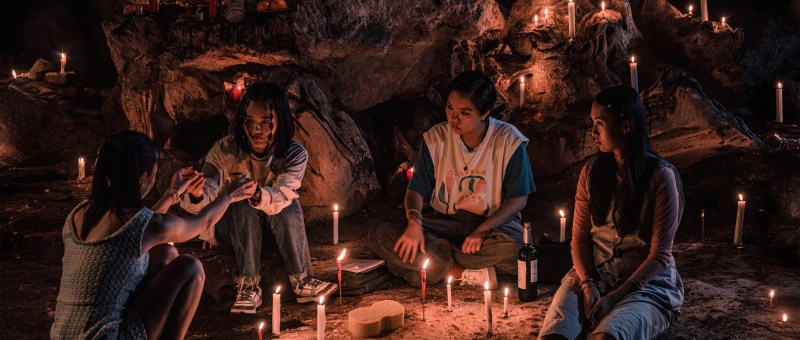
The girls had taken refuge in a cave on the land being developed by Sofia’s father and created their own secret den, but when it’s taken down, erasing their history in the name of progress, it’s like they’re losing their last safe space where they can embrace these subversive thoughts and express their sense of frustration with the authoritarian culture around them as corporate forces seek to bury and obfuscate the past. Choo wonders how they can escape this “aquarium” and see a future for themselves when their history is constantly being revised and repackaged to reflect a certain ideology and they’re given so little freedom to think for themselves or to be who they really are in the culture where conformity is king. Yet though her camera and friendships, Choo does seem to have discovered a way to go on seeing, and speaking, the truth even if everyone else is content to ignore it.


Amoeba had its world premiere as part of this year’s Toronto International Film Festival.

Trailer (English subtitles)
Daughter’s Daughter (女兒的女兒, Huang Xi, 2024)

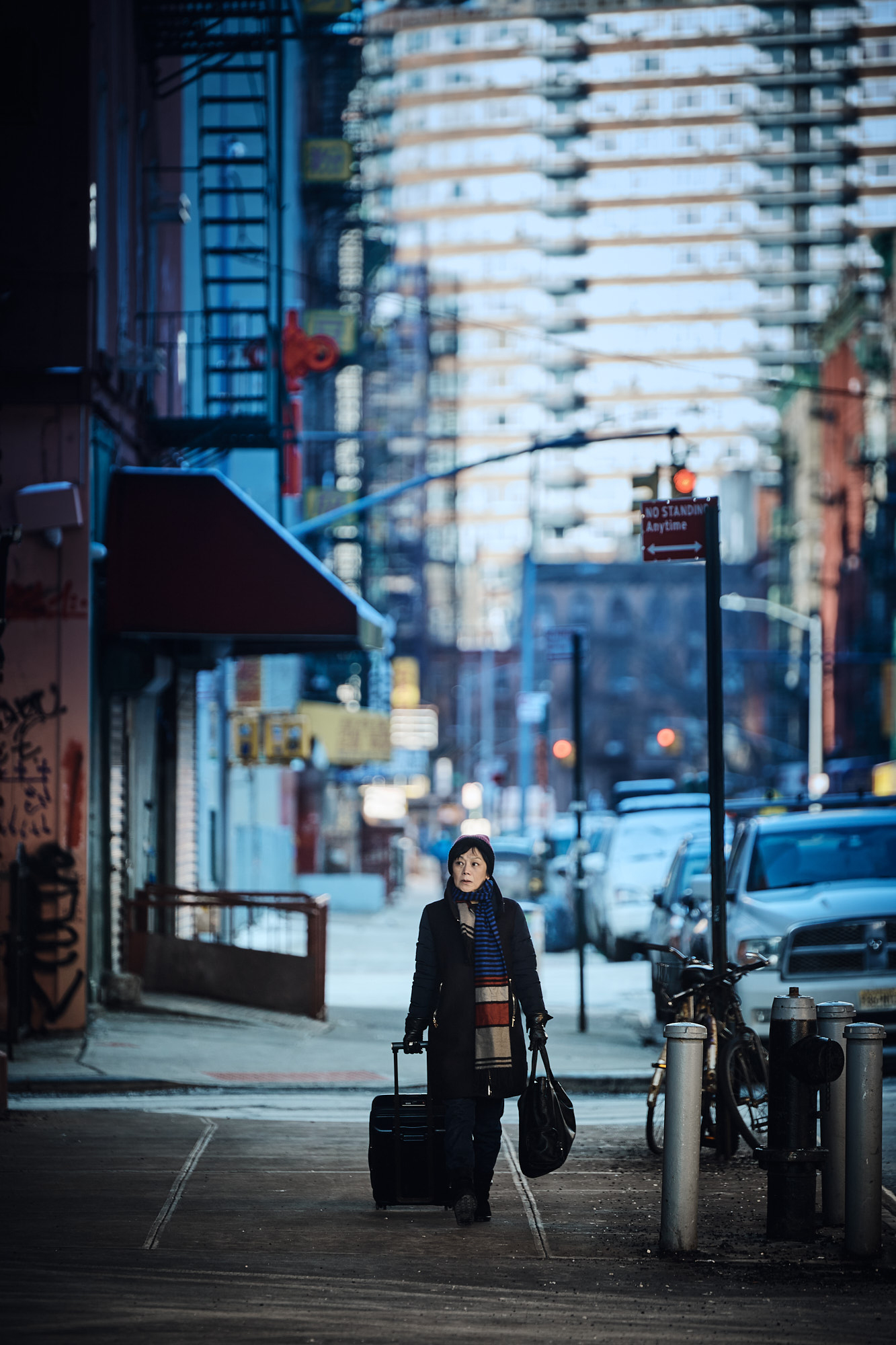
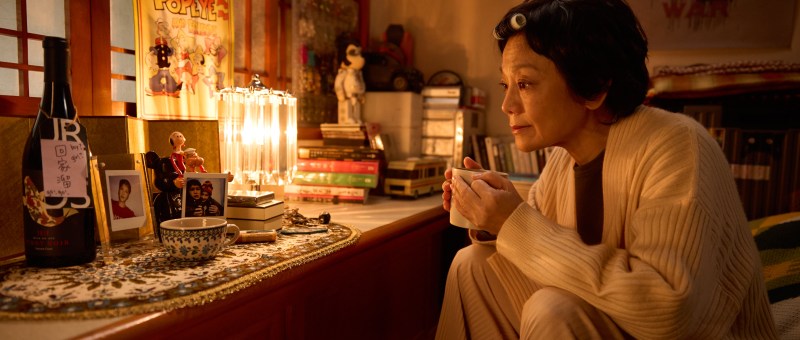
Never having fully dealt with the trauma of her teenage pregnancy and decision to give her child up to be raised by a family friend, 64-year-old divorcee Jin Ai-xia (Sylvia Chang Ai-chia) finds herself in an eerily similar position on on learning that the daughter she raised in Taiwan has been killed in a car accident in New York where she was receiving fertility treatment. The process resulted in a healthy embryo of which Ai-xia now finds herself the “guardian”. She is given four options, keep the embryo in storage and pay to renew the contract when it runs out, find a surrogate to carry to it term, donate it to another couple, or have it destroyed.

The fact that there are eight months left on the contract that her daughter Zuer (Eugenie Liu Yi-er) signed makes this almost another pregnancy which Ai-xia must decide whether or not to continue. Keeping the embryo in storage only defers the decision and traps it in the same mental space in which Ai-xia thinks of Emma (Karena Lam), the daughter she did not raise and tried to put out of her mind. In its consideration of motherhood, the film does shy away from suggesting that it is a kind of burden and requires sacrifice whether willing or not. Later confronted, if gently, by Emma who has unbeknownst to her become a single mother who chose to keep her child, Ai-xia justifies herself that she was 16 and afraid. Most of all, she was afraid the baby would trap her in New York’s Chinatown and that her life would never change after that. She wanted more, so she went along with her mother’s proposed solution of giving her daughter to a childless couple to raise while she returned to Taiwan and never looked back.

Yet it’s Emma who seems to haunt her while she’s in New York trying to sort out Zuer’s affairs while mired in her grief. It’s clear that she feels that she failed both her daughters as her unresolved trauma over separating from Emma left her unable to fully bond with Zuer whom she raised at arms’ length. When Zuer and her same-sex partner Jia-yi (Tracy Chou Tsai-shih) decide to have a child, Ai-xia is against it. It seems there may be some lingering prejudice in her about their relationship as she tells Zuer that the baby won’t be able to explain their family situation, but it’s also partly that she doesn’t want her to be trapped by motherhood as she felt herself to be. She asks her why she and Jia-yi don’t just enjoy their life together rather than complicate with a child. Ai-xia tells Emma that she wanted to live her own life, while expressing the same desire now that she has become a second mother to her own mother, Yan-hua (Ma Ting-Ni), who is living with dementia. Once her mother passes away, she’s looking forward to enjoying her freedom for once. 

Ai-xia rails that no one ever really considered her feelings and that she’s been given this burden without ever really being given an opportunity to ask herself if she wanted it. There’s a minor irony in Yun-hua’s segueing back into the past to tell the 64-year-old Ai-xia that she can’t raise a child at this age as if she were still a pregnant 16-year-old. As an older woman, she reflects that Yun-hua probably didn’t make that decision solely because she was embarrassed by the stigma of teenage pregnancy but genuinely thought it was best for both her daughter and her granddaughter. But now Ai-xia is facing the same choice at the other end of her life knowing that if she chooses to raise Zuer’s baby she may not live long enough to see it to adulthood, nor may she have the energy to look after a small child even if she has the time. 

But Ai-xia carries Zuer’s ashes around with her holding them in front of her belly as if they were the embryo and she were already carrying it. Placing the square black container on the airport scanner and watching it travel through the tunnel is oddly like an act of rebirth. Attempting to come to terms with her own complicated maternity, she thrashes out the past with Emma but also really with herself in trying to decide whether or not to continue this maternal legacy despite the sacrifices and compromises it entails. For her, motherhood becomes an act of self-forgiveness in which she learns to understand both her own mother and her daughters along with their shared connection in this ever-increasing line.


Daughter’s Daughter screens 18th July as part of this year’s New York Asian Film Festival.

Trailer (English subtitles)
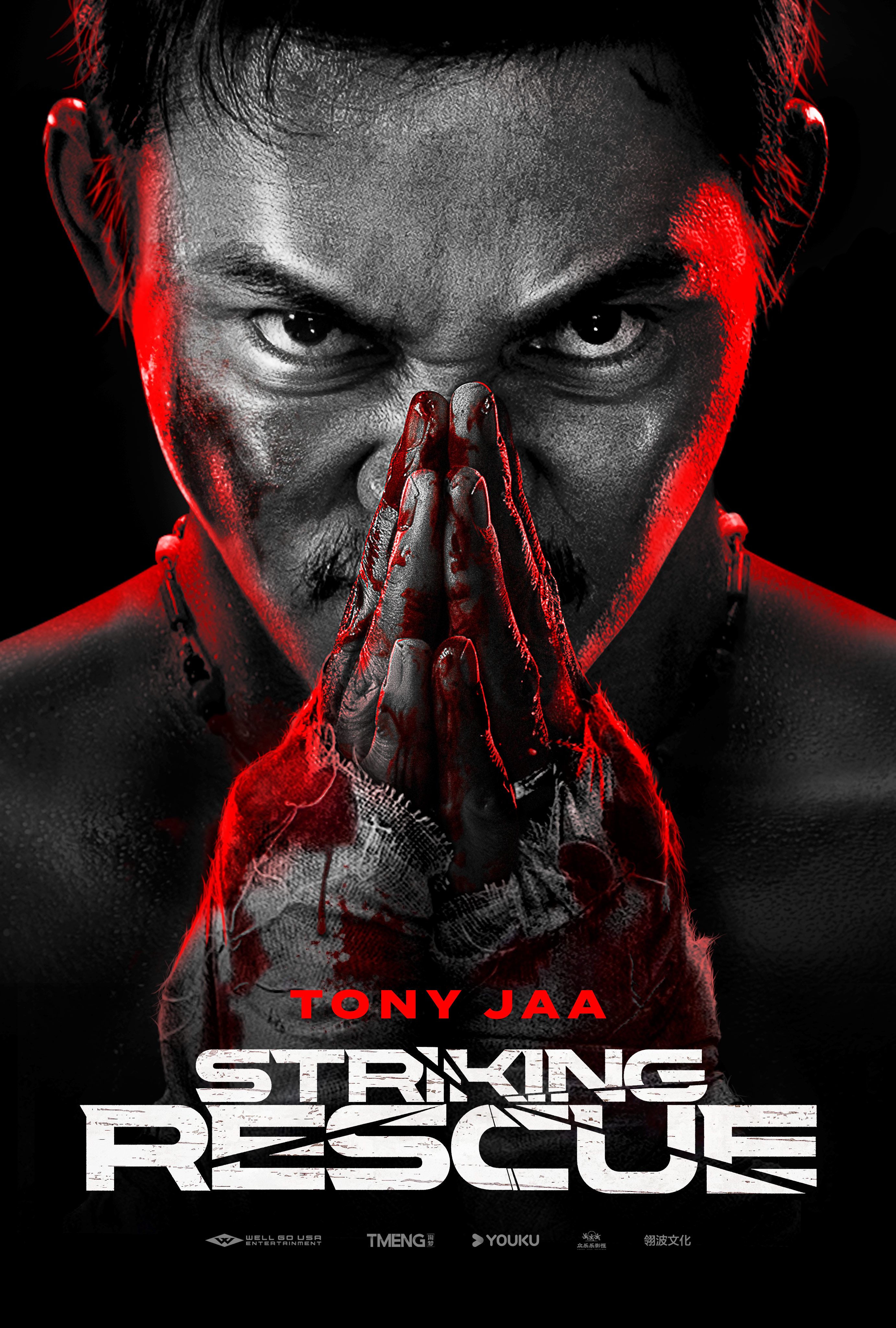
Striking Rescue (惊天大营救, Cheng Siyi, 2024)

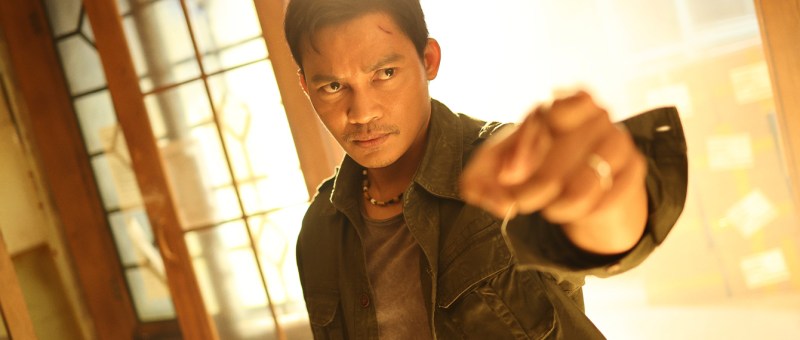
Once again set in a fictional South Eastern Asian nation largely inhabited by Mandarin speakers, Cheng Siyi’s action drama Striking Rescue (惊天大营救, jīng tiāndà yíngjiù) is a comeback vehicle for action star Tony Jaa who has mostly been relegated to cameos and supporting roles for the last decade or so. It’s also one of a string of recent films with a bee in its bonnet about the drugs trade, and a less obvious one about the powers of large corporations though in this case the fat cat turns out to be a good guy.

To begin with, we can’t be so sure about Bai An. A flashback reveals that his wife and daughter were just murdered in an apparent gangland killing, and now he wants revenge. After targeting a petty drug dealer, Bai An is told the man he’s looking for is He Yinghao (Philip Keung), the CEO of a phenomenally successful logistics business which has nevertheless been implicated for the smuggling of drugs. Something like this happened once before, but Yinghao is well connected and was able to make it go away just as he apparently has this time. Later he also reveals that his company is the only one that is exempt from customs checks, presumably because he’s bribed someone to make that happen.

We can’t really be sure about Yinghao, either. He doesn’t seem to know about the drugs but could be bluffing or attempting to shift the blame. His spiky teenage daughter Ting seemingly resents him for his authoritarian parenting and blames him for her mother’s death. She fires back at him that he behaves as if all problems can be solved with money, and she may have a point. After their convoy is attacked by drug gangs, Ting has no idea who to trust but continues to believe in her father’s innocence while unexpectedly teaming up with Bai, who wants to kill him, and trying to figure out what’s going on. The one thing she’s sure of is that she and her father really hate drugs because they caused her mother’s death, so if it really is him behind the local drugs trade then it’s even worse that she thought it would be. 

As the truth is gradually revealed, it allows both men to reclaim their paternity as Jaa becomes a kind of surrogate father to Ting. He attempts to protect her from this very dangerous world of drug dealers and criminals, though it may not have been all that far from the otherwise life of luxury she was used to leading. Her driver, Wu, had already taught her some martial arts skills for protection while she’s bullied by the thuggish boys at school who pick on her for being Yinghao’s daughter and a foreigner. But it’s Bai An who seemingly shows her what real fatherhood is like, which ironically causes her to reevaluate her relationship with Yinghao. He in turn is somewhat redeemed by his righteousness in the face of the gangsters as opposed to a snivelling new reporter picked up by Clay and forced to choose which son to kill before being killed himself.

Making Yinghao the hero may be a slightly awkward fit given that his business interests do not appear to be all above board which is one reason why he relocated here rather than stay in China where, the implication is, he wouldn’t have gotten away with it for so long. Indeed, the film ends with a series of title cards explaining that all of the wrongdoers, including Bai, were caught and punished. Nevertheless, as Bai later reminds us, it’s every man’s dream to be a hero to his daughter and both men have now a claim on “heroism”, at least in the eyes of the idealistic Ting. Though he could not save his own daughter, Bai steps in to protect Ting on several occasions. Fighting off hordes of thugs and one very weird female assassin, Jaa gets the opportunity to show off his martial arts skills once again while relentlessly pursuing his revenge and quest for answers about the death of his wife and child. But it’s also this defence of her that allows him to reconnect with his humanity and reclaim his image of himself as a father even while mired in his grief and anger towards a world full of corruption and betrayal.


Striking Rescue is available digitally in the US from April and on blu-ray from May 15 courtesy of Well Go USA.

US release trailer (English subtitles)
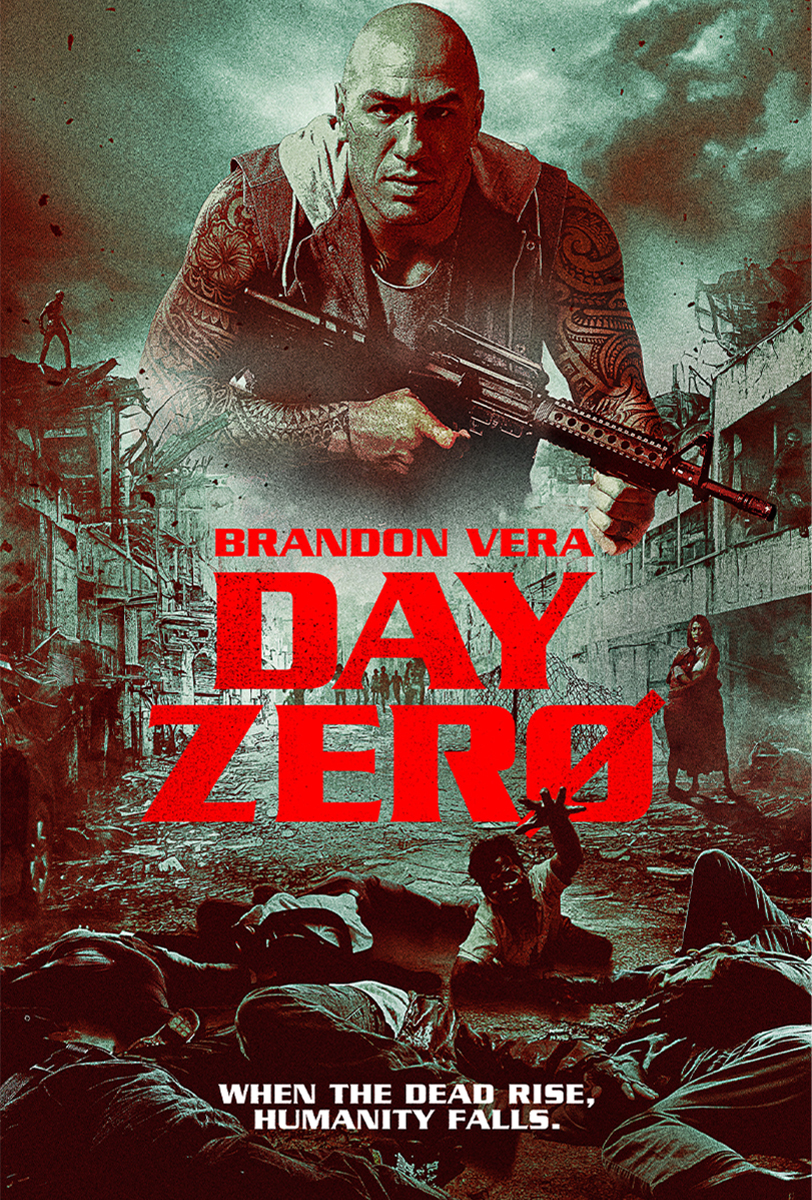
Day Zero (Joey De Guzman, 2022)

“This has been a really catastrophic day” according to a sympathetic, if not very reassuring, voice on the radio at the conclusion of Joey De Guzman’s zombie horror Day Zero. As the title suggests, the film takes place over 24 hours and marks the beginning but not end of the outbreak which will continue long after the end credits roll with ordinary people desperately trying to escape the seemingly endless stream of undead assailants. 

Perfectly placed to face off against them is Emon (Brandon Vera), though he’s spent the last few years in prison for serious assault resulting in permanent disability. Emon is a former US special forces soldier and has apparently been a model prisoner so has won his parole and is hoping to return home to his wife Sheryl (Mary Jean Lastimosa), and daughter Jane (Freya Fury Montierro), who is deaf, but his hopes are dashed when he’s surrounded by other prisoners who attack him when he sticks up for his timid friend Timoy (Pepe Herrera) at which point his release is cancelled. As it turns out, that doesn’t matter very much because of an outbreak of suspected Dengue fever which has mutated causing corpses to come back to life and attack people. The warden apparently had a moment of compassion before becoming a zombie and opened the gates telling the prisoners to escape and allowing Emon and Timoy to try to make their way back to Sheryl and Jane.

Like the similarly themed Train to Busan, the narrative arc is paternal redemption as Emon must reclaim his role as a father by becoming a man who can protect his family even if it’s true that it’s the same self-destructive forces, his capacity for violence, which enable him to do so. Even the warden had remarked on Emon’s intimidating physicality admitting that it’s unsurprising the other inmates largely leave him alone while his attempt to impress Sheryl by telling her how some guys hassling Timoy had walked away when they saw him coming backfires as she sees it as evidence that he really hasn’t changed and is still wedded to a destructive code of masculinity founded on dominance and violence. The implications of the fact he learned these skills as a member of the US military otherwise goes largely uncritiqued as does the presence of heavy weaponry including an assault rifle in the home of a local police officer.

Then again, police chief Oscar (Joey Marquez) later becomes a secondary enemy after turning on some of the other survivors when someone close to him is zombified though it’s Sheryl, not Emon, who must eventually contend with him. The two men present conflicting visions of fatherhood, one protective and the vengeful prepared to kill a child just to get revenge against her father. In any case, Emon must learn to channel his violence in a more positive direction by killing as many of the zombified locals as possible to clear a path for Sheryl and Jane to escape the apartment building where the family have become trapped. Though he may eventually be able to reclaim his paternity, it’s also true the problematic violence that allows him to do so may prevent him from reintegrating into his family in a more “normal” post-outbreak world. 

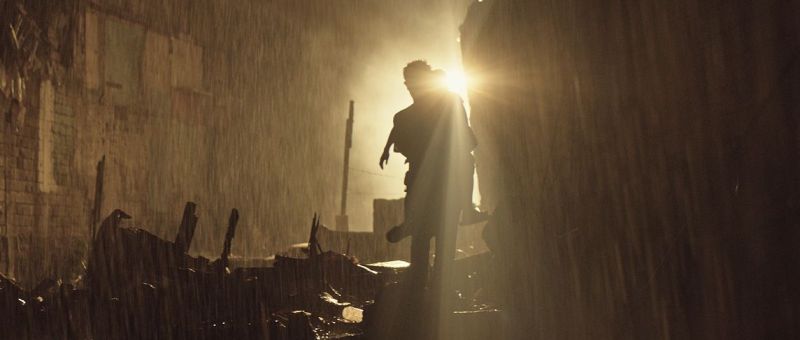
The film doesn’t have much time to go into its zombie mythology save the allusion to Dengue fever, but does give them the novel quality of falling asleep when not otherwise engaged allowing the survivors to escape through a life or death game of grandmother’s footsteps. This leaves Jane additionally vulnerable because of her disability but also grants her an advantage as the family can communicate through sign language to avoid waking the zombies. Most of the action is however left to Emon who staggers through darkened corridors armed with an assault rifle, pistol, knife, and finally just his fists facing off against the zombie hoards hoping to hold back the tide so his family can escape to look for safety and stability. Mostly serious in tone, the film allows a few moments of dark comedy such as a teenage survivor’s attempt to take care of a zombie using a rechargeable drill frustrated by its battery life, but mostly relies on the claustrophobic atmosphere of the darkened apartment block and heartwarming story of familial reconciliation along with intense zombie action to carry itself through.


Day Zero is available on Digital now in the US and released on DVD & blu-ray July 11 courtesy of Well Go USA.

Not My Mother’s Baking (不是我妈妈的烘焙, Remi M. Sali, 2020)

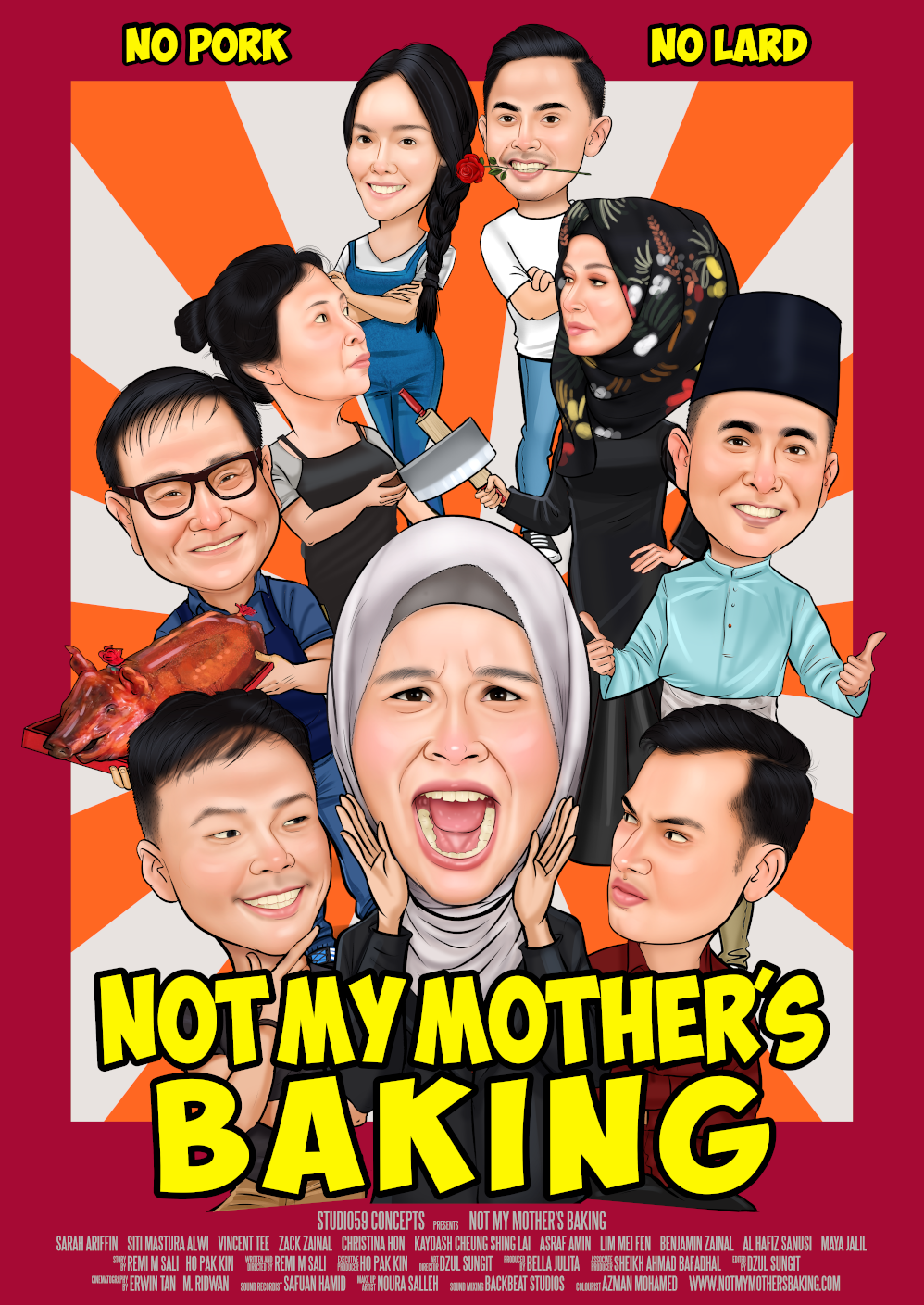
True love conquers all in Remi M Sali’s warmhearted Singaporean rom-com Not My Mother’s Baking (不是我妈妈的烘焙, Búshi Wǒ Māma de Hōngbèi). Spinning a Romeo and Juliet romance between an aspiring Malay Muslim cook and the heir to a roast pork hawker stall, Not My Mother’s Baking is as much about cross-cultural connection as it is about two young people finding their own directions and the strength to pursue them free of parental expectation as they figure out what it is that will really make them happy.

Daughter of celebrity chef Siti (Siti Mastura Alwi), Sarah (Sarah Ariffin) has always lived in her mother’s shadow, harbouring a mild sense of resentment towards her for neglecting her family in favour of her career. The little brother of her best friend Tini (Maya Jalil), Imran (Asraf Amin), who has long been carrying a torch for her suggests starting her own online cookery series to establish her brand as distinct from her mother’s setting her up with Edwin (Kaydash Cheung Shing Lai), an aspiring Chinese video producer. The two do not exactly hit it off thanks to some cultural misunderstandings, but begin to grow closer after they each reluctantly agree to work together in order to avoid having to spend more time with their families, Sarah potentially roped in as a temporary/free assistant to her mum and Edwin needed to help out at his parents’ hawker stand selling roast pork. 

Cheerfully narrated by Edwin’s upbeat dad Mr. Tan (Vincent Tee), this is a story which begins with a wedding and so we know right away that it all works out and Sarah and Edwin will get their happy ending, yet there are a lot of obstacles standing in the way of their burgeoning love story not least a lack of understanding that begins with Edwin somewhat insensitively advising Sarah to remove her headscarf to make a better impression in the videos. Ill-advised by Imran, Edwin is wary of telling Sarah about his family’s occupation firstly in case it causes offence and then later uncertain what level of interaction is permitted between them considering he’s been handling pork. Sarah’s cheeky brother Yusri (Benjamin Zainal) jokes that her potential love interest is not “halal”, but then her parents aren’t quite as against the idea as she might have assumed them to be while she finds herself somewhat conflicted, not least in her ambiguous relationship with the superficially “perfect” Imran whose cheesy pick up lines and tendency to try far too hard perhaps convince her that he might in fact be too perfect or at least the wrong kind of perfect for her. 

Meanwhile, she’s also trying to find her way out of her mother’s shadow as a cook, scoring a hit online when she retitles her show “Not my Mother’s Baking” and affectionately mocks Chef Siti’s signature TV star style claiming to be a little more real and authentic in contrast to her mother’s seeming affectation. In a meta twist, Sarah and her mother are played by real life mother and daughter celebrity chefs Sarah Ariffin and Siti Mastura Alwi, though their onscreen relationship is one defined by rivalry and frustrated connection. Chef Siti is understandably hurt by Sarah’s direct attack on her brand, but it does at least enable an overdue heart to heart which brings the two women closer as they work through their complicated relationship while bonding through their shared love of cooking. 

Edwin, meanwhile, has no real desire to take over the pork stand as his parents expect while no one seems to take his video career very seriously. In a slight twist, the Tans have decided Edwin rather than his sister Joyce (Lim Mei Fen) should take over not because she’s a girl but because she went to university and so they think it’s beneath her, stubbornly refusing to see that Joyce actually loves the business and has a few ideas how to bring it into the 21st century making full use of her skills and education. Unlike Sarah’s family, Edwin’s parents are less keen on a cross-cultural romance because they fear losing their son knowing that to marry a Malay muslim woman means not only leaving the pork shop behind but fully converting to her religion. 

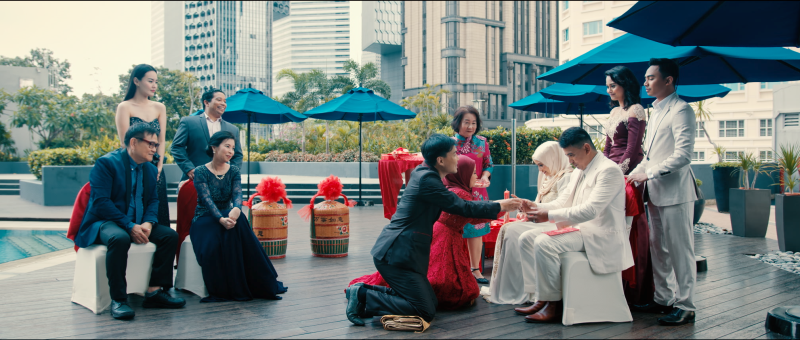
Yet as the female religious leader who accepts his conversion points out (Singapore is apparently the first country to allow women to approve a man’s conversion to Islam), there is no issue with Edwin keeping his Chinese name and it’s not as if he has to cut off contact with his family even considering the problematic nature of their occupation as demonstrated in the couple’s beautifully colourful fusion wedding at which a roast pig is served for the Chinese guests alongside halal Malay cuisine, while Edwin is followed into the ceremony by two large pink dancing lions and the nuptials are concluded with a traditional tea ceremony. A very millennial romance, Not My Mother’s Baking allows its young heroes to forge their own paths outside of those their parents might have chosen for them, proving that love really does conquer all while bringing together two very different cultures each united by the desire to see their children happy. 


Not My Mother’s Baking streams in Poland until 6th December as part of the 14th Five Flavours Film Festival.

International trailer (English subtitles)
Looking For? (你找什麼?, Chou Tung-yen, 2017)

“Looking for?” (你找什麼?, Nǐ Zhǎo Shénme?) is a common enough ice breaker on gay dating apps but when you get right down to it it’s a difficult one to answer. Struggling with the question himself as someone who came to the app scene fairly late, director Chou Tung-yen interviewed 60 men from all around the world to ask them what it is they’ve been looking for, why they use dating apps, and how they really feel about them. 

As might be assumed, many of the men are using the apps for casual hook-ups citing the convenience as a major motivating factor. In the old days you wrote letters and hoped to get a reply to your PO box, or you went to a bathhouse, or invested time in someone at a bar, but now you just exchange messages and get what you need when you need it. One older user even likens the experience to that of a supermarket or even ordering fast food, an entirely disposable satisfaction of needs. He’s not necessarily making a criticism, but others ask if the commodification of the community is really a good thing. Most assume that in a more open society and most especially within your own community there ought to be more freedom to be your authentic self, but the apps are so interested in finding a perfect match that they try to force those who use them inside their narrow lines, tagged as a particular brand with some feeling as if they have to change themselves to be “marketable” or no one is ever going to be interested in them. 

Social media of all kinds can foster feelings of inadequacy, but paradoxically others report that they use dating apps precisely in order to boost their self esteem. They like it when people like their photos and enjoy the feeling of being desirable, counting the messages roll in from various suitors to whom they may or may not choose to reply. Those who’d previously felt themselves unattractive have learned to find their niche and become more comfortable in their bodies able to own their sensuality in all areas of their lives. But then some have run the other way, obsessively working out becoming perhaps dangerously addicted to online praise as they continue to alter their physicality to better conform to an external idea of conventional attractiveness. 

And then there are the other dark sides, the inherent danger and the potential toxicity of a party culture that encourages excessive drug use. One young man who appears only in silhouette, his voice disguised, reveals that he thoughtlessly had unprotected sex while high, while another man explains that he eventually decided to leave rave culture behind after a friend took his own life while under the influence and another died of a short illness caused by longterm drug use during which his friends continued to take him out partying despite knowing that he was seriously ill. 

The man whose face appears in silhouette laments that he no longer thinks it’s possible to find true love online, though there are those for whom that is exactly what they were looking for and some of them seem to have found it. Several couples report that they met through a dating app and then stayed together, even later got married. Others however find that while using the app their desire to find a monogamous partner decreased, they enjoyed the ability to have various experiences instead. Still more are looking for friendship or companionship more than romance, someone just to have dinner or share a deep conservation with. 

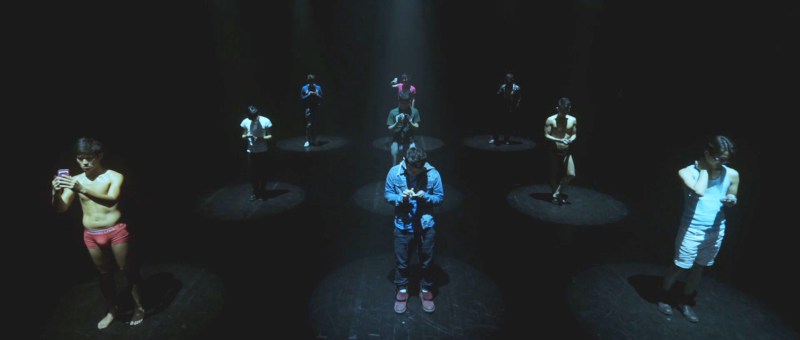
Towards the end, one interviewee reveals he no longer uses dating apps because he couldn’t figure out what it was he was looking for. Others drift away from them either because they found a stable relationship, began to age out or lost interest in the scene, whether having figured out what they want(ed) or not. Chou asks each of the respondents what love is, many of them talking wistfully about first love but seemingly jaded about grown-up romance or at least resigned to a cooler kind if perhaps still chasing that first flush of passion. Concentrating mainly on the interview sessions, Chou intersperses brief theatrical dance sequences and shots of himself captured alone at various points of transit in different cities, discovering at least a kind of commonality in the community of dating app users the world over who can understand each other even in the absence of shared language. Chou may not have discovered what it is he’s looking for, but has perhaps learned something else in his voyage through the trials of 21st century dating in that in the end you get out what you put in, which is to say what you’re looking for finds you whether you recognise it or not. 


Looking For? streams in the UK via Rio Player 20th – 26th November as part of this year’s Queer East.

Original trailer (English subtitles)

Repossession (Goh Ming-siu & Scott Chong Hillyard, 2019)

Reposession poster“I bet he doesn’t even know he’s in a cage” the “hero” of Repossession is told on asking his best friend if he thinks a hamster they’re looking at is happy on his little wheel. Like the rest of us, he’s ensnared by a cage called capitalism, but also by series of smaller cages inside it which range from toxic masculinity and persistent social conservatism, to the supernatural and the ghosts of past trauma. The biggest demon of them all, however, is pride, and as is so often the case, it’s those around him who will eventually pay the price.

50-something Jim Tan (Gerald Chew) is a success. He’s got a high ranking salaryman job which evidently pays enough for a multi floor apartment with its own private pool in one of Singapore’s most exclusive housing complexes, as well as a six figure luxury car. Given his relative seniority, it therefore seems slightly absurd that he’s pulled aside one day by a younger man from HR who tells him that he’s been identified as one of several employees to have underperformed in the previous year and is being a given a choice – accept a termination or agree to resign. Jim is upset. He insists on seeing someone higher up but all to no avail and is eventually fired after making a scene in an admin assistant’s office.

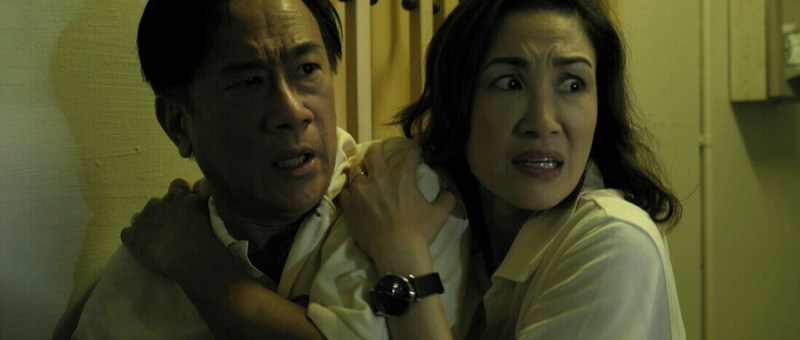
Jim tries to tell his wife, Linda (Amy Cheng), he’s lost his job, but loses the stomach for it when she starts telling him that their daughter’s (Rachel Wan) uni fees are going up and they’ve been invited to a swanky wedding at which they’ll be expected to contribute a hefty gift. Confident he can get another job despite the fact he’s over 50 and will be applying as someone fired from his last position, Jim becomes one of the many salarymen ghosts haunting the local parks, leaving for work as normal in the morning but with nowhere to go. All around him he starts hearing voices shaming him for being one of those men, a failure, someone who couldn’t provide for his family, a loser without a job too deluded to realise that men over 50 don’t get hired in Singapore’s competitive job market – something rammed home to him when he finds himself sitting on sofas next to fresh-faced graduates interviewing for entry level positions at a fraction of his previous salary.

Jim’s friend tells him that perhaps this is for the best, that perhaps the universe is telling him it’s time to take a break and play some golf. He asks him what the point of all this ceaseless toil really is, to which Jim poignantly answers that he did it for his family but the claim is exposed as somewhat hollow when he starts to hide the unpaid bills right next to his world’s best dad mug. Jim inhabits a conservative world in which men provide and women stay home. It’s important to him that he’s built a comfortable life for his wife and daughter in the status conscious society, but he’s entirely blind that in doing so he’s fenced them inside a cage of their own. Jim’s wife Linda gave up her job and started a charitable organisation, doing good deeds looking after vulnerable people and busying herself with philanthropy. Finally learning about their money troubles, she quite reasonably decides it’s time to get a paying job again but her determination to help save their family only further wounds Jim’s fragile sense of male pride as man who can no longer support his wife and daughter even as he “degrades” himself using his flashy car to pick up fares as an Uber driver.

Jim is a man haunted by a sense of failure stemming back to a traumatic incident in which he failed to protect his younger sister whose ongoing medical bills are another worry on top of his domestic responsibilities. He sees himself, rightly or wrongly, as pursued by a soul sucking monster which is why everyone is always telling him he looks “drained”, neatly explaining his recent spell of bad luck. The real “monster”, however is the one inside – latent male violence born of an inferiority complex and resentment towards a high pressure society in which economic success and social status are the only things that count. Jim struggles to “repossess” himself, while watching his demons try to repossess the people he loves, but never realises quality of the fear that he’s fighting. “What makes you think you’ve hit rock bottom?” a passenger ominously asks him. When you’re sitting this far from the bars you hardly notice the cage at all.


Repossession was screened as part of the 2019 Five Flavours Film Festival.

Original trailer (English, no subtitles)

Smaller and Smaller Circles (Raya Martin, 2017)

Smaller and Smaller circles poster“Time and forgetfulness are the allies of abusers” – a Catholic priest reminds his students as part of a history lesson regarding the supposedly bloodless revolution that led to the end of the Marcos regime. Festival favourite Raya Martin dials things back a little in adapting the award winning novel by F.H. Batacan, Smaller and Smaller Circles. Batacan’s novel is often described as the first real Philippine crime novel – something echoed in the ridiculous views of a lazy and self serving police officer who believes there are no serial killers in the Philippines, yet the Smaller and Smaller Circles of the title lay the blame for the heinous acts its centre not at the feet of an evil madman but at those of the society which so progressively damaged his soul as to render it irreparable.

Our hero is himself a priest. Father Gus Saenz (Nonie Buencamino) is a man of faith and compassion who, despite all the failings he can see in it, still believes the Church is the best way to help those in need. He is sickened and appalled by the institution’s intransigence when it comes to bad priests and is preoccupied by one in particular – Father Ramirez, whose inappropriate conduct with children he has doggedly reported for more than a decade only for him to continually escape punishment. In addition to the priesthood, Father Gus is also a teacher of philosophy and a forensic scientist who works as an occasional consultant to the local police. It is in this capacity that he comes to discover a series of murders involving young boys whose bodies were discarded on a local rubbish dump deprived of their hearts, genitals, and faces. With the assistance of his junior priest, Father Jerome (Sid Lucero), and a reporter (Carla Humphries) who was once his student, Gus attempts to solve the mystery behind this horrific series of murders before the killer strikes again.

Martin breaks with genre norms by giving us an immediate insight into the killer’s psychology as we witness the prelude to the killings while listening to his own explanations of why they must occur. The picture he paints of his childhood quickly frames his crimes as a murder of the self as the killer indulges in a compulsion to kill the weak, targeting teenage boys and stealing from them not only the breath of life but the spirit of it too. The first of our circles is the Church – the bad priests whose abuses are sanctioned by their organisation and mitigated by the “good” they leave behind. Father Ramirez was shuffled on and now works for a children’s charity but Father Gus’ attempts to warn the charity’s director fall on deaf ears and then cost him his funding. Only when Father Ramirez’ financial improprieties are discovered is his position finally questioned.

The second ring is poverty. All of these boys were poor and many of them were not identified right away because aside from their parents (if they had them) nobody was going to miss them. The film opens with a scene of children running over a rubbish dump and as the father of the first victim explains, his son was one of many who supported their struggling families by combing over the left overs of the better off looking for anything which might still be useful. Our third ring is bureaucracy – when Fathers Gus and Jerome meet the local councillor, they are surprised to find that she is efficient and committed, keen to do whatever it takes to look after her constituents even if it means going up against the Church or the wider government. However, she knew nothing of the murders and though she is quick to grant Father Gus all the access he needs, it is partly her own efforts to provide essential services to the poor which have enabled the crimes as those who claim to want to help others are really only helping themselves and wilfully turning those same mechanisms back on the people who need them most.

As a man of faith Father Gus does his best, refusing to give up on the killer, trying to ease his burden whilst in grave physical danger. Set in the Philippines of the late 90s, Smaller and Smaller Circles is filled with those still trying to come to terms with the traumatic past but finding its unpleasantness echoing in unexpected places. As such it finds unexpected resonance in the world of 2017 in which life is once again cheap and compassion thin on the ground.


Smaller and Smaller Circles is screening as part of the seventh season of Chicago’s Asian Pop-Up Cinema on 19th September at 7pm, AMC River East 21, plus introduction and Q&A with director Raya Martin.

Original trailer (English subtitles)

Toilet (トイレット, Naoko Ogigami, 2010)

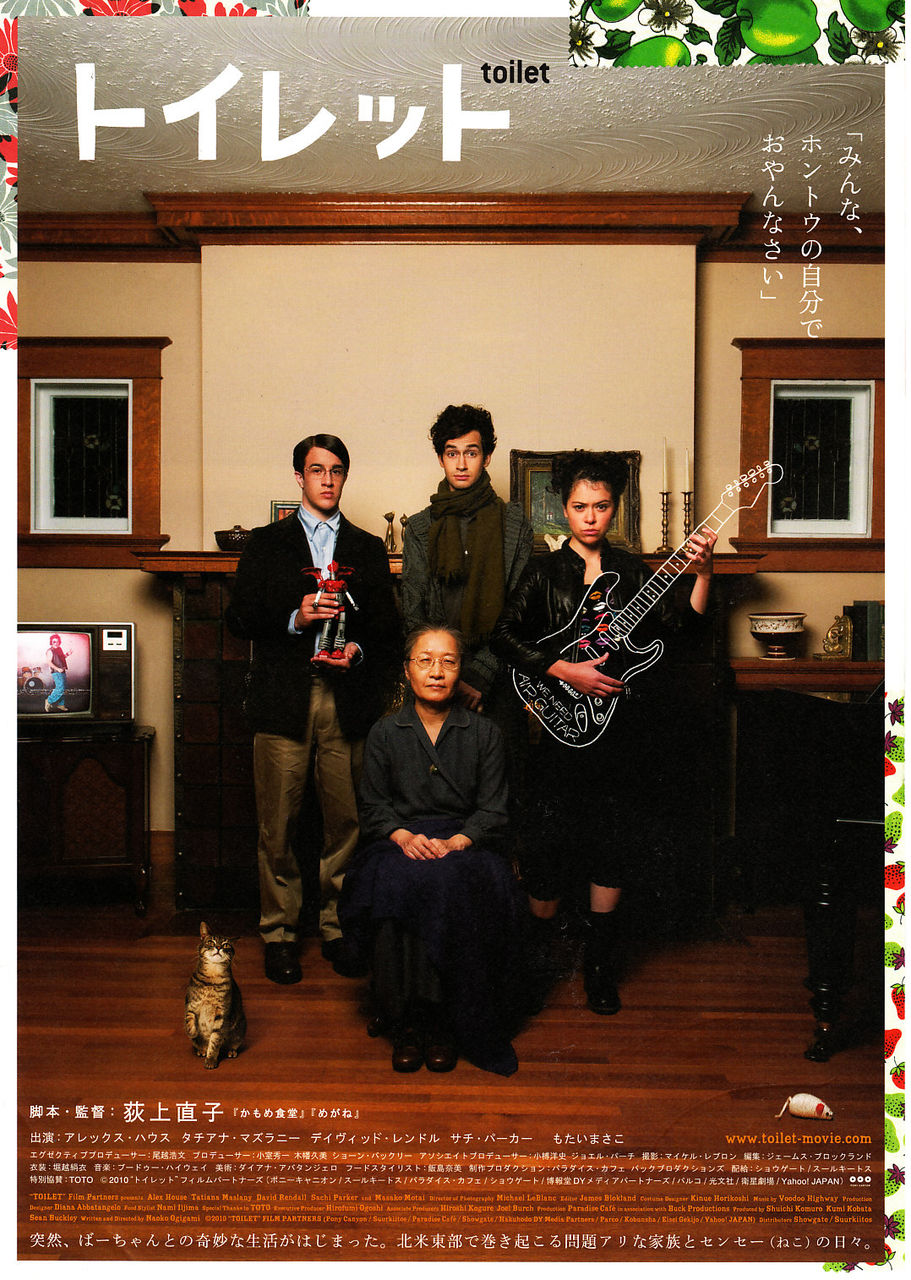
toilet posterBy accident or design, Naoko Ogigami’s career has existed to one side of Japan’s most representative genre, the family drama, in making a clear choice to embrace unusual or self defined family units. In Kamome Diner, a disparate group of runaway Japanese people became a kind of makeshift family and forged a mini-community with the friendly local Finns. Following the brief holiday sojourn of Megane, Ogigami returns abroad but this time to North America for her first English language feature. Once again it’s a tale of misfits learning how to fit, but it’s also a tale of the true nature of family which extends far further than mere blood relation.

30-something Ray (Alex House) is a hyper rational scientist who rejects all forms of emotion and attachments. Thus, he’s doing pretty OK even though his mother died just over a week ago. His siblings, neurotic poetess Lisa (Tatiana Maslany), and agoraphobic former pianist Maury (David Rendall) are not taking it quite as well. The other problem is that shortly before she died, Ray’s mother spent a lot of money tracking down her own long lost Japanese mother who is still living with them but speaks no English and and is still very affected by the death of the daughter she’d only just reconnected with. Ray resents having to look after “baa-chan” (Masako Motai) – a woman he’s hardly spoken to and has no connection with, but cannot exactly throw her out.

Ray, a rare male protagonist in an Ogigami film, is an emotionally repressed geek who pours all of his love and affection into collecting plastic Gundam models. Ironically enough, Ray, or”Rei” actually means “cold” in Japanese which is what his siblings often brand him. More “adult” than the others, he’d long left the family home and was barely present during his mother’s final days leaving Lisa and Maury to deal with everything alone. A sudden accident forces him to return and reassume his big brother role in trying to take care of the floundering Lisa and the fragile Maury.

After suffering a breakdown during a concert some years previously, Maury has been unable to leave the house. Discovering his mother’s old-fashioned sewing machine, he finds a new lease on life with an additional form of expression on top of his musicality. With Baa-chan’s help, he figures out how to use the machine and begins making skirts just like the ones his mother wears in the family photos, which he later wears for no particular reason other than it pleased him to do so.

Lisa, by contrast, seems set to walk a darker path after falling for a snarky, nihilistic poet from her creative writing class. His violent negativity seems to gel with her ongoing malaise, but all he really offers her is his own insecurities and embittered rigidity. Rediscovering the capacity to choose something else, Lisa finally finds the will to do something real and then asks baa-chan to help her triumph by doing something that’s sort of fake but will take her on the kind of journey she’s been looking for.

Having started out cold, distant, and resentful, Ray is brought back into the familial fold by accidentally bonding with his siblings in trying to understand Baa-chan. Played by Ogigami regular Masako Motai, Baa-chan never speaks but seems to understand what’s going on with her grandchildren on an instinctual level. Ray, half-hoping Baa-chan isn’t their real grandma, weighs up paying for a DNA test but ends up finding out more about himself than his other family members. Baa-chan maybe a kind of unknowable deity, hovering around the edges of the family with a giant wallet and wise smile, but she does seem to know what it is the orphaned siblings need and determines to gently nudge each of them in the right direction.

Deliberately moving away from Ogigami’s trademark style, Toilet adopts an even more heightened, detached approach than that seen in Megane but possibly suffers from hovering on the edges of on an established American-style of ironic comedy rather than striking a unique tone of its own. The toilet of the title refers to the well known Japanese “washlet” which becomes an unlikely point of connection between Ray and Baa-chan as he becomes increasingly intrigued by the strange sigh of disappointment she lets out each time she leaves their bathroom. Where take-away sushi failed, homemade gyoza and patience win out as Baa-chan imparts her silent wisdom in allowing the family to find themselves and each other in an atmosphere of unconditional love and support.


Original trailer (English with Japanese subtitles)