
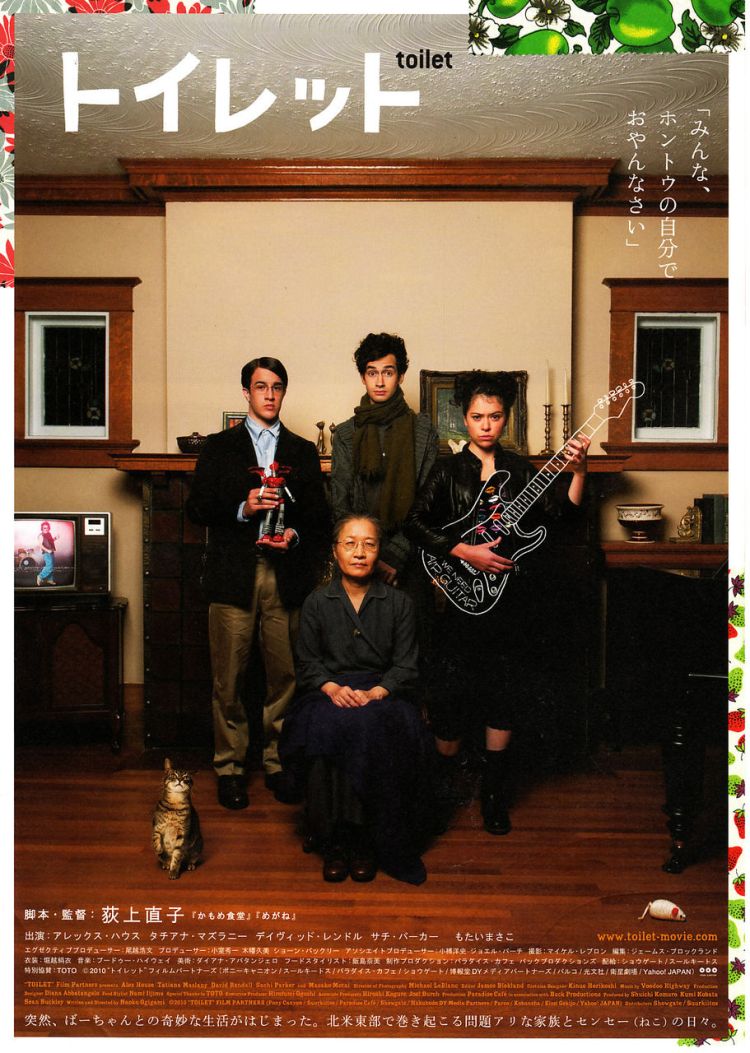
 By accident or design, Naoko Ogigami’s career has existed to one side of Japan’s most representative genre, the family drama, in making a clear choice to embrace unusual or self defined family units. In Kamome Diner, a disparate group of runaway Japanese people became a kind of makeshift family and forged a mini-community with the friendly local Finns. Following the brief holiday sojourn of Megane, Ogigami returns abroad but this time to North America for her first English language feature. Once again it’s a tale of misfits learning how to fit, but it’s also a tale of the true nature of family which extends far further than mere blood relation.
30-something Ray (Alex House) is a hyper rational scientist who rejects all forms of emotion and attachments. Thus, he’s doing pretty OK even though his mother died just over a week ago. His siblings, neurotic poetess Lisa (Tatiana Maslany), and agoraphobic former pianist Maury (David Rendall) are not taking it quite as well. The other problem is that shortly before she died, Ray’s mother spent a lot of money tracking down her own long lost Japanese mother who is still living with them but speaks no English and and is still very affected by the death of the daughter she’d only just reconnected with. Ray resents having to look after “baa-chan” (Masako Motai) – a woman he’s hardly spoken to and has no connection with, but cannot exactly throw her out.
Ray, a rare male protagonist in an Ogigami film, is an emotionally repressed geek who pours all of his love and affection into collecting plastic Gundam models. Ironically enough, Ray, or”Rei” actually means “cold” in Japanese which is what his siblings often brand him. More “adult” than the others, he’d long left the family home and was barely present during his mother’s final days leaving Lisa and Maury to deal with everything alone. A sudden accident forces him to return and reassume his big brother role in trying to take care of the floundering Lisa and the fragile Maury.
After suffering a breakdown during a concert some years previously, Maury has been unable to leave the house. Discovering his mother’s old-fashioned sewing machine, he finds a new lease on life with an additional form of expression on top of his musicality. With Baa-chan’s help, he figures out how to use the machine and begins making skirts just like the ones his mother wears in the family photos, which he later wears for no particular reason other than it pleased him to do so.
Lisa, by contrast, seems set to walk a darker path after falling for a snarky, nihilistic poet from her creative writing class. His violent negativity seems to gel with her ongoing malaise, but all he really offers her is his own insecurities and embittered rigidity. Rediscovering the capacity to choose something else, Lisa finally finds the will to do something real and then asks baa-chan to help her triumph by doing something that’s sort of fake but will take her on the kind of journey she’s been looking for.
Having started out cold, distant, and resentful, Ray is brought back into the familial fold by accidentally bonding with his siblings in trying to understand Baa-chan. Played by Ogigami regular Masako Motai, Baa-chan never speaks but seems to understand what’s going on with her grandchildren on an instinctual level. Ray, half-hoping Baa-chan isn’t their real grandma, weighs up paying for a DNA test but ends up finding out more about himself than his other family members. Baa-chan maybe a kind of unknowable deity, hovering around the edges of the family with a giant wallet and wise smile, but she does seem to know what it is the orphaned siblings need and determines to gently nudge each of them in the right direction.
Deliberately moving away from Ogigami’s trademark style, Toilet adopts an even more heightened, detached approach than that seen in Megane but possibly suffers from hovering on the edges of on an established American-style of ironic comedy rather than striking a unique tone of its own. The toilet of the title refers to the well known Japanese “washlet” which becomes an unlikely point of connection between Ray and Baa-chan as he becomes increasingly intrigued by the strange sigh of disappointment she lets out each time she leaves their bathroom. Where take-away sushi failed, homemade gyoza and patience win out as Baa-chan imparts her silent wisdom in allowing the family to find themselves and each other in an atmosphere of unconditional love and support.
Original trailer (English with Japanese subtitles)
 1969. Man lands on the moon, the cold war is in full swing, and Star Trek is cancelled prompting a mass write-in campaign from devoted sci-fi enthusiasts across America. The tide was also turning politically as the aforementioned TV series’ utopianism came to gain ground among liberal thinking people who rose up to oppose war, racial discrimination and sexism. It was in this year that Godzilla creators Ishiro Honda and Eiji Tsuburaya brought their talents to America with a very contemporary take on science fiction in Latitude Zero (緯度0大作戦, Ido Zero Daisakusen). Starring Hollywood legend Joseph Cotten, Latitude Zero gives Jules Verne a new look for the ‘60s filled with solid gold hotpants and bulletproof spray tan.
 Lav Diaz’s auteurist break through, Batang West Side is among his more accessible efforts despite its daunting (if “concise” by later standards) five hour running time. Ostensibly moving away from the director’s beloved Philippines, this noir inflected tale apes a police procedural as New Jersey based Filipino cop Mijares (Joel Torre) investigates the murder of a young countryman but is forced to face his own darkness in the process. Diaspora, homeland and nationhood fight it out among those who’ve sought brighter futures overseas but for this collection of young Filipinos abroad all they’ve found is more of home, pursued by ghosts which can never be outrun. These young people muse on ways to save the Philippines even as they’ve seemingly abandoned it but for the central pair of lost souls at its centre, a young one and an old one, abandonment is the wound which can never be healed.
 Rather than a Maenad in a divine frenzy driven by drunkenness, lust, and hedonistic fury, a “Bacchus Lady” is a humorous nickname used for the older women who solicit men in Korean parks by euphemistically offering to sell them a bottle of Bacchus energy drink. E J-yong reteams with veteran Korean actress Youn Yuh-jung to tell the tragic story of Youn So-young, hooker with a heart of gold and now a member of the older generation permitted to slip through the cracks in the absence of familial connections.
 Hur Jin-ho’s A Good Rain Knows (호우시절, Howoosijeol) was originally developed as a short intended to form part of the China/Korea collaborative omnibus film Chengdu, I Love You which was created as a tribute to the area following the devastating 2008 earthquake. However, Hur came to the conclusion that his tale of modern day cross cultural romance required more scope than the tripartite omnibus structure would allow and decided to go solo (Chengdu, I Love You was later released with just Fruit Chan and Cui Jian’s efforts alone). Very much Korean in terms of tone and structure, Hur uses his central love story to explore the effects time, memory, culture, and personal trauma on the lives of everyday people.
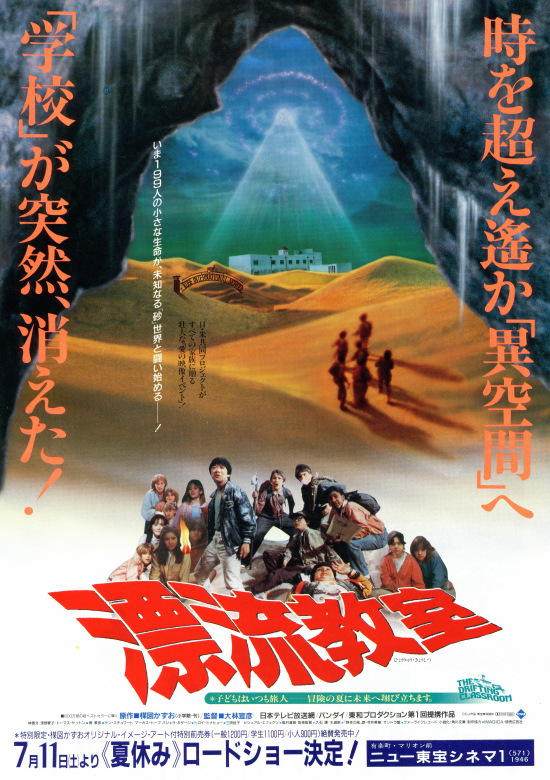 Nobuhiko Obayashi may have started out as an experimental filmmaker and progressed to a lengthy narrative film career but he remains best known for his “what the hell am I watching?” cult classic Hausu. Aside from his 1983 take on The Girl Who Leapt Through Time, very little of his other work has travelled outside of Japan. In the case of 1987’s The Drifting Classroom (漂流教室, Hyoryu Kyoshitsu), this is doubly surprising firstly because it’s based on a hugely popular manga by the godfather of horror comics Kazuo Umezu and secondly because it’s set in an international school so around 80% of the dialogue is in English.
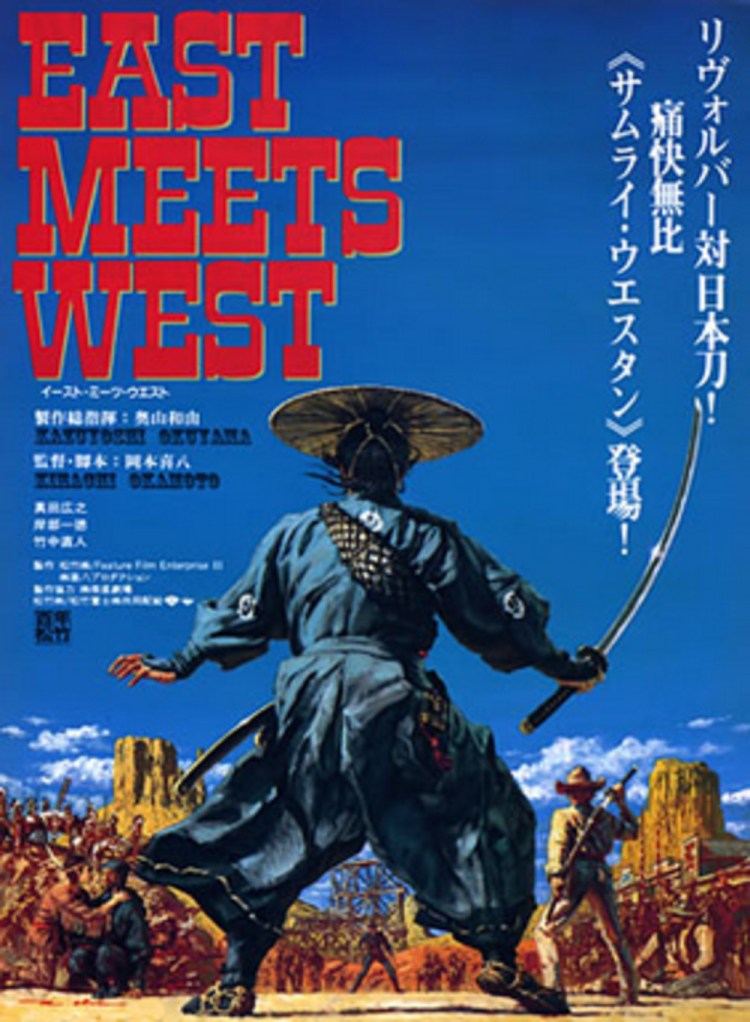 East has been meeting West in the movies from time immemorial and though it’s often assumed that the traffic is only running in one direction, in reality the river runs both ways. Kihachi Okamoto was always fairly open about his love of Hollywood westerns, particularly those of John Ford, and even mixed a fair amount of wild west style action to his 1959 Manchurian war movie, Desperado Outpost. Returning to the theme almost 40 years later in East Meets West (イースト・ミーツ・ウエスト), Okamoto retains his wry, ironic eye but adopts a tone much more in keeping with the slightly silly exploitation cowboy movies of the ‘70s.
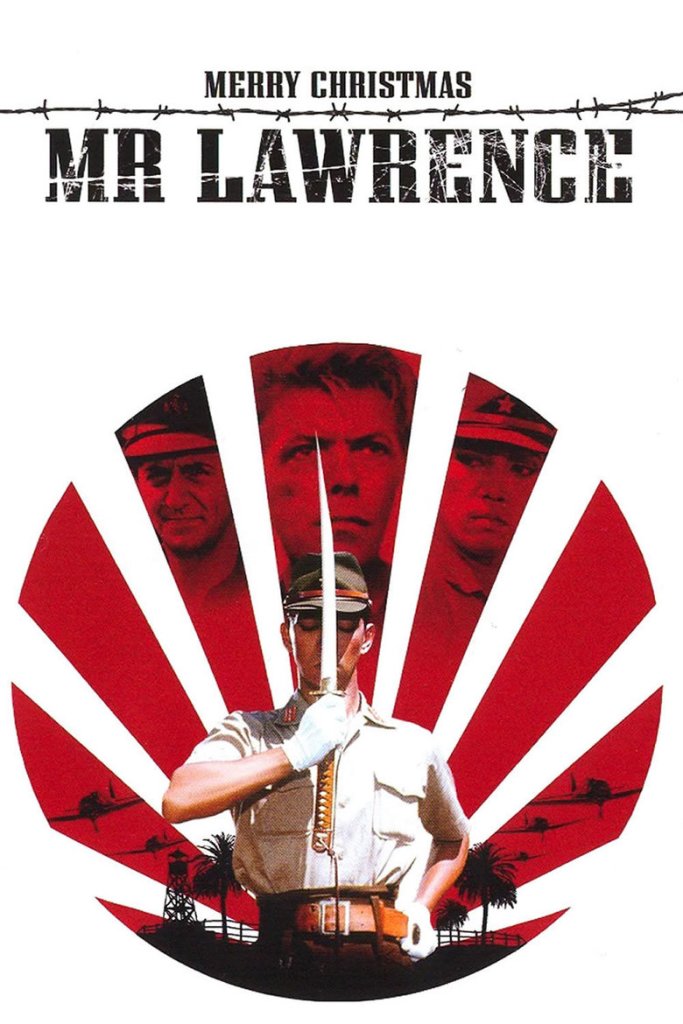 Of all the post-war Japanese filmmakers, the one who liked to twist the knife the most was surely Oshima. No subject too taboo, no pain too raw – he liked to find the sore spot and poke at it a little, if only in the hope of encouraging an accelerated healing, albeit one which would leave a scar to remind you that once you suffered. With Merry Christmas, Mr. Lawrence (戦場のメリークリスマス, Senjou no Merry Christmas) he takes an unflinching look at the treatment of Japan’s prisoners of war and contrasts the Japanese forces with the different attitudes of the (mostly) British soldiers held within the walls of the camp.
