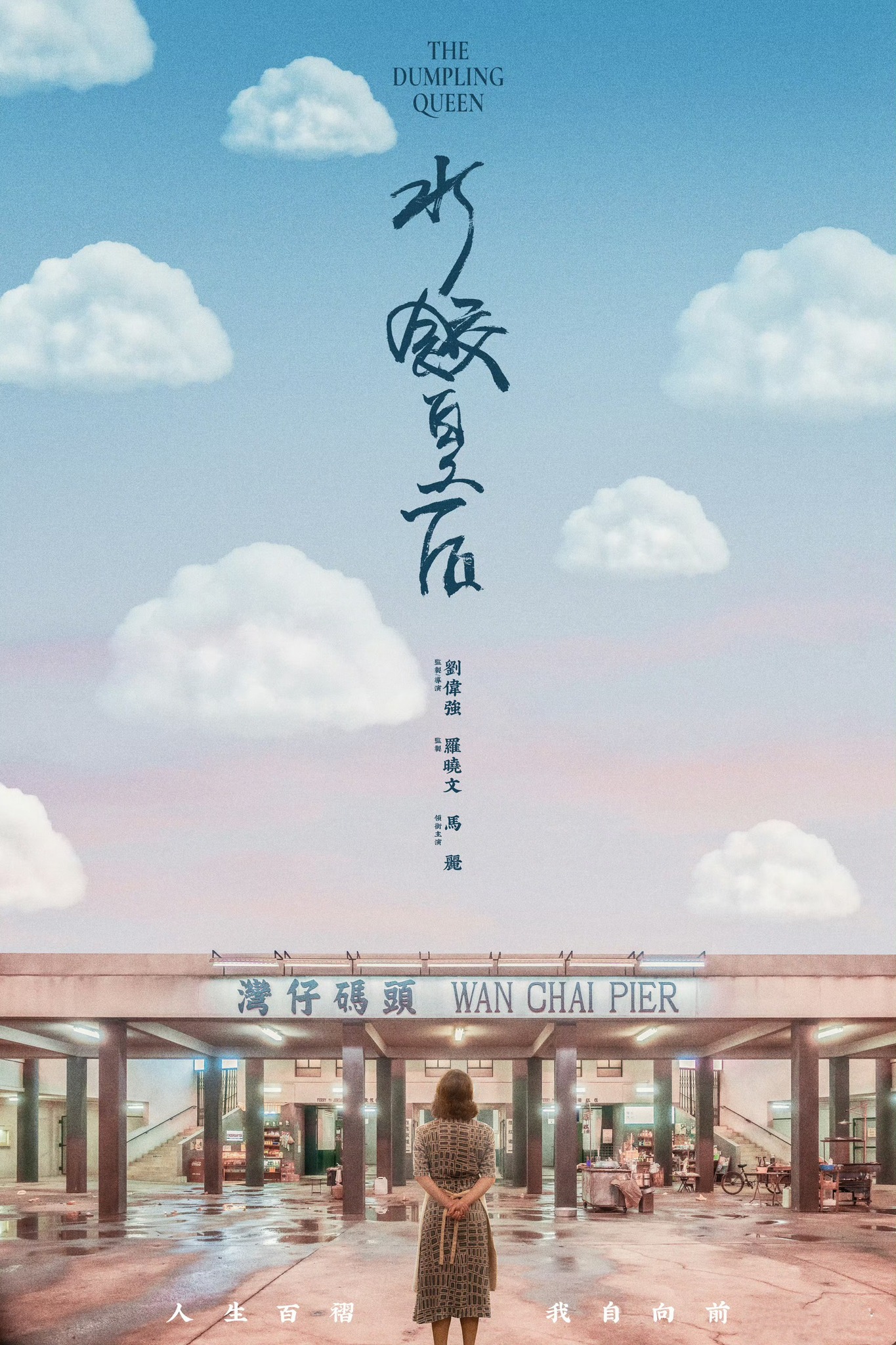
The Dumpling Queen (水饺皇后, Andrew Lau, 2025)

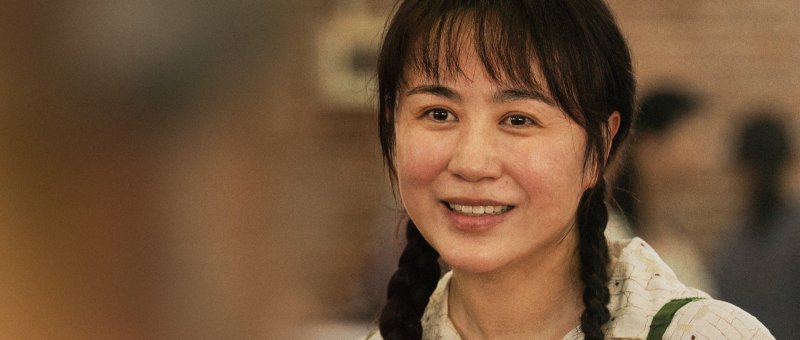
There are a lot of ironies and contradictions at the heart of Andrew Lau’s Dumpling Queen (水饺皇后, shuǐjiǎo huánghòu) inspired by the life of Zang Jianhe who founded the international dumpling empire Wanchai Ferry, but there’s no getting away from the celebratory joy it finds in the heroine’s hard-won transition from jilted spouse to successful entrepreneur. Then again, there might be something uncomfortable in the film’s framing and the repeated claim that Jianhe’s dumplings are about the warmth of familial bonds and reunion. Zong’s desire to kick back at American imperialism as manifested in the ubiquity of hamburgers and US-style delivery pizza by making Chinese dumplings accessible across the world is also an advocation for the One China philosophy in which the greater Chinese diaspora is connected as a family through “the taste of home.”

Beginning in 1977, the film is noticeably quiet about why anyone would be risking their lives to escape from Mainland China to Hong Kong, though this is what Jianhe is doing in her quest to be reunited with her husband, Hanzhou, who has been away for four years. Unfortunately, when she reaches the station at the border, Hanzhou’s mother (Nina Paw Hee-ching) rudely explains that she had him marry another woman in Thailand who has since borne him a son. Branding Jianhe a failure for giving birth to only daughters, she tells her that she can come with them but that she will be the second wife subservient to the mother of the family heir. She repeatedly claims this does not make Hanzhou a bigamist because Thai law supposedly gives him the right to marry more than one woman, though it seems the mother-in-law may not be aware that the pair were legally married in Mainland China as Jianhe’s traditional wedding photos would otherwise suggest. 

The fact that Jianhe is discarded for giving birth to daughters contributes to the film’s feminist undertones and sense of female solidarity as Jianhe strives to pass on the dumpling recipe she learnt from her own mother to the next generation of women and beyond. Jianhe must now find a way to fend for herself, which she eventually does through a combination of hard work, excellent business sense, and the supportive community around her. Though Jianhe and her children face some instances of prejudice against Mainlanders when they first arrive, they are helped by various people including enigmatic landlady Hong Jie (Kara Wai Ying-hung) who makes her a part of her boarding house community and tries not to pressure her about the rent out of consideration for the children,

But times are sometimes hard and Jianhe is directly contrasted with the woman across the way whose husband has a gambling problem and beats her. Having been injured in a workplace accident that leaves her unable to work as she had been before, Jianhe begins to feel hopeless and considers taking her own life only to be saved by her children and a neighbour who sells dessert soups, but the other woman is not as lucky and eventually makes a fateful decision, blaming herself for the man her husband has become. Jianhe is also given another shot at romance with a sympathetic policeman (Zhu Yawen) who comes from the same area of Mainland China and is taken by her dumplings, but he also wants to move abroad and Jianhe has already followed one husband to another country and it didn’t work out so well. It’s not so much that she sacrifices love for career success, the policeman could after all simply chose not to go, but that she no longer needs to compromise herself for marriage because she’s fulfilling herself through her business enterprise.

Just as the film doesn’t mention why Mainlanders came to Hong Kong, it doesn’t really go into why some Hong Kongers choose to leave save for a brief onscreen text mention about the beginning of the negotiations for the Handover though Jianhe is repeatedly keen to emphasise the universal Chineseness of her dumplings. She makes a deal with a Japanese department store, but threatens to walk when they try to make her change her packaging to bring it into line with their house style and thereby erase its cultural identity. She also refuses to allow them a monopoly after they demonstrate their lack of trust in her as a businesswoman, quickly realising she’s better off making deals with every supermarket on the island as well international flour companies. Jianhe is pretty quick to cotton to new technologies such as household refrigerators and the possibilities for frozen foods. But at the end of the day, she’s earnest and hardworking, sharing her success with her many friends who helped her along the way and always repaying kindness when she can. It’s an oddly utopian vision at times in which everyone seems to recognise Jianhe’s greatness and get out of her way, including a triad boss who helps her because she reminded him of his mother when she threatened one of his men with a meat cleaver,) but it also reinforces a sense of the One China family with the dumplings, now refined to suit local tastes, as the glue binding it together in the face of an onslaught of hamburgers and pizzas as harbingers of a cultural apocalypse.


International trailer (Simplified Chinese / English subtitles)

All U Need Is Love (總是有愛在隔離, Vincent Kok Tak-chiu, 2021)

All things considered, there are worse places to quarantine than a five star hotel especially if it’s free but then again forced proximity with those you love, or those you don’t, can prove emotionally difficult. An old school ensemble comedy, Vincent Kok’s All U Need Is Love (總是有愛在隔離) features a host of A-list stars each providing their talent for free in order to support the struggling Hong Kong film industry in the wake of the COVID-19 pandemic but as its name suggests eventually offers a small ray of hope that the enforced period of reflection may have fostered a spirit of mutual solidarity and personal growth. 

Kok opens, however, with a tense chase sequence as a shifty looking man runs from the authorities at the airport only to be picked up by the PPE-clad Epidemic Task Force who whisk him away to a secret location where he’s placed inside a weird bubble and interrogated by Louis Koo. Several more top HK stars including Gordon Lam fetch up in the bubble each implicating the Grande Hotel as the centre of of a coronavirus cluster at which point an order is given to place it under total lockdown requiring everyone inside to remain for a 14-day quarantine. 

Essentially a series of intersecting skits, Kok’s ramshackle drama nevertheless has its moments of satire as the hotel chief takes to the stairs for an inspirational speech in which he frequently slips into English and bizarrely likens himself to the captain of the Titanic because we all know how well that went. He spends the rest of the picture trying to escape without anyone noticing while his dejected security guard/brother tries to bump him off. Meanwhile, two gangsters develop a homoerotic bromance while plotting how best to profiteer off the pandemic through smuggling anti-COVID paraphernalia just as panic buying takes hold on the outside. 

Nevertheless, it can’t be denied that All U Need Is Love is also guilty of some rather old fashioned, sexist humour particularly in the antics of a pair of old men (Tony Leung Ka-Fai and Eric Tsang reprising their roles from Men Suddenly in Black) and their minions who misled their wives in order to embark on a sexual odyssey only to have their plans both improved and then ruined by the quarantine order. Meanwhile, a young couple who were in the hotel preparing for their wedding banquet ironically scheduled for the last day of the quarantine find themselves at loggerheads as the man gets cold feet over his fiancée’s bridezilla micromanaging, and her father undergoes a total makeover while continuously watching Japanese pornography in his room. 

Watching it all, a little girl, Cici, becomes the moral voice of the pandemic innocently hoping that nature will continue to heal itself even after the sickness ends. It’s she who shows the gangsters the error of their ways in pointing out that if they steal all the anti-COVID equipment then they will end up being more at risk because no one else is protected, while she also softens the heart of the hotel’s cynical manager to the point that he too makes a lengthy speech about becoming a better person thanks to his experiences during in the pandemic. 

During their enforced proximity friends and strangers have indeed needed to rediscover their love for their fellow man as they band together in mutual solidarity waiting for their freedom. Culminating in an oddly uplifting wedding decked out with balloons and messages from friends and family played via iPad, Kok’s anarchic ensemble farce does its best to discover a silver lining among the fear and anxiety of the pandemic as it ironically brings people together through driving them apart. Along with his A-list cast, Kok throws in a series of movie parodies and pop culture references from an impromptu rendition of Baby Shark to a surprise appearance from the Landlady from Kung Fu Hustle as well as a suitably random cameo from Jackie Chan. Repurposing the traditional Lunar New Year movie, All U Need is Love is a classic nonsense comedy designed to lighten the mood in these trying times while celebrating the essence of Hong Kong cinema through, arguably, its most idiosyncratic of genres. 


All U Need Is Love streamed as part of this year’s New York Asian Film Festival.

Original trailer (Traditional Chinese/English subtitles)

A Witness Out of the Blue (犯罪現場, Fung Chih-chiang, 2019)

“The world is not supposed to be like this” a failed revenger exclaims as he breathes his last in Fung Chih-chiang’s absurdist noir crime thriller A Witness Out of the Blue (犯罪現場) in which the career criminal on the run turns out to be the only noble soul. In a world like this, an eccentric policeman later suggests, good people can commit crimes while those who prosecute or are victimised by them are often no better than that which they claim to hate, eagerly taking advantage of a bad situation to take what they feel at least they are entitled to. 

It all links back to an unsolved murder, one of the many “crime scenes” referenced in the Chinese title. The dead man, Tsui (Deep Ng Ho-Hong), is believed to be part of a gang led by notorious underworld figure Sean Wong (Louis Koo Tin-lok) who was responsible for a botched jewellery store robbery which went south when the police stooge blew his cover trying to stop one of the gang members getting violent with a hostage. Wong shot the undercover policeman and opened fire on the police, eventually escaping our second scene of crime with the loot, while an old lady was so frightened she had a heart attack, and the store assistant who tried to raise the alarm was left paralysed. Police inspector Yip (Philip Keung Ho-man) who ran the undercover operation against Wong’s gang is convinced that Wong killed his associate during a dispute over dividing the loot and is fixated on bringing him in. Eccentric cop Larry Lam (Louis Cheung), however, is not convinced in part because he’s patiently listened to the only eye witness, a parrot, who says Wong didn’t do it. 

Nicknamed “garbage” and apparently a model cop until some kind of accident a few years previously, Lam is certainly an unusual law enforcement officer. For one thing, he’s in deep debt to loan sharks after borrowing money to start a cat sanctuary because he felt sorry for the abandoned felines left to cower in the rain in the face of the world’s indifference. Lam is convinced that he can get the parrot to talk, if only he can figure out how to communicate with it seeing as the only words it knows are “help me”, “genius”, and “idiot”. Based on the parrot’s testimony and his own gut feeling, Lam doesn’t think Wong is guilty so he has three other suspects: the son of the woman who died who works as a butcher at the market, the paralysed store assistant who has since got religion, and her security guard boyfriend (Andy On) who was rendered powerless in the attack, unable to protect her and apparently still carrying an immense amount of anger and resentment towards the criminals. Lam also comes, however, to doubt his superior wondering if his war against Wong is less in the pursuit of justice than revenge for the death of his officer. 

Yip and Wong are in some ways mirror images of each other, the morally questionable cop and the noble criminal. On the run, Wong takes up lodging with a cheerful woman named Joy (Jessica Hsuan) who is visually impaired but seems to think Wong is a good person even though she can’t “see” him. All of Joy’s other residents are extremely elderly, one of them sadly lamenting that the man who previously inhabited Wong’s room died peacefully in his sleep though he was “only 95”. “Money is no use after you die”, they tell him in an effort to persuade him to join in some 100th birthday celebrations, “life is all about contribution”. Quizzed on what he’d do with the money, all Wong wanted was to be able to sleep and as we see he seems to be suffering with some kind of psychosis, experiencing visual and auditory hallucinations of teeming ants and the ghostly voices of his former gang members. Yet he’s not “bad” in the way Yip characterised him to be, he never kills anyone he didn’t have to, is indignant about being accused of betraying his own, and is just as resentful towards Yip as Yip is towards him for the unfairness of his petty vendetta. 

But like all the best crime stories, all there is in the end is futility. The world shouldn’t be like this, but it is the way it is. Maybe Joy and her pensioners have it right, quietly living their lives of peaceful happiness being good to each other while evil developers breathe down their necks trying to destroy even their small idyll of goodness. Wong is drawn to them, but perhaps knows he’ll never belong in their world of infinite generosity though perhaps oddly he’s the only one who doesn’t really seem to care so much about the loot. Still, as Lam has it “Life is full of wonders” like crime-fighting parrots and eccentric policemen who stand in line buying limited edition trainers on behalf loansharks to finance their animal sanctuaries. Good people also break the law. “In memory of lost souls” reads the sign above the final scene of crime, and it’s not without its sense of irony. 


A Witness Out of the Blue streams in the US via the Smart Cinema app until Sept. 12 as part of this year’s New York Asian Film Festival.

Original trailer (English subtitles)