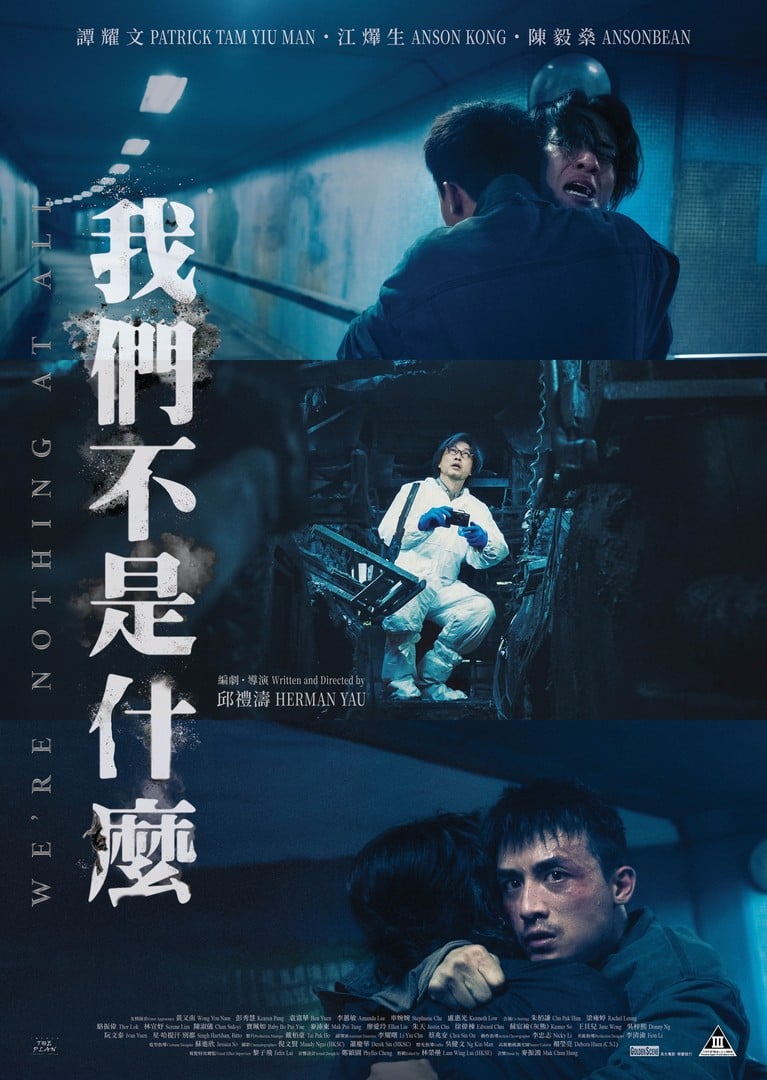
We’re Nothing at All (我們不是什麼, Herman Yau, 2026)

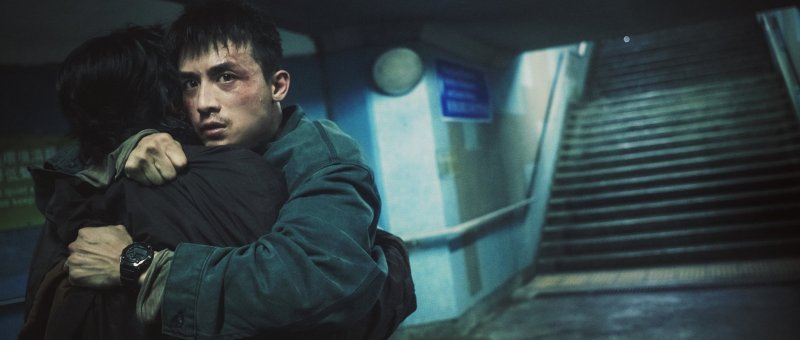
When a bus explodes in the middle of the city on Valentine’s Day, it opens a series of old wounds in Herman Yau’s self-financed state of the nation genre picture, We’re Nothing At All (我們不是什麼). The vision the paints of contemporary Hong Kong is indeed bleak. Radio and television reports talk only of economic downturn with businesses going bust while traditional spaces like wet markets are dying in the ever-changing city. Engaging with the idea of “lam chau” or mutually assured destruction, this is a Hong Kong on the brink of explosion.

Indeed, the bombers justify themselves that there are no innocent snowflakes in an avalanche and that, therefore, everyone else on the bus has contributed to the circumstances that have made their impossible. The largest of these is entrenched homophobia that has seen the two men exiled from mainstream society. Shy sketch artist Ike inadvertently hints at his sexuality in deflecting his parents’ marriage talk by snapping back that he cannot get married in Hong Kong which is another basic right he has been denied. He can only tell his family about his sexuality by writing a note and passing it through the letterbox. When his father reads it, he beats him and calls him a freak, telling him never to come home again. His family do not report him missing, and it seems it doesn’t occur to them that he might have been on the bus. 

Yau uses homosexuality more as a metaphor for marginalisation rather than a topic for exploration in and of itself. That said, it’s clear that their exclusion from mainstream society as gay men contributes to the poverty that otherwise defines their lives. Fai lives in a subdivided apartment and faces workplace exploitation when the construction site he was working at abruptly stops paying its labourers and his attempts to strike prove ineffective. He fares little better after getting a job at a restaurant with a similarly exploitative boss. Ike, meanwhile, is hassled by police while selling sketches with the implication being that law enforcement would rather go after ordinary people for small infractions while protecting the interests of large corporations. 

Ike at one point attempts to take his own life by jumping from a window in Fai’s subdivided flat, but is distracted by someone else jumping from a higher a floor. It’s at this point that Fai turns his anger back on society, asking him what the point of dying alone is and telling him that if they’re going to go, they should drag a few others along with them. Unable to see a way of transcending their circumstances, the two men can only envision freedom in death and stage a rebellion against the society they feel has rejected them.

The film obviously does not condone their actions, it also places the blame on societal and indifference particularly in the ways in which a wealthier middle-class world unsees men like Fai and Ike and prefers to move anything it finds unpleasant out of its line of sight. In the course of the investigation, the police move through an underground world of backstreet clubs where middle-aged women go to blow off steam and ageing sex worker Andrew desperately tries to stay afloat. Even veteran policeman Leung has his frustrations, admitting that he too came close to blowing the world to hell after he was forced out of the police force due to what he sees as an unfair double standard. 

Even so, his claim that he was saved by the love of a good woman reinforces a societal bias and suggests that the only path to success lies in self-repression. Despite his skills, Leung is depicted as something of a dinosaur with his desire to return to a world where smoking at the office was not only fine but encouraged. Aside from one young man, the other assistants mostly ignore him while he clashes with his more conventional colleagues, but in exploring the circumstances that led to the bus bombing, Leung begins to dig into a pressure cooker society and comes to the conclusion there were many such people like Fai and Ike or even himself who find themselves on the brink of explosion.


Trailer (English subtitles)

All U Need Is Love (總是有愛在隔離, Vincent Kok Tak-chiu, 2021)

All things considered, there are worse places to quarantine than a five star hotel especially if it’s free but then again forced proximity with those you love, or those you don’t, can prove emotionally difficult. An old school ensemble comedy, Vincent Kok’s All U Need Is Love (總是有愛在隔離) features a host of A-list stars each providing their talent for free in order to support the struggling Hong Kong film industry in the wake of the COVID-19 pandemic but as its name suggests eventually offers a small ray of hope that the enforced period of reflection may have fostered a spirit of mutual solidarity and personal growth. 

Kok opens, however, with a tense chase sequence as a shifty looking man runs from the authorities at the airport only to be picked up by the PPE-clad Epidemic Task Force who whisk him away to a secret location where he’s placed inside a weird bubble and interrogated by Louis Koo. Several more top HK stars including Gordon Lam fetch up in the bubble each implicating the Grande Hotel as the centre of of a coronavirus cluster at which point an order is given to place it under total lockdown requiring everyone inside to remain for a 14-day quarantine. 

Essentially a series of intersecting skits, Kok’s ramshackle drama nevertheless has its moments of satire as the hotel chief takes to the stairs for an inspirational speech in which he frequently slips into English and bizarrely likens himself to the captain of the Titanic because we all know how well that went. He spends the rest of the picture trying to escape without anyone noticing while his dejected security guard/brother tries to bump him off. Meanwhile, two gangsters develop a homoerotic bromance while plotting how best to profiteer off the pandemic through smuggling anti-COVID paraphernalia just as panic buying takes hold on the outside. 

Nevertheless, it can’t be denied that All U Need Is Love is also guilty of some rather old fashioned, sexist humour particularly in the antics of a pair of old men (Tony Leung Ka-Fai and Eric Tsang reprising their roles from Men Suddenly in Black) and their minions who misled their wives in order to embark on a sexual odyssey only to have their plans both improved and then ruined by the quarantine order. Meanwhile, a young couple who were in the hotel preparing for their wedding banquet ironically scheduled for the last day of the quarantine find themselves at loggerheads as the man gets cold feet over his fiancée’s bridezilla micromanaging, and her father undergoes a total makeover while continuously watching Japanese pornography in his room. 

Watching it all, a little girl, Cici, becomes the moral voice of the pandemic innocently hoping that nature will continue to heal itself even after the sickness ends. It’s she who shows the gangsters the error of their ways in pointing out that if they steal all the anti-COVID equipment then they will end up being more at risk because no one else is protected, while she also softens the heart of the hotel’s cynical manager to the point that he too makes a lengthy speech about becoming a better person thanks to his experiences during in the pandemic. 

During their enforced proximity friends and strangers have indeed needed to rediscover their love for their fellow man as they band together in mutual solidarity waiting for their freedom. Culminating in an oddly uplifting wedding decked out with balloons and messages from friends and family played via iPad, Kok’s anarchic ensemble farce does its best to discover a silver lining among the fear and anxiety of the pandemic as it ironically brings people together through driving them apart. Along with his A-list cast, Kok throws in a series of movie parodies and pop culture references from an impromptu rendition of Baby Shark to a surprise appearance from the Landlady from Kung Fu Hustle as well as a suitably random cameo from Jackie Chan. Repurposing the traditional Lunar New Year movie, All U Need is Love is a classic nonsense comedy designed to lighten the mood in these trying times while celebrating the essence of Hong Kong cinema through, arguably, its most idiosyncratic of genres. 


All U Need Is Love streamed as part of this year’s New York Asian Film Festival.

Original trailer (Traditional Chinese/English subtitles)

Unleashed (地下拳, Kwok Ka-Hei & Ambrose Kwok Yat-Choi, 2020)

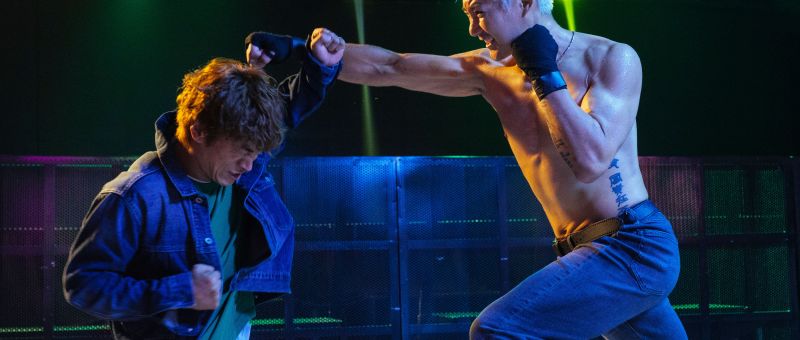
Victory lies in letting go in Kwok Ka-Hei & Ambrose Kwok Yat-Choi’s macho boxing drama Unleashed (地下拳). A familiar tale of a gym under threat, a master vulnerable, and a young man indignant, Unleashed isn’t claiming to be original but eventually wanders in an unexpected direction with the entrance of a young aspiring actress who finds herself at the mercy of a predatory industry, taking refuge in the ring as she undergoes research for an upcoming role as a top assassin. 

Fok Kit (Sun Zhen-Feng), the hero, is a champ of the underground boxing circuit living with his master Tak-bo (Ken Lo Wai-Kwong) at a struggling gym. When their landlord, Mr. Ho (Mok Wai-Man), comes calling, Tak-bo assumes he’s putting up the rent but the reality is even worse. Ho wants to sell the property after receiving an offer too good refuse, but he is willing to sell it to Tak-bo first if he can come up with the money. While the bank agree to loan him almost enough, Tak-bo is running a little short when he’s approached by an old pupil, Lok (Sam Lee Chan-Sam), with an offer of his own. He wants Fok Kit to face off against his guy Surat (Zheng Zi-Ping), a Thai boxer with a fearsome reputation. Tak-bo is reluctant, fearing for Fok Kit’s safety after hearing rumours that Surat killed a man in the ring, while it also turns out that there may be bad blood between himself and Lok who has not long got out of prison after being convicted of drug smuggling. Meanwhile, Fok Kit has taken on a new pupil, Effy (Venus Wong Man-Yik), who wants to join the gym to learn all the boxing she needs to know to convince in her role as an assassin in an upcoming movie. 

Left with no other options, Tak-bo gives in and lets Fok Kit fight Surat, but it goes just as badly as it could possibly go and not only does he lose but is rendered paralysed. In true boxing movie fashion, Fok Kit shifts from petulant unwillingness to undergo a risky operation that might allow him to walk again, to a full recovery and the desire for a rematch, but his scars are as much psychological as physical leaving him afraid to fight, seeing Surat’s smug grin in every challenger that swings a punch. He freezes, knocked out by even the weakest of opponents. Effy, meanwhile, is on an emotional rollercoaster of her own. The sleazy director she’s working with takes against her when she rejects his inappropriate advances, having all her scenes reshot and even using them as an excuse to use physical violence against her under the pretext of movie making. He eventually gets his comeuppance when a video of his behaviour is leaked and goes viral, but his drunken act of revenge, from which Fok Kit is unable to protect her because of his unaddressed trauma, may yet cost Effy her big break in leaving her with a prominent facial scar. 

As Tak-bo keeps telling him, however, the most important tool in boxing is not physical strength but passion, just as a good actor needs heart and dedication. “Clench your first too tight you may lose everything” Tak-bo insists gently guiding Fok Kit towards the power of letting go while he himself admits he’s been holding on to an insecurity that kept him out of the ring. A fear of losing, rather than the convenient excuse of his leg injury, had him give up the fight only now deciding that he’s tired of hiding from failure. If they want to save the boxing gym, they’ll have to face their respective fears in the form of the irredeemable big bad that is Surat, a total vacuum of humanity and unstoppable killing machine. The greedy and soulless are eventually made to pay a heavy price for their betrayal of the craft, while those who have true passion eventually prosper. Never quite managing to marry its twin plot strands with Effy’s desire to fight back against a sexist and exploitative industry taking a backseat to Fok Kit’s manly drama as he struggles to regain his confidence by beating his trauma in the ring, Unleashed moves swiftly towards it wholly expected finale but consistently lands its blows even in its willing conventionality.


Unleashed streamed as part of this year’s New York Asian Film Festival.

Original trailer (English/Traditional Chinese subtitles)

Images: © 2020 Orchid Tree Media