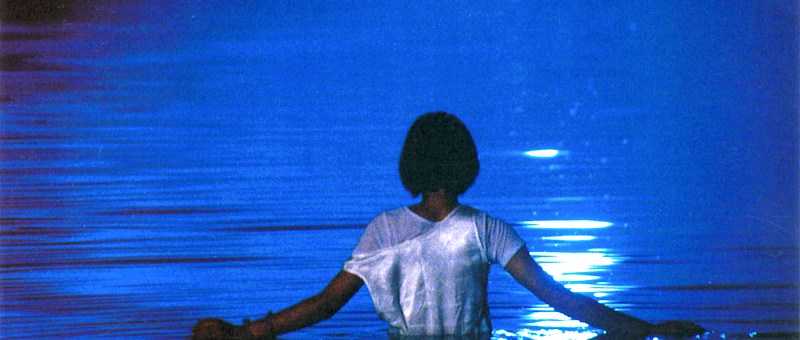

How does the world, or perhaps the cosmos, attempt to communicate with us? As Douglas Adams once did, August in the Water (水の中の八月, Mizu no naka no Hachigatsu) suggests it maybe through the dolphins who here at least seem to be quasi-mystical beings existing in what is really the lifeblood of humanity. In the film’s opening scenes, we’re told that the hero, Mao (Shinsuke Aoki) whose name means “true fish” and his friend Ukiya (Masaaki Takarai) have taken part-time jobs at a marine part to learn how to communicate with dolphins, but it’s the heroine Izumi, whose name means “spring” who eventually claims to have learned to do so.
At least, her final words are that the dolphins have taught her “the perfect balance” which has allowed her to open the floodgates both literal and metaphorical to return water to an arid land. We’re repeatedly told that there’s been a lengthy drought and a water shortage leading to rationing and locked pipes though the marine park remains open and the local festival goes ahead hinting at the ways in which we do and don’t value our natural resources. Izumi’s science teacher tells the kids that humans don’t contribute to the Earth and waste the resources that it gives us which might help to explain the gradual ossification of the planet including a mysterious condition known as the Stone Disease which causes people to collapse in the street as their organs harden.
Izumi’s sister Yo later remarks that she thinks humanity came from a distant planet long ago and yearns to go home but to do so we must become stone because water is a substance that exists only here on Earth. Turning to stone is however seen as quite a bad thing and also echoes a millennial distrust in increasing technology with TV pundits positing that if human brains were replaced with computer chips we wouldn’t need to worry about water shortages anymore. In Yo’s dream, after people’s brains have become computer chips they become connected to the universe and can transport their minds to the moon enabling them to communicate with anyone anywhere at any time.
But then despite the potential for communication that computers were only just beginning to offer in the mid-90s, Izumi warns her sister to stay away from them as they leave you vulnerable to the Stone Disease. The boys’ ultramodern friend, Miki (Reiko Matsuo), is a computer addict and it’s she who eventually manages to unlock parts of the mystery but paradoxically as if she were some kind of seer correctly predicting that an accident will befall Izumi on 23rd August and discovering a prophecy that in the year humanity neglects the water god two meteorites will fall in close proximity and drought will follow. Only a ritual conducted by the chosen one under a full moon will be able to cure it. Two child-like old men also warn that nothing’s been the same since they moved the old shinto shrine over which there have also been sightings of UFOs.
After the diving accident in which Izumi plunges meteor-like into the pool, she herself feels as if she’s been split in two almost like the world itself which is divided between these ancient beliefs and modern advancements that have perhaps blocked the flow that once allowed us to communicate with each other and with the universe. A psychiatrist suggests that Izumi may be suffering with sudden onset schizophrenia as a result of her accident and that all of her talk about secret messages from dolphins and mysterious aliens who want to turn the world to stone is nothing but confused delusion though in the film’s closing scenes she herself takes on a supernatural quality as a kind of etherial saviour figure who realises that she may have been dead ever since the accident and is now something different, different and distant as her sister puts it, charged with the mission of rejuvenating a human spirit long since dulled by mechanisation.
In contrast to Ishii’s earlier films which brimmed with punkish energy, August in the Water unfolds at a leisurely pace with eerie yet nostalgic mood music and a new age sensibility speaking to millennial youth with a sense of turn of the century anxiety and human remorse that perhaps we’ve already poisoned our futures. Nevertheless, despite his youthful heartbreak, what Izumi bequeaths to Mao and humanity itself is seemingly the ability to live in the abundant fullness of existence until that existence is done and we return once again to water and the comforting embrace of the Earth.
August in the Water screened as part of this year’s JAPAN CUTS.
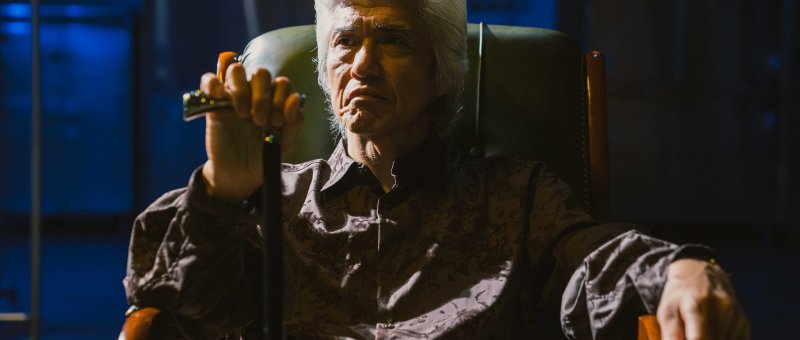
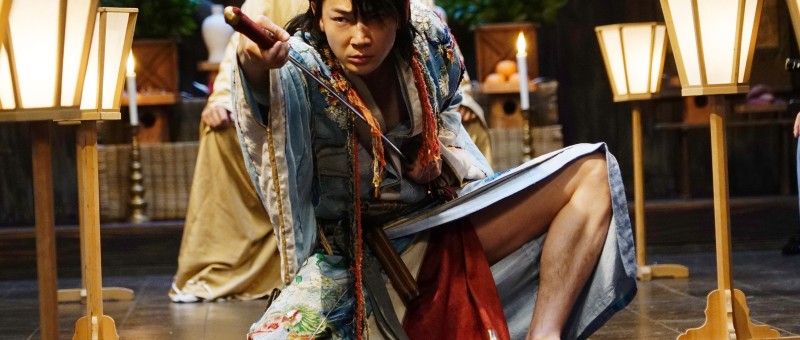
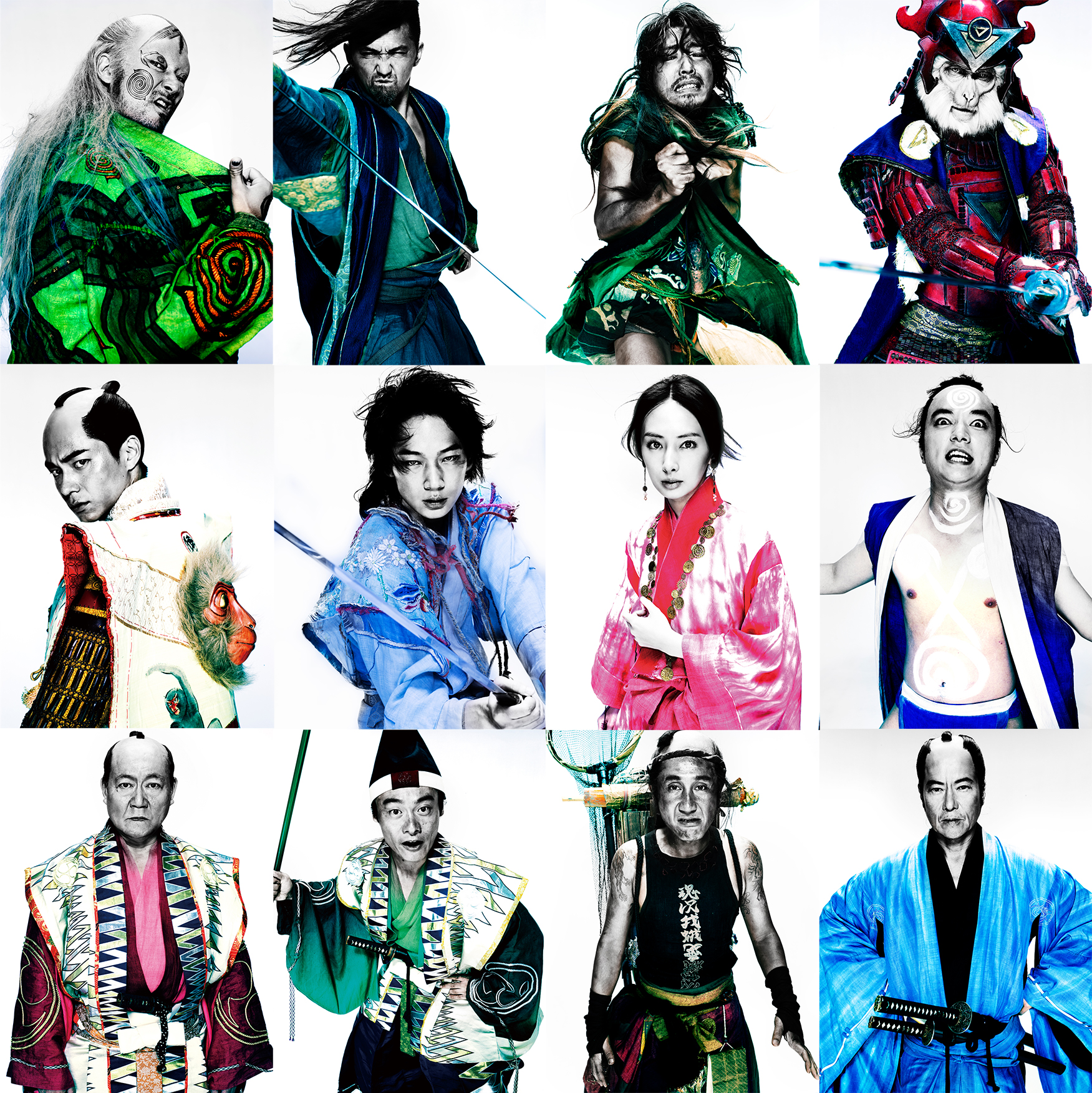



 Not your mama’s jidaigeki – the punk messiah who brought us such landmarks of energetic, surreal filmmaking as Crazy Family and Burst City casts himself back to the Middle Ages for an experimental take on the samurai genre. In Gojoe (五条霊戦記, Gojo reisenki), Sogo Ishii remains a radical even within this often most conservative of genres through reinterpreting one of the best loved Japanese historical legends – the battle at Kyoto’s Gojoe Bridge . Far from the firm friends of the legends, this Benkei and this Shanao (Yoshitsune in waiting) are mortal enemies, bound to each other by cosmic fate but locked in combat.
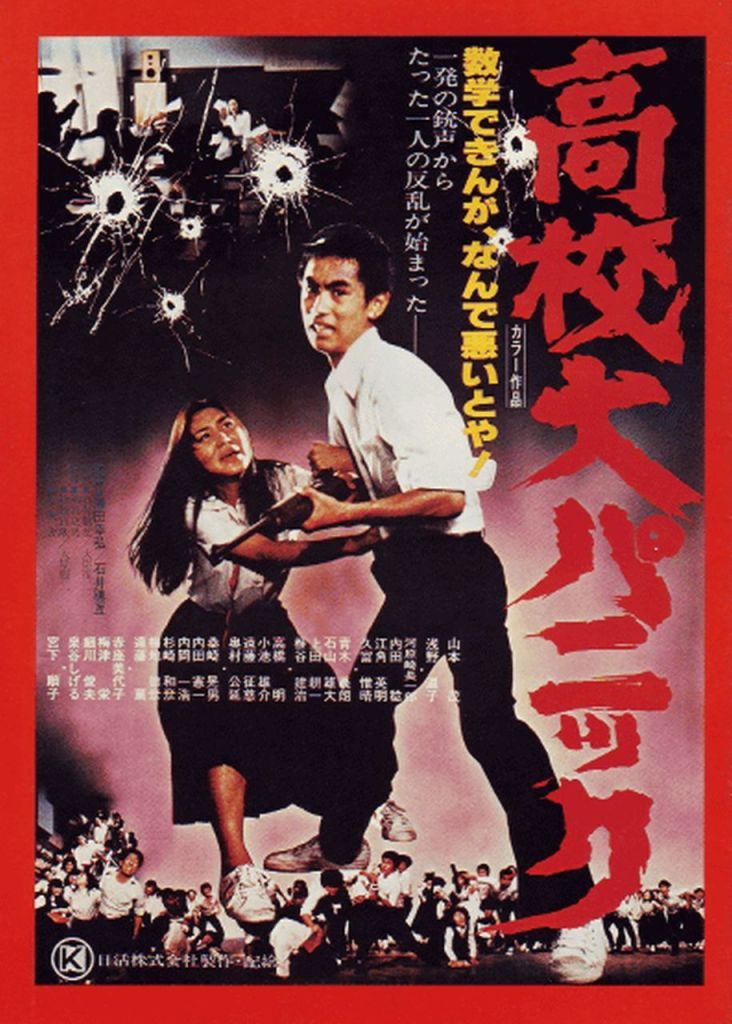 Sogo (now Gakyruu) Ishii was only 20 years old when Nikkatsu commissioned him to turn his smash hit 8mm short into a full scale studio picture. Perhaps that’s why they partnered him with one of their steadiest hands in Yukihiro Sawada as a co-director though the youthful punk attitude that would become Ishii’s signature is very much in evidence here despite the otherwise mainstream studio production. That said, Nikkatsu in this period was a far less sophisticated operation than it had been a decade before and, surprisingly, Panic High School (高校大パニック, Koukou Dai Panic) neatly avoids the kind of exploitative schlock that its title might suggest.
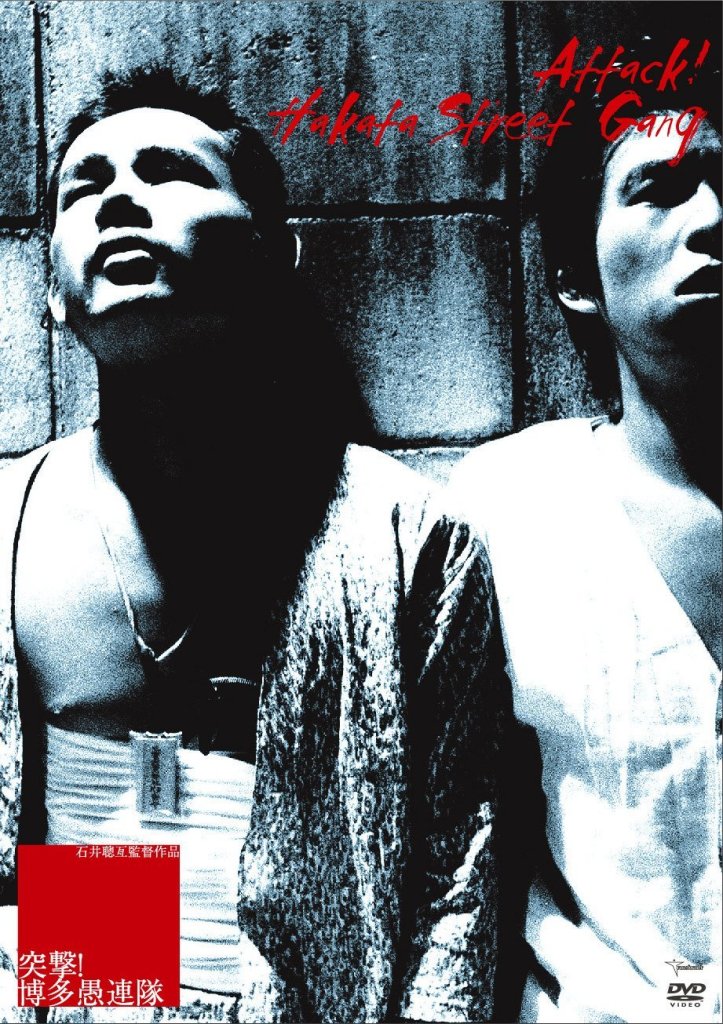 Sogo Ishii (now Gakuryu Ishii) was one of the foremost filmmakers in Japan’s punk movement of the late ‘70s and ‘80s though his later work drifted further away from his youthful subculture roots. Perhaps best known for his absurdist look at modern middle class society in The Crazy Family or his noisy musical epics Crazy Thunder Road and Burst City, Ishii’s first feature length film is a quieter, if no less energetic, effort.
 Windows on Worlds