
Magical Secret Tour (マジカル・シークレット・ツアー, Chihiro Amano, 2026)

When her husband falls into a coma and she discovers he’s left them in huge amounts of debt due to an undisclosed gambling problem, an ordinary housewife finds herself at the mercy of an already strained society in which it seems everyone is struggling to the extent that they have no capacity to listen to other people’s troubles. Inspired by a real-life case in which a group of women was arrested for smuggling gold into the country in 2017, Chihiro Amano’s lighthearted crime drama Magical Secret Tour (マジカル・シークレット・ツアー) is a condemnation both of a society ruled by money and the various ways that women are still expected to clear up the messes of irresponsible men.

Wakako (Kasumi Arimura) is quickly made to feel guilty for not having noticed anything wrong with her husband or their family finances while also expected to shoulder the burden of the repayment plan to his former employer to cover the money he embezzled on top of his hospital fees which must now be paid in full because he was unemployed and had no insurance. When she tries to turn for her own family for her help, her mother is not happy to see her and seems put out that she’s turned up unexpectedly. It seems their family garage business is in trouble while they are already under strain due to needing to pay for their bedridden grandfather’s medical treatment. Her mother leaves abruptly before Wakako has the chance to explain the situation denying her the possibility of both financial assistance and emotional support. 

Apparently ineligible for any kind of government assistance, Wakako’s attempts at job-hunting fail because she is a mother of two with one only an infant and has also been out of the workforce for too long for any career experience to count. Even when her husband does eventually make a partial recovery, he blasts her for neglecting her responsibilities and overburdening his mother by asking for help with childcare. Despite having let her down so badly, he insists he’ll get a job once he’s better and discourages her from continuing to work even though she tells him that she enjoys it and finds it fulfilling. To that extent, her experiences have shown her that she did not really need to be dependent on a man for money as society somewhat encouraged her to be and could also look for fulfilment outside the home as an independent woman. 

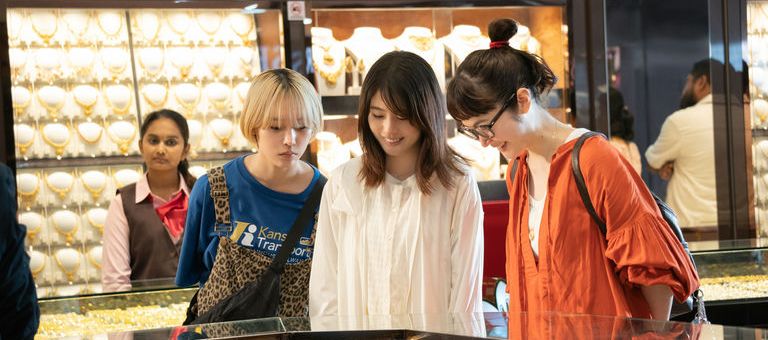
Nevertheless, the only work she can find means turning to criminality, first by agreeing to a loan shark’s dodgy gold-smuggling scheme by taking the kids to Singapore for a few days and then returning laden down by gold bars they smuggle through customs to avoid importation taxes. While there she meets two other women in similar situations. Kiyoe (Haru Kuroki) is a scientific researcher in her early 40s who faces persistent sexism at work where her boss steals credit for her discoveries and faces no consequences for fiddling his expenses. Unable to find a new position thanks to a poor publication history, she wants the money to provide for her future. Mayu (Sara Minami), meanwhile, is trying to escape her toxic mother while pregnant herself and working as a bar hostess. 

The women justify themselves that what they’re doing is basically a victimless crime and just really a bit sneaky rather than morally wrong even if aware it’s illegal. A disclaimer at the end of the film implies the law has been tightened since 2017, but the stakes are also fairly low as it seems they’d mostly likely just be asked to pay the tax if they got caught, so trying to smuggle it seems like a no-brainer to them. Even so, the film skirts around Wakako’s involvement with the criminal gang from whom one would expect some sort of payback after she runs off with some of their gold after her own attempt to run a similar business inevitably runs into trouble. Instead it focuses on her sense of isolation in which the mother can end up being pushed out of both families, disregarded and taken for granted while expected to pick up her husband’s slack even if he hasn’t kept his part of the bargain by providing financial stability while otherwise absent from the domestic space. The only way to make a man play his part in child-rearing might ironically be divorce, though it seems likely it might just be him overburdening his mother this time. In any case, Wakako’s magical secret tour does seem to have led her to a more fulfilling place even it may in other ways be bittersweet. 


Magical Secret Tour screens as part of this year’s New York Asian Film Festival.

Trailer (English subtitles)
Happyend (Neo Sora, 2024)

The central thesis of Neo Sora’s mildly dystopian drama Happyend is that the real looming earthquake the powers that be are so afraid of is a youth revolution. But the film seems to ask if that’s something that’s really achievable or if idle teenage fantasies of a better world will soon be snuffed out by its seeming impossibility or the internalised desire for a conventionally successful life lived under a system they know to be corrupt, unfair, prejudiced, and staunchly hierarchal.

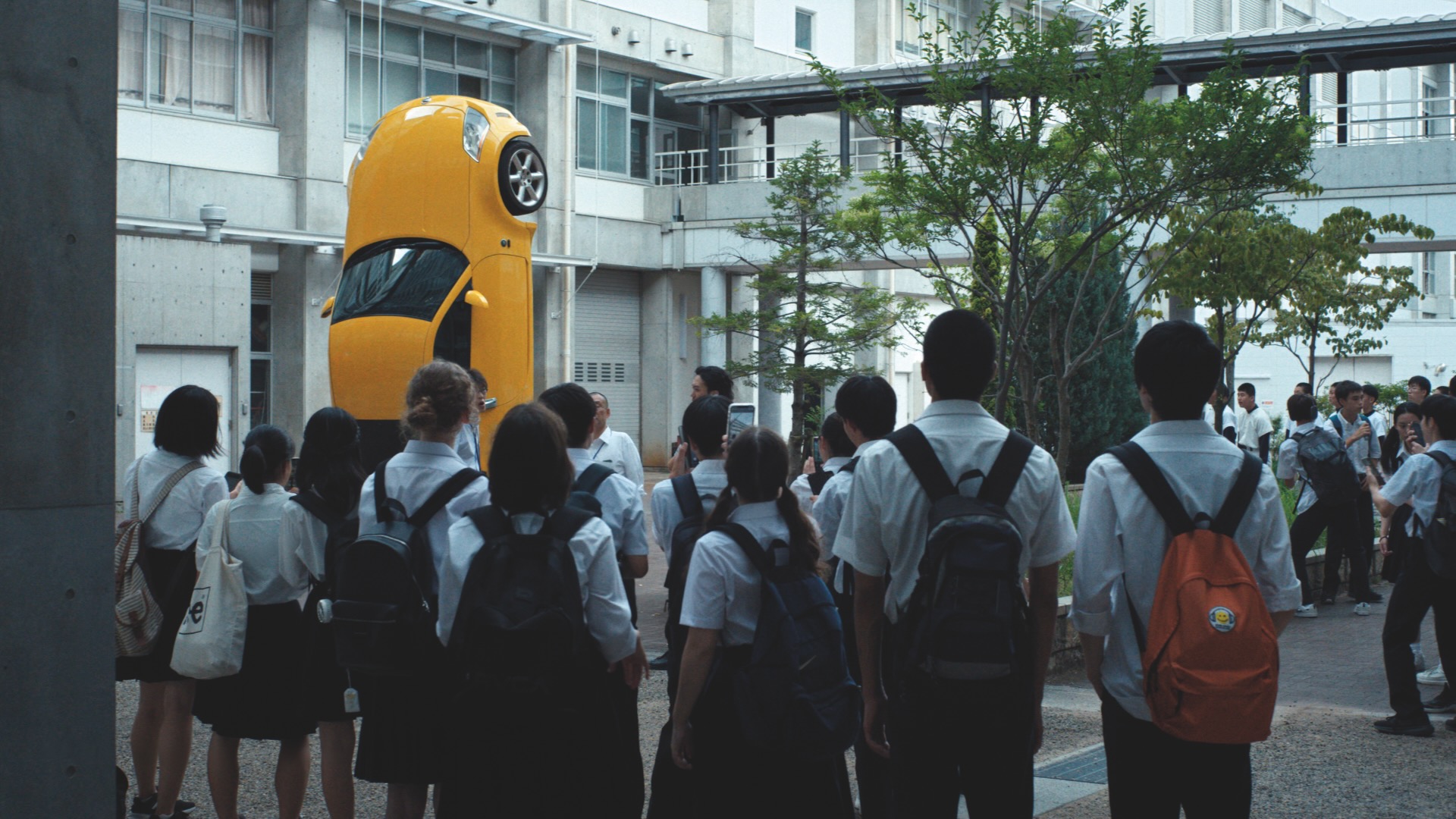
Thus the school at its centre becomes a microcosm for the society at large. Set slightly in the future, though with a retro sensibility, the film revolves around a close group of friends who are nevertheless pulled in different directions as they approach the end of high school while becoming aware of the destructive effects of an authoritarian educational system on children across the nation. The priggish headmaster (Shiro Sano) is involved in dubious schemes with local government and high tech companies and drives a flashy yellow sports car to work. Somehow the teens manage to prank him by standing it on its end like some kind of monolith to his hypocrisy and corruption. The headmaster quickly brands the obviously harmless prank as a “terrorist” action and uses it to crack down on lapses of discipline in the school. 

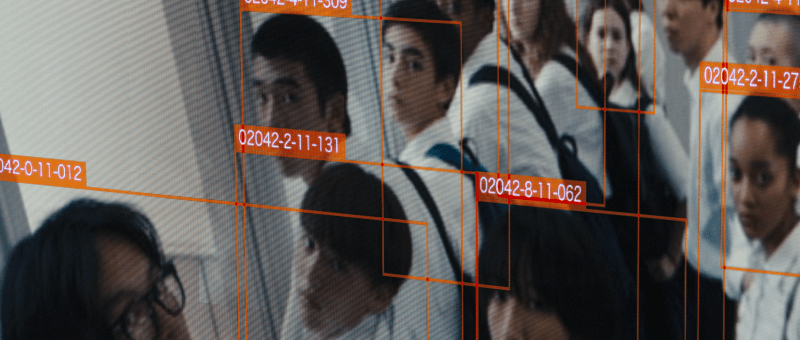
His actions are mirrored in those of the Prime Minister who uses the looming fear of “the big one” as a means of forwarding his fascitistic agenda. He alludes to the false narrative that Koreans and other minorities committed crimes and poisoned wells in the wake of the 1923 earthquake as justification for his tough approach to immigration while limiting the ability of those who do not hold Japanese citizenship to participate in democracy. Kou (Yukito Hidaka), the most conflicted of the teens is a zainichi Korean whose family as he points out has been in Japan for four generations. He’s not obliged to carry his permanent residency documentation on him, but is repeatedly asked for it by police who scan his face to pull up his records on their ominous new devices. Drawn to rebellious student Fumi (Kilala Inori), he’s minded to resist social oppression but also mindful of his single-mother’s hopes that he will win a scholarship and attend university. 

Nevertheless, he begins to drift away from childhood friend Yuta (Yuta Hayashi) who resists by immersing himself in the dance music of the past. Kou regards him as childish or unenlightened, irritated that he doesn’t seem to have grown or changed at all and increasingly convinced he’s outgrown their friendship. There may be something naive about Yuta’s simple desire to enjoy his time with his friends and find his freedom in music, but he is the only one of the teens who really does reject the system by choosing to live outside it. 

Tensions come to a head when the school instals a mass surveillance system under the cute name “Panopty,” doubtless inspired by Jeremy Bentham’s famous design for the perfect prison. The system awards points for infractions on discipline but ruthlessly and without thought. A delicious moment sees a telltale baseball student fined once for smoking after picking up a discarded butt with the intention of throwing it away and then again for littering when he inevitably drops it. Led by Fumi, the kids resist in distinctly old-fashioned ways with a sit-in at the headmaster’s office but cracks soon start to appear and some aren’t willing to risk their academic futures on something which will only benefit the kids of tomorrow. In the end they win the right to a free vote on the surveillance system, but have perhaps underestimated how many of the young will also vote for “safety” over freedom in the mistaken belief that the system does not infringe on the rights of people like them.

This is a city in which ominous red lights blink in the distance like silent alarms, where the kids are forever hanging out next to signs that read “caution”, where earthquake alerts are so common no one really pays much attention to them but the looming threat of mass destruction hangs over everything and everyone. Even so, these kids are just teens growing up, having fun with their friends, and beginning to decide which path they’ll take in life. A poignant moment takes place at the end of a bridge with steps on either side and the sense that at some point you go one way and your friend another and you may never see each other again. Perhaps this is their earthquake, the silent tremor that sends them into adulthood and a society still in flux that seems somehow beyond repair.


Happyend screened as part of this year’s BFI London Film Festival.

Original trailer (no subtitles)