Jeju Island had been at the forefront of the resistance to the Japanese during the colonial era and its transition into the new post-war reality had been more orderly than that of the mainland. Nevertheless, the Korea’s sovreingity had not been returned and the South remained under the governance of the occupying American military while the North was controlled by the Soviet Union. Many on the island objected to the proposed elections which were to take place in South only, fearing that it would lead to permanent division of the nation. Once police fired on protestors making the anniversary of the protest movement, an armed conflict arose between guerrilla fighters who took to the mountains and the police and military backed by the extreme right-wing Northwest Youth League that had been dispatched from the mainland to suppress the rebellion.
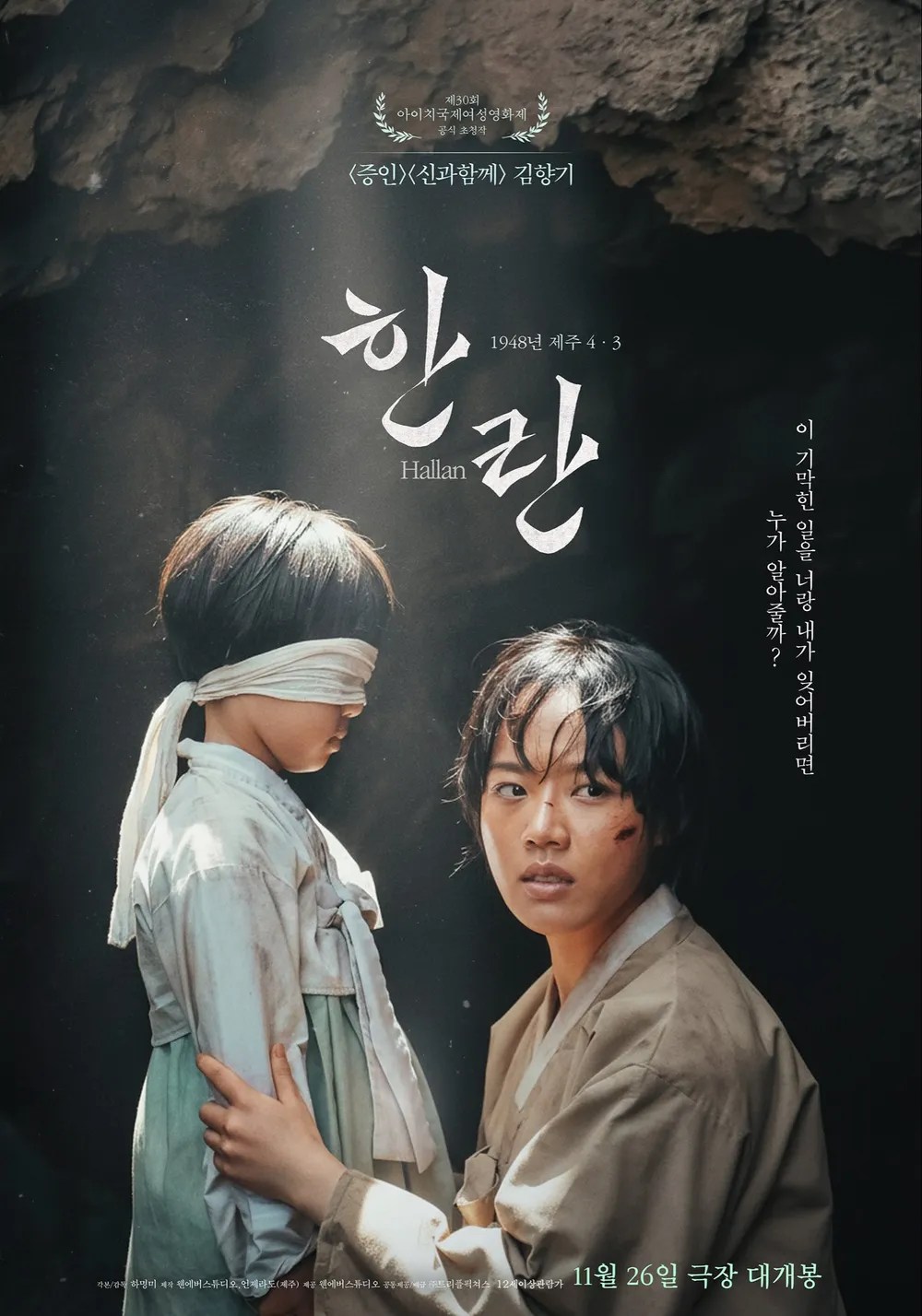
Ten percent of the island’s population are said to have died during the massacre, with many more fleeing to North Korea or Japan, though the events were suppressed during the long years of military dictatorships with their history little known. Ha Myung-mi’s Hallan (한란) aims to shed light on these historical events by following a collection of ordinary villagers whose peaceful lives are disrupted by a political conflict that some feel to be very distant and not particularly anything to do with them. To that extent, the film aims for a kind of political neutrality in which it depicts the South Korean soldiers and insurrectionists as little different from other. Sergeant Park is a crazed sadist who is drunk on his own power and obsessed with rooting out “commies”, while Jeongnam is a paranoid authoritarian. Each of them kill members of their own side with little hesitation. Sergeant Park executes a local soldier who advised a collection of elderly people coming down from the mountain in response to a pamphlet promising their lives would be spared if they surrendered, that they shouldn’t trust the military and would be better to remain in hiding. Jeongnam kills a comrade who wants to look for his family fearing he will expose their plan to blow up an army base with dynamite left behind by the Japanese. The only innocents are the apolitical villagers who are caught between the two.
But in characterising the rebels in this way, the film leans towards favouring the authorities if while denouncing their conduct and subtly implicating the American occupation forces for tacitly backing them. The only source of resistance comes from a conflicted Christian soldier who is racked with guilt over what he’s been asked to do, but still asks God to help him detect communists which suggests he does not necessarily think this actually wrong if the right people are being targeted. Rooting the resistance in faith further muddies the waters and perhaps just introduces a third source of potential authoritarism in the presence of organised religion, while simultaneously adding a subtly anti-communist sentiment.
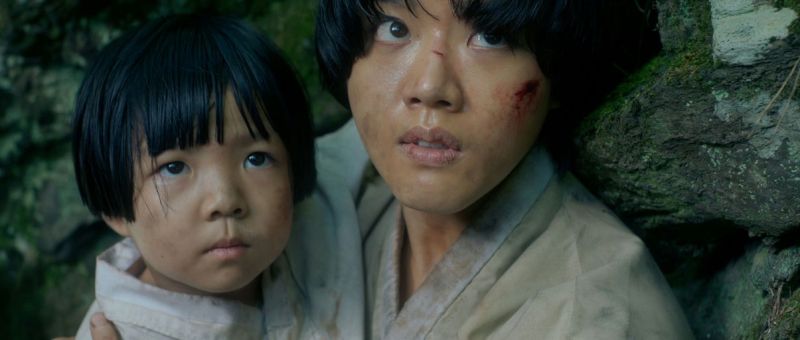
Conversely, the presence of the village’s shamaness adds a slightly less problematic voice of moral authority as she does her best to protect the villagers while staying behind to fulfil her role in service to the gods. Much of the film focuses on a little girl, Hae-sang, trying to find her mother in the mountains after surviving the massacre in her village conducted in retaliation for losses on the army’s side. That she becomes mute after witnessing so much trauma mimics the way in which these events have been suppressed and continue to haunt the island into the present day. Hae-sang’s mother Ajin had wanted a “better world” for her in which she could be educated and wouldn’t necessarily be left with no other option than to be a diver like she was, though the film’s melancholy conclusion largely renders this desire along with the idea of Hae-seng has a historical witness rather moot. Nevertheless, the film takes it’s title from a local wild plant sprouting all over the mountain that comes to stand in for the local people whom the authorities may have attempted to ruthlessly weed out but instead have endured and grown stronger in the face of hardship and adversity.
Hallan screens as part of this year’s New York Asian Film Festival.
Trailer (Korean subtitles only)

