 Written by
Are antique shops a sign of love enduring, or of our inability to let things go even when they may have outlived their usefulness? Whatever the answer, it’s the perfect place for the troubled couple at the centre of Ryuichi Iwakura’s Brand New Love to face a crisis in their fracturing relationship. The burden of forced politeness colliding with slowly accumulated resentment threatens to push the pair beyond breaking point, but at the same, perhaps they aren’t quite yet ready to part with an idealised vision of their past romance.
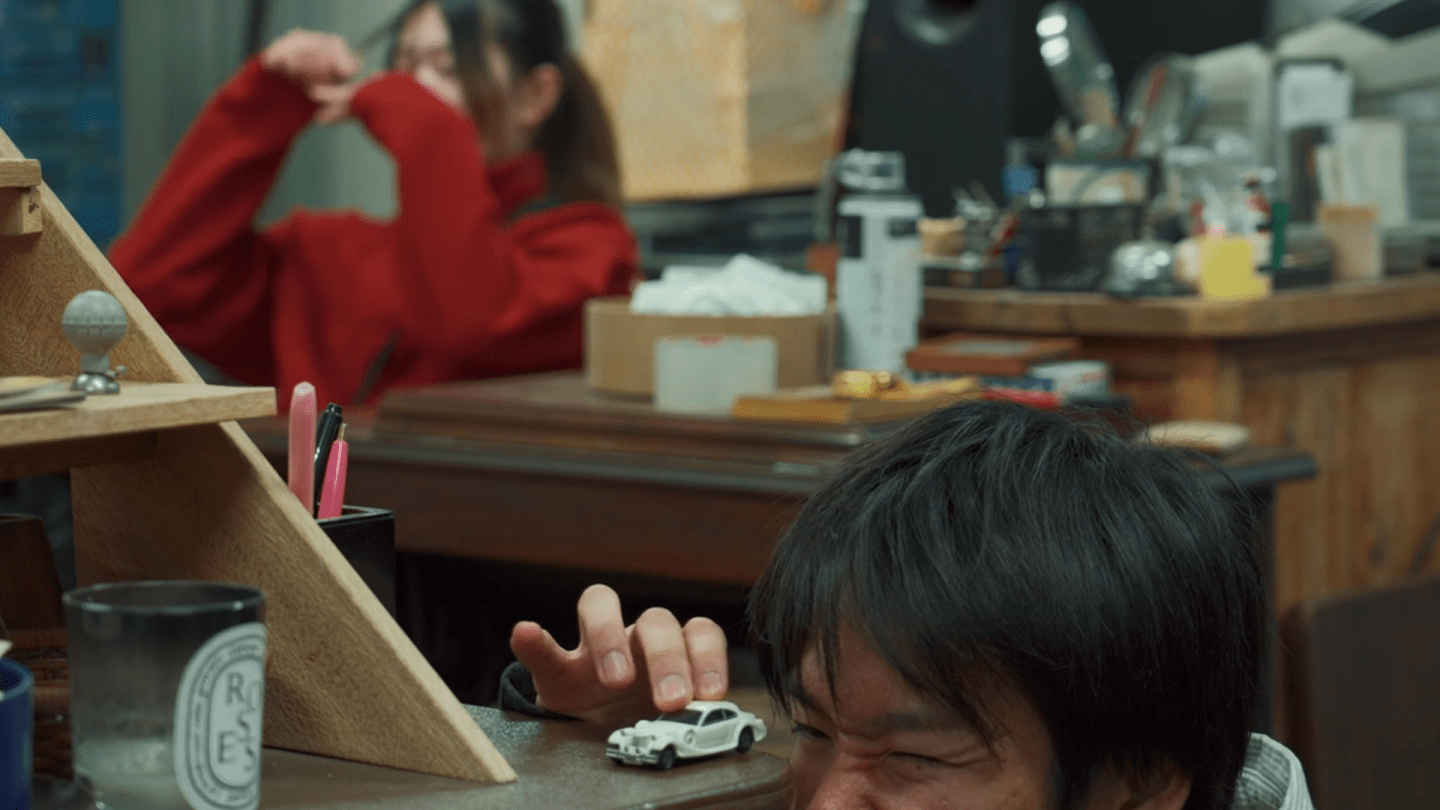
Then again, the distance between them is evident in the opening sequence in which Kenichi walks one way while Yuiko continues in another. Kenichi was evidently going the wrong way, at least in terms of their current destination, though Yuiko didn’t bother to tell him, instead waiting for Kenichi to figure it out for himself. Kenichi seems to be in a bad mood overall because they were supposed to be taking a trip for his birthday, their first in four years, but cancelled to help Yuiko’s uncle out tending his antique shop while he attends a wedding.
It might be a bad omen that the uncle, Goro, is divorced and the pair are staying in his former family home where he hasn’t finished packing up his ex wife’s things. In any case, Yuiko’s rejection of Kenichi’s assumption they’d be sleeping in the same room seems to signal doom for the relationship from the outset. But unexpectedly it’s Yuiko who takes a shine to a pair of matching tea cups that to her come to symbolise the couple’s relationship. The cups have technically been sold to a woman who’s coming to pick up her order the following day, but Yuiko can’t seem to bear to part with them.
The film is at it’s most interesting in Yuiko’s interaction with the other woman, Rei, who originally bought the cups in Italy with the intention of giving them to her partner, though they broke up before she had a chance. She got rid of the cups because they’d lost their purpose, but now she wants them back again, not to reclaim the failed romance but as a means of looking towards a new one. She intends to keep the cups until she finds someone worth giving them to. But on hearing Yuiko say she wanted to give them to her boyfriend, Rei surrenders them to her.
The gift does, in a way, begin to repair their relationship, but in the act of doing so becomes broken beyond repair. In what seems like an ongoing flirtation with Rei, Yuiko vows to stick the cup back together to show her and as a kind of apology, while Kenichi decides to leave town but is prevented from doing so by a train outage during which he meets a man mourning the loss of his grandfather. Kenichi perhaps insensitively suggests he sell his grandfather’s camera if he doesn’t know how to use it, perhaps to the antique shop, before taking a moment to reflect on what he’s said and perhaps on his decision to exit the relationship.
The cup is eventually repaired, though in an unexpected and not altogether aesthetically pleasing way which seems to suggest that the couple may be locked into this otherwise unhappy relationship for the rest of their days. Despite having dangled the promise of a “brand new love” for Yuiko at least, the film’s closing moments suggest the title may be ironic. Or else, perhaps the pair really have managed to find their way back to each other and past all the petty resentments and little niggles that creep into a long-term relationship, though they haven’t really done much to resolve any of those issues so much as reflect they may not be ready to walk away. Making fantastic use of natural light and a claustrophobic 4:3 frame, Iwakura subtly explores the growing distance between the couple in their silences and barbed remarks along with a quiet yearning that runs underneath all the resentment and frustration until all that’s left is the desire to save something that may already be beyond saving.
BRAND NEW LOVE screened as part of this year’s JAPAN CUTS.
Trailer (no subtitles)

