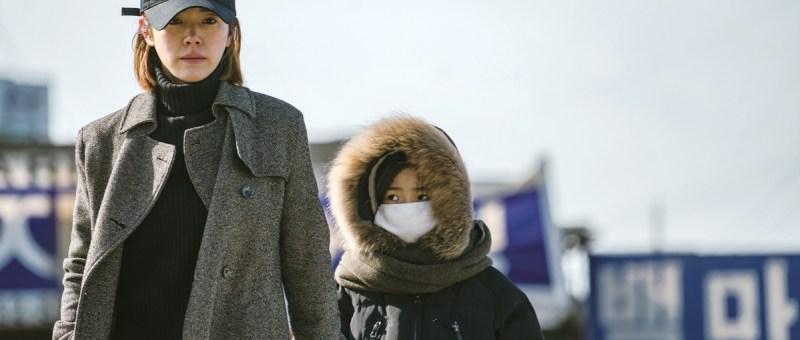
Hero (영웅, JK Youn, 2022)

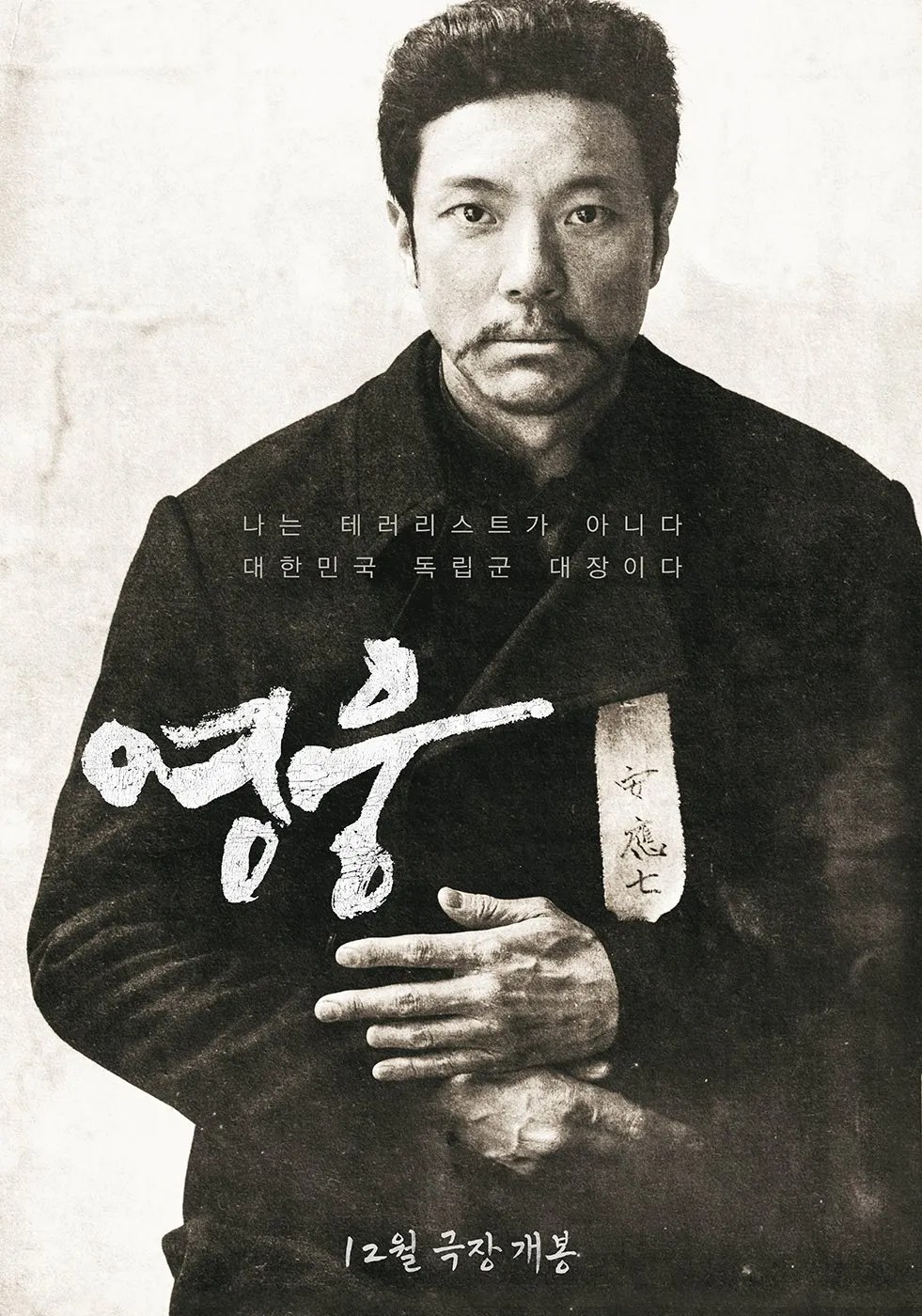
An Jung-geun is a key figure in modern Korean history whose story has been dramatised numerous times and given rise to its own legend. JK Youn’s Hero (영웅, Yeong-ung) is, however, the first movie musical devoted to his life and adapted from a stage hit that has been running since 2009. It has to be said that structurally the musical owes a fair amount to Les Misérables with a dramatic first act closer that is more than a little reminiscent of One Day More, while a number about meat buns echoes the kind of comic relief provided by Master of the House, though the rhythm might hint at Sweeney Todd’s meditation on pie making.

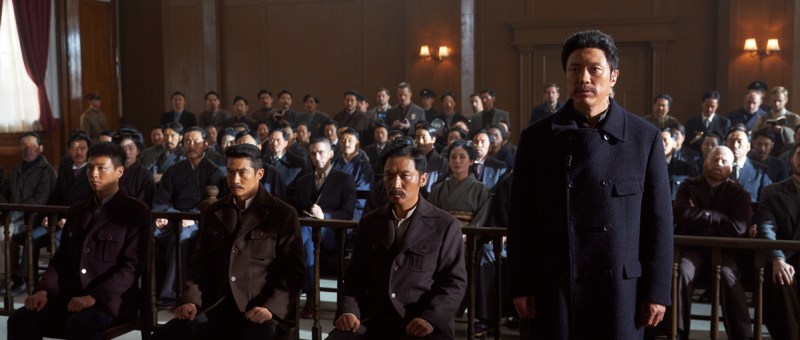
It is certainly out of keeping with the intensity surrounding it as the focus is, after all, on an attempt to stop the Japanese colonising Korea and practising even more cruelty. An Jung-geun abandons his family in the early part of the film, but this isn’t seen as a moral failing or irresponsibility so much as evidence of his devotion to the cause that he sacrifices a peaceful life as a husband and father. His revolutionary activity is furthermore filial because his mother encourages it, later writing him a letter while he is imprisoned urging him not to appeal his sentence but accept his death as a martyr. To appeal would mean accepting the Japanese’s authority in begging for his life. Jung-geun had wanted to be tried not as a murderer, but as a soldier fighting a war and therefore sees his trial as illegitimate. He insists he is a political prisoner, a rousing number outlines 15 reasons why the man he assassinated, Ito Hirobumi Japan’s first prime minister and resident-general of Korea, deserved to die which include dethroning the Emperor Gojong, assassinating the Korean Empress Myeongseong (Lee Il-hwa), lying to the world that Korea wanted Japanese protection, plunder, and massacring Koreans (all of which the Japanese had done). 

It’s the assassination of Empress Myeongseong that motivates the film’s secondary heroine, Seol-hee (Kim Go-eun), a former palace made now operating as a resistance spy in Japan under the name Yukiko. Seol-hee’s impassioned songs have curiously homoerotic quality and take the place of a central romance which the piece otherwise lacks except in the tentative relationship between Jin-joo, sister of one of An’s closest men, and the youthful recruit Dong-ha. Even if “Myeongseong” is effectively “Korea”, Seol-hee’s passionate intensity is quite surprising while her motivation is more revenge for her murdered mistress than it is saving the nation and eliminating Japanese influence. In this, her arc might not quite make sense in that her final actions almost derail Jeun-guen’s mission in putting the Japanese on high alert. 

But at the same time the film leans in far harder on Jeun-geun’s religiosity than other tellings on his story in which his faith presents only a minor conflict as evidenced by his offering an apology to God for killing Ito while justifying his actions as those of a righteous man in the courtroom. While placing him at odds with the left-wing ideology of other Independence activists, his religiosity is aligned with his humanitarian decision to release Japanese prisoners rather than execute them, abiding by the commonly held rules of war while his men are eager for blood. The decision backfires, but is depicted more favourably than in the narratively more complex Harbin and Jung-geun is otherwise an uncomplicated hero who makes no wrong decisions and never fails even if he is at the mercy of the Japanese.

As such, the musical sticks to the familiar beats of Jung-geun’s story from the Japanese counterstrike to his talent for calligraphy and the letter from his mother instructing him to go bravely to his death. Anchored by an incredibly strong vocal performance from Chung Sung-hwa who originated the role on stage, the film portrays Jeun-geung as the hero of the title, defiant to the end and thereafter wronged by the Japanese who buried his body in an unknown location and prevented him from ever returning home to a free Korea. It also glosses over the possibility that Ito’s assassination may actually have accelerated the course of Japan’s annexation which it failed to prevent and otherwise had little lasting effect. Nevertheless, despite its overt patriotism, the film does present the rousing spectacle of Jung-geun’s embodiment of the good son of the nation who fought hard for a liberated Korea he never got to see.


Hero screened as part of this year’s London Korean Film Festival.

Trailer (English subtitles)
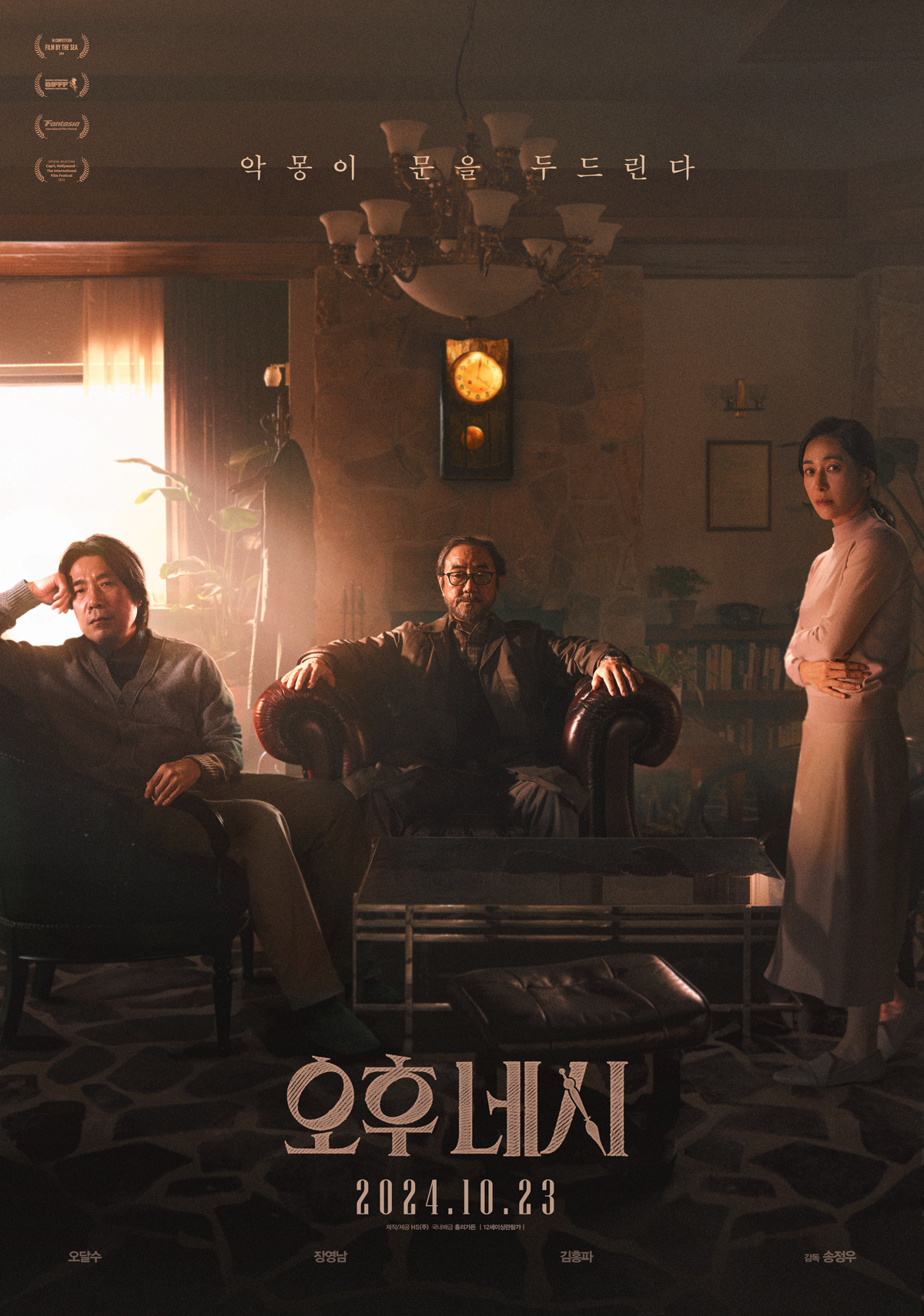
4PM (오후 네시, Jay Song, 2024)

What is the proper etiquette for dealing with an unwanted house guest? It is acceptable to ask them to leave directly, to usher them out of the house by making an excuse that you are leaving yourself, or are you duty bound by virtue of your place in society to put up with it and wait politely until said guest leaves of their own accord, assuming that they ever do? At the end of the day, perhaps it’s foolish to allow our time to be wasted on petty worries about propriety when the best thing to do is really to be direct and explain that you do not enjoy this person’s company and would appreciate it if they did not call on you again.

Based on a novel by Amélie Nothomb, Jay Song’s increasingly absurd psychological drama 4PM (오후 네시, Ohu Nesi) is indeed about the suffocating qualities of politeness, but also in the ways that it interacts with class and masculinity along with the very image of ourselves. As a character in an Ibsen play once said, to take away a man’s life lie is to take away his happiness, and professor Jung-in (Oh Dal-su) is keen to caution against looking too deeply into one’s own soul for the only gifts of self-knowledge are unbearable shame and misery. “I am defined by my kindness to others as a educated man,” Jung-in reminds himself, but in saying so he also makes it clear that his politeness is a conscious affectation rather than an innate character trait. He behaves in a certain way because he fears judgement and wants others to approve of him as a nice person who has been raised well to have good manners. Fulfiling this image is key to his idea of self in the persona of a cultured professor and marks him out from those he may secretly see as “lower” than himself, in being “uneducated” and “rude”, ignorant of the “proper” way to behave. 

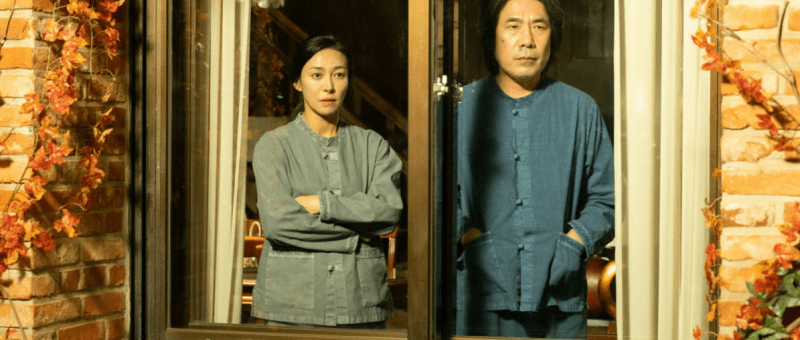
But whatever way you look at it, Yook-nam’s (Kim Hong-pa) behaviour is “impolite” despite his apparently being a doctor, though we’ve really got his word for it. Having taken a sabbatical, Jung-in and his wife Hyun-sook (Jang Young-nam) have bought a house in the country, but unusually for such a property, it’s overlooked by an adjacent home positioned a little too close for comfort. The couple figure they should introduce themselves, but the lights are always out and the place doesn’t look lived in, so they leave a note inviting the occupant to visit at their convenience. Unfortunately, Yook-nam takes them at their word, shows up at 4pm, barges his way in, and then just sits there for two hours snapping at them with monosyllabic answers to their questions as if he were burning with rage. He does the same thing every day until it begins to drive the couple out of their minds. 

Of course, they have to ask themselves why they allow this. Why can’t they ask him to leave, or refuse to open the door? They find it impossible to break the psychological barrier of politeness by stating pointe-blank that Yook-nam is a bore and they wish him to leave. They are in a sense suffocated by the need to conform to these deeply ingrained social codes of what it means to be a good person even when others are clearly not abiding by the same set of rules. The absurdity eats away at them as they find themselves humiliated by their own cowardice in becoming complicit in Yook-nam’s oppression. Jung-in begins to realise that his civility interferes with the demands of socially defined masculinity in that he is failing to protect his home by being unable even to eject an unwanted guest and in effect ceding power to him even within the safe and personal space of the domestic environment which should also be free of such oppressive rules for being.

Jung-in anfd Hyun-sook may be getting an idea of why the last person moved, but there’s also a kind of symmetry in the two houses which are in their way each haunted. Both couples say they have no children, but there’s a family photo with a little girl in Jung-in and Hyun-sook’s house that does not appear to be of their surrogate daughter, Jung-in’s former student So-jung (Min Do-hee), just as there’s a family photo with a little boy in Yook-nam’s house that hints at a buried tragedy. While Jung-in and Hyun-sook’s house seems to be full of light, uncluttered, clean and tranquil, Yook-nam sleeps in soiled sheets in a room that apparently smells in home that is filled with unwashed dishes while the walls are coated in grime. The whole place is covered in loudly ticking ticks in contrast to the silence of Jung-in’s home which brings new meaning to his words about living in the present. 

It isn’t really clear what Yam-nook wants out of all this, whether he’s just looking for some kind of escape or actively rebelling by being deliberately unpleasant while exerting his power through wasting Jung-in’s time. “He was still my guest,” Jung-in insists emphasising the roles they are each playing along with his own determination not to deviate from them. Perhaps Yook-nam actually wants them to break protocol by telling him to go away, but instead they live in tyranny of 4pm and sit quietly until Yook-nam abruptly leaves at six rather than say anything or at the very least tell their unwanted guest that he’s free to stay but they’re going to get on with their business. Meanwhile, Jung-in’s civility is slowly eroded, exposing the primitive man inside who fantasies about killing Yook-nam and is suffocated by his his hate for him. But in seeing this true side of himself, Jung-in discovers only shame rather than authenticity or empowerment, and in creating another persona is again ironically suffocated, silenced in his own rebellion. Quietly unsettling, the film suggests that we all, in a sense, live in tyranny of 4pm by allowing ourselves to be oppressed for propriety’s sake rather than risk being “rude” in the knowledge that to do so would be to risk releasing the monster inside us that “politeness” alone keeps at bay.


Trailer (English subtitles)
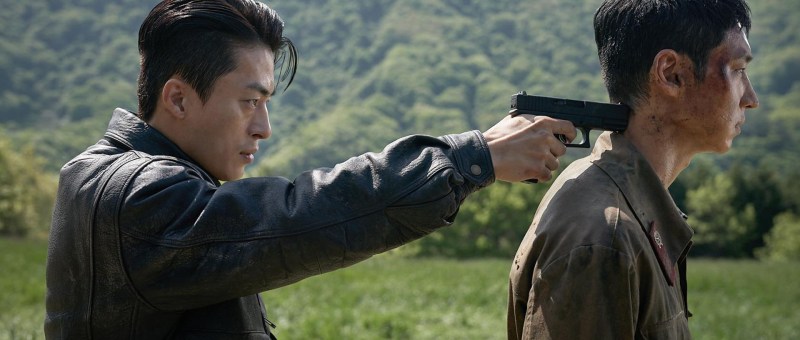
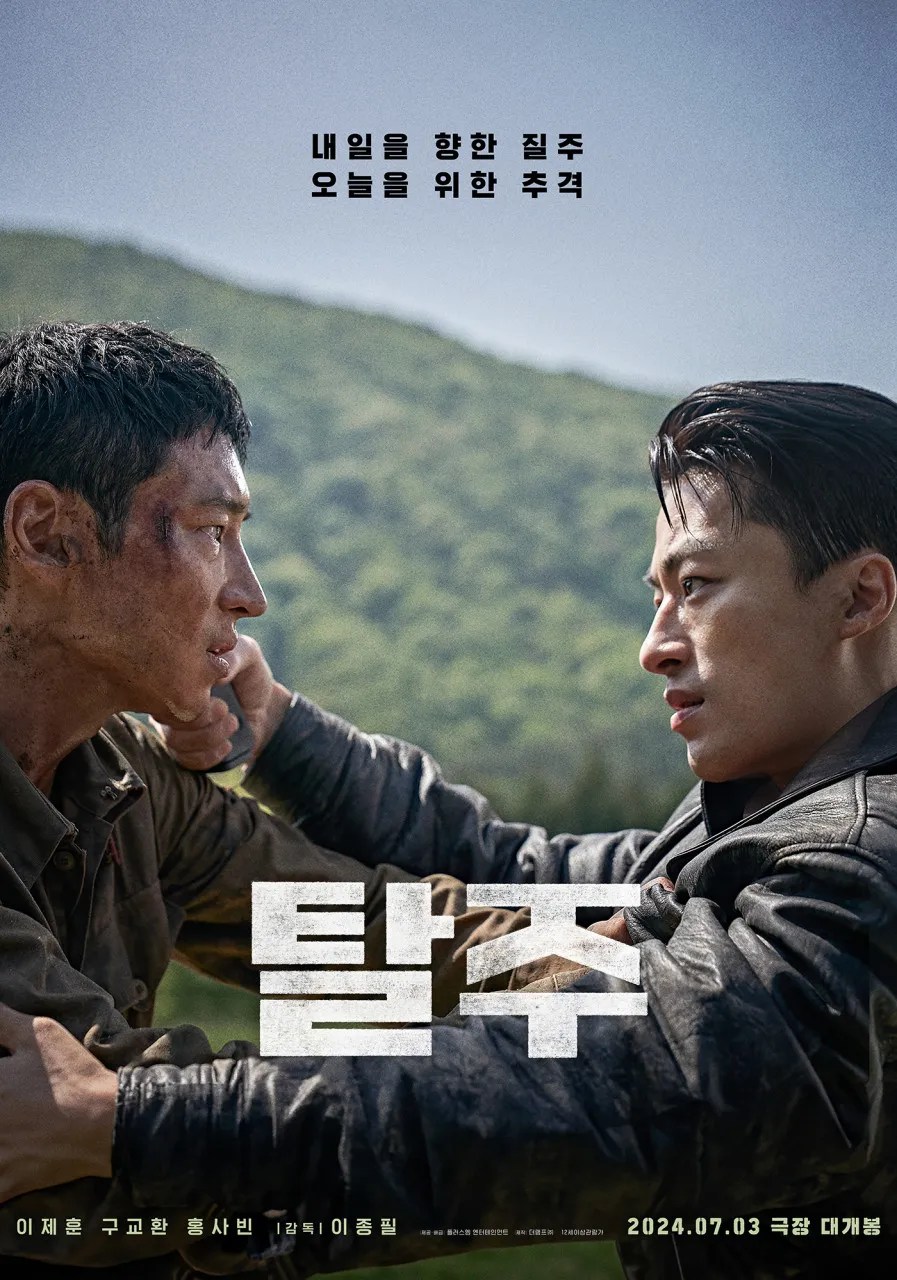
Escape (탈주, Lee Jong-pil, 2024)

Lee Jong-pil’s existential action drama Escape (탈주, Talju) opens with scenes of a man running. He runs his way through the rest of the film, continually on the move and chasing a dream of freedom outside of the oppressive society in which he is otherwise trapped. The man who chases him, meanwhile, is himself running away. His movements are slow, calculated, and cold but also somehow tender and almost it seems an act of self harm. 

The fact that the oppressive regime is North Korea is almost irrelevant and the film is less about Communism than it is lack of autonomy that may be found in any other democratic or developed nation in which people are driven to erase a part of themselves in order to fit in or to prosper amid rigidly defined social codes. Nevertheless, there is a direct criticism of the Democratic People’s Republic in the ironic signage, a car ploughing straight through a sign that reads “for freedom and happiness of people”. But then, even if deserter Kyu-nam (Lee Je-hoon) finds happiness in the South we can’t be sure it’s really any better. The welcome message blasted through loudspeakers over the wall that marks the border doesn’t sound all that different from the propaganda messages on Kyu-nam’s radio, while the deserter’s phone positioned to appeal to men like him appears to be out of order. 

But to Kyu-nam, “the South” is only really an idea and it’s clear he intends to transcend those borders too, venturing on to the wider world and wherever it pleases him to go. What he rails against is fate, that his life is dictated by forces outside of his control or more accurately by Field Officer Hyun-sang (Koo Kyo-hwan) from State Security who takes him under his wing and tries to make something of him as a loyal soldier of the North. What becomes clear is that Hyun-sang is a man who fears freedom and that the presence of a man like Kyu-nam is a threat to him because he awakens his own deeply buried desire for liberation. 

From the longing looks he directs at a man with whom he studied abroad in Russia we infer that Hyun-sang is gay and the suppression of his authentic self in order to keep himself safe in a repressive culture has made him cruel and vindictive. Unfortunately, this presumably unintentionally plays into a homophobic trope which aligns queerness with sadistic villainy, but does nevertheless lend a kind of poignancy to Hyun-sang’s otherwise vindictive quest to prevent Kyu-nam’s escape precisely because he himself desires to be free but is too afraid to free himself. From a wealthy and prominent family and with an important position within the regime, this system otherwise works out well for Hyun-sang but he is also imprisoned by it and will forever be prevented from becoming his authentic self or gaining what he truly wants so long as he remains within North Korea. 

A homoerotic charge exists between the two men though what Hyun-sang may really be chasing is himself and half-hoping he’ll be caught. Kyu-nam meanwhile has a single-minded desire for autonomy and individuality, to live and die on his own terms rather than live with no right or power to decide his future. There are those who’ve found other ways to reject the system, a group of mostly female nomads seeking a new place to belong after being kicked out of their village but seemingly with no intention of leaving the country, but for Kyu-nam there is no freedom inside the walls and his determination to find it is what makes him so dangerous to Hyun-sang for whom the very idea of freedom is so painful he’s sublimated himself entirely into an oppressive regime.

With pulsing synth scores, Lee keeps the tension high as Kyu-nam runs and runs through minefields and bullets while pursued by the full force of the North Korean army and the steely Hyun-sang who always seems to be one step ahead. His passage takes on an existential quality, risking death rather than continue to live a “meaningless life” in which he has no power to decide his own fate. His escape is finally self-liberation, taking the decision to free himself because no one else is going to, while Hyun-sang remains a prisoner too afraid of freedom to actively pursue it though perhaps tempted by his encounter with Kyun-nam, a man free in his mind if nowhere else.


Escape screened as part of this year’s London East Asia Film Festival.

US trailer (English subtitles)
Cobweb (거미집, Kim Jee-woon, 2023)

An insecure filmmaker becomes entangled within the movie in his mind in Kim Jee-woon’s homage to golden age Korean cinema, Cobweb (거미집, Geomijip). The film has caused some controversy with the family of director Kim Ki-Young attempting to file an injunction to prevent its release complaining that it shows him in a bad light, which is one reason earlier prints of the film listed the protagonist’s name as “Kim Ki-yeol” while it has now been changed to simply “Kim Yeol”. Kim Jee-woon argues that the character is not intended to represent Kim Ki-Young but is an amalgam of various directors of that time, yet it is true that his filmmaking has more than a little in common with that of the late director of The Housemaid.

Another reason they may have been upset is that the film turns on a tragic studio fire that cost the life of a director while Kim Ki-Young himself really did die in a house fire though 20 years later at the age of 78. Meanwhile, the director who dies in the studio is clearly modelled on Shin Sang-ok. The actor who plays him (Jung Woo-sung) is styled to look exactly like Shin who often appeared wearing sunglasses. The film’s Shin Sang-ho (Song Kang-ho) is an example of an artist who gave all of himself for his art and then was quite literally consumed by it, stepping into the flames to get the perfect shot while burning with artistic passion. 

Kim Yeol (Song Kang-ho) by contrast can only watch. He’s hassled by some film critics in a diner who call him a “trash” director while suggesting that only his debut was any good and that was probably because it was Shin Sang-ho’s script though Kim Yeol is forever telling everyone that he really did write it himself. They ask him if he is still a servant in Shin’s house, a question that deeply wounds him not least because he has become the inheritor of Shin’s production company but struggles to emerge from his shadow. 

These themes of servitude and oppressive hierarchies are expressed through the film that Kim Yeol is making, itself titled Cobweb, which he has a sudden urge to reshoot in order to make it a “masterpiece” and prove that he is more than just a hack director of “trashy” genre films. The problem is that in the authoritarian 70s in which the film takes place, Korean cinema was constrained by an ever tightening censorship regime which prohibited any criticism of the government and required that films push conservative moral messages. Kim Yeol wants to take his conventional melodrama in which a young woman takes her own life in sacrifice for her family, and turn it into a story about a “modern woman” who refuses to do so. The wife, Mi-ja (Im Soo-jung), will now be a woman plotting a slow-burn revenge against the wealthy family who callously cast out her pregnant mother who had been their maid eventually teaming up with a Housemaid-esque factory girl who had given birth to her husband’s child, along with a former servant turned forest-dwelling hunter. 

Getting that past the censors might be difficult, even if they weren’t already on high alert after finding out about Kim Yeol’s unauthorised changes to the script which had already been passed. Kim Yeol is confident he can get it all shot within two days, but his cast aren’t very happy about being brought back or about the new direction of the film. “Why is it all so corny and overblown?” an exasperated veteran actress sighs unconvinced by Kim Yeol’s “vision”. Fiction and reality are increasingly blurred. The leading man really is having an affair with the woman who plays the factory girl who is secretly pregnant, a huge scandal in the waiting in the stringent 70s society where adultery is a criminal offence. A method acting policeman claims he has a prison cell in his home and spies on the illicit couple in noir fashion making little notes in his notebook. Kim Yeol meanwhile is so wrapped up in the film that he answers the phone on set rather than the one on the lot which is actually ringing. At a climatic real life moment, it’s the music cue from the melodrama which finally breaks in.

There’s a striking contrast between the full colour set design as we see it and the way it appears in the high contrast black and white of the film within the film which is full of gothic touches such as driving rain and thunderstorms not to mention film noir lighting and eerie composition. Kim Jee-woon includes a series of homages to golden age directors from the obvious nods to The Housemaid to echoes of The Devils Stairway while director Lee Man-Hee gets a name check as, perhaps ironically, a more established figure whom Kim Yeol fears his AD will leave him for.

Lee Man-Hee also had a fair amount of trouble with the censors and was actually arrested for breaking the National Security Law due to his overly sympathetic depiction of North Korean soldiers. In an attempt to get the censors off his back, Kim Yeol lies that the film is “anti-communist” while the head of the censor’s board relents because he’s just so excited about seeing North Korean spies get burned to death in Kim Yeol’s incendiary long shot. In a running gag, no one but Kim Yeol really understands the ending of the film though calling it anti-communist might be a stretch even if it might satisfy the censor’s moral concerns. In any case it remains uncertain if Kim Yeol, who has a hallucination of Shin Sang-ho giving him a fiery pep talk while hopped up on anxiety mediicine that might be destabilising his sense of reality, is really happy with his work and has finally managed to overcome his insecurity or is still entangled in Shin’s web and in the end slowly consumed by it.


Cobweb screens 13/14th October as part of this year’s BFI London Film Festival.

International trailer (English subtitles)

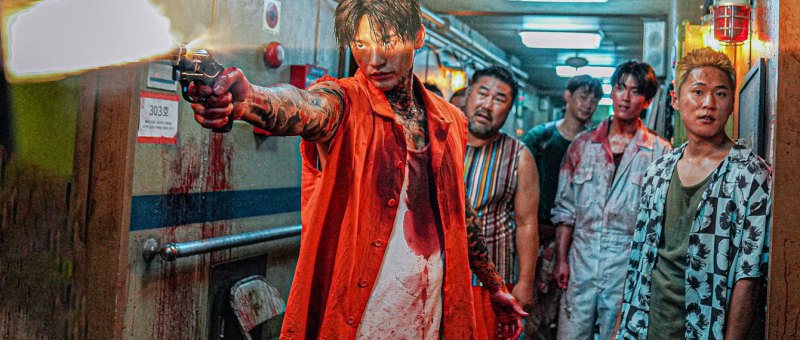
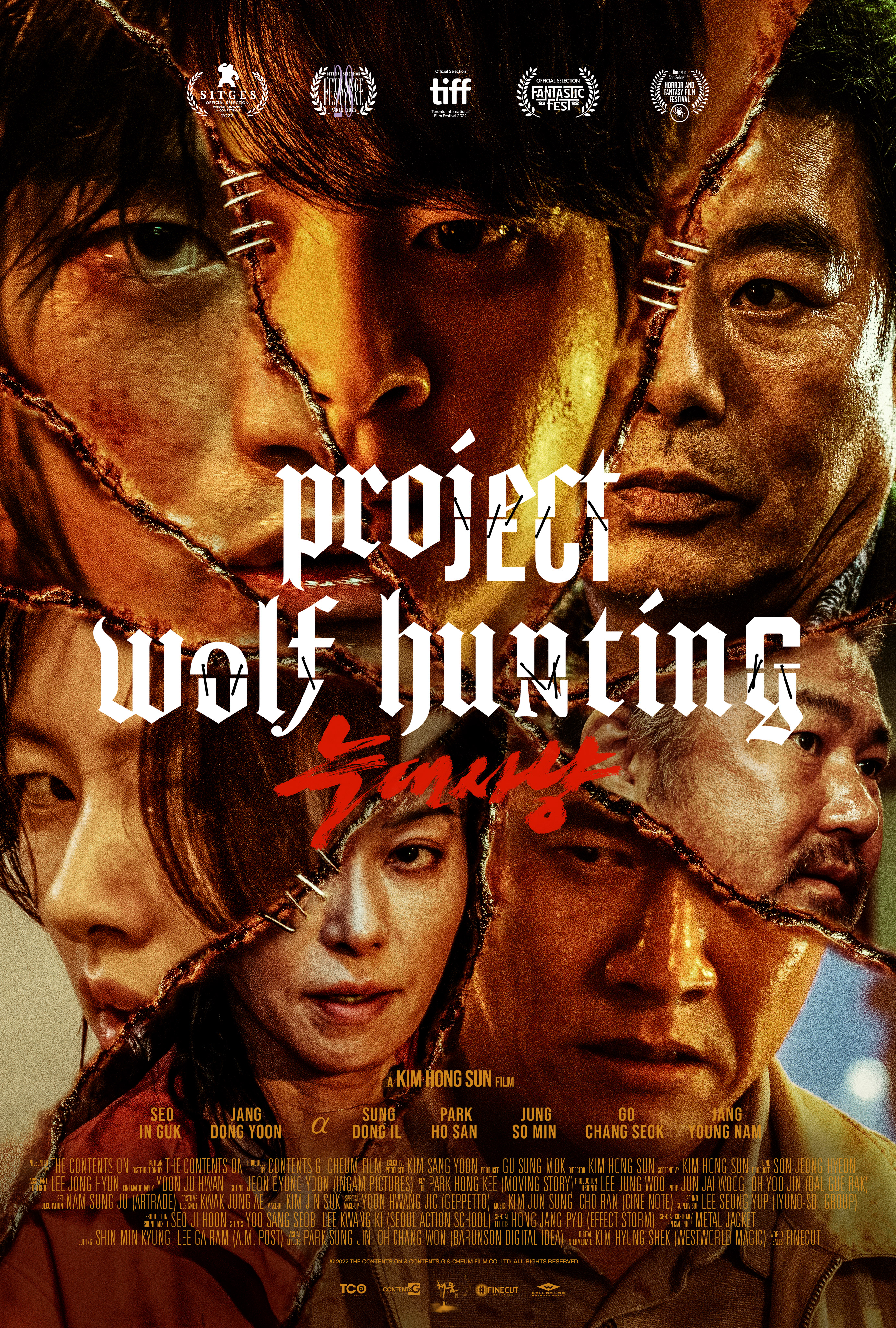
Project Wolf Hunting (늑대사냥, Kim Hong-sun, 2022)

“Remember, there’s nowhere to run” an arrogant police officer explains to collection of rapists and murderers locked aboard a cargo ship ready to be delivered to “justice” in Korea having attempted to flee to the Philippines. It is in someways ironic that these men and women, depraved as many of them may be, have been loaded onto a commercial vessel to be shipped home less like cattle than faceless and inanimate objects. Kim Hong-sun’s eerie gore fest Project Wolf Hunting (늑대사냥, Neukdaesanyang) is in many ways about the horrors of the past but also suggests that the present is little better in a world in which there is little difference between cop and thug and we are all at the mercy of looming violence. 

As one older prisoner puts it, “if this isn’t hell, I don’t know what is”. Thanks to an international extradition arrangement some of the worst Korean criminals are about to be repatriated from the Philippines only the historic event is disrupted by a suicide bombing carried out by a disgruntled victim whose smashed glasses and severed limbs are an eerie harbinger of what’s to come. After a rethink, the government decides to hire a cargo boat instead so the public won’t have access to the criminals, which is somewhat ironic, while accompanied by a crack team of veteran cops each with over 10 years of experience on the force. Already it isn’t seeming like a very well thought through plan, but as Captain Lee (Park Ho-San), who openly beats a prisoner with whom he has prior history on the dock, points out, there aren’t any cameras so he has full authority to enforce the law with no concern for the rights of inmates nor basic human morality. To cut it short, he’s little different than they are even if he isn’t, as far as we know, a multiple murderer or rapist. 

In any case, keeping a bunch of violent criminals handcuffed with only one bathroom break a day and no stimulation seems like a recipe for disaster even if it weren’t just plain inhumane. But inevitably the operation is compromised by an attempt to spring a gang boss which lets the criminals take control of the ship albeit temporarily seeing as there’s something else lurking in the bowels of this floating hellscape that is pure nightmare fuel and a not quite living embodiment of man’s inhumanity to man. Predictably, this all stems back to the abuses of the colonial era and the machinations of the equivalent of Unit 731 operating in the Philippines but has since seemingly been co-opted by a shady Korean organisation apparently also attracted to the research’s capitalistic potential in the booming anti-ageing market hoping to usher in the next stage of human evolution. 

What ensues is a parade of senseless violence in which cop and killer alike are stalked by a mysterious “monster” with wolf-like senses and preternatural strength, and that’s on top of the bloody destruction wrought by the vengeful criminals in their unsuccessful attempt to escape. As Lee had said, there really is nowhere to run though as it turns out that cuts both ways. The gang boss proves unexpectedly heroic, genuinely trying to save the moll who’d been arrested alongside him, while law enforcement reveals itself hopelessly out of depth even as Lee and his female subordinate Da-yeon (Jung So-min) pivot towards protecting the prisoners they were previously intent on oppressing as they form a temporary alliance to defend themselves against the mysterious threat, ironically a product of the “kemono” (beast) project and a reminder of what happens when you decide that some people aren’t really “human” after all. 

Even so, the rampage is indiscriminate. The “monster” doesn’t care if you’re a cop or a killer, all it knows is violence smashing in the heads of the toughest gangsters and ripping hearts out of well-built bodies without a second thought. It’s got no eyes but knows how to use a gun and it still might not be the scariest thing on the boat, at least not in the end as we wonder what exactly all this is for and what might be meant by the next evolution of our species. This is indeed hell and there’s no where to run either from the unresolved past or the malignant future. 


Project Wolf Hunting is released in the US on Digital, Blu-ray, and DVD on Feb. 14 courtesy of Well Go USA.

International trailer (English subtitles)

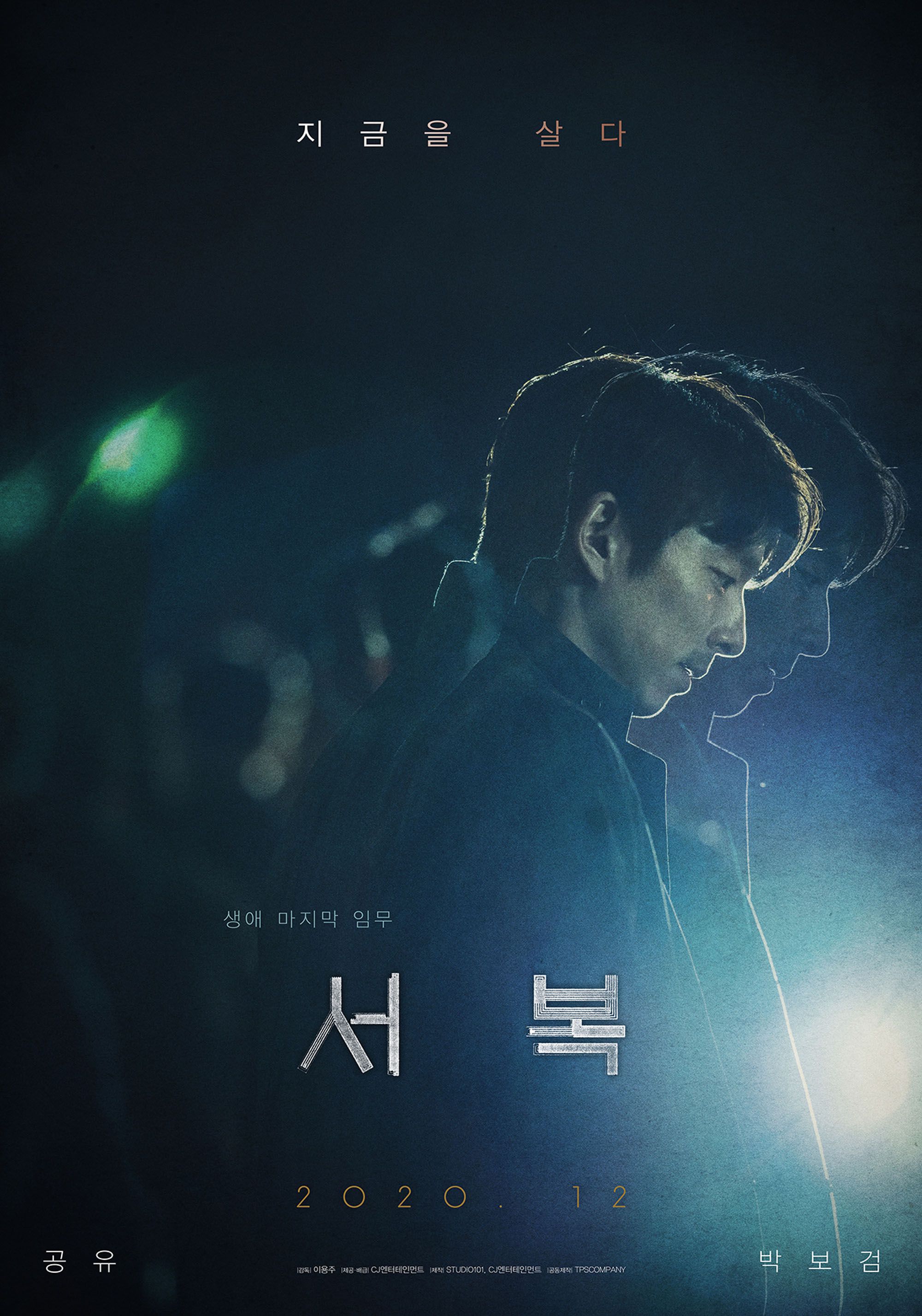
Seobok (서복, Lee Yong-ju, 2021) [Fantasia 2021]

Without death, would life still have meaning? Lee Yong-ju’s high concept sci-fi thriller Seobok (서복) situates itself in a near future Korea in which the possibility of immortality is tantalisingly close only there are some who would prefer it not to be, fearing that without the driving force of mortal dread humanity will lose its ambition and thereafter slide into internecine greed. Then again, humanity hasn’t needed much of an excuse before. 

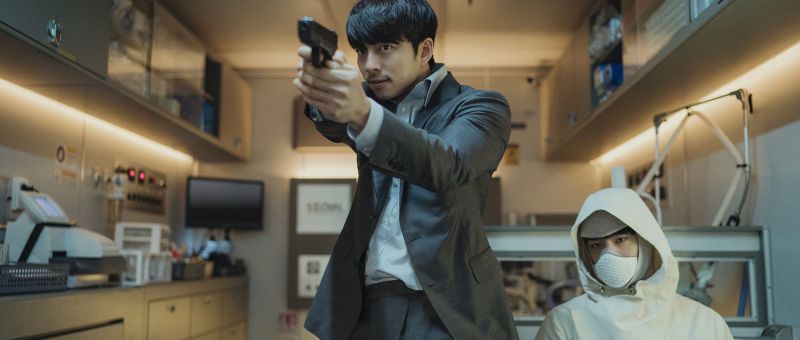
When a foreign scientist is murdered by drone the incident is attributed to “terrorists” presumably objecting to his research into stem cell technology and the possibilities of eternal healing. Fearing exposure, NIS agent Ahn (Jo Woo-jin) advises the project move to a secret location and recruits a former associate, Min Ki-hun (Gong Yoo), to act both as a test subject and a bodyguard. Since leaving the service, Ki-hun has been suffering with a terminal brain tumour that leaves him plagued by debilitating headaches and distressing hallucinations. 

Ki-hun is roped in by the promise of a potential cure for his condition brokered by Seobok (Park Bo-gum), a genetically modified clone who cannot die. Speaking to the dubious ethics of the research project, no one quite thinks of Seobok as “human” though he was born in the same way as any other child. “It’s like collecting insulin from a pig” a doctor later scoffs at Ki-hun’s squeamishness witnessing Seobok hooked up to a chair and milked for his lifesaving properties, realising that this may be his life “forever”. Having lived all his life within the lab, Seobok is filled with wonder for the outside world begging Ki-hun to walk a little slower through a market when the pair are forced on the run together so he can take it all in a little better. He has no clothes of his own, cannot use chopsticks, and is left with nothing to do with his time other than think. The scientists refer to him only as a “specimen” refusing to acknowledge his humanity viewing him solely as a test subject. 

Seobok can’t decide if life in the presence of death is worse than the curse of immortality. Already condemned, Ki-hun no longer knows if he wants to live or is merely afraid of dying. The fear of death is itself a kind of weapon, at least according to those against the project, a force which propels mankind forward in imposing an unavoidable deadline as it struggles against its mortality. Ki-hun, meanwhile, regards his tumour as a punishment, a mark of his moral cowardice in failing to stand up to his boss’ duplicitous practices and blaming himself for the death a friend who was silenced for daring to speak to out. In bonding with Seobok he realises he cannot allow the same thing to happen again in choosing to prioritise his own survival over someone else’s life. Seobok, meanwhile, comes to the opposite conclusion in realising that his existence is potentially apocalyptic and that there is no escape for him because he has nowhere else to go other than back to his “home” at the lab despite coming to an understanding that much of his treatment there constitutes abuse. 

Nevertheless, Seobok is fiercely contested by mysterious foreign forces intent either on capturing or destroying him apparently terrified of the implications of a world in which sickness can be instantly cured and death has become a thing of the past. Such a world would, of course, be very bad news for Big Pharma and the medical industry, yet it’s the philosophical arguments which they claim motivate them in a fear of a permanent and destructive anarchy which is more than a little ironic considering what eventually unfolds in their quest to capture Seobok who, as it turns out, has also developed awesome powers of telekinesis. Rather than eternal life, however, it’s death that the two must learn to accept, Ki-hun reckoning with his trauma while coming to terms with his terminal diagnosis, and Seobok by contrast seizing his humanity by rejecting his immortality. 

Essentially a lowkey existential drama, Lee Yong-ju’s high concept sci-fi thriller boasts excellent production design and large scale action set pieces, yet situates itself in a cold world of paranoia and anxiety in which even mortal dread has been effectively weaponised by duplicitous forces intent on playing god in the permanent power vacuum of the modern society.


Seobok streams in Canada until Aug. 25 as part of this year’s Fantasia International Film Festival.

International trailer (English subtitles)
Innocent Witness (증인, Lee Han, 2019)

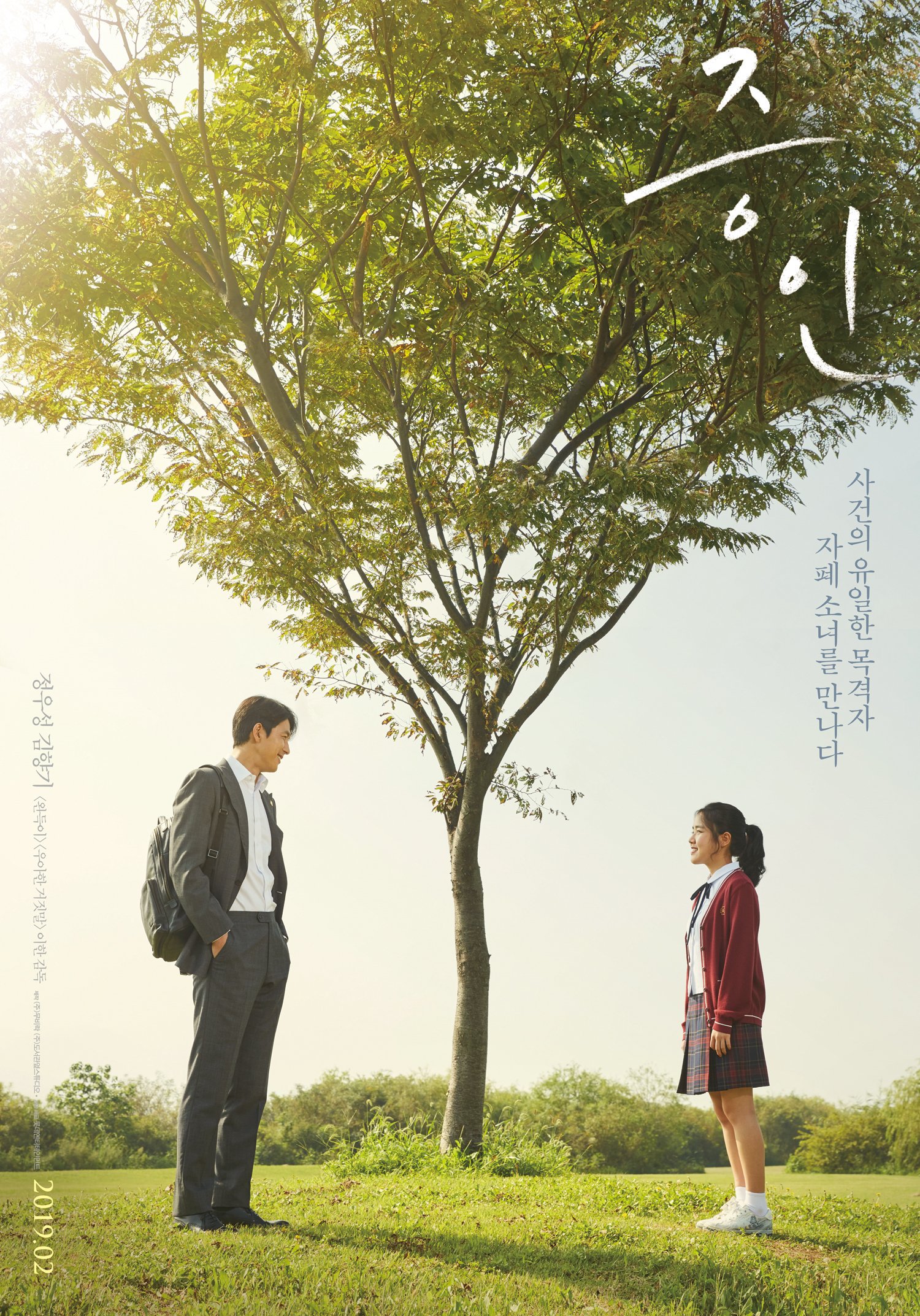
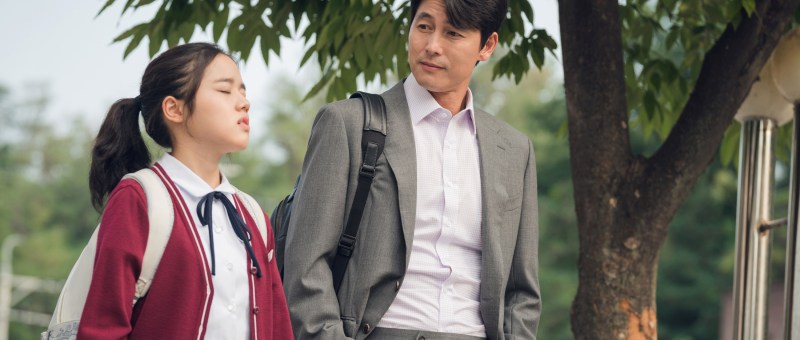
Innocent Witness poster“Are you a good person?” asks the confused girl at the centre of Lee Han’s Innocent Witness (증인, Jeungin). Her question comes after a series of surprising revelations which have left her questioning all of her relationships and the nature of the world itself, yet it’s one that’s largely impossible to answer. Formerly idealistic lawyer Soon-ho (Jung Woo-sung) thinks he’s been given the kind of case he can get behind, but as usual nothing is quite as it seems and if he wants to get to the truth of the matter he’ll have to learn to think differently.

Soon-ho began his career as an activist lawyer working for NGOs, but now he’s “sold out” to join an elite law firm with a dodgy reputation in order to pay back debts his father unwisely guaranteed for a friend. Because of his precarious financial status, Soon-ho has put-off marriage and relationships, despite his father’s nagging, believing them to be out of his reach and is conflicted by his recent career choices which leave him on the opposite side from old friends. When he’s handed a pro-bono case to defend a housekeeper (Yum Hye-ran) accused of murdering her employer he thinks it’s the best of both worlds. All the evidence points to suicide, but there’s a witness testimony which suggests otherwise. Seeing as the testimony is from a 15-year-old autistic girl who witnessed the crime from across the street, Soon-ho feels he can easily have it discounted.

Like many in the film, Soon-ho doesn’t know much about autism and writes Ji-woo (Kim Hyang-gi) off as “mentally impaired”, believing that will be enough for the jury to disregard her testimony especially as it so strongly conflicts with the rest of the evidence. Refused permission to meet with her in person, Soon-ho begins trying to befriend Ji-woo on the way home from school and eventually comes to realise that she is highly intelligent if easily distracted and uneasy in social situations. What he discovers is not that Ji-woo is unable to communicate with the world, but that the world is unwilling to communicate with her. If he wants to bond, he will need to learn her language and earn her trust.

Trust maybe he hard to come by as he witnesses the minor aggressions she goes through every day like the horrible boys at school who taunt her mercilessly and the supposed friend bullying her in secret, not to mention a world full of barking dogs and ringing telephones. When he finally puts her on the stand, his own co-defence chair reads out passages from a book about autism which describe it as a “mental disability” before painting her as a deranged idiot who probably half-imagined what she saw from things she’d seen on television – an act which has profound ethical implications in eroding Ji-woo’s sense of self. Ji-woo told Soon-ho she wanted to be a lawyer because lawyers are good people who help those in need, but Soon-ho has to ask himself whose interest destroying a 15-year-old girl on the stand is really serving.

The law firm Soon-ho joined does seem to be a sleazy one. Despite hiring him to improve their image, Soon-ho’s boss tells him that his new clients won’t be comfortable with him unless he gets himself a little “dirty” while inviting him to awkward parties with call girls in high class hotels. Meanwhile, Soon-ho remains conflicted – especially after potentially losing a 20-year friendship through saying the wrong thing to a still idealistic lawyer and passing it off as an attempt to be “realistic”. Realism is one thing, but Soon-ho seems to have given up and decided if you can’t beat them join them. His dad, sensing his son’s unease, writes him an impassioned letter in which he tells him that the most important thing in life is to be happy with yourself, everything else you can figure out later.

Realising his mistake, Soon-ho begins to see the light. Through bonding with Ji-woo, he learns that seeing things differently can be advantage and that society should have a place for everyone where they shouldn’t have to worry about being themselves. Tellingly, no one ever bothered to ask Ji-woo about the most important part of evidence in her testimony because they all had too many prejudices about her delivery. Only Soon-ho, having bothered to get to know her, was able see what it was that she wasn’t saying. The film perhaps missteps when it has Ji-woo come to the conclusion that she can’t be a lawyer because of her autism, but otherwise presents a sensitive portrayal of a society trying to be better in accommodating difference and doing it with empathetic positivity while subtly waving a finger at the self-serving forces of conservative corruption.


Innocent Witness was screened as part of the 2019 Udine Far East Film Festival.

International trailer (English subtitles)

Miss Baek (미쓰백, Lee Ji-won, 2018)

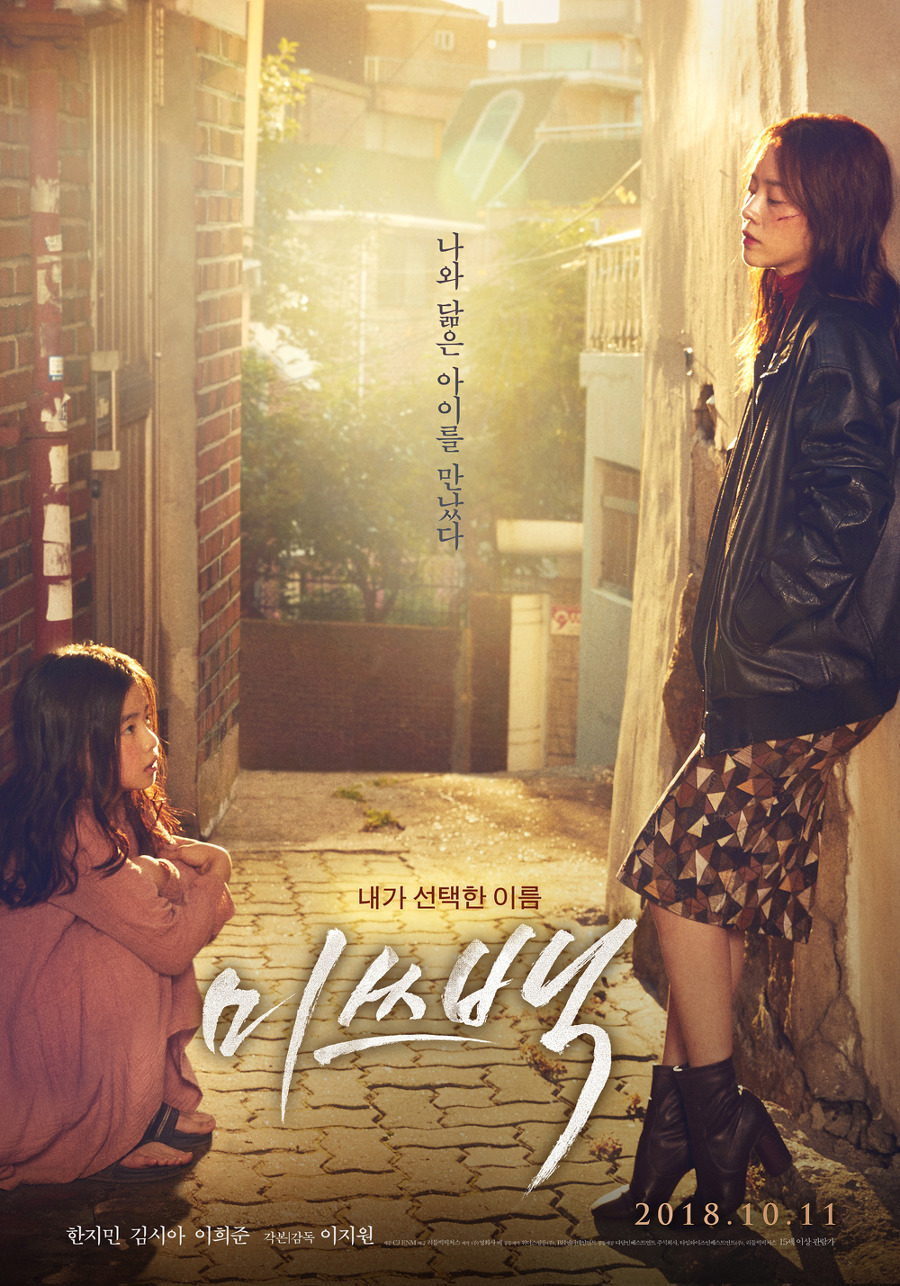
Miss baek posterIn one sense we’ve never been more connected to one another, but our tendency to remain inside our own solipsistic bubbles has never been higher. We ignore those in need, confident that “someone” will do something, that it isn’t our responsibility. Then again perhaps we don’t even notice. It’s freezing cold in director Lee Ji-won’s debut feature Miss Baek (미쓰백) and a little girl is sitting outside in her nightie. No one takes very much interest her even though it’s far too late for a child to be out alone. That is, until the titular Miss Baek (Han Ji-min) overcomes her own sense of alienation and decides to look back.

Now in her mid-30s, Baek Sang-ah is an aloof, near silent woman who ekes out a living through a series of casual jobs from car washing to massage. She is in a kind of relationship with a kindly policeman, Jang-sub (Lee Hee-joon), who wants to marry her, but Sang-ah has long ago ruled out the idea of marriage and family. She never wanted to be someone’s wife or mother. Sang-ah says this not (entirely) because she values her independence, but because of a legacy of trauma and abandonment born of the physical abuse she suffered at the hands of her mother who fell into depression and alcoholism following the loss of her husband. Fearing becoming another link in a long chain of abuse passed from parent to child, Sang-ha has kept herself isolated, avoiding all intimate relationships and vowing to continue on alone causing harm to no one.

One winter day, however, she can’t walk past the girl in the nightie anymore. Taking her to a nearby food stall, Sang-ha finds out the girl’s name is Ji-eun (Kim Si-a) and she’s nine years old. Just as Sang-ha is beginning to ask about the cuts and bruises on Ji-eun’s hands and feet, a well dressed woman who turns out to be her father’s girlfriend arrives and whisks the girl away. Sang-ha tries to forget about her and go on with her life, but she can’t seem to do it. Buying Ji-eun some proper winter wear, she resolves to try and help the girl the way that no one tried to help her.

There is something particularly insidious in the continuous stream of injustice and mistreatment Sang-ha and Ji-eun find themselves subject to precisely because of their lack of social power. Children, most obviously, have no mechanism to defend themselves besides their parents and should they try to speak out against them, they may not be listened to. Managing to escape, Ji-eun tried to tell the police what her parents were doing to her but they sent her home with only a mild warning to her smirking step-mother that she’d best ease back on the “discipline”. Understandably, Ji-eun doesn’t have much faith in the authorities as a source of salvation. Sang-ha experienced much the same but her oppression continued on into adulthood when she was arrested for violently defending herself against a would-be-rapist who happened to be the son of a wealthy and connected man who used his status to do as he pleased while Sang-ah went to jail. Sang-ha’s prison record comes back to bite her again when she tries to talk to the police on Ji-eun’s behalf only for them to lay into her when they eventually run her file.

Meanwhile, Ji-eun’s step-mother Mi-kyung (Kwon So-hyun) is well turned out and scrupulously polite. She has a plausible answer for everything and a talent for middle-class respectability, even crying during church services. Her father Il-gon (Baek Soo-jang), by contrast, is addicted to video games and rarely leaves the house while little Ji-eun is often locked in the bathroom where she cowers under the sink, or cast out onto the balcony in the mild hope that she’ll freeze to death. The only reason Mi-kyung has been keeping her around is the welfare payments, but they’re about to stop. Both “parents” project all of their personal resentments onto the face of a nine year old girl whom they beat, starve, and torture for no discernible reason other than they don’t know any other way to behave.

Ji-eun’s father was also beaten as a child. He wonders where the police were then and what sort of life they think Ji-eun is going to have when she too grew up like this. Sang-ah’s desire to save Ji-eun is also a desire to save herself as she contemplates maternity from both sides in revisiting the complicated relationship with her own mother while wondering if she is a fit person to care for a child with such poor models to follow. She doubts she can break the chain and free Ji-eun from a seemingly inescapable system of abuse and violence but through her deepening attachment to the little girl Sang-ha begins to find a way through her inertia and fear of intimacy to a deeper and more positive connection. A gritty yet always open and empathetic look at an all too often hidden social problem, Miss Baek is a promising and important debut from Lee Ji-won which refuses to look away from the dark and unpalatable but finds hope in the power of simple human kindness against cruelty and indifference.


Screened as part of the 2018 London East Asia Film Festival.

Original trailer (no subtitles)

https://www.youtube.com/watch?v=s5LZUasjAcg

I Have a Date with Spring (나와 봄날의 약속, Baek Seung-bin, 2018) [Fantasia 2018]

I have a date with springIf the world was going to end tomorrow, which of your many anxieties would you most like to ease before you go? I Have a Date with Spring ( 나와 봄날의 약속, Nawa Bomnalui Yaksok) is, as its name suggests, a hopeful tale despite its apocalyptic pretence as its lonely film director hero learns to accept the looming presence of death in order to move beyond his creative block. He may need aliens and the promise of knowledge from beyond our world to do it, but in contemplating the many ways in which modern life is unsatisfactory, he can perhaps begin to envisage a world in which it might not be so bad to live.

Depressed director Lee Gwi-dong (Kang Ha-Neul) hasn’t made a film in 10 years. The last decade has seen him struggling with the same script, an apocalyptic tale of the end of the world in which three unhappy individuals are visited by omniscient aliens to help them celebrate their birthdays which happen to fall on the day before the Earth will be destroyed. Sitting in a forest on his own birthday, reminding us that he came here to work and not to die, Gwi-dong is shocked to receive a visitation from four mysterious campers, one of whom claims to be a fan of his earlier work.

The picture Gwi-dong (and by extension Baek Seung-bin) paints of modern Korean society is one marked by extreme loneliness and existential isolation. The death obsessed director is currently sporting a large cast on his arm apparently a result of an act of self harm committed in frustration regarding his own sense of disconnection and personal failure. The three “heroes” of his tales within a tale are all also shy, lonely, and increasingly withdrawn, no longer interested in finding escape from their personal imprisonment. A dreamy high school girl longs for the destruction of the world while a middle-aged professor laments his missed opportunities for romance and a harried housewife feels both guilt and regret in remembering she was once the leader of a militant feminist movement back in college.

Each of them is, like Gwi-dong, “celebrating” a birthday but due to their specific personal circumstances they are each celebrating alone as those close to them are either absent or have entirely forgotten. The aliens, not revealing the imminent destruction of the planet, promise each of them something special in return for trust and time but the gifts they deliver are perhaps not altogether welcome despite their original appearance. The lonely high school girl bonds with the middle-aged alien over a shared sense of childish glee in monsters and adventure, relieved simply to hear the word “friend” but still unsure whether she should trust him and follow his instructions. Meanwhile the housewife, ignored at home by her noisy child and indifferent husband, is glad to be recognised once again and have the power of her youth literally returned to her in the form of a gun but remains unsure if she should use it. The professor, on the other hand, is corrupted by his original encounter but grateful for his “mother’s” gift and commits himself to living fully and finding love despite the potential risks.

As the mysterious older lady at the campsite tells Gwi-dong, we’re all doomed anyway so we might as well go nicely, beautifully – if we can. Through each of his various stories, Gwi-dong learns to see the presence of death, the end of all things, as not such a bad thing after all. It will come, bidden not, and so there seems little point in worrying about it now. Suddenly his creative world expands. No longer thinking only of death he conjures hundreds of other universes each filled with their own stories, certain that one day “spring will come”. Oddly optimistic for a film about the end of the world, I Have a Date with Spring makes the case for reaching out in a sometimes cold world even if it risks being devoured by strange space crabs or suddenly developing painful boils (tiny bubbles of love?) all over your body. You have to go sometime, so you might just as well sit back and see what happens. The Earth is a beautiful place, enjoy it while it lasts.


I Have a Date With Spring was screened as part of Fantasia International Film Festival 2018.

International trailer (English captions/subtitles)

What a Man Wants (바람 바람 바람, Lee Byeong-heon, 2018)

What a man Wants posterMarriage, eh? Bit of a rollercoaster. Lee Byeong-heon’s sex farce What a Man Wants (바람 바람 바람, Baram Baram Baram) takes two ordinary couples and exposes the various hypocrisies which underpin their existences as they battle boredom and excitement in turn before finally figuring out exactly which relationship(s) they would ideally like to be in full time. The sexual politics are distinctly old fashioned, as is the male fantasy wish fulfilment at the film’s centre, but Lee chooses wryness over cynicism in asking if a little infidelity here and there might actually strengthen an otherwise shaky connection.

Seok-guen (Lee Sung-min) used to design rollercoasters all over the world, but now he drives a taxi on Jeju and gets his kicks “picking up” fares. That’s not to say he doesn’t love his wife, the patient Dam-deok (Jang Young-Nam), but he enjoys the thrill of the chase and favours instant gratification over the patient pleasures of married life. Seok-guen is often aided and abetted in his assignations by his straight laced brother-in-law, Bong-soo (Shin Ha-kyun), who is married to Seuk-guen’s forthright sister, Mi-young (Song Ji-hyo). Bong-soo doesn’t really approve of Seok-guen’s carrying on and doesn’t see the appeal of extra-marital affairs, but realises he has little choice other than to help Seok-guen out or risk his family life imploding. The couples live next-door to one another and are extremely close.

The trouble starts when Seok-guen tries to pick up the alluring Jenny (Lee El) at a pool bar. Bong-soo, not normally smitten, is seemingly hit by a lightening bolt and finds himself suddenly fantasising about another woman. Seok-guen had long been urging Bong-soo to have an affair (which is odd seeing as Bong-soo is married to his little sister), but he probably hadn’t envisaged him stealing Jenny out from under him. Flattered when Jenny starts paying him attention, Bong-soo succumbs only to make a rookie mistake of going home with her panties in his jacket pocket. Bong-soo takes revenge for years of being an alibi and blames the whole thing on Seok-guen who is mock thrown out by Dam-deok though she only really means to teach him a lesson rather than get rid of him for good.

The problem with Jenny is she’s not really real. She’s an embodiment of a male fantasy that might as well have been conjured up by the otherwise dull Bong-soo. With her sexy outfits, self consciously cute way of speaking, and frankly unbelievable interest in a boring failed restaurateur you really have to wonder if she’s not some kind of spy or a master criminal lining up a mark (except that neither Seok-guen or Bong-soo have any money). Sadly, no. She’s just the archetypal sexpot ripped straight from a ‘70s farce with little more to her character than sauciness with a side order of harlotry, despite the valiant efforts of actress Lee El who attempts to imbue her later emotional scenes with depth and sincerity to make up for her underwritten role. Jenny repeatedly claims to know what men “want” and then gives it to them, like some sort of temptress from a folktale, never allowed to express what it is she might “want” but only ever hanging around to be “won” by one of the two guys.

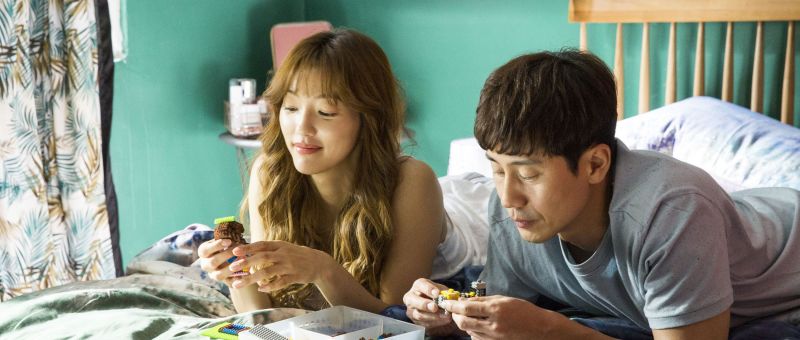
Bong-soo and Seok-guen undergo a role reversal when an unexpected tragedy forces Seok-gun to reassess his philandering ways while Bong-soo becomes a practiced adulterer. The marriage of Mi-young and Bong-soo is already on shaky ground – their sex life is all but dead and they’ve been having trouble conceiving. Mi-young is addicted to social media while Bong-soo spends his spare time building LEGO models, and in addition to being marital partners they also co-own an “Italian” restaurant which Bong-soo has long wanted to turn into a Chinese one (he trained as a Chinese chef) but Mi-young continually ignores his dream despite the fact that the restaurant is permanently empty and about to go bankrupt. Partly mid-life crisis, Bong-soo’s affair is motivated by a need to reassert his “manhood” while Jenny flatters him, strokes his ego, and does all the “wifely” things the “bossy” Mi-young refuses to do.

Yet just as Seok-guen said they would, Bong-soo’s fortunes improve thanks his to philandering – he becomes a better chef, the business takes off, and Mi-young (paradoxically) seems to develop more faith him as well as additional respect for his increasing “manliness”. Both men, through their interactions with the almost non-existent Jenny, are then forced to consider what, or who, it is they really want though Lee’s message seems to be that there are “secrets” in every marriage and perhaps it’s better not to ask too many questions if you want to maintain a happy married life. Cynical, though gleefully so, What a Man Wants is a salty affair but one which ultimately places its faith in “love” to find its way home despite the messiness of the journey.


What a Man Wants was screened as part of the New York Asian Film Festival 2018.

International trailer (English subtitles)