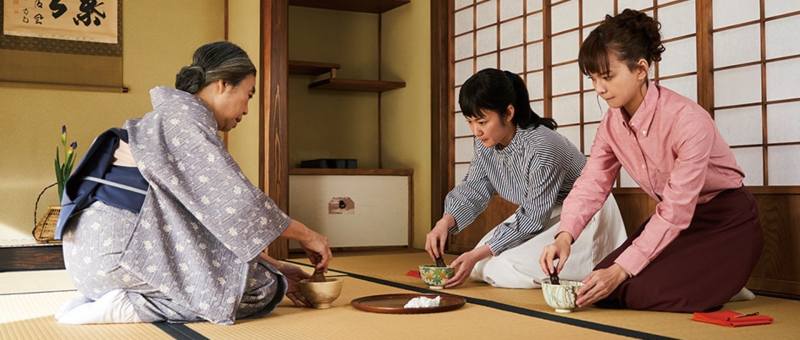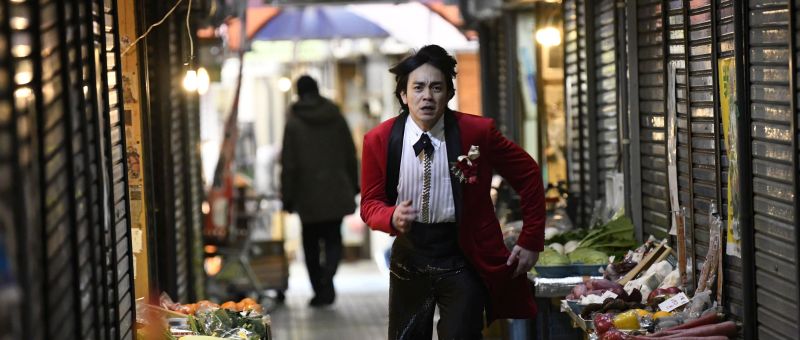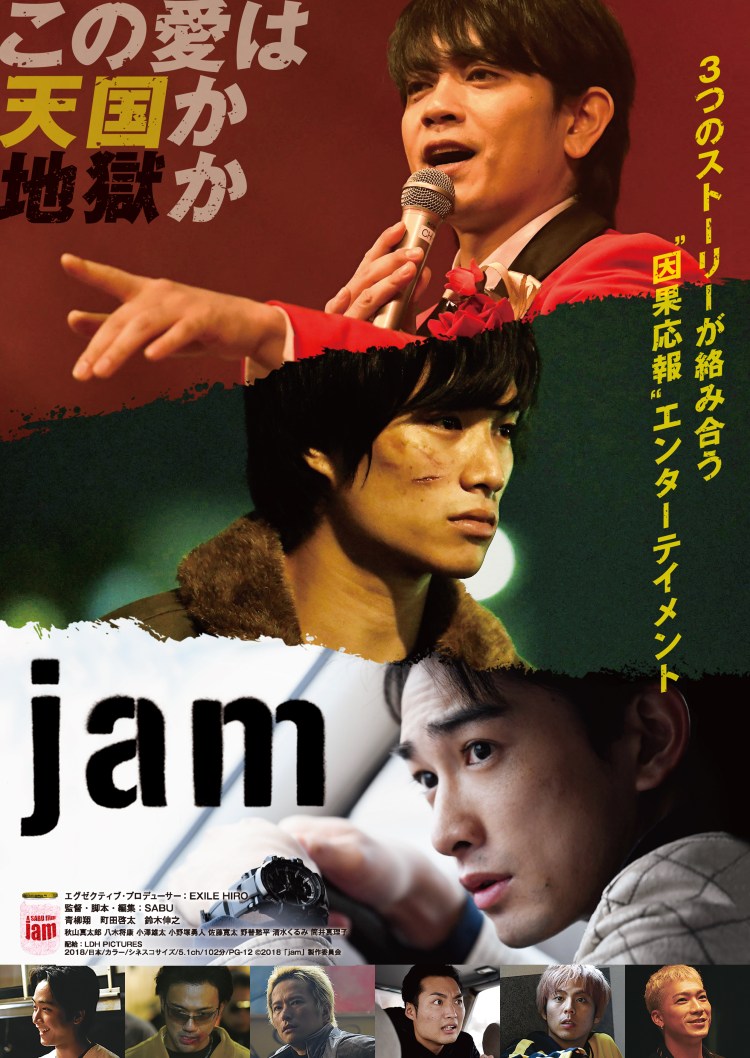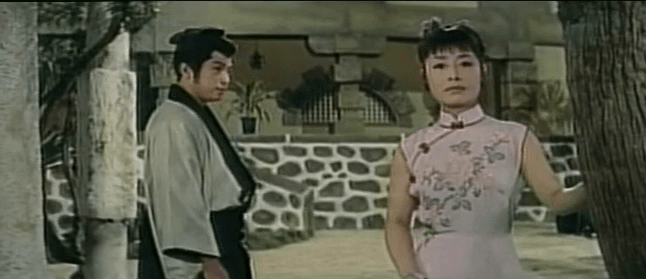
Bad Poetry Tokyo (東京不穏詩, Anshul Chauhan, 2018)

Bad Poetry Tokyo posterRunning towards a dream can help you forget whatever it was you were running away from, but there may come a time when you have to accept that your dream has betrayed you and the sun is already setting. For the heroine of Anshul Chauhan’s debut feature Bad Poetry Tokyo (東京不穏詩, Tokyo Fuon Uta) that moment has arrived all too soon and though she perhaps expected it to come and had actively resisted it, it can no longer be outrun.

30 years old, Jun’s (Shuna Iijima) dream has been a long time coming. At a make or break audition for a Canadian film, she tells the panel that she studied English at a top university in Tokyo and plans to move to LA to work in movies. Meanwhile, she blew out of her country home five years ago and has become estranged from her family. She supports herself working as a hostess in a seedy bar which is more a front for sex work than it is a drinking establishment, but sex work is work and at least pays well allowing her to save money to move to LA.

Unfortunately she plans to move there with her current boyfriend, Taka (Orson Mochizuki), who is a bouncer at the club and was responsible for getting her the job in the first place even if he now can’t quite reconcile himself with the feelings of jealousy and resentment her work causes him. Taka also has issues of his own and when twin crises present themselves in the form of a possessive and intimidating client, and a home invasion that seems like an inside job and leaves her with visible facial scarring, Jun is finally robbed of all hope and left with no other option than to retreat to her hometown and the quiet horrors which have been patiently waiting for her return.

Jun’s life, it would seem, has been one long scream. Returning to a seemingly empty home, she is less than happy to find her slumbering father (Kohei Mashiba) slumped over in the living room. Noticing the wounds on her face he begins to ask her what happened but more out of irritation than concern – he warns her not to bring any trouble to his door. Jun mutters that it might have been a mistake to come back, to which her father cooly retorts that the biggest mistake was her birth, resenting his daughter for her very existence and the taboo desires she arouses in him while insisting that this is all her fault because she is essentially “bad”. Jun’s dad didn’t even bother to tell her that her mother had died, perhaps out of embarrassment or shame for this was not a natural death and though not at his hand he is very much to blame. The first of many men to have wronged her, only now in her somewhat weakened and desperate state is Jun finally ready for a reckoning. After all, there is nothing more to lose.

Men have indeed ruined her life, as has the oppressive patriarchy which continues to define it. The first time we see her, Jun is forced to perform an intense audition scene of a woman being brutally beaten and abused for a dispassionate director. Which is to say, she is forced to humiliate herself and relive very real traumas in the quest to fulfil her dream. This early scene of playacting will be recalled several times, most obviously in the flashforward which opens the film and eventually leads to a moment of both liberation and transgression which ultimately seals her fate.

Unable to gain a foothold in acting, Jun is forced into a life of sex work which she finds degrading and unpleasant, allowing herself to be “violated” in return for money as she later describes it. Again reliving past traumas, her anger only grows and intensifies as she passively permits herself to be misused. A final act of rebellion in refusing the intimidating and entitled attentions of a controlling client leads to a dangerous situation in which he reminds her that women like her belong to men like him and if it pleases him he will destroy her. Jun gives up on her dream and therefore has no more need of the club, but employment in a hostess bar is not always as casual as it seems and one cannot just simply leave. Once again Jun has become someone’s property, not merely as an idea but as flesh.

Jun’s physical wounds are a manifestation of her emotional trauma and the legacy of violence which traps her in an oppressive cycle of abuse and despair. Back in her hometown, filled as it is with unpleasant memories and the shadow of her father’s cruelty, Jun is haunted by the spectre of an innocent childhood. Reuniting with an old friend who, it seems, has always carried a torch for the girl she once was, Jun is forced to confront the gulf between the “innocent” self which escaped with hope, and the defeated self which has returned with none. Even this seemingly positive, innocent romance is eventually tainted by violence offered as an act of love which has its own sense of disquieting poetry. Yet violence is the force which perpetuates despair, creating only fear and rage and pain each time it breeds. Jun is running once again but neither forward nor back, only full pelt towards the setting sun.


Bad Poetry Tokyo was screened as part of the 2018 Raindance Film Festival.

Festival promo (English subtitles)

Love At Least (生きてるだけで、愛, Kosai Sekine, 2018)

love at least posterFor some, it might be impossible grasp just how exhausting it can be merely being alive. For the heroine of Kosai Sekine’s debut feature Love At Least (生きてるだけで、愛, Ikiteru Dake de, Ai) , adapted from the novel by Yukiko Motoya (Funuke, Show Some Love You Losers!, Vengeance Can Wait), life is a draining cycle of waking and sleeping from which she fears she will never be able to free herself. An encounter with an equally atypical though perhaps more destructive young woman who orders her to leave her ordered existence so that she might step into the newly vacant space unwittingly helps her towards a moment of clarity though not the one it might at first seem.

Yasuko (Shuri) has vague memories of her mother dancing when the power went out but she herself is afraid of the dark. Looking back there’s a lot that makes sense to her about her mother’s behaviour and subsequently her own, but she hasn’t yet found a way to come to terms with her psychology. Yasuko has bipolar and is currently unemployed as she suffers with hypersomnia and hasn’t been able to hold down a job. She’s supported by her live-in boyfriend of three years, Tsunaki (Masaki Suda), who once dreamed of being a writer but now has a soul crushing job at a tabloid magazine writing salacious exposés about celebrities.

Yasuko is currently in the middle of a depressive spell and rarely leaves the house, spending most of the day asleep and exchanging texts with her somewhat unsupportive sister but her life is turned upside-down when she receives a surprise visit from a woman calling herself Ando (Riisa Naka) who drags her off to a nearby cafe and explains that she previously dated Tsunaki three years ago and now she wants him back. Viewing Yasuko as some kind of lesser human, Ando thinks she should see sense and leave Tsunaki to which Yasuko quite reasonably points out she has no income and so the request is quite unreasonable. Ando, however, is nothing if not thorough and it’s not long before she’s bamboozled both the cafe and Yasuko into taking her on as a part-time waitress.

Ando, an extremely unpleasant and manipulative woman, may be as Yasuko points out even “sicker” than she is but somehow she seems to make all around her do her bidding. Oddly enough, working at the cafe might actually be good for Yasuko – the cafe owner and his wife are kind and sympathetic people who seem to want to help and the other waitress was once a hikikomori so they might truly have some idea of what is involved in trying to help those in need. Ando, however, doesn’t quite seem to want her to succeed – she turns up at the cafe on a regular basis to feed Yasuko’s insecurities, pointedly asking her if she’s considered whether the problem might not just be that she’s “useless”, telling her that it’s pointless to try because she’ll inevitably fail, all of which seems quite counterproductive to her nefarious plan.

Then again, kindness and sympathy are not always quite as helpful as they seem. The cafe owner’s wife is nice, to be sure, but is fond of repeating the mantra that depression is caused by loneliness and that therefore making friends with the people at the cafe will make everything better. There might be something in her way of thinking, but it’s also a superficial approach to a more complicated problem and mild refusal to face some of the more serious aspects of Yasuko’s condition. When she’s started to feel as if the cafe is a safe space, told to think of herself as “family”, Yasuko lets down her guard and reveals one subject of her obsessive anxieties which just happens to be the washlet and the possibility of its sudden explosion should the water pressure go haywire. All of a sudden it’s as if the air changes, they look at her like she’s “mad” and the facade of their patronising desire to help is suddenly ripped away. Yasuko’s worst fear has been realised, they “see through” her and she feels as if there’s no hope any more.

Being seen through is perhaps something which Yasuko both fears and craves. Tsunaki, meanwhile, is suffering something similar only in a less extreme way. He also feared being seen through, but unlike Yasuko chose to isolate himself, rarely speaking and maintaining a healthy distance to the world. For this reason he’s been able to put up with his awful tabloid job, even excusing himself when an actress whose affair they’d exposed committed suicide because after all it was “nothing to do with” him despite the fact he was so obviously complicit. Increasingly conflicted, he begins to pull away from Yasuko, unwilling to overburden her with his own worries or perhaps more accurately equally afraid to expose them. Yasuko’s cruel barb that she wished Tsunaki’s “lack of character” would infect her hints at her mild frustration with his passivity, that his refusal to engage and habit of pussyfooting around her illness to avoid creating a scene are also contributing to her ongoing lethargy. The passive aggressive texts from her sister which seemed so unsupportive are perhaps less so as she is the only person willing to go toe to go with her and suddenly Yasuko’s meanness towards her outwardly patient and caring boyfriend reads more like provocation, as if she’s trying to make him respond rather than allow him to continue enabling her inertia.

Being driven apart by their parallel crises eventually brings the pair back together again, closer to an emotional centre and reaching a brief moment of understanding. As Yasuko says, the connection may have been only momentary, but within that infinitesimal space she can perhaps find a life. The dark is not so scary after all. Anchored by an extraordinary performance from Shuri, Love at Least is a beautifully composed examination of the costs of modern living in which fragmentary moments of absolute connection become the only source of salvation in a world of broken dreams and hopeless futures.


Love At Least made its World Premiere at the 2018 Raindance Film Festival.

Original trailer (no subtitles)

Family Diary (家庭日記, Hiroshi Shimizu, 1938)

Family Diary posterDespite the unending popularity of the romantic melodrama, Hiroshi Shimizu never quite got the bug. For Shimizu, romance is always abstracted – it either goes unresolved or reaches a point of resolution but only through unpleasant or unpalatable circumstances. There are few unambiguously “happy” couples in Shimizu’s movies, but Family Diary (家庭日記, Katei Nikki) takes things one step further in its twin tales of the romantic destinies of two very different students one of whom took the sensible path and the other the path of foolish love.

First we meet the sensible one. Fuji (Shin Saburi) takes a last twilight stroll with his current girlfriend, Kikue (Kuniko Miyake), after which they burn their letters as a symbol of their parting. Now that his brother’s business has failed, Fuji is marrying into a wealthy family who will pay for the remainder of his studies. Meanwhile his best friend, Tsuji (Ken Uehara), is grumpily drinking with a bar girl he plans to marry despite the objection of his parents. Fuji marries Shinako (Sanae Takasugi) and becomes an Ubukata while Tsuji marries Ume (Michiko Kuwano) and goes to Dalian in Manchuria. Some years later when Tsuji returns to Tokyo along with his wife and son, Ubukata has become a successful, happily married man. Coincidentally, Kikue who had gone to Manchuria to escape her heartbreak has also returned and opened up a small hairdressing shop which runs herself as a single woman looking after her younger sister, Yaeko (Mitsuko Miura).

The contrast between Ubukata and Tsuji is set up early on as Ubukata is repeatedly categorised as cold and unfeeling where as Tsuji is unmanly and oversensitive. Ubukata describes Tsuji as “sentimental”, “too delicate”, “almost the artistic type” for his compassionate desire to avoid awkwardness between their wives who, after all, must at least try to become friends if the relationship between the men is to be maintained. He urges him to “think about simpler things” which is most often the way Ubukata appears to think. That is not to say it didn’t hurt to abandon Kikue, but he comforted himself in the knowledge that he was doing the “best” thing based on a series of practical calculations. Ubukata is not heartless, but he is a committed pragmatist and sometimes insensitive to the suffering of others who might not agree with the way he works things out as his wife suggests when she (cheerfully enough) reproaches him for not paying attention to other people’s feelings.

Tsuji, having chosen to marry for love, at times seems envious of Ubukata’s settled home life with his traditional Japanese wife who trails behind him in kimono and rarely goes out without informing her husband first. Where Ubukata’s match might be seen as a betrayal of love for money, his home is harmonious whereas the Tsujis’ is not. Ubukata, it has to be said, is polite enough to Ume but makes no secret of his distaste for her unrefined character. Tsuji’s parents objected to the match because Ume was a bar girl (and, it is implied, a casual prostitute) and though Tsuji has no problem with her past, the snobbish attitudes of men like Ubukata continue to plague her however much she tries to play by the rules of their society. When Ubukata takes Tsuji to dinner, Tsuji asks him not to tell Shinako about Ume’s past in case she looks down on her to which Ubukata tells him he’s being over sensitive but later consents if only because he finds the subject distasteful in any case and is an old fashioned gallant sort of man.

Ume is however out of place in this upper middle-class environment as she demonstrates by provocatively lighting a cigarette while entertaining Ubukata and Shinako who ends up lighting it for her with a look of mild awe in her eyes. Ume fears this world will reject her – something it ultimately does when Tsuji tries to reconnect with his family, but in reality she has already rejected it herself. Unable to see past her own fears and regrets she doubts her husband’s love and lives in constant anxiety, waiting for the next slight from a hoity toity housewife to remind her that she doesn’t deserve all of this “happiness”. Though the Tsujis are “unhappy” there is also love, even if it is complicated and often misunderstood.

Both marriages are ultimately destabilised by external forces – Tsuji’s by his family’s attempts to expunge Ume by “stealing” her son and later plotting to pay her off on the condition she absent herself, and Ubukata’s by the resurfacing of the romantic love that he sacrificed for material gain. Though Ubukata has no intention of rehashing the past, he does want to be of service to Kikue (again, misreading her feelings and attempting to make himself feel better rather than improve the fortunes of another) – something which places a wedge between himself and his wife when she eventually learns of the circumstances which led to her marriage. Yet the wedge itself is not so much caused by Kikue as by Ubukata’s supreme coolness in which he sees no reason to explain himself to his wife because his actions have satisfied his own sense of righteousness and must therefore also satisfy hers.

Though Shinako is tempted by the sophisticated, westernised ways of “modern girl” Ume, and later pressed by fears her husband has never loved her, she remains a steadfast Japanese wife, effortlessly poised and always polite even under emotional duress. Despite their obvious differences, Shinako comes to care for Ume – even becoming something like her only friend, but Ume is only “accepted” by the world of the film after she “proves” herself as an emotional woman through an act of self inflicted violence which somehow demonstrates her essential purity and goodheartedness. Ume prepares to make an exit before being shown the door, but her act of pure desperation and extreme wretchedness becomes her social salvation and finally earns her a place in the moral universe of practical men like Ubukata who now rate her worthy. Thus the social order is restored, the official bonds of marriage held up, and Ubukata’s callous and calculating way of life found to be the better course, but there’s something less than convincing in Shinako’s assertion that everything will be alright now as she and her husband become another of Shimizu’s figures disappearing over a distant bridge.


A Crimson Star (真っ赤な星, Aya Igashi, 2018)

A Crimson Star posterFalling in love is, perhaps, like standing too close to the sun and for the young heroine of Aya Igashi’s debut feature A Crimson Star (真っ赤な星, Makkana Hoshi), it means nothing unless it burns. Set in the otherwise serene environment of a rural Japanese summer, full of blue skies and green fields bursting with life, A Crimson Star is the story of two ostensibly very different women in very different places who nevertheless develop an essential and inescapable bond in their shared sense of loneliness and isolation, but their relationship is also a problematic one in which the familial and the romantic have become inextricably linked.

14-year-old Yo (Miku Komatsu), undergoing a lengthy period of hospitalisation for an undisclosed illness, develops an intense fondness for her kindly nurse, Yayoi (Yuki Sakurai). On her discharge, however, Yo is stunned to learn that Yayoi has abruptly resigned and all but disappeared. Meanwhile, Yo’s family life continues to deteriorate. Her disinterested mother has got a new boyfriend who is often drunk and violent. In order to escape him, Yo takes a trip to the corner shop and makes a surprising discovery in a street of parked cars which turns out to be (as yet unknown to the the naive Yo) the secluded byroad used for secret assignations seeing as this is such a one horse little town that there isn’t even a love hotel. Yayoi has become an embittered sex worker and her lonely degradation breaks Yo’s heart. When her mother’s boyfriend eventually begins molesting her, it’s to Yayoi that Yo turns looking for care and support from a woman who had nursed her but is no longer a nurse.

The “crimson star” of the title most obviously refers to the wings of the paraglider gazed at so often by the earthbound Yo, but it is also echoed in the tiny scars and wounds which define the relationship between the two women. In the first scene of the film, the hospitalised Yo has a prominent bruise on her foot apparently caused by Yayoi nicking a vein when taking a blood sample. Even so, Yo leans in tell her that she is her favourite nurse – words which bring tears to Yayoi’s eyes and perhaps precipitate her decision to leave the hospital. For Yo, who is emotionally neglected by her mother and has never known true care and affection, the bruise becomes an odd kind of proof of love which she has come to associate with pain. Later, Yo spots an odd mark on Yayoi’s neck – she is of course too young to know what it is. Yayoi shows her, literally, by biting her slightly below the shoulder and creating another kind of “crimson star”.

Yo’s early attraction to the 27-year-old Yayoi has a distinctly maternal quality in which she looks for the same kind of compassionate care she experienced in hospital and which her mother refuses to give her. There is also, however, a nascent sexual attraction which provokes intense jealousy as Yo attempts to get closer to Yayoi but finds herself unable to achieve the kind of all encompassing love she is seeking. Given Yo’s extreme youth, the relationship is in many ways extremely inappropriate and infinitely confused, a combination of familial, platonic, and romantic longings which appear to be unbreakable but remain unresolved. Yo, almost becoming the thing she wants to find, begins to take care of the depressed, broken Yayoi – tidying the apartment, folding washing, and repairing external signs of damage, while Yayoi becomes care taker rather than care giver presenting her with an opportunity to reexamine her self-destructive tendencies including a dead end relationship with married paraglider Kengo (Katsuya Maiguma).

Kengo becomes a particular point of contention for Yo, not just for reasons of jealousy but because he causes Yayoi to suffer. Early on she spots him on his bike with his small daughter, every inch the doting dad which is, of course, something she never had. Kengo is also a symbol of familial betrayal as he undermines his seemingly happy family by continuing to string Yayoi along on what is, ironically enough, a no strings basis. Family has betrayed both women who find themselves adrift and alone with no clear anchor except perhaps each other.

Yet what Yo wants is to escape – to soar in the quiet skies high above all, free of earthly constraints like the paraglider she so often sees, but paragliders are crafts built for two and Yo wants to go with Yayoi, strapped together enveloped in a private world into which nothing else may enter. The “crimson star” then becomes the unattainable feeling of closeness and total connection that continues to elude her, furthering her view that love is pain and the pain she feels must be love. Backed by a crimson sky, the future is both hopeful and filled with light, but perhaps also tethered and marked by a melancholy resignation. Beautifully composed, Igarashi’s debut is a raw, often uncomfortable examination of an elemental bond forged between two lonely, damaged women each seeking impossible connection as an escape from a loveless existence.


A Crimson Star made its World Premiere at the 2018 Raindance Film Festival.

Original trailer (English subtitles)

The Deep Blue Sea (青い海原, Tsuneo Kobayashi, 1957)

Deep Blue Sea posterHibari Misora turned 20 in 1957, but she’d already been working for eight years and was well on her way to becoming one of the most successful stars of the post-war era. The Deep Blue Sea (青い海原, Aoi Unabara) is one of her earliest grown up musical dramas and finds her sharing the bill with another of the biggest acts of the day in Hachiro Kasuga who, despite being stuck in second lead limbo, does the bulk of the musical heavy lifting. It also sees her star opposite an actor who would become her frequent leading man which might come as something of a surprise to those most familiar with his later work – Ken Takakura, then very fresh faced and playing the juvenile lead.

The action begins with Takakura’s Ken as the stranger who walks into town. In fact he’s not that much of a stranger – he runs into an acquaintance, Saburo (Hachiro Kasuga), right away, but he’s come on a mission. He’s looking for the friend of a man who died in an accident on his boat in order to give him a photograph and some money he’d saved for the daughter he had to leave behind. Before any of that happens, however, he ends up in a meet cute with Misora’s Harumi who manages to tip a whole bucket of water over him, and then later a jug of beer when he fetches up at the bar where she works (and where Saburo is a regular). As coincidence would have it, the man Ken is looking for also lives at the bar and is actually Harumi’s father. Harumi never knew she was adopted and is stunned when she overhears the conversation between the two men but decides to go on pretending not to know anything.

The real drama revolves around a lecherous gangster, Sakazaki (Isamu Yamaguchi), who is having an “affair” with the owner of the bar where Harumi and her dad live. He’s taken a liking to Harumi who wants nothing to do with him, but when her dad gets into an accident and needs money for medical treatment, Saburo makes a deal and unwittingly gives him an additional angle to start railroading Harumi into his arms.

Director Tsuneo Kobayashi would later be best known for genre pieces and tokusatsu. Besides some quite beautiful and unusually convincing work with backdrops, there are no shocks or special effects in Deep Blue Sea but there is plenty of music, most of it sung by Hachiro Kasuga with Misora taking centre stage for a few solo numbers of her own as well as humming an odd tune here and there. Despite not being an integrated musical (all of the songs have a diegetic genesis) and in contrast with many of Misora’s films, The Deep Blue Sea is otherwise a fairly typical musical drama in which the songs drive the narrative rather than being an aside to it.

It does however begin to blur genres, shifting into familiar Toei territory with the introduction of the sleazy yakuza tough guys who are willing to go to quite a lot of trouble to ruin the life of an ordinary girl like Harumi. The central romance follows a familiar pattern as Ken comes to care about Harumi and her dad through his connection with her birth father and becomes their noble protector, while Saburo, who’d silently harboured a crush on Harumi all along hovers sadly on the sidelines, wanting to support his friends in their romantic endeavour but also somewhat grateful when Ken decides to sacrifice himself on Harumi’s behalf. Ken’s sacrifice, however, doesn’t entirely work – you can’t get rid of men like Sakazaki through honest or logical ways and simply paying them off is never enough, in fact it might just make everything worse.

The Deep Blue Sea may be a little darker than most musical romances with its seedy port town setting, gangsters, smuggling action, and the constant sense of things always floating away with the boats that come and go, but in true musical fashion it all works out in the end. Despite learning that she is adopted and that a wealthier blood relative was keen to take her in, Harumi chooses to stay with her adopted father, steadfastly choosing real feeling over blood ties or pragmatic concerns – unlike the greedy bar owner who steals the money her father left her, or the nefarious gangster who tries to manipulate her into giving up her principles and stepping into his world of betrayal and avarice. As usual for a Toei film, the forces of good (for a given definition of “good”) eventually triumph and the bad pay for all their mistakes while the merely unlucky accept their fates with good grace and resolve to make the most of new opportunities. It may not have made any great waves, but The Deep Blue Sea is cheerful and fun and chock full of post-war humanism as the noble Ken comes to the rescue of the goodhearted Harumi and her steadfast father to stand up against the forces of corruption.


Some of Hibari’s musical numbers (no subtitles)

Bad Boys (不良少年, Susumu Hani, 1961)

Bad Boys posterIn the mid-1950s, the “Sun Tribe” movies had evoked a series of conflicting reactions in their depictions of the new bright young things of the post-war era who, caught in a period of intense confusion, rejected the future their parents’ had been trying to build while revelling in nihilistic hedonism enabled by the new freedoms. Though the films proved popular with their target audience, they also produced a moral panic in the older generation which saw youth as dangerously out of control and desperately in need of correction. Meanwhile, reform school drama also became something of a recurring motif in the more progressive youth movies put out by Nikkatsu (including one starring Hani’s soon-to-be wife, Sachiko Hidari) which sought to humanise the figure of the “bad boy” by pointing out all the various circumstances which led to his fall from grace.

Susumu Hani’s Bad Boys (不良少年, Furyo Shonen) is often regarded as an important precursor to what might later be termed the “new wave” in its radical departure from the cinematic norm of the times. Loosely inspired by a book titled “Wings that Cannot Fly” which collected the stories of boys who’d been through the same reform school, Hani repurposes the tools of neorealism in his use of non-actors, improvised dialogue, natural light and location shooting, for a hybridised avant-garde “documentary style” which is, in a sense, realer than “real”.

We follow a disaffected young man, Asai (Yukio Yamada), who has been arrested for the aggravated robbery of an upscale Ginza jewellers. Asai, who sadly laments that he has only seen the famously posh neighbourhood from the back of a police van, did indeed commit the crime and could be thought of as the “ringleader” of the group of boys arrested which also includes young men from “good” families who’ve fallen in with a “bad” crowd. Some of the other boys are released when their parents plead for them, but Asai, as we discover, has no parents – his father died in the war when Asai was three and for reasons unexplained he is estranged from his mother. Undergoing a series of psychological tests which prove inconclusive, it’s decided that Asai might benefit from some time in reform school to reflect on his life and hopefully emerge with a better sense of civic responsibility.

Hani’s depiction of the reform school system paints it as an obvious remnant of the militarist or perhaps even feudal past in which discipline and physical strength are the primary virtues. The boys salute, march in file, and are taught to respect authority. Inside the school, natural factions arise with a strictly observed series of hierarchies enforced by violence and intimidation. Asai, a determinedly independent sort, refuses to obey and stands up to the bullies only to suffer defeat. Eventually he becomes the leader of his own faction of similarly oppressed youngsters, but when the time comes he discovers he is all alone once again and unable to break the chain which constrains them in a cycle of fear and violence.

Nevertheless, the failed battle against oppression has an unexpected positive outcome when Asai is moved to another cell. Up to this point, there’s been relatively little sign of positive “reform” on offer – no education, no counselling, no practical advice which might help these young men escape the circumstances which brought them here, but on being moved to the carpentry workshop Asai does at least begin to learn a useful skill as well as mixing with more “serious” boys who can have a laugh together while getting on with work. His attitude seems to relax, he “grows up”, and begins to see a different future only to be abruptly released back onto the same streets no better off than before with only the kind hearted platitudes of the softly spoken social worker to guide him into a “better” tomorrow.

The question remains what sort of men the reform school system was designed to engineer and to what end – a collection of deindividualised authoritarians who stand to attention and salute on demand may not be much of an asset to post-war humanism. Meanwhile, the emphasis on strength and discipline unwittingly reinforces the law of the street where violence rules all and morality is an unaffordable luxury, encouraging the perpetuation of a system of mutual oppressions while ignoring the many and various social issues which make it impossible to escape. Hani wanted to capture the lingering spirit of “totalitarianism” in which even those superficially rebelling against the system obey ancient social codes which restrict their own freedom and exist solely to keep them in their place. In doing so he lays bare the wider hypocrisies of the post-war democratic era which promises freedom but delivers only the same old compromises.


Bad Boys was screened as part of the Japanese Avant-garde and Experimental Film Festival 2018.

DVD release trailer (no subtitles)

Diary of a Shinjuku Thief (新宿泥棒日記, Nagisa Oshima, 1969)

Shinjuku thief posterIn Sing a Song of Sex, Nagisa Oshima had lamented the depressing decline of political consciousness among the young who remained so preoccupied with their sexual desires that they’d forgotten all about the revolution. In Diary of a Shinjuku Thief (新宿泥棒日記, Shinjuku Dorobo Nikki), once again a story told through song, he examines the same problem from the other side – if repressed desires frustrate the battle for social change, then perhaps the sexual revolution must precede the political.

Our “hero” if you can call him that, is a man calling himself “Birdey Hilltop” (Tadanori Yokoo). Birdey gets off on shoplifting books from the huge Kunokuniya bookstore in Shinjuku. One day he is caught by a feisty young woman, Umeko (Rie Yokoyama), who we later discover is merely posing as an employee in one of the film’s many acts of role play. Umeko drags the shoplifting Birdey up to see her “boss”, Mr. Tanabe (the real life boss of Kunokuniya playing “himself”), who, to be honest, isn’t very interested in dealing with a petty thief but is quite interested in this strange pair of awkward young people and becomes something between invested audience member and accidental director in setting them off on a journey to explore the nature of their peculiar sexualities.

These largely seem to lean on the idea of anonymous theft, that neither Birdey nor Umeko are able to accept the reality of altruistic connection and value only that which is actively taken (preferably in secret). Umeko allows herself to be “stolen” in skipping out on already arranged date with a man who had threatened to take what he wanted by force to undergo an unfulfilling sexual experience with Birdey which nevertheless provokes in her a desire to shatter the realities of time and space. Given money to enjoy themselves, neither of the pair quite want to accept it – the idea of splitting it amicably isn’t appealing, or perhaps the magnanimity of insisting the other take it all more pleasurable, but neither of them want anything that isn’t in some way a transgressive transaction.

Yet perhaps what it is they long to steal is an identity. Neither Birdey nor Umeko has been entirely truthful with the other and they are each only too happy to inhabit various other roles as they act their way through life. The final apotheosis of the self occurs solely in the theatrical realm but apparently carries a level of essential truth which finally allows the pair to integrate their identities into a comfortable whole which liberates their bodies from sexual repression and perhaps becomes a kind of revolution of its own.

Nevertheless, their strange journey is massaged by a number of dubious guides from the sex therapist who reaches a series of bizarre conclusions based on little more than appearance and vague reactions to classic pornography to the gentle machinations of Tanabe who eventually declares himself too old for this particular game, and the entire legacy of world literature which crowds their heads with competing thoughts and leaves no room for originality. During their “therapy” session the pair are encouraged to get literally naked in front of the analyst who correctly points outs that they are each wearing masks (though his eagerness to see them disrobe does not seem entirely innocent) while also poking and prodding at their various dualities – Birdey is too “effeminate” and Umeko “too strong”, their gender atypicality apparently the root of all their problems. Birdey wonders if on some level he would rather be a woman, and if Umeko would rather be a man before deciding to search for himself on the stage.

Another of the dubious mentors, avant-garde stage performer and legendary figure of the Japanese underground theatre movement Juro Kara makes frequent appearances throughout the film strumming a guitar and singing a song about Alibaba while dressed in a deliberately gaudy modern take on traditional stage costuming. One of several real life figures Oshima cast in the film, Juro Kara more than any of the others is here to remind us that everything we see is affectation – something Oshima further rams home with his jarring transitions from elegant black and white photography to oversaturated colour filled with the deep red of passion and desire. Frequent title cards, surrealist imagery, rapid shifts in tone and style, and a free floating approach to narrative – Oshima out Godards Godard and even if his messages are obscure in the extreme, his images hold their power all the same.


Diary of a Shinjuku Thief was screened as part of the Japanese Avant-garde and Experimental Film Festival 2018.

Opening sequence (no subtitles)

Ramen Samurai (ラーメン侍, Naoki Segi, 2011)

Ramen Samurai posterSet in the ‘90s, Ramen Samurai (ラーメン侍) is in many ways a post-Showa story or a tale of one man’s reaction to bubble era disillusionment. It’s also in the fine tradition of legacy movies in which a troubled child reflects on a complicated relationship with a late parent and struggles to accept their role as an inheritor of skills and knowledge they’d spent much of their youth attempting to reject. Yet the hero of Ramen Samurai, though he maybe reluctant, is more willing than most to pick up his father’s burden, walking back through family history with his long-suffering mother and rediscovering the heroism which lay behind his sometimes difficult father’s tough guy exterior. Hikaru (Dai Watanabe) does not see himself as a man like his father – he’s no “hero” and bears no natural inclination towards rebellion, but only through addressing his father’s life can he learn to define his own. This is all, of course, a roundabout way to discovering the soul of ramen lies in the confidence of the chef.

In 1990 Hikaru, a graphic designer, gets a call at work from his mum to let him know his father has had a stroke. Hikaru left town in a hurry some years earlier, rejecting the idea of taking over the ramen restaurant for a life in bubble era Tokyo. On his father’s death he assumes his natural responsibility and comes home but customers say his ramen’s not as good as his dad’s, and he has trouble keeping his staff in line because they simply don’t accept him. Try as he might, Hikaru just can’t seem to find a way to replicate his father’s recipe, in the store or in life.

Yet there’s a nostalgia in him that sees him want to try. Kurume, a small town in Kyushu, is defined by its ramen – a local delicacy that once brought tourists and general prosperity to the area, but during bubble era “modernisation”, the “backward” yatai ramen stands with their colourful tarpaulins were deemed too reminiscent of post-war privation to survive. The carts were shunted away from the new sophisticated city centre while the police started restricting licenses to run them, eventually prohibiting their sale and limiting their inheritance to direct family members. Hikaru is at least his father’s son and so has a natural right to take over the business even if he has hitherto rejected it.

Rather than a cooking tale, Ramen Samurai steps back to tell the story of its vicarious protagonist – the problematic figure of Hikaru’s dad who is, in many ways, the idealised figure of the Showa era “hero”. That’s not to say he was perfect – he drank to the point of financial ruin and frequently caused problems for his family, but his heart was always in the right place and so he was mostly forgiven. A salt of the Earth type and cool with it, Hikaru’s dad was the big man around town and the defacto leader of the yatai owner community. He brooked no injustice, stood up to the yakuza (who only had the profoundest respect for him), and sought to protect those who were unable to protect themselves. Seeing a sleazy yakuza molesting a young girl, Hikaru’s dad kicked him out and later offered the girl, who is mute, a job and a place to stay, almost adopting her into his family until another act of random kindness accidentally reunites her with her own long-lost father.

Faced with such an intense legacy, it’s no wonder Hikaru struggled. A sensitive, artistic soul he tried his luck in bubble era Tokyo working in an advertising agency where he found the coolness of his colleagues puzzling and difficult to bear. Hikaru’s boss loudly discusses pub lunches and evenings spent in hostess bars, often throwing away the lovingly made bento provided by his wife. Returning home with an empty lunchbox is, he says, his way of showing love though his refusal to eat it perhaps a reaction against a salaryman’s lack of freedom. Nevertheless, even if they clashed in terms of personal morality, Hikaru’s boss compliments him on his commitment to hard work and growth as an artist even whilst admitting that the work itself is often frivolous and ultimately thankless.

Hikaru eventually learns to channel his artistic inclinations into his ramen, seeing himself as a “ramen artist” incorporating his father’s legacy into a dish which is entirely his own. In a sense, Hikaru retreats into the safety of the Showa era past, or that is the cosy 1970s in which he lived a comfortable, if eventful, childhood under a yatai’s awning while dad made trouble but only for the best of reasons. A samurai’s duty is, after all, to protect and Hikaru has decided to do exactly that in “restoring” his hometown to its former glory, dragging retro yatai culture into the rapidly disintegrating post-bubble world and bringing warmth and community back with it.


Original trailer (no subtitles)
So Goes My Love (愛より愛へ, Yasujiro Shimazu, 1938)

(C) Shochiku 1938Yasujiro Shimazu had been a pioneer of the “shomingeki” – naturalistic stories of ordinary lower middle class life, and his early career included several forays into the world of the “tendency film” which carried strong left-wing messages. By the late 1930s however his films have shifted upwards a little and often deal with the lives of the upper middle classes as they find themselves at another moment of transition during the turbulent militarist years. In contrast with many contemporary films, Shimazu’s may seem curiously apolitical but speak volumes solely through their subtlety and direct refusal to engage with the propagandist concerns of the ruling regime.

In So Goes My Love (愛より愛へ, Ai yori Ai e), our lead, Shigeo (Shuji Sano), is a struggling writer living with his girlfriend, Miyako (Sanae Takasugi), who supports them both with her meagre earnings as a bar hostess. As we later discover, Shigeo is the eldest son of a prominent family who have (temporarily) disowned him because they don’t approve of his relationship with Miyako. Realising his dreams of becoming a successful writer are unlikely to be fulfilled, Shigeo has become moody and taciturn. He wants to find a job but isn’t exactly equipped to get one especially when the times are as hard as they are. He asks his uncle for help and gets an interview at a newspaper, but quickly realises that his uncle has set him up – he can only have the job if he “legitimises” his living arrangements. Shigeo leaves in a huff but there’s no denying he’s in a financial fix.

Things start to change when Shigeo runs into his younger sister, Toshiko (Mieko Takamine), by chance at a cafe. Toshiko insists on coming back with him to his lodgings “for future reference” but also out of morbid curiosity as a kind of touristic exercise in surveying the lives of those less fortunate. Shigeo thought Miyako would have already gone out but walks in just as she’s leaving. Though Miyako is shy and quiet, a little perturbed over being suddenly ambushed with a visitor, she does her best to ease the awkwardness between herself and her potential sister-in-law with black tea (foregoing a cup herself) until Toshiko finally consents to sit on their floor cushion. Toshiko looks around the bare, depressing flat and spots Miyako’s sewing box with a pair of freshly darned socks sitting on top. It’s immediately clear to her that Miyako is not, as her parents had suggested, some kind of gold digger (no self-respecting gold digger darns their socks, after all). More than that, she seems “nice”, which is perhaps why she’s able to put up with the petulant Shigeo with so little complaint.

The central problem is a two fold one – Shigeo has attempted to choose his own bride and therefore “modernity” over the “traditionalism” of an arranged marriage. He doesn’t particularly care about being the head of a household or about living in relative squalor save for guilt and wounded male pride that he’s condemned Miyako to live there with him (not to mention sending her out to the degrading world of hostess bars and cabarets just so they can survive). The parents have reacted badly and produced a stand-off. Shigeo’s uncle is trying to manipulate the situation to his advantage by convincing Shigeo to leave Miyako and come home, but Shigeo is a proud young man, even if he leaves Miyako there’s no way he’ll come home with his tail between his legs. If the older generation wants to win the younger one over, it will have to compromise and learn to play by less stringent rules.

Making a knee-jerk judgment, Shigeo’s father and uncle have decided that Miyako is just a passing fad, a floozy or a gold digger best worked out of one’s system young and then forgotten about (preferably so that it wounds you so badly you’re ready to accept the cold comforts of a proper arranged marriage). Rather than the uncle, it’s Toshiko who becomes the bridge when she realises how kind and devoted Miyako really is. Shigeo’s mother is also sympathetic but, sadly, it’s still the men who have the final say and it’s not until uncle pays a Miyako a visit to try and persuade her to leave Shigeo that he too begins to see how “sweet” she is and that allowing her into their family wouldn’t be such a bad thing after all. In fact, as we later realise, Shigeo’s father perhaps wasn’t so opposed as he pretended to be and was simply playing his son at his own game, planning to consent to the match once he proved that it was really “serious” and not just a passing fling. Nevertheless, Miyako’s own meekness proves the final barrier as she finds herself suddenly afraid that Shigeo’s family might think her inherent goodness is some kind of trick and she’s been plotting all along. Only when Toshiko comes to fetch her and Shigeo himself calls her to come does she finally understand it’s going to be alright.

For 1938, this rather frivolous story might seem decadent especially with its warmhearted liberalism as the union of a lower-class woman and upper-class man is finally blessed through nothing more than common sense and empathy. Though Shimazu otherwise steers clear of political concerns, he does send Shigeo, Miyako, and Toshiko to the pictures where they end up watching part of a film made by Leni Reifenstahl featuring beautifully photographed visions of lithe young men in swimming trunks after which Shigeo gets up in a huff to smoke a cigarette. Toshiko didn’t seem to enjoy it much either and tries to improve Shigeo’s mood by insisting that the next one will be better but the message is clear – Shimazu didn’t like that film and he doesn’t think you did either. Among fans of Shimazu, at least, modernity is winning. It may not be perfect (Shigeo is an obvious prig whose self-conscious masculine posturing is almost a self parody), but it’s getting there and if everyone would just forget about the “rules” and treat others with respect, decency, and understanding then perhaps things wouldn’t be in such a mess.


Short scene in which the trio go to the cinema

Bleach (BLEACH ブリーチ, Shinsuke Sato, 2018)

BL_honpos_setTite Kubo’s Bleach (BLEACH ブリーチ) had the distinction of being one of three phenomenally popular long running manga series (alongside Eiichiro Oda’s One Piece and Masashi Kishimoto’s Naruto) which dominated the industry from the early 2000s until its completion in August 2016. The series spans 74 collected volumes and was also adapted into a successful television anime which itself ran for several seasons and spawned a number of animated movies. It might seem like a no brainer to bring the series to the big screen with a live action adaptation but Bleach is no ordinary manga and the demands of recreating its fearsome world of cruel death gods and huge soul sucking monsters are a daunting prospect. Perfectly placed to tackle such a challenge, director Shinsuke Sato (I am a Hero, Inuyashiki) spent more than a year in post-production working on the CGI and has brought his characteristic finesse to the finely crafted world of Kubo’s Karakura.

Our hero, Ichigo Kurosaki (Sota Fukushi), is a regular fifteen-year-old high school student, save for his fiery orange hair and the ability to see ghosts. He lives with his relentlessly cheerful father (Yosuke Eguchi) and two cute little sisters but is also nursing guilt and regret over the death of his mother (Masami Nagasawa) who died protecting him from a monster when he was just a child. Feeling disconnected from his family, Ichigo likes to put on a front of bravado – taking on petty punks to teach them a lesson though, in a motif which will be repeated, he only escapes an early encounter unharmed thanks to the intervention of his unusually strong friend, Chad (Yu Koyanagi). Ichigo’s life is changed forever when he finds a strange girl, Rukia (Hana Sugisaki), in his room where she despatches a lingering spirit back its rightful destination of Soul Society. That was not, however, her primary mission and a giant “Hollow” suddenly punches a fist through Ichigo’s living room and scoops up his littlest sister. Rukia does her best to defeat the beast but is seriously wounded. Sensing Ichigo’s high psychic ability, she breaks the rules of her own society and transfers her powers to him but later discovers she gave him too much and is unable to return to Soul Society unless Ichigo ups his Soul Reaper rep to the point he is strong enough to survive giving her powers back.

Loosely speaking Sato adapts the “Soul Reaper Agent” (which is eventually attached to the title during the credits sequence) arc, otherwise known as “Substitute Shinigami”, in which Ichigo gets used to his new life as a Soul Reaper. Condensing Kubo’s considerably lengthy manga to a mere 108 minutes is obviously a difficult exercise necessitating a slight refocussing of Ichigo’s essential character arc as well as that of the feisty Rukia. Sato’s streamlined narrative emphasises Ichigo’s ongoing psychodrama as an adolescent young man attempting to deal with the repressed trauma of his mother’s death and his own feelings of guilt and regret in having unwittingly dragged her into a dangerous situation from which he was unable to protect her. Being “the protector” remains a primary concern of the young Ichigo who withdraws from his family but is determined to protect them from harm. His odd friendship with the similarly conflicted Rukia whose upbringing in the austere surroundings of Soul Society has left her also feeling isolated and friendless (but believing these are both “good” things to be) paradoxically returns him to the real world just he’s turned into an all-powerful monster fighting hero.

Yet the important lesson Ichigo learns is through repeated failures. His mother died saving him, his first fight is ended by a friend, and he is finally redeemed once again by an act of selfless female sacrifice. What Ichigo is supposed to learn, is that he doesn’t always need to be the protector and that being protected is sometimes alright because what’s important is the mutuality of protection, emotional, spiritual, and physical. Meanwhile Rukia, having lost her powers, is perhaps sidelined, rendered both vulnerable and empowered as she becomes Ichigo’s mentor in all things Soul Reaper. This quality of restraint is also how she chooses to make use of her power – something beautifully brought out in Sugisaki’s wonderfully nuanced performance as Rukia’s icy Soul Reaper exterior begins to thaw thanks to her unexpected connection with Ichigo.

Rather than get bogged down in exposition, Sato is content to let the world simply exist with occasional explanations offered in the form of Rukia’s improbably cute rabbit drawings in a motif borrowed from the manga. Sato makes sure to include a number of background players including the strong armed Chad and the lovelorn Orihime (Erina Mano) as well the omniscient shop owner Urahara (Seiichi Tanabe) though their role is strictly to add background colour rather than actively participate in the plot. Despite occasional narrative fudging, Bleach succeeds as a high-octane action blockbuster, by turns slick, ironic, and affecting but always grounded in the real even in excess.


Bleach is currently available to stream worldwide via Netflix.

Original trailer (no subtitles)