Kumiko the Treasure Hunter (UK Anime Network Review)

Screen-Shot-2014-12-29-at-10.49.38I wrote this getting on for a year ago when the film was screened at Sundance London (which is apparently dead now) but seeing as it’s getting a proper release by Soda Pictures from 20th February here it is again! Hit the jump to read my review over at UK Anime Network.


Famously, the Coen Brothers’ 1996 film Fargo begins with a black screen and a caption telling us that everything we’re about to see is based on real events that took place in Minnesota in 1987. What is perhaps less well known is that this is an out and out lie – a manifestation of the Coens’ strange sense of humour that’s just really there as a sort of in joke to mess with the viewer’s head. When a Japanese woman was found wandering around a wintery Minnesota, underdressed for the cold weather and pointing to a hand drawn map of tree next to a road, it wasn’t long before someone connected her actions to the famous movie. When she was found dead in the woods some days later, an urban myth was born about a crazy Japanese lady who froze to death looking for Steve Buscemi’s buried suitcase. As it so often does, the truth turned out to be much sadder and more ordinary than the legend suggests and that this poor woman became the butt of a global joke seems cruel and unfair. Now the original myth has spawned another story of its own – of Kumiko, who sees herself like a Spanish Conquistador who alone has learned of vast riches hidden deep in the new world.

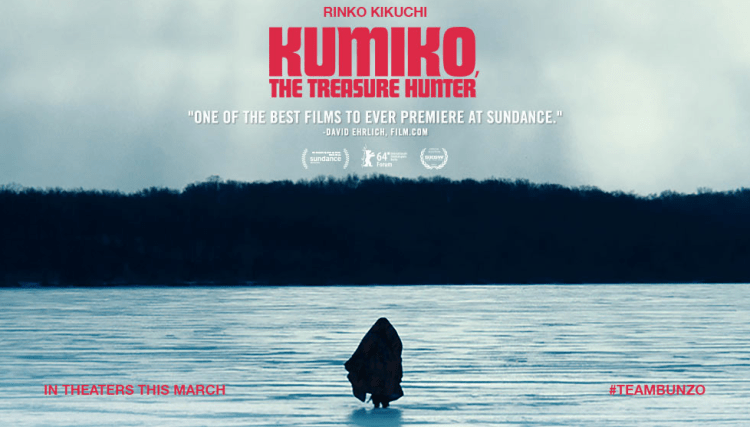
Kumiko is a 29 year old office lady from Tokyo who lives alone in a tiny apartment aside from her pet rabbit Bunzo. As she goes about her everyday life she looks worn out, like someone who’s been carrying a heavy burden for a long time. She barley speaks to anyone and resents her boss so much she almost spits in his tea before thinking better of it. As it turns out one of the reasons she looks so tired is that she spends every night sat in front of her ancient TV scouring an old VHS of the movie Fargo (which she found in a cave buried under a pile of rocks at the end of a previous treasure hunt) for clues as to where Steve Buscemi buried his money. When her boss calls her in one day to ask why it is she always looks so miserable and points out, in a nice avuncular way, that 29 is really far too old for an office lady things have come to a crisis point. Using his company card she’s booked herself on a flight to Minneapolis armed only with her hand embroidered map and unshaken faith that her treasure exists and is hers alone to find.

Of course, her delusion is ridiculous for a multitude of reasons: to begin with, it’s obviously a constructed film – not a documentary so even if the events were real how would you know they recreated the exact burial spot in their movie version. Secondly, why would they have done that and then left the actual money where it was. Thirdly, the money was supposedly buried in 1987 – surely someone else would have come up with a similar idea in the intervening fifteen years and found the money already, wouldn’t they? Fourthly, he only buried it in the snow. Snow melts. How could anyone believe this? The film opens with Kumiko following another of her intricately made hand embroidered maps that results in her finding the fateful tape as if she alone had been handed some kind of divine revelation. Accordingly she pours all of her energy into divining its holy secrets. Hers is a literal leap of faith – she simply believes in it even though we ‘know’ it’s absurd.

What would make someone cling on to this kind of bizarre idea as their only true hope of salvation? We’re never given very much backstory, but it seems that somewhere along the way Kumiko’s life diverged from the one she wanted to live and ever since then she’s been treading water. Her mother rings her periodically to try and convince her to move back home ‘until she gets married’ whilst asking all sorts of questions about her love life and career that Kumiko would rather not answer. At work she’s the odd one out in the office as generally young women either decide to leave and get married or pursue a more demanding career long before Kumiko’s almost ancient 29. She keeps herself apart from her colleagues and barely speaks to them which is fine because they think of her as a creepy old lady anyway. She does eventually agree to meet an old school friend for coffee but bolts once left alone in a cafe with her friend’s five year old daughter. It’s almost as if Kumiko herself feels she’s failed and is too ashamed to interact with other people. Faced with her friend’s successful home life with a healthy young daughter compared to Kumiko’s own dreary, lonely existence it’s not difficult to see how loneliness and frustrated desperation could lead to a state of psychosis. If she can just prove it, show everyone she has a destiny – something she alone is supposed to do then they’d all see.

Once she reaches America things begin to take a darker turn. Dressed only in her usual blue dress and little red hoodie, she’s like Red Riding Hood stepping off alone into the woods. She hasn’t brought winter clothes, cash or even made a proper plan of how to actually get to Fargo. She meets some nice people along the way – a lonely old lady who means well has almost kidnapped the poor girl and keeps trying to thrust James Clavell’s Shogun at her, and a truly decent policeman who can see there’s something wrong but is prevented from helping by the impenetrable language barrier. Every time it seems as if there might be a better way out of this the door is cruelly slammed in Kumiko’s face and left entirely alone in a strange land there really is nothing else for her to do than trudge on in hope of finding her treasure. Kumiko could so easily have been a series of crazy lady tics and quirks but thanks to Kikuchi’s extremely nuanced performance the infinite sadness of her story is completely laid bare. All this happened, more or less – mostly less in this case, but there is truth in this story. The world is full of lonely people whose minds have turned in on themselves through having nowhere left to run. Kumiko the Treasure Hunter is an existential tragedy that nevertheless is shot through with enough charm and whimsy to make its often unpalatable message easy to digest. A strange fairytale for adults, Kumiko’s story is heartbreakingly bleak but it’s also immensely beautiful.

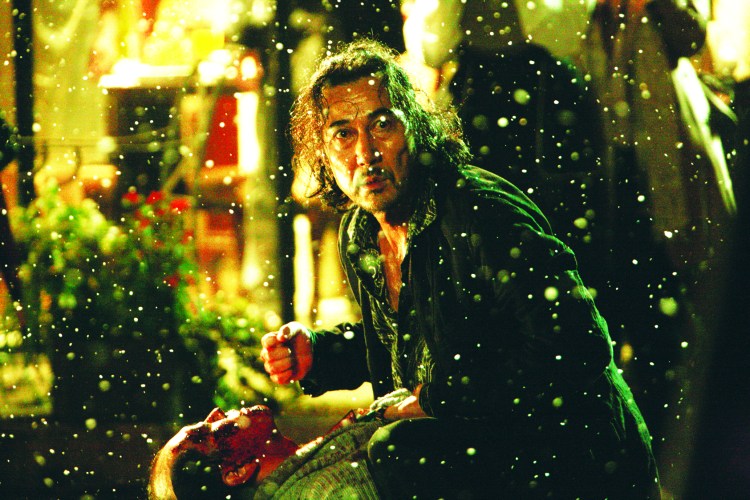
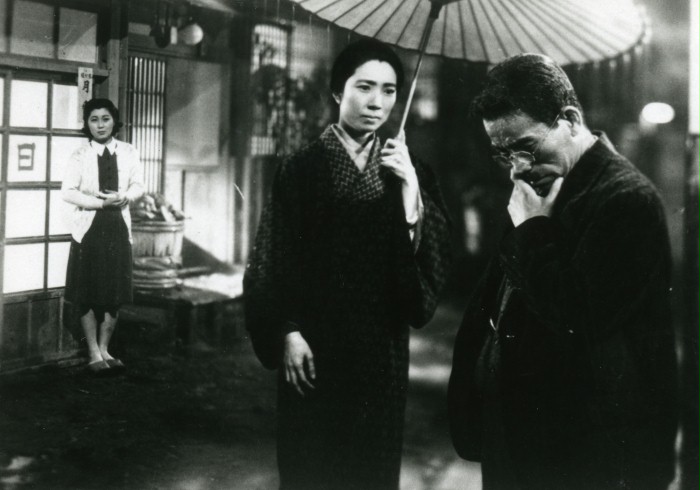
 

Army 陸軍 (Keisuke Kinoshita, 1944)

Dem-3 Photo. Helene Jeanbrau © 1996 cine-tamaris.tif

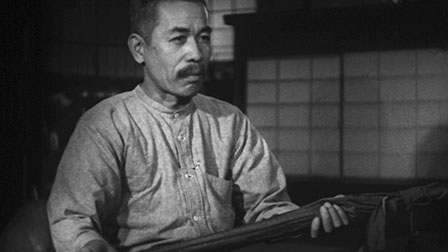
With a name like “Army”, you’d expect this to be a stridently propagandistic film about brave men fighting for their countries – some of whom will likely fall but will cover their families in eternal glory through their selfless sacrifice. Those are certainly the ideas behind Kinoshita’s 1944 film, the last film he’d be permitted to make before the war’s end, however any lingering feelings of pro-militaristic ardor are completely undercut by the film’s near silent closing moments.

Like The Living Magoroku, we begin in another historical era – one just as turbulent as the contemporary action. As people flee burning houses at the dawn of the Meiji era, a father and son shelter a wounded samurai who gifts them a set of historical encyclopaedias. Despite the changing times, the father is convinced a man’s highest duty is to his country and makes a deathbed plea that his son Tomohiko become a fine soldier. Tomohiko tries his best, as an infantry Captain through the several of Japan’s international conflicts of the early 20th century he’s certainly had ample opportunity to distinguish himself. However, luck is not on Tomohiko’s side as minor injuries, illness or simply failing to be selected have kept him safely away from the front lines. Eventually invalided out, Tomohiko tries to make a go of civilian life, finally ending up trying to run a pawn shop (before realising he’s not good at that either and leaving the heavy lifting to his more capable wife). Still convinced of the wisdom of his father’s philosophy, Tomohiko pushes his wishes for military glory onto his oldest son – the equally weedy Shintaro whose slight frame and kindly nature don’t exactly point to a future Field Marshall. Japan needs soldiers though, it’s time for every man and boy to stand up to defend her!

Final scene excised, Army would look like the most obviously propagandistic film in the box set. Full of references to the importance of military virtue and physical strength over book learning, Army brings home that a man who does not fight is not a man. He is weak and womanly and is to be shamed. Even those who are in poor physical health or simply not built for brute force attacks are expected to suddenly shape up and join every other young man in sacrificing themselves nobly for the Emperor. Mothers, even, are not permitted to grieve as their sons were never theirs in the first place – they were merely taking care of them for the Emperor. Now they’ve done their duty and returned their progeny to the father of the nation, they ought to feel nothing more than relief at a job well done, or so says Tomohiko’s wife, Waka. Wouldn’t it be shaming to have a grown up son still at home, after all, or even one that was far from the front line but relatively safe? Prepare for the worst or hope for it? It’s an oddly macabre way of thinking.

However, the last scene of the film which is played almost silently, undercuts this cold willingness to sacrifice and shows it up for its own hollowness. Having originally claimed not to be going to see the brigade depart because she’s a weak and emotional woman, Waka is suddenly overcome by something. She rises and follows the other townspeople drifting towards the noise of the parade with its crowds of cheering, flag waving supporters. Desperately, anxiously, she searches for her son in amongst the multitudes of other young men in identical uniforms marching off gleefully almost certainly not to return. Having pushed through the ranks of ecstatic civilians, she finally catches a glimpse of Shintaro who smiles at her before disappearing back into the ranks of anonymous infantrymen. Waka is left bereft, alone and terrified – her only recourse is prayer.

Unsurprisingly, the army didn’t really like this bit. In fact, one high ranking official marched right down to Shochiku and accused Kinoshita of treason! Luckily, not too much came of that but Kinoshita’s next script about kamikaze pilots was rejected and he wasn’t allowed anywhere near a camera until after the end of the war. Waka’s final uncertainty, her grief at losing her son to this faceless monster undercuts the entirety of the previous 80 minute celebration of glorious military history and masculine pride. All of a sudden it’s not a joyful celebration anymore, it’s a funeral peopled with grieving wives and mothers – hardly the sort of message you want to send out when you’re trying to give the barrel a final scrape when it comes to conscripting for the army. Army is a film that’s defined by its final minutes and is surprising in the level of ambiguity it was allowed to get away with given the strict censorship conditions in place. As a propaganda film it fails, but by design. Kinoshita once again refuses to depict his characters as unfeeling robots who can suppress their natural empathy in the name of duty or honour and a mother’s love proves the most dominant (if hopeless) force of all.

Tetsuya Nakashima Interview (Via UK Anime Network)

WorldOfKanako-PYou might remember I was lucky enough to interview Tetsuya Nakashima during the London Film Festival when he was over here promoting his (really quite remarkable) The World of Kanako and the whole interview is now available for your perusal on UK Anime Network. You can read my review of the film over here too should you be so inclined – Third Window Films will releasing The World of Kanako in the UK this coming June! Check out the trailer for the film below.

Jubilation Street 歓呼の町 (Keisuke Kinoshita, 1944)

20138117_1_IMG_FIX_700x700The third entry in Criterion’s Kinoshita and World War II box set takes a decidedly darker turn than either of its predecessors. Made a little later in 1944, Jubilation Street is surprising addition, not least because for the majority of its running time it’s hard to see how it could have ever have fulfilled the propaganda requirements of the time. Its title is almost ironic, there’s nothing here but an inevitable sadness and eternal partings both between people and between eras. It’s not until the closing moments of the film that anything even remotely “inspirational” occurs, and even then it’s all a little bit tacked on and feels like a token epilogue to please the censors. With far less obvious comedy moments Jubilation Street is taking us somewhere significantly darker, but is not without Kinoshita’s characteristic sympathy.

Jubilation Street is an old-fashioned row of modest housing home to a small community of families who’ve each lived there for many years. Now they’re all being “relocated” because the government wants the land for the war effort. Some are ready to leave, others are not – either because they feel too old to start again somewhere else or simply because they don’t want to be split up from the people they’ve shared their lives with. The family who own the printer’s shop want to finish their last few orders and wait until their baby is born, the crotchety old man who runs the bath house just doesn’t want to go anywhere and Mrs. Furukawa is afraid to leave in case the husband who walked out on her and their son ten years previously finally comes home. Shingo, Mrs. Furukawa’s son, is a test pilot in the air force and wants to marry childhood sweetheart Takako, though her parents are against it given his family circumstances and dangerous work. Just in the knick of time, Mr. Furukawa makes a shocking reappearance, unbeknownst to his wife and son but will his ten years away with nary a word damage his chances of a happy reunion? With the evacuation date drawing nearer, important decisions will have to be made, and made in a hurry.

There may have been hope and happiness in this little street once, but now there’s just waiting and desperation. Towards the beginning of the film, the war still feels something far off – the relocation programme might as well be for a new dam or a modern housing development as much as being down to a war. Shingo is the only person directly involved with anything military and though his work is dangerous in one sense he gets to live at home with his mother and nothing seems very different than before. Towards the end, however, a traumatic event will drop the devastation of war right into the middle of this little community with as much force as any bomb. Doomed romance, shattered dreams, a lifetime’s work going for nothing – there’s nothing to celebrate here. Having undergone a tragedy and forced out of their homes, the community each vow they’re going to honour the sacrifices made by each doing their best for the war effort, but it comes dangerously close to being insulting. “So you’ve lost people, you might have lost your home or your business or a child but that just means you have to work even harder to make your loss mean something”. A fairly bleak message, if understandable given the circumstances, but it’s debatable that it’s one a worried populace would have wanted to receive in the normally escapist realms of the cinema.

It’s remarkably ambiguous for a film of its time. Perhaps because, again, he kept the war effort in the background, Kinoshita was able to get away with showing a less “jubilant” group of people each facing their various difficulties with an enviable degree of stoicism (coupled with their determined resolutions at the end). There’s no way you could read Jubilation Street as a “pro-war” film. Though it stops short of any kind of direct criticism, war (and even in one case the whole idea of Manchuria) has ruined each of these people’s lives, destroyed their community and cast them adrift in an uncertain world. What sort of glorious nation is this, and was it worth all this sacrifice?

Jubilation Street is not as well preserved as either Port of Flowers or The Living Magoroku, though the actual film is fine for the most part the soundtrack is very badly damaged with strong hiss and distortion throughout. However, it doesn’t detract from the experience too much and given that it’s a minor miracle it survives at all you can’t complain. Kinoshita has once again tried to put the lives of ordinary people up on screen with all the warmth, empathy and truth that was permitted to him at the time. The last days of Jubilation Street were not altogether happy ones, but as a metaphor for a place and time it’s about as close as you’d be allowed to explore.

Greatful Dead (グレイトフルデッド, Eiji Uchida, 2013)

OEO9ONpIf there’s one thing Third Window Films have proved themselves adept at, it’s finding those smaller, off kilter and cultish films that often fall through the cracks. Greatful Dead, the deliberate misspelling the title of which is only the first sign of its oddness, is the latest find in what might be thought of as “weird cinema”. Evoking comparisons with Sion Sono’s Love Exposure thanks to its christianising themes, wry tone and sheer craziness, Greatful Dead is not all together as successful but is likely to find its own fans through its undeniably cultish appeal.

Nami, like many movie heroines, starts by recounting her childhood as a lonely, neglected child. The younger of two sisters, she desperately tries to get the attention of her mother who is only interested in saving disadvantaged children in other countries whilst ignoring the needs of her own two daughters, or her father who is so entirely wrapped up in their mother that he’s barely noticed the two girls either. Eventually after her mother leaves and her father slowly disintegrates, Nami becomes increasingly isolated. After inheriting a sizeable fortune, grown-up Nami wastes her time in idle pursuits before hitting on her favourite hobby – an amateur anthropological study of the “Solitarian” or those who have driven themselves completely mad through loneliness. Her favourite kind of Solitarian is randy old men whom she likes to watch as they spiral deeper into depravity before eventually reaching their end game. Old Mr. Shiomi, who was once something of a big shot but is now an embittered old man, is her perfect specimen but after he receives a visit from a pretty Korean Christian missionary and becomes “reborn” her observational project is ruined! Mr Shiomi’s been stolen by God, what lengths will Nami go to to get him back?

Of course, the irony is Nami is the biggest Solitarian of them all and the one she’ll never be able to identify. In the accompanying DVD interviews, the director states his intention to highlight the increasing numbers of lonely, older people in Japan thanks to the declining birth rate and fracturing of traditional community bonds but in actual fact many of the Solitarians Nami identifies are younger people and some of them even appear to have quite serious mental issues which require more serious intervention. Taking frequent field trips and noting down rare specimens in a little notebook like some deranged “twitcher”, Nami joyfully enjoys the darker side of her hobby as her favourite part seems to be watching lonely people die at the zenith of their craziness. Though in fact both she and Mr. Shiomi have both in some senses chosen their lonely lives as both have rejected the interest of family members – Nami the insistences of her sister that the normal is best and to be strived for and Mr Shiomi those of his son (who may or may not be mainly interested in his money).

There is then, obviously, a veneer of social commentary, though it feels fairly thin at best. The main appeal is in the degree of tonal shifts that occur throughout the film. Starting out in a similar way to many a quirky comedy as young Nami goes to extreme lengths just to get some kind of attention from her indifferent parents, to her carefree adult life the film plunges off a cliff face about two thirds of the way through thanks to Mr. Shiomi’s “betrayal”. Where another film would end with Nami meeting another lonely person and becoming slightly less unhinged, Greatful Dead veers into some seriously dark alleyways filled with blood, murder and pensioner rape among other perversions. The wildest thing is the resurgence of Mr. Shiomi as he decides he’s mad as hell and isn’t going to take this anymore! Fighting back in an equally strange way (why does no one ever just call the police? No, sharpening a mop into a spear seems like a more rational solution), the furious battle between subject and observer is quite literally in the lap of the gods.

Greatful Dead is an undeniably enjoyable, wild ride that escalates in a gently expert manner from its black comedy beginnings to exploitation ending but never quite coalesces into something more. Its views on the place of religion in this lonely world seem a little ambiguous – would Mr. Shiomi have opened his door to the male missionary quite as readily as he opened it to a pretty Korean girl and how long would his quite radical conversion really have lasted? Is the church actually helping some of these elderly people who might just want company or exploiting them? The film doesn’t seem sure, not that it’s that much of a problem. In the end, Grateful Dead is a wild ride through crazy town and destined to become another cult classic entry in to the world of wacky Japanese horror.


Review of Greatful Dead up at UK Anime Network – released courtesy of Third Window Films this coming Monday 26th January 2015.

The Living Magoroku 生きてゐる孫六 (Keisuke Kinoshita, 1943)

Film_Eclipse_LivingMagoroku_original

The Living Magoroku, the second film in Criterion’s Kinoshita and World War II box set, is the director’s second feature also made 1943 shortly after Port of Flowers. Like his previous film, it was also made under the severe censorship requirements in place during the war but this time around the propaganda is far more pronounced though still fairly mild given the time period. That said, The Living Magoroku is still full of the wit and warmth characteristic of Kinoshita’s filmmaking even if it is forced to up its jingoistic content.

Incongruously beginning with a samurai battle taking place in 1573, the action quickly shifts to the same battleground where a group of raw recruits are being put through their paces before being sent off to die nobly for the Emperor in distant lands. Berating them for their lack of respect, the instructor reminds them that each recruit is descended from the very men who died on fields like these whose graves they should still be tending. This small rural town still goes by the old ways. There may be no real samurais anymore but each and every decision has to go through the local matriarch, Mrs Onagi. Actually, Mrs Onagi has a son who should rightfully be in charge but he’s such a neurotic drip who thinks he’s dying of lung disease that no one pays much attention to him. The Onagis own the entire battlefield area, some 75 acres, given to their ancestor after the battle and legend has it there’s a curse that should anyone try to cultivate it all the men of the Onagi line will die young. The field has remained untouched for 300 years, but with a war on shouldn’t the Onagis rethink their reluctance to turn this wasteland into a productive agricultural area, even if the ridiculous idea of an ancient curse was somehow real?

Like Port of Flowers, The Living Magoroku is actually fairly light on militarism despite featuring a group of soldiers and prefers to focus on the slightly backward looking nature of this small village. Even under the conservative nature of wartime Japan, it’s odd that a couple of young people would feel the need to ask the old lady at the manor for permission to marry given that she really has very little to do with them – and even odder that she would refuse to give it and that her refusal would actually bother them. The cause of the problem being that the girl’s brother is the chief instigator of the motion to get the field back in use, and that he went directly to the young master rather than the mother who’s been de facto in charge of these things. Local politics – some things never change! The young people want to use the land, curse-shmursh, but the old people would rather not. Just suppose the curse is real – poor Yoshihiro, technically head of the Onagi family, is so worried about his prospective fate (and the way his mother, grandmother and sister seem to worry about it for him) that he’s almost paralysed with fear and resentment!

Thrown into the mix is another problem concerning the sword referenced in the title – a sword of unparalleled fineness forged by Maguroku the First of which very few survive. The instructor at the army base claims to have one which infuriates the local blacksmith and sword expert as he simply refuses to believe it. By coincidence, the Onagis also have one of these swords and are paid a visit by an army doctor seeking to buy it as, it turns out, his family once owned one but he sold it unknowing its rarity to pay for his medical tuition. Of course, the Onagis don’t want to sell a precious family heirloom, though they admire the doctor’s zeal to repay his debt to his late father by acquiring another one. The instructor’s sword turns out to be a fake anyway prompting the blacksmith to make him a new one – after all, needs must and a sword is just a sword, the name on it won’t matter much on battlefield. Similarly a field is just a field, isn’t it selfish not to use it when the country needs grain even if it might cost your life seeing as every other young man is looking down the barrel of a gun at the present time? The message is clear, traditions should be honoured, yes, but when it comes down to it, the present is more important than the past and superstition gives way to clearheaded pragmatism. Every resource must be pooled for the common good and personal sacrifices must be made to ensure a better future for everyone.

The Living Magoroku feels a little more uneven than Port of Flowers, and actually ends quite abruptly with a strange newsreel style wrap-up of events. Luckily, it’s still broadly a comedy in strictest sense (it ends in a series of marriages, everyone not already married ends up wed), poor old Yoshihiro gets a new lease on life and becomes a productive member of society, the village gets a bumper harvest and all is right in the world save the strange final message about the instructor who is apparently carrying his new sword bravely in the heat of battle. Like Port of Flowers, it wants to reinforce the traditional values of community spirit and giving up your own individual pleasures and freedoms for everybody’s good. The past informs the future, how could it not, but when push comes to shove you have to let it go. Like everything in life there has to be a balance, respect your history – yes, but not so much that it costs you your future.

Port of Flowers 花咲く港 (Keisuke Kinoshita, 1943)

film_syosai_img_01_04-thumb-730x480-1642Keisuke Kinoshita is far better known in his native Japan than outside it despite his long and prolific career in filmmaking. Equally adept at comedy and tragedy and tackling all genres from musicals to crime dramas, Kinoshita began his career in the relatively turbulent war years where every last detail was at the censor’s mercy.  Port of Flowers is his very first foray into the director’s chair and began a long association with the comedy genre. Though, yes, it has it’s obligatory moments of bare faced propaganda, the film is refreshingly light on heavy handed political statements and prefers to focus on a humorous take on small town life.

Life in a sleepy little port town is about to get significantly more exciting after the local inn has received two rare telegrams purporting to be from the same man but sent from different locations one day apart. The man in question claims to be the son of a businessman who lived in the town some years previously but has since died and the bereaved child has a hankering to see the little shipping village that the father apparently loved so much. After picking up their new guest at the station the mini delegation of inn keepers and officials are shocked to discover another disgruntled customer also claiming to be the sender of the letter. Sufficed to say neither of the two in question is what he claims to be but has come to town with the intention of fleecing some gullible country bumpkins out of grandma’s silver. The two decide to work together but eventually the goodnatured enthusiasm of the villagers (and the rising war effort) begin to make them rethink their nefarious ways!

Given the time period and strict censorship, it would be ridiculous not to expect some degree of pro-war sentiment in the film but Kinoshita has managed to more or less leave the conflict as merely a background setting. Life in this little fishing village seems fairly tranquil and the war has barely encroached on its idyllic settings. There are youngish men about, the people aren’t rich but they aren’t afraid and the only mention of turbulence seems to be a young woman who’s recently returned from Manchuria not entirely at her own volition. There are some fairly excited mentions of various victories but these are fairly minor events, almost like something happening far away to other people to whom you feel connected but not quite involved with. The most important thing is the building of the ship – not only is it a source of pride for the villagers, a way of fulfilling the dream of a respected visitor they all remember fondly but it will also be for their country. Everyone must contribute as they can because it’s for the entire community of citizens, not just the village but for everyone in the country and it’s important. Their sacrifice and hard work will matter because it will be for the greater good.

Here endeth the lesson, for the most part. What of our two bumbling crooks? It’s never really explained how they came to know so much about this poor, unsuspecting community and simultaneously hatched on the same scheme at the same time but they must have been pretty well out of options to think these poor villagers were going to be worth this much effort. They came to commit a fraud but ended up having to actually do the impossible and make their improbable scheme work solely because the villagers’ kindness was too much to bear. The addendum to the lesson being that pure hearts can shame the devil and innocence becomes infectious after a while (in the best possible way).

Very much of its time and with an air of disposability, Port of Flowers is an enjoyable, surprisingly warm film but not without its faults. Eschewing heavy handed propaganda for a subtle enforcement of traditional, communal values it reflects Kinoshita’s subsequent humanistic concerns and even manages to do so without giving in to the censor’s red pen. A nice take on an old story, Kinoshita once again proves that nothing matters so much as people and goodness will always win through in the end.

The Eternal Zero 永遠の0

eternal_zero

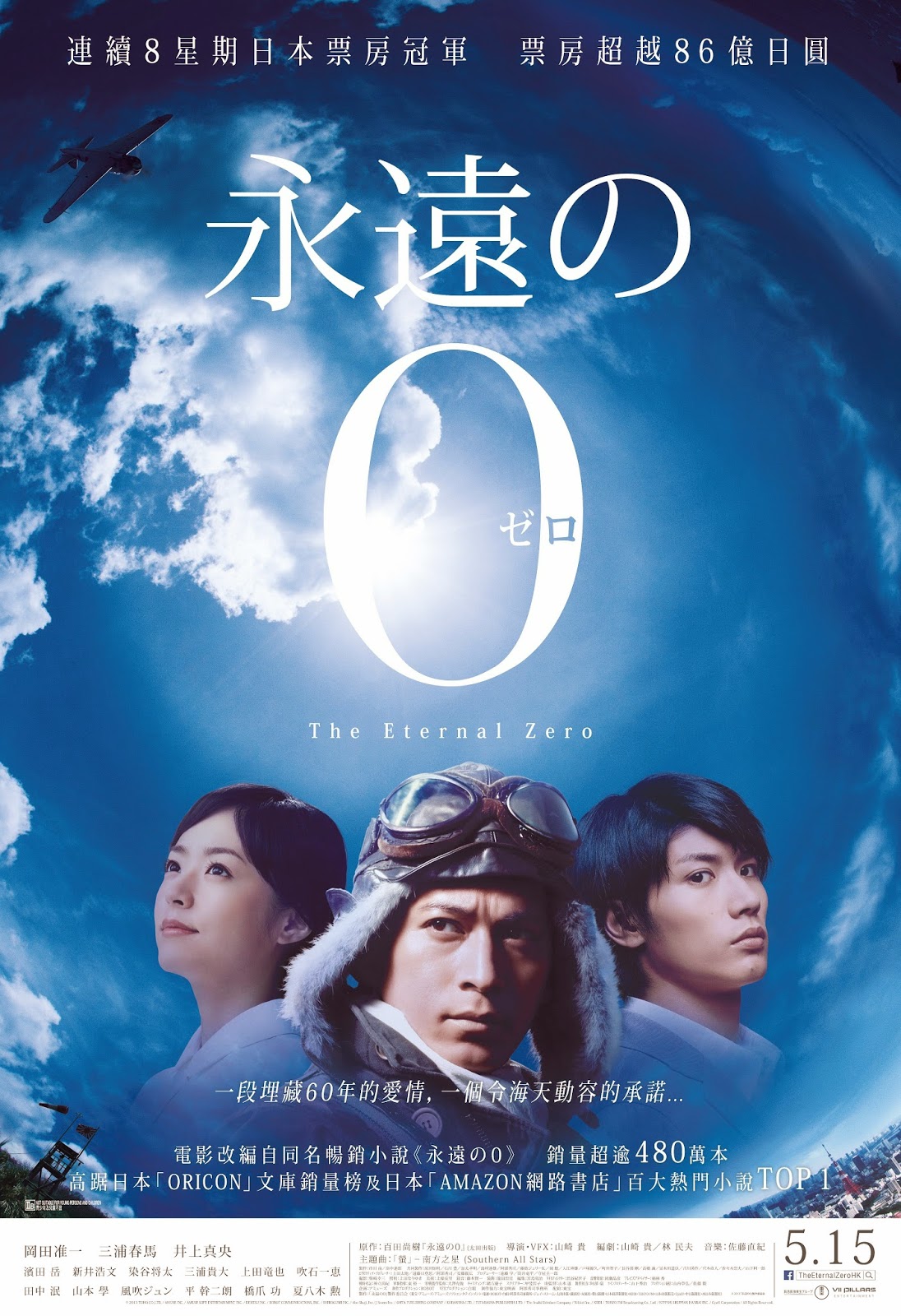
It’s difficult to think of a recent film that’s caused quite as much controversy as The Eternal Zero (save perhaps Hayao Miyazaki’s own World War II epic The Wind Rises). Written by a right wing pundit and close ally of current Japanese prime minister Shinzo Abe, Naoki Hyakuta, The Eternal Zero definitely has an ambiguous stance on several things that most people just don’t really want to talk about. However, it would also be fallacy to pretend that anybody else’s war movies are completely unbiased, or willing to look at the complexities of any given war beyond jingoistic drum beating which has often been the point of a war film. In truth, The Eternal Zero is actually more or less a-political for most of its running time save a possibly misjudged epilogue which does its best to undo the entirety of the film’s message up until right before the fatal flaw. Setting politics to one side, how does The Eternal Zero fare when it comes to taking this most American of subjects, in the most American of ways? Pretty OK, to be frank, not bad at all.

Like a lot of Japanese films tackling the recent past, the film starts in the present with little lost boy Kentaro (Haruma Miura) attending the funeral of his grandmother whereupon he discovers the heartbroken man he’d assumed to be his biological grandfather (Isao Natsuyagi) was in fact his grandmother’s second husband and not his mother’s true father at all. Mind truly blown, Kentaro is talked into further investigations by his older sister in which he discovers his biological grandfather was an air force pilot who died in a kamikaze mission during the war. On talking to some of his fellow officers, Kentaro and sister first hear that their grandfather was a coward, a supposedly skilled pilot who hid in the clouds during sorties and endangered the lives of his comrades through his negligence. Until that is, they chance upon those closest to him who tell a different story – that Kyuzo Miyabe (Junichi Okada) was the bravest of men. A man who knew the war was pointless and wasn’t afraid to say so, who simply wanted to survive and get back to protecting what was most important to him – his wife and child. Why then, would this man who was so desperate to survive finally give his life in a suicide mission for something he did not believe in?

To deal with the most obvious question first – no, The Eternal Zero is not “a propaganda film” in the truest sense of the term. Yes, it ignores the external context because it simply wants to focus on the nature of war and what it does to those who conduct it (as well as those who only stand and wait) which *is* a form of propaganda in a sense because of all the things that it refuses to acknowledge. However, for 90% of the running time, the film has a thoroughly modern sensibility where the overriding feeling is absurdity, that this war is a crazy waste of youth that no one should have to have gone through. The original group of pilots that brand Miyabe a “coward” are shown up for a group of brainwashed idiots and Miyabe portrayed as the soul prophet who sees things as they are and has the courage to speak his mind. Later, there are other headstrong boys who think they’re men and don’t understand what they’re getting themselves into but the main thing is just how stupid all of these ideas of honour and sacrifice really are when all it will likely mean is leaving destitute women crying and starving at a home you’ve failed to protect. However, all of these more “liberal” ideas are totally undercut in the last five minutes of the film which seeks to glorify an act that the previous two hours have branded an idiotic waste of life. Politically confused, Eternal Zero doesn’t quite know where to put itself when acknowledging the tremendous sacrifice that was made by an entire generation without quite wanting to see just what those sacrifices were in name of.

To be fair to it, it isn’t as if most most Hollywood war movies don’t also do the same thing to a similar extent – present the heroism and perhaps the personal conflict without acknowledging all that goes with it. In truth, what The Eternal Zero most resembles is a classic Hollywood war film which is quite invested in remorse for the loss of life (and sometimes even for that on all sides) but also in not wanting feel any lives were lost in vain. Thus there is a feeling towards the end of the film that young people of today still owe a debt to these men, that they owe it to them in return for the sacrifice that was made to live their lives freely and to the utmost. To spend so long saying that war is a cruel game that makes pawns of young men’s lives only to turn around and say it’s the job of the youngsters of today to make those pawns kings is a little perverse, but understandable on a human level.

The Eternal Zero is blockbuster movie in every sense, the budget and shooting style are also aping your typical Hollywood epic though doing it fairly well. The script is clunky with its inelegant switching between time periods and to be frank the entire “modern” section feels a little superfluous and underwritten.  It’s a little long at over two and a half hours and does occasionally fall into a televisual rhythm – there is a great deal of talking and explaining which probably would have had more impact if it were done in a less bald way. Nevertheless, what The Eternal Zero sets out to do, it does pretty well. It may speak to something dangerous, but it is not dangerous in and of itself. For the most part excellently filmed with its fair share of stand out sequences, The Eternal Zero will appeal most to fans of old-fashioned (and uncomplicated unless you want to really think about it) war films but may struggle to maintain the interest of more jaded viewers.

The Tale of the Princess Kaguya (かぐや姫の物語, Isao Takahata, 2013)

no3_kaguya_nikonikoboard_outSo, Studio Ghibli is no more. For the moment anyway – both of the old masters have hung up their paint brushes for good, intent on indulging other pursuits, or so they say. Neither has yet found a suitable apprentice to succeed them and so all Ghibli’s revels are now ended, the staff is broken, the book is burned and it’s time we all went home. We’ve not quite set them free yet though, 2014 saw both the founders release their “final masterpiece” in a pattern that was intended to mimic their early success – the double header of the gently melancholic yet uplifting My Neighbour Totoro and the utterly devastating Grave of the Fireflies. Miyazaki’s The Wind Rises read like a deeply moving final poem – a artist’s apology for his failings as man. Takahata’s, in a pattern reminiscent of his career overall, feels in some ways harsher. He pushes deeper both artistically but also emotionally, less cynical but also perhaps less forgiving. Based on the classic Japanese folktale by the same title, often translated into English as The Tale of the Bamboo Cutter, The Tale of the Princess Kaguya is another late career masterwork from Takahata that cuts right to the quick of what it means to be human.

Bamboo cutter Okina makes his everyday journey up the mountain to cut bamboo, but this time finds a single stalk shining strangely. When he cuts into it, a tiny yet elegant lady is sleeping inside. Quickly realising she must be a princess sent from heaven, he carries her home to his wife in whose hands she suddenly morphs into a screaming human child. The couple embrace their miraculous gift heartily and raise the girl as if she were their own. “L’il Bamboo” as the other village kids call her, grows at an alarming rate, but enjoys an idyllic country childhood full of long hot summers, juicy, ripe melons pinched from a neighbour’s garden and fantastic adventures. However, another shining bamboo stalk has yet more presents for Okina in the form of gold and expensive kimonos. Believing his little princess is intended for the life of a noble woman, not that of the lowly daughter of a bamboo cutter, he buys a big house in the city filled with teachers and servants. However, one person’s idea of “best” can be quite different from another’s, and no matter how much you love someone, there are lines that cannot be crossed.

Li’l Bamboo is an elemental creature, meant for frolicking with frogs and dancing under cherry blossoms but Princess Kaguya, the name given to her by a nobleman as she comes of age, is forced into the constrained life of a court lady. Imprisoned inside her castle, separated from her childhood friends and confined to a life of sedately studying “the feminine arts” Kaguya’s once wild love of life seems to dissipate under the weight of adulthood. Even on a rare (and secret) journey outside to once again view the transient cherry blossoms, she decides to return almost immediately after encountering a mother and her children who rapidly kneel, apologise for their presence and leave. Feeling the ever present barrier between herself and “ordinary” people because of her fine clothes and appearance, Kaguya retreats despondently. However, as relative “new money” to the noble set, she doesn’t fit in there either.

The life that Okina envisages for his “princess” maybe one that society regards as better, but that isn’t to say it’s the best for everyone. Okina’s tragedy is that he never stops to consider his adopted daughter’s own feelings. The responsibility he takes is too great and he never sees that he’s stifling the gift nature has given him. Kaguya goes along with most of this because he’s her father and she doesn’t want to displease him, but she’s constantly setting free caged animals because she herself feels so imprisoned. Okina’s desire to ensure his daughter’s future happiness has only made her miserable and in the end will cost them both dearly. As common now as it’s ever been, this classic miscommunication between parent and child is made all the more tragic because it has love at its core.

Unfolding like an illustrated scroll, Princess Kaguya is full of beautiful and imaginative artistry. With its beguiling watercolour-like aesthetic, the film often breaks into breathtaking, impressionistic spectacle that can allow a girl to dissolve into the landscape or summon dragons from the clouds and waves. It’s a style that’s perfectly suited to the classic nature of the story which is only aided by the traditional, folk-tale narration and whimsical score from Joe Hisaishi (working with Takahata here for the first time despite his long association with Studio Ghibli as a whole).

A fitting end to a long and sometimes difficult career, Princess Kaguya is, in the end, a tale of sad yet inevitable partings. Still, though Kaguya was often unhappy on Earth, ultimately she doesn’t want to leave nor to forget her experiences be they of joy or sorrow. Perhaps better appreciated from a perspective of age, Princess Kaguya is a sorrowful tale in many ways, full of misunderstandings and missed opportunities yet there is great beauty in it too. All things must pass, and we must bid goodbye to Studio Ghibli (for now, at least) though painful as it may be, we ought to be grateful for having had something to grieve.

A Tale of Samurai Cooking – A True Love Story (武士の献立, Yuzo Asahara, 2013)

A-Tale-of-Samurai-Cooking-teaser

I kind of love this photo because he already looks so annoyed 🙂

Review of period romantic comedy/drama with a side serving of culinary delight A Tale of Samurai Cooking – A True Love Story up at UK Anime Network.


It’s a little known fact but though all samurai carry swords, some of them hang them up when they get to work and serve their lords with meat cleavers and skewers in the relative safety of the kitchen rather than the noisy chaos of a battlefield. Of course, a retainer’s job is to serve the lord in whatever capacity is expected of him, though some maybe happier with their dictated fates than others. In A Tale of Samurai Cooking – A True Love Story (武士の献立, Bushi no Kondate), it’s not only a conventional romantic tale between two initially mismatched people that the title alludes to, but also how one may fall in love with a path in life that was once deeply resented.

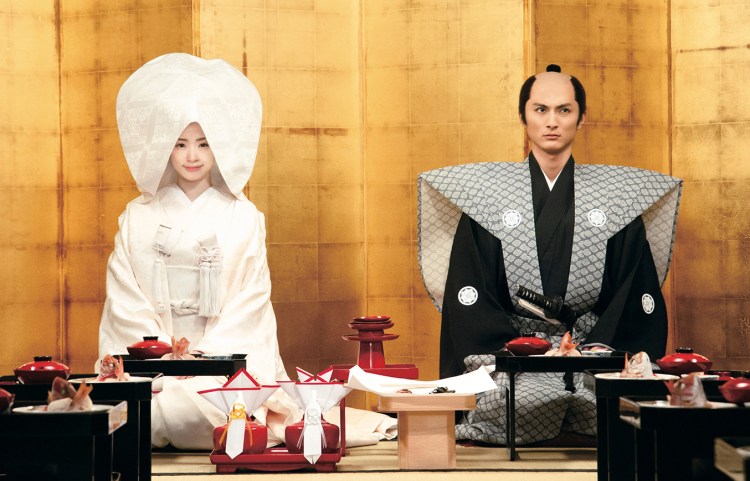
Back in feudal Japan, Haru (Aya Ueto) is an orphaned maid servant to a prominent samurai house. She was briefly married, but embarrassingly enough was “sent back” because her new husband and his family found her far too headstrong for their household. The daughter of a pair of restaurateurs, Haru has a keen sense of cooking of her own which sees her catch the attention of a visiting famous cook, Dennai Funaki (Toshiyuki Nishida), when she is the only person able to guess the real ingredients in his “mock crane” dish. Instantly smitten, Dennai makes her a proposal – albeit one for his son who is set to take over the family business but has no real aptitude for cooking. Yasunobu (Kengo Kora) is his second child whose fate was sealed on the death of his elder brother and though he would rather be a more conventional kind of samurai, he is the only heir to this kitchen empire. Can Haru’s cooking skills raise a fire in Yasunobu’s heart for his unwanted destiny or will they both be subjected to a lifetime of cold dinners?

A Tale of Samurai Cooking is definitely much more “period drama” than “samurai movie” though it does share a little of the historical intrigue of your typical “jidaigeki”. Set in the Edo period of feudal Japan, there are plenty of sudden reversals of fate where one house jumps ahead of another which then falls out of favour, sometimes with tragic consequences. However, though those these events inform the drama they are really just the backdrop to the true story of the very grown up (though extremely chaste and innocent – this is a U rated movie!) slow burning love story between Haru and Yasunobu. Though it’s a very charming and old fashioned sort of romance, it’s also true that Kengo Kora and Aya Ueto don’t have a tremendous amount of chemistry and their love story is pretty subtle and one sided until very late into the film. Of course, the audience knows how this sort of film has to end, but the film does rather rely on this fact.

Yasunobu is at heart a kind man undergoing very difficult circumstances. Having had to let go of the life he wanted that was so nearly his following the death of his older brother, it isn’t a surprise that he’s generally sullen and extremely resentful that his father has arranged this marriage for him with a slightly older woman who’s already been married once before, not to mention the fact that it’s all because she’s better than he is at this thing he’s now supposed to do for the rest of his life. Yasunobu doesn’t even like cooking, he thinks it’s “woman’s work” and had devoted his life to the art of the sword. Luckily, Haru’s perspicacity extends beyond her palate and she’s quickly figured out what’s going on with Yasunobu so she can turn him into the ace cook his father needs him to be. Haru’s influence opens up his wilfully closed eyes to the rewards of both good women and good cookery which is part way to saying that food cooked with love can heal a broken heart, but it’s equal parts changing times and a young man growing up.

As films about food go, A Tale of Samurai Cooking certainly has a fair few mouth watering dishes on display but perhaps lacks the hearty fare of something like the comparatively more sensual, though equally comic, Tampopo. In truth, its overwhelming quality is a kind of inoffensive niceness and perhaps for some tastes could have done with a little more spice though like the best Japanese cuisine offers its own rewards precisely because of its subtlety. It’s a perfectly nice light meal, but you’ll probably wishing you’d gone for something more substantial come bed time.


I went a bit overboard with the food metaphors, which is maybe what you get when you spend your food budget on movie tickets. I regret nothing.

Anyway this is showing at the Curzon in Mayfair until tomorrow, though they did say it may extend if there’s enough interest. It’s also going to be screened at the Genesis Cinema in Mile End and the Everyman and apparently will open in Ireland from 9th January. Yume Pictures will then release it on DVD in 2015 if you aren’t near a cinema that’s showing it, or you can even watch it on Curzon Home Cinema right now.