ROLL (Daichi Murase, 2020)

“Change the world!” a stranger yells, perhaps ironically, from a passing pickup truck as the hero of Daichi Murase’s debut feature Roll, pelting hell for leather to rescue a trapped a soul. An unconventional coming-of-age tale, Murase’s experimental drama follows a young man from innocence to experience as he becomes determined to discover the secrets of an earlier age while discovering also that genies don’t go back inside their bottles and in fact may prefer to expire in the light of the sun rather than survive an eternity of vicarious darkness. 

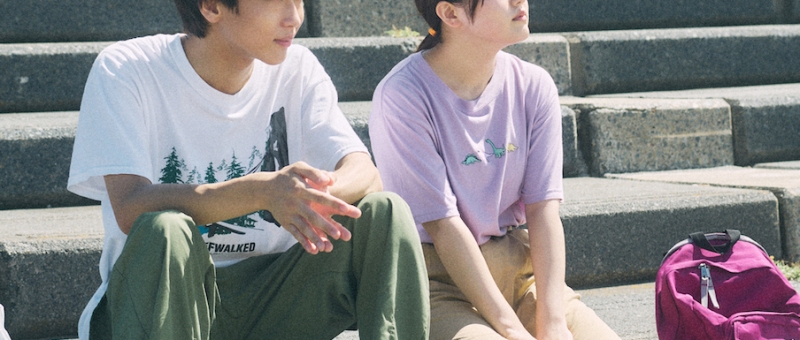
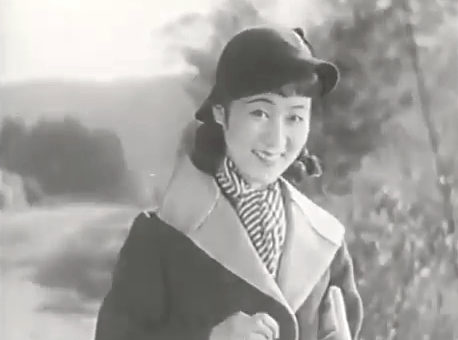
The hero, Yoshihiro is a strange and aloof young man as we gather from the first scenes which find him alone in his room while his dormmates engage in drunken socialising. Yoshihiro’s chief obsession seems to be with disassembling abandoned gadgets into their component parts, sleeping surrounded by neatly grouped collections of various nuts and bolts. His understanding boss at his part-time job as a removal man often allows him to keep bits of interesting junk that would otherwise be disposed of and it’s during one particular house clearance that he makes an unexpected discovery on being charged with investigating a possible haunting of an external annexe. Removing the chains which block the door and wandering inside, he’s confronted by a series of television screens featuring calming scenes of water and then by a frightening apparition. Looking a little like Oogie Boogie, a young woman in a white hazmat suit and black goggles eventually reveals herself and gifts him a strange device of a kind he has never seen before. 

The device, which turns out to be an 8mm camera as his bespectacled roommate reveals to him, sparks a sense of curiosity about the world he did not appear to have in his constant need for disassembly. Yet while his new friend takes him to a worryingly abusive filmset (the director slaps and then randomly licks the face of his leading man) for advice later suggesting they use it to make movies along the themes of “Mushroom, Explosion Festival!”, or “Psychopath Signal”, Yoshihiro is equally preoccupied with mysterious young woman who appears to be being kept captive by her father afraid to let her experience the light of the sun. As ignorant youngsters, the pair are unsure whether Nazuna’s father is earnest in his overprotectiveness and the outside world really is toxic to her, or merely selfish and possessive wishing to keep her locked up forever a secret to himself alone. 

Nazuna, as the young woman is called, of course turns out to be a metaphor for film something which is destroyed on exposure to the light. Strangely, Yoshihiro’s friend mistakenly tells him that the camera needs to be opened once a day to let the air in, apparently little knowing it will erase whatever is inside. A kind of fairytale of enlightenment, Yoshihiro becomes a kind of promethean rescuer literally busting Nazuna out of her jail in an attempt to free her just as he tries to steal the arcane knowledge of analogue technology from a generation apparently unwilling to teach him. She perhaps knows how dangerous her journey may be, but chooses to go anyway insisting that she doesn’t want to grow up which is perhaps to be overburdened with sophistication. Yet does her desire to see the ocean for real negate the idea of truth in celluloid, implying that some things can only be fully experienced by venturing out into the world for oneself, or make the case for it in Yoshihiro’s clumsy filming of her moment of rebellious defiance towards the curse of obsolescence? 

Making full use of the technology himself, Murase shifts from digital into 8mm and then into 16 for the pair’s final adventure as they transition through a tunnel into another world, emerging on the other side perhaps somehow changed. Yet even so, burdened by his ignorance, Yoshihiro fails to bring the message home with him discovering nothing but a blank screen in place of an essential truth. Less about films and medium than perpetual motion, Murase’s enigmatic fable rolls its way towards an inventible conclusion as its hero edges his way towards maturity having discovered an appetite for connection in place of deconstruction. 


Original trailer (no subtitles)
Sound in the Mist (霧の音, Hiroshi Shimizu, 1956)

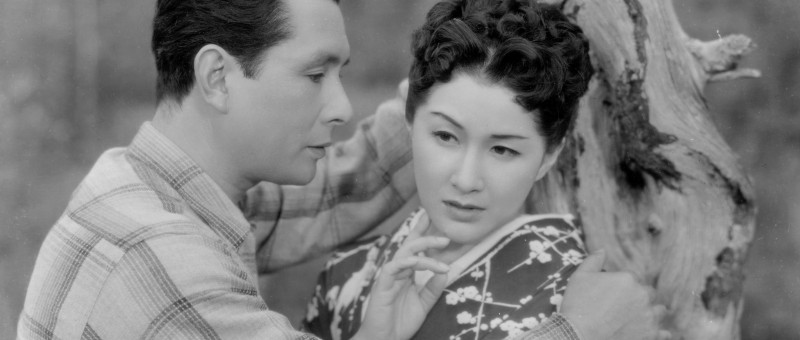
In the opening scenes of Hiroshi Shimizu’s Sound in the Mist (霧の音, Kiri no Oto), a young woman tells another that “as women, we need to create our own happiness,” though as it turns out it’s something that neither of them are really able to do. A classic melodrama, the film once again hints at Shimizu’s mistrust of romance and the frustrating inability of men and women to communicate or embrace their love for one another even when the seeming barriers preventing it have been removed.

To that extent, it’s interesting that the chief disagreement between unhappily married botanist Kazuhiko (Ken Uehara) and his wife Katsuyo is over her feminist politics and desire to devote herself to women’s emancipation under the new post-war constitution. The main bone of contention is that she wants to sell a mountain owned by Kazuhiko’s family to fund her political career though as he later says this mountain is his life. In any case he lets her sell it, believing there’s no point putting up a fight. He puts up even less of one in his relationship with Tsuruko (Michiyo Kogure), his assistant who is hopelessly in love with him yet after his wife’s angry visit decides to absent herself feeling as if she’s in the way.

It was her friend Ayako, a Tokyo dancer, who told her that women need to make their own happiness but in the end she couldn’t do it either. She was similarly involved with a weak-willed married man who continued to vacillate over leaving his wife offering the justification that he didn’t want to mess things up for his children. Eventually the pair find escape through double suicide which only emphasises the futility of their romantic connection. Tsuruko similarly makes several comments about the idea of death and dying, stating that if she were to die she’d want to go to a particular spot in the mountain which seems like heaven to her.

Though Katsuyo describes it as a “filthy” place the cabin does indeed become a kind of haven, a bubble of apparently chaste love and longing inhabited only by Kazuhiko and Tsuruko as the voiceover says hiding out from post-war chaos. Tsuruko seems to be the kind of woman Kazuhiko regards as the ideal wife in that she cares for him and supports his work even if he tells Katsuyo he just needed someone to run errands and do the grocery shopping so Tsuruko is there as his maid. Both are at pains to emphasise that no physical relationship exists between them but are otherwise prevented from acting on the their love because of Kazuhiko’s marriage along the existence of his daughter, Yuko (Keiko Fujita), who may be adversely affected by her parents’ decision to divorce in an age when such things were less common.

Kazuhiko continues to return to the mountain cabin which has since become an inn at regular intervals to see the Harvest Moon, as does Tsuruko though she also carries a degree of shame that makes her fear re-encountering Kazuhiko having become a geisha apparently solely to ensure her proximity to the mountain. Once again filming with the gentle lateral motion familiar from his later films, Shimizu focuses on the landscape and suggests that these lovers are only free to love in the natural world unconstrained by the petty concerns of civilisation which prevent them from embracing their desires. The sound in the mist is perhaps that of Kazuhiko’s latent romanticism and the implication that to him it may be better to suffer for love than to accept it. The same may be true for Tsuruko who is equally powerless if filled with regret that in the end she gave up so easily rather than fight for the love of her life.

On the other hand, the cabin seems to have given rise to a love match between Kazuhiko’s daughter Yuko and her husband who vow to continue the tradition of coming to the inn on the occasion of the Harvest Moon which marks both their wedding anniversary and the time they met. Yuko’s melancholy expression on coming to an understanding of her father’s “special memories” suggests a gentle sympathy but also that this younger generation is freer to love though no less romantic.The poignant closing scenes in which Kazuhiko wanders into the mist are nevertheless filled with irresolution, regret, and a longing that express only a deep sadness for the misconnections and misunderstandings of a less open past.


Sound in the Mist screens at Japan Society New York on May 23/30 as part of Hiroshi Shimizu Part 2: The Postwar and Independent Years.

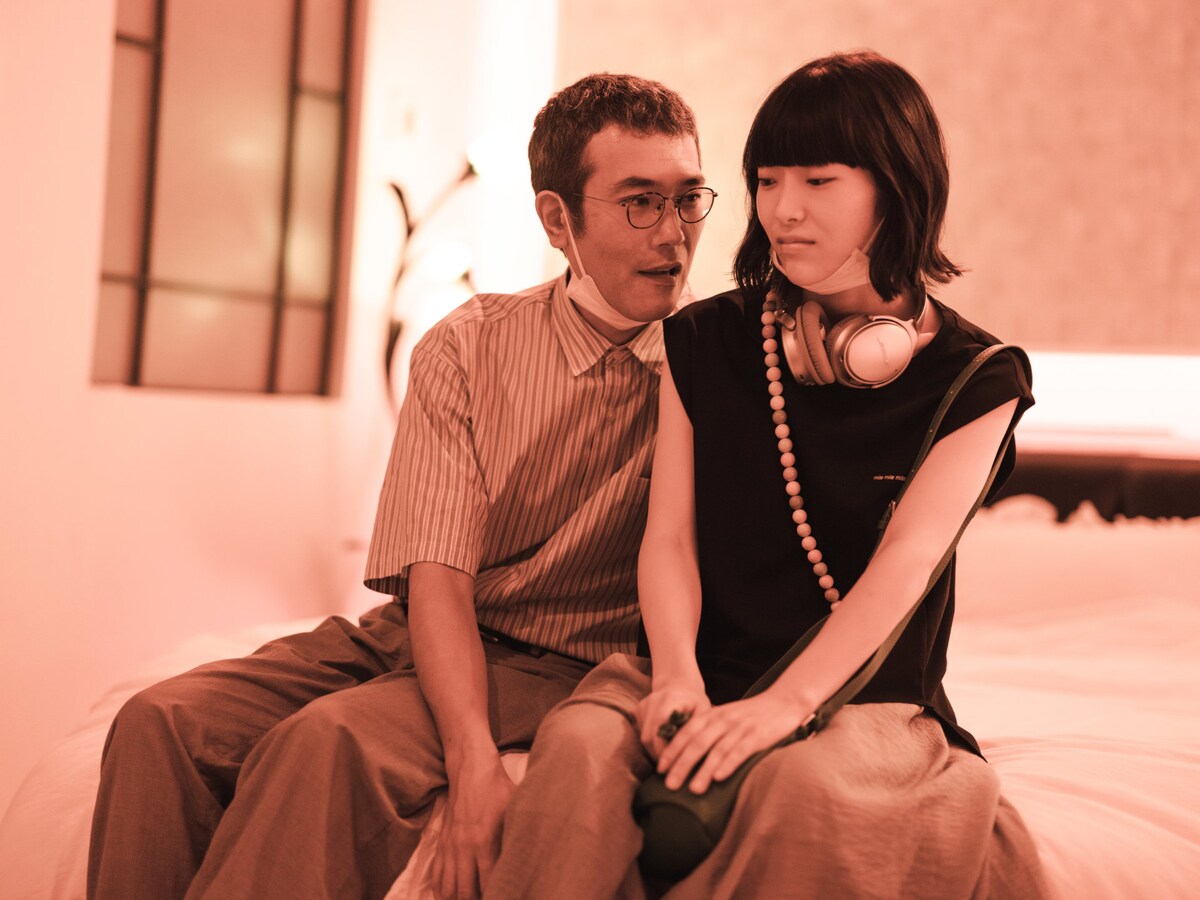
During the Rains (つゆのあとさき, Shinpei Yamazaki, 2024)

At several points during Shinpei Yamasaki’s indie drama During the Rains (つゆのあとさき, Tsuyu no Atosaki) we encounter someone whose life has been disrupted by the economic effects of the coronavirus pandemic. The danger is, of course, that the pandemic itself becomes the problem which is also a way of glossing over all the problems that existed before and will likely survive whatever kind of sickness they encounter. Chief among those problems and impacting the lives of the women at the film’s centre is problematic men and the generalised disregard for women.

It seems that Kotone was working in hostess bar that closed because of the pandemic while her no good boyfriend ran off with a necklace a customer had given her. Left with nowhere to go she’s noticed on the street by Kaede, a young woman who promises her a room in a love hotel but does so in order to recruit her for a threesome. Sometime later Kotone is working in a “cafe” where young women sit behind a glass window in numbered booths for male customers pick out and select though she also has a “daddy”, Kiyooka, who pays the lease on her flat and would be annoyed to discover she was still frequenting the cafe.

It’s the at the cafe that she meets Sakura, a naive young college student who was pushed into sex work when the place she was working before closed down because of the pandemic. Kotone at one point snaps back at her that she wouldn’t even be at the cafe if it weren’t for the pandemic as if suggesting she were in some way better than the other girls after she reacted with horror to Konone’s plan to find a “hardcore daddy” who’ll pay more for the right to break a few bones and cause other kinds of harm.

This might be ironic in a sense as Sakura is a Christian who carries around bible verses to calm herself down including the ones about turning the other cheek and blessing those who persecute you which don’t seem to be particularly good advice for the situations she finds herself in especially as the lesson she’s learned from them is that you should accept whatever abuse comes your way without complaining. Ironically that might be what Kotone has been doing in her almost total indifference to her circumstances. The Roomba in her apartment gets stuck in her hallway and shuffles in confusion between the walls after constantly butting its head unable to find a way out. Yet according to Kiyooka what separates Kotone and Sakura is that Sakura seems desperate in a way Kotone does not which is a quality he appreciates presumably because it gives him more control over her, something he knows he doesn’t have over Kotone who point black tells him she has no strong feelings about whether he dumps her or not after he discovers she’s still seeing other men and engaging in casual sex work.

The lollipops she’s always sucking on give Kotone a slightly childish edge as perhaps does her moodiness but she’s also cynical beyond her years and seemingly living the way she does almost as an act of self harm. She’s being relentlessly trolled by someone who accuses her of having a sexually transmitted disease while even the other girls at the cafe resent her, ironically calling her a slut and other misogyinistic insults. Later she’s even knocked down some stairs by a previous client who is resentful that she doesn’t really remember him while another of her regulars, Yata, paws at her insultingly as if feeling himself entitled to her body. Another customer whose wife and daughter left him after his business failed asks her why she does this, adding that he’s worried about his daughter which seems to be an incredibly ironic comment given the situation.

Even the girls at the cafe complain that they’re getting les work because of the influx of women showing up there after being pushed towards sex work out of desperation, but it’s almost as if the film would like to believe the pandemic was the problem rather than attitudes society has towards these women and indeed all women. Nevertheless, through her growing friendship with Sakura and an unexpected tragedy Kotone comes to realise that she can perhaps change her circumstances and does not necessarily have to continue turning the other cheek to a society that had largely turned its back on her.


Dancing Girl (踊子, Hiroshi Shimizu, 1957)

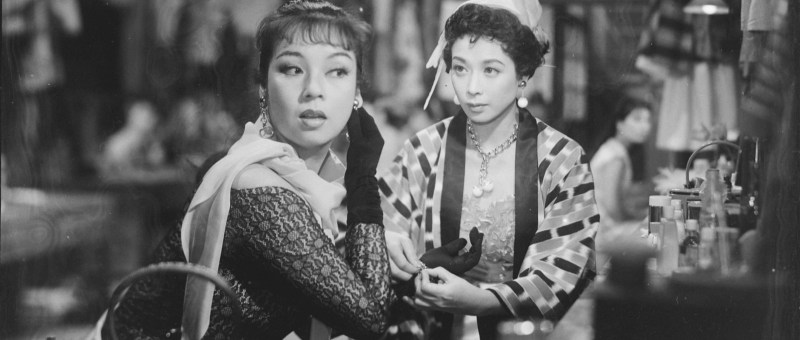
The sudden arrival of a younger sister throws the despair and disappointment of an ageing chorus dancer into stark relief in Hiroshi Shimizu’s Dancing Girl (踊子, Odoriko). Chiyo (Machiko Kyo) is indeed a dancing girl, waltzing her way through post-war Japan with seemingly little thought for others or the consequences of her actions aware only of her ability to dazzle and what it might win her if used in the right way while her sister quietly yearns for a more comfortable, conventional kind of life.

Hanae (Chikage Awashima) apologises for Chiyo’s childishness when she suddenly gets up to marvel at the snow during in an important meeting with choreographer Tamura (Haruo Tanaka) who has offered to take her on as a trainee dancer but he simply replies that it’s what makes her special in the way Hanae herself perhaps is not. In that sense there’s something a little uncomfortable in Tamura’s first word on meeting Chiyo being simply “sexy” uttered as if he were already salivating over her when the key to her appeal seems to lie in the awkward juxtaposition of her naivety and curvaceous figure. In many ways, it’s childishness that is Chiyo’s defining characteristic. She follows her impulses and is incapable of thinking beyond them. In a repeated motif we see her eat heartily as if she had not for eaten days or else to be snacking on something or other at a time when food is scarce. We later discover that she’s some kind of kleptomaniac, stealing at every opportunity even when she has no need to, simply taking something she wants without considering why it might not be right to do so as if all the world belonged to her. Meanwhile she embraces her sexuality without shame, sleeping with whomever she chooses but also doing so in a calculated effort to advance her own cause. 

The irony is that her rise coincides with her sister’s fall. Hanae has passed the age at which she might have become a star and is beginning to age out of her career as a chorus dancer. She tells her husband, Yamano (Eiji Funakoshi), that what she wants is a comfortable life and to become a mother though the couple have been married for five years and not yet conceived a child leading her wonder if there’s medical issue in play though Yamano confesses in what turns out to be an ironic comment that he doesn’t really want children anyway. In any case, they are each becoming tired of life in Asakusa and their mutually unsatisfying careers. Crushingly they each fear they have disappointed the other, Hanae sorry that she never made it as a dancer and wondering if Yamano would have been better off marrying someone from a less stigmatised profession, while he feels guilty that he could not give her a better standard of life and has failed to progress in his own career as a violinist. Chiyo’s arrival reinvigates them both in different ways. Hanae shifts into a maternal mode otherwise denied her in looking after Chiyo as she begins her career as a dancer, while Yamano begins with her a sexual affair that rekindles his masculine drive. 

But Chiyo also remains flighty and elusive. Essentially lazy, she soon tires of dancing and decides to become a geisha because it requires less rehearsal, then to give that up too to become someone’s second mistress. She rejects the conventional, settled life Hanae has come to long for and describes that in the countryside as “boring” when she suggests moving there having selflessly offered to adopt the baby Chiyo has also rejected which maybe Yamano’s or perhaps Tamura’s or someone else’s entirely not that it necessarily matters. The closing moments of the film perhaps imply a moralising rebuke of the new post-war vision of liberated sexuality, a despondent Chiyo once again making a surprise appearance and wanting to see her child but being afraid to do so unable to match up to the unsullied maternity of Hanae. Shimizu lends her passage a kind of transient quality in his restless camera which is in constant motion sliding laterally from one scene to another often coming to rest on emptiness even amid the bustling streets of a neon-lit Asakusa and the false promises of its illusionary glow.


Dancing Girl screens at Japan Society New York on May 18 as part of Hiroshi Shimizu Part 2: The Postwar and Independent Years.

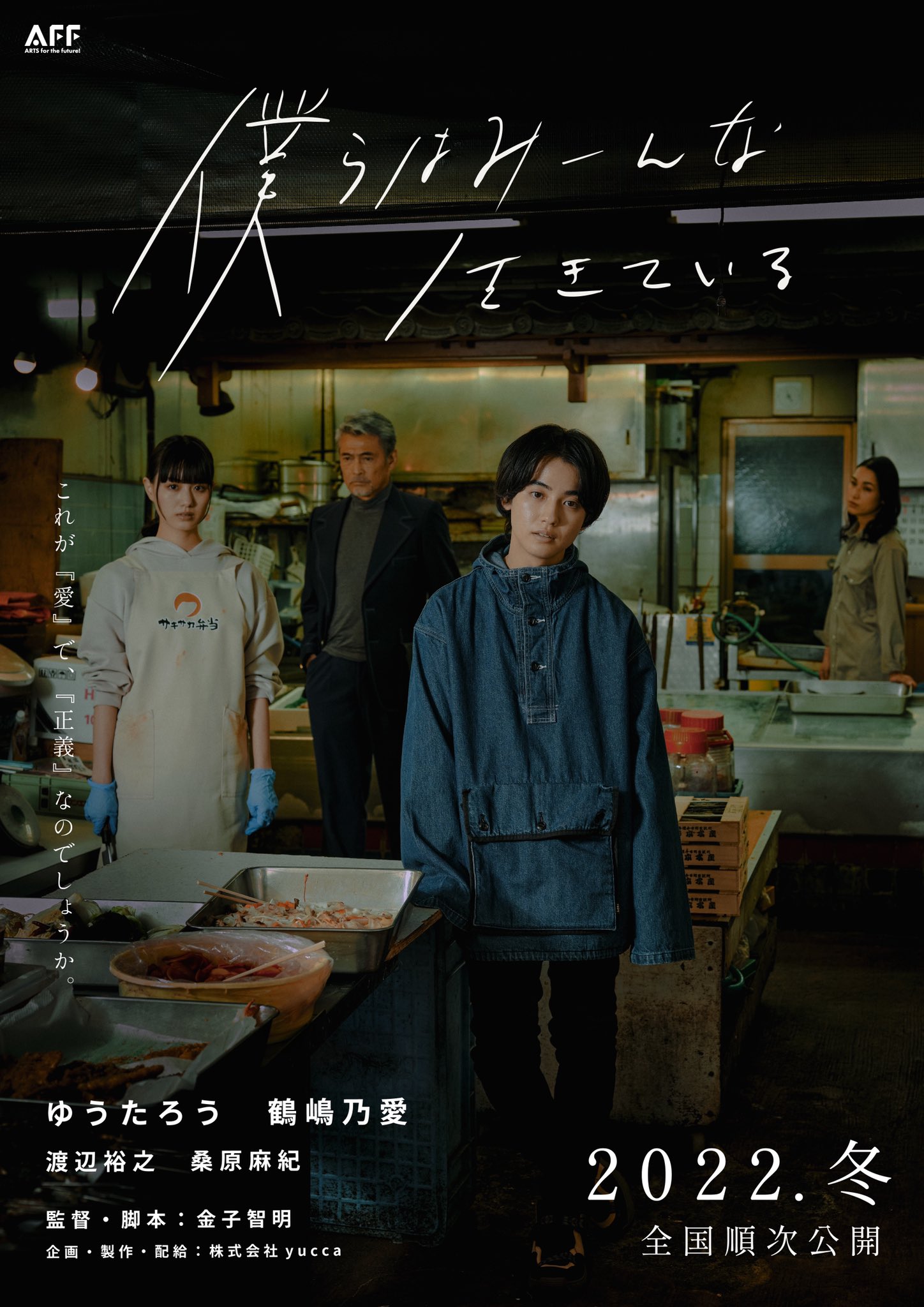
Dead Fishes (僕らはみーんな生きている, Tomoaki Kaneko, 2022)

Fearing he knows nothing of the world, a young man comes to Tokyo in search of experience but finds his horizons broadened a little more than he might have liked in Tomoaki Kaneko’s bleak indie drama Dead Fishes (僕らはみーんな生きている, Bokura wa Minna Ikiteiru). Legacies of poor parenting, either from an overabundance of love or.a lack of it, continue to cast a shadow over the futures of the young while love otherwise makes people do funny things that defy both logic and humanity.

One of the key reasons Shun (Yutaro) leaves his rural hometown is to get away from his parents and their tempestuous marriage though it’s also true that his mother has become more than a little possessive and he clearly does not want to end up trapped by her all his life. He dreams of becoming a writer, but tells new friend Yuka (Noa Tsurushima) that writing for him was more of an escapist than artistic exercise. Most of his books are of the kind where nothing really happens, a kind of wish fulfilment writing stories about the happy family he never had in which parents and children enjoy cheerful days out at the beach or the zoo, which is why he suspects publishers aren’t biting.

But Yuka has parental resentments too, explaining that her mother took her own life after her father abandoned them before she was born. She has a healthy distrust of adults and the in-built cynicism of someone twice her age but also resents herself for having been unable to enact revenge on her absent father. Nevertheless, she feels sympathy for the old people living in the local care home who have also been, according to her, “abandoned” by their families who no longer wish to care for them. Their boss, Yuriko (Maki Kuwahara), is currently caring for her mother who is suffering with dementia and occasionally becomes violent or refuses food though as the pair discover she is also mixed up with her much older boyfriend’s heinous scheme to help overburdened children knock off their elderly relatives through slow poisoning or an “accident” in return for a portion of their life insurance money.

The scheme both bears out the corrupted relationship between parent and child and the darkness of the contemporary society in which, as the Chairman (Hiroyuki Watanabe) says, the elderly can benefit their families only by dying. Despite having become aware of the goings on at the bento shop, neither Yuka nor Shun are particularly motivated to do anything to stop them, simply living on in resentment or disapproval. Yuriko tells him that he can’t understand her actions because he’s too young and has never been in love, but it’s also true that she was supposed to get a healthy payout for the slow poisoning of the man the Chairman made her marry for appearance’s sake who is likewise aware they’re planning to kill him but basically allowing them to because of love. Love is also the justification Shun’s mother gives when she arrives unnanounced and ends up talking to Yuka, explaining that she’s never thought Tokyo was right for her son so she’s found him a job back home which is after all not really her decision to make. 

But then again even Shun’s writing dreams become corrupted by the city when he’s hired to write a column for a pornographic magazine that’s only distributed in local brothels. Even the editor who hires him appears beaten down and desperate, explaining that he was once a writer too but seemingly ashamed of his current profession later decided to cut his losses and return to his hometown stopping to warn Shun only not to turn out like him or to let himself be changed by the environment he now finds himself in.

By contrast, Yuka’s flighty roommate Mika (Haruka Kodama) says she’d rather die than live with dead fish eyes escaping from her own despair and disappointment through casual sex work to supplement her income from working at a black company. Claiming that all you need in life is a money and good reputation, she’s planning to string this out until the end of her 20s in the hope of meeting a nice man to settle down with for a traditional housewife existence. Bleak in the extreme, Kaneko leads this moribund small town a sense of futility and emptiness and sees little way out for an orphaned generation other than to surrender themselves to the indifference of the world around them.


Original trailer (no subtitles)
Tomorrow There Will Be Fine Weather (明日は日本晴れ, Hiroshi Shimizu, 1948)

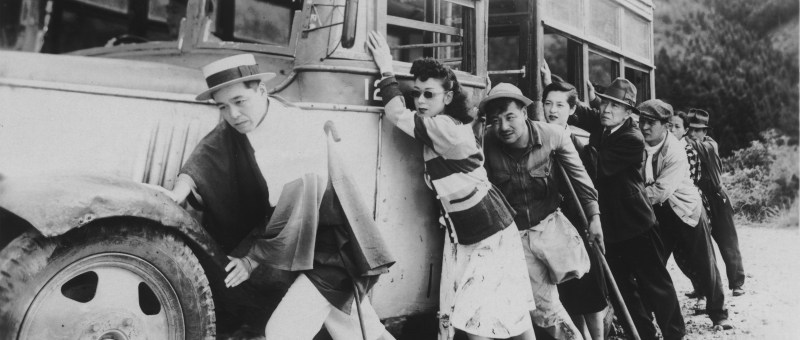
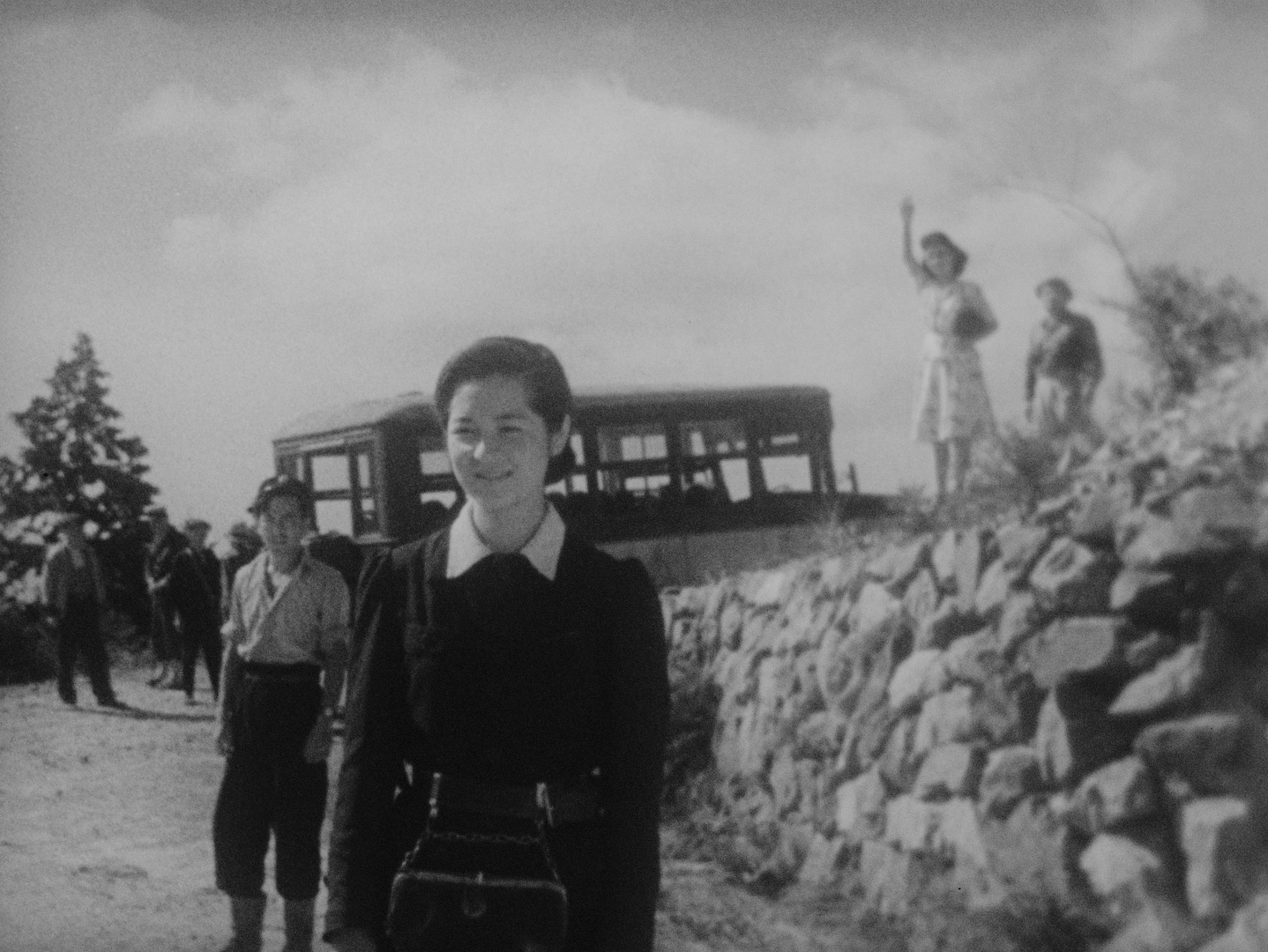
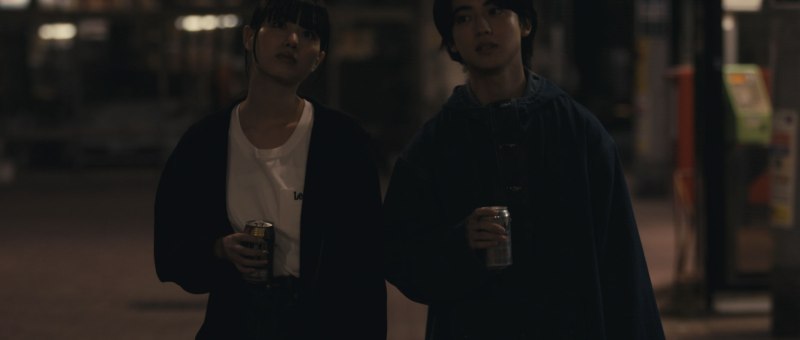
According to the driver aboard the bus at the centre of Hiroshi Shimizu’s Tomorrow There Will Be Fine Weather (明日は日本晴れ, Asu wa Nipponbare),  “that ridiculous war ruined everything”. Shimizu had directed a similar film in 1936, Mr Thank You, in which times had been hard for all but people tried to stay cheerful and help where they could. But here, by contrast, the atmosphere is much less jovial. Everyone is fed up, unhappy, dissatisfied, and irritated far beyond the inconvenience of being delayed on their journey.

Once again shot on location, the film follows a bus on the outskirts of Kyoto making the journey along a mountain pass from the city to an onsen town before breaking down half way. It’s several miles across difficult mountainous terrain to the nearest town in either direction and many people aboard the bus are elderly or have disabilities that make simply walking the rest of the way a difficult prospect while no one can really say when help will come because they’re dependent on the arrival of the following service or some other form of transport that could get a message out for a mechanic or replacement bus. 

In any case, just as in Mr Thank You there is a diverse contingent aboard each of whom have particular reasons for travelling and for being upset about the delay. A trio of men begin by complaining that this journey which once took two hours now takes three while the bus itself has become worn down and unreliable. Even so, the fares are now much more expensive. What’s most surprising is that the men loudly and openly discuss their occupation as black market traders while simultaneously complaining about an increased police presence interfering with their work. An irritated, besuited man sitting across the aisle is the only one to challenge them, asking if they pay taxes on their clearly illegal earnings to which the answer is obvious though the men mostly complain about how it wouldn’t be worth their while if they did rather than outright denying a responsibility to pay. The man tells them that they’re part of the problem and that the future of the country is assured only if people pay their taxes, with which the men otherwise seem to agree. When the bus breaks down, one of them is most worried that his late arrival will cause concern for his wife who may assume he’s been caught and arrested.

But there’s a small drama playing out in the front of the bus too as the conductress gossips with the driver certain that the beautiful woman sitting half-way back is a well-known Tokyo dancer, Waka, who she’s heard is on her way to bury the ashes of her child seemingly born out of wedlock. The driver, Sei, grimaces slightly as if he didn’t want to have this conversation and as we later discover once knew Waka long ago before the war which has changed each of them. A blind man, Fuku, now working as a masseur after losing his sight in the war, once knew them both hatches a plan to try and get them to patch things up. But as Sei later says, they’ve both been through far too much and are no longer the same people. Nothing can be as it was before, but in a way that’s alright. There is still hope for the future on the broken bus that is post-war Japan if only someone can figure out how to get the engine going again. 

Nevertheless, the scars from this war are still very noticeable. One of the black-marketers has a missing leg and later lays into an old man who confesses that he was a military commander, hounding him for his responsibility for the folly of the war which men like him forced them to continue long after it was obvious that it was lost. Fuku is much more sanguine and after a minor misunderstanding able to find a way to communicate with an elderly man who is deaf despite the incompatibility of their disabilities as they help each other board the replacement bus to the new Japan. Sei, and the slightly younger conductress who is not so secretly in love with him, meanwhile remain stuck on the broken bus symbolically unable to move forward no matter how much Sei insists it’s time to “get over the war” and that he just wants to forget the past and start living again. Perhaps it’s for men like him who seem fine on the surface that the scars run deepest, overburdened by all that this “ridiculous war” took from them in unlived futures and broken dreams. Meanwhile Shimizu follows the other bus onward along the precarious and winding mountain roads hoping for better weather in the hot springs town ahead.


Tomorrow There Will Be Fine Weather screens at Japan Society New York on May 17 as part of Hiroshi Shimizu Part 2: The Postwar and Independent Years.

Memories of His Scent (においが眠るまで, Kahori Higashi, 2024)

The link between scent and memory is incredibly strong to the extent that they are often inextricable from one another. For Hinoki, what she fears is that her father’s scent will fade from the world around her and she’ll no longer be able to feel his presence either externally or within herself. She tries to recapture and recreate it artificially only to realise that there was a crucial component that she never thought to include but was always central to her memories of her late father.

We can see the way she immortalises him in her dream sequence in which she walks through a gallery looking at a series of small exhibits marking out her father’s life until his hospitalisation at age 45 and subsequent death from illness. The last box appears empty but turns out to contain a simulacrum of his scent in the same way some museums offer the opportunity to experience what it may have felt like to live in a place through breathing in its ambient smells. It’s this sense of intimacy that Hinoki longs to recapture as she attempts to deal with her grief and the series of upheavals to her life in the wake of her father’s death including closing his coffee shop and bean roastery. She’s horrified that her mother’s put his favourite apron in the to go pile as if she were throwing away an essential part of him she can’t recover. It’s this along with a diary dropped off by the owner of a mini theatre he used to deliver coffee to that sends Hinoki on a summer holiday road trip adventure looking for traces of her father in the places he visited and trying to identify that behind a poetic entry at the end of the diary. 

The film then doubles as another in a series of films elegising the dying culture of boutique cinemas in small towns often catering to small but dedicated audiences who have formed a kind of community around their love of film. These smaller screens generally show older and indie films and are key to the success of independent filmmakers whose work often wouldn’t be shown in larger multiplexes, yet audiences have often not returned after the enforced break of the pandemic era while they also face competition from streaming and other forms of entertainment. The first cinema Hinoki visits is closing down in 42 days though she marvels at the scent and atmosphere of this retro space which has its own elegiac quality. Whilst there she also coincidentally runs to a scent scientist who gives her some pointers about how to preserve and recreate her father’s scent before it fades. By the time she reaches the end of her journey the final cinema has already closed down and rather depressingly been replaced by an entirely empty open air car park. 

Even so what she begins to realise is that nothing really disappears and experiences can be recreated to an extent as she discovers when they put a movie on in the car park leading to a very personal epiphany. The people she meets along her way teach her various things such as the importance of clearly stating how you feel while there’s still time even if her best friend’s attempt to do just that doesn’t quite go to plan. A single father raising a small daughter brings back painful memories for her of her own childhood and her father’s now continuing absence while also reminding her that those experiences live on in her memory along with the various things her father taught her throughout her life. 

Though suffused with melancholy, the film is ultimately uplifting in its determination that life goes on and nothing really disappears. Originally diffident and describing herself as someone who doesn’t particularly like interacting with others, through her partly solo road trip Hinoki learns to open herself up to the world around her along with its myriad fragrances and what they say about the people who inhabit a place. She thinks she’s looking for her father, but she’s really looking for herself and the path towards the rest of her life lived in his absence while discovering the richness of life as its lived in addition to that which has passed.


Memories of His Scent screened as part of this year’s Osaka Asian Film Festival.

Sayon’s Bell (サヨンの鐘, Hiroshi Shimizu, 1943)

Like all directors of his era, Hiroshi Shimizu made a series of National Policy propaganda films though he was often able to circumvent their requirements by focussing on themes that interested him more directly such as teamwork or childhood. Sayon’s Bell (サヨンの鐘, Sayon no Kane) is however an unavoidably propagandist film filled with praise for the Japanese empire and to modern eyes incredibly problematic in its depictions of the indigenous peoples of Taiwan many of whom did “volunteer” to serve in the Japanese imperial army a notable example being that of Li Kuang-hui who was the last Japanese soldier to be discovered hiding in the Indonesian jungle in 1974 having been recruited from the Amis people.

The film opens with a lengthy series of title cards explaining that the film is dedicated to the Takasago Volunteers, “Takasago” being, aside from the title of a famous noh play, the name Japanese gave to the indigenous people of Taiwan believing them to have been “civilised” by Japanese rule. Thus in the opening sequences, we see the role of the Japanese military personnel as essentially paternal. They are policemen, doctors, teachers, instructors, and directors of construction who are dedicated to raising the aboriginal people to level of Japanese citizens through forced assimilation. 

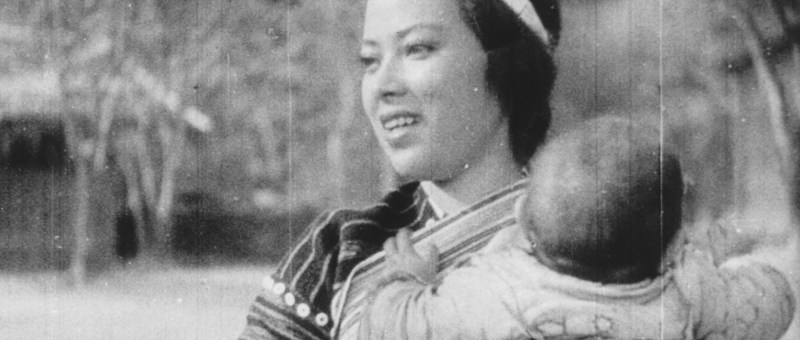
Inspired by a real life incident that also inspired a popular song of an indigenous woman who drowned in a river while carrying the belongings of a Japanese policeman, the film uses the titular Sayon as an arbiter of Japaneseness enhanced by the casting of Li Koran, later known as Shirley Yamaguchi/Yamaguchi Yoshiko, who was actually Japanese but presented as Chinese in the propaganda cinema of the time having been born in Machuria and fluent in Mandarin. Somewhat awkwardly given that Sayon is supposed to be an indigenous woman herself, she is the one schooling the local children in how to be Japanese reminding them that they should “use Japanese properly” rather than their indigenous language and praising one young boy for abandoning his indigenous name and adopting that of “Taro” instead. Japanese rule in Taiwan was not as oppressive as it was in the other parts of the empire and they did have some local support thanks to their investments in infrastructure and modernisation. Nevertheless, they did attempt to enforce the use of the Japanese language and the taking of Japanese names though it should also be noted that the KMT government did exactly the same thing only with Mandarin when it gained control of the island. 

That aside the indigenous people were often treated poorly in comparison to the rest of the of the population and we can see that the framing of them is often racist and derogatory such as when an abandoned baby is taken to the police and they remark that the indigenous community have too many children and they all look alike. The eligible men from the village, including Sayon’s love interest Saburo (Hatsu Shimazaki), have been sent to Japan for a kind of militarist re-education and are eagerly awaiting their opportunity to serve the emperor in the army. Though this may seem surprising, it apparently reflects a real fervour among indigenous men who were convinced to enlist by the money on offer and a campaign of rumours that suggested men who did not do so were unmanly and therefore unattractive to the local women. When the first round of volunteers is selected, a great amount of time is given to consoling the men who were not chosen many of whom protest and plead to volunteer their services. 

In an effort to inject some drama the film includes a love triangle between Sayon, Saburo, and Mona (Kenzo Nakagawa) who is said to be moody out of jealousy and unrequited love for Sayon but later reveals he was only jealous of Saburo in respect of playing second fiddle to him as a worthy man of the village again eager to serve the Japanese emperor. Led by Li Koran, there are several renditions of a patriotic war song singing the praises of the Taiwanese army that read that like a call to arms, though the audience for this film is certainly domestic and it seems unlikely that it would be screened in these mountain villages in Taiwan.

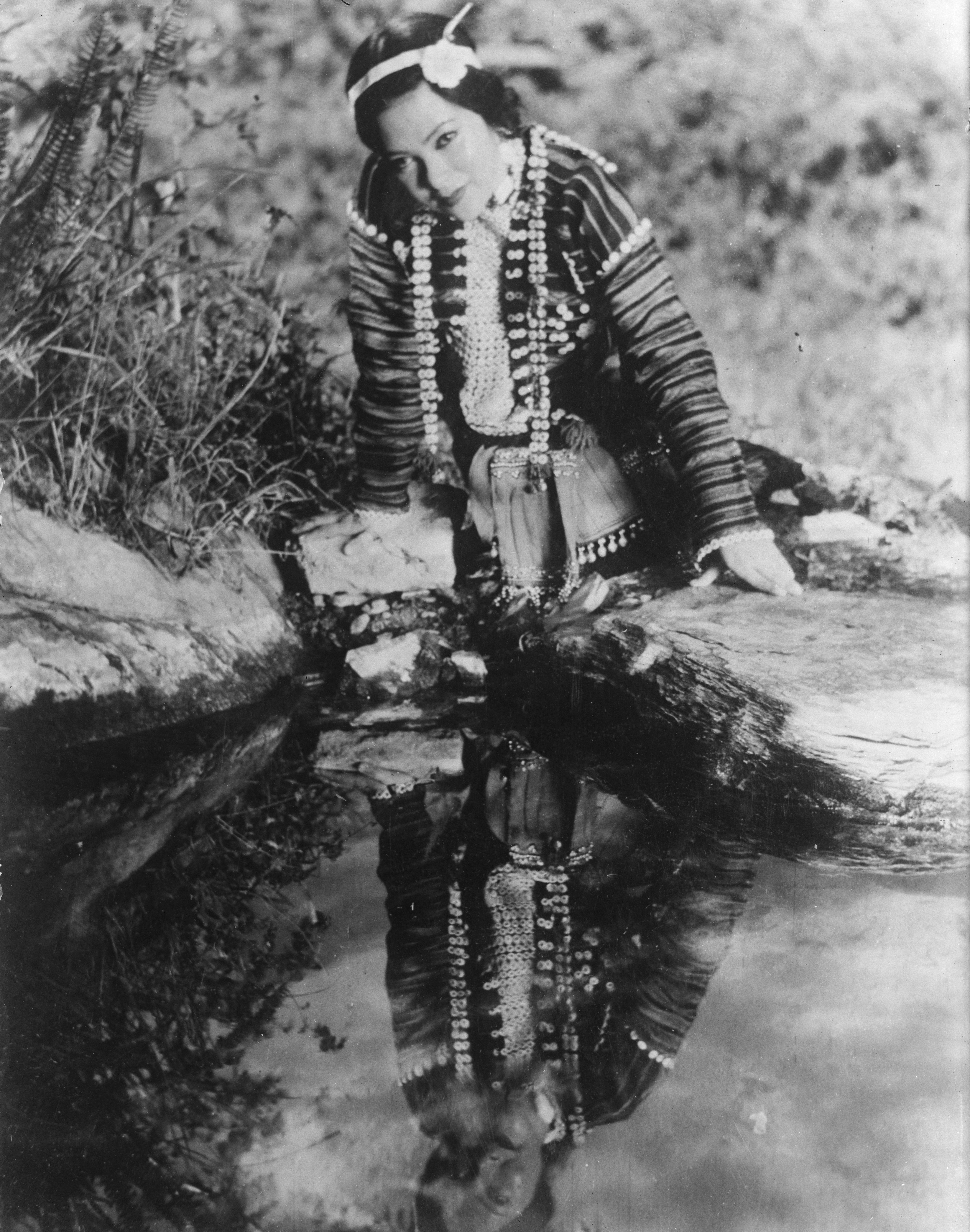
The first part of the film is basically ethnography featuring picturesque scenes of the local scenery and footage of the indigenous people living the “simple, peaceful life” patronisingly described in the opening titles while there is some exoticisation of the aboriginal culture in the elaborate costumes and scenes of indigenous rituals. Perhaps the most shocking aspect is that Sayon is encouraged to break a traditional taboo by entering a sacred lake where women are forbidden to go lest they anger the god Uttofu. With her new cultural re-education, Sayon thinks Uttofu is a myth and goes to the lake to help Saburo assess it because the Japanese are planning to drain it to create a rice paddy. For this she is expected to drown herself in the water to placate Uttofu and is urged to do so by the tribal elders with the Japanese basically agreeing with them deciding that they should catch an animal to sacrifice and if that doesn’t work, while it’s “unfortunate”, Sayon should indeed hurl herself into the lake if the for the good of the empire rather than Uttofu. 

It is quite odd to think that the Japanese military personnel would go along with human sacrifice rather than clamp down on a practice they would otherwise term backward, though in that light it’s impossible not to see her later death by drowning as a rejection of the “modernity” the colonial authorities represent and a re-assertion of indigenous culture. The bell referenced in the title refers to one given to the village to commemorate the incident bearing an inscription of Sayon’s name. When the KMT gained control of Taiwan, they erased the inscription on the bell and removed it as a symbol of Japanese rule though it was later restored after the end of martial law and the monument re-erected beside the bridge which was also named “Sayon’s Bridge” in a evocation of the complicated relationships between the three nations. The film is however rather uncomplicated in its themes which to modern eyes prove extremely unpalatable despite the often beautiful cinematography capturing the idyllic Taiwanese countryside.


Sayon’s Bell screens at the Museum of the Moving Image May 11 as part of Hiroshi Shimizu Part I: The Shochiku Years.

Inch Forward (走れない人の走り方, Su Yu-Chun, 2023)

Why does everything always go wrong just when it was about to go right? Everything has fallen into place for director Kiriko’s upcoming indie film but suddenly she finds herself experiencing a series of crises that are perhaps a bit of a wakeup call teaching her a few things about herself as well as the process of filmmaking. The latest film to tackle the perils of the independent movie scene, Inch Forward (走れない人の走り方, Hashirenai hito no Hashiri-kata) never shies away from the difficulties involved but does suggest they can be overcome with humility and a willingness to get creative.

Part of the problem is Kiriko’s difficulty in making decisions and lack of clarity over her role as a director. Her producer, Takimoto, tries to keep her grounded by pointing out places where the script will be difficult to film and dealing with the actors, but also tells her that she should have a better idea of the message she intends her film to carry and be prepared to answer questions about the script from her cast members. But Kiriko says she doesn’t really intend the film to have a message and thinks creating a character is an actor’s job not a director’s. Whenever Takimoto asks her to reconsider something, Kiriko childishly answers that she’ll think about it probably without really intending to.

But her irresponsible behaviour causes problems for others, particularly when she messes up the company car during a bit of unauthorised location hunting, or fails to shut the front door properly allowing her pregnant roommate’s pet cat to escape and thereby sending her into an early labour. It’s only after these series of crises that Kiriko begins to understand that she needs to make amends and be more considerate in future if she wants to continue receiving help and support from those around her. After all, you can’t make a film all on your own.

Ironically enough she describes her film as like a road movie but on foot about people going to the same place over and over again. Even one of her crew members asks her why it is indie filmmakers like to end at the sea hinting at her screenplay being slightly cliché even as she tries to think her way out of the problem. At a particularly low point, she has a vision of the film being taken away from her as her (all male) crew members and Takimoto remark on how useless she is and vow to take over their section from her. She also has an obsession with her horoscope which is usually a little negative further deepening her lack of confidence and general sense of despair. 

“Don’t worry, just believe in yourself and move forward’” one of her horoscope ads advises and it might indeed by good advice for an indie filmmaker. Learning to be a little more considerate of those around her, she begins to benefit from their help and advice rather than rejecting it in her own insecurity. Despite all of the constraints her friend tells her that she should make something authentic, what she actually wants to do rather than cynically doing what seems the most advantageous, but what’s really important is a sense of balance. As Takimoto told her, she needs to learn to prioritise rather than expect to get everything she wants and be realistic about what’s achievable while still aiming for the film she wants to make. 

Then again in the cinema scenes which bookend the film Su implies that the audience weren’t particularly impressed or perhaps confused by her road movie that doesn’t go anywhere. One audience member was so deeply asleep they had to be woken by an usher. Nevertheless, to overcome her problems Kiriko has to take the lead in more ways than one asserting control over her project but also prepared to work with others, listen to their suggestions, and make firm decisions as they inch forward towards their goal. Warm and quirky, Su’s lighthearted dramedy never shies away from the difficulties of indie filmmaking but finally resolves that it is possible to overcome them with a little mutual respect and solidarity between those on the other side of the screen.


Inch Forward screened as part of this year’s Osaka Asian Film Festival.

Original trailer (no subtitles)
My Elder Brother (私の兄さん, Yasujiro Shimazu, 1934)

A wastrel son and runaway daughter get a few lessons in filiality in Yasujiro Shimazu’s genial ‘30s comedy, My Elder Brother (私の兄さん, Watashi no Niisan). Reflecting the changing the times, the film is in many ways about navigating the sometimes fraught relationships among a blended family though like many hahamono, it’s the stepson who is most devoted to his mother while the birth son is consumed by a sense of guilt and inadequacy in his accidentally awkward positioning within the family hierarchy.

The filial piety of eldest son Shige (Reikichi Kawamura) is established early on by the fact he’s not at work because his mother is ill and he’s off visiting her. He does in fact return late at night, though there’s a question mark over his qualities as a boss as the drivers at the taxi firm he runs remark that he’s been ignoring their attempts to negotiate with him for better conditions not least the provision of assistants which has been given additional weight by one driver’s experience with a disturbed fare who attempted to strange him with his belt.

The strange and violent opening sequence in which a cabbie is attacked by a crazed passenger is never referenced again and out of keeping with the otherwise lighthearted tone of the film though does add to a sense of danger later echoed in the appearance of two guys who first seem like yakuza but are actually just two grumpy old men trying to retrieve a young woman who’s run away in defiance of an arranged marriage. In any case, tearaway brother Fumio (Kazuo Hasegawa), who arrives drunk in the back of a cab, has indeed fallen into bad company with yakuza whom he describes as his friends though Shige warns him they’re probably just after his money.

Fumio has returned because he’s learned his mother is ill, though he’s reluctant to see her given his present condition. When he does actually meet her, she says that she hates him and calls him a good-for-nothing, worthless man. It seems her animosity is partly motivated by a sense of guilt and embarrassment that her biological son has brought shame to the family she married into and especially to Shige. For his part, Shige acknowledges that he also felt resentful when Fumio and his mother moved in but explains that he was still a child clinging to the memory of his late birth mother. Fumio explains to the young woman he picks up, Sumako (Kinuyo Tanaka), who is on the run from her uncle and the man her stepmother wants her to marry, that he left home because of his precarious status and sense of inadequacy but liked the sense of freedom his independence gave him even if he is ashamed of the kind of life he’s lived on the fringes of the underworld. 

Sumako is experiencing a similar dilemma as she feels herself unable to bond with her stepmother to the extent that she has not been able to articulate that she objects to the arranged marriage her relatives have set up for her. She laments that if it were her birthmother she should be able to tell her everything, but Fumio counters that Shige had been jealous of him because he could exchange harsh words with his mother because of their closeness in a way he never could because he is not her biological son. Reinforcing a sense of obligation between parents and children might have been an important message in the mid-1930s, but the film is perhaps unexpectedly progressive in its openness and desire to embrace these then considered less usual family arrangements born of second marriages in emphasising the brotherly bond between the two men and Sumako’s successful escape from an unwanted marriage simply by speaking her true feelings to her mother not to mention the suggestion of a cross class romance between rich girl Sumako and the middle-class Fumio.

Meanwhile, the film also has an international bent in the prominent signs for Chevrolet and Hollywood-esque aesthetics, drawing inspiration from American and European crime films for the violent opening sequence and underworld setting. Shimazu hints at the shadiness of Fumio’s backstreets life, but equally of Sumako’s uncle and his moustachioed friend lending an undertone of darkness to the mid-30s society but otherwise keeps things light in the innocent courtship between Fumio and Sumako who can mediate their attraction only by remarking on the beauty of a sunset.