Last Mile (ラストマイル, Ayuko Tsukahara, 2024)

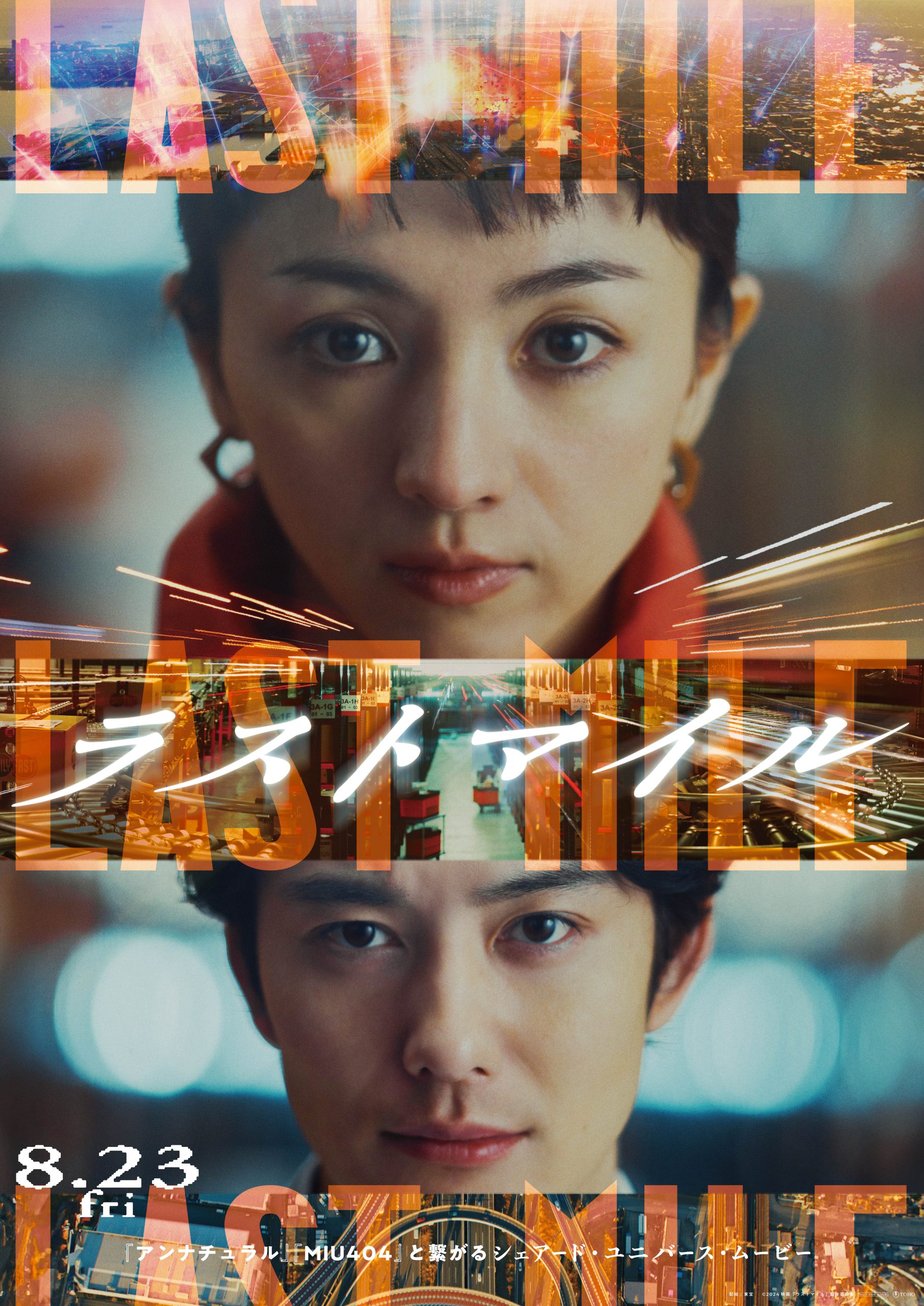
“Customer-centric”, what does that actually mean? The Amazon-like US-based conglomerate at the centre of Ayako Tsukahara’s Last Mile (ラストマイル) prides itself on its customer-centric philosophy, but at the end of the day, what that really means is that they give us what we tell them we want through our purchasing patterns and browsing history. That would be that we want everything as cheap and fast as it’s possible to be and don’t really think about the wider implications or what a world of infinite convenience might be doing to the society around us.

At least from the perspective of corporate lackey Elena (Hikari Mitsushima), recently returned from the US, the reason Daily Fast pressures its delivery staff to lower costs isn’t to maximise their profits, it’s so they can go on providing lower prices to customers which to her is all part of their customer-centric approach. This doesn’t really gel with her off-the-cuff remark about the warehouse not having a safety net to protect the workers from accidental falls or, she ominously adds, prevent people from jumping. That she brought it up at all might signal that she knows something’s not quite with the way this company treats its employees, though as it turns out she may have something else on her mind. In any case, when she arrives on her very first day the entrance to the complex is little better than a cattle market with a man on loud speaker barking instructions about were to go to the 800 members of staff some of whom have only been brought in to bulk up for the upcoming Black Friday sale. 

Which is all to say, it wouldn’t be all that surprising if the fact that some of their parcels have been exploding on delivery were a concerted attack against their ultra-capitalist philosophy, though actively delivering bombs to people who didn’t order them is not very “customer-centric” in any case. Obviously, Elena isn’t keen on this either but is also convinced that it can’t really be their fault because they have strict and dehumanising security measures in place preventing the workers from bringing in anything inessential. Even after she works out that the bomber has actually warned them that there are 12 bombs out there, she wilfully withholds the evidence from law enforcement to avoid damaging their share prices while trying to minimise business interruption rather than do anything sensible like stop delivering people parcels until they’ve figured out what’s going on with the bombs, though the real mystery is why the police don’t really seem to have the power to do that and, in fact, end up working with the warehouse to check each parcel individually to keep the conveyor belts going.

From the aerial view, the city itself resembles the warehouse with the roads taking the place of the belts as delivery vans shuttle along them. Seventy-something delivery driver subcontractor Sano (Shohei Hino) once had a friend who used to say that they were the ones who kept the country running. Yacchan became the number one driver largely because he took 10 minutes to eat his lunch and worked every hour god sent for dwindling pay with the implication that his gruelling schedule contributed to his early death. Sano’s son Wataru (Shôhei Uno) has just started working with him on the van after being laid off from an electronics job. They made quality washing machines that were designed to be efficient and to last, but of course they couldn’t compete with cheaper brands so they went bust.

Elena berates herself for being “too Japanese” for the American company which is to say that she takes pride in her work. That’s not to say that everything about the American business culture is bad as she encourages her assistant, Ko (Hikari Mitsushima), to call her Elena and to feel free to speak his mind rather than equivocate to avoid causing offence. But despite their “customer-centric” approach, it’s clear that the company puts profits above all else and treats its workers, who are not actually employees, poorly, without concern for their wellbeing. Yagi (Sadao Abe), the boss of logistics first Sheep Express which is the prime courier for Daily Fast, laments that he’d love to hire more drivers to help them through this crisis but he can’t because they’re always squeezing his budget and no one will work for their terrible rates except for those who, like Sheep Express itself, have no other options and will have put up with it because they’re dependent on Daily Fast. And because they’re dependent on Daily Fast, it means we all have to keep buying stuff we don’t really want or need just keep the belts going because we’re terrified about what will happen if they stop.

There is a direct comparison between Wataru’s well-made washing machines and the cheap and fast consumerist model that’s gradually taken over that suggests things like craftsmanship and integrity have gone out the window in a world where no one really bothers to go the last mile anymore, though it’s his steadfast engineering that eventually saves the day while even Elena comes to rethink her career trajectory and advises the drivers to strike and end this culture of exploitation because it turns out Daily Fast needs them more than they need Daily Fast. But maybe we don’t really need Daily Fast either, and we’re as much to blame for letting them give us what we think we want without really considering what that actually means. Perhaps a “customer-centric” society’s not all it’s cracked up to be, especially when workers and consumers are often the same people stuck on conveyor belts knowing there’s only one way to stop them.


Last Mile screens 19th June as part of this year’s Toronto Japanese Film Festival.

Trailer (no subtitles)
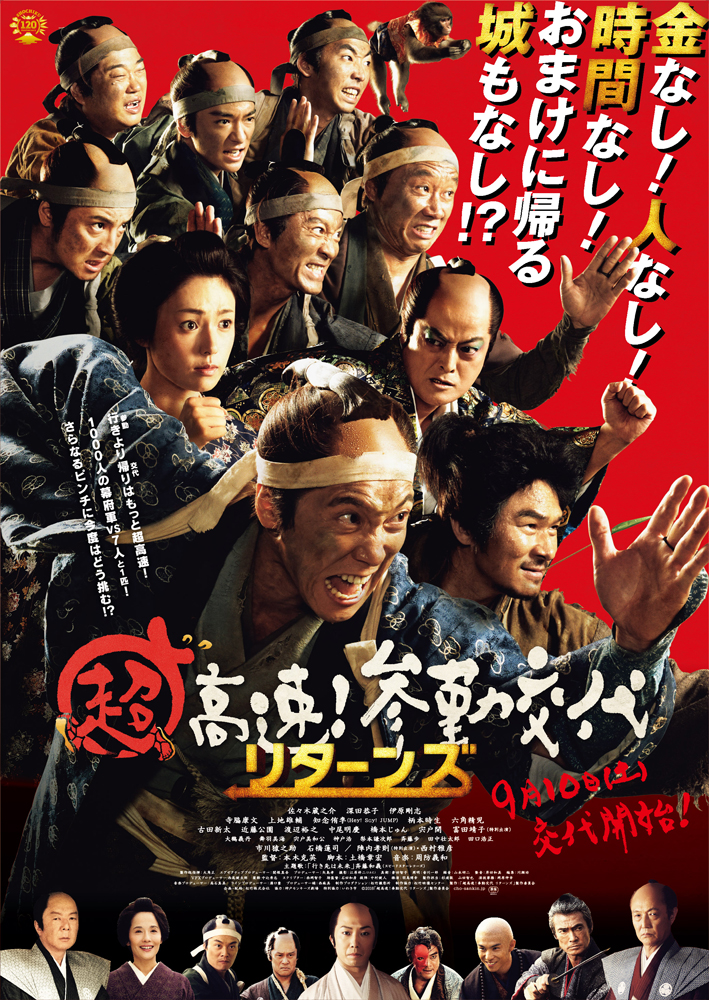
Samurai Hustle Returns (超高速!参勤交代 リターンズ, Katsuhide Motoki, 2016)

At the conclusion of 2014’s Samurai Hustle, it seemed that samurai corruption had been beaten back. Corrupt lord Nobutoki had got his comeuppance and the sympathetic “backwoods samurai” Naito was on his way home having found love along the way. Of course, nothing had really changed when it comes to the samurai order, but Naito was at least carving out a little corner of egalitarianism for himself in his rural domain. 

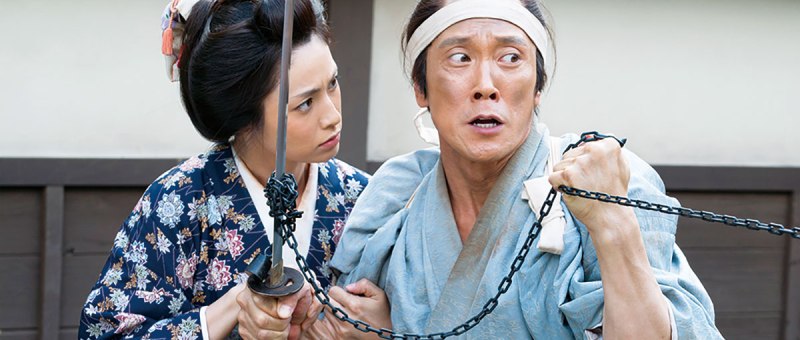
The aptly named Samurai Hustle Returns (超高速!参勤交代 リターンズ, Cho kosoku! Sankin kotai returns) picks up a month later with Naito (Kuranosuke Sasaki) taking a rather leisurely journey home in preparation for his marriage to Osaki (Kyoko Fukada) only to receive news that there has been a “rebellion” in Yunagaya. Predictably, this turns out to have been orchestrated by none other than Nobutoki who has been released early from his house arrest thanks to his close connections with the shogun but has been humiliated at court and is otherwise out for revenge with a slice of treasonous ambition tacked on for good measure. Just as in the first film, but in reverse, Naito and his retainers must try to rush home to get there before the imperial inspector arrives or else risk their clan being disbanded. 

Meanwhile, the shogun is absent at the wheel after having decided to resurrect an old tradition abandoned because of its expense and inconvenience to make a pilgrimage to Nikko. In an interesting parallel, the farmers are uncharacteristically upset with Naito, blaming him for the destruction of their fields because he wasn’t there to protect them. Naito also feels an additional burden of guilt given that, having run flat out all the way to Edo, he took his time coming back leaving his lands vulnerable to attack while he now risks losing the castle. Nobutoki wastes no time at all looking for various schemes to undermine him while secretly plotting to overthrow the shogun and usurp his position for himself. 

As in the first film, the battle is between samurai entitlement and the genial egalitarianism of Naito’s philosophy. “The real lords of Yunagaya are people like you who are one with the soil,” he tells the farmers, while Nobutoki sneers that “lineage rules supreme in this world, inherited wealth breeds more”. It doesn’t take a genius to read Nobutoki’s machinations as a reflection of his insecurity, that he invests so much in his rights of birth because he has no confidence in his individual talents. Naito counters that it’s the people around him that matter most, “people are priceless. Friends are priceless,” but Nobutoki rather sadly replies that people will always betray you in the end. Even the shogun eventually agrees that “anger brings enemies, forbearance brings lasting peace” but treats Nobutoki with a degree of compassion that may only embolden him in his schemes.

“Nepotism has endangered the shogunate,” the shogun ironically sighs apparently lacking in self-awareness even if beginning to see the problems inherent in the samurai society but presumably intending to do little about them. “No government should torment its people,” Naito had insisted on boldly deciding to retake his castle but even if this particular shogun is not all that bad, it’s difficult to deny that his rule is torment if perhaps more for petty lords like Naito than for ordinary people or higher-ranking samurai. Naito struggles to convince Osaki that she is worthy of his world and only finally succeeds in showing her that she has nothing prove and love knows nothing of class. The people of Yunagaya are impoverished but happy, satisfied with the simple charms of pickled daikon unlike the greedy Nobutoki whose internalised sense of inadequacy has turned dark and self-destructive. 

Then again, Naito is still a lord. He obeys the system out of love for his clan and a genuine desire to protect those around him but otherwise has little desire to change it actively even if his quiet acts of transgression in his closeness with the villagers and professions of egalitarianism are in their own way a kind of revolution in a minor rejection of the shogun’s authority to the extent that the time allows. Nevertheless, with his return journey he once again proves the ingenuity of a backwoods samurai getting by on his wits as he and his men race home to save their small haven of freedom from samurai oppression from the embodiment of societal corruption.


Trailer (no subtitles)

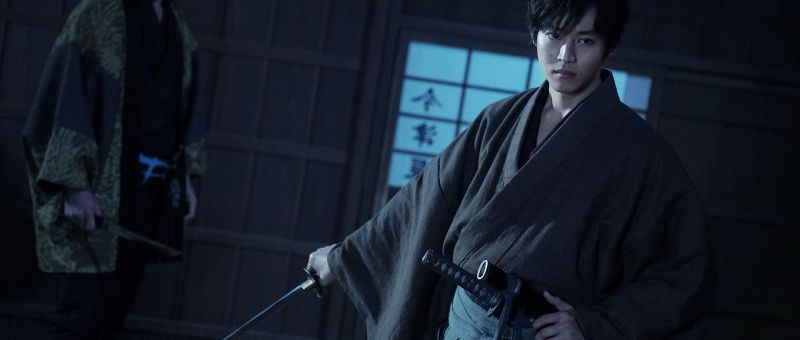
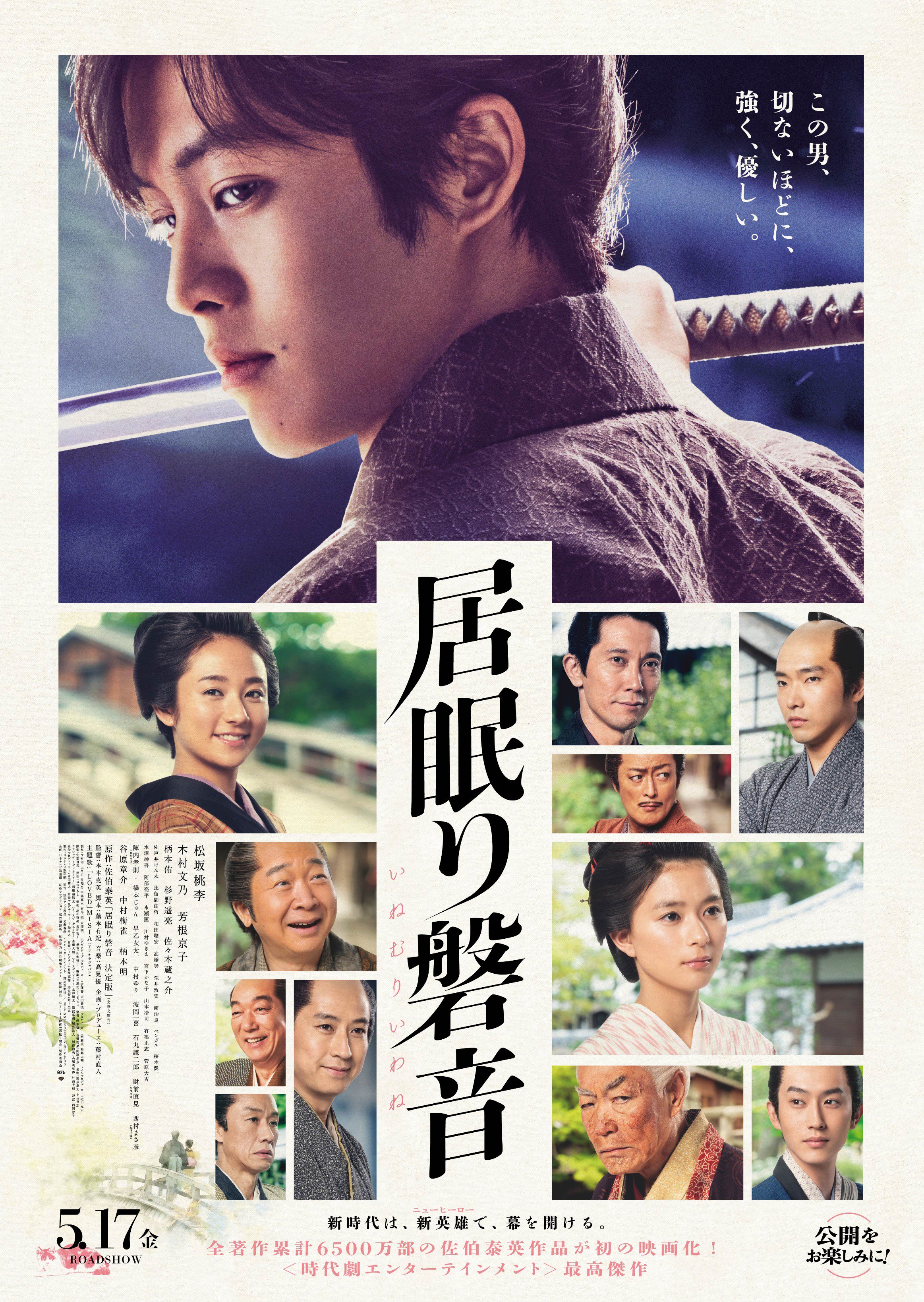
Iwane: Sword of Serenity (居眠り磐音, Katsuhide Motoki, 2019)

The contradictions of the samurai code conspire against one noble-hearted young man in Katsuhide Motoki’s adaptation of the long running series of historical novels by Saeki Yasuhide, Iwane: Sword of Serenity (居眠り磐音, Inemuri Iwane). Yet this truly serene samurai is a stoical sort, learning to bear his pain with fortitude while standing up for justice in an increasingly corrupt Edo where money rules all while an ascendent merchant class continues to challenge the fiercely hierarchical social order. 

Beginning in 1772 which turned out to be a disastrous year, the tale opens as hero Iwane (Tori Matsuzaka) prepares to return home after completing his three year rotation in Edo in the company of childhood friends Kinpei (Tasuku Emoto) and Shinnosuke (Yosuke Sugino). Shinnosuke is in fact married to Kinpei’s sister Mai, while Iwane will himself be married to Kinpei’s other sister Nao immediately on his return so close are they. As Iwane’s father tells him, there are great hopes for these young men that they can “turn our outdated clan around”, but events will conspire against them. Spoiling the happy homecoming, Shinnosuke is accosted by a drunken uncle who convinces him Mai has been unfaithful in his absence with the consequence that he kills her immediately on his return home. Unable to understand this turn of events, Kinpei confronts his friend but eventually kills him, while Iwane is then forced to kill Kinpei after he goes on murderous rampage in revenge for the wrong done to his sister. 

In trying to mediate the case, the argument is put forward that Shinnosuke acted rashly and should have brought his suspicion to the authorities rather than opting for summary execution. The lord however disagrees, condoning Shinnosuke’s actions under the rationale that to do so would have been considered “weak minded” while as Shinnosuke himself had claimed he acted in accordance with the samurai code in which female adultery is illegal and punishable by death. By contrast, he finds Kinpei’s rashness offensive, insisting that he also should have recognised the legitimacy of his sister’s murder and simply left quietly with her body. Having learned the truth in which his childhood friends became victims of clan intrigue, romantic jealousy, and tragic misunderstandings in this Othello-like plot, Shinnosuke and childhood sweetheart Nao are also consumed by the rashness of samurai law each exiled from their clan and cast adrift in Edo-era society. 

Edo-era society is however also itself corrupt. Some months later, Iwane has returned to Edo as a lowly ronin lodging with a kindly old man, Kinbei, who helps him find a job firstly gutting eel then as a bodyguard at a money exchange which has been receiving anonymous threats they assume are from rival broker Awaya who has hatched a nefarious plan to manipulate the currency market to stop the current Shogun introducing a new unit which can be used in both Edo and Kyoto which would understandably cut into his already corrupt business model. Luckily, Imazuya is an honourable man who backs the new currency plan and wants to do the right thing which makes him a perfect fit for Iwane’s innate sense of justice. “You don’t know the way of the merchant” Awaya snaps at him, suggesting both that the samurai are already on their way down as the merchants rise and that his unwillingness to play dirty will be his downfall. Nevertheless, Iwane is the type to adapt quickly, instantly coming up with a way to play Awaya at his own game and kick his destructive amoral capitalism to the curb. 

Meanwhile, he continues to pine for Nao while drawing closer to Kinbei’s earnest daughter Okon (Fumino Kimura). As we discover Nao is also a victim of an intensely patriarchal social order but through the tragedy that befalls them also finds strength and agency making a life changing decision that allows her to become independent while looking after her family if in the knowledge that the childhood romance she shared with Iwane is a thing of the past. Iwane too agrees that he is trapped in a living hell of guilt and grief, yet choosing to go on living anyway as calm and cheerful as he’d ever been while standing up to Edo-era corruption though uncomfortably enough this time against the destabilising influence of the rising merchant class and therefore in contrast to most jidaigeki reinforcing the legitimacy of the samurai order which has paradoxically also ruined his life with its rigid and implacable social codes. In any case, Motoki’s classic chanbara melodrama has a serenity of its own as the cheerfully laidback hero resolves to live his life by a code of his own free of samurai constraint. 


Trailer (no subtitles)

Let’s Go Karaoke! (カラオケ行こ!, Nobuhiro Yamashita, 2023)

Singing is serious business. In Nobuhiro Yamashita’s adaptation of the manga by Yama Wayama Let’s Go Karaoke! (カラオケ行こ!Karaoke Ikou!), it’s matter of life and death, metaphorically at least, for a young man confronting adolescence and a zany gangster who seems kind of lonely but is desperate to learn how not to embarrass himself at the boss’ big sing off so he won’t be subjected to a homemade tattoo of his most hated motif.

The irony is perhaps that this kind of yakuza at least doesn’t really exist anymore and “Crazy Kid” Kyoji (Go Ayano) is in many ways a ghost of bygone days inhabiting a Showa-era shopping arcade soon to be torn down and replaced by a luxury hotel. Meanwhile, high schooler Satomi (Jun Saito) is also facing a kind of apocalypse in that he’s a boy a soprano whose voice has begun to change. His encroaching puberty leads him to blame himself when the school choir only places third during the nationals not making it to finals. But it’s at this concert that Kyoji first hears his “angelic” voice and decides he’s the perfect person to teach him how sing, intimidating him into an impromptu karaoke session.

As Satomi later points out, adults don’t invite kids to karaoke and this arrangement would be odd even if Kyoji were not an old school yakuza with a severed finger in his glove compartment. Of course, Satomi’s frightened but cannot really say no offering a few words of advice by daring to tell Kyoji that his falsetto is  “sickening” and he should stop waving his hands around if he wants to master the art of singing. It is also doesn’t help that his choice of song, Kurenai by X Japan, a hair rock epic mostly written in broken English, is a song of manly melodrama which requires a good deal of screaming. Despite having enlisted Satomi, Kyoji talks about one of his fellow footsoldiers as if he’s died when he’s only decided to get some professional singing lessons in an effort not to come last and end up with a lame tattoo.

Yamashita frames both their challenges as the same, Satomi fearing a social death and the death of his youth if he takes to the stage at what he’s sure would be his final concert and his voice cracks while Kyoji, ironically enough, does not really fear a literal death but the pain and humiliation of being branded by the boss for being bad at karaoke. Despite their differences a genuine a sense of friendship does arise between them, if also a possibly inappropriate homoerotic tension, as they support each other towards their shared goals and learn to sing from the heart which was apparently the real problem with Satomi’s school choir seemingly more obsessed with technique and correctness than the simple joy of singing. 

Hovering on a precipice, Satomi exists in a liminal space in his own way as ghostly as Kyoji surrounded by the obsolete. In his school film club, of which he is an honorary member, they watch VHS tapes of classics such as White Heat, Casablanca, and Bicycle Thieves which can only be watched once because the player’s broken and you can’t rewind anymore. His world’s on the brink of eclipse, and his friendship with Kyoji is a harbinger of a darker, more adult world but also one that’s less frightening than it ought to be with its admittedly scary gangsters obsessed with karaoke and bad tattoos. He starts to wonder if Kyoji was even real or some kind of imaginary friend appearing to help him deal with his impending adolescence and what it means for his singing career, but is finally reassured by a piece of concrete evidence confirming at least that it did really happen if leaving him with a sense of loneliness once their quests have come to an end. Surreal in its cheerful darkness, Yamashita’s heartfelt drama is an advocation for the for the healing powers of karaoke and the importance of singing from from the heart no matter how it might sound to those you who may themselves shed a few manly tears over a song about lost love and absent friends.


Let’s Go Karaoke! screened as part of this year’s Nippon Connection

Original trailer (English subtitles)

The Legend & Butterfly (レジェンド&バタフライ, Keishi Otomo, 2023)

“What was everything for?” an ageing Nobunaga (Takuya Kimura) asks his attendant Ranmaru (Somegoro Ichikawa) towards the conclusion of Keishi Otomo’s historical epic, The Legend & Butterfly (レジェンド&バタフライ, Legend & Butterfly) produced in celebration of Toei’s 70th anniversary. Oda Nobunaga is such a prominent historical figure that his story has been told countless times to the extent that his legend eclipses the reality, but rarely has been he depicted so sympathetically as in Otomo’s history retold as romantic melodrama in which he and his wife, Lady No (Haruka Ayase), are mere puppets of the times in which they live dreaming only of a place beyond the waves where they might be free of name or family. 

Tellingly, Otomo opens in the spring of 1549 in which the dynastic marriage was arranged to broker peace between unstable neighbouring nations Owari and Mino. Nobunaga’s father’s health is failing and he fears in the chaos of his death Mino may attack, while No’s father fears that her brother will soon revolt against him plunging the fiefdom into disarray and therefore vulnerable to an attack by Owari. At this point, Nobunaga is known as “the biggest idiot in Owari,” a foppish dandy who cares only about appearances. As he prepares to meet No, his courtiers apply his makeup and do his hair while dressing him in a rather outlandish outfit No immediately insults as “foolish”. He treats her with chauvinistic disdain, barely speaking save to order her to pour the drinks and give him a massage only for her to point out that she’s been travelling all day and a “thoughtful” considerate husband would be giving her a massage instead. “I detest women who do not know their place,” he snaps. “I detest men who are ignorant,” she counters. The wedding night ends in humiliating failure as No demonstrates her martial arts skills and Nobunaga is forced to call his guards to rescue him. 

Little is known of Lady No in historical record, but here she is bold and defiant, as her father had said too free with her opinions for a woman of the feudal era. She claims to have been married twice before and assassinated both husbands on her father’s orders, implying that she is essentially sleeper agent more than hostage and will kill Nobunaga without a moment’s thought as soon as the word is given. Yet she also begins to guide her husband towards his destiny, mocking him as a fool but giving him useful strategic advice that wins him glory on the battlefield along with the political advancement that led him to become the first great unifier of Japan. For all that they “hate” each other, they are well matched and have a similar sensibility that allows them first to become allies and then friends before frustrated lovers.

But their love is enabled only when they escape the feudal world, shaking off their retainers to go on a “normal” date in Kyoto where they dance to Western musicians and taste foreign candy only to end up accidentally massacring some peasants when No’s martial arts training kicks in trying to stop a man beating his son. Even so, they are forever linked by their time in Kyoto in the romantic talisman’s of a carved wooden frog and a European lute even if the blood-spattered jizo and buddhist statue watching their eventual connection imply there will be a reckoning for all the blood that is spent. Jumping on a few years, the film does not elaborate on what caused Nobunaga to become a man without a heart and lose the love of his most trusted ally but positions his transformation into the “Demon King” as the kernel of his undoing just as his dream of unifying Japan and bringing about an age of peace (if one ruled by fear) is about to become a reality. 

In any case, the one thing that everybody knows about Nobunaga is how he died though then again his remains were never recovered giving rise to a happier ending in which he and Lady No were finally able to escape the feudal world to chase a freer future beyond the sea which is perhaps what they do in the film’s poetic final sequence in which they might in a sense share a dream connected by frog and lute. It might not be very historically accurate, but that is perhaps the point in hinting at the lives they might have led if the world had been different. Otomo films with a painterly eye that lends an air of poignant gravitas to a tale of romantic tragedy in which love is both salvation and destruction amid the flames of a collapsing temple. 


The Legend & Butterfly screened as part of this year’s JAPAN CUTS.

Original trailer (English subtitles)

Kingdom (キングダム, Shinsuke Sato, 2019) [Fantasia 2019]

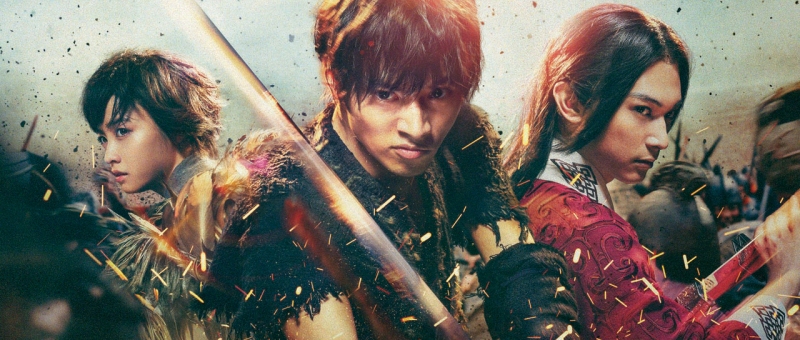
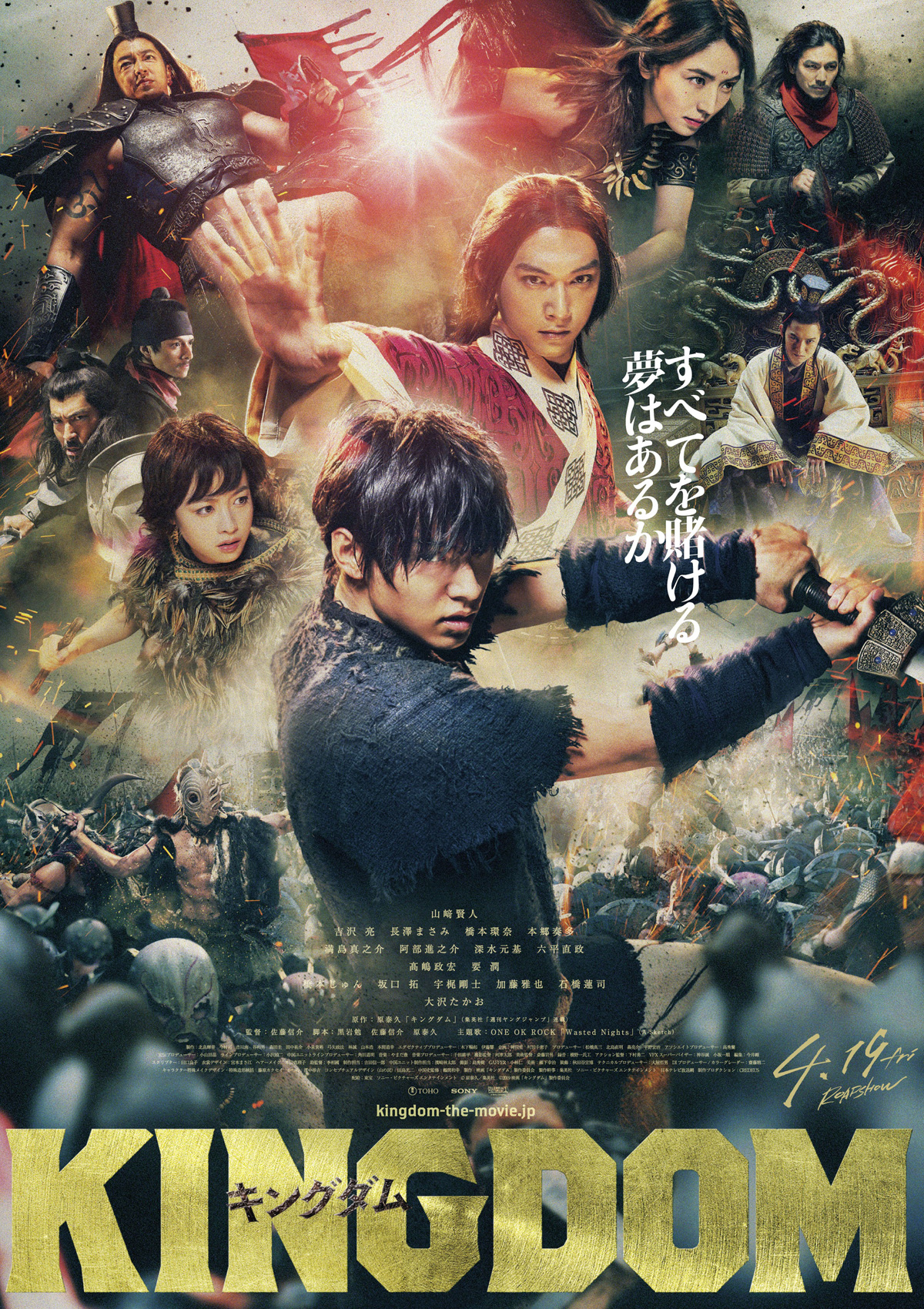
Kingdom poster 1The class war arrives in feudal China via modern Japan in Shinsuke Sato’s big budget adaptation of the wuxia-inspired manga by Yasuhisa Hara, Kingdom (キングダム). Set in China’s Warring States period, Kingdom offers a surprisingly progressive message, if mildly tempered by a failure to tackle the system in its entirety, in which the oppressed (which in this case includes the king) rise up against sneering aristocracy fuelled mostly by righteousness and fierce defence of the right to dream.

The tale begins with a fateful meeting between enslaved war orphans Piao (Ryo Yoshizawa) and Xin (Kento Yamazaki) on a small farm somewhere in rural China. The boys, realising there is no way out of their enslavement save the sword, commit themselves to perfecting their martial arts with the ultimate goal of becoming the world’s greatest generals. Their intense bond is broken when a mysterious man, Lord Chang . Wen Jun (Masahiro Takashima), appears and offers Piao a job at the palace. Though he agonises over leaving his brother behind, Piao seizes his destiny little knowing he has been hired not quite so much for his sword skills as for his resemblance to weakened king Ying Zheng (also played by Ryo Yoshizawa). Sometime later, Piao returns close to death, entrusting Xin with an important mission – go to Ying Zheng and seek his own destiny by restoring rightful rule.

The two boys are about as oppressed as it’s possible to be – orphaned slaves with no prospect of improving their condition save the one they’ve already decided on, fighting in a war. This doesn’t quite explain how they can release themselves from the farm, but Xin’s eventual flight, in which his master does not attempt to stop him, might suggest the first hurdle is not as big as it seems. In any case, Xin finds an unlikely ally in Ying Zheng who has been deposed from the throne by his younger brother for not being royal enough because his birth was illegitimate and his mother was a dancer.

Of course, Ying Zheng’s intention to regain his “rightful” throne is in defence of a necessarily unequal social order, but it’s also a blow against the kind of elitism which mark’s his brother Cheng Jiao’s (Kanata Hongo) philosophy. Cheng Jiao believes that he is the most rightful king because his blood is the most royal. He looks down on Ying Zheng as low born, and has no respect for his subjects or the lower orders. “A peasant in fine clothes is still a peasant” one of his minions intones to intimidate an opponent, but someone with a sword is still someone with a sword no matter their circumstances of birth and provided you have access to acquire one, perhaps swordsmanship is a truly egalitarian art given that it largely depends on how well you wield a blade. Eventually, Ying Zheng makes an ally of another oppressed people – the mountain dwellers subjugated, and previously betrayed, by the powers that be who lend their strength to toppling a corrupt power structure in order to restore something like peace and balance to the land.

Indeed, asked to give a brief manifesto speech, Ying Zheng cooly declares that he aims to create a unified China by eliminating borders and therefore the need for war. Insisting that when a king picks up a sword it ought to be in service of his people, he makes the case for a borderless world, little caring that, as his general points out, history may brand him a tyrant. Nevertheless, he remains a “puppet king” whose status is dependent on the loyalty of key general Wang Yi (Takao Ohsawa) with whom true power lies. Wang Yi, as we later find out seems to be a “good” person who used his troops to protect the innocent and ensure no civilians were harmed during the chaos of the insurrection but he does indeed wield dangerously vast power for just one man. Meanwhile, Ying Zheng may reject the primacy of blood, but does dare to claim his birthright as an oldest son and is of course acting in service of an inherently oppressive system even if he means to make minor improvements towards the kind of meritocracy that allows men like Xin to embrace the power of their dreams.

The power of dreams is indeed the key. Though Cheng Jiao’s hardline mercenary may sneer that “dreams are bullshit” and deny a slave like Xin’s right to have one at all, to men like Xin dreams are all they have. As he says, they get you back on your feet when everything else seems hopeless. Learning that Piao achieved his dream even if it was only for a few moments gives him the strength to pursue his own in service not just of himself but his brother, friends, and kingdom.

Appropriating the aesthetics of wuxia may prove problematic for some, but like many Japanese manga with international settings, Kingdom’s mechanics are essentially home grown which is perhaps why Sato heavily leans on Kurosawa’s legacy, possibly overusing the distinctive side wipe and giving his heroine a look echoing that from Hidden Fortress while other influences seem to feed back from Star Wars in the strangely cute masked mountain elders and gleaming golden armour of bad ass warrior queen Yang Duan He (Masami Nagasawa). A surprisingly positive, perhaps ironically bold plea for a borderless world and if not actual equality at least a friendly kind of egalitarian nobility, Kingdom hands victory to those who fight hardest for their right to dream while subtly advocating for their right to rebel against an inherently unjust social order in order to claim it. 


Kingdom was screened as part of the 2019 Fantasia International Film Festival. It will also be screened in US cinemas from Aug. 16 courtesy of Funimation.

International trailer (English subtitles)

Sekigahara (関ヶ原, Masato Harada, 2017)

Sekigahara posterWhen considering a before and an after, you’d be hard pressed to find a moment as perfectly situated as the Battle of Sekigahara (関ヶ原). Taking place on 21st October 1600 (by the Western calendar), Sekigahara came at the end of a long and drawn out process of consolidation and finally ended the Sengoku (or “warring states”) era, paving the way for the modern concept of “Japan” as a distinct and unified nation. In actuality there were three unifiers of Japan – the first being Oda Nobunaga who brought much of Japan under his control before being betrayed by one of his own retainers. The second, Toyotomi Hideyoshi, continued Oda’s work and died a peaceful death leaving a son too young behind him which created a power vacuum and paved the way for our third and final creator of the modern Japanese state – Tokugawa Ieyasu whose dynasty would last 260 years encompassing the lengthy period of isolation that was finally ended by the tall black ships and some gunboat diplomacy.

Loosely, we begin our tale towards the end of the rule of Toyotomi Hideyoshi (Kenichi Takito) though, in a nod to the novel, director Masato Harada includes a temporal framing sequence in which our author depicts himself as a boy during another war sitting in these same halls and hearing stories of heroes past. As well he might given where he was sitting, the narrator reframes his tale – our hero is not the eventual victor, Tokugawa Ieyasu, but a noble hearted retainer of the Toyotomi, Mitsunari (Junichi Okada).

Riding into battle, Mitsunari reminds his men that this is a war of “justice and injustice” – they cannot lose. Yet lose they do. The narrator recounts Mitsunari’s improbable rise as an orphan taken in by Hideyoshi on a whim who nevertheless became one of the most powerful men in late 16th century Japan. Despite his loyalty to his master, Mitsunari cannot abide the cruelty of the samurai world or its various modes of oppression both in terms of social class and even in terms of gender. He resents the subversion of samurai ethics to facilitate “politics” and longs to restore honour, justice, and fairness to a world ruled by chaos. Rather than the bloody uncertainty and self-centred politicking that define his era, Mitsunari hopes to enshrine these values as the guiding principles of his nation.

On the other hand, his opponent, Tokugawa Ieyasu (Koji Yakusho) is famed for his intelligence and particularly for his political skill. Hoping to swoop into the spot vacated by Hideyoshi which his young son Hideyori is too weak to occupy, Ieyasu has been playing a long game of winning alliances and disrupting those other candidates had assumed they had secured. Unlike Mitsunari, Ieyasu is ruthless and prepared to sacrifice all to win his hand, caring little for honour or justice or true human feeling.

The framing sequence now seems a little more pointed. Sekigahara becomes a turning point not just of political but ideological consolidation in which Mitsunari’s ideas of just rule and compassionate fair mindedness creating order from chaos are relegated to the romantic past while self interest triumphs in the rule of soulless politickers which, it seems, travels on through the ages to find its zenith in the age of militarism. Mitsunari is the last good man, prepared to die for his ideals but equally prepared to live for them. His tragedy is romantic in the grander sense but also in the more obvious one in that his innate honour code will not let him act on the love he feels for a poor girl displaced from Iga whose ninja service becomes invaluable to his plan. With a wife and children to consider, he would not commit the “injustice” of creating a concubine but dreams of one day, after all this is over, resigning his name and position and travelling to foreign lands with the woman he loves at his side.

Working on a scale unseen since the age of Kurosawa, Harada patiently lays the groundwork before condensing the six hours of battle to forty minutes of fury. The contrast between the purity of the past and the muddied future is once again thrown into stark relief in the vastly different strategies of Ieyasu and Mitsunari with Ieyasu’s troops armed to the teeth with modernity – they fire muskets and shout cannon commands in Portuguese while Mitsunari’s veteran warriors attempt to face them with only their pikes and wooden shields. Unable to adapt to “modern” warfare and trusting too deeply in the loyalty of his comrades, Mitsunari’s final blow comes not by will but by chance as a young and inexperienced vassal vacillates until his men make his decision for him, betraying an alliance he may have wished (in his heart) to maintain. Goodness dies a bloody death, but there is peace at last even if it comes at a price. That price, for some at least, may have been too great.


Original trailer (no subtitles)

Library Wars: The Last Mission (図書館戦争-THE LAST MISSION-, Shinsuke Sato, 2015)

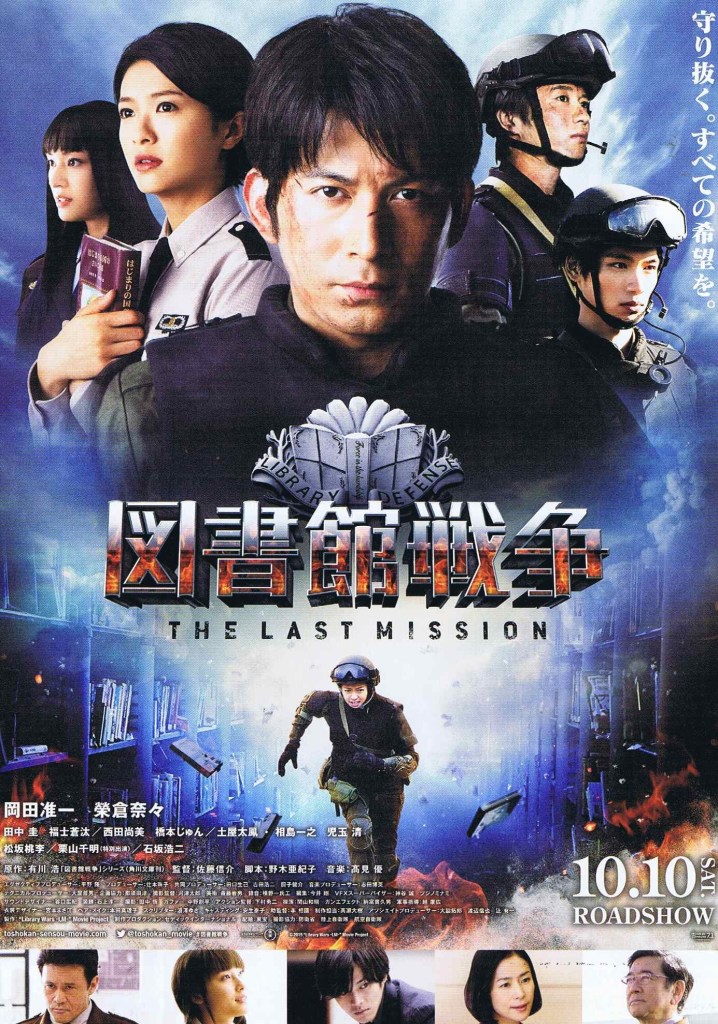
library-wars-last-missionWhen Library Wars, the original live action adaptation of Hiro Arikawa’s light novel series, hit cinema screens back in 2013 it did so with a degree of commercial, rather than critical, success. Though critics were quick to point out the great gaping plot holes in the franchise’s world building and a slight imbalance in its split romantic comedy/sci-fi political thriller genre mix, the film was in many ways a finely crafted mainstream blockbuster supported by committed performances from its cast and impressive cinematography from its creative team. Library Wars: The Last Mission (図書館戦争-THE LAST MISSION-, Toshokan Senso -The Last Mission-) is the sequel that those who enjoyed the first film have been waiting for given the very obvious plot developments left unresolved at the previous instalment’s conclusion.

18 months later, Kasahara (Nana Eikura) is a fully fledged member of the Library Defence Force, but still hasn’t found the courage to confess her love to her long term crush and embittered commanding officer, Dojo (Junichi Okada). As in the first film, The Media Betterment Force maintains a strict censorship system intended to prevent “harmful” literature reaching “vulnerable” people through burning all suspect books before they can cause any damage. Luckily, the libraries system is there to rescue books before they meet such an unfortunate fate and operates the LDF to defend the right to read, by force if necessary.

Kasahara is an idealist, fully committed to the defence of literature. It is, therefore, a surprise when she is accused of being an accomplice to a spate of book burning within the library in which books criticising the libraries system are destroyed. Needless to say, Kasahara has been framed as part of a villainous plan orchestrated by fellow LDF officer Tezuka’s (Sota Fukushi) rogue older brother, Satoshi (Tori Matsuzaka). There is a conspiracy at foot, but it’s not quite the one everyone had assumed it to be.

In comparison with the first film, The Last Mission is much more action orientated with military matters taking up the vast majority of the run time. A large scale battle in which the LDF is tasked with guarding an extremely important book containing their own charter (i.e. a symbol of everything they stand for) but quickly discovers the Media Betterment Force is not going to pass up this opportunity to humiliate their rival, forms the action packed centrepiece of the film.

The theme this time round leans less towards combating censorship in itself, but stops to ask whether it’s worth continuing to fight even if you feel little progress is being made. The traitorous officer who helps to frame Kasahara does so because he’s disillusioned with the LDF and its constant water treading. The LDF is doing what it can, but it’s fighting to protect books – not change the system. This is a weakness Satoshi Tezuka is often able to exploit as the constant warfare and tit for tat exchanges have begun to wear heavy on many LDF officers who are half way to giving up and switching sides. Even a zealot like Kasahara is thrown into a moment of existential despair when prodded by Satoshi’s convincing arguments about her own obsolescence.

Satoshi rails against a world filled with evil words, but as the head of the LDF points out in quoting Heinrich Heine, the society that burns books will one day burn men. The LDF may not be able to break the system, but in providing access to information it can spread enlightenment and create a thirst for knowledge among the young which will one day produce the kind of social change that will lead to a better, fairer world.

As in Library Wars all of these ideas are background rather than the focus of the film which is, in essence, the ongoing non-romance between Kasahara and Dojo. Remaining firmly within the innocent shojo realm, the romantic resolution may seem overly subtle to some given the extended build up over both films but is ultimately satisfying in its cuteness. Library Wars: The Last Mission masks its absurd premise with a degree of silliness, always entirely self aware, but gets away with it through sincerity and good humour. Shinsuke Sato once again proves himself among the best directors of mainstream blockbusters in Japan improving on some of the faults of the first film whilst bringing the franchise to a suitably just conclusion.


Original trailer (No subtitles)

https://youtu.be/8Bqgn4icG5M

Kakekomi (駆込み女と駆出し男, Masato Harada, 2015)

166028_02The world of the classical “jidaigeki” or period film often paints an idealised portrait of Japan’s historical Edo era with its brave samurai who live for nothing outside of their lord and their code. Even when examining something as traumatic as forbidden love and double suicide, the jidaigeki generally presents them in terms of theatrical tragedy rather than naturalistic drama. Whatever the cinematic case may be, life in Edo era Japan could be harsh – especially if you’re a woman. Enjoying relatively few individual rights, a woman was legally the property of her husband or his clan and could not petition for divorce on her own behalf (though a man could simply divorce his wife with little more than words). The Tokeiji Temple exists for just this reason, as a refuge for women who need to escape a dangerous situation and have nowhere else to go.

Kakekomi (駆込み女と駆出し男, Kakekomi Onna to Kakedashi Otoko) places this important institution at its centre as it focuses on the stories of a number of women who’ve each ended up at the temple after a series of difficult circumstances. Jogo (Erika Toda) is married to a womanising drunkard who forces her to run his iron smelting business from the front lines (hence the painful looking blisters on her face) while he enjoys his life of debauchery. When the staff complains about his attitude and their subsequent fears for their jobs and Jogo raises their concerns with him he simply beats her before returning to his mistress. She then faces a decision – Tokeiji, death, or endurance. During her flight, she runs into O-Gin (Hikari Mitsushima), a mysterious wealthy woman who’s sprained her ankle after fighting off bandits in the woods. The pair bond on their quest to reach Tokeiji where they hope to find refuge from their turbulent home lives.

Before you can enter Tokeiji you’re held at one of the receiving inns where they hear your story, assess the possibility of being able to reconcile with a husband and, if deemed necessary, allowed to travel to the temple where you’ll live as a Buddhist nun for two years at which time your husband must legally sign the divorce papers. The inn adheres to strict Buddhist principles – no men are allowed near the temple (even the outside helpers wear bells so the ladies can hear them coming), you eat only temple cuisine (no meat or stimulants like garlic and onions), and have to abide by the word of the head nun. There are also three different classes of resident starting with the most expensive court lady lifestyle, then one of sewing and making repairs, and finally the lowest class which does all the day to day cooking, cleaning and other menial tasks.

The other pivot around which the film turns is the one time medical student Shinjiro (Yo Oizumi) who has literary dreams but has had to beat a quick retreat from Edo after defiantly breaking its ridiculous “no singing in the streets” law (amongst other things). At this period Edo and the surrounding area is undergoing its own mini cultural revolution as the current authorities advocate a period of austerity which sees things like literature, music and even sushi outlawed. Perceiving threats everywhere, the powers at be are also looking for a way to close down Tokeiji by any underhanded means necessary.

Shinjiro is a fast talking wise guy who can generally talk his way out of anything though he is also a keen student and a promising young doctor. As a relative of the Tokeiji inn owners, he’s seeking refuge too but also hoping to make use of their extensive archives for his writing career. As a doctor he’s immediately fascinated by the burns on Jogo’s face which he believes he can treat though in her frightened state she’s alarmed by his direct manner and refuses. After hearing his more reasoned arguments she finally submits and in turn becomes interested in his medical knowledge assisting him to gather herbs in the forest before starting her own herb garden in the temple.

Of course, the two develop a growing romantic attachment though frustrated by Jogo’s position as a married woman and the temple’s prohibition against male contact. Their romance is never played for melodrama, more as a simple and natural course of events though it’s well played by both Toda and Oizumi. At heart, Kakekomi is an ensemble drama which encompasses the often sad stories of its female cast who are each at the mercy of the cruel and rigid Edo era social system. O-Gin’s reasons for fleeing to Tokeiji turn out to be a little different from everyone else’s though she too is still suffering for love.

A humorous look at this untold story, Kakekomi proves an engaging ensemble drama anchored by the committed performances of its cast. Toda takes Jogo from a frightened and abused woman to a confident and learned scholar who is perfectly capable of taking charge of things on her own and her transformation is the true heart of the film. Apparently, director Masato Harada shot nearly four hours of footage before cutting the film down to the more manageable two and a half which may explain why it sometimes feels a little abrupt but nevertheless Kakekomi proves one of the most enjoyable mainstream Japanese movies of recent times.


The Japanese blu-ray/DVD of Kakekomi includes English subtitles.