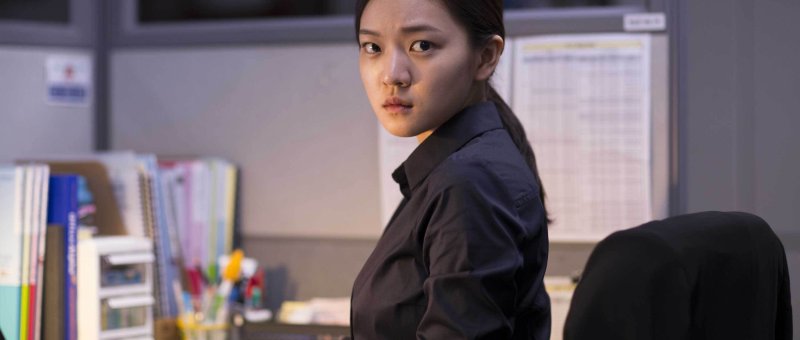
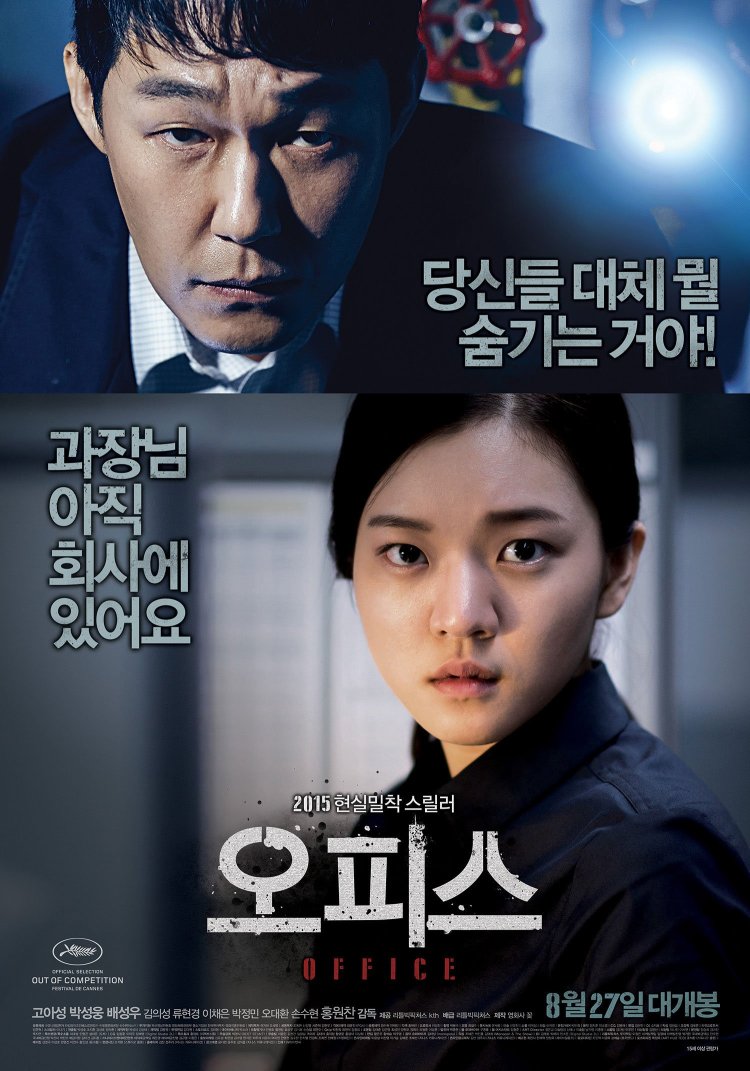
 The pressure cooker society threatens to explode in Hong Won-chan’s Office (오피스). The writer of recent genre hits The Chaser and The Yellow Sea, Hong has long experience of examining those living on the edge but in his directorial debut he takes things one step further in depicting an entire society running to keep up with itself, furiously chasing its own tail with barely suppressed rage. Not so much survival of the fittest as survival of the least scrupulous, the world of Office is the one in which the mad become the most sane, escaping the constraints of corporate oppression through social revenge but taking the innocent along with them.
Salaryman Byun-guk (Bae Seong-woo) has the soulless eyes of one whose dreams have already died. Dejectedly he sits alone at a coffee shop before cramming himself into the commuter train home where he sits, silently, among his busy family. They wonder why he hasn’t changed out of his suit, shed his corporate persona for his familial one, but when Byung-guk gets up he returns brandishing a hammer which he then, as if in a trance, uses to bludgeon to death his loving wife, disabled son, and senile mother.
Byun-guk flees the scene of crime and is loose somewhere in the city. The police search his office for clues but his colleagues have already come up with their unified version of events, keeping the company out of it by claiming that they all loved Byun-guk and are shocked that he could have done something so horrifying. Meanwhile, intern Mi-rae (Go Ah-sung), who regarded Byun-guk as her only friend in the office, is upset but perhaps not quite so shocked. Excluded from the interoffice cliquery, no one has thought to brief Mi-rae on the party line leaving her a prime target for police inspector Choi (Park Sung-woong).
Byun-guk and Mi-rae are two of a piece – members of the upright and hardworking lower classes who have done everything right but somehow have never been accepted by their peers. Mi-rae, an ordinary girl from Gwangju who worked to lose her accent in her teens dreaming of the high life in Seoul, is shy and mousy but works hard – harder than anyone, to prove herself worthy of Seoul’s unrealistic demands. Her colleagues, privileged, confident, and also harried, do not forgive her for this. They find her earnestness “creepy”, her desire to succeed “suspicious”. Cruelly taken down a peg or two by a colleague taking out her own frustrations on the office nobody, another tries to comfort her with some advice – don’t try so hard, you make us all look bad and we wonder what your need is hiding. Mi-rae isn’t really hiding anything save her slowly fragmenting mental state and the overwhelming need to be accepted to a club that, in truth, is not open to people like her who value their integrity and still believe deep down that working hard and being honest are the only paths to true success.
Korean society, it seems, has become a giant chain of screaming. Byun-guk has been repeatedly passed over for promotion despite being the most reliable employee in the office but his ineffectual boss is overly wedded to the shouting school of business management. Faced with results he doesn’t like, Byun-guk’s boss picks someone to shout at to make them better but offers no further guidance. Railing at the police for not doing their job as if screaming will some how provoke major results even outside of the office, the boss can’t know that police also have their own chain of screaming and Choi has his own boss already taking care of that side of things, demanding results rather than truth or justice.
The meek are taking their inheritance ahead of schedule, but their revenge is born both of societal corruption and rejection. People like Byun-guk and Mi-rae, who are quiet, honest, kind but perhaps not good with people, become the bugs in a system which simultaneously holds them up as essential cogs. Those who cannot just pretend, grease the wheels with superficial social niceties, and accepted their place in the chain of screaming in order to climb further up it are condemned to wander idly around its lower levels going quietly mad until, perhaps, the system crushes them or else collapses.
International trailer (English subtitles)
 North Koreans have become the go to bad guys recently, and so North Korean spies have become the instigators of fear and paranoia in many a contemporary political thriller. The Suspect (용의자, Yonguija), however, is quick to point the finger at a larger evil – personal greed, dodgy morals, and the all powerful reach of global corporations. Opting for a high octane action fest rather than a convoluted plot structure, Won’s approach is (mostly) an uncomplicated one as a wronged man pursues his revenge or redemption with no thought for his own future, only to be presented with the unexpected offering of one anyway alongside the equally unexpected bonus of exposing an international conspiracy.
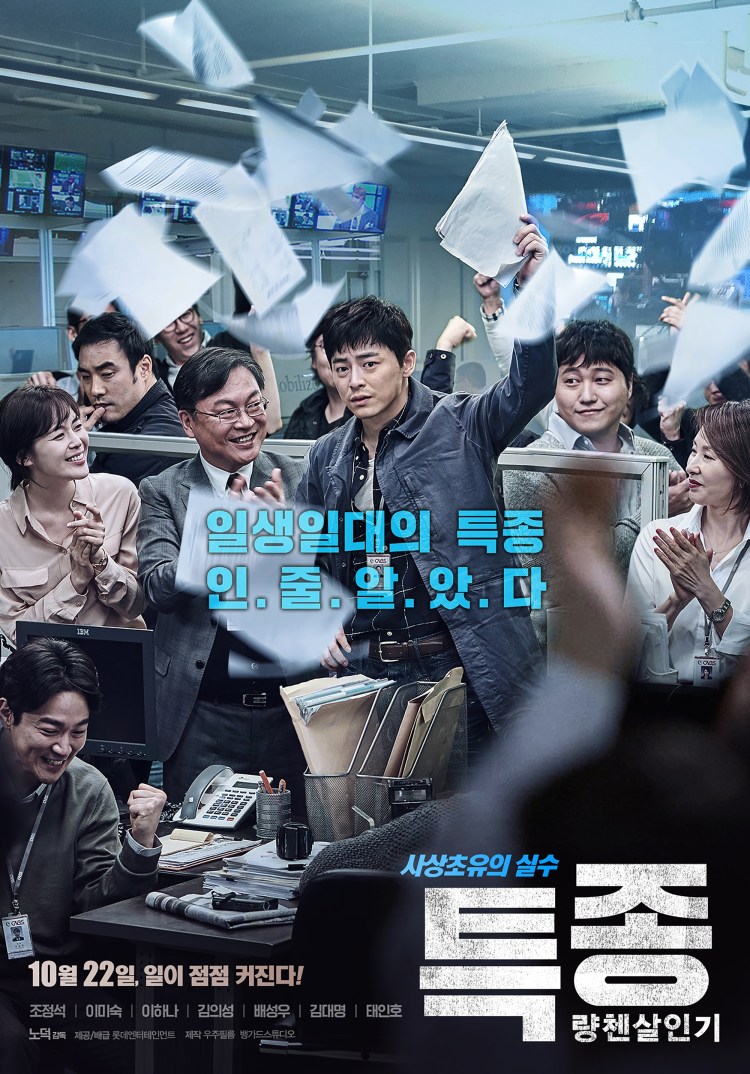 Some people just can’t keep themselves out of trouble. The down on his luck reporter at the centre of Roh Deok’s The Exclusive: Beat the Devil’s Tattoo (특종: 량첸살인기, Teukjong: Ryangchensalingi) is something of a trouble magnet as he makes mistake after mistake, requiring lie after lie to try and put him back on the straight and narrow. Unfortunately for him the deeper he gets the closer he turns out to be to the “real” truth. Only by that stage everyone has lost interest in “the truth” anyway – who cares about little things like facts against the overwhelming power of a constructed narrative.
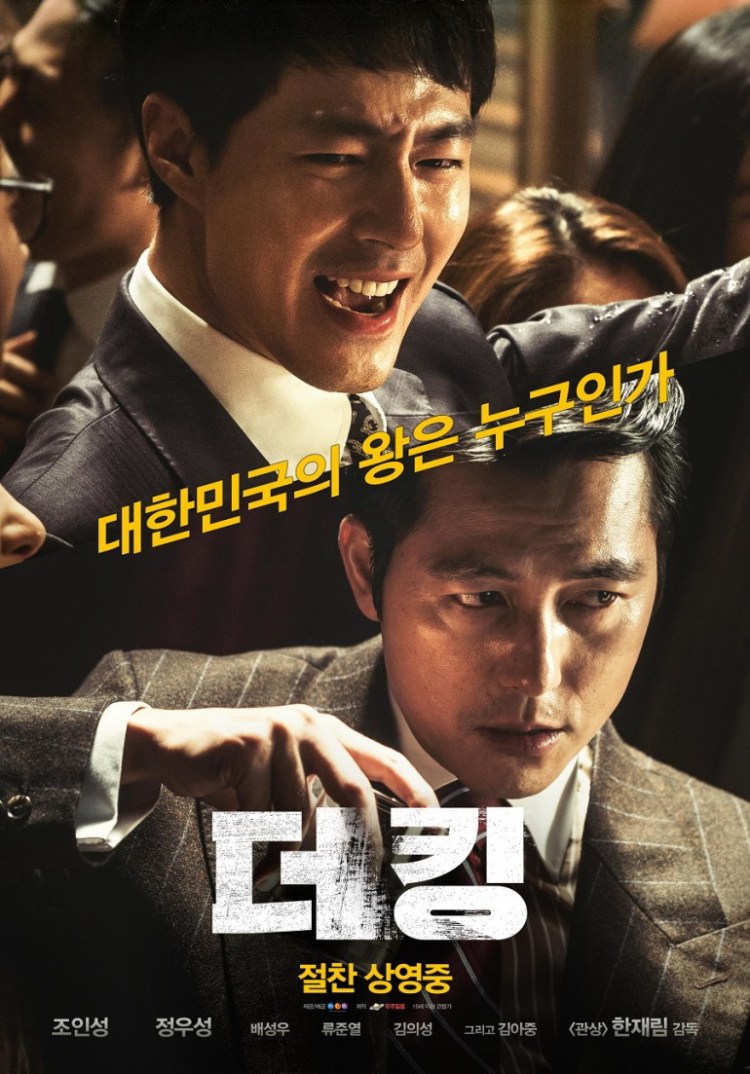 Absolute power corrupts absolutely, but such power is often a matter more of faith than actuality. Coming at an interesting point in time, Han Jae-rim’s The King (더 킹) charts twenty years of Korean history, stopping just short of its present in which a president was deposed by peaceful, democratic means following accusations of corruption. The legal system, as depicted in Korean cinema, is rarely fair or just but The King seems to hint at a broader root cause which transcends personal greed or ambition in an essential brotherhood of dishonour between men, bound by shared treacheries but forever divided by looming betrayal.
 Politics in South Korea has never been exactly drama-free, though recent times have seen a multitude of storms engulf its top brass running from the national to the personal. Frequent Park Chan-wook collaborator Lee Kyoung-mi’s followup to her acclaimed 2008 debut Crush and Blush, The Truth Beneath (비밀은 없다, Bimileun Eobda) begins as if it’s going fit into the ‘70s dark political thriller mould but gradually shifts gear to present both a bleak family drama and the story of one woman’s descent into the near madness of grief as she attempts to uncover the true circumstances behind her private tragedy even as it plays out on a national stage.
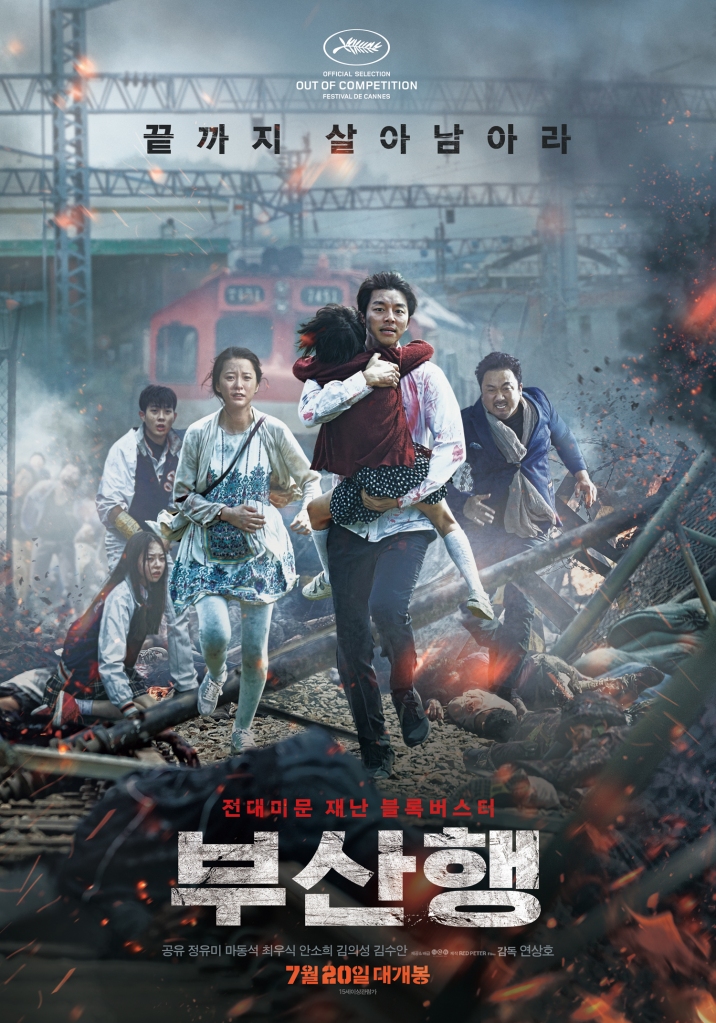 Many people all over the world find themselves on the zombie express each day, ready for arrival at drone central, but at least their fellow passengers are of the slack jawed and sleep deprived kind, soon be revived at their chosen destination with the magic elixir known as coffee. The unfortunate passengers on an early morning train to Busan have something much more serious to deal with. The live action debut from one of the leading lights of Korean animation Yeon Sang-ho, Train to Busan (부산행, Busanhaeng) pays homage to the best of the zombie genre providing both high octane action from its fast zombie monsters and subtle political commentary as a humanity’s best and worst qualities battle it out for survival in the most extreme of situations.
 Windows on Worlds