The Hitman: Blood Smells Like Roses (ザ・ヒットマン 血はバラの匂い, Teruo Ishii, 1991)

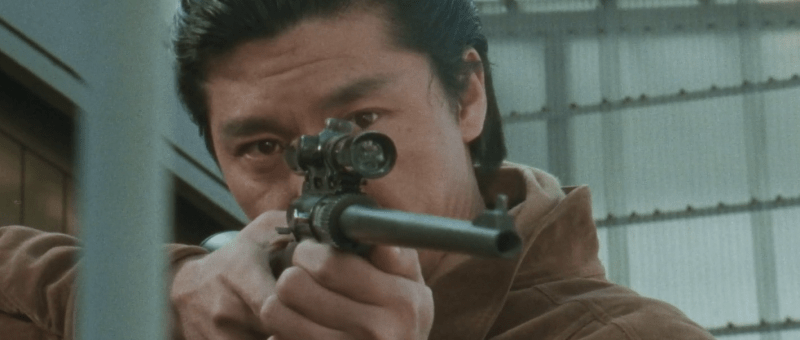
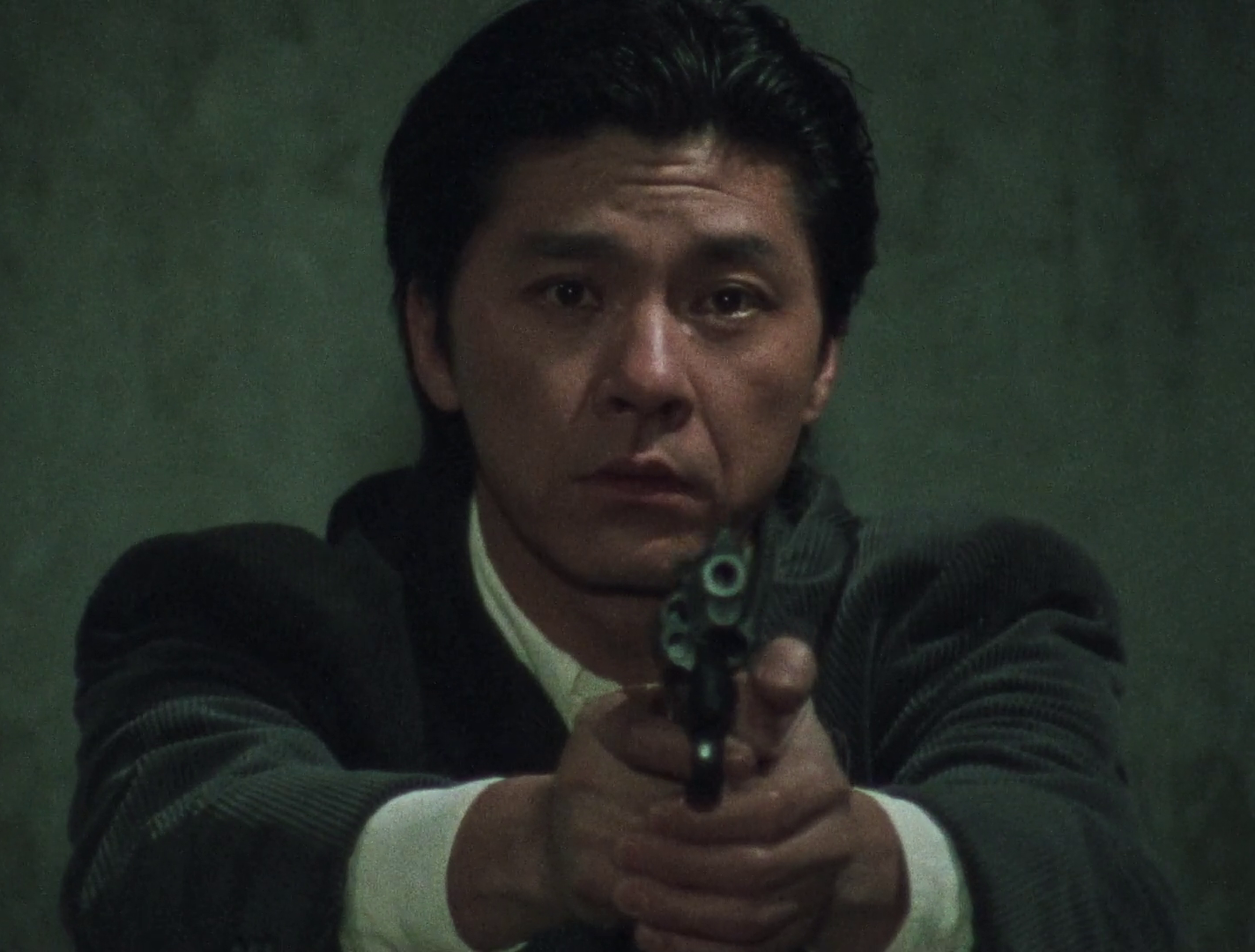
After his fiancée is killed during a yakuza shootout in a restaurant, a former spy in training plots revenge in Teruo Ishii’s Hitman: Blood Smells Like Roses (ザ・ヒットマン 血はバラの匂い, The Hitman: Chi wa Bara no Nioi). Ishii has been in retirement for 12 years before making the film but steps right into the zeitgeist with his bubble-era nightclub opening in which a yakuza goon pretends to be the son of a stockbroker to seduce a young woman he intends to press into prostitution, while looking back to classic noir and the borderless action past.

The young woman is rescued, though not soon enough to escape harm, by the titular hitman, Takanashi (Hideki Saijo), though he does not intervene to save her, only to take out the trio of yakuza who were one side of the gun battle in which his fiancée Reiko (Mikiko Ozawa) was killed. Reiko’s innocence is emphasised by her position as a teacher at a Christian school which is directly contrasted with the sleazy world of contemporary Shinjuku in which Takanashi becomes involved with a series of women. The Asia Town that he strays into is another international space with its samba bars and Filipina hostesses, while Takanashi is later sent to track a boat coming in from the Philippines which is thought to be smuggling guns. 

That’s a tip off he receives from Nakatsuka (Kiyoshi Nakajo), an old mentor from the defence academy who now works for the Cabinet Intelligence and Research Office, the nation’s primary intelligence authority. Nakatsuka is also seen meeting with the police chief who tells him that the yakuza have been complaining that police are encouraging the gang war rather than trying to stop it. So much the better, Nakatsuka says, let them massacre each other then take them all out right before the election to manipulate public opinion. If the election goes their way, the police chief will have additional budget to hire more policemen. Thus Takanashi also becomes a kind of pawn in cynical political machinations conducted by Nakatsuka and CIRO who are helping him both out of friendship and sympathy and because it is useful for him to make use of Takanashi and his desire for revenge. Only veteran policeman Uchino (Tetsuro Tanba) smells a rat, but even he later lets Takanashi go after making a moral judgement that justice has been served and Takanashi hasn’t really done anything wrong.

And so Takanashi tries to avenge Reiko by setting the gangs against each other in a recreation of the original gang war. He’s first frustrated and then aided by Shinjuku party girl Rumi (Natsumi Nanase) who steals his briefcase and gives it to the yakuza, and also be her friend Hisako (Yuki Semba) whom he meets after ducking into a soapland to escape the police. Hisako’s apartment is well furnished with even the modern convenience of an exercise bike, while Rumi’s feels empty, like a hideout with its bare floors and sparse decor. The walls are decorated with posters for Casablanca and Bonnie and Clyde that bring home and older noir past that Takanashi is echoing in his quest to avenge Reiko’s death at the hands of a crime-ridden society. We’re told that he gave up his place at the defence academy and became a truck driver when his parents objected to their marriage, but now fulfils his destiny in tackling the yakuza threat head on.

Meanwhile, as a kind of counter to Rumi, Hisako, and Yasuda’s girlfriend, Kumasa’s woman Beniko (Kimiko Yo) who is very much involved in policy decisions and actively fights back in defence of Kumasa who is otherwise a bit useless. The film is sleazy from its opening rape sequence to the soapland escapade and inexplicable closing credits which consist of a number of raunchy gravure shots backed by a power ballad that otherwise have little to do with the rest of the film, but is perhaps less cynical that it appears or at least seems to edge away from nihilism towards something that appreciates that a more emotional, poetic kind of justice is possible and valid. Takanashi is allowed to complete his quest, though it incurs additional casualties, and then leave the scene having achieved a kind of closure and brought the cycle to an end leaving the rest to Nakatsuka and Uchino who now seems to have crossed over to Nakatsuka’s side if perhaps lamenting that he may be working far too hard to a achieve a justice that now seems surprisingly easy to enact.
Alone in the Night (夜がまた来る, Takashi Ishii, 1994)

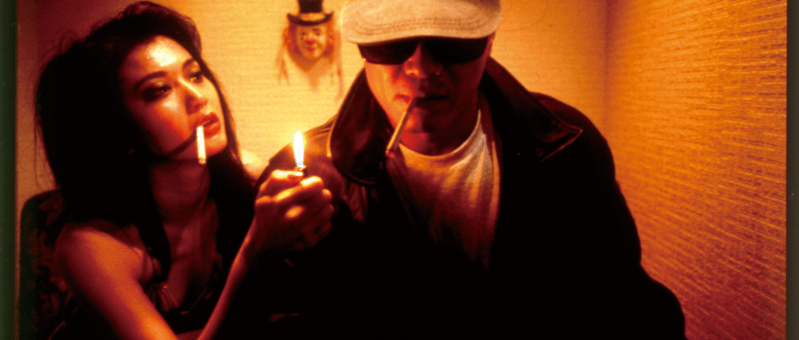
A woman enters the homosocial world of the yakuza in search of revenge for her murdered husband, but discovers only more degradation and hopelessness in Takashi Ishii’s rain-soaked noir, Alone in the Night (夜がまた来る, Yoru ga mata Kuru). Then again, perhaps it’s not really revenge Nami (Yui Natsukawa) is after so much as death itself, her relentless fall one of self-harm born of her sense of futility in world ruled by irony in which there is no such thing as truth or justice.

Indeed, one of the things that propels Nami on her mission is the injustice that her husband Mitsuru (Toshiyuki Nagashima), killed while working undercover investigating a gang dealing drugs, is then accused of taking the drugs he seized and selling them on himself. After her husband dies, she’s hounded by the press who paint him as a corrupt cop while she’s also denied his police pension because he died in disgrace. What she wants is to clear his name and thereby drag her husband back from the netherworld in an affirmation of their love for each other. 

But she too becomes corrupted by the darkness of the criminal underworld. Soon after the funeral, yakuza thugs break into her home and rape her while looking for the drugs they assume Mitsuru stashed somewhere. Amid the chaos, she attempts to take her own life by slashing her wrist with one of Mitsuru’s bones but is unexpectedly saved by a mysterious man. Reborn after her brush with death, she reinvents herself as bar hostess “Mitsuru” as a means of getting close to the gang boss, Ikejima (Minori Terada), she believes to be responsible for her husband’s death. Her attempts to kill him, however, prove unsuccessful. She’s once again raped, this time by Ikejima, and thereafter becomes his mistress until another opportunity arises which she then botches by stabbing him in a non-lethal way which only gets her beaten and tortured by his underling Shibata (Kippei Shiina) and eventually sold to a brothel in Chiba where they get her hooked on drugs to make her easy to control. 

In fact, she’s only spared death once again thanks to the intervention of the mysterious man, Muraki (Jinpachi Nezu), a middle-aged yakuza seemingly weary of life and perhaps drawn to Nami as to death. He seems uncomfortable and out of place in this world of brutal masculinity while his modernity is singled by his association with the gun to counter Shibata’s with the sword. He has other reasons for his duality, but is charged with rooting out moles in the yakuza of which there seem to be an inordinately large number. Despite warning her off, he does what he can to help Nami, in part of out of guilt and a need for atonement, but also a kind of escape from his own entrapment within the purgatorial space of the yakuza underworld. 

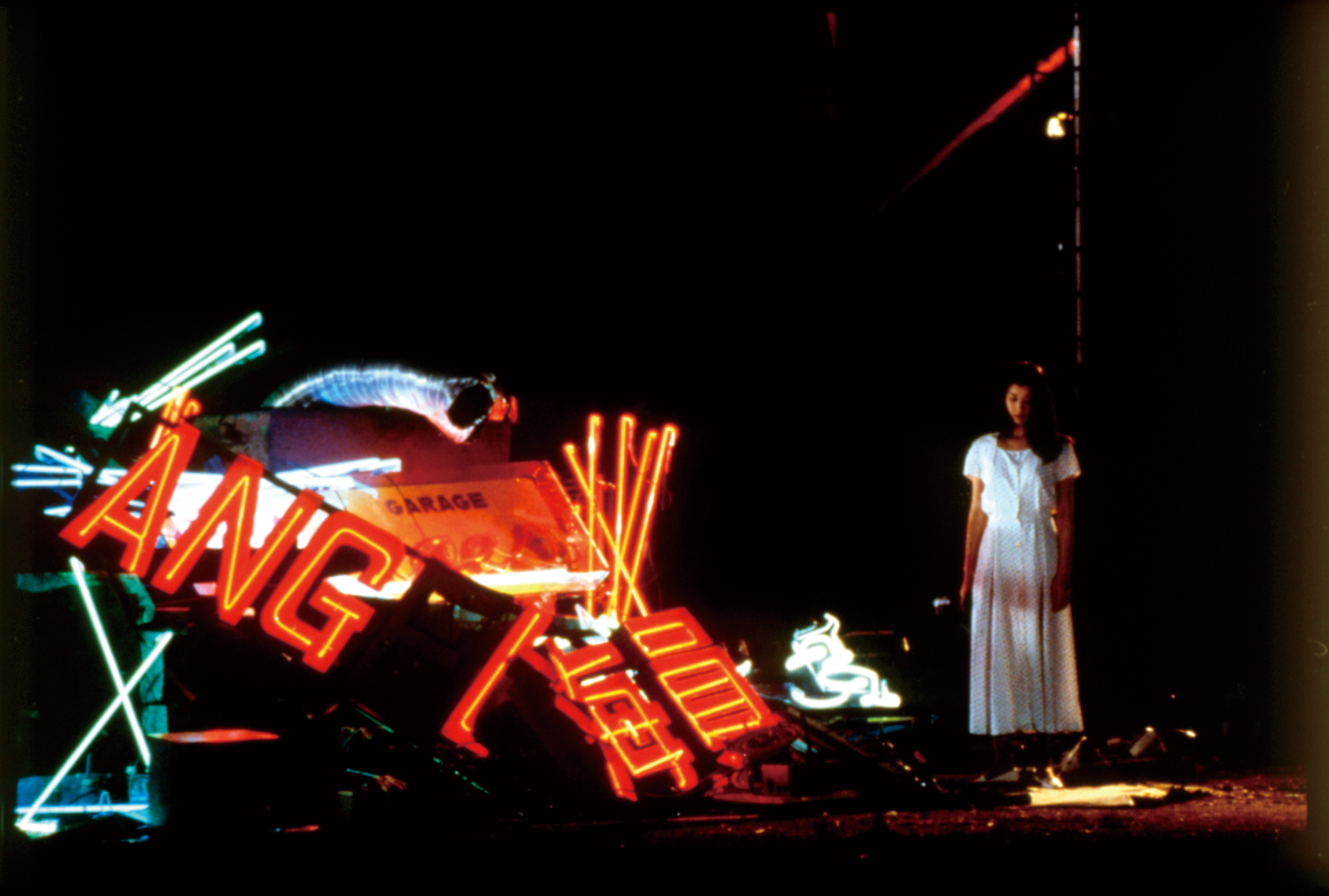
Permanently raining and shot in an eerie blue, the world around Nami and Muraki takes on an etherial, dream-like quality as if taking place somewhere between sleeping and waking. After rescuing her from an attempt to drown herself, Muraki remarks that Nami slept like the dead or perhaps as if someone was calling to her from the other side. Death seems to be beckoning each of them, even as Muraki desperately tries to keep Nami alive by tenderly nursing her back to health and helping her beat drugs so she can finally free them both by achieving their mutual revenge.

But the film’s irony is that Nami cannot achieve her vengeance on her own. She’s constantly rescued by Muraki who achieves some if for her while each of her attempts only plunge her further down the cycle of degradation and in danger of losing herself entirely. She is and remains an ordinary woman venturing into hell in search of justice, but discovering only cruel ironies and futility. Muraki too is unable to transcend himself and meets a personal apocalypse in embracing his authentic identity. Nami has been chasing a ghost all along, though in some ways it may be her own as she tries to make her way back into the world of the living by reclaiming a vision of the world she had before in which her husband was a good and honest man and there was justice in the world even she declared herself largely disinterested in world outside of their romance and their private paradise just for two.


Alone in the Night is available as part of Third Window Films’ Takashi Ishii: 4 Tales of Nami boxset.

BON-UTA, A Song from Home (盆唄, Yuji Nakae, 2019)

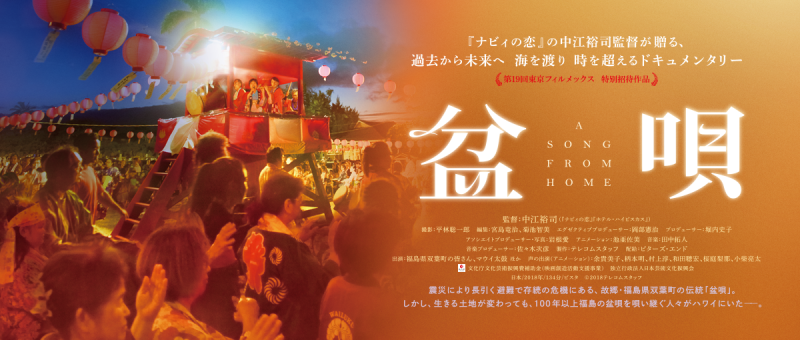
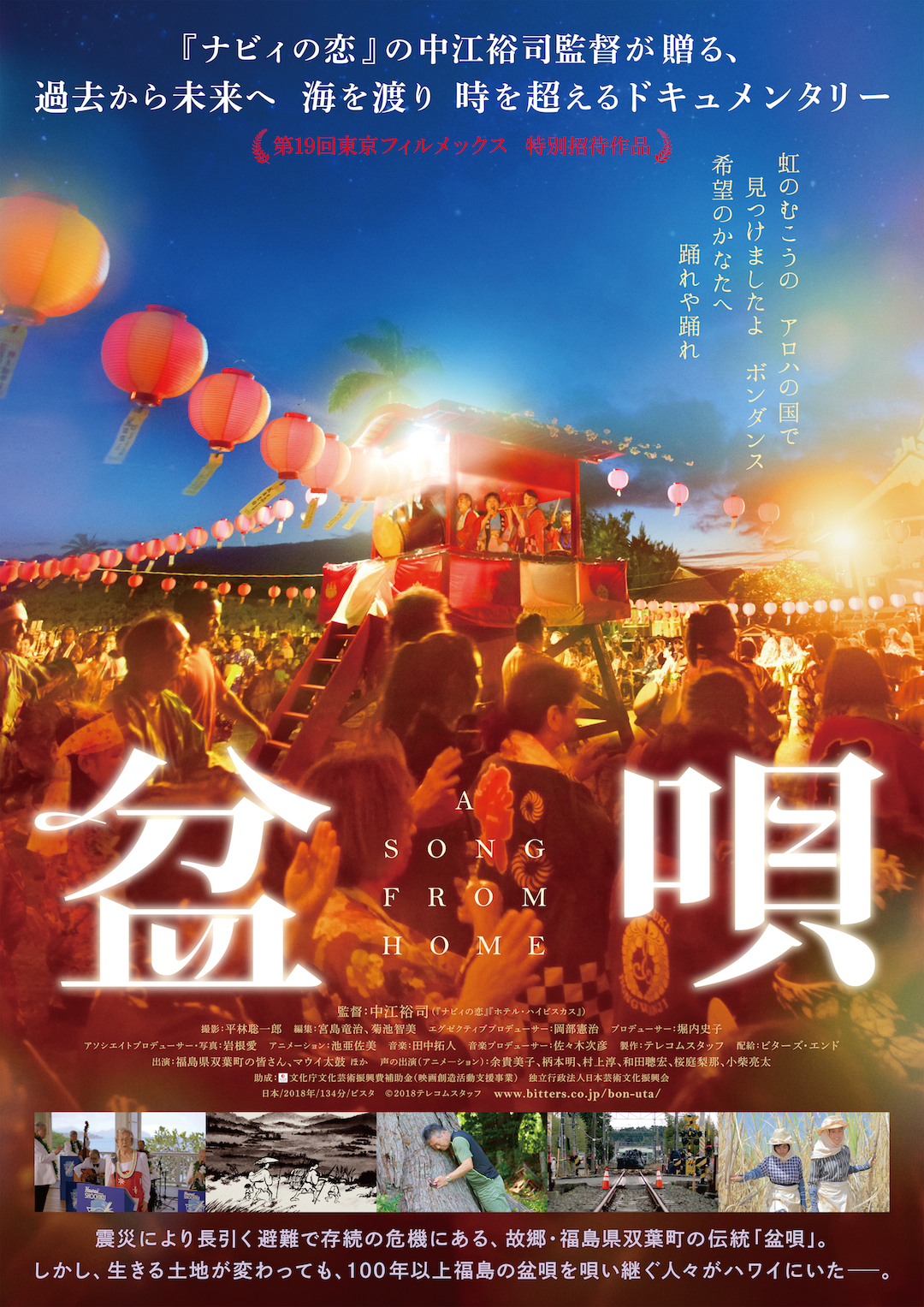
Exiled from their homes, the residents of Futaba lost more than just their material possessions when the area was declared uninhabitable following the Fukushima nuclear disaster. With former residents scattered all over the country never knowing when or if they will be able to return, a community has been ruptured and its history is in danger of dying out. Yuji Nakae’s poignant documentary Bon-Uta (盆唄) explores this sense of loss through the prism of the Bon dance while meditating on the notion of exile in comparing the experiences of migrants and Hawaii and their descendants. 

A photographer, Ai, has been photographing Bon dances in Japan and Hawaii and was struck by the Hawaiian response to the 2011 earthquake, seeing as many of the Japanese-Americans living in Hawaii traced their ancestry back to the Fukushima area. Hisakatsu and Haruo, childhood friends from Futaba, travel to Hawaii and observe the Bon dance, reflecting that it is different from that in Japan but perhaps in some ways better. Seeing how they have incorporated many different styles of Bon dance gives them the idea that they could save the Futaba dance by teaching it to the Hawaiian dancers, placing it in a kind of depository so that in 50 or a 100 years if Futaba becomes habitable again, their descendants could relearn it. But what they quickly discover is that it’s difficult to teach something that each of them has spent their whole lives learning in a matter of days, while the fact is that the community itself is central to the dance which loses its meaning when performed by those who’ve never been there. 

Nakae begins to meditate on insiders and outsiders as an older woman returns to her family home in the exclusion zone and uncovers papers from the 19th century which recount the discrimination her own family faced on being encouraged to move to the village following a massive famine which had reduced its population by two thirds. Now outsiders in the areas in which they have resettled, the former Futaba residents lament that they can no longer practise their art because their homes are in much more urbanised locations where neighbours are in close proximity and they fear disturbing them with the noise. The film equates their yearning for their lost community to that felt by those who emigrated to Hawaii in the 19th century hoping to escape rural poverty but often found themselves trapped, unable to return because of the low pay and exploitative conditions of the island’s sugar plantations. 

The Hawaiian migrants sang songs of exile, of how they missed their homes and families and how hopeless felt in the false promises that had been made to them of better lives abroad. Even in this, their culture survived while another, now elderly, woman recounts singing for a Japanese orchestra during the war when such songs were technically forbidden as other young men keen to claim their identity as Japanese-Americans enlisted in the military. The former Futaba residents begin to see new hope that they too could find a way to preserve a sense of their hometown even if they can’t return to it, deciding to organise a Bon dance of their own in another town bringing together the unique dances of each district while honouring the spirits of those who have passed away. 

Hisakatsu writes a new Bon song of his own from the point of view of a cherry tree in Futaba to ward off the “ogres” which stand in for radiation as the tree looks forward to blossoming once again, hoping the people will eventually return. Featuring a lengthy animated sequence recalling the experiences of the 19th migrants to Futaba who found themselves rejected as outsiders while reflecting on the contemporary exile of the former residents, the film eventually discovers a note of positivity and hope that even now scattered and unable to return to their homes the community can survive through the practice of its culture in passing on the unique local Bon dance to successive generations just as the migrants in Hawaii passed theirs on to their children in the hope they too might one day be able to return home.


Trailer (English subtitles)

Wait and See (あ、春, Shinji Somai, 1998)

In the opening sequence of Shinji Somai’s Wait and See (あ、春,  Ah haru), a large grey cat growls as it creeps through a suburban home and out into the garden where it sits outside a henhouse and loudly miaows at the birds trapped inside. In many ways, this is exactly what’s about to happen to the Nirasakis when a prodigal father suddenly returns to disrupt the life of his incredibly dull and emotionally distant son. 

Hiroshi (Koichi Sato) is the epitome of the ideal salaryman and seems to be living a charmed life having married into his wife’s wealthy family but under the surface nothing is quite as it seems to be. His wife Mizuho (Yuki Saito) seems to be suffering with some kind of mental distress and Hiroshi often appears indifferent or even cold towards to her. At the memorial service for his late father-in-law, Mizuho’s mother (Shiho Fujimura) and aunt (Chisako Hara) reflect on the late patriarch in less than favourable terms remarking that “everything was half measures” with him. He didn’t commit himself fully to either his family or his career and consequently achieved success with neither. 

The implication is that Hiroshi is much the same, simply going through the motions whether at work or at home and largely closed off to his wife at one point even drawing a curtain and leaving her in the dark to escape a conversation. “He never tells you anything” Mizuho’s mother points out after reading in the paper that the company where Hiroshi works may be in financial trouble, while Mizuho too complains that he never discusses anything with her only announcing the results when it’s already finished. 

Hiroshi had always believed his own father to have died when he was five years old, so it’s quite a surprise when the gnomish Sasaichi (Tsutomu Yamazaki) accosts him in the street and claims to be his long lost dad. Like the cat outside the henhouse, he’s set to create a disturbance but not quite the one everyone assumes it will be. Hiroshi’s mother Kimiyo (Sumiko Fuji) warns him that his crass working class dad will only cause embarrassment in the refined elegance of the upper-middle-class family he has married into. Yet Mizuho and her mother actually find Sasaichi quite amusing for the first couple of days, the mother very impressed by Sasaichi’s unreconstructed manliness which she finds so in contrast to the comparatively meek Hiroshi. Sasaichi fixes the leaky bath and sticking door that Hiroshi never got round to symbolising his lack of regard and inability to care for his home, which is in a sense ironic because Sasaichi was never really able to take care of anything. 

Sasaichi later explains that he left because his business failed and he ended up with debts to loansharks so he divorced Kimiyo and moved away to prevent them coming after her money. A fatherless son, Hiroshi struggles to construct the image of himself as a father and cannot create intimate relationships with people, but has settled for fulfilling the role of a successful member of society who can support a family financially even though the sense of himself as a provider is an illusion as his wife’s generational wealth already guarantees them a comfortable existence. Even so, this being the difficult post-bubble economy Hiroshi lives with a sense of economic anxiety but buries his head in the sand refusing to listen to a more savvy friend who can see the writing on the wall and tries to convince him to take a job at another company where he’s just secured a position for himself. But Hiroshi is afraid of change and ironically clings fast to his corporate family even while fearing it will leave him. 

He desperately doesn’t want to think that he is like Sasaichi, that he may fail his family by failing in his career or that he too is an uncouth, unrefined country bumpkin incapable of taking care of himself let alone anyone else. The again perhaps they’re more alike that he’d like to think. Hiroshi and Mizuho object when they realise Sasaichi’s been teaching their son Mitsuru (Keita Okada) how to play craps, but as his friend points out stockbroking is also really just legitimised high stakes gambling. He too wanders around until late at night because he doesn’t want to go home and makes his wife worry so she has to take sleeping pills .

Yet there’s also a side of him that is still the gentle boy from the country as he painstakingly raises chicks in the back garden. In the end, it’s Sasaichi who shows them the maternal warmth they need to grow, gestating the eggs in a pouch inside his haramaki only for them to hatch at the most ironic moment. Hiroshi gives his son a brief life lesson in explaining that the chicks that hatch from these eggs will go on to lay their own in a circular process of renewal just as he is passing on knowledge from his childhood to the next generation. The film begins and ends with a ritual of mourning, though Somai takes us through the passing season moving from Setsubun to Hinamatsuri as Sasaichi continues to outstay his welcome while attempting to repair his corrupted paternity. “Don’t worry, life will go on,” Mizuho reassures a more open Hiroshi finally coming to terms with his anxieties and willing to share them with his family in full knowledge of who he is as a man and a father in a world that’s anything but certain.


Original trailer (no subtitles)

Any Crybabies Around? (泣く子はいねぇが, Takuma Sato, 2020)

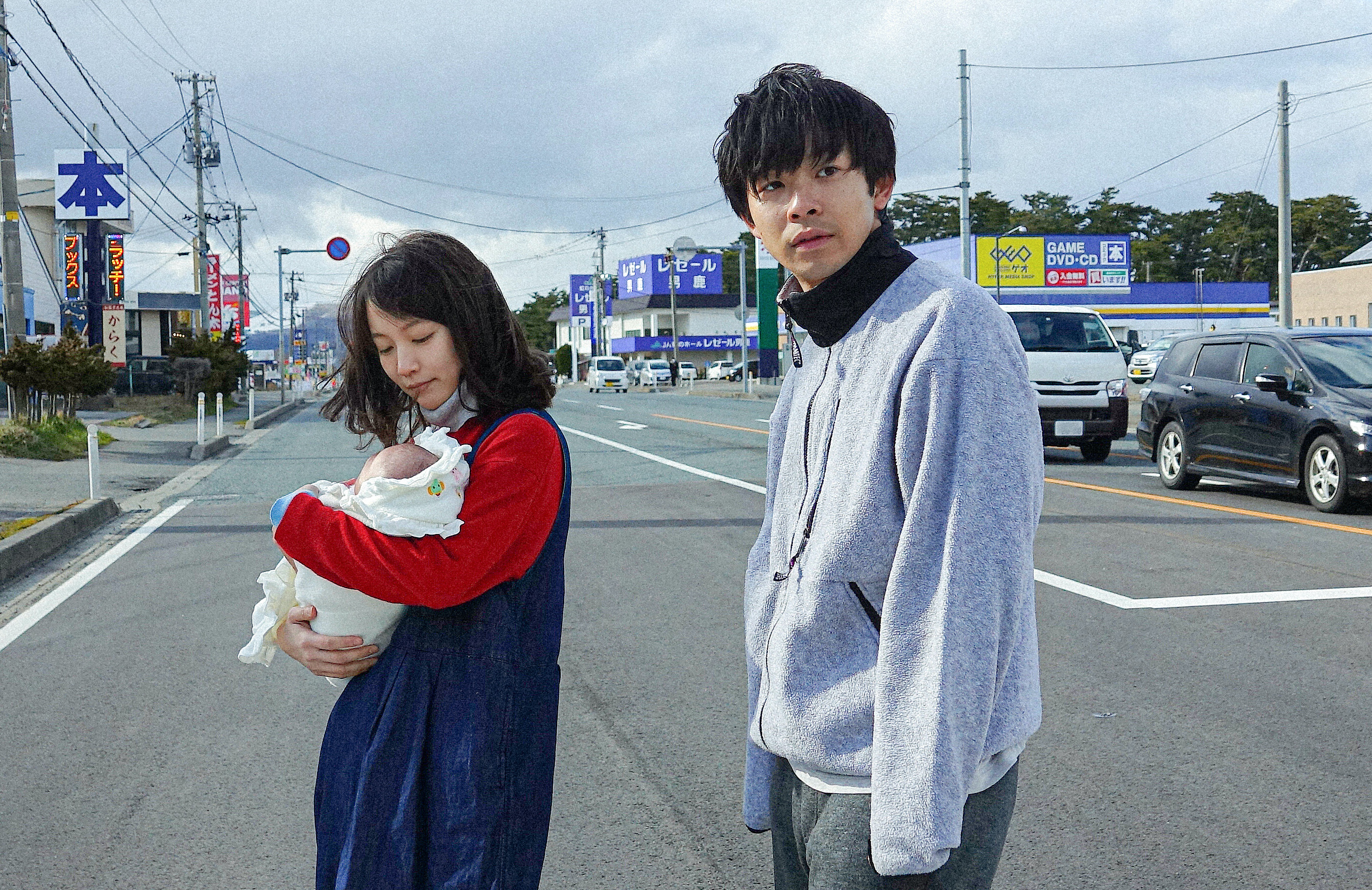
“Get your act together” an exasperated new mother exclaims, but it seems even new fatherhood isn’t quite enough to jolt the aimless hero of Takuma Sato’s paternity drama Any Crybabies Around? (泣く子はいねぇが, Nakuko wa Inega) into accepting his responsibility. Fatherhood is indeed a daunting prospect, however Sato isn’t interested solely in Tasuku’s (Taiga Nakano) attempts to “grow up” and embody the ideals of masculinity in a patriarchal society but also in the nature of fatherhood itself along with its legacies and the effects of male failure on those caught in its wake. 

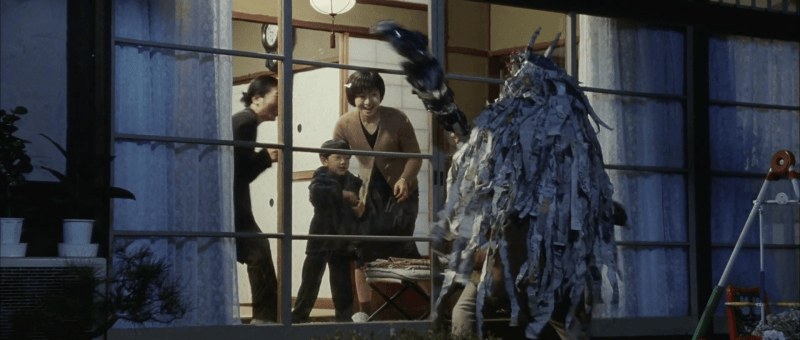
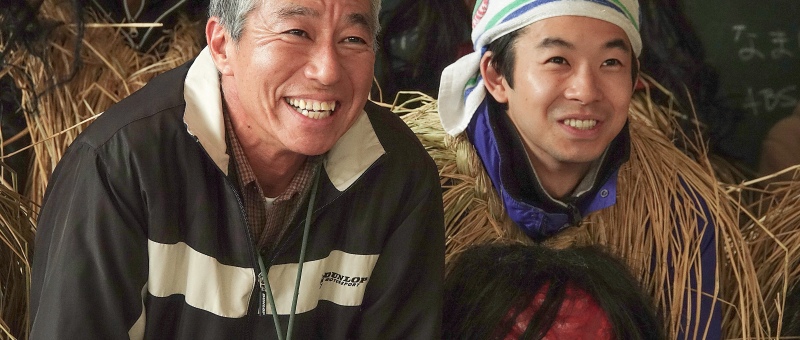
Everyone in the small town of Oga seems to be aware that Tasuku has undergone a shotgun marriage though it’s more the subject of gentle ribbing than scorn or disdain. Many remark on his relative youth, though he’s perhaps not so much younger than his parents might have been when he was born it’s just that times have changed. In any case, his wife, Kotone (Riho Yoshioka), is beginning to get fed up with him worried that he isn’t ready to be a father and isn’t taking the responsibility seriously enough. As young men do he still drinks like a single man and is vulnerable to peer pressure. Kotone begs him not to participate in the local Namahage festival but he insists they have to keep the tradition alive while apparently feeling an obligation to Mr. Natsui (Toshiro Yanagiba) who ensures it continues. She makes him promise not to drink, and he does his best in the beginning but, paradoxically, the Namahage is a drinking festival. Soon enough, Tasuku has had a little too much and beginning to feel hot takes off all his clothes, running around in the nude save for the large oni mask on his face while local reporters there to cover the traditional festival decide to make him a viral sensation. Unable to bear the shame, Tasuku abandons his wife and child and runs away to anonymity in Tokyo. 

The irony is that introducing the festival to the reporters, Mr. Natsui had flagged it up as a bastion of family values, that it’s not about “scaring” children but teaching them “good ethics” while reassuring them that their fathers will always protect them. According to Mr. Natsui, those children then grow up to become fathers who protect their offspring, Tasuku’s unfortunate streaking somewhat undermining his argument. It’s interesting in a sense that Tasuku is himself fatherless, his father having passed away some years earlier leaving not much of himself behind other than the oni masks he carved for the Namahage. Tasuku’s brother (Takashi Yamanaka), who was supposed to be getting married but apparently did not perhaps because of Tasuku’s scandal, later becomes upset on deciding to sell the family business lamenting that he was able to save “nothing” of his father, rejecting the Namahage mask that Tasuku offers him as “trash” while acknowledging perhaps that the Namahage is all is he left them along with the transitory lessons it imparts. 

Tasuku was clearly not quite ready to be a dad, but having spent some time growing up and hearing that his father-in-law has passed away leaving his ex with little choice than to work as a bar hostess on the fringes of the sex trade, he decides to go home and try to make amends. He swears repeatedly that he won’t run away again and will do whatever it takes until he’s forgiven, but still he flounders failing to find secure employment while periodically visiting his grandmother in a nursing home and helping his mother (Kimiko Yo) out selling traditional ice creams at local tourist attractions. “You’re not the only one who can be Nagi’s father” she reminds him as he perhaps begins to realise that there are some bonds you can’t repair even if you’re eventually forgiven for having broken them. 

Performing the Namahage forces Tasuku uncomfortably into the role of the authoritarian father safe scaring the child in order to instil in them a sense of confidence that encourages them not to be afraid of life, in the way that he may ironically be, because there will always be someone there waiting to catch them. The ability to protect a family is a defining feature of the masculine ideal, and the Namahage in its way perpetuates outdated ideas of gendered social roles while Tasuku’s mother and even grandmother are always there for him with unconditional acceptance, supporting him even in the depths of his “disgrace” and encouraging him to move forward even if that means accepting defeat. Keeping the Namahage alive is also in a sense to preserve the paternal legacy, just as Tasuku’s father may have passed nothing else down to his sons so Tasuku may find he has nothing more to offer, perhaps no longer a “crybaby” but still struggling to shift into the role of the father even while belatedly coming of age in the knowledge that he may have left it too late. 


Any Crybabies Around? streams in Germany until 6th June as part of this year’s Nippon Connection. For viewers outside of Germany it is also available to stream in many territories via Netflix.

International trailer (English subtitles)

Noise (ノイズ, Ryuichi Hiroki, 2022)

The dark heart of small-town Japan is fully exposed in Ryuichi Hiroki’s ironic tale of murder and mass deception, Noise (ノイズ). “It’s for the sake of the island” the heroes are fond of claiming, one morally dubious justification leading to another as they contemplate the greater good saving their town while eroding its soul assuming of course that it had one to begin with. Addressing everything from rural depopulation to a back to the land philosophy, Hiroki’s quietly escalating drama imbues its “idyllic” wholesome island with an unsettling sense of quasi-spiritual unease as its well-meaning hero begins to buy in to his own saviourhood deciding all things are permissible so long as they serve the town. 

Following a recent trend, Keita’s (Tatsuya Fujiwara) big plan for saving the island is through the cultivation of black figs which he hopes to turn into a local industry boosting the economy and encouraging young people from the mainland to repopulate the rapidly ageing village. Ironically enough, it’s this that brings him to the attention of recently released ex-offender Mutsuo (Daichi Watanabe) whose kindly probation officer has brought him to the island in the hope of finding him an honest job so he can restart his life in a wholesome and supportive environment. Unfortunately, however, Mutso suddenly kills the old man for no particular reason and then begins wandering the island generally acting suspiciously and alarming the islanders including Keita’s best friend Jun (Kenichi Matsuyama), a hunter. When Keita returns home and discovers the bottle he’d seen Mutso drinking from lying in his garden and his small daughter Erina missing, he assumes the worst. He, Jun, and their childhood friend Shin (Ryunosuke Kamiki) recently returned to the island to take over as its one and only policeman, finally track Mutsuo down to one of the greenhouses and challenge him only for Mutsuo to fall over and hit his head during the tussle. 

Obviously on a personal level it’s not an ideal situation for the three guys but their first thoughts are for the island. Keita was supposed to be its saviour and now he’s killed someone in right under the figs that were supposed to rescue the economy. If this gets out it’s game over for everyone. The first lesson new policeman Shin had been taught by his departing predecessor (Susumu Terajima) had been that a policeman’s job is about more than enforcing the law and sometimes what’s “right” might not be “best” for the town using the example of a middle-aged woman with a history of bad driving who’d hit a wild boar. If she lost her license the family’s life would become impossible, so seeing as it’s “only” an animal, perhaps it’s better not to bother logging it as a “crime”. Faced with this situation, Shin decides the greater good of the island is more important and that covering up the crime is best thing for everyone only to be caught out when mainland police arrive having been alerted by the probation officer’s daughter. 

The situation is complicated by the fact that the town had been in the running for a government development grant based on the potential of the figs which gives everyone a reason not to want the scandal of a murder taking place on the “idyllic” wholesome island where according to the mayor, Shoji (Kimiko Yo), there is “absolutely no crime”. That may largely be true especially given the attitude of local law enforcement but is also an ironic statement seeing as we later discover Shoji apparently cannot sleep without her trusty taser by her side, just in case. Having lied in trying to cover up the murder, Keita is later forced to get even more of the townspeople involved in the conspiracy while they are it seems surprisingly happy to help because they believe in him as the saviour of the town and are prepared to do pretty much anything to help save the island. 

Stoic yet omniscient police detective Hatakeyama (Masatoshi Nagase) sneers at the villagers’ tendency to see all outsiders as enemies. “Typical of a dying town” he adds, commenting on the way the combination of isolation and desperation has brought the townspeople together as they present a united front in the face of the things they think threaten their small-town wholesomeness, some objecting to the idea of new residents moving in a fear which is ironically borne out in the arrival of a man like Mutsuo. Yet their small town wasn’t all that wholesome to begin with. Shoji had told the three guys to eliminate the “noise” that disturbs the island though in the end it isn’t’ so much Mutsuo who created the disturbance as their own quasi-religious determination to save the island by whatever means necessary. Keita wants to save the island because the island once saved him, but in saving it like this he ironically destroys the very qualities he hoped to preserve in building their new future on blood and lies. 

Meanwhile the strain of trying to conceal a murder exposes the cracks in the foundations of the friendship between the men, earnest policeman Shin continually conflicted in betraying his own ideals, while hunter Jun’s personal insecurity in continually playing second fiddle to saviour Keita who is so obsessed with the idea of being the island’s chosen one that he never notices the pain in each of his friends, gives rise to a degree of instability in their otherwise carefully crafted plan. Maybe this island isn’t so idyllic after all, keeping a dark hold on the bewitched Keita as his increasingly worried wife Kana (Haru Kuroki) suggests concerned he’s “becoming someone else” in buying in to his own messianic hype. “What are you trying to protect?” Hatakeyama had asked him hinting at the dark side of the furusato spirit but also at his misplaced priorities as the forces of greed and anxiety threaten to consume the wholesome soul of moribund small-town Japan. 


Noise streams in Europe until 30th April as part of this year’s Udine Far East Film Festival.

international trailer (English subtitles)

Bread of Happiness (しあわせのパン, Yukiko Mishima, 2012)

“Plain bread is nice too” a short-term visitor concedes having reached an epiphany after a few days’ stay at Cafe Mani in Yukiko Mishima’s slice of comfort cinema, Bread of Happiness (しあわせのパン, Shiawase no Pan). Perhaps in its own way a reaction to the devastating earthquake and tsunami of the previous year which is referenced in the closing arc, Mishima’s drama is one of a series of films from the 2010s advocating for a simpler life built on empathy and mutual compassion as a bulwark against the increasing disappointments of a relentlessly consumerist society. 

The heroine, Rie (Tomoyo Harada), was a lonely child who buried herself in a fantastical children’s book about a little boy, Mani, who was best friends with the Moon. Touched by Mani’s words when the Moon asked him to take down the sun because its brightness made his life unbearable that “what matters most is that it shines on you and that you shine on others”, Rie resolved to find her own Mani but has long since given up. She and her her husband Mizushima (Yo Oizumi) have recently relocated to a Hokkaido ranch where they run a cafe bakery that has quickly become a community hub tending to the wounded souls of the local area and sometimes even beyond. 

The urban/rural contrast is rammed home by the couple’s first guest, Kaori (Kanna Mori ), a young shop girl from Tokyo who was supposed to be going to Okinawa with her boyfriend but he stood her up and she’s come to Hokkaido instead. Although originally grumpy and sullen, Kaori begins to warm to the charms of rural life complaining that in Tokyo people have to force themselves to smile. Her words accidentally hurt the feelings of local boy Tokio (Yuta Hiraoka), conversely jealous of big city opportunity but lacking the courage to strike out from his small-town life in which ironically enough he works as a points switcher at the local railway. What Kaori learns through her various experiences and the kindness of the Mizushimas isn’t that country life is better just that small happinesses are often all you need, there is pleasure in simplicity, and there’s no need to submit herself to the pretentiousness of city life explaining that she’s going to tell her coworkers the truth about her Okinawan holiday and bring some of the wholesome homemade bread back for them too. 

But then, it isn’t always so easy as the couple discover trying to help a sad little girl in the wake of marital breakdown. In a slightly surprising twist, Maki (Yuki Yagi) has been abandoned by her mother who has left the family and is struggling to accept both her loss and the change in circumstances which goes with it. The dilemma revolves around a bowl of pumpkin soup which Maki refuses to eat despite having previously longed to taste her mother’s signature dish. The realisation she comes to is that something can be different but that doesn’t make it bad, bonding with her equally dejected father (Ken Mitsuishi) thanks to the gentle support of the Mizushimas who seem to have a knack for knowing just what everyone who comes through their door needs. 

That goes double for the elderly couple who turn up late one night in the dead of winter, husband Fumio (Katsuo Nakamura) worryingly explaining that they’ve lived long enough, that while you’re young you still have the possibility of change, of becoming “a different you”, but old age has no further possibility nor the ability to change. Having lost their daughter in the tsunami the old couple are trapped in an inertia of grief from which they are gradually awakened by the gentle care of the Mizushimas and the sight of the beautiful moon that shines down on Cafe Mani. 

Rie meanwhile remains privately dejected, longing for her own Mani but convinced she’ll never find him only to realise he’s been there all along. Just like the words in the picture book, Rie and Mizushima have resolved to be the light, Fumio later sending them a letter claiming that they have discovered the ideal form of happiness in their simple life doing as they please surrounded by friends who have already become family and offering love and support to all who come through their doors through the medium of delicious seasonal food. With a host of quirky side characters including an omniscient glass blower (Kimiko Yo), genial postie (Chikara Honda), farmers with an ever expanding family, and a regular customer who carries a mysterious trunk around, while narrated (seemingly) by a sheep with the voice of a child Mishima’s gentle drama is foodie pure comfort cinema in which good bread and a warm fire may yet save the world.


Bread of Happiness until 27th February in several territories as part of Japanese Film Festival Online 2022.

Original trailer (English subtitles)

Air Doll (空気人形, Hirokazu Koreeda, 2009)

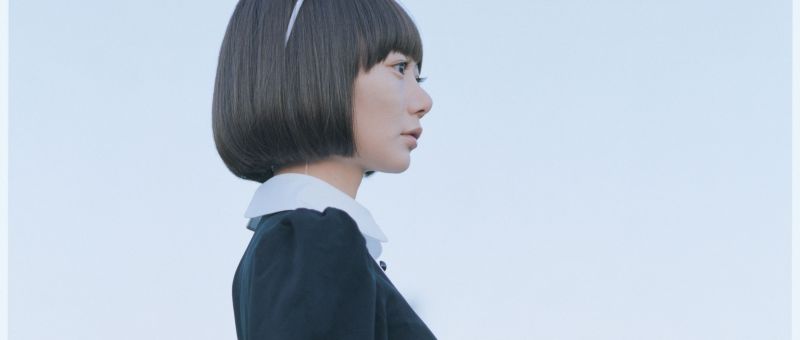
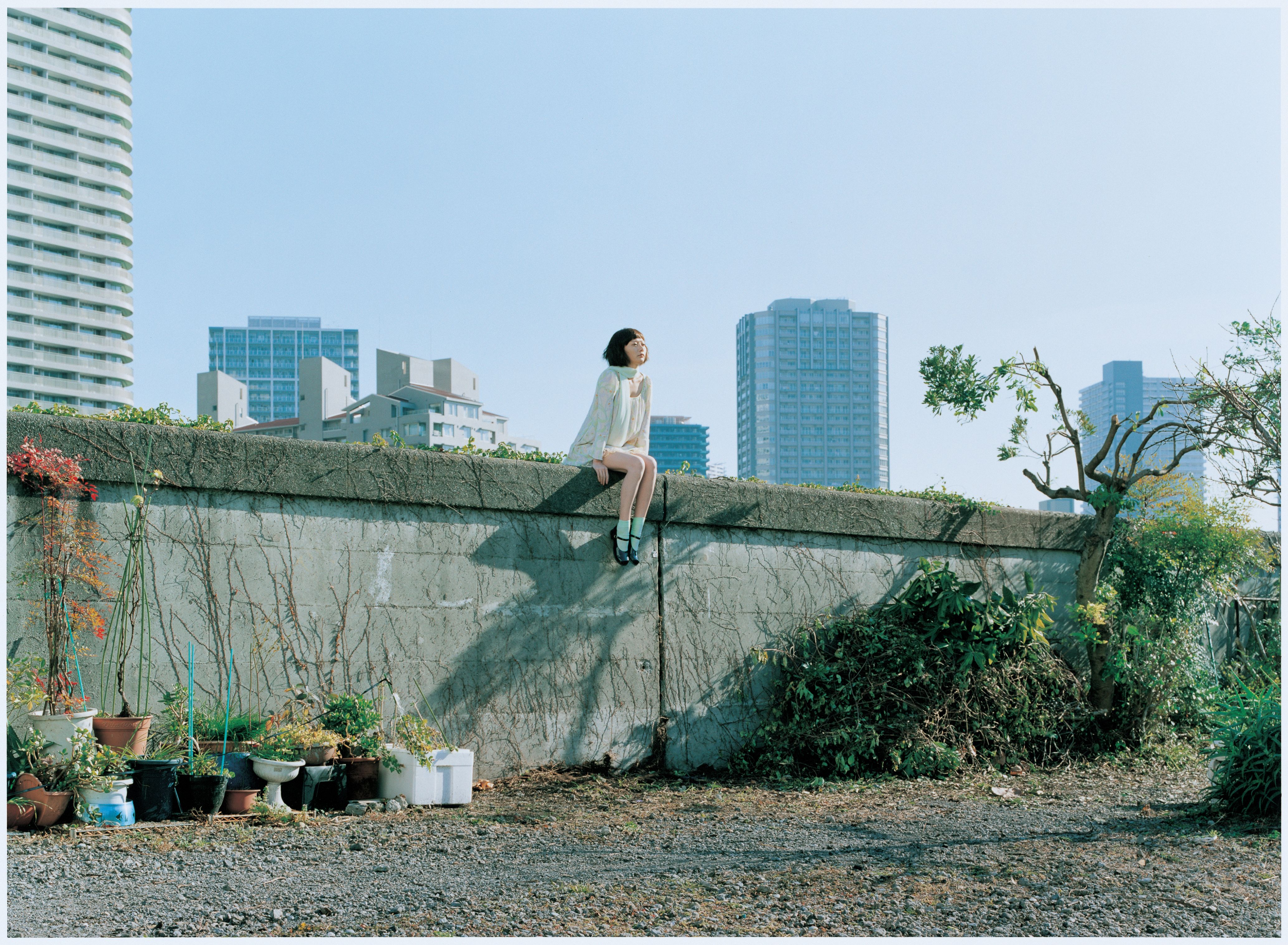
“Was everything you saw in this world sad? Was there something, anything, what was beautiful?” the heroine of Hirokazu Koreeda’s exploration of urban loneliness Air Doll (空気人形, Kuki Ningyo) is asked by her creator though he can offer her few answers for the strange mystery of her life. Like a child, she takes beauty where she finds it yet much of what she sees is indeed sad as she reflects on the disconnected lives around her, the emptiness and futility of life in the contemporary society where everything is just a substitute for something else which cannot be obtained. 

As for herself, she is quite literally empty inside, an inflatable sex doll owned by middle-aged family restaurant waiter Hideo (Itsuji Itao) who has given her the name of his ex, Nozomi (Bae Doona), which ironically means hope, wish, or desire though not generally of the sexual kind. Yet one day she suddenly wakes up and begins to explore the world rejoicing in its new sensations feeling the rain on her hands and the wind that sounds the chimes as she watches her neighbours go about their daily routine. Dressed in the French maid’s outfit picked out for her by Hideo she gets a job at a local video store and begins living a more independent life while learning how to operate in human society. She feels herself out of place but is repeatedly told that there are others like her, mistaking her literal emptiness for their spiritual despair. 

Yet that sense of emptiness and futility is evident from Nozomi’s first forays into the human world in that the first act of mundanity she witnesses is the bin men sorting rubbish for disposal. “Unfortunately they’re non-burnable” Nozomi’s creator explains when she visits him in search of answers revealing he throws out the broken dolls that are returned to him once a year, “after all, once we die we’re burnable garbage. It’s not such a big difference” he adds, though as it turns out it is quite a big difference to Nozomi in ramming home to her that she can never become human and will always be something else, an inorganic “substitute” for something perceived as the “real”. 

“Your only flaw is that your body’s so cold” Hideo ironically laments as he warms her up in the bath, something she is told repeatedly to remind her that though she has discovered a heart it does not beat and she is not “alive”. Yet an old man (Masaya Takahashi) seeking a different kind of comfort later remarks that those with cold hands often have warm hearts as he reflects on his own life as a “substitute” teacher while she looks over the pictures of the many dogs he’s had through the course of his life as substitutes for the traditional family that have only left him feeling lonelier through their inevitable absences. There is perhaps in this a slightly conservative and uncomfortable implication that the loneliness we see in everybody that we meet is partly caused by the decline of the traditional family itself partly a consequence of the shifting gender roles of the later 20th century society. When they first meet, Nozomi has been rejected by a group of local mothers for inappropriately cooing over a baby in a pushchair the old man comforting her with a tale of the mayfly which is itself empty inside existing only to give birth and then die its own life defined by futility. Nozomi can never truly be human, but more than that she can never truly be a woman because she cannot reproduce as signalled in her final exchange with a little girl in her neighbourhood who swaps her beaten up and broken doll, a substitute for her absent mother now symbolic daughter to Nozomi, in exchange for her ring, a symbol of adulthood. 

In this way Nozomi becomes herself a symbol of something that is broken, an active barrier to societal happiness in providing a way for men like Hideo to escape the responsibility of the traditional family by satisfying his sexual desire through a fantasy of intimacy with an inanimate substitute. When Nozomi throws her pump away, Hideo buys a new model and when she confronts him he asks her to go back to being a passive doll because he finds all the human stuff “annoying” and only wants a woman who can be a selfless embodiment of his desires, will never talk back, challenge him, or hurt his feelings. Meanwhile, when her boss at the store (Ryo Iwamatsu) who seems have experienced a recent familial breakdown of his own blackmails her into having sex with him in the bathroom he is conversely annoyed by her passivity while tearfully calling out his wife’s name. Even her innocent love for coworker Junichi (Arata Iura) has its darkness, not only does she suspect she’s merely a substitute for his ex, his fetishisation of her revolves around his ability to take control over life by letting out her air and then permitting her to live by blowing his own back into her. 

“I am an air doll. A substitute for sexual desire” is how she introduces herself, preoccupied with her literal emptiness yet along with a heart discovering a sense of self as she interacts with others, beginning to wear her own clothes rather than those purchased for her by Hideo. At a moment of crisis she is surrounded by all the treasures she’s collected which ironically include a number of ornaments intended for a doll’s house including a tiny simulacrum of a cake which reappears in her imaginary birthday party suggesting that the only true happiness is to be found in wishful fantasy while the “real” will only ever disappoint. Nevertheless, she uses her last breath to bring happiness to all she can, uniting the old man with a lonely old woman (Sumiko Fuji) who confesses to random crimes just to have someone to talk to. Shot with unusual fluidity by Mark Lee Ping-Bing, Koreeda captures a society in flux in which the easy convenience of disposable consumerism has begun to replace human relationships and left us all empty inside. 


Air Doll in in US cinemas and on VOD Feb. 4 courtesy of Dekanalog

Trailer (English subtitles)

Hiruko the Goblin (ヒルコ/妖怪ハンター, Shinya Tsukamoto, 1991)

Shinya Tsukamoto burst onto the scene with indie cyberpunk classic Tetsuo: The Iron Man, an avant-garde body horror exploration of dehumanising industrialisation. After performing as a virtual one man band, however, Tsukamoto’s second film, Hiruko the Goblin (ヒルコ/妖怪ハンター, Hiruko / Yokai Hunter), was his studio first accepting the opportunity to direct a feature adaptation of Daijiro Morohoshi’s Yokai Hunter manga. Some have seen this as a huge stylistic departure, shifting from the punk aesthetics of Tetsuo towards warmly nostalgic summer adventure, but it is in fact perfectly in keeping with Tsukamoto’s earlier 8mm work such as Adventures of Electric Rodboy while also reminiscent of the kind of wistful teen adventures Nobuhiko Obayashi among others had been making throughout the Bubble era. 

Nevertheless, Hiruko’s main lessons seem to relate to the dangers of buried history and its corrupted parental legacy. The franchise protagonist, Reijiro Hieda (Kenji Sawada), is a once promising archeologist ostracised by his peers for his determination to prove the existence of yokai or “goblins”. Still grieving the death of his wife Akane (Chika Asamoto), Reijiro is summoned to her hometown by his brother-in-law, high school teacher Mr. Yabe (Naoto Takenaka), who informs him that he’s found something in a burial mound which he believes was built “by the ancients to appease evil spirts”. Yabe insists that he doesn’t believe in yokai, but thinks it might be a good opportunity for Reijiro to further investigate his theory. By the time Reijiro arrives, however, Yabe has already disappeared along with high school girl Tsukishima (Megumi Ueno) after exploring the tomb alone. 

Though set in the present day, Tsukamoto plays with horror serial gothic motifs such as the creepy tombs, suspicious janitor, and the continually befuddled Reijiro dressed in his old-fashioned white suit while armed with an arsenal of yokai fighting gadgets all contained in the Mary Poppins-like suitcase he continually carries around though at one point he seems to try catching escaped yokai with fly paper and is generally found wielding bug spray. Despite constantly working with dirt, an early joke sees him undone by spotting a creepy crawly in his room. This does not bode well for him, because Hiruko’s end game is convincing its victims to decapitate themselves before attaching their severed heads to weird, spider-like bodies. 

It does this seemingly by locating a pleasant, poignant memory and promising to prolong it forever. Reijiro’s nephew Masao (Masaki Kudou) is almost seduced on seeing an idyllic scene of missing high school girl Tsukishima dressed in white and enjoying a picnic on a summer’s day only to be suddenly brought back by his uncle. The inheritor of a curse, Masao is often struck by fits of furious burning in which his clothes seem to steam while he later displays strange scars on his back which take on the appearance of human faces. His predicament is largely his grandfather’s fault in having kept from his father the truth about the mound, leading him towards an over curious investigation during which it appears he accidentally released a bunch of demons from their eternal imprisonment. Now all Hiruko wants is to find the spell to open the door so they can all escape for good. 

Having been in a sense betrayed by a corrupted parental legacy, Masao nevertheless finds salvation in his history by way of his uncle who has of course memorised the entirety of the “Kojiki”, an ancient chronicle of myth and folklore, and recognises the two passages necessary for opening and closing the stone enclosure one found on a broken stele and the other hidden inside an ancient helmet appropriated by Yabe. Masao can only save himself and lift the curse by learning the truth which had been hidden from him, ironically putting on the helmet while others lose their heads. 

Yet Hiruko itself is also perhaps a manifestation of grief, something which cannot be eliminated but must in a sense be contained. Reijiro is almost tricked by Hiruko on being shown a vision of his late wife, unwittingly revealing the opening spell in return for being able to remain within the memory. Masao is similarly seduced by his vision of Tsukishima, but must then deal with the loss of his father who sacrificed himself trying to save others having realised his mistake in unearthing truths intended to stay buried. The fault lies however with Yabe’s own father whose attempt to keep him safe only endangered him. 

In keeping with much of Tsukamoto’s work, Hiruko’s threat lies in the loss of bodily autonomy and corporeal destruction forcing the victim into an act of mortal self-harm and thereafter repurposing and remaking the physical form in its own image. Tsukamoto’s characteristically elaborate practical effects and use of creepy stop motion add to the sense of the uncanny, horror lurking in dark corners everywhere waiting for the opportunity to strike. Even so, Hiruko is not without its sense of silliness, Tsukamoto playing gleefully with genre archetypes while conforming fully to the summer adventure movie necessarily filled with a sense of wistful nostalgia. Having contained their demons, Masao and Reijiro emerge at summer’s end, but are greeted with another hazy goodbye if each a little more secure in having learned to accommodate their corrupted legacies. 


Hiruko the Goblin streamed as part of this year’s Japan Cuts.

Original trailer (English subtitles)

Shape of Red (Red, Yukiko Mishima, 2020)

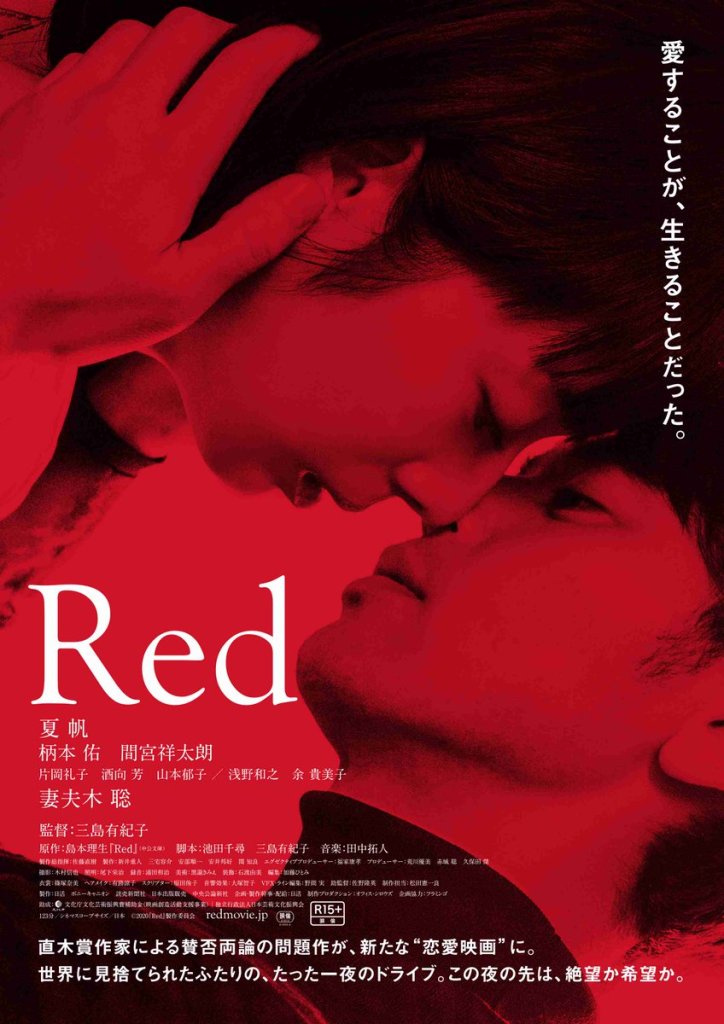
“This isn’t A Doll’s House” the heroine of Yukiko Mishima’s Shape of Red (Red) is exasperatedly told by a well-meaning colleague, only in many ways it sort of is. Adapted from the novel by Rio Shimamoto, Shape of Red proves that not all that much has changed since Nora slammed the door on the patriarchal hypocrisies of a conventional marriage as its not quite middle-aged wife and mother is confronted by the weight of her choices, wondering if a dull yet secure middle-class life is worth the sacrifice of personal fulfilment. 

32-year-old Toko (Kaho) gave up a career in architecture to marry upperclass salaryman Shin (Shotaro Mamiya) and is now a housewife and mother to six-year-old daughter Midori. The marriage is unhappy only in the most ordinary of ways, leaving Toko feeling neglected and unfulfilled, treated as a servant in her own home expected to fulfil her husband’s needs while her own go unsatisfied. That is perhaps why she wanders off from a work gathering her husband has dragged her to (in the outfit he picked out for her to wear) into a more interesting party where she re-encounters an old flame who abruptly drags her into an unoccupied room for a rough and unexpected embrace. Leaving the party together for a walk along the beach, Toko fills Kurata (Satoshi Tsumabuki) in on the past 10 years, lying through her teeth that she’s blissfully happy though admitting that she would have liked to continue with her career. 

Meeting Kurata either awakens a dormant sense of desire in the otherwise button-down Toko, or merely gives her permission to pursue it. She plucks up the courage to tell the less than enthusiastic Shin that she wants to go back to work and takes a job at Kurata’s company where the pair grow closer, but struggles to decide what it is she really wants – the “traditional” housewife life she picked when she married Shin, or the right to fulfil her individual desires. Shin, it has to be said, is an unreconstructed chauvinist from a conservative background who runs all of his major life decisions by his parents. He told Toko he was fine with her continuing to work after marriage but didn’t really mean it, coming up with excuses why she shouldn’t even though Midori is now in regular school. He tells her she can give work a go, but views it as little more than a hobby he assumes she’ll fail, later instructing her to stop because his parents want a second grandchild and, tellingly, he would like a son. Toko, meanwhile, is beginning to feel trapped but conflicted, convincing herself this is the life that she should want while simultaneously accepting that it makes her miserable. 

A third potential man at her place of work, Kodaka (Tasuku Emoto), also quite sexist and a little bit creepy but perhaps ironically so, strikes at the heart of the matter in bringing up her family background. Like seemingly everyone else, she grew up without a father because her parents are divorced, something she’s kept a secret from her conservative in-laws. Toko’s far less conventional mother (Kimiko Yo), sick of keeping up the pretence, brands her daughter’s life choices as “pathetic”, disappointed that she’s deluding herself she’s happy “living a lie” with a man she doesn’t even love.

Yet as fiercely as her newly awaked desire burns, she isn’t convinced by Kurata. Kodaka tells her that she and Kurata are two of a pair, off in their own worlds not really caring about anything, while pointing out that if Kurata has an empty space inside him he refuses to let anyone fill then the reason she sees it is that she does too. The pair work together symbolically rebuilding an imagined future through designing their idealised home, Toko eventually deciding that the windows need to be bigger because she wants to see more, literally broadening her horizons. What she’s deciding is that she wants more of life, but struggles to free herself of the old patriarchal ideas which convince her she’s betraying something by choosing herself. 

Once upon a time, a film like Shape of Red might have punished its heroine for her pursuit of passion, pushing her back towards a life of traditional respectability in forcing her to accept her maternity at the cost of her personal happiness or accept that her only freedom lies in death. Times have changed, if not as much as you’d think. You still can’t have it all, a choice has to be made and largely the choice is the same as Nora’s – stay and live the lie, or leave and accept that social censure is the price of authenticity. “I’ve a feeling we’ll be trapped like this forever” Toko exclaims driving down a seemingly endless tunnel lit by the warm red glow of security lights. Sooner or later you have to choose where you want to live, the superficially cosy show home with tiny windows and no soul, or the drafty opportunity of a room with a view opening out onto wide open vistas of infinite possibility.


Shape of Red is available to stream in Germany from June 9 to 14 as part of this year’s online Nippon Connection Film Festival. It was also due to be screened as part of the 10th season of Asian Pop-Up Cinema prior to its suspension.

International trailer (English subtitles)