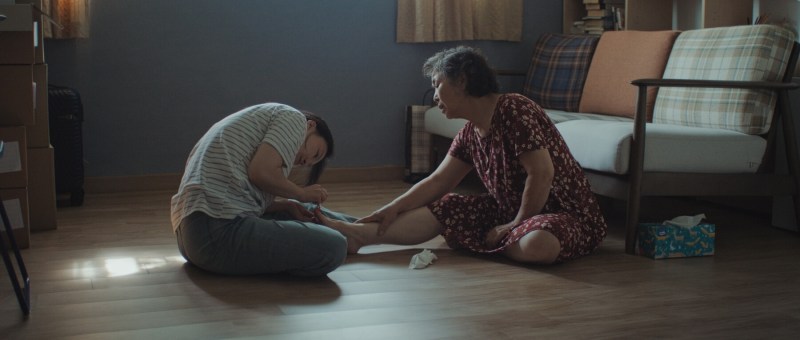
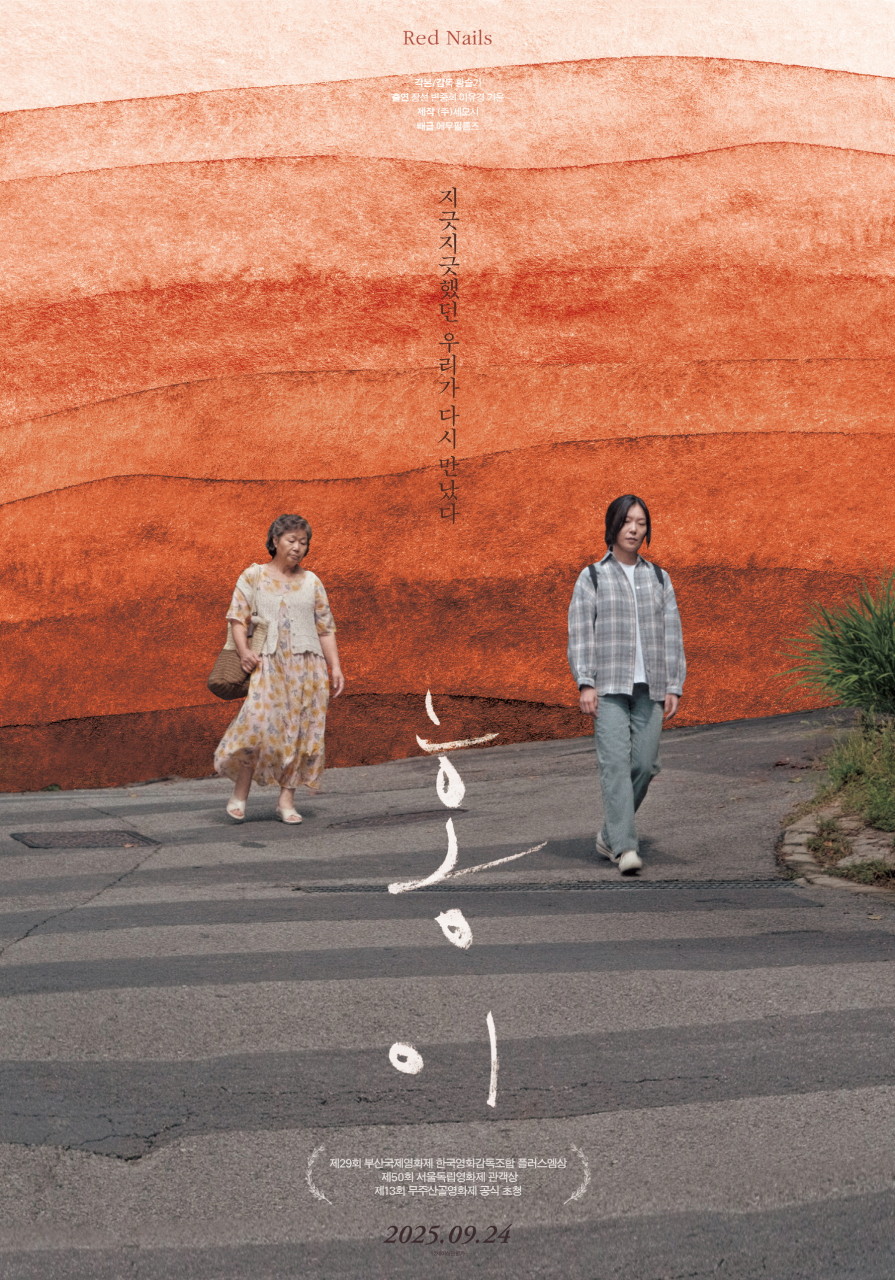
The World of Love (세계의 주인, Yoon Ga-eun, 2025)

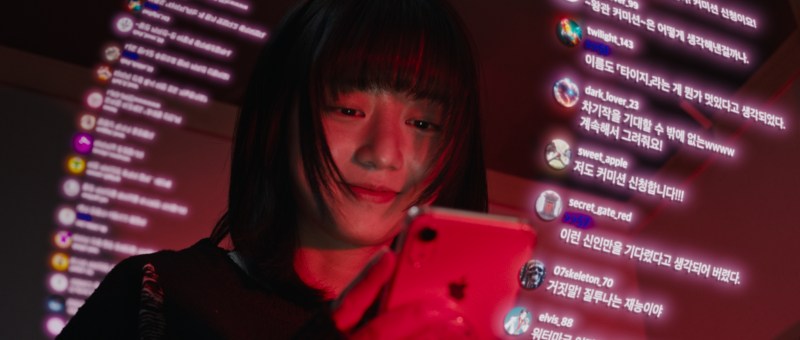
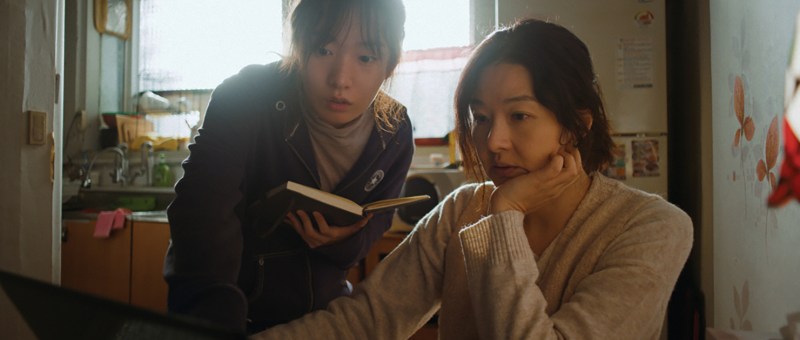
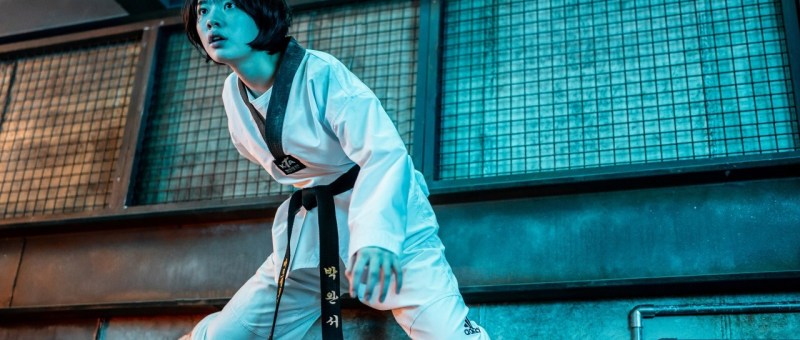
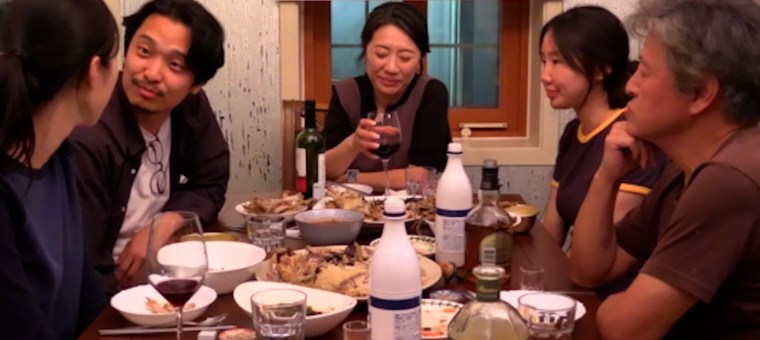
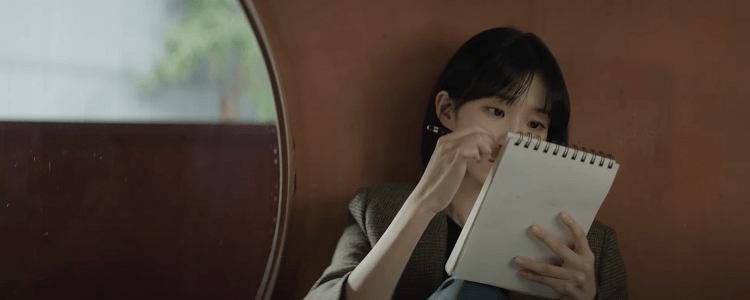
Lee Jooin (Seo Su-bin) is a cheerful young woman, always laughing and joking. She tells people she’s okay, though some of them think she shouldn’t be, as if she can’t be telling the truth or what happened to her can’t be all that bad if she’s otherwise unaffected by it now. It’s like they’re telling her that she has no right to be happy, but must continue to live in suffering to conform to their idea of what a traumatised person looks like, otherwise she must be making it up for attention. 

Put like that, it seems very unfair. But it’s true enough that director Yoon Ga-eun plays with our prejudices deliberately withholding whatever it is that happened in Jooin’s life until the truth of it gently unfolds and we witness the radiating effects it’s had on her family and those around her. We at first wonder if she might have done something bad she’s expected to atone for, especially with the talk of lawyers and court cases, the fact her friends and teachers seem to regard her as a compulsive liar, and her sometimes aggressive physicality that sees her rough house with the boys and repeatedly end up in altercations with classmate Su-ho (Kim Jeong-sik) whose sister Noori attends her mother’s daycare.

Later, we might wonder if Su-ho is carrying something difficult to bear too. His mother doesn’t seem to be around, and he’s stepped into a maternal role caring for his sister to a degree that may seem obsessive. He’s started a petition against a convicted child abuser being released back into their community and is fixated on getting the entire school to sign it, even though it’s not really anything to do with him and simply saying they don’t want him back here is not particularly helpful seeing as he’ll have to go somewhere. Su-ho thinks he’s doing a good thing, but Jooin refuses to sign because she doesn’t like it that he’s written that being a victim of sexual assault ruins people’s lives. She tries to explain to him why it’s offensive, that he’s robbing those who’ve experienced sexual violence of the right to assume agency and suggesting they must forever be defined by their victimhood. She resents his patriarchal attitude and insistence that someone’s life could be “ruined” beyond repair because of a traumatic event that occurred to them personally outside of the problematic framing Su-ho’s way of thinking lends it. Su-ho, however, does not really listen but merely forces her to sign the petition anyway to fit in with everyone else so he’ll get his unanimous numbers, not that it really matters. 

We might also start seeing some of Jooin’s behaviour as a trauma response. Her love of Taekwondo a means of self-protection, her prankster persona a way of rebelling against her sadness with aggressive cheerfulness, but in that we may not be much better than Su-ho. Perhaps she just likes Taekwondo and is a natural comedienne. Maybe she just doesn’t care for apples. Not everything in her life radiates from her trauma. Meanwhile, we catch sight of things in others that suggest they may be suffering too. When Jooin grabs her friend Yura’s arm, she pulls away as if it were injured, tugging at her sleeve as if trying to hide it. Someone keeps writing nasty notes questioning Jooin’s behaviour, which they find confusing, and her authenticity as if she might simply be playacting something which to them is real.

Not being believed is another aspect of Jooin’s trauma. Even when she tells the truth, others accuse her of lying. Other women around her experience something similar, asked why they accepted money from or did not cut of contact with a man they say abused them even if that man was a close family member. Jooin’s father has abandoned the family and does not reply to her messages, rejecting her because of his own sense of guilt, while her mother is doing the best she can but has taken to drink. She also has a younger brother, Hae-in, with a burgeoning career as a stage magician, who may at times get forgotten amid everyone else’s needs. As part of his act, he has a section where he asks the audience to write their fears and worries on a card so he can magic them all away. But as much as he’s been secretly protecting his sister, there’s no spell you can cast to make all of this disappear. Jooin, meanwhile, writes her vocation as “love” and is indeed surrounded by it. “You’ll never know who I am, but I’ll never forget you,” the note writer later signs off, thanking her for speaking out and making them feel a little less alone while simultaneously liberating Jooin from her sense of fear and isolation. “Lying makes it hurt more,” little Noori advises Jooin’s mother, while Jooin has at least unburdened herself and assumed control of the world around her.


The World of Love screens as part of this year’s BFI London Film Festival.

Trailer (English subtitles)

Ms. Apocalypse (세기말의 사랑, Lim Sun-ae, 2023)

It’s funny to look back now at how worried we were about the millennium bug and the birth of a new century, but it’s true enough that the anxiety and desperation were enough to make people act in strange and incomprehensible ways. The first part of Ms Apocalypse (세기말의 사랑, Sekimalui Sarang) is filmed in black and white hinting at the dull incompleteness of the heroine’s life even as she finds herself overcome with dread and begging the man on whom she’s developed a crush to run away with her so she won’t die here, at her aunt’s funeral, where her obnoxious cousin wants her to pour drinks for his boorish friends. 

Young-mi (Lee Yoo-Young) is a mousy, shy woman who keeps herself to herself. At the factory where she works as a bookkeeper, they’ve nicknamed her “Ms Apocalypse”, because her face is “chaotic”, while the men make fun of how unattractive they find her behind her back. The only one of them that’s nice to her is Do-young (Roh Jae-Won), a driver who started five months ago. Young-mi has developed a crush on him, but is too shy to do anything about it and ends up rebuffing most of his overtures such as the precious gift of extra sausages from the canteen. But Young-mi has also discovered that Do-young has been embezzling the cash he’s supposed to be collecting for deliveries. She obviously doesn’t want him to get in any trouble, so she’s been making up the shortfall out of her own pocket by taking on sewing on the side. Unfortunately, when a remorseful Do-young turns himself in, Young-mi ends up going to prison too for failing to report his crimes.

It’s on her release that colour returns to the film, as if Young-mi as had been spiritually and emotionally set free to start a new life in the new century. Yet the only person who comes to meet her is Do-young’s spiky wife Yu-jin (Lim Sun-Woo). Yuj-in is living with a degenerative illness that has left her paralysed from the neck down though she maintains sensation in the rest of her body. Though they are opposites, the two women share a strange affinity and have more in common than they might care to admit. While Young-mi’s life had largely been in service of her aunt to set her cousin Kyu-tae (Heo Joon-Seok) free, Yu-jin has a complicated relationship with her niece, Mi-ri (Jang Sung-Yoon), who has currently run away from home and is imprisoned by her condition in the same way Young-mi is trapped by shyness. While Young-mi is all too aware of the way that others see her as “weird” and unattractive, Yu-jin is a beauty who radiates elegance and imperiousness. She has what her friend Jun (Moon Dong-Hyeok) describes as a nasty personality but is basically a reasonable person who knows full well how dependent she is on the kindness of strangers. 

Young-mi is a kind person, but there’s a question mark over whether she stays with Yu-jin because she wants her money back and has nowhere else to go after discovering Kyu-tae has sold her aunt’s house, or has come to genuinely care about her. It seems at first that they’ve both been betrayed by Do-young, though it’s not as simple as it seems and it may be a misguided gesture of kindness that’s landed them all in this very messy situation. They are nevertheless united in their outsider status as women at the mercy of a patriarchal society. Just as Young-mi is mocked for her appearance, the carers hired to look after Yu-jin make crass and inappropriate comments about her body while even her closest friend, Jun, has exploited her disability to get a discount on his car as well as swapping some of her favourite designer shoes for fakes, though Yu-jin knows she can’t say anything or risk Jun abandoning her. Though Young-mi was the one looking after her aunt who had dementia and a drinking problem, she was always at the mercy of Kyu-tae as her closest male relative and unfortunately he chose to betray her.

Kyu-tae’s not quite ex-wife blames the Asian Financial Crisis, but it seems Kyu-tae was always a selfish and unpleasant person emboldened his position in the patriarchal society and the meekness of Young-mi who he knew would not be able to stand up for herself. But it’s a new century now, and Young-mi’s world is certainly more colourful, if perhaps no easier. She’s learned to fight her corner, but also to make space in it for others in warming to the complicated Yu-jin whose loneliness and vulnerability all come out as meanness though she is a kind soul too and like Young-mi looking for ways to begin moving forward. Now they’ve got over their millennium bug, they’re ready to join the new century and embrace whatever it is that it has to offer them.


Trailer (no subtitles)
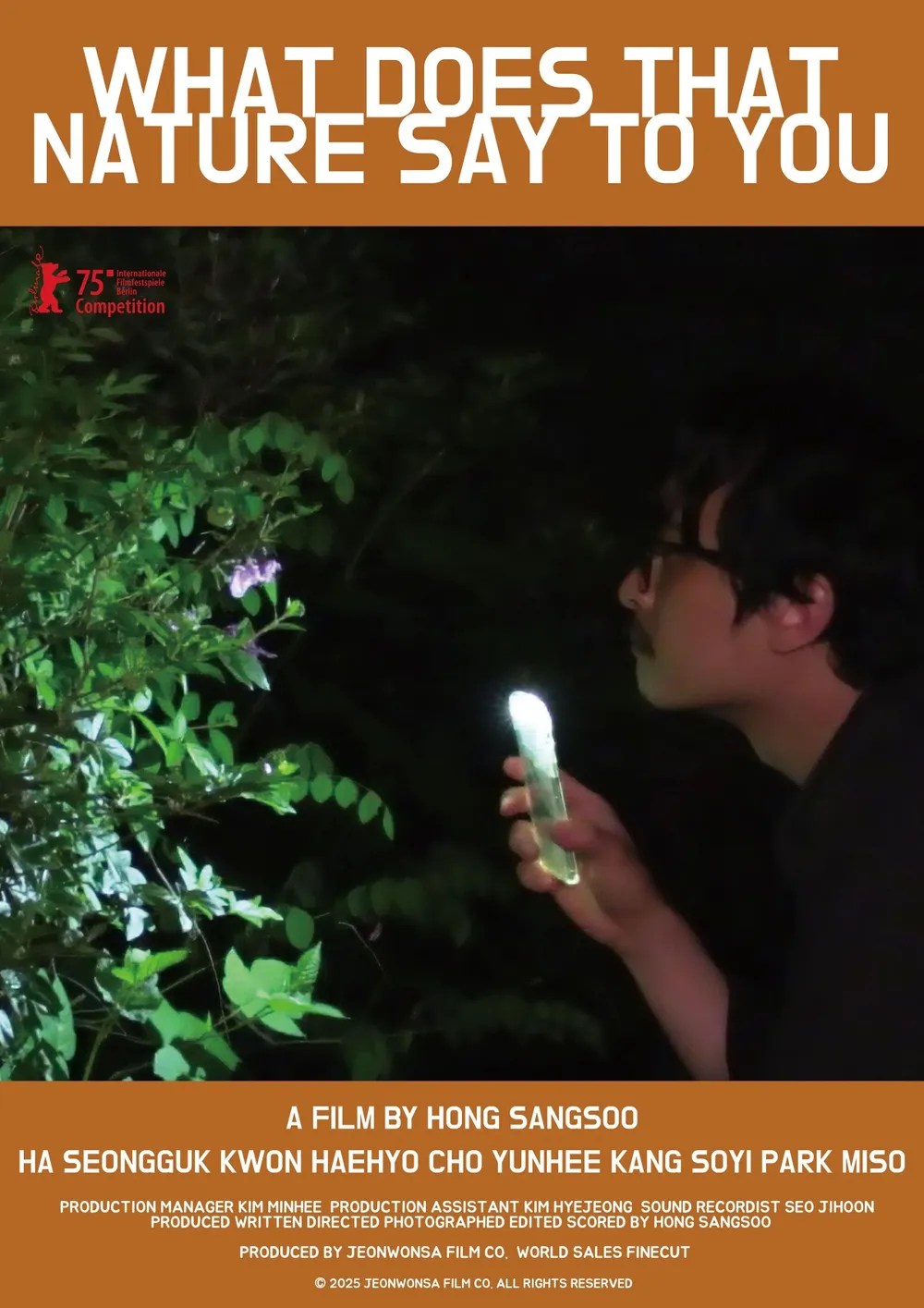
No Parking (주차금지, Son Hyeon-woo, 2025)

A small negligence can come back to bite you, according to the violent stalker at the centre of Son Hyeon-woo’s No Parking (주차금지, Juchageumji). Ho-jun (Kim Roi-ha) likes to punish the “rude”, though some might like to argue that whacking people with wrenches is also at the very least impolite, while his overall manner is distinctly unfriendly. It is, however, inconsiderate parking practices that eventually do for him when he becomes fixated on a neighbour of his wife’s who asks him to move her car while he’s in the process of murdering her. 

Yeon-hee (Ryu Hyun-kyung) was already fed up with the parking situation and has been trying to move though is struggling to do so for a variety of reasons. There’s a lot going on in her life, including a recent divorce and starting again after returning to Korea and the workforce after a 10-year absence. That’s perhaps why she’s stuck in a contract worker position which means she won’t be approved for the loan she needs for a lease on another property until she’s made a full-time employee. But, as someone suggests to her, her boss may have had an ulterior motive for offering her the job and, sure enough, begins sexually harassing her immediately after her welcome party. 

Hae-cheol (Kim Jang-won) and Ho-jun are both, in their ways, representatives of the patriarchal society. They both berate Yeon-hee for being “rude” to them, and react angrily when they feel disrespected. Hae-cheol is in fact already married with children, and repeatedly stresses his secure financial position and assets he insists would be Yeon-hee’s if she came over to him. He later describes his wife as a “fat pig” and moans that she let herself go after the marriage and children. “Yeon-hee needs to meet a guy like me,” he says, while refusing to take her refusal seriously. She asks him why he’s doing this to her and says that she’s going to quit her job, but that doesn’t stop him wandering around outside her home and declaring he’ll stay there until she comes out. 

Ho-jun hangs around outside her house too, though unfortunately, you can’t report someone to the police for loitering. He gets her name from a business card she’s left in the window of her car, which seems ill-advised, but he obviously knows where she lives anyway. He insists on having an apology for her having been “rude” to him when she asked him to move the car, though as she points out, it was “rude” not to park it properly and in any case she’s at the end of her tether with the traffic, her work situation, and precarious living conditions. Nevertheless, Ho-jun’s attitude is reflective of a wider misogyny in which he expects subservience from women and becomes violent when he doesn’t get it. He’s evidently been stalking his ex-wife and murders her on realising that she’s found another man. 

Yet Ho-jun also resents Hae-cheol, insisting that it’s because of men like him that women have become “arrogant”. Hae-cheol too expects Yeon-hee’s deference and repeatedly stresses that he’s a nice guy and can’t understand why she’s treating him this way. He doesn’t leave her any room to refuse and rejects her right to choose. Like Ho-jun, he fixates on her “rudeness” in not stopping to say goodbye to him when she was trying to leave work after realising he lured her there on false pretences at the weekend when no one else’s around so he could pressure her into going to dinner. He describes her as a “gift” from the universe to cure his loneliness, complaining that his family don’t care about him because he prioritised work and now has no emotional outlets. He repeatedly drops hints about making Yeon-hee full-time, while misusing his power and suggesting that doing so is contingent on her agreeing to the affair with him. Nevertheless, when rumours spread around the office it’s Yeon-hee who gets suspended even though none of it is true and it was Hae-cheol who was harassing her.

The film seems to suggest it’s this general level of frustration and anger with the contemporary society that leads to acts of violence over things which might be thought “trivial” such as parking provision, but then again inconsiderate parking is also a sign of selfishness or at least that everyone is so consumed by their own problems that they don’t have time to consider the effects of their actions on others. Or, maybe some people are just rude or like Ho-jun trying to assert their dominance by flouting the rules. In any case, small acts of negligence may indeed come back to strike you from unelected directions and the only real cure is to try to treat other people as people who are also tired and frustrated but whose lives would be made infinitely easier if people didn’t keep parking in front of their driveways.


Trailer (Korean subtitles only)

The Villagers (동네사람들, Im Jin-soon, 2018)

Trying to make a fresh start after being fired as a boxing coach in Seoul for challenging match fixing practices, a rookie teacher finds himself embroiled in small-town conspiracy in Im Jin-soon’s Ma Dong-seok vehicle, The Villagers (동네사람들, Dongnesaramdeul, AKA Ordinary People). Unlike the big bad city, this rural backwater is mired in feudalism and corruption as if it were stuck in the authoritarian past in which everyone keeps their head down and minds their own business rather than challenging injustice or trying to improve the lives of those around them.

What Ki-chul (Ma Dong-seok) and high schooler Yu-jin (Kim Sae-ron) have in common is that they’re both outsiders. Yu-jin transferred to the high school from Seoul and has been branded a troublemaker by the judgmental teachers. But despite the school’s seeming authoritarianism, the pupils have little respect for the school system and openly flout the rules by smoking on school premises and being rude to the staff. It transpires that Ki-chul has basically been hired as a kind of muscle, charged with getting students who haven’t paid their fees or dinner money to cough up ahead of an upcoming audit of the school’s finances. Many of the students he approaches brush him off as if they simply don’t intent to pay, but the school doesn’t seem to be interested in finding out why they might not be able to or if there are problems at home. Yu-jin too rolls her eyes he asks her, but in her case she’s unwilling to finance an institution that’s not doing anything for her even if as Ki-chul advises her they won’t let her graduate if she doesn’t.

Ki-chul seems uncomfortable with his new role and tries to do what he can to help, but encounters resistance from the teachers who tell him there’s no point worrying about kids like these. If they skip school, they’re branded runaways and no attempt is made to look for them. The teaching staff lowkey threaten Ki-chul by reminding him his job’s to get the money and he doesn’t want to make trouble for himself when he was lucky to be employed here in the first place. And so he finds himself conflicted when he spots Yu-jin in town getting herself into dangerous situations trying to find out what’s happened to her friend Su-yeon (Shin Se-hwi) who’s been missing for days but the police won’t seem to do anything. Yu-jin tells him that adults can’t be trusted, especially not the police, but he thinks it’s teenage alienation before trying to report the case again himself through a friend on the force and having it rejected.

The fierce resistance to even mentioning Su-yeon ought to tip them off that’s something bigger’s going on, but everyone is focussed on the upcoming election in which the headmaster of the school is standing for governor that nothing’s getting done at all. Ki-chul tries to report another teacher for harmful behaviour towards students, but is yelled at for exposing the school’s business by going to the police “over some runaway”. He’s reminded to keep his head down and mind his own business, even while Yu-jin continues to be in danger and Su-yeon is still missing. An orphan whose parents had massive debts to loansharks, Su-yeon was forced to work in a bar to support herself and her grandmother. She dreamed of being beautiful and free as an adult, but was badly let down by many of those around her including the school who decided that girls like her weren’t worth helping.

Of course, Ki-chul can’t help standing up for justice through the medium of his fists and smashing his way to the truth while trying to keep Yu-jin safe. If someone disappeared Su-yeon, they won’t think twice about doing the same to Yu-jin, though she of course thinks she’s invincible and is too young to think sensibly about her own safety while desperate to find out what’s happened to her friend. They are both, however, trapped by the legacy of an authoritarian era in which the police works only for the powerful and dirty local politics taints everything around it as everyone desperately tries to ingratiate themselves with the new regime while avoiding stepping out of line and endangering themselves. Ki-chul, however, has not much interest in that and is determined to smack some sense into gangsters and law enforcement alike in an effort to show that the world doesn’t necessarily need to be this way if only more people were willing to stand up to cronyism and exploitation.


The Villagers is released Digitally in the US Oct. 7 courtesy of Well Go USA.

Trailer (English subtitles)

4PM (오후 네시, Jay Song, 2024)

What is the proper etiquette for dealing with an unwanted house guest? It is acceptable to ask them to leave directly, to usher them out of the house by making an excuse that you are leaving yourself, or are you duty bound by virtue of your place in society to put up with it and wait politely until said guest leaves of their own accord, assuming that they ever do? At the end of the day, perhaps it’s foolish to allow our time to be wasted on petty worries about propriety when the best thing to do is really to be direct and explain that you do not enjoy this person’s company and would appreciate it if they did not call on you again.

Based on a novel by Amélie Nothomb, Jay Song’s increasingly absurd psychological drama 4PM (오후 네시, Ohu Nesi) is indeed about the suffocating qualities of politeness, but also in the ways that it interacts with class and masculinity along with the very image of ourselves. As a character in an Ibsen play once said, to take away a man’s life lie is to take away his happiness, and professor Jung-in (Oh Dal-su) is keen to caution against looking too deeply into one’s own soul for the only gifts of self-knowledge are unbearable shame and misery. “I am defined by my kindness to others as a educated man,” Jung-in reminds himself, but in saying so he also makes it clear that his politeness is a conscious affectation rather than an innate character trait. He behaves in a certain way because he fears judgement and wants others to approve of him as a nice person who has been raised well to have good manners. Fulfiling this image is key to his idea of self in the persona of a cultured professor and marks him out from those he may secretly see as “lower” than himself, in being “uneducated” and “rude”, ignorant of the “proper” way to behave. 

But whatever way you look at it, Yook-nam’s (Kim Hong-pa) behaviour is “impolite” despite his apparently being a doctor, though we’ve really got his word for it. Having taken a sabbatical, Jung-in and his wife Hyun-sook (Jang Young-nam) have bought a house in the country, but unusually for such a property, it’s overlooked by an adjacent home positioned a little too close for comfort. The couple figure they should introduce themselves, but the lights are always out and the place doesn’t look lived in, so they leave a note inviting the occupant to visit at their convenience. Unfortunately, Yook-nam takes them at their word, shows up at 4pm, barges his way in, and then just sits there for two hours snapping at them with monosyllabic answers to their questions as if he were burning with rage. He does the same thing every day until it begins to drive the couple out of their minds. 

Of course, they have to ask themselves why they allow this. Why can’t they ask him to leave, or refuse to open the door? They find it impossible to break the psychological barrier of politeness by stating pointe-blank that Yook-nam is a bore and they wish him to leave. They are in a sense suffocated by the need to conform to these deeply ingrained social codes of what it means to be a good person even when others are clearly not abiding by the same set of rules. The absurdity eats away at them as they find themselves humiliated by their own cowardice in becoming complicit in Yook-nam’s oppression. Jung-in begins to realise that his civility interferes with the demands of socially defined masculinity in that he is failing to protect his home by being unable even to eject an unwanted guest and in effect ceding power to him even within the safe and personal space of the domestic environment which should also be free of such oppressive rules for being.

Jung-in anfd Hyun-sook may be getting an idea of why the last person moved, but there’s also a kind of symmetry in the two houses which are in their way each haunted. Both couples say they have no children, but there’s a family photo with a little girl in Jung-in and Hyun-sook’s house that does not appear to be of their surrogate daughter, Jung-in’s former student So-jung (Min Do-hee), just as there’s a family photo with a little boy in Yook-nam’s house that hints at a buried tragedy. While Jung-in and Hyun-sook’s house seems to be full of light, uncluttered, clean and tranquil, Yook-nam sleeps in soiled sheets in a room that apparently smells in home that is filled with unwashed dishes while the walls are coated in grime. The whole place is covered in loudly ticking ticks in contrast to the silence of Jung-in’s home which brings new meaning to his words about living in the present. 

It isn’t really clear what Yam-nook wants out of all this, whether he’s just looking for some kind of escape or actively rebelling by being deliberately unpleasant while exerting his power through wasting Jung-in’s time. “He was still my guest,” Jung-in insists emphasising the roles they are each playing along with his own determination not to deviate from them. Perhaps Yook-nam actually wants them to break protocol by telling him to go away, but instead they live in tyranny of 4pm and sit quietly until Yook-nam abruptly leaves at six rather than say anything or at the very least tell their unwanted guest that he’s free to stay but they’re going to get on with their business. Meanwhile, Jung-in’s civility is slowly eroded, exposing the primitive man inside who fantasies about killing Yook-nam and is suffocated by his his hate for him. But in seeing this true side of himself, Jung-in discovers only shame rather than authenticity or empowerment, and in creating another persona is again ironically suffocated, silenced in his own rebellion. Quietly unsettling, the film suggests that we all, in a sense, live in tyranny of 4pm by allowing ourselves to be oppressed for propriety’s sake rather than risk being “rude” in the knowledge that to do so would be to risk releasing the monster inside us that “politeness” alone keeps at bay.


Trailer (English subtitles)

Hidden Face (히든페이스, Kim Dae-woo, 2024)

The obvious irony in the title of Kim Dae-woo’s erotic thriller Hidden Face (히든페이스), is that it refers both to the heroine, Su-yeon (Cho Yeo-jeong), who conceals herself within a secret bunker in her home to spy on her indifferent social climber boyfriend Sung-jin (Song Seung-heon), and to the sides of themselves that people choose not to reveal to others. As Su-yeon’s mother (Cha Mi-kyung) says, it’s what people see that matters, but the hidden corridors of Su-yeon’s home symbolise the ways in which she has imprisoned her true self or at least has locked a part of herself away from prying eyes while continuing to pry into the secret lives of others.

It’s in this forbidden space, apparently added to the house by the previous father’s owner who was a member of notorious Japanese Unit 731 during the war and feared exposure, that Su-yeon first kissed fellow student Mi-ju (Park Ji-hyun) with whom she’s been in a long-term, but apparently secret, relationship. While Mi-ju is patiently renovating the house she thinks they’ve bought together, Su-yeon has decided that she wants a “real life that people recognise”, which she evidently doesn’t believe a same-sex relationship can be. The forbidden space of “cold room” is then where she’s locked her queerness, and a manifestation of her fears of the consequences of exposure. The problem is that she doesn’t even like Sung-jin and the points of attraction he seems to hold for her are that he doesn’t like her either and is otherwise easy to manipulate because of the vast class difference between them. 

Part of the reason that Sung-jin keeps Su-yeon at arms’ length is that he resents the power that she holds over him. He resents both her and himself in knowing that he’s really only with her for material reasons, while simultaneously aware that his current success has nothing to do with his own talent and everything to do with Su-yeon’s privilege. Su-yeon’s mother congratulates him on working hard to build an image of himself, while otherwise needling him about his working-class background in which his mother ran a small restaurant and really knows nothing of this elite world of classical music, mansions, and honeymoons to resorts that charge some people’s annual wage for a single night’s stay. But the facade can’t really cover up Sung-jin’s insecurity and the fear that he couldn’t make it on his own though he so desperately wants to be a part of this world and to feel himself worthy of it. He feels emasculated and humiliated in assuming that other people can see that he’s just a puppet while Su-yeon, her mother, and their advisor discuss policy decisions he’s technically responsible for out in the open, he assumes to deliberately embarrass him and keep him under control. 

Yet the truth is that these kinds of hierarchal power structures of class and gender are less relevant when it comes to desire than otherwise might be assumed. Su-yeon refers to Mi-ju as her slave or underling and adopts a dominant role in the relationship yet eventually has the tables turned on her when Mi-ju decides to rebel. The power dynamic of desire is a push and pull between the desire and the desired mediated by the depth of yearning. It may seem to Su-yeon that she is in control, but equally Mi-ju derives power from her willing submission and can overturn the dynamic at any time she chooses upending Su-yeon’s delusion that Mi-ju is a mere plaything, or “tool”, she can take out and put away at will. 

Nevertheless, the question is whether anyone could be content with this shadow life or if Su-yeon, vain, psychopathic, and probably incapable of understanding other people’s feelings, is content to imprison herself within the hidden corridors of her home which come to stand in for the need to conform to the heteronormative, patriarchal, class-based social codes other people see as “real” and “normal”. Sung-jin is apparently all too willing, considering just leaving Su-yeon trapped behind their walls to continue enjoying this life of privilege with a little more freedom without considering that without Su-yeon he has no entitlement to it as her mother later suggests after becoming worried on realising that Su-yeon hasn’t used her credit in days which is extremely uncharacteristic behaviour.

Sung-jin would trade his pride as a man, his sense of self-worth, and even betray his moral code to appear wealthy and successful and deny his working-class origins. Su-yeon would also, it seems, rather be in a conventional marriage to a man for whom she feels only contempt and resents for not liking her, than live an authentic life as a lesbian and face her internalised homophobia along with that of the wider society. Thus she confines Mi-ju to a forbidden space of her mind in an attempt to have her cake and eat it too, while Mi-ju seemingly fulfils herself in wilfully becoming a prisoner of love, even if it may only be in Su-yeon’s fantasy. Perhaps they get what they wanted all along, affirming the primacy of privilege, but only at the cost of their authentic selves and trapped inside the prison of their own self-loathing.


Hidden Face is released Digitally in the US on September 16 courtesy of Well Go USA.

Trailer (English subtitles)

Virus (바이러스, Kang Yi-kwan, 2025)

Falling in love is like catching a virus, according to lonely scientist Gyun (Kim Yoon-seok), but how can you know if your feelings are “real” or just part of a crazy fever dream you won’t even remember as soon as the infection leaves your system? “There are no fake feelings,” lovelorn translator Taek-seon (Bae Doona) counters, which is true, but sometimes people do things they don’t recognise or later understand because they weren’t in their right mind, whether because of the sickness called love or a more literal kind of contagion. 

Anyway, this particular virus makes people incredibly happy for the short period time before they die and was developed as part of a project to create an anti-depressant with no side effects. Taek-Seon gets infected after a disastrous date her sister forces her to go on with socially awkward scientist Su-pil (Son Suk-ku). Su-pil is overly attached to the mice in his lab and is still mourning the death of Masako who appeared to him in a dream and told him to make sure her death wasn’t in vain. In retrospect, perhaps these are symptoms of the infection bubbling away in his body as much as they are of his loneliness, but it’s understandable that Taek-seon wasn’t really considering seeing him again only she’s forced into it when her mother and sister invite Taek-seon over to her apartment as a kind of enforced date. The mother and sister’s insistence on Taek-seon meeting someone and getting married is itself a reflection of a patriarchal society in which being unattached is taboo, while Taek-seon’s sister snaps back that translators won’t be needed soon because of AI implying she should find a husband to support her financially.

But then again, though she might claim to be, it does seem that Taek-Seon isn’t all that happy with her life and later confesses to being “always depressed”. She rarely leaves her apartment and lives a dull and unstimulating existence. Infected with the virus, she suddenly becomes sunnier, more confident, and independent, while chasing romance by approaching a childhood crush she seemingly never had the courage to pursue before. Yeon-u (Chang Kiha) is now a car salesman, and Taek-seon now suddenly has the urge to buy a Mini though she’s never actually driven outside the test centre despite having a license. In one sense, yes, it’s Yeon-u she’s after but the car also represents her latent desires for freedom and a more active life. 

Nevertheless, the corrupting aspects of the virus are all too present as Taek-seon begins to act in ways she may be embarrassed by if she could remember them once she’s better. Her memories seem to have remade themselves more to her liking. She’s forgotten that Yeon-u wasn’t quite the hero she thought he was in her overly idealised vision of the innocent childhood sweetheart that she never had the courage to pursue. On the run from “evil” scientists from the lab where Su-pil worked, she starts to fall for Gyun, the expert that’s helping her, but who’s to say whether her feelings are just a product of the virus, an attachment born of their relationship as doctor and patient, or something deeper. 

For his part, Gyun starts to fall in love with her seemingly before he himself is infected while knowing that she likely won’t remember any of this once she’s been cured. He too is still dealing with the romantic fallout of an improperly ended relationship in which he apparently stepped back because one of his friends liked his girlfriend more. The now-divorced girlfriend seems resentful that he didn’t put up more of a fight for her, and perhaps it’s true that he’s just a romantic coward and it’s a combination of the virus, a sense of responsibility, and the fact that Taek-seon’s natural immunity could hold the key to unlocking his own research that pushes him to try so hard to find a cure for her.

But his research goals are at least altruistic in his desire to find a depression cure without side effects to help people like his brother who took his own life. Dr Seong’s (Moon Sung-keun) lab, however, is entirely focussed on profit and protecting its own reputation. They’re mostly interested in Taek-seon because of her usefulness to them and are prepared to endanger her life if necessary. Even Gyun admits he acted unethically in agreeing to bypass animal testing but otherwise draws the line at anything that puts lives additionally at risk. Taek-seon, meanwhile, later signs over her antibodies so they can be used for free worldwide for the good of all. Even after the fever has cooled, the virus does seem to have made her a happier, more outgoing person who has the courage to pursue her dreams rather than living in lonely defeat. Whether her feelings were ”real” or merely part of her “sickness” and if the distinction really matters either way is up for debate, but that’s not to say she might not catch the love bug again from a less compromised position and actively in the driving seat of her own life.


Trailer (Korean subtitles only)

A Tour Guide (믿을 수 있는 사람, Kwak Eun-mi, 2023)

“We look the same, but they treat us less than foreigners.” Han-young’s (Lee Seol) friend Jung-mi (Oh Kyung-hwa) laments, explaining that she’s decided to move abroad for a better life rather than scrape by in a country that is not always welcoming. Kwak Eun-mi’s A Tour Guide (믿을 수 있는 사람, Mid-eul su issneun salam) explores the position of North Koreans in South Korean society, but also the difficulties of assimilating into a new culture that is not primed to accept you, the isolation of being of this place and not, and the heroine’s complex cultural background that leaves her feeling torn between competing ideas of homeland. 

Having lived in China for a while after escaping North Korea, Han-young worked hard to harness her Mandarin-speaking skills to earn a license to work as a tour guide and interpreter. Even so, she struggles to find employment as many companies are unwilling to hire those from the North whom they view with suspicion. When she eventually is hired, it’s a for a zero hours contract freelance job in which her pay is dependent on the amount of souvenirs her wealthy Chinese holidaymakers purchase. The ironies could not be starker. While Han-young struggles to get by, the residents of the formerly communist turned hyper capitalist society have more money than they know what to do with and often aren’t really interested in the information she has to give them about Korean historical sites but are eager to get to the duty free.

In her interview, Han-young had said she wanted to share Korean culture with visitors to the country but it also seems like this wasn’t really what she worked so hard to get her license for. She also said she wanted to earn a lot of money and have a nice life, which is more honest, but the job doesn’t really allow her to do that. She was told that she shouldn’t force people to buy goods, but it’s clear that this is essentially what the company’s hired her for. Under increasing pressure, she finds herself bending the rules and her own integrity. Copying a less earnest colleague, she begins embellishing her speeches with made-up information to appeal to the Chinese tourists, while later colluding with the saleswoman to put on a snake oil-style act selling Korean cosmetics in the hope of getting her ranking up and being kept on while the company experiences a period of financial difficulty. MERS and declining political relations between China and South Korea see a huge drop off in tourism and a fair amount of economic damage. 

Her brother (Jeon Bong-seok) too has witnessed the implosion of his South Korean dream having failed to get into university. Manual labour at the docks wasn’t what he had in mind, which might be one reason he drops out of contact with Han-young who tries to look for him but continues to hit a brick wall. She eventually discovers that he thought about going back to the North despite knowing what might happen to him if he did. In some ways it may not be all that surprising that some people find themselves unable to adapt and prefer the brutal certainty of their old lives, but it’s equally true that the siblings encounter only futility. Viewed with suspicion, they are constantly monitored by a “protection officer” who is supposed to be helping them adapt to life in the South and prevent them being exploited or harassed, though Jang-mi thinks it’s more like “surveillance” than “protection” and the focus is really on whether they present a danger rather than are presented with it. Nevertheless, her aunt decided to extend her protection period voluntarily because she said it was easier that way.

One by one, each of Han-young’s lifelines disappears, from her friend who decides to try her luck abroad, to her brother, and then protection officer. Asked why she doesn’t go abroad too, Han-young replies that if she stays closely, her family call live together again as if hinting at a desire for reunification even as she desperately tries to get the money together to bring her mother to the South while prejudiced bosses tell her she should just work in a factory, or a cafe, or a convince store, which is to say casual labour jobs they look down on and consider unworthy for South Koreans because someone like Han-young isn’t really entitled to become a tour guide. Eventually she’s joined by a friend from China whom she has to disabuse, reminding her you’re poor here too if you can’t find work and it’s not exactly the kind of utopian paradise she might have thought it to be. Nevertheless, it seems as Han-young is leading herself towards her own liberation and a future less constrained by loneliness and petty prejudice.


Trailer (English subtitles)

Ghost in Love (자귀모, Lee Kwang-hoon, 1999)

Caught in limbo, a young woman finds herself torn between the desire for revenge and letting go in Lee Kwang-hoon’s supernatural drama, Ghost in Love (자귀모, Jagwimo). Is love really what Chae-byul (Kim Hee-sun) was in, or is it more the sense of humiliation that’s she’s carried into the afterlife while obsessing over her cheating ex-boyfriend who was two-timing her with the boss’ daughter? Her colleague Kantorates (Lee Sung-jae), by contrast, had a love that was purer and reminds her that though it’s painful, if she really loved him, she’d be rooting for her ex’s future happiness rather than plotting how to mess up his life. 

Then again, the Korean title is “Suicide Ghost Club” and refers to the group into which Chae-byul is press-ganged after two of its grim reaper agents help her on her way having overheard her say she wanted to die because of all the romantic drama in her life. This literal purgatorial space located between heaven and hell is run like an exploitative company/cult in which the only metric of success is claiming more members. Chae-byul is warned that she doesn’t really have any choice but to join them, because otherwise she’ll become a vengeful spirit and lose all her memories, though she’s drawn to a mysterious presence known as Pale Face who does indeed become a terrifying spirit of vengeance, taking revenge primarily on the men who gang raped her while her fiancé, who later dumped her, looked on helplessly.

There is a kind of misogyny that’s most obvious in the afterlife but exists in the real world too. The film opens with a woman about to take her own life because of persistent fat shaming. She’s fat shamed by the grim reapers too and on into the afterlife, though in ghost form it’s revealed that she could be skinny if she wanted but is happiest in herself like this. Meanwhile, the grim reappears make other suggestive comments, leering over Chae-byul and remarking that a girl should have nice hips. Pale Face took her own life because of the trauma of her rape, the stigma of being a rape victim, and the betrayal of her fiancé who she says broke up with her because he thought that she was tainted. Even in the afterlife, she’s constantly washing in an attempt to make herself clean which is why she’s become so pale. 

Despite being told primarily from Chae-byul’s perspective, the film more or less normalises her boyfriend’s sexist views and behaviour in which he sees nothing really wrong with two-timing each of the women. Chae-byul tries to confront him, but he tells her Hyun-ju (Kim Si-won) was only visiting “to check on her stock transactions,” and shifts the blame onto Chae-byul for being paranoid and unreasonable. He says he liked her because she was “nice and comfortable,” but now she’s changed, so if she’s going to carry on “nagging” him like this, he may as well break up with her. HIs domineering attitude and characterisation of Chae-byul as a crazy girlfriend have the desired effect of causing her to back down and apologise to him. He may be a bit pathetic and materialistic in dating the boss’ daughter solely for advancement claiming it was his only chance to get on, but his behaviour isn’t really regarded as being particularly negative while Chae-byul’s desire for vengeance is, belittled in part because it involves disrupting not only his bright future but pointlessly harming Hyun-ju too.

Then again, perhaps these attitudes are intrinsic to the latent authoritarianism of the afterlife which is governed by the mysterious “messengers” who punish the transgressions of wandering ghosts. One grumpily rants about now having to work for a living, unlike in the old days in which some people would even try to bribe them for a longer life which they don’t do anymore in an allusion to Korea’s recent democratisation. The Messengers From Hades have a serious whiff of the KCIA mercilessly pursuing those who threaten to destabilise the system and then “disappearing” them. Nevertheless, Chae-byul eventually begins to come around to Kantorates point of view while quietly falling for him even as he struggles to move on from his own lost love. He knows he can’t be with her any more, but needs to find a way to tell her to move on so that he can do the same. A strange twist of fate gives them another chance at life and at love to live without wanting to die and try to find happiness even in a world of financial anxiety where consumerist desire has replaced spiritual fulfilment.


Fragment (파편, Kim Sung-yoon, 2024) [Fantasia 2025]

People often think of crime as something linear that ties together villain and victim but is otherwise an isolated event. The truth is that crime reverberates through the world around it, shattering the lives of others in the backdraught of its irrational violence. Son of the murdered couple, Gi-su is fond of saying that he’s the victim as if trying to reclaim this role and make it his identity while it remains to that Jun-gang and his sister Jun-hui are victims too for they have also lost their father who is now in prison.

Indeed, while Gi-su may face overbearing care from his well-meaning relatives, Jun-gang is burdened with the stigma of being a murderer’s son while trying to protect his sister from the fallout of this awful situation. His most pressing problem is that they don’t have any money. His father did not appear to have any before either, but now their utilities are about to be cut off and their landlady’s sick of being strung along. Yet these aren’t problems a 15-year-old boy can fix on his own. He tries to get a job in a local convenience store but is first turned away because boys his age should be in school, and then offered a job but only on parental consent which he can’t get for obvious reasons. His teacher, Mr Park, is one of the few people to know the truth and keen to help him but has few real ways of doing so. As the son of the murderer, most are content to leave him to his fate and believe that he simply doesn’t deserve support because of what his father has done.

Jun-gang too feels guilty, though none of this is his fault. He knew what kind of man his father was and is always eager to prove that he is different. But the fact that he seems nice, honest, and polite doesn’t really matter. He’s still chased and bullied with kids at school going on about killer genes and actively singling him out for a beating. Jun-hui too is ostracised by her friends who’ve been told not to play with her because of what her father did. Gi-su tries to ease his frustration on him, breaking into their apartment and smashing the place up after coming to school to find him. As much as Gi-su tries to insist that he’s the victim, Jun-gang is a victim too and unlike Gi-su has no further family to support him and no one else to turn to for help. He fights back with decency, but largely finds it thrown in his fate.

Gi-su, meanwhile, is broken by his trauma and in the midst of a nervous breakdown exacerbated by exam stress. Like Jun-gang he blames himself as a means of asserting control over the situation and struggles to accept the new world he now inhabits following his parents’ deaths. His sympathetic aunt tries her best to get through to him, but his well-meaning uncle is a font of toxic masculinity screaming at him that he’s wallowed in his grief long enough and needs to man up and get over it. Though they’re cast in the roles of killer and victim, the boys are really much the same, each having lost their homes and families and now being essentially displaced from within their new lives.

The battle is really whether they can hang in there long enough to begin to see the other side and that there are still possibilities in their lives. The reason for the killing is never revealed, nor is it particularly important, if hinting at the constant pressures of the outward society. Jun-gang’s father’s behaviour implies long years of paternal failure, domination, and abuse from which Jun-gang is trying to emerge unscathed while Gi-su must on the other hand come to terms with the implosion of a seemingly perfect family life. That they each come to recognise that none of this is their fault and they’re really just the same is testament the boys’ innate goodness and growing sense of solidarity in the midst of so much acrimony. Hard-hitting though it may be in its exploration of how societal prejudice can allow people to slip through the cracks, Kim Sung-yoon’s film is also in its way uplifting in the presence of those are willing to help and Jun-gang’s refusal to give in to what the world tells him he should be,


Fragment screened as part of this year’s Fantasia International Film Festival.