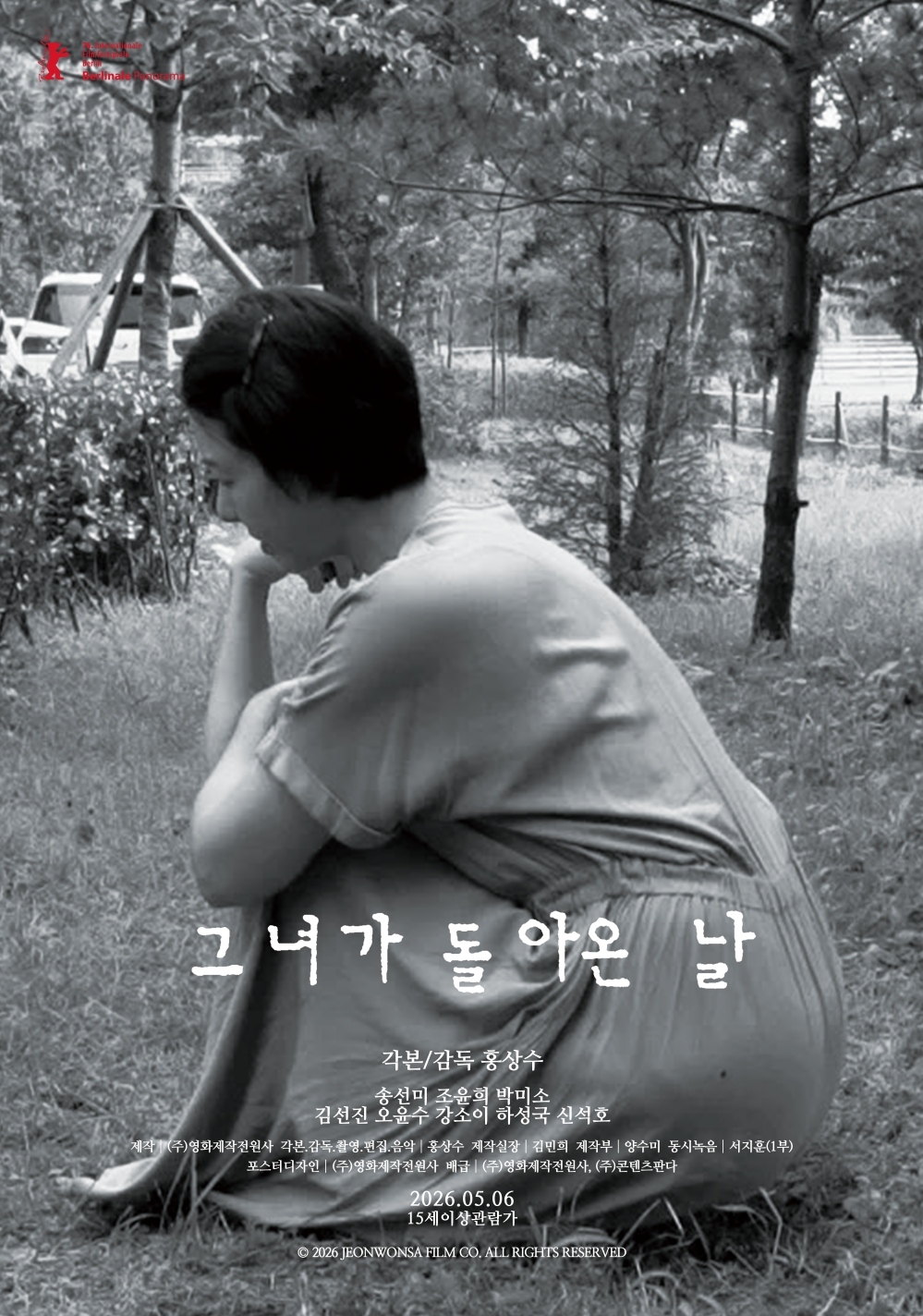
The Day She Returns (그녀가 돌아온 날, Hong Sang-soo, 2026)

Perhaps it’s not that uncommon for an actress to give vaguely similar answers to near identical questions during a series of press interviews, but the interplay between scripted and unscripted dialogue along with the awkwardness and forced politeness of a conversation that straddles the borders of personal and professional begins to reveal the lines between what we say and what we mean in Hong Sang-soo’s latest The Day She Returns (그녀가 돌아온 날, Geunyeoga doraon nal).

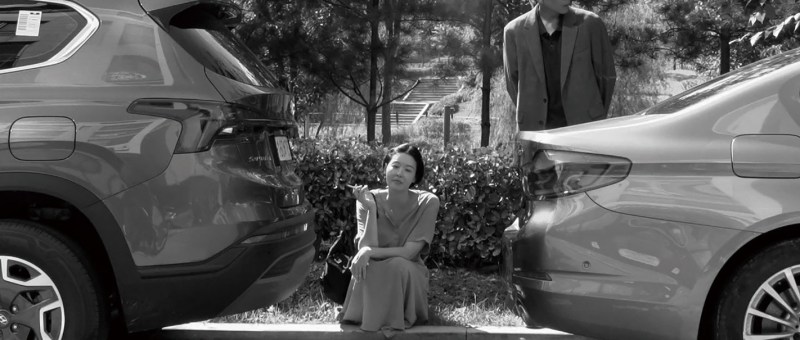
Jeong-su (Song Seon-mi) is returning to the industry after a 12-year career break following her marriage and subsequent divorce. Even so, the reason Jeongsu gives for not having continued to work is that she simply wasn’t offered anything, which partially explains why she’s made her comeback in an independent film by an up-and-coming director. Each of her interviewers is a young female journalist, which contributes to the sense that in someways she is actually talking to a reflection of herself. It’s not really until the final interview that they actually start talking about the film with most fixating on the reasoning behind Jeong-su’s absence from the screen along with her personal life and divorce.

Though Jeongsu later focuses on a desire to see things clearly as they are, it seems that she is not being entirely honest or is perhaps failing to see the truth about herself rather than deliberately misleading the interviewers. Though she tries to put them at ease, perhaps Jeong-su herself is a little more nervous than she makes out. She asks each of the women if they’d like to try to draft beer at this German restaurant she seems fond of, with the first replying she prefers not to drink on the job. Jeongsu says she doesn’t want one either and no longer drinks as much as she did, telling the second interviewer she’s on a diet, but later revealing she may have gone through a period of drinking too much after her divorce. She clearly wants a drink herself, but feels awkward to order one if the other person doesn’t want to join her, making excuses to be polite. Similarly, during breaks between interviews, she mainly sits outside vaping as if to blow off stress. She later calls one of the interviewers to ask her not to include a couple of things she said about her divorce on the grounds that it might not be fair to her former husband.

Each of the interviewers asks her if she has any advice for the younger generation and each time she offers them similar platitudes about learning to love themselves but that true love sometimes means doing things you don’t particularly want to do. This is perhaps advice she might have wanted to give to herself, but at the same time does not appear to have much confidence in. She tells the second two interviewers how happy she is with her simple family life living with her daughter and their dog, but at times it feels as if she’s talking about someone else, or perhaps it become more obvious that even in this situation is still playing a role as an actress being interviewed. This is too is “performance”.

Indeed, she later tries to “recreate” these experiences as part of an acting class. Hong reverts to a lower-quality camera, blurring the image as if to reflect the “unreality” of this “real” situation as Jeongsu repeats a script she’s written amalgamating all these experiences. The recreation proceeds as it did before, but as it drifts towards the more personal elements both Jeongsu and the interviewer begin to need to check their scripts. Jeongsu cannot quite key into her personal “reality” during this kind of “performance” and no longer knows quite what to say. The awkwardness that develops between herself and the actor playing the interviewer seems different than that created by distance between herself and the journalists which is born of the need for forced politeness. “All may be an illusion,” she admits, leaving the possibility that there may not really be any such thing as clarity or absolute truth even as she tries to search for them in both her personal and professional lives. There may not really be as much of a border between “performance” and “authenticity” in the way we usually see them, only a constant interplay between the two as we seek to be understood rather than to understand.


The Day She Returns screened as part of this year’s San Diego Asian Film Festival.

Trailer (English subtitles)
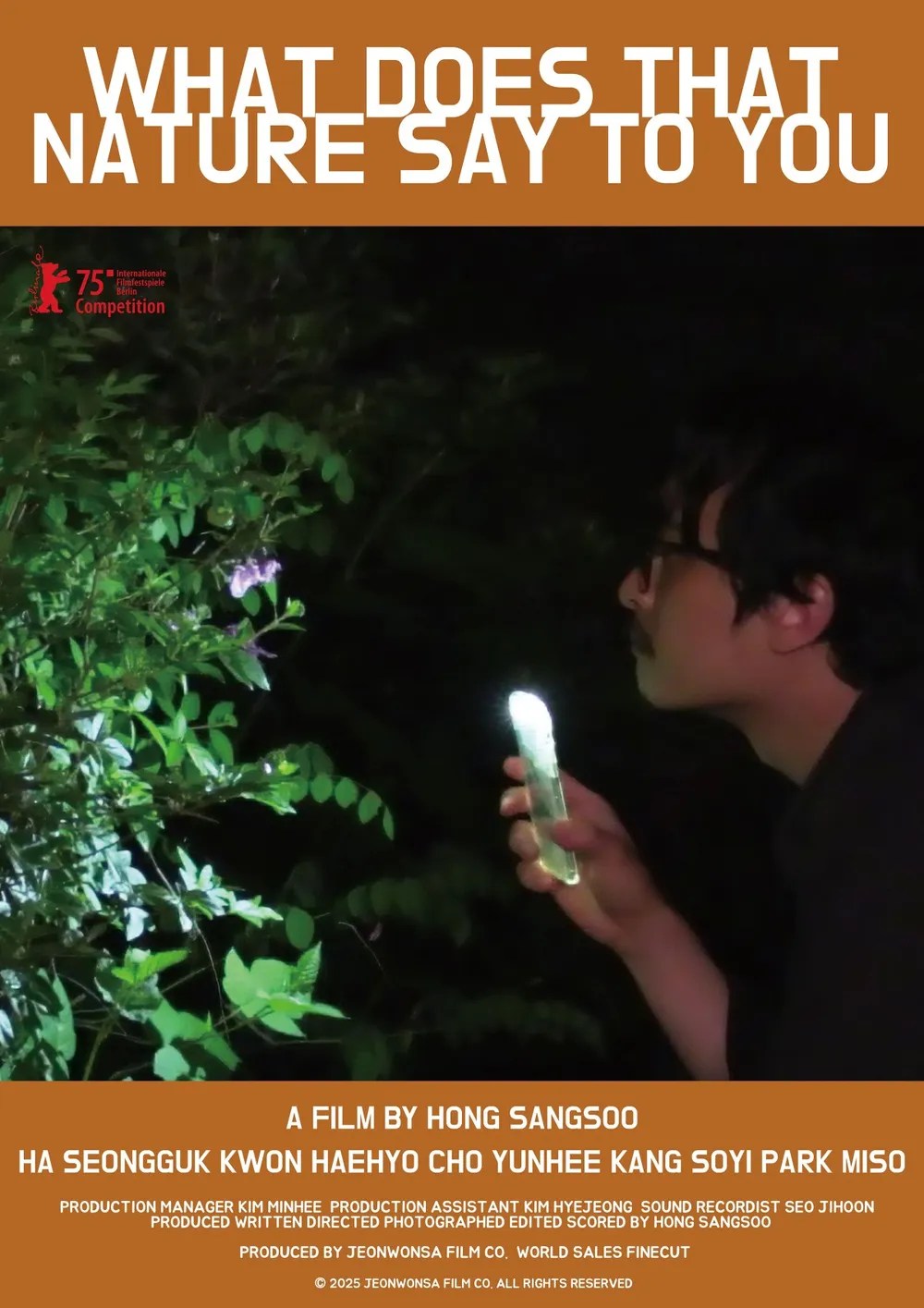
What Does That Nature Say to You (그 자연이 네게 뭐라고 하니, Hong Sang-soo, 2025)

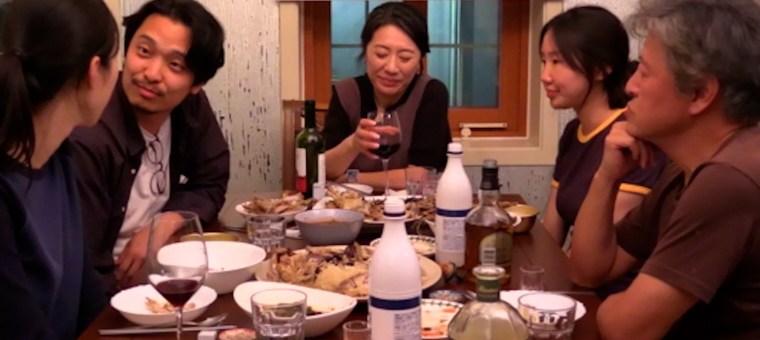
“But you’ve got your father behind you,” Junhee’s (Kang So-yi) older sister Neunghee (Park Mi-so) points to her sister’s boyfriend, Donghwa (Ha Seong-guk), meeting her family for the first time despite dating Junhee seriously for three years. But that’s not the way Donghwa likes to think about it, preferring to deny his privilege and insist that, as he does not take accept anything from his famous father, he’s an “independent” man. This notion is quickly squashed by Junhee who otherwise seems to have accepted Donghwa’s way of life when she admits that it’s more like Donghwa doesn’t like accepting anything from him, but will ask for money when he’s truly desperate. Neunghee subtly tries to remind him that whatever he might say about it, his life is only possible because he has a safety net and to insist otherwise is superficial and childish. But superficial and childish is exactly what Donghwa slowly exposes himself to be in Hong Sang-soo’s latest lacerating character drama, What Does That Nature Say to You? (그 자연이 네게 뭐라고 하니, Geu Jayeoni Nege Mworago Hani)

Donghwa is also, apparently, a little vain in that he needs glasses but doesn’t wear them so to him the world is always a little fuzzy around the edges. This might also explain why Hong films in low grade digital, much like In Water, rendering this otherwise idyllic mountain setting somewhat ugly and ill-defined. Donghwa wasn’t even supposed to be meeting Junhee’s parents today, which is why they sat in his car round the corner for ages after he drove her from Seoul before accidentally bumping into her father so he had little choice other than to stay. He said he’d come two years ago, but for whatever reason didn’t. Neunghee thinks it’s odd they’ve been putting off marriage, cautioning her sister that the “right time” never really exists and you don’t necessarily need to overthink these things, though increasingly she seems to come to the conclusion that the relationship isn’t strong enough because of Donghwa’s insecurities and Junhee’s lack of certainty. Junhee describes her as “depressed”, though Neunghee seems quite upbeat and though you could argue is basically doing the same as Donghwa in relying on her parents while she figures things out, seems to have more of a direction and self-awareness about the way she’s living her life. 

Though the initial meeting seems to go well and Donghwa bonds with his father-in-law Oryeong (Kwon Hae-hyo), he has a minor falling out with Junhee after she objects to some of his philosophical ramblings complaining that sometimes she thinks he waxes on about the ineffability of the universe in order to escape his problems. Oryeong later says something similar, that he spends his life evading things, while Jun-hee’s mother Sun-hee (Cho Yun-hee) laments that he hasn’t yet collided with reality and that’s why his poetry lacks substance even though he claimed to be a “poet”. When he says he likes the simple life and is wary of materialism, it’s difficult to know whether it’s a real position or merely an attempt to gloss over his lack of financial standing.

A now irritated Oreyong criticises him for not having his life more in order at the age of 35. Son of a famous TV lawyer or not, he doubts Junhee will be happy with a man still working part time at a wedding venue and as an ad hoc photographer on the weekends. Everyone keeps needling Donghwa about his old banger of a car, a Kia Pride from 1996 for which Oreyong thinks he paid too much seeing as it’s not old enough to be a “classic” car nor reliable enough for use as an everyday vehicle. Donghwa says he just likes it, before admitting that he doesn’t have the money for a new one anyway. The same goes for his recent adoption of facial hair with Oreyong criticising him for only doing it half-heartedly rather than going for the full bohemian poet aesthetic, though he’s likely done it to look a bit more manly and distinguished to gloss over his increasing insecurities about being the only son of a successful man who can’t escape his father’s shadow and still doesn’t seem to have figured himself out as an independent person.

Asking Donghwa what he likes about Junhee might not be entirely fair. It’s not as if love needs a reason. But his characterisation of her as an “angel” is also superficial, even if her family’s constant remarking on her upright character might be the same. Yet for all that, this awkward meeting filled with social niceties, and the wisdom of Junhee’s parents who think this relationship is not likely to last but know it’s better to let Junhee figure that out for herself, might be the collision with reality that Donghwa has been needing in showing him how childish and superficial his behaviour and lifestyle and have really been. Or at least, he’s beginning to realise they’re right about the car and maybe it’s time he set himself up straight if he is actually serious about his future with Junhee.


What Does That Nature Say to You screens as part of this year’s San Diego Asian Film Festival.