I Wish I Had a Wife (나도 아내가 있었으면 좋겠다, Park Heung-sik, 2001)

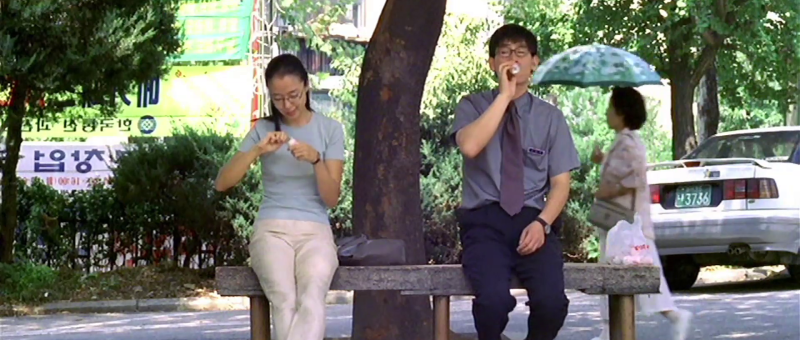
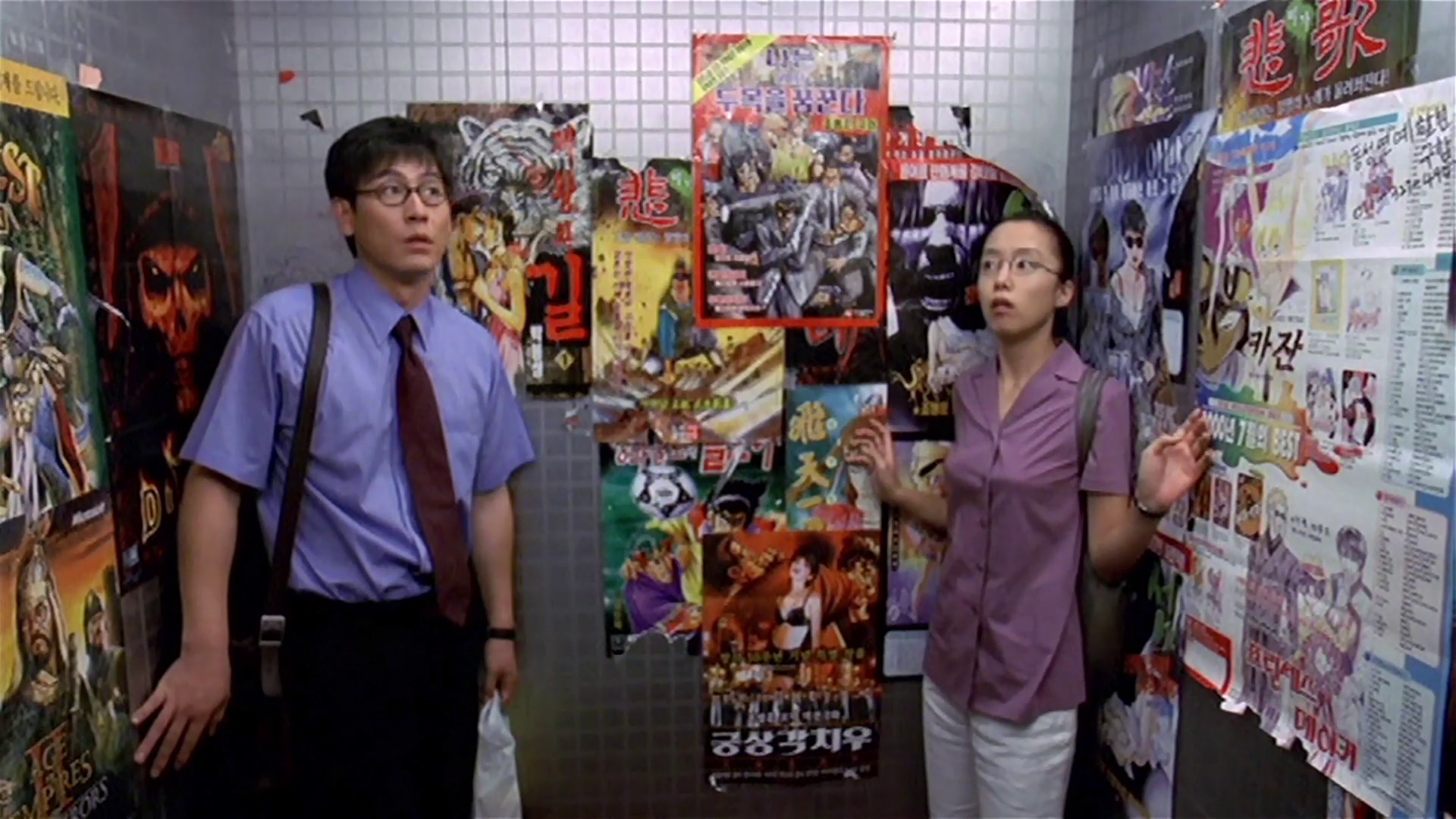
A lonely bank clerk dreams of married bliss but ignores a promising match right under his nose in Park Heung-sik’s offbeat romcom, I Wish I Had a Wife (나도 아내가 있었으면 좋겠다, . As much about the loneliness and serendipity of city life at the turn of the century, the film takes its time in bringing its two leads together while subtly filling the air with a deep sense of melancholy uncertainty as each attempts to process their deep-seated childhood trauma.

Both Bong-soo (Sul Kyung-gu) and Won-ju (Jeon Do-yeon) are each in their way arrested in childhood have not yet really fully grown up despite being fictional adults with jobs and responsibilities. Bong-soo’s sometime girlfriend, with whom he first reconnects while she’s attending a funeral, remarks that he hasn’t really changed since they were at school though she has been married and divorced. Having lost his mother as a small child, at least part of Bong-soo’s desire to be married seems to have to with searching for a maternal connection and wanting to be taken care of. When the train he is on breaks down and he’s stuck in a tunnel in the dark for over an hour, it saddens him that unlike the other passengers he doesn’t have anyone to call. No one is immediately worried him, nor can he ease his own anxiety by hearing a familiar voice. Though his friend and roommate Hongtak (Seo Tae-hwa) says he could have called him, Bong-soo didn’t want to. He wanted this specific connection with a woman rather than the brotherly camaraderie he has with Hongtak. Nevertheless, he’s irritated when he realises that Hongtak, a confirmed bachelor, is going to get married before him.

Won-ju similarly lost her father in childhood and is also to some extent looking for a reliable male presence which is something she detects in Bong-soo with his dull if stable position at the bank. Like him, she is likened to a child and often depicted on an equal level to those she teaches at the school opposite where Bong-soo works. She finds one of the little girls she teaches crying in the classroom because the other kids said she looks like her and turns it around saying she’s flattered to be compared to someone so pretty before pointing out that it’s probably because they have a similar hairstyle. Won-ju still wears hers in a youthful way that that adds to her air of unsophisticated innocence which stands in strong contrast to the earthy sexuality of Bong-soo’s childhood friend Tae-ran (Jin Hee-kyung).

Like a child, she tries to ask Bong-soo out through a cutesy manoeuvre by using a paying in slip as a confession letter, but he rejects her in an overly harsh way by typing his reply on a receipt and reprimanding her for not taking banking procedures seriously enough. Even so, like many similar films of their era their romance is facilitated by the new technology of video as each is seen to talk into security as a way of communicating with themselves or delivering a message they don’t really intend to be delivered. Bong-soo also does this through the video diaries he records for his future wife, though why he thinks she’s want to watch hours of his monologues is anyone’s guess. Nevertheless, it’s not until he sees Won-ju’s speech to the ATM security camera that he begins to take her seriously as a romantic prospect despite the video not picking up any sound. 

After his relationship with Tae-ran ends badly, Bong-soo gives up doing his magic tricks and becomes cold and cynical, swearing off romance and closing himself off from the serendipity of city life. He might have found Won-ju’s ditsyness irritating with her tendency to drop her change and generally get into some kind of amusing mishap, but later warms to it after seeing her from another angle through the CCTV footage at the bank. Even so, she is not unaware in the irony of Bong-soo’s desire for “a wife” while idly exclaiming she’d like one for herself while Bong-soo points out that what she’s describing is basically a slave which is how wives have been seen even if he insists it’s not that way anymore. Their view of romance is therefore more clear-eyed and realistic, and in its way magical as the edge their way out of monsoon into the relative serenity of the autumnal skies.

Hi-Five (하이파이브, Kang Hyoung-chul, 2025)

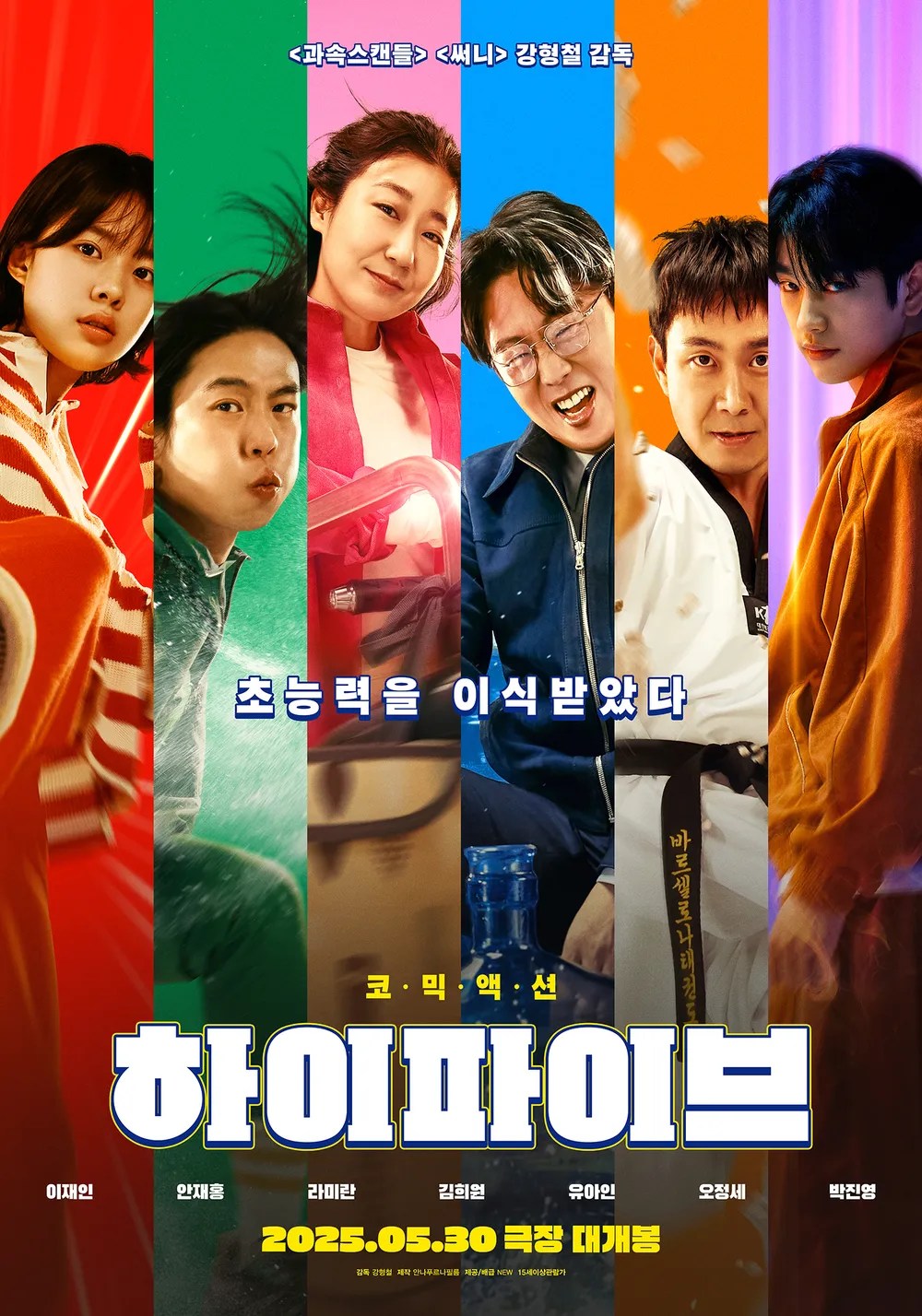
If you suddenly developed super powers, what would you do with them? Would you start using them for good to save the people around you, or would you become obsessed with the power itself and try to amass more of it while your using abilities only for your own ends? Those at the centre of Kang Hyoung-chul’s superhero comedy Hi-Five (하이파이브) are firmly in the helping others camp, but they’ve seen enough movies to know that every hero needs a villain and there’s someone else out there who wants their power for themselves.

That would be ageing cult leader Eternal Young-chun (Shin Goo), New God Resurrected. Young-chun is just ripping his followers off and doesn’t believe in anything he preaches but has, on the other hand, started to believe in his own divinity. He’s been keeping himself in good health through frequent organ donations from less fortunate people to the extent that his body’s a kind of Ship of Theseus. His daughter’s fed up with his longevity and hoping he’ll finally snuff it so she can take over, which is why she’s after the five in the hope of taking them out before Young-chun can steal all of their transplanted organs too. It turns out that the pancreas he was given was taken from a superhero who took his own life and has not only rejuvenated his body but given him the ability to suck the life force out of other people to empower himself in a more literal way than he’s already feeding off his followers by exploiting their devotion to convince them to give up all their money and assets or else work themselves to death for free.

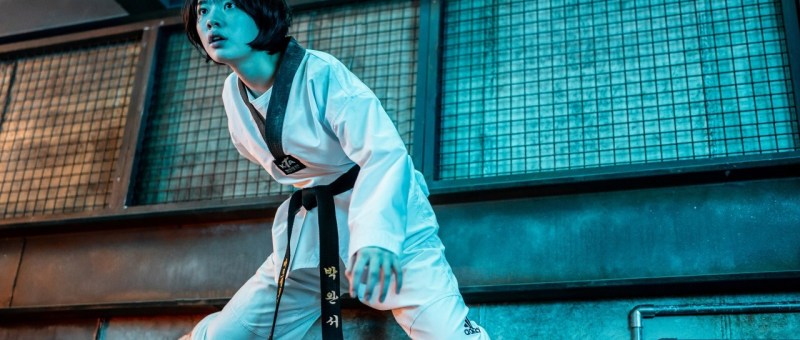
The other five commonly transplanted organs were given other people who are all marked with a tattoo and have been given powers of their own, though one of them hasn’t figured out what hers is yet. In contrast to Young-chun’s soullessness, each of the five seems to have had their own problems that are only impacted by their transplants rather than directly caused by them. Teenager Wan-seo (Lee Jae-in) received the heart and is frustrated by her overprotective father who constantly asks about her friends though she keeps saying she doesn’t have any because she was ill for so long and had to skip school for treatment which is why struggling to make any new ones. He won’t let her do taekwondo either, though that’s what she most wants to do and possibly why she ended up with the all powerful, super speedy fighter skills. Ji-sung (Ahn Jae-hong), meanwhile, is a struggling screenwriter with an interest in the superhero genre. He doesn’t have any friends either, which may be to do with a poor career decision that alienated him from his community. Though he’s the first one to want to get the group together, he’s soon consumed by cynicism. Ji-sung got the lungs and can blow things away, but struggles to convey his emotions with words and gets into an alpha male hissy fit with Ki-dong (Yoo Ah-in), a super-sharp guy who got the corneas and can manipulate electricity but is actually a bit of a loser with gambling issues and similar interpersonal issues to Ji-sung.

Middle-aged yogurt lady Seon-nyeo (Ra Mi-ran) got the kidneys and can’t figure out what her superpower is but becomes the force who holds the group together. Even so, she’s battling mental health issues and some guilt about something that happened in her past and caused unintended harm to another person. Factory foreman Heel-han (Kim Hee-won) is a devotee of the cult, but frustrated and conflicted by the obvious disregard for workers’ safety and wellbeing. He got the liver, and can heal minor wounds caused by recent accidents. The reason he has no friends is that he cut off all of his relationships when he joined the cult, which is one other reason he doesn’t want to make a fuss about the abuse of workers and is originally flattered by Young-chun’s attention.

Nevertheless, it’s becoming part of the group that allows them to save each other and themselves figuratively and literally in combining their strengths to battle Young-chun, who is after all also sort of a part of them and a member of their family as another recipient of organs from the same person. Kang imbues their somewhat clumsy heroism with a quirky humour, even giving the occasional use of CGI a comedic, comic book aesthetic to lean into what might otherwise be a minor liability though production design and values are top-notch. It’s a shame the film was held up for four years by Yoo Ah-in’s drug arrest which has severely hampered his career and led to most of his unreleased work being shelved at the time, otherwise this might have gone on to become a fun movie franchise with deepening lore led by a likeable cast of everypeople using their powers for good in small but important ways. Still, just this episode alone is plenty of warmhearted fun as the gang come together to expose Young-chun’s vain and selfish cult leader for the conman he is, saving themselves and freeing those like them who fell victim to his lies.


Hi-Five screened as part of this year’s London Korean Film Festival.

International trailer (English subtitles)

Motel Cactus (모텔 선인장, Park Ki-yong, 1997)

Motel Cactus posterAs a pair of its patrons eventually begin to muse in a moment of easy reflection, Motel Cactus is an odd name for a love hotel. Then again, a prickly flower blooming in the desert perhaps captures the uniquely melancholy qualities of these illicit, temporary meetings filled with defeated hope and existential malaise. A breakthrough feature for Park Ki-yong, Motel Cactus (모텔 선인장, Motel Seoninjang) owes a significant debt to the world of Wong Kar-wai with which it shares a mild visual similarity thanks to cinematographer Christopher Doyle making his only (to date) foray into Korean cinema. Park’s explorations of romantic emptiness might not be particularly original but it’s hard to argue with the beauty in his sadness.

Each of our joyless encounters takes place in room 407 of the titular Motel Cactus stretching across ten years of turbulent Korean history. Park begins with politics as a young woman attempts to wash tear gas out of her eyes after wandering into a democracy demonstration by mistake. Time moves on and the room becomes home to a pair of students intent on shooting a film but trapped in a Godot-esque limbo waiting for a friend who has been unavoidably detained. The first woman suddenly reappears but with a different man, followed by the man again but now with an old flame whose life after love has proved disappointing.

Park bookends each of the episodes with a brief piece of to camera monologue taking place outside of the room. Hyun-Joo (Jin Hee-kyung), the woman from the first and third scenes, angrily berates an offscreen friend for being naive and getting her heart broken by another no good, cheating man. Of course, Hyun-Joo’s irritated speech could easily be directed at herself, abandoned and then abandoning in each of her unsuccessful encounters with men. Though her original assignation with the young and handsome Min-koo (Jung Woo-sung) begins with passionate intensity, it quickly turns cool – he calls another woman and lies about being with a client, emerging guilty and conflicted. Min-koo refuses to talk of love and eventually leaves early, offering the olive branch of a Saturday picnic that both of them know will probably never take place.

Suk-tae (Park Shin-yang), Hyun-joo’s second partner, begins with a “funny” story recited in a bar about a woman who may have been intending to commit suicide for love. Drunk out of their minds, Suk-tae and fellow drinker Hyun-joo head on up to room 407 where they have a total blowout, alternating between childish play and animalistic lovemaking. When the air cools and introspective chat takes over, he asks her if it’s true she always comes here when it rains to which she freely admits, reliving the ghost of past love and a rainy birthday with the presumably long gone Min-koo. This time, it’s Hyun-joo who leaves sadly before the sun has risen while Suk-tae is left behind in a blissful, drunken snooze.

When Suk-tae returns to the room, it’s for a less deliberate purpose. Reuniting with college sweetheart Hee-soo (Lee Mi-yun), he makes awkward small talk reminiscing about the old days while she sadly keys him in to her melancholy dissatisfaction with her later life which neatly echoes his own sense of defeated failure. They want to go back to a more innocent time, but they can’t and it’s clear their superficial reconnection is merely an echo of the past which won’t survive the room.

The room has its way of distorting itself, trapping the would be lovers in an imaginary space in which a part of them will always remain. The students attempt to subvert the nature of Motel Cactus through inching towards innocent romance, but they remain at odds with each other, playing childishly at love while attempting to take mastery of the room but repeatedly failing. Miscommunication reigns. Seo-Kyung (Kim Seung-hyun), the young actress in filmmaker Joon-Ki’s (Han Woong-soo) student project, gets waylaid on her way to the hotel by a TV vox popper who wants to ask her opinion about in a change in the law which would reverse a ban on people with the same surname marrying (a fairly big problem given Korea’s relatively small number of surnames even when only applying to a common ancestral branch). Seo-kyung, however, mishears them and launches into a consideration of same sex relationships on which she ultimately comes out in favour.

Hee-soo’s monologue was delivered to a fortune teller who’d previously advised her that her marriage was a bad idea – she didn’t believe him, but he was right. Motel Cactus is a sad place, drenched in neon half light with the greyness of rainy skies worrying at the windows. An old lady reappears to clear up after our careless lovers while the room’s decor undergoes minor changes, an ‘80s-style electric moving picture diorama an eerie fixture on the wall as its bright waterfalls threaten to tumble on for all eternity. Time stands still in here, marked only by the futility of true connection and the inescapable longing that accompanies it. Park’s naturalistic desires are occasionally swamped by Doyle’s characteristically stylish camerawork but it’s difficult to argue with the poetry of his images even whilst singing an old song.


Motel Cactus was screened as part of the 2018 London Korean Film Festival.