
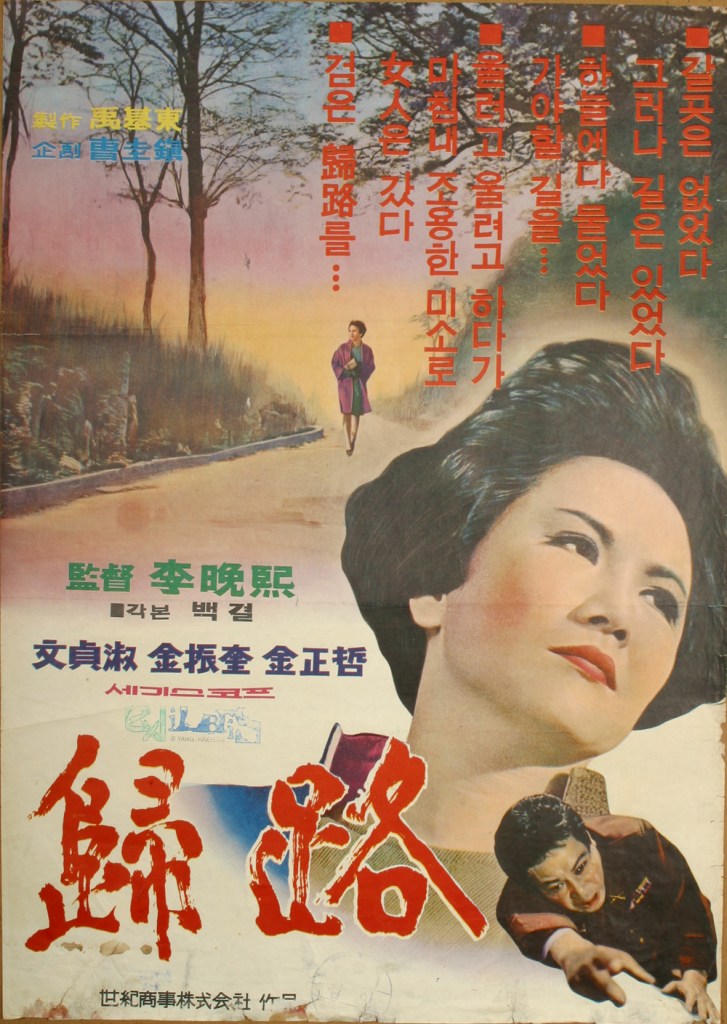
 Lee Man-hee was one of the most prolific and high profile filmmakers of Korea’s golden age until his untimely death at the age of 43 in 1975. Like many directors of the era he had his fare share of struggles with the censorship regime enduring more than most when he was arrested for contravention of the code with his 1965 film Seven Female POWs and later decided to shelve an entire project in 1968’s A Day Off rather than tailor it to the concerns of the day. For these reasons it’s not difficult to read a political message into Lee’s 1967 tale of the (im)possibility of escape from a moribund marriage, Homebound (歸路 / 귀로, Gwiro). Like her country, Ji-yoen finds herself at a crossroads in the battle scarred post-war world which asks her to choose between a life of miserable servitude in fulfilment of her duty or one of accepting the painfulness of public disapproval in choosing to strike out for a happier future.
For fourteen years, Ji-yeon (Moon Jeong-suk) has been more caretaker than wife to her paralysed war hero husband, Dong-u (Kim Jin-gyu), who is so absorbed in his own sense of impotence that he has almost come to resent the extreme sacrifice he feels his wife has made for him. Dong-u is now a writer earning his living through serialised newspaper stories which at least affords Ji-yoen the opportunity of frequent trips into the city to deliver his manuscripts and meet with the publishers.
As it happens, the novel Dong-u is currently writing has a meta-dimension in that it’s extremely close to his own life. The ongoing story of a paralysed writer and his “saintly” wife who endures all hardships to stay at her husband’s side has proved popular with readers but now the editor is minded to warn Ji-yoen that some are becoming bored with the wife’s unrealistic goodness. They want something more human, he says, that sort of devotedness is nothing short of dull. Offended (the editor is almost talking about her real life, after all), Ji-yeon storms out leaving her bag behind. A young reporter, Gang Uk (Kim Jeong-cheol), runs out after her and becomes instantly smitten. This fateful meeting will lead to a number of subsequent ones but like the heroine of the story the jury is out on whether Ji-yeon should leave her embittered husband for a better life with a younger man, or accept the vow she made as his wife and stay by his side no matter how unhappy it will ultimately make her.
Ji-yeon’s life is undoubtedly a difficult one despite her frequent protestations that she’s happy with her husband and could never love anyone else. Dong-u is forever trapped in the past, dreaming of his military glory and unable to accept his new life to move forward into the increasingly modern world. An early scene sees Ji-yeon deliver a letter congratulating him on the fourteenth anniversary of his wartime service. Dong-u asks Ji-yeon to help him into his uniform after which he puts on a recording of a parade and attempts to stand and salute only to immediately fall over, leading to a brief flashback of the battlefield as Ji-yeon cowers to the side, only later lifting the needle to end the ordeal.
Trapped within his own history, Dong-u berates himself for his physical failings in being unable to be a “full” husband to his self sacrificing wife. The couple have separate bedrooms and share no particular intimacy, barely even friends let alone husband and wife. Dong-u’s bitterness is all encompassing, claiming to be in regret of a sacrifice he feels has been made on his behalf which only brings him additional guilt for destroying his wife’s future happiness as the childless wife of a paralysed man. This same internalised frustration leads him to treat Ji-yeon coldly in intense resentment for the way in which she forces him to feel all of these negative emotions.
Receiving affection only from the family dog, few would blame Ji-yeon if she did find herself a way out through romance. Even Dong-u’s sister who confronts Ji-yeon after catching sight of her with Gang Uk expresses sympathy for her situation, but urges the couple to divorce in order to prevent greater suffering further down the line. Ji-yeon is torn between her uncertain feelings for Gang Uk and her duty as a wife to her husband. At one point, Ji-yeon asks a question about who in the world is the most unfortunate only to answer that it is the person who can neither be respected or hated. She can’t bear the idea of being the woman who abandoned her disabled husband for a younger man, but neither can she endure untold years of respect as his devoted wife trapped in that lonely, claustrophobic house forever.
Torn between modernity in the form of her young lover, and tradition in the form of her embittered former soldier, Ji-yeon is in a similar dilemma to her nation as she looks out at a transformed Seoul standing ready to strike out onto the world stage only to return home to her dark and dingy Incheon cottage which almost seems to exist in the never was of fourteen years before. Her final decision is an ambiguous one, paralysed in indecision as she longs for forward movement but is terrified to accept it. Lee’s film is subtle and subversive, not least in its social messages which lean towards individual freedom and happiness over duty bound tradition even whilst suggesting that those two ideals may be impossible to achieve. Shot in a crisp black and white, Homebound is a study in alienation with its claustrophobic angles and wide sweeping shots of the prospering city which seems to warn that those caught between the past and the future are likely to find themselves crushed by fear and memory in equal measure.
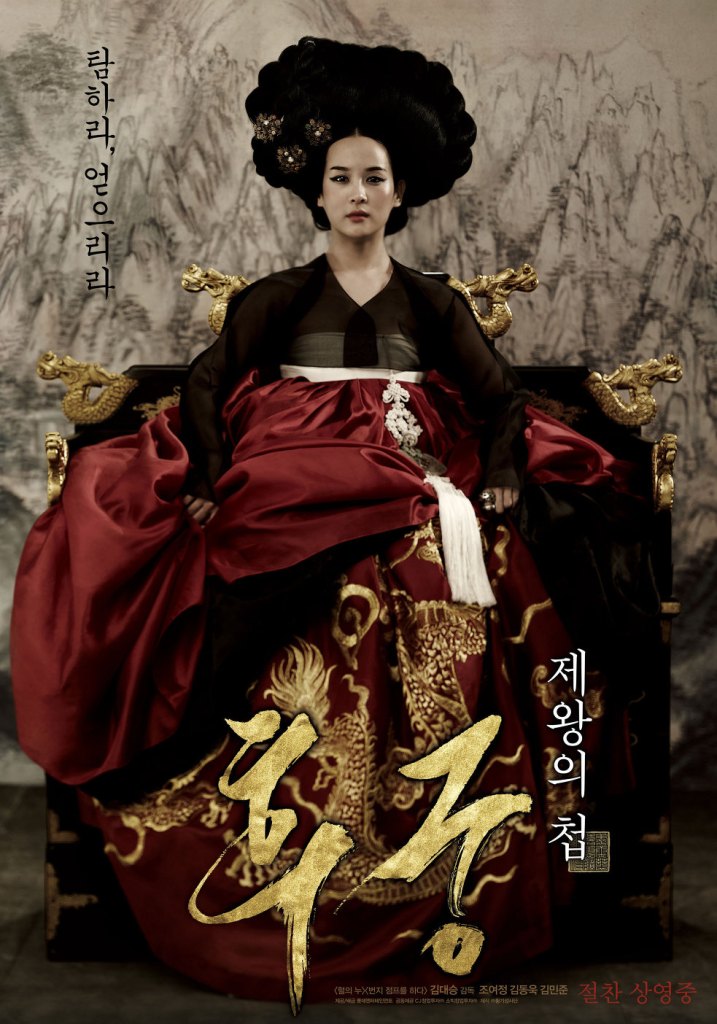 You can become the King of all Korea and your mum still won’t be happy. So it is for poor Prince Sungwon (Kim Dong-wook) who becomes accidental Iago in this Joseon tale of betrayal, cruelty, and love turning to hate in the toxic environment of the imperial court – Kim Dae-seung’s The Concubine (후궁: 제왕의 첩, Hugoong: Jewangui Chub). Power and impotence corrupt equally as the battlefield shifts to the bedroom and sex becomes weapon and currency in a complex political struggle.
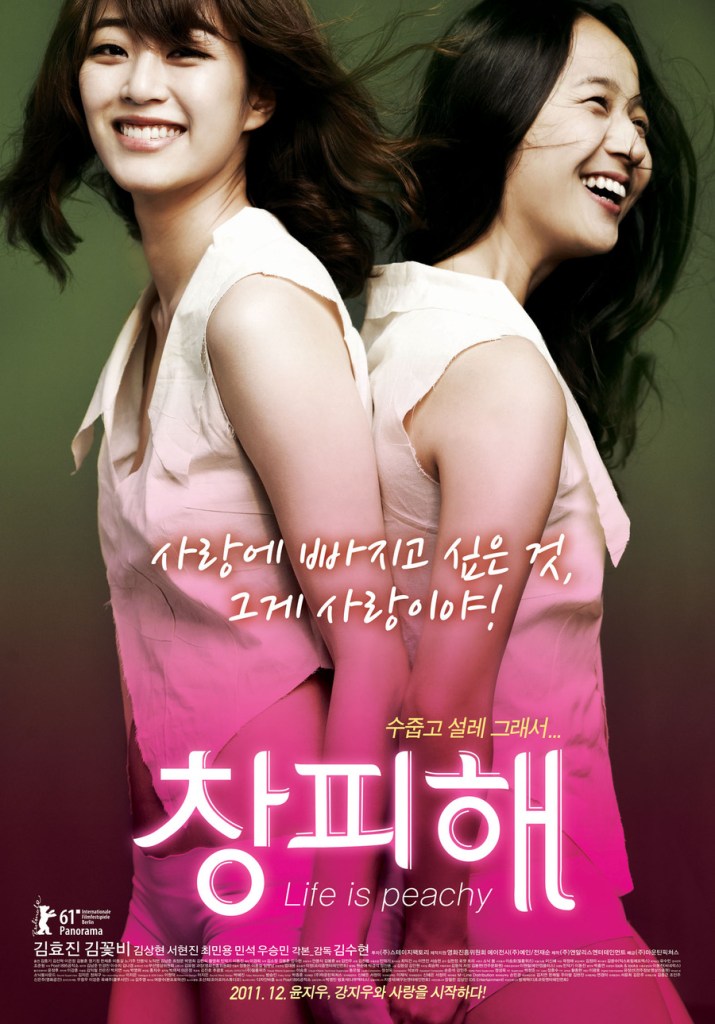 One of the very earliest films to address female same sex love in Korea, Ashamed (yes, really, but not quite – we’ll get to this later, 창피해, Changpihae, retitled Life is Peachy for US release) had a lot riding on it. Perhaps too much, but does at least manage to outline a convincing, refreshingly ordinary failed love romance even if hampered by a heavy handed structuring device and a lack of chemistry between its leading ladies.
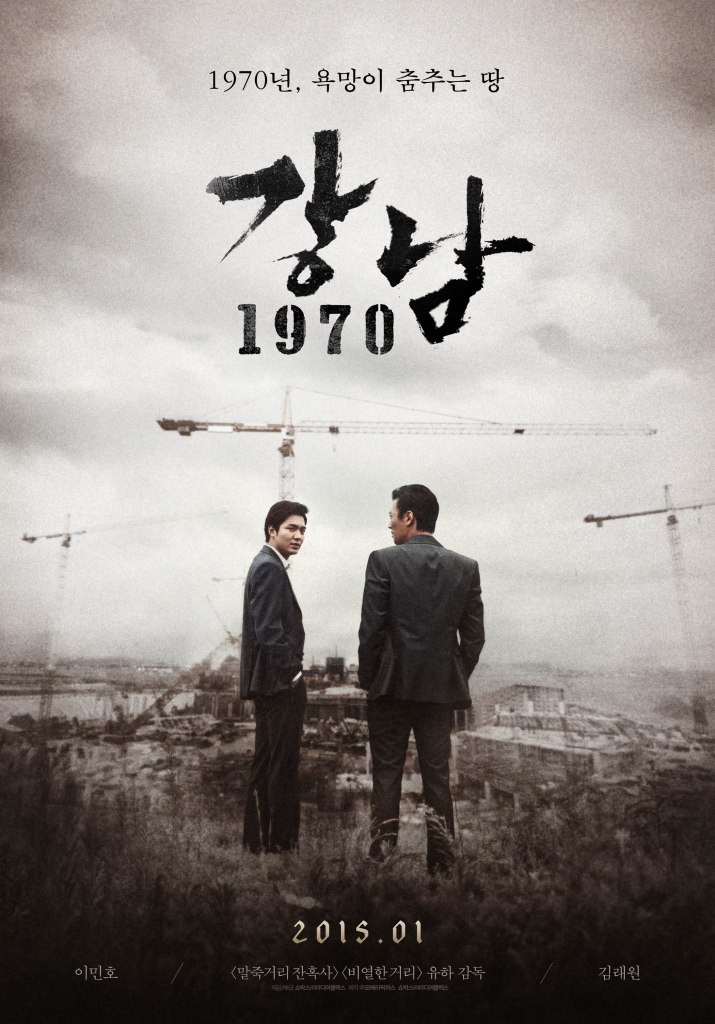 Yoo ha takes us back to the 1970s for some Gangnam Blues (강남 1970, Gangnam 1970) in a sorry tale of fatherless men caught up in dangerous times of ambition and avarice, very much at the bottom of the heap and about to be eclipsed by the “new world” currently under construction. Back then, Gangnam really was all just fields, owned by farmers soon to be cheated out of their ancestral lands by enterprising gangsters engaged in a complicated series of land grab manoeuvres, anticipating the eventual expansion of the bursting at the seams capital. Far from the shining city of today, Gangnam was a wasteland frontier town, the sort of place where a man can make a name for himself trading on his wits and his fists alone.
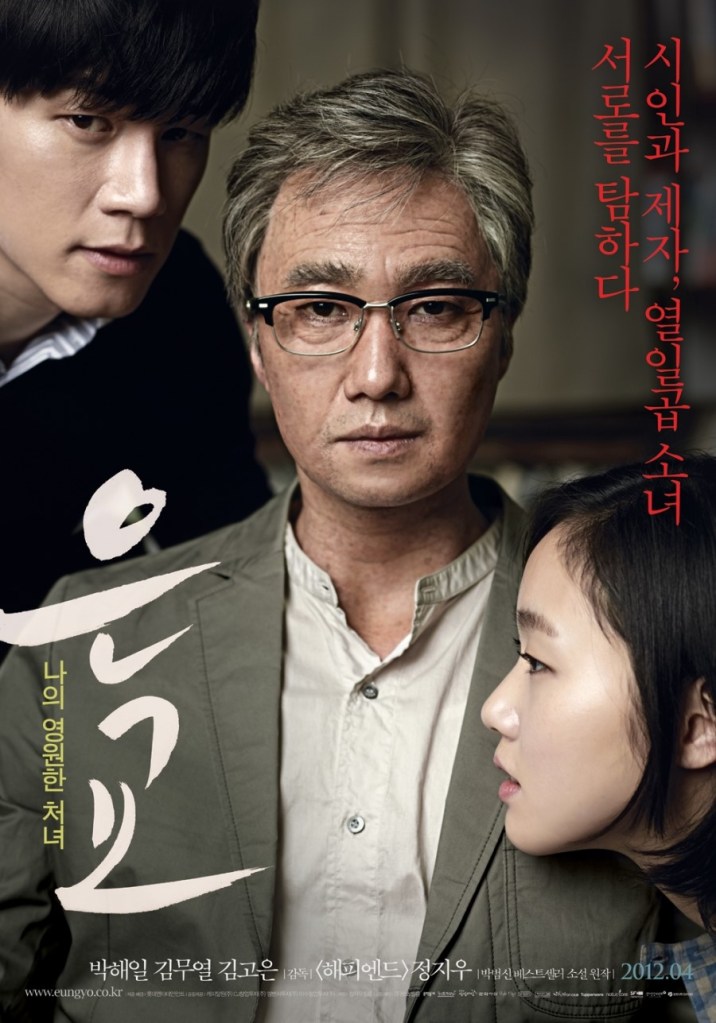 Stories of old men trying to recapture their lost youth through projecting their fantasies onto pretty young women are not exactly rare and the protagonist of Jung Ji-woo’s Eungyo ( AKA A Muse, 은교) is just as aware as most that his dreams of youthful romance border on the ridiculous. A tale of loss, nostalgia, and jealousy both professional and personal, Eungyo is a poetic exploration of the burdens and benefits of age which are often invisible to those who can only look forwards.
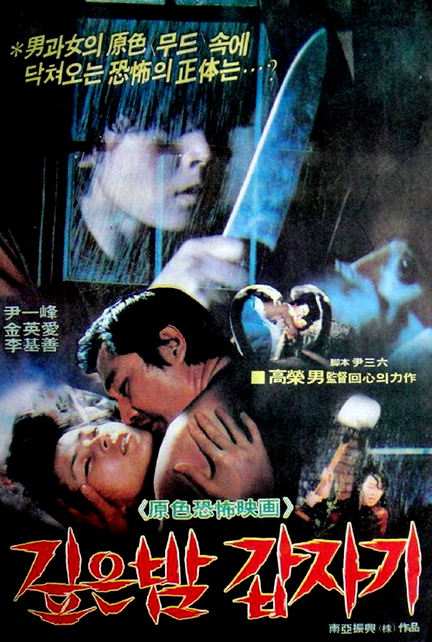 Everybody ought to have a maid, goes the old adage, but finding one you can trust can be a tall order. Kim Ki-young’s The Housemaid clearly sounds a warning call to husbands everywhere not to be tempted by the enticements of pretty young girls or conniving social climbers with designs on upending the domestic order by supplanting the legitimate wife from within her own home. The Housemaid is melodrama rewritten as horror in which a parasitical force colonises the domestic environment hell bent on taking it over through a subversion of its binding yet taboo foundation – sexual desire. Twenty years later, Suddenly in the Dark (깊은밤 갑자기, Gipeun Bam, Gapjagi) returns to the same theme but from a different angle. A once harmonious household is suddenly turned upside down following the introduction of a second female, provoking a series of crises within the already strained mind of its wife and mother.
 Review of Hur Jin-ho’s The Last Princess first published by
  Review of Korean animation Kai (카이 : 거울 호수의 전설, Kai: Geowool Hosueui Jeonseol) first published by
 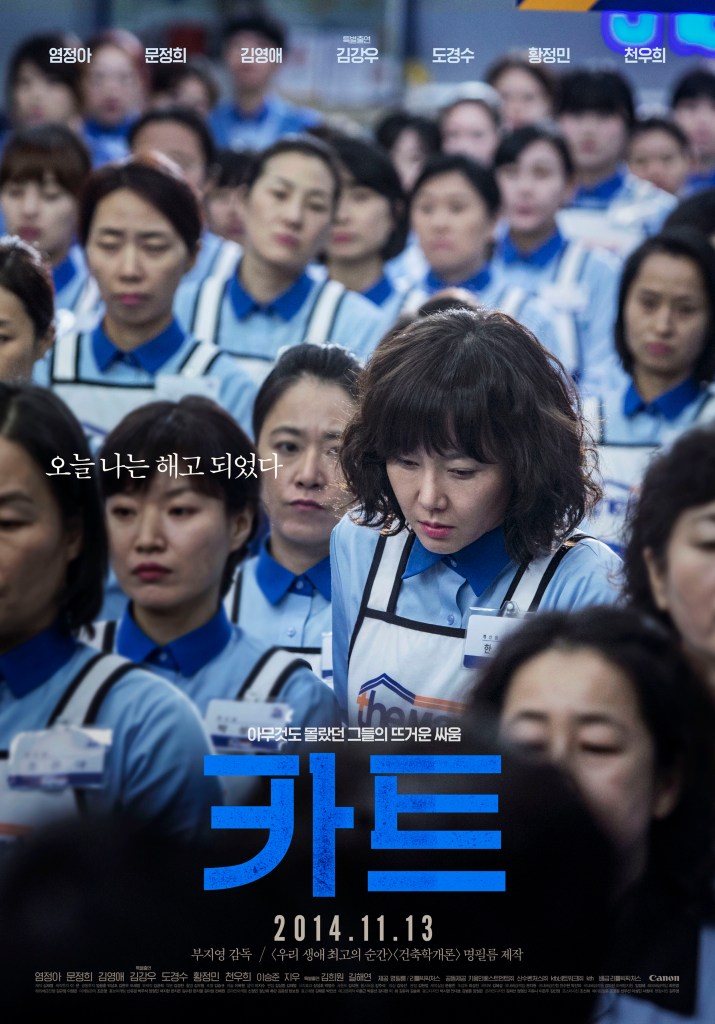 Up until very recently, many of us lucky enough to live in nations with entrenched labour laws have had the luxury of taking them for granted. Mandated breaks, holidays, sick pay, strictly regulated working hours and overtime directives – we know our rights, and when we feel they’re being infringed we can go to our union representatives or a government ombudsman to get our grievances heard. If they won’t listen, we have the right to strike. Anyone who’s been paying attention to recent Korean cinema will know that this is not the case everywhere and even trying to join a union can not only lead to charges of communism and loss of employment but effective blacklisting too. Cart (카트), inspired by real events, is the story of one group of women’s attempt to fight back against an absurdly arbitrary and cruel system which forces them to accept constant mistreatment only to treat their contractual agreements with cavalier contempt.
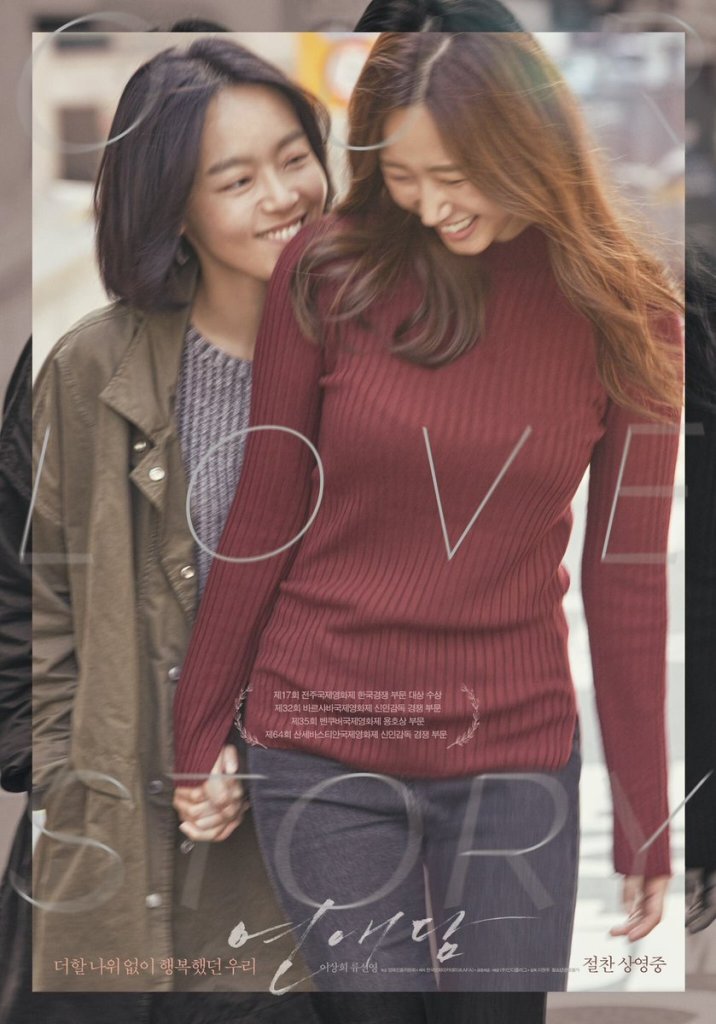 The history of LGBT cinema in Korea is admittedly thin though recent years have seen an increase in big screen representation with an interest in exploring the reality rather than indulging in stereotypes. The debut feature from Lee Hyun-ju, Our Love Story (연애담, Yeonaedam), is among the first to chart the course of an ordinary romance between two women with all of the everyday drama that modern love entails. A beautiful, bittersweet tale of frustrated connection, Our Love Story is a realistic look at messy first love taking place under the snowy skies of Seoul.
 Windows on Worlds