Forte (포르테, Kimbo Kim, 2025)

A worried policeman nervously asks Yeonji (Im Chae-young) if the rumours are true. They say that everyone who works at Studio Forte ends up going mad or dying, but Yeonji has only just started working there herself and it’s too early for her to say whether that really is the case, though it’s true enough that the building has an eerie energy. Even a visiting film director remarks that the atmosphere is unusual, though it doesn’t seem to have put him off returning. The director, Jeonghwa (Lee Jung-eun), is one of the best after all which is why Yeonji took this job in the first place.

On arriving at recording studio Forte, Yeonji remarks that it seems like a great place for inspiration but the building itself is anything but inspiring. A block of concrete and glass, it stands ominously and incongruously in the middle of nature as a defiantly manmade structure intent on disrupting the natural order. It feels oppressive, rigid, and constraining. Not the sort of environment that best serves creative impulses despite the well-appointed interior with its modern design and copious light from the large windows. 

Yeonji walks the surrounding forest in wonder, but at the same time there’s something odd about it in a bewitching sort of way. Her colleagues seem to be haunting her, seemingly standing around and staring while she’s otherwise disappointed by the lack of faith Jeonghwa seems to have in her. At the first team briefin,g she neglects to give Yeonji anything to do and then tells her to help her colleague Haejoon finish his section of the score for an upcoming film. Only Haejoon already seems to be having strangely. He looks ill, and sometimes doesn’t even turn up for their work sessions to the point that Yeonji ends up working with another colleague, Dojin (Cha Se-jin), to get everything finished on time. 

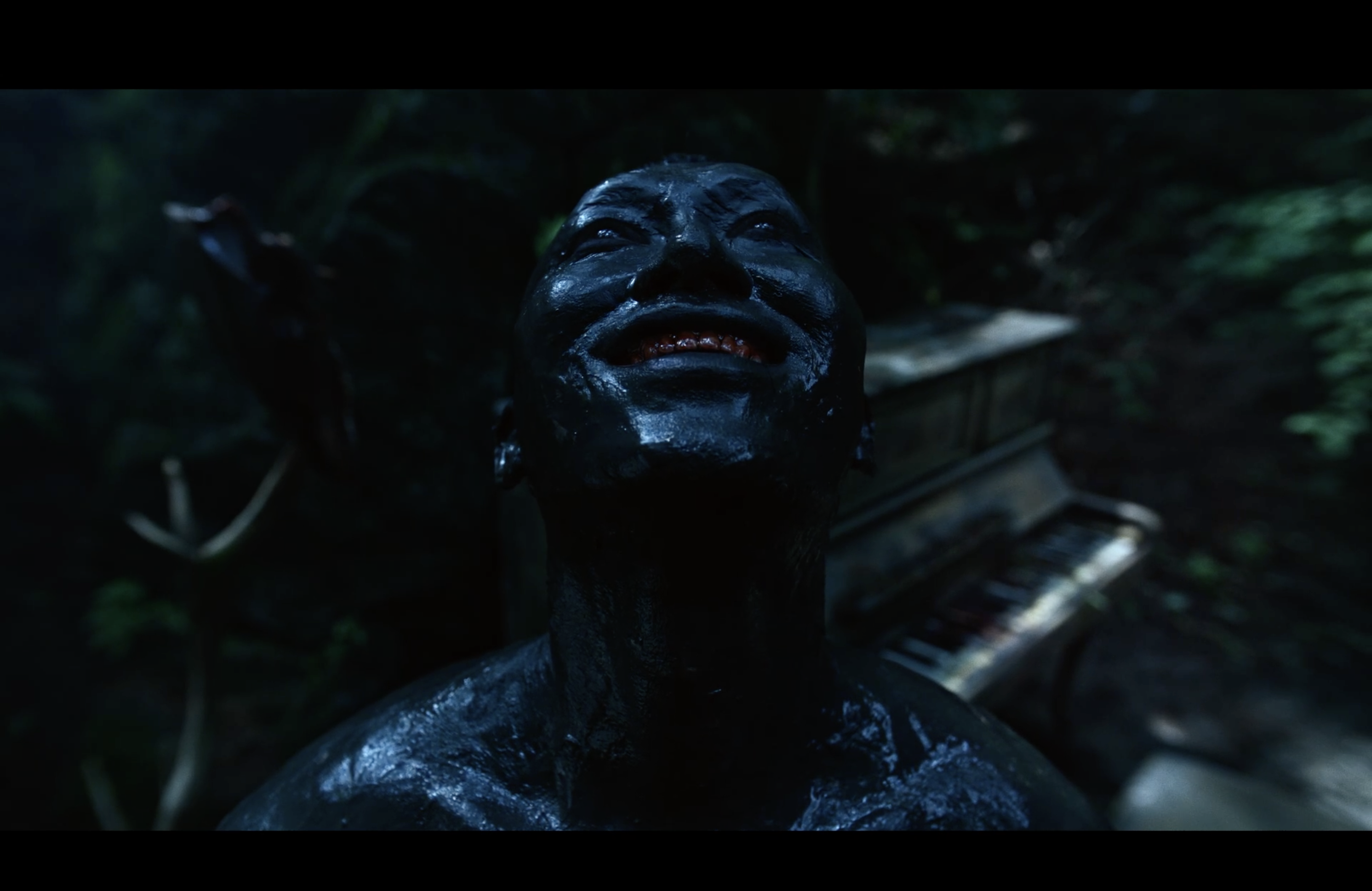
“Everything that happened here is real.” Haejoon later says cryptically after screaming that something is “here” and means him harm. Yeonji begins having visions of the forest and an oily, muddy figure along with images of death and fire. In any case, even without the existential dread of lingering supernatural threat, it’s easy to see why this place might drive someone mad. Yeonji tries asking Dojin what’s happening with credits on the movie and he brushes the question off, replying only that Jeonghwa will sort it out, which sort of implies only she will actually be credited. When the director arrives for a test screening, Jeonghwa treats Yeonji like the tea girl and explains that she’s “new”, but the director asks for her opinion anyway and she gives it, honestly, though it contradicts Jeonghwa’s. The producer (Cho Sueun) claims she could tell that Yeonji wrote the tail end of the music because it was “different”, which gives her the feeling that her work may be good after all and that Jeonghwa is playing it too safe with her conventional approach. 

Though she had been somewhat mousy and earnest on her arrival, dressed in an elegant if constraining outfit, Yeonji gradually becomes bolder and wilder. She lets her hair down and dresses in darker, looser clothing while often talking back to Jeonghwa and contributing her own contradictory opinions. But in the end none of it matters. She realises that Jeonghwa is basically exploiting her, getting her to ghostwrite the score while taking all the credit. The director makes a drunken pass at her, and while confused by her reaction explains that this is her big opportunity. Both Jeonghwa and himself only got to where they are by playing the game, which means submitting oneself to this kind of quid pro quo. 

It stands to reason that Yeonji’s barely suppressed desires would eventually burst through as they eventually do in the bloody climax building towards a crescendo of emotion in which Yeonji appears to become smaller and smaller behind the piano as the music overcomes her as if she were possessed. Only now has she released her creative freedom, playing Jeonghwa’s piano with a furious abandon that threatens to burn the whole edifice to the gound. Drawing on 1970s folk horror in it its aesthetic the film has an intriguingly eerie, surreal sensibility deepened by its own unsetting score as the evil haunting the studio begins to make its presence felt if only in Yeonji’s mounting resentment towards an industry that does indeed view her as little more than an inconvenient ghost in the machine.


Trailer (English subtitles)
Dr. Cheon and the Lost Talisman (천박사 퇴마 연구소: 설경의 비밀, Kim Seong-sik, 2023)

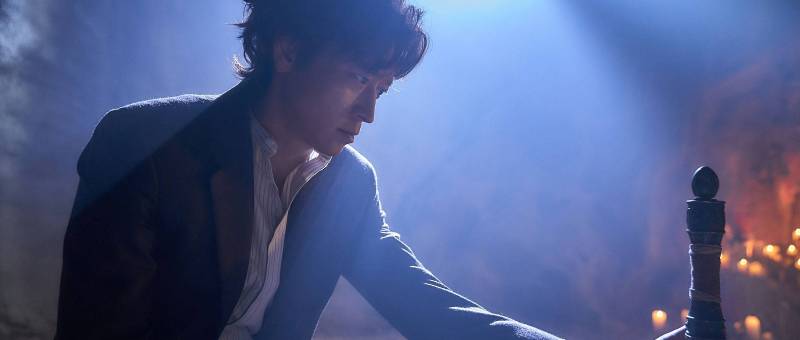
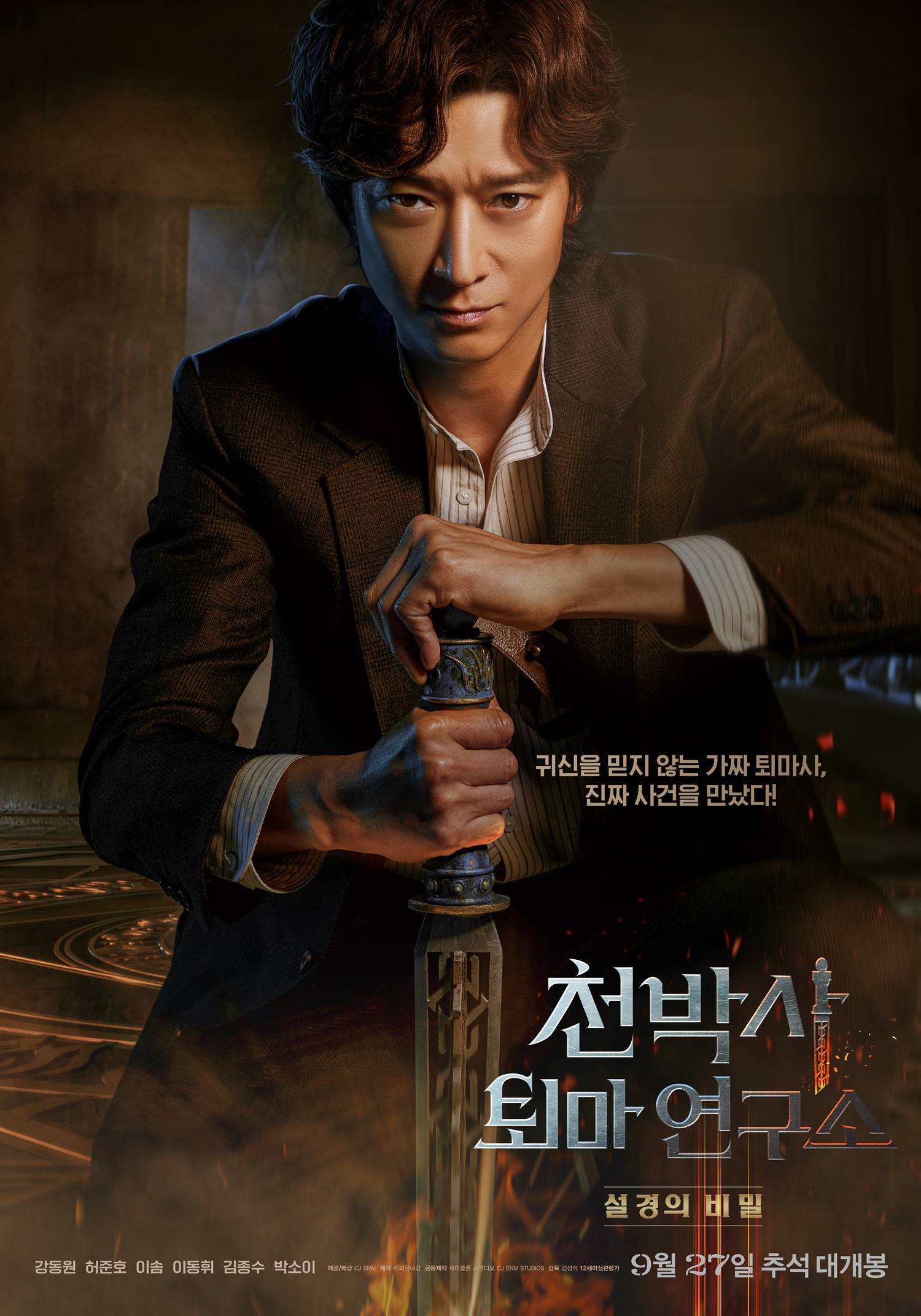
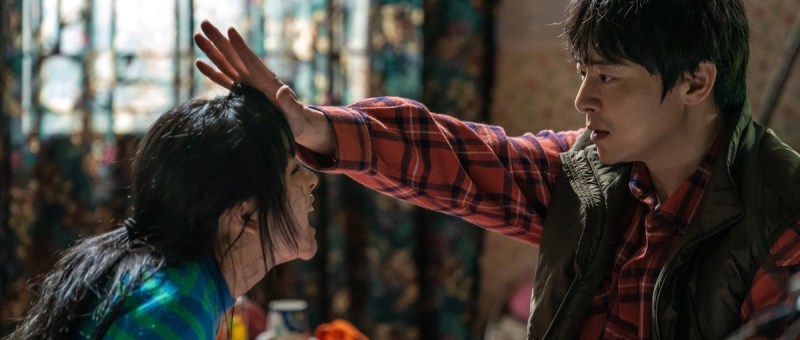
The titular Dr. Cheon (Gang Dong-won) doesn’t believe in ghosts. Some may see him as a scammer or a conman, but he is a real doctor and sees what he’s doing as a kind of role-play therapy exorcising the demons that disrupt human relationships through, essentially, giving people what they want but were unable ask to ask for. Inspired by a popular webtoon, Kim Seong-sik’s charmingly quirky supernatural adventure Dr. Cheon and the Last Talisman (천박사 퇴마 연구소: 설경의 비밀, Cheonbaksa Toema Yeonguso: Seolgyeongui Bimil) has a pleasing retro quality that recalls classic serials along with the wisecracking heroes of old as Cheon exorcises a few demons of his own while trying to constrain a great evil. 

In a strange way, Cheon’s cynicism maybe a direct result of knowing that ghosts are real and one of them killed his brother and grandfather who was in fact the chief shaman. These days, Cheon is YouTube celebrity exorcist who runs what he calls a “high tech psych” company carrying out fake rituals with the aid of a series of special effects designed by “Apprentice Gang”, or more accurately his assistant In-bae (Lee Dong-hwi), featuring ominous wind and more dynamite than seems advisable. Kim has some fun casting the couple from the bunker in Parasite, on which he served as an AD, as wealthy homeowners with more money than sense convinced they’ve got a ghost largely because because their teenage daughter has recently become moody. Using Sherlock Holmes-like powers of deduction, Cheon assesses what’s at the heart problem in the family and gives each of them some spiritually endorsed advice such as that the husband should stop buying ugly statues his wife doesn’t like and the parents should cut the teenage daughter some slack. 

As he suggests, every one is happy so it doesn’t really matter that he lied to them or that the ritual was fake because they’ve still been cured of what ails them albeit through some psychological manipulation rather than religious reassurance. Then again, those around Cheon may find it somewhat embarrassing that their teachings are being exploited to make money out of desperate people even if Cheon seems to think it was alright to scam the wealthy family because they can after all afford it. Conversely, he tries to turn down a young woman who comes to the office judging from her clothes that she wouldn’t be able to pay only to change his mind when she flashes a bag full of cash. 

Unlike Cheon, Yoo-kyoung (Esom) actually can see ghosts and ought to be able to see through Cheon but perhaps chooses not to while he, refreshingly, does not take too long to re-accept the fact that ghosts are real after all and this one has a particular bone to pick with him personally. Kim casts the ghost world in shades of blue and gives them untold power, able to fly around in spirit form and possess one person after another in quick succession, while otherwise lending the empty streets a kind of warmth in the orange glow of the flares In-Bae uses to survey the landscape. With gorgeous production design and impressive effects, the film incorporates the trappings of shamanism from drums to lines of prohibition but deepens its lore with a series of key artifacts as Cheon finds himself reaccepting his destiny as a shaman while weilding the sword of justice.

In any case, the film seems to ask why not both, suggesting that Cheon’s fake shaman business is sort of real anyway and in its way provides healing not least to himself. They are all haunted by ghosts of the past whether they see them or not, while Cheon’s eventual quest is one of vengeance that would also allow him to lock away his trauma in a sealed room deep underground and bound by the chains of hell. The sight of the many sutras the villain had placed to possess and control the townspeople suddenly bursting into flames implies a kind of liberation or purification in which the dark presence has finally been lifted even if it may not be for long. Hugely entertaining and fantastically witty, Kim ends the film with a post-credits sequence teasing a potential series and the irresistably intriguing further adventures of Dr. Cheon, fake shaman and real exorcist, showman and swordsman battling evils both ancient and modern.


Dr. Cheon and the Lost Talisman screened as part of this year’s London Korean Film Festival.

International trailer (English subtitles)
The Woman in the White Car (하얀 차를 탄 여자, Christine Ko, 2022)

A small-town policewoman unfairly held back by a traumatic past is embroiled in a complicated case of distorted realities in Christine Ko’s twisty, B-movie thriller, The Woman in the White Car (하얀 차를 탄 여자, Hayan Chaleul Tan Yeoja). Alluding to a novel which is mentioned in the film and both clue and red herring simultaneously, the title may actually be a minor spoiler but is also neatly allusive in its sense of mystery which at the same time proves mildly reductive even as we ask ourselves who such a woman may be. 

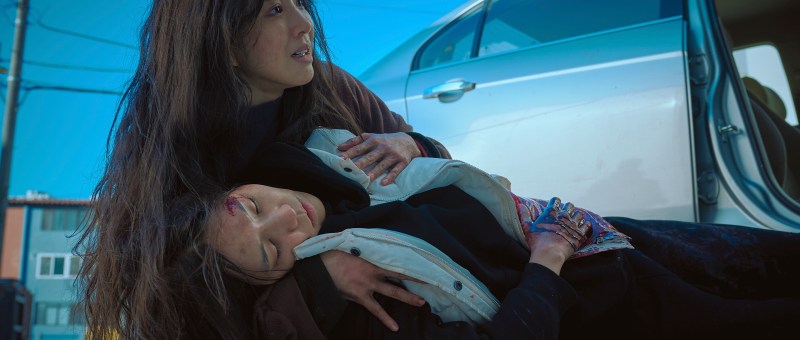
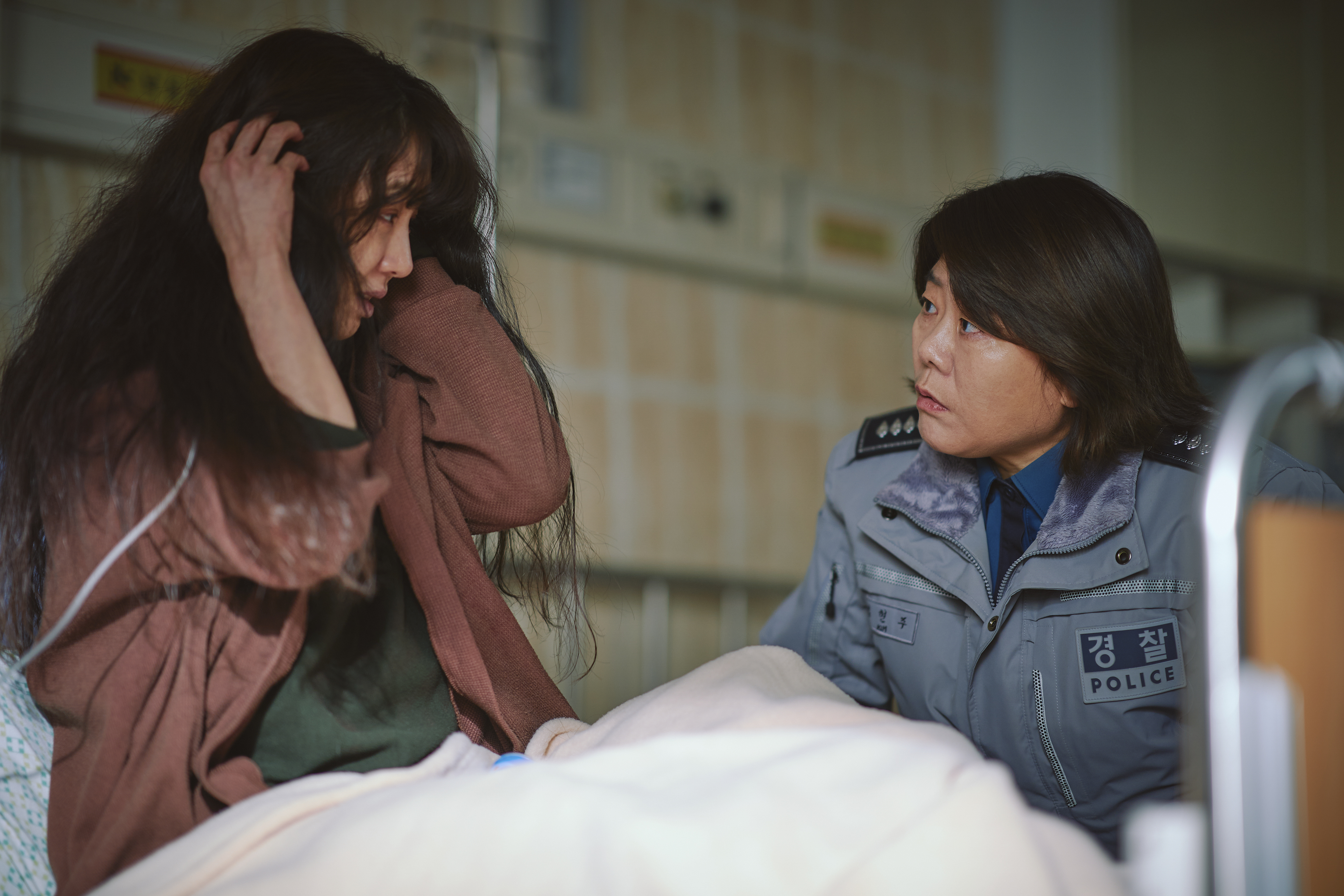
The film opens, however, with a silver car which has a large dent to its front bumper arriving at speed at a hospital where the driver, Do-kyung (Jung Ryeo-won), pulls another woman she calls sister out of the passenger seat while trying to get the attention of medical staff explaining that the woman has been stabbed by an abusive partner, Jung-man. All of that is obviously very distressing but when policewoman Hyun-ju (Lee Jung-eun) arrives on the scene she is immediately alerted to what seem to be inconsistencies in Do-kyung’s story some of which could possibly be chalked up to shock along with the revelation that Do-kyung has been diagnosed with schizophrenia and her recollections of events may be unreliable. 

Then again as Hyun-ju says, just because Do-kyung has schizophrenia it does not mean there is no truth in her testimony, just as it does not mean that anyone else with no such condition is necessarily telling the truth. Identifying with her on some level, Hyun-ju tries to tease out the hidden meaning behind Do-kyung’s words to unlock an objective reality but is also mindful of the possibility that Do-kyung may actually be completely lucid and playing them all for fools. The plot thickens when it is realised that the woman in the silver car is not Do-kyung’s sister Min-kyung as she had claimed, but an otherwise unidentified passenger whose origins they do not know further casting doubt on Do-kyung’s version of events along with the existence or not of prime suspect Jung-man. 

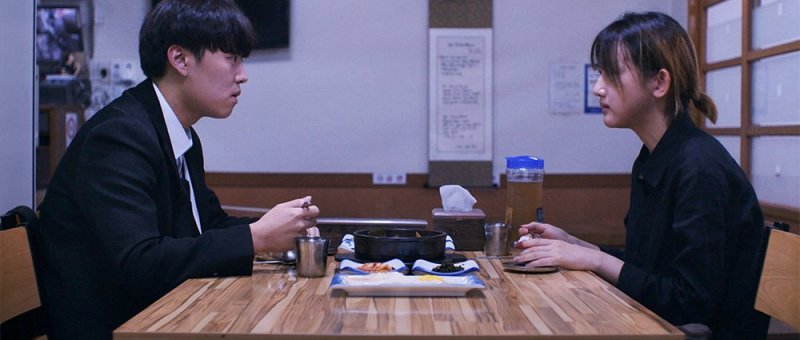
As she had received the call about the incident, Hyun-ju had been having a meal with her naive assistant Young-jae who had complained how boring their lives were as small-town police officers while Hyun-ju had even insisted on finishing her dinner before leaving for the hospital believing it couldn’t really be that urgent. On witnessing her talent for investigating, he asks her why she didn’t leave to pursue a more fulfilling career elsewhere only for her to explain that she stayed to look after a father we later learn to be abusive whose cutting criticism eroded her confidence in seeking a better life. All the women are in fact similarly constrained, but eventually fighting back against those who are preventing them from taking full control over their lives and in some cases creating a narrative that allows them to do so while claiming their freedom. 

Ko piles twist onto twist through a series of unreliable narrators each giving contradictory versions of events but each in their own small way hinting at greater truths which eventually present themselves to Hyun-ju leaving her with a dilemma in solving a mystery but wondering if it’s better to let it rest and each of the women, herself included, go free. Switching aspect ratios and colour grading to present different versions of reality through flashback and thought experiment, Ko places material clues in each of the stories to act as tiny anchors while setting the tale at a creepy mountain lodge in the middle of nowhere filled with gothic uncertainty and almost chilling loneliness. Accompanied by an overtly B-movie score, the film certainly indulges, with pleasure, in a series of genre cliches from mental illness to unreliable narrators, blood in the snow, and dangerous mountain curves but is finally anchored in a more certain reality unlocked by a detective’s unexpected empathy even if that same empathy leaves her vulnerable to a more literal kind of deceit. “I was just saving myself” one of the women admits, speaking for all taking their destiny into their own hands and reclaiming their freedom in the knowledge that only they can do so.


The Woman in the White Car screens 7th/8th October as part of this year’s BFI London Film Festival.

Original trailer (English subtitles)
Hommage (오마주, Shin Su-won, 2021)

A struggling female filmmaker finds herself haunted by a ghost of the silver screen in Shin Su-won’s strangely moving ode to cinema, Hommage (오마주). As much about the difficulties faced by women in the predominantly male film industry as those faced by women in general in the still patriarchal society, Shin’s drama looks back to a cinematic golden age and the pale shadows of those history has seen fit to forget. “You will vanish one day like I did” according an ominous note discovered in a never finished screenplay, but through a gentle process of restoration the forgotten figures of the past can perhaps be resurrected as the frustrated director begins to find new hope in a departed kindred spirit. 

Dressed very much like Shin herself, struggling director Ji-wan (Lee Jung-eun) has hit a creative rut. Her third film, Ghost Man, has recently been released but is not exactly setting the box office on fire while the latest tentpole blockbuster continues to pack them in. With her confidence at rock bottom and financial worries hovering on the horizon, Ji-wan is offered an unusual job which although it might not pay much will be very worthwhile in helping to restore Hong Eun-won’s 1962 melodrama A Woman Judge starring the great Moon Jeong-seok to its former glory. Unfortunately like many films of its era the negative is in poor condition with sound missing from several scenes which Ji-wan is supposed to re-dub only she’s not much to go on beginning by tracking down the director’s daughter in the hope of retrieving a script before embarking on a kind of scavenger hunt in the search for Hong herself. 

As the film opens and indeed closes, Ji-wan is in the middle of a swimming lesson quite literally attempting to keep herself afloat mimicking the despair she is beginning to feel in her personal life as regards her career. She identifies strongly with Hong who, in the film’s slightly fictionalised history, was forced to give up filmmaking after her third film, as Ji-wan herself fears she may have to do, having toiled away for 10 years just waiting for the opportunity while Ji-wan is also approaching the 10th anniversary of her decision to pivot into filmmaking as a married wife and mother. Though she had taken the job only reluctantly, the desire to restore the film is partly born of her need to rebuild her confidence as a filmmaker but also to honour Hong’s legacy and restore her rightful place in Korean film history. 

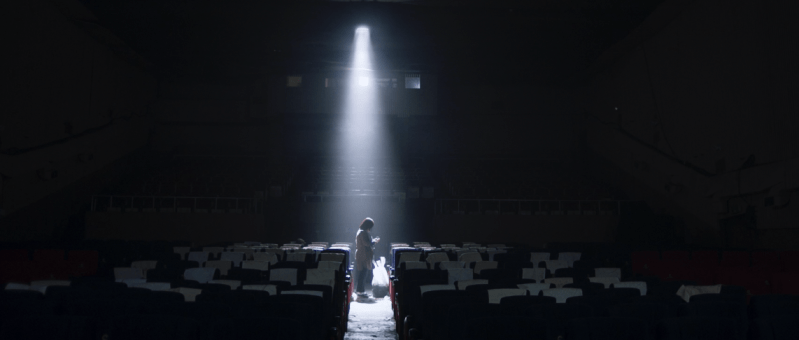
Playing out like a ghost story, Ji-wan is almost literally haunted by Hong’s silhouette in her elegant trench coat and hat, at several moments hearing someone shout “let me out” as if pleading with her to release Hong’s spirit from within the sealed film cans of her almost forgotten feature. Meanwhile she’s spiritually haunted by the discovery of a woman’s body in a car parked outside her apartment building which had not been discovered for some months, a pretty photo of a young woman sitting on her dashboard perhaps of the woman herself or of a daughter, sister, friend but either way a poignant reminder of a life extinguished which Ji-won worries may have been that of her next-door neighbour whose crying she sometimes heard through the walls. On meeting some of those who once knew Hong, each at some point laments that they are the only ones left who remember that time while Ji-wan gets her epiphany in a soon to be torn down cinema with a hole in the roof raining down light into an empty auditorium,. 

Surrounded by unsupportive men from her grumpy husband (Kwon Hae-hyo) to surprisingly chauvinistic son (Tang Jun-sang) who declares himself “love-starved” while echoing the words of those around him that her desire to chase her dreams is “selfish”, Ji-wan is beginning to feel as if she’s disappearing too while finding herself forced to re-confront her notions of femininity in approaching the menopause combined with an unexpected medical crisis. Things aren’t quite as bad for her as they were for Hong, at least no one’s ever thrown salt at her as Miss Lee (Lee Joo-Sil), Hong’s friend and editor, recounts, but she’s less than surprised on hearing that Hong had kept the existence of her daughter secret from her colleagues fearful they’d never let her direct if they knew she was a mother. The film Ji-wan is trying restore is based on the true story of Korea’s first female judge who was in fact murdered by her husband, though the film envisages a more positive ending if within the limits of contemporary patriarchy in insisting that a career is not incompatible with fulfilling the expectations of traditional femininity in caring for her in-laws, husband, and children. Ironically enough, Korea’s first film director Park Nam-ok had been forced to film with her baby on her back but completed just one feature which survives only in incomplete form. 

Many films are presumed lost from Korea’s golden age not just those directed by women, but the particular lack of respect shown towards the films of Park and Hong is particularly upsetting to Ji-wan who later discovers that to add insult to injury old film stock was often mined for its silver content and then sold off to be used as hatbands other such frivolous material. No one really valued these films very much when they were made, so no one made much of an effort to preserve them just like no one is making much of an effort to save the ruined the cinema where she chases the ghost of Hong, the embittered projectionist eventually giving in to Ji-wan’s enthusiasm as she holds up the 8mm film she’s discovered to the light pouring though its ceiling. A beautifully haunting cinematic mystery, Shin’s melancholy drama eventually allows its heroine to reclaim her love for cinema along with her self-confidence as a filmmaker through the restoration of the past finding a kindred spirit in the long departed Hong unfairly denied not only the acclaim she deserved but the artistic possibility to which she should have been entitled. 


Hommage screened as part of this year’s Glasgow Film Festival.

Original trailer (English subtitles)

The Book of Fish (자산어보, Lee Joon-ik, 2021)

An “evil learning sinner” and a young man fixated on Neo-Buddhist thought develop an unlikely friendship while compiling an encyclopaedia about sea life in Lee Joon-ik’s contemplative period drama, The Book of Fish (자산어보, Jasaneobo). Like those of Hur Jin-ho’s Forbidden Dream, the hero of Lee’s historical tale of competing ideologies dreams of a classless future but is exiled from mainstream society not for his revolutionary rejection of a Confucianist hierarchal society but for his embrace of Western learning and religion. 

Like his two brothers, Chung Yak-jeon (Sol Kyung-gu) reluctantly joins the imperial court but later falls foul of intrigue when the progressive king falls only to be replaced by his underage son controlled by the more conservative dowager empress. Having converted to Christianity, Yak-jeon and his brothers are faced with execution but unexpectedly reprieved when the oldest agrees to renounce Catholicism and root out other secret Christians. Yak-jeon is then exiled to a remote island while his better known brother, the poet Yak-yong (Ryu Seung-ryong), is sent to the mountains. On his arrival, the local governor introduces Yak-jeon as a “traitor” and instructs the islanders not to be too friendly with him but island people do not have it in them to be unjustly unkind and so Yak-jeon is, if warily, welcomed into their community. “He maybe be a traitor, but he’s still a guest” his new landlady (Lee Jung-eun) explains as she prepares him some of the local seafood. 

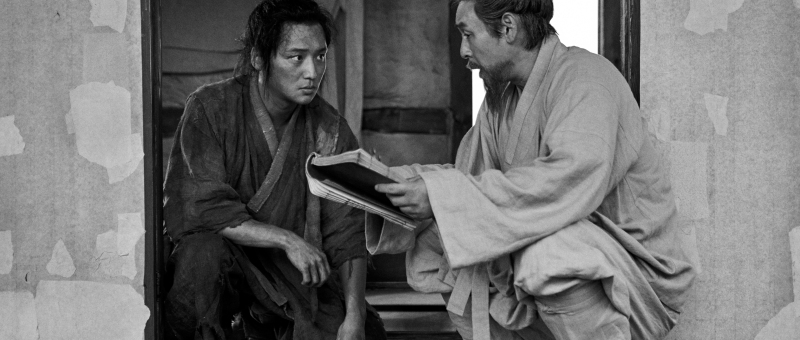
Yet Yak-jeon encounters resistance from an unexpected source, intellectual fisherman Chang-dae (Byun Yo-han) who goes to great lengths to acquire scholarly books despite his otherwise low level of education. Somewhat patronisingly, Yak-jeong offers to tutor him, but Chang-dae is a rigid thinker who believes the world is going to hell because people have forgotten their Confucian ideals so he’s no desire to be taught by a treacherous “evil learner” or be sucked in to his dangerous Catholicism. Surprisingly, however, for a man who risked death rather than renounce his religion, Yak-jeong is no fanatic and in fact does not appear to practice Christianity at any point while living on the island. What he professes is that Eastern and Western thought need not be enemies but can go hand in hand while a rigid adherence to any particular doctrine is what constitutes danger. 

Chang-dae had insisted that he studied “to become a better human” but he also has a large class chip on his shoulder as the illegitimate son of a nobleman who refuses to acknowledge him, fully aware that as a “lowborn” man he is not allowed to take the civil service exam and in any case would not have the money to buy his way in to the court. Despite later professing egalitarianism, Yak-jeong treats the islanders, and particular Chang-dae, with a degree of superiority extremely irritated by Chang-dae’s refusal to become his pupil in the slight of his elite status often making reference to his “low birth”. Confessing his desire for a classless society with no emperor, however, Yak-jeong encounters unexpected resistance as the young man finds it impossible to envisage a world free of social hierarchy based on rights of birth and swings back towards desiring the approval of his elite father in the determination to climb the ladder rather than pull it down. 

Chang-dae finds himself caught between two fathers who embody two differing ways of being, Yak-jeong advising him to think for himself rather than blindly follow Confucianist thought, while his father encourages him to towards the court and the infinite corruptions of the feudal order. Chang-dae does begin to interrogate some of the more persistently problematic elements of Confucian teaching including its views on women and entrenched social hierarchy but also feels insecure and desperately desires conventional success and entrance into a world he thinks unfairly denied to him. Once there, however, he discovers he cannot submit himself to duplicities of feudalism. The islanders are being taxed to into oblivion, not only is there a random counter-intuitive tax on pine trees but the government is also extracting taxes from the family members of the deceased as well as newborn babies while cutting sand into the rice rations it promises in return. His father and superiors laugh at him for his squeamishness, seeing nothing at all wrong in the right of the elite to exploit the poor. Trying to blow a whistle, Chang-dae is reminded that the courtly system is an extension of the monarchy, and so criticising a lord is the same as criticising the king which is to say an act of treason. 

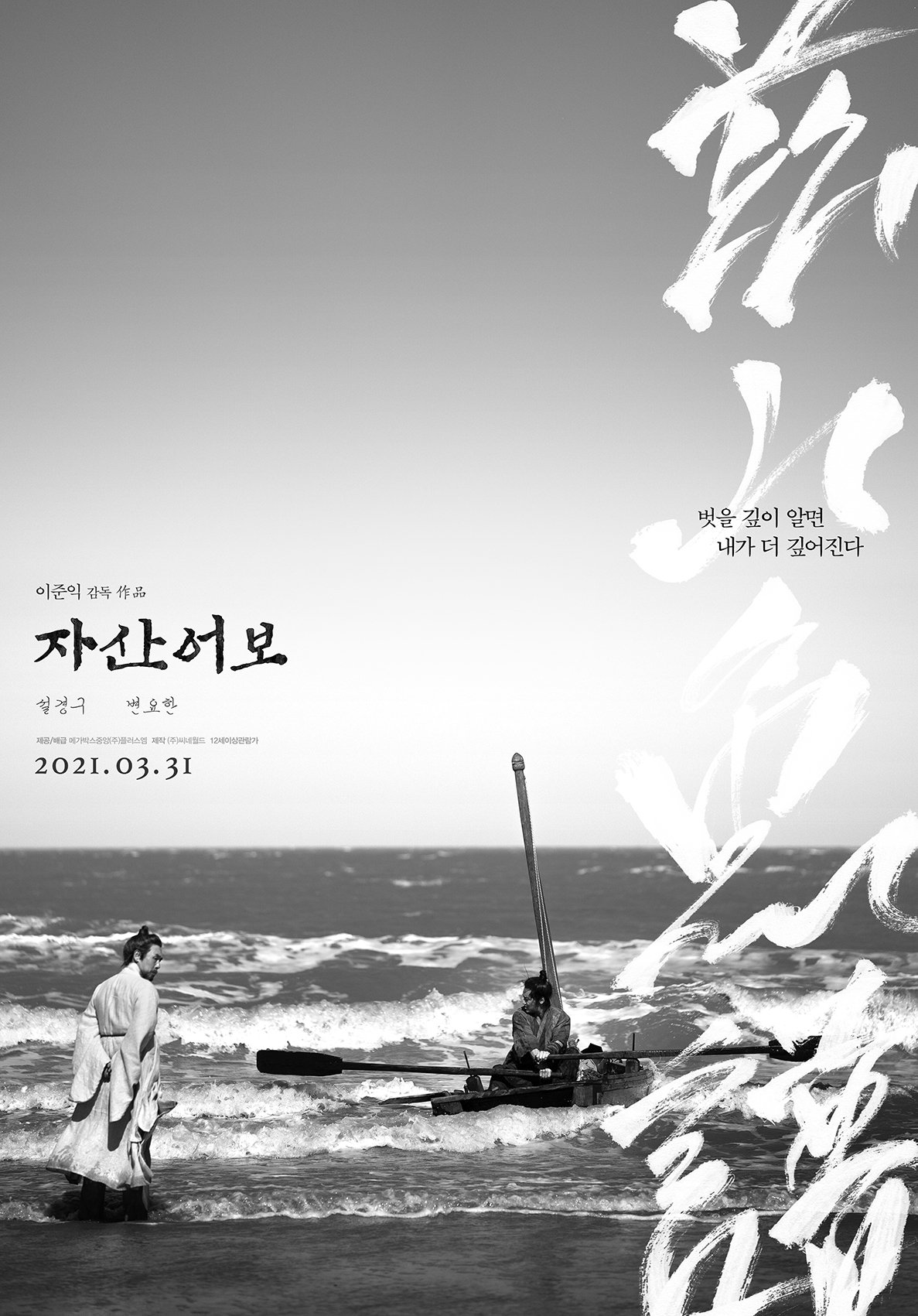
Having been accused of treason himself, Yak-jeong declines to enact his revolutionary ideas penning only a couple of books during his time in exile in contrast to his brother who published many treatises on effective government. Yak-jeong explains he dare not risk writing his real views which is why he’s immersed himself in the beauty of the natural world, exercising his curiosity writing about fish while making use of Chang-dae’s vast knowledge of the sea. The two men develop a loose paternal bond but are later separated by conflicting desires, Chang-dae eventually choosing conventional success over personal integrity only to regret his decision on being confronted with the duplicities of the feudal order. Shot in a crisp black and white save for two brief flashes of colour and inspired by traditional ink painting, Lee’s contemplative drama finds itself at a fracture point of enlightenment as two men debate the relative limits of knowledge along with the most effective way to resist a cruel and oppressive social order but eventually discover only wilful self exile as Chang-dae learns to re-embrace his roots as an islander along with the openminded simplicity of Yak-jeong’s doctrine of catholicity in learning. 


The Book of Fish screened as part of this year’s New York Asian Film Festival.

Original trailer (Korean subtitles only)

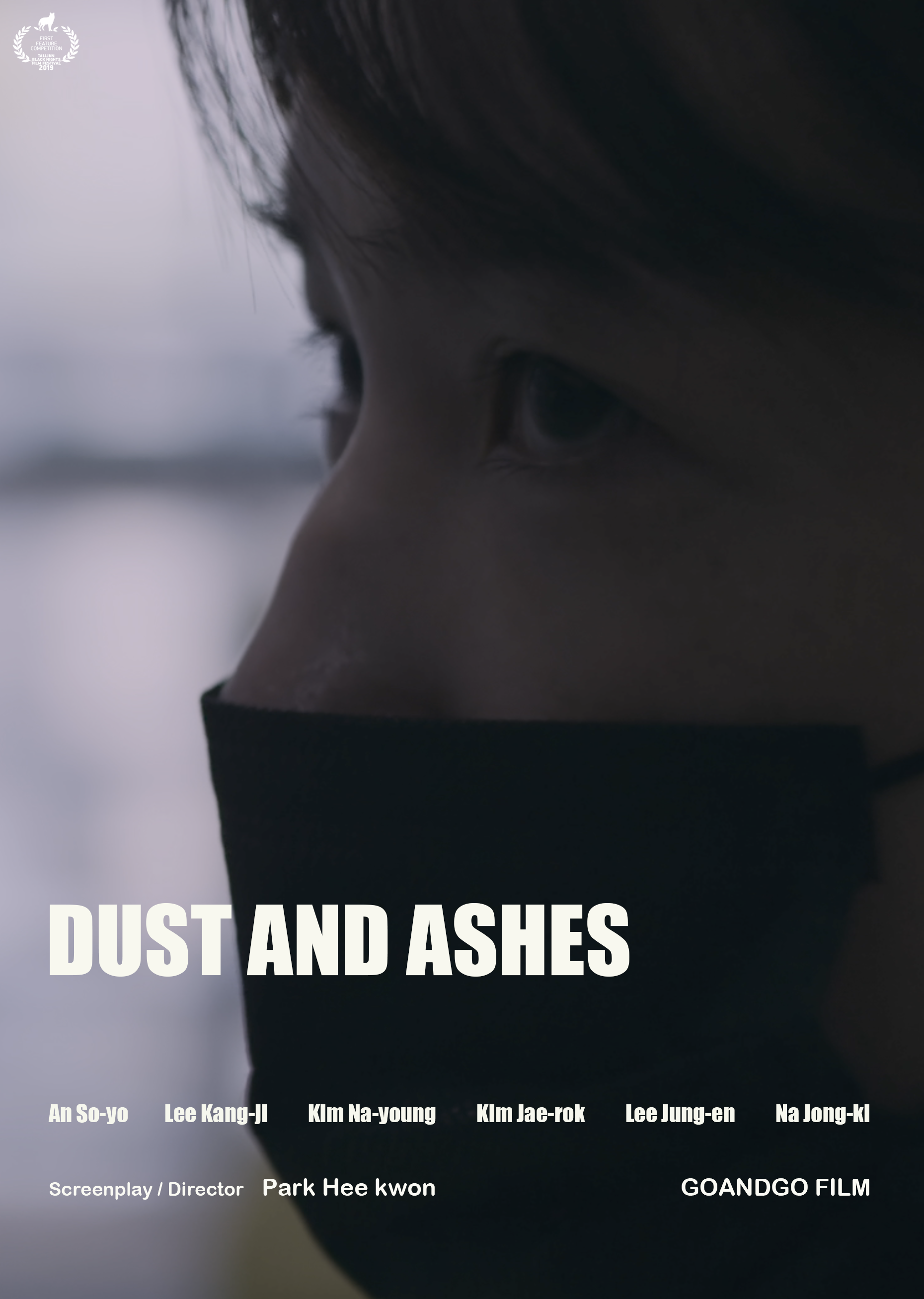
Dust and Ashes (축복의 집, Park Hee-kwon, 2019)

“People are property of the government from the cradle to the grave, since it’s all over they give it back to you” a corrupt policeman ironically explains handing over a dodgy document designed to help a desperate young woman subvert her tragedy. Stark in execution, Park Hee-kwon’s near wordless exploration of urban poverty Dust and Ashes (축복의 집, Chuk-bok-eui Jip) finds its heroine resorting to the unthinkable in a simple quest to survive while trapped in a world collapsing all around her. 

As we first meet Hae-su (Ahn So-yo), she’s leaving her factory job which evidently involves substances so toxic that she washes right away and scrubs her jacket clean ready for the next day before leaving for her other gig, scrubbing barbecue grills at a restaurant. She keeps trying to call someone who doesn’t pick up and walks home through the darkened streets, pausing so long outside the door we wonder if she’s gone to see whoever it is who won’t return her calls but eventually lets herself in with a key and walks quickly to the bathroom without turning on the light as if there’s something in there she doesn’t want to see.

Perhaps we begin to doubt Hae-su, somewhat uncertain of what has actually happened, but we can also see that she is griefstricken and nervous, driven to extremes in the depths of her despair. She must necessarily have known what was waiting for her at home, planned it, knowing exactly what it is she must do next. Her brother, Hae-jun (Lee Kang-ji), meanwhile is evidently not so much in favour, petulant and resentful but aware he has little choice in playing the role which has already been dealt him. Hae-su’s painful quest takes her on a journey through the corruptions of the modern society from a dodgy doctor taking cash for certificates to a corrupt policeman ‘helping” her alter the narrative circumstances to her advantage but only for a fee. 

Meanwhile, she’s about to be evicted, the entire area she lives in earmarked for “redevelopment”, a wasteland of deconstruction strewn with dust and rubble. We see her suffer the ignominy of a funeral with no flowers where she and her brother are the only mourners, a sight which seems to raise eyebrows not least with the insensitive policeman. Opening with darkness and the sounds of machinery, Park situates us in an industrial hellscape as if our entire lives took place on a gurney, trapped inside a wooden box being slowly pushed towards the fire. Showing the entirety of the funeral process in painful detail from the tender yet efficient embalming to the eventual cremation, grieving becomes something impossibly cold and clinical, no fancy curtains here merely an LCD screen reminiscent of that above a baggage claim carousel to let you know your loved one’s ashes (or more accurately bone dust ground in an industrial blender) are now ready for collection neatly packaged inside another, smaller wooden box. 

Yet Hae-su has no choice but to put up with these indignities. There appears to have been some level of male failure involved in the family, an absent or estranged father figure apparently no help, while we can also infer that the shadowy presence bothering her that she takes such care to avoid is an agent of the loan sharks in part responsible for her financial predicament. We can only imagine the desperation that must have forced this small group of people to take such a dreadful decision, and the anxiety of those left behind as they wonder if it will all come to nothing. Yet even if it works out, we get the impression Hae-su is running to stand still. Victory only means the continuance of the status quo, there seems precious little sign Hae-su or her brother will be able to escape their penury especially after everyone, including the loan sharks and dodgy policeman, exacts their cut. 

In the end all there is is dust and ashes. Hae-su evermore encumbered, wearing a mask to stave off the inevitable but still breathing in the corruption of the world around her as it too collapses into dust, a deconstructed wasteland of economic hubris. Necessarily bleak, Park’s spare, numbed photography finds only emptiness in Hae-su’s rain-drenched streets even as she strides off into the distance determined to survive no matter what it takes. 


Dust and Ashes streams in Poland until 6th December as part of the 14th Five Flavours Film Festival.

Festival trailer (English subtitles)

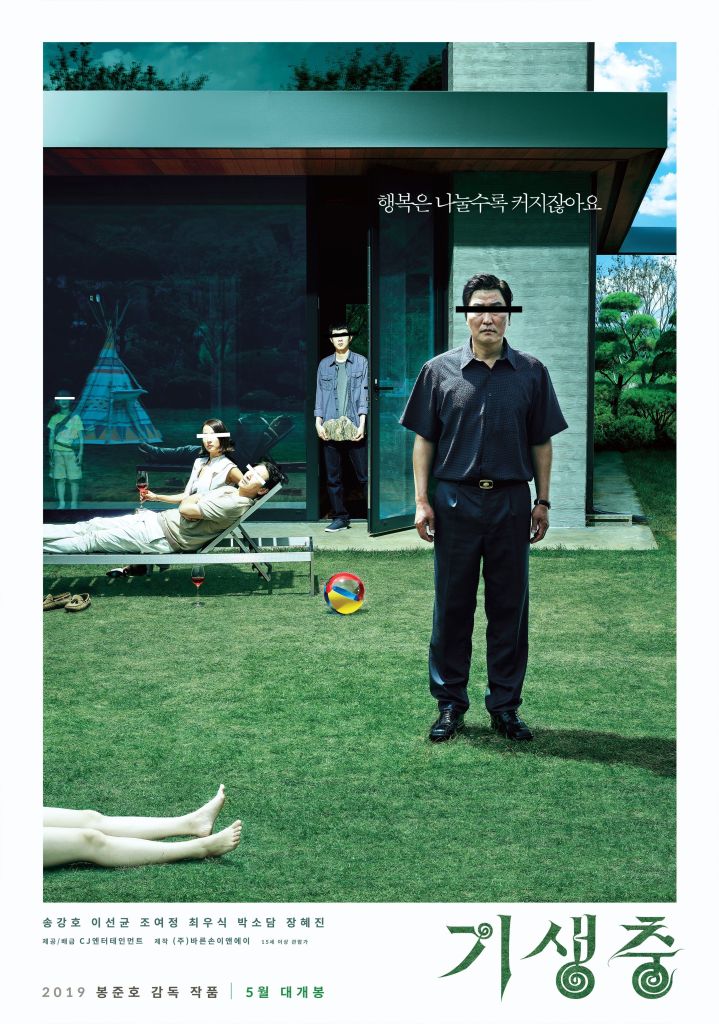
Parasite (기생충, Bong Joon-ho, 2019)

“So metaphorical!” the ambitious son at the centre of Bong Joon-ho’s class war melodrama Parasite (기생충, gisaengchung) is fond of saying, and he’s right – it really is. “Hell Joseon” rears its ugly head again, only it’s not just the young who can’t climb out but mum and dad too. Sticking together all the way, this enterprising family have realised that the only way they’re going to enjoy the fruits of the modern society is by becoming hangers on, feeding off someone else’s perhaps unfairly gotten success, and if that means stomping on a few others just like them to get there then so be it. There’s no room for love or fairness in a class war. 

The Kims – mum Chung-sook (Chang Hyae-jin), dad Ki-taek (Song Kang-ho), and grown up kids Ki-woo (Choi Woo-shik) and Ki-jung (Park So-dam), all live together in a tiny semi-basement apartment in a rundown slum. Unable to find steady jobs, the family make ends meet with casual jobs like folding pizza boxes while cadging wi-fi to look for better opportunities. Better opportunities only arise, however, thanks to Ki-woo’s upper middle-class college kid friend Min (Park Seo-joon) who brings them a special gift from his dad of a stone said to attract wealth, and a hookup for Ki-woo with a possible job coaching the pampered daughter of a superrich tech entrepreneur. After faking his credentials, Ki-woo gets the job, and wastes no time at all bringing in his sister as an “art tutor” for the couple’s apparently “troubled” young son. Together, they conspire to get the chauffeur fired so dad can take over, and then plot to do the same to the housekeeper so mum can come too, colonising the house and living alongside the wealthy Parks with a view to someday ousting them. 

The house, a fabulously modern take on the traditional designed by a famous architect who sold it to the Parks when he moved to France, is a kind of “host” in itself. We might not all admit it, but there are few of us who would not want to live in a house like this, especially if we feel it has been deliberately placed out of our reach. The Kims are envious, yes, but not perhaps malicious. They simply want a kinder life, one free of the anxiety of always having nothing and then getting that taken away from you too. In a running gag, a drunk keeps peeing right in front of the Kims’ window, and later they literally find themselves drowning in a river of shit when torrential rain causes the local sewer system to backup and flood their fetid, low-lying slum forcing everyone into a makeshift “evacuation” centre where insincere public servants try to make excuses about not being bothered enough to make sure those with no money don’t drown just because it rained. 

The Kims aren’t bad people, but their desperation means they can’t afford to be kind. The true “villains” of Parasite aren’t the Parks or the Kims themselves, but the system which forces one set of oppressed people to oppress another. The Kims know they’re responsible for displacing people just like them – getting the driver fired, going after the housekeeper, etc, but they can’t afford to think about it, pausing only to wonder if maybe they found other jobs once they themselves start to feel comfortable. “She’s rich but still nice” Ki-taek says of Mrs. Park (Cho Yeo-jeong), only for his wife to counter no, “she’s nice because she’s rich”. Mrs. Park can afford to be nice because she has plenty. She has no need to worry about taking things from others, and is secure enough not to have to worry about people taking things from her. That makes her easy pickings for a family like the Kims, but it also hints that “niceness” is the natural condition of being human, the way we’re supposed to behave to each other in an ideal world where none of us are hungry or afraid. 

Then again, the Parks are not wholly “nice” even if they are polite in a superficial, wholesome sort of way. Mr. Park (Lee Sun-kyun) in particular has a curiously feudal outlook in which he is perpetually preoccupied with the idea of his servants “crossing the line”, making it plain that there is a clearly defined border between those who rule and those who serve. The Parks’ young son is the first to notice that the Kims all smell the same even if he does so innocently, they all obviously use the same soap and detergent after all. Mr. Park, however, later takes it further, complaining about the way Ki-taek stinks up his car, resenting the smell of “poverty”, the mustiness born of living with damp and mould. To him, the Kims are not so much different from stink bugs, squatting in his home, members of “the great unwashed” unfit for his society. 

He does, however, need them. The Parks are as dependent on the Kims as the Kims are on the Parks, and they all need the house. Unfortunately, peaceful coexistence seems to be a distant possibility in a world of such fierce inequality as to encourage the most casual of cruelties. “All you have to do is walk up the stairs” Ki-woo later tells his father, but that’s easier said than done, especially when everything is telling you that you’ll always belong in the basement. 


Parasite is released in UK cinemas on 7th February.

UK release trailer (English subtitles)

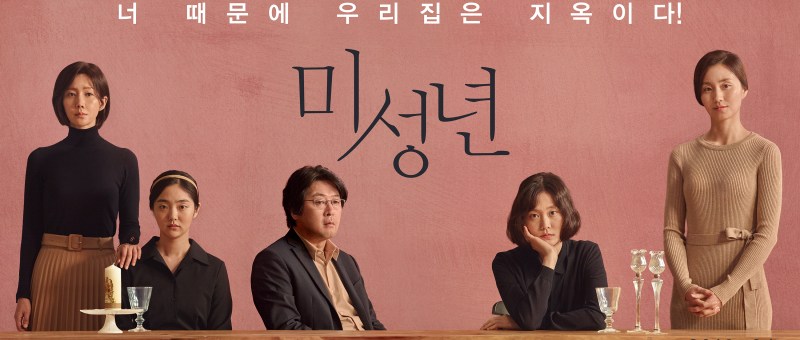
Another Child (미성년, Kim Yoon-seok, 2019)

Another Child Poster 1Learning to be generous in the face of disappointment is perhaps a defining characteristic of adulthood. It’s a lesson the teenage heroines of Another Child (미성년m Miseongnyeon) must learn the hard way as they find an unexpected bond in realising that their parents aren’t bad people, just flawed and human. The debut directorial feature from actor Kim Yoon-seok who also stars in a minor role as the feckless patriarch, Another Child finds four women across two generations caught in very trying circumstances but acting with generosity and compassion as they endeavour not to make any of this harder than it needs to be.

The drama begins when 15-year-old Joo-ri (Kim Hye-jun) spots a compromising photo of her father and another woman on his phone. Following him around, she realises that he’s been having an affair with a woman who runs a duck restaurant a little way out of town and is actually the mother of one of her schoolmates, Yoon-ha (Park Se-jin), though they barely know each other seeing as they’ve never shared any classes. In any case, they do not really get on and eventually get into a fight over Joo-ri’s phone which she dropped at the restaurant while snooping, prompting Yoon-ha to blurt out the truth to Joo-ri’s already depressed and suspicious mother.

Despite Joo-ri’s outrage, her father Dae-won (Kim Yoon-seok) and mother Young-joo (Yum Jung-ah) have been sleeping in separate bedrooms for the last two years and appear to be married in name only. Nevertheless, Joo-ri hoped she could sort all of this out before her mother knew anything about it but the situation has been further complicated by the fact that Yoon-ha’s mother Mi-hee (Kim So-jin) is apparently several months pregnant – news which comes as a shock to Joo-ri who begins to accept that perhaps she can’t simply put an end to her father’s philandering and that nothing will ever be the same ever again.

This becomes doubly true once the baby is born in an early labour brought on by Young-joo’s impromptu visit to the restaurant. Guilt-stricken, Young-joo tries to do what she can for Mi-hee as another woman in a difficult situation while trying to encourage her rather snooty daughter to make friends with her almost step-sister. Despite themselves and the many differences between them, Joo-ri and the headstrong Yoon-ha do eventually start to bond but find their newfound friendship tested by their shared affection for their new little brother with Yoon-ha immediately adopting him and vowing to raise the baby herself in place of her irresponsible mother, even stopping to ensure his birth certificate is properly registered, while Joo-ri coldly suggests he be put up for adoption in the hope he gets a better education. Yoon-ha, practically minded in many other respects, would never abandon a family member, while Joo-ri makes what she thinks is the “sensible” if austere choice which prioritises Yoon-ha’s right to conventional success over familial duty.

Meanwhile, the four women are left to sort everything out amongst themselves. Dae-won is perhaps not a bad man, but weak and feckless. Unwilling to face what it is that he’s done, he runs away – avoiding seeing the baby while refusing to engage with the pain he’s caused his wife and daughter through his infidelity, still in denial that he’s destroyed his family home but never really intending to make a new one with Mi-hee who really was, it seems, just a mid-life crisis fling. Across town, Yoon-ha tries asking her own feckless father for money to pay some of her mother’s hospital fees as well as other expenses but finds him an irresponsible gambler who’d forgotten how old she was even if he eventually managed to recall her name.

Thanks to some gentle prodding from each other’s mothers, with whom both Yoon-ha and Joo-ri begin to find common ground, the girls eventually grow more accepting of their situation, looking for understanding rather than trying to apportion blame. No one here is really “bad”, just flawed and unhappy, caught up in an emotionally difficult situation that is either everyone’s fault or no one’s. None of them have anything to gain by making this harder than it needs to be and thankfully decide to take the moral high ground, not exactly forgiving but compassionate. “It’s not easy to live in this world”, Yoon-ha tells her new brother not quite knowing how right she is. A beautifully pitched exploration of magnanimous female solidarity and unexpected friendship, Another child is a finely drawn feature debut from the veteran actor which holds only sympathy for its flawed heroines trying to find grace in trying times.


Another Child screens on 11th July as part of the 2019 New York Asian Film Festival. It will also be screening as part of the 2019 Fantasia Film Festival on 14th/20th July.

International trailer (English subtitles)

Psychokinesis (염력, Yeon Sang-ho, 2018)

Psychokenesis posterThe animated world of Yeon Sang-ho is dark and cynical, finding only fear and anger in the hopeless vision of contemporary Korea that his films continue to paint. His first live action feature, Train to Busan, began to see a little light as its jaded protagonist finally rediscovered his humanity while the innocent were eventually allowed to find a degree at least of rescue. Psychokinesis (염력, Yeomlyeok), in once sense, continues the theme in centring itself on another of Korean cinema’s bad dads, one so morally corrupted that he rejects all responsibility to others and lives only for the self-indulgent pleasure of the petty scam. Given superpowers, his thoughts turn to finance but eventually lead to an opportunity to right himself in societal eyes by reconnecting with his estranged daughter and accepting his responsibility as a family man.

Seok-heon (Ryoo Seung-Ryong) left his family when his daughter was only ten years old. These days he makes a living as a (lazy) security guard while supplementing his income by pilfering coffee and toilet paper from the company. After drinking spring water from a mountain shrine which, unbeknownst to him, has recently been struck by a mysterious meteoroid, Seok-heon realises he has developed the power of psychokinesis but is only really interested in how it might benefit him financially. That said, Seok-heon’s thoughts do not turn to crime, but to fame – he thinks it might make a good magic act and has heard there can be a lot of money to be made on the circuit.

Shortly after his magical revelation, Seok-heon gets a call from Ru-mi (Shim Eun-kyung) – his now grown up daughter who had been running her own very successful fried chicken restaurant until the shop was compulsory purchased to make way for a shopping mall intended to cater for Chinese tourists. Ru-mi and some of the other shopkeepers have been engaged in a resistance movement, refusing to let their property be taken until they have received fair compensation. During an altercation with the thugs sent in to evict them by force, Ru-mi’s mother was killed – which why is she called, to invite her long lost father to the funeral. Though Seok-heon is not exactly keen to get involved, he eventually realises that his new found abilities might prove useful and help him restore himself in his daughter’s judgemental eyes.

As in Train to Busan, Seok-heon is a cynical and jaded father but this time he’s one very much down on his luck, one of life’s losers whose decision to accept defeat has been lifelong and total. Faced with Ru-mi’s cohort of resistance members, he publicly refuses to help, pointing out that their battle is doomed to failure and it would be better to just give up now. Ru-mi, apparently still capable of additional disappointment, reminds her father that this is what he does – when things look grim he runs away. Ru-mi refuses to be like her dad, and therefore refuses to give up without a fight.

Yeon once again injects some background social criticism into an otherwise friendly tale of dead beat dads and the power of community. Echoing the Yongsan tragedy, Yeon makes the destruction of a neighbourhood to build a shopping mall for tourists his battleground as Ru-mi and her fellow resistance members hole up behind a barricade throwing Molotov cocktails at the police and trying to avoid a fight with the thugs who work for the corrupt construction company behind the whole affair. To make matters worse, Yeon takes us past the site of so much drama at the film’s conclusion, showing us an empty lot, a scar on the landscape memorialising the senselessness of corporate greed which eventually eats itself and stifles any kind of progress economic or social. Ru-mi and the others are powerless to resist their eviction but insist on the compensation they ought to be entitled to which would allow them to begin their businesses again elsewhere so they can continue to earn a living.

Seok-heon is the archetypal apathetic man who thinks it’s pointless to resist and is content to live in as corrupt a way as his society permits. He refuses his responsibility to others, walking past the cleaner being threatened for taking the “free” coffees from the lobby he convinced her were OK to take whilst lamenting her “stupidity” for inexpert pilfering. Battered and defeated, Seok-heon rejoices in pettiness, getting his kicks by shirking at work and getting one over on the bosses by stealing. His first thought on getting powers isn’t their capacity for good, but nor is it a lust for power or revenge, he merely wants to show off a little and earn big bucks – his crime is petulant self-indulgence, not active villainy. Reuniting with his daughter and witnessing her fighting for something she believes in, Seok-heon begins to rediscover his long buried heroism finally becoming a father worthy of his daughter’s respect.

It’s not all plain sailing however as the corporate stooges are not just thuggish but clever and devious. Figuring out that the twin issues to evicting the protestors are the unsolved murder of Ru-mi’s mother and Seok-heon’s superpowers, they set about undermining both – setting up a patsy for the crime and attempting to blackmail Seok-heon by leaking footage of his powers to the news in the hope that the country turns against him. Unable to explain his unusual abilities, TV news pundits do what they always do – blame North Korea, and insist he must be some kind of spy and/or infiltrator.

Working with a much lower budget, Psychokinesis is a lighter affair than might be expected, essentially mixing a hapless dad narrative with a superhero origin story but with a more cheerful tone than one usually associates with Yeon. As expected, you can’t fight city hall and Seok-heon’s assertion that the battle was always a losing one may prove to be correct but what he discovers is that is not necessarily a reason to just give up and walk away. Even if one plan fails, there may be other ways to “succeed” so long as there are enough people willing to stand up for what’s right whilst holding fast to each other, committed to building something better rather than just to tearing something down.


Psychokinesis is currently streaming worldwide via Netflix.

Original trailer (Korean subtitles only)

Miss Baek (미쓰백, Lee Ji-won, 2018)

Miss baek posterIn one sense we’ve never been more connected to one another, but our tendency to remain inside our own solipsistic bubbles has never been higher. We ignore those in need, confident that “someone” will do something, that it isn’t our responsibility. Then again perhaps we don’t even notice. It’s freezing cold in director Lee Ji-won’s debut feature Miss Baek (미쓰백) and a little girl is sitting outside in her nightie. No one takes very much interest her even though it’s far too late for a child to be out alone. That is, until the titular Miss Baek (Han Ji-min) overcomes her own sense of alienation and decides to look back.

Now in her mid-30s, Baek Sang-ah is an aloof, near silent woman who ekes out a living through a series of casual jobs from car washing to massage. She is in a kind of relationship with a kindly policeman, Jang-sub (Lee Hee-joon), who wants to marry her, but Sang-ah has long ago ruled out the idea of marriage and family. She never wanted to be someone’s wife or mother. Sang-ah says this not (entirely) because she values her independence, but because of a legacy of trauma and abandonment born of the physical abuse she suffered at the hands of her mother who fell into depression and alcoholism following the loss of her husband. Fearing becoming another link in a long chain of abuse passed from parent to child, Sang-ha has kept herself isolated, avoiding all intimate relationships and vowing to continue on alone causing harm to no one.

One winter day, however, she can’t walk past the girl in the nightie anymore. Taking her to a nearby food stall, Sang-ha finds out the girl’s name is Ji-eun (Kim Si-a) and she’s nine years old. Just as Sang-ha is beginning to ask about the cuts and bruises on Ji-eun’s hands and feet, a well dressed woman who turns out to be her father’s girlfriend arrives and whisks the girl away. Sang-ha tries to forget about her and go on with her life, but she can’t seem to do it. Buying Ji-eun some proper winter wear, she resolves to try and help the girl the way that no one tried to help her.

There is something particularly insidious in the continuous stream of injustice and mistreatment Sang-ha and Ji-eun find themselves subject to precisely because of their lack of social power. Children, most obviously, have no mechanism to defend themselves besides their parents and should they try to speak out against them, they may not be listened to. Managing to escape, Ji-eun tried to tell the police what her parents were doing to her but they sent her home with only a mild warning to her smirking step-mother that she’d best ease back on the “discipline”. Understandably, Ji-eun doesn’t have much faith in the authorities as a source of salvation. Sang-ha experienced much the same but her oppression continued on into adulthood when she was arrested for violently defending herself against a would-be-rapist who happened to be the son of a wealthy and connected man who used his status to do as he pleased while Sang-ah went to jail. Sang-ha’s prison record comes back to bite her again when she tries to talk to the police on Ji-eun’s behalf only for them to lay into her when they eventually run her file.

Meanwhile, Ji-eun’s step-mother Mi-kyung (Kwon So-hyun) is well turned out and scrupulously polite. She has a plausible answer for everything and a talent for middle-class respectability, even crying during church services. Her father Il-gon (Baek Soo-jang), by contrast, is addicted to video games and rarely leaves the house while little Ji-eun is often locked in the bathroom where she cowers under the sink, or cast out onto the balcony in the mild hope that she’ll freeze to death. The only reason Mi-kyung has been keeping her around is the welfare payments, but they’re about to stop. Both “parents” project all of their personal resentments onto the face of a nine year old girl whom they beat, starve, and torture for no discernible reason other than they don’t know any other way to behave.

Ji-eun’s father was also beaten as a child. He wonders where the police were then and what sort of life they think Ji-eun is going to have when she too grew up like this. Sang-ah’s desire to save Ji-eun is also a desire to save herself as she contemplates maternity from both sides in revisiting the complicated relationship with her own mother while wondering if she is a fit person to care for a child with such poor models to follow. She doubts she can break the chain and free Ji-eun from a seemingly inescapable system of abuse and violence but through her deepening attachment to the little girl Sang-ha begins to find a way through her inertia and fear of intimacy to a deeper and more positive connection. A gritty yet always open and empathetic look at an all too often hidden social problem, Miss Baek is a promising and important debut from Lee Ji-won which refuses to look away from the dark and unpalatable but finds hope in the power of simple human kindness against cruelty and indifference.


Screened as part of the 2018 London East Asia Film Festival.

Original trailer (no subtitles)

https://www.youtube.com/watch?v=s5LZUasjAcg