
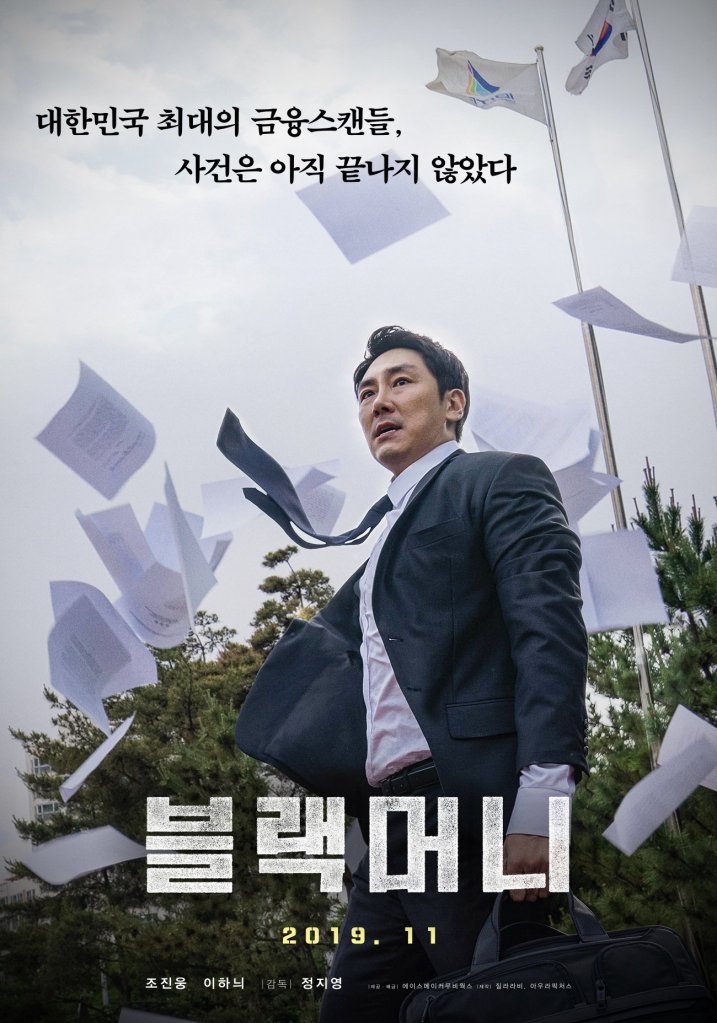
Following hot on the heels of Default, Chung Ji-young’s financial thriller Black Money (블랙머니) once again has some questions to ask about the nature of capitalism in South Korea. Loosely based on a real life incident concerning the sale of the Korea Exchange Bank (KEB) to American private equity firm Lone Star Funds, Chung’s film points the finger at systematised corruption as its collection of greedy financial elites peddle national interest as a reason for keeping the public in the dark when it comes to their dodgy dealings.
The trouble starts in 2011 when an illicit couple, one working for Daehan bank and the other for the Financial Supervisory Service, are bumped off after being called in by the Supreme Prosectors’ Office in connection with an ongoing corruption investigation into the sale of the bank at rock bottom prices. The male bank employee is killed when the couple is run off the road by a truck but the FSS woman, Su-gyeong (Lee Na-ra), manages to escape. Fully aware that her life is at threat, she tries to get herself arrested by the police for protection but fails and is later discovered dead in her car next to a charcoal briquette. A “suicide note” in the form of a text message to her sister suggests that she has chosen to take her own life because of the aggressive tactics of prosecutors one of whom sexually harassed her after which she felt too humiliated to go on living.
The mention of sexual harassment is intended to act as a tiny bomb by the shady forces in play, fully aware that just mentioning those words makes the entire case toxic ensuring it will be shut down never to be mentioned again. They have, however, picked the wrong man for their patsy in “bulldozer” Yang Min-hyuk (Cho Jin-woong) who is outraged to have been unfairly labelled a sex offender and will stop at nothing to clear his name, eventually uncovering the entire conspiracy after realising that Su-gyeong’s death was almost certainly a murder.
In this, Yang is obviously acting in self interest, which isn’t to say that he doesn’t care about the conspiracy, but it’s not his primary motivation. His opposing number, Kim Na-ri (Lee Honey), is perhaps much the same, a victim of her upbringing but increasingly conflicted. Brought up by a right-wing, ultra-capitalist professor who is good friends with former prime minister Lee Gwang-ju (Lee Kyoung-young) now working on the Daehan bank sale, Na-ri tells herself she’s acting in the national interest in her desire to set up her own international trade law firm to prevent Korea being taken advantage of by bigger foreign economic powers and in particular the Americans. Despite her law background, what Na-ri has mainly found herself doing is more like PR, finding palatable ways forward to make sure the deal goes through on favourable terms despite the already widespread public outcry.
Surprisingly, Na-ri and Yang end up bonding over the course of the investigation, discovering they have more in common than either might have assumed. Given the kind of evidence that Yang is digging up which points to a wide scale conspiracy involving complex fraud and murder, Na-ri finds herself conflicted. Maybe she isn’t quite as committed to ultra-capitalism as her father is, giving Lee’s speech at the Davos conference the heart-warming title of “free trade with a human face” which apparently went down very well with the audience. Whatever else she is, she’s a lawyer, and the kind of lawyer who doesn’t really like it when people break the law, so she’d rather not think that she’s been party to criminality without ever realising. Lee, meanwhile, uses their familial closeness against her, adopting a sleazy kind of sexist paternalism as he brushes off her concerns as if telling her not to worry her pretty little head about it while tacitly admitting what he’s up to isn’t quite right but is justifiable because the economy must be protected at all costs.
Only, that’s a difficult claim to square when Na-ri’s restructuring plans for Daehan involve hundreds of workers being laid off and some of them are currently on a hunger strike in the public square to protest. Na-ri is used to thinking in big numbers, she’s not usually confronted by the human face of their results and the weight of her responsibility does perhaps shake her. Yang too is used to being equivocal, declaring himself a neutral force because his job is to enforce the law equally, but he got into this after his dad was involved in a traffic accident where the other driver turned out to be a chaebol kid, so he knows all about systemic inequality and entrenched corruption. Nevertheless, self interest continues to play its part. The sympathetic chief prosecutor who put his career on the line to take the case forward is ousted through a trumped up charge while his replacement offers to shelve it in return for a promotion. A combination of bribery and violence conspires to keep the financial elites doing what they’re doing because no one is secure enough to stop them.
Trying to discourage her from her newfound sense of responsibility, Na-ri’s father reminds her that Lee is like family to them, which is one reason he’s put her forward for a top job as a financial commissioner, explaining that “that’s how we live through capitalism. Just accept it. It’s not something you can change on your own”. Chung ends the film with a sense of triumph as the common man, Yang, makes an impassioned speech in front of an angry mob, but according to the on screen text his was an empty victory because no one was ever brought to justice over the “illegal” bank sale which put a lot of ordinary citizens out of work while already wealthy elites lined their pockets aided by the financial authorities and a rotten judiciary. An attack on rampant capitalism, Black Money is not afraid to announce where its allegiances lie but seemingly has few answers other than indignation towards an inherently corrupt society ruled by greed and indifferent to the suffering of ordinary people.
Original trailer (no subtitles)


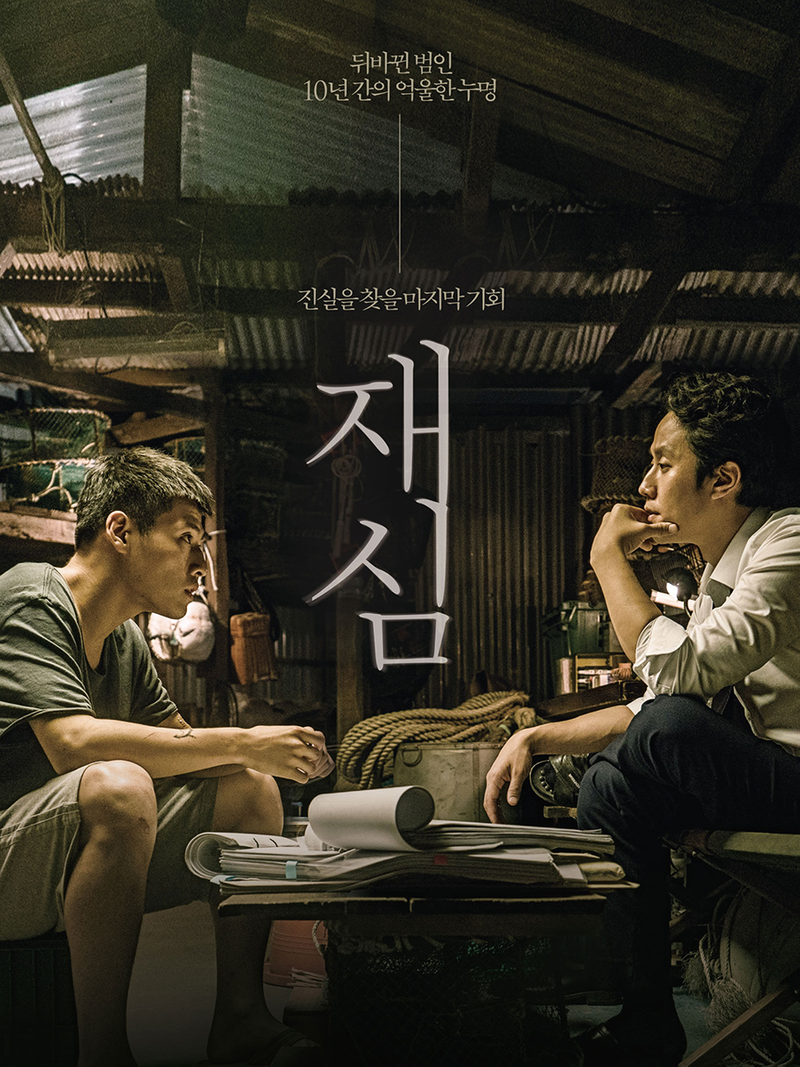 It’s a strange paradox that in a land defined by corruption of the legal system, your only hope my lie in a new trial. So it is for the hero of Kim Tae-yun’s latest film. Inspired by a real life miscarriage of justice (a case which was in fact still continuing at the time of filming), New Trial (재심, Jaesim) takes aim at everything from social inequality to unscrupulous lawyers and abuse of police power. A teenager pays dearly for being in the wrong place at the wrong time, not only losing 10 years of his life but the entire possibility of his future now that he’s forever branded a criminal. That’s aside from leaving his ageing (now blind mother) alone with no means of support and the additional burden of trying to clear her son’s name.
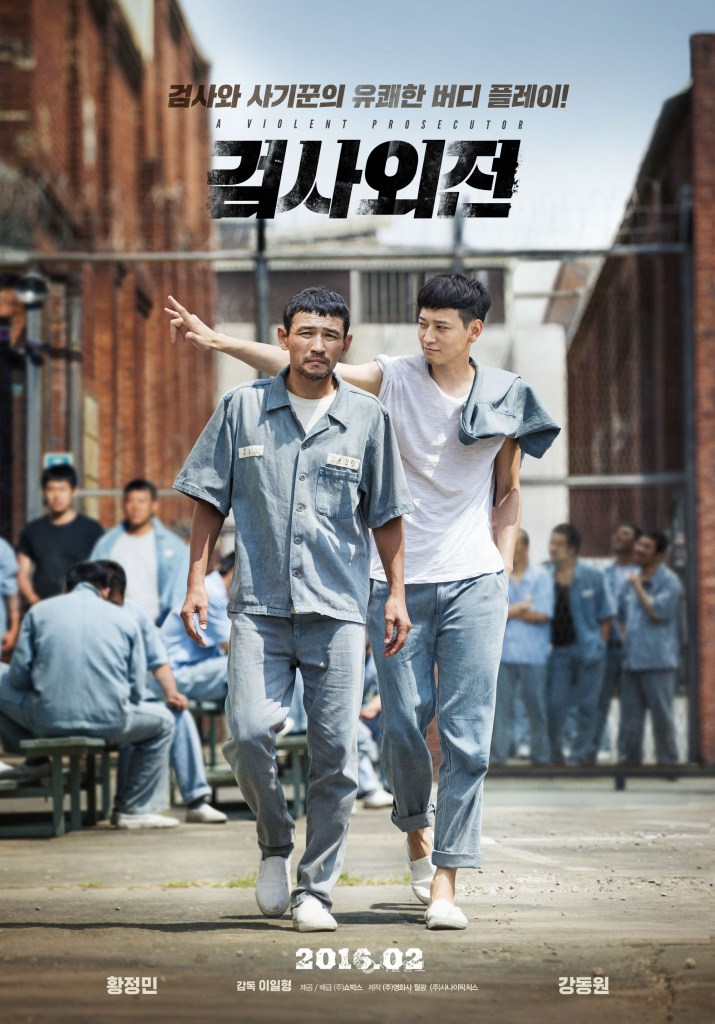 Review of Lee Il-hyeong’s A Violent Prosecutor first published by
 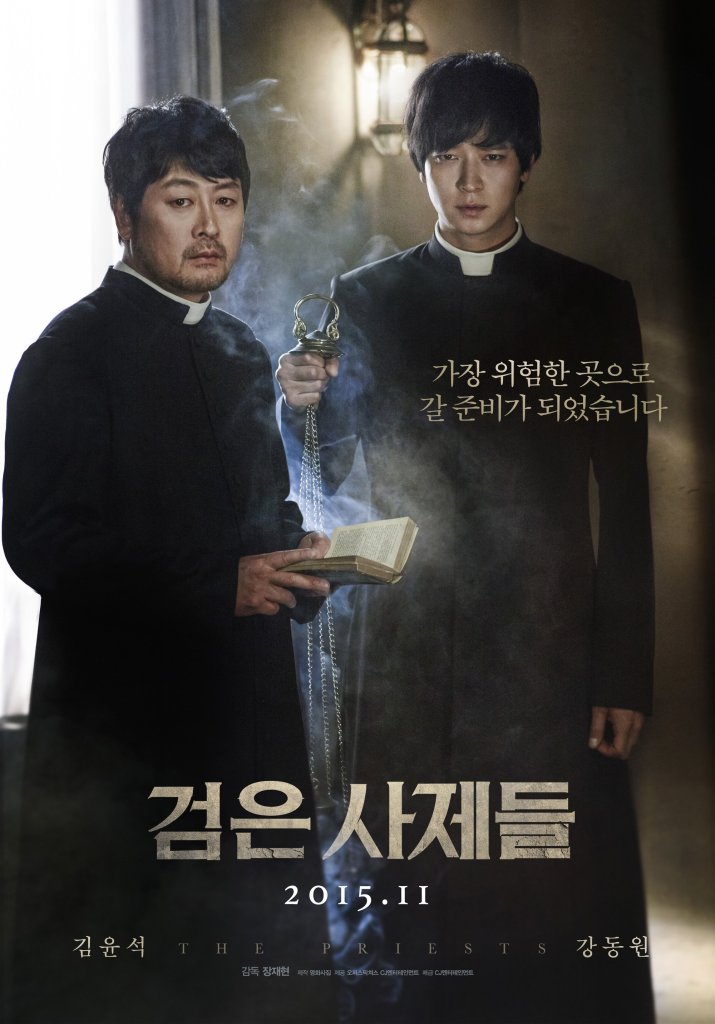 The era of hero priests might be well and truly behind us but at least when it comes to the exorcism movie, the warrior monk resurfaces as the valiant men of God face off against pure evil itself risking both body and soul in an attempt to free the unfortunate victim of a possession from their torment. To many, the very idea sounds as if it belongs in the medieval era – what need have we for demons now that we posses such certain, scientific knowledge? There are, however, things far more ancient than man which are far more terrifying than our ordinary villainy.
 Windows on Worlds