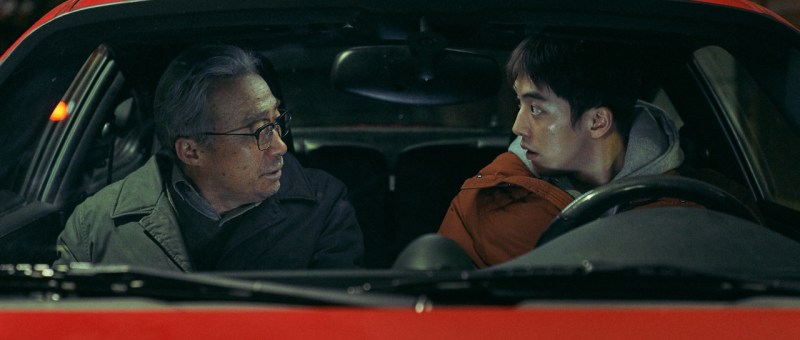
No Other Choice (어쩔수가없다, Park Chan-wook, 2025)

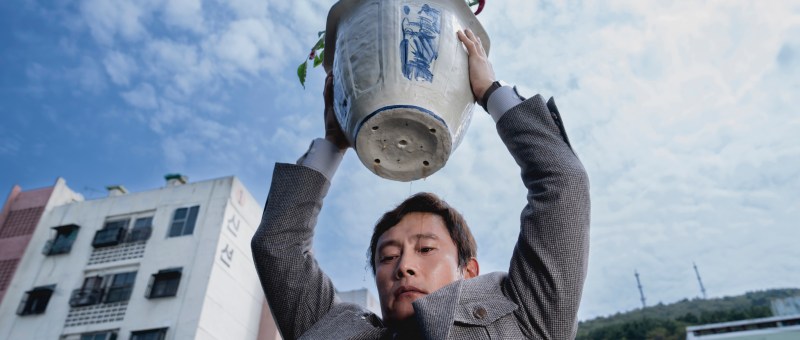
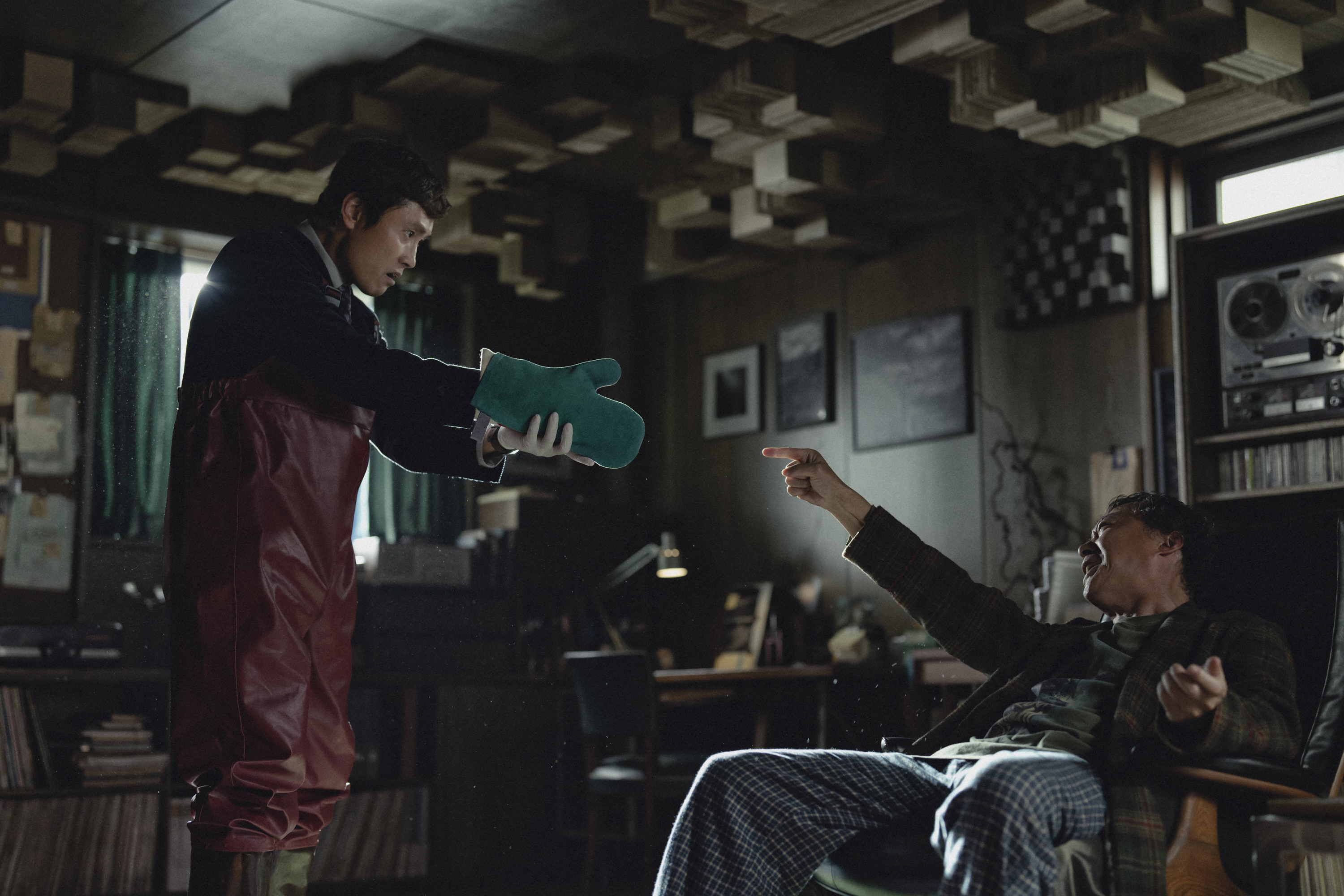
Most of the time, when someone says they had no choice, they’re paradoxically admitting that they had one, but they expect to understand the choice they’ve made because we would have done the same or can’t reasonably expect them to accept the consequences of the alternative. “No other choice,” on the other hand, is self-contradictory, clearly stating that a choice does indeed exist. Perhaps that’s why it seems so irritatingly disingenuous every time it’s said to Man-su (Lee Byung-hun), even if he eventually succumbs to its self-absolving qualities.

In any case, it’s this sense of powerlessness that’s at the centre of Park Chan-wook’s satirical drama as a middle-aged man finds himself suddenly exiled from the upper-middle-class lifestyle he’s worked so hard to build for himself when his company’s taken over by an American firm who have “no other choice” than to shed some staff. Man-su is blindsided by this corporate betrayal, attending self-help sessions that remind him there’s no such thing as jobs for life any more. Losing his job wasn’t his choice, but in some ways perhaps that makes it worse. 

What connects him with the other men in his position is that he’s obsessed with getting another job in the paper industry rather than exploring other options. All of these men are fixated on getting back what they feel has been taken from them. Not only is Man-su dead set on getting another job in paper, but on holding on to the family home from which he was displaced as a child and has only just managed to reclaim. To that extent, what he wants is a return to a past that doesn’t quite exist any more or exists only in his memory and is therefore unattainable.

Losing his job also leaves him displaced within his family as his sudden inability to keep them in the manner to which they’ve become accustomed eats away at his sense of masculinity. They’ve already had to exile the dogs, leaving his young daughter distraught, while his wife, Miri (Son Ye-jin), has started working again, further emphasising his failure as a provider. Witnessing one of the other men’s wives cheating on him with a much younger lover, Man-su too begins to fear that his wife no longer sees him as a man and will cheat on him too with someone who better fulfils the codes of masculinity. Yet it’s his stubborn male pride that undermines his positions much more than the unfortunate fact of having lost his job, which wasn’t after all something he had much control over. The wives are all much more pragmatic and come up with realistic solutions such as ruthless belt tightening and ceding a little ground by voluntarily giving up anything inessentials while encouraging their husbands to be a little more pragmatic and consider new directions rather stubbornly fixating on reclaiming the life they had before. 

That might be Miri decides to just sort of go with it even after beginning to suspect that Man-su has something to do with the disappearance of his rivals. At least he’s being proactive, even if it’s not really the best way to go about it, and by burying a few bodies there, he’s basically made it impossible to sell the house which is one goal achieved. It’s not losing your job that’s the problem, it’s how you deal with it, one of the other men’s wives insists as even Man-su ironically berates him for not listening to any of his wife’s “sensible” suggestions. Then again, the fact Man-su is eventually offered a job training AI replace him invites the suggestion that he’s basically killing all the other workers in the hope of clinging on to the wheel as soon as possible. The managers state they had “no other choice” about that too, and are grinning with the blinkered vision that prevents them from realising there’ll be no need for managers when there’s no one manage. 

In any case, the fact that Man-su walks around for with toothache for a significant amount of time echoes the hero of Aimless Bullet and suggests that perhaps things aren’t all that much different in the Korea of today caught between deepening wealth inequality, exploitative working conditions, and employment precarity presented by the rise of AI and increasingly globalisation. There is something quite sad about the devaluing of these skills in that what Man-su and the other men share is reverence for paper, the beauty and texture of it, along with the craftsmanship and pride in their work that now seems to belong to a bygone era. It seems that the dog-eat-dog world of capitalism leaves Man-su with “no other choice” than to do what he did and leave others with no other choice but him, but all he’s really done is seal his own fate in a futile attempt to hold on to a past that is rapidly slipping away.


No Other Choice screens as part of this year’s BFI London Film Festival.

Trailer (English subtitles)
Handsome Guys (핸섬가이즈, Nam Dong-hyub, 2024)

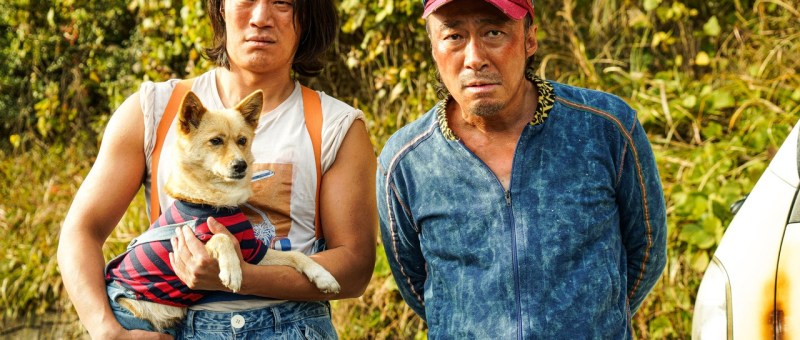
The malicious inequalities of the contemporary society are manifested in an angry goat demon who wants to burn the world in Nam Dong-Hyub’s zany horror comedy, Handsome Guys (핸섬가이즈). Adapted from the American film Tucker & Dale vs. Evil, the film plays with prejudice and superficiality along with the pernicious snobbishness of a society founded on status in which, as a would-be-exorcist later says, some have lost the ability to distinguish good from evil.

Step-brothers Sanggu (Lee Hee-joon) and Jaepil (Lee Sung-min) often suffer precisely because of this inability. They are actually nice, sweet guys who are always trying to do the right thing but somehow their behaviour always comes off as creepy giving rise to a series of misunderstandings. That might be why they’ve decided to buy a cottage in the woods in order to live a rustic life, only the house they’ve purchased is a little more rundown than the estate agent implied and was previously home to a Catholic priest which doesn’t altogether explain the goat-themed pentagram in the basement. 

Like the brothers, Mina (Gong Seung-yeon) is also a nice person as we can tell because she’s the only one of her friends who wanted to give the goat they hit with their car a proper burial while the others decide to just leave it in the road and drive off. She too thought the brothers were creepy, but is also awakening to the fact that Sungbin (Jang Dong-joo), a rising star of the golf world, is a bit of a twit who wields his privilege like a weapon and has essentially invited her on this country weekend as entertainment. He also bullies his friend/minion Byung-jo (Kang Ki-doong) whom they regard as a loser and is evidently willing to bear humiliation merely to be in the same orbit as a man like Sungbin who with his good looks, refined manners and modern manliness projects an idealised image of contemporary masculinity that is the exact opposite of the brothers. 

In many ways, he is the demonic presence of privileged youth damaging the hopes and prospects of ordinary youngsters like Mina. Believing that she has been kidnapped by the brothers, the three guys set out to “rescue” her but Sungbin doesn’t care about Mina at all and in fact only wants to retrieve his phone which contains evidence of his sordid lifestyle which would destroy his prospects of becoming a celebrity through achieving success in his golfing career. Nevertheless, they decide to attack the brothers with mostly disastrous results believing them to be nothing other than idiotic hillbillies if also depraved backwoods serial killers living an animalistic, uncivilised existence that is far too close to the land for city slickers like Sungbin. 

Once again, the brothers are plagued by a series of bizarre misunderstandings based on the perception of their “ugliness” which aligns them with “evil” and demands they be exiled from a society that equates physical “beauty” with moral goodness. To that extent, having been rescued from falling in a pond, Mina becomes a kind of Snow White ensconced in the home of the brothers and coming to understand that they are actually nice, if a bit strange, and merely have difficulty expressing themselves while their down-to-earth homeliness only seems suspicious to those who are a little less honest with emotions.

Their niceness, however, seems to be perfectly primed to face off against the Goat Demon as they become determined to protect their homestead from the likes of Sungbin who has only contempt for them and thinks they’re merely fodder for his heroic fantasy of retrieving his phone and proving his manliness at the same time. In essence, it’s Sungbin who embodies the ugliness of the contemporary society with its hypocrisy and superficiality, its casual misogyny and petty prejudice, while the brothers later vindicated as angelic presences of altruistic goodness. Slapstick humour mingles with a sense of malevolence and an inescapable cosmic irony that plagues the brother’s with misunderstandings and has kept them isolated, “handsome guys” too beautiful for a profane world and attempting to find refuge in their remote homestead and homoerotic relationship but eventually discovering unexpected solidarity with the equally exiled Mina as she delivers a silver bullet to privilege and patriarchy, sending ancient evil back to whence it came.


Handsome Guys screened as part of this year’s London Korean Film Festival.

International trailer (English subtitles)
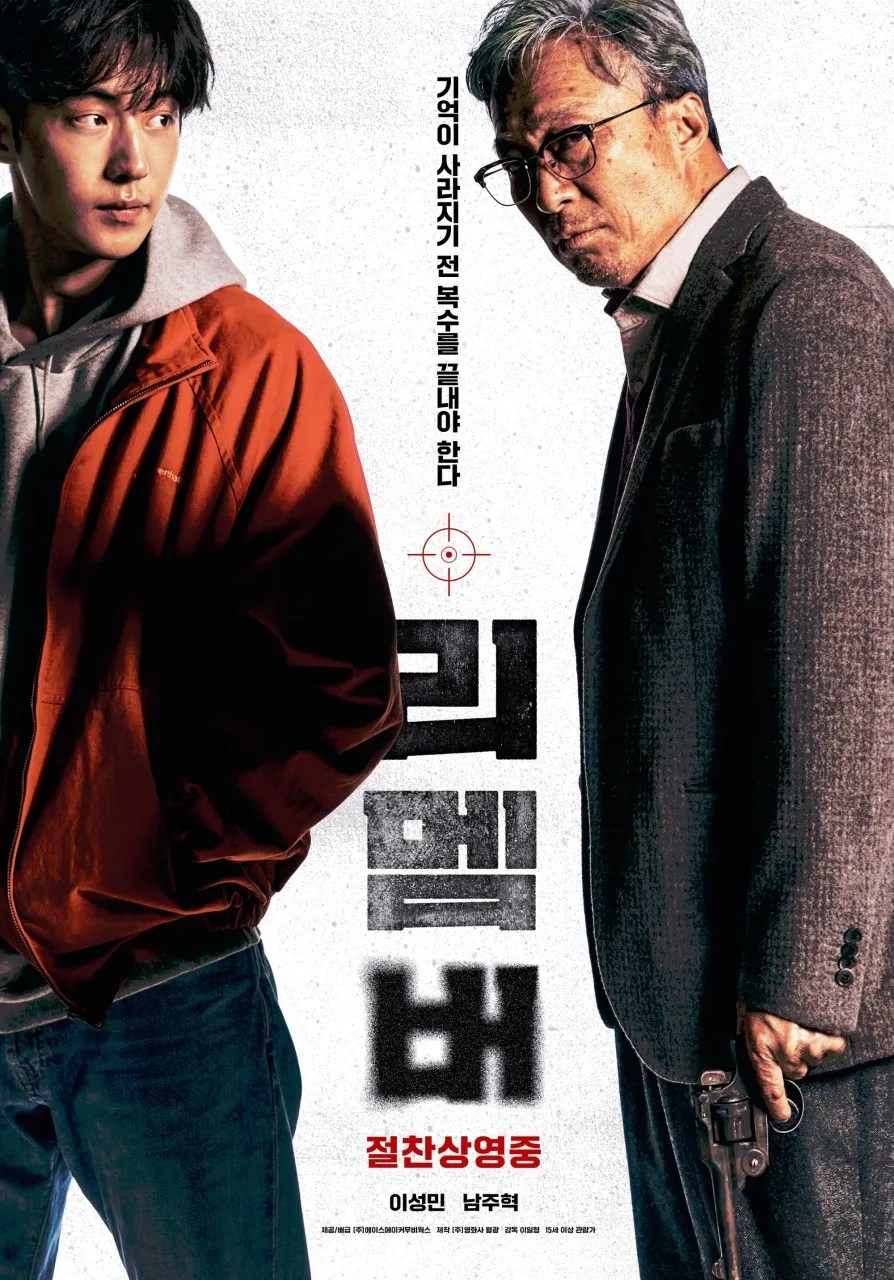
Remember (리멤버, Lee Il-hyung, 2022)

An elderly man suffering with a brain tumour and advanced dementia is determined to expose the abuses of the colonial past all too easily forgotten by the contemporary society in Lee Il-hyung’s remake of the 2015 Atom Egoyan film of the same name, Remember (리멤버). The film’s title works on multiple levels, firstly in the mind of the hero who both wants to remember and doesn’t as he feels his mind slipping away, and then in the minds of the men he seeks asking them both to remember the man who’s come calling with vengeance on his mind and who it is they really are. 

As in many other similarly themed films of recent times, Pli-ju’s (Lee Sung-min) main problem is that those who chose to collaborate with the Japanese during the colonial era and directly contributed to the deaths of all his family members have largely gone on to extremely successful careers at the heart of the establishment. Ironically enough, right-wing Korean nationalist ideology is largely pro-Japan and the legacy of Japanese militarism was a key component in the post-war military dictatorships of Park Chung-hee and Chun Doo-Hwan. To that extent, Pil-ju is the inspector that calls visiting each of the men who caused the deaths of his father, brother, and sister in turn while exposing a series of colonial abuses. One of the men he visits is a working professor who teaches that Japanese colonial rule was actually beneficial in that it helped “modernise” the society though building infrastructure such as roads and railways without really considering that they were largely built with forced labour. 

This casual disregard for human life has continued into the present day with the general Pil-ju targets, Chi-deok (Park Geun-hyung), also the head of the company, in which the Japanese effectively have a controlling share, responsible for a workplace accident that injured the father of Pil-ju’s getaway driver In-gyu (Nam Joo-hyuk) and refused to compensate him. Chi-deok, a hero of the Korean War, even makes a rousing speech instructing the audience that they must remember those who fell in defence of democracy which is a little rich seeing as his values are anything but democratic. Chi-deok also tries to justify himself to the police officer investigating the murder of the first man Pil-ju knocked off that those days were just about survival and that “Korea” no longer existed so all he could do to save it was to become Japanese. But like many of the other men, such as the professor who tricked Pil-ju’s brother into forced labour in a mine where he eventually died, he did so for personal advancement wilfully selling out his fellow countrymen throwing those who refused to change their names or continued to speak Korean in jail while sending off their sisters to become comfort women for the Japanese army. 

The first man that Pil-ju killed tortured his father to death on a trumped up charge so he could steal his land. It’s not even ideology, it’s just greed and oppression. Everyone keeps telling him that no one cares about this kind of thing anymore, but conservative politicians nevertheless continue to weaponise it suggesting that anything is permissible in the battle against communism while imperialism is therefore a lesser evil. Pil-ju’s dementia is a metaphor for the literal erasure of history and the simple act of forgetting, the process by which many of these men have been able to rewrite their pasts to justify their actions. Yet it’s also true that there are things Pil-ju too does not want to remember and actively denies until finally forced to reckon with himself, with his complicity, guilt, and regret that he was as Chi-deok puts it not all that different as a man who survived those times when so many did not. Shot through with a gentle humour, Lee’s admittedly unsubtle drama (a Japanese soldier named Tojo literally says he’s going end the pacifist constitution so Japan can start wars whenever it feels like it) is also a gentle tale of intergenerational bonding as Pil-ju comes to develop a paternal affection for his workplace buddy In-gyu that suggests the past is only exorcised when spoken and passed down to new generations free of justifications or omissions and most importantly remembered as it was by those who really lived it.


Original trailer (no subtitles)

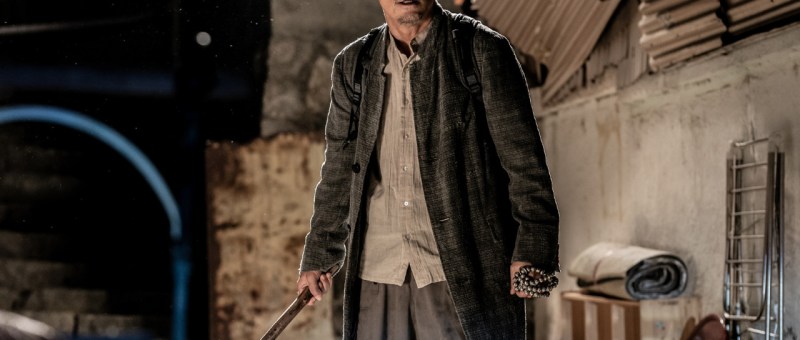
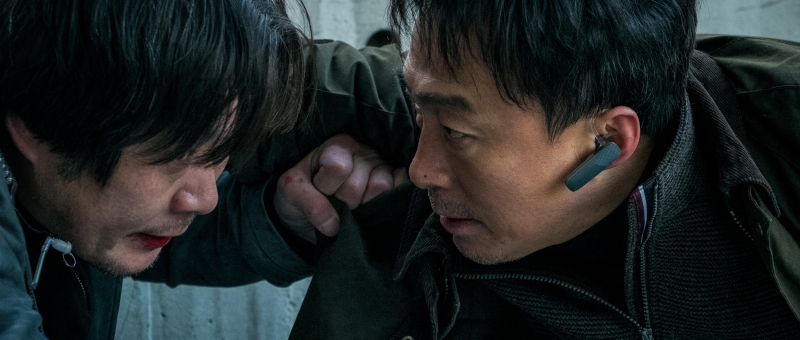
The 8th Night (제8일의 밤, Kim Tae-hyoung, 2021)

“But even the most trivial moments of our predetermined fate are meaningful as pieces of the whole” according to embittered former monk Jin-su having reached a moment of philosophical epiphany after bringing his karmic retribution full circle. Another in the recent series of Buddhist supernatural thrillers from Korea, Kim Tae-hyoung’s The 8th Night (제8일의 밤, Je8ileui Bam) once again turns apocalyptic as an ancient evil is set for accidental revival thanks, largely, to the wounded pride of a bitter old man. 

As the opening voice over explains, thousands of years ago the world was threatened by a powerful demon. Luckily, Buddha managed to vanquish him, tearing out his two eyes, one black one red, and burying them on opposite sides of the Earth in order to prevent them ever being reunited. Some people, however, just can’t resist chaos which is presumably why Professor Kim (Park Hae-joon) insists on retrieving the canister containing the Red Eye from its desert resting place, thereafter releasing its power when his discovery is rejected by both Buddhist and scholarly authorities. Sensing a disturbance in the equilibrium of the world along with the upcoming Blood Moon, priest Hajeong (Lee Eol) realises the prophecy of which he has been a guardian is about to come true. His big, somewhat unethical plan, is to kill off one of the seven pre-ordained victims of the Red Eye which he plans to possess in order to reunite with its partner in and stop it body hopping towards the apocalypse. 

You can make a case for greater good, but murdering an innocent person to put an end to a curse seems at best unfair, not to mention not very Buddhist. Hajeong sends young monk Cheong-Seok (Nam Da-reum) to track down his former pupil, Jin-su (Lee Sung-min) then known as Seonhwa to give him the instruction to assassinate the “Virgin Shaman” with a holy axe to stop Red Eye in its tracks. Jin-su is seemingly unconflicted about the murder but is carrying his own baggage, now living as a resentful construction worker. As it turns out, he and Cheong-seok are also linked by a karmic circle of guilt and trauma that the boy doesn’t remember and Jin-su has been running away from since leaving the temple. Meanwhile, he is also plagued by voices of departed spirits he for some reason refuses to help cross over to the other side. 

Meanwhile, over on the side of the rational, two policemen mirror the monks’ movements as they investigate the strange paper chain of mummified corpses turning up all over the city. Veteran cop Ho-tae (Park Hae-joon) feels responsible for his feckless associate Dong-jin, blaming himself for an accident which has left him physically impaired while resisting instructions from his boss to fire him. Yet the pair are entirely ill equipped to investigate this case of spiritual malevolence, confused by its religious connotations but perhaps filled with suspicion on realising that all of the victims belong to the same “meditation group” for people with suicidal thoughts which has been offering “free” blood tests and apparently paying for attendance. Described by one as more like a cult, the shady meditation group might be one kind of evil but what they’re currently facing is on an entirely different level. 

The irony is that it’s Jin-su who must learn to save the world by finding closure with his own traumatic past, generating a paternal bond with young monk Cheong-seok who is so excited by the world beyond the temple that he accidentally breaks his vow of silence and then can’t stop talking. Cheong-seok’s sense of wonder and confusion, unsure what to do about the meat he keeps finding in his food but also slightly bemused by Jin-su’s willingness to eat it for him, stands in direct contrast to Jin-su’s embittered cynicism as he attempts to resist his destiny only to receive a ghostly reminder that you can’t escape your fate and, in any case, his duty would simply fall on the successor, Cheong-seok. In order to save the world, he has to free not only himself but also Cheong-seok too from the cycle of karmic retribution which binds each of them in the “agony and anxiety” of the monster’s separated eyes, determining to set them to rest once again to restore a sense of balance in a destabilising world. A buddhist procedural, Kim’s supernatural horror may rediscover that hell is a place on Earth but eventually allows its heroes the possibility of escape if only in the willingness to free themselves from the shackles of the traumatic past. 


Original trailer (English subtitles)

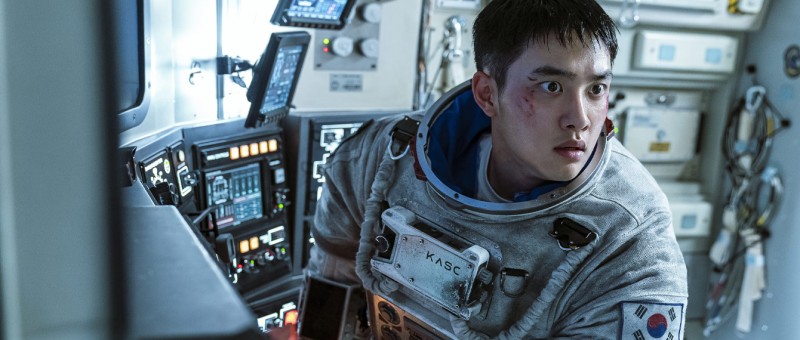
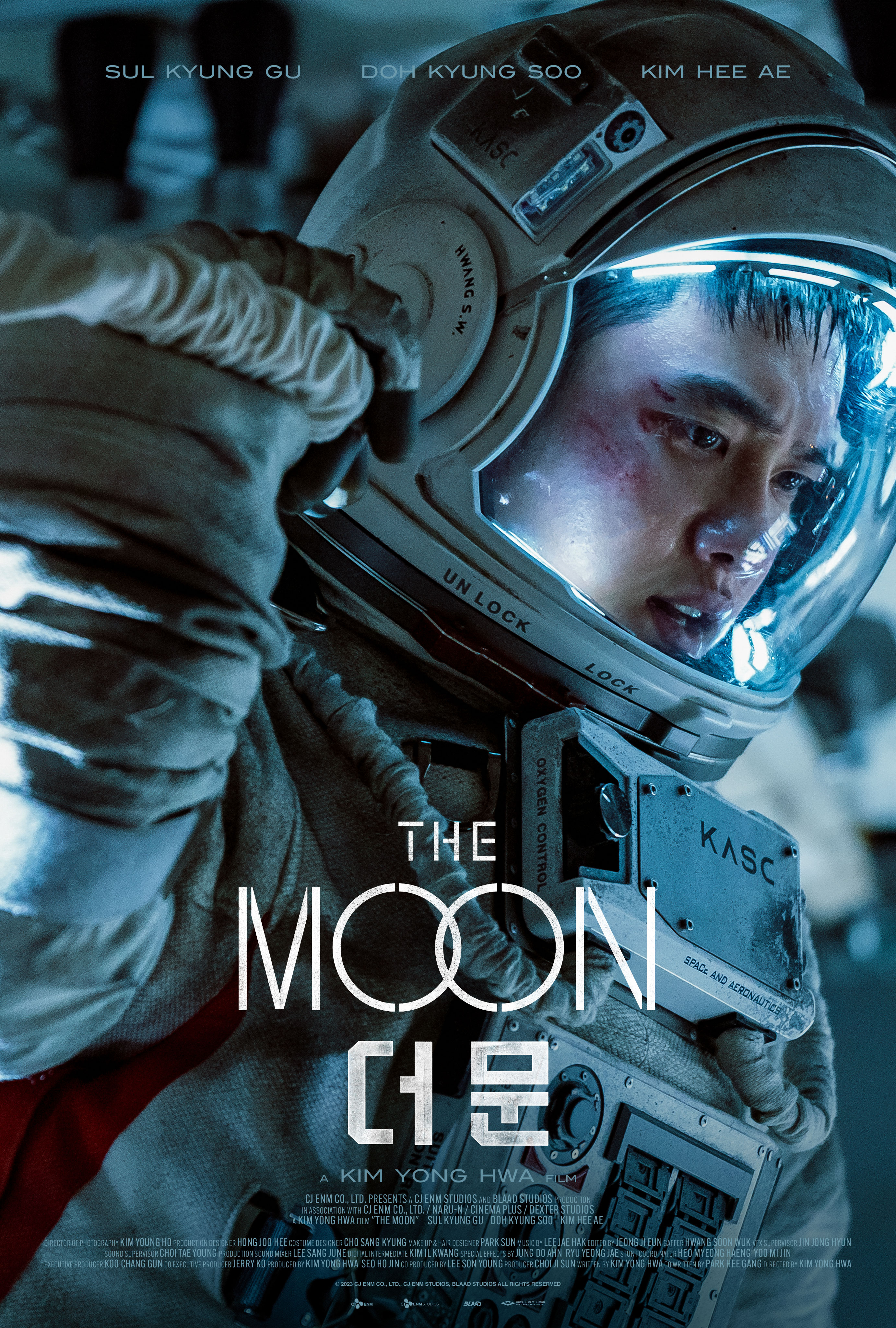
The Moon (더 문, Kim Yong-hwa, 2023)

Feeling slighted by the international community, Korea attempts to dominate in space by becoming the second nation to send a man to the moon but does so apparently with egalitarian principles in Kim Yong-hwa’s futuristic science drama, The Moon (더 문). The conceit is that that pretty much everyone, having learnt nothing, is intent on colonising the moon because it is a rich source of a particular mineral that could become a valuable means of sustainable energy for Earth. Of course, Korea wants in but crucially wants to share what it finds with the world unlike the Americans who just want to keep everything for themselves.

A running current of Anti-Americanism is deeply felt early on as NASA and the US initially refuse to help when a Korean spaceship gets into trouble in a solar flare, while the International Space Committee from which Korea is expelled because of “conflicts between nations” also seems to be led by Americans. Moon-Young (Kim Hee-ae), the ex-wife of former flight director Jae-gook (Sol Kyung-gu), also works at NASA and has taken an American name after marrying an American, yet is treated with chauvinistic contempt by her bosses who question her loyalty and qualifications. The implication is that America wants to conquer the moon to secure its bounty for themselves in an ironic act of futuristic colonialism, but that the Koreans are going to the moon in the interests of science hoping to discover something that will benefit all mankind. 

Having been expelled by the committee seems to fuel an exceptionalist drive among the Korean scientists who feel that they aren’t being afforded the respect they deserve internationally. This sense of internalised shame stems from the failure of their first rocket, the Norae-ho, which exploded shortly after taking off killing the three astronauts on board. Introduced to the three members of the Woori-ho, we can immediately sense that their chances of survival can’t be good seeing as the two older members mostly talk about their children, one of them planning to decide on a name for his as yet unborn daughter on the way. The third, Sun-woo (Doh Kyung-soo), has some complicated baggage with the mission and former flight director Jae-gook who was on duty at the time the Norae-ho exploded.

Sun-woo isn’t the only one with baggage as the scientists strive to overcome the traumatic failure of their first attempt. The Science and Technology Minster (Jo Han-chul) has his eyes mostly on his own reputation not wanting to oversee another catastrophic failure in Korea’s space programme. One of the two men in charge of the Norae-ho mission took his own life in atonement, while Jae-gook split up with his wife and retreated to the mountains working in a rural observatory. Perhaps precisely because of this, the quest to save Sun-woo, a former Navy Seal hired for his agility and athleticism who lacks experience and is unable to pilot the spacecraft alone, quickly goes viral pushing the Americans, who had been reluctant to help, to finally pitch in on a joint operation.

It’s this kind of panglobalism that the film eventually advocates as Moon-young sheds her American name of Jennifer and is fired from NASA for trying to help Sun-woo leading her to make a direct appeal to the international crew of the space station who hail from Canada, Australia, and the UK to save him out of astronaut solidarity. A voiceover reminds us that the Moon belongs to everyone, not any one entity, while praising those who were able to transcend nationality and ideology to work for a better world for all. It’s obviously an anti-colonialist sentiment though one that is eagerly pointed at American imperialism and its continuing effects in Korea even if it’s also true that the nation is smarting from being kicked out of the International Space Committee and desperately wants to be readmitted to secure its status on the world stage. Kim throws just about everything he can at Sun-woo and his little lander from solar storms to meteor showers and increasing despair shifting from one set piece to another as Sun-woo tries to overcome yet another disaster and fulfil his mission of returning home with ice samples in an act of redemption not only for the space programme but for himself as its orphaned son. 


The Moon is released in the US on DVD, blu-ray, and Digital on 27th February courtesy of Well Go USA.

US trailer (English subtitles)

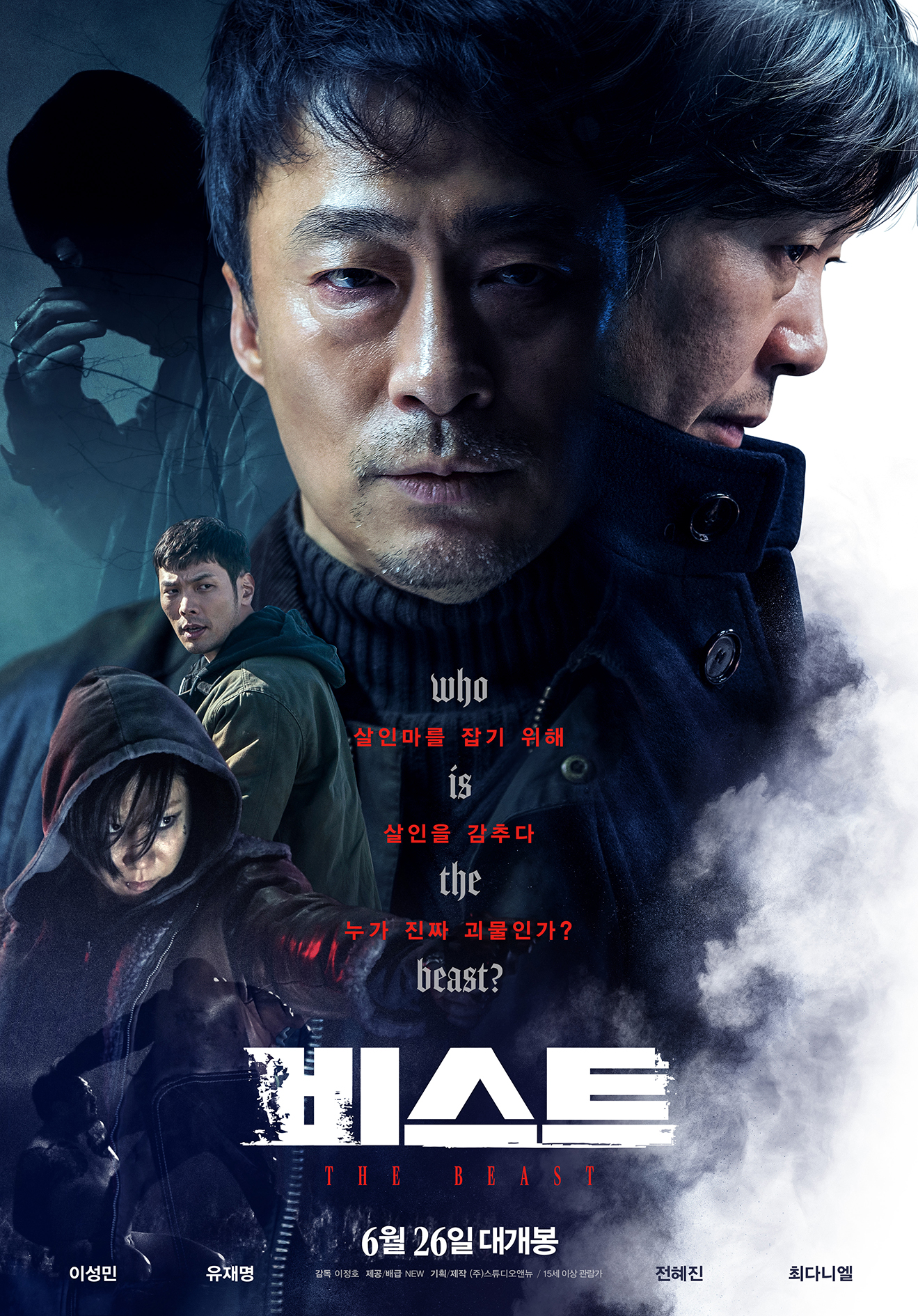
The Beast (비스트, Lee Jung-ho, 2019)

Internal police politics frustrate the hunt for a potential serial killer in Lee Jung-ho’s dark social thriller, The Beast (비스트) inspired by Oliver Marchal’s 36 Quai des Orfèvres. As a pathologist suggests, we all may have a hidden beast and it’s certainly true of the film’s conflicted protagonist, thuggish policeman Inspector Jung (Lee Sung-Min) who finds himself dragged ever deeper into a mire of corruption as a natural result of a series of bad decisions that started long ago, while his rival, Captain Han (Yoo Jae-Myung), presents the facade of efficient modern policing but inevitably turns out to be little better. 

As the film opens, Jung and his subordinate Yang are each wearing balaclavas while driving a heavily tattooed man out into the middle of nowhere though only for the purposes of frightening him so that he’ll back off their informant, local bar owner Madame Oh (Kim Ho-jung). Jung’s inner conflict is palpable as stares at his bloodied, shaking hands asking himself how it is it’s come to this while Yang later reminds him not to become too attached to his sources because once they’ve exceeded their usefulness they’ll simply be arrested. While all of this is going on, the police force is under immense pressure and receiving a lot of negative press over their handling of the case of a missing teenage girl, Mi-jin. Unfortunately, the girl later turns up dead with the murder enquiry split between two teams, those of Jung and Han each of whom are in the running to take over from the superintendent who before all of this happened was about to be promoted which is why he is desperate to solve the case as soon as possible. 

It might at first be tempting to read Jung and Han as representatives of different kinds of policing with their rivalry representing a battle for the soul of the police force only as it turns out each is merely corrupt in their own way. Jung is very much of the jaded veteran cop school, wanting to shift the case off his books as soon as possible by pushing the most likely suspect to confess. In this case that’s a shady pastor at a church Mi-jin used to frequent who was found in possession of her underwear and a series of photos of very young girls. Jung pushes the pastor to “confess” by selling him a story that a woman he was accused of assaulting in university took her own life as did her mother while her father later developed cancer as a result of all the stress and tragedy. Of course the pastor breaks down insisting that he killed her and it’s all his fault, only he’s talking about the other girl not that Jung cares too much about that. Han meanwhile quickly exonerates him by doing actual investigating, but only really so that he’ll still be in the running to solve the case and get the big promotion thereby besting his former partner turned rival. Jung had been the first to mention the possibility of an active serial killer only to be shut down because that would mean they’d lose the case to Major Crimes and therefore the personal opportunities for career advancement solving it would present. 

Both men eventually end up at the showdown by each of their respective routes implying there’s little practical difference between them. Han jeers that he can’t tell anymore if Jung is a bad guy or a cop but all he can answer is that it might be a matter of perspective, while he is also aware of Han’s backdoor deals and willingness to compromise himself in order to win advancement. In the midst of all this jockeying for power, it gets forgotten that a young woman lost her life in the most heinous of ways while whoever really did it may still be out there looking for the next girl to torture and kill. Everyone may indeed have a beast inside them, Jung already acquainted with his in his morally compromised soul while Han battles his internal ambition but the real beast may be the contemporary city and the infinitely corrupt hierarchies of the modern Korea along with the toxic masculinity that forces these men to betray their ideals simply not to be accounted a failure trapped at the bottom of the pyramid by their own problematic righteousness. When they’ve served their usefulness, the system chews them up and spits them out but until then it’s only hanging on as long as they can in the utter futility of a morally bankrupt existence. 


International trailer (English subtitles)

12.12: The Day (서울의 봄, Kim Sung-soo, 2023)

Sometimes, the bad guys win. Kim Sung-soo’s long-awaited return after superb underworld drama Asura, 12.12: The Day (서울의 봄, Seoul-ui Bom) explores one of the darkest hours of recent Korean history as all hopes for democracy and freedom are dashed by a 1979 coup by General Chun Doo-hwan whose reign turned out to be far worse than that of his predecessor, Park Chung-hee who had been assassinated by a member of his own security team some months previously.

Yet Kim is less concerned with the coup itself than why so few people tried to stop it. Though everything appears to be going very badly for Chun (Hwang Jung-min), he eventually succeeds in taking Seoul by force while opposed by a solo general who is the lone guardian of justice and righteousness. Lee Tae-shin (Jung Woo-sung) first turns down a promotion to command the Seoul garrison and accepts it only when it’s explained to him that Jeong (Lee Sung-min), the army chief of staff, hopes to use him as a bulwark against Chun whom he fears is indeed preparing for an insurrection. Sure enough, Jeong is eventually abducted by Chun’s minions, who run the security division, on a trumped up charge of being involved with Park’s murder while Chun desperately needs the duly elected president of a democratising Korea to sign his arrest warrant so his blatant power grab will be legitimised rather than branded a “coup”.

Only the president doesn’t play along. He insists on following proper protocol and getting the approval of the defence minister all of which is vexing for Chun who is left humiliatingly standing in his office while the president holds his ground. The defence minister has, as it turns out, fled to the American embassy in his pyjamas where he finds little sympathy while the film subtly implies that the Americans advise him to return and back Chun who is doubtless considered much more useful to them politically.

Though Tae-shin and another officer at HQ try to warn of a brewing coup, their orders are often overruled by superiors either because they do not take the situation seriously or are actively siding with Chun whose “Hanahoe” faction has taken over a significantly large proportion of the military. Kim zooms in on militarism as the fatal flaw in this botched defence system as it seems no one can act without first receiving an order from above nor are they equipped to make critical decisions on a personal level as to whether or not an order should be obeyed. Tae-shin calls on countless devisions for backup but finds them either actively allying with Chun or refusing to get involved believing it is a hopeless battle. Tae-shin asks what the army is for if it refuses to fight at the crucial moment and abandons its responsibility to protect the interests of its citizens in simply allowing Chun to seize power but receives no real answer. 

Chun has already aroused suspicion for his handling of the investigation into Park’s death, reportedly bringing in countless people with no obvious connection to the case and torturing them. The men who support him want to continue Park’s “glorious revolution” which was in itself a repackaging of Colonial-era Japanese militarism, and fiercely resist the idea of “democracy” advocating totalitarian views that the ordinary person longs for a strong hand at the wheel and to be absolved of the responsibility of choice which ironically fits perfectly with hierarchal structure of the Army. The film paints Chun, slight, small, and bald, as a man with a chip on his shoulder apparently resentful of military elites and the wealthy. He craves power because of his own insecurity and a desire to get one over on righteous men like Tae-shin which might be why his line about Chun being unworthy of the uniform of a Korean solider seems to get to him. 

Using the film language of the 1970s such as heavy grain and split screens, Kim keeps the tension on a knife edge even though the conclusion is all too inevitable. Tae-shin cuts a heroic figure, standing alone on a bridge and forcing back the advancing tanks solely with his imperious righteousness but in the end it’s not enough, there are too few like him and too many like Chun whose maniacal laughter is intercut with scenes of Tae-shin in the torture facility which lies beneath the facade of government. Bleak, but also angry, Kim’s extraordinarily controlled political thriller is damning in its condemnations of a militarising culture and the ever present threat which accompanies it.


International trailer (English subtitles)
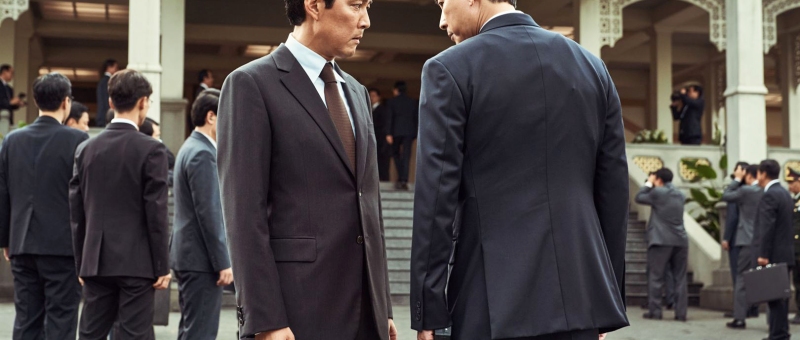
Hunt (헌트, Lee Jung-jae, 2022)

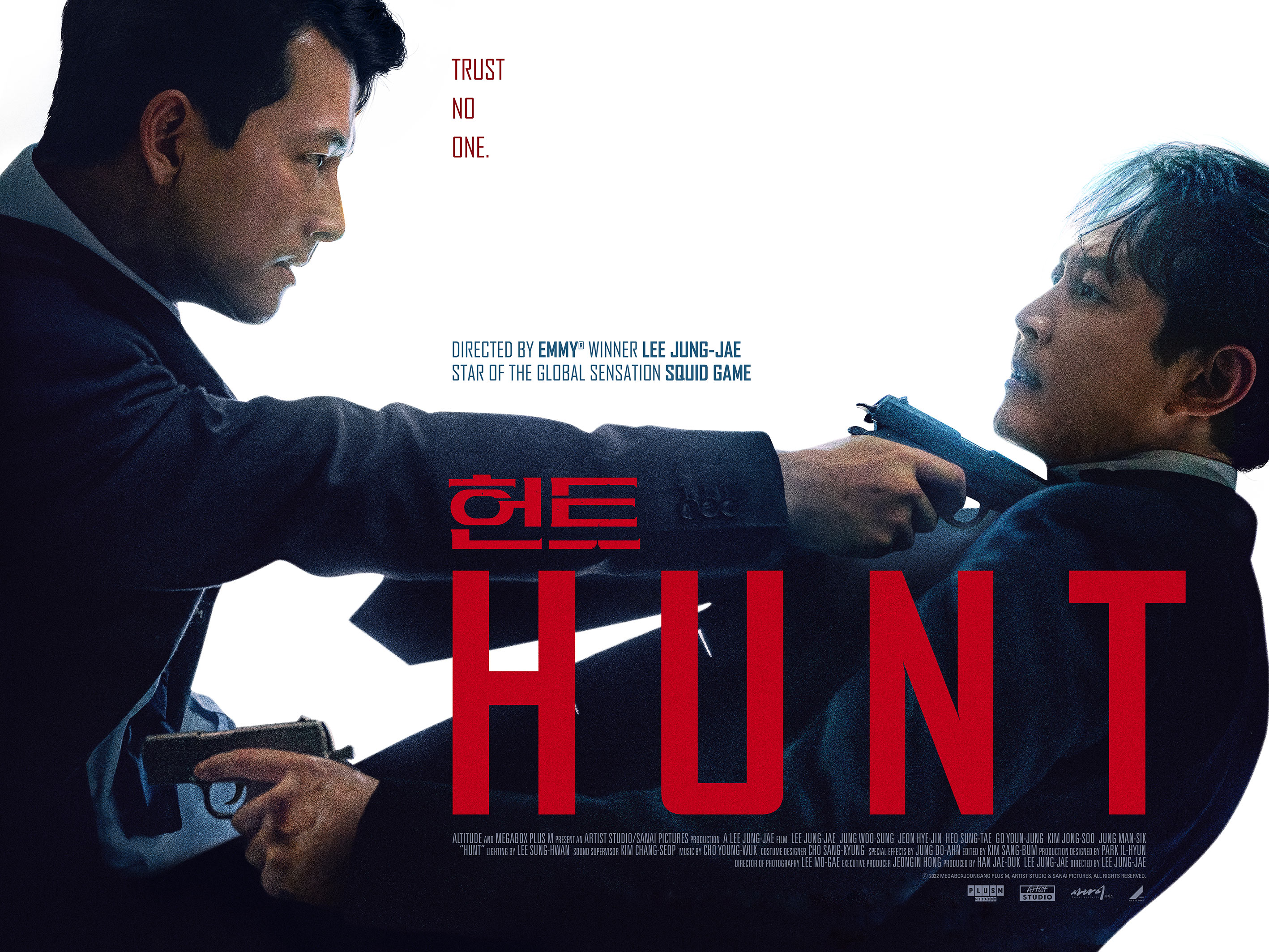
“How long can you fight violence with violence?” one accidental ally asks another towards the conclusion of actor and star Lee Jung-jae’s 80s-set directorial debut, Hunt (헌트). As the title implies, this is a story of two men stalking each other but also each ironic representatives of an ideological divide both seeking a better future while torn between violent overthrow and peaceful revolution in the dying days of a Cold War in what could be termed its ground zero. 

As the film opens, the South Korean president, a stand-in for an unnamed Chun Doo-hwan, faces mass protest from local Korean-American democracy activists on return to his hotel while on a diplomatic visit to Washington. His security team is itself somewhat compromised in that it is a joint operation between foreign and domestic intelligence teams neither of which have must trust in the other. When it’s discovered that a plot is underway to assassinate the president, foreign intelligence chief Park (Lee Jung-jae) is taken hostage but insists on capturing the suspect only for domestic chief Kim (Jung Woo-sung) to abruptly shoot him, leading Park to wonder if Kim did it to keep him quiet rather than simply to neutralise an immediate threat. Assuming North Korea is most likely behind the plot, each begins to suspect the other is a mysterious double agent known as Donglim. 

What soon becomes apparent is that the two men, the domestic and the foreign, are being pitted against each other by the questionable authority that is the Chun regime. Recently promoted from the military, Kim had in fact instigated Park’s torture in the immediate aftermath of the assassination of the previous president, also a military dictator, Park Chung-hee. Both men appear to be conflicted in their association with an authoritarian government in the wake of widespread state violence including the brutal suppression of the Gwangju Uprising in May 1980. Nevertheless, both are party to acts of torture many of them enacted on teenage democracy activists they routinely smear as communists. 

In short, no one could really blame anyone who wanted to overthrow this brutal regime but as oppressive as it is, it’s also backed by the Americans who would rather keep Chun in power than risk the students’ wishes that the American military pull out of Korea coming to fruition lest it lead to a similar situation in Okinawa, which had only returned to Japanese sovereignty a decade earlier, undermining their ongoing foreign policy goals in Asia. If there is one clear villain, aside from Chun, it’s the shady the international order that is content to watch authoritarian leaders enact violence on their people when it supports their own interests. Nevertheless, it’s also true that Park and Kim’s personal vendetta sparks major diplomatic incidents in two sovereign nations which in any other case would seem primed to turn this cold war hot.

What emerges is a cat and mouse game in which each attempts to unmask the other while on increasingly unstable ground unable even to rely on support from their superiors who in any case answer directly to Chun. It seems there are several factions who would like to unseat him even if they do not necessarily object to authoritarian rule only to persistent state violence against citizens who are more often than not mere children. The differences between Park and Kim are ideological in more ways than one, torn between the belief that only violence can free them from violence and the desire to seek a better solution but each agreeing that assassination is the only viable path to deposing Chun and ushering in a better future despite the failure of the assassination of the previous president to do the same . 

Anchored by strong performances from veteran actors Lee Jung-jae and Jung Woo-sung, the film also features a host of cameos from some of the nation’s top stars including Hwang Jung-min as a manic North Korean airforce defector and Lee Sung-min in a small but pivotal role as a Korean-Japanese asset. With notably high production values and truly astonishing action sequences, Lee excels in capturing the paranoid atmosphere of the conspiracy thriller and an almost unbearable tension between its twin protagonists who will later discover that they are quite literally on the same bus even if they have very different destinations in mind. 


Hunt screened as the opening night gala of this year’s London East Asian Film Festival and arrives in UK cinemas/digital on 4th November courtesy of Altitude Films.

UK release trailer (English subtitles)

The Man Standing Next (남산의 부장들, Woo Min-ho, 2020)

“You have my full support. Do as you please” so says the dictator, unambiguously manipulative but still somehow inspiring the loyalty of his many underlings perhaps still too wedded to an idea or at least an ideology to countenance moving against him. It turns out that nothing really changes and whether it’s feudal Joseon or the modern nation state, there is intrigue in the court. Neatly adopting the trappings of a ‘70s conspiracy thriller, Woo Min-ho’s The Man Standing Next (남산의 부장들, Namsanui Bujangdeul) explores the events which led to the assassination of President Park Chung-hee, father of the recently deposed president Park Geun-hye, by a member of his own security team. Many of the names have been changed and historical liberties taken, but the lesson seems to be that there is always a man standing next in readiness to inherit the throne. 

Our hero is KCIA chief Kim Gyu-peong (Lee Byung-hun), preparing as the film opens to halt Park’s (Lee Sung-min) increasing authoritarianism by assassinating him. A combination of the personal and the political Gyu-peong’s eventual epiphany is precipitated by an old friend’s “defection”. Park Yong-gak (Kwak Do-won), former director of the KCIA which operated as a secret police force propping up Park Chung-hee’s oppressive regime, is giving testimony to an American inquiry into the so-called “Koreagate” scandal in which the KCIA is accused of bribing members of Congress to propagate favourable views of the Korean president and reverse Nixon’s decision to pull US troops from South Korea. Yong-gak uses the opportunity to denounce Park Chung-hee, planning to publish a memoir titled “Traitor of the Revolution” as an exposé of the inner workings of the KCIA.  

Somewhat ironically, Gye-peong and Yong-gak are old comrades who fought together in the “revolution” led by Park in the early 1960s following the ousting of corrupt autocrat Rhee Syngman. Yong-gak has become disillusioned with their cause and with Park himself, but this largely ignores the fact that Park’s revolution was mainly a repackaging of Japanese militarism, something signalled by an exchanged between Park and Gye-pyeong in Japanese to the effect that their days of revolution were their best. All of which makes Yong-gak’s wistful eulogising of a betrayed ideal along with his supposed admiration for democracy somewhat ironic. The essential motivator in their loss of faith, however, is also a militaristic one. They learn firstly that like any dictator Park has been embezzling from the state for years and has a collection of slush funds in Switzerland. That’s not the problem, the problem is that to manage them he’s been running a “private” intelligence service unknown even to the KCIA. They’ve been displaced, and their hurt is personal more than it is political. 

Yong-gak calls Park a traitor to their revolution and objects to the continuing human rights abuses for which he himself as a member of the KCIA has been directly responsible. All of this creates a series of crises for Gye-peong who is torn between loyalty to his old friend and Park while increasingly worried for his own safety. He begins to suspect that Gwak (Lee Hee-joon), Park’s security officer who had not fought with them in the revolution, may be the mysterious “Iago” figure Yong-gak had been warned about by the CIA. Increasingly sidelined, Gye-peong continues to do Park’s dirty work but draws attention to himself in his resistance towards the president’s increasingly militaristic rhetoric. Pro-democracy protests have already broken out in Busan in response to Park’s “unfair” treatment of the city’s governor and the opposition party. Gye-peong advises reinstating the governor with an apology. Gwak says frame the protestors as communists and Northern sympathisers and send in the tanks. “Cambodia killed three million people, is it such a big deal if we kill one or two million?” Gwak blurts out in a quip which seems to catch Park’s attention, the president now thinking himself untouchable. A militarist perhaps but an educated man who speaks good English and gets on well with the Americans, Gye-peong does not see the Khmer Rouge as a source of inspiration nor, like Yong-gak, does he think those values align with the ones he fought for bringing Park to power. 

Then again, even in the immediate chaos of the early ‘60s, it’s difficult to see how you could join that particular revolution without assuming it would come to this. Gye-peong has apparently been OK with human rights abuses and mass oppression, but has been quietly reassuring himself and others that Korea is changing, Park is preparing to move aside, and they are progressing towards democracy. In true conspiracy fashion, Woo paints Gye-peong as a tragic hero, unable to reconcile himself with the choices he has made or the radically different version of the world he is now seeing, but taking what is essentially a personal revenge in return for a slighting from a man to whom he’d given his life. Perhaps in a sense he thinks he’s saving Park from himself, or merely protecting the revolution he fought for from a cruel traitor, but in the end lacks the courage to carry it through. He thought Gwak was his Iago, but he missed the “man standing next” in the shadows. As the April Revolution led only to Park, so Park leads only to Chun and second military coup even more brutal than the last. Nothing really changes, but the next revolution will have to be one enacted by more peaceful means because the spectre of authoritarianism is eclipsed only in the freedom from fear.


The Man Standing Next is available to stream in the UK from June 25 and on download July 5 courtesy of Blue Finch Releasing.

International trailer (English subtitles)

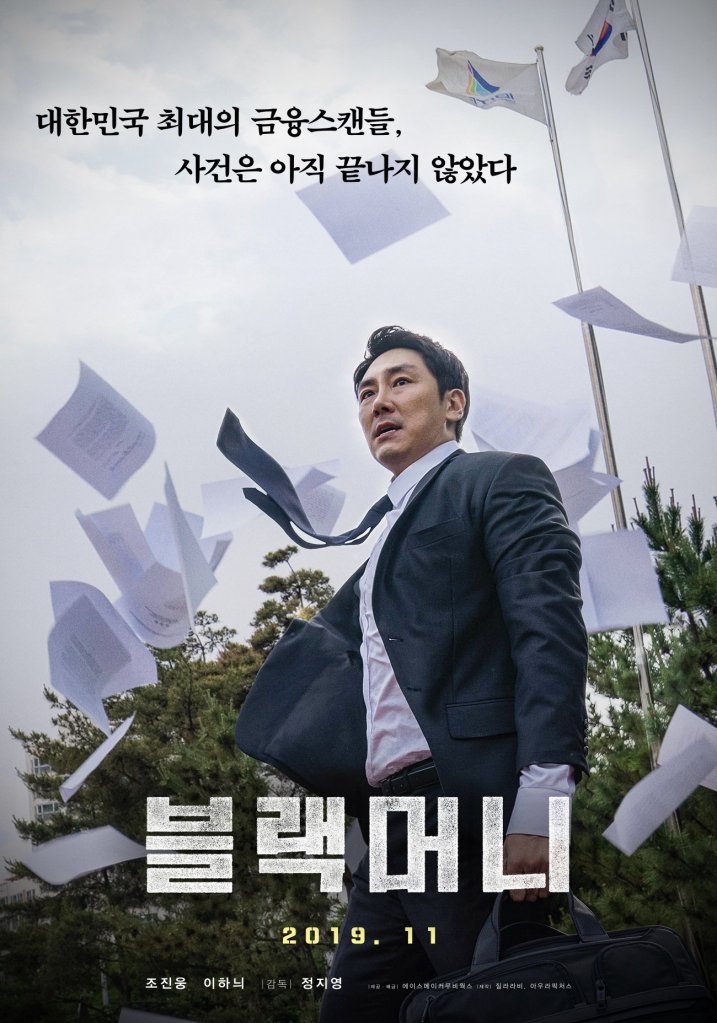
Black Money (블랙머니, Chung Ji-young, 2019)

Following hot on the heels of Default, Chung Ji-young’s financial thriller Black Money (블랙머니) once again has some questions to ask about the nature of capitalism in South Korea. Loosely based on a real life incident concerning the sale of the Korea Exchange Bank (KEB) to American private equity firm Lone Star Funds, Chung’s film points the finger at systematised corruption as its collection of greedy financial elites peddle national interest as a reason for keeping the public in the dark when it comes to their dodgy dealings.

The trouble starts in 2011 when an illicit couple, one working for Daehan bank and the other for the Financial Supervisory Service, are bumped off after being called in by the Supreme Prosectors’ Office in connection with an ongoing corruption investigation into the sale of the bank at rock bottom prices. The male bank employee is killed when the couple is run off the road by a truck but the FSS woman, Su-gyeong (Lee Na-ra), manages to escape. Fully aware that her life is at threat, she tries to get herself arrested by the police for protection but fails and is later discovered dead in her car next to a charcoal briquette. A “suicide note” in the form of a text message to her sister suggests that she has chosen to take her own life because of the aggressive tactics of prosecutors one of whom sexually harassed her after which she felt too humiliated to go on living. 

The mention of sexual harassment is intended to act as a tiny bomb by the shady forces in play, fully aware that just mentioning those words makes the entire case toxic ensuring it will be shut down never to be mentioned again. They have, however, picked the wrong man for their patsy in “bulldozer” Yang Min-hyuk (Cho Jin-woong) who is outraged to have been unfairly labelled a sex offender and will stop at nothing to clear his name, eventually uncovering the entire conspiracy after realising that Su-gyeong’s death was almost certainly a murder.

In this, Yang is obviously acting in self interest, which isn’t to say that he doesn’t care about the conspiracy, but it’s not his primary motivation. His opposing number, Kim Na-ri (Lee Honey), is perhaps much the same, a victim of her upbringing but increasingly conflicted. Brought up by a right-wing, ultra-capitalist professor who is good friends with former prime minister Lee Gwang-ju (Lee Kyoung-young) now working on the Daehan bank sale, Na-ri tells herself she’s acting in the national interest in her desire to set up her own international trade law firm to prevent Korea being taken advantage of by bigger foreign economic powers and in particular the Americans. Despite her law background, what Na-ri has mainly found herself doing is more like PR, finding palatable ways forward to make sure the deal goes through on favourable terms despite the already widespread public outcry.

Surprisingly, Na-ri and Yang end up bonding over the course of the investigation, discovering they have more in common than either might have assumed. Given the kind of evidence that Yang is digging up which points to a wide scale conspiracy involving complex fraud and murder, Na-ri finds herself conflicted. Maybe she isn’t quite as committed to ultra-capitalism as her father is, giving Lee’s speech at the Davos conference the heart-warming title of “free trade with a human face” which apparently went down very well with the audience. Whatever else she is, she’s a lawyer, and the kind of lawyer who doesn’t really like it when people break the law, so she’d rather not think that she’s been party to criminality without ever realising. Lee, meanwhile, uses their familial closeness against her, adopting a sleazy kind of sexist paternalism as he brushes off her concerns as if telling her not to worry her pretty little head about it while tacitly admitting what he’s up to isn’t quite right but is justifiable because the economy must be protected at all costs. 

Only, that’s a difficult claim to square when Na-ri’s restructuring plans for Daehan involve hundreds of workers being laid off and some of them are currently on a hunger strike in the public square to protest. Na-ri is used to thinking in big numbers, she’s not usually confronted by the human face of their results and the weight of her responsibility does perhaps shake her. Yang too is used to being equivocal, declaring himself a neutral force because his job is to enforce the law equally, but he got into this after his dad was involved in a traffic accident where the other driver turned out to be a chaebol kid, so he knows all about systemic inequality and entrenched corruption. Nevertheless, self interest continues to play its part. The sympathetic chief prosecutor who put his career on the line to take the case forward is ousted through a trumped up charge while his replacement offers to shelve it in return for a promotion. A combination of bribery and violence conspires to keep the financial elites doing what they’re doing because no one is secure enough to stop them. 

Trying to discourage her from her newfound sense of responsibility, Na-ri’s father reminds her that Lee is like family to them, which is one reason he’s put her forward for a top job as a financial commissioner, explaining that “that’s how we live through capitalism. Just accept it. It’s not something you can change on your own”. Chung ends the film with a sense of triumph as the common man, Yang, makes an impassioned speech in front of an angry mob, but according to the on screen text his was an empty victory because no one was ever brought to justice over the “illegal” bank sale which put a lot of ordinary citizens out of work while already wealthy elites lined their pockets aided by the financial authorities and a rotten judiciary. An attack on rampant capitalism, Black Money is not afraid to announce where its allegiances lie but seemingly has few answers other than indignation towards an inherently corrupt society ruled by greed and indifferent to the suffering of ordinary people.


Original trailer (no subtitles)