A Writer’s Odyssey 2 (刺杀小说家2, Lu Yang, 2025)

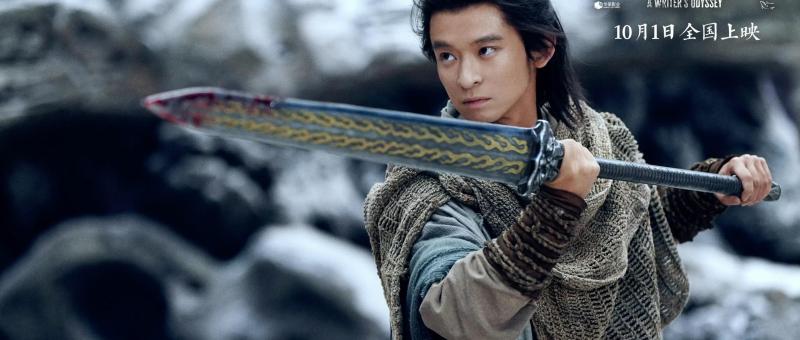
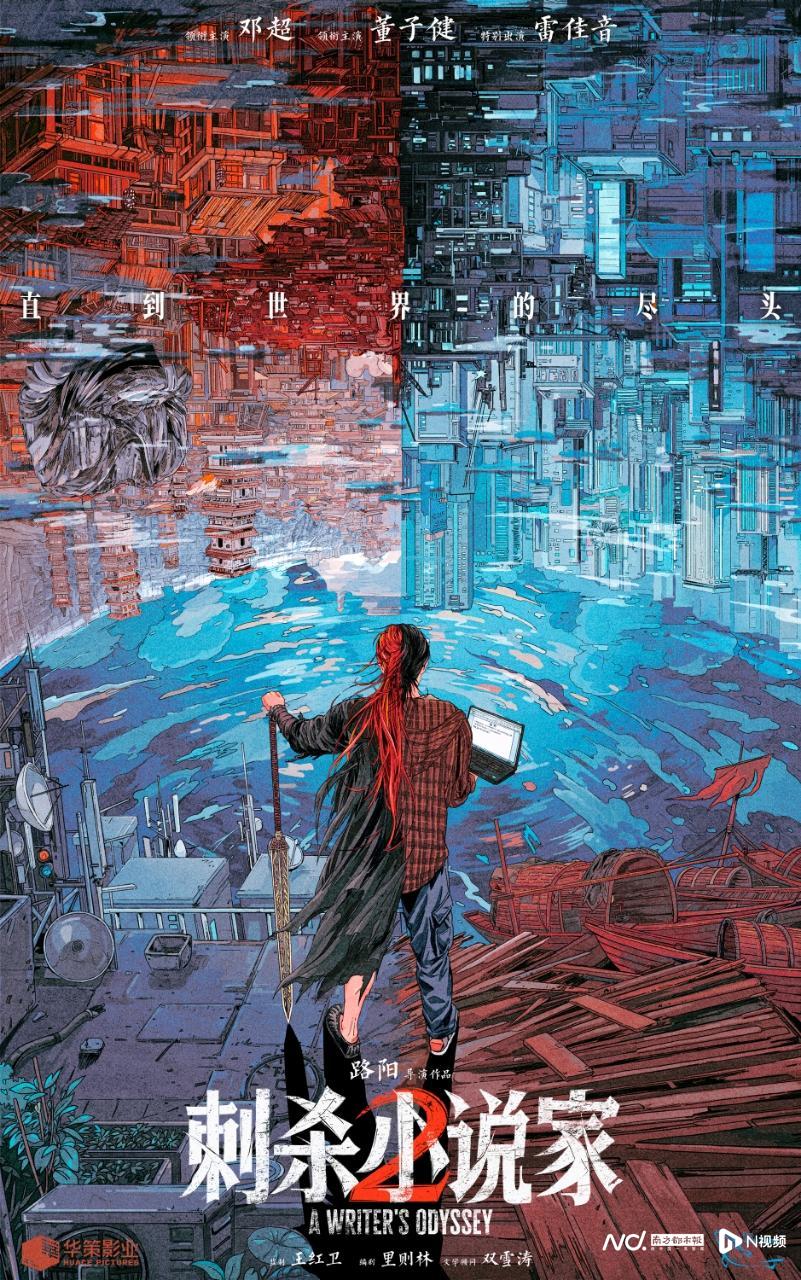
Arriving four whole years after the previous instalment, A Writer’s Odyssey 2 (刺杀小说家2, cìshā xiǎoshuōjiā 2) is in many ways a very different film. While its predecessor was a fairly serious affair tackling some of the issues of the modern China such as child trafficking, machinations of the oligarch class, and generalised capitalistic oppression, the sequel is a typically mainstream fantasy blockbuster complete with some fairly goofy humour and the ultimate message that despotism is bad and people should work for the good of others rather than just themselves.

In that regard at least, it’s another pointed attack on authoritarians and corporate bullies like Aladdin’s Li Mu. The entire Aladdin plot is, however, jettisoned, which seems like a missed opportunity, especially as it means that Yang Mi does not reprise her role and we don’t get any answers about who the boy was with Tangerine at the end of the previous film nor whether the “death” of Redmane led to the death of Li Mu in the real world as he feared it would. In truth, even Guan Ning (Lei Jiayin) is somewhat sidelined. Six years later, he, Tangerine (Wang Shendi), and Kongwen (Dong Zijian) are living as a family running a restaurant. Though Kongwen finished his Godslayer novel, it was stolen by an influencer, Cicada (Deng Chao), who accused him of plagiarism which got Kongwen blacklisted in the publishing industry and unable to earn any money through writing. As he’d said in the previous film, it was writing that gave his life meaning so now he’s started to become hopeless and depressed. 

Meanwhile, he’s begun to dream of Ranliang and the return of Redmane who has survived but as a mortal rather than as a god and is determined to get back everything he’s lost. This means, in meta terms, that he wants to challenge “god”, or really Kongwen, whom he sees as the architect of his fate. On the one level, it seems as if he’s trying to insist on his own free will and is sick of being controlled by unseen forces, but in reality he just wants the powers of a god for himself so he can oppress people properly. Nevertheless, this means he has to come to our world in order to square off against Kongwen, the writer.

It has to be said the vision of the real world on offer this time is much glossier and devoid of the kind of darkness that haunted Guan Ning. Though they’re worried because the restaurant’s not doing so well, the trio seem to have pretty nice lives with relatively few other problems outside of Cicada who is now aligned with Redmane in place of Li Mu standing in for a venal class of confluencers. Kongwen is then fighting a war on two fronts as Redmane taunts him to come over to the dark side and turn his fantasy story of good defeating evil into one of nihilistic despair echoing the way that Kongwen feels in his life.

The meta drama of the writer pursued by his characters is resolved in a fairly unexpected way with Kongwen effectively giving up his godlike powers and allowing his characters to save themselves through “mortal courage” rather divine intervention. Though Renliang had been plunged into chaos as the power vacuum Redmane left behind saw his former allies effectively become warlords reenacting the warring states period, in the end it’s solidarity that saves them as they agree to band together to oppose Redmane while offering the possibility of forgiveness if only Redmane can give up his quest for domination and agree to work for the common good. 

Kongwen learns something similar, remembering his writing isn’t solely an economic activity, and not only about himself but giving something back to the world. Torn between the anarchic ambition of Redmane and the righteousness of Jutian (Chang Chen), modelled after his own absent father, he struggles to find meaning amid the injustices of the modern China having been unfairly cancelled by netizens after being falsely accused of plagiarism by the man who stole his story and asks himself if it’s worth sacrificing his friends in a last ditch attempt to save them through teaming up with the forces of darkness. Nevertheless, Lu frames his tale in a much more lighthearted fashion as symbolised by demonic armour Darkshade’s sudden merging with a lettuce to become unexpectedly adorable. As such, it feels like something of a missed opportunity in choosing not to build on the foundations of the first film but sidestep them completely. Even so in upping its production values and the quality of its visual effects, the sequel embraces a new sense of fun which is definitely different but possessed of its own charm.


Trailer (English subtitles)

A Writer’s Odyssey (刺杀小说家, Lu Yang, 2021)

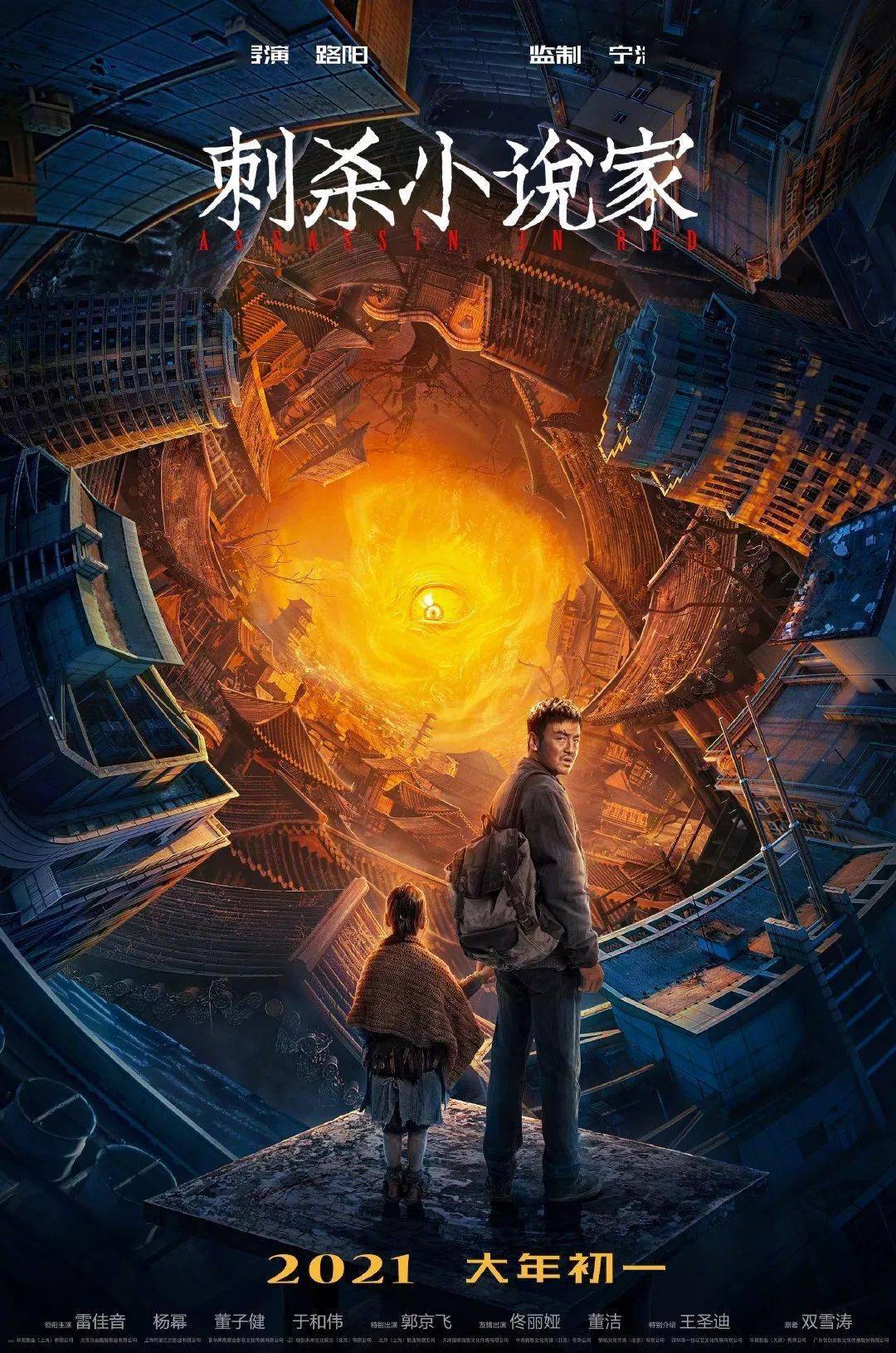
“As long as I keep writing, my existence has meaning,” according to the titular writer at the centre of Lu Yang’s action fantasy, A Writer’s Odyssey (刺杀小说家, cìshā xiǎoshuōjiā). His art, though derided as trivial, is it seems the best form of resistance to the feudalistic capitalism that has overtaken the authoritarianism of the communist past. Broken father Guan Ning (Lei Jiayin) desperately searches for his daughter Tangerine who has been missing six years, assumed to have been swallowed by China’s child trafficking network, only to find himself plagued by bizarre dreams of a fantasy city.

The city is, it seems, that of Kongwen’s (Dong Zijian) fantasy novel series which he live streams over the internet. Whenever something bad happens to the evil despot at the story’s centre, Lord Redmane, it’s visited on the CEO of vast corporation Aladdin (read: Alibaba), Li Mu (Yu Hewei), which has just launched the Lamp App which will they claim “resculpt time” so that time and distance are no longer an issue. Li Mu is panicked because Kongwen has said he’s going to end the series in three days and it doesn’t look good for Lord Redmane, so he’s fearful for his life. Noticing that Guan Ning has some sort of super power in which he can hurl rocks with unusual accuracy, he leverages Tangerine’s disappearance to convince him to knock off Kongwen in exchange for his daughter’s location.

Of course, the fantasy world and the “real” are connected in more ways than one with Ranliang conjuring visions of the Cultural Revolution in which the despotic leader is literally protected by hordes of mindless “Red Guards” while pitting one district against another and seemingly destroying all art. Li Mu, meanwhile, is destroying human innovation with his apps and treats the lives of others with callous disregard. His right-hand woman Tu Ling (Yang Mi), originally resentful of Guan Ning in blaming him for losing his child having been abandoned by her own parents, becomes disillusioned with his tactics on realising that he lied to Guan Ning and the candidates he picked for Tangerine are five random girls none which is likely to be her. Figuring out that she’s probably next after Li Mu knocks off Kongwen, who is also the son of his former business rival that he seemingly betrayed to take control of the company, and gets rid of Guan Ning for good measure, her allegiances begin to change creating a kind of parallel with Tangerine and the mysterious boy hanging around with her.

Meanwhile, in the fantasy world, Kongwen teams up with a demonic suit of armour that feeds on his blood but is also a near unbeatable killing machine that may or may not be evil. Guan Ning comes to believe that the fantasy world may be the only place he can find Tangerine and switches side from agreeing to kill Kongwen to deciding to protect him so that he can finish the story and possibly write a better ending for his fantasy character who as yet remains undefined. He’s later revealed to be a member of the brainwashed Red Guard, which may be appropriate as his former job was a banker which is to say a soldier of capitalism. Only art can break his programming in the form of Tangerine’s flute playing which reawakens his humanity and memory. 

The implication seems to be that China cannot escape either its communist past or capitalist future except through the liberation that comes with artistic endeavour. When Guan Ning is tasked with killing Kongwen, he follows him about town and hears his neighbours run him down as a “parasite”, a man of almost 30 with no real job and no income who is still being financially supported by his mother. This information might be offered to make it seem less bad to kill him, as if in this hyper-capitalistic society his life is worth nothing because that’s what he contributes. Kongwen feels this a little himself and has suicidal thoughts, but also insists that his life has meaning precisely because he writes and expresses all of this frustration with the contemporary society along with his buried resentment towards Li Mu for the death of his father and theft of his birthright. Shot like a video game, the film’s sprawling fantasy-esque world hints at still more adventures to come in this David and Goliath competition in which Kongwen and Guan Ning attempt to overthrow this cruel and corrupt order to find a way to free themselves from its authoritarian cruelties if only in their minds.


Trailer (English subtitles)

Yolo (热辣滚烫, Jia Ling, 2024)

In the training footage which plays over the closing credits of Jia Ling’s YOLO (热辣滚烫, Rè là gǔntàng), someone asks her why she’s learning to draw and she replies that she’s trying to become a better version of herself. The same is very much true of the movie’s heroine who trying to rediscover her will to keep fighting in a world that seems to have beaten her down and destroyed her spirit. Inspired by Masaharu Take’s 2014 boxing drama 100 Yen Love, Jia’s film is kinder and less cynical in tone while also taking on a meta quality in documenting the actress’ own transformation.

Then again, the film opens with a sequence laying bare the petty prejudices that surround Leying (Jia Ling) as a woman in her 30s unemployed and still living with her parents. It’s never revealed what exactly caused her to leave the job she got after college though she explains that she was unable to get another because she finds it difficult to talk to people. What seems apparent is that she is likely living with a heavy depression that is all too often dismissed as mere laziness by those around her and most particularly her mean and judgmental older sister (Zhang Xiaofei). The crunch time comes when her cousin Doudou (Yang Zi) who works for a TV company producing a reality programme about finding jobs for people who for various reasons struggle to get one, tries to bamboozle her into appearing on the show by turning up with a camera for an impromptu family intervention before even asking her if she wanted to take part.

In the attitudes of her family and most particularly the TV show which is ironically called “Find Yourself”, there is a degree of fat shaming in which Leying is treated in certain ways just because of her weight which is assumed be the outward manifestation of her problems. Doudou’s previous guest on the show had been a man who was obese and had mobility issues so they got him a job posing as Buddha for photos. It’s tempting to read Leying’s transformation as complicity with culturally defined notions of feminine beauty and ideal body shape, but the point really is that Leying is unhappy and as a people pleaser with low self-esteem unable to care for herself until she discovers boxing and literally learns to fight back. It is therefore also a little bit awkward that her first steps towards self-care are taken in order to look after a man, insecure boxer Hao Kun (Lei Jiayin), as she tries to help him achieve his dream while allowing him to mooch off her even though he treats her poorly.

Nevertheless, it’s seeing him give up without at fight that eventually spurs her on to start fighting back by taking up boxing herself and surprising those around her with her seriousness and determination. Asked why she’s doing it, she says that she just wants to win for once and eventually comes around to the idea of winning in her own way which doesn’t necessarily mean being named as the champion or beating someone else but holding her own and staying in the fight. What she regains is self-confidence and self-respect, no longer a willing doormat accepting whatever humiliation comes her way to avoid upsetting someone else but standing up for herself and gaining the courage to say no to things she doesn’t want to do. 

There is something quite moving in witnessing the actual transformation of actress Jia Ling throughout the credits sequence and most particularly when she comes to film the scene in which she walks parallel with her old self and has to turn back because it’s too much for her on a personal level. Jia shows us just how unhappy and hopeless Leying had become because of the way the world treated her, but also how singleminded pursuit of her goal gave her a new sense of purpose and a means of fighting back that showed her she could win in her own way when it came to life as well as in the ring. Swapping the grimness of Take’s original for something more broadly inspirational, Jia nevertheless hints at the prejudices of the contemporary society and its money-loving superficiality while simultaneously allowing her heroine to find and occupy her own space born of her own individual happiness rather than the acquisition of things other people think she should want but actually does not.


Original trailer (English subtitles)

Article 20 (第二十条, Zhang Yimou, 2024)

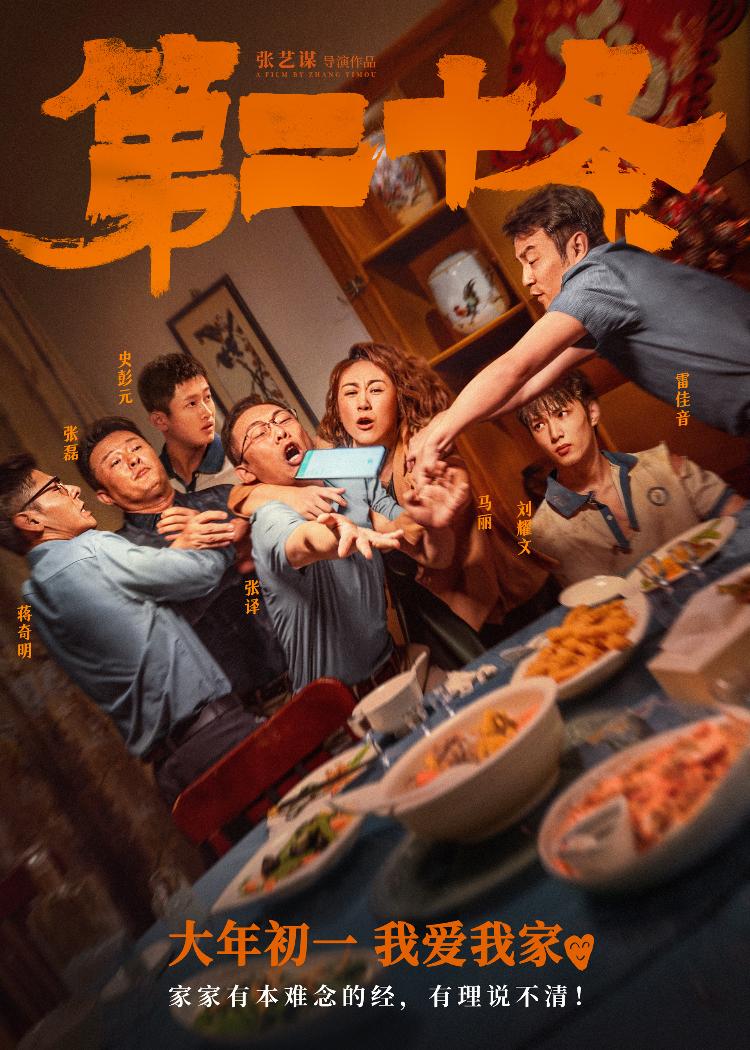
There’s something quite strange going on in Zhang Yimou’s New Year legal dramedy Article 20 (第二十条, dì èrshí tiáo). Generally speaking, the authorities have not looked kindly on people standing up to injustice in case it gives them ideas, yet the film ends in an impassioned defence of the individual’s right to fight back in arguing that fear of prosecution should not deter “good” people from doing “the right thing” such as intervening when others are in danger. Nevertheless, the usual post-credits sequences remind us that the legal system is working exactly as it should and the guilty parties were all caught and forced to pay for their crimes.

In this particular case, the issue is one akin to a kind of coercive control. Wang (Yu Hewei) stabs Liu 26 times following a prolonged period of abuse and humiliation. After taking out a loan to pay for medical treatment for his daughter who is deaf and mute like her mother Xiuping (Zhao Liying), Wang was terrorised by Liu who chained him up like a dog and repeatedly raped his wife. Prosecutor Han Ming (Lei Jiayin) eventually argues that his attacking Liu qualifies as self defence under Article 20 of the constitution because even if his life was not directly threatened at the time it was in the long term and he did what he did to protect himself and his family from an ongoing threat.

Han Ming becomes mixed up in several different cases along the same lines only with differing levels of severity. Some years ago he’d worked on the case of a bus driver who was prosecuted after stepping in to help a young woman who was being harassed by two louts. His problem was that he got back up after they knocked him down and returned to the woman which makes him the assailant. Zhang has spent most of his life since his conviction filing hopeless petitions in Beijing. Meanwhile, Han Ming’s son, Chen (Liu Yaowen), gets into trouble at school after stepping in to stop obnoxious rich kid and Dean’s son Zhang Ke from bullying another student.

Now jaded and middle-aged, Chen first tells his son that he should he give in an apologise to get the boy’s litigious father off his back though Chen is indignant and refuses to do so when all he did was the right thing in standing up to a bully. Bullying is the real subject of the film which paints the authoritarian society itself as a bully that rules by fear and leaves the wronged too afraid to speak up. The choice Han Ming faces is between an acceptance of injustice in the pursuit of a quiet life and the necessity of countering it rather than live in fear while bullies prosper.

The thesis is in its way surprising given that the last thing you expect to see in a film like this is encouragement to resist oppression even if the idea maybe more than citizens should feel free to police and protect each other from the immorality and greed of others. It is true enough that it’s those who fight back who are punished, while the aggressor often goes free but according to Han Ming at least the law should not be as black and white as some would have nor be used as a tool by the powerful, or just intimidating, to oppress those with less power than themselves. 

Other than the theatrical drums which play over the title card, there is curiously little here of Zhang Yimou’s signature style while the film itself is not particularly well shot or edited. It also walks a fine line between the farcical comedy of Han Ming’s home life in which he perpetually bickers with his feisty wife (an always on point Ma Li) who worries he’s too interested in his colleague Lingling (Gao Ye) who turns out to be an old flame from his college days during which he too was punished for standing up to a bully by being relegated to the provinces for 20 years. A minor subplot implies that the justice-minded Lingling is largely ignored because of the sexist attitudes of her bosses who feel her to be too aggressive and often dismiss anything she has to say in what amounts to another low level instance of bullying. The film ends in a rousing speech which seems more than a little disingenuous but even so ironically advocates for the right to self-defence against a bullying culture while simultaneously making a case for the authorities having the best interests of the citizen at heart which would almost certainly not stand up particularly well in court.


Article 20 is on limited release in UK cinemas courtesy of CMC.

International trailer (English subtitles)
Under the Light (坚如磐石, Zhang Yimou, 2023)

The irony at the centre of Zhang Yimou’s Under the Light (坚如磐石, jiānrúpánshí) is that it takes place in a neon-lit city of eternal visibility, though of course where you have light you’ll also find shadows. Even so, it appears he’s trying to make a point in the plain sight nature of political corruption and it’s connections with organised crime. At heart it’s a tense cat and mouse game between two men who share some kind of sordid past, but also of how it’s the next generation that often pay in the infinitely corrupted paternity of the contemporary society.

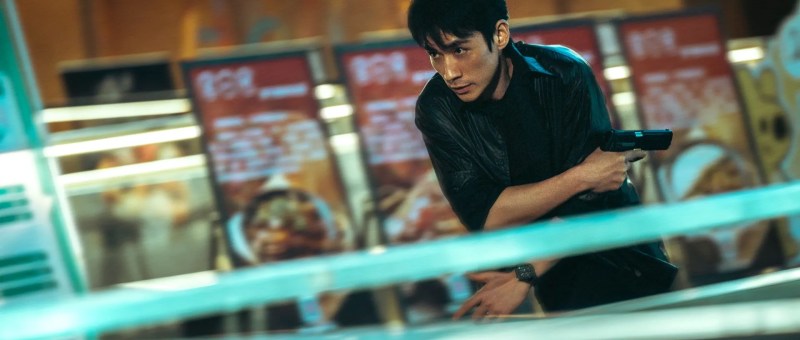
Zhang opens with a hostage crisis as a man hijacks a bus and threatens to blow it up if he doesn’t receive a visit from deputy mayor Zheng Gang (Zhang Guoli). Zheng attends but his policeman son Jianming (Lei Jiayin), currently assigned to the tech division, notices that the bomb can be detonated remotely and it doesn’t appear the hostage taker knew that it was real. In any case, all is not as it seems and as Zheng is soon squaring off against shady businessman Li Zhitian (Yu Hewei) who invites Jianming to dinner and puts on a show by blackmailing another business owner with a sex photo before forcing him to put his hand in boiling oil. 

In contrast to his ruthless exterior, Zhitian dotes on his grown up daughter currently pregnant with her first child and about to be formally married to his business heir David (Sun Yizhou). Jianming meanwhile has a complicated relationship with his father by whom he feels rejected in part because he’s adopted. Zheng also appears to be meeting with a mysterious young woman for unclear reasons, later hinting that she’s a kind of daughter figure someone at some point asked him to protect. In a strange and probably unintended way, it’s this parental quality of protection that has been disrupted by ingrained corruption and is then re-channeled in a desire to protect society in general. When it’s all over, Jianming asks his bosses why they trusted him to make the right decision, and they tell him it’s because he told them he wanted to be a “true policeman” for the people.

Apparently stuck in limbo for four years because of censorship concerns, the propaganda thrust of the film centres on the crackdown against political and judicial corruption. Zheng is engaged in a political project to target corrupt officials but is heavily implied to be on the wrong side of the fence himself which would explain his connection with Zhitian, a supposedly self-made man who keeps a heavy pole in his living room to remind him of his roots as a lowly porter in a rural town before taking advantage of the ‘90s economic reforms to make himself wealthy beyond his wildest dreams. 

They each have hidden secrets which Jianming becomes determined to drag into the light while working with the anti-corruption officers in his precinct, as well as old flame Hui-lin (Zhou Dongyu). Zhang adds in some distinctly retro comedy vibes not least in the frustrated romance of Jianming and Huilin who at one point dangle dangerously off a building while she later bites back, “don’t deprive me of the chance to protect you. It’s what they call love” when firing a pistol at a bunch or marauding bad guys. Yet the comedy seems incongruous with infinite bleakness of the resolution in which once again the children are made to suffer as Jianming comes to a greater understanding of his origins. 

In an ironic touch, the villains are later revealed to have been dyeing their hair which is in reality already white though they are not really all that old. Playing into the themes of duplicity, it also hints at the central message that the older generation must recede and the young, like Jianming, learn to find an accommodation with their failures in order to reclaim a sense of justice. Then again, the film itself is quite duplicitous with a series of glaring plotholes including a giant one relating to the DNA identification of a missing woman whose body is finally dragged into the light. Huiling warns Jianming that there are some boxes it’s better not to open. At the film’s conclusion he may wish he’d listened, but his job is to drag truth into the light and not least his own. In any Zhang’s infinitely bright, ever illuminated city of neon and glass has a host of hidden darkness only temporarily exorcised by the unusually lengthy parade of the now standard title cards explaining that the wrongdoers were caught and punished while deprived of their ill-gotten gains no matter how much it might seem that crime really does pay.


International trailer (Simplified Chinese / English subtitles)

Full River Red (满江红, Zhang Yimou, 2023)

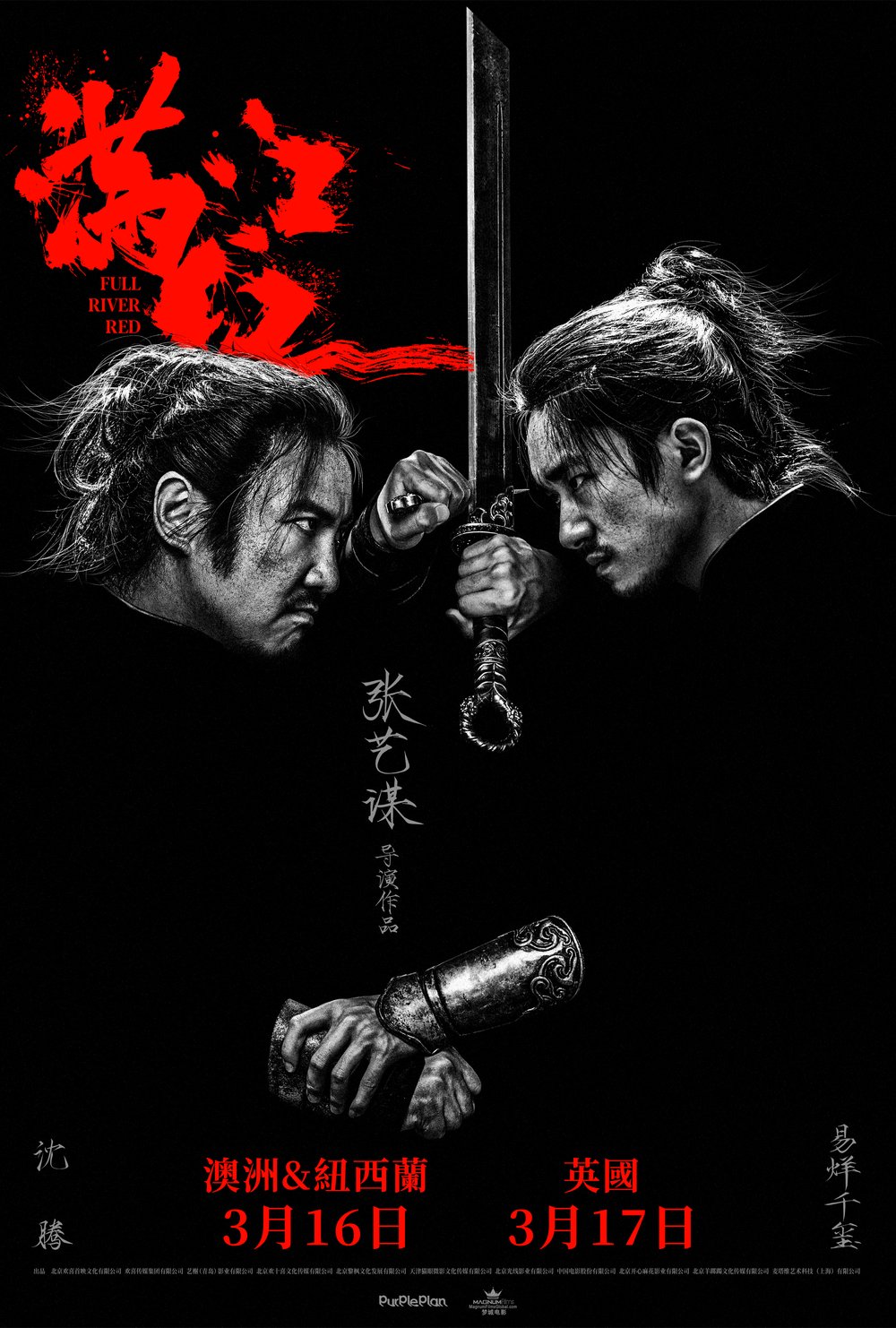
It’s a curious thing, in a way, that the central conceit of Zhang Yimou’s deliciously convoluted Song Dynasty mystery Full River Red (满江红, Mǎnjiānghóng) should turn on the idea that a truth that shames you should not be concealed. Its heroes die for a poem written by a wronged man that according to the closing text at least every child in the China of today knows by heart. Yet one could also say that this tale of intrigue in the court has it parallels in the political realities of the contemporary society, while the ambiguous ending which implies a rejection of the systemic corruptions of the feudal era might also in its way be subversive despite the rabid jingoism of the closing scenes and their thinly veiled allusions to a One China philosophy.

In any case, the film takes its title from a classic poem attributed to general Yue Fei who was put to death on a trumped up charge by corrupt prime minister Qin Hui (Lei Jiayin) who favoured making peace with the warlike Jin over Yue’s bloodthirsty conquest. Qin is about to meet with the Jin on an important matter and it seems to help clear his name only a Jin diplomat is inconveniently murdered in the palace and not only that, it’s also thought he was carrying a highly confidential letter intended for Qin’s eyes only which may implicate him in treachery. For somewhat unclear reasons, buffoonish corporal Zhang Da (Shen Teng) is given two hours to find the letter and figure out who killed the diplomat or prepare to meet his end. Though as he knows find it or not certain death is all that awaits him. 

Zhang uses Shen Teng’s comic background to his advantage, painting Zhang Da as a man desperately trying to talk himself out of trouble whose word for those reasons cannot be relied upon. Though all is not as it seems, and Zhang Da proves unexpectedly astute in navigating the complicated machinations of the courtly life. The letter is something of a MacGuffin, but it’s clear that everyone wants it largely as a safety net, hoping to get kompromat on Qin they can use protect themselves in this hellish prison where death lurks around every corner. This is indeed a world in which blood will have blood, nobody is safe, and no one can be trusted. Getting the letter is like getting an immunity card from palace intrigue, something which diffident courtier Wu (Yue Yunpeng) assumed he already had in a golden seal gifted to him by the emperor only to discover it can’t necessarily protect him from someone with no respect for the system. 

The palace itself is reflection of the feudal order with its labyrinthine corridors barely narrow enough for two men to pass. There’s a constant feeling of constraint and oppression, not least in the persistent greyness of the palace walls. Even Qin seems to have adopted an air of austerity or perhaps because of the illness he affects dresses less elaborately than one might expect as do his colour coded handmaidens in blue and green who have been rendered deaf and mute to prevent them revealing any of his secrets. Zhang Da is paired with the serious commander Sun (Jackson Yee) who in a running gag is actually his uncle though much younger than him. On one level Sun is committed to this system and fully complicit with it even if casting suspicion on himself with his counterproductive habit of killing of potential suspects before they’ve given up any information, but also harbours a lingering resentment in being rendered little more than a tool for a corrupt order for which he is willing to debase him in wilfully waterboarding a friend with vinegar in a bid for redemption in the eyes of the palace.

The tone is however ironic and filled with dark humour as a kind of rebellion against the amoral nihilism of constant betrayals that define feudal life. The heroes are tattooed with the world loyalty on their backs as if standing for a more wholesome humanity though there’s no particular reason to think the system they are loyal to is much better especially given the bloodthirsty quality of Yue’s death poem which is the text that’s really being sought in its talk of national humiliation, lost lands, and feasting on the corpses of one’s enemies. Moving with the comic beats of Peking opera, Zhang scores the film with a mix of classical instrumentation and angry, hip hop-style arrangements of warlike folk songs that reinforce the duality of this tale of so many dualities in talking both of the present day and the ancient past. In any case, the ending most closely resembles a western as the world weary hero recovers his self-respect and rides off into the sunset to live as an ordinary man far away from the corrupt world of the court and finally free of its tyrannous constraints.


Full River Red was released in UK cinemas courtesy of Magnum Films.

Original trailer (Simplified Chinese / English subtitles)

Schemes in Antiques (古董局中局, Derek Kwok, 2021)

Two very different men square off in the race to find a precious Buddha head and reclaim their family honour in an old-fashioned tomb raiding mystery from Derek Kwok, Schemes in Antiques (古董局中局, gǔdǒng jú zhōngjú). The key to the future seems to lie in the past as the heroes approach from opposing sides, one keen to expose a truth and the other seemingly to conceal it but both otherwise unable to escape a problematic family history and be rehabilitated as a member of one of the top five antiquing families in the China of 1992. 

Now a middle-aged drunkard, down on his luck Xu Yuan (Lei Jiayin) lays the blame for his present circumstances solely with his immediate forbears. A member of the Plum Blossom Five, five families who are the ultimate authorities on the authenticity of historical artefacts, Xu Yuan’s grandfather was executed as a traitor during the war for having gifted a precious Buddha head to the Japanese. In a fairly traumatic childhood, Yuan was abandoned by his his dad whom he believes to have been too badly damaged by seeing his grandfather die to be any sort of father while somehow even kids his own age called him scum in the streets because of the shame his grandfather’s transgression had placed on the family. Now running an electronics store which is in its way the opposite of antiques, Yuan has a fairly cynical view of the artefacts trade but is dragged back into it when the granddaughter of the Japanese soldier who received the Buddha head (Lili Matsumoto) insists on returning it to a direct descendent of the Xu family. 

Perhaps surprisingly, the issue isn’t really with the Japanese but the current status of the Buddha head which, after a duel of detection with well dressed rival Yao Buran (Li Xian) who is also trying to redeem his family honour, Yuan quickly realises is a fake suggesting his grandfather wasn’t really a traitor after all while giving rise to the question of what actually happened to the “real” one. When it comes to the antiques trade, perhaps there’s a question mark over the degree to which “authenticity”, whatever that might mean, really matters and if all the Plum Blossom Five are really doing is attempting to assert their authority over an unruly market as the accusation that one head of family in particular has long been knowingly authenticating fakes when it suits them to do so bears out. In something of a plot hole, Yuan is revealed to be an antiques expert despite having been abandoned by his father at a young age but his ability is for some problematic even if admired by his main rival in its ability to expose the hidden truth or as the film later puts it the real within the fake. 

In any case, it’s true enough that the battles of the past are still being fought by the grandchildren of those who started what they couldn’t finish. Yuan is joined in his quest by the feisty granddaughter of another Plum Blossom family (Xin Zhilei) who is also battling her grandfather’s sexism in his refusal to trust her with anything important in the antiques trade. She and Yuan end up squaring off against Yao who is largely playing his own game as they embark on a good old-fashioned treasure hunt in which they solve a series of puzzles set down by Yuan’s father to lead them towards the truth.

Discovering another father figure along the way, Yuan learns to accept his complicated legacy while redeeming his family honour and along with it his self worth in outsmarting just about everyone else to solve the final mystery. There is something refreshingly innocent in these well constructed, defiantly analogue puzzles which rely on cultural knowledge and mental acumen along with a spirit of curiosity, while there’s also a fair amount of running away from bad guys and escaping from collapsing tombs filled with artefacts that might in a sense be cursed even if not quite literally. There are definitely a lot of schemes in antiques, something of which Yuan himself takes full advantage, but they’re also in their own way pieces of a puzzle in which the fakes are less red herrings than gentle pointers towards other truths some of them buried under layers of subterfuge and obfuscation only to be dragged into the light by those with dangerously curious minds.


Schemes in Antiques streams in the US Sept. 10 – 16 as part of the 15th season of Asian Pop-Up Cinema.

International trailer (English subtitles)
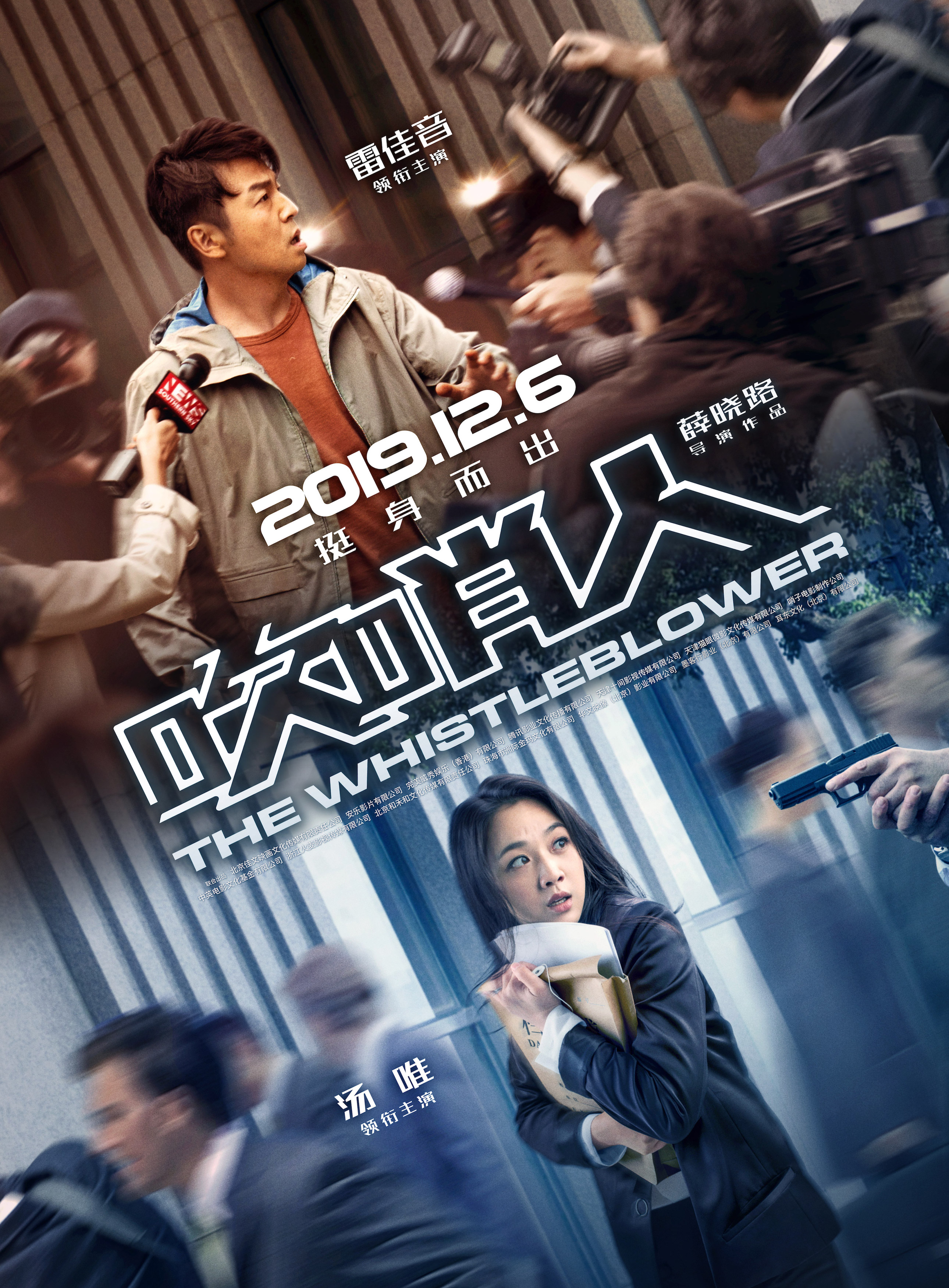
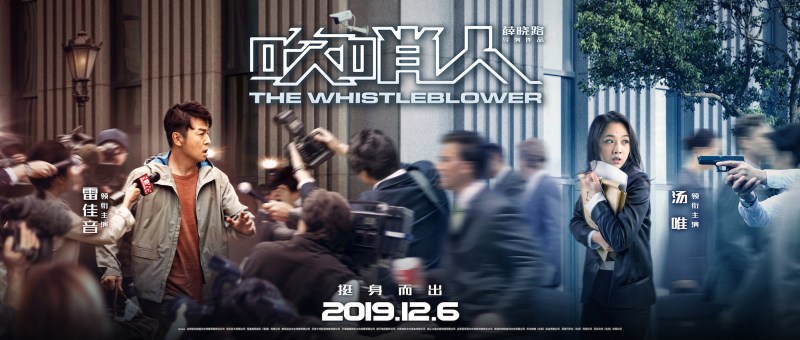
The Whistleblower (吹哨人, Xue Xiaolu, 2019)

Whistleblower poster 2One of the many ironies of an intensely authoritarian system which prizes the self-criticism as a means of enforcing discipline is that whistleblowing, as opposed to “informing” on individuals, is not only frowned upon but actively dangerous. It is, after all, suggesting the Party may have made errors in judgement which have gone on to become systemic. It’s not surprising that the Party would not like to have them pointed out. Nevertheless, in these new times in which anti-corruption has become a minor buzzword, whistleblowing has been re-designated as a public service, though perhaps in not so much different a way as “informing” was in the old days and probably it very much depends on who and what one wishes to blow the whistle.

This the earnest hero of Xue Xiaolu’s The Whistleblower (吹哨人, Chuīshàorén) finds out to his cost when he is unwittingly alerted to a possible conspiracy and entrenched corruption among his co-workers. Mainland-born Mark (Lei Jiayin) works for a top Australian energy company keen to do business with China, though as they keep reminding him he is one of only two Chinese members of personnel, the other being the mysterious Peter (Wang Ce) whose unexpected absence is the reason Mark has been sent on a swanky but possibly illegal jolly to a resort to charm a delegation from a Chinese coal company. Two things immediately go wrong for him – the wife of the company’s (absent) CEO turns out to be his long lost first love Siliang (Tang Wei) who broke up with him because she wanted someone richer, and Peter turns up to the party in a dishevelled state to shout at him about something that happened in uni, which later turns out to be a coded clue to “check the gate”.

Needless to say, Siliang who seems to be in the middle of trying to break up with her husband, and Mark, who is married with a young son, “reconnect” before she dutifully runs off to a catch a plane which later crashes killing everyone on board. Peter is then found dead of an apparent insulin overdose, but even if he’s suspicious Mark doesn’t think much of it until he realises Siliang is still alive and on the run from her corrupt CEO husband who is apparently trying to have her killed because she knows too much about his dodgy dealings.

The Whistleblower tries to have it both ways in insisting that Siliang is simultaneously a greedy, ruthless, criminal mastermind, and such useless lady of the manor sort that she doesn’t know you can’t put metal in the microwave and is a terrible getaway driver because she’s always had chauffeurs. We’re told that she broke up with Mark because of his lack of materialism, marrying a top CEO for wealth and status and helping him conduct bad faith business by managing his bribes, but may now be conflicted – not only because her husband is trying to kill her, but because she’s realised her mistake and is attracted to Mark’s untarnished innocence. Her taste for corruption was, however, a moralistic one in that she would apparently never have condoned bribery if she knew that the technology really was unsafe and posed a threat to ordinary Chinese people.

It might be telling in one sense that this battle is being fought in Africa meaning that whatever problems there are with this innovative pipeline system are uncomfortably being worked out among less powerful people far away from either the Australian energy giant or the complicit Chinese coal company looking for new paths forward. The central implication, however, is that this kind of corruption is an element of Western imperialism rather than homegrown. The villains are the bigwigs at the Australian conglomerate, one of whom speaks fluent Mandarin but is apparently not much of a friend of China. Mark tries to expose them, turning against a company which is always keen to remind him that he is a foreigner (Australian PR pending), only to find himself at the centre of a smear campaign which seems like it would play much better on the Mainland, chased by thugs, and targeted for elimination.

The message that Mark gets, looking on with hope at a bright red sign reading “rebuild your life”, is come home – don’t do business with corrupt foreigners, help make China great again. A series of textual explanations appended to the film’s conclusion attempt to explain the word “whistleblower” to an audience that might not be familiar with it, pointing out that most developed nations have instituted legislation to protect those who attempt to expose illicit business practices but that China is lagging a little behind though it too apparently introduced legal protections in 2016 as part of its intensive drive to reduce corruption among petty officials. Mark has done the “right” thing, and he’s paid a price for it, but, the film says, his is the example to be followed in standing up to oppressive global corporate corruption which will eventually imperil the ordinary men and women of China if consumerist zeal wins out over national integrity.


The Whistleblower opens in selected UK cinemas on 6th December courtesy of Cine Asia.

UK trailer (English subtitles)

My People, My Country (我和我的祖国, Chen Kaige, Zhang Yibai, Guan Hu, Xue Xiaolu, Xu Zheng, Ning Hao, Wen Muye, 2019)

My People My COuntry poster 3Oct. 1, 2019 marks the 70th anniversary of the People’s Republic of China. Supervised by Chen Kaige, My People, My Country (我和我的祖国, Wǒ hé Wǒ dě Zǔguó) presents seven short films by seven directors featuring several notable historical events from the past 70 years though not quite one for every decade (perhaps for obvious reasons). Though different in tone, what each of the segments has in common is the desire to root these national events in the personal as they were experienced by ordinary people rather than how the history books might have chosen to record them.

Told in roughly chronological order, the film opens with the founding of the Republic as comedian Huang Bo plays an eccentric engineer charged with ensuring the operation of an automatic flag pole doesn’t embarrass Chairman Mao at the big moment. In the context of the film as a whole which is fond of flags, this is rather odd because every other flag in the film is raised by hand usually by a soldier taking the responsibility extremely seriously. Yet the point is less the flag itself than the symbolic pulling together of the community to find a solution to a problem. Realising the metal on the stopper is too brittle, the engineers put out an appeal for more with seemingly the entire town turning up with everything from rusty spoons to grandma’s necklace and even a set of gold bars!

This same sense of personal sacrifice for the greater good works its way into almost all of the segments beginning with the story of China’s first atom bomb in the ‘60s for which a pure hearted engineer (Zhang Yi) first of all sacrifices his one true love and then the remainder of his life when he exposes himself to dangerous radiation all in the name of science, while in the film’s most charming episode a young boy is devastated to realise his crush is moving abroad and has to choose between chasing after her and fixing up a TV aerial so his village can see China beat the US at volleyball during the ’84 Olympics. Visions of flag waving glory eventually convince him where his duty lies, but his sacrifice is later rewarded twice over as he becomes a little local hero even if temporarily heartbroken in the way only a small boy can be.

Then again, some people are just a little self-centred like the hero (Ge You) of Ning Hao’s Welcome to Beijing who keeps trying to reconnect with his earnest teenage son only to end up connecting with a fatherless young boy during the 2008 Beijing Olympics. Chen Kaige’s sequence, meanwhile, is inspired by the story of two earthbound astronauts but similarly finds two roguish, orphaned young men connecting with a patient father figure who is able to bring them “home” by showing them a space miracle in the middle of the desert, and in the final and perhaps most directly propagandistic sequence, a tomboyish fighter pilot eventually overcomes her resentment at being relegated to a supporting role to rejoice in her colleagues’ success. Despite the overly militaristic jingoism of the parades with their obvious showcasing of China’s military power, Wen Muye’s “One for All” is in its own sense surprisingly progressive in its advancement of gender equality and mildly subversive LGBT positive themes were it not for a shoehorned in scene featuring a milquetoast “boyfriend”.

Sensitivity is not, however, very much in evidence in the sequence relating to the extremely topical issue of the Hong Kong handover. Out of touch at best, the constant references to the continuing reunification of the One China are likely to prove controversial though admittedly those they would most upset are unlikely to want to sit through a 2.5hr propaganda epic celebrating the achievements of Chinese communism. Nevertheless, it is a little galling to see the “return” to China so warmly embraced by the people of Hong Kong given current events in the city. This perhaps ill-judged sequence is the most overt piece of direct propaganda included in the otherwise unexpectedly subtle series which, despite the flag waving and eventual tank parade, tries to put the spotlight back on ordinary people living ordinary lives through the history of modern China. Of course, that necessarily also means that it leaves a lot out, deliberately refusing to engage with the less celebratory elements of China’s recent history, even as it closes with the fiercely patriotic song of the title performed by some of the ordinary heroes who have inspired its various tales of everyday heroism.


Original trailer featuring Faye Wong’s cover of the well known patriotic anthem from 1985 (no subtitles)