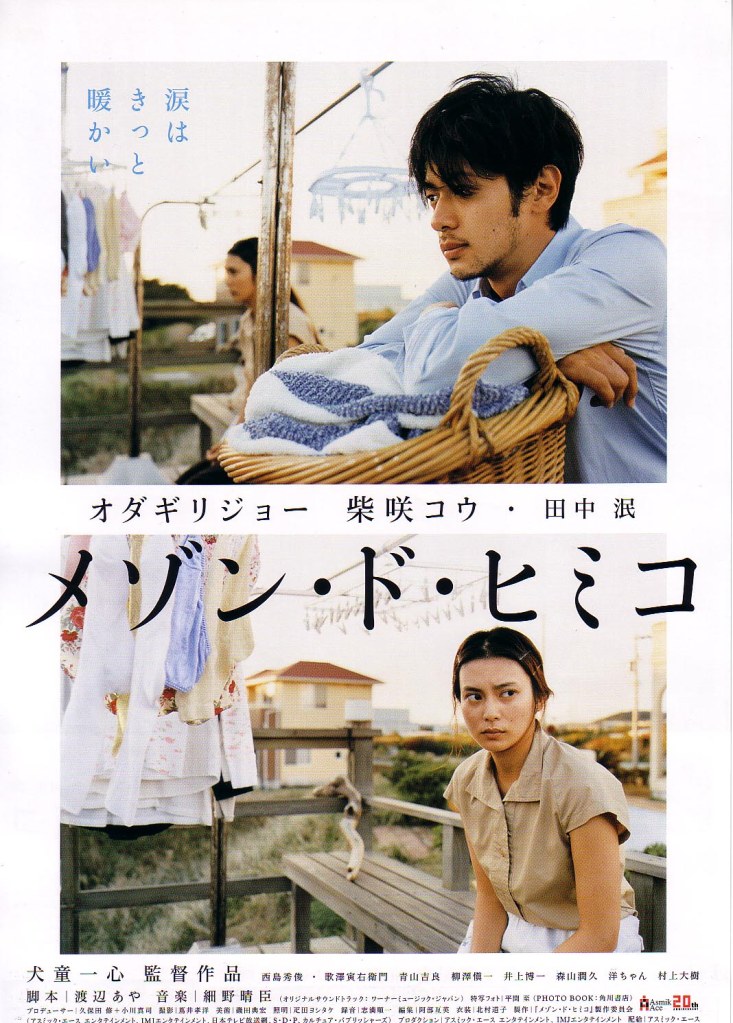
 In Japan’s rapidly ageing society, there are many older people who find themselves left alone without the safety net traditionally provided by the extended family. This problem is compounded for those who’ve lived their lives outside of the mainstream which is so deeply rooted in the “traditional” familial system. La Maison de Himiko (メゾン・ド・ヒミコ) is the name of an old people’s home with a difference – it caters exclusively to older gay men who have often become estranged from their families because of their sexuality. The proprietoress, Himiko (Min Tanaka), formerly ran an upscale gay bar in Ginza before retiring to open the home but the future of the Maison is threatened now that Himiko has contracted a terminal illness and their long term patron seems set to withdraw his support.
Haruhiko (Joe Odagiri), Himiko’s much younger lover and the manager of the home, is determined to reunite his boss with his estranged daughter, Saori (Kou Shibasaki), before it’s too late. Saori is a rather sour faced and sullen woman carrying a decades long grudge against the father who abandoned her as a child and consigned her mother to a life of misery and heartbreak, so Haruhiko’s invitations are not warmly received. Haruhiko is not the giving up type and manages to sweet talk Saori’s colleague into revealing her desperate financial situation which has her already working two jobs with a part-time stint in a combini on top of her regular work during which she finds herself looking at lucrative ads for work on sex lines. When Haruhiko offers her a well paying gig helping out at the home, she has no choice but to put her pride aside.
The exclusively male residents of La Maison de Himiko lived their lives during a time when it was almost impossible to be openly gay. Consequently many of them have been married and had children but later left their families to live a more authentic life. Unfortunately, times being what they were, this often meant that they lost contact with their sons or daughters, even if they were able to keep in touch with their ex-wives or other family members for updates. For these reasons, La Maison de Himiko provides an invaluable refuge for older men who have nowhere else to go as they enter the later stages of their lives. The home provides not only a safe space where everybody is free to be themselves but also a sense of community and interdependence.
Though the situation is much improved, it is still imperfect as the home and its residents continue to face prejudice from the outside world. Saori, still carrying the pain of her father’s rejection, views his choice as a selfish one which placed his own desires above the duty he should have felt towards his wife and child. Partly driven by her resentment, Saori has a somewhat negative view of homosexuality on arriving at the home, offering up a selection of homophobic slurs, and is slow to warm to the residents. Gradually getting to know her father again and through her experiences at the home, her attitude slowly changes until she finds herself physically defending her new found friend when he’s set upon by a drunken former colleague who publicly shames him in a nightclub.
The home is also plagued by a gang of bratty kids who often leave homophobic graffiti scrawled across the front wall. One of their early tricks involves throwing a bunch of firecrackers under a parked car to stun Saori so they can hold her captive for a bit because they have really a lot of questions about lesbians and they wondered if she was one, though one wonders what they’d do if someone answered them seriously. Predictably, the leader of the bratty kids may be engaging in these kinds of behaviours because he’s confused himself. Thankfully La Maison de Himiko is an open and forgiving place, welcoming the boy inside to offer support to a young man still trying to figure himself out.
This is not a coming out story, but it is a plea for tolerance and acceptance through which Saori herself begins to blossom, easing her anger and resentment and sending her trademark scowl away with them. One of her closest friends at the home is a shy man who lived most of his life in the closet but makes the most beautiful embroidered clothes and elegant dresses. Sadly, the most lovely of them is reserved for his funeral – he’s too ashamed to wear it alive because he doesn’t like the way he looks in the mirror. Eventually he and Saori end up having an unconventional fancy dress party in which they both break out of their self imposed prisons culminating in a joyous group dance routine in a local nightclub.
Joe Odagiri turns in another nuanced, conflicted performance as the increasingly confused Haruhiko who finds himself oddly drawn to Saori’s sullen charms though the film thankfully avoids “turning” its male lead for an uncomfortable romantic conclusion. A young man among old ones, Haruhiko is somewhat out of place but has his own empty spaces. Revealing to Saori that he lives only for desire he betrays a nagging fear of his own emptiness and journey into a possibly lonely old age. Nevertheless, La Maison de Himiko is generally bright and cheerful despite some of the pain and sadness which also reside there. A warm and friendly tribute to the power of community, La Maison de Himiko is a hymn in praise of tolerance and inclusivity which, as it makes plain, bloom from the inside out.
Original trailer (no subtitles)
And the fantastic dance sequence from the film
Plus the original version of the song (Mata Au Hi Made) by Kiyohiko Ozaki

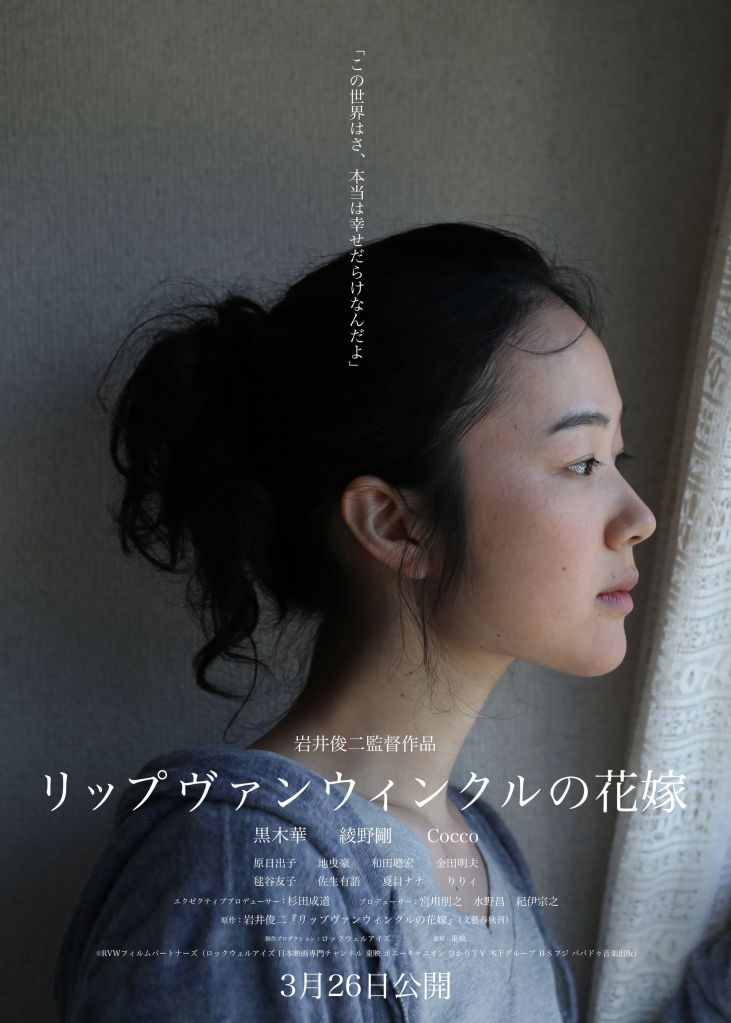 “Being naked in front of people is embarrassing” says the drunken mother of a recently deceased major character in a bizarre yet pivotal scene towards the end of Shunji Iwai’s aptly titled A Bride for Rip Van Winkle (リップヴァンウィンクルの花嫁, Rip Van Winkle no Hanayome) in which the director himself wakes up from an extended cinematic slumber to discover that much is changed. This sequence, in a sense, makes plain one of the film’s essential themes – truth, and the appearance of truth, as mediated by human connection. The film’s timid heroine, Nanami (Haru Kuroki), bares all of herself online, recording each ugly thought and despairing notion before an audience of anonymous strangers, yet can barely look even those she knows well in the eye. Though Namami’s fear and insecurity are painfully obvious to all, not least to herself, she’s not alone in her fear of emotional nakedness as she discovers throughout her strange odyssey in which nothing is quite as it seems.
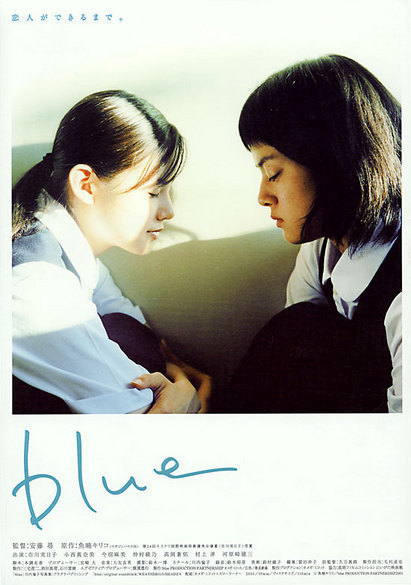 Growing up is hard to do. So it is for the teenage protagonists of Hiroshi Ando’s debut mainstream feature, Blue (ブルー), adapted from the manga by Kiriko Nananan. Like Nananan’s original comic, the cinematic adaptation of Blue is refreshingly angst free in its examination of first love and the burgeoning sexuality of two lonely high school girls. Shot with a chilly stillness which echoes the emptiness of this small town existence, Blue is no nostalgic retreat into cosy teenage dreams but a cold hard look at the messiness and pain of adolescent love.
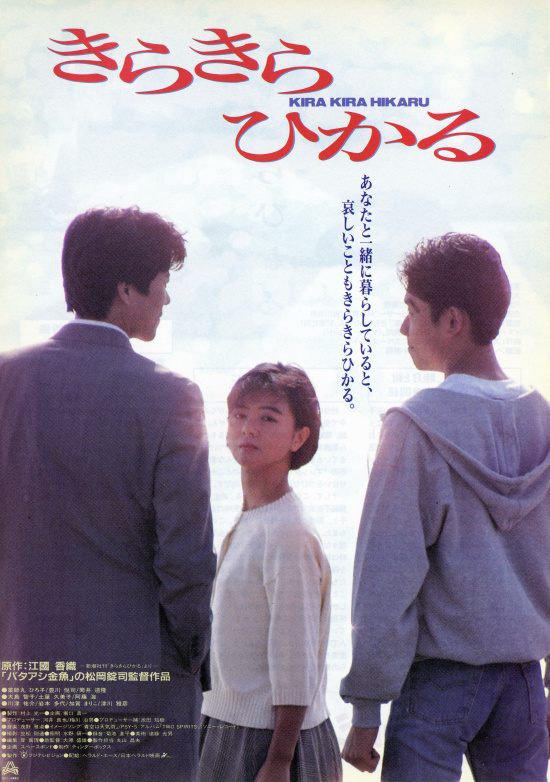 The end of the Bubble Economy created a profound sense of national confusion in Japan, leading to what become known as a “lost generation” left behind in the difficult ‘90s. Yet for all of the cultural trauma it also presented an opportunity and a willingness to investigate hitherto taboo subject matters. In the early ‘90s homosexuality finally began to become mainstream as the “gay boom” saw media embracing homosexual storylines with even ultra independent movies such as
  The recently prolific Sion Sono actually has a more sporadic film career dating back to the early 1980s though most would judge his real breakthrough to 2001’s Suicide Club. Back in the ‘90s Sono was most active as the leader of anarchic performance art troupe Tokyo Gagaga. Taking inspiration from the avant-garde theatre scene of the 1960s, Tokyo Gagaga took to the streets for flag waving protests and impressive, guerrilla stunts. Bad Film is the result of one of their projects – shot intermittently over a year using the then newly accessible Hi8 video rather the traditionally underground 8 or 16mm, Bad Film is near future set street story centring on gang warfare between the Chinese community and xenophobic Japanese petty gangsters with a side line in shifiting sexual politics.
 The family drama is a mainstay of Japanese cinema, true, but, it’s a far wider genre than might be assumed. The rays fracture out from Ozu through to
 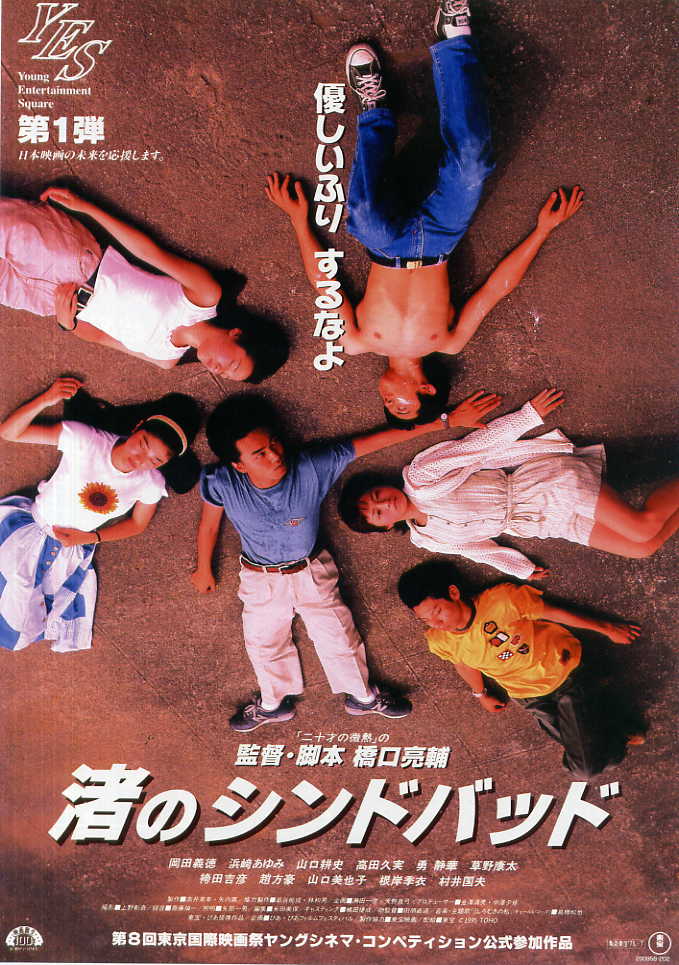 Adolescent romance is complicated enough at the best of times but the barriers are ever higher if you happen to be gay in a less than tolerant society. Ryosuke Hashiguchi’s second feature Like Grains of Sand (渚のシンドバッド, Nagisa no Sinbad) takes a slight step back in time from
 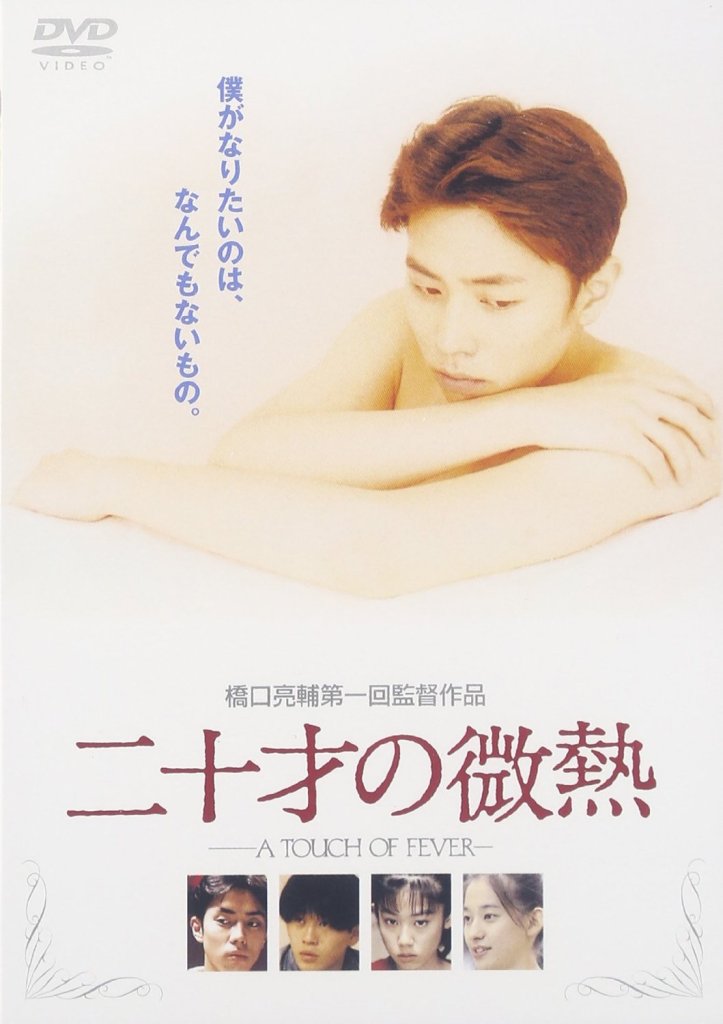 Ryosuke Hashiguchi’s debut feature A Touch of Fever (二十才の微熱, Hatachi no Binetsu) proved a surprise box office hit in Japan and is also credited for helping to bring male homosexuality into the mainstream. A no-budget movie shot on 16mm, A Touch of Fever is the story of two ordinary boys each going about their everyday lives whilst also beginning to understand themselves in terms of their sexualities, mirroring each other perfectly in their inner confusion.
 Harmony – the word itself sounds peaceful. A coalescence of sympathetic sounds, the feeling of wholeness and happiness. However, if given the choice, would you like to live in a world of peace and plenty in which your body is almost government property and your personal freedom is limited in favour of ensuring the survival of the species, or would you rather take your chances with the world as it is complete with its violence, sadness and pain if it meant you could be free to live in which ever way you see fit? Michael Arias’ adaptation of the Project Itoh novel addresses just this question in all its complexity as utopia turns out to have a heavy entrance fee.
 Windows on Worlds