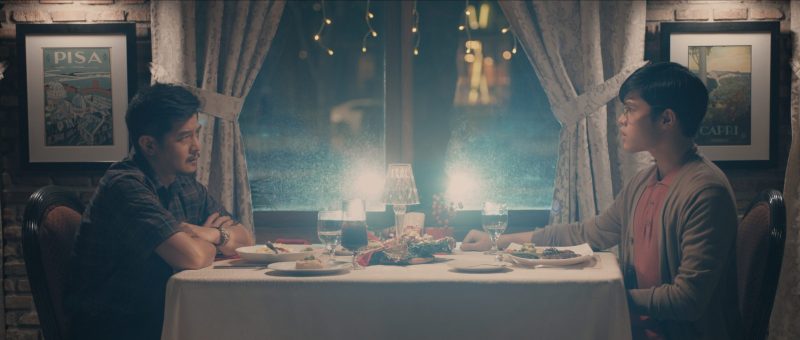
I Love You, Beksman (Mahal Kita, Beksman, Percival M. Intalan, 2022)

“What is the essence of being a real man?” The hero of Percival M. Intalan’s reverse coming out drama I Love You, Beksman (Mahal Kita, Beksman) finds himself questioning his own identity when confronted with the weight of social expectation and prejudice yet discovering that the question is meaningless when the key to happiness lies in self-acceptance and authenticity. Scripted by Fatrick Tabada (Chedeng and Apple), the film tears apart conventional notions of gender and sexuality in a hyper-masculine patriarchal culture while allowing its hero to gain the courage to define himself in order to chase his romantic destiny. 

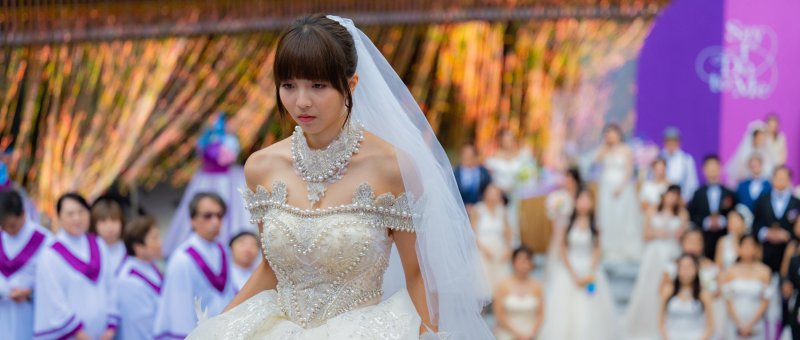
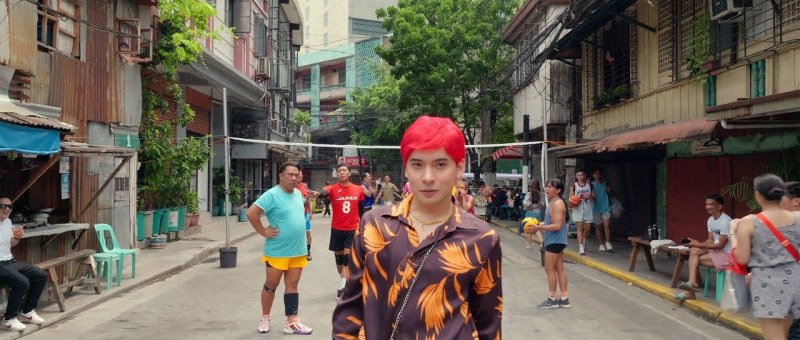
Everyone just assumes flamboyant hairdresser Dali (Christian Bables) is gay. He dyes his hair red, dresses in a less masculine fashion than other men his age, and has an effeminate manner. Yet Dali has a secret he doesn’t even really realise is one in that he is actually straight as he is forced to reveal after falling for beauty queen Angel (Iana Bernardez) at a pageant. The more he tries to explain to people that he isn’t gay and is serious about romantically pursuing Angel, the less they seem to understand him. It simply doesn’t make sense that someone so “obviously” gay could be attracted to women. They ask him if he’s sure or if it might be a phase or if he’s developed some kind of internalised homophobia but never really consider that it’s a possible for a man to be both effeminate and exclusively attracted to women. 

Even Dali begins to subconsciously change himself in order to better conform to their expectations. Having lost her mother at a young age, Angel is surrounded by hyper-masculine men in her father and brothers who all rather hilariously have the same moustache and enjoy manly pursuits such as weightlifting and basketball. Dali, meanwhile, was surrounded by queerness all his life, raised in the salon by a father who now lives openly as a gay man in a platonic marriage with his mother. Despite having seemingly been very happy as a part of a big gay family who all just assumed him to be gay too, Dali begins to reject his father and his own femininity in believing that he must adopt a more stereotypical masculinity in order to convince Angel of his heterosexuality and eventually win her heart (along with those of her conservative father and brothers). 

It might be true to say that Dali’s original presentation as a flamboyant hairstylist and fashion designer is also a kind of performance and an attempt to conform to parental expectation just as his rejection of it is an attempt to conform to the demands of a hyper-masculine society, but only by embracing both extremes can he learn to define himself outside of the images others project onto him. In adopting the traits of traditional masculinity, he becomes boorish and insensitive asking his father to hide his “gayness” to avoid embarrassing him in front of Angel’s dad while later becoming jealous and violent after seeing Angel hanging out with an ex. He can’t see that his adopted persona makes it even harder to form a genuine romantic connection with Angel, not just because he’s actively erasing the sides of himself she first became attracted to in his skill in makeup and fashion but because as she eventually tells him it’s difficult to trust someone who is being dishonest with themselves. 

The realisation he comes to is that he has to be “himself” rather than being what other people expect him to be while those around him come to understand that outdated ideas of stereotypical gender presentation are harmful to everyone. A gentle tale of broadening horizons and mutual acceptance, Intalan’s ironic comedy neatly subverts the coming out trope while situating itself in a world of relative safety in which Dali is free to explore his own identity and means of self-expression encountering opposition only from those who fear he is not being true to himself. The reality may not be so kind as the classic rom-com conclusion may suggest but the film nevertheless neatly takes aim at the ridiculousness of conventional ideas of “masculinity” in a hyper-masculine and patriarchal culture in making a heartfelt advocation for the right to just be oneself.


I Love You, Beksman screens at the BFI Southbank on 18th April as the opening night gala of this year’s Queer East.

Original trailer (English subtitles)
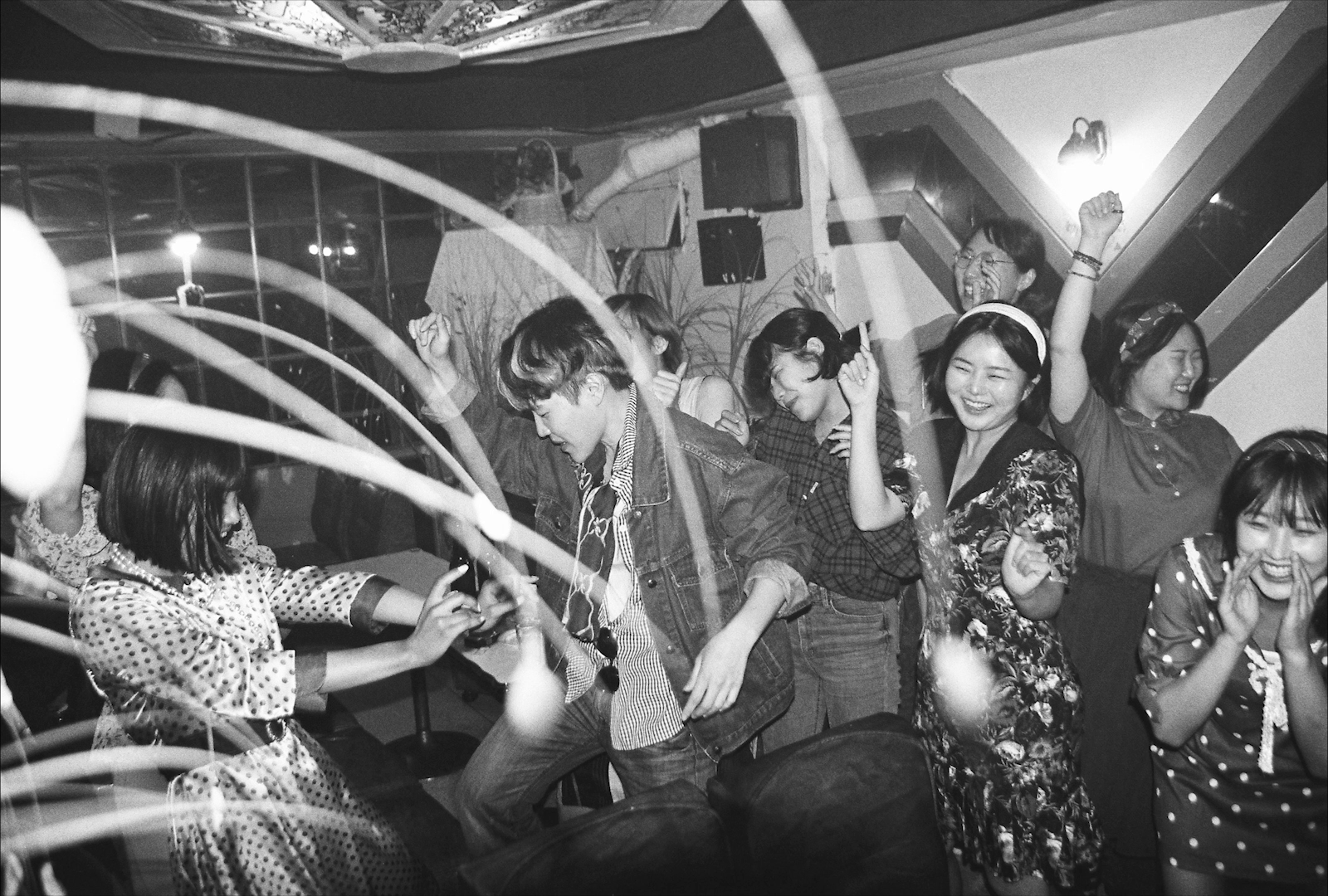
Lotus Sports Club (ក្លឹបកីឡាបាល់ទាត់ផ្កាឈូក, Vanna Hem & Tommaso Colognese, 2022)

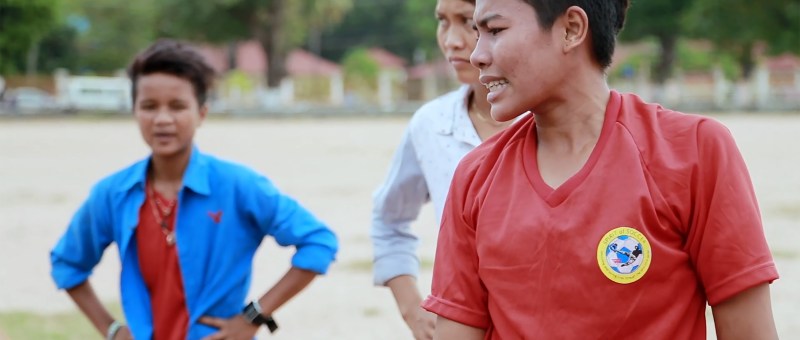
Solidarity becomes the watch word of a team of athletes led by the much loved Pa Vann in Tommaso Colognese and Vanna Hem’s observational documentary, Lotus Sports Club (ក្លឹបកីឡាបាល់ទាត់ផ្កាឈូក). Now in his 60s, Pa Vann is a trans man living with a longterm partner and running a women’s under 21 football team in which the majority of members are LGBTQ+, offering a place to belong to young people who often have nowhere else to turn having become estranged from their families or rejected by the world around them. 

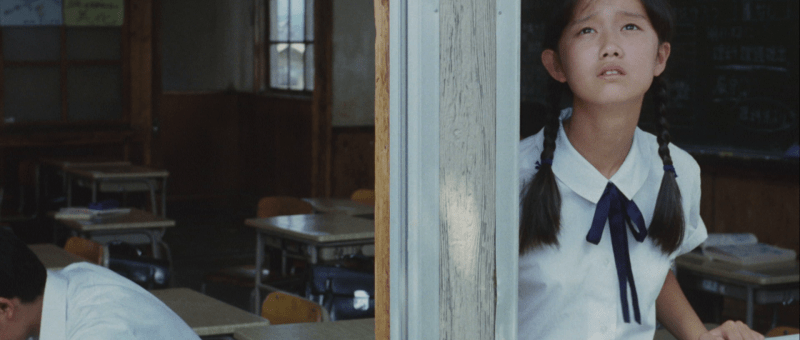
One of the players on the team, Leak, explains that he always knew he was a boy but was expelled from school for cutting his hair short and behaving in a more masculine fashion. After leaving the home of a relative, a friend brought him to Pa Vann’s where he found a new sanctuary and a place he could be accepted for being himself. Amas, meanwhile, is from a conservative village and a Muslim family who struggle to accept his identity as a trans man and are unable to reconcile it with their religion and community. 

Both Leak and Amas are deeply grateful for the new family they’ve found with Pa Vann and also for the opportunities they’ve gained through football, Leak especially thankful to have met so many different people from so many different places while coming to see that he wasn’t alone and there were other people like him. The team is however for under 21s meaning that the pair will inevitably at some point age out and though it’s clear that they wouldn’t have to leave Pa Vann’s because of it they seem to struggle with what else to do with their lives. Leak in particular is deeply worried about not having a job at comparatively late age and eventually leaves for the city without saying goodbye apparently out of a desire to avoid hurting Pa Vann’s feelings or a fear he may be angry with him for leaving. 

Pa Vann is however philosophical if a little hurt, knowing that his job is to send them back out into the world with better skills to survive its harshness. Opening his home to the team members, he gives them life advice and teaches useful skills to help them find work such as carpentry and handicrafts. The entire point of the football team, which includes both LGBTQ+ members and otherwise, is to foster a sense of solidarity between the players to support each other in their everyday lives often in the face of entrenched social prejudice. 

Prejudice is something the team receives its fair share of. Players complain that some coaches from other regions accuse them of having men on the team and inappropriately ask for “proof” that they are female sometimes by having a look or a feel for themselves. But Pa Vann isn’t having any of that, directly telling the other coaches that he won’t have people being “rude” to his team and that their requests are “unacceptable”. Leak complains that the short-haired players have it worse and finds it ironic that he has to tell them he’s a woman to be left alone while even spectators sometimes hurl homophobic slurs from the sidelines. 

It seems unclear whether Leak and Amas find the city anymore accepting after moving there, but they do apparently find signs of hope in seeing other queer people living well while having their horizons broadened. Amas is also grateful for his time with Pa Vann but suggests that it might have been too easy to simply stay in the village and that he wanted to see more of the world and experience more of the life though he’d never have had the courage if it were not for the “solidarity” that Pa Vann showed him. Pa Vann’s own life cannot of have been easy. His partner explains that her family disowned her over the relationship while she herself identifies as straight and has never thought of Pa Vann as anything other than a man. But it has perhaps allowed him to show kindness and compassion to those like himself in giving them a safe place to stay where they can be accepted for who they are that then gives them the courage to extend the same kindness to others as they go out into the world seeking new and brighter futures of joy and solidarity. 


Lotus Sports Club screened as part of this year’s BFI Flare. It will also be screening at Bertha DocHouse on 23rd April as part of this year’s Queer East.

Trailer (English subtitles)

XX+XY (Lee Soh-Yoon, 2022)

According to the voiceover narration that opens Lee Soh-yoon’s lighthearted teen drama XX+XY, we live in an age of choices yet sometimes choice can itself be a burden. At least that’s how Jay comes to see it having been born intersex but encouraged to think that at some point they’re going to have to choose whether to live as a man or a woman as if those are the only options or the choice to continuing living just as they are is not available to them. 

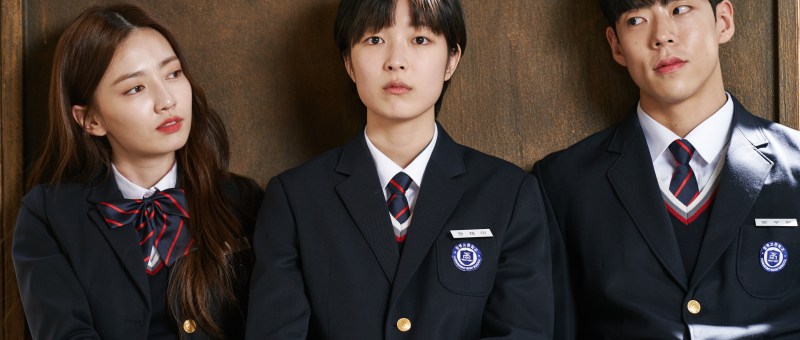
In essence many of their problems could be solved by reducing social dependence on the gender binary. Having been mainly home schooled, Jay has decided to attend a regular high school in part to help them figure out who they are through interacting with other teenagers who, they discover, are also struggling with many of the same questions in trying to decide who they’ll be. Yet for Jay, there’s also the issue of social stigma surrounding the reality of their life as an intersex person which is little understood by the world around them. When their identity is exposed by a malicious person, Jay’s teacher sighs and asks “Why didn’t you hide it better?”, prompting their response that their identity is not something shameful that needs to be concealed while suggesting that the school is on one level at least failing in their duty of care in refusing to protect them from the fallout of being outed which is in part their fault in stemming from the indiscretion of a teacher. 

The idea that they have something to hide is also particularly hurtful to Jay because of their unusual family circumstances given that they were adopted by a couple in a happy marriage of convenience between a closeted gay man and a woman otherwise uninterested in marriage. Their father’s partner now also lives with them and is very much a part of the family as can be seen in cheerful family photo they have hanging on their living room wall. Jay’s father tells them that he wants them to live in a world where they can love freely without fear of judgement or of feeling forced into the kind of arrangement he and their mother have made, their happy partnership not withstanding. On the other hand, it’s also he who first raises the potentially problematic idea that Jay should decide their binary gender based on their sexual orientation only to be firmly slapped down by their mother. 

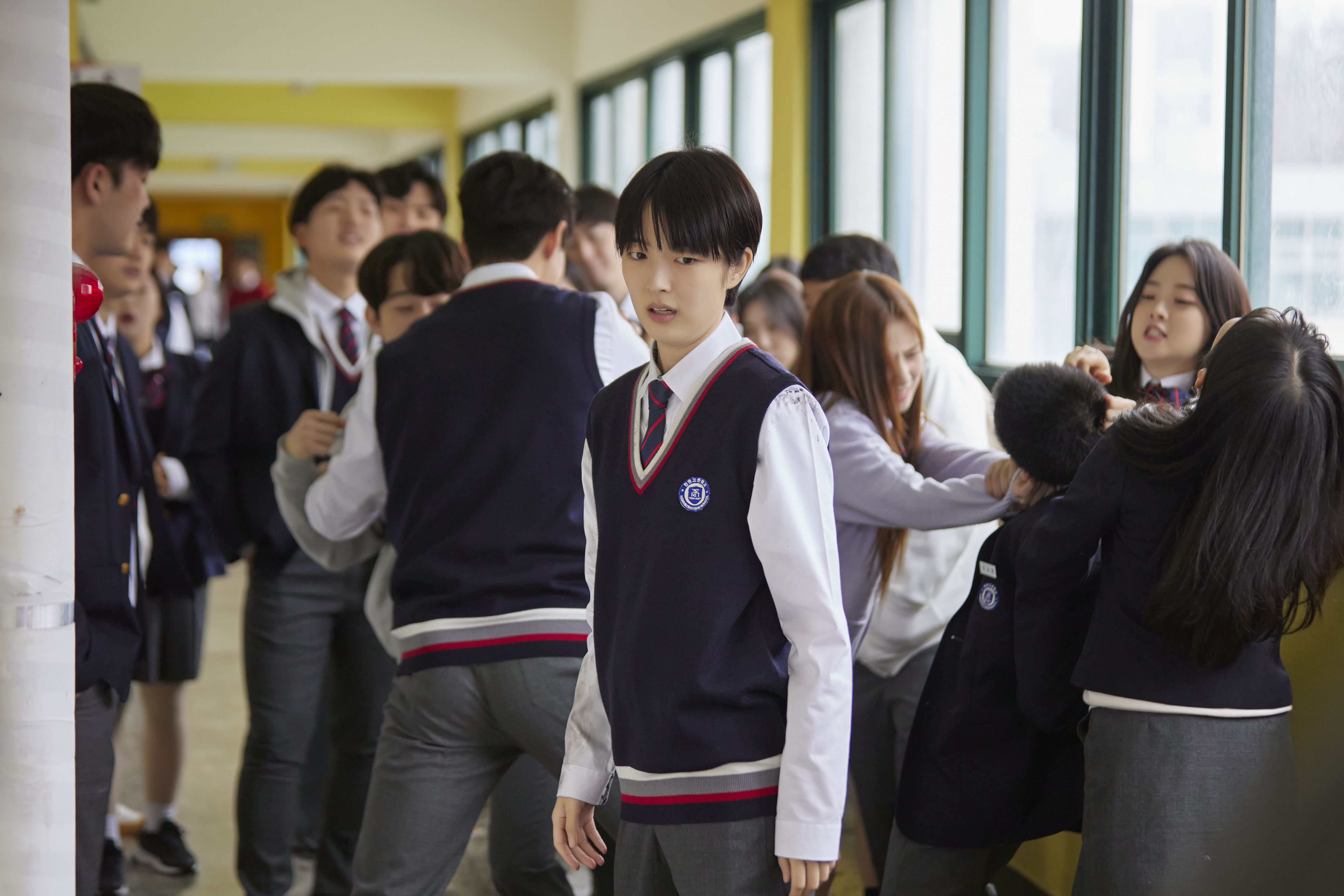
This is partly the thesis of the film, that Jay is figuring themselves out based on their feelings towards two potential suitors in childhood best friend Sera who’s always known that Jay is intersex and the smitten Wooram who fell for Jay thinking they were a girl and then confused by their more masculine presentation on arrival at school. As Sera later points out, Jay never directly states they are a boy but everyone assumes them to be one because they are wearing a boy’s school uniform and have short hair. It is the school that force Jay to make a concrete choice because of its persistent gender segregation which extends from uniforms, single sex bathrooms, and classroom cliques to different activities for boys and girls in PE. Jay has to make a choice because they have to pick a bathroom, only using the men’s means there’s no bins to dispose of sanitary pads forcing Jay to carry them around until they can find a place to discreetly dispose of them. The boys in Jay’s class are jealous of their popularity with girls, while immaturely gossiping about another boy they regard as effeminate and possibly gay because he is “small” and hangs out with the girls a lot. 

Meanwhile, the conservative attitudes towards sex and romance held by the school and society at large are also in themselves counterproductive. Teens try to buy condoms to be responsible but are turned away because they don’t have ID or a note from their parents and are even shouted at by a nosy old lady at the checkout all of which has them wondering if they should just go ahead without protection rather than giving up on the idea. When Jay’s intersex identity is revealed online, the teachers are more concerned about the concurrent rumour that they and Sera have slept together rather than the breaching of Jay’s privacy, only interested in what the other parents might say or that Jay’s identity on its own may negatively affect their reputation aside from the developing sex scandal. 

In any case supported by their new friends, Jay gains the confidence to believe that they, and everyone else, are good enough as they are and that there isn’t any point in worrying about the people who won’t accept them as they are now. The film may still imply that there’s a binary choice to be made and that whoever Jay decides to pursue romantically has a large impact on it, but nevertheless affirms Jay’s identity as it is and makes clear that it’s they who have a free right to define themselves independently of any social mores or commonly held beliefs. Warmhearted and generous of spirit, Lee’s teen drama finds that largely the kids alright treating each other with kindness and respect when given the opportunity to do so and only waiting for the adult world to catch up. 


XX+XY screened as part of this year’s BFI Flare.

International trailer (English subtitles)

Peafowl (공작새, Byun Sung-bin, 2022)

A trans woman begins to step into herself after reclaiming her traditional culture to make peace with the past in Byun Sung-bin’s poignant indie drama, Peafowl (공작새, Gongjaksae). At once situating itself in the heartland of a society struggling to adapt to the pace of change, the film suggests that only by reintegrating her Koreanness can the heroine become fully herself even as the spirit of the father who rejected her softly tells her to dance her dance.

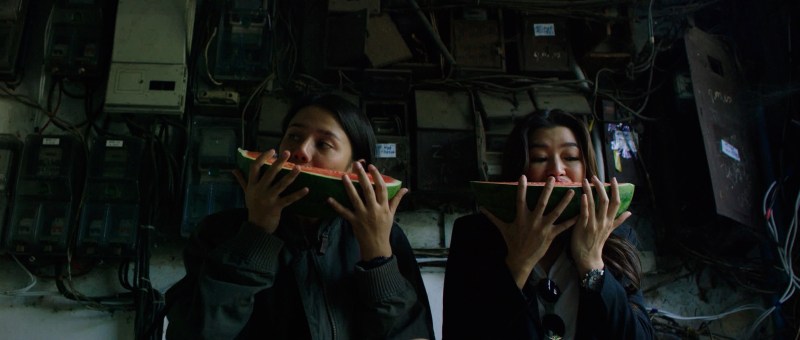
Myung (Choi Hae-jun), whose name as she later says means “not too light not too dark”, is a trans woman living in Seoul hoping to earn a large amount of money to pay for her surgery through winning a waacking dance competition. Shortly before she performs, she receives an unsettling telephone call and narrowly loses the dance off against a Taiwanese competitor while a judge explains that she lacks a colour of her own. It’s then that a childhood friend, Woo-gi (Kim Woo-kyum), contacts her to let her know that her estranged father Duk-gil (Ki Joo-bong) has passed away and asks her to come to the funeral. Myung first says she won’t go, but later does only to be berated by her overbearing, conservative uncle who ironically causes a scene by loudly exclaiming that a man shouldn’t be going around with long hair or wearing makeup. He even introduces her as Duk-gil’s son to an older relative who is otherwise much more sympathetic and even asks her with surprise why she’s wearing a male mourning outfit rather than the more appropriate one for women. 

It’s the uncle, a symbol of oppressive middle-aged patriarchal power, that is the real problem. Most other people are either broadly supportive or too polite to say anything of Myung’s changed appearance while her teenage nephew Bo-suk (Go Jae-hyun) simply accepts her and quickly refers to Myung as “sis” despite his mother’s obvious discomfort. It is however the uncle who is in charge, continuing to misgender and insult Myung especially once Woo-gi reveals that it was Duk-gil’s dying wish for Myung to lead the funerary rites at his 49th day memorial service. Myung doesn’t really want to participate but is tempted after Woo-gi suggests there’s a sizeable inheritance to be had if she agrees. 

It’s clear that Myung had good reason to resent her father, holding up her hand and revealing a large burn scar she’s since had tattooed with with a beautiful peacock feather. The feather motif is repeated throughout as a kind of symbol of Myung’s hidden beauty which she will eventually learn to reveal through the fusion of the traditional art of shamanistic ritual and her contemporary waacker dance moves, yet it’s also linked to the image of her father as a man she never understood and may never have really known whose relationship with her was shaped by the legacy of homophobic prejudice in ways she could never have imagined. The truth that she discovers reminds her that there have always been people like her even within this very “traditional” society, while the twin revelation that her cousin is gay and struggling in many of the same ways she has proves there always will be. As Woo-gi reminds her, her grandfather’s tree looks like it’s dead but is kept alive by its connections with others much like people are, pointing out that rituals accept everyone without prejudice or exception. 

Only after making peace with her conflicted aunt and showing her overbearing uncle the error of his ways can Myung begin to reclaim herself in reintegrating her traditional culture to gain the colour she was lacking and become fully herself as she performs the ritual along with a waacker dance that quite literally sets fire to the oppressive quality of tradition as mediated by men like her uncle who weaponise it to preserve their own privilege. Shot in classic 4:3, Byun neatly contrasts the vibrancy of Seoul nightlife with the oppressive dullness of life in the village, but also highlights the various similarities in the colour and noise of a shamanistic ceremony which as Myung discovers moves to a beat not dissimilar to waacker as she watches her friends dance in a club with the movements of traditional shamanism. In a way, Myung does indeed burn it all down but does so positively, finally coming to an understanding of her father and her history while reclaiming her traditional culture along with the right to do with it whatever she wishes.


Peafowl screened as part of BFI Flare 2023. It will also be screening at Genesis Cinema, London on April 20 as part of this year’s Queer East.

Trailer (English subtitles)

The Dream Songs (너와 나, Cho Hyun-chul, 2022)

Teenage friends wrestle with a sense of mortality, frustrated longing, and future anxiety in the etherial feature debut from actor Cho Hyun-chul, The Dream Songs (너와 나, Neo wa Na). Set shortly before the 2014 Sewol ferry disaster and shot in a washed out soft focus with a hazy nostalgic quality, the oneiric drama finds its conflicted heroine coming to an appreciation of the solipsistic qualities of obsessive love while preparing to cross the line between adolescence and adulthood in fearing she may not return from her upcoming trip or that the her that returns will not be same and the world will have moved on without her. 

The trip is only four days, but for Sam (Park Hye-su) it represents the end of her adolescence and the beginning of adulthood. As the film opens, she wakes up in her classroom after having a disturbing dream that something bad is going to happen to her best friend Ha-eun (Kim Si-eun) who is currently in the hospital though only for broken leg after being hit by pedal bike on a zebra crossing. So upset is she, that Sam manages to convince her teacher to let her leave early to verify that Ha-eun is OK with her own eyes and try to convince her to come on the school trip to Jeju with her, broken leg and all, so that whatever happens happens to them together. 

In the repeated dream imagery, it’s being left on her own that Sam seems to fear. She doesn’t want to be the only one who survives or the only one who dies and leaves her friend behind though as she confesses there was something that felt peaceful in her dream on looking at a corpse that might have been her own. The school trip to Jeju is one that many teenagers take in a quite literal rite of passage, but it’s also tinged with additional anxiety in the painful reminders of the 2014 Sewol Ferry disaster, directly referenced via a radio broadcast, in which many school children taking the trip from the area where the film takes place lost their lives. Sam’s impending sense of foreboding causes her to reevaluate her relationships and especially that with her best friend Ha-eun for whom she has developed romantic feelings she is unsure can be returned. Afraid to leave without saying anything but also worried she may be rejected and end up imploding the friendship too, Sam’s internalised conflict ironically blinds to her Ha-eun’s individual suffering in having recently lost her pet dog as well as her disappointment on missing out on the trip while recovering from her accident. 

Cho frequently lands on the image of clocks, often stopped, which hint at time running out while there are frequent allusions to death and drowning from the bird Sam finds on the ground by the school to the girls’ final parting seemingly taking place in front of a stranger’s funeral with mourners talking outside while people carry funeral wreaths directly past them. While the lines between dream and reality continue to blur, Sam sees images of herself in the two little girls playing together in the park and another with her grandmother who “saves” a toy dinosaur from drowning in an environment in which it is unable to survive. She and Ha-eun chase a lost dog and eventually end up on opposite sides of a fence which is the outcome Sam most feared, but are eventually reunited and able to have a more emotionally honest conversation now that Sam has come to an understanding of the self-involved qualities of her romantic obsession. 

Even so, for the first part of the film it isn’t entirely clear if Sam’s feelings are indeed romantic or if it’s more a case of intense teenage friendship that causes her to be jealous of others that might be spending time with Ha-eun while preoccupied with the identity of the mysterious “Humbaba” whom Ha-eun apparently wanted to kiss in a diary entry Sam was presumably not intended to read. Sam’s feelings are made clear in a letter she doesn’t have the courage to send while she seems to fear that time may slip away from her and Ha-eun won’t be there when she returns from her trip. Yet what she ends up awakening to is more like self love, or at least no longer fearing “Joy” will fly away from her when she’s not looking. Cho’s hazy, poetic coming-of-age drama excels in capturing the joyful quality of teenage female friendship and diffidence of first love if tinged with a note of melancholy nostalgia in the wake of a devastating loss.


The Dream Songs screened as part of BFI Flare 2023

Original trailer (English subtitles)
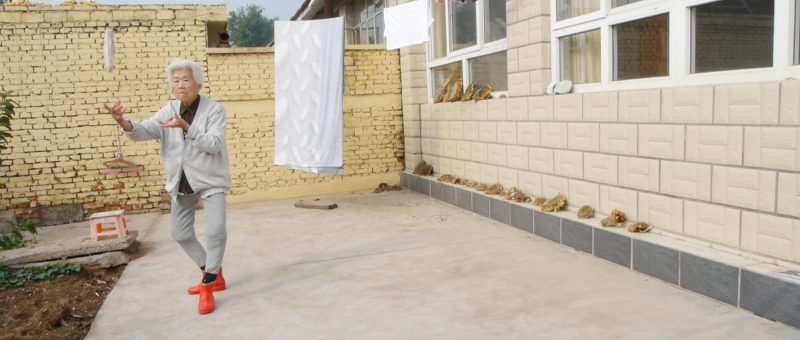
Queer East Film Festival Reveals Full 2023 Programme

Queer East returns to cinemas across London 18th to 30th April with another handpicked selection of LGBTQ+ films from Asia. This year’s edition has a special focus on Korea including a series of films spanning from the 1960s to the present day and will also feature screenings of classics The Love Eterne and Rebels of the Neon God. Opening with Philippine comedy I Love You, Beksman, the festival will close with Home Ground, a documentary focussing on the first openly lesbian bar in Korea which opened in the 1990s.

Cambodia

  • Lotus Sports Club – documentary filmed over five years following a trans man in his 60s who formed a football team for LGBTQ+ youth.

China

  • Bad Women of China – He Xiaopei’s personal documentary explores the lives of Chinese women from the 1920s to the present day through the stories of herself, her mother, and her daughter.

Hong Kong

  • The Love Eterne – classic Mandarin-language Shaw Brothers musical directed by the legendary Li Han-Hsiang and starring Betty Loh Ti as a young woman who dresses as a boy in order to pursue education and meets a dashing scholar with whom she falls in love (Ivy Ling Po).

Japan

  • Let Me Hear It Barefoot – two alienated young men struggle to identify their feelings while searching for escape from moribund small-town Japan in Riho Kudo’s indie drama. Review.

Myanmar

Philippines

  • About Us But Not About Us – experimental mystery drama in which a student’s dinner with a professor takes an unexpected turn.
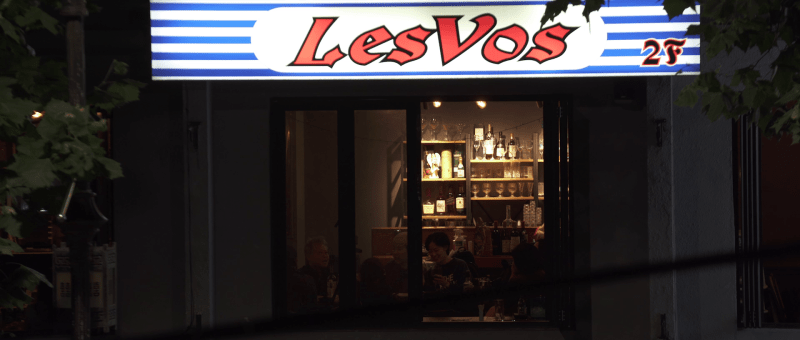
  • I Love You, Beksman – comedy starring Christian Bables (Big Night!) as a hairdresser everyone assumes to be gay until he falls for a beauty queen.

South Korea

  • Home Ground – documentary focussing on the first openly lesbian bar in Korea.
  • House of Hummingbird – coming of age drama set in 1994 in which a lonely teenage girl develops a fondness for her enigmatic Chinese teacher. Review.
  • King and the Clown – 2005 drama in which a pair of street performers become embroiled in dangerous intrigue. Screening on 35mm.
  • A Man and a Gisaeng – 1969 comedy in which an office worker is fired for being unmanly and finds a new line of work as a gisaeng only to be courted by the very boss who fired him.
  • Memento Mori – classic millennial horror in which a high school girl discovers a forbidden romance after reading a schoolmate’s diary.
  • Peafowl – drama following a trans woman who is tasked with performing the memorial dance at her estranged father’s funeral.
  • Sa Bangji – 1989 period drama in which an intersex person living in a temple draws dangerously close to a widow in mourning.
  • Stateless Things – festival favourite from 2011 following a North Korean refugee and a young gay man financially dependent on his older lover.

Taiwan

  • Rebels of the Neon God – classic from Tsai Ming-Liang following alienated teenager Hsiao Kang (Lee Kang-sheng) and petty delinquent Ah-Tze in a changing Taipei.

Shorts

In Between Seasons

  • Boy Queen (Dir. Sai Nyi Min Htut, Myanmar, Germany, 2021)
  • Seance of the Past (Dir. Adelaide Sherry, Singapore, 2022)
  • Truthless (Dir. Zhao Badou, China, 2021)
  • Memori Dia (Dir. Asarela Orchidia Dewi, Indonesia, Germany, 2022)
  • Tank Fairy (Dir. Erich Rettstadt, Taiwan, US, 2022)

All About My Mother

  • Will You Look at Me (Dir. Huang Shuli, China, 2022)
  • Skin Can Breathe (Dir. Chheangkea, US, Cambodia, 2022)
  • Fictions (Dir. Alice Charlie Liu, Canada, 2022)
  • Rising Sun (Dir. Cheng Ya-chih, Taiwan, 2018)
  • Fishbowl (Dir. Jacqueline Chan, US, 2021)
  • A Good Mother (Dir. Lee Yu-jin, South Korea, 2022)

A Kind of Queer Utopia

  • Strangers in Paradise (Dir. Huang Yihong, China, 2022)
  • Adju (Dir. Elvis A-Liang Lu, Taiwan, 2021)
  • Leo & Nymphia (Dir. Pan Hsin-An, Taiwan, 2021)
  • The Choir of our Kind (Dir. Xu Zai, Wang Sisi, China, 2021)

First Times

  • The Voice (Dir. Maral Ayurzana, Mongolia, 2022)
  • Swimming in the Dark (Dir. Chen Pin-Ru, Taiwan, 2022)
  • I get so sad sometimes (Dir. Trishtan Perez, Philippines, 2021)
  • Rooted (Dir. Wu Yi-Wei, Taiwan, 2022)
  • We Were Never Really Strangers (Dir. Patrick Pangan, Philippines, 2022)

Queer Korea: A Mixtape

  • Ice (Dir. Lee Seongpwook, South Korea, 2019)
  • Cicada (Dir. Yoon Dae-woen, South Korea, 2021)
  • Butch Up! (Dir. Lee Yu-jin, South Korea, 2022)
  • Don’t worry (Dir. Kim Tae-yong, South Korea, 2022)
  • How Do I Kill That B? – (Seo Ji-hwan, South Korea, 2022)

Dance Performances

Artists’ Moving Image Programmes

Alien Body, Human Dreams

  • to boyhood, i never knew him (Dir. Trâm Anh Nguyễn, Vietnam & Canada, 2022)
  • Longing for the Sun to Set Upwards (Dir. Jao San Pedro, Philippines, 2022)
  • Native beast (Dir. Aileen Ye, Netherlands, 2022)
  • Disease of Manifestation (Dir. Tzu An Wu, Taiwan, 2011)
  • Yummy Body Truck (Dir. Noam Youngrak Son, Netherlands, 2021)
  • BXBY (Dir. Soojin Chang, UK, 2022)
  • Garden Amidst the Flame (Natasha Tontey, Indonesia, 2022)

Wayward Fruits

  • Dikit (Dir. Gabriela Serrano, 2021)
  • out in the world (Dir. Bart Seng Wen Long, 2022)
  • Boy-Taste (Dir. Michio Okabe, 1973)
  • I shudder with pleasure that at last the time has come (Dir. Mari Terashima, 2022)
  • Sexy Sushi (Dir. Calleen Koh, 2021)
  • Super Taboo (Dir. Su Hui Yu, 2017)

Queer East runs 18th to 30th April at venues across Central London while a selection of films will also tour to venues around the UK in the autumn. Full details for all the films as well as ticketing links can be found on the official website, while you can also keep up with all the latest news by following Queer East on FacebookTwitterInstagram, and YouTube.

BFI Flare Confirms Complete Programme for 2023

The BFI’s LGBTQ+ film festival, BFI Flare, has announced the full programme for this year’s edition which runs at the BFI Southbank 15th to 26th March. This year there are a few features from East Asia included in the lineup including four from South Korea.

Cambodia

  • Lotus Sports Club – documentary filmed over five years following a trans man in his 60s who formed a football team for LGBTQ+ youth.

South Korea

  • The Dream Songs – etherial drama following two high school friends over the course of a day.
  • Life Unrehearsed – documentary following two Korean women who met each other at a summer camp in Germany in 1986 and have stayed in the country together ever since.
  • PEAFOWL – drama following a trans woman who is tasked with performing the memorial dance at her estranged father’s funeral.
  • XX+XY – teen comedy following an intersex high schooler who finds themselves at the centre of a love triangle.

BFI Flare runs at BFI Southbank 15th to 26th March, 2023. A small number of short films are also available to stream via BFI Player. The full programme can be found on the official website where tickets are already on sale. You can also keep up to date with all the latest news via the festival’s Facebook page, Twitter account, Instagram, and YouTube channels.

Anemone: A Fairy Tale for No Kids (아네모네, Jung Ha-yong, 2021)

“Betrayal is betrayal” according to a jaded grandmother (Park Hye-jin) reading a children’s story that’s clearly not for children to a curious little girl in Jung Ha-yong’s extremely dark comedy, Anemone: A Fairytale for No Kids (아네모네, Anemone). Later someone asks what the difference is between treachery and betrayal before conceding there might not be any, but whatever betrayal is there’s certainly a lot of it going around as a winning lottery ticket causes discord between an otherwise unhappy couple, their friends, relatives, and just about everyone else. 

As the grandmother relates reading to the little girl, Yongja is a wife and mother of one who once had an illustrious career as a martial artist and is now an aspiring children’s author. Her husband, meanwhile, is a no-good layabout and the family is in constant financial difficulty dependent on Yongja’s part-time job in the kitchen of a bar. When she has a dream about winning lottery numbers, she writes them down and tells her husband to buy a ticket before going to work. Hearing the draw on the radio, she realises she’s won and abruptly walks out on her job getting into a physical altercation with her boss as she goes, but on arriving home her husband seems confused. Eventually he admits he forgot all about buying a ticket but Yongja doesn’t believe him and is convinced that he’s stashed it somewhere and plans to keep the money for himself.  

That would obviously be quite a big betrayal, but maybe not all that difficult to understand given the relationship dynamics in play between the obviously unhappy couple. Sending their daughter to her grandmother’s, Yongja goes to great lengths torturing her husband, making him wear a nappy and trying him to a rocking horse, in an effort to get him to reveal what he’s done with the ticket only to threaten murder suicide when he continues to say he can’t give her what he never bought. Just as we’re starting to feel sorry for him, and to be honest the constant “did you or did you not buy the ticket” conversation goes on for an incredibly long time, the husband manages to escape, expanding the search for the ticket across the wider area while Yongja ropes in her gangster brother and his dodgy friend to come to her aid. 

The ticket appears to have exposed the cracks within the family unit which are largely attributed somewhat uncomfortably to a misalignment of gender roles in which the husband is feckless and useless while Yongja essentially bullies him and is consumed by a sense of resentment that she is forced to shoulder the financial burden of supporting the family. The words the grandma reads from the picture book are often at odds with the reality, presenting Yongja as having achieved success with her children’s books but showing her dismissed by an editor who ironically points out the story’s not suitable for children. The grandmother further explains that poor people buy lottery tickets because it’s their one source of hope for a better life, no longer believing they have any possibility of improving their circumstances independently, which is perhaps the case for Yongja who hopes the money can help them fix their “train wreck of a family” for a happier future. 

Then again it may be the ticket that betrays them in proving so elusive. Because of the ticket, Yongja is forced to realise that she doesn’t trust her husband and that she is right not to because he is indeed keeping something from her. Other people she can’t trust include her brother’s shady friend while he is also a liability preventing her from calling the police because there’s a warrant out on his name. The problem is that everyone wants the ticket from themselves, except perhaps for Yongja who had obviously intended to use the money for the family as a whole though it seems unlikely that a simple injection of cash could fix these toxic relationships or restore their happy home if that is ever what it was. Fairy tales are often dark and this is no exception though the reason a child shouldn’t read it is not because it’s crude or violent but simply because it would crush their tiny spirit with the overwhelming disappointment of life. 


Anemone: A Fairy Tale for No Kids screened as part of the 2022 Yubari International Fantastic Film Festival.

Terrorizers (青春弒戀, Ho Wi Ding, 2021)

A collection of youngsters is drawn into a dangerous web of simmering violence in Ho Wi Ding’s Taipei-set drama, Terrorizers (青春弒戀, qīngchūn shì liàn). The film may share its name with an Edward Yang classic, but it is very clearly society that is the terroriser in this instance from toxic masculinity and social conservatism to youthful isolation, video games, and pornography. The film seems to ask if it’s ever really possible to move on from the past and discovers that it may not be though some may be prepared to help carry your baggage as they travel towards the future so long as they know what’s in it. 

The youngsters are brought together by the ominous presence of Ming Liang (Austin Lin Bo-Hong), an isolated young man who barely speaks and spends all his time playing video games. It’s him we see dressed in full ninja garb attacking a young woman, Yu Fang (Moon Lee), with a katana at the train station only for her boyfriend Xiao Zhang (J.C. Lin Cheng-Hsi) to heroically throw himself in front of her to fight Ming Liang off. 

Later a dejected middle-aged woman Ming Liang befriends ironically tells him that guy who protects his girlfriend is a real man, working the wound of Ming Liang’s bruised masculinity and causing him to double down on his frequent insistence that he can protect women, though later he indeed does on separating precocious teen Kiki (Yao Ai-Ning) from the previously diffident best friend who tried to assault her. Having given up on Yu Fang he begins stalking a woman from her acting class, Monica (Annie Chen Ting-Ni), whose admittedly no good ex boyfriend he later beats up assuming it will buy him white knight credits as a protector in the shadows when in reality he’s a total creep who cloned the key to her apartment and has been hiding in her wardrobe later driven into a frenzy by the irony of watching Yu Fang and Monica, the two women he wanted, deciding they’d rather be with each other. 

Part of Ming Liang’s problem is a sense of parental abandonment, something he shares with Yu Fang whose mother abandoned her when young while her relationship with her father, who has recently remarried, has always been strained. After his parents’ divorce, Ming Liang moved in with Yu Fang’s politician father after being palmed off off by his own, the implication being that he has never really been shown parental love or given any guidance about how to live in the world save that he gleaned from the violent video games he constantly plays along with voyeuristic pornography. 

Yu Fang and Ming Liang are attempting to escape the legacy of parental failure, but Monica is left with a much more recent dilemma in her history as an early cam girl named Missy, a character created by her ex, David, who has since moved on. The more Monica tries to chase her dreams, the more her past comes out to haunt her with creepy men for some reason making a point of telling her they saw her sex tape while on some occasions actually playing it for her on their phone. Hoping to crush her spirit, David tells her that she’ll always be Missy, unable to escape the social stigma of having participated in a pornographic video, while she and Yu Fang are subject to a public shaming when a tape of them goes viral allowing the authorities to all but justify Ming Liang’s attack on Yu Fang on the grounds that she stole his girlfriend and therefore was in the wrong as if such feudalistic behaviour could ever be permissible. 

Yu Fang finds herself terrorised by the media storm of the 24hr news cycle, her new life with Xiao Zhang in jeopardy while she feels ever more isolated realising that her father cares less for her wellbeing than the optics in the light of his ongoing political campaign. Ming Liang meanwhile is forever reminding people that his father is rich and influential as if his misuse of his status is a direct rebellion against it and the parents he feels abandoned him. The fact that the news essentially reframes the slashing incident as a defence of heterosexual love, demonising same sex relationships, only emphasises the tyranny of outdated social prejudice and misogyny as Yu Fang becomes the villain and Ming Liang the victim entirely ignoring his predatory stalking of Monica and otherwise disturbing behaviour. It may not be possible to effectively move on from the past, overcome the legacy of parental abandonment and develop the ability to trust in others, but there may be less destructive ways to take the past with you if only in finding someone willing to share your burden. 


Terrorizers screened as part of this year’s New York Asian Film Festival.

Festival trailer (English subtitles)

Images: © changheFilms 2021

Violent Streets (暴力街, Hideo Gosha, 1974)

“Nothing’s like it used to be anymore” sighs a woman who’s had to betray herself but has tried to make break for it only to discover there is no way back. Hideo Gosha’s Violent Streets (暴力街, Boryoku Gai) is like many films of its era about the changing nature of the yakuza in an age of corporatised gangsterdom. Now “legitimate businessmen” who claim to no longer deal in thuggery, their crimes are of a more organised kind though a turf war’s still a turf war even if you’re fighting from the boardroom rather than simply getting petty street punks to fight it for you in the streets. 

In a touch of irony, former yakuza Noboru Ando stars as a man who’s tried to leave the life behind but is pulled back into underworld intrigue when his former foot soldiers mount an ill-advised bid for revenge against the clan they feel betrayed them. After serving eight years in prison for participating in the last turf war, Egawa was given flamenco bar Madrid on the condition that he dissolve his family and attempt to go straight as a legitimate businessman. The Togiku gang has since gone legit and distanced itself from most of its old school yakuza like Egawa. But now a yakuza conglomerate from Osaka is moving in on their old turf and the Togiku want the Madrid back as a bulwark against incursion from the west which is why they’ve been sending the boys round to cause trouble in the bar. 

Egawa is the classic ex-gangster who wants to turn himself around but is largely unable to adapt to life in a changing society. He is technically in a relationship with a bar hostess who has a severe drinking problem in part exacerbated by his inability to get over his former girlfriend who left him and married the boss, Gohara, while he was in prison. His former foot soldiers attempt to convince him to get the gang back together and take revenge, resentful of having been used and discarded, but he tells them to let it go, that they’ve all got “honest jobs” and that they should try to live as best they can. Like him, the guys are ill-equipped to make new lives in the consumerist society and cannot move on from the post-war past. Hoping to engineer a turf war between the Osaka guys and Togiku, they kidnap a popular TV personality/pop singer (Minami Nakatsugawa) attached to a station which Togiku controls and frame a rival affiliated with the Osakans for taking her. 

This just goes to show the various ways in which newly corporatised yakuza have expanded their business portfolio, heavily participating in the entertainment industry moving beyond bars, clubs, and the sex trade into mainstream television and idol stars. Egawa’s old friend Yazaki (Akira Kobayashi) is his opposing number, just as caged but trapped within the confines of the new gangsterdom, reprimanded by his boss for raiding the rival studio’s offices and undoing the gang’s attempt to rebrand themselves as legitimate businessmen rather than violent street thugs. “I can’t stand being humiliated” he explains as Gohara points out he’s stepped right into their trap now giving the Osakans an excuse for retaliation. “The Togiku group is a defanged, domesticated dog” Yazaki barks, “I can’t pretend to be an obedient company employee forever and do nothing”. 

Neither man is able to progress into the new era of rising prosperity, both little more than caged animals thrashing around trying to break free but continually crashing into the bars. Just as Egawa’s old guys had tried to engineer a turf war hoping that the two gangs would take each other out and leave a vacuum they could fill, arch boss Shimamura (Tetsuro Tanba) flies above the city in a helicopter as the “worms fight among themselves” and observes the chaos below as he completes his silent conquest of the contemporary economy like some modern day Nobunaga of corporatised gangsterdom. 

Taking over the Togiku through a process of corporate infiltration and gradually ridding themselves of all the old school yakuza ill-suited to the shady salaryman life, the contrast between the world of cabaret bars and back street dives and Shimamura’s smart suits and helicopters couldn’t be more stark. A slightly sour note is struck by the use of a transgender assassin (Madame Joy) who performs a lesbian floorshow by day and kills by night while working with a bald sidekick who carries a parrot on his shoulder, her coldness bearing out the tendency of yakuza movies to associate queerness with sadistic savagery. Gosha rams his point home with the otherwise surreal scene of a pile of abandoned mannequins by a swamp that becomes a popular yakuza kill site homing in on the emptiness of their eyes and the uncanniness of dismembered bodies, mere empty shells just like the men who die in this literal wasteland. Egawa perhaps feels himself to be a man already dead long before being pushed towards his act of futile rebellion, somewhere between sitting duck and caged dog fighting for his life between the chicken coops of a moribund small-town Japan. Marching to a frenetic flamenco beat of rising passions and barely contained rage, Violent Streets leaves its former foot soldiers with nowhere to go but down while their duplicitous masters continue to prosper riding the consumerist wave into a new and prosperous future.


Violent Streets opens at New York’s Metrograph on Dec. 16 as part of Hideo Gosha x 3

Trailer (English subtitles)