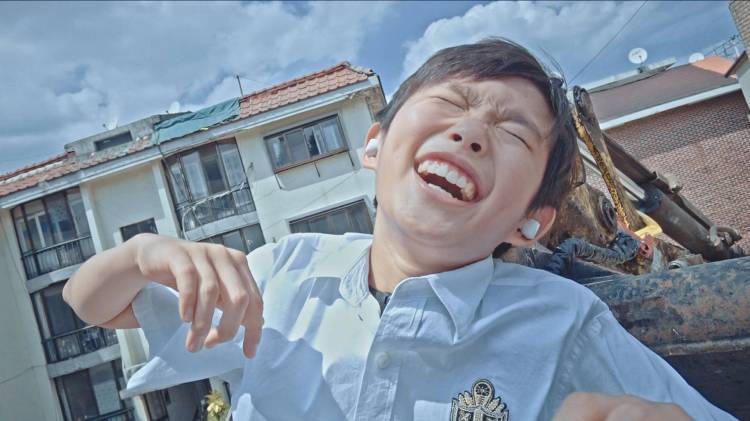
Youngju (영주, Cha Sung-duk, 2018)

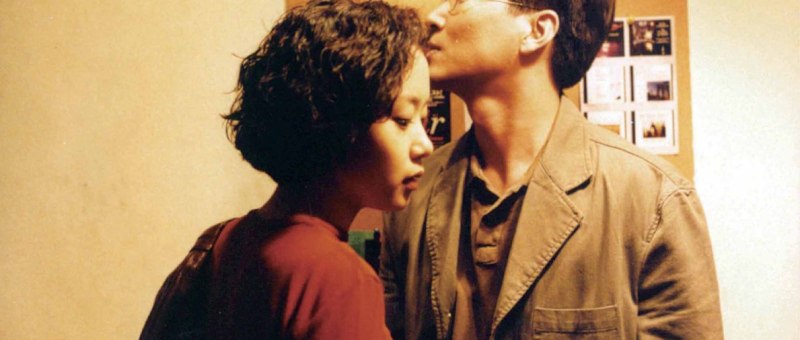
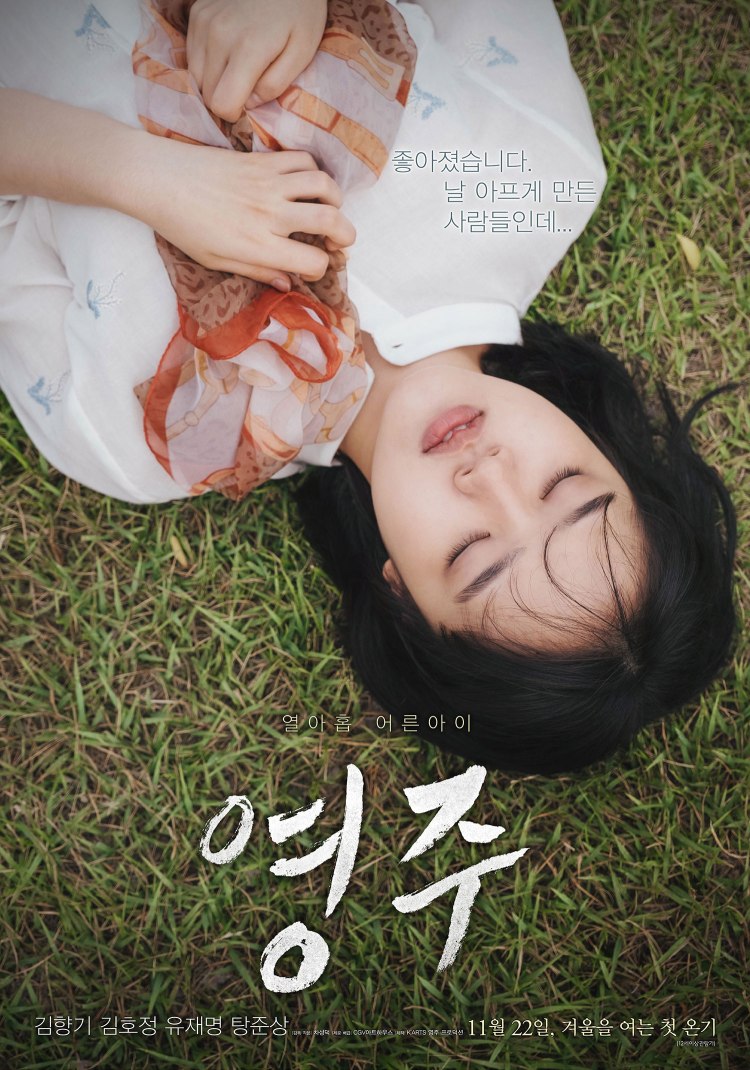
Youngju poster 1In the midst of a changing society, the Korean family has come increasingly under the microscope. Where festival favourite Last Child took a pair of grieving parents and saw them unwittingly bond with the boy involved with their own son’s death, Cha Sung-duk’s sensitive indie debut Youngju (영주) finds an orphaned young woman turning to the man who caused the accident which killed her parents in search of some kind of reparation but unexpectedly discovering him to be good and kind if carrying his own burden. Yearning for the warmth of family, she wonders if it would be alright to leave the past behind and embrace this new chance of togetherness, but the truth will out and once known may make her bright new future an impossibility.

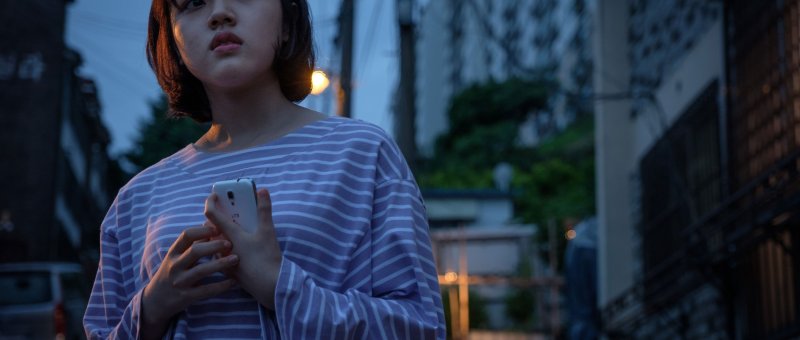
19-year-old Youngju (Kim Hyang-gi) lost her parents five years ago and, despite being a minor under Korean law, is the legal guardian for her 15-year-old brother Youngin (Tang Joon-sang). She’s given up her schooling to do a host of part-time jobs in order to support the pair of them while hoping to save for Youngin’s college education, but she’s also being hounded by a domineering aunt who keeps trying to sell the family home out from under her more it seems out of a sense of greed and entitlement than concern for the kids’ wellbeing. Alternating between telling Youngju she needs to take more responsibility and shutting her down by instructing her to “leave these things up to the adults” the aunt is a problematic presence in the kids’ lives leaving them technically not without family but deprived of the support that Korean society expects a family to provide. On a car ride home, Youngju’s aunt tells her to give up and think of her as a mother, only for Youngju to snap back that she’s no longer a child and has no need of a one. The aunt’s “have it your own way” attitude implies she’s made the right decision, but young as she is Youngju can’t know that it doesn’t matter how old you are, everyone still needs a mother at one time or another.

She begins to find one in an unexpected place after hitting rock bottom when Youngin falls in with a bad crowd and gets himself into trouble. As he’s underage, the matter can be settled with a fine, but the kids don’t have that kind of money and Youngju’s attempts to get it lead only to humiliation and betrayal. Resentful of her circumstances, she decides to track down the truck driver who fell asleep at the wheel and caused the traffic accident that killed her parents, hoping to take some kind of revenge by somehow making him pay. Once there she ends up getting a job in their family-run tofu shop where the man’s wife, Hyang-sook (Kim Ho-jung), takes to her immediately with maternal warmth even jokingly referring to her as her younger daughter with a regular customer while delighting in cooking up extra meals for to take home and share with her “family”.

Of course, what Hyang-sook doesn’t know is that Youngju has no family other than Youngin who is trapped in youth detention until she can get the money to get him out. Though the relationship between the siblings is understandably close because they have no one else, it’s also fraught with difficulty and confusion, Youngin feeling guilty and resentful of his older sister’s sacrifices on his behalf, wondering if she’s ashamed of him for not being more help and for constantly getting into trouble. Youngju, meanwhile, keeps her new work family a secret, merely telling her brother that she got the money she needed from her boss rather than their horrible aunt, replying to his question about why anyone would lend them money out of the goodness of their hearts with only “they’re good people”.

The Kims are indeed “good people”, despite whatever preconceptions Youngju might have had about them. Hyang-sook is good and kind, practicing true Christian values of love and forgiveness. Realising that Youngju meant to steal from them, she simply gives her the money because she can see that she’s a “good kid” and seems to be in some kind of desperate difficulty with which she’d like to help her. Hyang-sook takes the melancholy young woman to her heart like a daughter, but Youngju remains uncertain that her forgiveness could extend to the extent of her lies if she knew the real reason she arrived in their lives. Increasingly guilty, she finds herself feeling that she needs to tell the truth but knowing that if she does the fragile sense of family she’s found with the Kims may be irreparably broken. 

Under the Kims’ influence, Youngju encourages her brother that he too needs to try to be better, that they should try “live a better life”, but he understandably feels betrayed by her desire to look for family somewhere else, rejecting their parents’ memory and siding with the architect of all their misfortune. Having made peace with her own tragedy, Hyang-sook may say there’s no point blaming anyone but obviously feels a deep-seated sense of vicarious guilt that for all her pity may make it impossible for Youngju to return to that same level of intimacy as daughter unconditionally loved and supported by kind and forgiving people. In the opening scene, Youngju jokingly asked her brother which of their parents he’d most like to bring back and picked her dad because he was going to take them to a theme park, but it’s grief for her mother(s) that finally overwhelms her, convincing her perhaps that now she really is alone. Even so, the sun rises again and we get the impression that Youngju will be alright in the end, walking sorrowfully off towards a “better life” but perhaps resolved to doing so with no one by her side.


Youngju was screened as part of the 2019 London Korean Film Festival.

Original trailer (English subtitles)

Grass (풀잎들, Hong Sang-soo, 2018)

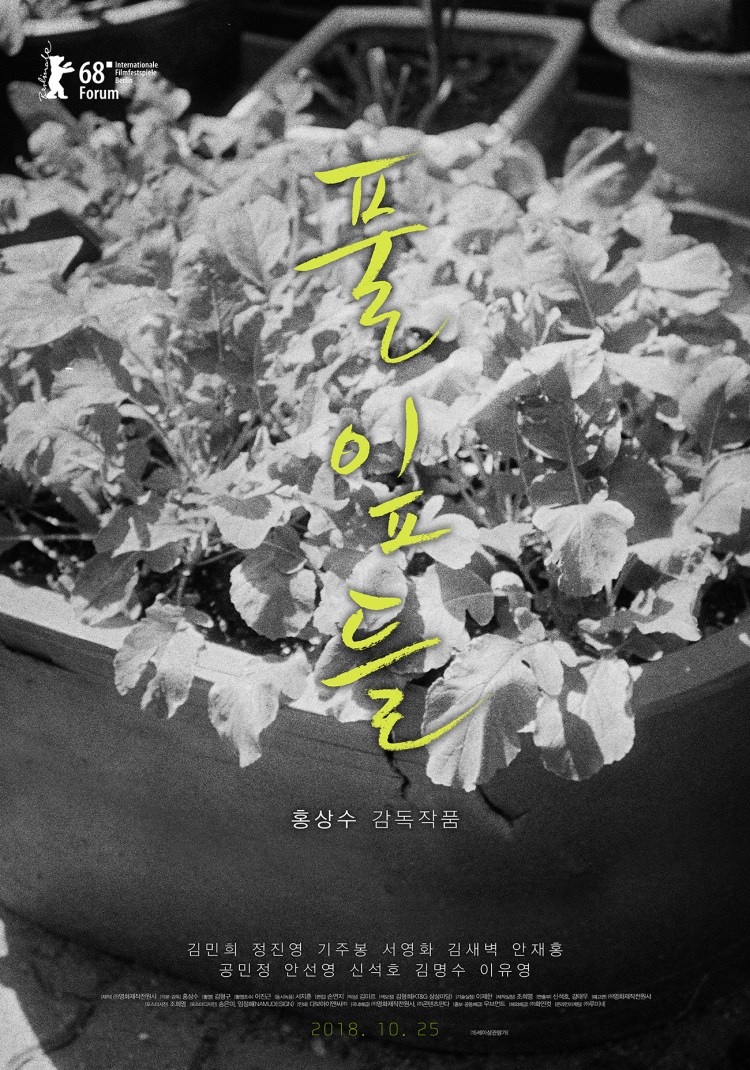
Grass poster 1You don’t meet nice girls in coffee shops, at least according to the melancholy narrator of a Tom Waits song recalling the flighty lover too free spirited for his wholesome hometown. Like one of the rundown dive bars in Waits’ conceptual universe, the cafe at the centre of Hong Sang-soo’s Grass (풀잎들, Pul-ip-deul) attracts its fair share of lonely drinkers looking for somewhere quiet to pour out their sorrows. Ostensibly a tale of simple eavesdropping abetted by the presence of a laptop, Hong’s narrative is at his most defiantly reflexive as it forces us to question the order of its reality and, in passing, our own.

Unnamed until the closing credits, Areum (Kim Min-hee) sits in a quiet cafe, tucked away in a corner tapping on her laptop and convincing herself she is an invisible observer of the world around her. Listening in on the various conversations of the other customers, she waxes philosophical on life, love, death, and distance by means of a beautifully poetic interior monologue but tells a fellow patron that she is not a writer, only writing, sort of a diary, but not a diary, something unusual for now. The irony is that though Areum feels herself to be far removed from those she is observing, they often complain that they feel “watched” or at any rate anxious under her intense yet abstracted gaze, sometimes challenging her but backing down when faced with her almost total lack of interest in interaction.

The patrons, almost echoes of themselves, are comprised of three couples – one in youth, one middle-age, and one approaching their twilight years. The men drink something cold in a tall glass with a straw, and the women something warm from a pleasantly round cup and saucer. Each of the men is an actor, while at least one of the women is a writer, though all of their conversations have their particular quality of awkwardness with the men largely trying to extract something from the women be it love, or forgiveness, or relief.

Finding herself in an awkward situation familiar to any woman who’s ever tried to work in a coffee shop on her own, Areum is approached by the middle-aged actor (Jung Jin-young) apparently trying to write a screenplay, and propositioned for advice. Having tried and failed to lure his wily writer friend (Kim Sae-byuk) on a 10 day retreat to “collaborate”, he asks Areum if he can come and “observe” her. She turns him down by saying she has a boyfriend, only for the actor to ask to talk to him for his permission, to prove he’s “not some kind of strange guy”.

The older actor (Gi Ju-bong), meanwhile, casually tells his companion (Seo Young-hwa) that he’s recently come out of hospital following a suicide attempt after trying to kill himself for love. Trying to move the conversation on, she tells him that she’s recently moved to a small house near the mountains, but realises her mistake when he fixates on the incidental detail that she’s got a spare room. Brushing off her reticence about a roommate, he repeatedly states that he’s got nowhere else to go in the hope that, as Areum says in her caustic voiceover, she will take pity on him and allow him to live the life of Riley on her dime. The friend is clearly distressed, she doesn’t want this man in her house (her equally strained looks when someone else tries to offer him a room suggest she’s reason to believe he’s trouble) but feels obliged to keep apologising for her refusal to acquiesce to his quite unreasonable request.

According to the maybe fiancée of Areum’s brother, men are cowards when it comes to pain or the need to end things. Areum seems to agree, but has a fairly cynical view on the entirety of human relationships, berating the pair for irresponsibly intending to marry on “love” alone. “We only loved each other” another sad young woman insists while harangued by a drunk middle-aged man intent on blaming her for the suicide of her late lover, neatly reversing the dynamics of the young couple from the cafe arguing about their shared sense of guilt over the death of a friend.

Areum wonders if it’s possible to fall in love with an innocent heart if you’re carrying the weight of someone else’s death. “You insignificant things” she warns the youngsters newly in love “you’ll die someday”, neatly ignoring the fact that so will she. Or perhaps this world will die with her. We begin to wonder if any of this is real or merely a series of manifestations of Areum’s cafe musings, reconstructions of the lives of others imagined from snippets overheard from adjacent tables. Adjacent tables is where Areum’s preferred to be, observing not partaking, a lonely ghost in this haunted cafe where lost souls come to ease their burdens. Yet, finally her resistance crumbles. She accepts an offer of soju and joins the gathering, abandoning her lofty pretensions of distance for a taste of togetherness. “In the end people are emotions…And I long for them now” she realises. “Is it real? It would be nice if it were”.


Grass was screened as part of the 2019 London Korean Film Festival.

Original trailer (English subtitles)
Peppermint Candy (박하사탕, Lee Chang-dong, 1999)

Peppermint Candy 4K posterA wise man once said that the tragedy of life is that you have to live it forwards but it can only be understood in reverse. Lee Chang-dong’s second feature, the poignantly titled Peppermint Candy (박하사탕, Bakha Satang), lays bare the wounded innocence of 20th century Korea through the story of one man betrayed by the world in which he lived, eventually destroying himself in a protracted act of self-harm intended as a perverse attempt either at atonement or grudging conformity with a society he could not resist.

Beginning and ending with a picnic, Lee opens in 1999 as a hopelessly drunk Yong-ho (Sol Kyung-gu) crashes a reunion party he wasn’t technically invited to held to mark 20 years of friendship among former factory workers now approaching middle age. Dressed in a suit which looks somehow wrong on him, Yong-ho hogs the karaoke mic to sing a maudlin song about failed love, dances wildly, and sobs with the crushing hopelessness of a man entirely alone in the world. While his old friends try to reclaim the cheerful atmosphere, he climbs up to a nearby railway bridge where he waits for a train with outstretched arms, screaming “I’m going back” as he prepares to greet it.

Yong-ho does indeed “go back” as the train bears us ceaselessly back into the past, showing us the moments of Yong-ho’s life which struck him like a hammer to the soul and turned him into the defeated figure on the railway bridge, howling into the wind. At 40, Yong-ho is a hollowed out shell of a man, divorced and living in a greenhouse after falling foul of the volatile late ‘90s stock market, subsequently cheated out of all his money and the possibility of a new start by a man he thought was his friend. Given what we later learn about the middle-aged Yong-ho, it’s difficult to believe he had any kind of friends at all, and even if we’re conditioned to pity him as a man already dead he does nothing to earn our sympathy, cheating a poor roadside coffee seller out of a few pennies and then quietly smirking to himself in the safety of his car.

Yet, he begins to soften when a kindly man shows up and tells him that his first love, Sun-im (Moon So-ri) – now apparently this good man’s wife, is close to death and wants to see him one last time never having given up on the man he once was. Given the suit which doesn’t suit him by Sun-Im’s husband so that she won’t realise Yong-ho has made a mess of his life and be upset, Yong-ho stops to pick up a small jar filled with the titular “peppermint candy”, suddenly revealing that perhaps he never quite gave up on that man either and that may be his tragedy.

Before he was an arch capitalist making a few shady bucks in the pre-financial crisis economic boomtown of the newly democratised Korea, Yong-ho was a policeman working for the authoritarian government brutally torturing teenage democracy activists during the dying days of the regime. As a young rookie we see him squeamishly try to resist, only to be pressured into violence and then snap. The suspect fouls Yong-ho’s hand with the kind of smell that never really washes off, but it’s just one more stop on Yong-ho’s journey to spiritual ruination. Finally we reach his breaking point, in Gwangju in 1980, where his soul is forever soiled.

The Gwangju Massacre, in the story of Yong-ho’s life which is also the story of Korea, is the great festering wound which can never be healed. He carries it with him in an intermittent limp that resurfaces at times of emotional difficulty, and convinces himself that he is unworthy of everything good or innocent in the world. He breaks with Sun-im, cruelly betraying her faith in him with a crude gesture that wounds them both equally, mutually understood as a perverse act of kindness. Becoming what he thinks he’s supposed to be, what this society has made him, he wilfully destroys himself in a decades-long act of self harm that leads only back to the train which haunts him throughout all of his encounters, so painfully central to the arc of his life. Literally railroaded by an inexorable fate, Yong-ho lacks the will to resist believing he is no better than the hand he has been dealt but consumed by self-loathing and infinite regret. There is no way back, only forward, but for Yong-ho, and perhaps for Korea, Lee sees only one way out and the soft of heart will not survive it.


Peppermint Candy was screened as part of the 2019 London Korean Film Festival.

Trailer (English subtitles)

The Contact (접속, Chang Yoon-hyun, 1997)

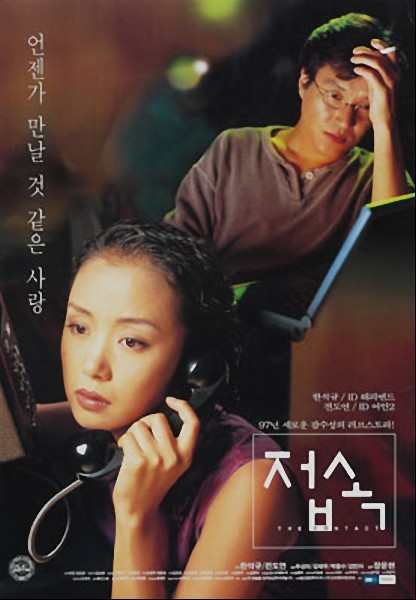
The Contact poster 1Even in 1997, it was supposedly much easier than ever before to make contact with pretty much anyone anywhere in the world, yet most of use chose not to. Twenty years later, perhaps not much has changed as we remain increasingly disconnected in an evermore connected world. Sometimes, however, as a radio host’s opening monologue reminds us, life has you take the long way round and it’s not until you hit a bump in the road that you start to think about what’s really important. The melancholy heroes of Chang Yoon-hyun’s The Contact (접속, Jeopsok) are each reeling from romantic disappointment, but brought together by a series of coincidences eventually find an outlet for their woes in the newfangled world of online chat.

Dong-hyeon (Han Suk-kyu) is the producer of a successful radio show but constantly in trouble with the suits for his uncommercial music choices. When someone anonymously sends in a battered copy of The Velvet Underground’s self titled album, he decides to switch up the order and play Pale Blue Eyes partly out of a sense of nostalgia and partly because he is hoping the woman he suspects may have sent it will be listening.

Meanwhile, across town, Soo-hyeon (Jeon Do-yeon) is sharing a moment with a cheerful young man, Ki-cheol (Choi Cheol-ho), who turns out not to be her boyfriend, but that of her roommate. To get away from the pain of seeing them cosied up together, she goes out for a drive and turns the radio on for company just as Dong-hyeon drops the needle on Pale Blue Eyes. So moved by the song that she only narrowly escapes a multi-car pileup, Soo-hyeon writes in to request it again which leads Dong-hyeon to wonder if she’s his old flame using an alias. Obviously, she isn’t, but excited to get an email from a radio show producer and not wanting to disappoint him she lies and says the request was for her friend who might be the one he’s looking for.

A pair of brokenhearted romantics, Dong-hyeon and Soo-hyeon are old souls who like rainy days and going to the movies in the afternoon but they’re also intensely online and attuned to the possibilities of indirect communication. Despite the “instant” nature of modern technology, the pair send intermittent emails, leave messages on answerphones, and fax each other, only sometimes replying in the moment via IRC but communicating on a much deeper level than they might have meeting face to face. Because they live in a city and have much more than they know in common, they unwittingly slip past each other with improbable frequency but would likely never meet, the act of making “contact” in person all but an impossibility.

The curiously analogue, nostalgia-laden, and above all physical device of the LP brings the pair together through a shared sense of loneliness born of frustrated love as they attempt to support each other through differing stages of romantic grief. While Dong-hyeon remains wilfully trapped in the past, mooning over an old flame while blaming himself for possibly coming between the woman he knew did not love him and the man she did, Soo-hyeon is in the thick of it struggling with her feelings for her roommate’s boyfriend. Calling himself “Happy End” because he’s read about them in books but doesn’t believe they exist in the “real” world, Dong-hyeon gives Soo-hyeon contradictory advice while making an ill-advised romantic overture to straightforward writer Eun-hee (Chu Sang-mi) who, unlike Dong-hyeon and Soo-hyeon, knows exactly what she wants and isn’t afraid to state it directly. “Why can’t you be honest with your feelings?” she repeatedly asks Dong-hyeon, but predictably gets no reply.

Soo-hyeon meanwhile has given herself the rather depressing name of “female 2” online, apparently inspired by a series of walk-on parts in plays, but perhaps hinting at her categorisation of herself as an invisible face in the crowd while also ironically pointing at her awkward position as the third wheel in her friend’s relationship. Berated for his emotional diffidence by Eun-hee, Dong-hyeon nevertheless tells Soo-hyeon she’s better off to forget Ki-cheol if she can’t find the courage to tell him how she really feels but as good as his advice sounds it’s primed to backfire, potentially costing not just one but two friendships and seeing Ki-cheol disappear from her life forever. Braver than Dong-hyeon, she resolves to give it a go and whatever happens it will at least answer a question, putting an end to the continued suffering of being merely friends with the man she loves.

Perhaps out of a sense of guilt for having selfishly prioritised his own feelings with tragic consequences, Dong-hyeon has decided to keep them to himself, but if so it’s also made him casually cruel and infinitely insensitive. Giving up on his romantic dream, he contemplates running away and starting a new life abroad, while Soo-hyeon risks everything in pursuit of love. Not knowing how to connect with her in the offline world, Dong-hyeon once again resorts to the physical in order to make contact, waving a tiny document like a one-way passport to love in order prove his identity and romantic destination. Finally finding the strength to let go of lost love and take a chance on new ones, the pair shift their relationship from digital to analogue as they, ironically, resolve to leave the past behind for more connected future.


The Contact was screened as part of the 2019 London Korean Film Festival.

Nambugun: North Korean Partisan in South Korea (南部軍 / 남부군, Chung Ji-young, 1990)

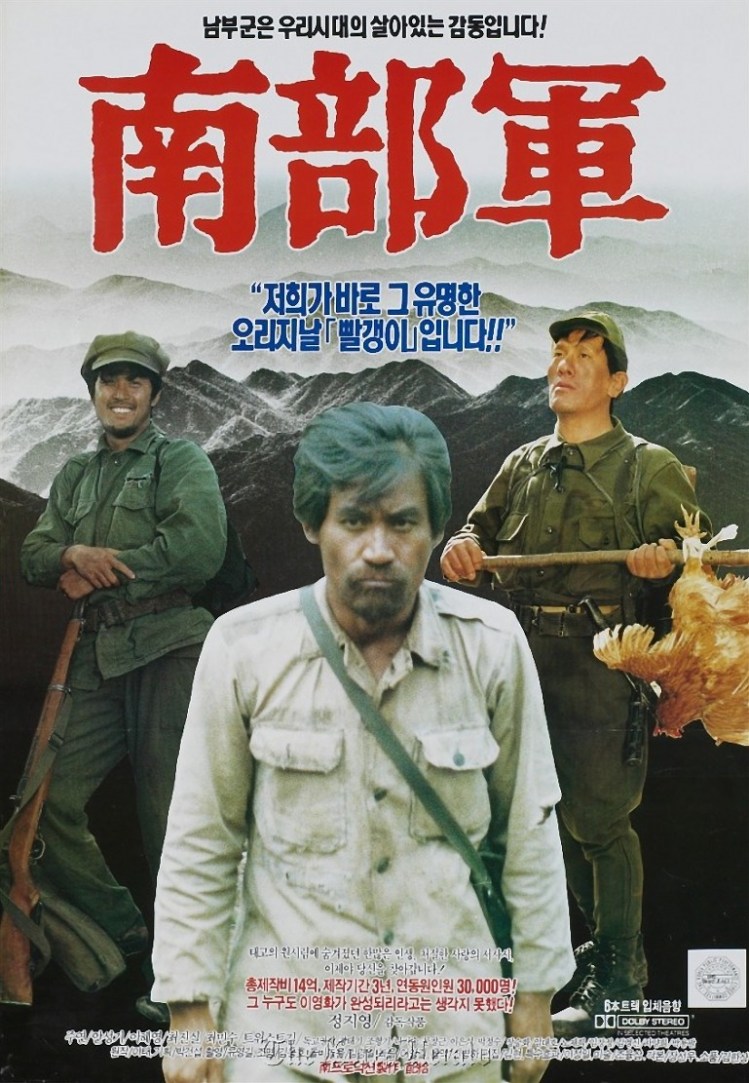
North Korean Partisan in South Korea poster 1Under the intense censorship of South Korea’s military dictatorships, “anti-communism” had become the single most important cultural signifier to the extent that all films were in some sense “anti-communist” even if some were more obviously anti-communist than others. As power shifted away from the dictators and towards a new era of democratic freedom, a more nuanced view of the recent past became possible with the “division film” taking the place of the old-fashioned anti-communist drama. Rather than demonise the North, the division film emphasised the tragedy of partition, painting the two Koreas as equal victims of geopolitical finagling.

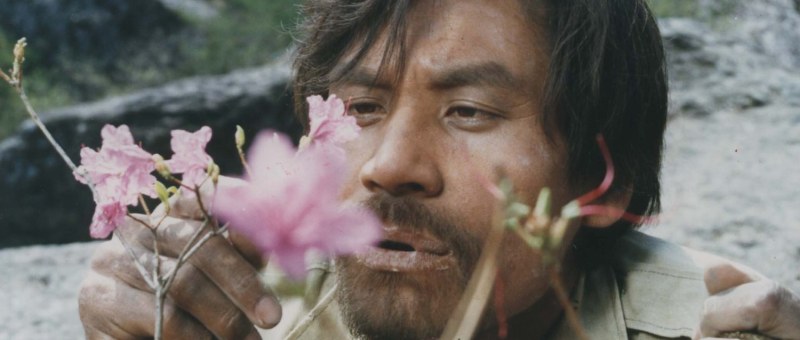
Arriving in 1990 shortly after Korea’s democratisation, Chung Ji-young’s Nambugun: North Korean Partisan in South Korea (南部軍 / 남부군, Nambugun) is among the first to directly address the subject of the Korean War from the perspective of the North Korean partisans, albeit obviously from those who eventually came South. Adapting the memoirs of war correspondent Lee Tae, Chung ignores ideology in order to explore the gruelling experience of guerrilla warfare largely being fought by ordinary people with strong convictions rather than by career soldiers or committed revolutionaries.

Lee Tae (Ahn Sung-ki) himself is an “intellectual” North Korean newspaper reporter working as a correspondent in Jeonju which is currently in North Korean occupied territory. When they get word that the Americans and South Korean forces are on their way, the newspaper staff evacuates and eventually ends up heading into the mountains to join the partisans. As he has previous experience, Lee Tae is given command of a platoon and the instruction to try and make up for his bourgeois intellectualism with hard work on the job. To keep them all in one place, Lee is assigned a series of other “intellectual” recruits including conflicted student Kim (Choi Min-soo) who joined the fight to figure out what this “inhuman” war was all about.

One of the reasons Kim is so conflicted is that he brought his hometown, high school-age girlfriend with him and wonders if that was a very responsible thing to do, especially when they are eventually separated by the command chain who decide to send her to headquarters while Kim stays with the troops. Though we are shown that the North Korean soldiers are just ordinary men and women who call each other comrade, the regime itself still comes in for subtle criticism for its oppressive hardline austerity. On the run and separated from his unit, a wounded Lee is accompanied by an earnest nurse, Min-ja (Choi Jin-sil), with whom he falls in love, but when the romance is discovered by a superior officer Lee is taken aside and reminded that here there can be no love, only revolution. He must give all of himself to the cause, reserving nothing for such bourgeois affections as romance. Both Lee and Kim spend the rest of the picture trying and failing to reconnect with their respective women while fantasising about a different kind of life in which they would not have been kept apart.

Yet, despite the fact that we clearly see a world of near total equality among the partisans, it is clear that Lee’s own thinking at least is not quite as progressive as one might assume. Bonding with Min-ja and dreaming of the future, he envisages a life for himself as a reporter in Seoul at which point she asks what she’s supposed to do and receives the answer “have dinner ready for me”.  Min-ja, apparently an orphan whose brother was killed fighting for the South, found herself becoming a field nurse for the North and perhaps has a lower ideological consciousness as a result, freely offering her medical knowledge to anyone who might be in need of it. “Why is it that we’re fighting?” she asks Lee, “you both need me”, embodying the wounded innocence of the one Korea unfairly torn apart by forces beyond its control.

All gusto and determination, Lee and the others start out with pluck and positivity but gradual disillusionment accompanies the shift from the warmth of spring to the dead of winter as the partisans find themselves starving to death on a frozen mountain. Win or lose, the victory belongs to the US or USSR, one particularly dejected soldier intones laying bare his loss of faith in the primacy of North Korean communism and accepting that they are all playthings in a proxy war being fought by Koreans on Korean soil. Kim fails to find “meaning” in conflict and emerges only with shame and regret while others clutch at pamphlets dropped by the Americans promising an amnesty for those who surrender willingly. Lee trudges on alone, frostbitten and starving, encountering only the dead and finally contemplating suicide only to be given one last source of hope and to have that too crushed. Chung humanises the communists, but still they have to lose in the spiritual as well as the literal sense. Ending on a howl of existential despair, the film dedicates itself to all those on both sides who fell on Jirisan or sacrificed their lives for a vision of a better world but does so with pity more than admiration for all that they suffered as victims of their times.


Nambugun: North Korean Partisan in South Korea was screened as part of the 2019 London Korean Film Festival.

London Korean Film Festival Announces Full Programme for 2019

The Seashore Village - Opening Gala (1st Nov)The London Korean Film Festival kicks off its 14th edition in London on 1st November and runs until the 14th at venues across the city before touring to Edinburgh Film House, Watershed Cinema Bristol, Belfast Queen’s Film Theatre, Glasgow Film Theatre, Manchester HOME, and Nottingham Broadway Cinema from 18th to 24th. This year’s special focus is dedicated to Korean cinema history in celebration of its centenary and will feature a series of classics many of them making their UK cinema premieres. 

Opening

The Seashore Village poster 2

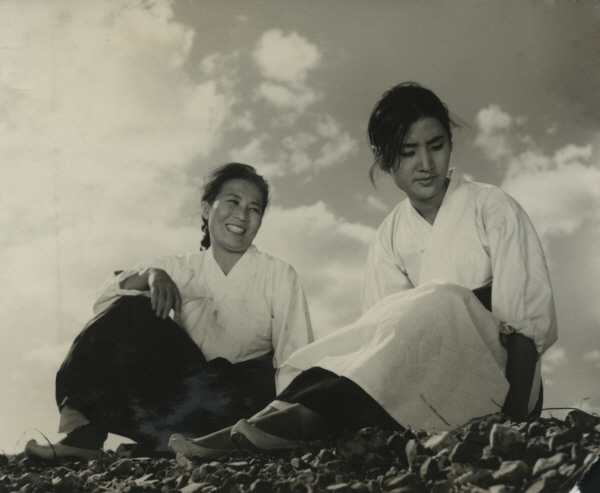
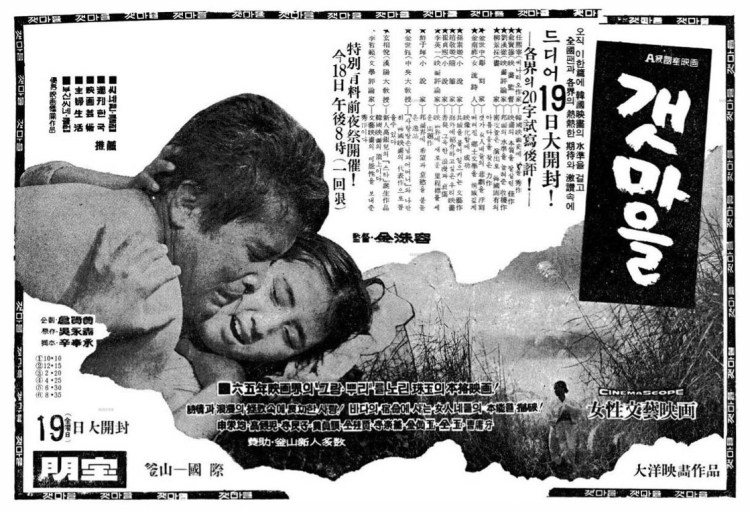
  • The Seashore Village – Opening for the first time with a retrospective title, the festival will pay tribute to veteran director Kim Soo-yong with his 1965 literary adaptation The Seashore Village in which a community of women left largely alone after losing husbands at sea have learned to support each other in the absence of men. Review. Director Kim will be present in person to discuss the film as well as his long career in the Korean cinema industry.

Closing

Scattered Night - Closing Gala (14th Nov)

  • Scattered Night – the festival will close on Nov. 14 with Kim Sol’s 2019 drama chronicling the dissolution of a family seen through the eyes of the children.

Special Focus: 100 Years of Korean Cinema

Devil's Staircase poster 2

  • A Hometown in Heart – touching drama from 1949 in which an orphaned child monk bonds with a widow.
  • Piagol – Lee Kang-cheon’s 1955 drama was originally banned for its sympathetic depiction of Communist soldiers as they wage war under a severe commander.
  • The Flower in Hell – Shin Sang-ok classic from 1958 in which a sex worker tries to find escape by seducing the younger brother of her boyfriend who makes a living stealing from the US military.
  • Aimless Bullet – bleak portrait of post-war life from Yu Hyun-mok. Review.
  • A Coachman – a single father struggles to provide for his family in Kang Dae-jin’s 1961 drama.
  • A Woman Judge – Moon Jeong-suk stars as a young woman determined to become a judge in the face of fierce social opposition. Review.
  • Bloodline – Another literary adaptation from Kim Soo-yong, Bloodline revolves around three families in a small courtyard in which the young long for freedom and a brighter future only for their parents to lament their declining authority. Review.
  • Goryeojang – 1963 drama from Kim Ki-young revolving around the ancient practice of abandoning the old in times of famine.
  • Ieoh Island – Kim Ki-young drama from 1977 in which a murder is committed on an island inhabited only by women.
  • The Devil’s Stairway – Hitchcockian drama with shades of Les Diaboliques from Lee Man-hee in which a doctor (Kim Jin-kyu) offs his inconvenient mistress (Moon Jeong-suk) to marry the boss’ daughter only to be haunted (or not?) by the memory of his transgression. Review.
  • Homebound – Moon Jeong-suk, the director’s then muse, stars again for Lee Man-hee as a middle-aged woman finds herself trapped between personal desire and social convention when she falls for a young reporter (Kim Jeong-cheol) and considers leaving her embittered, bedridden war veteran husband (Kim Jin-gyu). Review.
  • A Day Off – legendary, long believed lost drama from Lee Man-hui originally banned for its bleakness in which a young couple find themselves in an impossible situation. Review.
  • Ticket – ’80s drama from Im Kwon-taek exploring the lives of three young women working in a “ticket” bar “coffee delivery” shop. Review.
  • The Man with Three Coffins – 1987 drama from Lee Jang-ho in which a man wanders the country looking for a place to scatter his wife’s ashes.
  • A Pillar of Mist – a young couple grow apart over time in Park Chul-soo’s 1986 drama.
  • The Age of Success – Ahn Sung-ki stars as a salesman at a sweetner company who falls ill after battling a competitor and comes up with a genius idea to get back at them while in the hospital.
  • Why Has Bodhi-Darma Left for the East? – drama exploring the lives of three monks shot over seven years.
  • North Korean Partisan in South Korea (Nambugun) – 1990 drama inspired by the life of war correspondent Lee Tae.
  • A Single Spark – biographical drama about a Jeon Tae-il, a worker who self-immolated to protest unfair working conditions.
  • The Day a Pig Fell into a Well – debut from Hong Sang-soo in which a married man on a business trip gets stranded and ends up having a weird encounter with a sex worker.
  • Three Friends – debut from Lim Soon-rye in which three misfits report for military service.
  • The Contact – romance in which love blossoms over the airways.
  • Peppermint Candy – modern masterpiece from Lee Chang-dong in which a disappointed man looks back over his life.

Hidden Figures: Ha Gil-jong

Pollen of Flowers banner

  • The Pollen of Flowers – Ha Gil-jong’s debut makes a subtle jab at the repressive Park Chung-hee regime as a businessman introduces his male secretary into the home he shares with his mistress.
  • The March of Fools – 1975 drama which begins as campus comedy and then gets progressively melancholic and reflective. Review.
  • The Ascension of Han-ne – in the 19th century a woman is saved from suicide but ostracised by her community after a shaman pronounces her bad luck.

Cinema Now

birthday still 1

  • Grass – Hong Sang-soo drama starring Kim Min-hee as a writer eavesdropping in a coffee shop.
  • Birthday – powerful drama following a family bereaved by the Sewol ferry tragedy. Review.
  • A Resistance – historical drama inspired by the life of a teenage independence activist. Review.
  • Idol – neo-noir in which a bereaved father tries to expose the true facts surrounding the death of his son while a politician attempts to maintain his squeaky clean image. Review.
  • Extreme Job – broad comedy in which bumbling policemen open a fried chicken joint as part of a stakeout only for the place to take off. Review.
  • The Odd Family: Zombie on Sale – a weird family adopts a zombie after discovering his bite has healing qualities in Lee Min-jae’s hilariously surreal comedy. Review.
  • Height of the Wave – latest from Park Jung-bum following a policewoman transferred to a remote island.

Women’s Voices

A Bedsore (Women's Voices)

  • Youngju – a young woman looking after her brother becomes involved with the man who killed their parents.
  • A Boy and Sungreen – a schoolboy and his friend attempt to track down his absent dad.
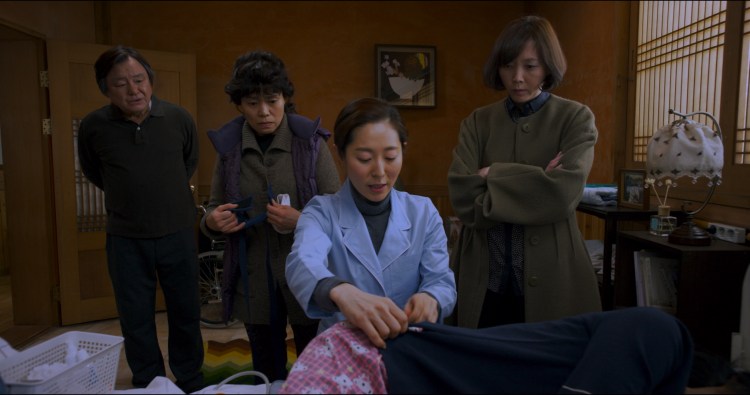
  • A Bedsore – grandma’s bedsore exposes the cracks in an ordinary family.
  • Yukiko – chronicle of a family scarred by war.

Documentary

night before the strike

  • Water Utilization Tax – documentary from 1984 following the four month struggle of farmers in Gurye.
  • Blue Bird – 1986 doc interviewing farmers about their working conditions.
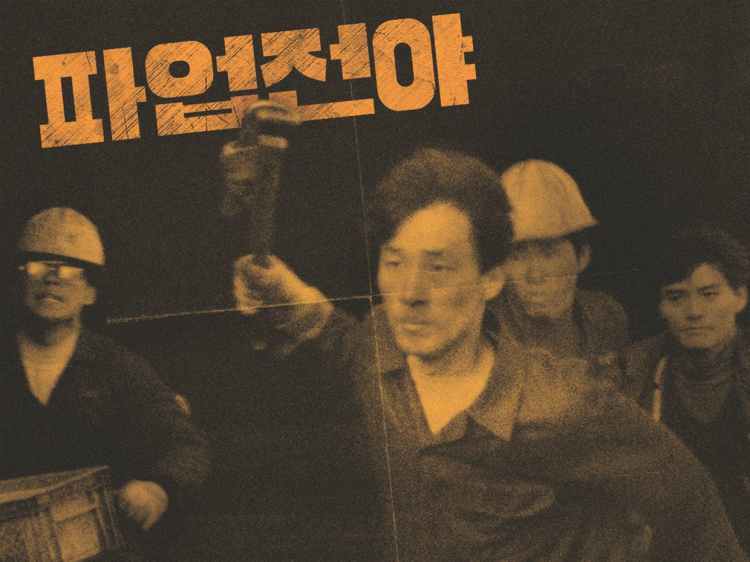
  • The Night Before the Strike – 1990 doc following factory workers’ attempts to unionise.

Animation

astro garnder

  • A Story of Hong Gil-dong – 1967 classic adapting the traditional folktale.
  • Astro Gardener – fantasy adventure with an ecological message.

Mise-en-scène Shorts

Yuwol

  • Freckles – bittersweet tale of first love.
  • To Each Your Sarah – a woman rebuilds her life after leaving her husband.
  • Goodbye Bushman – brothers discover a “bushman” in the woods.
  • Milk – a hotel maid commits a crime to pay for baby food.
  • Yuwol: The Boy Who Made the World Dance – musical following a young boy with an urge to dance.
  • Camping – a woman is kidnapped from a campsite.
  • The Stars Whisperer – a young girl with hearing difficulties makes a new friend.
  • The Lambs – a pastor and a member of his congregation share an obsession with a dead woman.

Artist Video

Songs from the North (Artist Video)

  • Songs from the North – Yoo Soon-mi’s documentary portrait of the North.
  • Dangerous Supplement – early work from Yoo Soon-mi showcasing the theme of memory.
  • Sets – Park Chan-kyong’s examination of the North’s vision of the South.
  • Flying – Park Chan-kyong explores the North/South divide.
  • Believe it or Not – Park Chan-kyong narrative piece inspired by those who have crossed the border.

The London Korean Film Festival runs 1st – 14th November in London before touring the country until 24th. Full details for all the films as well as screening times and ticketing information will be available shortly via the official website and you can keep up with all the latest news by following the festival on FacebookTwitter, and Instagram.

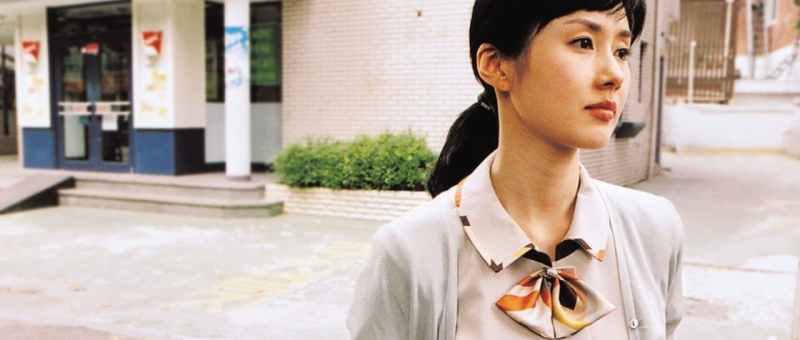
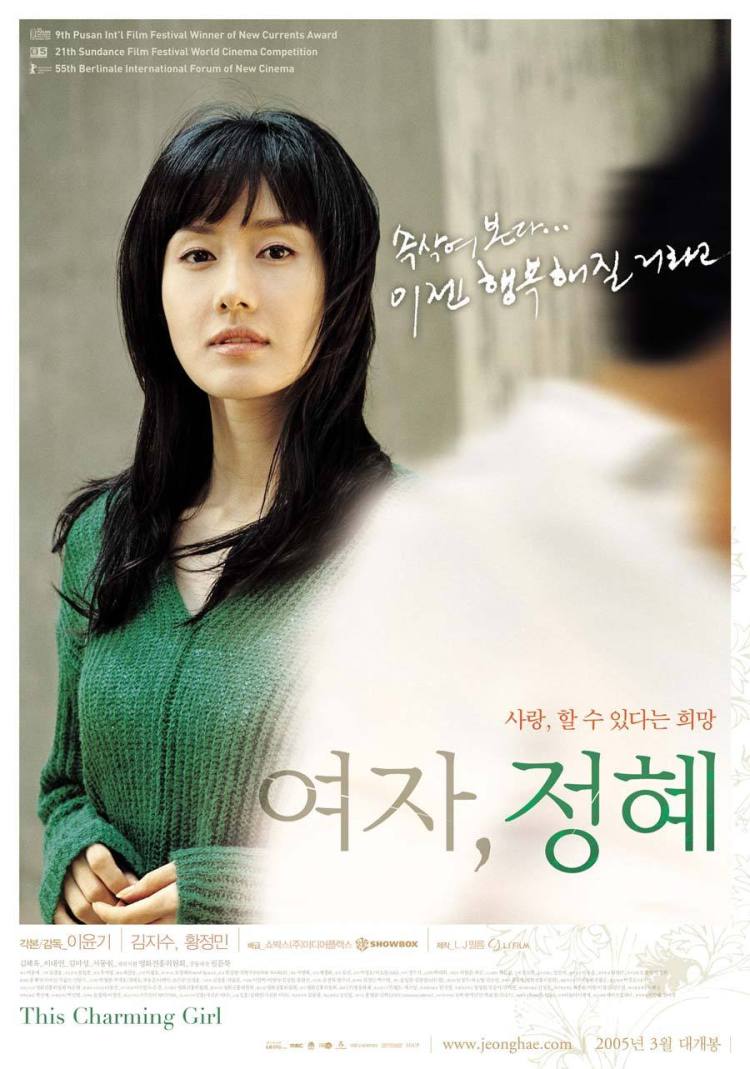
This Charming Girl (여자, 정혜, Lee Yoon-ki, 2004)

This Charming GirlIt’s strange how, even in this increasingly interconnected world, our relationships with those around us are often wilfully superficial. Trapped within our own self-obsessed perspectives, we often fail to see beneath the surface of social conformity to realise that others are also lonely or troubled, wishing someone would see them but also afraid to make plain the various ways they don’t measure up to a social ideal. The heroine of Lee Yoon-ki’s This Charming Girl (여자, 정혜, Yeoja, Jeong-hye) is just such a woman – “charming” in her perfectly composed exterior, in many ways an embodiment of traditional femininity in her near invisibility as she gets on with her life and work quietly and with efficiency. There are however tiny cracks in the surface of her ordered existence that betray an ongoing, perhaps incurable anxiety.

Jeong-hae (Kim Ji-soo), a young woman in her late twenties, has an ordinary job working on the counter in the local post-office. As we later find out, she was once married but walked out on her new husband on their wedding night and, following the death of her mother, lives alone in the same apartment she has lived in all her life. Despite being well liked at work and taking lunch with the office ladies, Jeong-hae is perhaps not quite part of the group and finds it hard to relate to her noisy colleagues who gossip about her behind her back and when all is said and done probably regard her as a fellow employee rather than friend. Jeong-hae’s days are mostly spent alone, her interactions with others outside of work extend only to awkward telephone conversations with an unkind aunt, and an angry neighbour complaining about her extremely loud alarm clock.

Despite her shyness and self-imposed isolation, Jeong-hae is a kind and caring person with a gentle, nurturing personality. In the absence of human connection, she lovingly tends to her plants but is wary of taking on responsibility for more complex creatures and it’s only after a few mornings of noticing a melancholy, mewling kitten on her way to the bus stop that she decides to pick it up and take it to a vet. Suddenly being a cat owner has a profound impact on Jeong-hae’s way of life even if the skittish creature echoes her own sense of mistrust born of previous trauma in insisting on hiding under the sofa. Bonding with a living creature brings back painful memories of her traumatic past which threaten to impede her new sense of forward motion even as she attempts to outrun them.

The kitten isn’t the only stray Jong-hae picks up, later she takes pity on a sad young man who became involved in a drunken bar fight and alienated all his friends. Generally speaking, for reasons we later come to understand, Jeong-hae is wary of men and of male physicality. A rare visit to a shoe shop provoked by an unpleasant meeting with her ex-husband who has only got back in touch to express how much she hurt him by walking out without explanation, makes plain her distress even with perhaps “ordinary” everyday interactions. Though she does her best to endure it, Jeong-hae’s discomfort with the salesman’s hard sell tactics as he uses overfamiliar language and roughly manhandles her feet into a pair of sandals (which do not really suit her) eventually results in an extremely rare instance of self-assertion as she tells the assistant off, politely, before stopping to advise the woman behind the counter that perhaps men should not be selling women’s shoes or at any rate they should treat their customers as “people” rather than sales targets. Nevertheless, something about the drunken young man tells her that he is not a threat, only another person who seems to be in a dark place and probably in need of a stranger’s ear.

It’s perhaps this same sense of “recognition” that prompts her into making an extremely forward and uncharacteristically bold overture towards a shy young writer (Hwang Jung-min) who comes to the post office regularly to send off his manuscripts. If we get the sense that Jeong-hae is a mostly invisible person, then the writer is much the same. We catch sight of him often in the background, shopping in convenience stores, sitting at outdoor tables, waiting to cross the road. He’s the kind of person that perhaps only someone like Jeong-hae, equally invisible, a supernumerary even within her own world, might recognise. The tragedy is that Jeong-hae has a lot of love to give but has been robbed of the knowledge of how to give it safely thanks a traumatic incident in her past in which her innocence and naivety were abused by a person of trust who left her with no one to turn to for protection and a deeply internalised sense of shame and rage.

Her traumatic memories surround her like living beings, occupying the same space, occasionally poking their heads into her everyday life to remind her of an unpleasant association she couldn’t forget if she tried. Jeong-hae no longer sleeps, she naps fitfully on the sofa or wanders around all night at markets and cafes; she craves connection, but cannot access it. Thanks to the cat, the ex, the writer, even the overbearing shoe shop assistant and drunk man, she begins to find a way forward even if it pushes her towards an equally dangerous conclusion, and suddenly perhaps it’s not quite all so hopeless as it seemed.


This Charming Girl was screened as part of the 2018 London Korean Film Festival.

Original trailer (no subtitles)

https://www.youtube.com/watch?v=R1XYC50A15o

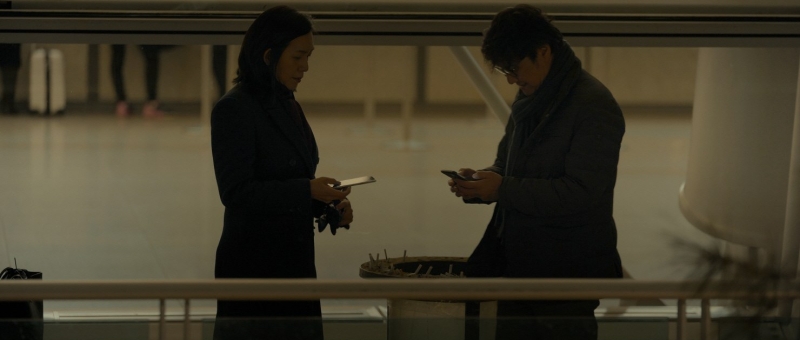
Old Love (재회, Park Ki-yong, 2017)

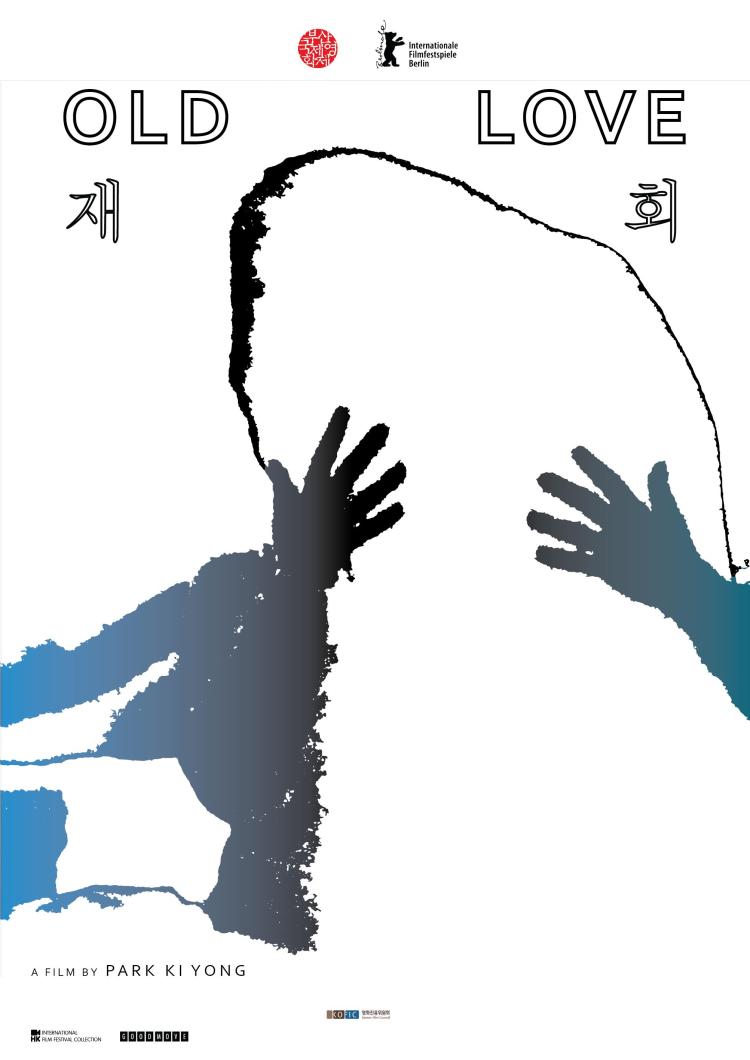
Old Love posterSome might say, it’s best to learn the lesson that life is disappointing as early as possible but there can be few who meet encroaching old age without a sense of regret and failure. The couple at the centre of Park Ki-yong’s Old Love (재회, Jaehoe) seem to have little else as they unexpectedly reunite at differing points of reunion and abandonment, longing for an unreachable past where their youthful dreams of a happier future were still possible and they could, at least, live with a false sense of hope. All that’s left for them now is to find resignation in the remaining days of loneliness and futility.

Yoon-hee (Yoo Jung-ah), who has been living in Canada for the past 30 years, returns to Korea for the Lunar New Year holiday in order to confer with her remaining family members and decide what’s best for her elderly mother now suffering with dementia. Already conflicted, Yoon-hee’s homebound holiday gets off to the worst of starts when she realises her suitcase is broken and gets caught up in an inescapable cycle of airport bureaucracy. Her exit is further delayed by a brief cigarette break during which she hears a familiar voice. Jung-soo (Kim Tae-hoon), her college boyfriend, is also at the airport dropping off his 17-year-old daughter who is on her way to study abroad in Australia. Not quite knowing why, Yoon-hee calls out to him and the former lovers engage in awkward conversation, eventually swapping (temporary) phone numbers and agreeing to meet up while Yoon-hee is in the country. 

Neither Yoon-hee nor Jung-soo give much indication of the nature of their college era relationship or why it eventually ended. They’ve obviously not stayed in touch, though there is relatively little animosity between them and no desire to argue about or dig up the past. Together once again they walk the no longer familiar streets, exchanging vague memories – a taste for octopus, forgotten left handedness, shops which have long since closed down. Their world has already disappeared and left them behind with only the burden of nostalgia to sustain them.

Long ago, Yoon-hee and Jung-soo were members of a theatre troupe. Jung-soo once said that theatre was more precious than life, yet at some point he gave it up. Now broken and dejected, he is a lonely widower whose daughter has abandoned him in resentment to look for her better future somewhere else. Yoon-hee left the theatre behind to go to Canada where she married, it seems mostly for convenience, and had a son who is now 27 years old and about to be married himself. Yoon-hee’s son returned to Korea but the pair are estranged and she won’t be seeing him on this visit. In fact she isn’t even invited to the wedding.

Yoon-hee and Jung-soo may be lonely and full of regret, but according to Jung-soo all but two of their former company fellows abandoned their dreams of the stage for more conventional lives. Mun-hee (Kim Moonhee) and Yong-guk were the two who stayed true, but Yong-guk is now seriously ill and will leave his family behind with no means of support. Later at an inn, Yoon-hee and Jung-soo run into another young group of actors eagerly debating The Seagull. Jung-soo can’t help butting in, a sad old man with some words for the hopeful youngsters. Increasingly drunk, he tells them to follow their dreams no matter what or else you’ll end up regretting your life choices. If you follow your dreams and it doesn’t work out, at least you can say you tried but if you sell out and that fails too what will you have then? Jung-soo has nothing and the emptiness is crushing him.

A lonely walk brings Yoon-hee straight into the present day when she blends into the candlelight protests, perhaps further recalling the tumultuous days of her own youth lived in the early days of a new democracy filled with a hope and promise that now seems to have retreated far into the distance. Caught at points of transit – airports, train stations, resort towns, neither Yoon-hee nor Jung-soo can find the strength to move forward. He asks her to stay, to find a home with him, as he should have done all those years ago but the moment is already gone and no amount of regret can ever bring it back. Broken by life’s disappointments, the failure of their dreams, and the emptiness of their loveless lives, Yoon-hee and Jung-soo remain trapped by the inertia of their times, just two lonely people for whom the train will never arrive.


Old Love was screened as part of the 2018 London Korean Film Festival.

Berlinale trailer (no subtitles)

Camel(s) (낙타(들), Park Ki-yong, 2001)

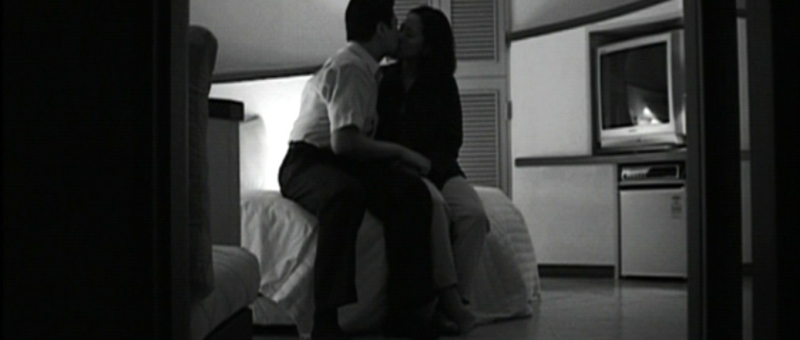
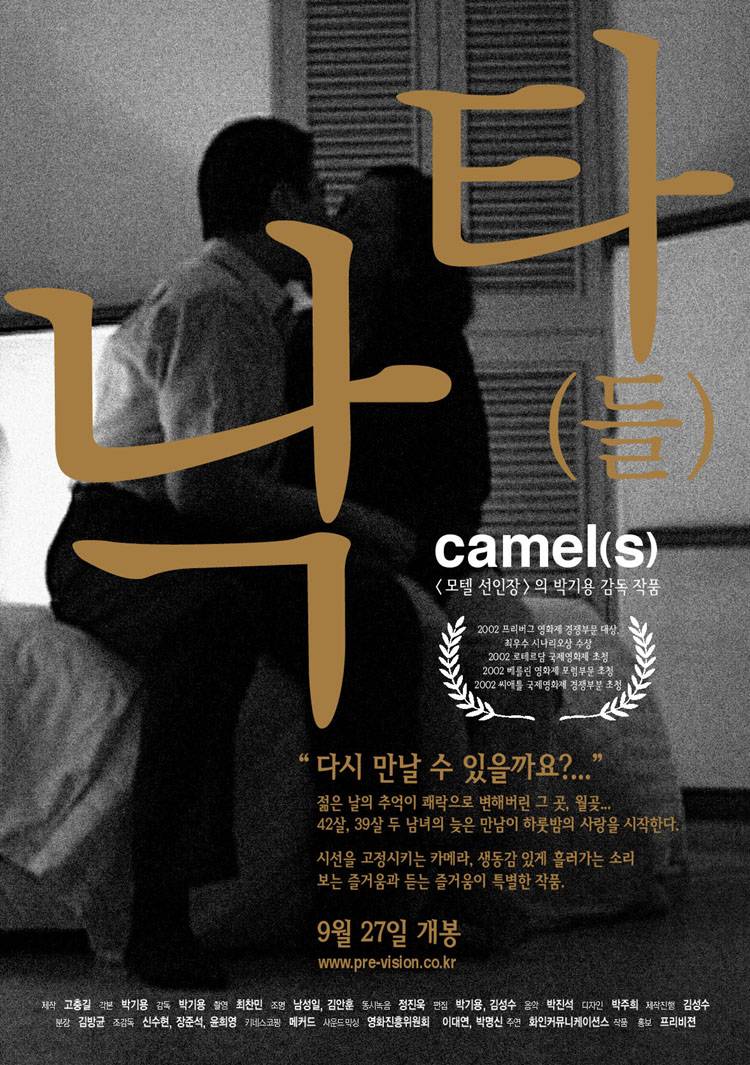
Camel(s) posterFour years after his breakthrough Motel Cactus, Park Ki-yong returned to narrative filmmaking with the comparatively subdued Camel(s) (낙타(들), nagta(deul)). Like Cactus, Camel(s) adopts a thirsty, desert-bound title in its titular dromedaries, casting its two lonely heroes as a pair of solitary travellers in search of an oasis in an otherwise barren existence. An adulterous couple in early middle-age, these wandering souls are destined to connect only briefly before returning to their unsatisfying lives filled only with a defeated sense of relief intended to see them through until the next stream appears on the horizon.

40-something Man-sup (Lee Dae-yeon) arrives to collect 30-something Myeong-hui (Park Myeong-shin) from an airport. She’s a little put out because he’s late and she didn’t quite see him because he’s driving a different car. Evidently not a married couple, the pair must have met before but their conversation is awkward – they exchange superficial pleasantries and discuss name Hanja which suggests they don’t know each other terribly well. They were supposed to be going to an island, but it’s too late now and so they’ll have to make do with the nearby tourist resort of Sorae.

Lest it be forgotten, adultery was technically illegal in Korea until 2015. Man-sup and Myeong-hui have been careful enough to venture a long way from home in order to minimise the chances of being caught out on what has every likelihood of becoming an illicit one night stand between two desperately lonely people trapped in unfulfilling marriages and seemingly boring lives. They chat over dinner, discuss their failed hopes, sing their hearts out at karaoke and then, once the ice is broken, make their way to a love hotel for the true purpose of their visit.

Before they get there, over an awkward dinner, both Man-sup and Myeong-hui relate tales of friends who live lives of freedom and travel. Unmarried and fancy free, they go where they please and live without restraint. Myeong-hui, perhaps part in resentment, decries these lives as mere egotism, as if the desire to enjoy life in itself is an act of unforgivable selfishness. Man-sup partially disagrees. He doesn’t see too much wrong with the concept of “egotism”. After all, isn’t it alright to look after yourself as long as you consider how your actions might affect others? Man-sup is honest at least about his envy. He’d like to be free too, but doesn’t have the courage. This small digression from the everyday sameness of his life is his minor rebellion, isolated within a tiny bubble of artificial “freedom” set to burst and be forgotten.

Despite the strangeness of the situation, the awkwardness dissipates after they reach the hotel, allowing for deeper conversation and a tentative, temporary sense of connection. Though some years apart in age, Myeong-hui and Man-sup attended college in the same town and visited the same market but apparently never met. Their lives since have followed similar trajectories. Myeong-hui wanted to marry her college sweetheart but her family didn’t approve and she didn’t have the strength to fight them. It ended, and she eventually submitted herself to an arranged marriage. Man-sup too failed in romance and ended up married to a woman he was introduced to, though they dated for a year first so perhaps it amounts to the same thing. Superficially “happy” with their conventional relationships each resents the unfairness of lost love, regretting their failure to fight for their own futures and capitulation in accepting that merely presented to them.

Futility continues to define their lives. The easiness between them passes, and the old emptiness returns. Bearing their sadnesses separately they return to feigning politeness, biding their time until it’s time for them to part. The idea of reuniting is floated, but gathers only a mute response. Each of them knows they won’t meet again. Wounds given and received are smoothed over with money as a kind of salve to cure a sense of mutual responsibility. Park’s melancholy meditation on the impossibility of true connection and the enduring loneliness of existential longing finds only increasing despair in its middle-aged anti-romantics who find themselves alone in the desert, travelling onwards in silence but encountering only an ever distant horizon with no oasis in sight.


Camel(s) was screened as part of the 2018 London Korean Film Festival.

Motel Cactus (모텔 선인장, Park Ki-yong, 1997)

Motel Cactus posterAs a pair of its patrons eventually begin to muse in a moment of easy reflection, Motel Cactus is an odd name for a love hotel. Then again, a prickly flower blooming in the desert perhaps captures the uniquely melancholy qualities of these illicit, temporary meetings filled with defeated hope and existential malaise. A breakthrough feature for Park Ki-yong, Motel Cactus (모텔 선인장, Motel Seoninjang) owes a significant debt to the world of Wong Kar-wai with which it shares a mild visual similarity thanks to cinematographer Christopher Doyle making his only (to date) foray into Korean cinema. Park’s explorations of romantic emptiness might not be particularly original but it’s hard to argue with the beauty in his sadness.

Each of our joyless encounters takes place in room 407 of the titular Motel Cactus stretching across ten years of turbulent Korean history. Park begins with politics as a young woman attempts to wash tear gas out of her eyes after wandering into a democracy demonstration by mistake. Time moves on and the room becomes home to a pair of students intent on shooting a film but trapped in a Godot-esque limbo waiting for a friend who has been unavoidably detained. The first woman suddenly reappears but with a different man, followed by the man again but now with an old flame whose life after love has proved disappointing.

Park bookends each of the episodes with a brief piece of to camera monologue taking place outside of the room. Hyun-Joo (Jin Hee-kyung), the woman from the first and third scenes, angrily berates an offscreen friend for being naive and getting her heart broken by another no good, cheating man. Of course, Hyun-Joo’s irritated speech could easily be directed at herself, abandoned and then abandoning in each of her unsuccessful encounters with men. Though her original assignation with the young and handsome Min-koo (Jung Woo-sung) begins with passionate intensity, it quickly turns cool – he calls another woman and lies about being with a client, emerging guilty and conflicted. Min-koo refuses to talk of love and eventually leaves early, offering the olive branch of a Saturday picnic that both of them know will probably never take place.

Suk-tae (Park Shin-yang), Hyun-joo’s second partner, begins with a “funny” story recited in a bar about a woman who may have been intending to commit suicide for love. Drunk out of their minds, Suk-tae and fellow drinker Hyun-joo head on up to room 407 where they have a total blowout, alternating between childish play and animalistic lovemaking. When the air cools and introspective chat takes over, he asks her if it’s true she always comes here when it rains to which she freely admits, reliving the ghost of past love and a rainy birthday with the presumably long gone Min-koo. This time, it’s Hyun-joo who leaves sadly before the sun has risen while Suk-tae is left behind in a blissful, drunken snooze.

When Suk-tae returns to the room, it’s for a less deliberate purpose. Reuniting with college sweetheart Hee-soo (Lee Mi-yun), he makes awkward small talk reminiscing about the old days while she sadly keys him in to her melancholy dissatisfaction with her later life which neatly echoes his own sense of defeated failure. They want to go back to a more innocent time, but they can’t and it’s clear their superficial reconnection is merely an echo of the past which won’t survive the room.

The room has its way of distorting itself, trapping the would be lovers in an imaginary space in which a part of them will always remain. The students attempt to subvert the nature of Motel Cactus through inching towards innocent romance, but they remain at odds with each other, playing childishly at love while attempting to take mastery of the room but repeatedly failing. Miscommunication reigns. Seo-Kyung (Kim Seung-hyun), the young actress in filmmaker Joon-Ki’s (Han Woong-soo) student project, gets waylaid on her way to the hotel by a TV vox popper who wants to ask her opinion about in a change in the law which would reverse a ban on people with the same surname marrying (a fairly big problem given Korea’s relatively small number of surnames even when only applying to a common ancestral branch). Seo-kyung, however, mishears them and launches into a consideration of same sex relationships on which she ultimately comes out in favour.

Hee-soo’s monologue was delivered to a fortune teller who’d previously advised her that her marriage was a bad idea – she didn’t believe him, but he was right. Motel Cactus is a sad place, drenched in neon half light with the greyness of rainy skies worrying at the windows. An old lady reappears to clear up after our careless lovers while the room’s decor undergoes minor changes, an ‘80s-style electric moving picture diorama an eerie fixture on the wall as its bright waterfalls threaten to tumble on for all eternity. Time stands still in here, marked only by the futility of true connection and the inescapable longing that accompanies it. Park’s naturalistic desires are occasionally swamped by Doyle’s characteristically stylish camerawork but it’s difficult to argue with the poetry of his images even whilst singing an old song.


Motel Cactus was screened as part of the 2018 London Korean Film Festival.