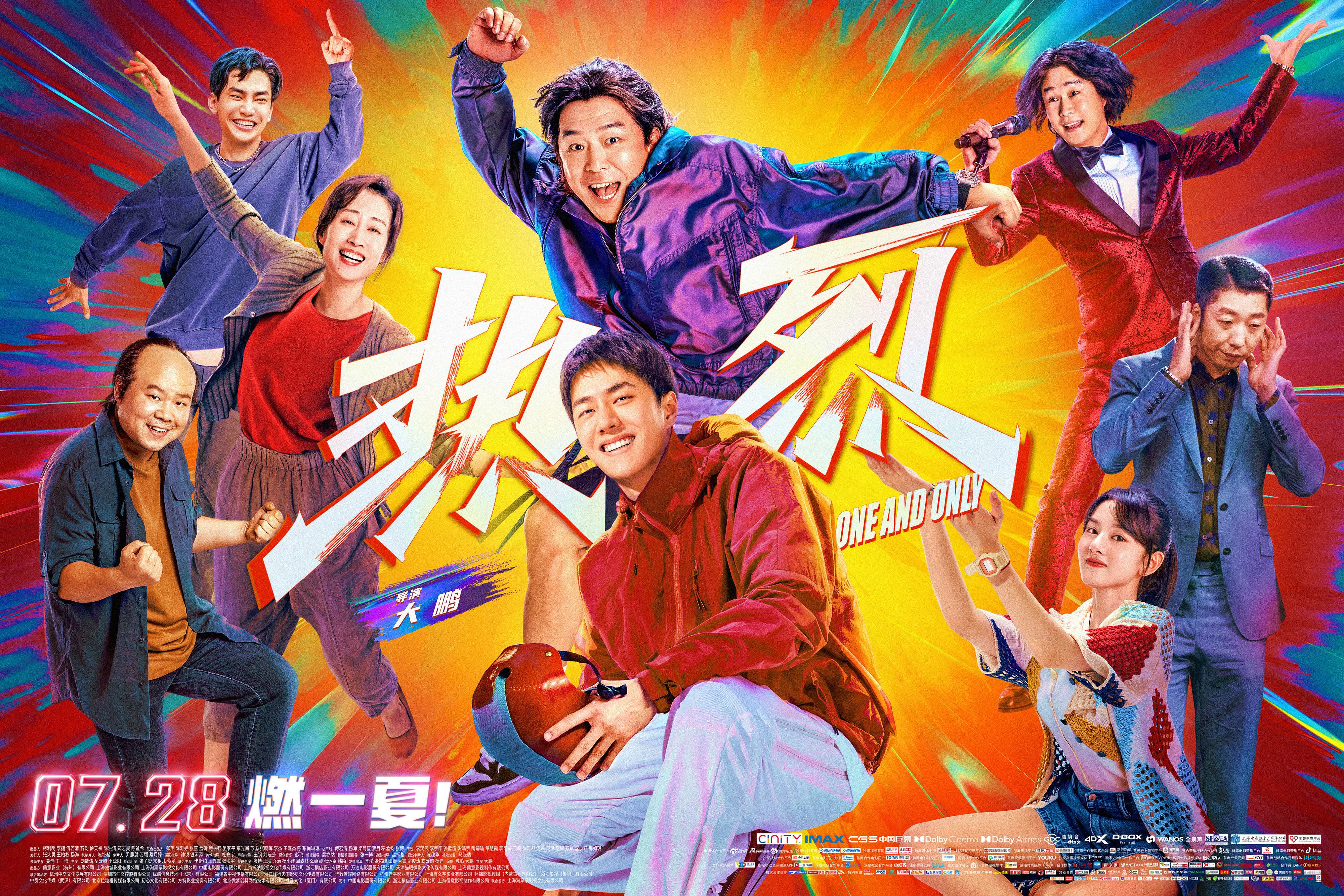
One and Only (热烈, Dong Chengpeng, 2023)

An aspiring street dancer from an impoverished background just can’t seem to catch a break no matter how hard he works in Dong Chengpeng’s inspiring dramedy One and Only (热烈, rèliè). A mild rebuke against a rising fuerdai generation of obnoxious narcissists who don’t think twice about using their money to game the system, the film not only emphasises the virtues of hard work and perseverance but the importance of camaraderie and fellow feeling over an individualistic drive to succeed. 

The conflict is encapsulated in the opening sequence in which hotshot dancer Kevin starts a fight with one of his own team members in the middle of dance competition over a move that didn’t go as planned. The problem is that Kevin is an obnoxious rich kid whose US-based father has been bankrolling the team. He plans to sack most of the other dancers and replace them with foreign ringers, only manager Ding (Huang Bo), who dared to suggest the problem was he doesn’t practice enough with his teammates, isn’t so sure. In an effort to appease him, he hires a ringer of his own in Shou (Wang Yibo), an aspiring dancer who auditioned for the team but didn’t get through, booking him to stand in for Kevin during rehearsals with the caveat that he won’t actually get to perform in any of their concerts or competitions. 

Kevin is not untalented, but his path has been easy wheareas Shou is doing a series of part-time jobs in addition to helping out in his mother’s restaurant while burdened by debts as a result of his late father’s illness. Yet he never gave up on his street dancing dream, working with his uncle doing a series of humiliating gigs at shopping malls and birthday parties never complaining but grateful for the opportunity to dance. The offer from Ding is the answer to all his prayers, but also a cruel joke in that he’s only there to sub in for rich kid Kevin until such time as he feels like showing up again. 

Ding is aware of the choice he faces even as he forms a paternal relationship with Shou whose father was also a breakdancer. To redeem himself and achieve his dreams of national championship glory, Ding thinks he has to choose Kevin and his unlimited resources but is also drawn to Shou’s raw passion and pure-hearted love of dance if also mindful of the “realities” of contemporary China where money and connections are everything and boys like Shou don’t really stand a chance because socialist work ethics are now hopelessly outdated. Ding may be outdated too, even his old friends who got temporarily rich during an entrepreneurial boom have seen their dreams implode in middle age and are currently supplementing their incomes as substitute drivers for partying youngsters. 

Tellingly, after Kevin has them kicked out of the gym he paid for, the team start training in an abandoned factory theatre from the pre-reform days where Shou’s parents used to perform, quite literally resetting their value systems after jettisoning Kevin to focus on team work and unity. Then again in a mild paradox, Ding realises that he shouldn’t lead the team by dominating It but support from within which results in a kind of democracy as he holds a secret ballot to decide whether they should stick with Kevin and a certain, easy victory, or reinstate Shou and take their chances the old-fashioned way. 

Of course, the team choose hard work and perseverance, never giving up even when it seems impossible, leaving the obnoxious Kevin to his self-centred narcissism. Kevin only really wanted backing dancers which is why he couldn’t gel with the team, whereas when challenged one on one Shou does each of his teammates signature moves proving that he’s mastered a series of diverse dance styles along with his own high impact headspring move. Heartfelt and earnest, the film shines a light on a number of issues from middle-aged disappointment and the moral compromises involved in chasing a dream but in the end reinforces the message that there are no shortcuts to success which can never be bought with money but only through sweat and tears along with teamwork and the determination to master one’s craft.


Original trailer (Simplified Chinese / English subtitles)

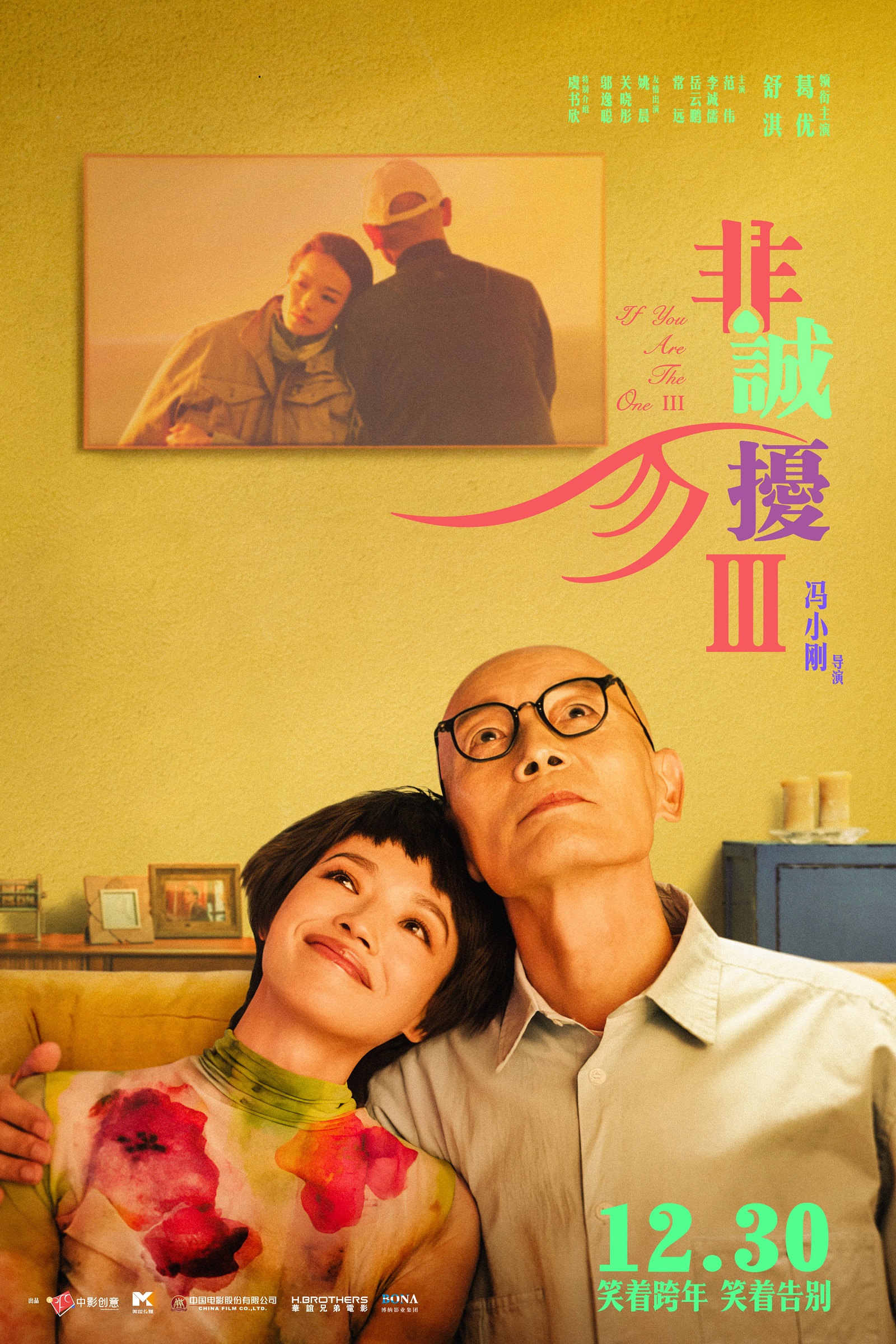
If You Are the One 3 (非诚勿扰3, Feng Xiaogang, 2023)

It’s been 15 years since the release of Feng Xiaogang’s If You Are the One, a phenomenally popular romantic dramedy in which a seemingly mismatched pair of lovelorn souls attempt to build on the spark of connection. A sequel was released in 2010 that turned a little more wistful in meditating on the brevity of life and its circular qualities, but returning all these years later Feng ventures in a surreal direction setting the film, as the sequel promised, in 2030 as Qin Fen (Ge Yu) approaches his 70th birthday in a colourful vision of an AI future.

Qin Fen still lives in the same house as he did in If You Are the One 2 only it’s had a complete redesign. Before it was cluttered and traditional, a comforting cabin overlooking the beautiful Chinese countryside but now it’s fairly minimalist and heavily stylised in a bold colour scheme that echoes the fashions of the mid-20th century. We learn that he has not seen Xiaoxaio (Shu Qi) for 10 years since she abruptly took off with a bunch on cult-like international rubbish collectors but has been patiently waiting for her return. His old friend Lao Fan (Fan Wei) who has launched a successful company selling uncannily real AI robots gifts him one that looks just like Xiaoxaio though it of course lacks her sarcastic character and is programmed to obey him totally which is how he thought he wanted but of course is nothing like the real Xiaoxiao.

At this point, the film seems to open a dialogue about the nature of love and the realities of marriage. Can the lonely Qin Fen be satisfied by this ersatz recreation of the woman he loved, or will it only cause him more pain? The answer seems to be a little of both, especially as she cannot eat or drink with him let alone sleep in the same bed. Meanwhile, unbeknownst to him the real Xiaxiao has returned but is too nervous to approach him having been out of contact for a decade, only now getting bored with rubbish collecting which is being taken over by AI robots anyway. Disguising herself as a upgraded version of the robot, she attempts to figure out how he really feels about her in a strange echo of the trial marriage from the previous film wondering if he’ll be able to figure out which version of her is “real” and which a fantasy of his own projections.

Then again, set largely within this futuristic cabin, now a little more surrounded by other similar dwellings, we might start to wonder if something else of going on and this place doesn’t quite exist in the way we think it does as if Qin Fen were literally living inside a memory. Having jumped on an additional eight years, the timelines and details do not always mesh exactly with a reappearance of Xiangshan’s daughter who should be around 30 but appears more like a sullen college student in the company of Xiangshan’s second wife, Mango (Yao Chen), who was not her mother nor raising her but apparently continued caring for her mother-in-law after her ex-husband’s death. Small splinters in the reality encourage us to doubt it, as if they corrupted files in Qin Fen’s ageing memory.

Feng presumably doubts our memory too, inserting frequent flashbacks to footage from the other movies whenever one of the returning cast allude to them in addition to providing a lengthy recap at the beginning of the film. Playing out a bit like a greatest hits compilation, the flashbacks prove unnecessarily clumsy and largely disrupt the flow of the ongoing drama while perhaps helping to fill in the blanks for those jumping in to part three without having seen one or two given that it has been fifteen years since the first film’s release. A little surprisingly given the tightening censorship regulations, Feng was able to continue the sympathetically presented running gag of Qi Fen’s male admirer, now having undergone a K-pop makeover and looking even younger, who also finds himself contemplating the nature of love after commissioning a Qin Fen robot to cure his own lovelorn desires.

A nod to the present day is given in a Lunar New Year movie-style epilogue (though the film was released around Western New Year) in which Shu Qi and Ge Yu play themselves dressed in matching outfits and nostalgically look back reflecting that young couples who came to see If You Are the One in 2008 might have teenage kids of their own or at least fond memories of an old love that wasn’t to be. Just at the end at they drop in the words that marriage is a commitment worth its weight in gold which feels like an approved message tackling the historically low rates of young people getting married. Nevertheless, it’s a cute and quirky way to bring the series to a close following the surreal absurdity of the two hours which preceded it.


International trailer (Simplified Chinese / English subtitles)

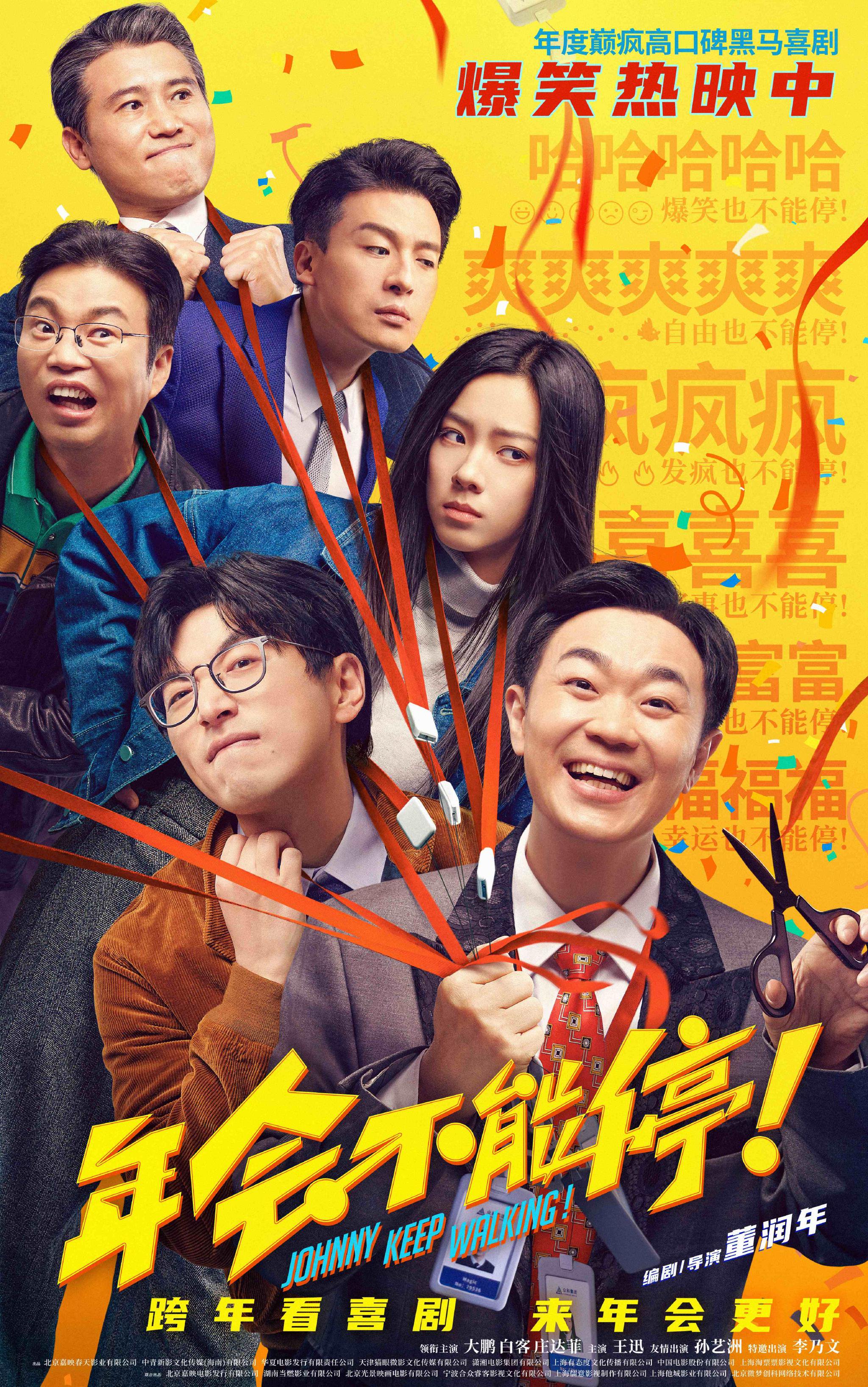
Johnny Keep Walking! (年会不能停!, Dong Runnian, 2024)

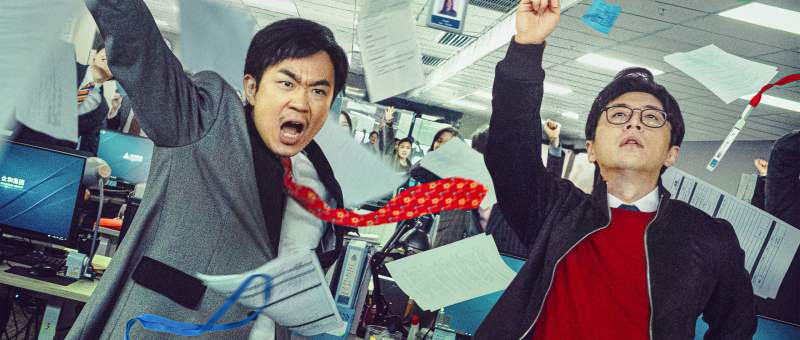
A satirical morality tale, Dong Runnian’s incredibly witty comedy Johnny Keep Walking! (niánhuì bùnéng tíng) sees a bumpkinish middle-aged factory worker still filled with an idealism that seems outdated even in the late 90s transferred into a lion’s den of corporate greed and dubious morality while ultimately expressing the younger generation’s increasing dissatisfaction with the inherent unfairness of corporate life in modern China. Ironically turning Tom Chang’s 1988 hit My Future is Not A Dream into a rallying cry from disillusioned youth, the film nevertheless places its faith in the moral generosity of a fat cat factory owner who struck gold in the nation’s 90s reforms but has largely forgotten those who helped him get there.

Key among them would be Jianlin (Da Peng) whom we first see trying to fix the disco ball at the factory’s 1998 gala and being asked to sing a song instead. 20 years pass with Jianlin still living the life of a model factory worker stuck on the same old salary while applying to perform in the company’s annual gala has become his only joy in life. Meanwhile, the factory owner has gone on to head an increasingly powerful multi-national company leaving Jianlin and those like him far behind deprived of the successes that the modern China has to offer. 

This is in part a paean for those left behind by the economic reforms of the 1990s which saw the end of the old factory system with mass unemployment and displacement amid frequent plant closures. Jianlin’s is still open, but devoid of the sense of comaradie that mark the opening scenes. His scheming floor manager, Zhangzi is trying to engineer a transfer to head office so that his son could attend a better school in the city and has been helping a series of corporate lackeys defraud the company, in addition to paying a direct bribe, in return for a job offer. A drunken mix up by office party boy Peter (Sun Yizhou) results in Jianlin being hired instead in a shock move that proves inexplicable to all. 

Jianlin is such an innocent that he thinks the reason he’s been given a huge promotion is because he was employee of the year for 12 years straight and the company probably want to send a message to the youngsters that hard work really will be rewarded. Of course, the opposite is true. HR manager Magic (Bai-Ke) quickly spots the mistake but is prevented from fixing it because it would get them all into trouble, and while it’s obvious to most people that Jianlin has no idea what he’s doing they choose to say nothing because they assume he must be a nepotism hire and they want to stay in the boss’ good books. Everyone at the company uses an English name with Jianlin rechristened “Johnny” though he understands no English and struggles with Chinese business jargon having no idea what people mean when they go on about “aligning the details”. Charged with firing someone under the company’s radical new “optimisation” programme, he takes the word at face value and gives them a promotion and a raise instead.

In fact, much of the film is him muddling along like typical middle-manager promoted beyond his abilities. He’s advised that good management is all about setting employees against each other so they forget about resenting you while basically delegating all your tasks to your subordinates who will be only too happy to help in order to curry favour. Slowly corrupted, Jianlin beings to play along, taking all the perks of corporate success while signing documents he couldn’t understand even if he actually read them.

Nevertheless, he develops a kind of team spirit with Magic, a man stuck in a mid-career rut because of his lack of skill at office politics, and Penny temp whose perpetually kept on the hook rather than being given full employee status so that the company can exploit her more. Penny also suffers sexual harassment at the hands of the party happy Peter with Jianlin getting her out of a sticky situation by telling her to finish a report and drinking with Peter himself. Together, and with the assistance of the workers at the factory and others about to be unceremoniously fired as part of the cost cutting enterprise, they attempt to expose corporate corruption and stage a protest against unfair working practices but the only saviour they have to turn to is the company president strongly suggesting a return to the old factory days which, it is implied, were much more wholesome and innocent. In any case, justice eventually wins out with the good rewarded and the bad getting their just desserts though it doesn’t do too much to tackle the inherent and quite ironic rottenness of the system in which the worker has been reduced to a mere tool to be used and discarded by a faceless and uncaring corporate entity. 


International trailer (English subtitles)

My Future is not a Dream (Tom Chang)

Godspeed (人生路不熟, Yi Xiaoxing, 2023)

An earnest young man does everything he can to try and impress his traditionalist father-in-law-to-be but just can’t seem to catch break in Yi Xiaoxing’s charming road trip comedy, Godspeed (人生路不熟, rénshēnglùbùshú). Seemingly a representative of contemporary youth who find themselves facing pressure from above with not only disapproving parents but exploitative bosses breathing down their necks, Yifan (Fan Chengcheng) is a classic mild mannered guy who’s been beaten down and bullied all his life but finally finds the courage to stand up for himself while battling to prove his worth to his girlfriend’s dad. 

The reason Donghai (Qiao Shan) objects to Yifan is at heart the obvious one that he can’t really accept the idea of his daughter getting married and in the end no man will ever be good enough to change his mind. But it’s also true that truck driver Donghai is an old fashioned man’s man with very strong ideas of traditional masculinity that Yifan is never going to live up to. Tall, skinny, and a glasses wearer, Yifan is a programmer at a games studio where he’s exploited by their smarmy boss who instantly turns down the game he’s made himself and tells him to pirate the latest successful games from other companies and rip them off instead. His problem is that Donghai thinks games are “immature” so his girlfriend Weiyu (Zhang Jinyi) has advised him to be economical with the truth when her father inevitably asks about his career prospects. 

It has to be said that it’s not practical to lie about something as fundamental as a job when you’re intending on forging a longterm relationship with someone, but Yifan is very focussed on the present moment and at least making a good impression on Donghai so that he’ll accept him as a son-in-law. In fact, Yifan hasn’t actually proposed yet and was planning on doing it after meeting the parents and attending the 80th birthday celebrations of Weiyu’s grandfather but things get off to a bad start when he accidentally locks Donghai in a butcher’s freezer after minor misunderstanding causing him to become fused with some giant slabs of pork. Donghai doesn’t like his “childish” fashion sense, so Yifai switches to smart shirts and trousers to try to please him but is never really sure if Donghai appreciates the way he’s changing to live up to his idea of “maturity” or in fact thinks less of him for it in his infinite desire to please. 

“You’re going the wrong way,” Weiyu’s mother Meimei (Ma Li) tries to tell Donghai in a more literal sense as she and Weiyu end up taking their car with Yifan and Donghai in the truck because Donghai insisted there wasn’t enough room for Yifan and the family dog. Donghai is afraid that Weiyu will “go the wrong way” with a man like Yifan, but is also going down a dangerous road himself in refusing to accept that his daughter has grown up and can make her own decisions as regards her romantic future. He wanted her to marry childhood friend Guang (Chan Yuen) who has since become incredibly wealthy, but even he is later exposed as a poser who has also “lied” about his financial circumstances in what seems to be an ongoing rebuke of the obnoxious superrich also exemplified by Donghai’s arrogant frenemy and his high tech caravan not to mention spoilt grandson with a Western name. 

Yet what Yifan comes to realise is that there is no “right way” except his own and it’s time for him to stop simply accepting the injustices of the world around him as Donghai has also been doing in appeasing a gang of petrol thieves who’ve been terrorising trucker society for the last few years. Together, they each begin to break free of their decade’s long inertia, Yifan deciding to be his own man and a “company owner” after all and Donghai embracing the freedom of retirement and the open road on going on a second road trip honeymoon with Meimei. The older generation has to learn to let the other one go, stepping back and getting out of the way of their children’s happiness, while simultaneously regaining a kind of independence to start a new life of their own. Flat out hilarious in its improbable mishaps but also poignant and heartfelt in its central relationships, the film’s zany sense of optimism and possibility become a winning combination as Yifan discovers the courage to step into himself and be his own man no longer beholden to a bullying society.


International trailer (Simplified Chinese / English subtitles)

Under the Light (坚如磐石, Zhang Yimou, 2023)

The irony at the centre of Zhang Yimou’s Under the Light (坚如磐石, jiānrúpánshí) is that it takes place in a neon-lit city of eternal visibility, though of course where you have light you’ll also find shadows. Even so, it appears he’s trying to make a point in the plain sight nature of political corruption and it’s connections with organised crime. At heart it’s a tense cat and mouse game between two men who share some kind of sordid past, but also of how it’s the next generation that often pay in the infinitely corrupted paternity of the contemporary society.

Zhang opens with a hostage crisis as a man hijacks a bus and threatens to blow it up if he doesn’t receive a visit from deputy mayor Zheng Gang (Zhang Guoli). Zheng attends but his policeman son Jianming (Lei Jiayin), currently assigned to the tech division, notices that the bomb can be detonated remotely and it doesn’t appear the hostage taker knew that it was real. In any case, all is not as it seems and as Zheng is soon squaring off against shady businessman Li Zhitian (Yu Hewei) who invites Jianming to dinner and puts on a show by blackmailing another business owner with a sex photo before forcing him to put his hand in boiling oil. 

In contrast to his ruthless exterior, Zhitian dotes on his grown up daughter currently pregnant with her first child and about to be formally married to his business heir David (Sun Yizhou). Jianming meanwhile has a complicated relationship with his father by whom he feels rejected in part because he’s adopted. Zheng also appears to be meeting with a mysterious young woman for unclear reasons, later hinting that she’s a kind of daughter figure someone at some point asked him to protect. In a strange and probably unintended way, it’s this parental quality of protection that has been disrupted by ingrained corruption and is then re-channeled in a desire to protect society in general. When it’s all over, Jianming asks his bosses why they trusted him to make the right decision, and they tell him it’s because he told them he wanted to be a “true policeman” for the people.

Apparently stuck in limbo for four years because of censorship concerns, the propaganda thrust of the film centres on the crackdown against political and judicial corruption. Zheng is engaged in a political project to target corrupt officials but is heavily implied to be on the wrong side of the fence himself which would explain his connection with Zhitian, a supposedly self-made man who keeps a heavy pole in his living room to remind him of his roots as a lowly porter in a rural town before taking advantage of the ‘90s economic reforms to make himself wealthy beyond his wildest dreams. 

They each have hidden secrets which Jianming becomes determined to drag into the light while working with the anti-corruption officers in his precinct, as well as old flame Hui-lin (Zhou Dongyu). Zhang adds in some distinctly retro comedy vibes not least in the frustrated romance of Jianming and Huilin who at one point dangle dangerously off a building while she later bites back, “don’t deprive me of the chance to protect you. It’s what they call love” when firing a pistol at a bunch or marauding bad guys. Yet the comedy seems incongruous with infinite bleakness of the resolution in which once again the children are made to suffer as Jianming comes to a greater understanding of his origins. 

In an ironic touch, the villains are later revealed to have been dyeing their hair which is in reality already white though they are not really all that old. Playing into the themes of duplicity, it also hints at the central message that the older generation must recede and the young, like Jianming, learn to find an accommodation with their failures in order to reclaim a sense of justice. Then again, the film itself is quite duplicitous with a series of glaring plotholes including a giant one relating to the DNA identification of a missing woman whose body is finally dragged into the light. Huiling warns Jianming that there are some boxes it’s better not to open. At the film’s conclusion he may wish he’d listened, but his job is to drag truth into the light and not least his own. In any Zhang’s infinitely bright, ever illuminated city of neon and glass has a host of hidden darkness only temporarily exorcised by the unusually lengthy parade of the now standard title cards explaining that the wrongdoers were caught and punished while deprived of their ill-gotten gains no matter how much it might seem that crime really does pay.


International trailer (Simplified Chinese / English subtitles)

Wolf Pack (狼群, Michael Chiang, 2022)

A disillusioned doctor quickly finds himself in over his head when he’s kidnapped by Chinese mercenaries in Michael Chiang’s oddly positioned action thriller, Wolf Pack (狼群, láng qún). Once again, the action takes place in a completely fictional Middle Eastern/Central Asian country with the mercenaries playing mysterious spy games in which their heartless amorality is at least heavily implied to be an affectation and that they are ultimately interested in “more than money” while covertly protecting Chinese interests abroad.

The film heavily implies that they are in fact in some way working for the Chinese authorities with a lengthy focus on the Chinese flag outside the place of government in this foreign nation given the unlikely name of Cooley (in fact, most of the names given for various people and places seem mildly inappropriate). The photograph sullen doctor Ke Tong (Aarif Rahman) carries around also features his father in a Chinese military uniform which might be why he is so reluctant to believe that he may also have been a member of this “private army” as his new boss Diao claims. Though Ke Tong is originally very hostile to Diao’s gang who have after all kidnapped him he later undergoes an entirely unexplained change of heart accepting that his father must have had his reasons for whatever he did so Diao is probably OK anyway. 

In any case, their current mission involves defending Chinese energy interests against a local warlord who is working with European businessmen to disrupt a gas deal by placing faulty regulators designed to engineer an explosion which will apparently domino all the way back to the Mainland. Largely kept in the dark, Ke Tong is unable to see the big picture and keeps trying to help by doing righteous things such as shooting at a soldier hassling a young girl whose father he’d just killed but unwittingly making everything worse. Eventually he realises that the end client must be the Xingli group who are running the China-Cooley collaborative gas field, though even the energy official they’re later asked to protect seems to be prepared to die in order to ensure the project’s success and prevent a mass explosion. 

Diao’s selflessness is also well signalled thanks to his tendency to listen to a recording of a baby crying and meditate on “all he’s lost” to be a mercenary which again reinforces the idea that they have a greater cause than simply money along with Diao’s position as a surrogate father not just to Ke Tong but to the other soldiers who are all, it is said, looking for a place to belong. The gang apparently also have some kind of role funding orphanages in China to prove that they aren’t just in it for the cash. Ke Tong too comes to feel a kind of brotherhood that makes the mission more than just mercenary activity and gives him an excuse to chase the evil war lord even though that is not part of their mission and really the villagers, including a small child who has been forced to do their bidding, are not their concern. 

Despite starring two prominent martial arts stars, the film is much more focussed on technical wizardry and gunplay than it is on physical fights save for a late in the game confrontation between female mercenary Monstrosity and her opposing number as they try to liberate the gas field. Diao’s incredibly well equipped crew appear to be almost all-powerful, even if Ke Tong manages to play them at their own game, using fly-shaped drones to assist them in their work though the final mission involves an improbable plot device of the local government needing to sign a document by retinal scan within 60 seconds complete with an onscreen countdown via an encrypted briefcase computer in the middle of a firefight. 

Chiang does indeed bring action with a series of high impact sequences one involving a large petrol tank explosion which results in several of the warlord’s men being engulfed in flames. It does however leave a thread of mystery hanging over Ke Tong’s quest to solve the riddle of his father’s death with the suggestion that not all of his body parts were collected hinting that there may be further conspiracies in store for a potential sequel though what seems clear is that Ke Tong has discovered his place to belong alongside a surrogate father figure doing quite questionable things but apparently working for the national good. 


Wolf Pack is released on blu-ray in the US on 23rd January courtesy of Well Go USA.

International trailer (English subtitles)

Brief History of a Family (家庭简史, Lin Jianjie, 2024)

Part way through Lin Jianjie’s smouldering social drama A Brief History of a Family (家庭简史, Jiātíng Jiǎnshǐ), two boys play a game with a series of coins in which the objective is not to be forced into claiming the last remaining piece. Shuo (Sun Xilun), a visitor to the other boy’s home who had been starting the game remarks that whoever gets to play second will always find a way to win which is quite an ambivalent statement given the questions we might ask of what playing second might mean. 

In any case, Shuo clearly has an intention and desire to work his way into this stereotypically nice, upper-middle class family with its tastefully decorated home. He gives away little about himself and we can’t even be sure how much of what he says is true, whether he really yearns for the mother who died suddenly when he was ten or is astutely playing on the frustrated maternity of Mrs Tu (Guo Keyu), or whether his father really is a violent drunk who beats him out of a sense of defeat and insecurity feeling betrayed on finding out that he’s been spending all his time with the Tus. Their son, Wei (Lin Muran) who goes to his school and seemingly befriends him, is by contrast an almost open book aside from the lies he tells his parents in choosing to follow his own desires at the fencing club rather than attend English classes.

It’s this contrast between the two boys that comes to emblematise the crises at the heart of the contemporary China in the wake of the easing of the One Child Policy. It gradually becomes clear that Tus have on some level already given up on Wei who does not fulfil their expectations as the perfect son of a middle-class couple. Mr Tu (Zu Feng) in particular is austere and traditionalist. Wei points out that he made him study calligraphy at an early age but what use is it when everyone types? He threatens to send him abroad to study if his grades don’t improve, but then begins to switch his allegiance towards Shuo who is quiet and intellectual in contrast to Wei’s perhaps outdated brand of virile masculinity. In a pregnant moment, Wei begins to realise that he’s being replaced, displaced inside his own home, when the chairs around the dinner table are rearranged from two on left and right to one on each side with his parents and Shuo huddled on the other end discussing Ivy League colleges and dismissing his news that he made it onto the county fencing team with the false enthusiasm shown to a child who’s just drawn a picture that will soon be pinned to the fridge.

Yet there’s also a transgressive element of homoerotic tension between the boys that is surprising given the censors’s usual objections. Lin frames them sheltering from the rain playing at fencing with umbrellas until Wei symbolically kills Shuo and cradles him softly in a pieta surrounded by a pool of light. At a later moment Shuo moves offscreen and we hear what sounds like a peck of a kiss, though we can’t be sure if it’s pure calculation or an attempt either to calm or needle an increasingly febrile Wei who is very definitely concerned about his place within the family and feels as if the rug is being pulled from under him. 

Every so often Lin cuts back to a circular frame, as if looking through a microscope studying the dynamics of this family and how they change once Shuo enters the picture. Shuo seems to instructively spot the loneliness in Mrs Tu, looking at photos from a holiday taken before she was married in which she looks happy and free while her life as a stereotypical housewife has robbed her of individual fulfilment outside of her husband and son. Mr Tu meanwhile looks down on his wife intellectually and is disappointed in his son who he feels reflects badly on him. Later we discover that they conceived a second child but Mr Tu insisted on an abortion rather than pay the fine though the undercurrent is that had it been born they would not necessarily have been so disappointed in their son. Mrs Tu describes Shuo as their second chance, in one fell swoop admitting their “failure” with Wei while buying themselves a shot at the kind of child they always wanted to have, a “good son” like Shuo who is quiet and intellectual and can easily fit into their world. An attempt to teach him tennis ends in disaster, but Mr Tu says it doesn’t matter because he will “train him systemically”.

This seems to be the implication the film is making, that the systematic training of the young to turn them into the children their parents want them to be is producing only barely constrained rage and resentment. The cool and clinical aesthetic of the microscope window suddenly turns a bloody red while we see Wei try to construct a beauty that might not in reality be there. The chairs are put back in their original position complete with their sense of absence but his parents seem to be in their own worlds. They eat in silence, and do not even really look at him. He goes to English cram school but is made to robotically repeat meaningless phrases until he drops the pace, looking into the camera with darkened eyes that suggest an oncoming explosion. Lin conjures a smouldering sense of dread in the urgent string score, slow creep zooms, and usual framing that often cuts someone out be it Shuo on the doorstep trying to cross a threshold or Wei with his back to us wondering how he can turn the camera around all while we place this family under a microscope doubling for the oppressive gaze of an all too conformist society.


Brief History of a Family received its World Premiere as part of this year’s Sundance Film Festival.

Images courtesy of First Light Films.

Moscow Mission (93国际列车大劫案:莫斯科行动, Herman Yau, 2023)

In the early 1990s, China and Russia were each struggling to accommodate new political and economic realities. This is at least one reason offered in explanation for the nexus of crime that overtook the long distance train connecting the two capitals in Herman Yau’s action drama Moscow Mission (93国际列车大劫案:莫斯科行动, guójì lièchē dà jié àn Mòsīkē xíngdòng). Inspired by a real life train heist in 1993, the film suggests that China was pulling ahead free of the labour protests which appear frequently in Moscow amid the collapsing Russian economy but equally insists that the bandits must be stopped because they not only endanger China’s international reputation but its trading relations with the former Soviet Union.

In truth there’s no real reason given for the mysterious D’s (Huang Xuan) heinous crime spree save a later allusion to a troubled childhood and the sudden death of his sensitive musician father when he was only 13 (which would put it shortly before the end of the Cultural Revolution). In any case, those around him have more complex motivations such as those of Zhenzhen (Janice Man Wing-San), a former sex worker employed by the gang to identify wealthy passengers and inform the rest of the crew by note, who needs the money for a sick relative. In any case, nearly everyone on this train is concealing vast amounts of hard cash, mostly in their underwear. Not content with the money, D also stops to rape a woman who had resisted but was found with a large amount of money stuffed in her bra. 

In short, there’s nothing noble about D’s gang or any implication they’re rebellious outlaws just thuggish crooks taking advantage of a geopolitical vulnerability. Local fixer Vasily (Andy Lau Tak-Wah), however, is otherwise depicted as a victim of circumstance cruelly separated from a then newborn daughter for whom he is continually searching. He made his money digging a tunnel from Shenzhen to Hong Kong and using it to smuggle luxury goods in much the same way many now use the train as is evident by the scenes at Russian station when passengers suddenly start leaning out windows flogging pairs of jeans. Vasily’s in on that trade too, as well attempting to broker a deal for a wealthy man to buy a former Soviet fighter jet, but seems unhappy with his life of petty crime selling fake passports to dodgy people and also has an ongoing non-romance with Zhenzhen who is trapped in an abusive relationship with D’s brother-in-arms Zhiwen (Jason Gu Jiacheng). 

Intense police captain Cui (Zhang Hanyu) is dispatched to catch the train robbers and avenge China’s international reputation by bringing order to the train but also stumbles on another crime in progress in the Russian capital. He has an opposite number in Sergey (Andrey Lazarev), a former KGB now FSB officer who hints at a new world order if also at a society very much in flux. In some ways the film suggests Cui’s inevitable victory is aided D’s hubristic overreach and the cooperation of the Russians rather than his own powers as a Chinese policeman, but also that China will clean up after itself taking down a Chinese gang while technically on foreign soil and making sure they return to China for justice. 

Yau opens strong with the high impact sequence of the original heist as the camera first pans along the inside of the train before finding Zhenzhen and then rest of the gang, while otherwise continuing to escalate the action with a climax at an abandoned rocket base and then a final shootout at the train depot where the carriages must quite literally change the gauge to shift from the old Soviet railways to the modern China. The gang members may implicitly be among those who’ve lost out in the face of new economic realities, though aside from D’s possibly duplicitous musing on the life he might have led if his father had not died leaves them little justification for the cruelty of their crimes. Meanwhile, Cui’s justice is not implacable, taking pity on both Zhenzhen and Vasily and promising to treat them fairly in acknowledgement of their cooperation as opposed to D who had problematic gang members bumped off by the possibly the worst hitman in Moscow and has been using Vasily’s daughter to manipulate him for last few years with no certainly that he actually knows where she is. Making a minor point about empty consumerism in the constant references to stolen watches, Yau goes big on spectacle but also homes in on the smaller stories of trauma and displacement that eventually provoke it.


International trailer (Simplified Chinese / English subtitles)

The Invisible Guest (瞒天过海, Chen Zhuo, 2023)

Prestige mystery thrillers are definitely having a moment at the Chinese box office and like last summer’s Lost in the Stars, The Invisible Guest (瞒天过海, mántiānguòhǎi) takes place in a fictional South East Asian nation among a largely Chinese community where the policemen mainly speak English and almost everyone else Mandarin. Like many similarly themed films that might partly be because there is a strong suggestion of normalised judicial corruption which would otherwise be a difficult sell for the Mainland censorship board even if very much on message in its anti-elitist themes in which it is repeatedly stated that money cannot in fact solve everything. 

Adapted from a Spanish film which was a huge hit on its Chinese release and recently remade in Korea under the title Confession, the film opens as a locked room mystery. A well-known architect, Minghao (Yin Zhung), who is also the adopted son of the nation’s only Chinese lawmaker, has been brutally murdered in a luxury hotel. Joanna (Chang Chun-ning), the wife of a filthy rich real estate magnate, has been arrested but maintains her innocence. She claims that they were attacked soon after entering the room and that she was temporarily knocked out waking up to find Minghao with his throat cut, the attacker vanished, and police kicking down the door.  

The twist is that she’s then approached by Zheng (Greg Hsu), a local cop, who offers to “help” her for a small fee promising to sort out all the problematic evidence against her if only she’s honest with him about what really happened in the room. Obviously, the depiction of such an openly corrupt law enforcement officer would not be possible on the Mainland which explains the international setting but it soon becomes clear that Joanna may not be a very reliable narrator and Zheng obviously knows a little more about what’s really going on than he pretends.

Joanna had only recently married her superwealthy husband whose business interests have been very badly affected by the scandal, suggesting at least that she may be a patsy at the centre of a corporate conspiracy with her husband’s firm possibly hoping to get rid of her or someone else’s using her to get to him. But the most essential message is that the rich and powerful shouldn’t have a right to assume that everything can be solved with money and they can get away with anything so long as they have financial means to pay for it. In a flashback which we can’t be sure is completely reliable, someone suggests that the victim’s life was meaningless and killing them no different from crushing an ant, a view somewhat validated by Zheng when he tells Joanna that he isn’t interested in people like that only people like her, wealthy. 

Conversely, a tangenital victim of the case later insists that you shouldn’t underestimate what poor people will do for their families because in the end that’s all they have. The film is sympathetic to those like them who do not have the means to face off against someone like Joanna who probably could, if she is not actually innocent as she claims, evade justice thanks to her vast wealth and social standing assuming her husband’s company don’t decide to drop her in it. There is also, however, the implication that Joanna was once herself poor and downtrodden and has been corrupted by her desire for the illusionary freedom of wealth, abandoning her integrity while carrying the innocent dream of buying an idyllic orchard where she could live in peace and comfort. 

Playing out in near realtime, Chen keeps the chamber drama tension high with frequent on-screen graphics reminding us that Joanna only has a couple of hours left to clear her name before the dossier of evidence against her will be presented to the prosecution and she’ll be charged with murder. Zheng says he can help but keeps pressing her not only for more money but more information, the “real” truth, rather than a favourable narrative though arguably the flow of hypotheses made more sense in the context of a lawyer prepping a client than a policeman probing for evidence in order to neutralise it as did the accused’s willingness to trust the person poking holes in their story. A kind of justice, at least, is done and not least poetic as the truth begins to emerge though the guilty parties or invisible guests of latent classism and social inequality are very much here to stay. 


The Invisible Guest is in UK cinemas now courtesy of CMC.

International trailer (English subtitles)
Endless Journey (三大队, Dai Mo, 2023)

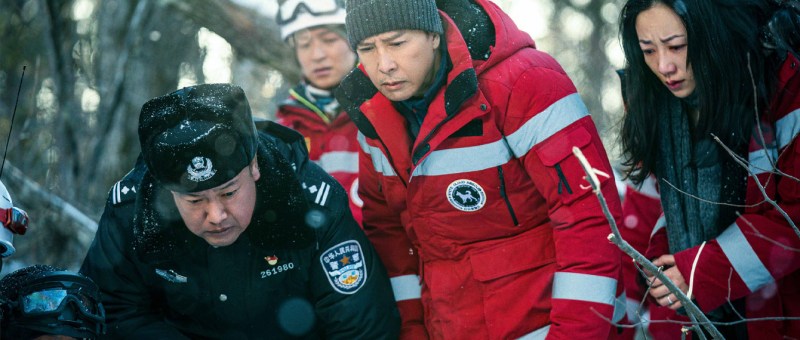
The police officers at the centre of Dai Mo’s Endless Journey (三大队, Sān Dàduì) are soon stripped of their badges, accused of excessive force contravening laws existing since the medieval era to prevent vigilante justice. Yet in someways that’s essentially what they end up doing, extra-judicial investigators with a personal vendetta rather than a pure-hearted interest in justice even if the victim of the crime weighs heavily on their conscience. 

Though the film plays into the recent trend in Sino-noir and popularity of mystery thrillers at the Chinese box office, it is surprising that a film that is at least subtly critical of the justice system, featuring police who break the rules and are sent to prison, was approved by the censors board even if the central message is one of heroism as Captain Cheng (Zhang Yi) doggedly chases his suspect all over China for several years. Then again, the hero of this true life case turns out to be China itself as Cheng is reminded that his search is unnecessary given that the fugitive, Eryong (Zheng Benyu), is sure to be captured by the burgeoning surveillance network of CCTV cameras then being rolled out across the country. Years later, it’s the system that allows Cheng to identify Eryong as his DNA and fingerprints throw up positive matches within seconds of samples being taken thanks to the nation’s DNA database. 

Even so, as the veteran officer, Zhang (Yang Xinming), reminds the rookie behind every major case there’s a ruined family broken by their loss which is one reason why he doesn’t relish the prospect of investigating one so late in his career. This particular crime is so heinous that it’s become front page news which means that they’ve also got their boss breathing down their necks to get it solved as soon as possible with the existence of Division 3 itself on the line. Cheng pops home for a matter of minutes to check on his wife and daughter, shutting down his wife’s suggestion that they get a security system for their windows on the grounds that it would be an embarrassing thing for a detective’s home to have. The reason she wants one is that the victim in this case had been a little girl of around their daughter’s age unexpectedly home alone when thieves broke in by climbing over their aircon unit and smashing a window. Finding nothing of value they raped and killed the daughter. 

After a police officer dies as a result of the investigation, the squad take things too far questioning the first suspect leading to his death which is how they end up disgraced and sent to prison. After his release, Cheng has lost his family, his home, his job and identity as a protector of justice yet his determination to catch Eryong is born more of his desire to avenge a friend than it is to prevent further crime. His fellow officers join him in the beginning, but during the endless searching each make the decision to move on for easily understandable reasons such as their marriages, children, and illness but Cheng cannot let go even when prompted by an old friend from the force who tells him they have this in hand though there is perhaps a subtle implication that the police force isn’t really doing enough otherwise Cheng wouldn’t have to be chasing Eryong all over the country. 

But haunted by reflections of his own face, ageing, at times dishevelled and hopeless, Cheng is also searching for himself and a means to reclaim the self he once was by vindicating himself as a policeman along with Division 3 in finally completing their mission. The ominous score by Peng Fei with its stinging strings adds to the noirish feel as does the perpetual inevitability of Cheng’s forward motion in the dogged pursuit of his prey, unable to rest until Eryong has been brought to ground. His quest robs him of his life, but there is an undeniable poignancy to it in Cheng’s inability to find himself outside of the chase only to be left with a moment of uncertainty no longer sure who he is or where he goes now, left alone and with no sense of direction in the absence of his quarry.


Endless Journey is in UK cinemas now courtesy of CMC.

International trailer (English subtitles)