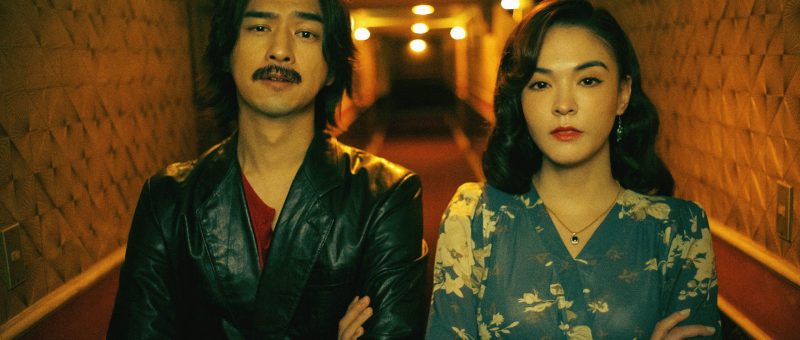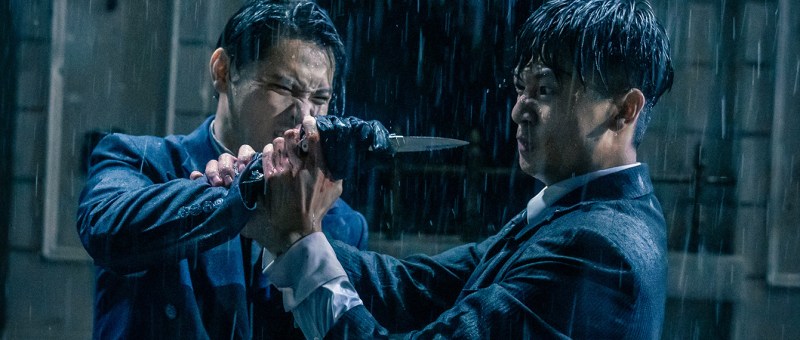
A Place Called Silence (默杀, Sam Quah Boon Lip, 2024)

Can the hammer of truth break the rock of silence? At the end of Sam Quah’s remake of his own 2022 film by the same name, A Place Called Silence (默杀, mò shā), you might ask if you really want to or if some secrets are best kept that way. Then again, Quah’s persistent focus on leaky roofs suggests the truth will out and that the slow drip of quietly collecting water will eventually erode even the strongest stone.

Though remade for the Mainland market, the film takes place in the fictional city of Doma which like many recent similarly themed films is ostensibly not located China but another area of South East Asia, the police uniforms and complex mix of languages and cultures strongly echoing those of the original Malaysian setting. This also extends to the increasingly Christianising imagery which leads back to a cult-like local charity that pedals a good book full of aphorisms landing somewhere between Confucius and Proverbs and are at best a superficial salve for the deeply rooted problems in what turns out to be a judgemental and classist society. 

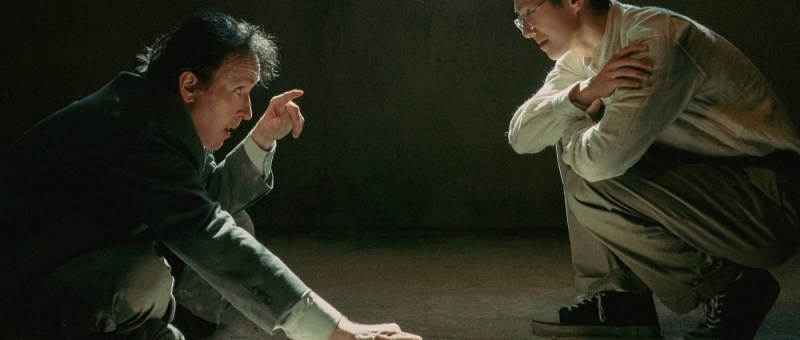
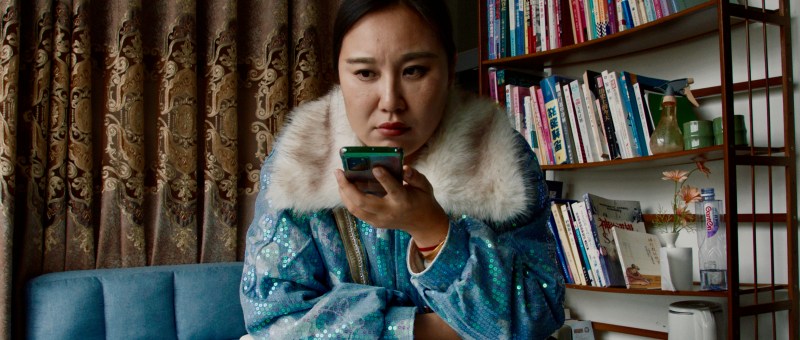
At least, the reason no one challenges the increasingly extreme behaviour of school bully and queen bee Angie is because she’s the headmaster’s daughter. Angie has been relentlessly tormenting Tong largely because she has a disability and had until recently been taught in the special needs class. According to her mother, Han, Tong has been mute since birth and it’s in an attempt to get her a better education that she’s given up her job in accounting and taken a position as a cleaner at the school. Her mother’s profession is also another reason for Angie to bully Tong, though she also accuses Han of having seduced her father which does not appear to be true though his later admission to an “abuse of power” that gives Han leverage over him puts a different spin on the situation and does not cast him in a very good light. 

Neither does the state of disrepair at the school which has a persistently leaky roof that is at least according to handyman Zaifu structurally unsound and may cave in any minute. Some of the blame is placed on a recent tsunami which caused mass loss of life, and the school seems to be proud of itself for having taken in pupils from another institution that was swept away though they don’t appear to have been welcomed by everyone. When a pupil ends up dying because of Angie’s bullying, the headmaster delays calling for help in part it seems to evade a scandal while planning to simply bribe anyone who tries to look into the matter. 

In short, it’s not difficult to see why someone may feel they’d have to take the law into their hands to break the persistent silence that protects the wealthy and the powerful from the consequences of their actions. Though, truth be told, not everyone is very interested in the disappearance of the girls, Han is driven to distraction when she suspects that Tong has been abducted by a serial killer with a very particular motive who also seems to be aware of some secrets she herself had been keeping. Then again there are a lot of wilful silences, like that of Mrs Xu who later snaps that the whole building knew Han had suffered domestic violence yet apparently did nothing help her other than maintaining superficial politeness by avoiding bringing it up. 

Silence seems to be the only refuge for the bullied whether in school or the wider world for there’s little good in speaking up anyway. Tong tries to help a bullied friend, but her mother stops her, wary of their own need for silence and that Tong will simply become the next target which of course she does. Terrible things are done in the name of protection, but sometimes silence is necessary too and a means of atonement if not a weapon against life’s unfairness. An ambiguous mid-credits sequence somewhat muddies the waters in its implications though perhaps a concession to the censors demanding that crimes must be answered, but Quah otherwise depicts a hellish society of violence and powerlessness in which the only choices are silent complicity or murderous revenge.


A Place Called Silence is in UK cinemas now courtesy of CineAsia.

UK trailer (Simplified Chinese / English subtitles)

Breaking and Re-entering (還錢, Wang Ding-Lin, 2024)

You go to the trouble of planning a massive heist, and then it turns out you have to put it all back again. The gang of theives at the centre of Wang Ding-Lin’s hugely entertaining crime caper Breaking and Re-entering (還錢, huán qián) brand themselves modern day Robin Hoods, pausing for a laugh when they claim to help the poor, “yeah, us”. Yet there is something a little suggestive about this particular gig as they find themselves hired for an inside job by an obnoxious bank chief who claims the most important thing in life is yourself and those around you are merely passengers to be jettisoned at will..

Chen (Wu Kang-ren) is a rich kid who inherited the family bank and thinks he’s hot stuff after studying abroad, speaking Mandarin like foreigner and peppering his speech with English. His big idea is a cryptocurrency called BST and his tagline is “Peace, Love, and Money” while ironically enough he is also claiming to run a charity to help the poor. It’s obvious he’s running some kind of scam and not altogether surprising that he’d plot to rob his own back and then have the thieves bumped off to keep them quiet along with the two employees he’s decided to frame for the crime. Unfortunately for everyone, one of his scapegoats, Shen Shu-wen (Cecilia Choi), is the long lost flame of chief crook Po-chun (Chen Bo-lin) who, having realised Chen plans to bump her off, comes to the conclusion his only option is to mess up Chen’s plan by putting the money back in the vault.  

Of course, Chen is a kind of gang leader too complete with his own chief minion, Hu, though at one point he simply shoots one of his guys in the back of the head after he complains that Chen that doesn’t really value him. By contrast, Po-chun’s gang is a close-knit family, a brotherhood of thieves founded on mutual solidarity and infinite loyalty. Chen’s philosophy maybe that the individual is all, but these men live and die for each other. Nevertheless, Po-chun has a problematic hero complex that sees him, as others put it, aways trying to “take responsibility alone”, sacrificing himself for the group rather than allow his fellow gang members to shoulder some of the burden. That’s presumably one reason he (un)intentionally ghosted Shu-wen after getting arrested and going to prison, convincing himself he was doing the noble thing by avoiding getting Shu-wen mixed up with crime but perhaps also ashamed and insecure unwilling to let her know he met her as part of a heist and his cover personality wasn’t real while never giving much thought to her feelings. Shu-wen spent the last five years looking for him which was apparently a primary motivation for changing her career to work in the bank.

Po-chun’s quest is really one of maturity, to stop being the lone hero and fully integrate into the group by sharing responsibility with the others rather than jump straight to self-sacrifice. As he says through the medium of a montage sequence, their secret weapon is teamwork which is how they’re able to fight back against the well equipped Chen and his minions when the reason Chen flounders is his arrogance and the indifference of his men. That is not to say there isn’t tension in the team, such as the unrequited attraction bruiser Wen-hao has for Po-chun that is quite definitely antagonised by the resurfacing of Shu-wen who seems to have figured out the group dynamics pretty quickly in addition to seeing through Po-chun’s strong man act. 

It’s the warm-hearted, lived-in relationships between the team members that give the film it’s charm along with the quirkiness of the elaborately planned reverse heist and its mild dig at corporate tyranny along with class-based inequality. But most of all what it seems to advocate for is a collective spirit and the triumph of the intellect over the pampered authority of rich kid Chen as Po-chun strategises a way out of his grasp while ending his influence and getting the girl. Wholesome and charming, the film makes the most of its surreal humour along with some hilariously placed reality gags such the infuriating slowness of a “high end automatic door” that ironically prevents a wealthy crook from fleeing the scene.


Breaking and Re-entering screened as part of this year’s New York Asian Film Festival and is also screening as part of the Taiwan Film Festival in Australia

Original trailer (English subtitles)

Suffocating Love (愛的噩夢, Liao Ming-yi, 2024)

Everything seems to put pressure on M, the cavalier hero of Liao Ming-Yi’s quirky exploration of confused male desire Suffocating Love (愛的噩夢, ài de èmèng). At heart, the problem might be that he doesn’t know what he wants, or he’s just someone who chases the dream of romance and is unsatisfied by its reality. Then again, the Chinese title of the film means something like “nightmare of love”, and it maybe that M (Austin Lin) is simply ill-equipped to deal the pressure of grown-up romance.

Conversely, the pressure he feels might be understandable given the nature of his relationship with Chia-chi, a manic pixie dream girl he falls for after meeting her through a book exchange app. Chia-chi describes herself as having “quirks” though at first they don’t seem to extend much past her vegetarianism, issues connected to a longstanding health condition, and her religiosity. But after dating for a year, M moves into her apartment and is confronted by a series of “rules” he must follow which make it clear that Chia-chi is controlling and possessive in the extreme. M must agree to send her updates every two hours to prove where he is with photographic evidence and reply to her messages right away. To begin with, M thinks it’s a small price to pay in the name of love, but eventually begins to feel the “pressure” of Chia-chi’s ever watchful gaze especially once another woman arrives on the scene. 

If these gender roles were reversed, we would be certain M should leave this abusive relationship though he seems to view it with a kind of nonchalance and only mild but increasing irritation. Ai-hsuan, a high school crush serendipitously turning up at work, offers the fantasy of escape to a more liberating kind of romance that’s tinged with teenage innocence even if Ai-hsuan’s problem is that she has cold feet about an impending marriage to a man she feels she’s grown apart from during their seven year relationship. Of course, this affair doesn’t place much pressure on him because for the moment it’s casual, an illicit bubble of freedom from Chia-Chi’s control in which he can be himself again. 

But is that what he really wants? After being transported to a strange dream realm, a bunny man harking back to the Alice in Wonderland reference that brought M together with Chia-Chi puts a gun to his head and forces him to make a wish at which point he wakes up with an other woman entirely, Kurosawa Yumi, a half-Japanese photographer and social media influencer who was his celebrity crush. The pair don’t live together, but Yumi seems to pop round to change his sheets and cook his dinner which is perhaps more reflective of a male fantasy than M realises even as he describes as her at the woman every man wants, What he wants is a woman who takes care of him domestically, and sexually, but demands nothing from him so that he doesn’t feel “pressured” by emotionally interacting with her or having to accept that she’s a whole, real person (which this Yumi at least obviously is not). 

At this point, events take a rather strange turn with implications of black magic and manipulation beyond the weird dream realm and its Alice-esque butler forcing M to play Russian roulette with his romantic desires. With a gun to his head, can he really say what he wants or will he always be chasing romantic fantasy? In truth, M’s tunnel vision has its share of latent misogyny and a fear of being “controlled” by women if in a less literal way than he wilfully submits to in his relationship with Chia-chi, a generalised conviction that each of his potential matches is manipulating him while it’s clear that his view of them is blinkered by his selfish desires so he’s incapable of seeing them as whole people or really giving much thought to their thoughts and feelings. Is he suffocated by love, or does he himself suffocate it in his reluctance to engage with the reality? In any case, the jury seems to the out on whether or not M is awakening from his nightmare of love or perpetually trapped inside it by external pressures he is ill equipped to bear.


Suffocating Love screened as part of this year’s New York Asian Film Festival.

Original trailer (English subtitles)

The Escaping Man (绑架毛乎乎, Wang Yichun, 2023)

“Life isn’t much better on the outside,” according to Sia (Zeng Meihuizi), the heroine of Wang Yichun’s deliciously ironic dramedy, The Escaping Man (绑架毛乎乎). Escaping men is in part what she’s tried but otherwise failed to do while constrained by the socio-economic conditions and entrenched patriarchy of the modern China. All of the men in the film are, as many call them, “idiots”, but all things considered it might not necessarily be such a bad thing to be even if their guilelessness makes them vulnerable to the world around them albeit in much different ways to Sia.

At least its this boundless cheerfulness and inability to see the world’s darkness that caused Fluffy (Eric Zhang) to be rejected by his status-obsessed mother (Yan Ni) who seems to have got rich by becoming what in charitable terms might be called a motivational life coach though others might describe her as a cult leader. She’s determined to get Fluffy into an elite primary school so he can “win at the starting line,” a buzzword in the contemporary society which basically means engineering privilege for your child so they can elbow other kids out of the way before the race even starts. The irony is rammed home by the fact that Sia, who works as the family’s live-in nanny/housekeeper also has a daughter named “Fluffy” who is one of China’s left behind children living with her seemingly bedridden grandmother in the provinces while Sia is in the city earning money to support the family having apparently divorced her daughter’s father. 

20 years previously, Sia’s mother had accused her lover of rape and had him sent to prison where he’s remained ever since having apparently gone along with the legal process in the mistaken belief Sia would eventually clear up this misunderstanding. She later later says the police wouldn’t let her and that she was never actually interviewed, but also continues to insist that they live in a “law-based society,” and nothing can be done without evidence. On his release, Shengli (Jiang Wu) comes straight to find his former lover in order to confirm that he did not in fact rape her and their relationship was consensual which she agrees it was. This determination is symbolic of his romanticism in continuing to believe in his dream of love despite all he’s been through, convincing himself he can start again with Sia while she continues to manipulate him with the almost certainly false promise of a happy joint future.

But then you can’t really blame her. A little way into the film, Sia is dressed in a white outfit very similar to the one worn by her boss when she goes to see Fluffy in a school play in which, at his own request, he played a tree. Sia is every bit as a accomplished and she has a warm and loving relationship with Fluffy which seems to elude his haughty mother. Later in the film she reveals that she came third in the national university exams but was prevented from going because she was born in a small rural province rather than the big city like her employer Mrs Mao. The fates of the two women are easily interchangeable depending on the circumstances of their birth while Mrs Mao continues to wield her privilege to ensure Fluffy can win at the starting line despite her resentment towards him for his lack of academic acumen or the things that denote conventional success in the modern China. Though he is cheerful and kind, she sees these qualities as actively harmful to his future success rather than embracing the little ray of sunshine he actively is.

Then again, Fluffy’s guilelessness also leaves him vulnerable which is why he cheerfully walks off with Shengli when he agrees to Sia’s kidnap plot and even rejoices in the grave-like pit they’ve dug to keep him in rechristening it as his underground fortress. He’s so nice that he doesn’t even realise the other kids are bullying him for being “stupid” and thinks they’re his friends, just happy to be included in the game. In this way, he and Shengli are alike, a pair of hapless fools living in a world that’s nowhere near as good as they think it is. The irony is that though Shengli perhaps begins to wake up to the realities of his relationship with Sia, his last wish for Fluffy is that he get into the fancy primary school and win at the starting line so he won’t end up like him. Suddenly it seems ironic that Shengli was a breakdancer because in the end he cannot break free of the prison that is the modern China. Filled with a darkly comic humour, the film is a fierce critique of the inequalities of the contemporary society and gentle advocation for the right to just be nice in world in which kindness has become a character flaw.


The Escaping Man screens July 26 as part of this year’s New York Asian Film Festival.

Soul (失魂, Chung Mong-Hong, 2013)

“Sometimes the things you see aren’t what they seem” the stoical father at the centre of Chung Mong-Hong’s supernatural psycho-drama Soul (失魂, Shī hún) later advises, for the moment creating a new, more convenient reality but also hinting at the mutability of memory and perception. Distinctly eerie and beautifully shot amidst the gothic atmosphere of the misty Taiwan mountain forests, Chung’s ethereal drama is at heart a tale of fathers and sons and the griefs and traumas which exist between them. 

When sushi chef Ah-Chuan (Joseph Chang) collapses at work, no one can figure out what’s wrong with him, finally suggesting perhaps it may be depression. His boss instructs three of his colleagues to take him back to his apparently estranged family to recuperate for reasons perhaps not altogether altruistic. In a near catatonic state, Ah-chuan is barely present offering no response to his name and staring vacantly in no particular direction. When he finally does begin talking, it’s to insist he’s no longer Ah-Chuan explaining that this body happened to be vacant and so he’s moved in while Ah-Chuan will apparently be off wandering for some time. Ah-Chuan, however, then abruptly stabs his sister Yun (Chen Shiang-chyi), who had travelled from Taipei to look after him, to death and is discovered covered in blood sitting calmly over her body offering only the justification that she was intending to harm him. 

Wang (Jimmy Wang), Ah-Chuan’s father barely reacts to finding his daughter’s corpse, merely rolling her under a bench and attempting to mop up the blood when a family friend, Wu (Chen Yu-hsun), who happens to be a policeman suddenly comes calling. Wang is either infinitely pragmatic instantly deciding there’s nothing he can do for his daughter so he’ll try his best to save his son, or else near sociopathic appearing to care nothing at all that Yun is dead. Nevertheless, realising that Ah-Chuan may be dangerous he takes him up to his remote cabin near the orchid garden and locks him inside while trying to figure out what or who this presence that has his son’s appearance might or might not be. As he later says, this brief time together is the most he’s spoken to his “son” if that’s who he is in years even if acknowledging that this Ah-Chuan is quite different from the old. Yet if it were not for the obvious fact that others see and interact with him we might wonder if Wang had simply conjured Ah-Chuan, projecting his own latent violence, guilt, and regret onto the figure of his son who is also in a way himself. 

Yet whatever Ah-Chuan now is he finds himself growing closer to the old man, feeling a filial responsibility towards him that he otherwise would not own. He contacts a “messenger” from “across the woods” to help his find Ah-Chuan’s wandering soul to tell him that his dad’s not doing so well, entering a space of dream and memory that reveals the trauma at the heart of their relationship that might in part help explain Wang’s apparent coldness. Just as the two Ah-Chuans begin to blur into each other, so perhaps to father and son, Wang prepared to go to great lengths to protect his only remaining child while, ironically, offering some harsh words to his son-in-law for not better protecting “the only daughter I have”. 

Chung hints at a kind fluidity of consciousness, each episode of “death” or “possession” accompanied by that of another creature, fish gasping and flapping around, a tired bug trying desperately to cling onto a leaf but failing, or a pair of snakes twisting themselves into a knot. Is Ah-Chuan merely experiencing a protracted dissociative episode under the delusion he is “possessed” while his essential selves “wander” the recesses of his consciousness or has someone else, a second soul, taken up residence in a body left vacant by a man who was in a way already “dead”. Wang in fact hints at this, telling the doctor that he had sometimes thought of Ah-Chuan as dead, or at least wondered if he might be seeing as they had long been estranged, suggesting that the Ah-Chuan of his heart and memory was already gone Wang believing himself to have killed something in him through his own violence when he was only a child. 

The two men mirror each other, growing closer yet also further apart as they make their way back towards the truth that might set them, metaphorically at least, free. Often viscerally violent not least in its jagged, abrupt cuts to black that feel almost like dropping out of consciousness or else waking fitfully with brief flickers of other realities, Chung’s eerie, ethereal drama ventures into the metaphysical but in its strangely surreal final scenes returns us to a more concrete “reality” in which the way home is found it seems only in dreams. 


Original trailer (Traditional Chinese / English subtitles)

Three Old Boys (三叉戟, Gao Qunshu, 2024)

In a surprising development of Chinese propaganda cinema, the once untouchable subject of police corruption has become a prominent feature albeit often in tales of righteous cops who stand up for real justice against the few bad apples who’ve allowed themselves to be corrupted by contemporary capitalism. Then again, its subject matter might explain why TV police procedural veteran Gao Qunshu’s Three Old Boys (三叉戟, sānchājǐ) has been languishing on the shelf since at least 2020 if it were not also for the inevitable effects of the pandemic. 

In any case, Gao’s film has a distinctly retro vibe with use of classic Chinese pop and very ‘70s soundtrack while its maverick cop heroes all dress in the fashions of 40 years previously. All born in the late 1960s, they are products of an even more authoritarian era and began their careers in the late 1980s. Like any other old cop movie, they bemoan the restrictions of the contemporary society and suggest modern notions of appropriate police behaviour prevent them from doing their jobs which has its degree of awkwardness on the one hand implying the modern police force is now not so hardline but also that it should be because that’s what gets the job done. 

As they contemplate retirement, the trio are offered positions as part of a new squad set up to tackle economic crimes and specifically international money laundering, the chief problem with being that the criminals had the effrontery to move the money out of China which is stealing from honest, hardworking, Chinese citizens aside from having already ripped them off with fraudulent investment schemes and good old-fashioned blackmail operations. Of course, as it turns out, the case has a connection to something that happened 20 years earlier and police officer Cui’s (Huang Zhizhong) desire for revenge on the gangster king pin, Huang Youfa (Jin Shijie), who caused the death of his younger brother murdered by gangster Donzgi who was then shot dead by fellow officer Big G (Jiang Wu). 

The convoluted narrative is heralded by a homeless man who takes the police chief hostage and mutters something about a sword of justice that sounds like something right out of a wuxia serial before being updated to the present day. The sword does actually make a reappearance and is wielded by Big G against a young whippersnapper out for revenge and to take care of what he sees as corruption in the earlier generation. When the trio are first put on the case, they are given a young rookie to help them because he’ll be able to do the tech stuff which the old guys probably can’t because their idea of policing was largely rooted in their fists and a capacity for intimidation. But this doesn’t really work with the youth of today who are for some reason fond of reminding them they aren’t their fathers so they don’t have to do what they say. This is particularly true of young thug Blondie who is caught between Ghost, the old gangster king, and Qing an upstart who is actually working for Huang but in pursuit of his own particular goals. 

Huang has his claws well and truly embedded in the modern society and has it seems manoeuvred favourable people into the police force ensuring that Cui and his team are neutered before they get the chance to do anything. Then again, Big G seems to have a very co-dependent relationship with Ghost who tells Blondie off for getting into a fight with him because cops are off limits. Nevertheless, the point is to dismantle Huang’s networks of influence to restore the integrity of the police force so they can enforce the law which exists for the protection of the people. It’s all rather confusing, but generally lightened by the intense action sequences designed by Yoo Sang-Seob which are also suitably retro but make good use of sword play along with a motorcycle chase. Perhaps ironically inspired by Hollywood hero cop dramas, the film ends with a regime change and a new photo being taken of the guys in their more modern uniforms receiving a commendation with the clear indication that something has been put to rest and the rebellion suggested by Qing’s attempt to steal power from the old quelled while the old boys seemingly decide that justice requires they put off their retirement just a little longer.


International trailer (English subtitles)

Hovering Blade (彷徨之刃, Chen Zhuo, 2024)

The funny thing about Hovering Blade (彷徨之刃, pánghuáng zhī rèn) is that it gets away with suggesting that the police won’t investigate properly and is quite unexpectedly sympathetic towards the hero’s desire for first hand retribution, albeit with the caveat that the police are seen to be investigating but possibly hamstrung by otherwise sensible legislation about the age of criminal responsibility. The Keigo Higashino novel on which the film is based had also been rooted in a moral panic that children were deliberately committing heinous crimes in the knowledge they couldn’t legally be punished for them.

The perpetrators in this case are a little older, though the argument is that if they had been properly charged for an offence committed in childhood they wouldn’t have gone on to commit further crimes in the belief that they are above the law. One of the men feels that in fact he is because it’s clear his wealthy and influential father often clears up his messes for him. A secondary issue hints at an anxiety about the nature of justice given that minors who commit serious crimes such as rape or murder receive much lighter sentences meaning they could be free to live a relatively normal life in just a few short years when their victims will obviously have no such opportunity.

Of course, that’s the point. The implication is that these young people were not fully capable of understanding their actions and could still be rehabilitated to become upstanding members of society. But that might not seem right to the families of their victims such as Li Chanfeng (Wang Qianyuan), a doting single father whose only daughter was raped an murdered by a pair of young hooligans with the assistance of their bullied friend. With judicial progress slow, he receives a tip off from the instigators’ underling and pays a visit to one of the other men who assumes he’s a burglar and attacks him leading Chengfeng to beat him to death with a baseball bat while a video of his daughter’s rape plays on the computer screen. 

The film presumably gets away with its hints towards vigilanteism by the fact the police are right behind him despite having received no tip off. The lead officer is however himself conflicted in beginning to doubt he can provide real justice because of the way the law responds to children who commit crimes and appears to sympathise with Changfeng to the extend he appears reluctant to catch him. The TV news and the people watching it also seem to understand and approve of his quest and desire for vengeance with a woman even helping him hide from the police if also urging him to turn himself in.

But the kind of justice Changfeng wants is incredibly direct. He doesn’t want these men off the streets because he fears for other people’s daughters, but wants to ensure they can’t live the share of life his daughter has been denied. The fact that, if legal justice is served, they’d get out and still be young men pains him without end and only death will answer it. Chased by the police, he begs them to kill him too to release him from his torment. 

Chen Zhuo keeps the tension high with a series of exciting action sequences including one though a disused water park near a moribund hotel the bad guys have been using as hideout. The reasons for their crimes are never explained aside from the ringleader’s dependence on his father, though they are assumed to be mere devilment and rebellion, an attempt to circumvent the system knowing they can’t be held legally responsible for their actions.

The familiar series of title cards at the film’s conclusion explain that the police caught all the wrongdoers while they have also lowered the age of responsibility though it wouldn’t have made any difference in this case. A flashback to another trio of teens suggests that they are emboldened by the fact the law can’t touch them, but the bigger issue is likely to be the way the system is corrupted by money and unequal access to justice. Changfeng is after all a lowly construction worker and is largely left on his own with nothing left to live for but vengeance. His quest to kill the killer is also a quest to kill himself and end his suffering. Zhuo follows him through the grimness of this everyday life, the squalid rooms and his general sense of emptiness but finally returns to the world of state justice and apparently compassionate police only sorry that they couldn’t do more to protect their fellow citizens from the “bad kids” of a changing society.


Original trailer (English subtitles)

Blind War (盲战, Chris Huo Suiqiang, 2022)

After losing his sight in an explosion, a former swat officer must battle his way to the top of a human trafficking network in a fictional South East Asian nation in Chris Huo Suiqiang’s action drama, Blind War (盲战 máng zhàn). The film opens with an assault on justice, but the wounded cop must in effect turn vigilante to protect his daughter from a failure of the judicial process and pervasive misogyny in a culture in which women and girls can be sold at will while the corrupt police force do nothing.

In fact, the local cop Rama (Dou Dou) is played mostly for comic relief and is otherwise incredibly stupid, determined to nail blind former cop Dong (Andy On), whom he knows to be the father of a murdered girl from a neighbouring nation, as the king pin of the drug smuggling and people trafficking operation. Dong’s struggle runs concurrently with a succession drama in which Zha Kun (Qi Shenghan), son of drug dealer McQueen who was blown up in the dock in the opening courthouse sequence, seeks to cement his authority over the gang and get revenge on Cena (Yang Xing) for the death of father while she wants revenge on Dong for blowing up her husband. 

Dong is in fact dismissed from the police force in disgrace due to public opinion which blames him for the deaths of his men who were killed by the gang when he decided to check out a funny noise in the courthouse though he was only supposed to be guarding McQueen’s post-trial extradition. Having lost both his sight and his status as police officer, he begins to lose his mind becoming violent and paranoid with looking after his teenage daughter Yati (Cheng Sihan) his only other outlet. When she’s taken by the people traffickers, he’ll stop at nothing to get her back though it has to be said is not particularly interested in the other women or stopping the gang and in the company of Cena who is using him for her own revenge plot becomes increasingly corrupted in his willingness to use violence. 

Luckily, Dong was blessed with superior hearing to begin with and with the loss of his sight is largely able to navigate the world by ear alone, giving him an advantage over his opponents even if he can’t see them. The film sets him up with almost supernatural powers, at one point using a conveniently placed climbing rope to jump from one window to the apartment below. The fight scenes are often impressive and well choreographed, especially one tortuous sequence in which Dong is attached to Cena by chain and his position dictates whether or not she’s dunked in the water, and in terms of scale display impressive production values for a low budget streaming film.

Nevertheless, Dong is often eclipsed by the villainess, Cena whose tragic backstory makes her claim to vengeance just as valid as Dong’s as she battles to take down the gang that raped and controlled her after being sold by her father to a Thai warlord as a child. The local police seem to be much more interested in the drugs than the people trafficking, and Rama’s unintentionally ironic cries that Cena’s bumped off the only female officer they have, which is presumably why he had a crush on her, bares out the misogynistic attitudes in play in which female life is cheap and the only way to escape subjugation to oppress other women, like Dragon King (Qian Zhiyi), or to become crazed and cruel like Cena.

In any case, though it was never really in question, Dong’s fatherly devotion is eventually proved by his knowledge of his daughter which eventually enables him to save her, with the help of his loyal friend Yun (Wang Hanyang) who doesn’t really seem to mind that Dong went rogue and endangered his life while he’s been hanging around in the shadows the whole time in case anyone needs him. Perhaps in a concession to the censors, it’s clear that Dong is also paying for his transgressions though through his vigilante action is able to reclaim his position as a father and protector despite his career setbacks and the loss of his sight.


Blind War is available now in the US on Digital and Blu-ray courtesy of Well Go USA

Trailer (English subtitles)

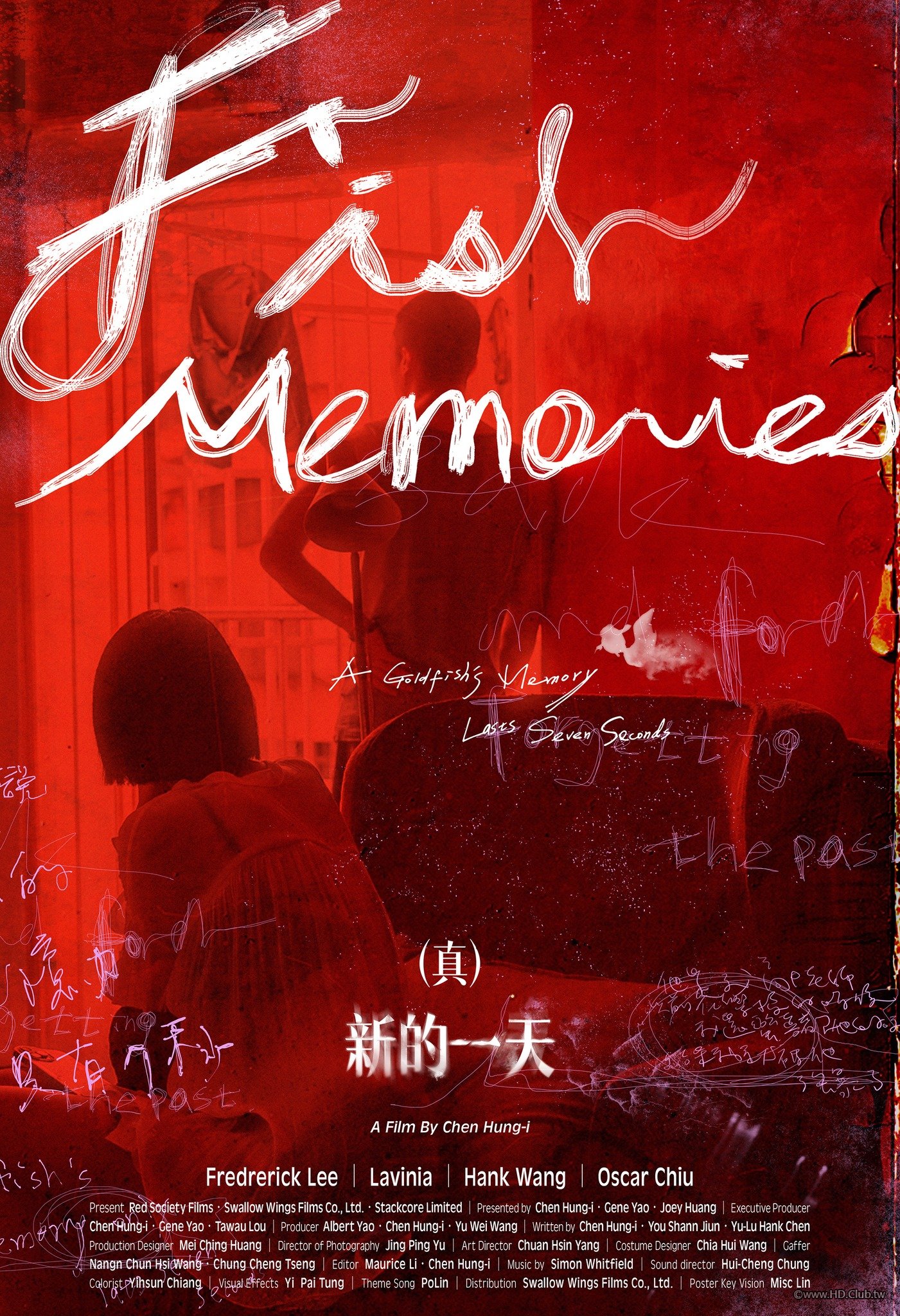
Locust (蟲, KEFF, 2024)

“Taiwan is doomed,” according to a middle-aged man taking the chance to emigrate in Keff’s debut feature Locust (蟲, chóng). A damning indictment of the island nation seemingly mired in economic disparity, political corruption, and generalised despair the film positions its mute hero as one who has been rendered silent but is caught between a life of subjugation and violent rebellion that may also in its way be a kind of conformity with the world around him.

Zhong-han (Liu Wei Chen) is not deaf but was left mute after a childhood injury and now works in a mom and pop noodle cafe which has seen better days. By nights, he supplements his income working as an enforcer for local gangster Boss Wang collecting debts on his behalf. But as his friend Kobe (Devin Pan) says, what’s the point of collecting money from people who don’t have any? Originally proclaiming himself a kind of Robin Hood, Kobe suggests they simply take it off people who do have the cash instead and particularly if they got it (in his view) unjustifiably such as through generational wealth or influencing. Zhong-han can sympathise with these goals, especially as it was a gang of influencers who made fun of his dancing at a local disco, but as time goes on it becomes clear Kobe is intent on a kind of class warfare that’s more about revenge against a classist society than sharing the wealth. 

You might think Boss Wang would have a problem with Kobe’s apparent freelancing, but he later rises through the ranks to become his right hand man in a pattern that gets repeated in which those who once opposed those in power acquiesce when they’re given the illusion of sharing it. Something similar happens to bumbling local political candidate Jia-bao who tries to stand up for Rong (Yu An Shun) when his noodle restaurant is threatened but is later seen drinking in a hostess bar with Boss Wang and slimy businessman Bruce.

Bruce’s Western name might immediately mark him as the villain, a globalising entrepreneur who sees a noodle shop like Rong’s as an embarrassment, a symbol of an older, less sophisticated Taiwan that no longer belongs in the current society. It’s to Bruce that Rong’s childhood friend and sometime landlord Wen sells the building in which he lives and works and it doesn’t take a genius to realise he probably hasn’t bought it to maintain old-fashioned local community charm. In the news item playing in the opening scene, the reporters discuss the opening of a new French bakery with a brand new pastry christened the Taiwan Eclair which has become the latest must eat item with the queues around the block symbolising both an aspirant internationalism and the vacuity of consumerist desires. Yet it seems that Zhong-han’s greatest wish is to be able to take his girlfriend out for fancy cake only neither she nor he can afford it as they are each locked out of the cake-eating classes. 

Immediately before the item about the French bakery, the news had discussed the protests in Hong Kong which continue to reverberate through Taiwan as it processes its own difficult relationship with Mainland China amid constant fears of military incursion. Wen points to the land he once owned and suggests it won’t be worth anything if they end up going to war. In a slightly awkward way, the film aligns Rong’s struggle with that of the protestors though less towards authoritarian oppression than the tyrrany of amoral capitalism and men like Bruce who wear fancy suits but behave like thugs. The film paints both struggles as futile, though noble, and suggests that there is really no way that Rong can win against a man like Bruce and might have been better to take what he could get when he could get it.

Zhong-han’s situation is equally hopeless. Though he tries to move away from his destructive gangster past, the world won’t let him forget and his options will always be limited by his disability, lack of education, and socio-economic status. Rong tells him that he’d always thought of him as a son and intended to leave the noodle shop to him when the time came, but like so many other things in his life that future seems lost to him now and no other presents itself. The film seems to offer a similar prognosis for Taiwan itself, a land of despair and futility in which “it won’t make any difference” has seemingly become a way of life. 


Locust screened as part of this year’s Cannes Film Festival.

I Love You, to the Moon, and Back (穿过月亮的旅行, Li Weiran, 2024)

The economic realities of a changing mid-90s China conspire against a young couple who find themselves stranded in different cities and only able to meet up once a month for a night of passion in a hotel in Li Weiran’s wholesome romantic dramedy, I Love You, to the Moon, and Back (穿过月亮的旅行, chuānguò yuèliang de lǚxíng). Based on a novel by Chi Zijian and themed around the Mid-Autumn Festival, the film has a quirky, nostalgic quality but also a degree of poignancy amid the absurd journeys the lovers make in pursuit of their love.

Gradual flashbacks reveal that Wang Rui (Hu Xianshu) and Lin Xiushan (Zhang Zifeng) married in their home village but like many youngsters of the day left soon after for the city in search of work. Forced to leave school by his farmer father who saw no point in education, Wang Rui quickly finds works in construction but Xiushan, who was also forced to leave school early, is unable to find anything in Shenzhen and eventually takes a job in a dumpling factory in Guangzhou where she lives in workers dorms. Their plight reflects the economic reforms which were taking place throughout the 1990s giving rise to a new, much more capitalistic society as embodied by the employers who give Wang Rui an extra day off for lying on TV that they’re not exploiting him, and an obnoxious businessman Xiushan has the misfortune to sit opposite on the train who talks loudly on his mobile phone about an important deal and even drips cigarette ash all over the old lady next to him justifying himself that he doesn’t want to damage his expensive suit. 

By contrast, Xiushan and Wang Rui are incredibly frugal shopping mainly at markets with Wang Rui padding a fancy pair of shoes that are too big for him but available at a large discount. They save all their money for their monthly meetups which, as they’re both living in communal dorms, take place in cheap motels. Xiushan tries to ameliorate their grimness by covering the stained mattresses with her own sheets featuring a pattern of large sunflowers and blue skies that help her feel as if they’re back in the village lying down together in a pretty garden. To this extent it’s clear that living in the city in addition to so far apart has corrupted the innocence of their romantic connection. Xiushan was warned by her brother that if she wanted to hear Wang Rui’s harmonica playing she should put off going out with him because the romance will die once he’s won her, and it’s true enough that Wang Rui never plays the harmonica for her anymore in part because they’re now quite expensive and he’d rather save up his money for another cross-country visit. 

Xiushan’s decision to buy one for him with some money from an unexpected windfall is then an attempt to rescue their romantic connection which is now under threat because of their geographical displacement and economic oppression. On the train, however, she runs into another man who plays harmonica and has apparently been arrested for an undisclosed crime. Out of compassion she asks the policeman escorting him to allow the condemned man to play a song which he does and reduces the entire carriage to tears hinting at other sad stories of separated lovers in modern China. Wang Rui encounters something similar in a one armed man caring for a wife from whom he was separated who has since become ill and is apparently in love with someone else. His cynicism causes Wang Rui to doubt Xiushan, so paranoid that another man may take a liking to her that he puts back the pretty dress he’d intended to buy as a present and gets the much more temporary gift of a bunch of roses instead.

These respective choices of items might signal where they are in their relationship, but there’s still a pureness to their love that can’t be destroyed completely. Both unexpectedly given an extra day off for the Mid-Autumn Festival they decide to make surprise visits to other’s cities only to perpetually miss each other, stuck travelling back and forth by train and only able to make contact via “their” set of payphones for as long as their phonecards would allow before fate finally, if briefly, smiles on them under the light of the autumn moon. Charmingly quirky and hopelessly innocent, the film nevertheless captures something of the chaotic undulations of the mid-90s society in which youth is on the move but love it seems is standing still.


Original trailer (Simplified Chinese & English subtitles)