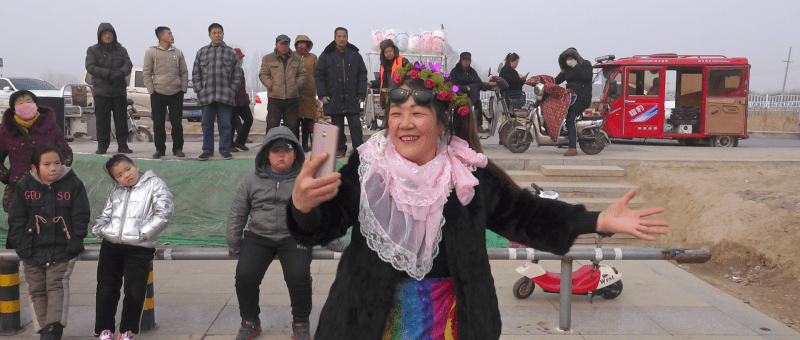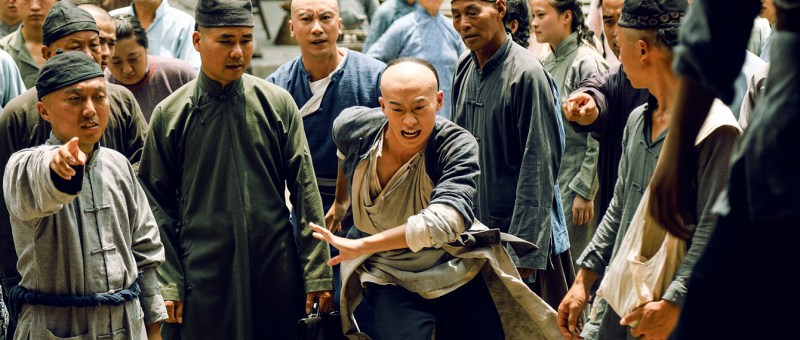
Lighting Up the Stars (人生大事, Liu Jiangjiang, 2022)

An immature young man recently released from prison for assaulting his girlfriend’s lover finally begins to grow up when unexpectedly saddled with looking after a grumpy little girl otherwise unwanted by her remaining family members in Liu Jiangjian’s feel good tearjerker, Lighting Up the Stars (人生大事, Rénshēng Dàshì). As much a tale of finding an accommodation with death and learning to move on as it is of the joys of forged families and unexpected connections, Liu’s drama is as the Chinese title suggests very much about the big things and what it takes to realise what they are. 

At this point in his life, San (Zhu Yilong) hasn’t been giving much thought towards the big things largely because he is consumed by resentment and a sense of inadequacy. He’s keen on getting back together with old girlfriend Xi (Janice Wu Qian) but sends her worryingly controlling voice notes and later becomes violent when she tries to break up with him before discovering that she is pregnant and plans to marry the guy he went to prison for beating up. “I can’t see you becoming a good father” she explains, regarding him as too immature to support the family she is keen to start. San is stung by the suggestion, as he is by his elderly father’s constant needling and refusal to hand the family funeral business over to him, but also has to concede she has a point. 

Nevertheless, there is a kind of tenderness to him as seen in his gentle washing of the body of an elderly woman still lying on the bed where she died while her son and his incredibly callous wife try to organise an express funeral so they can take their spoilt son to Beijing to participate in an academic competition. Meanwhile, little Xiaowen (Yang Enyou) watches while hiding in a cupboard before bursting out and demanding to know what they’ve done with her grandma. It seems that no one has taken the time to explain to Xiaowen exactly what’s happened or what’s going to happen to her now seeing as her grandmother had been raising her. Charging around like Nezha pointing her spear at everyone she meets, Xiaowen sets off to rescue grandma by chasing San’s van and eventually ending up at the funeral parlour which she then refuses to leave. Her uncle comes to fetch her but shockingly decides to leave her there with San and his two friends, asking them to look after her until they get back despite having absolutely no idea if they are suitable people to be looking after a little girl. 

These tears in the fabric of the traditional family are in some ways a result of a contemporary society. Xiaowen’s aunt point blank refuses to have her, insisting that she doesn’t want to expend resources on someone else’s child while blaming her husband for paying too much attention to his niece and not enough to their bratty son who lets them all down by humiliatingly failing the Beijing exam. Her hyperfocus is a reflection of the One Child Policy and rising consumerism as she seeks to express her status as a mother through her son’s success while simultaneously ruining their familial relationships with her constant nagging and hard-nosed practicality. Xiaowen’s henpecked uncle simply goes along with it for a quiet life, obviously very upset by his mother’s death but unable to defy his wife. San meanwhile is at odds with his father and sister who think he’s no good, will never be able to settle down and live a conventional life, and is incapable of accepting the responsibility of the family business. San may think some of this too, living with a sense of inadequacy feeling as if he doesn’t measure up to his absent elder brother, while seemingly floundering in his attempts to make something of himself. 

Through his relationship with Xiaowen he finally begins to come into his own in accepting the responsibility of fatherhood, caring for her both physically and emotionally while repairing his fracturing relationship with his own father and coming to terms with the past. He teaches Xiaowen about death and how to accept it, but also reminds her that her grandmother’s never really gone and will always be with her. Finally, San begins to think about the big things but about the small things too, planting stars in the sky as Xiaowen puts it as they prepare to get on with the business of living even in the presence of death.


Lighting Up the Stars streams for free in the US and Canada Jan. 22 to Feb. 5 as part of Asian Pop-Up Cinema’s Lunar New Year celebration.

International trailer (Simplified Chinese, English subitles)

Millennium Mambo (千禧曼波, Hou Hsiao-hsien, 2001)

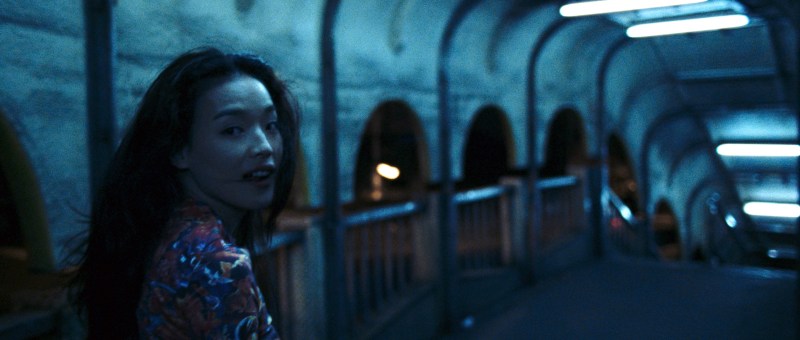
In the iconic opening sequence of Hou Hsiao-Hsien’s Millennium Mambo (千禧曼波, Qiānxī Mànbō), a young woman bounces enigmatically along a walkway, filled with joy and abandon and seemingly exultant in her freedom. Occasionally she glances back as if someone were actually filming her but then we start to wonder if this isn’t just her looking back at herself as she narrates her story in the third person, as if it happened to someone else because in a sense it did. “This happened 10 years ago,” she explains from the vantage point of 2011 looking back on the coming millennium and her own slow dance towards a new world. 

Then again, as she admits Vicky (Shu Qi) always seems to be drawn back into the orbit of Hao (Tuan Chun-hao), her no good, abusive boyfriend who is so controlling that he deliberately prevented her from taking her high school exams out of fear that she’d “move on”. Circling around Vicky’s memories, Hou often cuts to Hao in exactly the same position as he was before while Vicky has indeed moved on if not always in the direction she might have chosen such as the abrupt transition to her naked behind as a dancer at a nightclub where she is forced to work because Hao refuses to earn a living. When we first see her arrive at their apartment, Hao is sitting in the dark and we don’t even notice him until he gets up after Vicky enters the bathroom. Where her bedroom is colourful and cosy, bathed in soft light and demonstrating her ability to find small comforts in an otherwise harsh existence, Hao’s space is gloomy and ominous in its austerity. 

While Vicky tries to move into a more responsible adulthood, Hao extends Taipei clubland into their home frequently hanging out with friends while djing on the rig in his room. He takes drugs to keep his weight down to evade military service and gets into trouble with the law after pinching and pawning an expensive watch from his dad rather than trying to get job. He is the force which seems to keep Vicky trapped in a disappointing existence. By her own admission she finds herself returning to him as if she were in a kind a kind of trance, unable to escape though at times clearly despising him and perhaps herself too. Even Hao is fond of saying that they’re from different worlds, stuck on parallel orbits and otherwise incompatible. Even their apartment seems to be divided into night and day. 

Yet it’s also Taipei clubland that offers Vicky an escape route through the community she finds surrounding her amid the pulsing beats of millennial techno. A kindhearted gangster, Jack (Jack Kao), comes to her aid though he is later brought low by the recklessness of youth as his naive underlings bring their world crashing down around them. Jack takes her in and protects her with paternal affection, eventually inviting her to go on the run with him in Japan but immediately disappearing, just like the snowman she later describes Hao to have been in a moment imprinted on her memory. She carries Jack’s phone around with her unable to let go of him while recalling the scent of his abandoned jacket as she tries to make a decision in a snowy Tokyo just as she’d sworn to herself she’d leave Hao when she ran through her savings. 

Hou and cinematographer Mark Lee Ping-bing shoot all of this through the breeziness memory, following emotional logic rather than the literal as Vicki narrates to us events which are at odds with those occurring on screen and zig zags through the story of her youth before arriving at what seems to be a genuine moment of warmth amid heavy snow, perhaps finally “moving on” from the dissatisfying past to a future of her own choosing. Then again, her fleeting recollections amount to a constructed narrative, the story of the girl on the walkway who finally reaches the other side and disappears into the night either progressing into the new millennium or remaining trapped in a thousand year mambo of memory reliving the key moments of her life in a gentle oscillation, “as if under a spell or hypnotised” , unable to escape from the dangerous allure of nostalgia. 


Millennium Mambo is screening now at New York’s Metrograph and available to stream in the US via Metrograph at Home courtesy of Metrograph Pictures.

Trailer (English subtitles)

Terrorizers (青春弒戀, Ho Wi Ding, 2021)

A collection of youngsters is drawn into a dangerous web of simmering violence in Ho Wi Ding’s Taipei-set drama, Terrorizers (青春弒戀, qīngchūn shì liàn). The film may share its name with an Edward Yang classic, but it is very clearly society that is the terroriser in this instance from toxic masculinity and social conservatism to youthful isolation, video games, and pornography. The film seems to ask if it’s ever really possible to move on from the past and discovers that it may not be though some may be prepared to help carry your baggage as they travel towards the future so long as they know what’s in it. 

The youngsters are brought together by the ominous presence of Ming Liang (Austin Lin Bo-Hong), an isolated young man who barely speaks and spends all his time playing video games. It’s him we see dressed in full ninja garb attacking a young woman, Yu Fang (Moon Lee), with a katana at the train station only for her boyfriend Xiao Zhang (J.C. Lin Cheng-Hsi) to heroically throw himself in front of her to fight Ming Liang off. 

Later a dejected middle-aged woman Ming Liang befriends ironically tells him that guy who protects his girlfriend is a real man, working the wound of Ming Liang’s bruised masculinity and causing him to double down on his frequent insistence that he can protect women, though later he indeed does on separating precocious teen Kiki (Yao Ai-Ning) from the previously diffident best friend who tried to assault her. Having given up on Yu Fang he begins stalking a woman from her acting class, Monica (Annie Chen Ting-Ni), whose admittedly no good ex boyfriend he later beats up assuming it will buy him white knight credits as a protector in the shadows when in reality he’s a total creep who cloned the key to her apartment and has been hiding in her wardrobe later driven into a frenzy by the irony of watching Yu Fang and Monica, the two women he wanted, deciding they’d rather be with each other. 

Part of Ming Liang’s problem is a sense of parental abandonment, something he shares with Yu Fang whose mother abandoned her when young while her relationship with her father, who has recently remarried, has always been strained. After his parents’ divorce, Ming Liang moved in with Yu Fang’s politician father after being palmed off off by his own, the implication being that he has never really been shown parental love or given any guidance about how to live in the world save that he gleaned from the violent video games he constantly plays along with voyeuristic pornography. 

Yu Fang and Ming Liang are attempting to escape the legacy of parental failure, but Monica is left with a much more recent dilemma in her history as an early cam girl named Missy, a character created by her ex, David, who has since moved on. The more Monica tries to chase her dreams, the more her past comes out to haunt her with creepy men for some reason making a point of telling her they saw her sex tape while on some occasions actually playing it for her on their phone. Hoping to crush her spirit, David tells her that she’ll always be Missy, unable to escape the social stigma of having participated in a pornographic video, while she and Yu Fang are subject to a public shaming when a tape of them goes viral allowing the authorities to all but justify Ming Liang’s attack on Yu Fang on the grounds that she stole his girlfriend and therefore was in the wrong as if such feudalistic behaviour could ever be permissible. 

Yu Fang finds herself terrorised by the media storm of the 24hr news cycle, her new life with Xiao Zhang in jeopardy while she feels ever more isolated realising that her father cares less for her wellbeing than the optics in the light of his ongoing political campaign. Ming Liang meanwhile is forever reminding people that his father is rich and influential as if his misuse of his status is a direct rebellion against it and the parents he feels abandoned him. The fact that the news essentially reframes the slashing incident as a defence of heterosexual love, demonising same sex relationships, only emphasises the tyranny of outdated social prejudice and misogyny as Yu Fang becomes the villain and Ming Liang the victim entirely ignoring his predatory stalking of Monica and otherwise disturbing behaviour. It may not be possible to effectively move on from the past, overcome the legacy of parental abandonment and develop the ability to trust in others, but there may be less destructive ways to take the past with you if only in finding someone willing to share your burden. 


Terrorizers screened as part of this year’s New York Asian Film Festival.

Festival trailer (English subtitles)

Images: © changheFilms 2021

Barbarian Invasion (野蛮人入侵, Tan Chui Mui, 2021)

“Who are you?” the lead actress asks herself, at one point in several languages, as she tries to reclaim her identity from the library of roles which she must play key among them mother to six-year-old son and recent divorcee plagued by scandal. Tan Chui Mui’s meta drama Barbarian Invasion (野蛮人入侵), in which she also stars, is in part a search for the self along with the desire to assert ownership over a physicality that is otherwise uncomfortably shared but also an exploration of local indie filmmaking and the unique challenges faced by a female filmmaker in the South East Asian industry. 

Moon Lee (named for the Hong Kong star and played by Tan Chui Mui herself) was formerly a successful actress who married a high profile actor but has now divorced and is raising her six-year-old son Yu Zhou alone. Responding to a request from an old friend, she’s agreed to travel to the coast to revive her film career and has brought Yu Zhou with her as his father is filming in Japan and her mother has just had a knee operation. What Moon hadn’t realised is that she’ll be starring in a low budget action movie inspired by The Bourne Identity and that the director, Roger (Pete Teo), wants her to look convincing as a top assassin. Moon isn’t really convinced but begins to see it as an opportunity for personal growth training with the mysterious Master Loh (James Lee) who, like the wise old monk sitting outside, is fond of cryptic aphorisms.

Nevertheless, Moon’s attention is constantly diverted by Yu Zhou’s restlessness. He darts in to defend her while she’s trying to practice martial arts and runs away when left with a baby sitter, making friends with the daughter of a local cafe owner. She tells the assistant Cathy that when she was pregnant people would come up and touch her belly as if her body no longer belonged to her but had become public property. Moon resented being told that her baby was her greatest work, as if all of her other achievements paled in comparison to her motherhood and she herself had become nothing more than a conduit for her child’s existence. A mere 3D printer for the next generation, as she puts it. Yet what’s she’s doing is in effect an attempt to reintegrate body and soul. As the wise old monk tells her the body is not the prison of the mind but the mind a prison of the body. She achieves mastery over herself through embracing unconscious action. “What is “myself?” she asks Loh and finds the answer in the her that automatically raises its fist to her head in self-protection. 

But that doesn’t perhaps help her differentiate Moon Lee the woman from Moon Lee the actress and the various roles she’s played on and off screen. It seems there was a degree of scandal in her recent divorce that’s prompted her into a reconsideration of herself, while she is left feeling betrayed when Roger explains that the producers want to cast her ex Julliard (Bront Palarae) as her love interest and may even pick him over her if she refuses because he is still a big box office draw. Roger then gets a major offer of investment, but it’s from a Chinese actress who wants Moon’s part. Chinese producers want a Chinese star he tries to explain to an increasingly exasperated Moon who wonders what all this is for if she is so easily replaceable. 

In any case, an event which seems to transgress the borders between the real and the fictive throws her into the role of her amnesiac heroine who has only muscle memory along with the ability to speak several languages chiefly those spoken by roles she previously played such as a Burmese refugee and Vietnamese bride. Still, as her character begins to recover her identity she too comes into herself, brings some ironic closure to her relationship with her ex, and embarks on a somewhat mystic journey into the self all while ironically riffing on classic kung fu movie themes injected with a little contemporary pop culture. To the challenger the sword was everything, to Musashi everything was the sword Roger explains of a tale in which the elderly Miyamoto Musashi defeated a young rival through turning the world around him into a weapon, adding that to him while film was once everything everything is now film. And so it is for Moon in her ongoing psychodrama rediscovering herself among many others as she fights her way towards bodily autonomy and the reclamation of her authentic identity.


Barbarian Invasion screened as part of this year’s Five Flavours Film Festival and is available to stream in Poland until 4th December.

Original trailer (Simplified Chinese / English subtitles)

Remember Me (金門留念, Hung Chun-hsiu, 2022)

Some way into Hung Chun-hsiu’s documentary Remember Me (金門留念) a woman takes part in a military reenactment firing large scale artillery from a now disused military base. What’s ironic is both that what was once a frightening reality of ongoing warfare has now been commercialised as an attraction for tourists, and the fact that the woman firing the gun pointed at China on this technically Taiwanese island is herself Chinese. As the opening graphics point out, the island of Quemoy (also known as Kinmen) is geographically closer to Mainland China though governed by Taiwan and for much of its mid-20th century history at the front line of an ongoing ideological battle between communists and nationalists. 

In the stock footage often employed by Hung, newsreaders can be heard uttering phrases about “vile communists” and eliminating communist “scum” along with impassioned sloganeering about taking back the “motherland” and freeing its people from the yoke of communism. The island was under near constant shelling until as recently as 1979 and consequently largely populated by the military many of whom were ordinary young men conscripted for national service. The island has obviously changed a great deal since then, though one unexpected casualty has been the gradual decline of the island’s photo studios. Less due to technological than demographic change, the first of Huang’s subjects explains that given the precarity of life in Quemoy soldiers would have their pictures taken as often as once a week, often full body portraits they would send home to their families as evidence that they had not been severely injured. Kuo-ming has been operating his photo studio for 46 years now one of only two still operating on the island. Like the gun show, the military portraits have also become a kind of costume play, Kuo-ming handing out army uniforms and prop weapons for people to pose with often against a painted matte backdrop of a local lake or else Japan’s Mount Fuji. 

Meanwhile, the photographs taken at the time hint at the loneliness felt by the men who were dispatched to the island, many of them opting to have pictures of their wives or girlfriends inset alongside them. Those who had no girlfriends sometimes used a picture of a famous model or actress as a personal keepsake though one photo which goes unexplained is inset with the photo of another man in uniform. It has to be said that many of these photos have a homoerotic quality, especially the ones featuring shirtless well-built men striking muscle poses, while others are unexpectedly feminine in nature featuring the soldier in soft focus and surrounded by flowers. The ones from later years are also sometimes playful, featuring soldiers sitting in a model speedboat in or in more relaxed, artistic poses. A man who had his photos taken there while on his military service reads a letter he wrote to a woman he loved promising a photo, one in which he later inset her portrait, little knowing that she did not return his feelings and only kept the correspondence up in fear he might harm himself if she turned him down. Though he discovered on his return she had married someone else, the couple found each other decades later and decided to have a “real” photo taken together at Kuo-ming’s shop dressed in faux army uniforms. 

Having married a local woman and decided to stay on Quemoy, former solder Shan-yung also used to have his picture taken at Kuo-ming’s to send back to his mother. He joined the army voluntarily as his family was poor and was shocked to be sent effectively to the front line. After leaving the service, he and his wife opened a karaoke bar largely catering to military personnel and though his business still seems to be doing well, bears out Kuo-ming’s description of the economic changes brought about by decreasing militarisation. Even so he feels a sense of guilt that his life has taken him so far away from his family that he is no longer able to care for his parents in their old age while taking care of his in-laws on Quemoy.

Chen-mei, the woman staging the live reenactment of firing the artillery gun, expresses something similar while explaining that she came to the island from the Mainland for an arranged marriage and now works as a civil servant. She concedes that it’s a little awkward for some of the Chinese visitors realising that their nation had been firing shells at the island for three decades, but suggests that it’s all in the past while espousing a well-meaning but possibility reductive One China philosophy that they are all one Chinese family who no longer need to care about labels like “communist” or “nationalist” because they live in an era of peace. The gun, and the remaining military garrison, may be a reminder it might be dangerous to take that for granted given the rising rhetoric on the Mainland in response to the desire for a recognition of Taiwanese independence. A father explains to his son that the artillery gun was a loan from the Americans to help resist communism, but when the boy asks him how long is left on the lease the man can only look confused and reply that he doesn’t really know. In any case, Remember Me seems to be keener on remembering the rosier side of life on Quemoy under fire as old soldiers look back on their youth if grateful that goats now roam their barracks and the only shells to be found are the ones commemorating a war that for now at least has ended. 


Remember Me screened as part of this year’s San Diego Asian Film Festival.

Original trailer (English subtitles)
Stonewalling (石门, Huang Ji & Ryuji Otsuka, 2022)

A young woman finds herself caught between one generation and the next while dealing with an unexpected pregnancy in Huang Ji & Ryuji Otsuka’s pressing examination of contemporary womanhood, Stonewalling (石门, Shímén). Faced with an impossible situation she makes a decision that is in someways very old-fashioned and others very modern but certainly as another young woman describes it, very naive. Realising she has very little control over the decisions of her life the woman struggles to reaccommodate herself to the contradictions of the modern China. 

At 20, Lynn (Yao Honggui) has moved to the city from her home in provincial Changsha and is studying to become a flight attendant. Pressed to make money to support herself and pay off her mother’s debts, she’s taken up part-time modelling work and is dating a fellow student who seems to be something of a social climber constantly pressuring her to improve her English and mingle with the internationalist set. Hoping to earn more money she finds herself acting on a suggestion from an acquaintance to sell her eggs and discovers she is pregnant. While the boyfriend pressures her into an abortion, she isn’t really sure and decides to return to her parents’ home. One there she discovers her mother is struggling to pay off compensation payments after a mistake at her obstetrics clinic resulted in a woman losing her baby. Rather childishly Lynn suggests that she carry her child to term and then offer it to the other woman in return for the cancellation of the debt. 

It’s a very feudal solution to a very contemporary problem. Lynn does not see it as selling her baby only a way to overcome the futility of her situation. Everyone around her tells her to have an abortion as if it were as simple as having a tooth pulled and there’s really not much need to think about it. The film seems to ask if the silent consequences of the three decades of the One Child Policy have profoundly affected the way people think about motherhood and childbirth, normalising abortion to the point of becoming numb to its emotional dimensions. Lynn tells her mother that she does not want the baby to die inside her, having apparently witnessed an abortion going wrong at the clinic though her mother only tells her not to be so silly. She knows she can’t raise the child herself and accepts the arguments of others that early motherhood will derail her life and prospects, but wants the child to survive and naively believes both that it will help heal another woman’s pain and be raised in a loving family with better prospects than she could ever give it. 

But it’s obvious that the man she’s dealing with who claims to be a cousin of the woman who lost her baby is in no way on the level and most likely intends something quite different for the child perhaps selling it on in China’s child trafficking network, another unintended consequence of the One Child Policy. He suggests the cruelest solution of all, that Lynn and her family should raise the baby for a year and then part with it to him which aside from its emotional implications destroys the point of giving it away in the first place in that Lynn needs to keep her pregnancy secret to avoid the social stigma of unwed motherhood while returning to her studies after giving birth. Meanwhile, through the contacts she made in egg donation Lynn finds herself shepherding other young women many of whom are from the persecuted Uyghur minority to shady appointments with men in hotel rooms who quiz them on their physical health and mental attitudes in what seems to be a matchmaking/surrogacy service. In any case, these women seem to have little value outside of their ability to bear “healthy” children. “What is the standard for health?” a Lynn asks the middleman only for him to tell her that he’ll know it when he sees it, leading her to fear he may reject her child once it’s born leaving her quite literally holding the baby. 

Left with little means of support, Lynn is forced to continue working throughout her pregnancy even though medical personnel imply she is malnourished and should make sure to get plenty of rest while eating a protein rich diet. The only reason she is given such care at all is ironically because of the accidental commercialistion of the baby, the middleman willing to fund its development in return for the end product. Lynn’s mother tries to reason with the middleman to take the baby as soon as its born fearing that he will change his mind or that Lynn will be unable to go through with it after bonding with her child but does not really appreciate how little power they have in this situation. Using shady connections, the middleman has engineered it so that Lynn is getting medical care as “Sylvia”, the woman whose baby died and whose name will appear on its birth certificate leaving Lynn with no legal right to it anyway. 

Her mother, meanwhile, trying to take agency over her own life has been sucked into an obvious pyramid scheme selling fancy skin cream and has gained a false sense of success in her new business enterprise, arguing with her husband and wanting to close down the outdated maternity clinic altogether. Lynn struggles with English but is caught amid the dichotomies of the modern China, translating between standard Mandarin and the local Changsha dialect while trapped between the need to support her parents and providing for the next generation leaving little room for herself, her own hopes and desires. A grim picture of life on the margins of the contemporary society, Huang and Otsuka’s pressing drama ends with rain and hazard lights along with a helpless sense of abandonment and little hope in sight.


Stonewalling screened as part of this year’s San Diego Asian Film Festival.

Original trailer (English subtitles)
A Confucian Confusion (獨立時代, Edward Yang, 1994)

A collection of conflicted urbanites find themselves lost in a rapidly changing society in Edward Yang’s bitterly ironic social drama, A Confucian Confusion (獨立時代, dúlì shídài). Floundering in the post-martial law society, they struggle with the new freedoms of the democratic future torn between the blind obedience of the authoritarian past and the risky business of having to figure out who they are and what they want in a Taipei that seems to have its lost soul to rapidly advancing consumerism. 

Much of the confusion is centred on Chi-chi (Chen Shiang-chyi), a demure young woman admired by all for her radiant quality yet herself under-confident and worried that on some level others might resent her assuming that her genial persona is in someway an affectation. Chi-chi’s tragedy is that she is genuinely nice and relatively authentic in comparison to those around her only she’s beginning to realise that she doesn’t really know herself and has no idea what it is she really wants. “I didn’t have views of my own, it doesn’t mean I agreed with you” she eventually fires back at her ultra-conformist boyfriend Ming (Wang Wei-ming) after he takes the step of resigning for her when she expresses reluctance to accept a job offer set up by his father’s girlfriend.

“You weren’t like this before” Ming continues to berate her, telling another woman, Feng (Richie Li), that feels he no longer understands the changes in Chi-chi’s mind. A symbol of old school patriarchal thinking, he attempts to overrule all her decisions while frustrated that she can’t see he’s only acting in the best interests of her future. Ming thinks that everyone being the same is a good thing, determined to follow the conventional path for a “stable” life as a civil servant but carrying a degree of personal baggage that his politician father was once sent to prison for corruption. He tells Feng, the one person most at home with the duplicities of the modern society, that he chased Chi-chi because she most conformed to the image of his ideal woman which does rather imply that he preferred her to appear as an extension of himself not having any particular thoughts or opinions of her own. The realisation that she does indeed have individual agency seems to destabilise him even as his allegiance to the social conformity of the authoritarian era is shaken on witnessing the hypocrisy of contemporary corporate culture in which his straight-talking friend (Chen Yi-wen) is forced to pay for Ming’s own mistake. 

It’s the hypocrisy which seems to weigh heaviest on the mind of a struggling writer (Hung Hung) who finds it impossible to accept the democratic revolution and has given up the cheerful romance novels which made his name to write “serious” books. Now living in a tiny apartment without electricity, he has become estranged from the wealthy woman he married as a student (Chen Li-mei) who defied her family to turn down an arranged marriage just to be with him. She now hosts a fairly conservative TV programme aimed at housewives pushing family values which is one reason it would be a problem if their separation became public knowledge. The man she was supposed to marry, Chin (Wang Bosen) the foppish son of a business associate of her father’s, is now engaged to her sister, Molly (Ni Shu-Chun), and mainly conducts his business in Mainland China looking ahead to a kind of “One Country, Two Systems” future which may in a sense be a return to a more authoritarian society albeit one fuelled by corporatism. 

In any case, more than anyone Chin is caught between old and new desperately trying to make his engagement to Molly work by hoping they will eventually fall in love while she is more or less just going along with it while convincing him to continue investing in her failing business. In this very confusing environment, communication is never direct. Molly, who is also a childhood friend of Chi-chi and Ming, never really discloses her feelings but according to Chin’s sleazy business manager Larry (Danny Deng) is too “unique” for the times in failing to appreciate the necessity of emotion as a corporate tool. Yet she goes along with the arranged marriage unable to fully break with feudal norms as her much more conservative sister had ironically done even if she is no longer happy with her choice. As is so often pointed out, anything can happen anytime. Sudden reversals and accidental revolutions are just a part of life. 

Conformity had perhaps been a way of coping with life’s uncertainty, but in its way only created more misery and resentment. Ironically the radiant smile Larry so admires in Chi-chi is also the symbol of a societal defence mechanism. The angrier you get, the wider your smile, Larry had tried to teach Chin who nevertheless remains the most “emotional” of all the protagonists, eventually breaking with feudal past in ending his engagement to Molly after randomly falling in love with a voice on a telephone. “We’re all so lonely” Ming admits, disillusioned with his life of dull conformity and edging towards seizing the new freedoms open to him to finally be “independent” no longer bound either by lingering Confucianism or the authoritarian past. The writer’s last book had followed Confucius as he found himself in the modern society but discovered that the people no longer believed in his sincerity, seeing him as a kind of motivational speaker and wanting to learn the quick fixes of his philosophy. Yet in meeting his own destiny, the writer hits on an epiphany that the best weapon against hypocrisy is to live honestly and authentically. Finally integrating into the democratic future, each is finally becoming accustomed to making their own decisions but informed by a kind of mutual solidarity in navigating the still confusing landscape of a changing Taipei.


A Confucian Confusion screens at the Museum of Photographic Arts on Nov. 11 as part of this year’s San Diego Asian Film Festival.

Restoration trailer (Traditional Chinese / English subtitles)

The Wild, Wild Rose (野玫瑰之戀, Wong Tin-lam, 1960)

A free-spirited nightclub singer’s dreams of love are shattered by fragile masculinity and an unforgiving society in Wong Tin-lam’s take on the classic opera Carmen, The Wild, Wild Rose (野玫瑰之戀, yě méiguī zhī liàn). Where similar films of the era may paint the heroine’s plight as punishment for her subversion of societal norms, Wong’s musical noir implies that perhaps she was too good, too pure-hearted for the increasingly selfish and judgemental society around her while the man she loves is simply too weak to accept her transgressive femininity. 

It’s with the man, Hanhua (Chang Yang), that we first enter the world of the EW Ritz cabaret bar. An “elite” English graduate, Hanhua has fallen on hard times and unable to find teaching work has been forced to take a job he sees as sordid and degrading as a pianist in a nightclub. He and his teacher fiancée Suxin (So Fung), literally the girl next-door, joke about it outside, Hanhua asking her if she’s worried about all the “pretty bad women” in such establishments and pointing at his engagement ring as an amulet of protection against predatory femme fatales. Once inside, however, he’s instantly captivated by the alluring singer, Sijia (Grace Chang), who nevertheless takes against Hanhua because unbeknownst to him he’s displacing her regular piano player, Old Wang (Lui Tat), who’s being let go by the greedy boss for showing up late because his wife is seriously ill. 

Unable to accept such callous behaviour, Sijia tries to use her position to speak up on Wang’s behalf and almost loses her own job in the process while irritating her stage rival and the boss’ squeeze Meimei (Shen Yun). While Meimei sings a quiet romantic ballad on the dance floor, Sijia embarks on a crowd-pleasing, gender-bending routine in the bar which proves both that she is the star in this establishment and that she can bend the crowd to her will turning them on whoever she sees fit. After a fight breaks out, Hanhua finds himself physically restraining Sijia to prevent her from stabbing Meimei with an icepick. Though this originally annoys her, Sijia is quite clearly turned on watching Hanhua fight off all of the other men who rose up to defend her honour. Once he is wounded, she again asserts her authority by calling them off and proceeding to flirt with Hanhua who leaves with Suxin vowing never to return. 

But as Old Wang had said, it’s tough to find a job these days and faced with his mother’s excitement about his new career prospects Hanhua has no choice but continue working at the Ritz. We can perhaps tell something of Hanhua’s background from the interior of his home which though modest has a large classical portrait on one wall and is otherwise neat and well organised. He evidently envisaged a conventional middle-class life for himself and is humiliated to have been reduced to a mere piano player in a backstreet bar, the kind of place that he sees as sordid and dangerous and would not ordinarily think of himself visiting. He sees Sijia in much the same way but perhaps stops short of admitting her danger, refusing to look at her or only with contempt while furiously denying his barely controlled desires of the kind which were perhaps unleashed by the fight at the bar. 

Yet all the qualities which attract her to him are the ones he eventually wants to destroy in her rebellious goodness and refusal to follow the unjust rules of her society. She tells him point blank not only in her song but repeatedly to his face that she is a fickle woman who believes there are no good men and is essentially in this only for a good time for as long as it lasts. In fact, her interest in him largely stemmed from a bet with a guy at the bar that she couldn’t seduce him in 10 days, stung by his rough rejection of her after the fight. But Hanhua is too conventional a man to understand or accept her. He gives in to his desires after discovering that she slept with a rich man only to get the money for a life saving operation for Old Wang’s wife, witnessing her self-sacrificing goodness and therefore deciding that she is “worthy” of him after all. Ultimately he expects her to play the role of a conventional housewife, refusing to allow her to continue singing in nightclubs even while he is unable to find another job having served time in prison for bludgeoning her abusive ex. His fragile masculinity had also caused him to blow up at Suxin when she went to the headmaster at her school and asked him to give Hanhua a less degrading job, humiliated to have a woman beg for him just he is humiliated to be supported by Sijia and especially by her doing a job he thinks is somehow improper. 

It is not Sijia who ruins Hanhua, but Hanhua himself and the toxicity of conventional social codes that feed into his sense of resentment. His obsessive desire to possess Sijia, to dominate and tame her, drives him to drink and uselessness to the point he completely degrades himself, pathetically pleading with Sijia not to leave, prepared to allow her to return to work or even take other lovers if only she does not abandon him. Sijia meanwhile is in a sense tamed by her love for Hanhua in that she decides that love is sacrifice, that she must live a more conventionally proper life as Hanhua’s wife and eventually that she must separate from him in order to preserve his future. In this she is redeemed in the eyes of Suxin and Hanhua’s mother who realise that she is a good woman who genuinely cared for Hanhua, but is finally done in by her goodness. Her morality cares nothing for properness and all for humanity, her kindness to Old Wang and her best friend eventually repaid while all Hanhua can think of is a redemption of his masculinity through violence driven just like Don José to the peak of madness in obsessive love. But there’s more than just inevitable tragedy in Sijia’s fate, there is a deep sense of injustice and that Hanhua’s actions were as much about stifling her transgressive goodness as they were about vindicating himself as a man which in any case is only pathetic in its unrighteousness. Masterful in its musicality, Wong’s romantic noir positions its heroine as dangerous but only because she is better than the world around her and the world around her knows but does not want to see. 


The Wild, Wild Rose screens in Amsterdam on 27th/29th/31st October as part of this year’s Imagine Fantastic Film Festival.

Shiro – Hero of Heroes (諸葛四郎 – 英雄的英雄, Lin Yu-chun & Chuang Yung-hsin & Liu Yu-shu, 2022)

An earnest young man, grieving son, and feisty princess team up to stop the evil Demon Society from becoming all-powerful rulers of their land in an adaptation of classic Taiwanese comic book Shiro – Hero of Heroes (諸葛四郎 – 英雄的英雄, Zhūgě Sìláng – yīngxióng de yīngxióng). Created by Yeh Hong-Chia in the late 1950s, the series has become a nostalgic touchstone for generations of children and is about to reach new ones with a feature-length 3D CGI animation following Zhuge Shiro (Wang Chen-hua) on another exciting adventure to reunite the magical Dragon and Phoenix swords and stop their awesome power from falling into the wrong hands. 

Unfortunately the Dragon Sword has already been lost, much to the king’s regret. When Demon Society raid the palace during a festival and place a mask over the princess’ face, the king puts the land on lockdown and summons the nation’s locksmiths to try and free her only to realise there’s no way to unpick Demon Society’s diabolical locks without giving in to their demands to surrender the Phoenix Sword. Luckily hero of heroes Zhuge Shiro just happens to be in town on the invitation of his locksmith uncle and pledges to help the king salvage his fracturing relationship with his daughter who resents his hesitation to exchange the sword for her wellbeing and make sure Demon Society doesn’t get its hands on the swords’ unleashed power. 

Though this is in many ways a tale aimed at younger audiences, the incredibly witty script moving to the rhythms of traditional opera includes a series of meta jokes for grownups from a silly reference to a limited edition dart and workplace exploitation to subtle digs at societal authoritarianism along with a small cameo from a wandering cartoonist whose work is censored by the powers that be. Having faced Demon Society several times before, Zhuge Shiro is a pure hearted young man wise beyond his years with a strong sense of justice. His first act of goodness is standing up to an officious guard, General Shan, who won’t let a worried father with a sick child enter the town to find a doctor, while he soon earns the respect of the king through his compassion and emotional intelligence in trying to explain the king’s dilemma to the princess. He does however engage in a little sexism which the princess herself is quick to push back against, pointng out that she’s a skilled fighter herself and does not need protecting but will be joining him on this mission whether he likes it or not. 

Similarly, Zhuge Shiro gains another comrade in Zhen Ping (Chiang Tieh-Cheng) who is originally under the misapprehension that Zhuge Shiro is responsible for his father’s death only to later realise it was all the fault of Demon Society. To reunite the swords and save the kingdom, the trio find themselves battling through the villain’s booby trapped lair and discovering that the swords’ power lies in a different place than they first might have assumed, one Demon Society is largely unable to appreciate and therefore to benefit from even if they had managed to hold both swords in tandem. In other words, it’s brotherhood and justice which eventually enable the trio to prosper while the bumbling masked demons only make fools of themselves in their intense greed and villainy. 

Staying close to the aesthetic of the comic book, the film’s highly stylised designs closely match those of the original characters from back in the late 1950s if perhaps a little cuter and rounder in keeping with contemporary CGI animation while it moves to a comic beat inspired by traditional opera interspersed with a few song and dance numbers and exciting martial arts fight scenes as the trio face off against the minions of Demon Society while standing up for justice. Just as the king learns the real meaning of treasure, the trio discover a brotherly bond and a new mission to rid the land of the evils of Demon Society while accepting that even villains can change their ways and should be allowed a chance to redeem themselves, and those who may seem obviously villainous might be alright on the inside. In any case, Zhuge Shiro embarks on what could be the first of many adventures in charming style taking down the bad guys with good humour and righteousness fuelled by the power of friendship.


Shiro – Hero of Heroes screens in Chicago on Oct. 23 as part of the 15th season of Asian Pop-Up Cinema.

Original trailer (English subtitles)

Go Through the Dark (盲弈, Pu Yunhong, 2021)

“You should rely on yourself not on others. Success comes from your own efforts” a father tells his son, yet his words have a particular irony given the complicated nature of their relationship. Pu Yunhong’s mostly observational documentary Go Through the Dark (盲弈, máng yì) follows an 11-year-old boy who unwittingly became a social media star after winning a regional Go contest despite the fact that he is blind. At first Guanglin’s father seems supportive and caring, yet the boy often appears to be on the brink of tears and is near silent giving no real indication whether or not he actually likes the game of Go or is only doing it to please the father who has told him he has no other future solely because of his blindness. 

In any case, Guanglin has already achieved level four status after only two years and at a relatively young age even for a sighted child who devoted themselves solely to studying the game. Using a specially adapted board that allows him to play by touch, he seems genuinely heartbroken on losing out in the final match of a tournament, crying into his father’s shirt, but later events lead us to wonder if it’s merely disappointment that has him so upset or guilt mixed with fear in being unable to live up to his father’s expectations. It seems that Guanglin’s father has decided that his future lies in becoming a professional Go player, explaining that he had previously considered sending him away to train as a masseur expressing a rather outdated and prejudicial view of blindness in insisting there are no other possibilities for him, but there is an ongoing conflict of interest that sees him attempt to micromanage the boy’s affairs as if making a bid for vicarious success rather than earnestly supporting his son in order to see him fulfil his dreams. 

He first explains that they were offered a place at a Go school in Beijing but then that the school messed them around, accusing them of exploiting Guanglin to boost their image while having no real intention of helping him. Then they travel south to Xiamen following an offer from Mrs Wang who provides them with an apartment and offers to train Guanglin for free. But it’s still not enough for his father who complains endlessly that he feels ripped off and exploited, irritated by Mrs Wang’s suggestion he help out at the school while she seems to have some concerns about their potentially toxic co-dependency. Though his father is always pointing out that Guanglin will have to become independent someday, he takes frequent steps to prevent him doing so. Apparently suffering from severe separation anxiety, Guanglin does not attend school and is getting no conventional education nor does he have the opportunity to mix with other children of his own age and has poor social skills. Mrs Wang is concerned that he never chooses his own food to eat but accepts only what his father gives him, while there is something worrying in his tendency to simply eat a few bites and declare himself full with his father then finishing off his meal. 

The cause of Guanglin’s blindness, according to his father, is malnutrition caused by their poverty though Mrs Wang in particular is convinced that he may never have attempted to get proper medical care for his son. When she tries to encourage him to take Guanglin to a specialist who suggests that it might be possible for him to regain at least some of his sight, his father becomes indignant. His anxiety may be born of a genuine fear that surgery may make things worse or cause additional injury because of the affects of the anaesthetic but behind it all there’s the uncomfortable suggestion that he simply doesn’t want Guanglin to be cured because that would reduce his dependency on him while rendering him “ordinary”, no longer the blind Go player with no guarantee that he can learn to play the game the way that others play it. 

Even when his father puts him in a school in Beijing, the coach seems to agree with him that it would be “better” if Guanglin could delay the treatment on his eyes so the school would have the cachet of training the blind Go champion. Yet when he had put him in a school in his hometown, the coach there had humiliated Guanglin in front of the whole class calling his moves “cabbage-headed” and unacceptable for someone at his level. “No one wants to play with a loser” his father cruelly tells him, as Guanglin wanders around on his own rejected by the other kids who are mostly reading or playing video games yet often appearing at his most happy running around and standing behind his classmates listening to them play even when not included. Though often withdrawn, stressed and close to tears, Guanglin does his best without complaint while his father runs him down and rants about people not supporting their dream. It may be that pretty much everyone is exploiting Guanglin in one way or another, no one really thinking about his quality of life or future independence, but he is left with nowhere else to turn and only Go to cling to as an uncertain lifeline towards a better future. 


Go Through the Dark screens on 21st October as part of Cambridge Film Festival.

Original trailer (English subtitles)