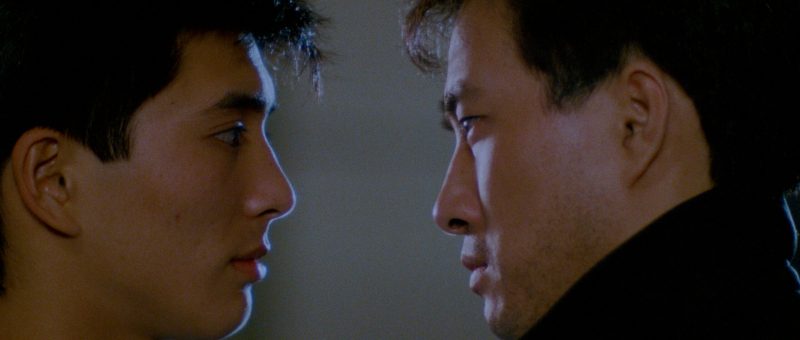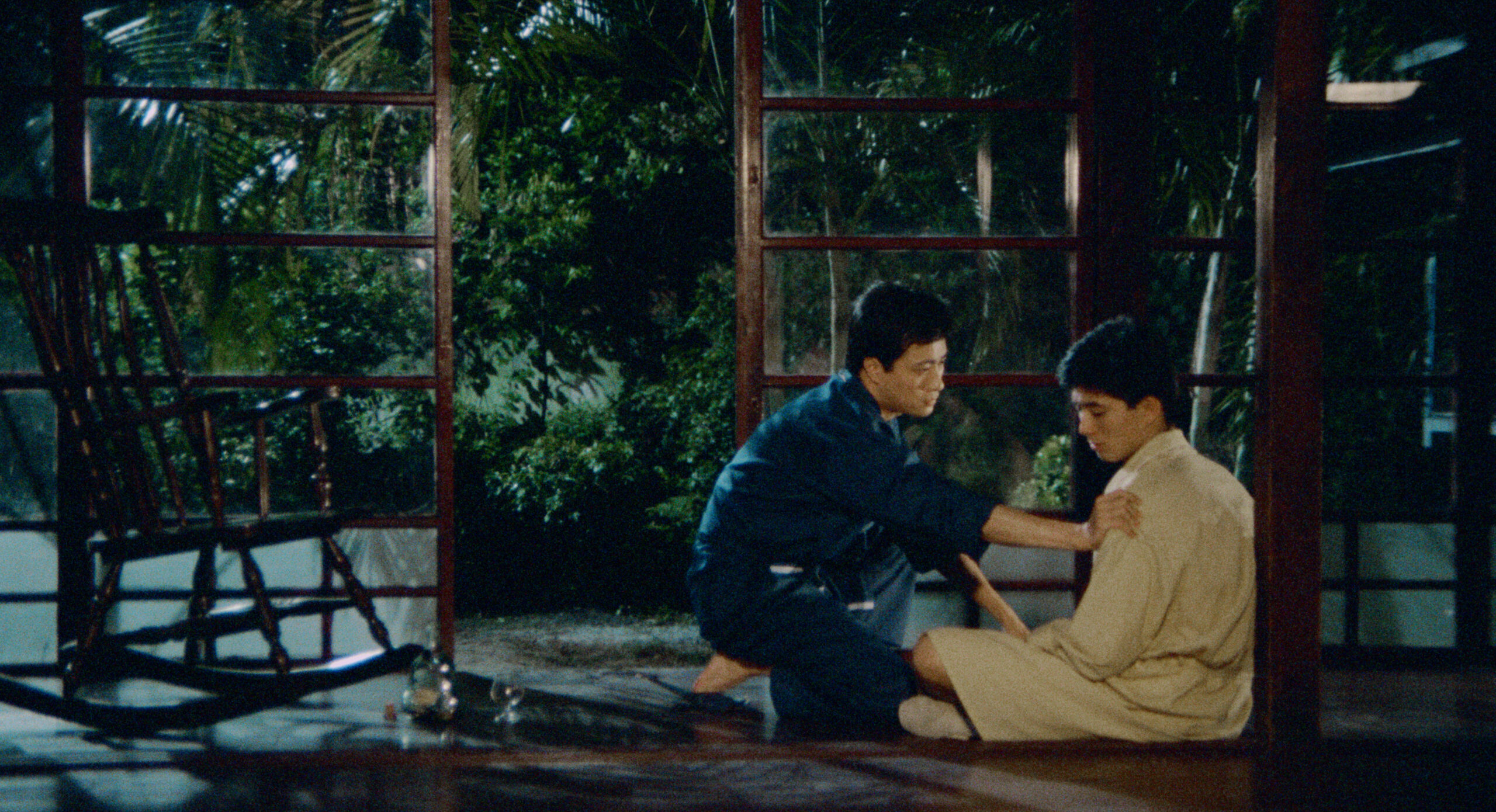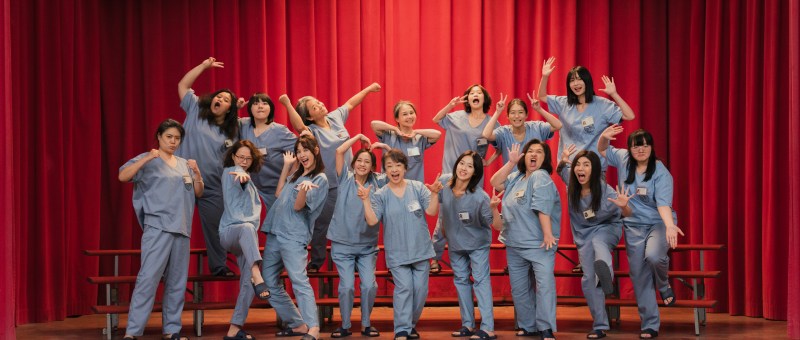
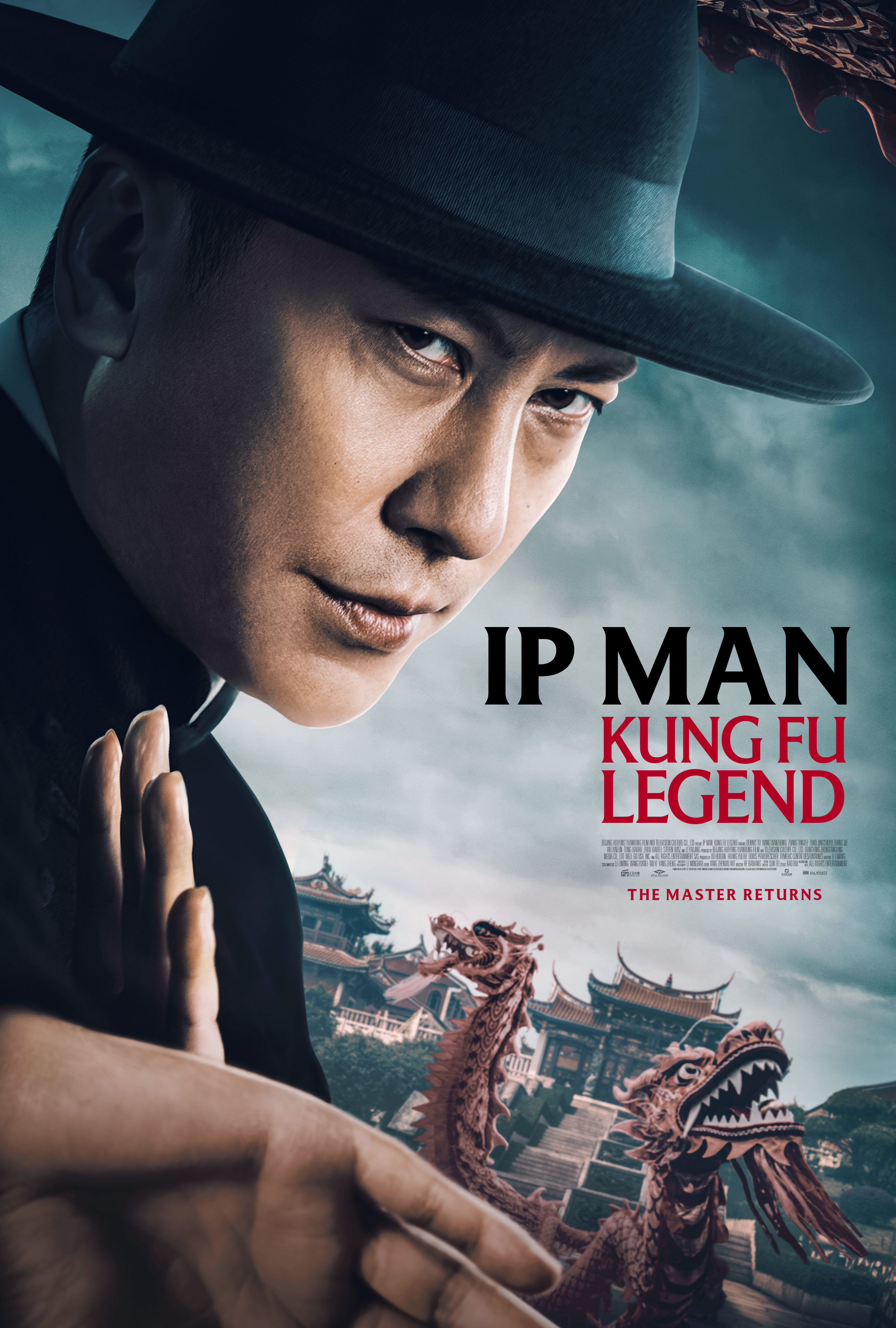
The 7 Grandmasters (虎豹龍蛇鷹, Joseph Kuo, 1977)

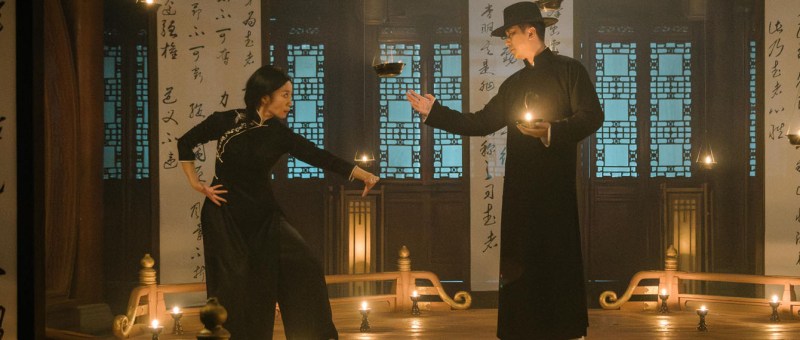
“The way of kung fu, no one is invincible. A fighter shouldn’t be arrogant and bully others,” according to one of the mini lessons given by the ageing champion at the centre of Joseph Kuo’s 7 Grandmasters (虎豹龍蛇鷹), though it has to be said there is a fair amount of cockiness in play while bullying does seem to be a part of his training programme. Arrogance is in fact what he has himself been accused of at the ceremony at which he has been honoured by the emperor and after which he planned to retire if he had not received a rude note telling him he is not a real champion and shouldn’t lay claim to the title until he’s defeated all of the other regional champions in each of their signature fighting styles. 

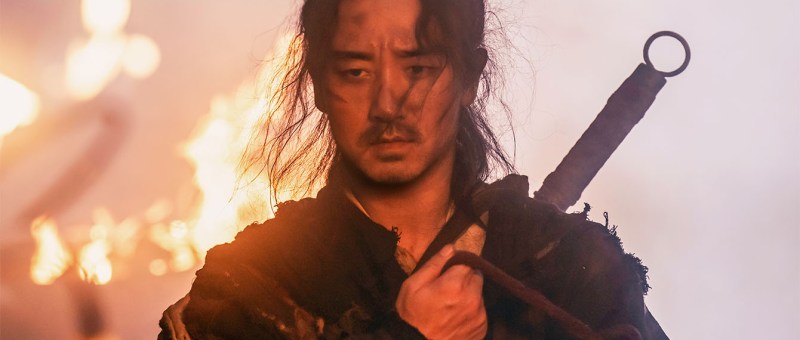
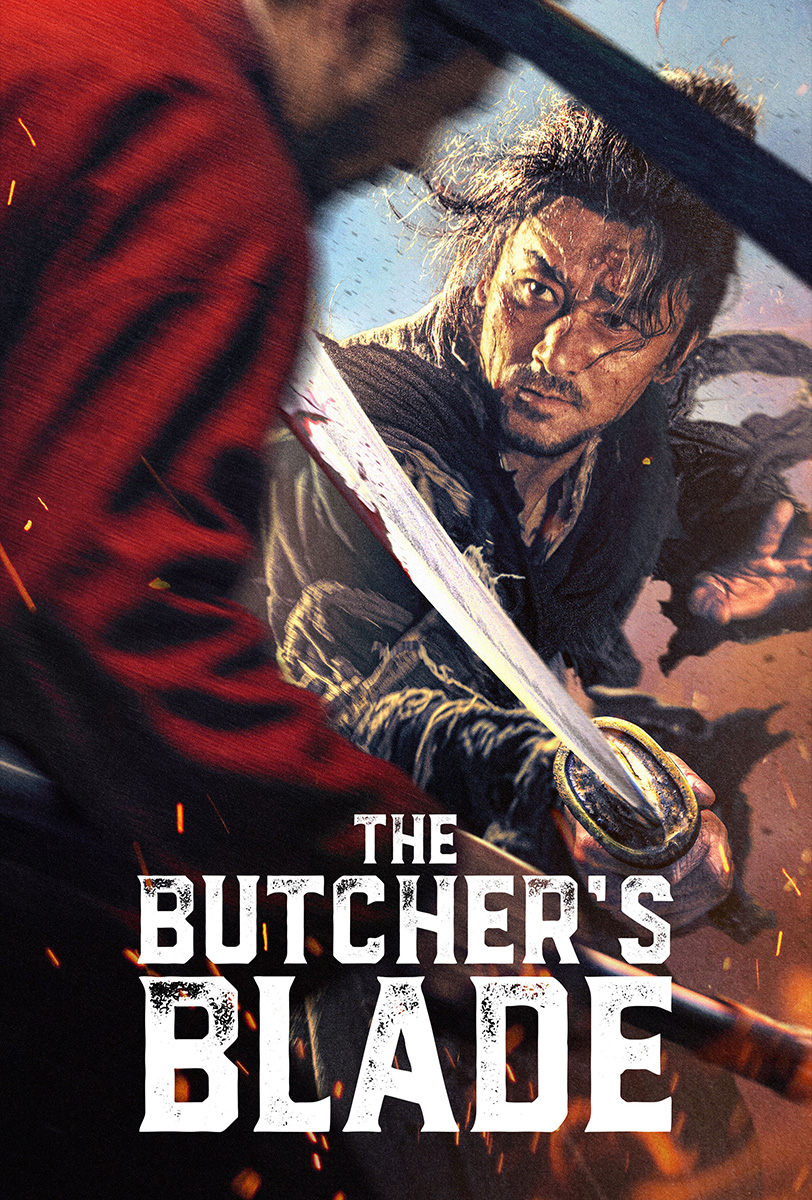
A 30-year veteran of the local martial arts scene, Zhang Shenguang (Jack Long) is tired and ready to pass his school on to the next generation but feels he cannot retire until he’s proved once and for all that he is the greatest kung fu master. Setting out with his daughter and three pupils, he roams around the land easily defeating his rivals and teaching them a lesson to boot. Unfortunately, however, his first target, Sha (Wong Fei-lung), ends up dying while he’s also being followed around by an over-earnest boy, Shao Ying (Li Yi Min), who insists on becoming his pupil, though Zhang is unwilling to take him on because his own master was betrayed by a bad faith student who stole the final three pages of the book he’d been given to safeguard outlining the 12 Bai Mei strikes.

Zhang is definitely all about righteousness, constantly reminding everyone about the responsibilities that come with kung fu but his own students are fairly merciless to Shao Ying firstly mocking him as he trails along behind them like a stray puppy and then continuing to bully him until he finally surpasses their own abilities. They are all also supremely confident and often resort to cocky banter during fights which it has to be admitted they usually win. The film is structured around Zhang’s quest abruptly shifting from one expertly choreographed fight sequence to another, each showing off a different style and the ways in which Zhang can overcome it while some of his opponents accept defeat gracefully and others not. In one town they are ambushed by goons working for the local master who wanted to avoid potentially losing his title by underhandedly taking Zhang out first but as Zhang puts it losing his good name instead. The final challenger meanwhile refuses to Zhang directly because he can see Zhang is already ill and it wouldn’t be fair so has their students square off instead. 

Nevertheless, Zhang is not permitted to exit the world of kung fu until dealing with the left over baggage of the three missing strikes of Bai Mei, Shao Ying eventually becoming its inheritor after a twist of fate connects him with Zhang’s past while causing him a paradoxical dilemma in temporarily becoming Zhang’s enemy in order to avenge the death of his father as his code dictates. Like Zhang however he is perhaps only trying to make a point, never intending to harm his former mentor, at least physically, but only to close the cycle through symbolic revenge, later returning to Zhang’s side on realising he’s been used and deceived. 

Featuring top choreography from Hong Kong’s Yuen Kwai and Yuen Cheung Yan, Kuo’s low budget indie kung fu drama is pure fight fest less interested in the emotional conflicts between the men than the physical which might explain its incredibly abrupt conclusion which largely implodes the moment of catharsis achieved in the villain’s defeat. Even so, it succeeds in showcasing a series of fighting styles as Zhang continues with his quest to prove himself the ultimate grandmaster so he can finally retire while throwing in some comic relief thanks to Shao Ying’s dogged determination to become one of the gang before finally proving himself the most talented of all the students, not least because of his perseverance and willingness to learn. Shooting mainly in the open air to avoid the expense of sets, Kuo’s approach is unfussy but to the point of removing all distractions in order to showcase the immense abilities of his performers in an otherwise generic tale of rivalry and revenge. 


Useless (无用, Jia Zhangke, 2007)

Perhaps in no other medium does the relationship of art and utility present itself quite so much as in fashion. As the primary subject of Jia Zhang-ke’s Useless (无用, wúyòng), second in a trilogy of films examining Chinese artists, points out China is the world’s largest manufacturer of textiles. Yet until she took it upon herself to found one, it had no fashion label to call its own. Travelling from the garment factories of Guangdong, to the artisan studio of Ma Ke, and bright lights of Paris Fashion Week, before arriving firmly back in Jia’s hometown of Fenyang with its independent tailors and the miners who frequent them for repairs and alterations, Jia zooms in to the modern China probing the divides of art and industry in an increasingly consumerist society. 

Jia begins with a lengthy pan across a strangely silent factory floor, seemingly a relic of a previous era. The workers dine in a quiet cafeteria they have to squeeze through a gate which remains locked to enter, and have access to an on-site doctor. They get on with their work quietly without overseers breathing down their necks and do not seem unhappy, oppressed, or exploited, at least as far as the camera is permitted to see. The camera hovers over the label of a just-completed garment which belongs to Exception, the fashion store launched Ma Ke in the mid-90s, ironically she says as a reaction against mass-produced, disposable fashion. 

Nevertheless, as she points out, you can’t be free to experiment when you’re a recognisable brand with a clear place in the market, which is why she started an artisan side label, “Wu Yong” meaning “useless”, hinting at her desire to find a purer artistic expression within the realms of fashion design. For the camera at least, Ma Ke casts an eye over her atelier like a factory foreman, though her studio space is a million miles away from the Guangdong factory, though borrowing the aesthetics of the early industrial revolution. Her employees weave by hand using antique looms, Ma Ke reflecting on the differing relationships we might have to something made by hand which necessarily carries with it the thoughts and emotions of the maker, and that made “anonymously” in a factory. Yet these designs are crafted with concerns other than the practical in mind, Ma Ke travelling to Paris to exhibit them in a living art exhibition that, in some senses, repackages the concept of Chinese industry for a Western palate. 

It’s Ma Ke, however, who guides Jia back towards Fenyang, explaining that she likes to travel to forgotten, small-town China where she describes familiarising herself with these other ways of life as akin to regaining a memory. In the dusty mining town he follows a man taking a pair of trousers to a tailor to be repaired, perhaps something unthinkable in the consumerist culture of the cities where clothing is a disposable commodity to be discarded and replaced once damaged. Jia spends the majority of the sequence in the shop of a pregnant seamstress who loses her temper with her feckless, drunken husband while seemingly supporting herself with this intensely practical art. Yet it’s in her shop that he encounters another woman also after alterations who explains to him that her husband was once also a tailor but found his business unviable and subsequently became a miner instead. Like Ma Ke he laments the effect of mass production on the market, knowing that a lone tailor cannot hope to compete with off-the-peg for cost and convenience. As we watch the miners shower, washing the soot from their flesh, we cannot help but recall Ma Ke’s avant-garde installation with its faceless, blackened figures, nor perhaps the workers at the factory visiting the doctor with their various industrial illnesses. 

Objects carry memories according to Ma Ke, they have and are history. The clothes tell a story, every stitch a new line, but they also speak of the contradictions of the modern China in the push and pull between labour and exploitation, art and industry, tradition and modernity, value and consumerism. Yet Jia leaves us with the figure of the artisan, patiently pursuing his small, functional art even as they threaten to demolish his studio around him. 


A Writer’s Odyssey 2 (刺杀小说家2, Lu Yang, 2025)

Arriving four whole years after the previous instalment, A Writer’s Odyssey 2 (刺杀小说家2, cìshā xiǎoshuōjiā 2) is in many ways a very different film. While its predecessor was a fairly serious affair tackling some of the issues of the modern China such as child trafficking, machinations of the oligarch class, and generalised capitalistic oppression, the sequel is a typically mainstream fantasy blockbuster complete with some fairly goofy humour and the ultimate message that despotism is bad and people should work for the good of others rather than just themselves.

In that regard at least, it’s another pointed attack on authoritarians and corporate bullies like Aladdin’s Li Mu. The entire Aladdin plot is, however, jettisoned, which seems like a missed opportunity, especially as it means that Yang Mi does not reprise her role and we don’t get any answers about who the boy was with Tangerine at the end of the previous film nor whether the “death” of Redmane led to the death of Li Mu in the real world as he feared it would. In truth, even Guan Ning (Lei Jiayin) is somewhat sidelined. Six years later, he, Tangerine (Wang Shendi), and Kongwen (Dong Zijian) are living as a family running a restaurant. Though Kongwen finished his Godslayer novel, it was stolen by an influencer, Cicada (Deng Chao), who accused him of plagiarism which got Kongwen blacklisted in the publishing industry and unable to earn any money through writing. As he’d said in the previous film, it was writing that gave his life meaning so now he’s started to become hopeless and depressed. 

Meanwhile, he’s begun to dream of Ranliang and the return of Redmane who has survived but as a mortal rather than as a god and is determined to get back everything he’s lost. This means, in meta terms, that he wants to challenge “god”, or really Kongwen, whom he sees as the architect of his fate. On the one level, it seems as if he’s trying to insist on his own free will and is sick of being controlled by unseen forces, but in reality he just wants the powers of a god for himself so he can oppress people properly. Nevertheless, this means he has to come to our world in order to square off against Kongwen, the writer.

It has to be said the vision of the real world on offer this time is much glossier and devoid of the kind of darkness that haunted Guan Ning. Though they’re worried because the restaurant’s not doing so well, the trio seem to have pretty nice lives with relatively few other problems outside of Cicada who is now aligned with Redmane in place of Li Mu standing in for a venal class of confluencers. Kongwen is then fighting a war on two fronts as Redmane taunts him to come over to the dark side and turn his fantasy story of good defeating evil into one of nihilistic despair echoing the way that Kongwen feels in his life.

The meta drama of the writer pursued by his characters is resolved in a fairly unexpected way with Kongwen effectively giving up his godlike powers and allowing his characters to save themselves through “mortal courage” rather divine intervention. Though Renliang had been plunged into chaos as the power vacuum Redmane left behind saw his former allies effectively become warlords reenacting the warring states period, in the end it’s solidarity that saves them as they agree to band together to oppose Redmane while offering the possibility of forgiveness if only Redmane can give up his quest for domination and agree to work for the common good. 

Kongwen learns something similar, remembering his writing isn’t solely an economic activity, and not only about himself but giving something back to the world. Torn between the anarchic ambition of Redmane and the righteousness of Jutian (Chang Chen), modelled after his own absent father, he struggles to find meaning amid the injustices of the modern China having been unfairly cancelled by netizens after being falsely accused of plagiarism by the man who stole his story and asks himself if it’s worth sacrificing his friends in a last ditch attempt to save them through teaming up with the forces of darkness. Nevertheless, Lu frames his tale in a much more lighthearted fashion as symbolised by demonic armour Darkshade’s sudden merging with a lettuce to become unexpectedly adorable. As such, it feels like something of a missed opportunity in choosing not to build on the foundations of the first film but sidestep them completely. Even so in upping its production values and the quality of its visual effects, the sequel embraces a new sense of fun which is definitely different but possessed of its own charm.


Trailer (English subtitles)
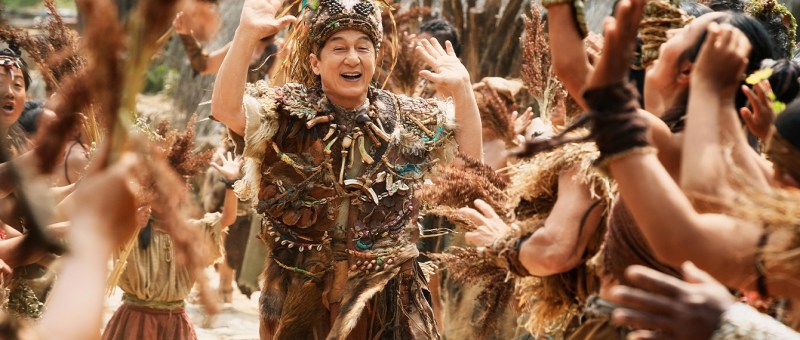
A Writer’s Odyssey (刺杀小说家, Lu Yang, 2021)

“As long as I keep writing, my existence has meaning,” according to the titular writer at the centre of Lu Yang’s action fantasy, A Writer’s Odyssey (刺杀小说家, cìshā xiǎoshuōjiā). His art, though derided as trivial, is it seems the best form of resistance to the feudalistic capitalism that has overtaken the authoritarianism of the communist past. Broken father Guan Ning (Lei Jiayin) desperately searches for his daughter Tangerine who has been missing six years, assumed to have been swallowed by China’s child trafficking network, only to find himself plagued by bizarre dreams of a fantasy city.

The city is, it seems, that of Kongwen’s (Dong Zijian) fantasy novel series which he live streams over the internet. Whenever something bad happens to the evil despot at the story’s centre, Lord Redmane, it’s visited on the CEO of vast corporation Aladdin (read: Alibaba), Li Mu (Yu Hewei), which has just launched the Lamp App which will they claim “resculpt time” so that time and distance are no longer an issue. Li Mu is panicked because Kongwen has said he’s going to end the series in three days and it doesn’t look good for Lord Redmane, so he’s fearful for his life. Noticing that Guan Ning has some sort of super power in which he can hurl rocks with unusual accuracy, he leverages Tangerine’s disappearance to convince him to knock off Kongwen in exchange for his daughter’s location.

Of course, the fantasy world and the “real” are connected in more ways than one with Ranliang conjuring visions of the Cultural Revolution in which the despotic leader is literally protected by hordes of mindless “Red Guards” while pitting one district against another and seemingly destroying all art. Li Mu, meanwhile, is destroying human innovation with his apps and treats the lives of others with callous disregard. His right-hand woman Tu Ling (Yang Mi), originally resentful of Guan Ning in blaming him for losing his child having been abandoned by her own parents, becomes disillusioned with his tactics on realising that he lied to Guan Ning and the candidates he picked for Tangerine are five random girls none which is likely to be her. Figuring out that she’s probably next after Li Mu knocks off Kongwen, who is also the son of his former business rival that he seemingly betrayed to take control of the company, and gets rid of Guan Ning for good measure, her allegiances begin to change creating a kind of parallel with Tangerine and the mysterious boy hanging around with her.

Meanwhile, in the fantasy world, Kongwen teams up with a demonic suit of armour that feeds on his blood but is also a near unbeatable killing machine that may or may not be evil. Guan Ning comes to believe that the fantasy world may be the only place he can find Tangerine and switches side from agreeing to kill Kongwen to deciding to protect him so that he can finish the story and possibly write a better ending for his fantasy character who as yet remains undefined. He’s later revealed to be a member of the brainwashed Red Guard, which may be appropriate as his former job was a banker which is to say a soldier of capitalism. Only art can break his programming in the form of Tangerine’s flute playing which reawakens his humanity and memory. 

The implication seems to be that China cannot escape either its communist past or capitalist future except through the liberation that comes with artistic endeavour. When Guan Ning is tasked with killing Kongwen, he follows him about town and hears his neighbours run him down as a “parasite”, a man of almost 30 with no real job and no income who is still being financially supported by his mother. This information might be offered to make it seem less bad to kill him, as if in this hyper-capitalistic society his life is worth nothing because that’s what he contributes. Kongwen feels this a little himself and has suicidal thoughts, but also insists that his life has meaning precisely because he writes and expresses all of this frustration with the contemporary society along with his buried resentment towards Li Mu for the death of his father and theft of his birthright. Shot like a video game, the film’s sprawling fantasy-esque world hints at still more adventures to come in this David and Goliath competition in which Kongwen and Guan Ning attempt to overthrow this cruel and corrupt order to find a way to free themselves from its authoritarian cruelties if only in their minds.


Trailer (English subtitles)

Living the Land (生息之地, Huo Meng, 2025)

When a way of life has gone on unchanged for centuries, the idea that it might soon disappear seems unthinkable, but change is indeed coming to the village in Huo Meng’s elegiac drama, Living the Land (生息之地, shēngxī zhī dì). Set concretely in 1991, the economic reforms and impact of the One Child Policy are beginning to make themselves felt, while incoming mechanisation begins to destabilise the rural environment. Farmers will always have to work the land, one utters in exasperation as a local man employs a large American tractor he says is capable of doing the work of a hundred villagers, while other young men decide it’s time to go south and seek their fortunes in the factories of a new era.

Even so, the film opens with a literal digging up of the past. 10-year-old Chuang’s (Wang Shang) great aunt has died, and his uncle and grandfather want to exhume his great uncle from the makeshift grave he was placed in after getting on the wrong side of the authorities so they can be buried together. Villagers talk cryptically about those who didn’t make it through the Cultural Revolution and Great Leap Forward, but otherwise continue living their traditional lives in harmony with the landscape. The irony is that Chuang is a left behind child whose parents are working away in the city, but the reason he’s not with them is because he’s a secret. He’s their third child and they can’t afford to pay the fine for violating the One Child Policy while his father works for the government and would probably be fired if they found out.

And so, Chuang is living with his maternal grandparents while his siblings are with their parents. The fact he keeps wetting the bed at a comparatively late age is likely down to this sense of rootless anxiety. He doesn’t know if he should say this is his home village because he has a different surname to the people he’s living with. While his grandfather plots out burial spaces for the rest of the family, he leaves Chuang out, and when the boy asks why, he says he doesn’t belong here because his name isn’t Li. He’s mainly been cared for by his aunt, Xiuying (Zhang Yanrong) but she soon comes under pressure to marry, especially when a wealthy local man takes a liking to her and her tentative romance with the local school teacher falls flat when he too goes south without her. 

Xiuying attends the regular pregnancy screenings on her aunt’s behalf to hide the fact that she is pregnant with an unauthorised third child, which is one way in which the village attempts to get around these restrictions imposed from outside which threaten their way of life and livelihoods. They need more children to help work the land, while they’re finding it increasingly difficult to make ends meet selling wheat and bricks. Half of their wheat crops are destroyed when oil prospectors arrive with some in the village excited about the prospect of any being found, believing they’ll all be rich or that factories will open offering new jobs so the young won’t leave the community. But the prospecting leads to tragic consequences and seems unlikely to prove rewarding for the locals. 

When Chuang’s great-grandmother is interviewed by the authorities, she tells them that she doesn’t actually have a name. Before her marriage, she was just “third sister” and after that someone’s wife, mother, grandmother. The authorities don’t like that, and someone suggests calling her “Mrs Li Wang”, but there are a few of those already so she ends up becoming “Third Mrs Li Wang”, which doesn’t seem like a tremendous improvement. The lives women are continually devalued in the traditional, patriarchal community in which they are still chiefly valued for the ability to give birth, which they now can’t do because of the One Child Policy. Xiuying is bullied into marrying a man she doesn’t like, and then is mistreated by him because she didn’t bleed on their wedding night so he doesn’t believe she was a virgin likely because of the rough treatment she received during the pregnancy exam when they suddenly began to suspect she wasn’t a married mother of two. Chuang gets left behind again as the village slowly depletes and mechanisation forever disrupts this very traditional way of life, though the elegiac music suggests that even those who went south didn’t fare all that much better in amid the economic instability of the 90s reforms which destroyed not only communities and ways of life our very relationship with the land itself.


Living the Land screens as part of this year’s San Diego Asian Film Festival.

Blind Love (失明, Julian Chou, 2025)

There’s none so blind as those who refuse to see, as the old saying would have it. Though in Julian Chou’s Blind Love (失明, shīmíng) the problem is often more an obsession with the gaze of others that prevents its lonely protagonists from looking within and coming to an acceptance of themselves along with what it is they really want out of life. Set before Taiwan’s legalisation of same sex marriage, the film positions patriarchal heteronormativity as the cage in which the heroine willingly imprisons herself in fear and shame.

It’s telling that on being discovered with her girlfriend Xue-jin (Wu Ke-xi) when they were university students, Shu-yi (Ariel Lin) immediately jumps to the shame she feels in having done this to her mother. When the two women are together, it’s a bubble of perfect happiness, but on gazing at herself from the outside, Shu-yi feels only disgust in her feelings for Xue-jin and at some point evidently chose “properness” and conformity. Years later, when her mother has lost her sight and is living in a nursing home, she snaps at the nurse not to call her daughter because she’s married to a doctor and therefore very busy. Though it’s an odd moment, she says this with pride as if her own life were fulfilled by her daughter’s “successful” transition to wife to a professional man and mother to his sons. But it also seems as if this continual unseeing as manifested in her mother’s literal blindness is what later leads her to take her own life when forced to look inside herself while otherwise rendered dependent on Shu-yi and her unsympathetic husband Feng (Frederick Lee).

Feng is a selfish and unkind man who rules his home with an authoritarian iron fist. When Shu-yi tentatively hints that it might be better for her mother to live with them, he doesn’t answer but then immediately needles her, asking if she’s put on weight and whether the dress she’s supposed to wear to an important dinner will still fit. The domestic environment is rendered as a prison in which there is no natural light. The furnishings are cold and grey, as if there were no love or warmth here, and Shu-yi is under constant observation to ensure she plays her roles effectively. Feng sees his family only as tools or extensions of himself. He paints the picture of a perfect family to smooth his path to career success by ingratiating himself with the influential Doctor Gu and though Mrs Gu later sees through Shu-yi and is aware of the cracks within her marriage, chooses to unsee them and encourages Shu-yi to do the same by reaccepting her duty to dissolve herself within her husband’s ambitions even if her heart lies elsewhere. 

Feng exerts the same pressures on his teenage son, Han (Jimmy Liu Jing), by insisting that he study medicine though Han is now too old to submit himself to his father’s authority. You can’t let others decide for you, he tells a friend, and is told the same by Xue-jin whom he meets by chance and unwittingly falls for not knowing that she is his mother’s long-lost love. Xue-jin might seem like a more liberated soul having divorced her husband and accepted her sexuality while pursing her art as a photographer, which is of course the art of seeing, but her drink problem also hints at her loneliness and unresolved longing for Shu-yi. “You think what we do is wrong,” she tells Shu-yix with frustration, but Shu-yi can only answer, “How could be right?” before returning to her conformist life with all of its misery.

When she tells her younger son Rui that all that matters is how other people view you and asks him why he can’t just be “normal”, it’s as if she’s talking to herself. As the three of them pass through the pride parade and Rui asks what’s going on, Feng tells him that there are two kinds of people, the “normal” and the “abnormal” and that the people parading want to be seen as “normal” though they are not. Shu-yi pushes hard on the accelerator in anger and frustration, but it’s a divide she’s internalised within herself and remains unable to see that her love for Xue-jin is normal and natural. A woman in the bathroom at Feng’s dinner suggestively offers her her lipstick, explaining that it’s “the best form of camouflage for people like us,” before kissing her and leaving having rewakened Shu-yi’s latent desire. Hiding within this world of traditional femininity is the way Shu-yi has chosen to sublimate her desires and the concurrent self-loathing, but is also, in its way, an act of self-harm and means of punishing herself that amounts to a kind of suicide.

Only while making love with Xue-jin does she become fully herself before the self-recrimination finally kicks back in. Their connection is raw and honest, filled with tenderness and yearning, yet Shu-yi struggles to embrace happiness or accept her authentic self by escaping from the patriarchal superstructure represented by her mother and her husband’s authoritarianism. Chou ends on an ambiguous note in which Shu-yi is perhaps learning to see the truth of herself, but her world still appears cold and grey as if suggesting that, in the end, this kind of happiness and fulfilment is still not permitted to her even if she has finally accepted what kind of life it is that she wants.


Blind Love screens as part of this year’s San Diego Asian Film Festival.

Trailer (no subtitles)

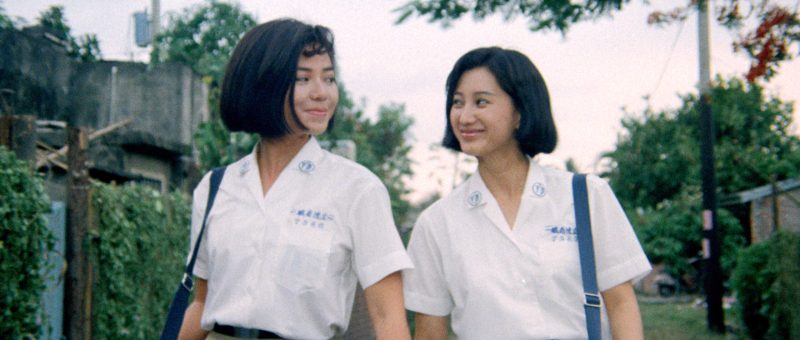
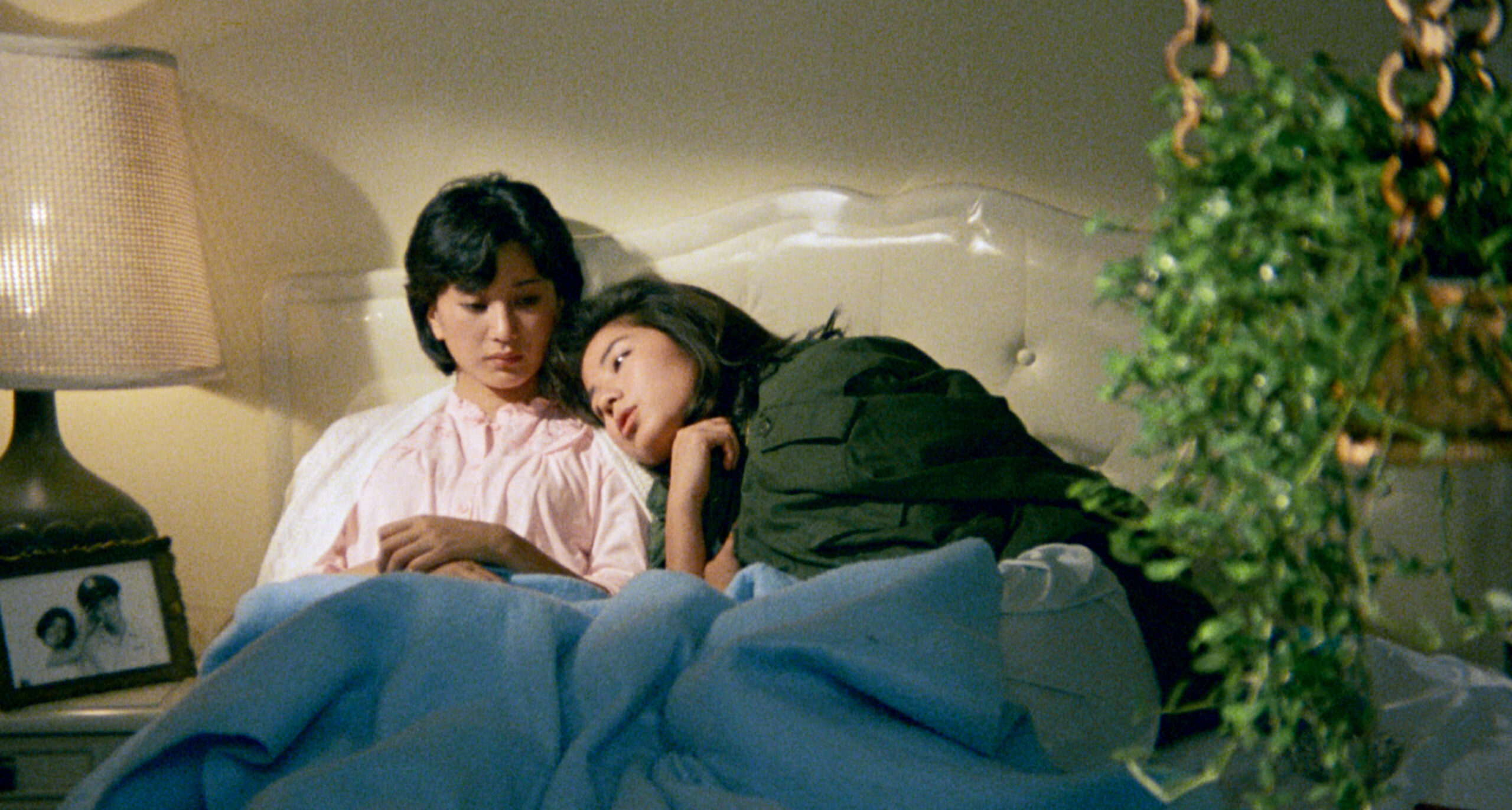
Girl (女孩, Shu Qi, 2025)

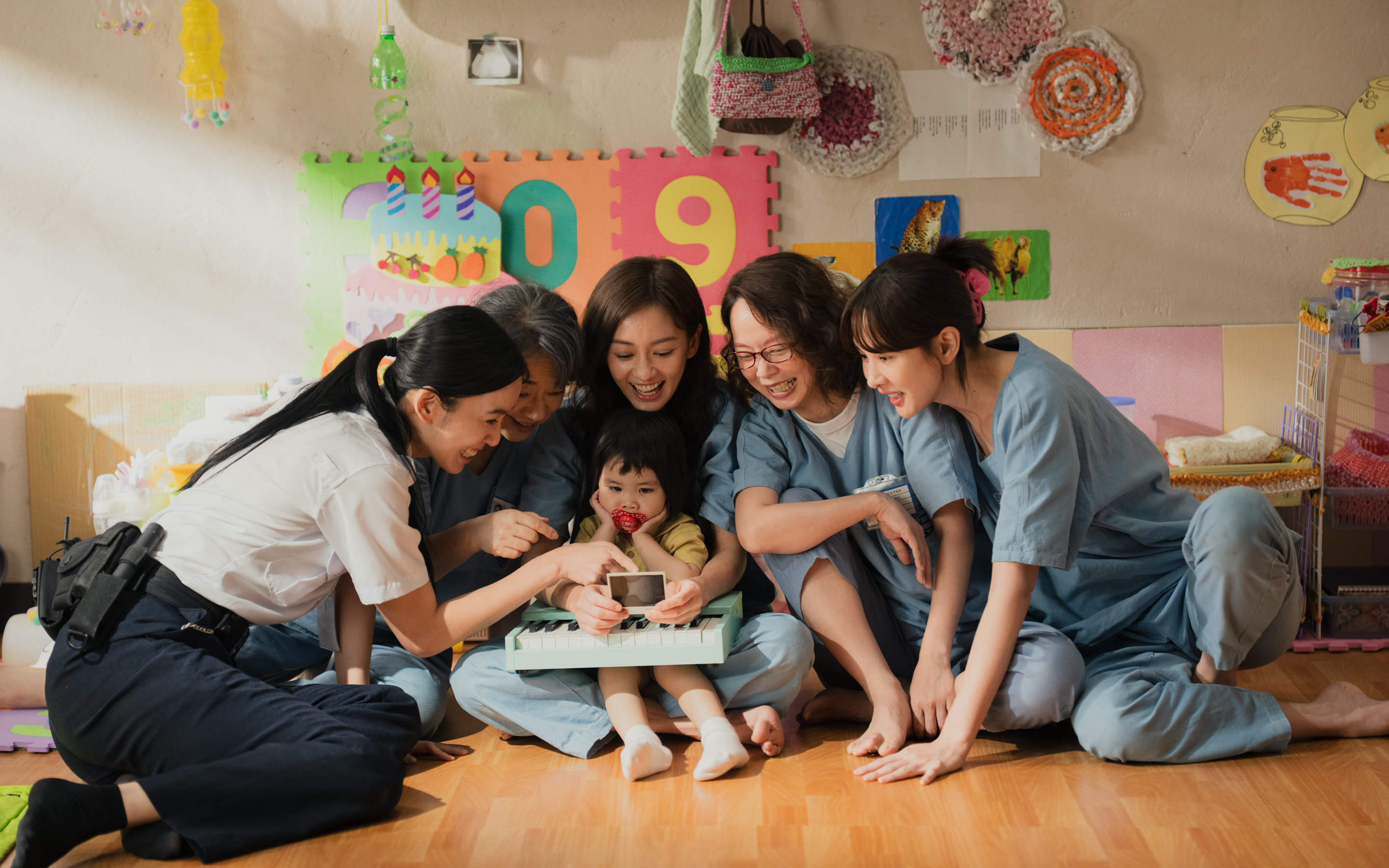
Taiwan may be emerging from martial law, but the cycles of patriarchal violence and oppression prove much harder to escape in Shu Qi’s touching directorial debut and portrait of a disrupted childhood, Girl (女孩, Nǚhái). Inspired by her own memories and set in the late ’80s, the film is unflinching in its depiction of mundane, domestic horror, but equally even-handed in extending understanding even to the most flawed of its protagonists who are themselves locked into a cycle of violence and self-loathing.

Hsiao-lee (Bai Xiao-Ying) doesn’t quite understand how her sister can be so cheerful even the other children at school make fun of her. Hsiao-lee is often criticised for looking “sullen,” and even her new friend Li-li (Lin Pin-Tung) jokes that on the rare occasion she smiles, she still looks “bitter”. But Hsiao-lee has plenty of reasons to be sorrowful and has perhaps already internalised the idea that there is no escape from her dismal circumstances. Finding a hole in the wall behind the school quite literally shows her another world, one that she later passes into in the company of Li-li who convinces her to ditch her classes and hang out with her at a sleazy video booth that is not really an age-appropriate environment for the two young girls. 

Li-li is Taiwanese-American and has recently moved to the island following her parents’ divorce. The fact that Li-li’s parents’ marriage has ended, even if she wistfully wonders if her father will suddenly jet in to repair the family, shows Hsiao-lee that the prison that is her family home has a door that could be unlocked. It’s clear that Hsaio-lee is terrified of her father (Roy Chiu) who is a violent drunk and may also be sexually abusing her. She zips herself up in a tent at night and cowers in terror as his hand presses down on the canvas, though he doesn’t like closed doors and flies into rages when he encounters them, which explains the large dent next to the handle to the door of her room. Hsiao-lee’s mother, Chuan (9m88), seems to take most of her frustrations out on her even if she tries to intervene and distract her father from further harming her.

Hsiao-lee doesn’t understand why her mother seems to resent her while doting on her sister, though we soon come to wonder if she blames her for condemning her to this kind of life. Shots of Chuan’s adolescence in rural Taiwan hint at a still more patriarchal world in which her father told her there was no need to study and if she had free time to hang out with friends she should spend it helping her grandmother instead. It’s implied that Chuan may have been assaulted while finally embracing the simple freedom of spending time with other people her age, while her father disowned her on her pregnancy declaring himself ashamed and telling her to leave and never return. Even now, she earns a meagre living as a hairdresser’s assistant and is groped by the male customers which the salon otherwise has little option other than to court. Her boss fusses over the air conditioning whenever they come in, and though Chuan may have taken a liking to Mr Chen, he is already married and only ever a symbol of the life that has eluded her. 

Chuan’s boss also tells her of a woman in Taipei who left an abusive husband and is now living happily with someone who treats her better, but Chuan continues to stick with Chiang possibly as an act of self-harm in her deep-seated self-loathing. Chiang doesn’t always seem to have been that way, but he’s otherwise someone who can’t fit into the contemporary society and is only employed thanks to a very understanding friend of his late father. Having gone too far and realised that Chuan may leave him if he continues to beat and rape her, he tries to reform, but it doesn’t last long and he’s soon back to drunkenly riding his scooter through town in the middle of the night. He too may feel hard done by, but it can’t excuse his behaviour nor the authoritarian terror of his home in which he takes out the frustrations of his fractured manhood on Chuan and Hsiao-lee. 

Chuan is imprisoned within the house and can find no escape from it, even when Hsiao-lee directly asks her to divorce him. Hsaio-lee might, however, be able to get out but only be accepting exile from her family and leaving her mother and sister behind at her father’s mercy. Given the omnipresence of male failure, there’s something quite heartening about the female solidarity that arises between Hsiao-lee and Li-li even if their circumstances are quite different from each other. Li-li is mired in the collapse of her family and longs for its repair with her father’s return while resentful of the unfairness of being exiled to an unfamiliar country where she’s looked after by her grandmother whom she can’t understand, presumably because she speaks Taiwanese rather than the Mandarin her mother made her keep up in America, while Hsiao-lee is trapped and looking for a way to free herself from her father. On a trip to the local shop, she ominously eyes up the rat poison while Li-li buys some sweets.

But even as Taiwan emerges from the authoritarian superstructure of the martial law era, patriarchal violence refuses to die and it’s only through an act of maternal sacrifice, framed as rejection and a continuation of that same cycle of violence now enacted by her mother, that Hsaio-lee finds a more literal kind of escape. Only once her father is gone does light return to the house and the possibility of healing the disrupted relationship with her mother become a reality. Beautifully written and elegantly directed, the film has a very genuine sense of place with its busy alleyways and bustling streets. The kids at school might cheerfully sing that there’s no place like home, but for Hsiao-lee home might be the scariest place of all and the one it’s the most difficult to escape.


Girl screened as part of this year’s LEAFF.

Someday or One Day (想見你, Huang Tien-jen, 2022)

A young woman finds herself quite literally in someone else’s shoes while trying to reclaim lost love in Tien Jen Huang’s sci-fi-inflected drama, Someday or One Day (想見你, Xiǎng Jiàn Nǐ). Inspired by the hugely popular television drama of the same name and starring the same cast, this big-screen edition drops the 20-year time slip device for a comparatively compressed tale largely taking place between 2014 and 2017 while the romantically troubled heroes effectively span a kind of multiverse of heartbreak, each looking for the good timeline where both they and their love can survive together. 

It has to be said, however, that the meet cute between destined lovers Yu-hsuan (Ko Chia-yen) and Zi-wei (Greg Hsu) is not without its problematic elements given that Yu-Hsuan is still in high school when the tale begins while Zi-wei is in his mid-20s, not to mention he’s largely interested in her because she looks exactly like old high school friend Yun-ru (Also Ko Chia-yen). Their meeting was brokered by a shared dream featuring the song Last Dance by Wu Bai which was released in 1996 which might explain why Yu-Hsuan didn’t know it prior to hearing it in the dream world where she lived with a man she didn’t know but turns out to be Zi-wei. The pair hit it off and eventually move in together. They are blissfully happy until Zi-wei is killed protecting Yu-Hsuan when they both randomly fall from a building which is still under construction. 

What they were doing there in the first place isn’t really explained, but it doesn’t become the nexus of Yu-hsuan’s trauma as she struggles to move on with her life continuing to communicate with Zi-wei through text message and imagined conversation even after moving to Shanghai for work. After being sent a walkman and cassette tape of The Last Dance, she wakes up in the body of Yun-ru the day before the accident and realises she can save Zi-wei if only she can convince him, and herself, that the danger is real. 

Moving the action to 2014 does rather undermine the nostalgic power of the song along with that of the walkman itself as a kind symbol of a late ‘90s youth only hinted at in brief flashes of Zi-wei’s high school days that were most likely better fleshed out in the TV series. Then again the theme of nostalgia is itself destructive given that the opening lines remark on how “silly” it is to try to hold on to “something that is vanishing” which is what each of the lovers is trying to do in the time slip drama by attempting to prevent the accident at the building site (though it doesn’t seem to occur to any of them that they could just not go there). 

As the rather trite closing quotation suggests it’s better to have lost and lost than not loved at all, each of the lovers realising that they cannot in fact change the past however much they might wish to and should try to do their best to enjoy the time they’ve been given with those they love for no one knows how long that will be. Nevertheless, there’s no denying that all the body swapping, multiverse shenanigans become incredibly convoluted, especially towards he film’s conclusion, making it largely impossible to keep track of who is who at the current time and what their relations to each other are. Viewers of the TV drama will be better placed to decipher whom some late introductions actually are given that their presence goes largely unexplained save for vague references to their names. 

Then again, we can’t be sure if the heroine eventually wakes up from a dream or is unable to do so becoming trapped in a fantasy of lost love defined by dream logic and wilful nostalgia rather than the anxieties of her nightmare in which she feared that though Zi-wei held her tight he would one day disappear. Undoubtedly confusing, the film nevertheless manages to deliver its time slipping messages of the importance of holding every moment close and then treasuring the memories of lost love rather than continuing to pine for something that can never be regained.


Trailer (English subtitles)
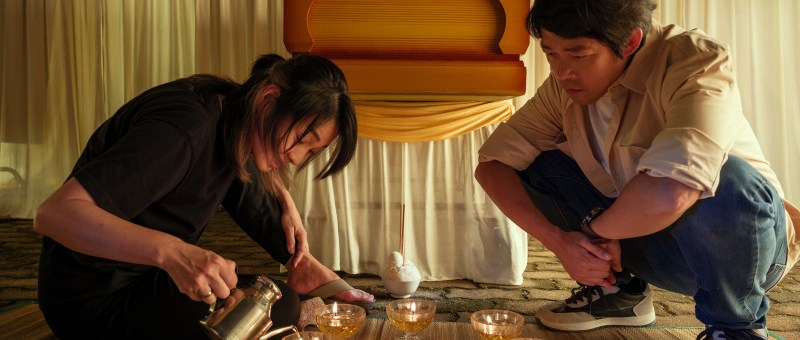
Hero (英雄, Zhang Yimou, 2002)

In the closing moments of Zhang Yimou’s Hero (英雄, Yīngxióng), what we see is an empty space. The outline of a person surrounded by arrows, or perhaps the doorway they protected with their body that nevertheless remains closed. On its initial release, Zhang’s film received criticism for what some saw as an overt defence of authoritarianism. After all, what we may come to understand is that the hero of the title is the Qin emperor (Chen Daoming), the founder of the modern China, but also in historical record a brutal tyrant whose tyranny is therefore justified in the name of peace, just as contemporary authoritarianism is justified in the name or safety and order.

This reading is only reinforced by the demeanour of Qin himself who condemns the nameless “hero” to death because he has chosen authority and this is what authority demands. No forgiveness, no compassion, only brutality and an iron first. Yet he cries because he is a compassionate man and understands the sacrifice he is asking his remorseful assassin to make. He does not do it because he is cruel or out of vengeance or anger, but because he believes it necessary to ensure peace for “all under heaven”. Now we may find ourselves asking again if the assassin is the hero after all because he willingly submits himself to and sacrifices himself for a tyrannous authority because he believes it to be the best and only choice that he can make for the wider society.

Nevertheless, there is something chilling in the vision of a thousand arrows flying toward one man who does not flinch while the man who ordered them sent appears to shake with his own power. The soldiers retreat, and the king is left alone, dwarfed by the immense architecture of the palace and the blood-red calligraphy of the character for sword reimagined by another potential hero whose name echoes his final conviction that in the end the apotheosis of the swordsman lies in the realisation that there is no sword. It’s this that leads him to abandon is own desire to assassinate the king and submit himself to a greater authority in the name of peace. In the end what he rejects is the tyranny of the sword itself, yet the king is also an embodiment of that tyranny because his authority is only possible through terrifying violence. 

In this way, the assassin, ironically named “Nameless” (Jet Li), may stand in for the everyman refusing to bow to the authority of a corrupt king who cares only for power. In one of the many tales he tells, Nameless remarks that he fought with the first of Qin’s three assassins in his mind and it’s true enough that what passes between the two men is a duel of words which is eventually won by the king. Qin tells Nameless of his desire to increase his influence beyond the other six kingdoms of Warring States China and create an empire that encompasses “all under heaven”, but Nameless later cautions him to remember those who gave their lives for the highest ideal, peace, and refrain from further killing. The closing title card is displayed over the Great Wall, making plain that Qin did in fact stop after conquering the six other kingdoms to unite all of China while building the wall to protect his citizens from “northern tribes,” or perhaps competing imperialists.

But walls keep people in as well as out and are in fact another facet of the king’s tyranny and a symbol of enduring authoritarianism. The problem is that it isn’t tyranny or authoritarianism that any of the assassins oppose for they are driven only by hate and vengeance and have no greater ideology or vision for the future. The argument is that peace under the iron fist of Qin is better than the chaotic freedom of the Warring States society, yet what we’re left with is nihilism. The love between assassins Flying Snow (Maggie Cheung Man-yuk) and Broken Sword (Tony Leung Chiu-wai ) is disrupted in each of the tales Nameless relates of them, firstly by romantic jealously and then secondly ideological divide. The conclusion that Broken Sword comes to is that they must not resist, but Flying Snow cannot live without recrimination with the past and the sealing of its tragic legacy. Her revolution fails, and as such “all under heaven” there is only death and only in death is freedom to be found.

The sense that these assassins are already dead is echoed in the choice of white for the final sequence of the film. Zhang frames each of his sequences in vibrant colour, the red of the first tale in which the lovers are destroyed by a supposed love triangle, the blue of the second in which tragedy and sacrifice do not so much destroy as deify it, the green of the penultimate in which jade curtains billow and fall inside the imperial palace, and finally the cold white of death in which the lovers eventually find their home leaving their surrogate child alone in a windy desert of futility. Yet each of these sequences is filled with an intense beauty and the romanticism found in classic wuxia. What remains in the mind is the balletic fight between the tragic heroine Flying Snow and the orphaned pupil Fading Moon (Zhang Ziyi) in an autumnal forest that’s suddenly drenched in red, or feet dancing across the water, an image of an idealised past and lost love among wandering ghosts with no home to go to. Here there are no heroes, only lonely souls and frustrated ideals. 


96 Minutes (96分鐘, Hung Tzu-Hsuan, 2025)

The needs of the many outweigh the needs of the few, as the famous goes. Prioritising saving lives where you can rather than risk spreading yourself too thin and not helping anyone as a result may be a sensible decision. But what if you or a loved are among those who’ve been deprioritised? Like many things, now it’s not just theory but here right in front of you and victims are real people not just anonymous numbers, it looks quite different.

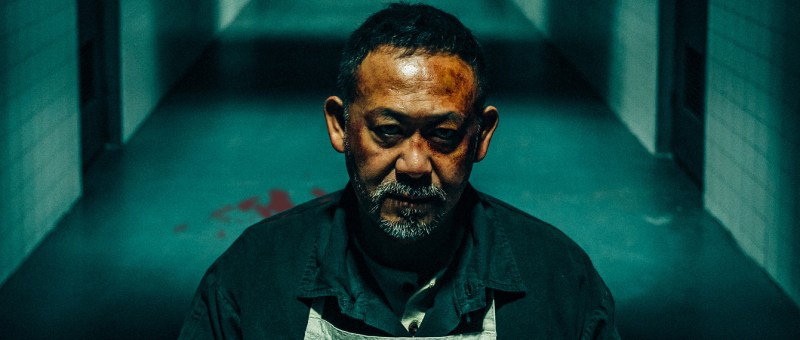
At least, that’s how it is for A-Ren (Austin Lin), a brash bomb disposal expert. Though he disarmed a bomb in a cinema, another one went off across the road in a department store. The bomber had warned them that might happen, but A-Ren’s commanding officer Liu (Wang Bo-Chieh) convinced him they were probably bluffing. They were told there were two more bombs, one located in their command centre, and the other in the department store, and given a choice. Save the people in the department store by heroically blowing themselves up, or choose to save themselves even though this time they’re in the minority. 

Three years later, A-Ren has never forgiven himself, or Liu, for the bomb going off. He’s quit the police and though he’s married fellow officer Huang Xin (Vivian Sung), they never had a wedding and still haven’t been on honeymoon. His guilt is compounded by the fact that he’s been feted as a hero even though he knows he’s directly responsible for everyone who died in the department store. He gets a shot at redemption when the train he’s travelling on returning home after a memorial service for victims of the bombing receives a bomb threat, but at the same time he fears the eventual exposure of what really happened three years ago and is too ashamed to get his mind fully on the job.

On the other hand, it’s true that, ironically, no one on the train has been able to move on from the incident. All of them are mired in their grief and confusion, while looking for someone to blame. Needing to solve the case quickly, the police named a random victim with a criminal past as the bomber rather than admit they didn’t know who did it, making the police themselves a legitimate target for the resentment of the victims’ families given their cavalier attitude to life and death. Liu reminded A-Ren that the policemen in the command centre had families too, as if the people in the department store didn’t or that having a family made their lives weigh more, while Huang Xin was there too further influencing their decision and feeding into A-Ren’s guilt wondering if he was just selfish and made a choice to save her at the expense of the lives of a large number of people he didn’t know.

The bomber essentially gives him the same choice again, putting two bombs on two trains and leaving A-Ren with a binary choice of choosing to sacrifice one or the other to see if he will make the same hypocritical decision again in opting to save the minority because he is among them. Of course, they try a number of other high-risk strategies to disarm both bombs and/or evacuate passengers, but the bomber leaves them with little choice other than to accept the fact that one of the bombs has to go off. A-Ren and Liu can either blow themselves up figuratively by admitting that they chose to sacrifice the lives of the department store victims, or they can save themselves by blowing up the other train.

During a train derailment incident, Liu had cited his greater good philosophy in prioritising passengers who remained outside the tunnel rather than those trapped in the carriages inside, but he perhaps he was wrong to do so and should either have made more of an effort to help everyone or refrained from announcing his decision to let some of the victims die live on television. But then again, the victims’ families are also torn now they are directly involved with some leaning towards saving themselves rather the passengers on the other train whom they don’t after all even know. A-Ren, meanwhile, is in a race against time to restore his sense of integrity by disarming the bombs inside his mind to cure the lingering trauma of the department store bombing as the train rockets forward with only him between it and certain destruction.


96 Minutes screened as part of this year’s LEAFF.

Trailer (Traditional Chinese / English subtitles)