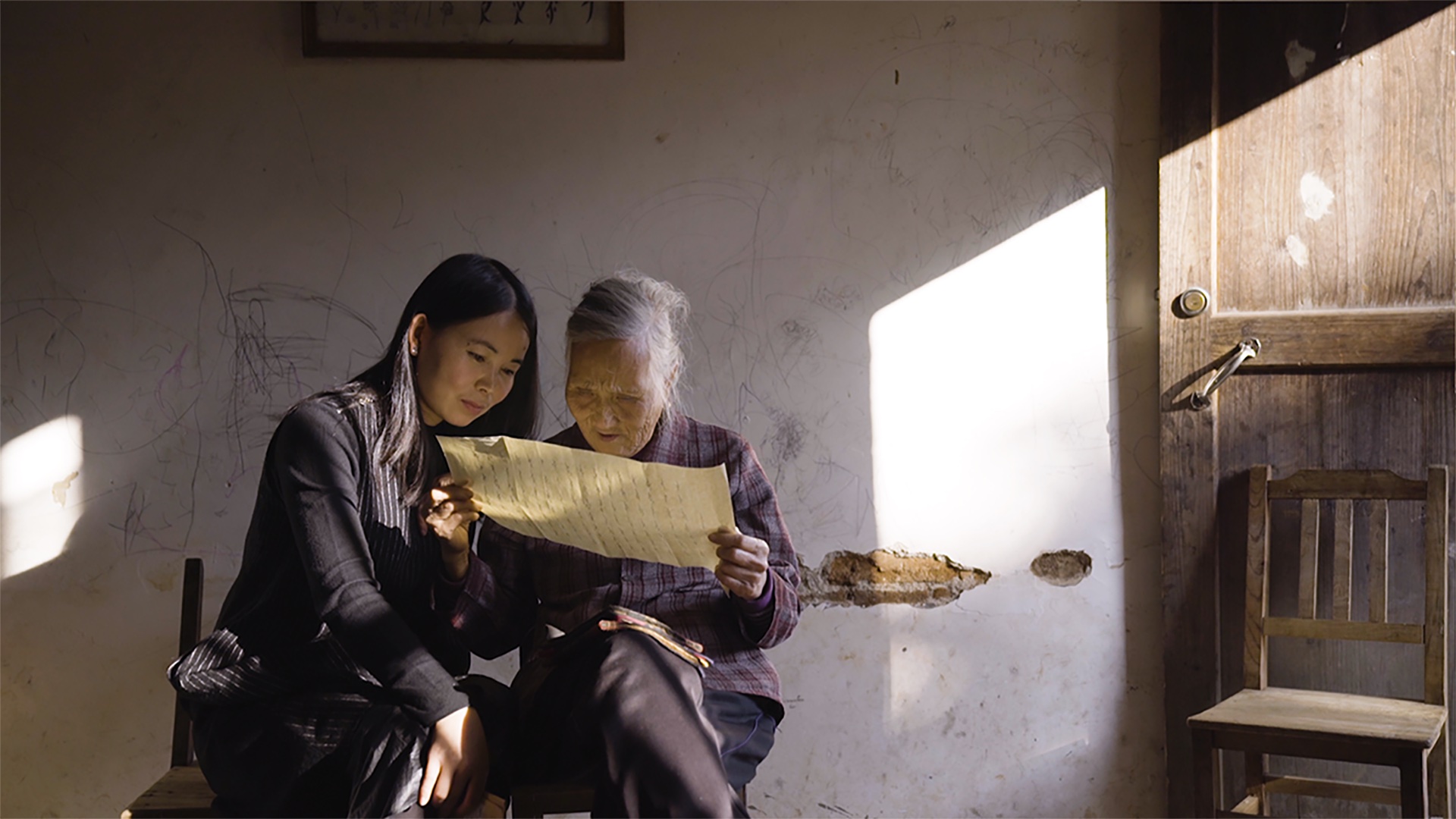
Before Next Spring (如果有一天我将会离开你, Li Gen, 2021)

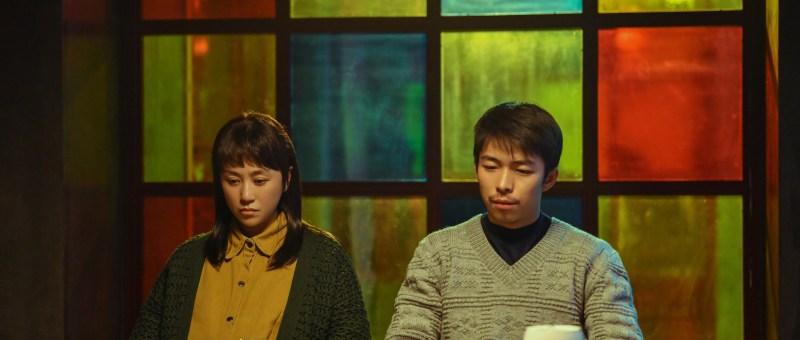
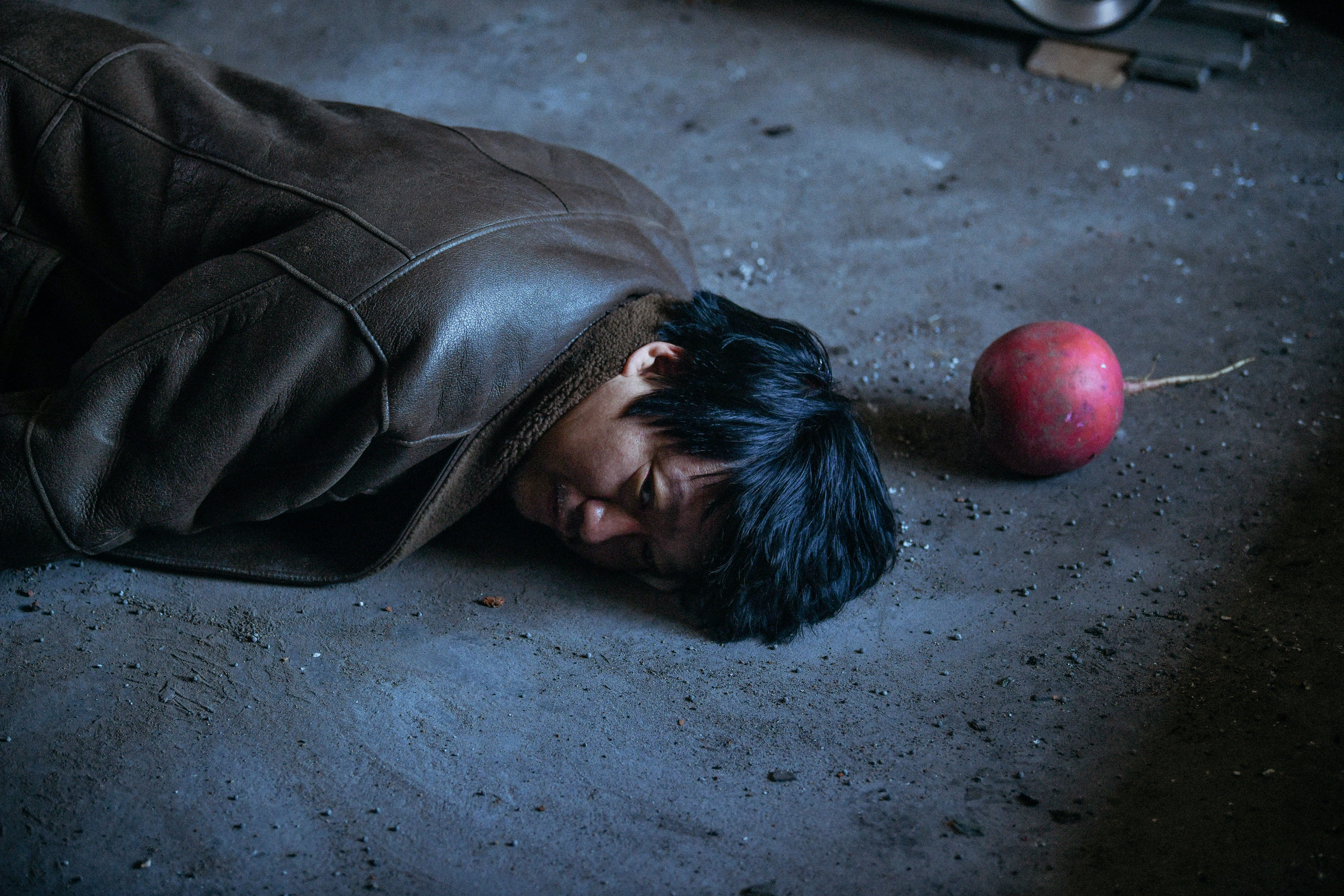
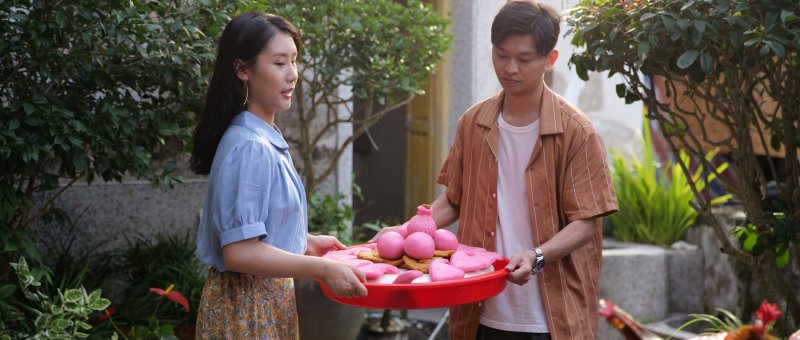
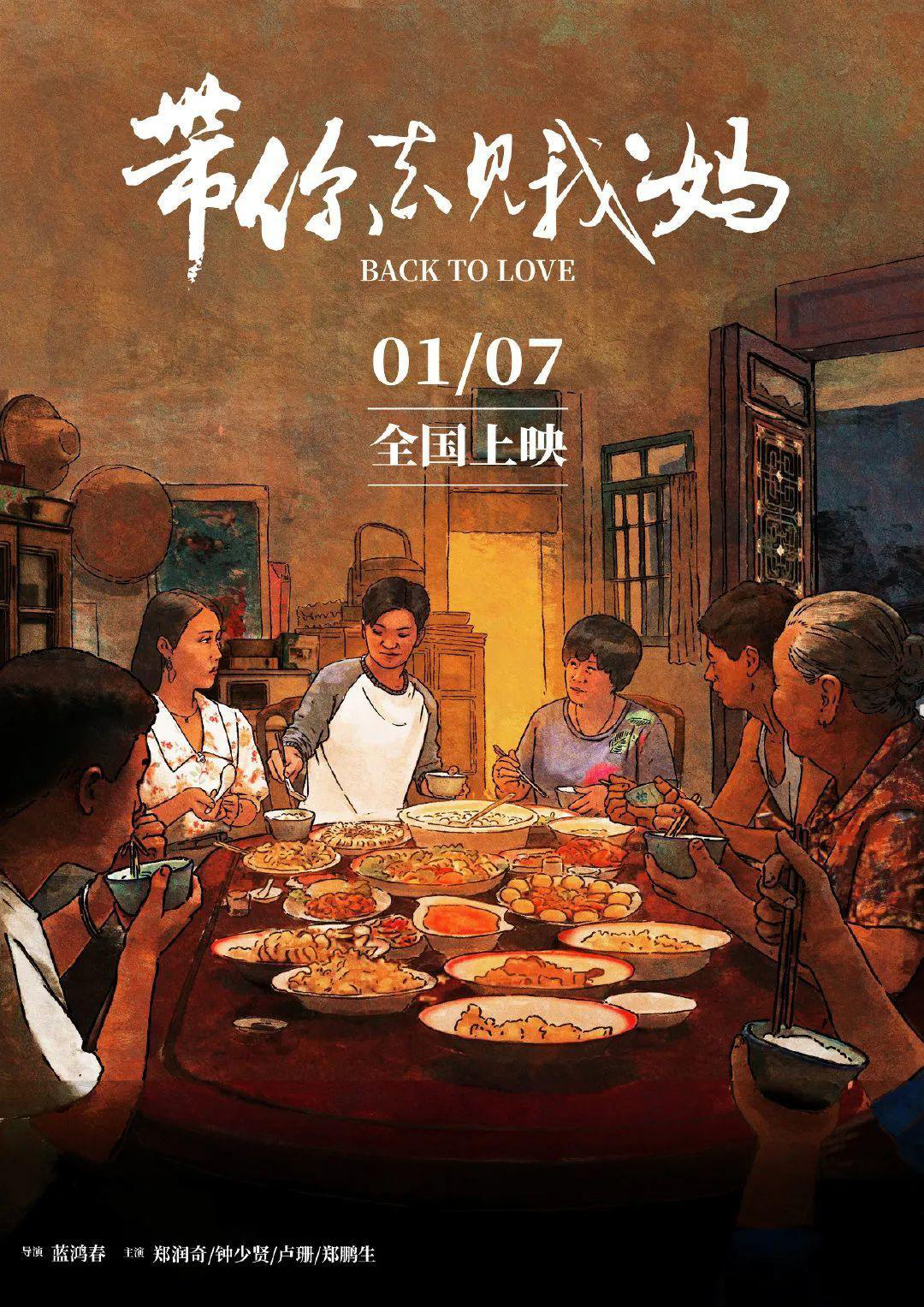
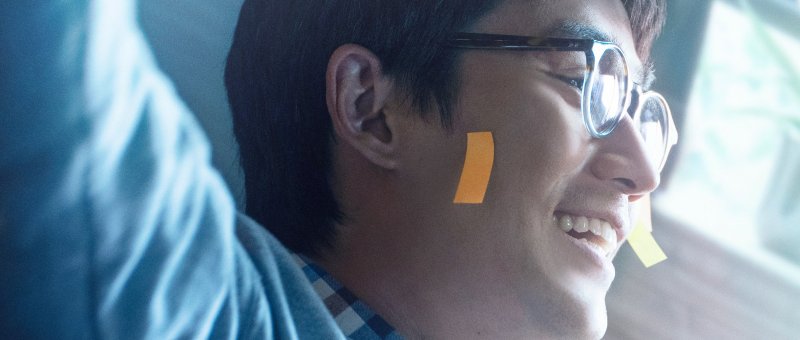
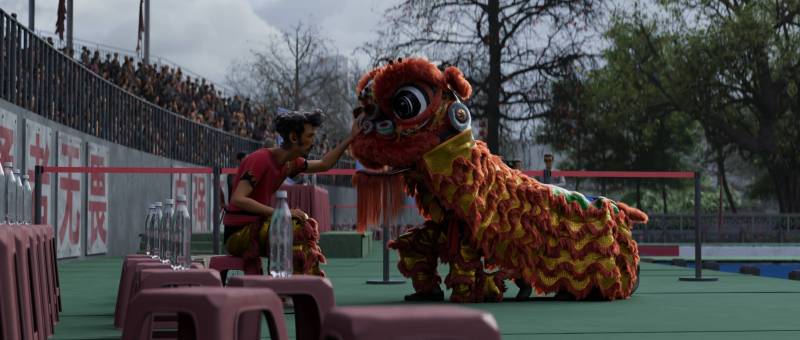
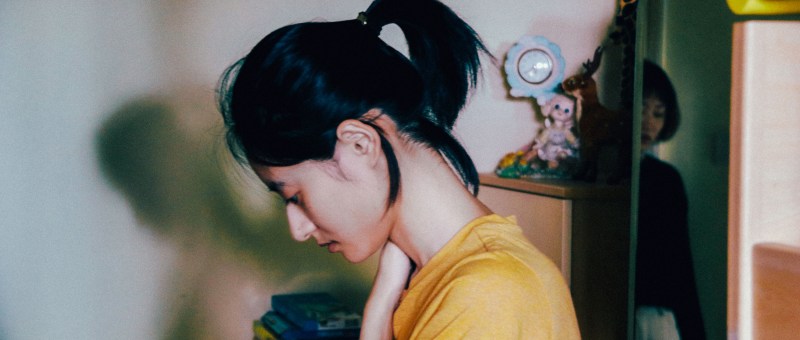
A naive exchange student finds a surrogate family while working at a Tokyo Chinese restaurant in Li Gen’s semi-autobiographical drama, Before Next Spring (如果有一天我将会离开你, rúguǒ yǒu yī tiān wǒ jiānghuì líkāi nǐ). Though it becomes obvious that almost everyone has come to Japan as a means of escape from personal troubles, the disparate collection of migrants eventually find solidarity with each other as they attempt to settle in to life in another culture while bonding with similarly troubled locals themselves excluded from mainstream society. 

Li Xiaoli seems to have chosen to come to Japan to find some release from a difficult family situation caused by his father’s illness. His mother had to give up work to look after him so the family have little money but Xiaoli is determined to make the most of his year abroad. When a stint in a supermarket doesn’t work out, his classmate Chiu (Qiu Tian) gets him a job at a Chinese restaurant where her friend/colleague Zhao (Niu Chao) also works. Though Zhao immediately takes against him perhaps out of jealousy, Xiaoli is taken under the wing of the restaurant’s manager, Wei (Qi Xi), who has been in Tokyo for some time but has recently had her application for permanent residence turned down in part because she is not married and has no children meaning the authorities are not satisfied about her longterm ties to Japan. 

Wei’s situation perhaps bears out the precarity of her life in Tokyo and the inability to fully feel at home experienced by many of the restaurant workers. Later it turns out that she is in need of an operation for uterine fibroids in part hoping to improve her chances of conceiving a child thought it’s unclear if her desire is solely to start a family or to give herself a better footing for getting her permanent resident card. Meanwhile the uncertainly undermines her relationship with chef Song (Song Ningfeng) who is undocumented and apparently in frequent contact with another woman who has her residence card already. The restaurant is frequently raided by police on the look out for anyone who might be working illegally, forcing Song to hide behind a fishtank in the basement like a criminal and giving rise to an atmosphere for persecution and anxiety. While the the pair are walking home one evening, they are hassled by a drunk man in the street who bumps into them and then demands they apologise. Song is visibility irritated by the humiliation of being forced to apologise to belligerent xenophobe and struggles to avoid losing his temper. Something similar occurs when a neighbour complains about the noise and then rings the police after hearing Song and Wei arguing, Xiaoli who was present at the time having to pose as Wei’s boyfriend flashing his legitimate student ID for the detectives. 

Xiaoli also makes a friend of the middle-aged Chinese teacher at their school, played in an extended cameo from Sylvia Chang, who hints that in some ways the experience hasn’t changed since she arrived at the tail end of the Bubble era. She recounts working three jobs but being delighted on buying everything she ever could want during department store sales. Only now she’s as rootless and dejected as Xiaoli. Her husband has returned to China, and now she’s living alone trying to redefine her reasons for coming to and staying in Japan. Middle-aged Chef Wan (Chen Yongzhong), who also experiences a unpleasant incident of being accused of groping a woman on a train because he was holding his aching stomach on the way to a hospital appointment, is feeling something similar having dreamed of bringing his family to join him only to now wonder if there’s really any point after so many years apart. 

The moody Zhao, meanwhile, is half-Japanese but has been all but abandoned by his parents and feels nothing for them other than resentment. Caught between two cultures, he insists on being called by the Japanese reading of his first name, Aoki, rather than the Chinese, Qingmu, and makes a point of talking to Xiaoli in Japanese rather than Mandarin despite being aware that his language skills are still undeveloped. He is in deep love with Xiaoli’s schoolfriend Chiu who works as a hostess in addition to her gig at the supermarket but is too diffident to say anything and though she seems to care for him she makes it clear she does not intend to wait.  

The sense of loneliness each of them feel is echoed in the melancholy tale of an older couple who run a hairdresser’s and had no children of their own, finding themselves unanchored in their old age but discovering a place for themselves at the Chinese restaurant. The only Japanese worker, Watanabe who develops a maternal relationship with Zhao, finds something similar while working a second job at a supermarket raising her children and trying to care for her elderly mother. Told over the course of a year with Xiaoli’s departure date already set, Li Gen’s lowkey drama is content with a lack of resolution that suggests time in motion marked by a series of partings some of which may be more permanent than others but each in their own way meaningful.


Before Next Spring screened as part of this year’s New York Asian Film Festival.

Original trailer (Traditional Chinese / English subtitles)

Images: © Huace Film & TV (Tianjin) Co., Ltd.

The Funeral (頭七, Shen Dan-Quei, 2022) 

“They’re your family, they won’t hurt you anyway” a little girl is consoled on suggesting that her relatives’ home may be haunted but it’s a statement which seems remarkably naive given the toxic situation at the centre of Shen Dan-Quei’s gothic drama, The Funeral (頭七, tóuqī). There may well be supernatural goings on, but the root of the problem remains familial exile and the outdated social codes which lead to it causing nothing but misery and loneliness for all concerned. 

Single mother Chun-hua (Selina Jen Chia-hsüan) hasn’t seen her family in a decade. She works several jobs trying to support herself and her daughter Qin-xuan (Bella Wu) who is seriously ill and on the list for a kidney transplant. When in the opening scene she begins to suspect a ghost has entered the convenience store where she works nights, it’s impossible to tell if she’s actually being haunted or is just tired and anxious. In any case, she’s later let go from that job after a co-worker complains about her falling asleep on shift which is right about when she gets a call from her estranged uncle (Nadow Lin) to let her know her grandfather, whom she had been very close to as a child, has passed away and she should come home for the funeral. Chun-hua is however reluctant because she evidently fell out with her authoritarian father (Chen Yi-Wen) when she left home and returning now is awkward in the extreme. 

Having set the scene with Chun-hua haunted in the city, Shen moves the action to the creepy gothic mansion where she grew up which does indeed seem to be a spooky place defined by its hostile atmosphere. Her father wastes no time telling her that she’s not welcome, but Chun-hua holds her ground and insists on being allowed to pay her respects to the only member of the family who seems to have shown her any affection. Later flashbacks suggest a concrete cause of the family’s disintegration, but then Chun-hua’s father seems to have taken against her even in childhood apparently refusing to allow her to celebrate her birthday with her sister seemingly also resentful of her for no clear reason. Though her mother clearly loves her, she cannot defy her husband and is unable to defend her daughter. The only one of the family privately happy to see Chun-hua, even her mother eventually tells her it would be better if she returned to Taipei as soon as possible given the awkwardness of the situation. 

Then again, as we later learn, she may have another reason in mind though this attempt to reframe the family’s animosity towards Chun-hua is a little problematic in suggesting they are cruel because they love her and want to her leave the toxic environment of the house to save her from its poisonous legacy. The grandfather may have been the only one to show her love, but it is his failings that have created division within the family causing some to feel rejected, excluded from the circle for no fault of their own. Her father’s rejection of her is in its own way similar, even if we later see him remorseful realising that his authoritarian parenting has cost him his daughter.

There may be a lot of supernatural action with the taoist priest permanently engaged in rituals over the grandfather’s body, but the darkness and resentment is purely human, born of loneliness and rejection in a lack of love and respect between those who are related by blood. Qin-xuan is at a disadvantage in knowing nothing of her extended family or mother’s relationship to them, she also rejected on arriving for the funeral. The place is indeed haunted beyond the scuttling figures that seem to catch their eyes and laden with the heavy atmosphere of the family’s inherent toxicity. But then through this extremely dark event, the relationship between mother and daughter is in its own way strengthened not least in Chuan-hua’s selfless determination to save her daughter from her own familial curse not to mention her medical precarity. Even so, the melancholy conclusion may hint that the toxic familial curse cannot be completely cured and is destined only to repeat itself in a perpetual cycle of hauntings. 


The Funeral screened as part of this year’s New York Asian Film Festival.

Original trailer (Traditional Chinese/English subtitles)

Images: © PINOCCHIO FILM CO. LTD

Mama Boy (初戀慢半拍, Arvin Chen, 2022)

A diffident young man gets a few lessons in love after falling for a middle-aged madam in Arvin Chen’s charming romantic dramedy, Mama Boy (初戀慢半拍, chūliàn mànbànpāi). The English-language title at least is a kind of pun, the awkward hero both described as a mother’s boy and falling for the mama of a hotel providing sexual services, but also hints at the awkwardness involved in his attempt to assert his independence at the comparatively late age of 30 by choosing to spend time with a mother the polar opposite of his own. 

Xiao-hong’s (Kai Ko) mother Meiling (Yu Tzu-yu) describes him as “shy”, though the mother of one of the girls she attempts to set him up with less charitably brands him “not normal”. Not normal is closer to the way Xiao-hong thinks of himself, wishing his mother would stop with the blind dates knowing that in his awkwardness he ends up making women feel uncomfortable and has no idea how to talk to them. His sleazy cousin/boss at the tropical fish shop where he works, insists on taking him to an exclusive brothel where he is instantly captivated by the middle-aged madam, Sister Lele (Vivian Hsu). Too shy to say anything, he continues returning to the hotel and hiring a sex worker to sit blankly in the room solely for the opportunity of exchanging a few words with her. 

The two of them are in a sense in similar positions, a mother frustrated by a wayward son, and a son frustrated by his possessive mother. Some of Xiao-hong’s attraction at least is maternal in seeking a freer parental hand. Unlike his mother, Lele boosts his confidence by making him believe that he’s alright and girls are going to like him, while taking him to cosy nightspots and teaching him the basics of romance. She meanwhile admires him as an ideal son the polar opposite of her own. Weijie (Fandy Fan) only contacts her to ask for money (his father no longer answers his calls) and seems to be involved in several dodgy get rich quick schemes the latest of which is selling knock off wine while he’s also got himself in trouble with loansharks. 

There is something a little uncomfortable in the contrast presented between the two women, the prim and proper mum Meiling raising a sweet, polite child like Xiao-hong who nevertheless lacks several important life skills because of her overparenting, while the child raised by former sex worker Lele is a no good two bit wise guy. Lele certainly seems to see Xiao-hong as a symbol of her failed maternity believing that his mother must have raised him well while she blames herself for her son’s failings feeling as if she couldn’t give Weijie the attention he deserved because she was a single mother who had to work to support him. 

Meanwhile they are also each lonely, Xiao-hong shy and isolated and Lele spending her nights drinking alone in bars being chatted up by sleazy men. Spending time together they develop a tentative bond of love and affection only to find their connection interrupted by Weijie and Meiling each of whom obviously disapprove. Meiling has a suitor of her own in a retired police academy professor she rejects out of a sense of repressive properness but eventually warms to after feeling she needs police assistance to reclaim her son from Lele realising that he’s stopped picking her up from work in order to give Lele lifts instead. 

Despite the romantic themes, both women are essentially reduced to the maternal through their experiences with good son Xiao-hong, Lele trying to patch things up with the wayward Weijie while Meiling realises that she’s overstepped the mark and and will have to let go a little to let Xiao-hong live his life or risk turning him into a perpetual mother’s boy who’ll be all alone once she’s gone. Xiao-hong meanwhile begins to gain confidence, asserting himself as an individual free of his mother’s control now no longer so diffident in talking to women thanks to the patient ministrations of Lele. With its quirky production design and fairytale atmosphere Chen’s tale of first love delayed is also one of unexpected connection and mutual acceptance that perhaps missteps in effectively negating the relationship at its centre but nevertheless has only sympathy for its lovelorn hero. 


Mama Boy screened as part of this year’s New York Asian Film Festival.

Original trailer (English subtitles)

Images: © 2022 Filmagic Pictures Co.

Life For Sale (售命, Tom Teng, 2021)

A nihilistic insurance broker chases existential validation in Tom Teng’s darkly comic crime drama, Life for Sale (售命, shòu mìng). Drawing inspiration from the novel by Yukio Mishima by the same name, the film takes aim at the commodification of life under a relentlessly capitalist society while its hero gradually discovers liberation in reaching an accommodation with death that begins to give meaning to his existence. Sucked not only into local gangster intrigue but shady international conspiracy, he finds himself forming a tentative relationship with an equally depressed neighbour who has troubles of her own. 

Ironically enough, Liang (Fu Meng-po) is a life insurance broker which quite literally means it’s his job to figure out exactly how much a life is worth. As for himself, he’s convinced his life is worthless and is obsessed with the idea of suicide while seemingly reluctant to actually die. He looks up banal ways to end his life on the internet and discovers that almost everything including carrots, cinnamon, and chewing gum, becomes poison if you consume enough of it. When he’s called into his boss’ office shortly after punching an irritating colleague in the face, he’s given a good idea of what his own life is worth when she tells him that the company bought a year of it with his salary but he’s been a poor investment and has actually cost them money through this rubbish sales record. It’s at this point he decides to call the corporate life quits and, taking inspiration from a copy of Life for Sale he found on the bus, decides that he should try monetising his life by selling it on the internet. 

His first offer is from creepy gangster Wang who repeatedly claims there’s nothing in the world his money can’t buy. He wants to send Liang on a dangerous mission to retrieve his wife’s dog from a rival gangster who’s kidnapped it, while a mysterious woman is also trying to recruit him for some kind of experimental research programme. Perversely he continues to think of his life as his own even having sold it resenting those who now think they own him and contemplates suicide as an expression of his autonomy. He comes to realise that his life is the one thing he has while simultaneously accepting that having lost it he is effectively dead already and has nothing left to lose. The realisation is liberating, his nihilism intensified as he resolves to do whatever he can to survive in part so that he might save others. 

Having begun with a darkly humorous take on the dehumanising nature of modern capitalism in which there is a price tag on each and every life, the film slides towards existential contemplation as Liang finds himself caught in the crosshairs not only of internecine gangland drama between the sinister wang and flamboyant Liao mediated though a chaotic hit on a dodgy policeman, but of an international conspiracy which is intent on doing something not entirely ethical to his body. Despite his newfound ruthlessness he is effectively emasculated firstly by the mysterious woman who tells him that he is a coward who does not deserve to be called a man and then by his neighbour who having lost faith in him declares that she will have to save her son herself thereby defining the value of her own life. 

All the while, Liang is plagued by a little bug that follows him around and seems to lead to trouble while perhaps echoing his capacity to survive. When he asks someone why they continue to smoke despite knowing the risks, he is ironically told that everyone has a little bit of a death wish and continues to leverage his own in a determination to at least make his death if not his life mean something. Then again, even post transformation he can’t seem to escape from the world in which everything is for sale agreeing to sell his life but drawing the line at his soul. On the run though perhaps no longer from himself, Liang has at least gained a new appreciation of the value he places on his own life and those which define the lives of others if strangely unaffected by failure or tragedy. Quirky production design and comic book-esque absurdity hint at the underlying satire but also contribute to a kind of origin story for a superhero escapologist looking for agency in a continually exploitative existence. 


Life For Sale screens at Lincoln Center 24th July as part of this year’s New York Asian Film Festival.

Original trailer (Traditional Chinese / English subtitles)

Ode to the Spring (没有一个春天不会来临, Zhou Nan, Zhang Chi, Dong Yue, Tian Yusheng, Rao Xiaozhi, 2022)

There isn’t any denying that the last two years have been extremely difficult for everyone all around the world. Multi-strand “main melody” drama in praise of frontline workers Ode to the Spring (没有一个春天不会来临, méiyǒu yī gè chūntiān bùhuì láilín) may in itself be slightly optimistic in that its perspective is clearly one assuming that the worst is over and the pandemic is largely a thing of the past. Ironically the film’s release, previously scheduled for April, had to be delayed until the early summer because of rising cases in Mainland China. Nevertheless, its messages of hope and the importance of community have lost none of their power while the film’s willingness to admit that some things could have been handled better, even without expressly stating by who, is surprisingly subversive. 

Structured as a multi-strand drama rather than a traditional omnibus movie, the film follows five groups of people mainly in Wuhan at the beginning the outbreak. The first story revolves around a young man, Nanfeng (Yin Fang), whose relationship with local florist Xiaoyu (Zhou Dongyu) had become strained by his decision to move to Shanghai to earn more money for their future. As the New Year Spring Festival approaches, he returns to Wuhan in an attempt to patch things up oblivious of the new disease engulfing the city. Xiaoyu and her mother, who had not approved of him, have each been hospitalised but were separated in the chaos and are now in different hospitals with no way to stay in touch. In a mild rebuke to modern day consumerism, the message that Nanfeng is forced to learn is that he should have been thinking how best to support his community rather than leaving to make more money in Shanghai. Running all around town looking for Xiaoyu’s mother, he eventually wins her approval but is simultaneously warned that he is too impulsive and should think more about what it is others actually want rather than giving them what he thinks they should have. 

Meanwhile a pair of migrant workers struggle to make a living but are given a load of face masks and told to sell them in Wuhan. They too are little aware of how bad things have already become. The older of the drivers is rebuked by his wife because he hasn’t come home in several months and his daughter is beginning to forget him. Though they become increasingly afraid of infection, the truckers maintain their compassion helping an elderly lady and her granddaughter, whose parents are already in a quarantine centre, get to a hospital and then deciding that perhaps they shouldn’t be trying to profit from the pandemic no matter their own desperate circumstances. 

Then again, the film is surprisingly frank about the supply problems in the hospitals which have already run out of high grade medical masks while medics are close to burn out. A doctor is forced to sleep in his car because he’s technically on call. His wife, a nurse, chooses to join him rather than stay in the hotel room they’ve been provided while their son is cared for by his grandparents. He calls a man to tell him his father has passed away and ask for additional documentation to release the body, but the grieving son is himself in a quarantine centre as are all the other family members who have so far survived. The inability to save a fellow doctor who was shortly to become a father almost breaks him, while his wife wonders what’s to become of their son if they should both fall ill. Despite having scolded the boy on the phone about not doing his homework, the doctor has recorded a poignant voice message for his son just in case letting him know that he bought him the toy he wanted for his birthday and has been paying attention even if it didn’t seem like it at the time. 

The themes of parental separation echo through each of the stories, Xiaoyu is separated from her mother, the trucker cannot return to his family because of the lockdowns and his precarious financial position, and the doctor is staying away from his son to treat the sick. In the final strand, a naughty little boy obsessed with legendary child warrior Nezha is separated from his doctor mother (Song Jia) who is despatched to Wuhan to help with the relief effort while his father (Huang Xiaoming), unused to taking care of him, is preoccupied because he unwisely invested in buying a bus he cannot now use because no one is allowed to go anywhere. The boy dreams of visiting a local Buddha statue and getting him to “awaken” from his “quarantine” to show the virus who’s boss only for the Buddha to let him take on Nezha’s form to stamp on those nasty viruses so his mum can come home.

Similarly, the head of a local neighbourhood committee struggles to deal with complaints about a young woman playing piano at all hours while left home alone because her mother is a doctor staying at the hospital. Mr. Wang (Wang Jingchun) becomes something of a local hero, selflessly caring for the residents of a series of apartment blocks ensuring they get food deliveries and dealing with disputes. When he comes down with a fever and has to isolate, the whole block turns out their lights in support waving the torchlight on their phones like tiny stars shining in the distance. It’s here that the film’s real message lies in praising the value of community, not just the doctors and frontline health workers but the civil servants who kept everything running and the ordinary people who did their best to follow the rules and stay at home, while also hinting at some of the failures in the response from the random veg that keeps turning up at the depo to lack of PPE and the total disregard for the migrants stuck far from home in the midst of an economic collapse. Shot by five directors, the strands each have idiosyncratic flare from the chaotic handheld of the hospital scenes to the gentle romance of Nanfeng’s quest and the cheerful adventures of the would-be-Nezha but are otherwise of one voice in the film’s consistent messaging of mutual solidarity and praise for frontline workers. 


Ode to the Spring opens in UK cinemas on 8th July courtesy of CineAsia.

International trailer (English subtitles)

Dwelling in the Fuchun Mountains (春江水暖, Gu Xiaogang, 2019)

“The family should be peaceful and united” according to an exasperated aunt but then again “family is a pain”. Gu Xiaogang’s stunning debut feature Dwelling in the Fuchun Mountains (春江水暖, chūn jiāngshuǐ nuǎn) takes it name from a famous classical painting and unfurls a tale of familial strife born of intergenerational tension which is also a tension in the earth between new and old as this “traditional Chinese landscape” as someone describes it pointing at another painting is gradually eroded by a destructive modernity. 

This ambivalence is clear in the opening scene which takes place in the family restaurant where they are currently celebrating the 70th birthday of the family’s matriarch. What first seems atmospheric, even romantic as someone describes it, in the candlelit space is revealed to be simply a power cut and a symptom of the imperfect modernity visiting itself on the town. In any case, grandma later collapses in the process of handing a red envelope to her grandson and is taken to hospital where it is revealed that she has suffered a stroke which has accelerated the course of her dementia. The question then becomes who will accept the responsibility of caring for her with each of her four sons secretly hoping that someone else will volunteer. 

Grandma is in many ways the film’s moral authority, at one point quite literally adrift in the modern society. She no longer recognises her daughter-in-law Fengjuan (Wang Fengjuan) and avoids taking her medication believing that she’s being poisoned but pines for her youngest son whom she says spends the most time with her and is the most obedient but in fact appears the least interested of all the brothers. When he finally visits her to show off the fiancée everyone told him he had to get to put her mind at ease before it’s too late all she can do is stare at the moon. On the other hand, she is the one firmly on the side of the young, telling her granddaughter Guxi (Peng Luqi) to marry a man she chooses for herself rather than be swayed by the wishes of her parents and wind up miserable as she herself seems to have been. 

Guxi is in a relationship with local teacher Jiang (Zhuang Yi) who might otherwise be thought a catch in that he has a good job and stable income as well as access to a preferential mortgage programme for those in his profession, but Fengjuan envisions more insisting Guxi marry the son of an influential businessman in part to ease her own financial worries. As Guxi suggests, her mother’s idea of happiness is different from her own. Having suffered privation in their youth the older generation prioritise material comfort but in their old age may become lonely or resentful in the emptiness of their familial relationships. Yet to defy her parents’ wishes is emotionally difficult, her eventual decision to choose Jiang over them a minor revolution.

Meanwhile the lives of each of the brothers is overshadowed by debt both financial and moral in the continual horse trading of family life. Third brother Youjin (Sun Zhangjian) is a petty gambler in trouble with loansharks who eventually trash oldest brother Youfu’s (Qian Youfa) restaurant trying to get him to pay up, while second brother Youhong (Sun Zhangwei) and his wife are owed money from various parties but eventually come into some by making themselves homeless agreeing to sell their home to developers intending to cash buy a fancy apartment for their factory worker son and the bride which has been picked out for him. “We lived here for 30 years. It was demolished in three days” Youhong’s wife laments as the city is demolished and rebuilt all around them in preparation for the 2022 Asian Games. The promised new transport connections ironically emphasise how much they will add to the town by making it quicker and easier to go somewhere else but there is a genuine sense of poignancy in Gu’s slow panning motion through a derelict apartment across to the shiny new one about to be completed behind it. 

In one of the soon-to-be dismantled buildings, the youngest brother recovers a suitcase with a love letter inside it dated April 1989, a relic from another China though telling the same old story of young love thwarted by parental authority. Closest to her grandmother and third uncle Youjin who eventually reclaims her from the old person’s home where the other brothers had decided to send her while caring for his 19-year-old son with Down’s Syndrome, Guxi brands her family selfish and laments that they can’t get past all of these arcane rules and petty power games to love and support each other as a family should ironically taking grandma’s advice in refusing to perpetuate the cycle of resentment by marrying a man she doesn’t love just to please them. Gu films this unfolding tale with a series of breathtaking tracking shots along the river as if running one’s eyes over a scroll painting while giving in to the oneiric quality of the rolling mists that hang over this changing landscape. Apparently the first volume of a trilogy of films set along the Fuchun river, Gu’s minimalist epic is a poignant evocation of a hometown memory both transient and eternal.


Dwelling in the Fuchun Mountains streamed as part of Odyssey: a Chinese Cinema Season.

Original trailer (English subtitles)
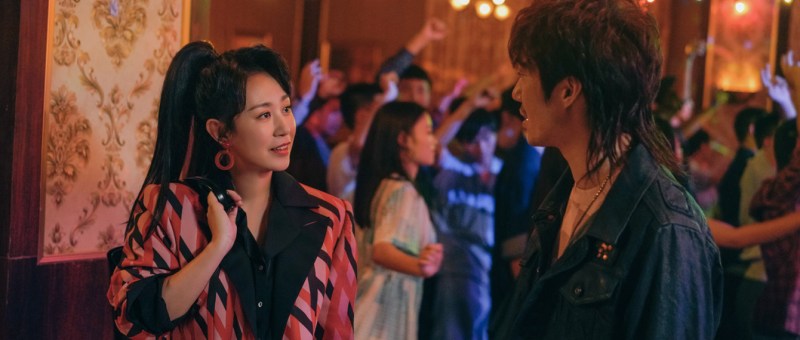
Drifted in Life (流水无尽, Shen Lianlian, 2021)

“People leave eventually. We’ve spent enough on him” the wife of a man drifting between life and death eventually concedes in Shen Lianlian’s indie drama Drifted in Life (流水无尽, liúshuǐ wújìn). In the modern China it seems everything has a price, not least a human life, but more than that it has a debt which must be satisfied at all costs. This is something with which the disparate members of a small family beset by lingering tragedy are each faced as they try to negotiate new paths forward while bound by ancient loyalties and traditions. 

This is certainly true for Keyu whose parents weren’t even going to call him when his grandfather is left in critical condition after a bathhouse accident lest they disrupt his working life. According to the incredibly offhand and somewhat insensitive doctors Renkai’s case is hopeless, his spine is severed at such a point that he has lost connection with his lower body and almost certainly will not be able to breathe without a ventilator. The family start planning the funeral on the car ride home, but the grandmother finds it impossible to let her husband go insisting that they leave him in the hospital just in case a miracle may happen while the rest of the family do what they can to sort out the bills, the originally unsympathetic doctor eventually warming to them in their devotion and agreeing to use an expensive drug to alleviate Renkai’s symptoms while reminding the grandmother that he will not recover.  

Kebo, Keyu’s bother, becomes indignant and enraged taking it out on the owner of the bathhouse for his apparently lax safety standards only for him to justify himself that he’s only a “small business” an excuse that becomes a refrain justifying commercial entities’ exploitation of employees and avoidance of complying with regulations. Keyu too is worried about “restructuring” at his company, while his wife’s is constantly laying people off and she fears for her own job while dealing with a temperamental diva artist who accuses her of being a sellout only interested in making money out of him. Meanwhile he ends up crushed between two conflicting loyalties seeking to make use of his relationship with an important client tasked by both the company that he works for and a desperate childhood friend with a “small business” of his own. Both Keyu and his wife opt for a kind of escape, he by betraying his company to put his friend forward for the contract and she starting a side hustle with the artist that seems like it will end up being more trouble than it’s worth but each of them wind up betrayed by their own choices. 

And then there’s the bad example their working culture seems to have been setting for their small daughter Weiwei who takes her new managerial responsibilities too seriously when made a monitor at kindergarten apparently hitting another child while collecting homework. Kebo meanwhile is also filled with resentment plunging his family, including his pregnant girlfriend to whom he is not yet technically married it seems for financial reasons, into even more debt after getting arrested for attacking the bathhouse owner and facing a lengthy sentence while his father ironically does something similar by getting into an altercation with a neighbouring stall owner after deciding to resume his butchery business to help pay grandpa’s medical bills. The matter is only resolved thanks to a neighbour who has a connection in the local police pressuring the bath house owner to back down and agree to a settlement out of court. 

Grandpa’s life becomes accidentally commodified as the family tot up how much it’s costing them to keep him in the hospital, even grandma eventually conceding that he has very little quality of life while coming to terms with her grief almost as if she were satisfying herself that they’d done “enough” to fulfil their obligation to him at least in monetary terms. “What’s the point of living like that?” Weiwei had tried to ask her dad, wondering why they’re keeping her grandfather alive while he drifts between life and death unable to communicate though she might as well be taking about herself or anyone else caught between the contradictions of the modern China and looking for release from its purgatorial grip. 


Drifted in Life streamed as part of Odyssey: a Chinese Cinema Season.

Original trailer (Simplified Chinese / English subtitles)

Ip Man: The Awakening (叶问宗师觉醒, Zhang Zhulin & Li Xijie, 2022)

“Someone must stand up to injustice!” according to the young Ip Man (Miu Tse) newly arrived in Hong Kong and witnessing the abuses of colonialism first hand. A kind of origin story, the latest outing for the legendary hero, Ip Man: Awakening (叶问宗师觉醒, Yè Wèn zōngshī juéxǐng), has its degree of political awkwardness but essentially finds the young master coming to an understanding of the purpose of martial arts while realising that sometimes you have to play the long game and not every problem can be solved with Wing Chun alone. 

This is something he discovers after stepping in to protect a young woman and her mother who are being hassled by muggers on a street car. Evidently, the thieves seem to have been emboldened and assume themselves to be under no threat from the passengers, driver, or indeed law enforcement and were not expecting to be challenged. Unfortunately, however, Ip Man’s gallant defence of the two women only brings him a whole mess of trouble in a new city in irritating a local gang who are it seems linked to arch villain Stark. A corrupt British official, Stark has been colluding with local police to run a lucrative people trafficking operation though even they are becoming worried by Stark’s increasing arrogance brazenly snatching young women off the street to sell abroad.  

According to Stark, there are only two kinds of people, cheap and expensive, which bears out his imperialist worldview. Yet, Ip Man himself is perhaps awkwardly positioned as a Mainlander fighting colonial oppression in Hong Kong. According to his apathetic friend Feng perhaps it doesn’t matter who’s in charge because it’s all pretty much the same, but to Ip Man it does seem to matter though given the current situation between the two territories his words cannot help but seem ironic if not directly subversive. He seems to suggest that men like Feng, who later tries to appease Stark who has kidnapped his younger sister Chan, have enabled their own oppression and only by rising up against it can they be free which is it has to be said a series of mixed messages only finally resolved by Ip Man’s reminder that “We are all Chinese” during his final fight battling his way towards Stark.

Nevertheless, the battleground that develops is located firmly within the realms of marital arts with a stand-off between the Chinese Wing Chun and the almost forgotten British fighting style Bartitsu. Not content with subjugating Hong Kong, the British apparently have to prove their superiority even over this sacred territory only they’re as duplicitous and immoral about it as they are over everything else. Even so, Ip Man is able to overcome their blatant attempts to cheat through manipulating Feng and proves that Wing Chun is the best after all while Feng pays a heavy price for his complicity but is later forgiven having learned his lesson. 

What Ip Man learns is that as his teacher points out righteousness requires both wisdom and resources. He can’t expect to solve all the world’s problems by wading in his with his fists and sometimes doing the right thing is going to land him in a world of trouble and complication but even so he has to do it because a “world in which asking for justice is wrong would be truly hopeless”. Perhaps more mixed messages, but leaning in to the Ip Man mythos as a man who stands firm in the face of oppression and fights for the rights of those who cannot fight for themselves. 

Then again, this is a Mainland film and if was surprising that the spectre of police corruption was raised (it’s the British colonial police after all) the conclusion ensures that the authorities will finally get on the case and put a stop to the human trafficking ring once and for all while clearing out the corrupt imperialists. Ip’s sense of righteousness is well and truly awakened in the knowledge that he and his fists can make a real difference even if lasting change requires a little more finesse. With some nifty if occasionally unpolished action sequences Zhang Zhulin and Li Xijie’s take on the classic Ip Man story makes the most of its meagre budget while positioning Hong Kong veteran Tse Miu as the latest incarnation of the ever popular hero.


Ip Man: The Awakening is released in the US on DVD & blu-ray courtesy of Well Go USA on June 21.

Trailer (English subtitles)
Great Happiness (极乐点, Wang Yiao, 2020)

Three young men find their paths to prosperity in the modern China abruptly severed in Wang Yiao’s ironically titled Great Happiness (极乐点, jílè diǎn). Great happiness is to them an ever elusive concept overburdened as they are as children of the One Child Policy caught in the midst of the rapid changes which transformed the nation into the capitalist powerhouse it is today. Each of them is in one way or another failed by that transformation, denied the sense of possibility they are continually promised while repeatedly exploited by a society in which everything really is about money. 

Childhood friends Wang, Sui, and Li are each trying to achieve independent success as “entrepreneurs” in the new society, but are also divided by their contradictory goals. For Li, a spoilt rich kid and ambitious fantasist, it’s not so much money that matters as the appearance of it. He buys BMWs on a whim, but has to run across town to ask his mother for money to invest in his “businesses” while it later transpires that his fiancée Xin with whose family he is in dispute over the financial arrangements of the marriage is actually paying their household bills. Unbeknownst to him his mother’s business is struggling, they’ve already sold the assets he was counting on to fund further business ventures, and while they’ll always support him his parents do not have the capability to bankroll his frequent failures. Needing everyone to see him as a big shot, he books a fancy hotel for the wedding despite Xin’s concerns, slapping down his credit card for the 50% deposit only to have it later declined when trying to pay for the ring. Hooked on another sure thing by dodgy friend Ma, he gets himself in trouble by making an unwise arrangement with a loanshark mortgaging something which might not strictly speaking be his. 

Architect Sui’s fiancée Lisa is wary of Li fearing he’s a bad influence and while she might be right Sui makes a few bad decisions of his own including taking a mistress when she travels to the UK to study abroad. Li is investing in his business which given the construction boom in the modern society ought to be a sure thing though Sui also has an artistic temperament and objects to the essential uniformity of the modern Chinese city. Li doesn’t get why he can’t just pull generic designs off the internet rather than coming up with his own while Sui isn’t convinced by his desire to invest in Wang’s burgeoning media business fearful that it will be just another boom and bust industry soon to be oversaturated by the similarly ambitious. 

Wang has been married four years but is yet to conceive a child much to his parents’ consternation. His burden is all the greater as a son of the One Child Policy meaning the responsibility for continuing the family name lies only with him as his grandfather continually points out. His parents who were once wealthy but lost everything in the late ‘90s industrial reforms are so concerned that they pledge all their savings to an IVF programme while granddad objects convinced that paternity cannot be guaranteed and like the factory boss Wang lies to in order curry favour believes they’d be better off with a shaman. Even in the modern society in which “superstition” is frowned upon such beliefs remain common, the factory boss obsessed with “wealth gods” and seeking to surround himself with men who have recently fathered children in order to increase his luck. 

As might be expected, the IVF programme is not entirely on the level, explaining to the family that they need to sign a confidentiality agreement because the treatment they offer is technically unlicensed. They don’t like to describe it as “illegal” because it’s more like the law just hasn’t been updated yet. Sui encounters something similar when his mother comes down with a mysterious illness that seems to be some kind of rare cancer potentially caused by the pesticides used to grow the apples which she had been fond of eating for the benefit of her health, poisoned by the modern industrial machine just like the polluted fish stocks Wang’s mother had been forcing her daughter-in-law to eat believing they’d help her conceive but may actually have been causing her infertility. The medicine Mrs Sui needs exists, but it’s prohibitively expensive and not covered by insurance leaving the family with little choice than to consider selling everything they own including the apartment purchased for Sui’s upcoming marriage. 

In the contemporary society a man’s worth is measured in square meters according to a jaded youngster but there is something of an economic hubris in the visions of these myriad, identical apartment blocks that no one can really afford to buy. While Li, the naive capitalist, and Sui the flawed intellectual whose disappointed father runs a moribund ping pong school in an old temple almost an embodiment of the ghosts of China’s past, Wang (who shares his first name with the city in which he lives) may actually come out on top flashing his hidden capitalistic fangs in his unexpected ruthlessness while simultaneously under increasing family pressure to have a second child now that the One Child Policy has become a Two Child Policy. “Everything he had was borrowed” the friends lament of Li having learned something of the truth he tried so hard to hide. “Who was he trying to impress?” perhaps missing the point in this ordinary tragedy of the modern China. 


Great Happiness streamed as part of Odyssey: a Chinese Cinema Season.

Original trailer (Simplified Chinese / English subtitles)

Chang’e (常娥, Shen Lianlian, 2021)

A middle-aged woman’s stultifying life in rural China is momentarily enlivened by the arrival of a man who organises ceremonies for the dead in Shen Lianlian’s naturalist drama, Chang’e (常娥, Cháng é). Named for the goddess of the moon in Chinese mythology, Shen’s film finds its embittered heroine lonely and resentful while also consumed with guilt over her desire to feel something more only to have her hopes of a new life dashed and like the goddess find herself alone as if marooned on a distant planet. 

Shen opens the scene with the noisy clanging of the factory where 55-year-old Xiaoxiang (Wang Xiaoxiang) works, its repetitive rhythms marking out her life with dull futility. Foul mouthed and angry, she snaps at those around her not least her 30-year old bachelor son who shows no desire to get married while repeatedly reminding her that there’s nothing he can do but wait until a new apartment he wants to buy becomes available for sale. Meanwhile they discuss the death of a neighbour living in very similar circumstances to Xiaoxiang who is later revealed to have taken her own life. 

This ominous event, however, presents new possibilities to Xiaoxiang who takes a liking to the mysterious middle-aged man who arrives to help them conduct the local death rites despite having previously criticised her neighbours for being unable to carry them out themselves. Because of a lack of available accommodation, Xiaoxiang ends up hosting him in her apartment and enjoying a sense of domesticity long absent from her life as her husband works away and rarely returns home. It’s at this point that she begins having bad dreams finding herself trapped in a rising bucket while the machine hammers behind her or walking around a market where the chicken’s feet remind her of human hands and she notices an embroidered shoe floating in the water. 

Like the goddess Chang’e, Xiaoxiang has a pet rabbit she keeps in a cage with whom she closely identifies unable to escape the prison of her own existence yet her eventual parting with the creature is less liberation than resignation or even a kind of suicide. Meanwhile she watches a rocket, Chang’e 5, launch for the moon while seated firmly on her sofa. The mysterious man’s arrival may raise the sense of possibility, of a new more emotionally fulfilling life, but he is also of course a spectre of death hovering on the horizon. Along with the paper houses constructed for the ceremony, Xiaoxiang passes fires in front of graves confronting her with the ever present threat of mortality. She is told that the cause of her nightmares lies in having offended the dead for whom she must burn more sacrifices yet nothing seems to cure her anxiety or loneliness. 

In a sense Xiaoxiang is performing her own death rites while coming to an accommodation with the idea that her life will have no more changes, as certain and repetitive as the machine which she operates. Shen captures the crushing disappointment of her small-town existence where even small pleasures such as buying a new coat are guilt-inducing luxuries with an unforgiving naturalism. Xiaoxiang gossips with a colleague suspecting that one of the other workers is being harassed by their boss but otherwise does nothing, her friend reminding her she no longer needs to worry about things like that as she is “not as pretty” as the unfortunate young woman. Using a cast of non-professional actors, the lead actress is indeed a factory worker from the director’s hometown, Shen lends an air of futility to the lives of women like Xiaoxiang while likening her to the distant and melancholy figure of Chang’e who finds herself alone, marooned on a lonely planet solely for her transgressive desires for emotional fulfilment in a life of stultifying productivity. 


Chang’e streamed as part of Odyssey: a Chinese Cinema Season.

Original trailer (simplified Chinese / English subtitles)