Daughter’s Daughter (女兒的女兒, Huang Xi, 2024)

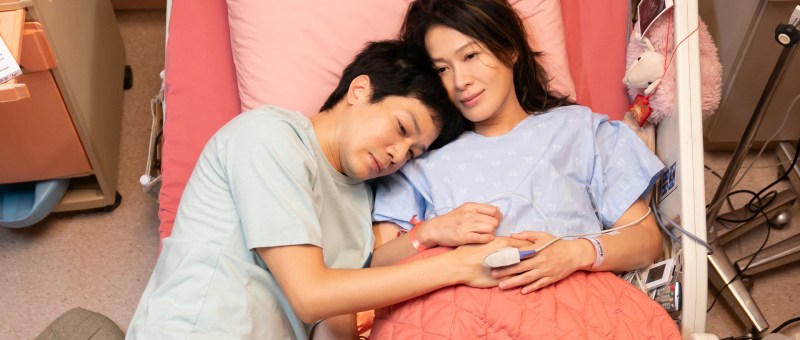
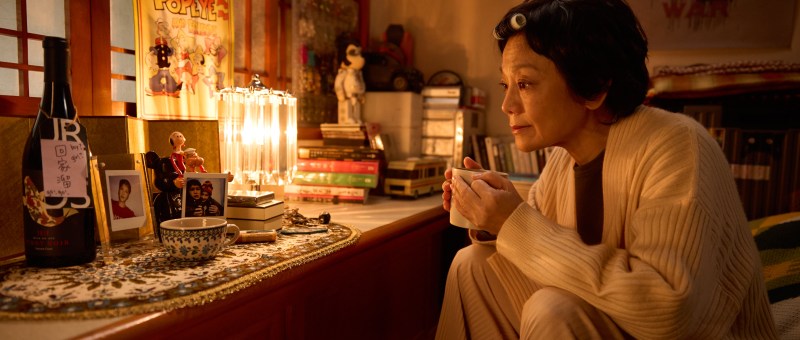
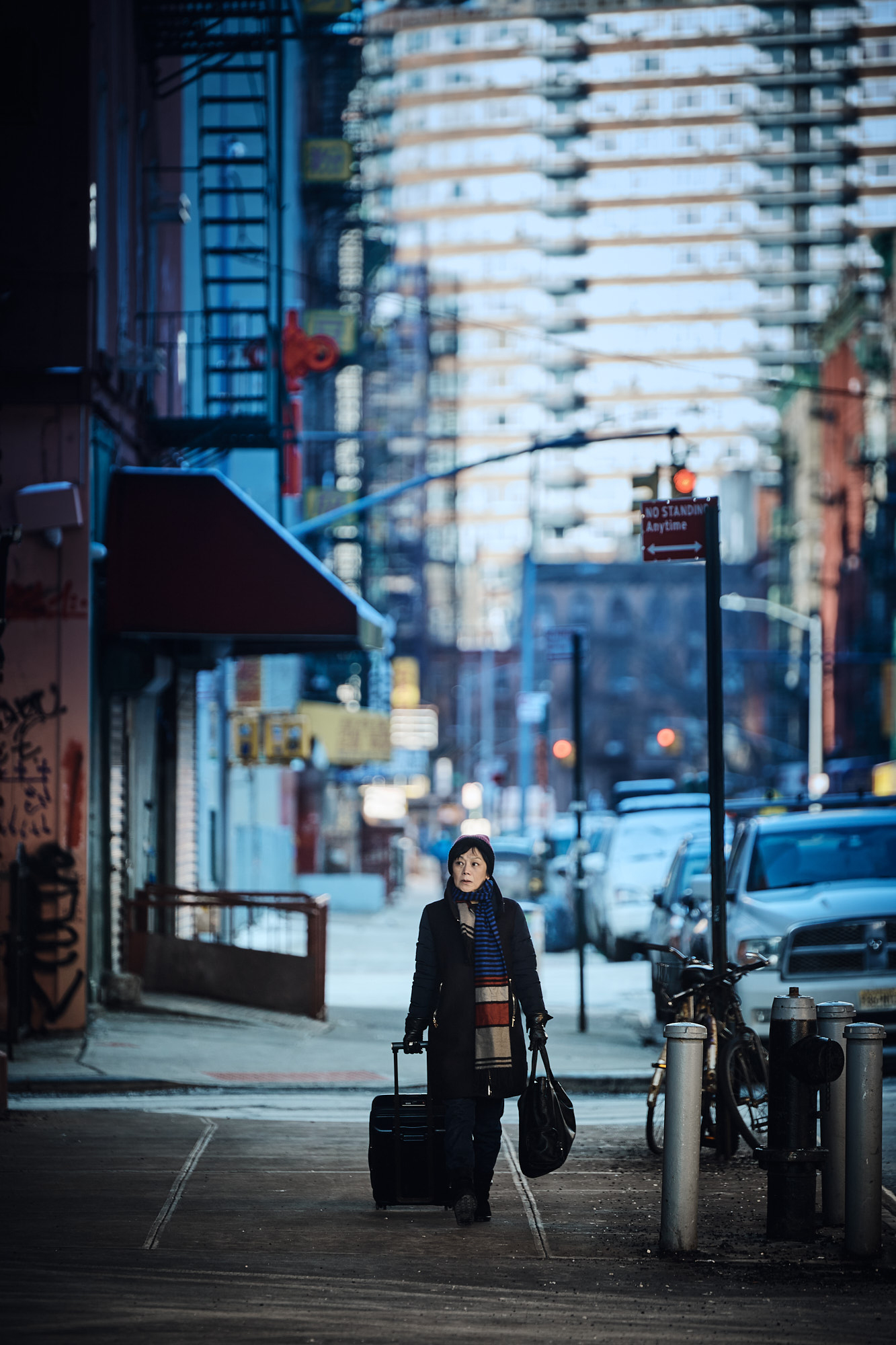
Never having fully dealt with the trauma of her teenage pregnancy and decision to give her child up to be raised by a family friend, 64-year-old divorcee Jin Ai-xia (Sylvia Chang Ai-chia) finds herself in an eerily similar position on on learning that the daughter she raised in Taiwan has been killed in a car accident in New York where she was receiving fertility treatment. The process resulted in a healthy embryo of which Ai-xia now finds herself the “guardian”. She is given four options, keep the embryo in storage and pay to renew the contract when it runs out, find a surrogate to carry to it term, donate it to another couple, or have it destroyed.

The fact that there are eight months left on the contract that her daughter Zuer (Eugenie Liu Yi-er) signed makes this almost another pregnancy which Ai-xia must decide whether or not to continue. Keeping the embryo in storage only defers the decision and traps it in the same mental space in which Ai-xia thinks of Emma (Karena Lam), the daughter she did not raise and tried to put out of her mind. In its consideration of motherhood, the film does shy away from suggesting that it is a kind of burden and requires sacrifice whether willing or not. Later confronted, if gently, by Emma who has unbeknownst to her become a single mother who chose to keep her child, Ai-xia justifies herself that she was 16 and afraid. Most of all, she was afraid the baby would trap her in New York’s Chinatown and that her life would never change after that. She wanted more, so she went along with her mother’s proposed solution of giving her daughter to a childless couple to raise while she returned to Taiwan and never looked back.

Yet it’s Emma who seems to haunt her while she’s in New York trying to sort out Zuer’s affairs while mired in her grief. It’s clear that she feels that she failed both her daughters as her unresolved trauma over separating from Emma left her unable to fully bond with Zuer whom she raised at arms’ length. When Zuer and her same-sex partner Jia-yi (Tracy Chou Tsai-shih) decide to have a child, Ai-xia is against it. It seems there may be some lingering prejudice in her about their relationship as she tells Zuer that the baby won’t be able to explain their family situation, but it’s also partly that she doesn’t want her to be trapped by motherhood as she felt herself to be. She asks her why she and Jia-yi don’t just enjoy their life together rather than complicate with a child. Ai-xia tells Emma that she wanted to live her own life, while expressing the same desire now that she has become a second mother to her own mother, Yan-hua (Ma Ting-Ni), who is living with dementia. Once her mother passes away, she’s looking forward to enjoying her freedom for once. 

Ai-xia rails that no one ever really considered her feelings and that she’s been given this burden without ever really being given an opportunity to ask herself if she wanted it. There’s a minor irony in Yun-hua’s segueing back into the past to tell the 64-year-old Ai-xia that she can’t raise a child at this age as if she were still a pregnant 16-year-old. As an older woman, she reflects that Yun-hua probably didn’t make that decision solely because she was embarrassed by the stigma of teenage pregnancy but genuinely thought it was best for both her daughter and her granddaughter. But now Ai-xia is facing the same choice at the other end of her life knowing that if she chooses to raise Zuer’s baby she may not live long enough to see it to adulthood, nor may she have the energy to look after a small child even if she has the time. 

But Ai-xia carries Zuer’s ashes around with her holding them in front of her belly as if they were the embryo and she were already carrying it. Placing the square black container on the airport scanner and watching it travel through the tunnel is oddly like an act of rebirth. Attempting to come to terms with her own complicated maternity, she thrashes out the past with Emma but also really with herself in trying to decide whether or not to continue this maternal legacy despite the sacrifices and compromises it entails. For her, motherhood becomes an act of self-forgiveness in which she learns to understand both her own mother and her daughters along with their shared connection in this ever-increasing line.


Daughter’s Daughter screens 18th July as part of this year’s New York Asian Film Festival.

Trailer (English subtitles)

Nine-Ring Golden Dagger (挡马夺刀, Feng Xiaojun, 2024)

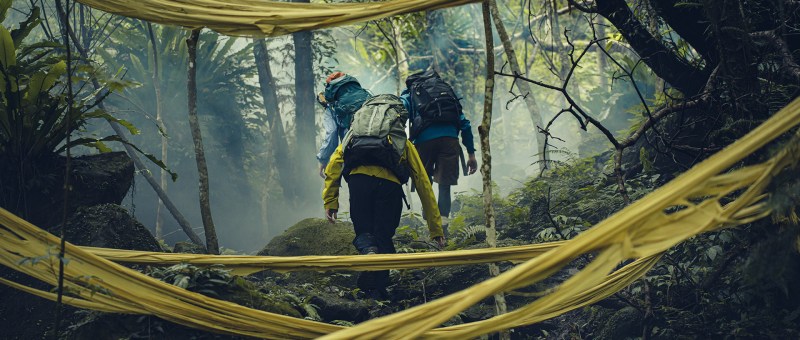
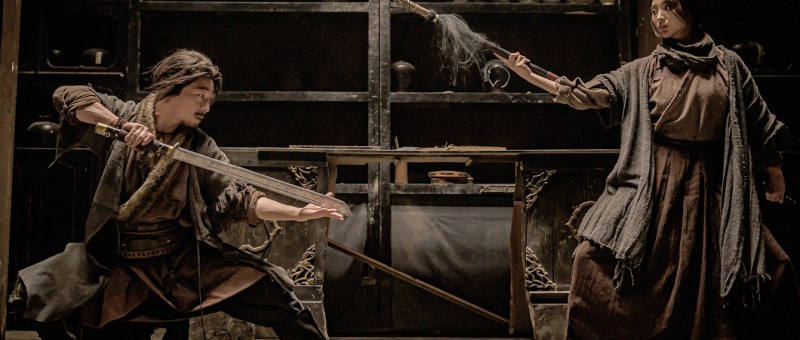
The daughters of General Yang venture into Liao territory in search of their father’s famed “nine-ring nation stabilising sword” in Feng Xiaojun’s wuxia adventure, Nine-Ring Golden Dagger (挡马夺刀, dǎng. mǎ Set in the middle of the Song Dynasty, the film draws inspiration from the western in its dusty frontier town setting if also clearly from King Hu’s Dragon Inn in the design of its central staging post where a series of action set pieces take place.

Emperor Taizong has expelled the Khitan in the north and is intent on reclaiming the sixteen prefectures of Yan and Yun for the Han people. General Yang (Wu Yue) leads his men against the invading Liao while the Middle Army do nothing and wields his nine-ring nation stabilising golden sword but is cut down by Liao general Liu and his sword is captured as loot. Yangying, (Liu Shinlei) Yang’s ninth daughter, cannot stand the injustice and is determined to march into Liao and get it back. Her sister, Yanqi (Zhang Xintong), tries to stop her but then relents and decides to go with her instead. 

The sword is in the home of the South Prime Minister of Liao, Zhang Hua (Tan Kai), who is Han and resented by some of the Liao warriors for being a token hire designed to appeal to the Han population who they fear are taking over now they’ve joined the Liao. Though Dowager Empress Xiao is minded to make peace, General Liu and Zhang would rather the war continue because it facilities their advancement amid an otherwise rigidly hierarchical social system.

One expression of this is in hilarious comic relief character Xiao Pusage (You Xianchao) who has a long and pointless intro he’s fond of reciting that explains he’s the Dowager Empress’ nephew. Jiao Guangpu (Song Tianshuo), owner of the staging post, was thinking about killing him but decides to let him go instead because they only kill evildoers and Pusage actually seems quite nice and enjoys doing good things like helping the poor. Jiao is also a former Song soldier trapped behind enemy lines without the resources to go home but dreaming of reclaiming Yang’s sword and taking it back with him. Nevertheless, he originally distrusts the Yang daughters believing them to be Liao soldiers and therefore his enemies. He too has a witty intro song in which he gives away his origins only no one seems to be paying attention. 

But in some ways, Jiao’s desire to reclaim the sword is more sentimental than that of the daughters even though part of the reason why they want it is to avenge the deaths of their father and brothers. Even so, their main mission is taking it back to stabilise the nation and symbolically end the war with Liao. Jiao, by contrast, wants it to fulfil an obligation he feels to General Yang who fought bravely in the film’s opening sequence but was executed by a cowardly arrow from Liu. After a botched attempt at assassination and an intense fight through the inn, the trio form an uneasy alliance and agree to travel back to Song together only to be continually frustrated by Liao forces who eventually have them surrounded at the staging post.

While the design may echo Dragon Inn, Feng uses the techniques of Peking Opera to stage the battle between Yangqi and Jiao while otherwise echoing the western through the newspaper-like onscreen text and dusty frontier sensibility as the Yang sisters make their way back to the border with their father’s sword in hand. Through somewhat epic in scope despite its compact runtime, the film is essentially structured around a series of action sequences from the daring raid to retrieve the sword with its various booby traps to a chase through a cornfield and the final confrontation at the inn. Each is impressively choreographed and expertly performed to make full use of the well-designed sets and meagre budget. The lean, mean feel and linear progression also add to the retro sensibility while there’s something undeniably satisfying about seeing these two rather slight women run rings around the Liao forces thanks to the training they received from their father as they become the inheritors of his legacy and saviours of Song by retrieving the sword and ushering in a new era of peace and coexistence.


Nine-Ring Golden Dagger is released Digitally in the US on July 1st courtesy of Well Go USA.

Trailer (English subtitles)

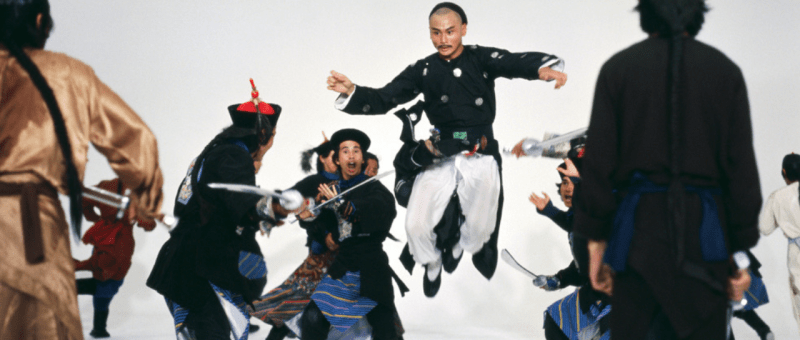
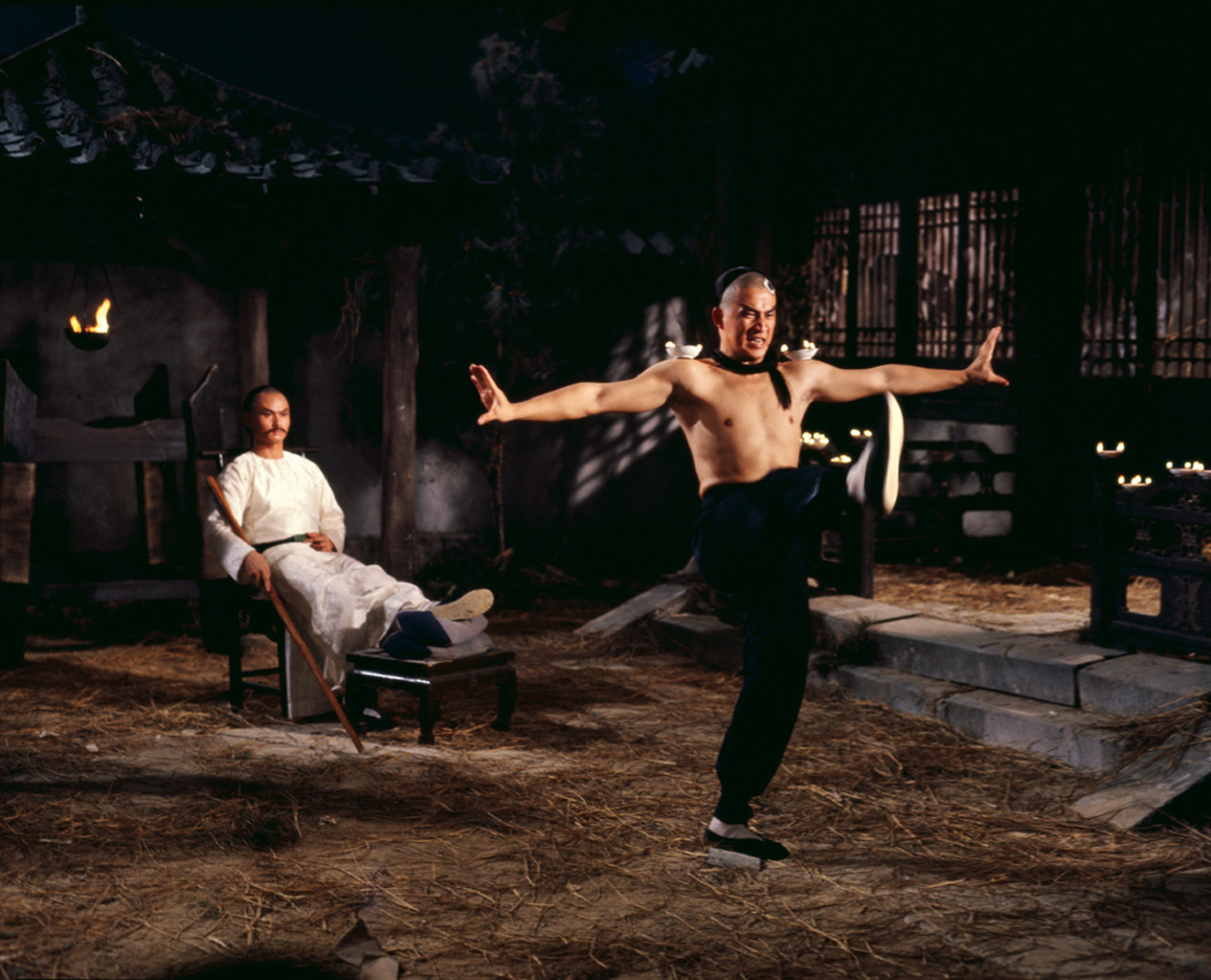
The Black Tavern (黑店, Teddy Yip Wing-Cho, 1972)

One of the reasons that martial arts films are so popular is that it’s often easy to tell who is good and who is bad. In general, the just hero vanquishes the source of evil and corruption, thereby restoring a sense of moral order to a world that may in other ways be chaotic. But chaotic is probably the best way to describe the world of The Black Tavern (黑店) in which the titular inn becomes a nexus of greed and villainy where it is impossible to tell who, if anyone, is good, while almost everyone is actually bad and the heroine only really intervenes in the closing scenes.

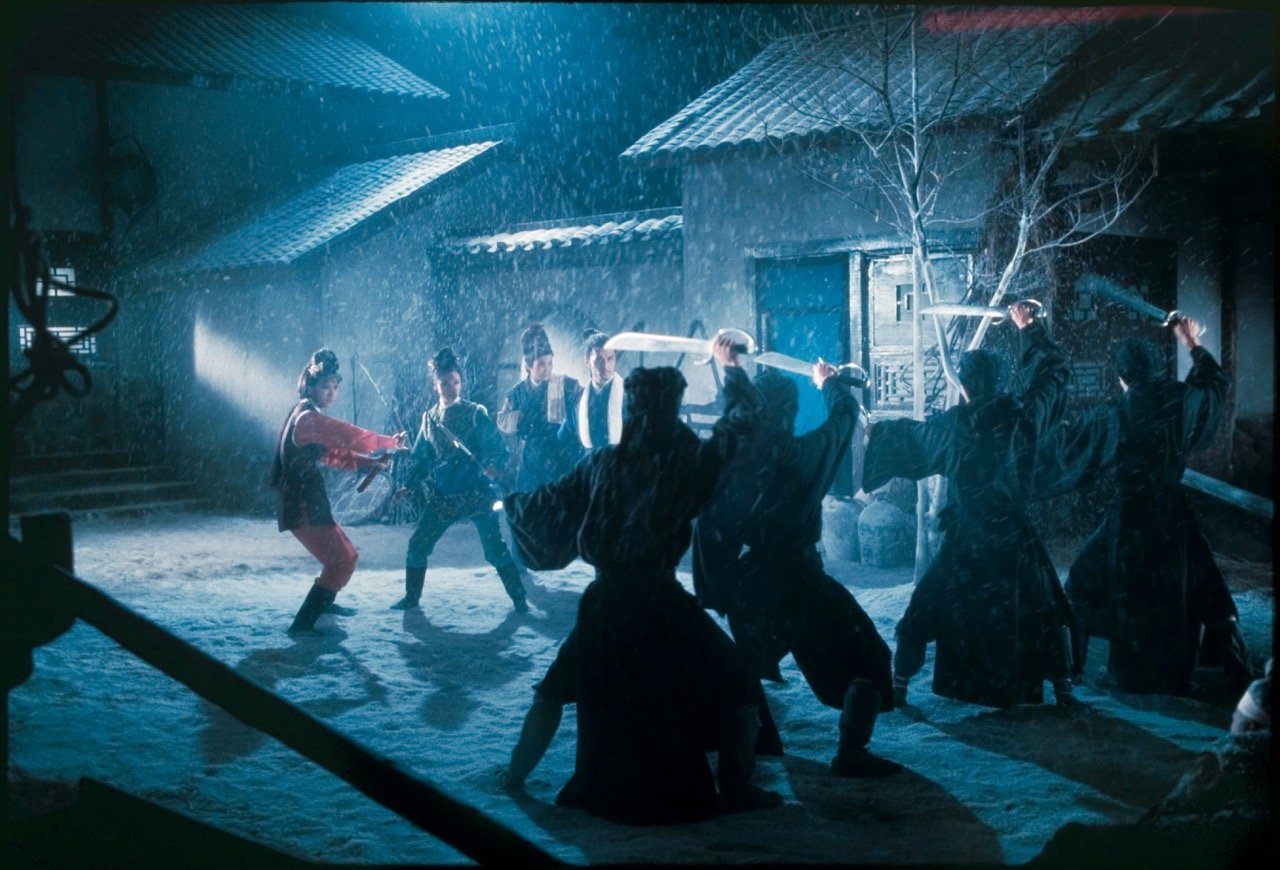
One way you can tell that something is very rotten at the Gao Family Inn is that the cook suddenly emerges from a pit underground carrying someone’s leg, which he then chops up and uses to make buns. No one ever mentions this again. It’s a just symbol of how corrupt and hellish this world has become. The inn is apparently the only staging post on this route, which is presumably how they continue to get custom despite bumping off their guests, taking all their stuff, and then chopping them up to put in buns to serve to the next unfortunate person who arrives in search of a bed for the night. 

But the reason so many venal bandits are drawn here is that a beggar monk (Dean Shek) tells them he saw vast riches fall out of a chest belonging to Hai Gangfeng, a former official returning to his home province with all his ill-gotten gains from accepting bribes. Assuming Gangfeng will be stopping at the inn, everyone who heard the monk is on their way there. Only, as it turns out, the man we thought was Hai Gangfeng is actually a bandit, “Whipmaster” Zheng Shoushan (Ku Feng), who cunningly pretended to be him to take over the inn and wait for the real Gangfeng’s arrival. He does not, however, seem to have anticipated so many other bandit gangs each more outlandish than the last having the same idea.

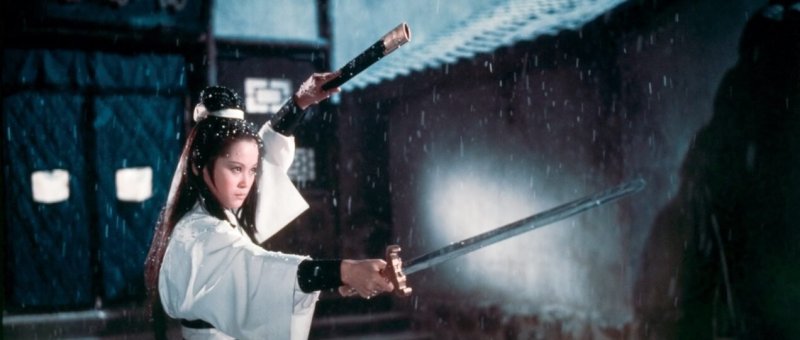
One turns up with a band of hopping vampires who turn out to be crooks in disguise, while another is wearing a horned helmet that gets stuck in things when he’s trying to fight. Of course, they’re all trying to kill each other so they can be the ones in control when Gangfeng finally arrives. What they don’t realise is that the whole thing’s a honeytrap designed to lure them all to the inn for just this purpose, so that they’ll all kill each other and spare the forces of justice some trouble. Those would be Zhang Caibing (Shih Szu), a disciple of the Lady Hermit making this a kind of extended universe film of the Cheng Pei-Pei classic. Continuing her mentor’s mission, she’s out to skim off the “scum of the martial arts world,” explaining to Shoushan that if he doesn’t like it, he should have thought of that before committing so many “evil deeds”. 

On the other hand, Caibing does seem to be enjoying this quite a lot so perhaps she’s not quite so entitled to the moral high ground as she’d like to think. While taking a leaf out of King Hu’s book, Yip adds an edge of slapstick absurdity in setting up elaborate action sequences with well-deserved pay offs and indulging in goreless yet extreme kills such as a series of surprise decapitations. Shoushan’s bladed whip becomes a versatile weapon but also an extension of his character in his cowardliness and lack of morality. It’s only really any good at long range, which means that he keeps his opponents at arms’ length rather than confront them directly as in the typical tests of skill that define a martial arts battle. He coils it around their necks, snake-like, then either pops their heads off or strangles them to death. Just like the innkeeper he killed off at the start, he seems to have genuine affection for his female companions but eventually meets a similar fate as his trademark whip is ironically turned against him. 

There’s also a genuine, if underplayed, sense of ambiguity in the attraction between the mysterious swordsman (Tung Li ) and Shoushan’s daughter that prevents him from killing her while suggesting that he too was on some level attracted to banditry. Even if he rides off in the end with Caibing, it does not appear that their relationship is romantic. Nor is he allowed to claim victory by swooping in when all seemed lost for Caibing during the final fight, immediately encountering difficulty with Shoushan who puts up a good fight that again seems contrary to his moral character in the amount of skill and effort needed to beat him. Indeed, it often seems as if he will win after all. This world will fall to men like him and turn into one giant Black Tavern. In the end, it’s a team effort that takes him down, including the strange intrusion of the beggar monk who was after all the person who started all this by repeating the rumour in the last rest stop and may or may not actually be working with Caibing. In any case, the incredibly fast-paced action sequences and the dark humour that accompanies them lend the film an epic quality despite its tight duration along with an ironic kind of cynicism that insists this world is simply too silly to be evil but that the scum of the martial arts world will pay all the same.


The Black Tavern screened as part of this year’s Focus Hong Kong.

Hunt the Wicked (缉恶, Chris Huo Suiqiang, 2024)

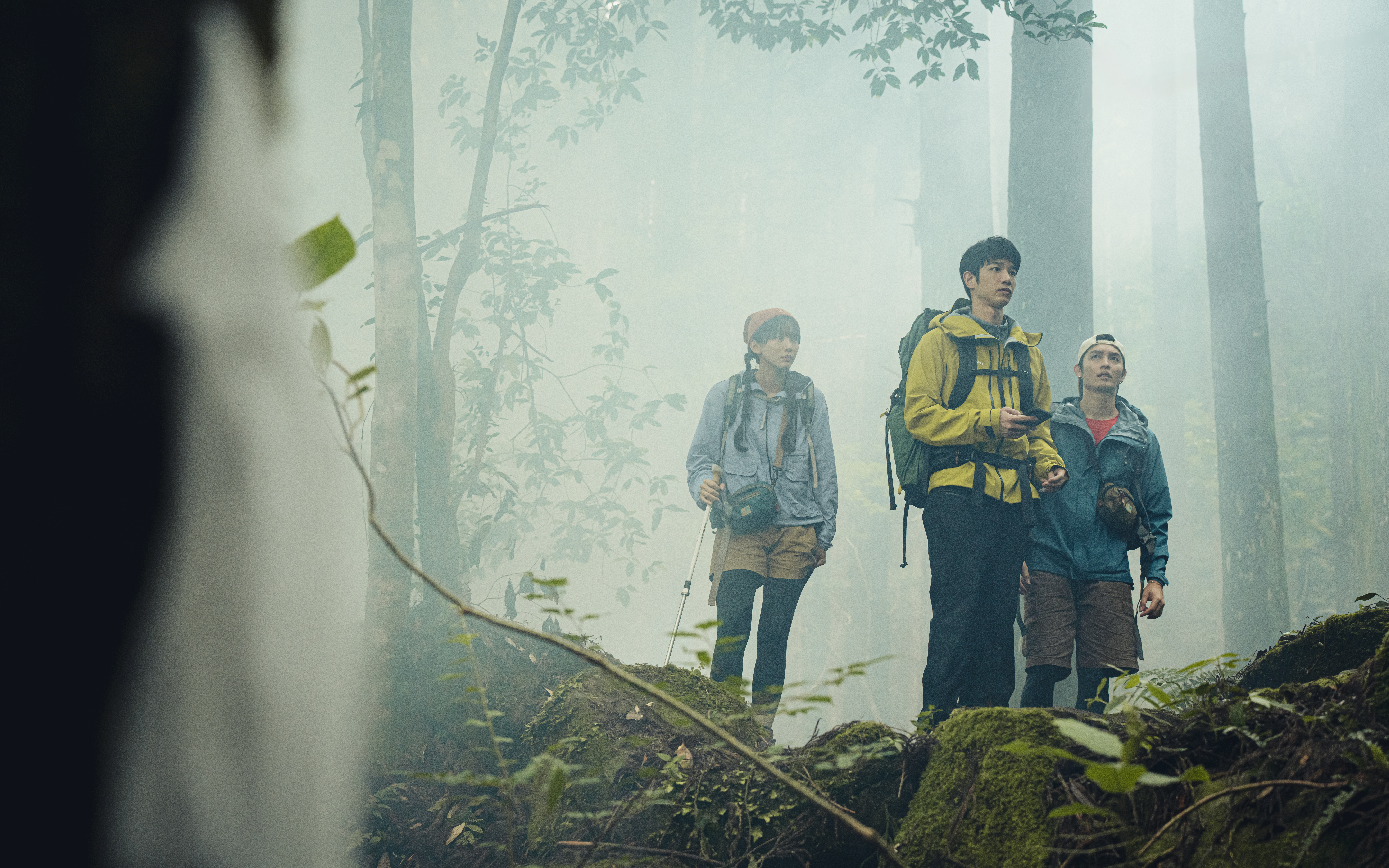
Once again set in a fictional South East Asian nation, Chris Huo Suiqiang’s Hunt the Wicked (缉恶, jī è) neatly unites the contemporary obsessions of political corruption and drugs as an earnest cop discovers he has an unexpected ally in a man he first assumed to be a crook. Consequently, and perhaps subversively, he realises that these twin problems can only be rooted out from outside of the official justice system and the rules of conventional law enforcement.

The opening sequence sees Wei Yunzhou (Andy On) and his wife Na Mei (Hong Suang) go after a chemistry professor who has secretly been working on a new techno drug called Ice Spider for a kingpin named King Long whom they have yet to identify. Making off with the designer drugs encased in ice, Wei Yunzhou is later confronted by hero cop Huang Minjin (Tse Miu) who takes the credit for their recovery. The city of Wusuli had been regarded as drug free as Huang and his colleagues had already rounded up all of the local dealers, but in fact, despite what Huang’s superiors instruct him to say in the press conference, the drugs were manufactured locally and that there’s another gang in town who are now running the entire operation alone.

A subplot about cleaning up the sewers to make the water drinkable hints at the embedded corruption of the society in which the mayor, who ran on a Duterte-esque anti-drugs platform, is later revealed to be the mysterious kingpin King Long and in effect merely used his position to take out the competition. Wei’s wife Na Mie later also hints at a persistent sense of elitism and inequality as Huang refuses to believe her claims that people are being abducted and used as drug mules against their will by insisting that it’s impossible for large numbers of people to be going missing under the radar. Pointing out most of them were from the slums, Namie explains the truth is they simply weren’t missed and the system so little values the lives of those like her from poor areas that it doesn’t bother to account for them. 

Though Wei first seems like he wants to take over the drugs business in Wusuli, it soon turns out that he as something else on his mind and like Huang is pursuing a noble mission in trying to get revenge against King Long. Realising they share a common goal, the two men generate an uneasy alliance as they team up to expose the mayor and take down not only Kin Long but all the other gangs who are working with him while setting free all the people he stole from the slums and getting rid of the source of corruption before mayor Song Pa can be elected as governor making him otherwise unassailable.

Huo ups the action stakes while making use of top stars Tse Miu and Andy On one of whom fights with a sledge hammer on a chain and the other a retractable knife on a wire. In some ways, these two weapons represent their approaches to justice, with Huang pictured on TV using the sledge hammer to smash through the ice and expose the drugs. He makes a noise and does everything in the open. Huang is so old school, he can’t even work the new printer. Wei meanwhile is a silent killer slicing and dicing with his knife on a string while otherwise using it to craft salmon sashimi at every conceivable opportunity. He’s pursuing his own kind of justice in the shadows and playing a long game that makes it unclear whose side he’s really on until it becomes obvious that he doesn’t really care about drugs or even really the corruption. He’s motivated solely by vengeance that is tinged with righteousness in that like Huang he is also trying to get justice for his men who were also casualties in this duplicitous war on drugs. 

As usual, the film ends with a roundup of the punishments all the guilty parties were given after being caught and arrested to ram home the message that both corruption and drugs are definitely bad things that no one should have anything to do with. It does however accidentally endorse the hero’s brand of rogue justice even if each of them also pay a price for stepping outside of the accepted rules of law enforcement. Then again, the fates of each of the female characters attached to the three leading men leave a sour taste in the mouth in rendering each of them mere plot devices in the guys’ machinations. The same could be said for the awkward characterisation of female police officer Tianyu (Gu Jing) as the squad’s maternal figure in her obsession with getting everyone their favourite dinner while simultaneously at the centre of a love triangle between boxing cop Li (Anson Leung Chun Yat) and the intense Huang. Nevertheless, the film more than makes up for any shortcomings in its high-octane action sequences and impressive production values.


Hunt the Wicked is released on Digital in the US on May 20 courtesy of Well Go USA.

Trailer (English subtitles)

Bel Ami (漂亮朋友, Geng Jun, 2024)

In the opening scenes of Geng Jun’s Bel Ami, a middle-aged man poses for a series of nude photos. The pictures and the poses echo a long history of queer iconography, but at first the man stands with his back to us. We can’t see his face, and he is hiding from us who he really is even as his nakedness suggests a desire for authenticity and a demand that we recognise his identity. “It’s repressive,” another man sighs, complaining that like everyone else he is forced to keep a part of himself hidden and is painfully lonely because of it. 

Like Geng’s other films set in Heilongjiang, Mainland China, the film’s queer themes would not play well with the censor’s board who are notoriously squeamish of any reference to the LGBTQ+ community and has found success only by screening in Taiwan where it won several categories at the Golden Horse Awards. There is a minor irony in play as a certain character makes clear in his rendition of the Internationale that the queer community in China has long referred to each other as “tongzhi” or “comrade” but do so to express solidarity against the oppressive authoritarian government which isolates and others them, preventing them from living authentically as full and free members of society. 

When Zhiyong spots a man he assumes to be gay in a cafe, he addresses him as “tongzhi”, but the man first denies his identity and responds to Zhiyong’s question about why he’s dressed in what he sees as a stereotypically gay manner if he’s not actually gay by saying that his son is really into rock music so he’s trying to look “cool”. He later confirms that he is actually gay and is annoyed his outfit is giving him away while similarly worried that Zhiyong will expose him. By contrast, a pair of lesbians sit in the next booth over and are overt and open in their relationship. They remark that the men behind them appear to be hiding something, while one insists that men have no morals or integrity. 

Xuanyu is, however, the most authoritarian of all as she keeps gay barber Quan, the prospective father of their child, under total surveillance. She insists on micromanaging his life, stalking him and installing a camera hidden in a clock in his barber shop. Her partner tells her love is freedom and asks if that’s what they give each other when they receive little of it from elsewhere, though it’s a question with no answer. Xuanyu is happy with the way that things are. She’d rather adopt than involve a man in their desire for a child and suggests just eloping while her partner says her parents would never accept it. Shooting in a crisp black and white that adds to the film’s breezy, deadpan humour, Geng switches to colour only once as Jing poses in a wedding dress only to be joined by a reluctant Quan suggesting a possible marriage of convenience that will satisfy both of their families and their filial obligations in the birth of their child. Quan leaves the frame as soon as possible, taking his flowers with him, for Xuanyu to enter now dressed in a black suit and occupying the space the groom.

Quan had been the lover of the man in the nude photos, Gang, but abruptly broke up with him. A baker who likes to strike back against an unforgiving society by hiding stands of his hair in his bread, Gang is also isolated and lonely, fearing he won’t be able to find another partner. He ends up meeting Zhiyong at an exclusive and very weird gay membership club run by “K” for King who gives Zhiyong the “codename” “Apollo” and immediately embarks on a sadomasochistic game pressuring Zhiyong for sexual favours as a means of joining the community expressing the way in which the oppressed oppress each other. While semi-stalked by an incredibly lonely and socially awkward restaurant owner, Zhiyong first runs from his queer identity but eventually finds a kind of hope and freedom in his relationship with Gang. They are each searching for connection and the freedom to love and be loved which is also in its way a means of resistance against entrenched authoritarianism. Don’t lose hope, they encourage each other while basking in the isolated patch of sunshine of the freedom they have found. 


Bel Ami screened as part of this year’s Queer East.

The Dumpling Queen (水饺皇后, Andrew Lau, 2025)

There are a lot of ironies and contradictions at the heart of Andrew Lau’s Dumpling Queen (水饺皇后, shuǐjiǎo huánghòu) inspired by the life of Zang Jianhe who founded the international dumpling empire Wanchai Ferry, but there’s no getting away from the celebratory joy it finds in the heroine’s hard-won transition from jilted spouse to successful entrepreneur. Then again, there might be something uncomfortable in the film’s framing and the repeated claim that Jianhe’s dumplings are about the warmth of familial bonds and reunion. Zong’s desire to kick back at American imperialism as manifested in the ubiquity of hamburgers and US-style delivery pizza by making Chinese dumplings accessible across the world is also an advocation for the One China philosophy in which the greater Chinese diaspora is connected as a family through “the taste of home.”

Beginning in 1977, the film is noticeably quiet about why anyone would be risking their lives to escape from Mainland China to Hong Kong, though this is what Jianhe is doing in her quest to be reunited with her husband, Hanzhou, who has been away for four years. Unfortunately, when she reaches the station at the border, Hanzhou’s mother (Nina Paw Hee-ching) rudely explains that she had him marry another woman in Thailand who has since borne him a son. Branding Jianhe a failure for giving birth to only daughters, she tells her that she can come with them but that she will be the second wife subservient to the mother of the family heir. She repeatedly claims this does not make Hanzhou a bigamist because Thai law supposedly gives him the right to marry more than one woman, though it seems the mother-in-law may not be aware that the pair were legally married in Mainland China as Jianhe’s traditional wedding photos would otherwise suggest. 

The fact that Jianhe is discarded for giving birth to daughters contributes to the film’s feminist undertones and sense of female solidarity as Jianhe strives to pass on the dumpling recipe she learnt from her own mother to the next generation of women and beyond. Jianhe must now find a way to fend for herself, which she eventually does through a combination of hard work, excellent business sense, and the supportive community around her. Though Jianhe and her children face some instances of prejudice against Mainlanders when they first arrive, they are helped by various people including enigmatic landlady Hong Jie (Kara Wai Ying-hung) who makes her a part of her boarding house community and tries not to pressure her about the rent out of consideration for the children,

But times are sometimes hard and Jianhe is directly contrasted with the woman across the way whose husband has a gambling problem and beats her. Having been injured in a workplace accident that leaves her unable to work as she had been before, Jianhe begins to feel hopeless and considers taking her own life only to be saved by her children and a neighbour who sells dessert soups, but the other woman is not as lucky and eventually makes a fateful decision, blaming herself for the man her husband has become. Jianhe is also given another shot at romance with a sympathetic policeman (Zhu Yawen) who comes from the same area of Mainland China and is taken by her dumplings, but he also wants to move abroad and Jianhe has already followed one husband to another country and it didn’t work out so well. It’s not so much that she sacrifices love for career success, the policeman could after all simply chose not to go, but that she no longer needs to compromise herself for marriage because she’s fulfilling herself through her business enterprise.

Just as the film doesn’t mention why Mainlanders came to Hong Kong, it doesn’t really go into why some Hong Kongers choose to leave save for a brief onscreen text mention about the beginning of the negotiations for the Handover though Jianhe is repeatedly keen to emphasise the universal Chineseness of her dumplings. She makes a deal with a Japanese department store, but threatens to walk when they try to make her change her packaging to bring it into line with their house style and thereby erase its cultural identity. She also refuses to allow them a monopoly after they demonstrate their lack of trust in her as a businesswoman, quickly realising she’s better off making deals with every supermarket on the island as well international flour companies. Jianhe is pretty quick to cotton to new technologies such as household refrigerators and the possibilities for frozen foods. But at the end of the day, she’s earnest and hardworking, sharing her success with her many friends who helped her along the way and always repaying kindness when she can. It’s an oddly utopian vision at times in which everyone seems to recognise Jianhe’s greatness and get out of her way, including a triad boss who helps her because she reminded him of his mother when she threatened one of his men with a meat cleaver,) but it also reinforces a sense of the One China family with the dumplings, now refined to suit local tastes, as the glue binding it together in the face of an onslaught of hamburgers and pizzas as harbingers of a cultural apocalypse.


International trailer (Simplified Chinese / English subtitles)

Silent Sparks (愛作歹, Chu Ping, 2024)

Recently released from prison, a young man discovers that it might be easier to be free behind bars than amid the incredibly homosocial world of urban gangsterdom in Chu Ping’s poignant LGBTQ+ drama, Silent Sparks (愛作歹, ài zuò dǎi). Pua (Akira Huang Guang-Zhi) is a kind of silent spark himself. As the gang boss describes him, he’s too rowdy and can’t keep his cool, which makes him a liability, but he’s also reticent and lonely, not to mention hurt by the seeming rejection when the man he fell in love with in prison ignores him on his release.

There is indeed a latent violence in Pua that hints at his frustration and inability to express himself. When we see him enter prison, he appears as a small boy lost in his own thoughts and silently crying, though he was sent there for breaking a man’s leg in a fight. Though he’s served his time, Pua is still paying off the monetary compensation he owes to the man whose leg he broke and otherwise struggles to get by, which leaves him almost dependent on the gang boss who agrees to take him under his wing as a favour to his mother. It seems that he once knew Pua’s long-absent father, presumably also a gangster, and plays a quasi-paternal role but only half-heartedly in seeing Pua more as a resource to be employed or otherwise an irritating burden he can’t quite seem to shake.

It was the gang boss who asked Mi-ji (Shih Ming-Shuai), his right-hand man, to “look after” Pua in prison. The boss sneers a little, and claims responsibility for saving him, adding that things could have ended up “real nasty” for him inside, by which he means “getting it up your ass”. The irony is that Mi-ji was Pua’s prison lover and Pua is excited about the idea of his release fully expecting to pick up where they left off. But the reunion between them is awkward. Mi-ji is not happy to see him. He speaks tersely and makes it clear he’s not exactly keen for a catch up while keeping one eye on the room in case anyone is getting the right idea. Though Pua continues to pursue him, Mi-ji is avoidant. Perhaps for him, it really was a prison thing that he’s embarrassed about on the outside, whereas Pua is more secure in his sexuality and less afraid of its exposure, only longing to resume the intimacy they once shared.

Mi-ji’s ambivalence hints at the toxic masculinity and entrenched homophobia of the world around them in which homosexuality is not really accepted and “getting it up your ass” is synonymous with defeat and humiliation. The irony is that Pua and Mi-ji were freer in prison where they could embrace their love without shame. Pua is imprisoned within the outside side world by virtue of being unable to be his authentic self, but is also trapped by his socio-economic prospects, which leave him dependent on the underworld and the dubious paternity of the gang boss. Expressing his frustration through violence damns him further in leaving him with mounting debts he can only hope to satisfy through acts of criminality. It is really on this side of the bars that the “real” prison lies, and it’s from this world that Pua longs to be released to return to the prison utopia of his love with Mi-ji.

Still, he cannot really escape his destiny, as his mother keeps reminding having read his tragic gangster fortune and trying to get him to eat rice noodles for 100 days to change his fate only to get her heart broken realising salvation for her son might mean something quite different than she had imagined and also take him away from her. Gritty in its gangland setting and hinting at the connections between political corruption and organised crime Chu’s slow-burn drama makes a hell of the contemporary society in which men like Pua find themselves trapped by toxic masculinities and hierarchal violence under an intensely patriarchal social order that permits them little sense of possibility or the ability to be their authentic selves and true freedom is to be found only within the homosocial world of a more literal “prison”.


Silent Sparks screens at Rio Cinema 5th May as part of this year’s Queer East.

Trailer (Traditional Chinese / English subtitles)

Come Dance With Me (来来, Liu Yunyi & Wei Bozhi, 2019)

“You need to fight for your place in society,” according to Jiaojiao, one of several regulars at the Lai Lai Ballroom interviewed as part of Liu Yunyi & Wei Bozhi’s documentary, Come Dance With Me (来来, lái lái). As several of them mention, the ballroom had been a refuge for the LGBTQ+ community, though times have now changed. These days, younger people prefer clubs and bars, while many of those who used to come are now elderly and don’t get out as much meaning that the ballrooms are mainly meeting places for the now middle-aged men who first frequented them 20 years earlier.

That they exist at all and this documentary could be made might be surprising given prevalent anti-LGBTQ+ attitudes from the censors’ board and wider community. It’s true enough that Lai Lai became a community hub and its partial closure for the 2016 G20 conference leaves them with no place to go. The various people that Liu & Wei interview come from various walks of life as they demonstrate in the opening sequence in which an old man visits a temple, a younger one visits a park, and Lai Lai’s manager Min walks through the neighbourhood and gets something to eat at a small cafe. 

The old man from the temple best expresses the inherent contradictions both of his religion and the wider society in which he relates that Buddhist monks are supposed to overcome their desires. Young monks are forbidden from taking wives and also from touching women, but technically speaking, the same prohibitions do not exist between men and homosexual acts are not unusual in the temple. Conversely, the young man who went to the park reveals that he has been living with HIV for the last seven years and that he lost his job because of it. In despair, he tried to take his own life only for his godmother to explain to him that people with high blood pressure also need to take medication for the rest of their life so it’s no different from that.

Still, he’s convinced himself of the impossibility of having a relationship sure that no one would stay with him after finding out. He says that he once told a close friend that he had AIDS and the friend quickly distanced himself from him and effectively disappeared from his life. The film later follows him on another day out with a young man, Li Yapeng, but an ill-fated decision to take a five-hour bus trip to go see him backfires when Yapeng not only fails to come and meet him but seems less than enthusiastic about his impromptu visit before abruptly breaking up with him. Another older man relates that he once had a lover who was diagnosed with HIV but told that he could not receive treatment in Shanghai and should return to his hometown. A Shanghai native, the older man resolved that, as he was already old and it would take several years for symptoms to emerge at which point he may be dead anyway, he would deliberately contract HIV and get medicine to give to him. What he didn’t realise is that the treatment isn’t the same for anyone and the medication he was prescribed was no good for his boyfriend, who then went back to his hometown and got treated there. Unfortunately, the treatment didn’t agree with him and he elected to stop taking it, passing away not long after.

Jiaojiao, meanwhile, has been with their partner Fei Er for 26 years, though Fei Er is now having health issues. Fei Er describes their relationship as rock solid and the same as that of any heterosexual couple in that now they’ve been together so long, 26 years is effectively forever and neither of them is ever going to abandon the other no matter what may come. Nevertheless, Jiaojiao also describes an additional layer of stigmatisation in that they have breasts, a fact which it seems they still hide from extended relatives having made the original decision to get them without telling anyone first. Done in a private clinic, the procedure also left them with ongoing medical issues caused by the failure to drain the wound properly. In a later conversation, they suggest that the primary motivation for getting breast surgery was financial. They now work as a dominatrix, but do not like doing it describing some of the men as “disgusting”. Their marginalised status prevents them from gaining more mainstream employment in a still conservative society. They have all found a place for themselves at Lai Lai, but as the press notes reveal, it abruptly closed its doors in 2018 with no one sure when or if it will reopen. Nevertheless, its legacy lives on as a space of warmth and acceptance that gave each of them a place to belong and be joyful no matter the difficulties of the world outside.


Come Dance With Me screens at Centre 151 3rd May as part of this year’s Queer East.

1 Girl Infinite (Lilly Hu, 2025)

There’s a moment in Lilly Hu’s gritty Changsha-set drama 1 Girl Infinite in which the heroine, Yinjia (Chen Xuanyu), watches as a fishmonger bashes a fish to death. He repeatedly smacks its head into the ground and, in a moment of foreshadowing, hits it with his meat cleaver while the fish flails around helplessly, gasping for air and twitching its tail. Yinjia winces and half looks away, but also sees something of herself in the way this poor creature is tossed around and eventually gutted in much the same way that she feels herself to be battered by her society.

Indeed, the film opens with her reading her suicide note in which she states that however she may die it has nothing to do with Xia Yutong (Lilly Hu), though in actuality it has everything to do with her. Abandoned by both of her parents, 19-year-old Yinjia has adopted a quasi-maternal role over Tong Tong who lives in her apartment and shares her bed, though the relationship, from Tong Tong’s perspective at least, remains curiously ill-defined. In the early light of morning, Yinjia silently gazes at her sleeping figure, but Tong Tong often rejects her gestures of intimacy. She won’t let Yinjia hug her in the street because she’s “too heavy,” and there is a clinginess to Yinjia that spills over into possessiveness and control that might be off-putting, but equally it seems that Tong Tong pushes her away because she herself doesn’t know how to process this relationship or her feelings for Yinjia. 

Then again, perhaps it is really about not having anywhere else to go as she unconvincingly tells her friends when they complain she’s brought “that girl,” again. Tong Tong tells them that Yinjia is just some girl who won’t stop following her around and acts like she’s a drag, but is at other times clingy herself and in rare moments of freedom expressing a silent affection for Yinjia. Nevertheless, there is a marked contrast between the more straight-laced Yinja and Tong Tong’s punkish friends who seem to represent two opposing worlds. Yinja glares at them constantly, resenting their indiscriminate use of drugs and the dangerous situations it could get them into, but appears to want to rescue Tong Tong who might not actually want to be rescued.

When Tong Tong gets involved in another ill-defined and possibly transactional relationship with local drug dealer Chen Wen (Bo Yang), it further disrupts their dynamic and pushes Yinjia towards the edge as she falls into a self-destructive obsession while convinced that she will lose Tong Tong. Tong Tong is convinced that Chen Wen will take her to America, which it seems clear that he has no real intention to do, where people live in big houses and everyone has a job. In this way, he represents a more literal kind of escape from the problems of contemporary China in which she is trapped in a dissatisfying socio-economic position from which she sees no way out. After she loses her virginity to Chen Wan, the camera cuts to a Burberry bag containing a designer dress that echoes Tong Tong’s need for consumerist affirmation. 

Tong Tong clearly aspires to his life of wealth and comfort, but it’s equally true that Chen Wen’s financial stability is rooted in illegality and moral dubiousness in his indifference to the harm his line of business causes. When the girls visit his apartment, there’s another woman there that is being fed drugs and is eventually manhandled out when her reaction to them begins to annoy Chen Wen and his henchman. She may be a harbinger of what may become of Tong Tong if she gives in to this bargain and a further provocation for Yinjia who is determined to prevent her from doing so by any means necessary. It’s never quite clear whether either relationship is any more than transactional from Tong Tong’s point of view, or whether she’s really aware of the realities of her relationship with Chen Wen which he clearly doesn’t view with much seriousness, though she continues to refer to herself as his girlfriend and evidently really believed he meant it when he said he’d take her to America. 

Yinjia meanwhile glares at the world around her and strikes back self-destructively. She scores a partial victory in seeming to have impressed Chen Wen in the depths of her devotion and the lengths that she would go to to maintain control over Tong Tong, though it’s also somewhat hollow and ironic given that he almost certainly never meant to take her to America anyway nor keep her around very long. Left with no parental input or societal safety net, the two women are each adrift and left with only each other to rely on. Though locked in a somewhat toxic embrace, the relationship between them is the only hint of purity in their otherwise impure world of betrayal and exploitation.


1 Girl Infinite screens at Rio Cinema 3rd May as part of this year’s Queer East.

Blue Sun Palace (藍色太陽宮, Constance Tsang, 2024)

“It’s funny how  quickly people you love become strangers,” a middle-aged man muses while talking about more than one thing at the same time. Those at the centre of Constance Tsang’s New York-set drama Blue Sun Palace (藍色太陽宮, lánsè tàiyang gōng) are all in a sense displaced and some of them by several levels while they try to accommodate themselves with the lives they’re living now along with their hopes and expectations for the future.

Didi (Xu Haipeng) and Amy (Wu Ke-xi) are old friends working in a massage parlour which has a large sign on the door stating that they do not provide sexual services. The two women huddle on a stairway, finding a private space of isolation that reduces the world to them alone. Didi and her sort of boyfriend Cheung (Lee Kang-sheng) do something similar as they dine in a restaurant and then retreat to a karaoke booth before Didi takes him back to the massage parlour where Amy absents herself to give them some room until awkwardly spotting Cheung leaving in the morning. It’s clear that the massage parlour is itself an isolated world where Mandarin is the only spoken language inhabited only by the female staff members who are all migrants from China. Didi appears to be the lynchpin of this community, keeping the parlour running and looking after the other women while they all seem to look to her for dependability and solidarity. 

Yet there’s a hovering tension between Didi and Amy who seems wary of Cheung, or perhaps merely jealous in an unspoken attachment to her friend, and also reminds her that they’re not supposed to have guests in their room. The exclusively male clients who are mainly though not exclusively non-Chinese men are also intruders in this space and as Didi tries to warn Amy pose a latent threat to them. A very tall man shortchanges them, but Didi stops Amy when she tries to chase after him. She tells her that it’s not worth it and she’ll just make the money up herself. It’s better to be safe, though it’s advice she doesn’t quite take to heart or perhaps lets her guard down at the wrong moment. The men treat them with thinly veiled contempt, perhaps believing they don’t really deserve to be paid in full or to be treated as fully human beings. A customer of Amy’s bullies her into giving him a happy ending and then refuses to pay, becoming violent when challenged but then apologising before running from the room. 

As an escape from the grimness of the Blue Sun massage parlour, Didi has a dream of moving to Baltimore to open a restaurant with Amy and be closer to her daughter who is currently being raised by her aunt. Cheung hadn’t known about the daughter when he idly fantasised about living in a little house by the sea with Didi and a big dog, though she knew about the wife and daughter who have now become strangers to Cheung. In any case, their fantasy was just that and so perhaps it didn’t really matter if neither of them was telling the whole truth. Baltimore seems to have taken on a mythical quality for each of them as a kind of longed for but unreachable paradise in which they might find happiness if only they could get there. 

But in the end, even these bonds are fragile and the community fractured by tragedy and economic realities. In Didi’s absence, Amy and Cheung develop a surrogate bond in their shared grief and loneliness but also remain at odds with each other, ultimately heading in opposing directions in which it seems as if Amy may be able to find new directions while Cheung is bound only for the blue sun of a shoreline in winter and a solitary cigarette. He says he doesn’t want to go back to Taiwan because he wouldn’t know who to be, though as Amy points out none of them know who they are here either. She at least may have found an answer, or if not, reaccommodated herself to a new reality but for others there’s only sadness and inertia along with the cold comfort of lost love and impossible dreams in a world of constant displacement.


Blue Sun Palace screens April 28 as part of this year’s San Diego Asian Film Festival Spring Showcase.

Trailer (English subtitles)