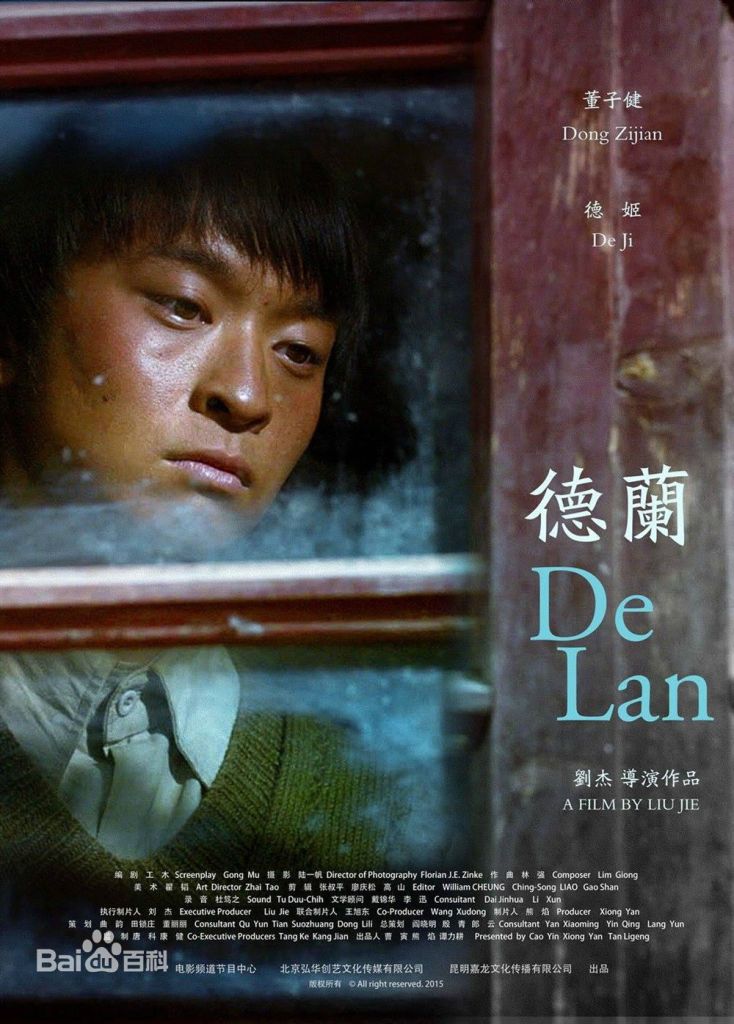
 Set in 1984 in a rural Chinese backwater, De Lan (德蘭) is named not for its central character, but for his first love – a mountain woman far from home in search of a missing relative. Tasked with following De Lan (De Ji), Wang (Dong Zijian) finds himself entering a strange new world which he is incapable of fully understanding, not least because he doesn’t speak the language. A wordless love story between the tragic De Lan and the adolescent Wang is destined to end unhappily, but will affect both of them in quite profound ways.
Wang’s father has been missing for three months, and what’s worse is that around 2000 yuan went missing with him. Mr. Wang had been the loans officer for the local party office in this dreary mountain town and now the best idea anyone has come up with is for Wang to take over the position and pay back the missing money with deductions from his wages (this should take around ten years). Hardly fair, but what can you do? Wang’s first assignment is to take an audit of a mountain town where the residents have a lot of outstanding payments. Seeing as they’re heading to the same place, Wang is to accompany a mountain woman, De Lan, who had been travelling around local towns looking for a missing person but has now run out of money and must go home alone.
Wang is told to trust De Lan when it comes to the terrain, but that he should keep control of the food supplies in case she tries to run off. All things considered, the people at the foot of the mountains, aren’t very well disposed to those at the top. Wang is young and unused to walking such long distances, frustrating De Lan with his inability to keep up and frequent needs to rest. Nevertheless a kind of mutual affection seems to build up between them but largely goes unspoken and unacknowledged. Finding himself installed in De Lan’s home, Wang begins to feel very awkward indeed, unable to work out the strange family dynamic between the gruff man with the lame leg, ancient blind old woman, and the feisty De Lan.
Wang has, after all, been sent to the town to collect on loans – an entirely pointless enterprise as no one here has any money. Wang’s father was a much loved presence, mostly because he always came with cash and never pressed them on repayments. His son, with a father’s debt around his neck, is not quite so nonchalant. Calling a village meeting with no notice, Wang makes it clear he won’t be following his father’s lax approach and will not be issuing any new loans, rather he will be calling in the old ones. This does not make him popular in the village.
Eventually he changes his mind and decides to flash some cash but his worst assumptions are confirmed when the villagers, far from using the money they claimed to so desperately need to survive to invest in their businesses, club together to buy all the booze in the surrounding area and have a giant party. Originally put out by their trickery and De Lan’s ongoing unavailability, Wang suddenly finds himself trying some of their liquor and joining in with a dance around the fire. Perhaps learning to adjust to the Earthy, less ordered way of life, Wang has embraced the new found freedom of the place, but he will also discover that it only runs so deep.
De Lan’s life has undoubtedly been a difficult one which she faces with stoic resignation. Shared between two men and longing only for a child, De Lan has very little say in anything that happens to her yet she was able to set off all alone to look for her missing person. During the trip, De Lan is dismayed when a teenage boy in a home they spend a night in makes a vulgar comment about her body, leading her to try to leave as soon as possible only for Wang to pledge his protection. De Lan is aware of the dangers of the road, as well as the constraints placed on her life, whereas as Wang is still naive enough to think his physical strength and government position would be enough to keep De Lan any safer than she would be alone.
As Wang’s feelings for De Lan grow he fantasises about saving her from this strange, cold household though he barely stops to ask himself if saving is really what she wants. Unable to speak the local dialect, Wang necessarily needs to rely on look and gesture which is largely how he and De Lan have come to communicate – a pure kind of dialogue without need of words. Wang’s love for De Lan is destined to cost him dearly both in financial and emotional terms. A beautifully sad tale of frustrated first love set against the picturesque Chinese countryside and inside it’s much less pretty political system, De Lan is the story of one man’s transition from adolescence to manhood through heartbreak, filled with quiet, yet intense, emotion.
Reviewed at the 2016 London East Asia Film Festival.
Trailer (English subtitles)
 Despite its title, Mission Milano (王牌逗王牌, Wángpái Dòu Wángpái) spends relatively little time in the Northern Italian city and otherwise bounces back and forth over several worldwide locations as bumbling Interpol agent Sampan Hung (Andy Lau) chases down a gang of international crooks trying to harness a new, potentially world changing technology. Inspired by the classic spy parodies of old, Wong Jing’s latest effort proves another tiresome attempt at the comedy caper as its nonsensical plot and overplayed broad humour resolutely fail to capture attention.
 First time writer/director Wang Yichun draws on her own experiences for What’s in the Darkness (黑处有什么, Hei chu you shenme), a beautifully shot coming of age piece with serial killer intrigue running in the background. Seen through the eyes of its protagonist, What’s in the Darkness neatly matches the heroine’s journey into adolescence with the changing nature of Chinese society.
 When
When  Hur Jin-ho’s A Good Rain Knows (호우시절, Howoosijeol) was originally developed as a short intended to form part of the China/Korea collaborative omnibus film Chengdu, I Love You which was created as a tribute to the area following the devastating 2008 earthquake. However, Hur came to the conclusion that his tale of modern day cross cultural romance required more scope than the tripartite omnibus structure would allow and decided to go solo (Chengdu, I Love You was later released with just Fruit Chan and Cui Jian’s efforts alone). Very much Korean in terms of tone and structure, Hur uses his central love story to explore the effects time, memory, culture, and personal trauma on the lives of everyday people.
 Evil, so a wise man said, begins when you start treating people as things. Fritz Lang’s Metropolis showed us a city that literally was its people – nothing but a vast yet perfectly functional machine with the workers little more than cogs to be replaced and discarded once worn out. Zhao’s Behemoth (悲兮魔兽, Bēixī Móshòu) is no fantasy but a very real journey through our own world and so we follow our narrator, a poetic, naked stand in for Dante’s Virgil, through hell and purgatory on a path to paradise only to find ourselves staring into a void filled with our unfulfilled desires and forlorn hopes.
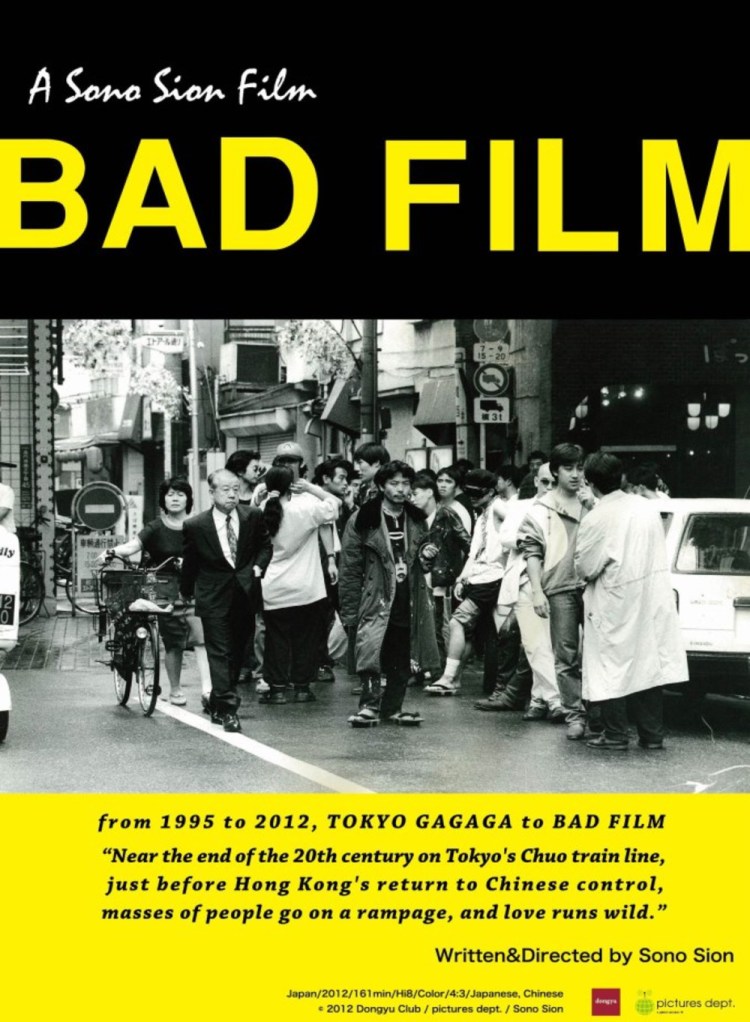 The recently prolific Sion Sono actually has a more sporadic film career dating back to the early 1980s though most would judge his real breakthrough to 2001’s Suicide Club. Back in the ‘90s Sono was most active as the leader of anarchic performance art troupe Tokyo Gagaga. Taking inspiration from the avant-garde theatre scene of the 1960s, Tokyo Gagaga took to the streets for flag waving protests and impressive, guerrilla stunts. Bad Film is the result of one of their projects – shot intermittently over a year using the then newly accessible Hi8 video rather the traditionally underground 8 or 16mm, Bad Film is near future set street story centring on gang warfare between the Chinese community and xenophobic Japanese petty gangsters with a side line in shifiting sexual politics.
 Chinese cinema screens are no stranger to the event movie, and so a Chinese remake of the much loved 1997 Hollywood rom-com My Best Friend’s Wedding (我最好朋友的婚礼, Wǒ Zuì Hǎo Péngyǒu de Hūnlǐ) arrives right on time for Chinese Valentine’s Day. Purely by coincidence of course! However, those familiar with the 1997 Julia Roberts starring movie may recall that My Best Friend’s Wedding is a classic example of the subverted romance which doesn’t end with the classic happy ever after, but acts as a tonic to the sickly sweet love stories Hollywood is known for by embracing the more realistic philosophy that sometimes it just really is too late and you have to accept that you let the moment get away from you, painful as that may be.
 Often, people will try to convince of the merits of something or other by considerably over compensating for its faults. Therefore when you see a movie marketed as the X-ian version of X, starring just about everyone and with a budget bigger than the GDP of a small nation you should learn to be wary rather than impressed. If you’ve followed this very sage advice, you will fare better than this reviewer and not find yourself parked in front of a cinema screen for two hours of non-sensical European fantasy influenced epic adventure such as is League of Gods (3D封神榜, 3D Fēng Shén Bǎng).
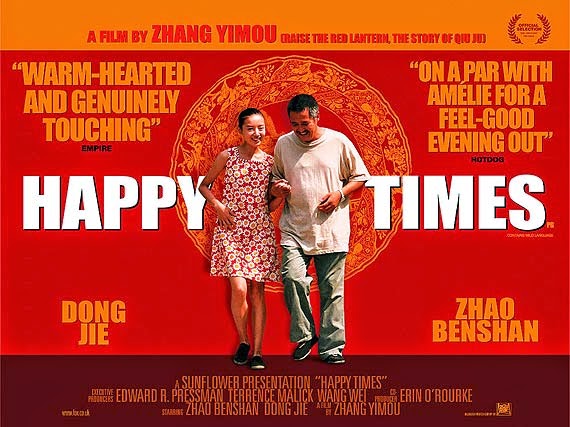 Possibly the most successful of China’s Fifth Generation filmmakers, Zhang Yimou is not particularly known for his sense of humour though Happy Times (幸福时光, Xìngfú Shíguāng) is nothing is not drenched in irony. Less directly aimed at social criticism, Happy Times takes a sideswipe at modern culture with its increasing consumerism, lack of empathy, and relentless progress yet it also finds good hearted people coming together to help each other through even if they do it in slightly less than ideal ways.
 Windows on Worlds