
 Like the rest of the world, China, or a given generation at least, may be finding itself at something of a crossroads. The past few years have seen a flurry of coming of age dramas in which the melancholy and middle-aged revisit lost love from their youth but Derek Tsang’s Soul Mate (七月与安生, Qīyuè yǔ Anshēng) seems to be speaking to an older kind of melodrama in its examination of passionate friendship pulled apart by time, tragedy, and unspoken emotion. The story is an old one, but Tsang tells it well as its twin heroines maintain their intense, elemental connection even whilst cruelly separated.
Qiyue (Sandra Ma Sichun) and Ansheng (Zhou Dongyu) met at 13 years old and quickly became inseparable. Ansheng, a free-spirited and energetic young girl, came to the aid of the shy and bookish Qiyue but was herself in need a kind of rescue thanks her unusual family circumstances. The child of a busy single mother, Ansheng was often left to fend for herself but Qiyue’s parents are goodhearted people and keen to take on the additional responsibility of caring for their daughter’s only friend. However, the usual cause of tension arrives when 18-year-old Qiyue falls for the handsome Jiaming (Toby Lee). Ansheng, feeling a little jealous and left out, has complicated feelings towards her friend’s boyfriend who seems to be attracted to her further complicating the already intense relationship between the three. Not wanting to break her friend’s heart, Ansheng decides it’s time for her to embrace her free-spirited nature and hit the road even if it takes her away from the most important person in her life.
Years later, Ansheng is a respectable office worker. Jiaming, now a city boy himself, is stunned to spot her on a train even if his attempts to thrust a business card into her hand are met with less than enthusiastic reception. No longer in touch with Qiyue, Jiaming like much of the country has been fascinated by an ongoing web novel, Qiyue and Ansheng, which Qiyue has apparently been writing and is hoping Ansheng knows how to get in touch with her. Sadly, she does not. The three friends appear scattered but how could such intense relationships have ended so abruptly and finally?
Necessarily close in their youth, the two girls are a classic case of opposites attracting as the quiet and thoughtful Qiyue idolises her impulsive, extroverted friend. Their initial separation comes at cost as it pushes each into their opposing sides – Qiyue pursuing her education whilst planning an early marriage, and Ansheng living life on the road hooking up with shady guys and cadging meals by out drinking louts. A disastrous trip brings the differences home as the shared awkwardness regarding their relationships with Jiaming frustrates their essential intimacy and threatens to throw up an unscalable wall between the two women.
Jiaming does his best to get in the way, vacillating between the two girls and ultimately making what is probably the best decision but in the most cowardly and selfish of ways. The two eventually find themselves out of sync, just as Ansheng is thinking of settling down, Qiyue finds the strength to spread her wings but somehow or other they are perpetually kept apart. The film goes to great lengths to emphasise the platonic nature of the two women’s relationship despite the obvious tension between them but it’s difficult not to read Ansheng’s ongoing struggles as a tragic case of a woman in love with her oblivious best friend. Later on the film presents the interesting idea of a nontraditional family in the two women raising a child which is almost their own thanks to the extremely tight triangular relationship of their teenage years, yet it quickly undercuts it with a perfectly executed dramatic twist.
Drawing beautifully nuanced performances from his lead actresses, Tsang crafts an affecting tale of the power of female friendship which transcends all obstacles in its essential unbreakable quality which brings both joy and pain to each of the women even in their inevitable separation. Drawing inspiration from acclaimed Japanese filmmaker Shunji Iwai who is also thanked in the end credits, Tsang moves beyond Hana and Alice for a deeper kind of sadness found in a shot echoing Iwai’s thematically similar Love Letter suggesting the essential melancholy of an enduring yet severed connection.
Soul Mate was screened at the 19th Udine Far East Film Festival
Original trailer (English subtitles)
 Feng Xiaogang, often likened to the “Chinese Spielberg”, has spent much of his career creating giant box office hits and crowd pleasing pop culture phenomenons from World Without Thieves to Cell Phone and You Are the One. Looking at his later career which includes such “patriotic” fare as Aftershock, Assembly, and
 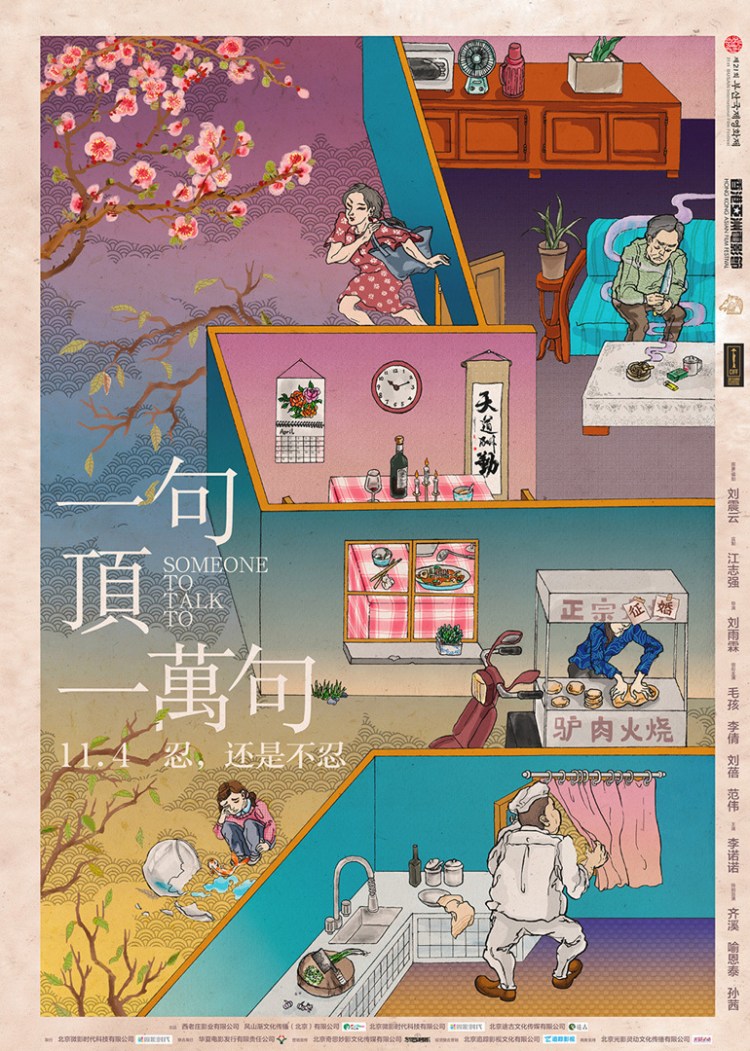 Youth looks ahead to age with eyes full of hope and expectation, but age looks back with pity and disappointment. Adapting her father’s novel, Liu Yulin joins the recent movement of disillusionment epics coming out of China with Someone to Talk to (一句頂一萬句, Yī Jù Dǐng Yīwàn Jù). Arriving at the same time as another adaptation of a Liu Zhenyun novel, I am Not Madame Bovary, Someone to Talk to takes a less comical look at the modern Chinese marriage with all of its attendant sorrows and ironies, a necessity and yet the force which both defines and ruins lives. Communism believes love is a bourgeois distraction and the enemy of the common good (it may have a point), but each of these lonely souls craves romantic fulfilment, a soulmate with whom they might not need to talk. The desire for someone they can connect with an elemental level becomes the one thing they cannot live without.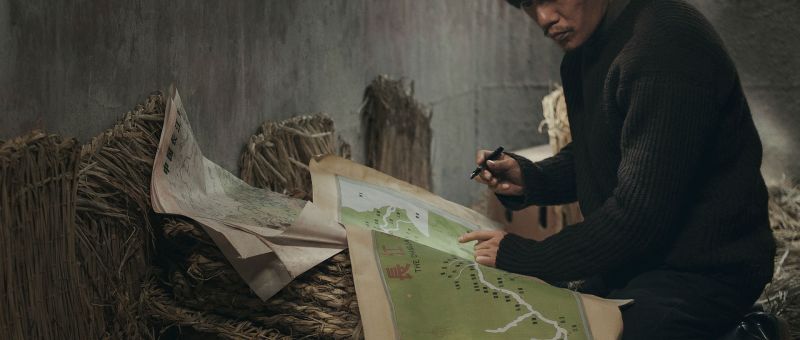
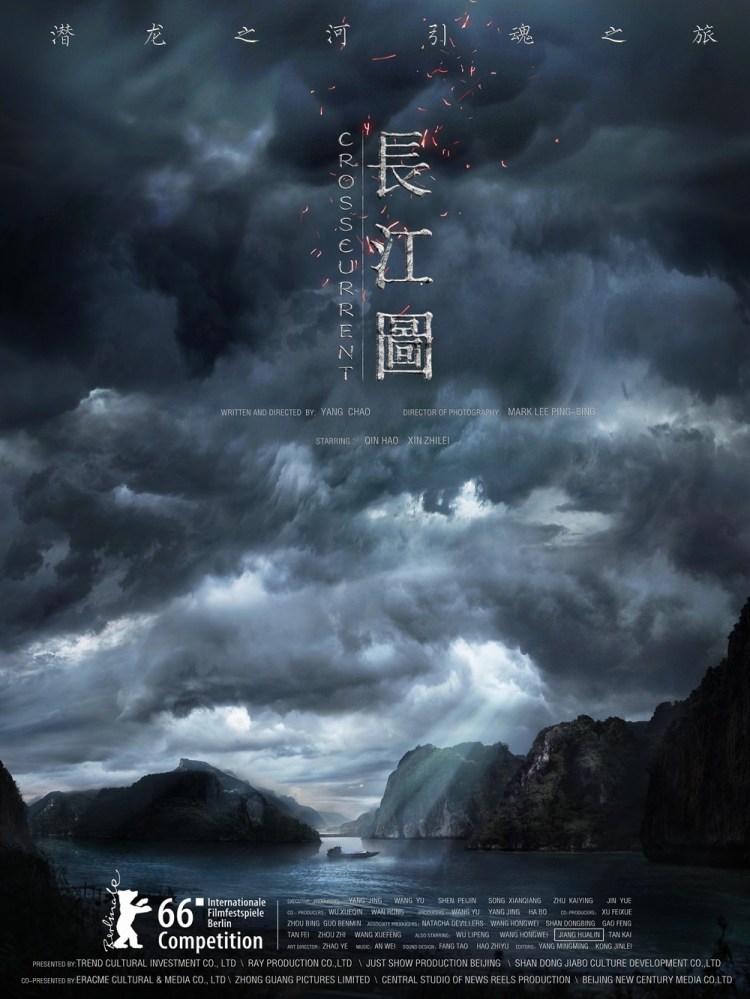 “Time, like a river, flows both day and night” as the narrator of Yang Chao’s poetical return to source Crosscurrent (長江圖, Chang Jiang Tu) tells us early on. Like the crosscurrent of the title, ship’s captain Chun sails forth yet also in retrograde as he chases a love he can never truly embrace. Truth be told, the philosophical poetry of a lonely sailor condemned to sail a predetermined course at the mercy of the winds and tides is often obscure and confused, like the half mad ramblings of one who’s spent too much time all alone at sea. Yet his melancholy passage is more metaphor than reality, or several interconnected metaphors as water yearns for shore but is pulled towards the ocean, a man yearns to free himself of his father’s spirit, and mankind yearns for the land yet disrupts and destroys it in its quest for mastery. Often frustrating in its obscurity, Crosscurrent’s breathtaking visuals are the key to unlocking its meditative sadness as they paint the beautiful landscape in its own conflicting colours.
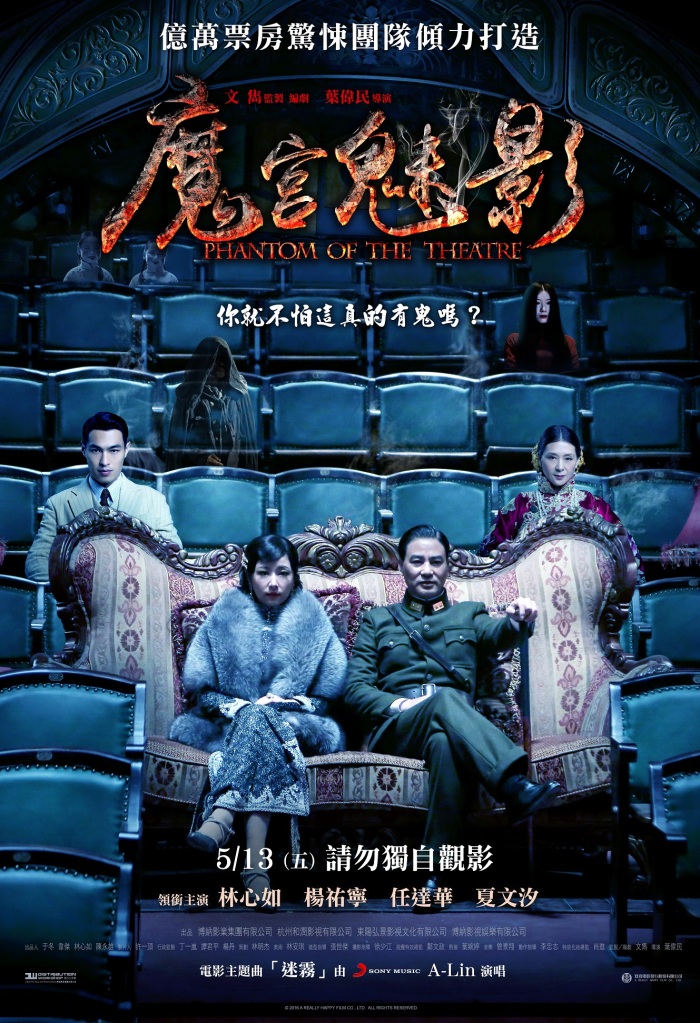 No ghosts! That’s one of the big rules when it comes to the Chinese censors, but then these “ghosts” are not quite what they seem and belong to the pre-communist era when the people were far less enlightened than they are now. One of the few directors brave enough to tackle horror in China, Raymond Yip Wai-man goes for the gothic in this Phantom of the Opera inspired tale of love and the supernatural set in bohemian ‘30s Shanghai, Phantom of the Theatre (魔宫魅影, Mó Gōng Mèi Yǐng). As expected, the thrills and chills remain mild as the ghostly threat edges closer to its true role as metaphor in a revenge tale that is in perfect keeping with the melodrama inherent in the genre, but the full force of its tragic inevitability gets lost in the miasma of awkward CGI and theatrical artifice.
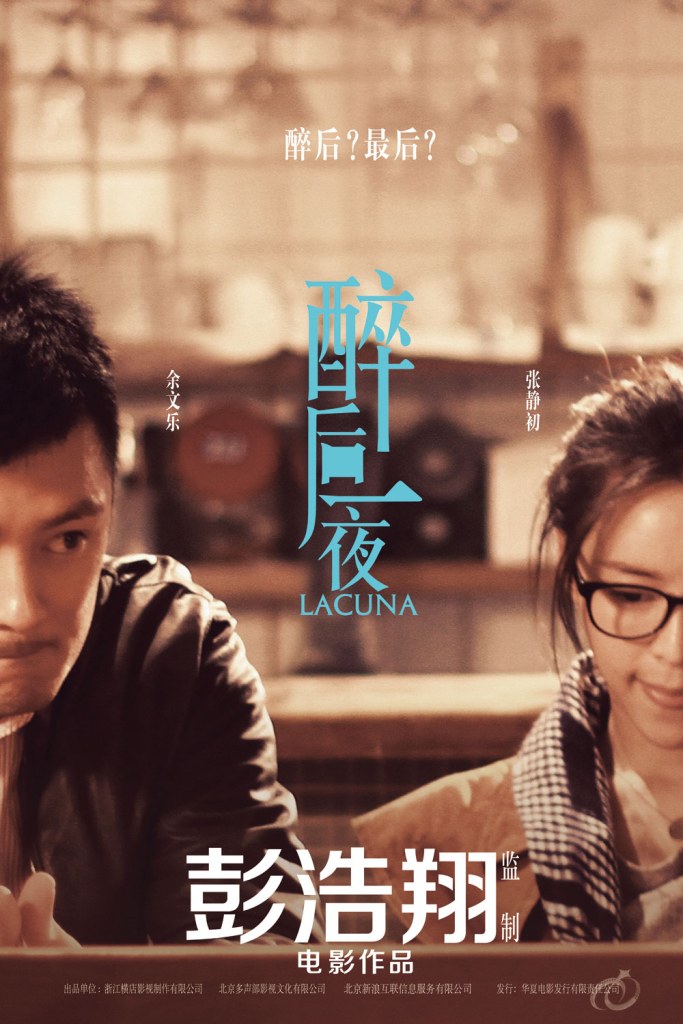 Waking up in a strange place with absolutely no recollection of how you got there is bad enough. Waking up next to a total stranger is another degree of awkward. Waking up not in someone else’s apartment but in a department store furniture showroom is another kind of problem entirely (let’s hope the CCTV cameras were on the blink, eh?). This improbable situation is exactly what has befallen two lonely Beijinger’s in Derek Tsang and Jimmy Wan’s elegantly constructed romantic comedy meets procedural, Lacuna (醉后一夜, Zuì Hòu Yīyè). An extreme number of unexpected events is required to bring these two perfectly matched souls together, but the love gods were smiling on this particular night and, once the booze has worn off, romance looks set to bloom .
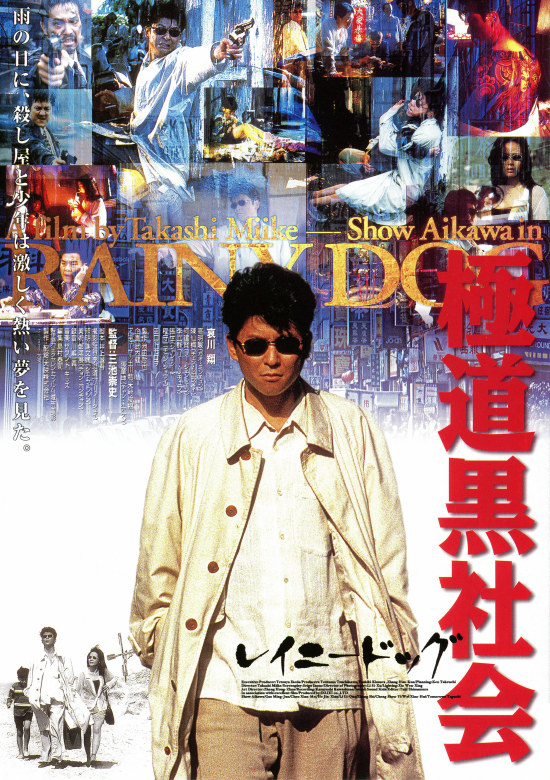 They say dogs get disorientated by the rain, all those useful smells they use to navigate the world get washed away as if someone had suddenly crumpled up their internal maps and thrown them in the waste paper bin. Yuji (Show Aikawa), the hero of Rainy Dog (極道黒社会, Gokudo Kuroshakai) – the second instalment in what is loosely thought of as Takashi Miike’s Black Society Trilogy, appears to be in a similar position as he hides out in Taipei only to find himself with no home to return to. Miike is not generally known for contemplative mood pieces, but Rainy Dog finds him feeling introspective. A noir inflected, western inspired tale of existential reckoning, this is Miike at his most melancholy but perhaps also at his most forgiving as his weary hitman lays down his burdens to open his heart only to embrace the cold steel of his destiny rather than the warmth of his redemption.
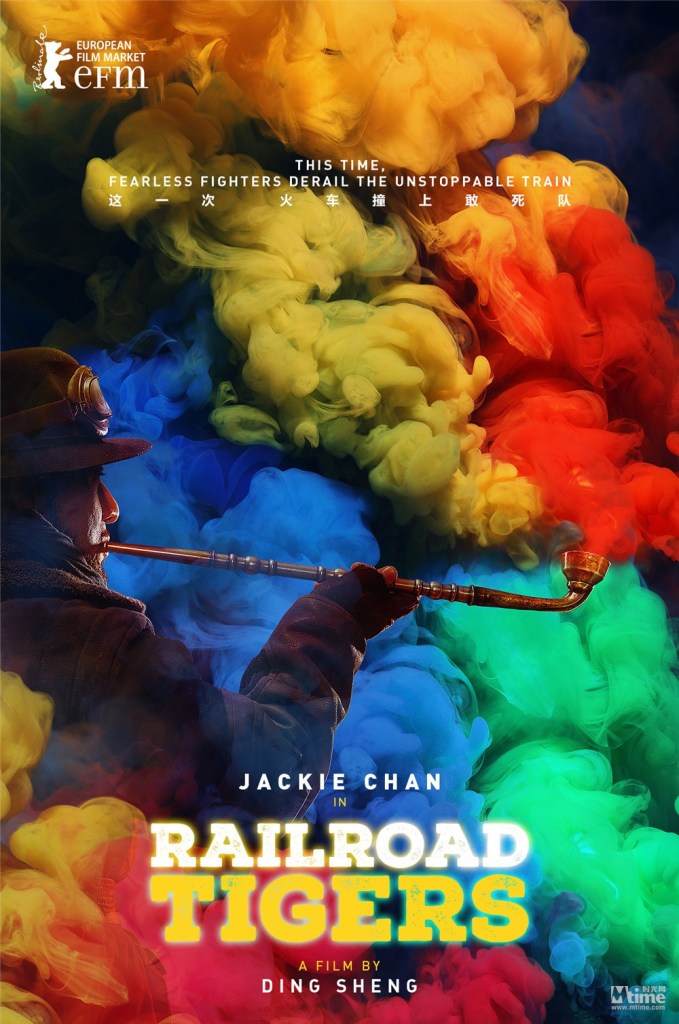 Trains! They seem to be the latest big thing in Chinese cinema, but at least Railroad Tigers (铁道飞虎, Tiědào Fēi Hǔ) has more rolling stock on offer than the disappointingly CGI enhanced effort which formed the finale of
 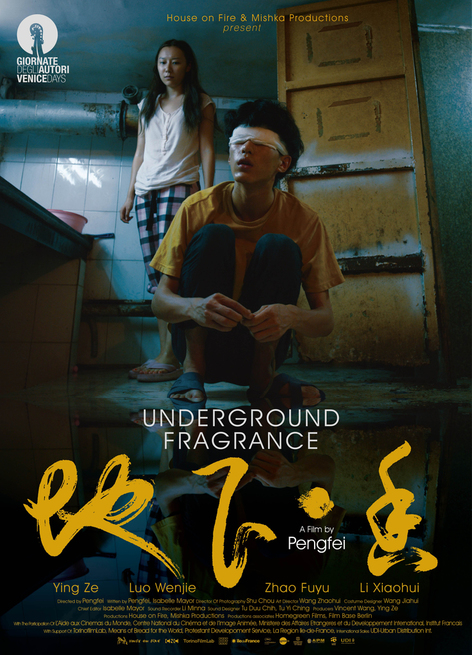 The original Chinese title of recent Tsai Ming-liang collaborator (Song) Pengfei’s debut feature 地下・香 (dìxìa・xiāng) has an intriguing full stop in the middle which the English version loses, but nevertheless these two concepts “underground” and “fragance” become inextricably linked as the four similarly trapped protagonists desperately try to fight their way to better kind of life. Recalling Tsai’s dreamy symbolism, Hou Hsiao-Hsien’s romantic melancholy, and Jia Zhangke’s lament for the working man lost in China’s rapidly changing landscape, Pengfei’s film is nevertheless resolutely his own as it chases the ever elusive Chinese dream all the way from dank basements and ruined villages to the shiny high rise cities which promise a tomorrow they may never be able to deliver.
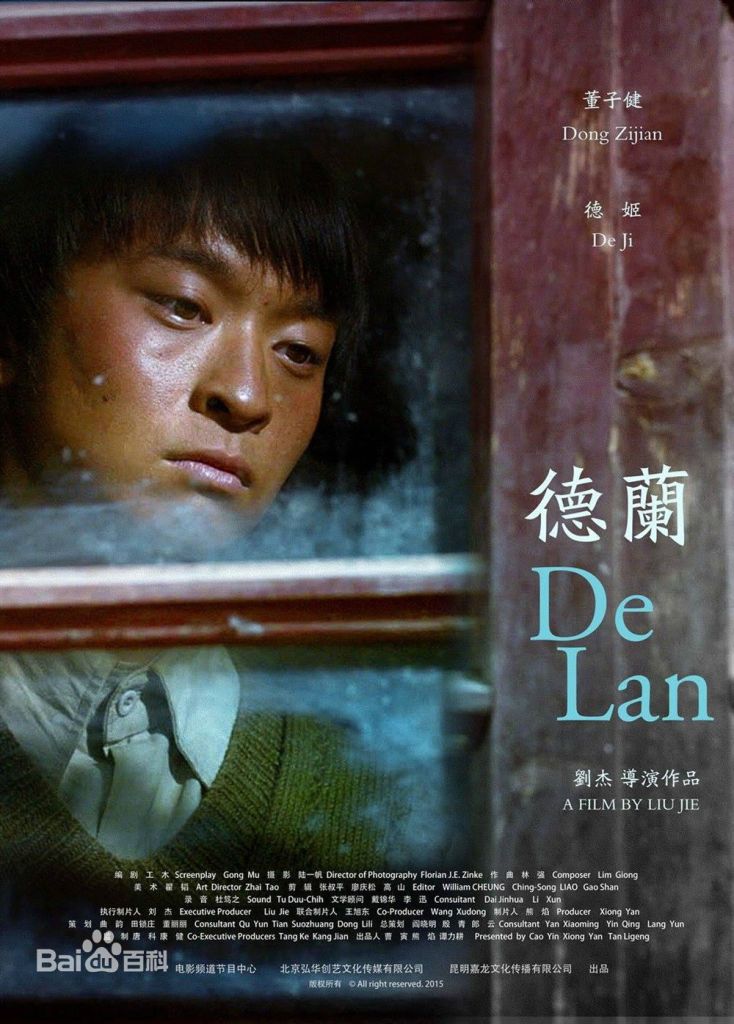 Set in 1984 in a rural Chinese backwater, De Lan (德蘭) is named not for its central character, but for his first love – a mountain woman far from home in search of a missing relative. Tasked with following De Lan (De Ji), Wang (Dong Zijian) finds himself entering a strange new world which he is incapable of fully understanding, not least because he doesn’t speak the language. A wordless love story between the tragic De Lan and the adolescent Wang is destined to end unhappily, but will affect both of them in quite profound ways.
