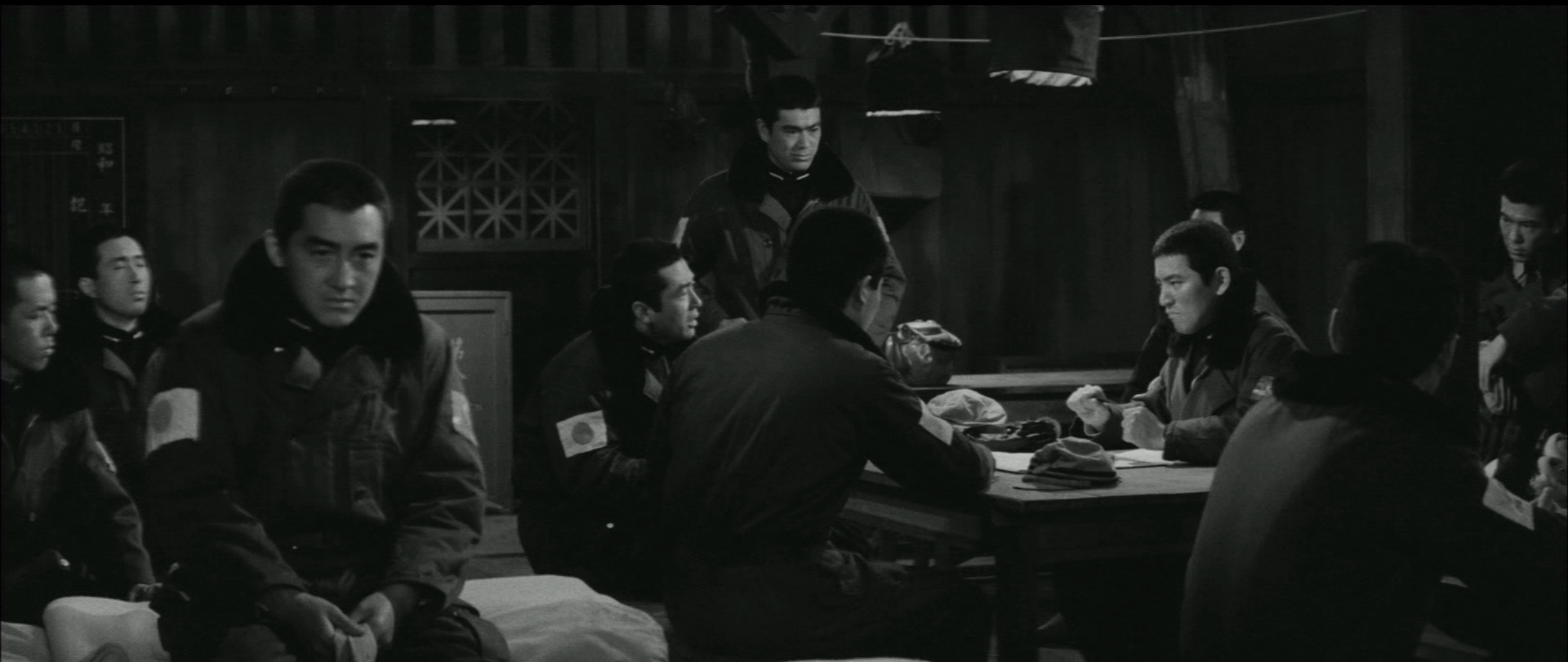
Classmates (あゝ同期の桜, Sadao Nakajima, 1967)

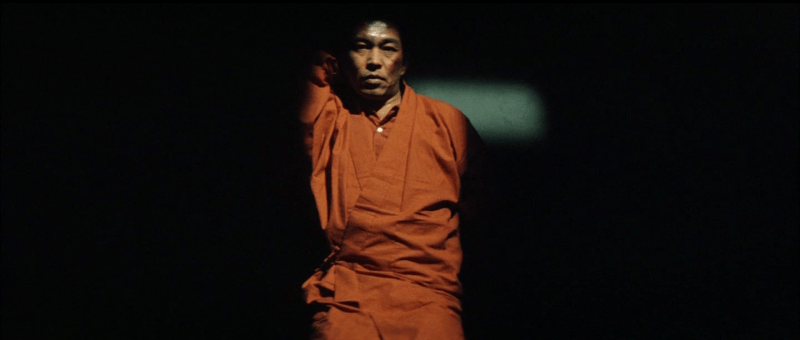
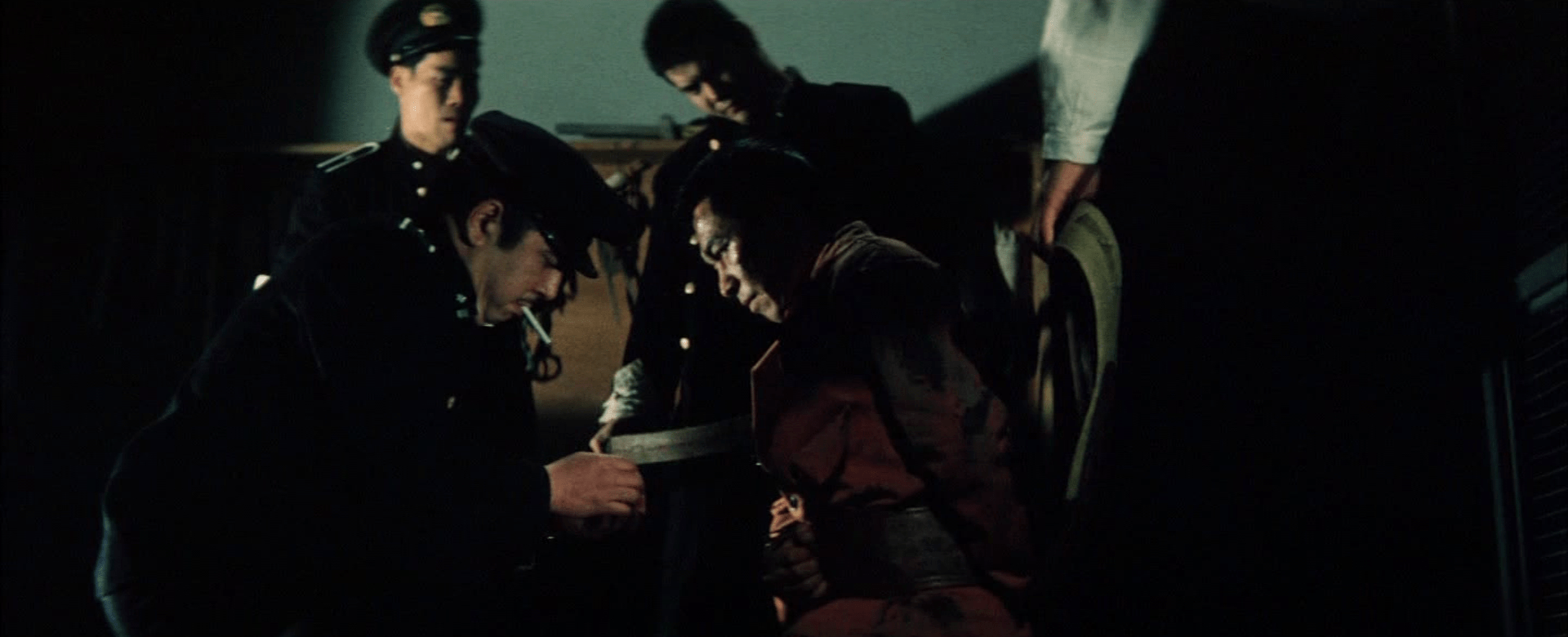
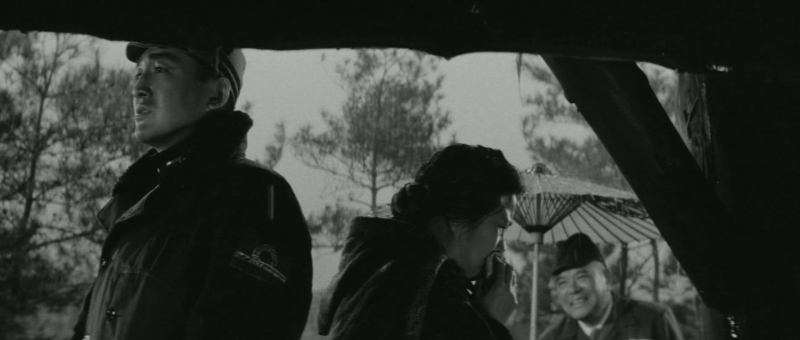
There had been films that dealt with the war before, but it was really with the generational shift that occurred among filmmakers in the mid-1960s that there was a greater willingness to reckon with the wartime past. Sadao Nakajima’s Classmates (あゝ同期の桜, Aa Doki no Sakura) was the first in a planned trilogy of war films at Toei, which was in other ways a studio that often leaned towards the right with its steady output of yakuza films, and most likely for that reason struggled to gain approval from studio heads. Taking its name from the military academy song, the film was inspired by a collection of essays put together from the letters and diaries kamikaze pilots had left behind. Nakajima had seen some of the letters sent back by the brother of a school friend, and reading them again on publication was determined to turn them into the film.

Nevertheless, only 25 years on from the end of the war it remained a sensitive topic. The film follows the men of the 14th class of reserve students who had previously had their draft notices deferred until they finished university but were now called up early because the war was going so badly. The majority of these men were allocated to kamikaze units and subsequently died in suicide attacks on US warships, though they received little in the way of training and mostly failed to hit their targets due to having limited fight experience. 

What might seem most surprising is that several of the men voice their opposition to the war along with the realisation that Japan is going to lose. Early on in training, one man deserts but the others are reminded that to do so amounts to treason and once caught, deserters will be executed by firing squad. This turns out not quite to be the case. Shiratori (Hiroki Matsukata), the resigned hero, encounters Taki (Mitsuki Kanemitsu) in Okinawa. where he’s working as ground staff. He’s insensible and appears to have lost his mind. The man working with him suggests that he was tortured so badly that it’s left him in a vacant state, though he’s still deployed for mindless tasks because they just don’t have the manpower.

Part of the reason for that is that they keep ordering people to die in a validation of the death cult that is militarism. On their arrival, the instructor tells the men he will have them all die, because dying for the emperor is their duty and destiny. The top brass insist this is the only way to win the war even though it’s counterproductive in that they’re running out of aircraft and skilled pilots even if one officer callously remarks that they have an endless supply of bodies. There’s also no real reason to send the planes up with two pilots as opposed to one, but they leave fully manned. The suicide missions are supposedly “voluntary”, but the men can’t really refuse due to a combination of peer pressure and military order.

When one pilot, Nanjo (Isao Natsuyagi), returns to base having been unable to reach his target, he’s immediately set upon by the others as a coward and a traitor. They accuse him of being afraid to die, leaving him feeling ashamed and frustrated by a sense of injustice while admitting that he didn’t want to die like a dog. He knows that he would not be able to go on living afterwards if he simply didn’t go through with it because the stigma of being a coward who let other men die so he could live would always be upon him. Eventually, he becomes so determined to prove himself that he insists on getting right back in his plane once it’s repaired and then blows himself up on the runway to prove a point.

Nanjo’s case is all the more poignant because he was a new father whose son was born after he was called up. He appears to have married quickly against his parents’ wishes and is now anxious that his family won’t accept his wife and child who will be left alone when he dies. His wife (Yoshiko Sakuma) desperately tries to see him to show him the baby, but manages only a few seconds before he’s forced to return to the barracks. Given a little more time, she brings a wedding dress for the impromptu ceremony they presumably skipped before, but ends up tearing it and giving Nanjo a strip as a kind of good-luck charm though like everything else it’s a gesture filled with futility.

It’s this sense of futility and resignation that seems to overtake Shiratori who knows he cannot escape his fate. To desert to is be killed anyway or to experience a spiritual death like Taki. He had introduced a friend, Hanzawa (Shinichi Chiba), to his sister and the two had become close, but he is forced to abruptly break up with her because he knows it’s unfair to string her along when he’s been sentenced to death. Reiko (Sumiko Fuji) will lose her brother and her boyfriend on the same day. Hanzawa and the other men visit a brothel on the night before their mission where they are treated as “gods”, though he sees only irony in the situation in which they are more like human sacrifices offered in prayer for an impossible victory. Their deaths will have no real meaning and are really only intended to instil fear in the enemy and weaken their morale rather than cause actual material damage to their fighting capability. Making use of stock footage, Nakajima freeze frames a plane in flight and points out at that point the men inside were still alive before cutting to a title card confirming the war ended just four months later. The title card at the beginning dedicated the film to the souls of those who died in the Pacific War, though it’s perhaps as quietly angry as it was permitted to be in 1967 in the senseless sacrifice of these men’s lives who were shamed, tricked, or forced at gunpoint into their cockpits and told they were disposable while those who stayed on the ground cheered and whooped at the grim spectacle of death.


Eleven Samurai (十一人の侍, Eiichi Kudo, 1967)

“If no one denounces the absurdity of this world, then our descendants will keep suffering,” a soon-to-be ronin insists in Eiichi Kudo’s revengers tragedy, Eleven Samurai (十一人の侍, Juichinin no Samurai). It seems clear from the outset that their actions will have little effect no matter whether they succeed or fail because the enemy is feudalism which may be approaching the end of its life but is definitely not dead yet. They can at least attempt to avenge their clan even if they can’t save it while refusing to let an entitled, selfish lord get away doing whatever he likes just because he happens to be the son of the former shogun and brother of the current one.

The opening scenes see Nariatsu (Kantaro Suga) chasing a deer having declared himself a “real hunter”. He ignores the cries of his men to watch where he’s going and sails over the border into the territory of Oshi which amounts to an invasion seeing as he is armed and has no permission to be there. The deer gets away, but Nariatsu shoots an old woodcutter whom he felt to be in his way with his bow and arrow. The Lord of the Abe clan that rules Oshi immediately takes him to task and tells Noriatsu that his behaviour is unbecoming for the son of the former shogun. He’s committed a murder in their territory, but they’re prepared to let it go as long as he leaves as soon as possible. But Nariatsu doesn’t like being told what to do and simply shoots the lord in the eye, potentially sparking a diplomatic incident. 

The Abe clan try to lodge a complaint in Edo, but are shut down by courtier Mizuno (Kei Sato) who fears that to acknowledge an event such as this would damage the moral authority of the Tokugawa regime. He decides to cover the whole thing up by claiming it was the Abe clan who insulted Noriatsu. The Abe clan will then be dissolved, and Oshi essentially gets nationalised. All of which suits Nariatsu just fine because he wants to take control of Oshi and expand his territory anyway. Part of his petulance seems to stem from the fact that he feels hard done by with such a small inheritance when his brother became the Shogun and received multiple fiefdoms. The previous Shogun, Tokugawa Ieyoshi, had produced an unusual number of children which became quite a problem in that he had to find lands for them all and eventually hastened the demise of the shogunate because of the additional strain. 

But Nariatsu is also an overgrown child who has no idea how to do anything for himself and no concern for the feelings or fortunes of others. When instructed to do something he doesn’t want to, Nariatsu petulantly stamps his feet and complains, and when his actions are challenged he simply replies that he’ll be telling his father. In fact, he is so infuriating that it’s likely most of his men secretly want him dead too, including his chief adviser Gyobu (Ryutaro Otomo) who was once the General Inspector but is now expected to babysit this absolute buffoon. Even though Nariatsu knows the Abe clan will be trying to kill him, he still sneaks out to the red light district and gets blind drunk with geisha which in itself is conduct unbecoming for a high ranking samurai such as himself. 

As such, he represents almost everything that’s wrong with the feudal order while Mizuno represents the rest. It’s Mizuno that secretly plots against the plotters, manipulating them into giving up their assassination mission by claiming to have switched sides only to backtrack and reveal he’s actually still working for Nariatsu fearing a reputational loss for the Tokugawa. Chief revenger Hayato (Isao Natsuyagi) is also banking on this fear of reputational damage, certain that the Shogunate won’t be able to bear the humiliation of Nariastsu being killed by a ronin so will instead claim that he died from an illness. Vowing to avenge the clan, Hayato righteously gives up his position to become one so that the Abes won’t be linked to the crime and is joined by 10 more similarly annoyed samurai. Six of them are already “dead” having been asked to commit seppuku for recklessly attacking Nariatsu on their own and blowing the whole operation. 

Hayato at least believes this to be a suicide mission. He leaves his loving wife and home and allows people to think he’s run off with Nui (Eiko Okawa), the younger sister of one of their number who died before he could join them. They do this because they think it must be done, and also because if no one stands up to samurai oppression it will never end. Wandering peasant Daijuro (Ko Nishimura) agrees with them. He wants revenge on the samurai for raping his sister after which his father and brother took their own lives. Nariatsu is as good as anyone else and he does very much need to die. 

But despite Daijuro’s homemade cannons, nothing quite goes to plan. Kudo sets his final battle in an atmospheric, misty valley that is an obvious stand in for the underworld. Hayato may succeed in killing Nariatsu but it’s a pyrrhic victory. Though he vowed “to put an end to this ridiculous world,” a samurai cannot really win this battle. It’s Daijuro who eventually walks off with Nariatsu’s head, symbolically decapitating the shogunate which the closing titles confirm was mortally wounded by this incident. With his striking black and white cinematography, Kudo does indeed paint this samurai world as a hellish place ruled over by an infinitely corrupt and self-interested authority. The nihilistic futility of it all is emphasised by the figure of a grown man sitting like a small child and splashing his sword in a puddle while surrounded by dead bodies. There might be a way out of this, but not for the samurai, only for those who will come after and perhaps finally be free of this world’s absurdity.


Yakuza Hooligans (893 愚連隊, Sadao Nakajima, 1966)

“The world has changed,” an old school street thug is repeatedly reminded after his release from prison into a new Japan amid the tides of rising prosperity. An early effort from Sadao Nakajima, Yakuza Hooligans (893 愚連隊, 893 Gurentai) situates itself in cultural and generational abyss among those who find themselves locked out of the new society and unable to escape the immediate post-war era in part perhaps because they may not really want to.

At least it seems that way for the central trio of “hooligans” who later explain to their sometime mentor that they aren’t doing petty crime because of a lack of other options but out of devilment and a childish rebellion against a world they feel doesn’t accept them. As the film opens, they’re running a petty scam luring queuing passengers into unlicensed cabs for which they are almost arrested, stiffing the cabbie that helps them escape and then conning a takoyaki vendor out of a free lunch. Several times they’re criticised for “bullying the weak,” most obviously in their sideline seducing women and forcing them into sex work or blackmailing men who sleep with them. 

They are, however, fairly weak themselves. They like to describe themselves as a “democratic” institution in which everyone is equal and everything is shared fairly but despite supposedly having no boss they’re bossed around by almost everyone and when challenged by actual yakuza quickly back down. A generation older, failed kamikaze Sugi is released from prison after spending 15 years behind bars for killing a Chinese man as part of a petty crime gang formed in the immediate chaos after the war. Unlike his former associate Kurokawa, Sugi too claims that he doesn’t see the point in having a boss but like the younger men flounders unable to see a place for himself in the new society.

Sugi doesn’t approve of the more immoral sides of their business, particularly the rape and trafficking of women but proves just how out of touch he is when he asks the guys why they can’t just swipe some rice or clothing. In the immediate post-war period, rice and kimono were the only things which held their value but in a newly consumerist Japan they’re in plentiful supply and in fact worth relatively little. While he was inside, his former girlfriend married someone else and had a child, burning the tattoo she once had of his name on her arm clean away. She tells him that she’s sorry, but she’s happy and she doesn’t want anything to disrupt the life she has now. Falling for a middle-aged woman unhappy in her marriage and subsequently forced into sex work by the gang, he dreams of a happy family life and ultimately risks all on a confrontation with his old yakuza pal Kurokawa.

The film seems to suggest that the writing’s on the wall for men like Kurokawa too. His old school world of regimented, authoritarian gangsterdom doesn’t fit in the new Japan anymore than Sugi’s corrupted post-war idealism. A subplot revolving around Ken, a mixed-race member of the gang who hates the way they treat women because his mother was raped by a US serviceman positions the Occupation as another source of corruption leaving nothing behind itself other than moral decline and lasting trauma. But as Nobuko later says as long as you’re alive you have to go on searching for something and if one place is the same as another then you might as well move. 

The hooligans, however, seem stuck in the past. They can’t stand up for themselves or mount any real resistance to their circumstances, continuing to “bully the weak” in an attempt to mask their own weakness until racing headlong towards a confrontation with the yakuza along a bridge which quite literally hasn’t been finished yet symbolising their mutual inability to progress into the new society. Shooting with a heavy dose of irony enhanced by the whimsical jazz score, Nakajima captures a sense of contemporary Kyoto as an alienating environment caught between the ancient and the modern in which men like Sugi and the hooligans are permanently displaced yet lack the desire to escape because the newly consumerist society has little to offer them. 


Original trailer (no subtitles)

Eighteen Years in Prison (懲役十八年, Tai Kato, 1967)

Genre star Noburu Ando had a certain cachet in that he had been a yakuza prior to becoming an actor. He had in fact been the head of his own gang which at its high point had over 300 members and controlled much of the lucrative Shibuya nightlife scene. His first onscreen appearance was in a gangster movie in which he played himself. Rather than the jitsuroku epics he would later become associated with, Tai Kato’s Eighteen Years in Prison (懲役十八年, Choueki Juhachi Nen) essentially casts him in a ninkyo role as a noble if compromised former captain of the kamikaze squad who finds himself caught between the contradictions of post-war Japan and the American occupation. 

Indeed, in this as in many other yakuza movies set during the immediate post-war era, the Americans are really just the biggest gang. Suffering with survivor’s guilt, Captain Kawada (Noboru Ando) has set up an association together with former comrade Tsukada (Asao Koike) to look after he dependent relatives of men who fell in war. To do this, he has to resort to criminality raiding American boats for supplies such as sugar and rice which he redistributes to war widows and their families. His ultimate goal is amassing enough money to buy a patch of land in the town centre and do away with the black market which exploits the vulnerable replacing it with a legitimate market so the surviving family members can set up businesses to support themselves. 

Around this time, the association manages to track down the younger sister of one of their men who died as a kamikaze, Hisako (Hiroko Sakuramachi ), and discovers she is living in desperation having lost the family home to aerial bombing. As her mother is seriously ill and she needs money for food and medical treatment, Hisako contemplates turning to sex work and is almost assaulted by a gang of drunk and abusive American servicemen from whom she is rescued by a passing Kawada. This incident makes plain his resentment towards the occupation and sense that it is the American influence that is wilfully suppressing the efforts of the Japanese people to rebuild their society. It’s this resentment that lends a note of justification to Kawada’s decision to rob a nearby factory of valuable copper wire to get the money to save Hisako’s mother thereby saving her from falling into sex work and thereafter helping to achieve their ultimate goal of building the market. The raid, however, goes wrong. Kawada sends an injured Tsukada back to the association and is arrested.

In prison he discovers only more corrupt authority in which guards beat and torture prisoners, just another bigger gang. He finds out that block warden Hanya (Tomisaburo Wakayama) is actively accepting bribes and in cahoots with some of the inmates that attempt to terrorise newbies to the point that one attempts suicide by swallowing glass though Hanya refuses to call for help forcing Kawada and some of the other men to pull the alarm themselves. The sources of moral authority lie in the new college-educated deputy warden recently returned from five years as a POW in Manila, and a veteran yakuza with a grudge against Hanya who apparently had his girlfriend raped leading to her suicide. 

Though the film is titled eighteen years in prison, Kawada becomes eligible for parole in 1952 which is of course the year the occupation ends. By this point he discovers that Tsukada has abandoned their idealistic mission and turned full yakuza, building an immense red-light district on the land they bought for the market and making himself rich through the violent trafficking and exploitation of women. Eventually confronted, he tries to convince Kawada that the world has changed, that the post-war years of privation are over and that he sees only “the ghost of a nation that lost the war” rather than burgeoning new economy stimulated by the Korean War and an ironically a repositioned America now no longer occupiers but still somehow influential if leaving a vacuum a man like Tsukada may step into. It’s no coincidence that he threatens Hisako with deportation to a brothel in Okinawa he’s set up to service American servicemen in a place where the conditions of occupation are still largely in place. 

Tsukada clearly feels that he need have no more responsibility for his wartime conduct, roundly telling Kawada that the families of the fallen are not his responsibility and should “stop leeching off other people and start working for a living”. Hisako’s long lost younger brother Kenichi (Masaomi Kondo) who ended up alone on the streets after being conscripted as a student factory worker and returning to find his home in ashes, turns the blame back on the authorities reminding them that it’s their fault, they started the war the cost him his home and family and turned him into the half-crazed man of violence who immediately introduces himself as “King” on moving up from a juvie prison. Much of Kawada’s prison life is then given over to saving Kenichi, a representative of the next generation, from becoming mired in a life of nihilistic crime. 

In many ways, he remains a squad leader trying to atone for having sent so many young men to die by accepting the responsibility for their families while trying to protect those left behind from the vagaries of the post-war era including the amoral capitalism represented by the infinitely corrupt Tsukada. Dressed in a military uniform ironically pinched from an American soldier he goes on the rampage knowing that he has to deal with Tsukada himself in order to defend the post-war future from those like him who’ve apparently learned nothing much at all even from such recent history. Shooting from his characteristically low angles, Kato explores the seedy underbelly of the beginnings of the economic miracle while his noble hero does his best to offer a course correction to those who have already forgotten their responsibility not just to others but to those they left behind.


Samurai Spy (異聞猿飛佐助, Masahiro Shinoda, 1965)

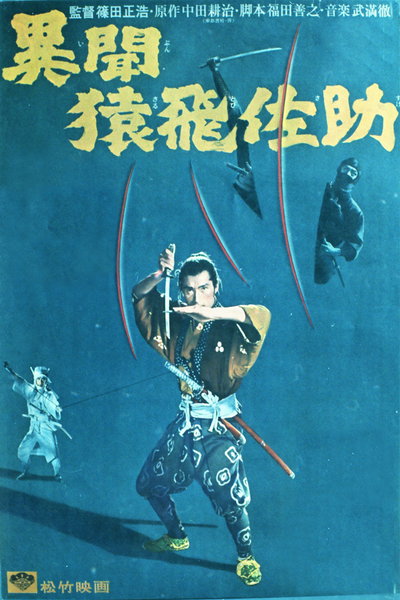
samurai-spyNothing is certain these days, so say the protagonists at the centre of Masahiro Shinoda’s whirlwind of intrigue, Samurai Spy (異聞猿飛佐助, Ibun Sarutobi Sasuke). Set 14 years after the battle of Sekigahara which ushered in a long period of peace under the banner of the Tokugawa Shogunate, Samurai Spy effectively imports its contemporary cold war atmosphere to feudal Japan in which warring states continue to vie for power through the use of covert spy networks run from Edo and Osaka respectively. Sides are switched, friends are betrayed, innocents are murdered. The peace is fragile, but is it worth preserving even at such mounting cost?

Our “hero” Sasuke (Koji Takahashi) is a wandering spy for the Sanada clan, nominally part of the Tokugawa though with no strong allegiance to either side. Everywhere he goes he feels hunted, watched by shadowy forces and unseen motivators. After bumping into Mitsuaki (Mutsuhiro Toura), an old comrade who fought alongside him at the Battle of Sekigahara, Sasuke is pulled into the ongoing intrigue as his friend is murdered and he assumed to be the culprit. Things are further complicated when a mysterious woman to whom he had become attached, Okiwa (Misako Watanabe),  is killed in a similar fashion. A political shift is taking place as a high ranking Tokugawa official, Tatewaki (Eiji Okada), is in the process of defecting to the Toyotomi with white cloaked ninja master Takatani (Tetsuro Tanba) (presumably) working against him. Sasuke is charged with trying to sort all of this out but constantly finds himself on shaky ground as everything around him is constantly changing and the air is filled with conspiracy.

Shinoda aims to disorientate. After beginning with a brief historical narration to set the scene including a bloody excerpt from the horrific Battle of Sekigahara (the historical context presumably much more apparent to a Japanese viewer than an overseas one), he jumps forward 14 years and proceeds to give a rundown of the current situation. Quick fire naming and a lack of external context intentionally make it difficult to pin down who is who and which side is which. The opening sequence takes place in darkness with only moonlight and lanterns to light the way, so our players are always cast in shadows, only half visible and unidentifiable. Nothing is as it seems, the world is murky and the people in shadier still.

Sasuke fought at Sekigahara when he was just 15. His true coming of age has been in an era of peace and he is committed to sustaining that peace at all costs rather than return to the bloody, internecine warfare of the past. This stands in contrast to his double dealing friend, Mitsuaki, whose own coming of age was forged by war and so now finds himself at a loose end as warriors are obsolete in an age without war. Nevertheless, Sasuke feels the peace is threatened – all conversations are eventually about conflict, no one thinks about the meaning of death or what it is to be alive. Men like Mitsuaki have decided to live purely for pleasure, wanting nothing more than women and sake, thinking of nothing beyond satisfying their needs, and rarely consider the moral or political dimension of their actions. Mitsuaki’s unexpected degree of self interest accidentally threatens to completely destabilise the status quo, setting off a series of betrayals and counter betrayals in its wake, but all Mitsuaki was thinking about was a how to get paid twice for doing one job.

Navigating this complex network of allegiances and betrayals, Sasuke comes to discover what it is he really wants out of life and what he needs to do to get it. No longer a neutral observer, he has to pick a side and the one he picks that of the wronged. Coming to the aid of the threatened and oppressed, Sasuke adds himself to the list of enemies of the state yet he sees it as his duty to fight against the forces of darkness for a better, fairer world. Of course, he has his personal reasons for revenge but even these are partly born out of a sense of outrage for the injustice done to people who mattered to him.

Yet for all of the real world intrigue and political allegory Samurai Spy is also imbued with an unsettling sense of the absurd. Sasuke is plagued, yet at times assisted, by the almost supernatural Takatani who, incongruously, dresses in a bright white outfit with the fabric of his hood tied up into horns on the front. Appearing as needed along with his more conventionally dressed ninja minions, Takatani seems to float through the air performing strange acts of ninjadom and acting with no firm course of action. Shinoda shoots the battle scenes from odd angles using slow motion to give them a strange kind of power, even in one instance allowing a severed limb to float to the ground. In a nod to the circularity of violence, he even allows the climactic fight to be interrupted and witnessed by a small boy, shocked by what he has seen. The fact that the situation is laid to rest by a forgotten deus ex machina is yet more evidence for the world’s essential leaning towards constructed narrative.

Filled with the fog of war (literally so in places), Samurai Spy dramatises the uncertainties of its environment through the extreme lack of visual clarity. The audience is as disorientated as Sasuke, continually wrong footed and left at a loss as to the true motivations of each of the major players. The atmosphere is palpably intense, as if sitting on a powder keg ready to explode at any spark of conflict. From this viewpoint, it’s impossible to see who is in the right and who the wrong or even if those two ideas are even appropriate ways of thinking about things. Peace stands on a knife edge and, ironically, only survives if robustly defended. Violence is shown up for all of its essential cruelty and senselessness yet it is the only thing which is certain. Sasuke, at least, seems to have made his own peace in one way or another but the world he leaves behind him is far from ready to do the same.