The Beast Hand (獣手, Taichiro Natsume, 2024)

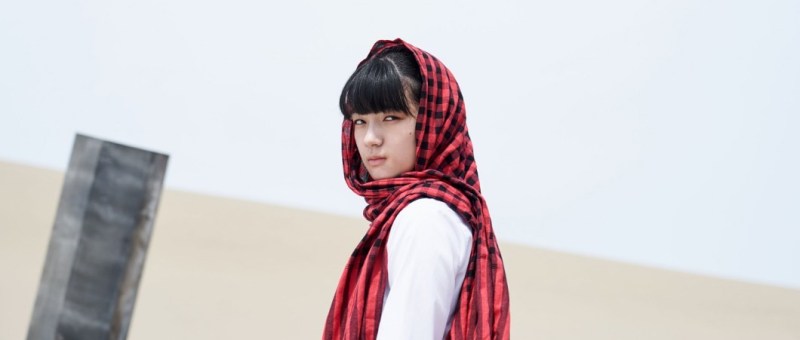
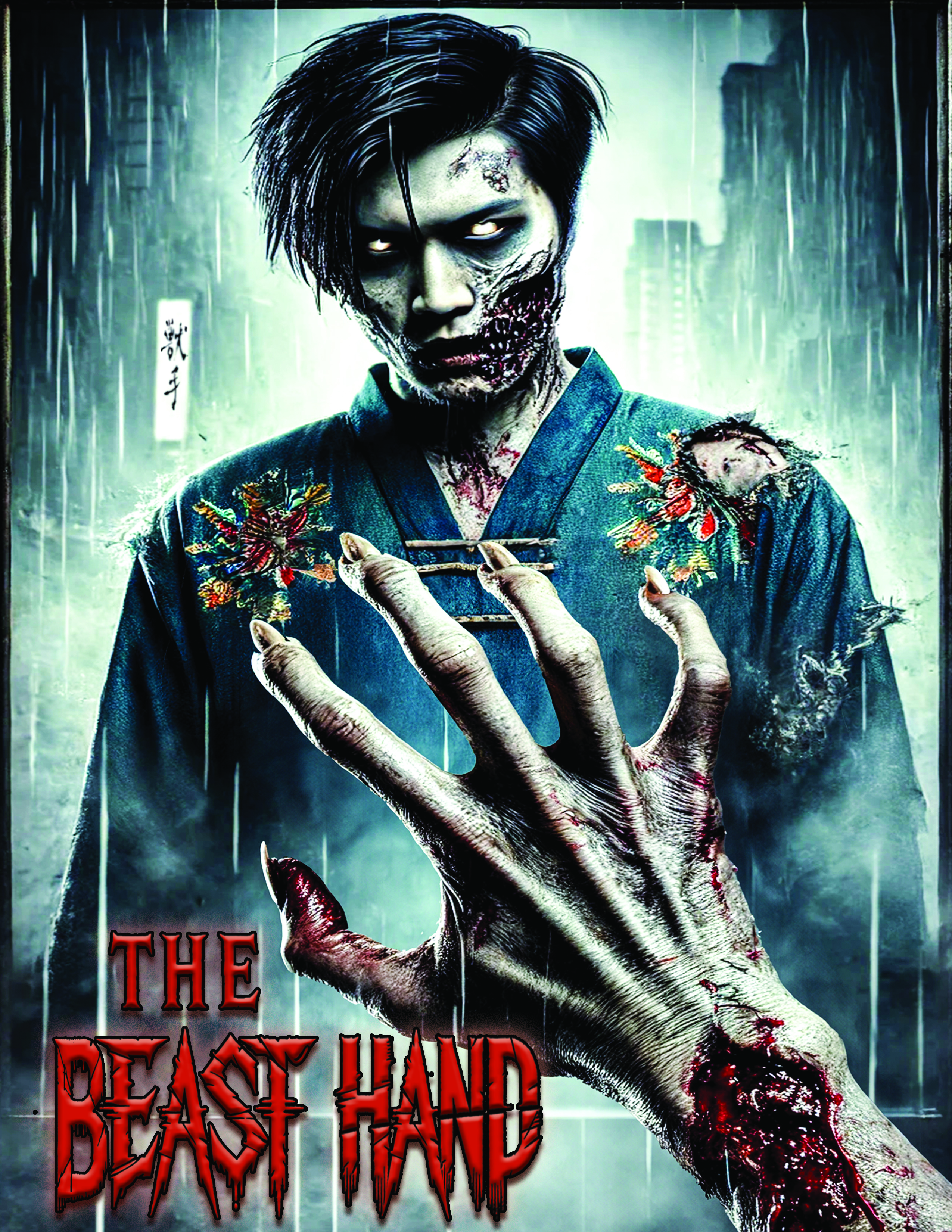
This world makes monsters of us all in Taichiro Natsume’s low-budget indie body horror Beast Hand (獣手, Kemonote). In many ways, Osamu (Takahiro Fukuya) is pursued by his own left arm in his continual powerlessness and tendency towards self-destructive acts of crime and violence. But it’s also true that it isn’t just his hand that makes him monstrous to the world around him and that his “deformity” is also symbolic of the ways in which he is excluded from mainstream society.

Indeed, Osamu already lives a marginal existence in a cramped, reclaimed space on the edges of a town. Having served time in prison, he gets by doing casual labour and quite literally kicking the can down the road, while we also seem him shoplift a can beer after paying for his dinner. His life appears to be defined by futility even before Inui (Yota Kawase), a man with whom he seems to have shared a criminal past, arrives on his doorstep and barges his way back into his life. Technically on parole but having absconded from his probation office, Inui forces Osamu to give up the contact details for his old girlfriend, Koyuki (Misa Wada), who stopped visiting him in prison and was apparently so desperate to get away from him that she had “full body surgery” to essentially become someone else and start a new life.

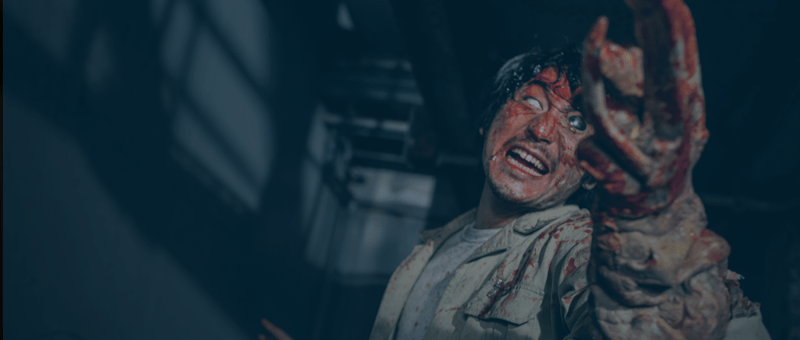
Starting a new life is it seems something that they both want to do but are each unable to shake off the hold that Inui has over them. He, however, is in the same position and though he bullies and assaults them both, bows down before a man he met in prison who gave him extra food from the canteen. The old prison friend wants help on a job robbing the woman who still hands out physical pay-packets to workers at a local factory, but Inui turns him down stating that he’s still on parole and it’s too risky though secretly plotting to have Osamu do the job on his own. Predictably, it all goes wrong and Osamu ends up losing an arm only for Koyuki to drag him to a backstreet doctor who first refuses to help but then apparently experiments on him with a drug he’s researching into regenerative health with the consequence that Osamu’s arm grows back but as a monstrous lump of throbbing grey muscle that he is no longer able to fully control. At moments of high emotion, the arm takes him over and he’s transformed into a mindless, thrashing beast to the extent that Koyuki has to chain him to the wall to ensure her own safety.

Having bonded in their shared sense of subjugation, they once again attempt to change by living a more normal life in a small town by the sea. But even here, Osamu is rejected in part because of the arm itself, which he keeps disguised in bandages and a sling as if it were broken, and otherwise because of his secrecy about it which sees him fired by the kindly older gentleman running a factory where Osamu found temporary employment. Koyuki becomes pregnant, but financial pressures and the lingering anxiety about what kind of child this world might produce eats away at them. Osamu isn’t sure if the baby’s his or Inui’s nor which of those two options is better given that the child might inherit whatever’s infected his arm, while Koyuki is no longer certain about the viability of raising a child in their present circumstances. Both from single-parent families, they lamented that neither of them had the experience of being taken to the beach by their parents which seems to be the idyllic picture of a carefree childhood they’re trying to recapture.

But still they find themselves hounded and pursued, this time by a shady businessman who doesn’t want cure Osamu but to exploit him by ripping off his arm and using the technology for his own nefarious ends. The remorseful doctor also wants a tissue sample, but promises a salve in return that would at least subdue his violent impulses and allow him to live a more normal life. The implication is, however, that the only way Osamu can have the semblance of a happy family is by wilfully sacrificing himself and accepting that he has no place within in it. Condemned by his monstrousness to the edges of the frame, he accepts his liminality rather than railing against it and resigns himself to self-isolation as a permanent exile from a continually unforgiving society.


The Beast Hand is released in the US on DVD and blu-ray May 13 courtesy of Cleopatra Entertainment and available from MVD.

Trailer (English subtitles)
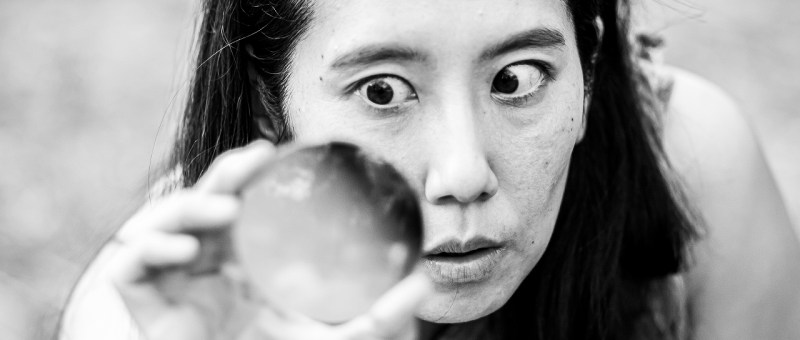
Motion Picture: Choke (映画(窒息), Gen Nagao, 2023)

Humans place themselves above animals precisely because of their ability to communicate and work together to create complex plans that allow them to overcome their circumstances. Robbed of our speech, would we still say the same? Gen Nagao’s dialogue-free drama Choke (映画(窒息), Eiga Chissoku) takes place in a world in which language appears to have disappeared. Humans communicate only through gesture and are therefore prevented from explaining themselves fully, able to rely only on the vagueness of feeling to convey their thoughts and intentions. 

Yet we might not quite grasp this at first, because the heroine (Misa Wada) lives a solitary life in which she rarely needs to talk to anyone anyway. Shot in a crisp black and white, this appears to be some kind of near future, post-apocalyptic world in which even ancient technologies have largely been forgotten. The woman lives in a concrete structure, presumably a disused factory which is dotted with broken machinery that the woman largely ignores as she lives her simple and repetitive life of waking, fetching water, hunting, cooking and eating. We have no reason to think that she is unhappy for besides the occasional sigh, she simply gets on with her daily tasks and then goes to sleep seemingly unafraid of external threats.

But it is indeed male violence that punctures her world when she’s set upon by three men, seemingly an older man and his grown-up sons one of whom holds her still while the middle-aged man rapes her after breaking the magnifying glass she’d bought off a cheerful pedlar enraptured by the wonder of instant fire (well, while the sun shines at least). Her world becomes darker and she finds herself haunted by a shadowy figure that hovers over her as she sleeps. But then, her trap catches a young man (Daiki Hiba) whom she at first seems as if she’s going to kill and eat but later reconsiders and lets him go presumably calculating he poses no threat to her. The young man has a goofy grin and cheerful disposition, returning to bring the woman gifts and follow her around doing odd jobs before the pair develop a relationship and start living as a couple. The young man even devises a system of bamboo pipes to bring water from the brook so the woman won’t need to carry buckets back and forth anymore in a seeming rediscovery of technology born of his desire to make her life easier.

This more nurturing, protective kind of masculinity brings a new a dimension to her life but their harmonious days do not last long before male violence intrudes once again and proves a corrupting influence for the young man who seemingly becomes cruel and vengeful, though not toward the woman even as she begins to reconsider her relationship with him and if this kind of inhumanity is something she can tolerate in the idyll she’d crafted for herself before he arrived. Then again, in trying to deal with it is there something that becomes cruel or violent in herself in that wasn’t that way before even if doing so also makes her sad and leaves her lonely?

Until then she’d found only wonder in the natural world, repurposing the disused, man-made structures of the factory to make music in the rain and more problematically filled with childish glee when something wanders into her trap. But nature holds its dangers too even if there don’t appear to be any predators here besides man in the form of poisonous mushrooms easily mistaken for the edible kind. Even so, it’s violence that finally poisons her world. A senseless kind of violence that doesn’t seem to be about competition for resources, but only an animal lust and craving for dominance. If only they could communicate in a more concrete way perhaps it could be avoided, but then that doesn’t seem to have worked out that way for us who face such threats every day with words often ignored. 

In any case, Nagao finally heads into a more abstract space as the woman seems to react to the abrupt halt of the film’s soundtrack followed by the removal not only of speech but sound from her world as is if she had lost her hearing. Her reality fractures and we can’t be sure she hasn’t just imagined anything that went before or that she has been targeted by some unseen supernatural or spiritual force for her transgressions leading to her exile from a disintegrating paradise. Obscure and haunting, the film nevertheless has a kind of cheerfulness in its innate absurdity captured in the lunking physicality of the actors who move with a cartoonish strangeness and exaggerate their facial expressions in a strenuous attempt to communicate in the absence of words. The message seems to be that in the end we ruin things for ourselves, either through violence or simply doing what we think is right but in the end may really be no different nor any better.


Motion Picture: Choke screened as part of this year’s JAPAN CUTS.

Original trailer (dialogue free)

Yamabuki (やまぶき, Juichiro Yamasaki, 2022)

The lives of a series of dejected souls in a moribund quarry town intersect in unexpected ways in a poetical drama from Juichiro Yamasaki, Yamabuki (やまぶき). The film takes it name from a colourful mountain flower which as someone later comments grows in the shade where no one can see, much like the sullen teenage girl whose mother named her after it because as she says “sunflowers face the sun but you don’t have to”. A tale of finding a place to root oneself in a rocky landscape the film has an understandably melancholy atmosphere but nevertheless eventually finds hope in perseverance or as one of the heroes finally sighs, “ask and ye shall receive”.

“This is my family” former Korean equestrian Chang-su (Kang Yoon-soo) beams on visiting a local ranch where his girlfriend’s daughter Uzuki is learning to ride. Chang-su explains that he was forced to give up horse riding after his father’s business went bust, implying at least that he’s from a formerly wealthy family in Korea with whom he seems to have few emotional ties. We see him send money abroad which seems to be intended to pay off loan sharks, presumably his father’s debts unwisely incurred by his failing business and perhaps the reason why Chang-su has come to Japan to work a manual job in a quarry. Most of the other workers are also economic migrants, many of them from the same area and conversing with each other in their own shared language though Chang-su seems to be the only Korean. After receiving the news that he’s to be made a regular employee rather than a casual worker, he starts to think that his life is back on track allowing him to once again ride a horse. 

But his hopes are suddenly dashed when his car is hit by falling rocks dislodged by police detective Hayakawa (Yota Kawase) trying to uproot a yamabuki flower to take home with him while his teenage daughter, Yamabuki (Kirara Iori), rolls her eyes and storms off. Reeling from the death of her war reporter mother in a Middle Eastern combat zone, Yamabuki is at odds with her father and searching for her own identity. She has begun hanging out with a group of protestors who stand silently at the roadside with prominent signage though their protests seem to take on many forms with no particular focus. One moment it’s the consumption tax and the next American presence in Okinawa or racism in contemporary Japan. This last one is met with a counter protest by a man shouting at them to go back where they came from, echoing the kind of othering and displacement felt by Chang-su who is let go from the quarry after the accident.

Just as Chang-su tries to anchor himself with his new family, Hayakawa tries to remake his in the absence of his wife while carrying on a kind of relationship with a Chinese sex worker equally displaced by the modern society and looking for a place to belong. As she points out, her mother came to Japan because at that time it looked like the future, but like the quarry town it now seems like the past. Her mother returned to the economic powerhouse of Shenzhen and has apparently become wealthy, though her half-Japanese daughter struggles to find a place for herself. As Chang-su reveals, “yamabuki” was also the name given to gold coins offered as bribes in the feudal era, lamenting the money-oriented nature of the contemporary society just as Yamabuki herself concludes that she wants her life to mean something and to feel present in every second of her existence. Her father had objected to the protests, but eventually tells her that she should be preparing for her independence and learning to be accountable to herself for her actions. She must have the courage of her convictions, as he lays out in a scene shot in the manner of a political rally and echoing Soviet realist cinema, so she can’t regret it later even if she one day changes her mind.  

They are all, in their ways, like the yamabuki rooting themselves in rocky ground and growing in the shade each discovering something new that allows them to continue despite the continual disappointment of their lives. Shot in a grainy 4:3 16mm, the film emphasises the aura of impossibility that enshrouds the town as if it were somehow trapped in the past, but equally lends it a kind of elegiac quality peppered with the colourful yellow of the yamabuki flowers which suggest that it is possible to blossom even under the constant gloom of a continually uncertain existence.


Yamabuki screens at New York’s IFC Center on Feb. 10 & 11 as part of ACA Cinema Project’s New Films From Japan. Director Juichiro Yamasaki will be present at each screening for a Q&A.

Original trailer (English subtitles)

A Balance (由宇子の天秤, Yujiro Harumoto, 2020)

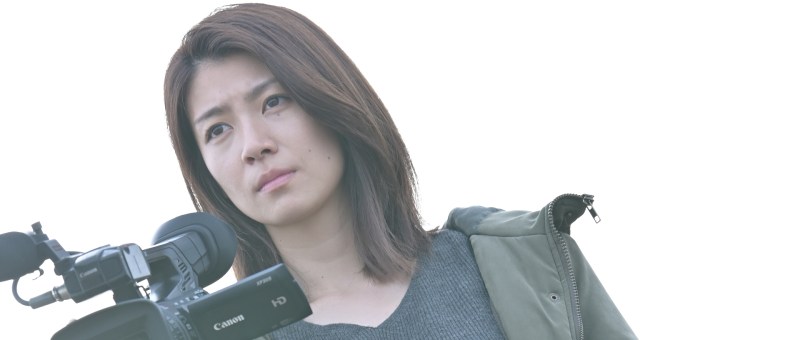
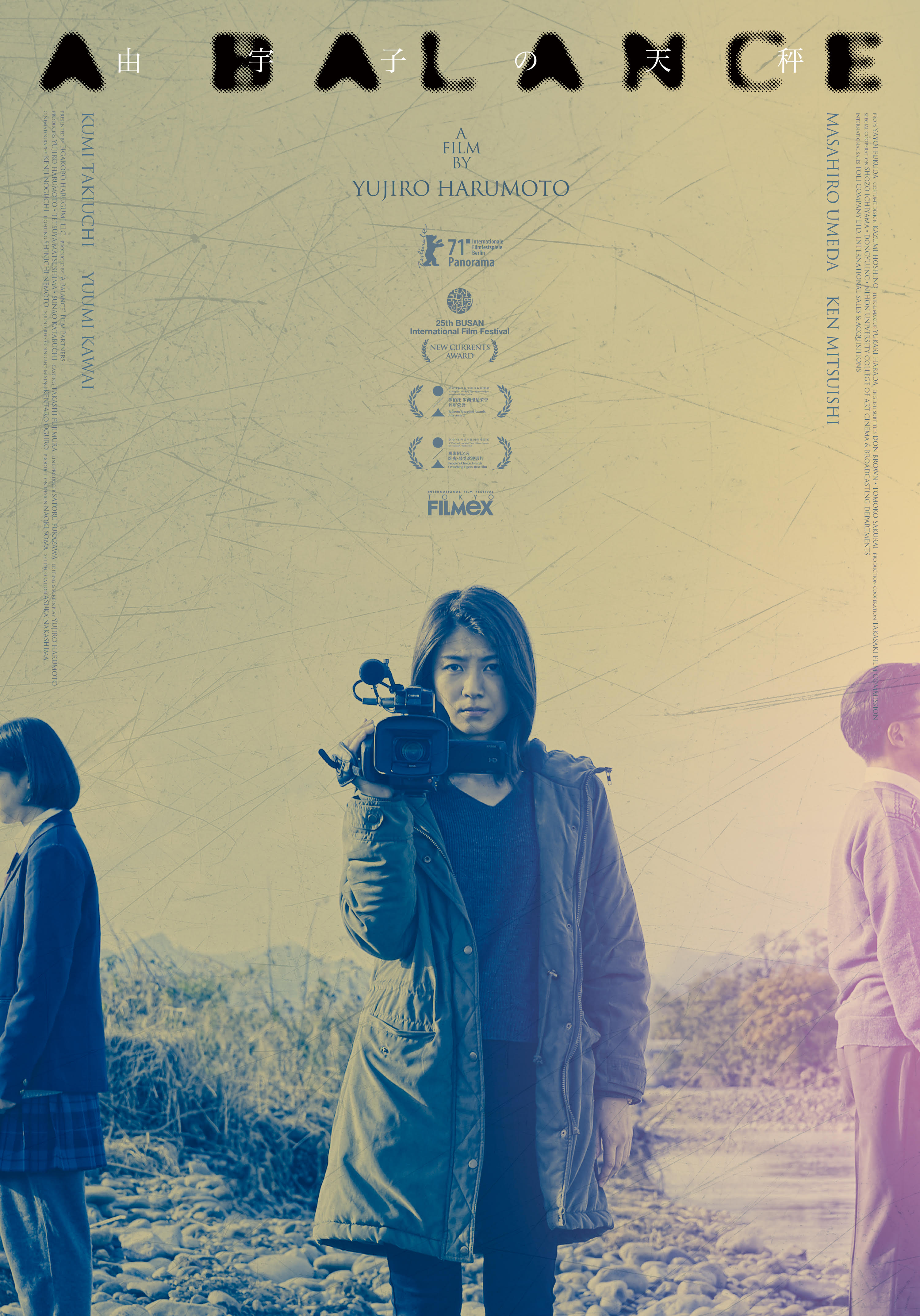
“What’s moral isn’t always what’s best” according to the morally compromised heroine at the centre of Yujiro Harumoto’s A Balance (由宇子の天秤, Yuko no Tenbin). To Yuko (Kumi Takiuchi), a balance is what a documentarian should strike, not taking one side or another but shining a light on hidden truths. The irony is that in seeking to expose one truth she accidentally stumbles on another uncomfortably close to home and although her job is to highlight injustice finds herself making the decision to do the opposite concluding that in this case, and perhaps many others, keeping quiet may actually be what’s best for victims, victimisers, and everyone in-between. 

As the film opens, Yuko is shooting a potentially manipulative interview with the grieving father of a young woman, Hiromi, who took her own life after becoming the subject of scandal and rumour when it was revealed she may have been involved in an inappropriate “relationship” with a teacher. The teacher, Mr. Yano, eventually took his own life too leaving behind him a note proclaiming his innocence and explaining that death is the manner he has chosen for his resistance. Yuko is sympathetic to Mr. Hasebe (Yuya Matsuura), but also perhaps verging on the unethical in the depth of the questions she asks him of his daughter’s death. Soon enough a conflict emerges between the nature of the documentary Yuko would like to make which is more contemplative than polemical, and the “routine piece on bullying” the TV studio think they’ve commissioned. Consequently, we see the suits redacting problematic lines in Yuko’s scripts in editorial meetings, misrepresenting Mr. Hasebe’s words in removing his criticism of mass media which he blames for hounding Mr. Yano to his death and thereby depriving him of answers. 

Yuko remains determined to provide “a balance” in interviewing Yano’s surviving family members including his mother Toshiko (Mitsuko Oka) and sister Shiho (Misa Wada), but discovers them tyrannised by the treatment they’ve received at the hands of the media and a vindictive society. Toshiko near collapses towards the end of the interview when asked if there was anything the family could have done to prevent this tragedy happening, inviting Yuko to visit her at home whereupon she discovers her living in near total darkness, afraid to go out lest she be recognised and explaining that she has few possessions in case she has to move again in a hurry because someone has exposed her address online. This little old lady is living in terror because of something her son was accused of which later caused him to take his own life and even that did not end the torment for his family. 

Meanwhile, in an ironic touch, Yuko discovers that a young woman, Mei (Yumi Kawai), attending the cram school owned by her father where she also teaches part-time has become pregnant and claims her father, Mr. Kinoshita (Ken Mitsuishi), is responsible having accepted sex in lieu of her overdue fees. Yuko does not want to disbelieve her and confronts her father, holding up her iPhone as a record, who admits that what Mei has said is true. Yuko tells herself she’s doing what’s best for Mei, bonding with her as two women who lost their mothers young (as did Hiromi), understanding that she may not want to go to the authorities because of the lingering stigma of being involved such a scandal. But she also can’t deny that her actions are self-interested in that she doesn’t want her doc pulled or her career messed up by her father’s transgression, something which gets harder to ignore when she discovers Mei’s pregnancy may be high risk and requires immediate medical treatment from a proper hospital to ensure her safety. 

The lines become ever more blurred, Yuko developing a quasi-maternal relationship with the motherless Mei which is in its way perfectly genuine even as she pays their overdue gas bill and worries about her potentially abusive father (Masahiro Umeda), but is nevertheless coloured by her desire both to cover up this harmful secret and to atone for her father’s wrongdoing. For his part, Mr. Kinoshita wants to confess but as Yuko points out he’d be doing it to unburden himself which in effect would merely shift the burden onto others including Mei but also Yuko herself, her documentary team, the other students at the cram school, and in effect everyone else they’ve ever known. 

Yet can Yuko be an effective arbiter of the truth especially when, as it turns out, neither she nor anyone else is being entirely honest? Her job is to present information in such a way that conclusions can be drawn, but she is herself making decisions in selecting the information she presents and the manner in which she presents it. She may resent the interference of the studio, but in reality they aren’t doing anything she hasn’t already done even if they are acting less out of a sense of integrity than commercial concern. “Whatever we put together is the truth” as her exasperated producer (Yota Kawase) finally insists. It’s in this same conflict that she begins to lose her sense of balance, trying to help those victimised by an unforgiving society while attempting to protect herself from unwelcome consequences of social scandal aided and abetted by the industry in which she herself works. “Ask them who is the real victimiser” Toshiko asks of Yuko taking aim at the mass media who have shamed her into a life of total darkness, but all Yuko can in the end do is turn her camera back on herself in contemplation of her shattered integrity.  


A Balance screens Aug. 12 as part of this year’s New York Asian Film Festival.

Original trailer (English subtitles)

Kamata Prelude (蒲田前奏曲, Ryutaro Nakagawa, Mayu Akiyama, Yuka Yasukawa, Hirobumi Watanabe, 2020)

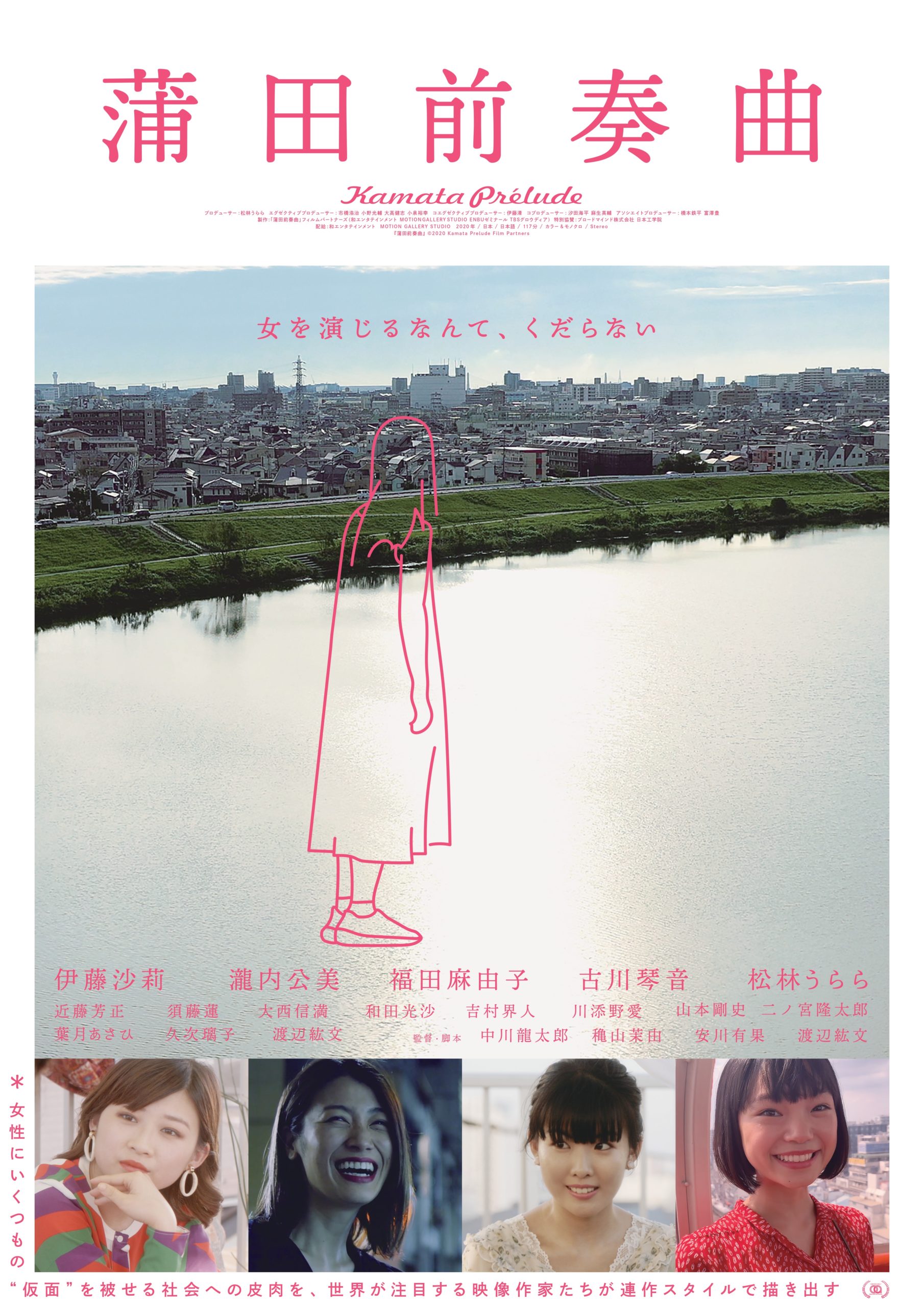
A quiet suburb of Tokyo, Kamata is in someways the birthplace of modern Japanese cinema home to Shochiku’s prewar studio where the “Kamata Style” which aimed to introduce a note of cheerful naturalism to an artform defined by shinpa gloominess was forged. Produced by actress Urara Matsubayashi who hails from the area and stars in three of the four segments, omnibus movie Kamata Prelude (蒲田前奏曲, Kamata Zensokyoku) asks some tough questions about what it means to be a woman and an actress today in the contemporary capital as the heroine, “Machiko Kamata”, contends with various demands from the economic to the emotional. 

Directed by Ryutaro Nakagawa, the first segment finds Machiko (Urara Matsubayashi) introducing herself as she takes part in a strange audition dressed in an inappropriately short cosplay-style nurse’s outfit. After the audition is over, her agent tells her to say “hi” to the director, a theme which will recur in the third chapter as Machiko finds herself feeling uncomfortable, forced to ingratiate herself in order to get ahead. Annoyed after the eccentric director asks her out for dinner, she can’t help asking him why she has to wear the suspiciously skimpy nurse’s outfit provoking him into a worryingly violent outburst. At home, meanwhile, her world is rocked by her younger brother’s revelation that he’s got a girlfriend who is, ironically, a nurse at local hospital. Jealous and resentful, Machiko can’t warm to Setsuko (Kotone Furukawa) who seems improbably sweet and innocent, almost as if she came from another time (the mid-August dating and ornaments for the Bon festival might clue us in as to why). Spending a day bonding with her, however, the two women generate a kind of sisterhood which pushes Machiko into a realisation of the emptiness she feels in her life of constant struggle as an aspiring actress supporting herself mainly with her part-time job at a ramen bar. 

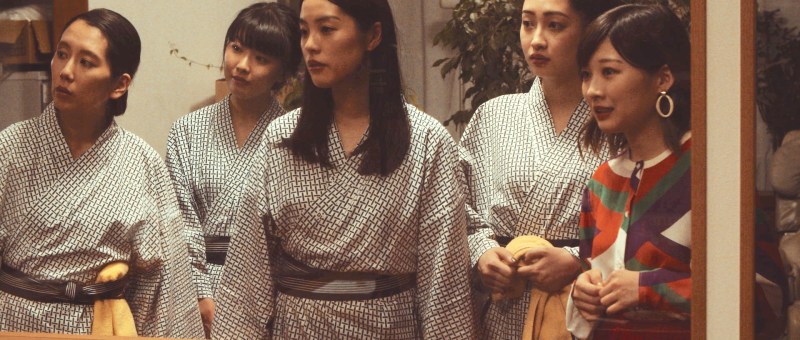
The themes of alienation and insecurity are only depend in the second segment, directed by Mayu Akiyama, in which Machiko reunites with a group of high school friends who are each less than honest about the state of their lives and their unfulfilled desires. Machiko gives the impression that she’s just been in a major movie with a big star, but it turns out she only played a corpse while the rest of the group are scandalised by the bombshell that their friend Marippe (Mayuko Fukuda) has got engaged to a guy from work she’s been seeing secretly for only six months. Besides being somewhat hurt not to have known she was seeing someone, the gang have different reactions to the news with hard-nosed career woman Hana (Sairi Ito) put out by Marippe’s traditional view of conventional gender roles in which she intends to let her career slide to concentrate on being a wife. A trip to a hot spring (the same hot spring seen advertised on Machiko’s T-shirt in part one) brings things to a head with a possibly cheating boyfriend eventually offering the excuse that he is merely a hot spring enthusiast sharing his hobby with a friend of the opposite sex rather than a two-bit louse indulging in the patriarchal double standard. 

Patriarchal double standards are out in force in part three, directed by Yuka Yasukawa, in which Machiko attends another odd audition where she and the other auditionees are asked to outline an episode of sexual harassment they have personally experienced. In fact, we have already seen her be inappropriately propositioned by a middle-aged producer who ran out on her in a coffee shop after she turned him down leaving her with the bill, but the episode she recounts is darker still. As she feared they might, the men in the room quickly figure out who she might have been talking about but proceed to put the blame on her implying that she sleeps around to get ahead and was only offended by the producer’s actions because he wasn’t powerful enough to be useful. It’s another woman however, Kurokawa (Kumi Takiuchi), who kicks things into gear by relating that she was assaulted by a man in a club whom she later reveals to have been the director himself only he doesn’t remember her. The director brings both women back and makes them re-enact Machiko’s tale of being inappropriately propositioned in a producer’s office, increasingly exasperated that the situation seems “too scary” as if he’s entirely missed the point of his own exercise or is actively getting off on the actress’ discomfort. The male cameraman (Ryutaro Ninomiya) is the one who eventually points out that the audition itself has descended into a protracted act of sexual harassment, seemingly conducted solely for the entertainment of the director and his assistant. 

Largely disconnected from the other three chapters, the fourth does not feature Urara Matsubayashi and is in fact set not in Kamata but in director Hirobumi Watanabe’s familiar Tochigi. The opening of his segment, characteristically filmed with static camera and in black and white, finds him once again playing a version of himself ranting about not knowing what to do with this unusual project he has taken on for the money even though he doesn’t generally make shorts, has never done an omnibus movie before, and remains suspicious of the concept. He relates all of this to his 10-year-old niece Riko (star of I’m Really Good), who says absolutely nothing while he continues to treat her as if she were the most famous actress in Japan. Somewhat poignantly, a photograph of Watanabe’s late grandmother sits on a stool off to the side, implying perhaps that little Riko has in some senses taken over her role as silent observer. The main thrust of the action follows Watanabe as he attempts to film a sci-fi movie about an alien invasion with local non-actors, but is finally linked back to the omnibus by Riko’s cheerful letter to Machiko in which she states that she wants to become an actress just like her. Ending on such an upbeat moment seems to imbue a sense of hope for the future that was perhaps previously absent, implying that the hopes and dreams of a little girl at least are worth fighting for if only to live up to her sense of expectation for the magic of the movies. 


Kamata Prelude streamed as part of this year’s Nippon Connection.

Original trailer (English subtitles)

The Chrysanthemum and the Guillotine (菊とギロチン 女相撲とアナキスト, Takahisa Zeze, 2018)

Chrysanthemum and the Guillotine poster 1“I see it now, we can’t change anything” a despondent would-be-revolutionary decries in a moment of despair. Almost 100 years later, you might have to concede they have a point when the world finds itself on a tipping point once again and the same old prejudices refuse to disappear. Takahisa Zeze’s The Chrysanthemum and the Guillotine (菊とギロチン 女相撲とアナキスト, Kiku to Guillotine Onna Zumo to Anarchism) casts an unflinching eye back towards the Japan of 1923 caught in the aftermath of a devastating natural disaster which followed on from a chaotic era of rapid social change and bewildering modernisation during which a series of battles were being fought for the future direction of a nation still trying to define itself in world dominated by empires.

When the Great Kanto Earthquake struck claiming mass loss of life and extreme damage to infrastructure, the ensuing chaos gave rise to a vicious rumour that Koreans were taking advantage of the situation to foment the independence movement by poisoning wells and committing arson leading to a pogrom against anyone who failed to prove themselves Japanese enough to satisfy the mob. Meanwhile, the same forces also turned on political opponents whose influence they perceived as destructive to their own aims culminating in the murder of prominent anarchist Sanae Osugi along with his feminist wife Noe Ito and their six-year-old nephew.

We begin, however, with a different band of outsiders in the Tamaiwa itinerant female sumo wrestler troupe many of whom have taken refuge in an isolated world of female solidarity in order to escape abusive relationships. Kiku (Mai Kiryu) is one such woman who found the courage to run away from a violent husband on catching sight of the powerful female wrestlers who made her realise that she too could become strong like them. Having accepted that “weak people can’t change anything”, Kiku has vowed to become “strong” in order to claim her own agency and ensure that she can’t be pushed around ever again.

Meanwhile, an anarchist sect known as the Guillotines are fomenting a more general kind of revolution but have not been very successful and are now on the run from the authorities which is how they end up running into the female wrestlers and more or less bringing them into the struggle. Led by libertine and (as yet) unpublished poet Tetsu Nakahama (Masahiro Higashide), the Guillotines are more romantic bandits with high ideals than serious revolutionaries. They rob the rich to fund their “activism” but spend most of the money on sex and drink while plotting revenge for the murder of Osugi with various schemes which imply that at heart they aren’t so different from that which they hate.

Nevertheless, the forces of darkness are rising and history tells us that, temporally at least, they will win. The vigilante militias which carried out the massacres were largely made-up of farmer soldiers who’d served in Russia and experienced terrible hardship. Unable to bear the idea that their traumatic wartime experiences had been a senseless waste, they doubled down on militarist ideology and insisted on their nationalistic superiority. This led them to hate, to regard anything that lay outside of their code as inferior and dangerous. Though the massacres were condemned by the government and the perpetrators prosecuted for their crimes, the convictions were largely quashed a short time later which is why we see our major villains rewarded by the state and our revolutionary “heroes” imprisoned for their resistance towards state oppression and desire to create a fairer, more equal society.

Ironically enough, Nakahama’s big utopian idea is an overly idealistic vision for a future Manchuria which in hindsight proves extremely uncomfortable but is perhaps an indication of the naivety of the times. Even so, the Guillotines for all their romanticism are essentially progressive in their thinking and in full support of sexual equality, insisting on the necessity of the wrestlers to embrace their physical capabilities in order to defend themselves against an oppressive and patriarchal society fuelled by male violence. Though this in itself might be mildly problematic in implying that in order to become “equal” women must learn to be more like men, it also plays into the film’s subtle sense of irony in which the tools of militarism are being subverted in order to oppose it. The “intellectual” Guillotines find their revolutions failing, while fighting fire with fire may be the only surefire way to win even if it legitimises the problematic act of violence in the process. Then again, as another of the Guillotines puts it, the truly strong are those who have no need of killing. 

In any case, the Tamaiwa stable becomes a tiny enclave of progressive values built on female solidarity though they ultimately discover that solidarity is not quite enough and they cannot protect each other from the ravages of the times without external assistance. Even so, they attempt to hold the line, literally pushing back against the fascist incursion while insisting on their right to resist as human beings with will and agency. The prognosis seems bleak. 100 years later the same battles are still being fought and the same tensions rising in the wake of new disasters yet there are also those who will continue to resist and like the Tamaiwa wrestlers refuse to give in to those who threaten to restrict their freedom.


The Chrysanthemum and the Guillotine was screened as part of the 2019 Nippon Connection Film Festival.

Original trailer (no subtitles)

Noriben – The Recipe for Fortune (のんちゃんのり弁, Akira Ogata, 2009)

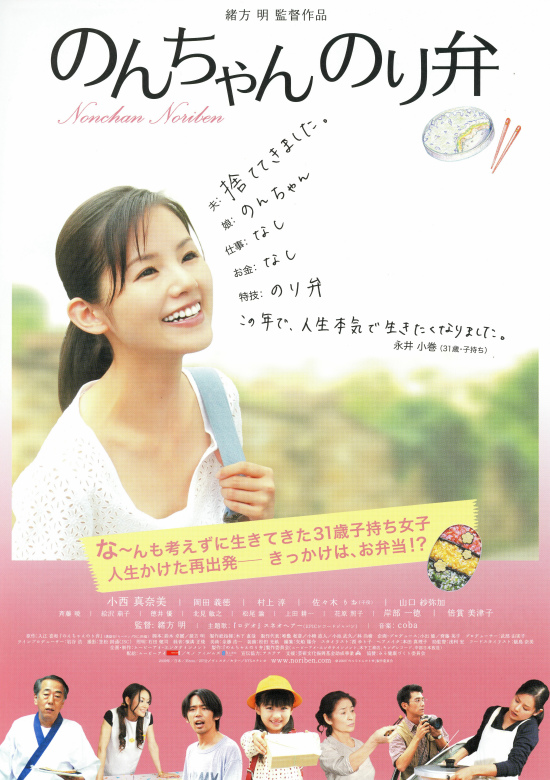
noribenIt used to be that movies about marital discord typically ended in a tearful reconciliation and the promise of greater love and understanding between two people who’ve taken a vow to spend their lives together. These endings reinforce the importance of the traditional family which is, after all, what a lot of Japanese cinema is based on. However, times have changed and now there’s more room for different narratives – stories of women who’ve had enough with their useless, deadbeat man children and decide to make a go of things on their own.

So it is for the heroine of Noriben: The Recipe for Fortune (のんちゃんのり弁, Nonchan Noriben). Inspired by Kiwa Irie’s popular manga, Noriben follows the adventures of Komaki – a woman in her early 30s who gets her daughter dressed for school one morning but secretly takes her to the train station instead where they board a train headed for Komaki’s hometown. Having left her husband who has literary aspirations and consequently no job (the couple were living off, and with, his parents), Komaki has no firm plans other than moving back in with mother. Used to living off scraps and leftovers, she knows how to make her food go further and is also an excellent cook so the unusual layered bento boxes she makes for her little girl, Noriko, prove a big hit with the kids, and later the staff, at the local school.

Hooking back up with a former crush and now local photographer, Komaki ends up tasting the best meal of her life at a tiny eatery and suddenly hatches on the idea of opening a mini bento shop of her own. Of course, it’s a steep learning curve especially for a woman in her thirties with almost no work experience and no real knowledge of how to set up and run a business which is completely leaving aside the need to hone her cookery skills. If there’s one thing you can say about Komaki, it’s that once she’s set her mind on something she will make it happen and so her new life in her old town is just beginning.

Noriben addresses a lot of themes which are becoming fairly common at the moment including the “boomerang daughter” who suddenly arrives home following the breakdown of a marriage. Komaki’s soon to be ex-husband is not an enticing proposition and it seems that most, if not all, of what she says about him is true. He’s a layabout whose dreams of becoming an author are very unlikely to come true and, as his parents seem content to go on supporting him, his promises of getting a real job are most likely hollow too. There’s no real idea of the couple reconciling and when the husband suddenly turns up and starts behaving in an irresponsible way the situation ends in a bizarre marital street fight which does at least seem to clarify for the pair that their marriage really is well and truly over.

Komaki begins a tentative romance with her high school crush Takeo who took over his family’s photography studio though with the advent of digital technology and home printing the shop’s days are numbered. However, Komaki’s uncertain marriage status and Takeo’s diffidence both prove stumbling blocks to the path of romantic bliss and the film seems to imply that Komaki’s own headstrong character is also a problem when it comes to building relationships. Here, the film doesn’t quite know what it wants to say. Perhaps wanting to emphasise Komaki’s strides towards becoming a truly independent woman, it has her side step romantic entanglements but it also seems to declare the need for choice where there isn’t one.

In essence Noriben is a perfectly pleasant, if slightly bland, film that meanders its ways towards a bittersweet ending. Presumably intended to be a celebration of female empowerment as this ordinary woman makes a break from an unrewarding relationship to prove that she can do better on her own, the film only partly fulfils this message as it also comes with an air of sadness and sacrifice where Komaki also has to give up on various other parts of life in order to pursue her dream. That said, Noriben does offer a degree of playful comedy and down home style wisdom that make it a fairly enjoyable, if forgettable, experience.


Reviewed as part of the Japan Foundation Touring Film Programme 2016.