Flowers and Rain (花と雨, Takafumi Tsuchiya, 2019)

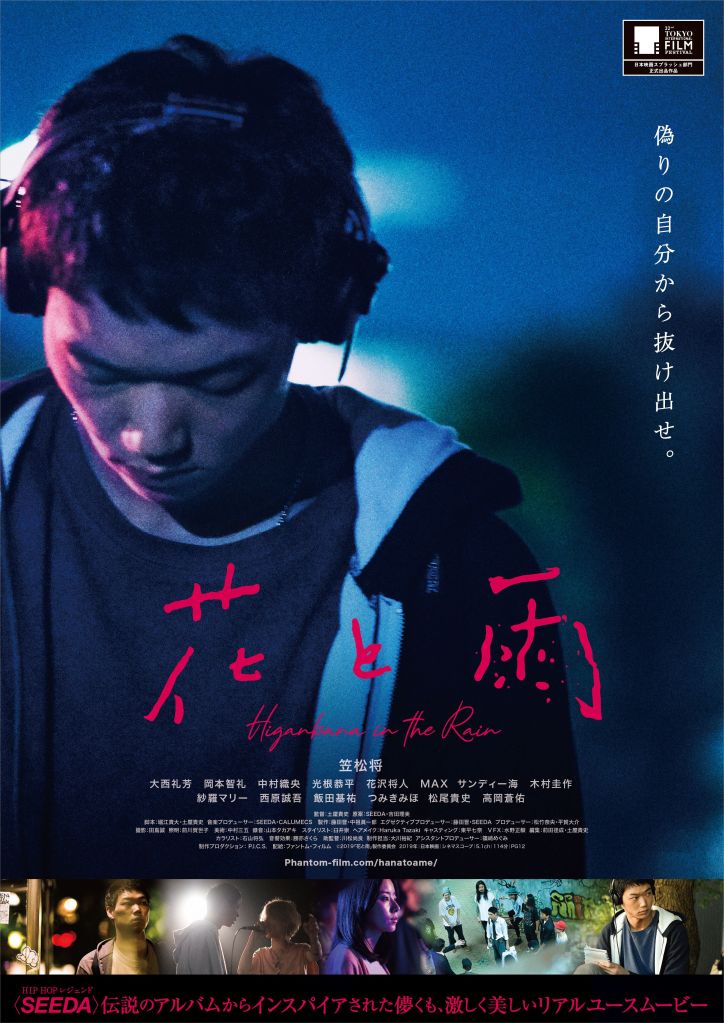
A troubled young man seeks fulfilment in hip hop glory but his self-involved insecurities frustrate his dreams in Takafumi Tsuchiya’s stylish coming of age drama Flowers and Rain (花と雨, Hana to Ame). Inspired by the album of the same name by real life rapper SEEDA, Tsuchiya’s film finds its conflicted hero consumed by a sense of internalised rage and cultural displacement as he struggles to find his place in conformist Japan after a childhood spent abroad realising only too late that he was not the only one struggling and that his self-absorbed inferiority complex has cost him dearly. 

Hakuhiro (Sho Kasamatsu) spent his early childhood in London where his father was working at the time. Whilst there, he was sadly subject to common racist microaggressions from other children who tried to put him down by showing off to their friends with ugly playground chants. Nevertheless, Hakuhiro and his older sister Saki (Ayaka Onishi) profess that they prefer living in the comparatively less stressful UK than in conformist Japan and it is indeed Saki who seems to have the most difficulty when they are forced to move back after the financial crisis. She is determined to return to the UK for university, but as we later see ultimately remained in Japan. Hakuhiro meanwhile has become a sullen and distant teen, bullied by the high school delinquents for being a returnee student. He gives them the same treatment as he gave the playground bullies, ignoring them until he is able to ignore them no more. Mostly he just keeps to himself, listening to hip hop on cassette via his retro walkman and vintage headphones. 

Hakuhiro dreams of becoming a top rapper by rapping in English, but a small circle of likeminded friends including a fellow high school student, Aida, are unconvinced. Though he actually comes from quite a wealthy family and still lives at home supported mainly by his parents, Hakuhiro wants to rap about the same things as his heroes such as street life and social oppression, none of which rings true to those around him who are painfully aware that he is somewhat uncomfortably appropriating the struggles of others and pretending to be something he’s not. He blames his friend Aida for his lack of success in not writing good enough beats for his words and Japan as a country for failing to “get” true hip hop. His sense of insecurity eventually tips over into belligerent arrogance that sees him taken in by an unscrupulous promoter who allows him to humiliate himself during a live rap battle with his high school bullies resulting in the probable end to a credible career as an underground rapper. 

To get more experience of what he sees as “the life”, Hakuhiro has also gotten himself involved with drugs firstly by growing cannabis and then by trafficking cocaine on behalf of a shady street gang. His relationship with his family has obviously suffered and though he’s nominally gone back to uni he doesn’t seem very invested in his studies. Saki, herself troubled in repeatedly failing to pass the final exams for her MBA, tries to talk some sense into him but Hakuhiro repeatedly fails to notice that she is also in distress and trying to tell him something important. A brush with the law pushes him back towards the straight and narrow, but does not exactly humble him and he is still blind to the various ways in which his self-absorbed and arrogant behaviour ruins his relationships and with them his chance of ever making it in the music business. 

Only tragedy finally awakens him to his failings. As Aida had tried to tell him, his problem was a refusal to face reality as reflected in the inauthenticity of his lyrics. If he wants to make it as an artist he’ll have to face himself from a position vulnerability and give up the macho posturing of his adolescence for something a little more “real”. Drawing inspiration from SEEDA’s life and music, Tsuchiya is unafraid to allow his hero to appear unsympathetic even while emphasising the lingering traumatic echoes of a sense of displacement and rejection that prevents him from stepping into adulthood with a fully formed identity, but eventually allows him to find a sense of peace in art even if too late to repair fractured relationships with those he loves.


Flowers and Rain streamed as part of this year’s online Nippon Connection Film Festival.

Original trailer (no subtitles)
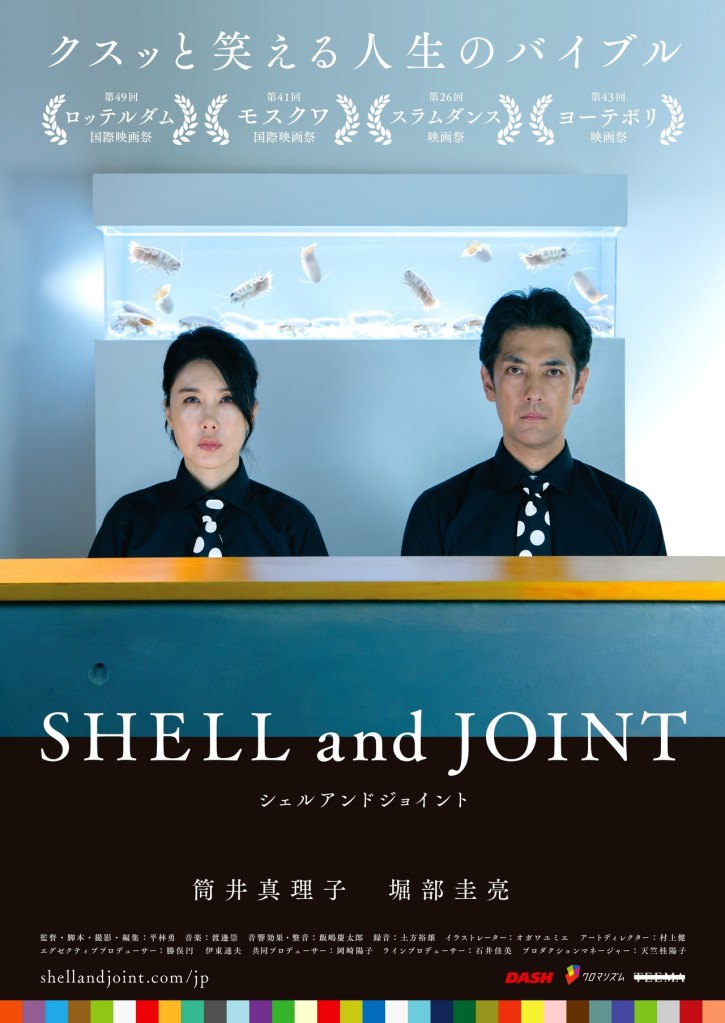
Shell and Joint (Isamu Hirabayashi, 2019)

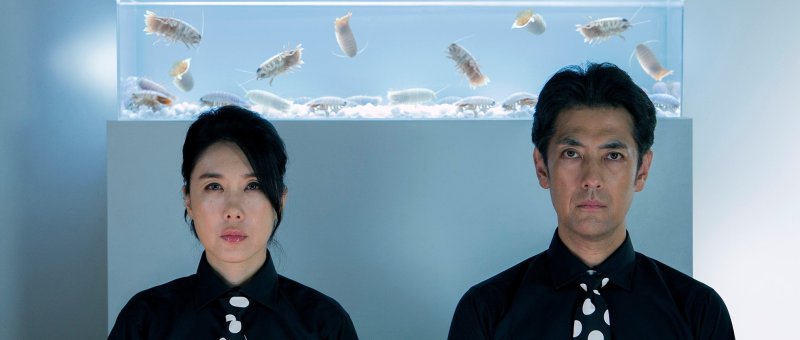
A capsule hotel is a contradictory space, a hub for compartmentalised pods which are nevertheless joined to form one greater whole. The people who frequent them are usually looking for confined private spaces as if cocooning themselves before emerging as something new, or at least renewed, yet the hotel at the centre of Isamu Hirabayashi’s Shell and Joint is slightly different, a noticeably upscale take on convenience with its stylishly modernist design and well appointed spaces from showering facilities to saunas. It is also, it seems, at the nexus of life and death as its bored receptionists, childhood friends, debate what it is to live and what it is to die. 

Sakamoto (Mariko Tsutsui), the female receptionist, has considered suicide many times but continues to survive. She attributes her death urge not to existential despair but to brain-altering bacteria and is certain that a vaccine will eventually be found for suicidal impulses. While her deskmate Nitobe (Keisuke Horibe) is struck by the miracle of existence, Sakamoto thinks his tendency to adopt a cosmic perspective is a just a way of dealing with his fear of death in rejecting its immediacy. Her suicide attempts are not a way of affirming her existence and she has no desire to become something just to prove she exists, nor does she see the point in needing to achieve. Just as in her bacterial theory, she rejects her own agency and represents a kind of continuous passivity that is, ironically, the quality Nitobe had admired in the accidentally acquired beauty of the pseudoscorpion. 

This essential divide is mirrored in the various conversations between women which recur throughout the film and mostly revolve around their exasperation with the often selfish immediacy of the male sex drive. The creepy “mad scientist” starts inappropriate conversations about sperm counts and his colleague’s impending marriage, offering to loan him some of his apparently prime stock to vicariously father a child with the man’s “cute” fiancée who, in a later conversation with another female researcher, expresses her ambivalence towards the marriage, like Sakamoto passively going with the flow, because men are like caterpillars permanently stuck in the malting phase. Her colleague agrees and offers her “men are idiots” theory which is immediately proved by the male scientists failing to move a box through a doorway. 

A middle-aged woman, meanwhile, recounts the process of breaking up with her five boyfriends who span the acceptable age range from vital, inexperienced teenager to passionate old age through the solipsistic, insecure self-obsessed middle-aged man but her greatest thrill lies in the negation of the physical, remarking that “ultimately eroticism is all mental” while suggesting the ephiphany has made her life worth living. On the other hand, a young man is terrorised in a sauna by a strange guy claiming that he is actually a cicada and simultaneously confiding in him about the strength of his erection along with the obsession it provokes to find a suitable hole in which to insert it. 

“What’s the deal with leaving offspring?” another of the women asks, seemingly over the idea of reproduction. The constant obsession with crustacea culminates in a butoh dance sequence in which lobsters spill their eggs down the stairs of an empty building (much to the consternation of an OL sitting below and, eventually, the security team) while other strange guests tell stories of women who underwent immaculate conception only to be drawn to the water where hundreds of tiny crab-like creatures made a temporary exit. The urge to reproduce, however, necessarily returns us to death and the idea of composition. The melancholy story of a Finnish woman drawn to the hotel because of its similarity to a beehive meditates on the sorrow of those left behind while a fly and a mite mourn their cockroach friend by wondering what happens to his dream now that he has died only to realise that because he told them about it, it now lives on with them. Nitobe wonders what the corruption of the body in death means for the soul and for human dignity, while the images Hirabayashi leaves us with are of a corpse slowly suppurating until only a scattered skeleton remains. Such is life, he seems to say. Life is itself surreal, something which Hirabayashi captures in his absurdist skits of the variously living as they pass through the strange hotel and then, presumably, make their exits towards who knows what in the great cycle of existence.


Shell and Joint streamed as part of this year’s online Nippon Connection Film Festival. Viewers in the US will also be able to catch it streaming as part of this year’s Japan Cuts!

International trailer (dialogue free)

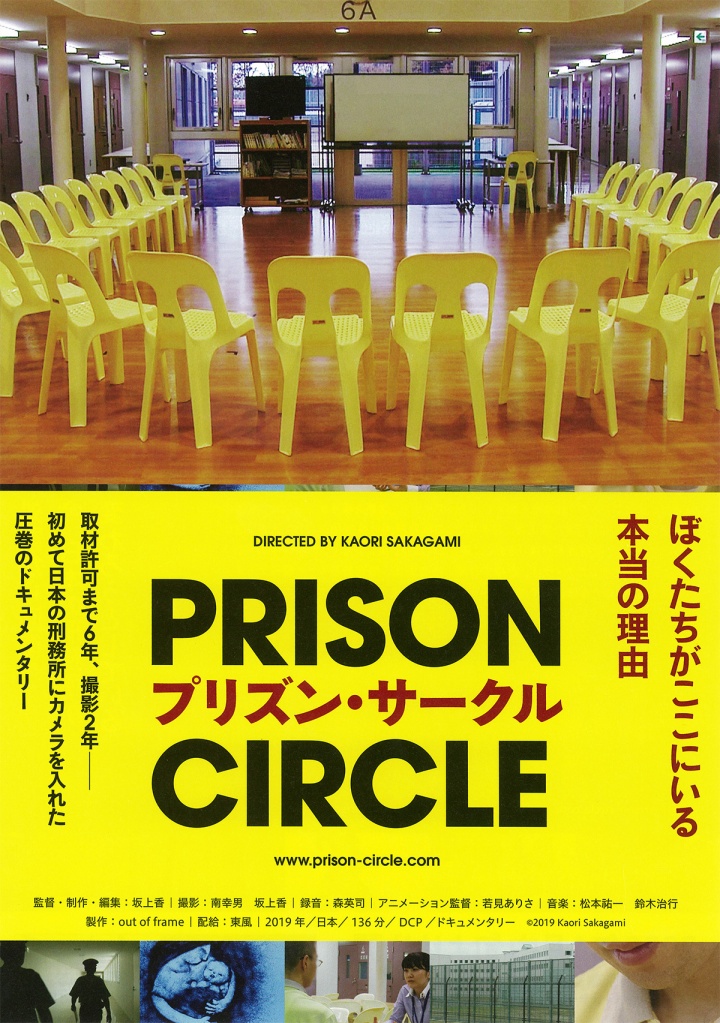
Prison Circle (プリズン・サークル, Kaori Sakagami, 2019)

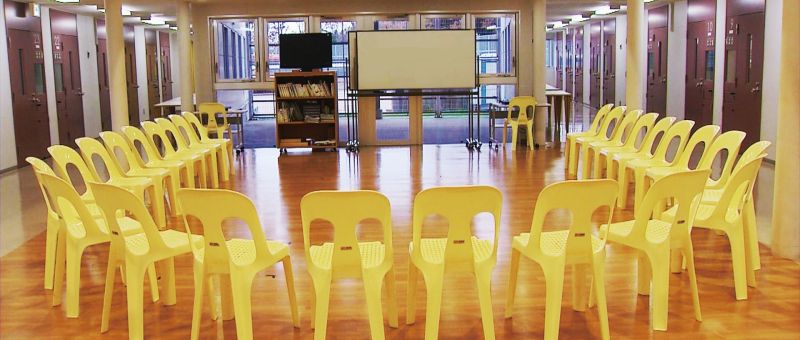
“A scar may recover but trauma never goes away” according to one of the inmates in Kaori Sakagami’s heartfelt documentary Prison Circle (プリズン・サークル). Neatly encapsulating the doc’s themes, the title refers both to the circle of chairs which represents the open group therapy sessions at the centre of the experimental rehabilitation programme on which the film is focussed, and the cycle of violence to which it alludes. Long interested in justice issues, Sakagami follows her two previous documentaries dealing with the US penal system with that of Japan, but concerns herself less with life in prison than the wider social issues which led to these men being convicted of crimes along with their future possibilities for reintegration into mainstream society. 

Sakagami apparently spent six years trying to acquire permission to shoot inside a Japanese prison before coming to an agreement with Shimane Asahi Rehabilitation Program Center which nevertheless has its limitations in that the faces of all the inmates are understandably blurred, she is always accompanied by two guards, and is not permitted to interact with prisoners or anyone working in the prison outside of a few direct interview sessions. Apparently inspired by Sakagami’s US documentary Lifers: Reaching for Life Beyond the Walls, the Shimane programme is the first and only of its kind in Japan shifting the focus away from punishment towards rehabilitation supporting around 40 men through a therapeutic treatment centre (TC) which attempts to help the prisoners understand the reasons for their crimes, empathise with their victims, and eventually return to mainstream society. According to the closing text the programme has been successful in reducing the rate of recidivism among its graduates in comparison with those released from a regular prison. 

In order to qualify, inmates must have the will to change, have no underlying mental health conditions, and be serving at least six months. The prisoners are also described as low risk though many of those we meet have been convicted of violent crimes including those which involved a death. Operating as a small bubble within a larger facility, the TC shares many of the rules and regulations with the wider population in that inmates are expected to raise their hand to ask permission of the guards any time they want to do something, but unlike other blocks are permitted to walk around unsupervised and sleep in “rooms” rather than “cells”. Prisoners engaging in the programme are also partially exempted from mandatory labour requirements while required to participate in the group sessions that are at the core of the TC. 

Following four men over two years, Sakagami finds a fatalistic similarity among their stories despite the differences in their offences, painting their crimes as a cry for help and direct result of childhood trauma. Each of the men who are now in their 20s comes from a difficult family background and experienced abuse, neglect, and bullying which is, the film seems to suggest, the root cause of their lawbreaking. The first of the men, Taku, was abandoned by his abusive father into a children’s home and thereafter left without support as a young man leaving care with nothing to fall back on. Encouraged to be open, he relates his embarrassment in revealing that even as a grown man he often longs to be hugged he feels because his parents never held him when he was a child. The other prisoner reveals he feels something similar, and other of the men admit they fell into crime in part because they wanted to stay connected to something even if it was delinquent kids in place of a family that had already failed them. The last of the men, Ken, also explains that he ended up getting into debt in part because he was buying expensive presents for his mother and girlfriend because he feared they’d abandon him and he didn’t know how else to keep them. 

Yet the prisoners also admit to feeling little remorse, seeing themselves as victims rather than perpetrators and struggling to draw the lines between their trauma and the crimes they have committed along with the hurt they’ve caused to those around them. Through therapy and role play sessions, the prisoners learn to empathise with each other as well as themselves as they begin to process their trauma in an essentially safe space. Sakagami shifts into gentle, storybook-style sand animation in order to dramatise their often horrific childhood memories linking back directly to a fairy tale written by one of the men about a boy who cried wolf because of a mysterious curse which forced him to lie, insisting that he was fine even in his loneliness as he pushed away those who had not rejected him. The boy in the fairy tale is eventually given the power to free himself after being approached by a benevolent god who gives him permission to speak his truth, emerging from his darkness into the light. Though limited by the conditions of filming and over reliant on onscreen text, Sakagami’s compassion for these men and faith in the project is never is doubt as the closing dedication “For everyone who wishes to stop the cycle of violence” makes plain. 


Prison Circle streamed as part of this year’s online Nippon Connection Film Festival. Viewers in the US will also be able to catch it streaming as part of this year’s Japan Cuts!

International trailer (English subtitles)

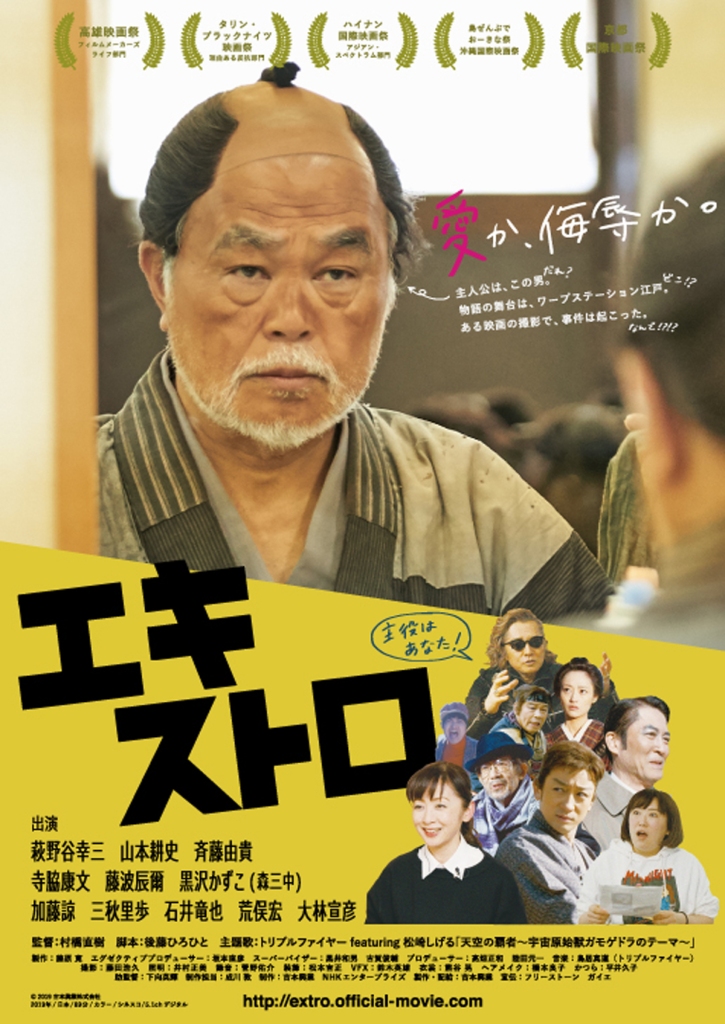
Extro (エキストロ, Naoki Murahashi, 2019)

Extras are the unsung heroes of the movies. Getting up in the middle of the night, prepared to spend hours in makeup, and enduring not only the discomfort but also the boredom of standing around all day waiting for something to happen. Naoki Murahashi’s affectionate mockmentary Extro (エキストロ) is dedicated to those whose names do not appear in the credits and are, according to the characteristically warm onscreen interview from the late Nobuhiko Obayashi, the very force that brings life to the otherwise artificial world of the film set. 

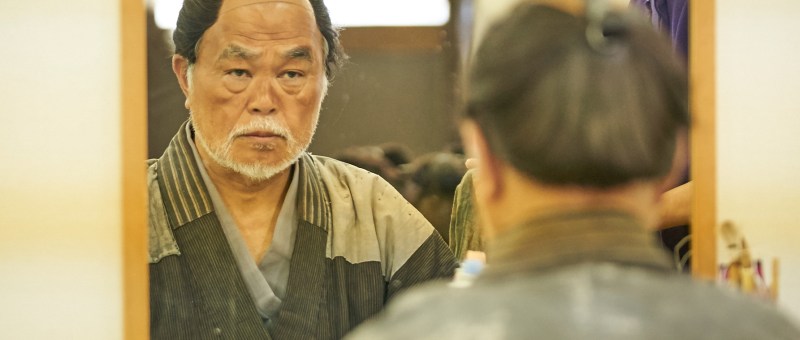
The set in this case being “Warp Station Edo”, an artificial replica of a historically accurate samurai-era town used for the production of jidaigeki TV serials. Murahashi’s first subject is a retired dental technician, Haginoya (Kozo Haginoya), fulfilling a lifelong dream as a background performer, but as we quickly see the life of an extra is not an especially glamorous one. Having got up at the crack of dawn to be there at the time listed on his call sheet, he’s nearly sent away because he doesn’t want to shave his beard and back in old Edo facial hair was prohibited for civilised people. The only solution is to switch his role from townsman to farmer, which causes a costuming delay and gets the AD into trouble. Haginoya then goes on to cause yet more problems by bigging up his part before being taken ill, complaining that his intestines hurt right in the middle of a take. Unsurprisingly, he sits the rest of the day out. 

Meanwhile, the other extras are mostly forced to stand around in the cold waiting for the cameras to start rolling. The agency which provides the background actors laments that extra work is only suitable for flexible people with a lot of free time, i.e. pensioners like Haginoya, but that it also requires physical stamina which they often lack. It also transpires most of the agency’s employees are working on a volunteer basis and earning their money through a separate main job, which really begs the question why they bother especially when the agency itself becomes liable for the extras’ mistakes such as those repeatedly made by one “problem child” including making sneaky peace signs, smiling at the camera, and posting strange on-set photos to social media. 

Not quite content with satirising the production environment and its tendencies towards exploitative employment practices, Murahashi adds a second surreal plot strand introducing two bumbling policemen who are seconded to go undercover as extras after a suspected drug dealer is spotted on camera, somewhat incomprehensibly stepping out of hiding and into living rooms across the country. Predictably, the policemen aren’t very good at the acting business and quickly forget all about the case while becoming overly invested in their cover identities, even attending an acting workshop in an effort to blend in with the background stars. 

While the hero of the jidaigeki TV drama earnestly insists that the extras are what give the fake town “life” and it is in a sense he who is being allowed to perform in their world, not everyone is so forgiving. A pro-wrestler brought in to star in a low budget movie titled Dragon Samurai gets so fed up with the antics of the two policeman that he eventually quits, presumably costing another production company somewhere a lot more money, while a repeated gag sees most of the projects go unreleased because someone involved with the production had too much to drink and engaged in acts of public indecency. One such project is the amazingly titled “Prehistoric Space Monster Gamogedorah”, apparently inspired by a local legend about a giant evil duck.

From the self-obsessed stars who turn up when the money’s right to the embattled agency staff and the stressed out ADs, Murahashi doesn’t quite so much sing the praises of the extras as satirise the low level production industry, but does eventually cycle back to the unironic intro from Obayashi who affirms that the extras, or “extros” as he likes to call them short for “extraneous maestros”, are a part of what gives film its beauty and power. As if to prove that sometimes dreams really do come true, even Haginoya gets his moment in the spotlight mimicking his screen hero Steve McQueen as an Edo-era fireman but disrupting the filming once again by laughing maniacally in joy as he rings his bell while Gamogedorah looms ominously on the horizon.


Extro was streamed as part of this year’s online Nippon Connection Film Festival. Viewers in the US will also be able to catch it streaming as part of this year’s Japan Cuts!

Original trailer (no subtitles)

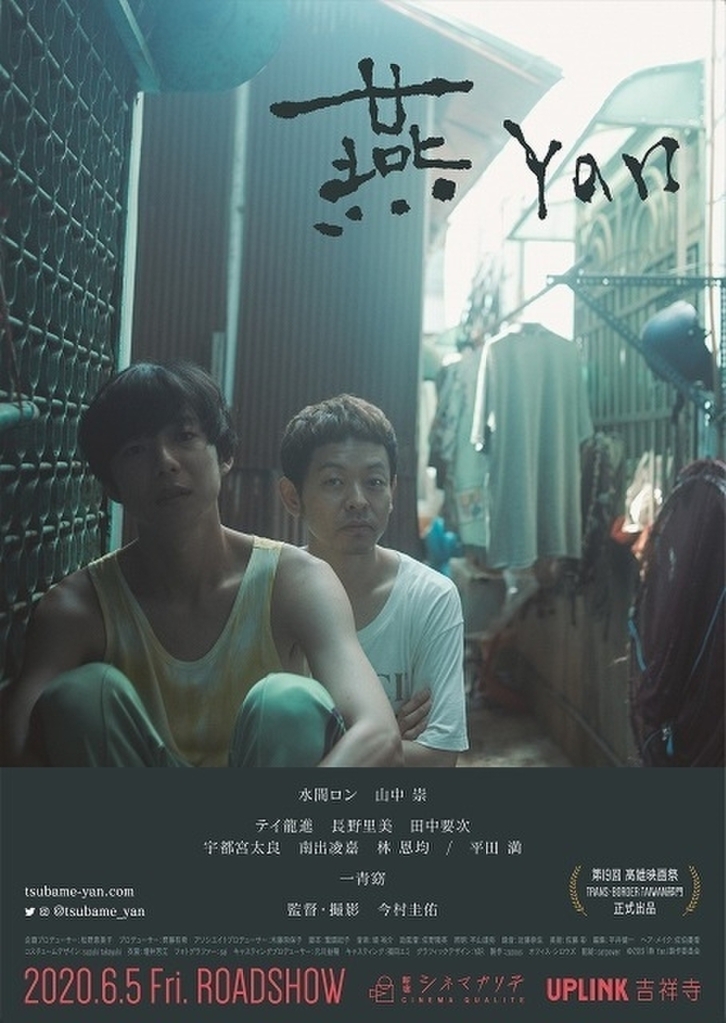
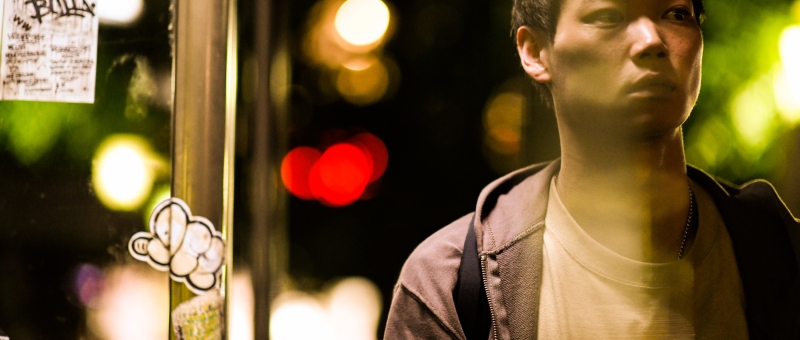
Yan (燕, Keisuke Imamura, 2019)

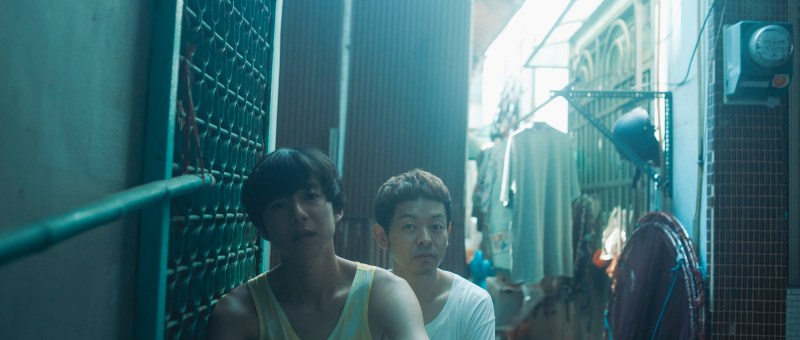
A sense of dislocation plagues the drifting heroes of Keisuke Imamura’s elegantly lensed Yan (燕), a poetic meditation on the legacy of abandonment both cultural and familial. As much about the disintegration of a family as the complexities of identity, Imamura’s nuanced character drama finds its hero looking for himself in the shadow of his long lost brother and rediscovering perhaps a long absent sense of security in reconnecting with his childhood self while learning to let go of his fierce resentment towards the mother he assumed had forgotten him. 

28-year-old Tsubame (Long Mizuma) is a workaholic architect with a successful, settled life in Tokyo. He is also, however, slightly disconnected and harbouring a great deal of anger towards his family, aside it seems from his cheerful step-mother. An awkward meeting with his father following a rare summons to the family home results in some distressing news. His company’s gone under and he’s deep in debt, which is why he wants Tsubame to go to Taiwan to deliver some important papers to his estranged older brother Ryushin (Takashi Yamanaka) whom he hasn’t seen in 23 years since he left with their mother (Yo Hitoto) so he can renounce his rights to an inheritance to avoid being liable for his father’s debts. Tsubame is reluctant, he didn’t even go to Taiwan for his mother’s funeral and has done his best to erase that side of his life from his memory, but after his step-mother guilt trips him by explaining that his father’s in poor health so it might be the last thing he’ll ever ask he finds himself on the next flight to Kaohsiung.

Despite his animosity towards his Taiwanese heritage, Tsubame seems to have maintained his Mandarin which is a definite help in the busy city but finds himself conflicted in being taken at first for a local and then recognised as not. Sitting down at a dumpling stand the proprietress and another customer guess that he is probably Japanese but on hearing that he was born in the area and his mother was from there immediately remind him that he is then also Taiwanese, something that appears to bother him. Flashing back to his childhood we witness both warm scenes of his mother conversing with her children in Mandarin while they mainly reply in Japanese, and a series of xenophobic micro-aggressions from neighbours who accuse her of trying to harm their children with new year dumplings containing lucky coins while Tsubame finds himself a victim of bullying by the local kids after mistakenly using his Chinese name, Yan, or making the usual kinds of language mistakes that all young children make but being made fun of over them as someone not quite Japanese. Like the heroines of What’s For Dinner, Mom? he also remembers a sense of embarrassment on being the only kid with a non-standard bento but sadly never managed to convert any of his classmates to Taiwanese food, internalising a sense of shame over his difference and becoming hyper Japanese in response. In a particularly painful moment, he berates his mother for her poor language skills and lack of cultural awareness, tearing up a drawing he’d made and crying out that he wished he could swap her for a “normal” Japanese mum like everyone else’s. 

Why exactly she chose to leave only him behind, taking her older son with her, is never quite explained but perhaps a part of her felt that Tsubame preferred to stay in Japan. Ryushin meanwhile is carrying his own burden having left with his mother but resentful over her longing for the son she left behind. He appears to have felt dislocated himself as a boy raised Japan struggling to adapt to his new environment and is now a divorced father, it seems living with another man who left the Mainland for the comparatively liberal Taiwan to escape a conservative father and the pain of having to keep his true a identity a secret even from himself. Bonding with Tony (Ryushin Tei), his brother’s partner, Tsubame comes to a realisation that he has been doing something much the same in rejecting his Taiwanese heritage but struggles to accept that a person can be more than one thing and like the sparrow from which he takes his name could be equally at home in both Japan and Taiwan. 

As Tony tells him, somewhat cynically, bitterness is also born of love which is after all what has brought Tsubame all the way to Kaohsiung. Tsubame’s mother had told him the Chinese proverb that a mother’s love is like a flowing river, but a child’s is the like breeze that rustles the leaves. The small Tsubame replied that he’d always love his mother but has spent the majority of his life in silent resentment, only latterly acknowledging it might have been true after all after coming to an understanding of his mother’s choices and realising that in her heart at least she had never abandoned him. 


Yan was streamed as part of this year’s online Nippon Connection Film Festival.

Original trailer (English subtitles)

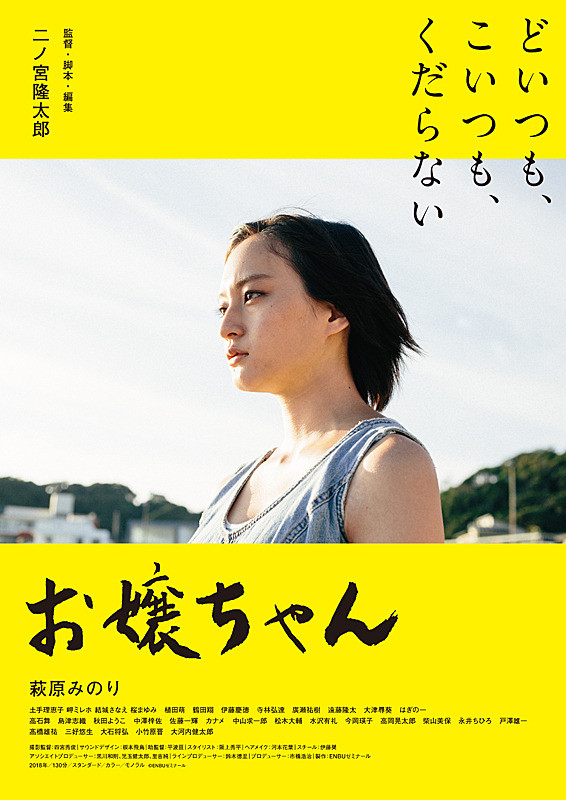
Minori, On The Brink (お嬢ちゃん, Ryutaro Ninomiya, 2019)

“Days like this make me feel I’m wasting my life” sighs just another dejected youngster in Ryutaro Ninomiya’s quietly enraged takedown of millennial malaise in a fiercely patriarchal society, Minori, On The Brink (お嬢ちゃん, Ojochan). In a culture which often favours politeness and avoids confrontation, Minori is a rare young woman determined to speak her mind though always with patience and grace and in turn a willingness to apologise if she feels that she has acted less than ideally, but her words often fall on deaf ears while those around her stumble through their lives chasing conventional illusions of happiness to mask a creeping despair. 

We first meet 20-something Minori (Minori Hagiwara) as she challenges a man who tried to force himself on her friend, Rieko, cowering quietly behind her. Minori wants an apology, but predictably he denies everything and quickly becomes angry, held back by his equally skeevy friend who advises him to apologise if only to defuse the situation. In the end Minori doesn’t get her apology and has to settle for having made a stand, retreating to avoid causing her friend more harm, but on exit the third man chases after her to ask for her contact information. Really, you couldn’t make it up. 

Part of Minori’s anger is bound up with being a so-called “cute girl” and everything that comes with it in a society still defined by male desire. Parades of idiotic young men, for some reason always in threes, come through the cafe where she works part-time expressly because a “cute girl” works there, while she’s forever being invited out by female friends who want to bring a “cute girl” to the party. Somewhat insecure, Minori worries that people are only interested in her cuteness and might otherwise reject her if, say, she were badly disfigured in some kind of accident. But what she resents most is that it’s other women who enable this primacy of the cute, the way her bashful, “homely” friend Rieko is always apologising for herself, while the other women who self-identify as “ugly” willingly cede their space to the conventionally attractive. 

In short, they submit themselves totally to pandering to male desire while men feel themselves entitled to female attention whether they want to give it or not. Dining in a local restaurant, Minori and Rieko are invited to a party by the proprietress which neither of them seem keen to go to but Rieko is too shy to refuse even when Minori reminds her of the traumatic incident at the last party with the guy who forced himself into the ladies bathroom and tried to kiss her against her will. The older woman laughs it off, affirming that he “meant no harm”, he was just drunk. This is exactly what Minori can’t stand. She keeps telling people she isn’t angry, but is she is irritated by Rieko’s need to apologise for something that isn’t her fault, seeing it as enabling the culture that allows men to do as they please while women have to obey a set of arbitrary rules of which remaining quiet is only one. 

In her own quiet way, Minori refuses to toe the line but is constantly plagued by unwanted male attention. Getting into an altercation with a creepy guy who waited outside her place of work to find out why she didn’t reply to his texts, she explains that he was just a casual hookup and that she finds his overly possessive behaviour frightening even as he continues not to take no for an answer, eventually branding her a “slut” for daring to embrace her sexuality. She demands an apology, not for what he called her but for the use of such misogynistic language. Earlier, in the trio of friends which contained Rieko’s attacker, another man had claimed he remembered Minori from a previous gathering, branding her as a “pigheaded mood wrecker” for daring to take them to task for their bad behaviour. The men talk about women only in terms of their desirability, the same man insisting that he has no interest in “strong willed women”, probably for obvious reasons. Another recounts having bullied a girl he fancied in middle-school, unable to understand why she avoided him despite bragging about having terrorised her and organising her ostracisation by the other girls (supposedly, he could do this because he was “popular”) until she finally transferred out (whether or not this actually had anything to with him remains uncertain). 

Perhaps to their credit, the other two guys immediately declare him uncool and are mildly horrified that he sold this to them as a funny story from his youth with absolutely no sense of repentance or self awareness. But their response is also problematic and born more of their boredom than their outrage, engaging in a bet over who can make him cry first as they “bully” him so that he’ll develop empathy for people who are “bullied”, never actually explaining to him why he’s being “punished”. Minori questions the problematic attitudes around her with straightforward candour, taking her cafe friend to task for her hypocrisy in taking against older men while expressing an uncomfortable preference for the very young.  

Nevertheless, Minori remains exhausted by the hypocrisies of the world around her. She declares herself “happy” with her ordinary life, a 4-day part-time job, low rent thanks to living with grandma, and spare time spent playing games. To that extent she has no desire to change her life, but the very fact of her “happiness” also depresses her in its banal ordinariness. “It’s all worthless” she suddenly cries, stunned by the inescapability of her ennui. On the brink of despair, Minori finds herself sustained only by rage not only towards an oppressive society but her own inability to resist it.


Minori, On The Brink was streamed as part of this year’s online Nippon Connection Film Festival. It will also be available to stream worldwide (excl. Japan) as part of this year’s Udine Far East Film Festival.

Original trailer (no subtitles)

Dancing Mary (ダンシング・マリー, SABU, 2019)

“Don’t any of you have basic empathy for people?” asks a ghost of the living in SABU’s confrontation of the Showa-era legacy and contemporary ennui, Dancing Mary (ダンシング・マリー). As the hero is repeatedly told, there’s a difference between living and being alive and it just might be that the dead are the ones making the most of their time while the rest of us coast along not really paying attention to the things that really matter while life passes us by. 

Take Fujimoto (NAOTO), for instance. He became a civil servant because it’s an easy, steady job with an OK salary where you don’t actually have to do anything very taxing. He didn’t get into this because he wanted to improve the lives of citizens, he just wants to do his 9 to 5 and then go home but even then he doesn’t seem to do much other than skateboarding, literally coasting through his life. All that changes when his desk buddy has some kind of breakdown after being put in charge of the demolition of a disused dancehall which is said to be haunted and has already had a similar effect on half the town’s self-proclaimed spiritual mediums. Stories of all powerful ghost “Dancing Mary” are already plaguing the area leaving the civil servants desperate for a solution and considering turning to the most Showa-era of remedies, a yakuza-backed construction firm. 

Fujimoto, meanwhile, ends up going in another direction after overhearing a teacher complaining about a Carrie-esque student who can read minds and talk to the dead. Mie (Aina Yamada) has problems of her own, seemingly having no family and mercilessly bullied even while desperately trying to blend in and be “normal”. When Fujimoto finds her she appears to have attempted suicide, but while sitting with her at the hospital he finds himself interrogated by nosy old ladies who demand to know what it is he thinks he’s doing with his life. Where your average auntie might be satisfied to hear a young man making the sensible choice to take a steady government paycheque, these two are having none of it. They accuse him of being a hypocrite, soullessly taking money for nothing while ignoring the needs of citizens. Nothing is chance, they insist, everything is inevitable but by living resolutely in the moment the future can be changed. The old ladies each have terminal cancer and are not expecting to leave the hospital but they’re living their best lives while they can. Everyone has their purpose, what’s yours? they ask, but Fujimoto has no answer for them. 

Thanks to Mie, Fujimoto learns that Mary is rooted to the dance hall because she’s waiting for her one true love, Johnny, a missing hillbilly rocker. As the old ladies had tried to tell him, Fujimoto’s problem is that he cannot see the ghosts in the world around him which is as much about choice as it is about ability. Literally taking him by the hand, Mie guides him through a world of abandoned spirits from Edo-era samurai to melancholy post-war suicides but it’s not until he’s rescued from Showa-era thugs by the ghost of a homeless man he himself is partly responsible for that he starts to see the big picture. The dancehall, Mary’s hauntingly romantic relic of a bygone era, is to be torn down to build another soulless shopping and entertainment complex. The homeless man died alone and forgotten after he was moved on from the place he was living so that it could be “redeveloped”. Fujimoto is supposed to be a civil servant, but all he’s ever done is move things on, pass the buck, and refuse his responsibility.  

While Mie is encouraged by the two old ladies to embrace her difference, resolving not to allow herself to be bullied hiding in the shadows but to use her powers for good, Fujimoto remains unconvinced, preferring to be “laidback”. His problem is that he’s never taken anything seriously and in that sense has never really been “alive” in the way that Mary and Johnny are “alive” while dead in the enduring quality of their decades-long, unresolved romance. After a few lessons from a pre-war yakuza (Ryo Ishibashi) about the importance of giri/ninjo and a more careful observation of the world around him Fujimoto is awakened to what it is to live, discovering a new purpose and vitality but nonetheless finding it a little inconvenient. “I don’t get life”, he exclaims walking away from dull conventionality towards something more meaningful and finally perhaps alive. 


Dancing Mary was streamed as part of this year’s online Nippon Connection Film Festival.

Festival trailer (English subtitles)

Beautiful, Goodbye (ビューティフル、グッバイ, Eiichi Imamura, 2019)

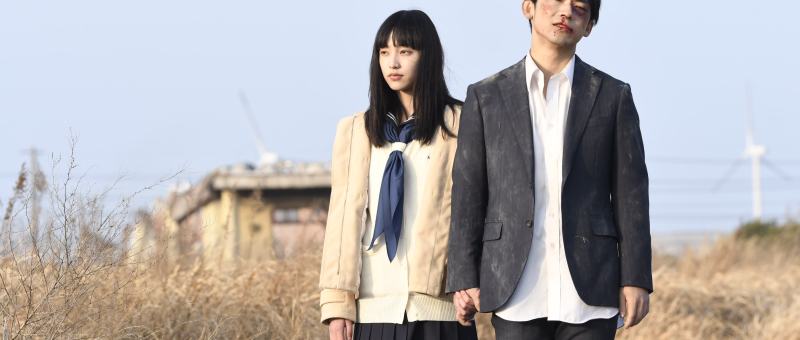
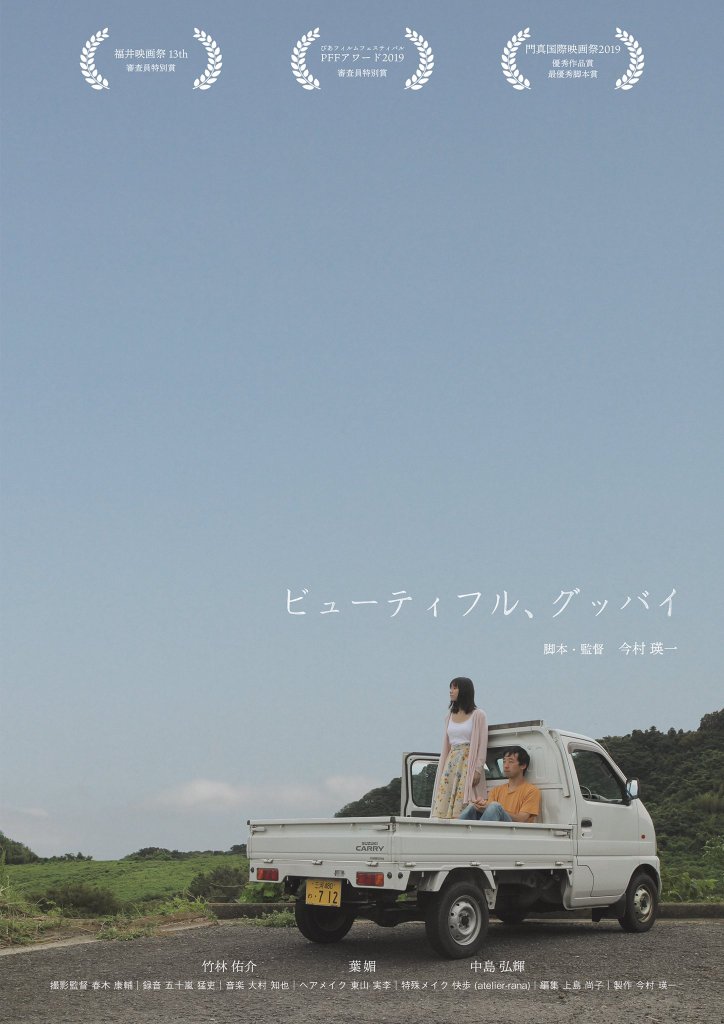
A man on the run hits a woman running out of time, what else could you call it but fate? Winner of the Special Jury Award at the PIA Film Festival, Eiichi Imamura’s Beautiful, Goodbye (ビューティフル、グッバイ) sees its conflicted heroes cast adrift as they flee from past trauma, bonding over their shared sense of hopeless alienation while driving towards some kind of resolution to their respective anxieties but perhaps fearing that there are no real safe spaces for those who find themselves at odds with the world in which they live. 

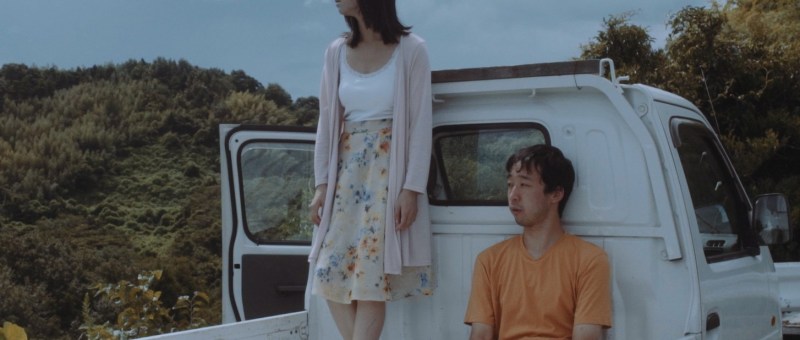
As the film opens, 32-year-old Daisuke (Yasuke Takebayashi) is caught in the immediate aftermath of having stabbed a man while a small child curls himself into a ball in the corner. Pausing only to comfort him, Daisuke leaves in a hurry and later steals a pickup truck still laden with the last of someone’s moving boxes. Meanwhile, another man, Shinoda (Koki Nakajima), chases after a woman, Natsu (Yobi), who is later found wounded in an alley before being wrapped in a sheet and toe tagged at the local morgue. That is not, however, the end of her story. Shinoda, having recovered her body, performs some strange ritual which brings her back to life only for her to escape and run directly into the path of Daisuke’s car. Fearing he has made his day even worse, Daisuke puts her in the passenger seat and, unlikely as it seems, the pair end up travelling together pursued both by law enforcement and by the psychopathic Shinoda. 

Daisuke, a shy man nervous about his stammer which sees him exiled from mainstream society, does not immediately seem like the type of person to stab someone but we later find out that he had a good reason (if you can say such a thing) and was acting to protect someone else from longterm abuse. He’s not sure running was best thing to do, but it has at least introduced him to Natsu who doesn’t seem to mind about his stammer and makes a point of calling him by a diminutive in an effort to avoid detection on the road by amping up the couple act. Apparently from Taiwan but with a Japanese mother, Natsu is herself on the run, besides being undead, in trying to keep one step ahead of the violent boyfriend it seems was responsible for her demise and then brought her back after trying a few rituals he found on YouTube so he could terrorise her afterlife too. 

Both outsiders at the mercy of an unforgiving society the two discover a kindred spirit one in the other, retreating from their brush with crime to return the moving boxes to their original address with an apology for having borrowed some of the contents. Regaining her memories and coming to an awareness that her zombiefied state might only be temporary, Natsu wonders why her life has turned out the way it has and if God is punishing her for being a “bad” person. She has a tattoo of a lightbulb on her leg because of a story she was once told about there being two paths in the darkness, one to heaven and one to hell, and that God would always light the way for the good while the bad were left to stumble around on their own, losing their way and ending up in hell, so she decided to make her own light fearing that she was not one of God’s good people. Daisuke just laughs, pointing out that lightbulbs don’t work out of the box, leading her to make a few adjustments which allow him to give her the power to face the darkness.

Daisuke meanwhile remains on the run, in part because he wants to help Natsu move on from her traumatic past by facing her victimisation at the hands of the psychotic Shinoda who has been using social media to try and track them down but later finds himself falling victim to his bullying. Together, the undead woman and the barely living boy give each other the strength to face their respective anxieties, his in his crime and hers in her murder as they contemplate the calm at the end of the world, or at least the road, while the gentle tones of Teresa Teng linger in the breeze behind them like a lullaby as if in echo of a more innocent time.


Beautiful, Goodbye was streamed as part of this year’s online Nippon Connection Film Festival.

Original trailer (no subtitles)
Teresa Teng’s “Toki No Nagare Ni Mi Wo Makase”

Forgiven Children (許された子どもたち, Eisuke Naito, 2020)

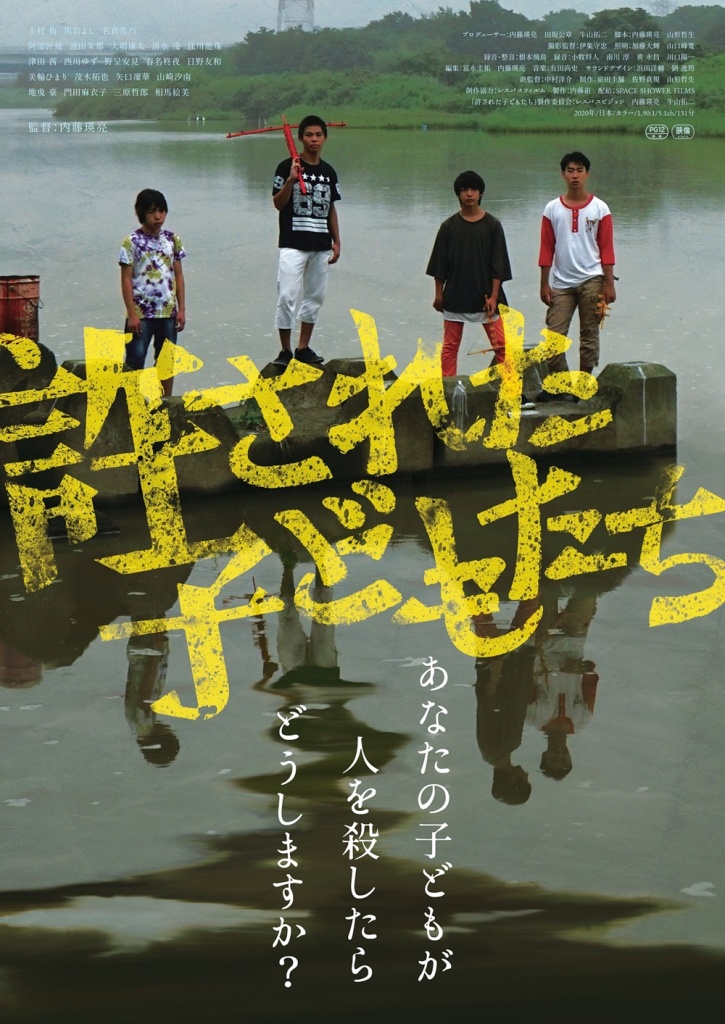
“You can’t steal a life and get off the hook” a sheepish young man is told by an unsympathetic police officer pushing him to confess his crime, but the “justice” he will later face will be of a less official kind. Eisuke Naito’s ironically named Forgiven Children (許された子どもたち, Yurusareta Kodomotachi) is, in some ways, a tale of sympathy for the bully in the acknowledgement that a bully can be a victim too, but it’s also a condemnation of a bullying society defined by pent up, misdirected rage in which wounded people take out their hurts for thousands of petty humiliations on those they see as in some way vulnerable in an attempt to prove that they are not. 

The “hero”, Kira (Yu Uemura), was mercilessly bullied in primary school. The first time we meet him he is wandering wounded, bleeding profusely while stumbling home without shoes. Some years later, now 13, Kira has a scar on his cheek and a mean look in his eye. At school he’s an angry young man and petty delinquent while at home a dutiful son cheerfully singing karaoke with his loving parents. Everything changes one day when he bullies another boy into bringing a homemade crossbow to the riverbank. Without really knowing why, Kira fires it and pierces him through the neck. Terrified, the other boys flee leaving Itsuki (Takuya Abe) to die alone by the water undiscovered for hours. 

Kira and the others are not that smart. They’re on CCTV heading to the riverbank, and there are messages on Itsuki’s phone from Kira telling him to meet them there. It is obvious they are involved though in legal terms the evidence is circumstantial. The policeman who visits encourages Kira to confess, implying it was an accident, or risk further punishment if he says he’s innocent and is later found not to be. Kira confesses, but his overprotective mother (Yoshi Kuroiwa) convinces him to recant, hires a fancy lawyer who bullies the only one of the other boys brave enough to tell the truth into straightening his story, and gets him off but the right wing internet trolls have already gone into overdrive and guilty or not Kira will not be allowed forget his crime. 

This is of course ironically another kind of bullying. The constant through-line is that Kira is the way he is because of the bullying he endured in primary school. He is a young man consumed by rage and taking revenge for being made to feel small and vulnerable by making others feel the same. After being forced to move around a few times, Kira ends up in a new school where they’re supposed to discuss how to address the bullying problem but worryingly most of the other kids have no desire to solve it. Rather than ask why people bully others, they universally blame the victims, insisting that it is their own fault simply for being the sort of people who get bullied. That might be because they are in some way different or vulnerable, but oftentimes is just a cosmic quirk of personality. Of course, bullies rarely think of themselves in those terms, which might be why one particularly vindictive young man voices the worrying principle of “justifiable bullying”, branding himself as a hero of justice as he prepares to unmask Kira as a murderer in hiding. 

Kira meanwhile remains conflicted, unable to come to terms with his crime or his internalised rage. Some might feel his bullying is indeed “justifiable” because in this case he is guilty and could make some of it at least stop by engaging in dialogue with Itsuki’s parents even if he cannot expect to be forgiven and must consent to carry the burden of his crime for the rest of his life, but it does not excuse the wholesale hounding of himself and family which prevents any kind of future restitution. Why is this society so angry that people go online to issue death threats against a 13-year-old boy over a crime that has absolutely nothing to do with them, what it is that they are really so outraged about? Kira is merely a product of an inescapable spiral of misdirected rage and emotional austerity. 

The children turn a blind eye to the bullying of others, or are encouraged to join in to avoid becoming victims themselves while adults claim to want to help but only contribute to the stigmatisation of those who are bullied. Kira says he thinks that he had a reason for doing what he did, but no longer remembers, later refocussing his rage on bullies to avoid having to recognise the bully in himself. But society is itself a bully, consumed by misdirected rage and a socially conservative tendency to blame and exclude rather than understand which ensures that there can be no end to the cycle of violence and abuse until society learns to look within itself. 


Forgiven Children was streamed as part of this year’s online Nippon Connection Film Festival.

Original trailer (English subtitles)

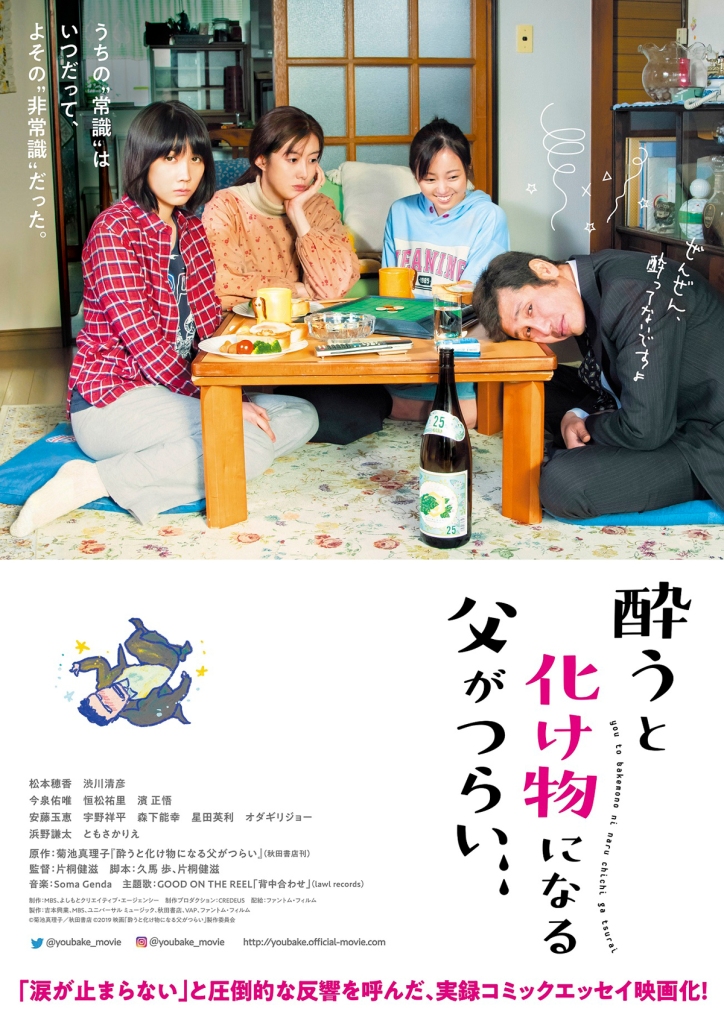
A Life Turned Upside Down: My Dad’s an Alcoholic (酔うと化け物になる父がつらい, Kenji Katagiri, 2019)

A dejected young woman finds herself conflicted in her memories of the father who failed her in Kenji Katagiri’s A Life Turned Upside Down: My Dad’s an Alcoholic (酔うと化け物になる父がつらい, You to Bakemono ni Naru Chichi ga Tsurai). Drawing inspiration from the webcomic by Mariko Kikuchi, Katagiri’s whimsical drama does its best to put a comical spin on the extended trauma of living with an alcoholic dad while laying the blame squarely at the the feet of a society with an entrenched drinking culture in which refusing to imbibe is all but unthinkable. 

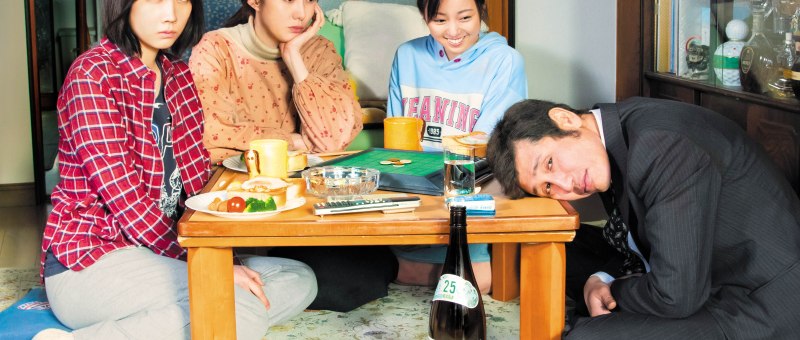
The heroine, Saki (Honoka Matsumoto), begins her tale in the late ‘90s when she is only eight years old and unaware that her family circumstances are not exactly normal. Tadokoro (Kiyohiko Shibukawa), her salaryman dad, usually rolls in late and collapses in the hall after staying out all night drinking. This is such a common occurrence that Saki and her younger sister Fumi are completely unfazed by it, marking off dad’s drunken days with a big red X on the calendar and cheerfully helping their mum drag him back into the house. Saeko (Rie Tomosaka), their mother, tries to put a brave face on it, and to the girls it probably still seems a little bit funny, but as she gets older Saki begins to see the toll her father’s drinking has taken on her mother not only in practical terms but emotional in realising that he drinks largely as a means of escaping his responsibility which includes that towards his family. 

Saki asks her mum why dad’s three friends keep coming round to drink while playing mahjong but the only explanation she can offer is that adults need to socialise. Socialisation does it seems revolve around alcohol, and to that extent perpetuates deeply entrenched patriarchal social codes in largely remaining a homosocial activity with the only women present those that run the bar (the wives of Tadokoro’s friends make a point of thanking Saeko for allowing their husbands to drink at her house, they it seems are not invited). Tadokoro’s excuse for his drinking is that it’s a necessary business activity, that you can’t get by as a salaryman without figuring out how to have fun at a nomikai and bond with your clients over sake. His office best friend later discovers this to be true as a teetotaller given the banishment room treatment he attributes to the fact he doesn’t drink which is why his bosses don’t trust him as member of the team. 

Tadokoro might think he’s serving his family through his career, but it’s clear that he neglects them physically and emotionally by refusing to moderate his drinking. He breaks promises to his kids to take them to the pool because he’s still hung over from the night before while his wife finds herself at the end of her tether with his continued indifference later telling the little Saki that she wanted to divorce him even before the kids were born but it’s too late for that now. Saeko escapes from the burden of her life through religion, adhering to a shady Christian-leaning cult which preaches that endurance builds character and character leads to hope, all of which presumably convinces her that she is supposed to just put up with Tadokoro’s problematic behaviour rather than reassuring her that there is no sin in leaving him. 

Saki fears making her mother’s mistake, traumatised by her childhood experiences and drawn into an abusive relationship of her own out of loneliness and low self esteem. She resents her father but also feels bad about it, simultaneously thankful when he takes a temporary break from drinking and mahjong but also aware of how sad it is that she is grateful for things that other families would consider normal. Tadokoro proves unable to quit drinking, and Saki wonders if she’s right to even ask him if, as others say, drinking is his mechanism for escaping loneliness, but also reflects on the sadness she now understands in her mother as stemming from her father’s abnegation of his responsibilities and the loneliness it must have provoked in her. Fumi (Yui Imaizumi), trying to explain why Saki should break up with her abusive boyfriend (Shogo Hama), tells her of an experiment she read about in which a rat was trapped in a box and randomly given electric shocks. At first, it tried to escape, but eventually became resigned to its fate and settled for learning to endure the pain. Saki is perhaps much the same, trapped by filiality in finding herself unable to either forgive or reject the memory of the father who so resolutely failed to live up to the name.


A Life Turned Upside Down: My Dad’s an Alcoholic was streamed as part of this year’s online Nippon Connection Film Festival.

International trailer (English subtitles)